Telemetry Principles Zankhana Mehta block diagram
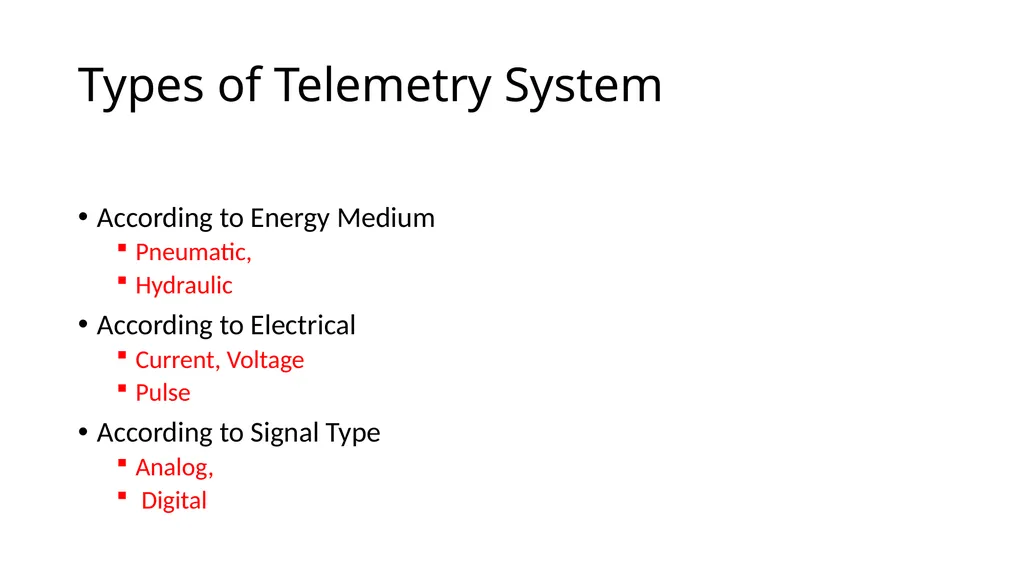
Description: Telemetry Principles Zankhana Mehta block diagram of telemetry system Types of Telemetry System According to Energy Medium Pneumatic, Hydraulic According to Electrical Current, Voltage Pulse According to Signal Type Analog, Digital
Related Topics
Download Presentation
"Telemetry Principles Zankhana Mehta block diagram" is the property of its rightful owner. Permission is granted to download and print the materials on this website for personal, non-commercial use only, and to display it on your personal computer provided you do not modify the materials and that you retain all copyright notices contained in the materials. By downloading content from our website, you accept the terms of this agreement.
Presentation Transcript
slide1. Telemetry Principles Zankhana Mehta<br>
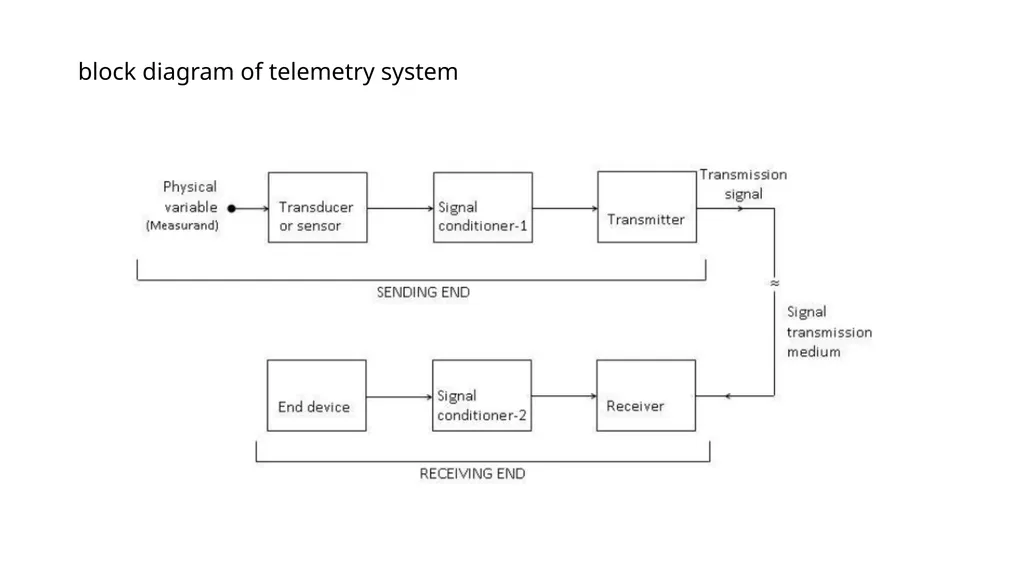
slide2. block diagram of telemetry system<br>
slide3. Types of Telemetry System According to Energy Medium
Pneumatic,
Hydraulic
According to Electrical
Current, Voltage
Pulse
According to Signal Type
Analog,
Digital<br>
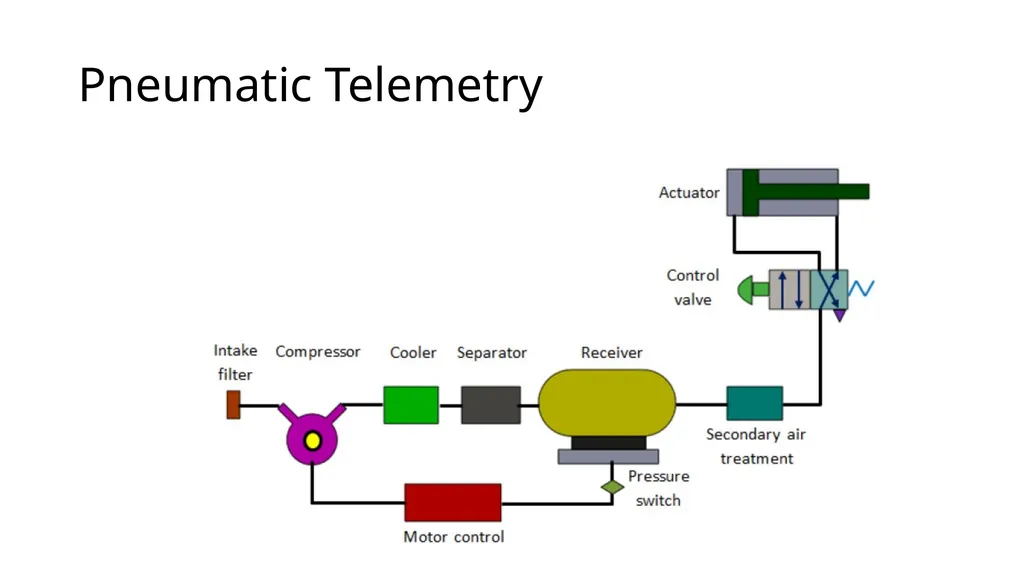
slide4. Pneumatic Telemetry<br>
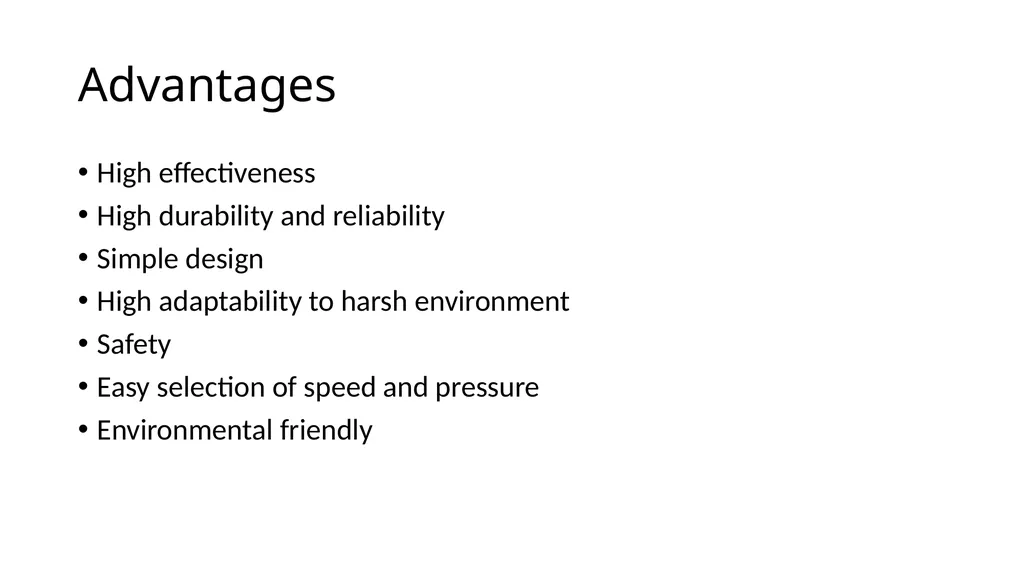
slide5. Advantages High effectiveness
High durability and reliability
Simple design
High adaptability to harsh environment
Safety
Easy selection of speed and pressure
Environmental friendly<br>
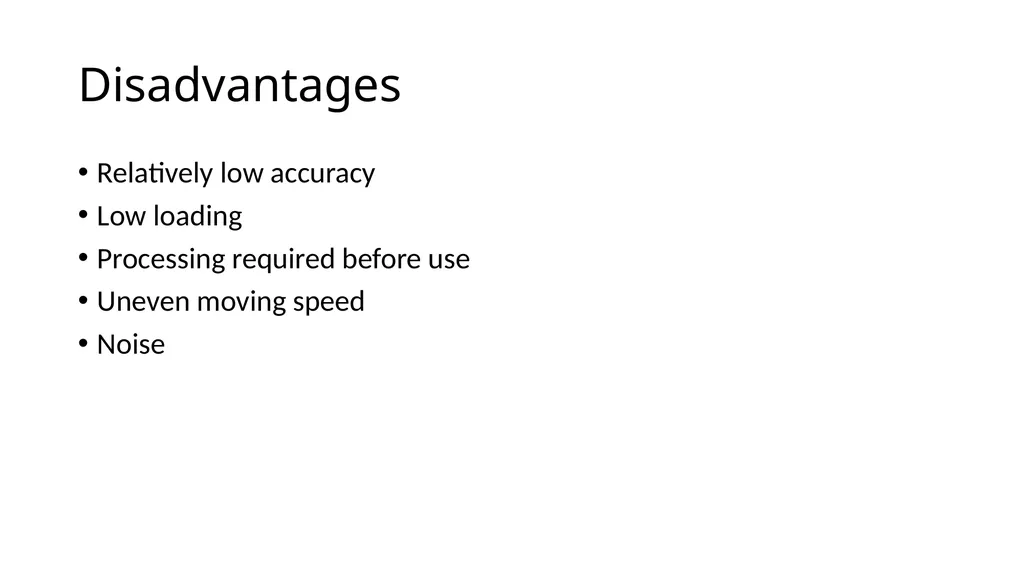
slide6. Disadvantages Relatively low accuracy
Low loading
Processing required before use
Uneven moving speed
Noise<br>
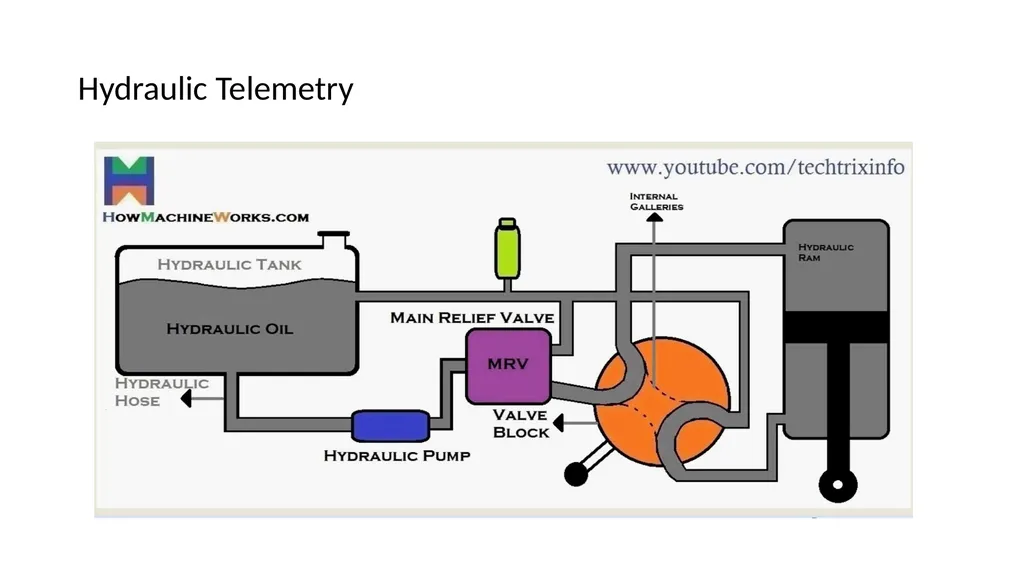
slide7. Hydraulic Telemetry<br>
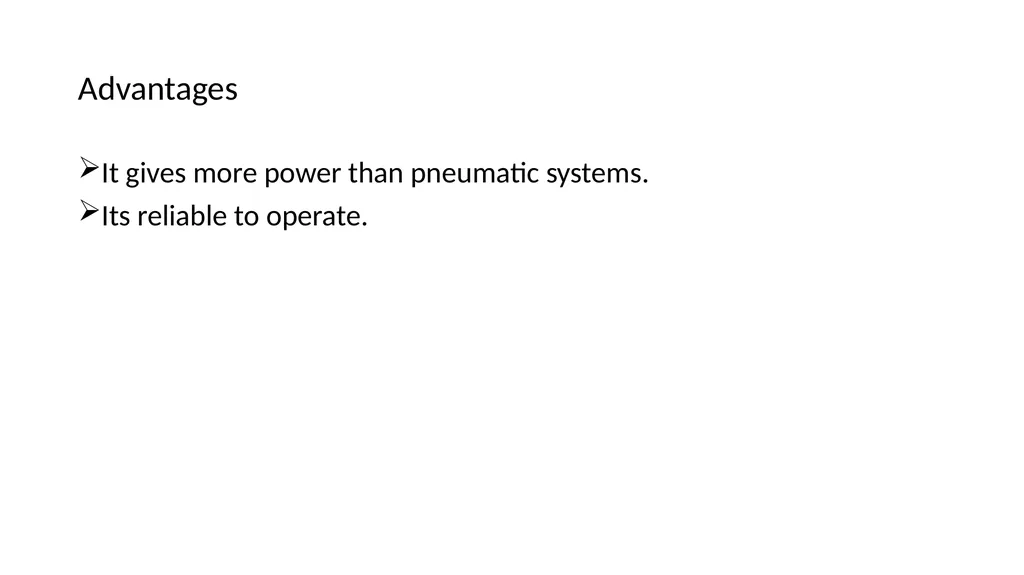
slide8. Advantages It gives more power than pneumatic systems.
Its reliable to operate.<br>
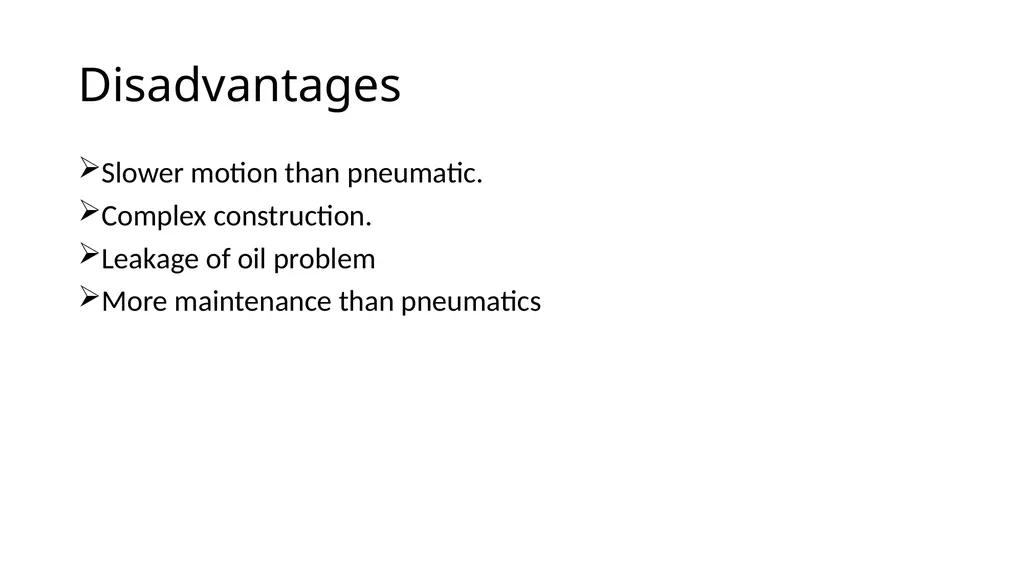
slide9. Disadvantages Slower motion than pneumatic.
Complex construction.
Leakage of oil problem
More maintenance than pneumatics<br>
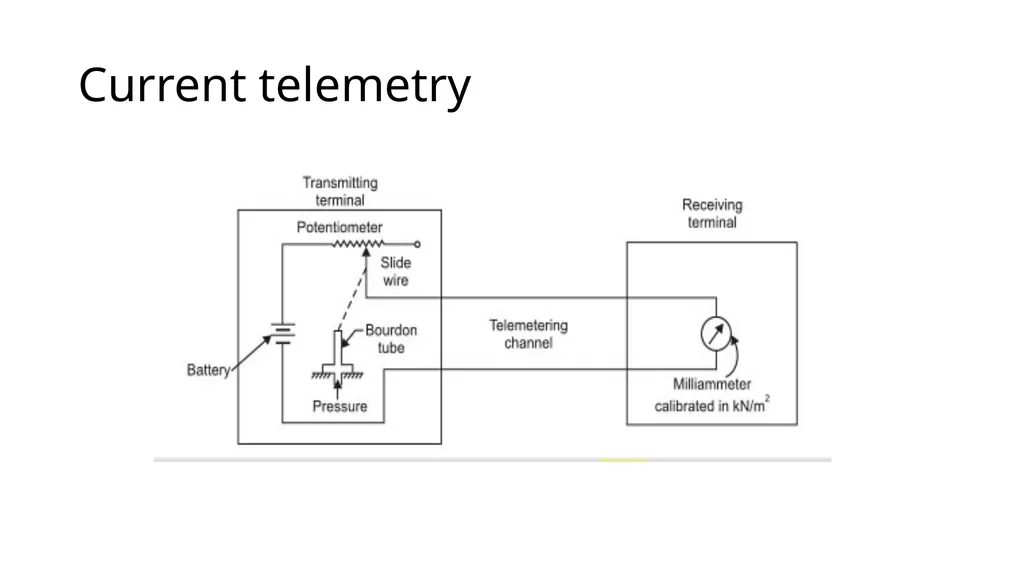
slide10. Current telemetry<br>
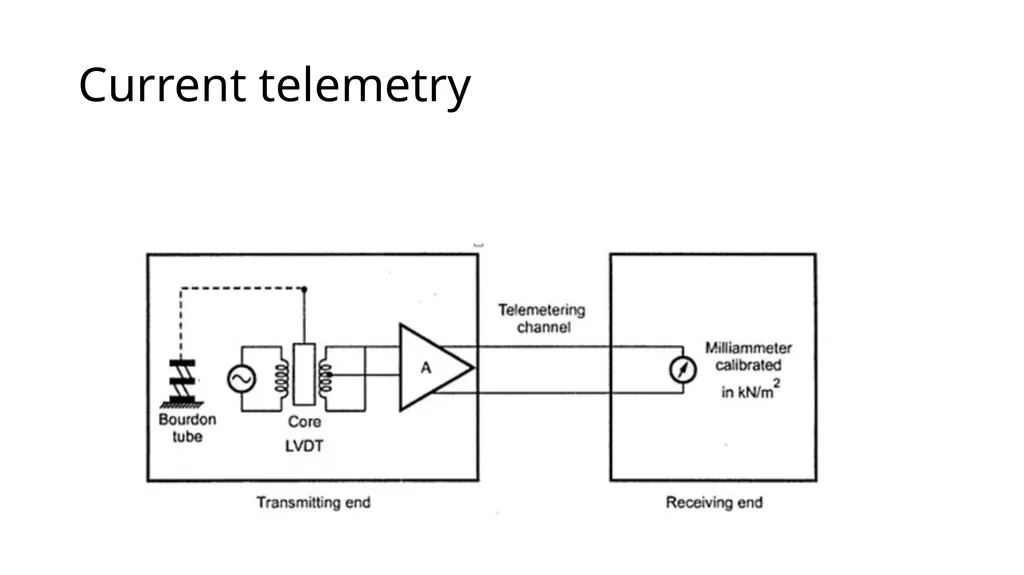
slide11. Current telemetry<br>
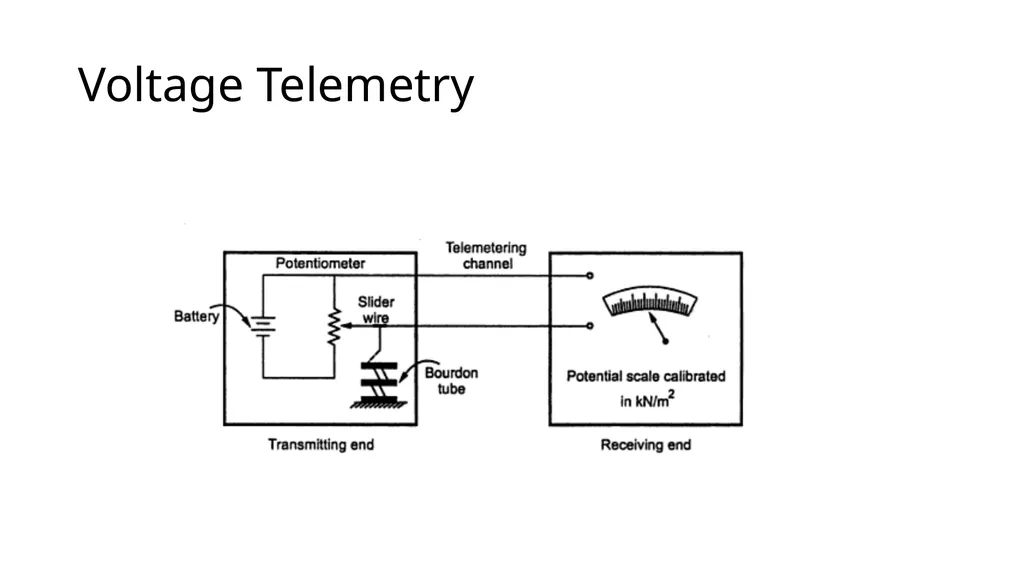
slide12. Voltage Telemetry<br>
slide13. Pulse Telemetry<br>
slide14. Pulse Modulation<br>
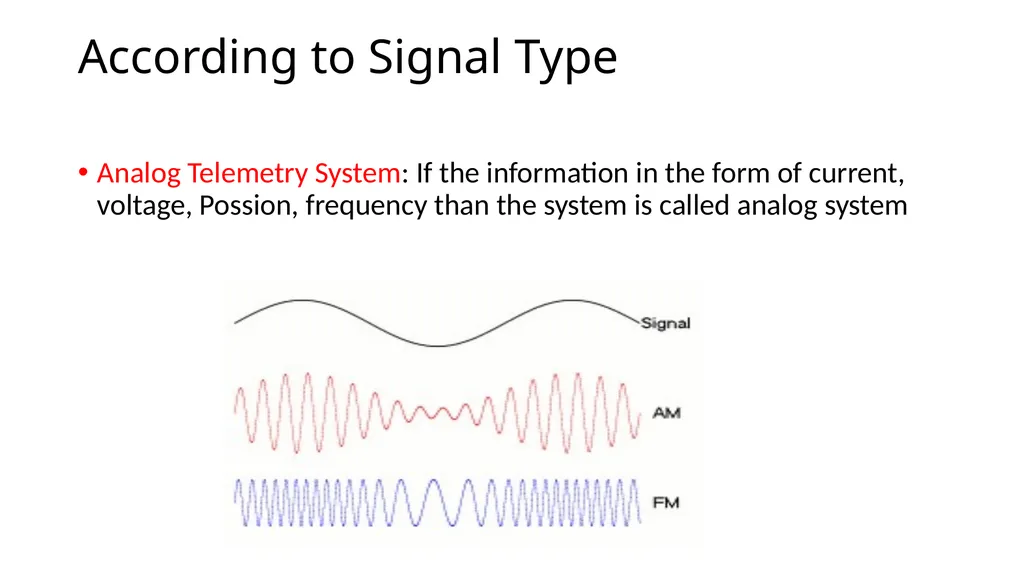
slide15. According to Signal Type Analog Telemetry System: If the information in the form of current, voltage, Possion, frequency than the system is called analog system<br>
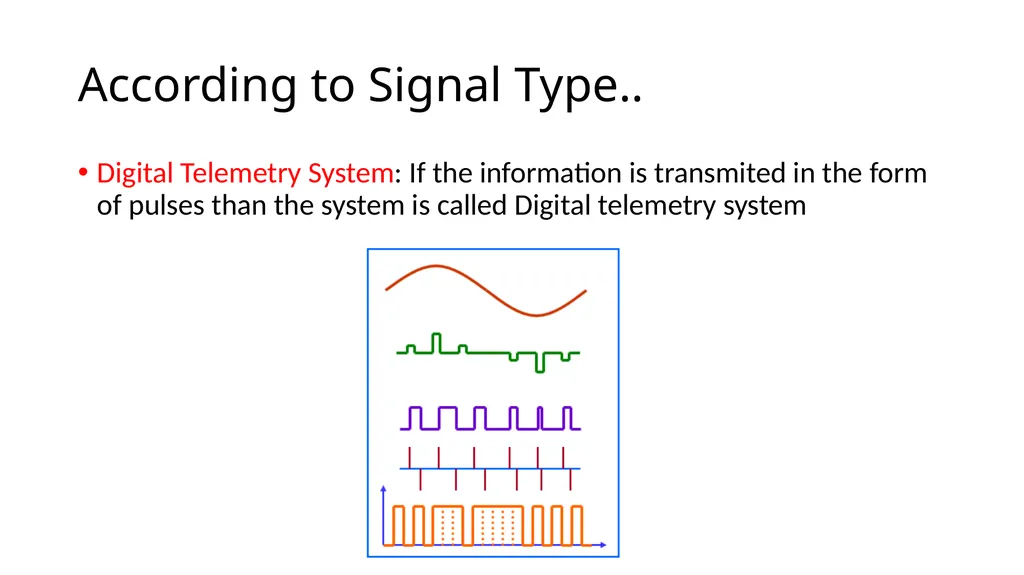
slide16. According to Signal Type.. Digital Telemetry System: If the information is transmited in the form of pulses than the system is called Digital telemetry system<br>
slide17. Compare the merits and demerits of Hydraulic, Pneumatic and Electric Telemetry<br>
slide18. Compare the merits and demerits of Hydraulic, Pneumatic and Electric Telemetry…..<br>
slide19. Standard output ranges of all types of telemetry systems Current : 4-20 mA
Voltage : 0-24 V
Pressure : 3-15 psi<br>
slide20. Thank You!!!!<br>
slide2. block diagram of telemetry system<br>
slide3. Types of Telemetry System According to Energy Medium
Pneumatic,
Hydraulic
According to Electrical
Current, Voltage
Pulse
According to Signal Type
Analog,
Digital<br>
slide4. Pneumatic Telemetry<br>
slide5. Advantages High effectiveness
High durability and reliability
Simple design
High adaptability to harsh environment
Safety
Easy selection of speed and pressure
Environmental friendly<br>
slide6. Disadvantages Relatively low accuracy
Low loading
Processing required before use
Uneven moving speed
Noise<br>
slide7. Hydraulic Telemetry<br>
slide8. Advantages It gives more power than pneumatic systems.
Its reliable to operate.<br>
slide9. Disadvantages Slower motion than pneumatic.
Complex construction.
Leakage of oil problem
More maintenance than pneumatics<br>
slide10. Current telemetry<br>
slide11. Current telemetry<br>
slide12. Voltage Telemetry<br>
slide13. Pulse Telemetry<br>
slide14. Pulse Modulation<br>
slide15. According to Signal Type Analog Telemetry System: If the information in the form of current, voltage, Possion, frequency than the system is called analog system<br>
slide16. According to Signal Type.. Digital Telemetry System: If the information is transmited in the form of pulses than the system is called Digital telemetry system<br>
slide17. Compare the merits and demerits of Hydraulic, Pneumatic and Electric Telemetry<br>
slide18. Compare the merits and demerits of Hydraulic, Pneumatic and Electric Telemetry…..<br>
slide19. Standard output ranges of all types of telemetry systems Current : 4-20 mA
Voltage : 0-24 V
Pressure : 3-15 psi<br>
slide20. Thank You!!!!<br>