
TEMPORARY EVENTS Charles County Department of
TG
Published · 23 slides · 0 views

1 / 1
Description
TEMPORARY EVENTS Charles County Department of Health, Division of Environmental Health Definition A temporary food service operation is defined as a food service facility that operates in conjunction with a fair, carnival, public
Related Topics
Share
Embed code
Download this presentation From Below
"TEMPORARY EVENTS Charles County Department of" is the property of its rightful owner. Permission is granted to download and print the materials on this website for personal, non-commercial use only, and to display it on your personal computer provided you do not modify the materials and that you retain all copyright notices contained in the materials. By downloading content from our website, you accept the terms of this agreement.
Presentation Transcript
01
TEMPORARY EVENTS Charles County Department of Health, Division of Environmental Health<br>
02
Definition A temporary food service operation is defined as a food service facility that operates in conjunction with a fair, carnival, public exhibition, or another similar event for no longer than 30 consecutive days
A temporary event permit is issued for the duration of an event at a specific location
Food service can occur with or without charge<br>
A temporary event permit is issued for the duration of an event at a specific location
Food service can occur with or without charge<br>
03
How do I get a permit? Submit a permit application to the Charles County Department of Health, Division of Environmental Health Services.
Please submit application at least two weeks before your event. A minimum of 72 hours is necessary.
Provide your tax exempt number if you are bonafide non-profit organization.
If you are not fee exempt, submit licensure fee.<br>
Please submit application at least two weeks before your event. A minimum of 72 hours is necessary.
Provide your tax exempt number if you are bonafide non-profit organization.
If you are not fee exempt, submit licensure fee.<br>
04
What Are the Minimum Requirements? Food service must be at an approved location
Food must be from an approved source
Food must be stored at proper temperatures
Food must be cooked to proper temperatures
Hand washing station must be provided
Provide separate areas for raw and cooked food
Exposed foods must be protected from contamination
Ice and water must be from an approved source
Restroom facilities must be provided
Hair restraints and clean clothes must be worn
Liquid and solid waste must be disposed of properly
Effective insect and vermin control must be provided
Adequate lighting must be provided, if after dark
An effective means of ware washing must be provided
An appropriate stem thermometer must be provided<br>
05
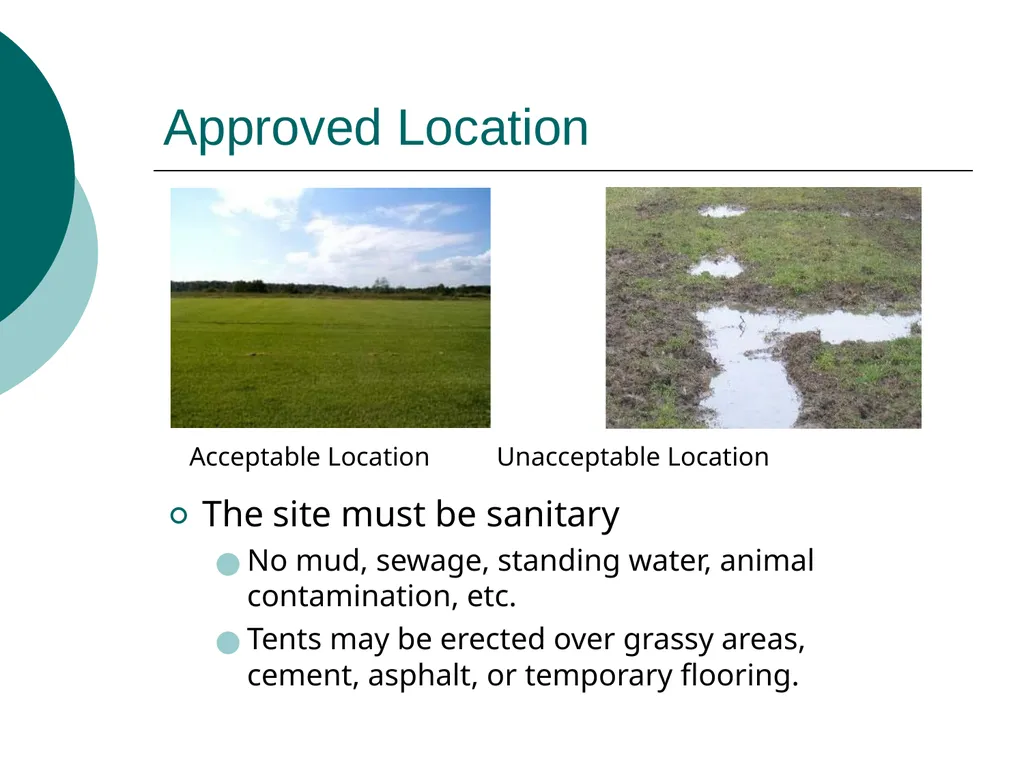
Approved Location Acceptable Location Unacceptable Location
The site must be sanitary
No mud, sewage, standing water, animal contamination, etc.
Tents may be erected over grassy areas, cement, asphalt, or temporary flooring.<br>
The site must be sanitary
No mud, sewage, standing water, animal contamination, etc.
Tents may be erected over grassy areas, cement, asphalt, or temporary flooring.<br>
06
Food From Approved Source Food may NOT be prepared or stored in a home kitchen.
Acceptable sources of food include grocery stores, restaurant supply companies, farm stands (for whole produce only).
Seafood, meats, dairy and eggs must be from a licensed, regulated source.
Ensure any shellfish (oysters, clams, mussels) is from a licensed shell stock shipper or shucker-packer.
Provide shell stock tags on site.
Meats and eggs must be USDA approved.
Food served has not been recalled and is not past sell by or expiration dates.
No severely dented or swollen cans may be used.
Home canned goods are not acceptable.
Food used may not be adulterated, contaminated, or spoiled.<br>
07
Proper Food Storage Temperatures Potentially hazardous food must be kept hot or cold
Refrigerated food must be 41 degrees or less.
Hot held food must be 135 degrees or greater.
Pasteurized crab and reduced oxygen packaged products must be stored at 38 degrees or less.
Time holding food at a temporary event is not acceptable
Frozen food must remain frozen; food that has thawed may not be refrozen.<br>
08
Proper Cook/Reheat Temperatures Comminuted meats (hamburger, sausage), egg mixtures
155 degrees
Chicken, stuffed meats
165 degrees
Whole pork, whole beef, seafood, individual eggs
145 degrees
Vegetables, rice, potatoes, and other non- potentially hazardous foods cooked for hot holding
135 degrees.
Commercially pre-cooked products for hot holding (i.e. hot dogs, canned soup, nacho cheese)
135 degrees, unless package directions state otherwise.<br>
09
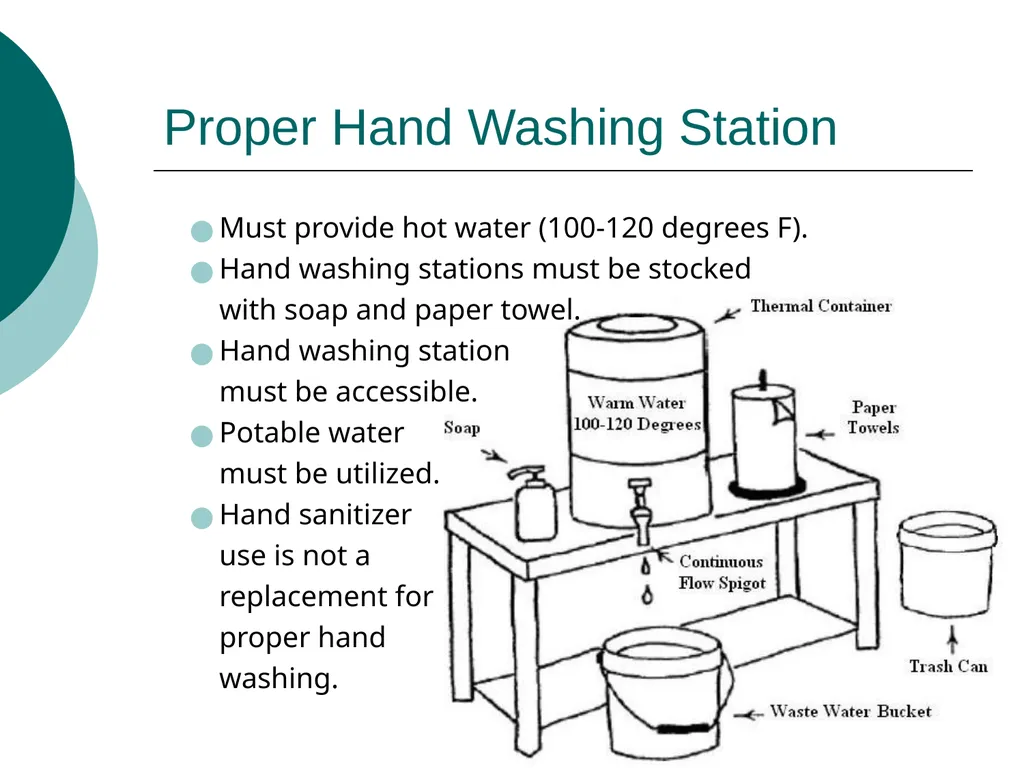
Proper Hand Washing Station Must provide hot water (100-120 degrees F).
Hand washing stations must be stocked with soap and paper towel.
Hand washing station must be accessible.
Potable water must be utilized.
Hand sanitizer use is not a replacement for proper hand washing.<br>
Hand washing stations must be stocked with soap and paper towel.
Hand washing station must be accessible.
Potable water must be utilized.
Hand sanitizer use is not a replacement for proper hand washing.<br>
10
Approved Work Surfaces Cross-contamination shall not occur:
Separate work surfaces must be provided for raw and cooked food products.
Wiping cloths must be stored in an approved sanitizing solution.
50-100 PPM chlorine, or
200-400 PPM quaternary ammonia
Utensils must be cleaned and sanitized between uses.
Foods stored in coolers should be stored in a manner that prevents cross contamination.
i.e. raw hamburgers should not be stored with lettuce, etc.<br>
11
Protect Exposed Foods No cooking on the ground.
Food must be stored off of the ground surface.
Coolers containing food must be off of ground
Food must not be stored in proximity of waste containers, pesticides, or cleansers.
Food must be protected from the weather, i.e. rain.<br>
Food must be stored off of the ground surface.
Coolers containing food must be off of ground
Food must not be stored in proximity of waste containers, pesticides, or cleansers.
Food must be protected from the weather, i.e. rain.<br>
12
Ice and Water From Approved Source All water must be from a tested water supply.
Located on a public water supply
Private well that is tested quarterly and has passed most recent test, such as a church or fire station (check with Health Department)
Holding tanks on mobile units must be sanitized often, preferably before every fill up.
Any hoses used for water delivery must be potable water/NSF approved hoses.
All ice must be from an approved source.
From a licensed facility
Ice supply company<br>
13
Restroom Facilities Employee toilet facilities must be within a reasonable distance and must be available during all hours of operation.
Reasonable distance
Employee toilets should have hand washing facilities when possible.
Employees must wash hands when returning from restroom.<br>
Reasonable distance
Employee toilets should have hand washing facilities when possible.
Employees must wash hands when returning from restroom.<br>
14
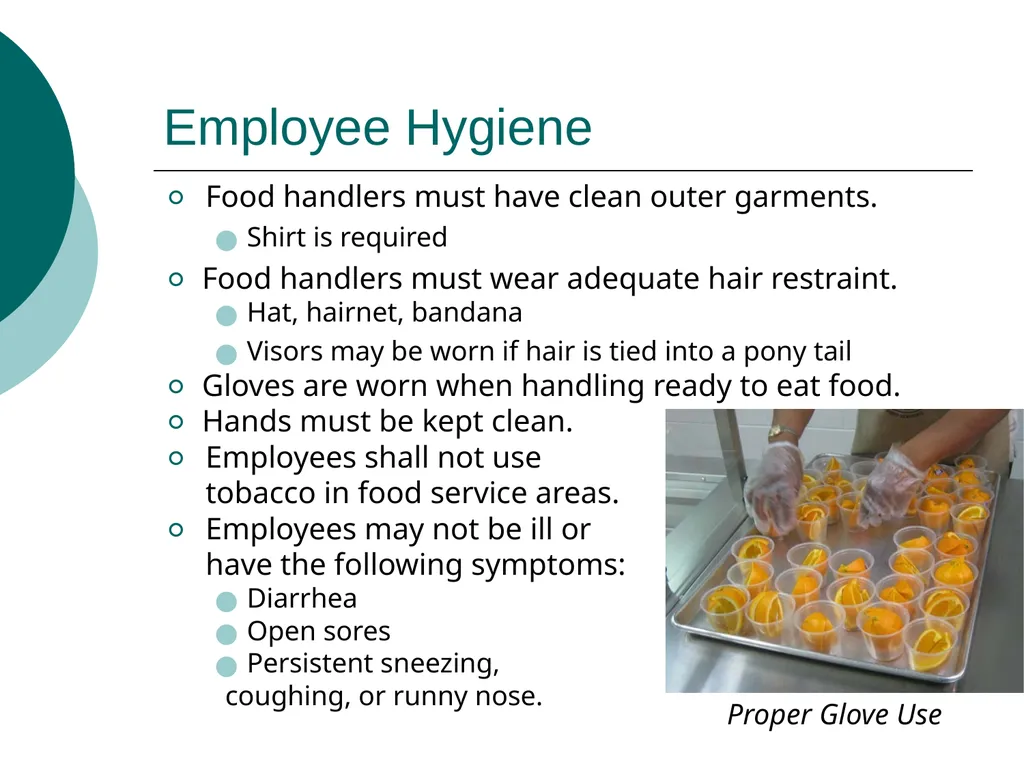
Employee Hygiene Food handlers must have clean outer garments.
Shirt is required
Food handlers must wear adequate hair restraint.
Hat, hairnet, bandana
Visors may be worn if hair is tied into a pony tail
Gloves are worn when handling ready to eat food.
Hands must be kept clean.
Employees shall not use tobacco in food service areas.
Employees may not be ill or have the following symptoms:
Diarrhea
Open sores
Persistent sneezing,
coughing, or runny nose. Proper Glove Use<br>
15
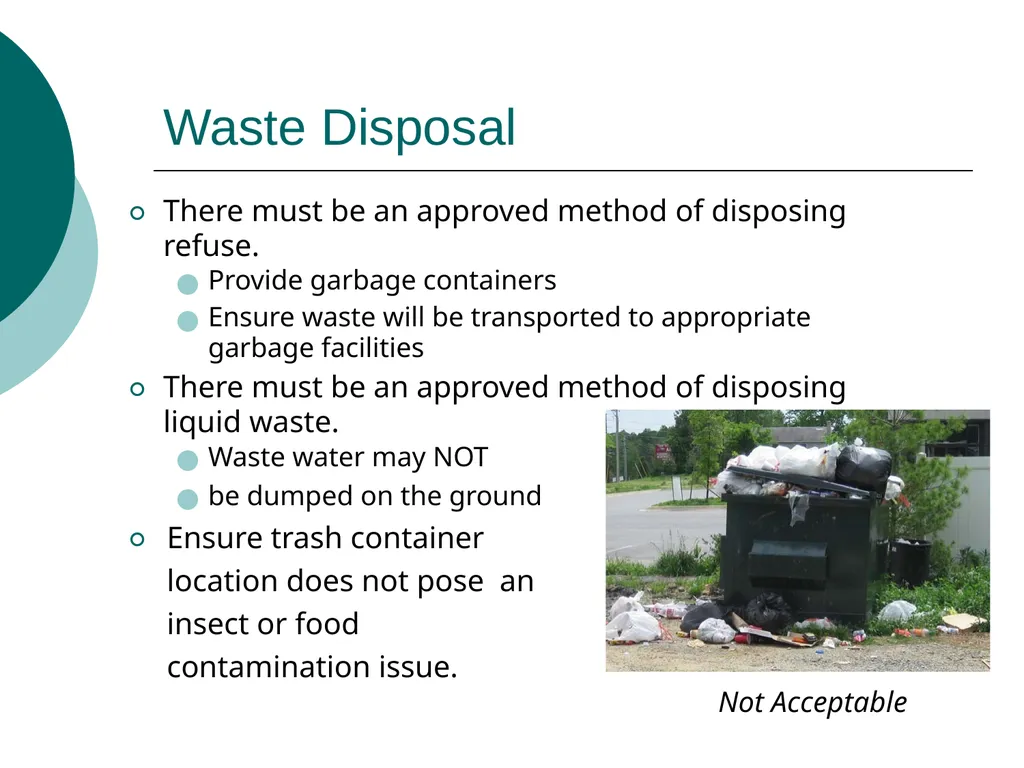
Waste Disposal There must be an approved method of disposing refuse.
Provide garbage containers
Ensure waste will be transported to appropriate garbage facilities
There must be an approved method of disposing liquid waste.
Waste water may NOT
be dumped on the ground
Ensure trash container location does not pose an insect or food contamination issue.
Not Acceptable<br>
16
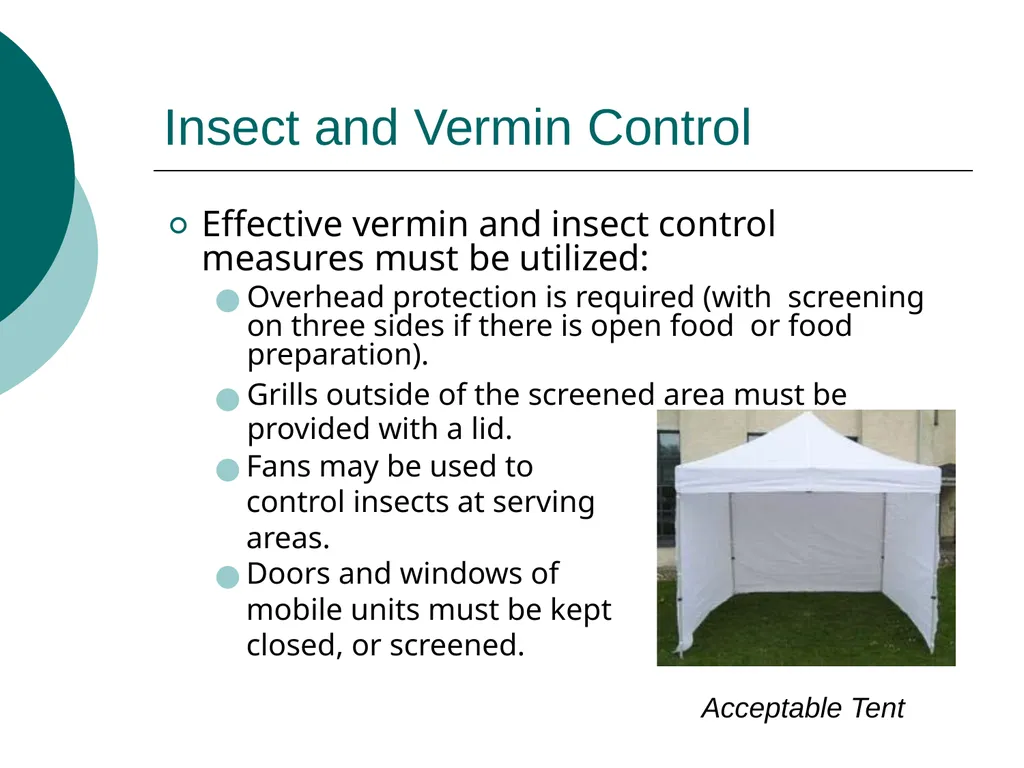
Insect and Vermin Control Effective vermin and insect control measures must be utilized:
Overhead protection is required (with screening on three sides if there is open food or food preparation).
Grills outside of the screened area must be provided with a lid.
Fans may be used to control insects at serving areas.
Doors and windows of mobile units must be kept closed, or screened.
Acceptable Tent<br>
17
Adequate Lighting Adequate lighting must be provided:
Lights in food service, preparation, and ware washing areas should be shielded.
Lighting only required if food service continues after dusk.
Light should be sufficient enough to easily see all areas of food operation
Decorative lights (i.e. holiday lights) may not be used around food preparation areas<br>
18
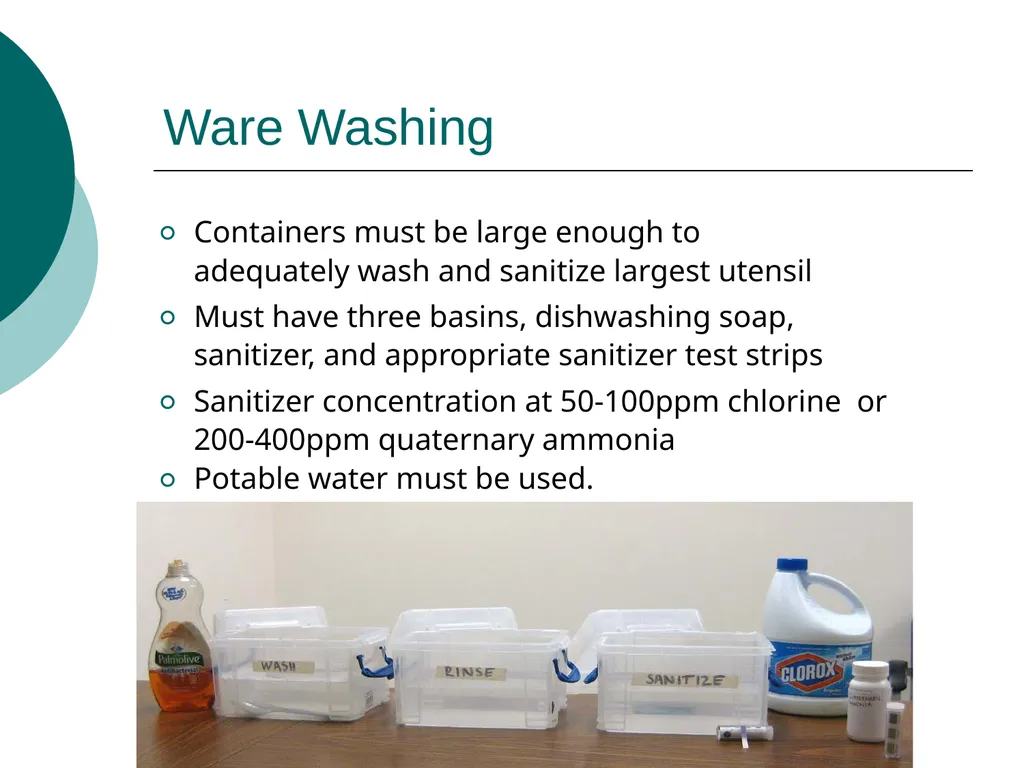
Ware Washing Containers must be large enough to adequately wash and sanitize largest utensil
Must have three basins, dishwashing soap, sanitizer, and appropriate sanitizer test strips
Sanitizer concentration at 50-100ppm chlorine or 200-400ppm quaternary ammonia
Potable water must be used.<br>
Must have three basins, dishwashing soap, sanitizer, and appropriate sanitizer test strips
Sanitizer concentration at 50-100ppm chlorine or 200-400ppm quaternary ammonia
Potable water must be used.<br>
19
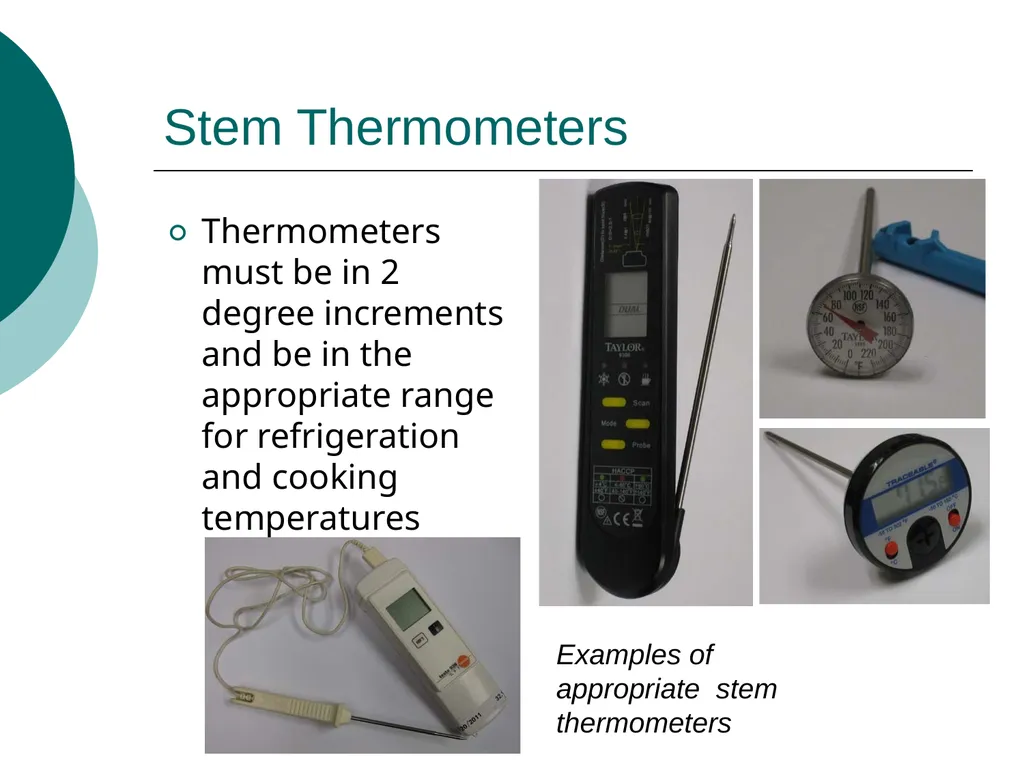
Stem Thermometers Thermometers must be in 2 degree increments and be in the appropriate range for refrigeration and cooking temperatures Examples of appropriate stem thermometers<br>
20
Cottage Food A cottage food product is a non-potentially hazardous (shelf-stable) food that is sold in Maryland directly to a consumer from a residence, at a farmers market, at a public event, by personal delivery, or by mail delivery; or directly to a retail food store. Cottage foods cannot be offered for sale through interstate commerce.
NOTE - Honey (raw unprocessed, unflavored), supplied directly from the farm on which it was produced, is considered a raw agricultural product and NOT a cottage food product.
What types of foods are allowed to be produced for sale by a cottage food business?
Non-potentially hazardous/non-perishable baked goods, such as bagels, pastries, brownies, cookies, breads, cakes, pies, sourdough breads, etc. made without potentially hazardous toppings or fillings;
Hot filled high-acid fruit jams, jellies, preserves, and butters made only with fruits with a natural pH of 4.6 pH or less;
Hard candy;
Chocolate confections made from commercially manufactured chocolate (e.g., chocolate covered pretzels);
Repackaged commercial ingredients (such as tea blends, spice/seasoning blends);
Snack mixes from commercial sources (such as cereal, granola, and trail mixes);
Non-potentially hazardous snacks (such as popcorn balls, kettle corn, popcorn, and nuts);
Whole roasted coffee beans<br>
21
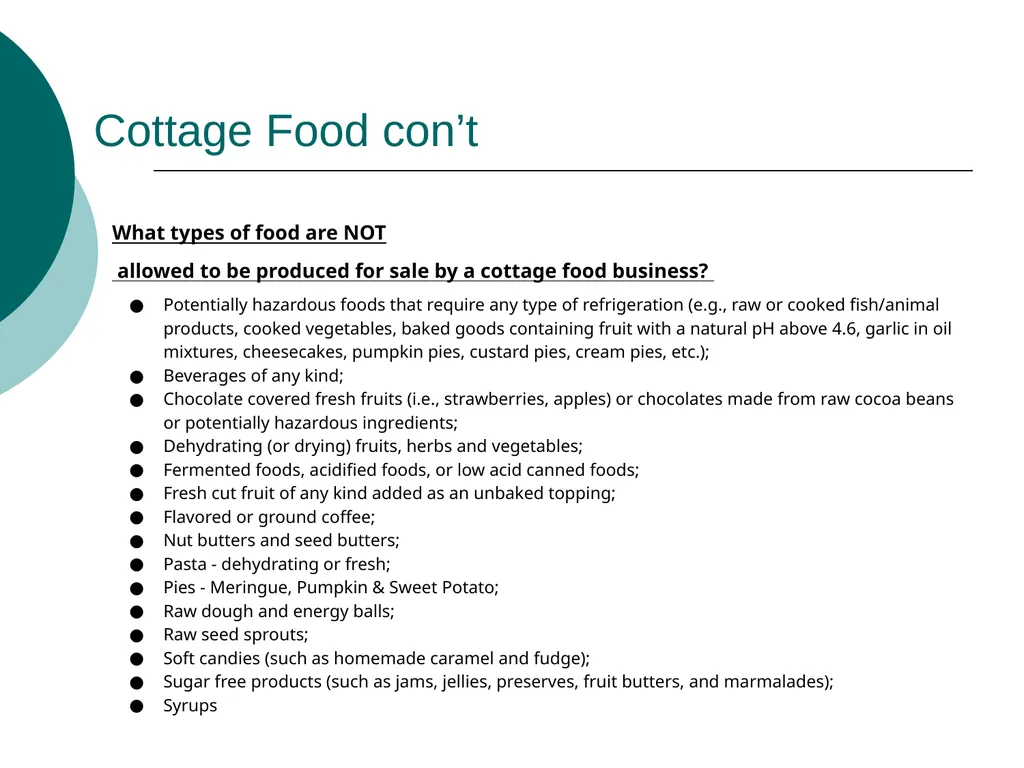
Cottage Food con’t What types of food are NOT allowed to be produced for sale by a cottage food business?
Potentially hazardous foods that require any type of refrigeration (e.g., raw or cooked fish/animal products, cooked vegetables, baked goods containing fruit with a natural pH above 4.6, garlic in oil mixtures, cheesecakes, pumpkin pies, custard pies, cream pies, etc.);
Beverages of any kind;
Chocolate covered fresh fruits (i.e., strawberries, apples) or chocolates made from raw cocoa beans or potentially hazardous ingredients;
Dehydrating (or drying) fruits, herbs and vegetables;
Fermented foods, acidified foods, or low acid canned foods;
Fresh cut fruit of any kind added as an unbaked topping;
Flavored or ground coffee;
Nut butters and seed butters;
Pasta - dehydrating or fresh;
Pies - Meringue, Pumpkin & Sweet Potato;
Raw dough and energy balls;
Raw seed sprouts;
Soft candies (such as homemade caramel and fudge);
Sugar free products (such as jams, jellies, preserves, fruit butters, and marmalades);
Syrups<br>
22
Cottage Food con’t More Information:
¡https://health.maryland.gov/phpa/OEHFP/OFPCHS/Pages/Cottagefoods.aspx<br>
¡https://health.maryland.gov/phpa/OEHFP/OFPCHS/Pages/Cottagefoods.aspx<br>
23
More Information Additional information can be obtained from:
www.charlescountyhealth.org<br>
www.charlescountyhealth.org<br>