
Tennessee Charitable Care Network Tennessee’s
LO
Published · 28 slides · 0 views

1 / 1

Description
Tennessee Charitable Care Network Tennessees Membership Association of Charitable Healthcare Clinics July 2015 Exploring Health Literacy Issues in Tennessee Background Tennessee Charitable Care Network (TCCN) Formed in 2014 Membership
Related Topics
Share
Embed code
Download this presentation From Below
"Tennessee Charitable Care Network Tennessee’s" is the property of its rightful owner. Permission is granted to download and print the materials on this website for personal, non-commercial use only, and to display it on your personal computer provided you do not modify the materials and that you retain all copyright notices contained in the materials. By downloading content from our website, you accept the terms of this agreement.
Presentation Transcript
01
Tennessee Charitable Care Network
Tennessee’s Membership Association of Charitable Healthcare Clinics
July 2015 Exploring Health Literacy Issues in Tennessee<br>
Tennessee’s Membership Association of Charitable Healthcare Clinics
July 2015 Exploring Health Literacy Issues in Tennessee<br>
02
Background Tennessee Charitable Care Network (TCCN)
Formed in 2014
Membership organization for 22 of the 46 known clinics that deliver health care to people without access to insurance coverage in communities throughout the state
Vital resource and advocate for the vulnerable populations and communities served by its members
Majority of TCCN members receive funding through the state’s Health Care Safety Net Fund<br>
Formed in 2014
Membership organization for 22 of the 46 known clinics that deliver health care to people without access to insurance coverage in communities throughout the state
Vital resource and advocate for the vulnerable populations and communities served by its members
Majority of TCCN members receive funding through the state’s Health Care Safety Net Fund<br>
03
Health Literacy Workshop Sponsored by the Tennessee Department of Health (TDH) to bring together TCCN members for interactive dialogue
Provided opportunities for charitable clinic leaders to
share their experiences in how health literacy issues impact patient care and outcomes
generate preliminary recommendations about best practices to address specific barriers to care.<br>
Provided opportunities for charitable clinic leaders to
share their experiences in how health literacy issues impact patient care and outcomes
generate preliminary recommendations about best practices to address specific barriers to care.<br>
04
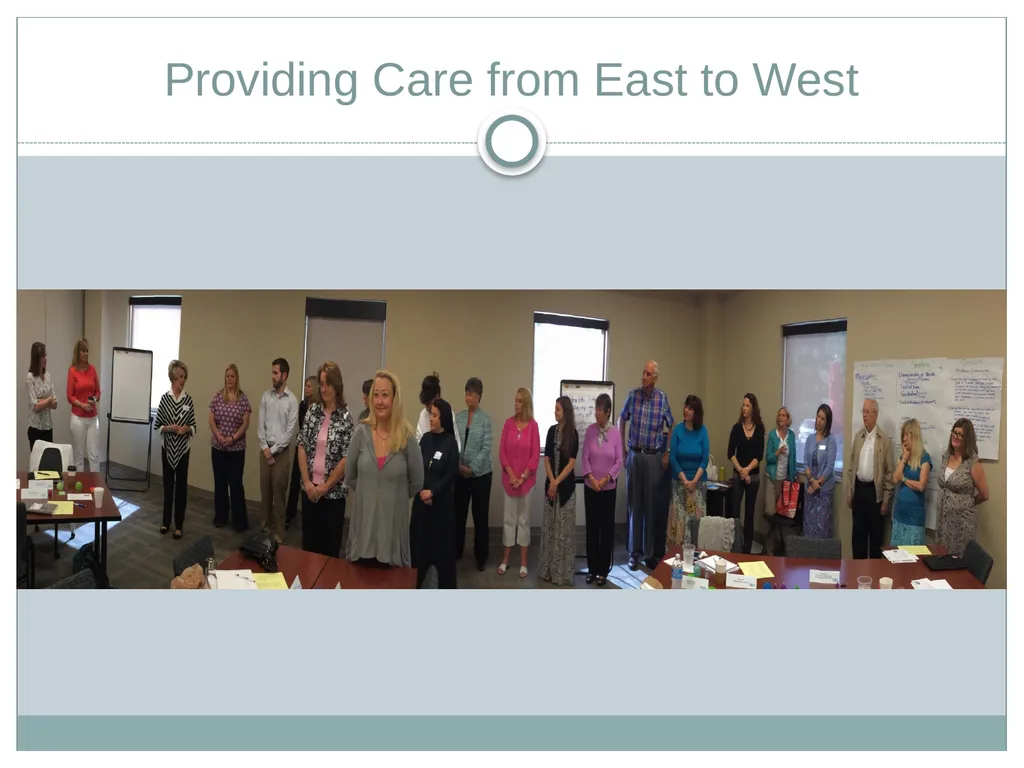
Providing Care from East to West<br>
05
Barriers and Commonalities Sharing Stories, Finding Common Ground<br>
06
Barriers to Health Literacy Cultural barriers
Language barriers
Social/environmental
Patient/provider relationship
Lack of knowledge
Personal issues
Health insurance
Finances/financial literacy
Limited/little formal education
No medical home
Behavioral health
Lack of understanding<br>
Language barriers
Social/environmental
Patient/provider relationship
Lack of knowledge
Personal issues
Health insurance
Finances/financial literacy
Limited/little formal education
No medical home
Behavioral health
Lack of understanding<br>
07
Commonalities Among Clinic Patients Barriers seen in most clinic patients on a daily basis
Clinic patients experience significant stressors
Many patients experience multiple barriers
Clinics often become the “support system” for people without means
Many clinics must informally take on the role of “social worker”
Medicine alone cannot solve these issues – “we provide hope”
A lot of issues can be defined by a knowledge deficit
Cultural issues are not just related to foreign born patients<br>
Clinic patients experience significant stressors
Many patients experience multiple barriers
Clinics often become the “support system” for people without means
Many clinics must informally take on the role of “social worker”
Medicine alone cannot solve these issues – “we provide hope”
A lot of issues can be defined by a knowledge deficit
Cultural issues are not just related to foreign born patients<br>
08
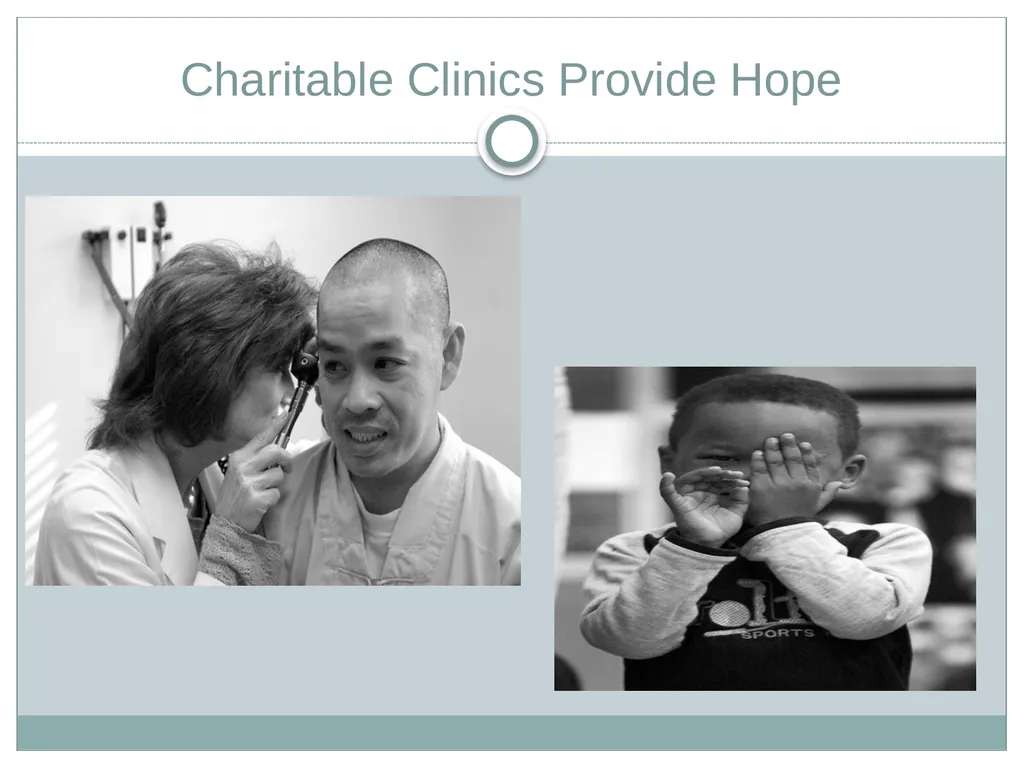
Charitable Clinics Provide Hope<br>
09
Health Literacy’s impact on
health outcomes IMPACT<br>
health outcomes IMPACT<br>
10
Obesity<br>
11
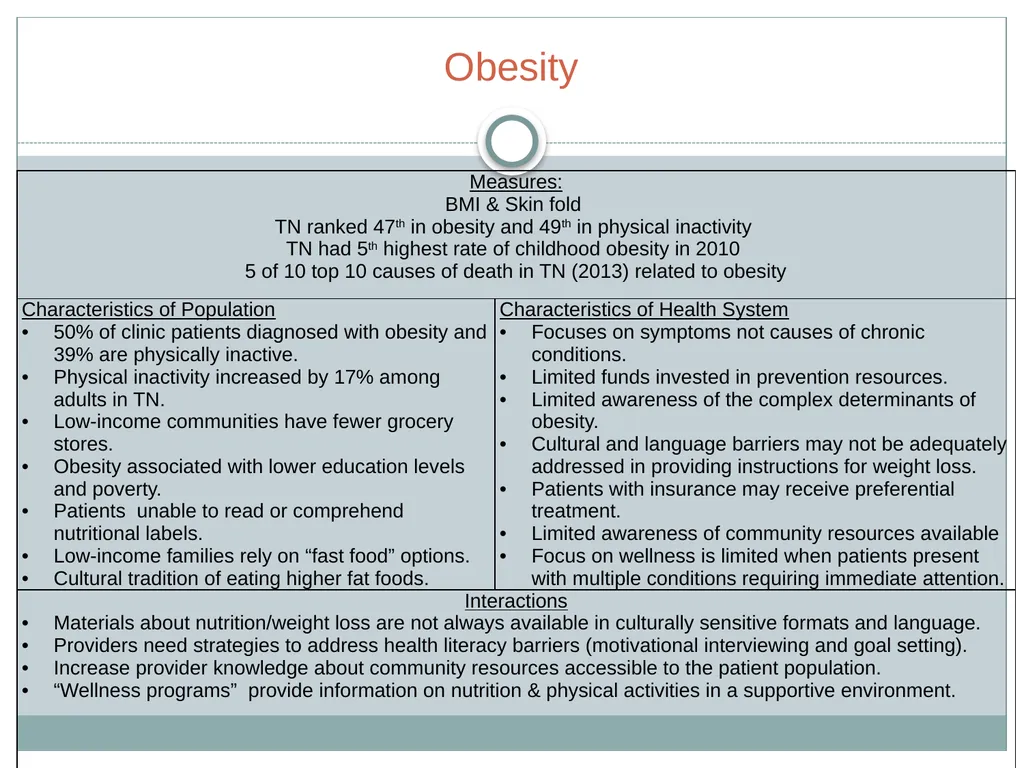
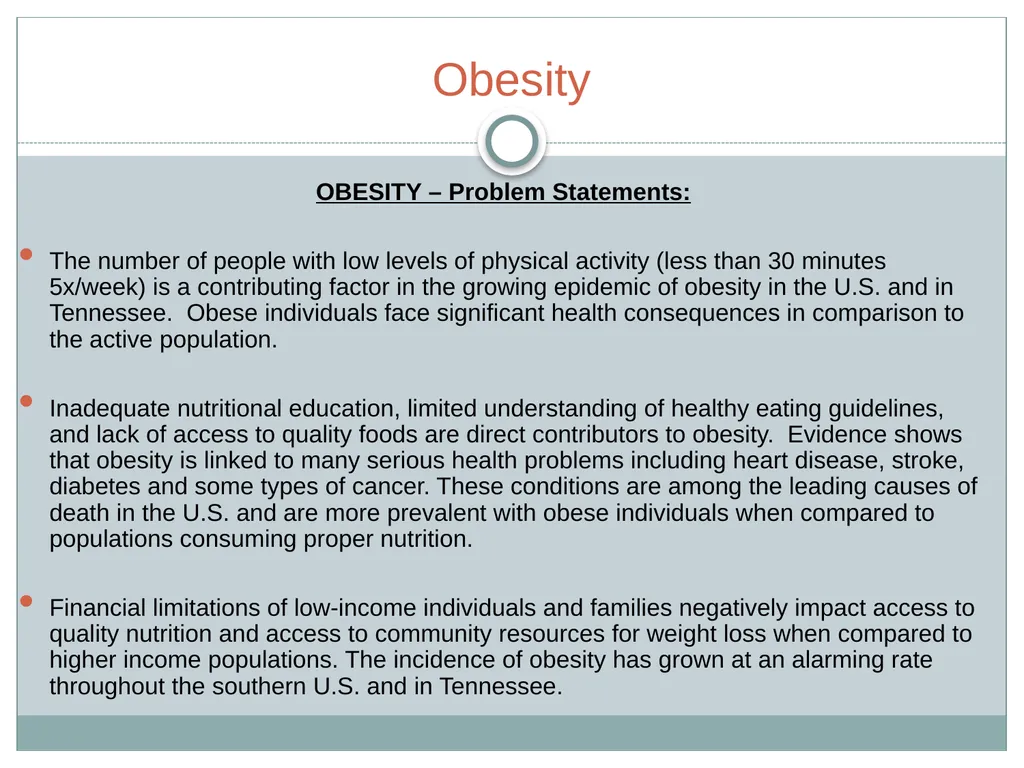
Obesity OBESITY – Problem Statements:
The number of people with low levels of physical activity (less than 30 minutes 5x/week) is a contributing factor in the growing epidemic of obesity in the U.S. and in Tennessee. Obese individuals face significant health consequences in comparison to the active population.
Inadequate nutritional education, limited understanding of healthy eating guidelines, and lack of access to quality foods are direct contributors to obesity. Evidence shows that obesity is linked to many serious health problems including heart disease, stroke, diabetes and some types of cancer. These conditions are among the leading causes of death in the U.S. and are more prevalent with obese individuals when compared to populations consuming proper nutrition.
Financial limitations of low-income individuals and families negatively impact access to quality nutrition and access to community resources for weight loss when compared to higher income populations. The incidence of obesity has grown at an alarming rate throughout the southern U.S. and in Tennessee.<br>
The number of people with low levels of physical activity (less than 30 minutes 5x/week) is a contributing factor in the growing epidemic of obesity in the U.S. and in Tennessee. Obese individuals face significant health consequences in comparison to the active population.
Inadequate nutritional education, limited understanding of healthy eating guidelines, and lack of access to quality foods are direct contributors to obesity. Evidence shows that obesity is linked to many serious health problems including heart disease, stroke, diabetes and some types of cancer. These conditions are among the leading causes of death in the U.S. and are more prevalent with obese individuals when compared to populations consuming proper nutrition.
Financial limitations of low-income individuals and families negatively impact access to quality nutrition and access to community resources for weight loss when compared to higher income populations. The incidence of obesity has grown at an alarming rate throughout the southern U.S. and in Tennessee.<br>
12
Tobacco<br>
13
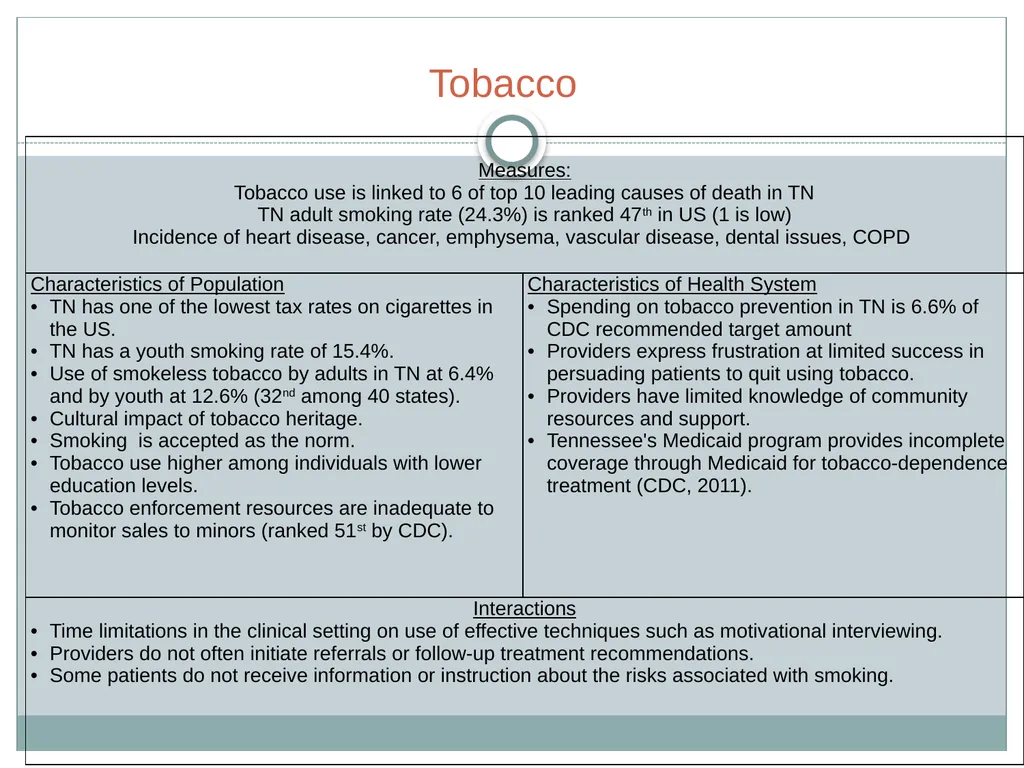
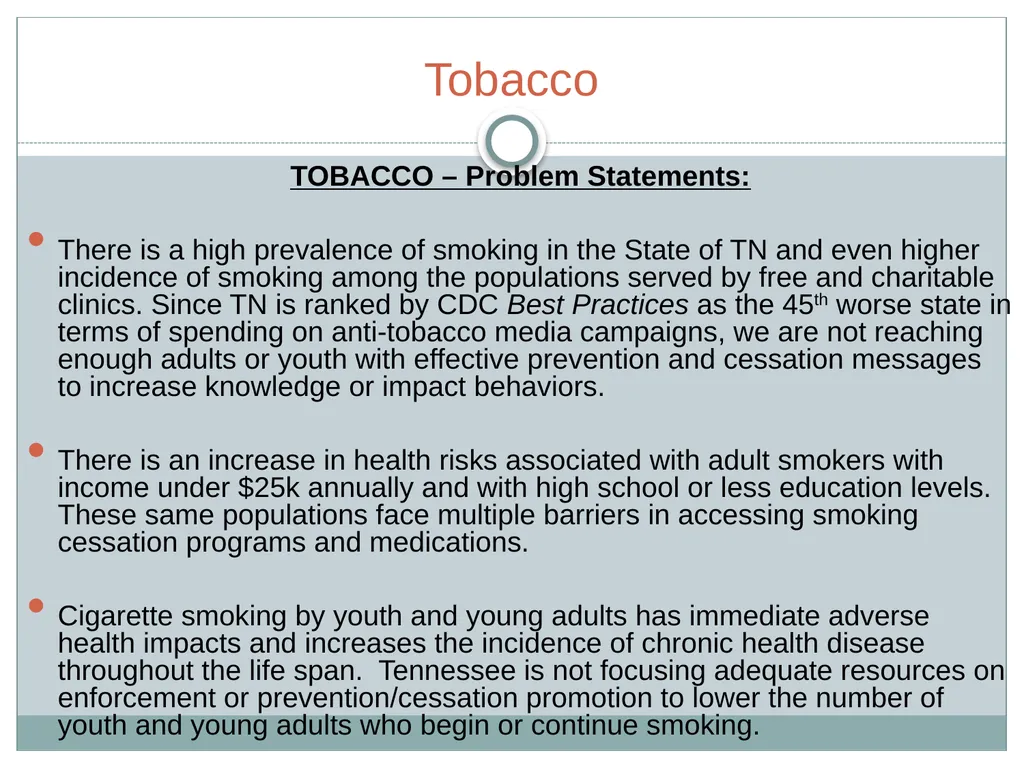
Tobacco TOBACCO – Problem Statements:
There is a high prevalence of smoking in the State of TN and even higher incidence of smoking among the populations served by free and charitable clinics. Since TN is ranked by CDC Best Practices as the 45th worse state in terms of spending on anti-tobacco media campaigns, we are not reaching enough adults or youth with effective prevention and cessation messages to increase knowledge or impact behaviors.
There is an increase in health risks associated with adult smokers with income under $25k annually and with high school or less education levels. These same populations face multiple barriers in accessing smoking cessation programs and medications.
Cigarette smoking by youth and young adults has immediate adverse health impacts and increases the incidence of chronic health disease throughout the life span. Tennessee is not focusing adequate resources on enforcement or prevention/cessation promotion to lower the number of youth and young adults who begin or continue smoking.<br>
There is a high prevalence of smoking in the State of TN and even higher incidence of smoking among the populations served by free and charitable clinics. Since TN is ranked by CDC Best Practices as the 45th worse state in terms of spending on anti-tobacco media campaigns, we are not reaching enough adults or youth with effective prevention and cessation messages to increase knowledge or impact behaviors.
There is an increase in health risks associated with adult smokers with income under $25k annually and with high school or less education levels. These same populations face multiple barriers in accessing smoking cessation programs and medications.
Cigarette smoking by youth and young adults has immediate adverse health impacts and increases the incidence of chronic health disease throughout the life span. Tennessee is not focusing adequate resources on enforcement or prevention/cessation promotion to lower the number of youth and young adults who begin or continue smoking.<br>
14
Adult Oral Health<br>
15
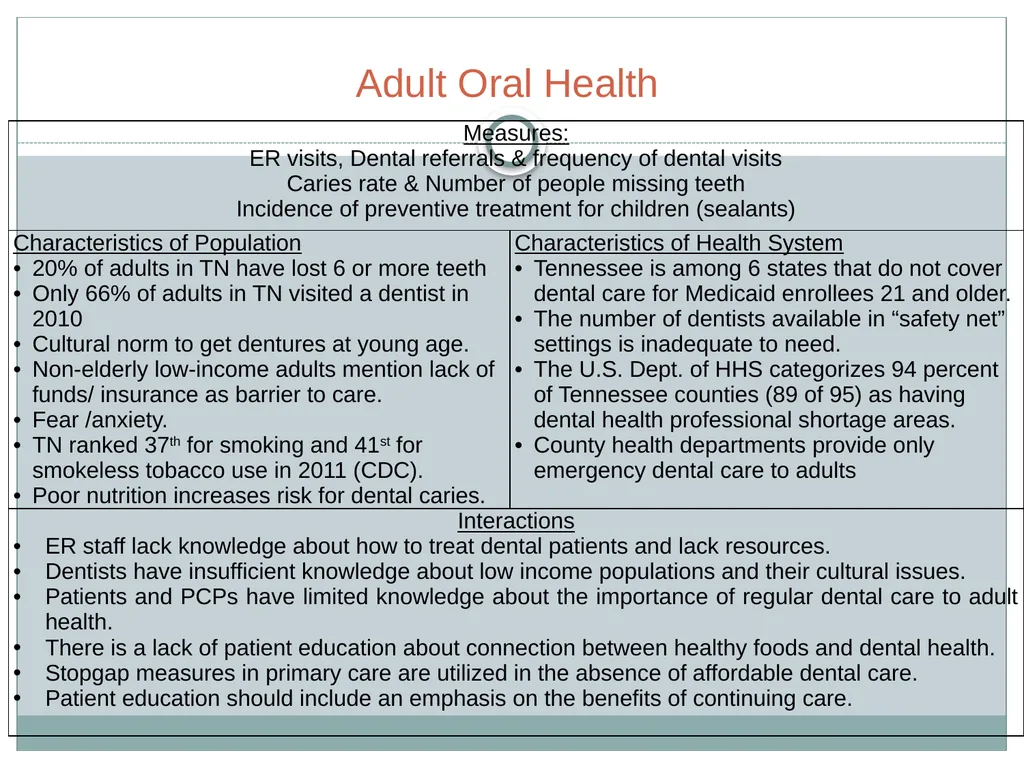
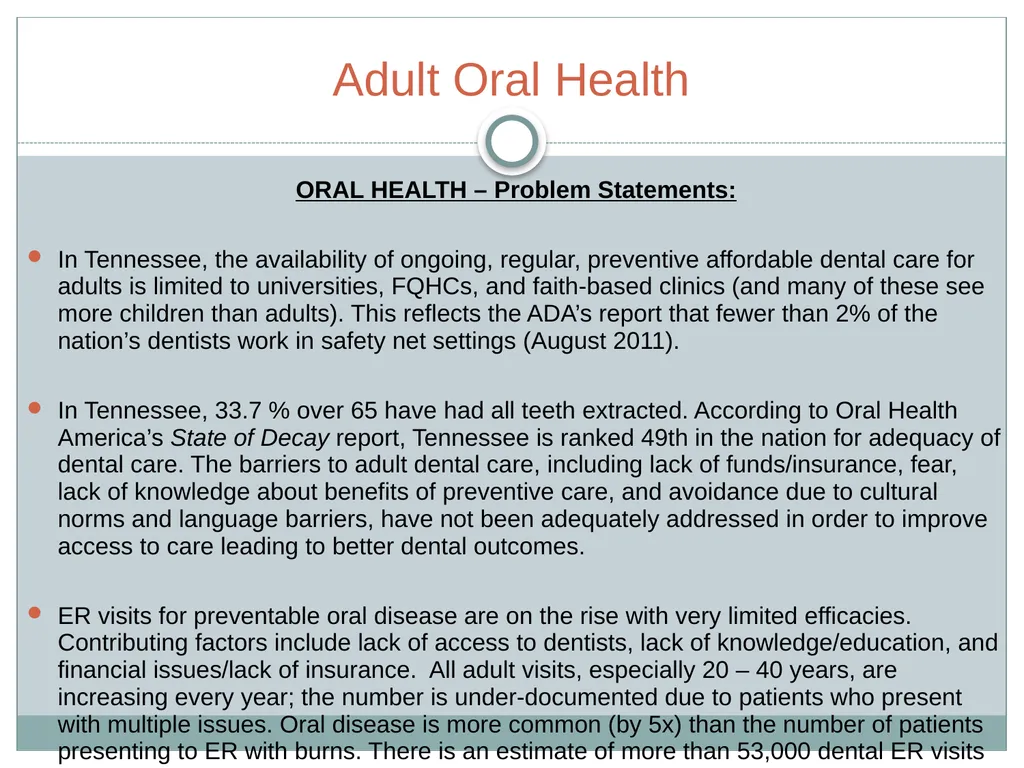
Adult Oral Health ORAL HEALTH – Problem Statements:
In Tennessee, the availability of ongoing, regular, preventive affordable dental care for adults is limited to universities, FQHCs, and faith-based clinics (and many of these see more children than adults). This reflects the ADA’s report that fewer than 2% of the nation’s dentists work in safety net settings (August 2011).
In Tennessee, 33.7 % over 65 have had all teeth extracted. According to Oral Health America’s State of Decay report, Tennessee is ranked 49th in the nation for adequacy of dental care. The barriers to adult dental care, including lack of funds/insurance, fear, lack of knowledge about benefits of preventive care, and avoidance due to cultural norms and language barriers, have not been adequately addressed in order to improve access to care leading to better dental outcomes.
ER visits for preventable oral disease are on the rise with very limited efficacies. Contributing factors include lack of access to dentists, lack of knowledge/education, and financial issues/lack of insurance. All adult visits, especially 20 – 40 years, are increasing every year; the number is under-documented due to patients who present with multiple issues. Oral disease is more common (by 5x) than the number of patients presenting to ER with burns. There is an estimate of more than 53,000 dental ER visits per year in TN (Pew Center).<br>
In Tennessee, the availability of ongoing, regular, preventive affordable dental care for adults is limited to universities, FQHCs, and faith-based clinics (and many of these see more children than adults). This reflects the ADA’s report that fewer than 2% of the nation’s dentists work in safety net settings (August 2011).
In Tennessee, 33.7 % over 65 have had all teeth extracted. According to Oral Health America’s State of Decay report, Tennessee is ranked 49th in the nation for adequacy of dental care. The barriers to adult dental care, including lack of funds/insurance, fear, lack of knowledge about benefits of preventive care, and avoidance due to cultural norms and language barriers, have not been adequately addressed in order to improve access to care leading to better dental outcomes.
ER visits for preventable oral disease are on the rise with very limited efficacies. Contributing factors include lack of access to dentists, lack of knowledge/education, and financial issues/lack of insurance. All adult visits, especially 20 – 40 years, are increasing every year; the number is under-documented due to patients who present with multiple issues. Oral disease is more common (by 5x) than the number of patients presenting to ER with burns. There is an estimate of more than 53,000 dental ER visits per year in TN (Pew Center).<br>
16
Tools currently in use
Best practices
Case scenarios Sharing Tools and Techniques<br>
Best practices
Case scenarios Sharing Tools and Techniques<br>
17
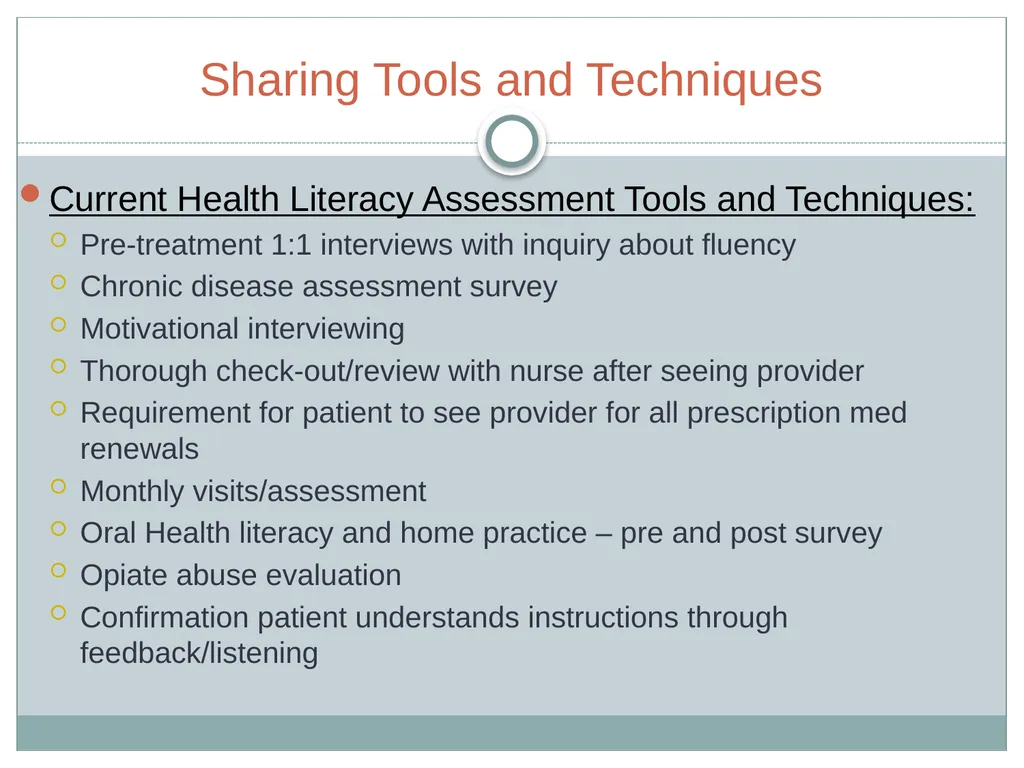
Sharing Tools and Techniques Current Health Literacy Assessment Tools and Techniques:
Pre-treatment 1:1 interviews with inquiry about fluency
Chronic disease assessment survey
Motivational interviewing
Thorough check-out/review with nurse after seeing provider
Requirement for patient to see provider for all prescription med renewals
Monthly visits/assessment
Oral Health literacy and home practice – pre and post survey
Opiate abuse evaluation
Confirmation patient understands instructions through feedback/listening<br>
Pre-treatment 1:1 interviews with inquiry about fluency
Chronic disease assessment survey
Motivational interviewing
Thorough check-out/review with nurse after seeing provider
Requirement for patient to see provider for all prescription med renewals
Monthly visits/assessment
Oral Health literacy and home practice – pre and post survey
Opiate abuse evaluation
Confirmation patient understands instructions through feedback/listening<br>
18
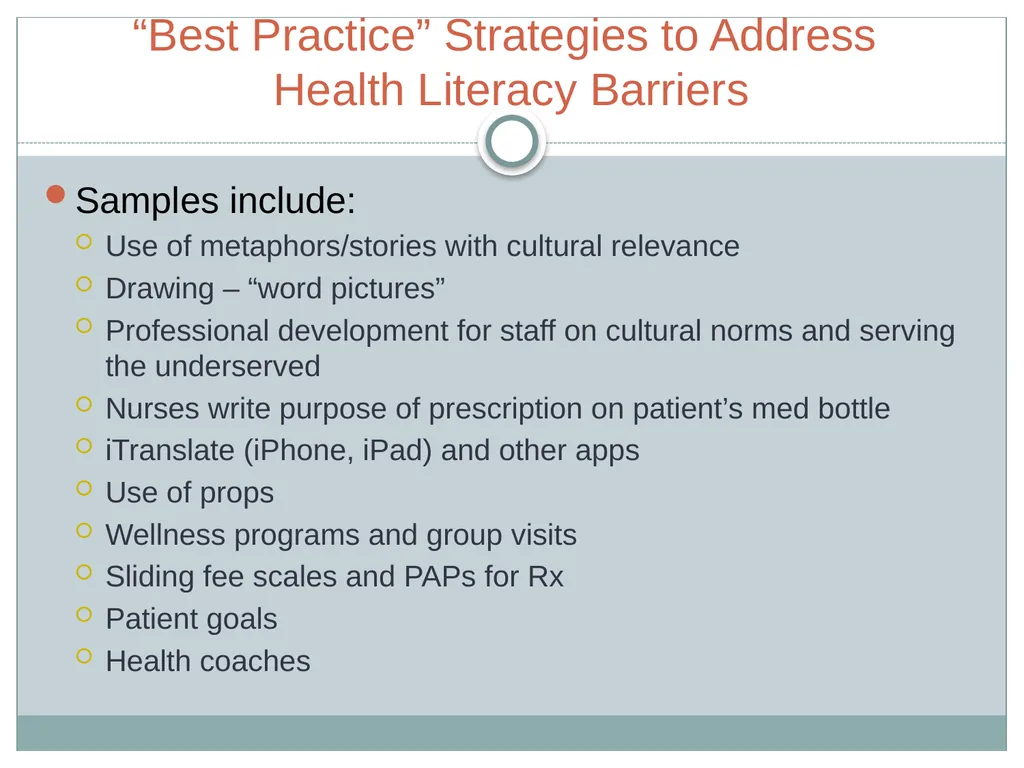
“Best Practice” Strategies to Address
Health Literacy Barriers Samples include:
Use of metaphors/stories with cultural relevance
Drawing – “word pictures”
Professional development for staff on cultural norms and serving the underserved
Nurses write purpose of prescription on patient’s med bottle
iTranslate (iPhone, iPad) and other apps
Use of props
Wellness programs and group visits
Sliding fee scales and PAPs for Rx
Patient goals
Health coaches<br>
Use of metaphors/stories with cultural relevance
Drawing – “word pictures”
Professional development for staff on cultural norms and serving the underserved
Nurses write purpose of prescription on patient’s med bottle
iTranslate (iPhone, iPad) and other apps
Use of props
Wellness programs and group visits
Sliding fee scales and PAPs for Rx
Patient goals
Health coaches<br>
19
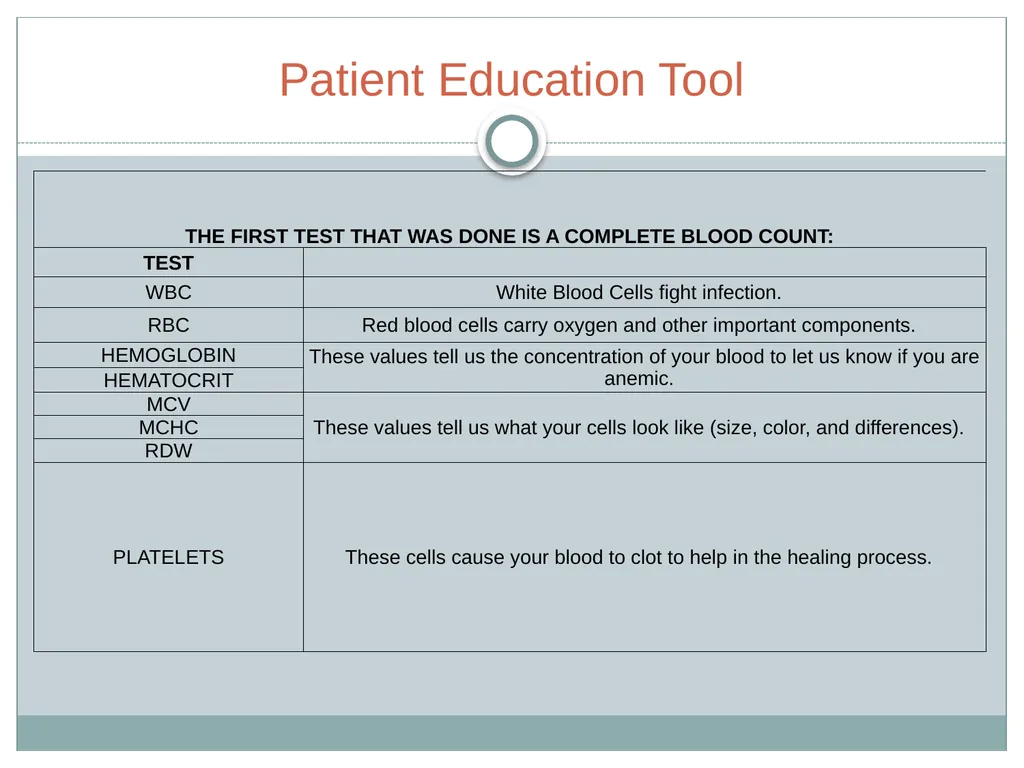
Patient Education Tool<br>
20
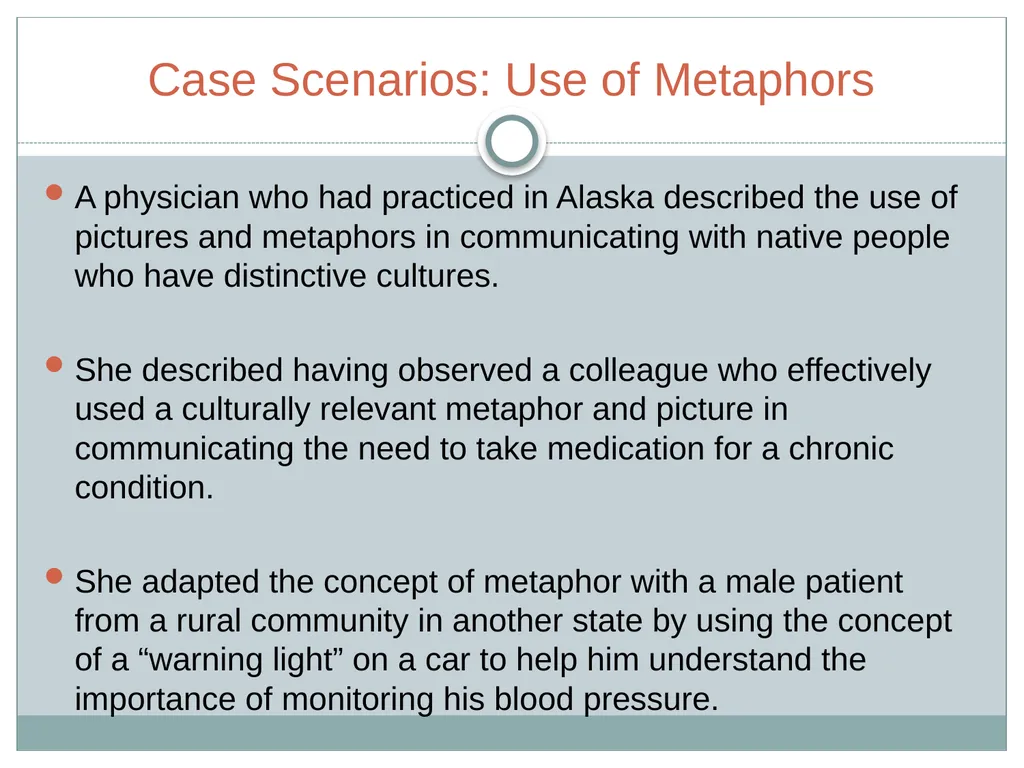
Case Scenarios: Use of Metaphors A physician who had practiced in Alaska described the use of pictures and metaphors in communicating with native people who have distinctive cultures.
She described having observed a colleague who effectively used a culturally relevant metaphor and picture in communicating the need to take medication for a chronic condition.
She adapted the concept of metaphor with a male patient from a rural community in another state by using the concept of a “warning light” on a car to help him understand the importance of monitoring his blood pressure.<br>
She described having observed a colleague who effectively used a culturally relevant metaphor and picture in communicating the need to take medication for a chronic condition.
She adapted the concept of metaphor with a male patient from a rural community in another state by using the concept of a “warning light” on a car to help him understand the importance of monitoring his blood pressure.<br>
21
Case Scenarios: Nutrition The administrator of a clinic serving a population with high incidence of obesity described the use of brightly colored portion control rings (available through PortionMateTM) to help patients learn to measure healthy food portions.
Another urban clinic offers an on-site garden where patients and their families participating in a wellness program are involved in growing, harvesting and preparing vegetables from the community garden.<br>
Another urban clinic offers an on-site garden where patients and their families participating in a wellness program are involved in growing, harvesting and preparing vegetables from the community garden.<br>
22
Case Scenarios: Engaging Patients A physician from an organization that provides services to a patient population approximately 80% refugee or immigrant described the importance of having a “hospitality coordinator” to engage each person personally upon arrival at the clinic.
The person in this role is friendly and proactive in assuring that the patient and his/her family feels welcome and engaged in care.
The same organization has a Patient Resource Room where tools, such as a computer with pre-bookmarked sites, are available to meet individual cultural and language needs.<br>
The person in this role is friendly and proactive in assuring that the patient and his/her family feels welcome and engaged in care.
The same organization has a Patient Resource Room where tools, such as a computer with pre-bookmarked sites, are available to meet individual cultural and language needs.<br>
23
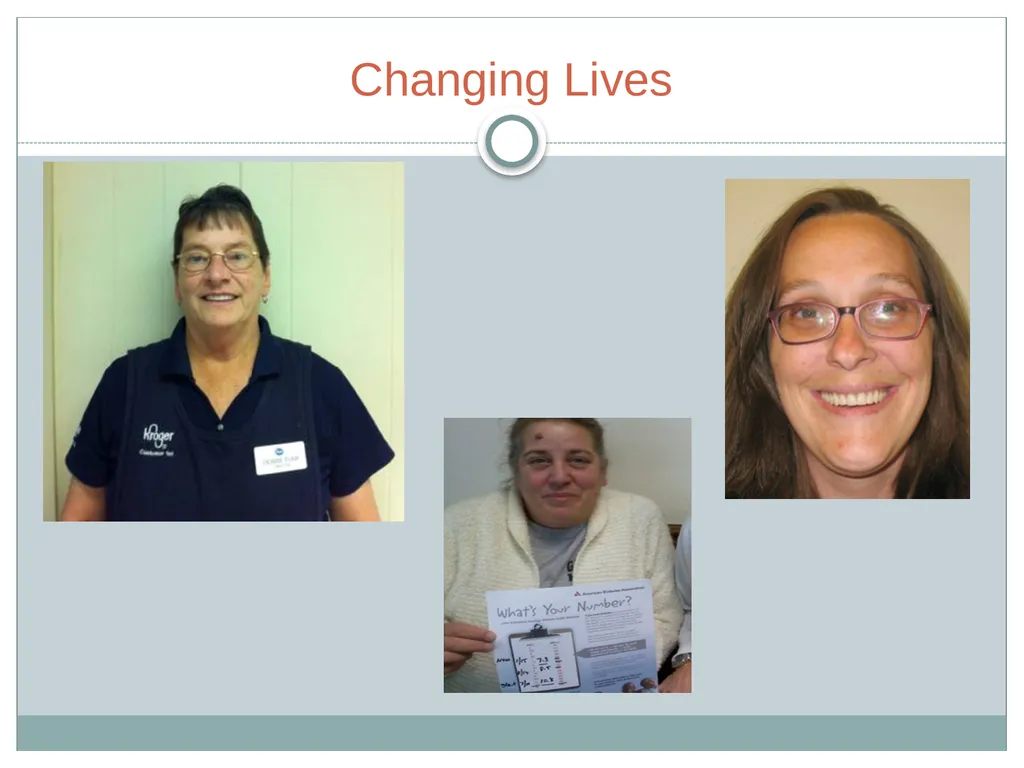
Changing Lives<br>
24
Individual
Clinic / healthcare system
Community-wide Finding Ways to Close the Gap<br>
Clinic / healthcare system
Community-wide Finding Ways to Close the Gap<br>
25
Finding Ways to Close the Gap INDIVIDUAL
Address Personal Issues & Promote Self-Worth
Denial motivational interviewing; help patient acknowledge their denial; counseling; support groups; interactive tools
Fear information via media and mass campaigns; less fear-based messages; develop trust with patients; “perfect love casts out fear”
Ownership Re-train medical community to be “coaches” rather than talking to/at patient
Compliance Find root causes; timely reminders of appointments; check out with a nurse; guided/assisted compliance via advocates; cultural competency<br>
Address Personal Issues & Promote Self-Worth
Denial motivational interviewing; help patient acknowledge their denial; counseling; support groups; interactive tools
Fear information via media and mass campaigns; less fear-based messages; develop trust with patients; “perfect love casts out fear”
Ownership Re-train medical community to be “coaches” rather than talking to/at patient
Compliance Find root causes; timely reminders of appointments; check out with a nurse; guided/assisted compliance via advocates; cultural competency<br>
26
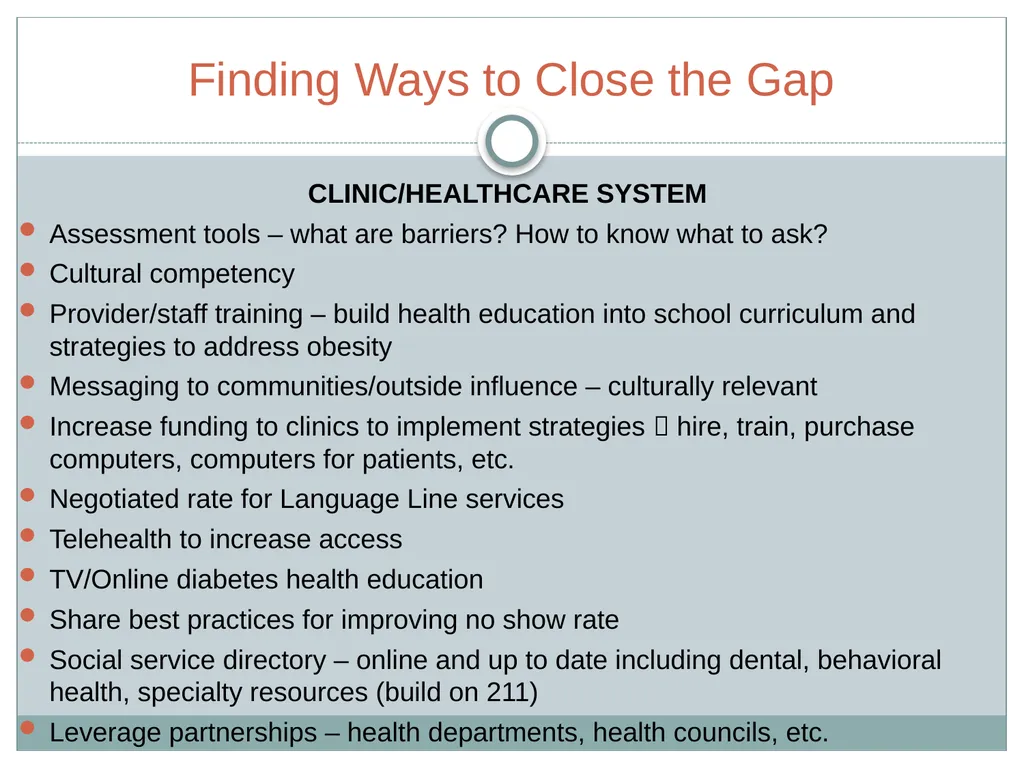
Finding Ways to Close the Gap CLINIC/HEALTHCARE SYSTEM
Assessment tools – what are barriers? How to know what to ask?
Cultural competency
Provider/staff training – build health education into school curriculum and strategies to address obesity
Messaging to communities/outside influence – culturally relevant
Increase funding to clinics to implement strategies hire, train, purchase computers, computers for patients, etc.
Negotiated rate for Language Line services
Telehealth to increase access
TV/Online diabetes health education
Share best practices for improving no show rate
Social service directory – online and up to date including dental, behavioral health, specialty resources (build on 211)
Leverage partnerships – health departments, health councils, etc.<br>
Assessment tools – what are barriers? How to know what to ask?
Cultural competency
Provider/staff training – build health education into school curriculum and strategies to address obesity
Messaging to communities/outside influence – culturally relevant
Increase funding to clinics to implement strategies hire, train, purchase computers, computers for patients, etc.
Negotiated rate for Language Line services
Telehealth to increase access
TV/Online diabetes health education
Share best practices for improving no show rate
Social service directory – online and up to date including dental, behavioral health, specialty resources (build on 211)
Leverage partnerships – health departments, health councils, etc.<br>
27
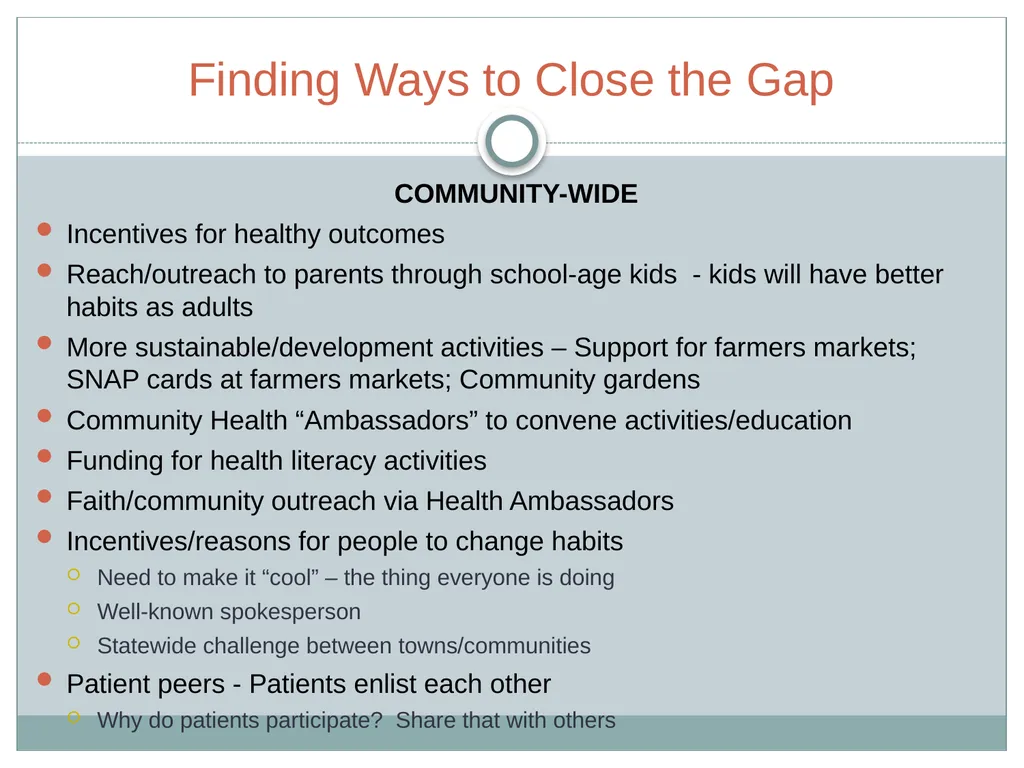
Finding Ways to Close the Gap COMMUNITY-WIDE
Incentives for healthy outcomes
Reach/outreach to parents through school-age kids - kids will have better habits as adults
More sustainable/development activities – Support for farmers markets; SNAP cards at farmers markets; Community gardens
Community Health “Ambassadors” to convene activities/education
Funding for health literacy activities
Faith/community outreach via Health Ambassadors
Incentives/reasons for people to change habits
Need to make it “cool” – the thing everyone is doing
Well-known spokesperson
Statewide challenge between towns/communities
Patient peers - Patients enlist each other
Why do patients participate? Share that with others<br>
Incentives for healthy outcomes
Reach/outreach to parents through school-age kids - kids will have better habits as adults
More sustainable/development activities – Support for farmers markets; SNAP cards at farmers markets; Community gardens
Community Health “Ambassadors” to convene activities/education
Funding for health literacy activities
Faith/community outreach via Health Ambassadors
Incentives/reasons for people to change habits
Need to make it “cool” – the thing everyone is doing
Well-known spokesperson
Statewide challenge between towns/communities
Patient peers - Patients enlist each other
Why do patients participate? Share that with others<br>
28
Thank You! Tennessee
Charitable
Care
Network
(TCCN)
https://www.tccnetwork.org/home.html
Christi Granstaff,
Executive Director
christigranstaff@bellsouth.net
615.274.9665 TCCN members are a statewide community of healthcare providers who have a shared sense of mission and face many of the same challenges.
Given the complexity and scope of the problem, TCCN is grateful to partner with the Tennessee Department of Health to address the issues related to health literacy of vulnerable populations in Tennessee.<br>
Charitable
Care
Network
(TCCN)
https://www.tccnetwork.org/home.html
Christi Granstaff,
Executive Director
christigranstaff@bellsouth.net
615.274.9665 TCCN members are a statewide community of healthcare providers who have a shared sense of mission and face many of the same challenges.
Given the complexity and scope of the problem, TCCN is grateful to partner with the Tennessee Department of Health to address the issues related to health literacy of vulnerable populations in Tennessee.<br>