
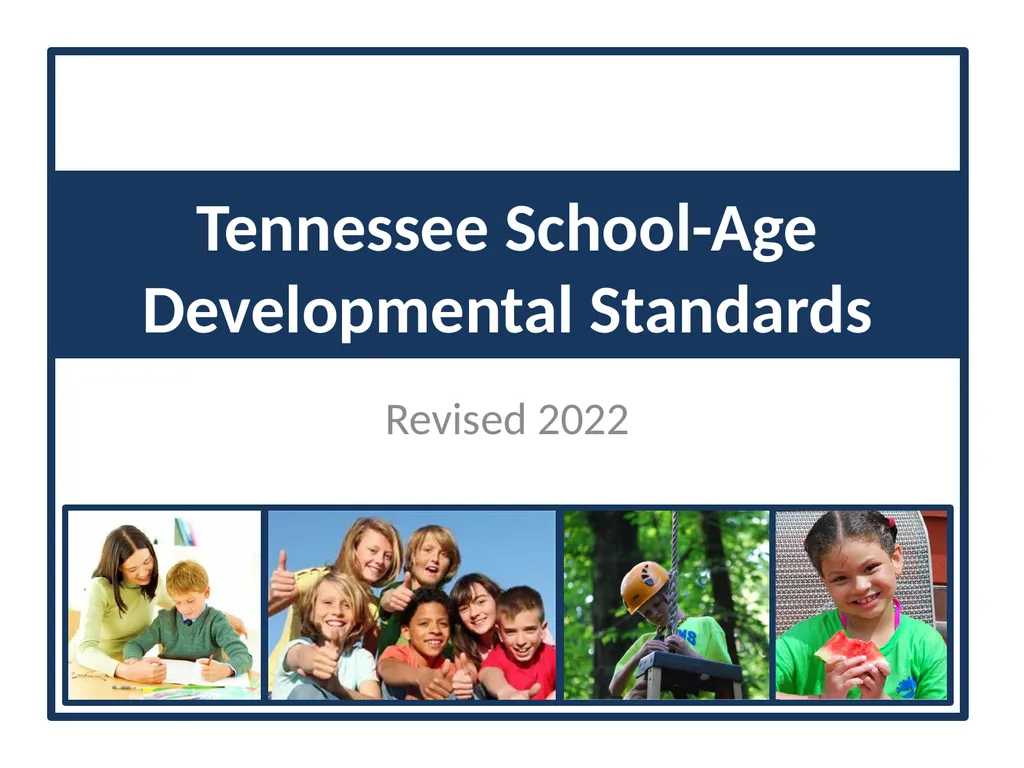
Tennessee School-Age Developmental Standards
Description: Tennessee School-Age Developmental Standards Revised 2022 Revised 103017 2 Introduction The Tennessee School-Age Developmental Standards were compiled as an effort of the Tennessee Afterschool Network in conjunction with the Department of
Related Topics
Download Presentation
"Tennessee School-Age Developmental Standards" is the property of its rightful owner. Permission is granted to download and print the materials on this website for personal, non-commercial use only, and to display it on your personal computer provided you do not modify the materials and that you retain all copyright notices contained in the materials. By downloading content from our website, you accept the terms of this agreement.
Presentation Transcript
slide1. Tennessee School-Age Developmental Standards Revised 2022<br>
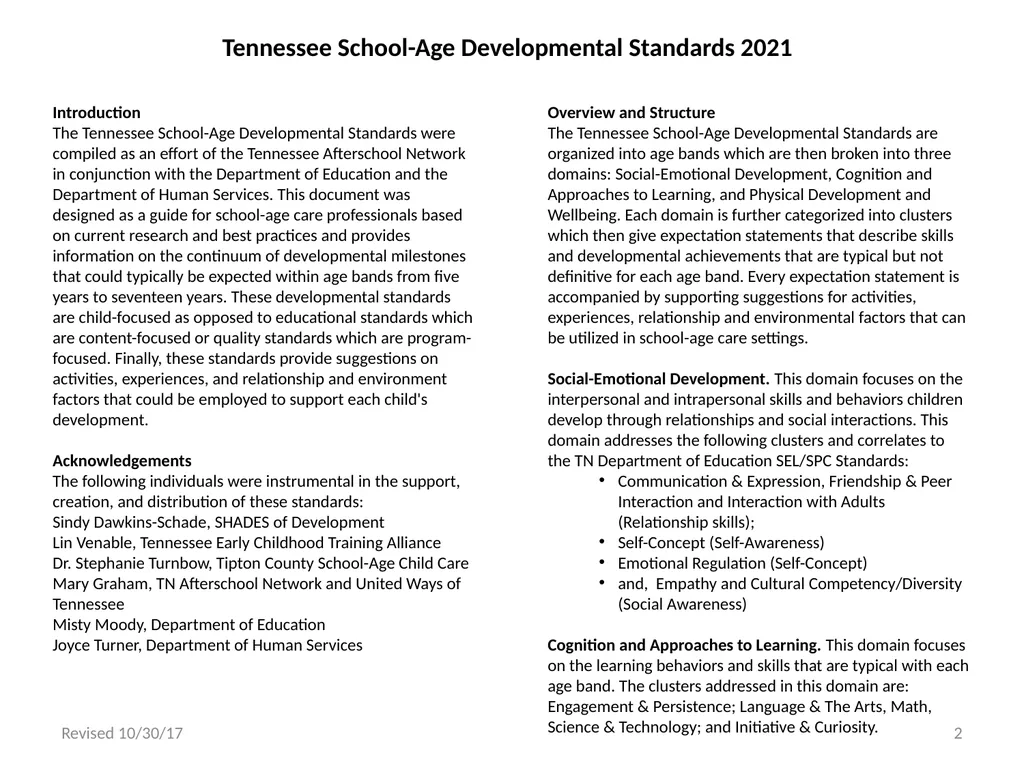
slide2. Revised 10/30/17 2 Introduction
The Tennessee School-Age Developmental Standards were compiled as an effort of the Tennessee Afterschool Network in conjunction with the Department of Education and the Department of Human Services. This document was designed as a guide for school-age care professionals based on current research and best practices and provides information on the continuum of developmental milestones that could typically be expected within age bands from five years to seventeen years. These developmental standards are child-focused as opposed to educational standards which are content-focused or quality standards which are program-focused. Finally, these standards provide suggestions on activities, experiences, and relationship and environment factors that could be employed to support each child's development.
Acknowledgements
The following individuals were instrumental in the support, creation, and distribution of these standards:
Sindy Dawkins-Schade, SHADES of Development
Lin Venable, Tennessee Early Childhood Training Alliance
Dr. Stephanie Turnbow, Tipton County School-Age Child Care
Mary Graham, TN Afterschool Network and United Ways of Tennessee
Misty Moody, Department of Education
Joyce Turner, Department of Human Services Overview and Structure
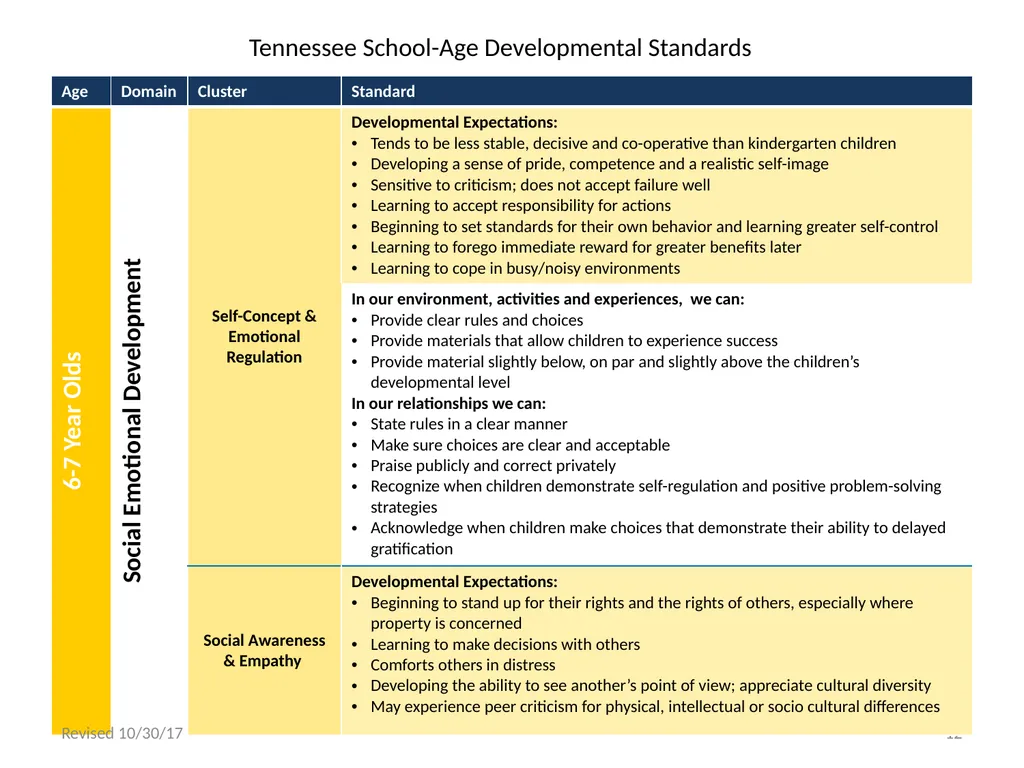
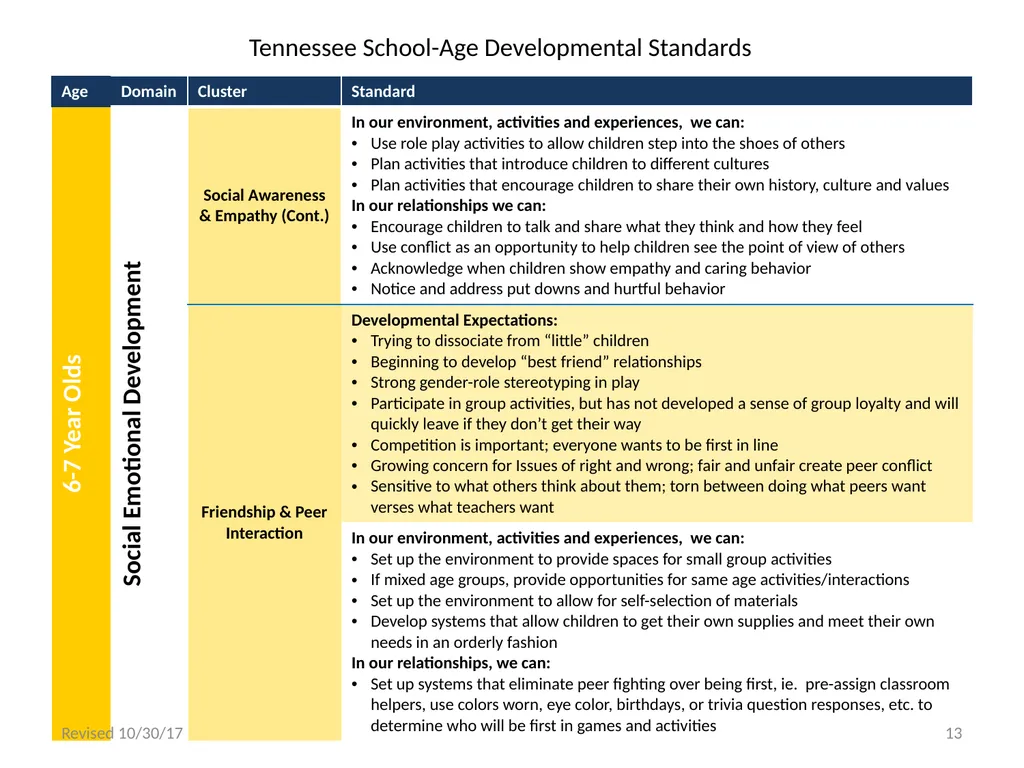
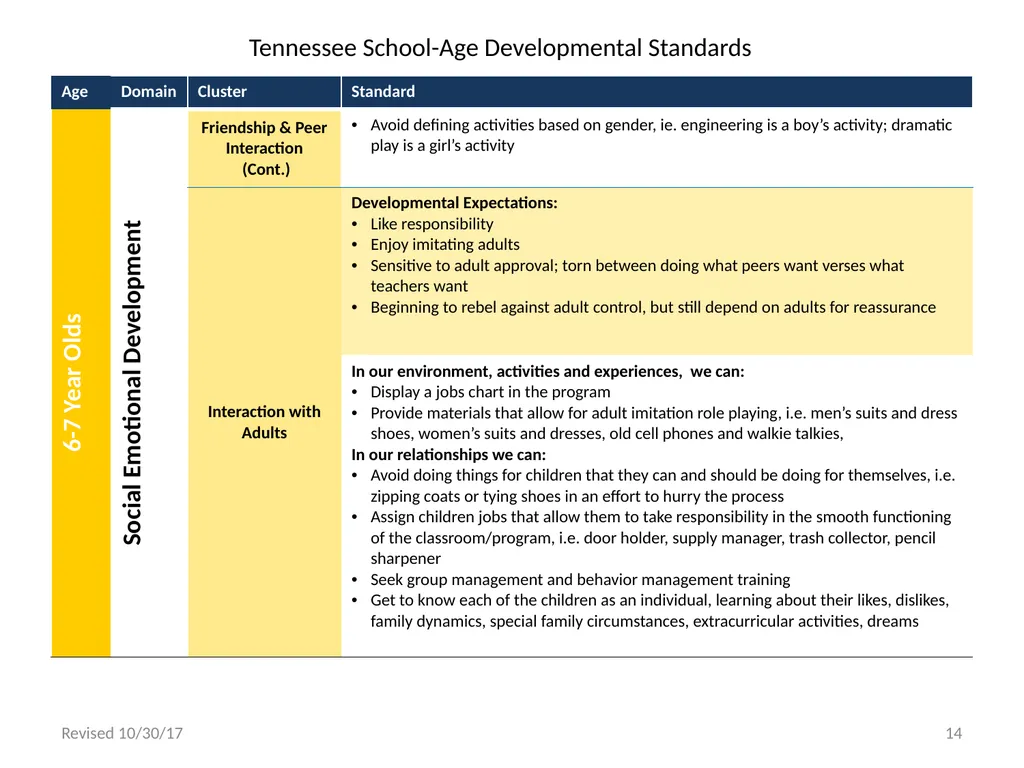
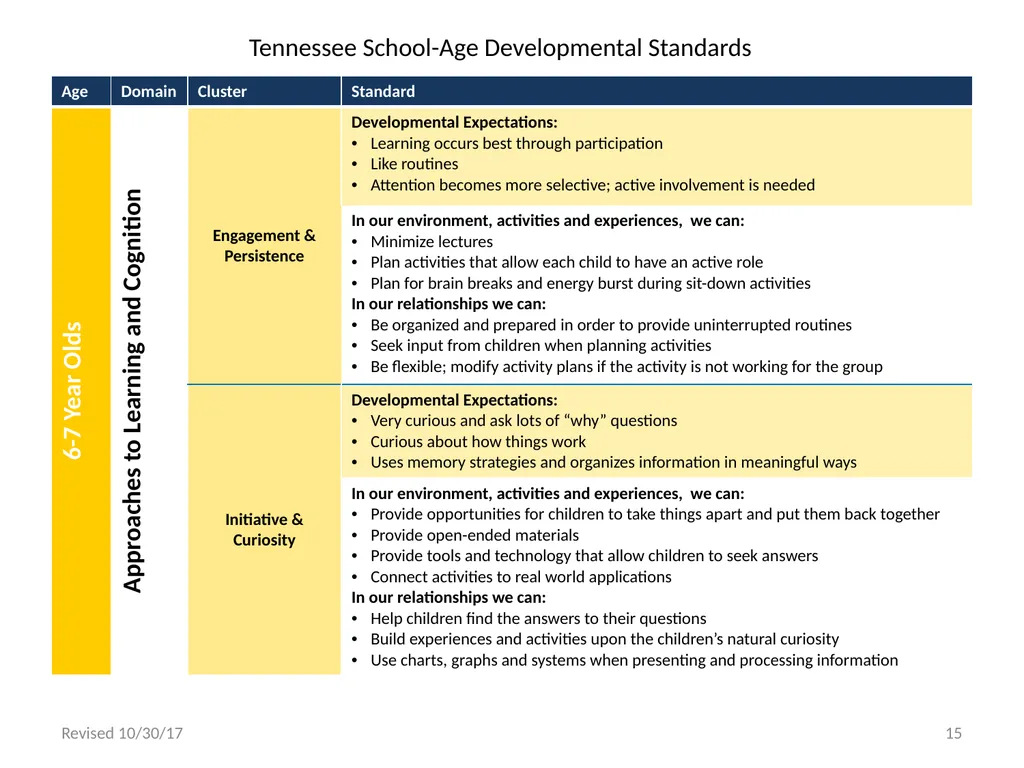
The Tennessee School-Age Developmental Standards are organized into age bands which are then broken into three domains: Social-Emotional Development, Cognition and Approaches to Learning, and Physical Development and Wellbeing. Each domain is further categorized into clusters which then give expectation statements that describe skills and developmental achievements that are typical but not definitive for each age band. Every expectation statement is accompanied by supporting suggestions for activities, experiences, relationship and environmental factors that can be utilized in school-age care settings.
Social-Emotional Development. This domain focuses on the interpersonal and intrapersonal skills and behaviors children develop through relationships and social interactions. This domain addresses the following clusters and correlates to the TN Department of Education SEL/SPC Standards:
Communication & Expression, Friendship & Peer Interaction and Interaction with Adults (Relationship skills);
Self-Concept (Self-Awareness)
Emotional Regulation (Self-Concept)
and, Empathy and Cultural Competency/Diversity (Social Awareness)
Cognition and Approaches to Learning. This domain focuses on the learning behaviors and skills that are typical with each age band. The clusters addressed in this domain are: Engagement & Persistence; Language & The Arts, Math, Science & Technology; and Initiative & Curiosity. Tennessee School-Age Developmental Standards 2021<br>
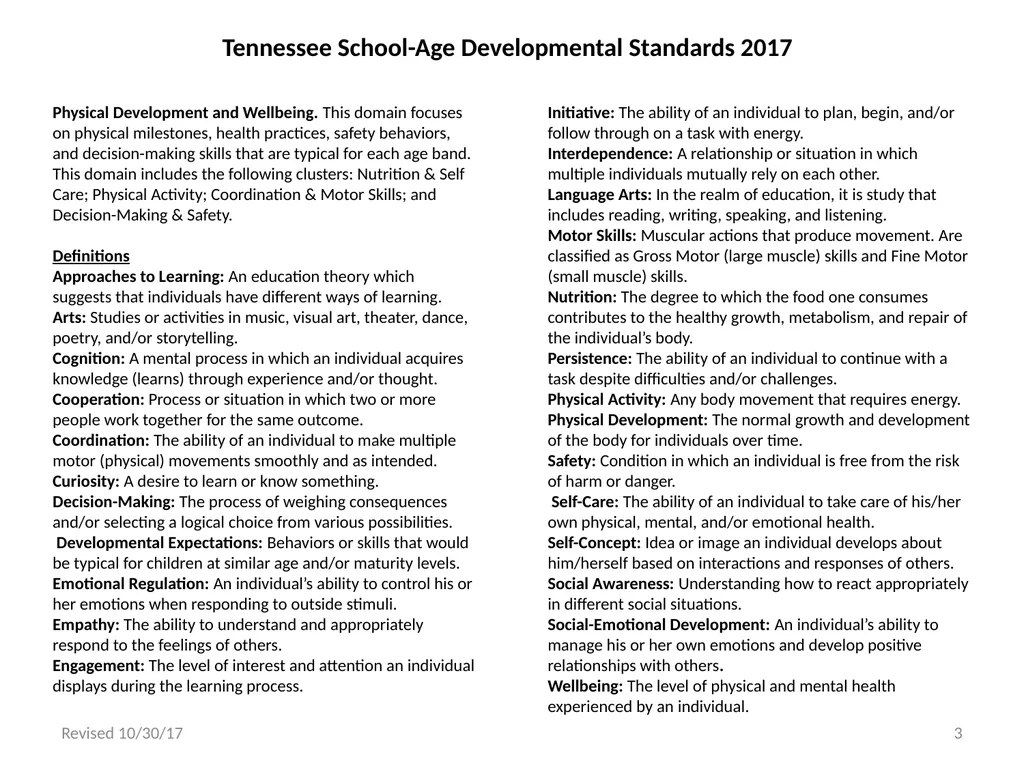
slide3. Revised 10/30/17 3 Physical Development and Wellbeing. This domain focuses on physical milestones, health practices, safety behaviors, and decision-making skills that are typical for each age band. This domain includes the following clusters: Nutrition & Self Care; Physical Activity; Coordination & Motor Skills; and Decision-Making & Safety.
Definitions
Approaches to Learning: An education theory which suggests that individuals have different ways of learning.
Arts: Studies or activities in music, visual art, theater, dance, poetry, and/or storytelling.
Cognition: A mental process in which an individual acquires knowledge (learns) through experience and/or thought.
Cooperation: Process or situation in which two or more people work together for the same outcome.
Coordination: The ability of an individual to make multiple motor (physical) movements smoothly and as intended.
Curiosity: A desire to learn or know something.
Decision-Making: The process of weighing consequences and/or selecting a logical choice from various possibilities.
Developmental Expectations: Behaviors or skills that would be typical for children at similar age and/or maturity levels.
Emotional Regulation: An individual’s ability to control his or her emotions when responding to outside stimuli.
Empathy: The ability to understand and appropriately respond to the feelings of others.
Engagement: The level of interest and attention an individual displays during the learning process. Initiative: The ability of an individual to plan, begin, and/or follow through on a task with energy.
Interdependence: A relationship or situation in which multiple individuals mutually rely on each other.
Language Arts: In the realm of education, it is study that includes reading, writing, speaking, and listening.
Motor Skills: Muscular actions that produce movement. Are classified as Gross Motor (large muscle) skills and Fine Motor (small muscle) skills.
Nutrition: The degree to which the food one consumes contributes to the healthy growth, metabolism, and repair of the individual’s body.
Persistence: The ability of an individual to continue with a task despite difficulties and/or challenges.
Physical Activity: Any body movement that requires energy.
Physical Development: The normal growth and development of the body for individuals over time.
Safety: Condition in which an individual is free from the risk of harm or danger.
Self-Care: The ability of an individual to take care of his/her own physical, mental, and/or emotional health.
Self-Concept: Idea or image an individual develops about him/herself based on interactions and responses of others.
Social Awareness: Understanding how to react appropriately in different social situations.
Social-Emotional Development: An individual’s ability to manage his or her own emotions and develop positive relationships with others.
Wellbeing: The level of physical and mental health experienced by an individual. Tennessee School-Age Developmental Standards 2017<br>
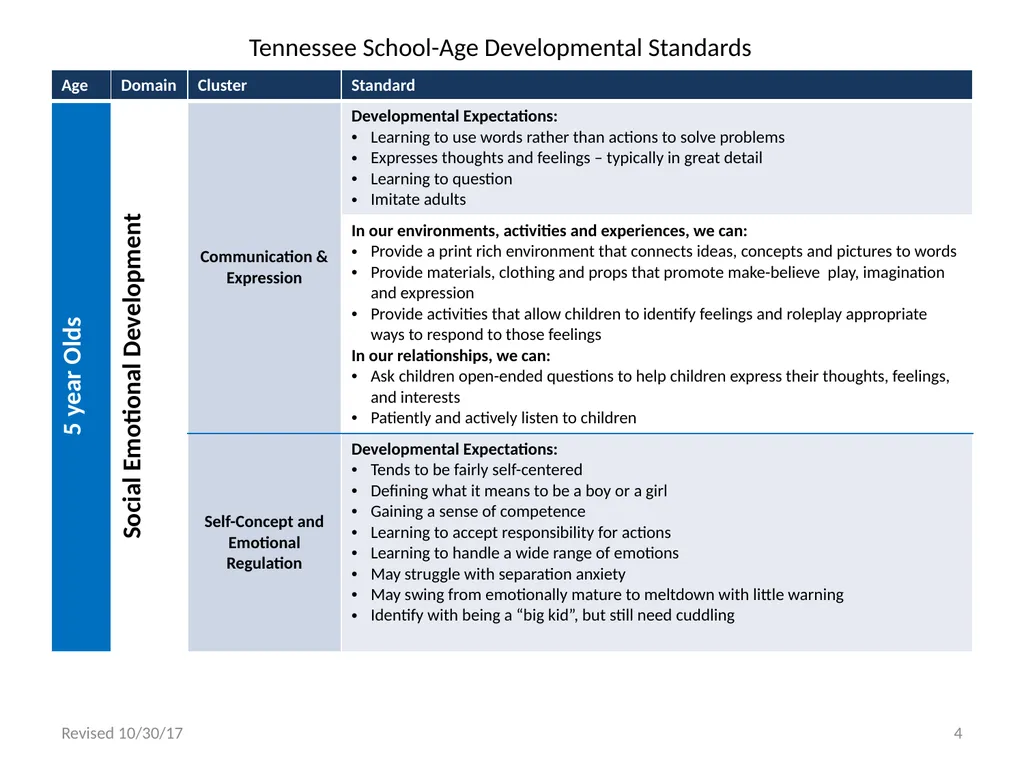
slide4. Tennessee School-Age Developmental Standards Revised 10/30/17 4<br>
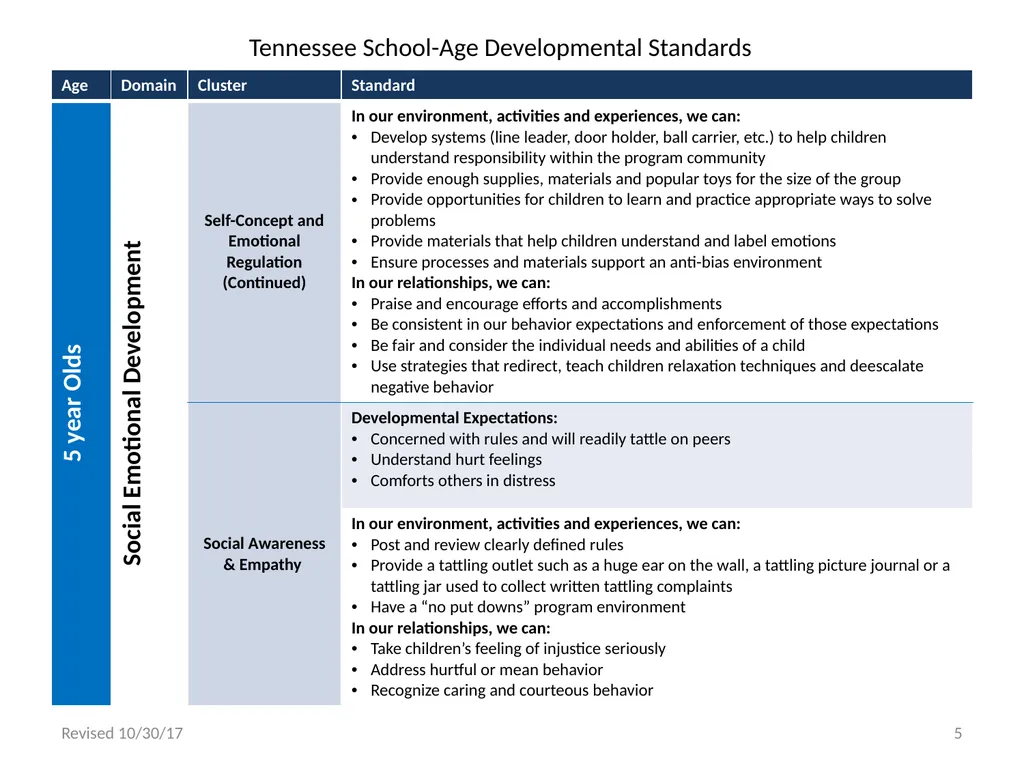
slide5. Tennessee School-Age Developmental Standards Revised 10/30/17 5<br>
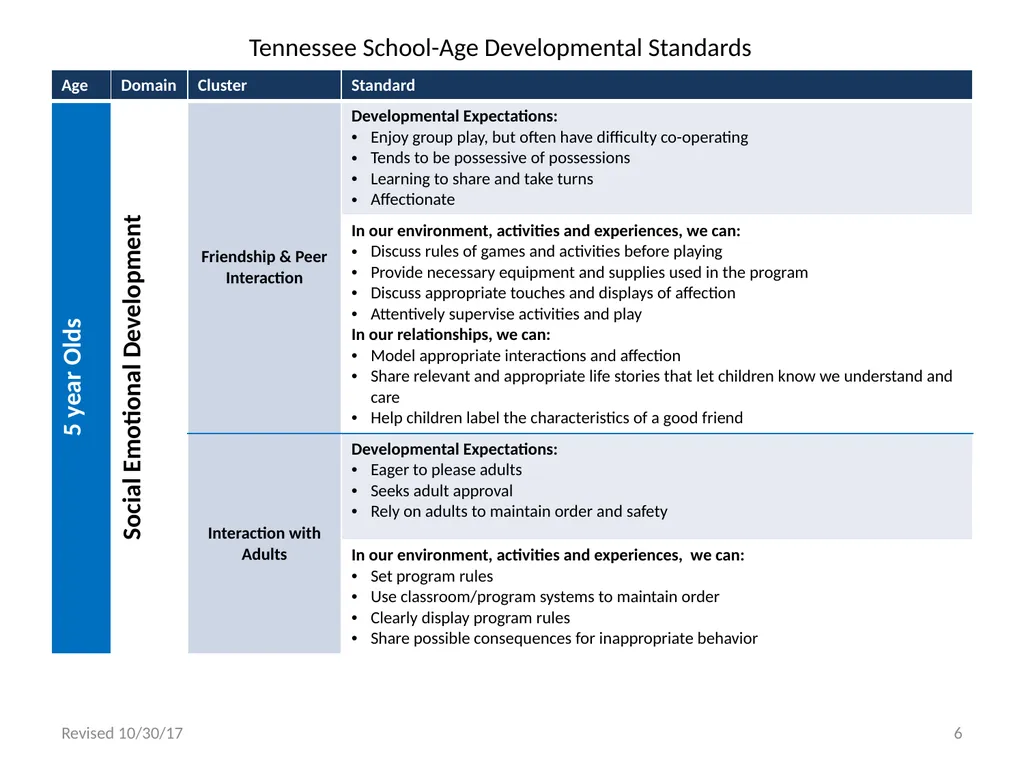
slide6. Tennessee School-Age Developmental Standards Revised 10/30/17 6<br>
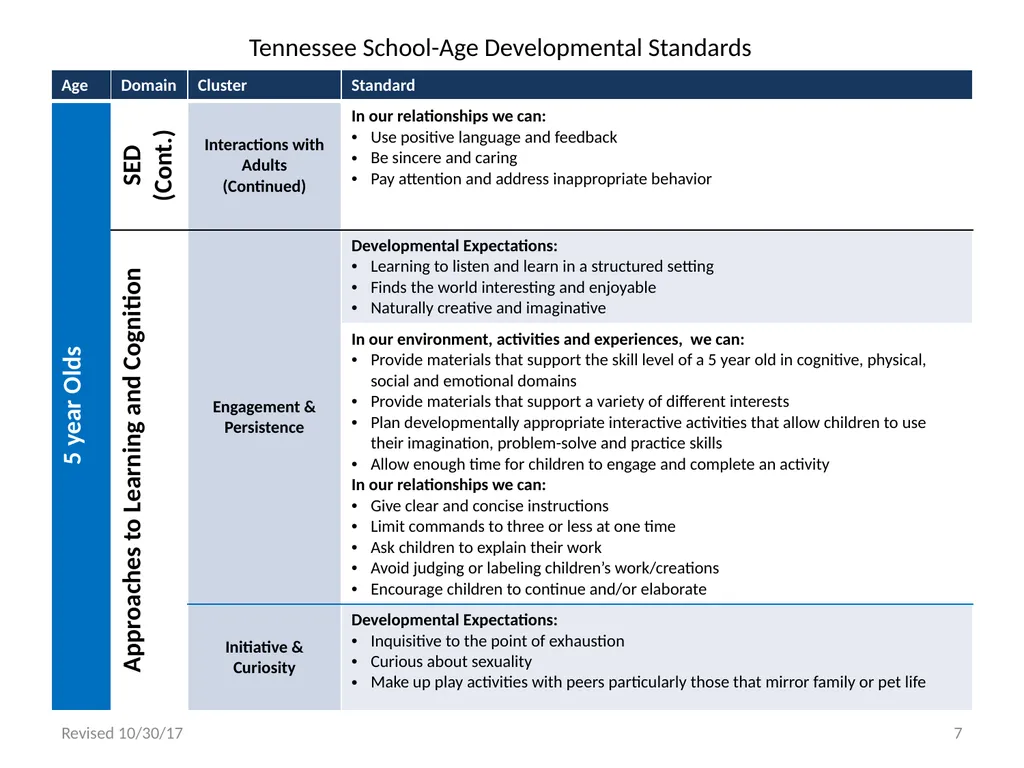
slide7. Tennessee School-Age Developmental Standards Revised 10/30/17 7<br>
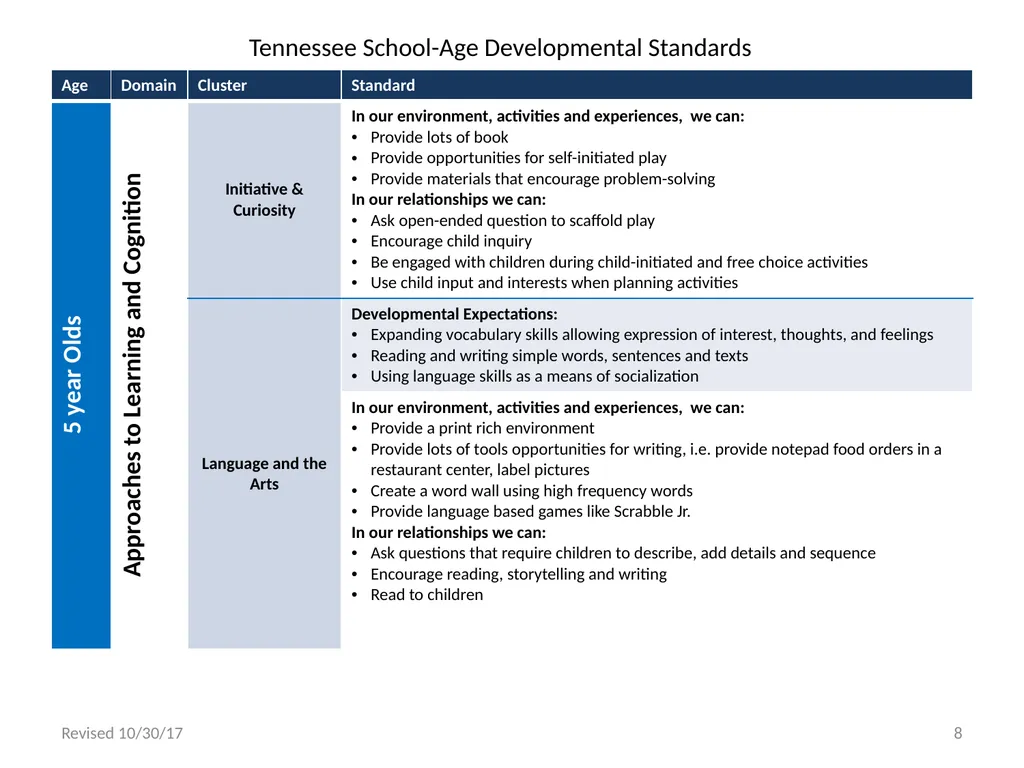
slide8. Tennessee School-Age Developmental Standards Revised 10/30/17 8<br>
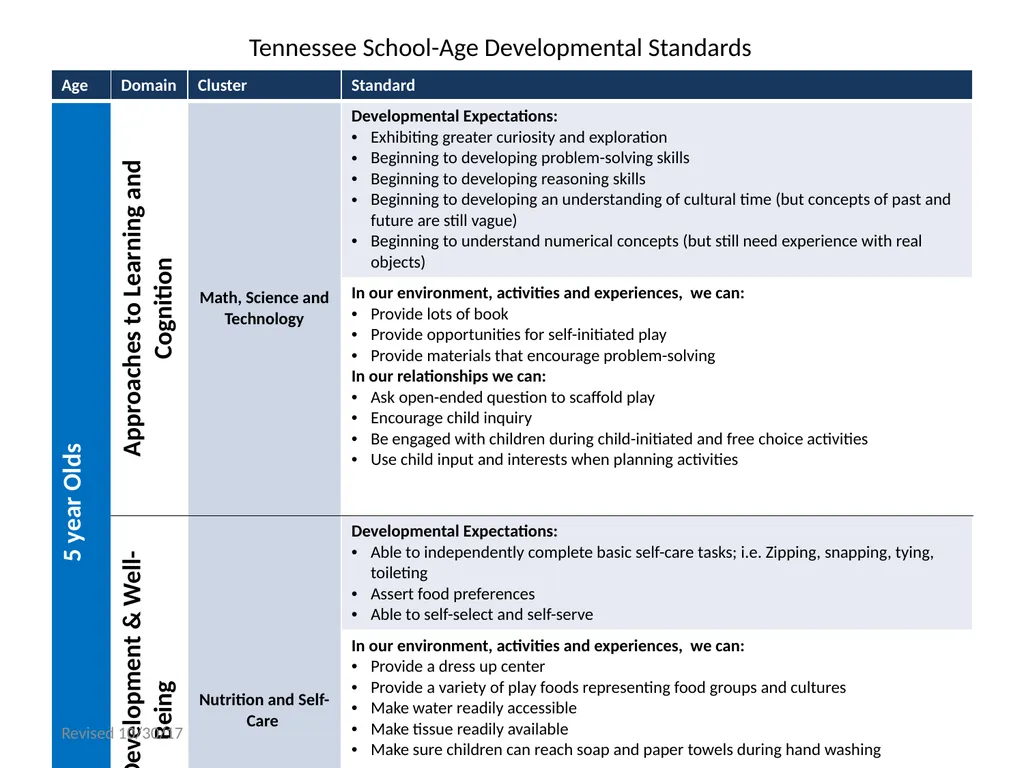
slide9. Tennessee School-Age Developmental Standards Revised 10/30/17 9<br>
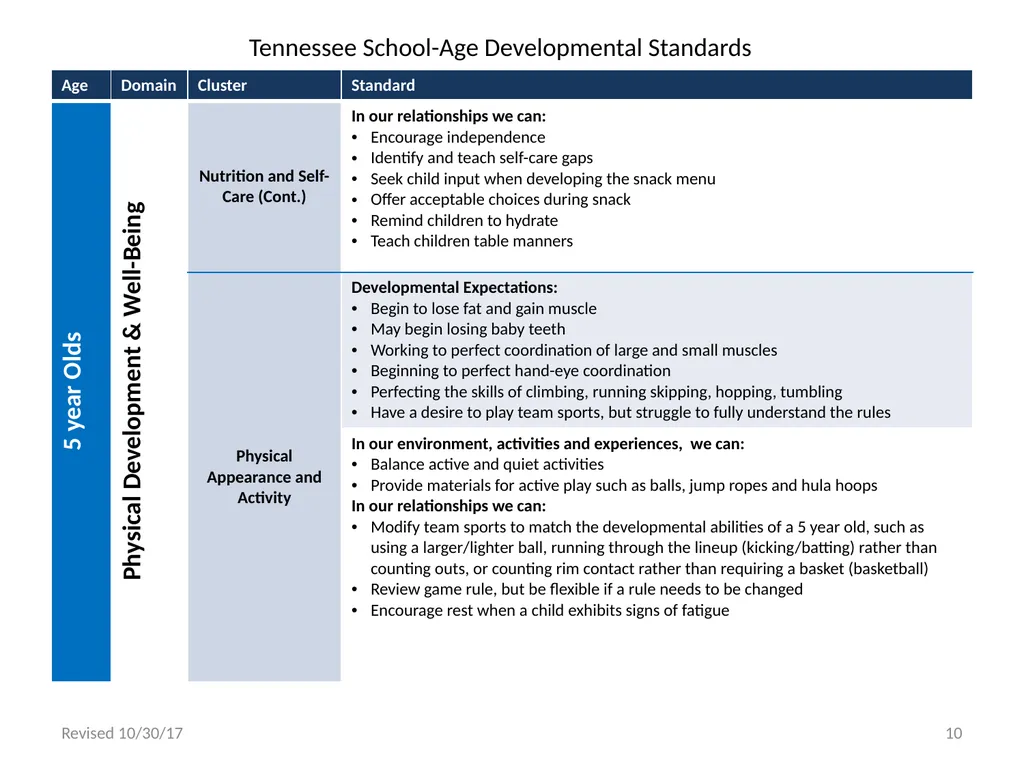
slide10. Tennessee School-Age Developmental Standards Revised 10/30/17 10<br>
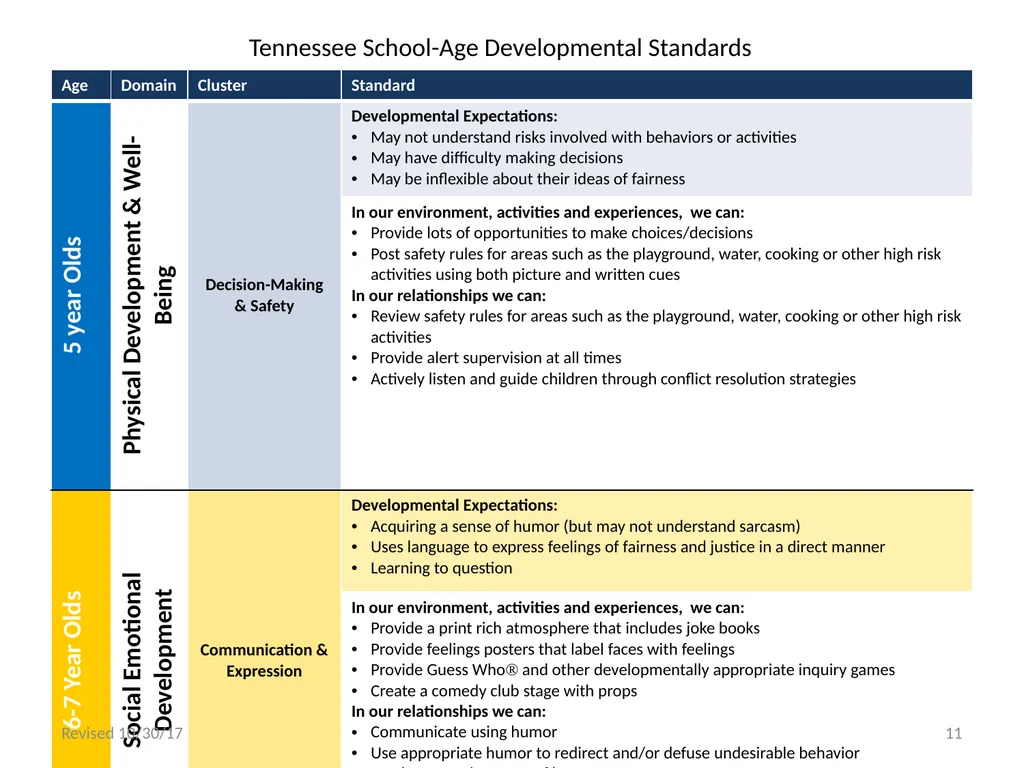
slide11. Tennessee School-Age Developmental Standards Revised 10/30/17 11<br>
slide12. Tennessee School-Age Developmental Standards Revised 10/30/17 12<br>
slide13. Tennessee School-Age Developmental Standards Revised 10/30/17 13<br>
slide14. Tennessee School-Age Developmental Standards Revised 10/30/17 14<br>
slide15. Tennessee School-Age Developmental Standards Revised 10/30/17 15<br>
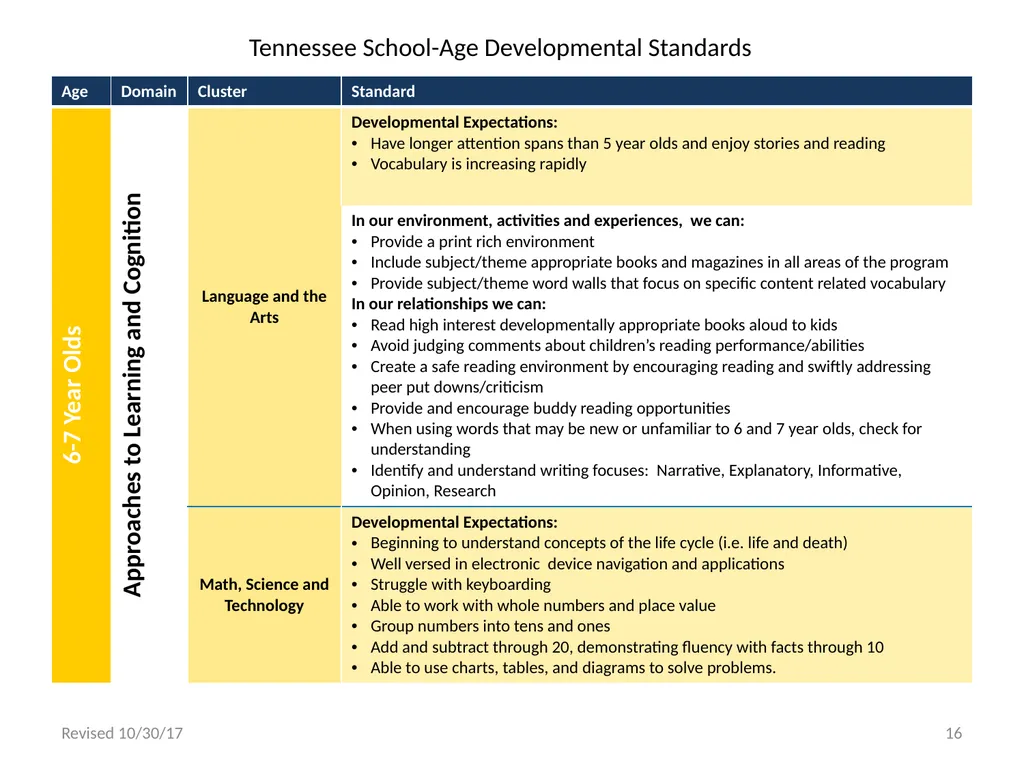
slide16. Tennessee School-Age Developmental Standards Revised 10/30/17 16<br>
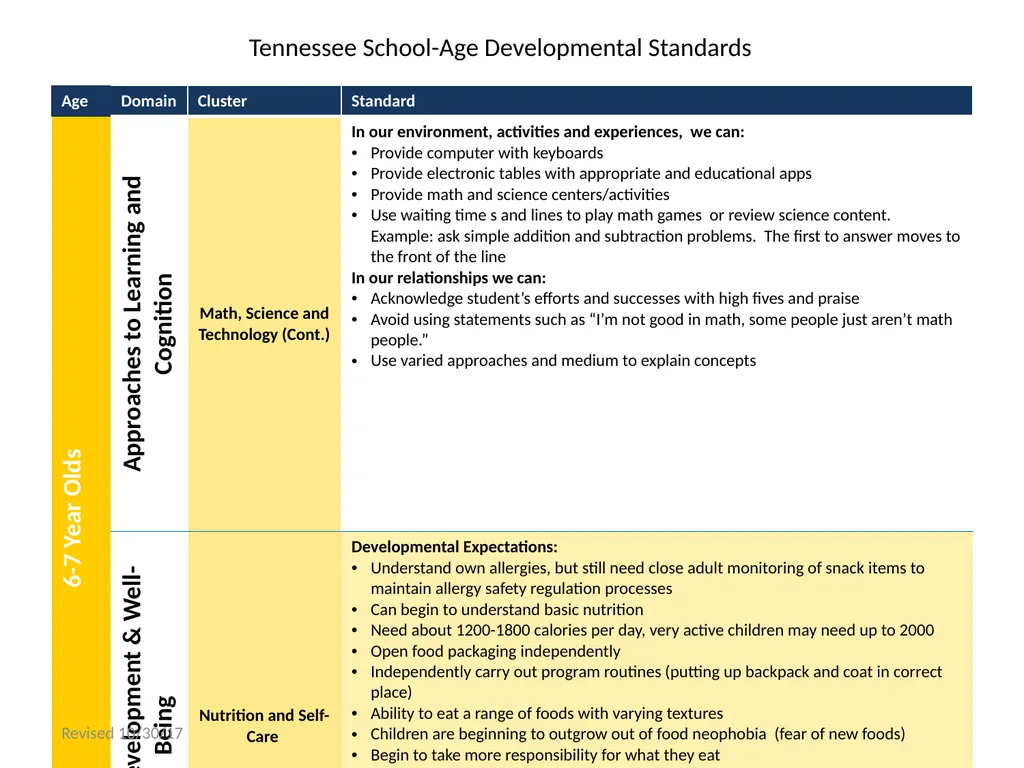
slide17. Tennessee School-Age Developmental Standards Revised 10/30/17 17<br>
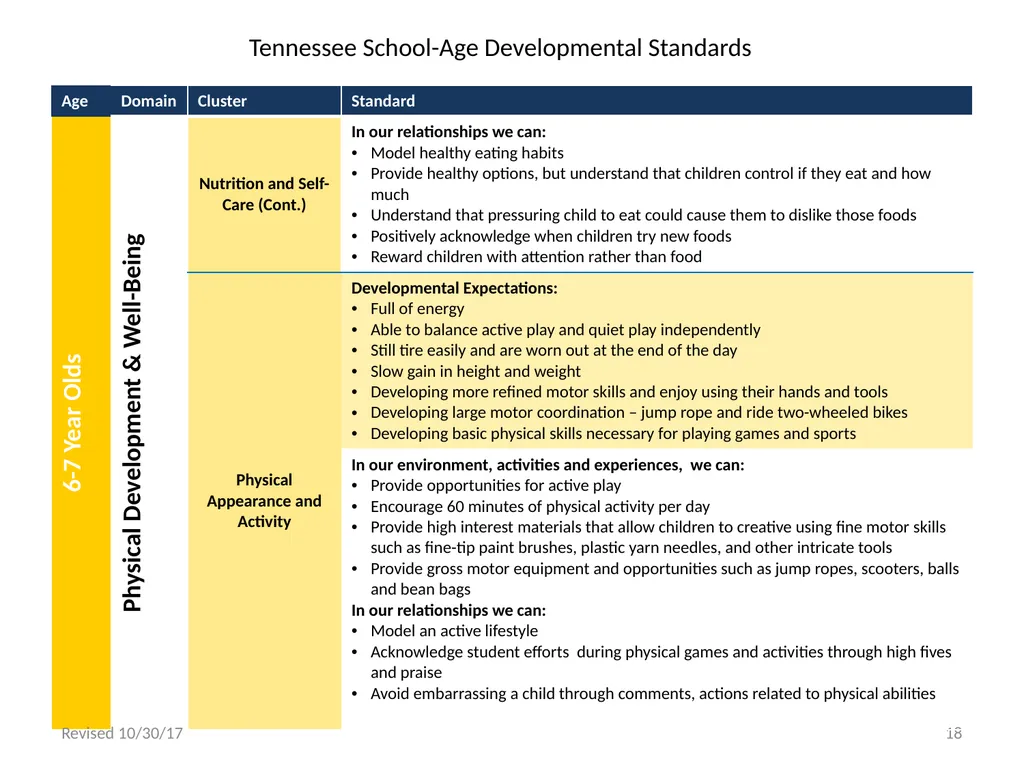
slide18. Tennessee School-Age Developmental Standards Revised 10/30/17 18<br>
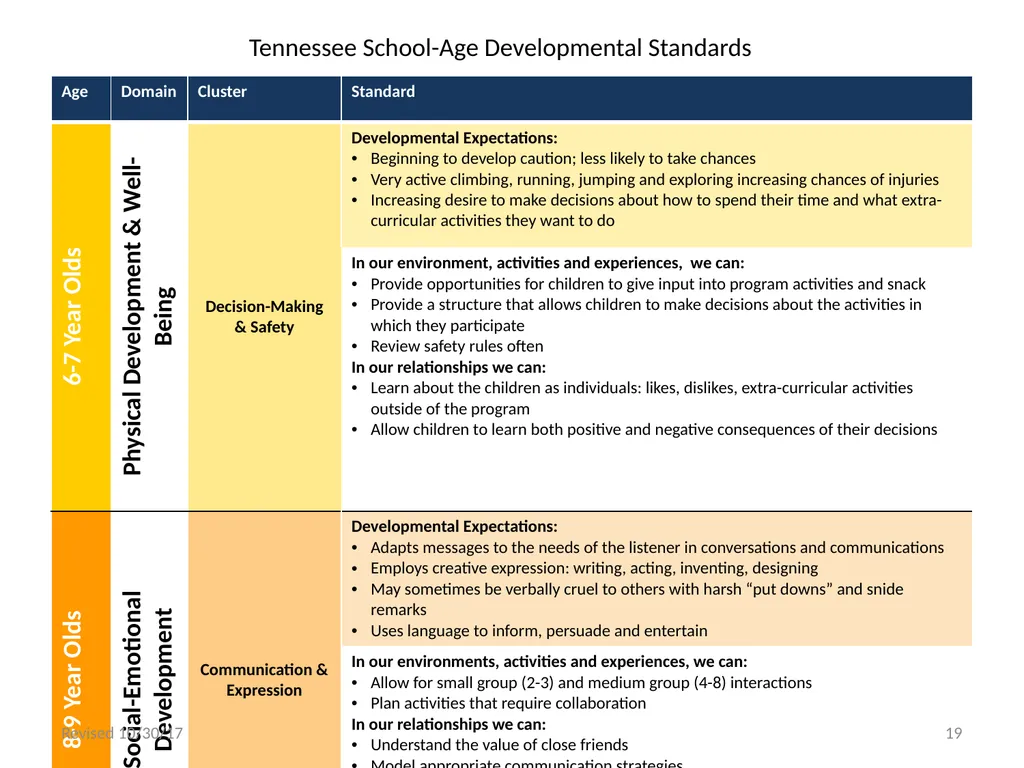
slide19. Tennessee School-Age Developmental Standards Revised 10/30/17 19<br>
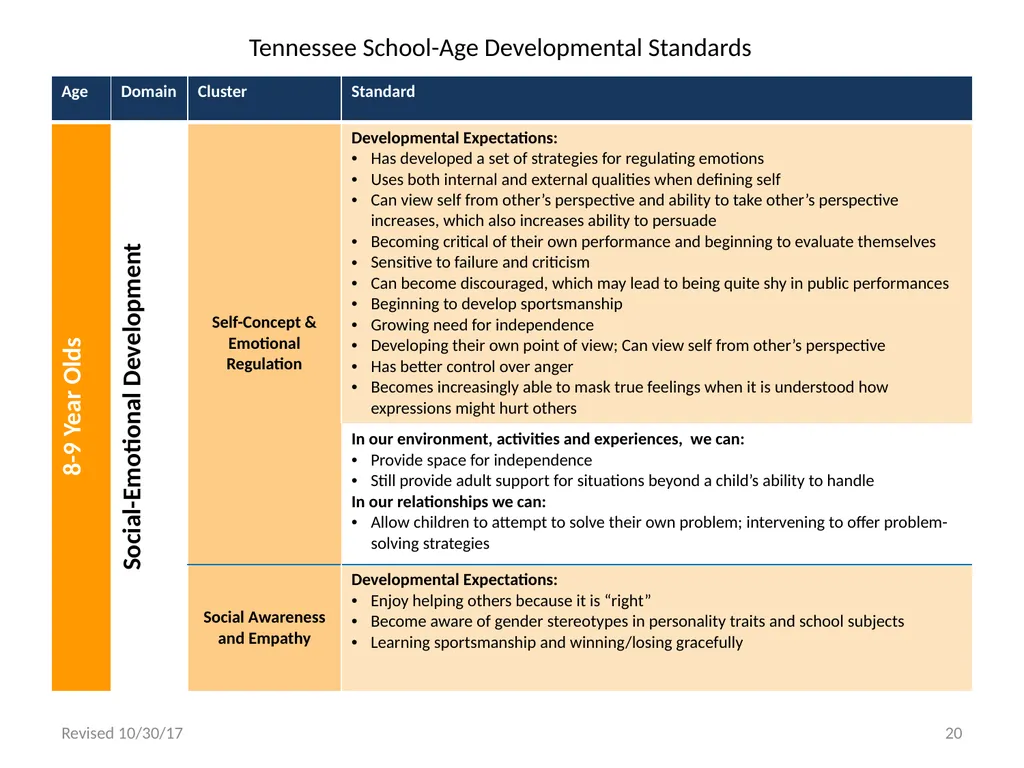
slide20. Tennessee School-Age Developmental Standards Revised 10/30/17 20<br>
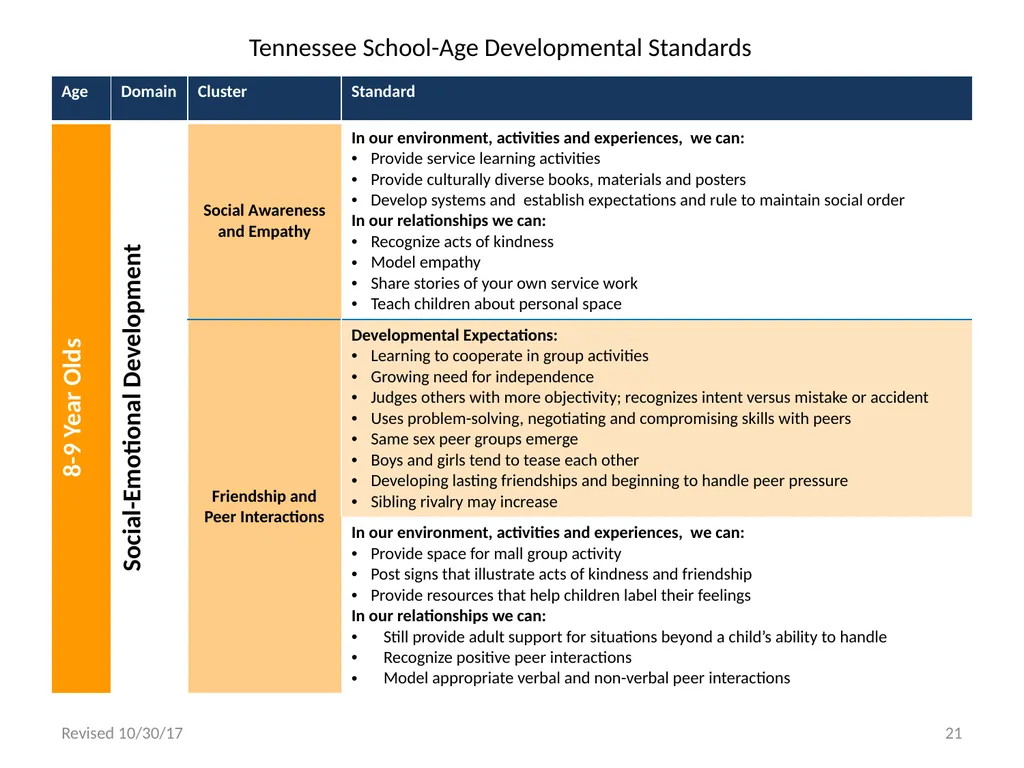
slide21. Tennessee School-Age Developmental Standards Revised 10/30/17 21<br>
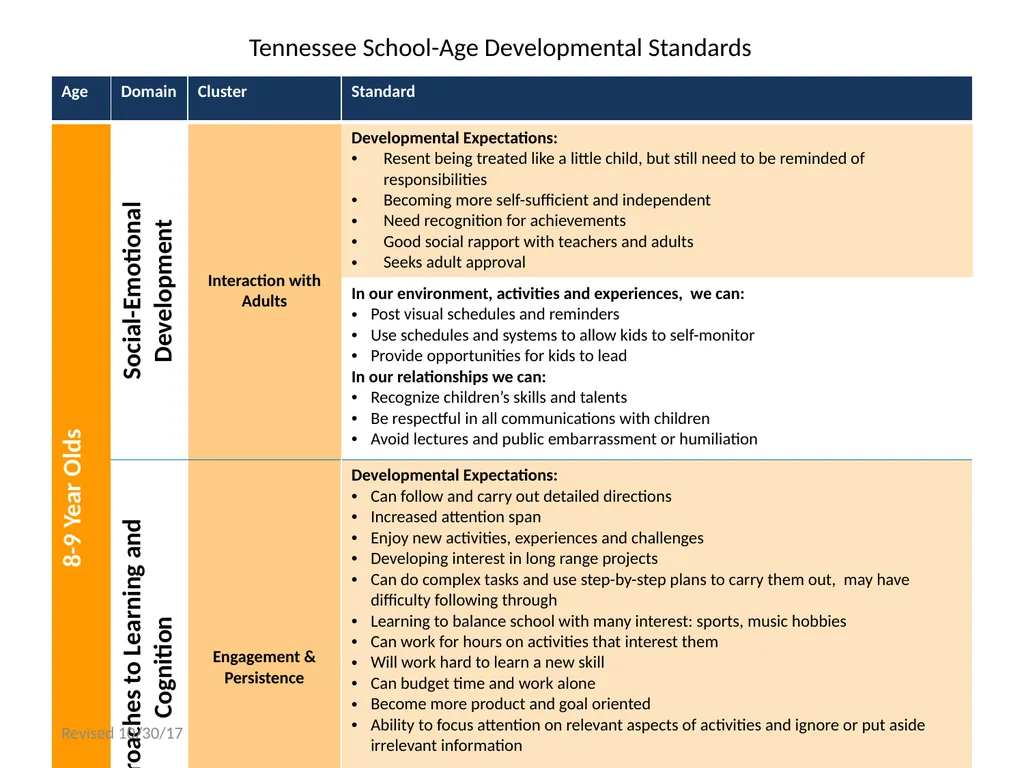
slide22. Tennessee School-Age Developmental Standards Revised 10/30/17 22<br>
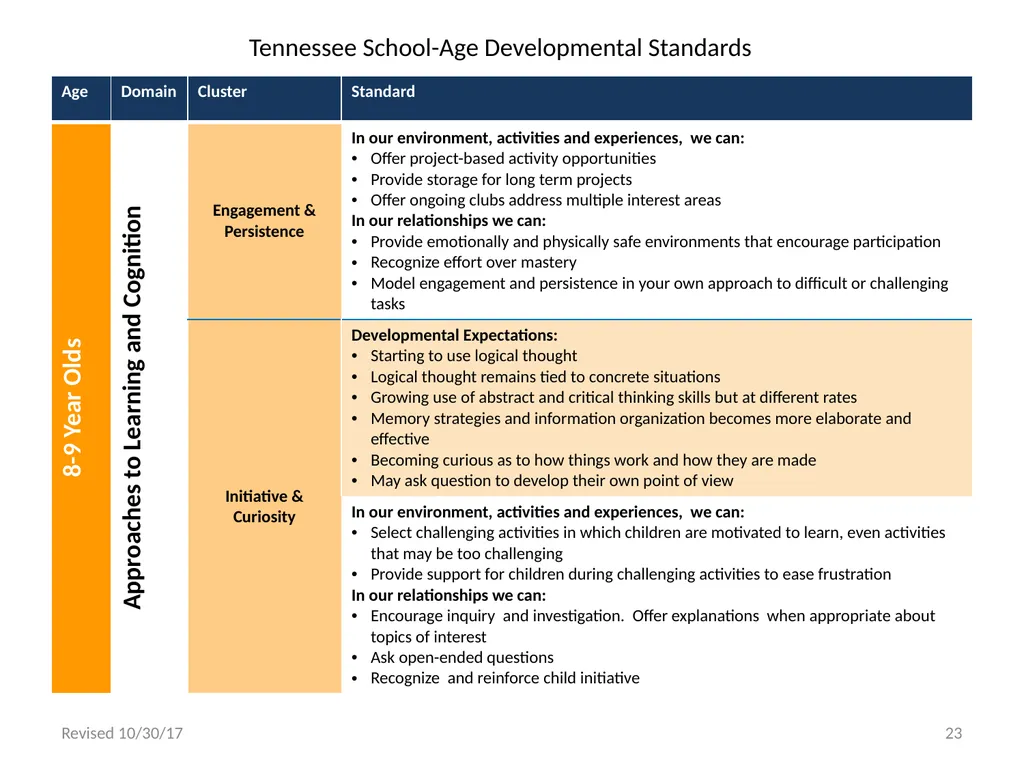
slide23. Tennessee School-Age Developmental Standards Revised 10/30/17 23<br>
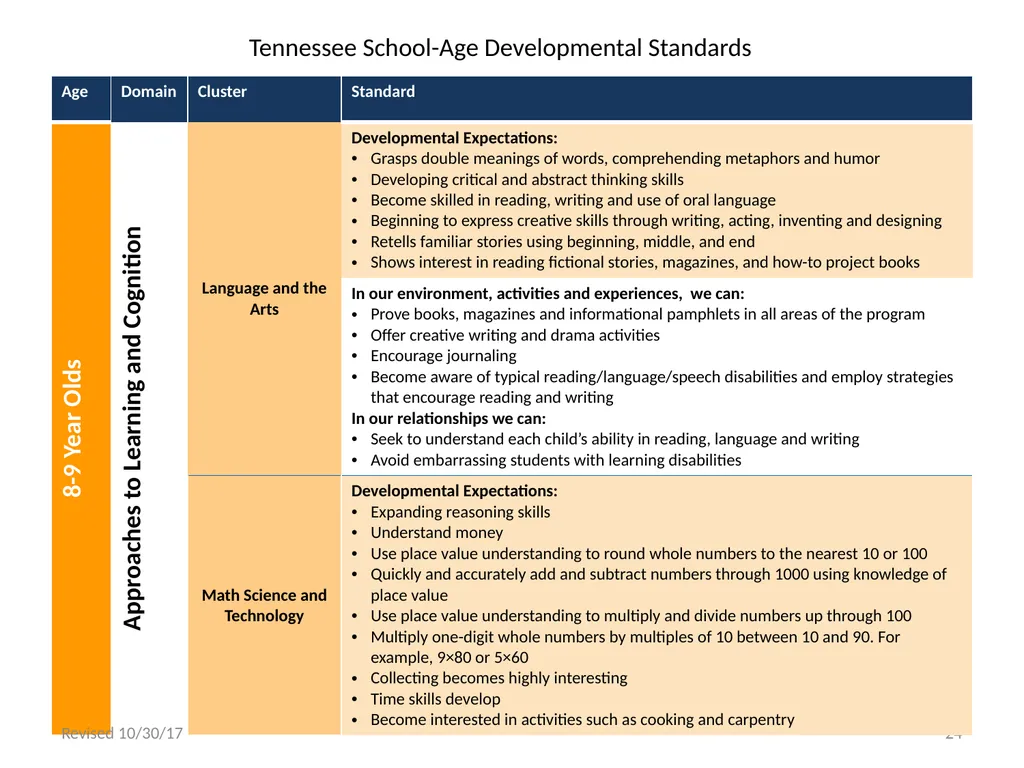
slide24. Tennessee School-Age Developmental Standards Revised 10/30/17 24<br>
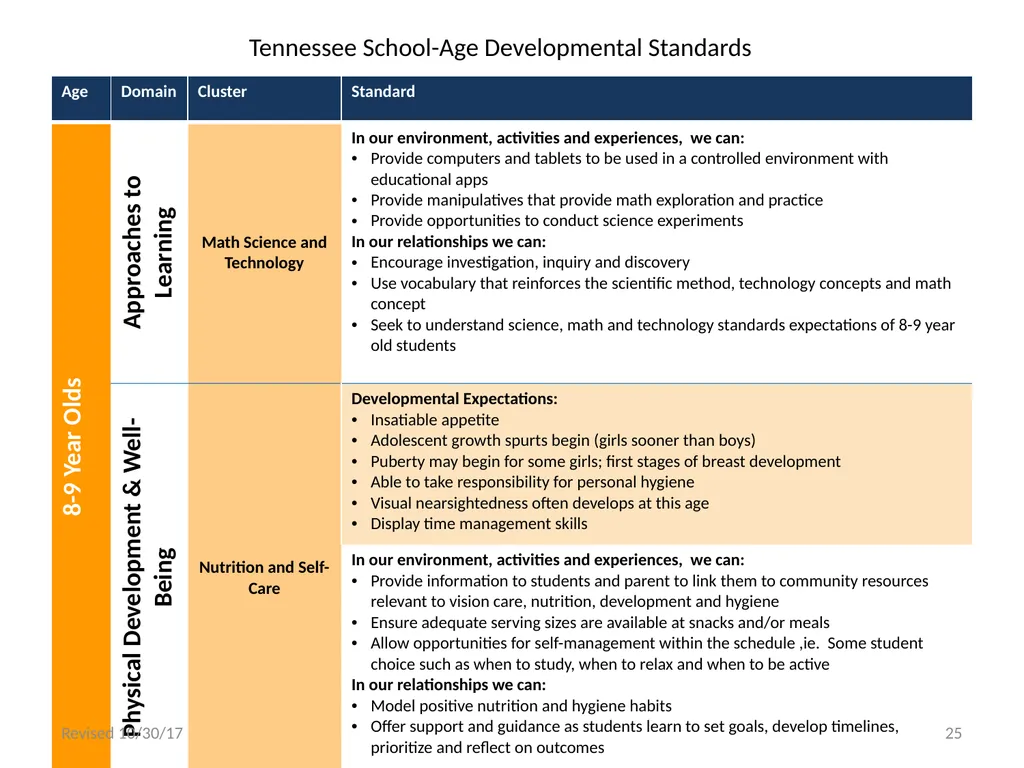
slide25. Tennessee School-Age Developmental Standards Revised 10/30/17 25<br>
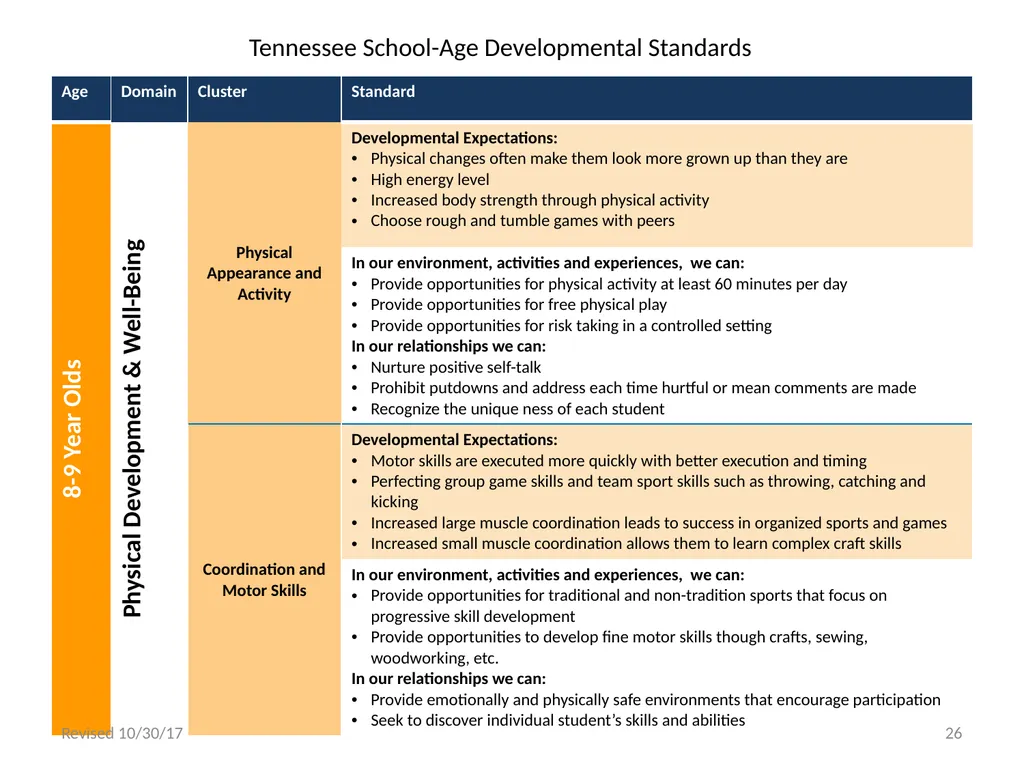
slide26. Tennessee School-Age Developmental Standards Revised 10/30/17 26<br>
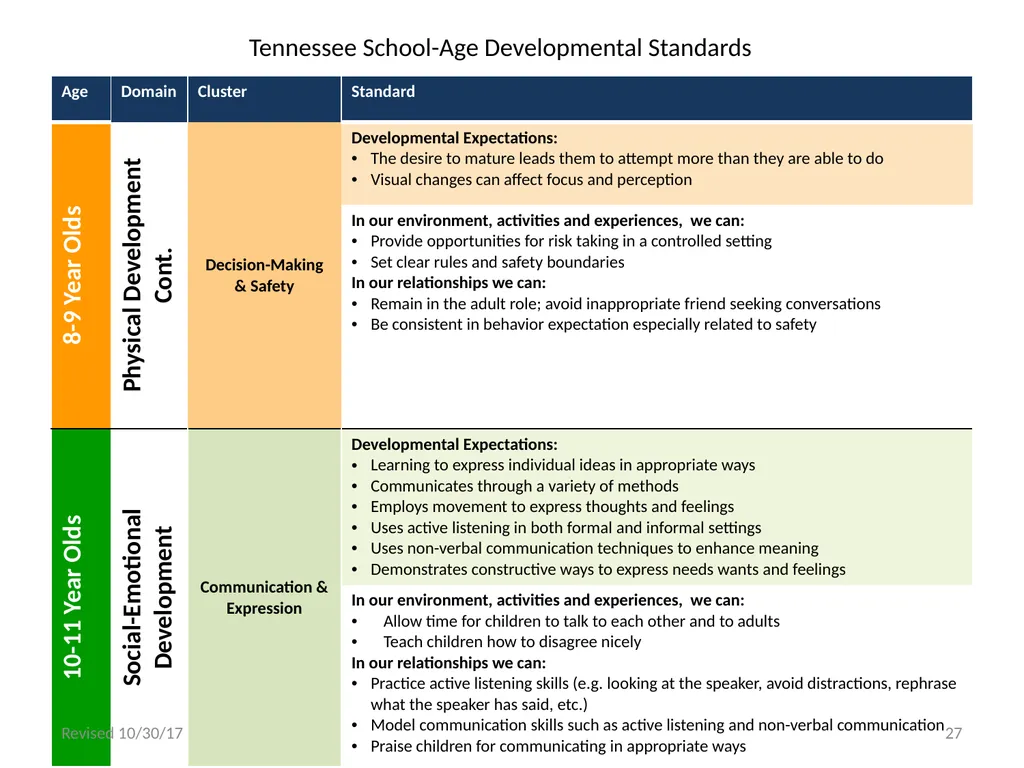
slide27. Tennessee School-Age Developmental Standards Revised 10/30/17 27<br>
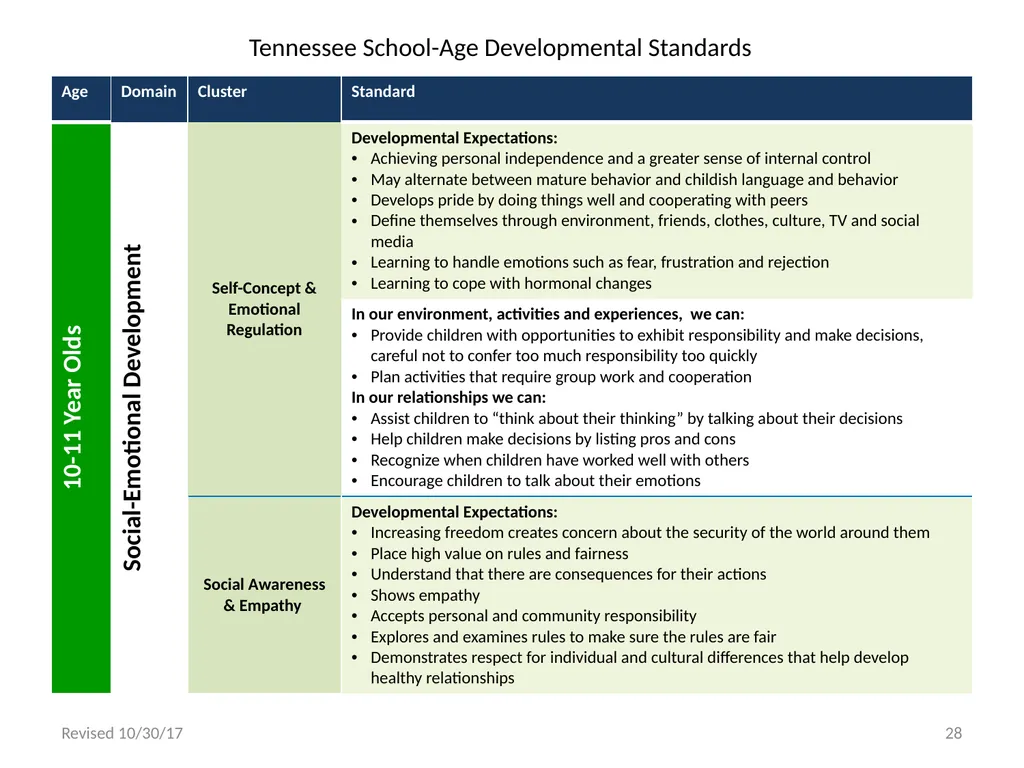
slide28. Tennessee School-Age Developmental Standards Revised 10/30/17 28<br>
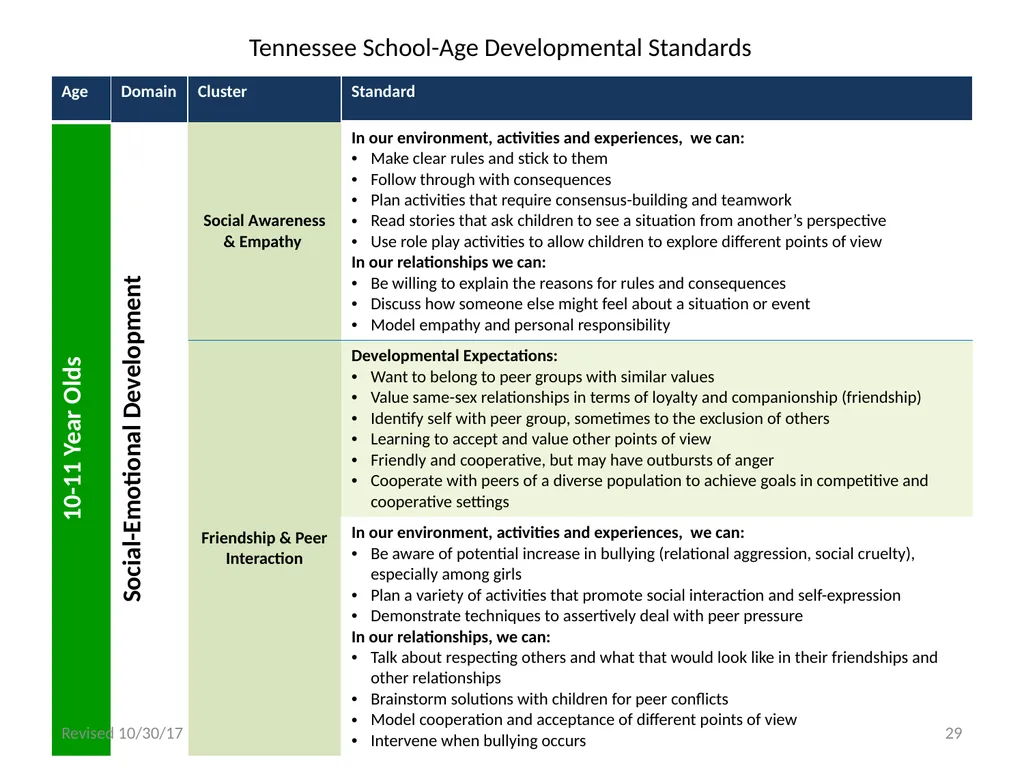
slide29. Tennessee School-Age Developmental Standards Revised 10/30/17 29<br>
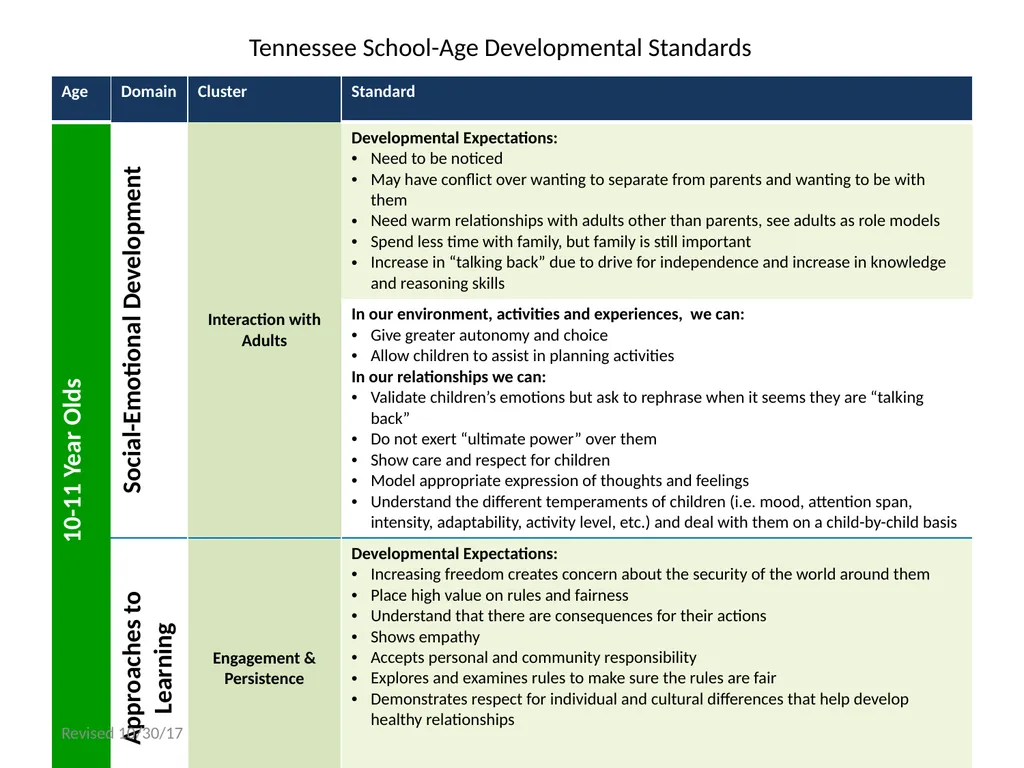
slide30. Tennessee School-Age Developmental Standards Revised 10/30/17 30<br>
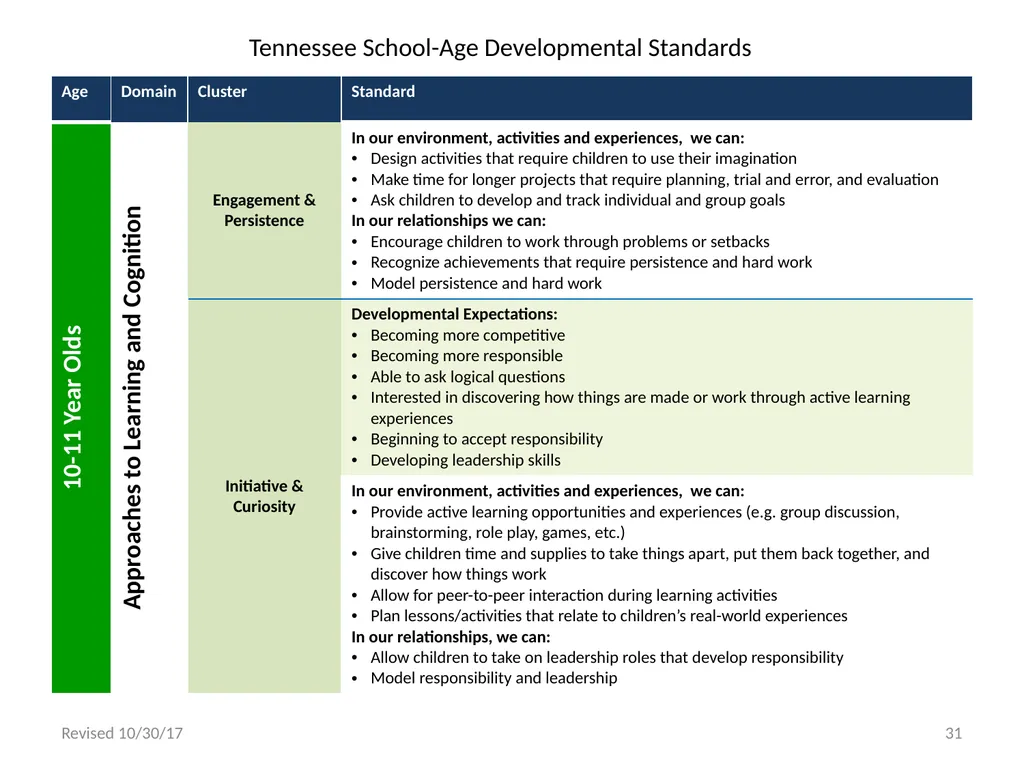
slide31. Tennessee School-Age Developmental Standards Revised 10/30/17 31<br>
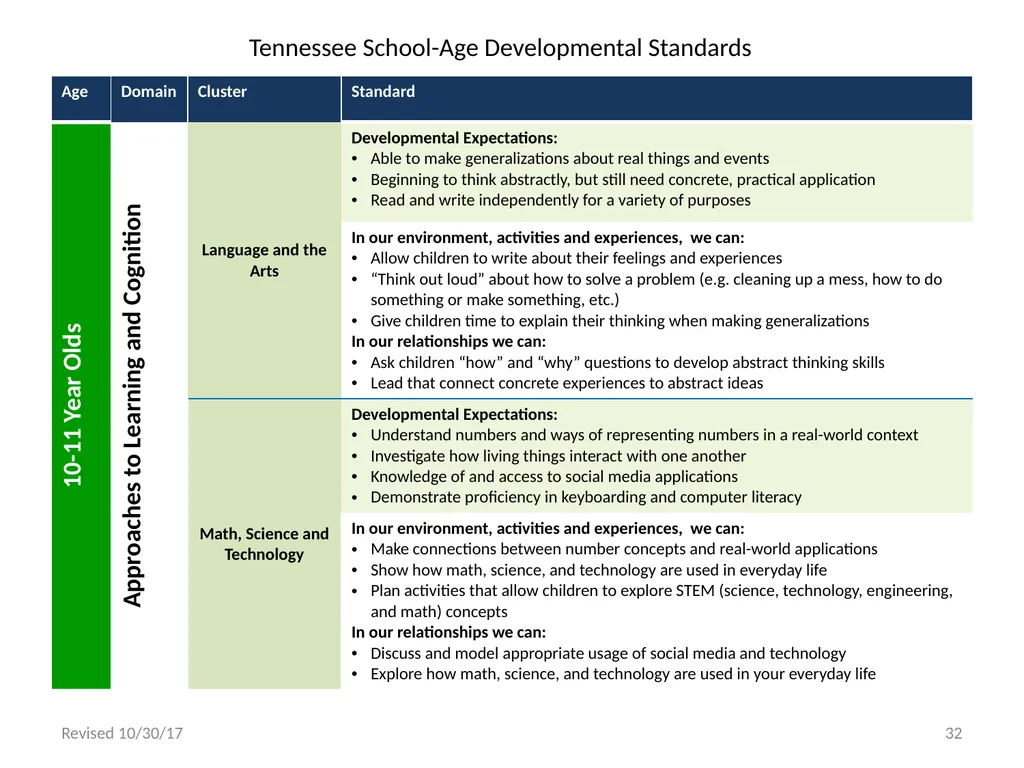
slide32. Tennessee School-Age Developmental Standards Revised 10/30/17 32<br>
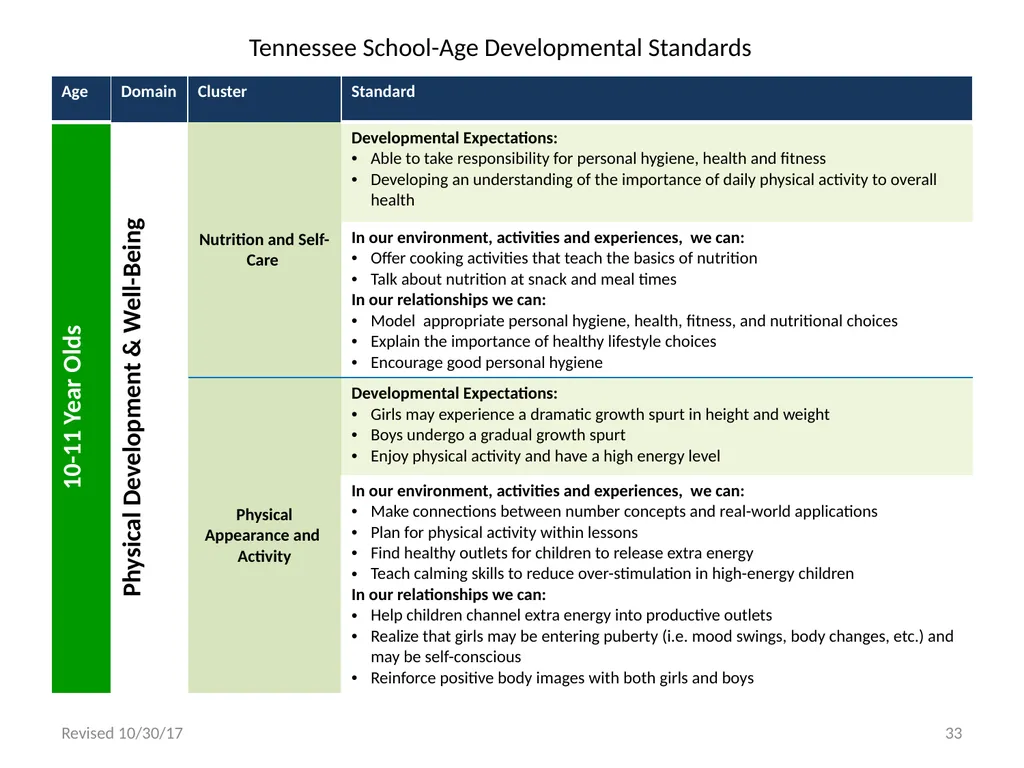
slide33. Tennessee School-Age Developmental Standards Revised 10/30/17 33<br>
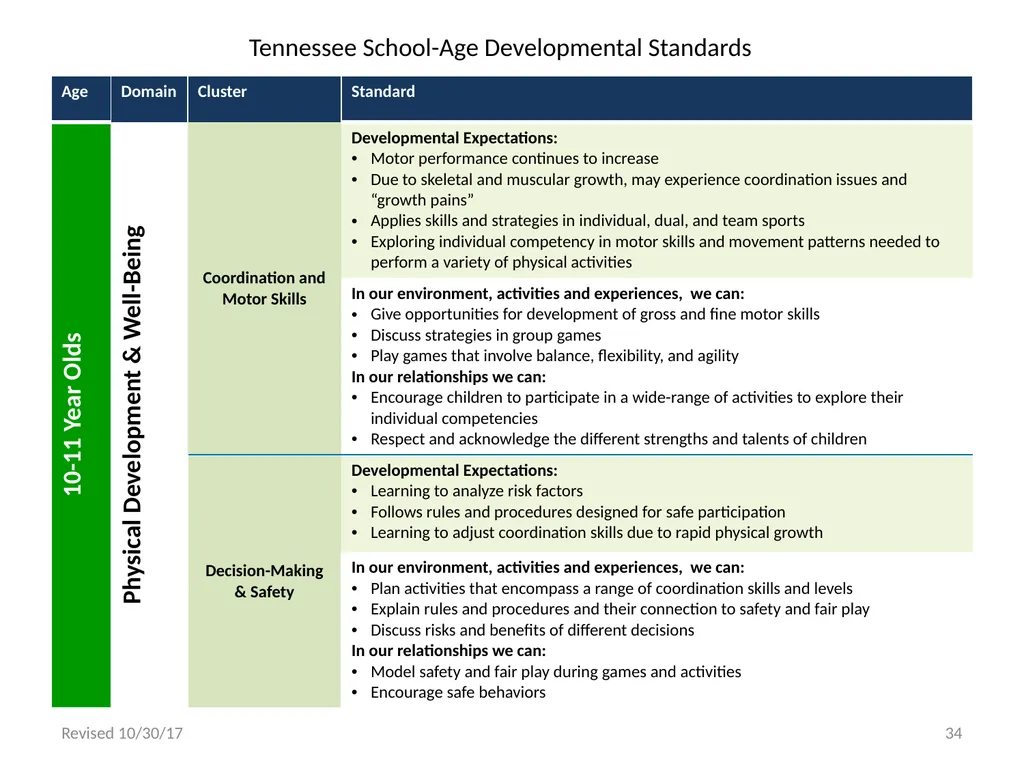
slide34. Tennessee School-Age Developmental Standards Revised 10/30/17 34<br>
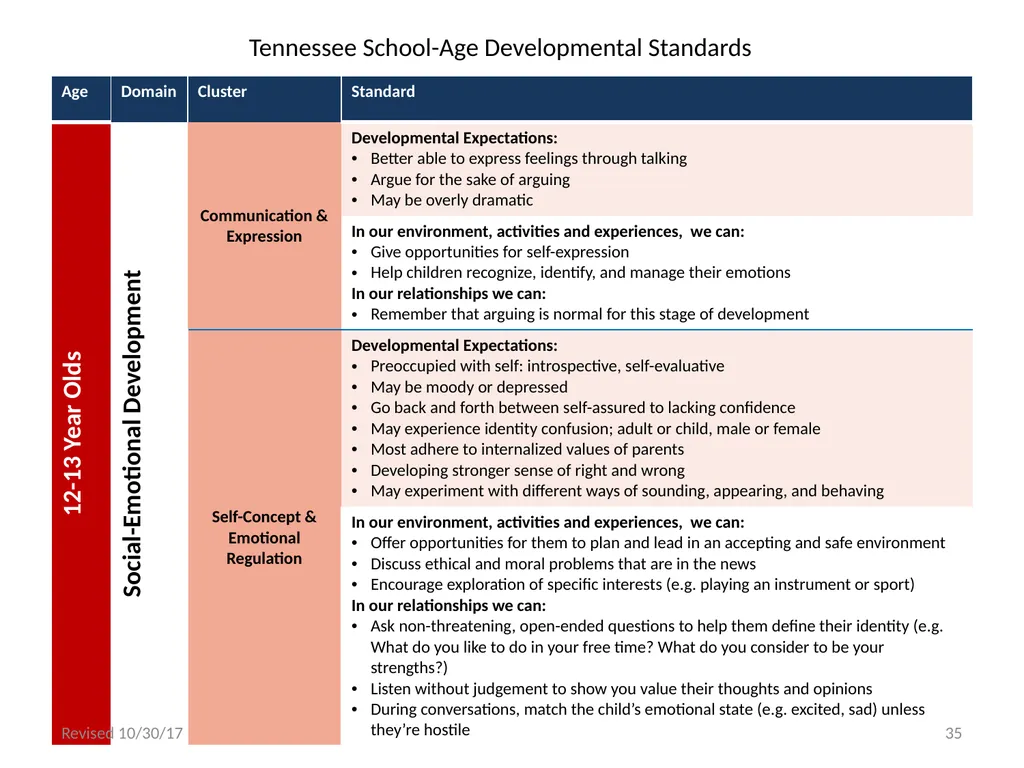
slide35. Tennessee School-Age Developmental Standards Revised 10/30/17 35<br>
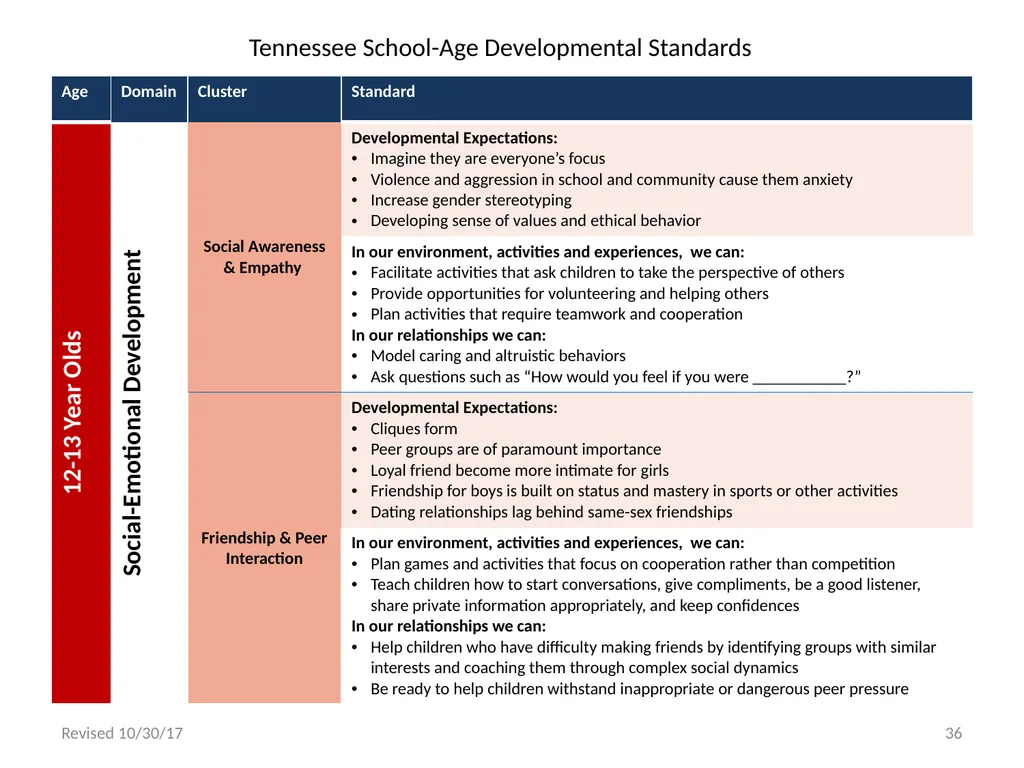
slide36. Tennessee School-Age Developmental Standards Revised 10/30/17 36<br>
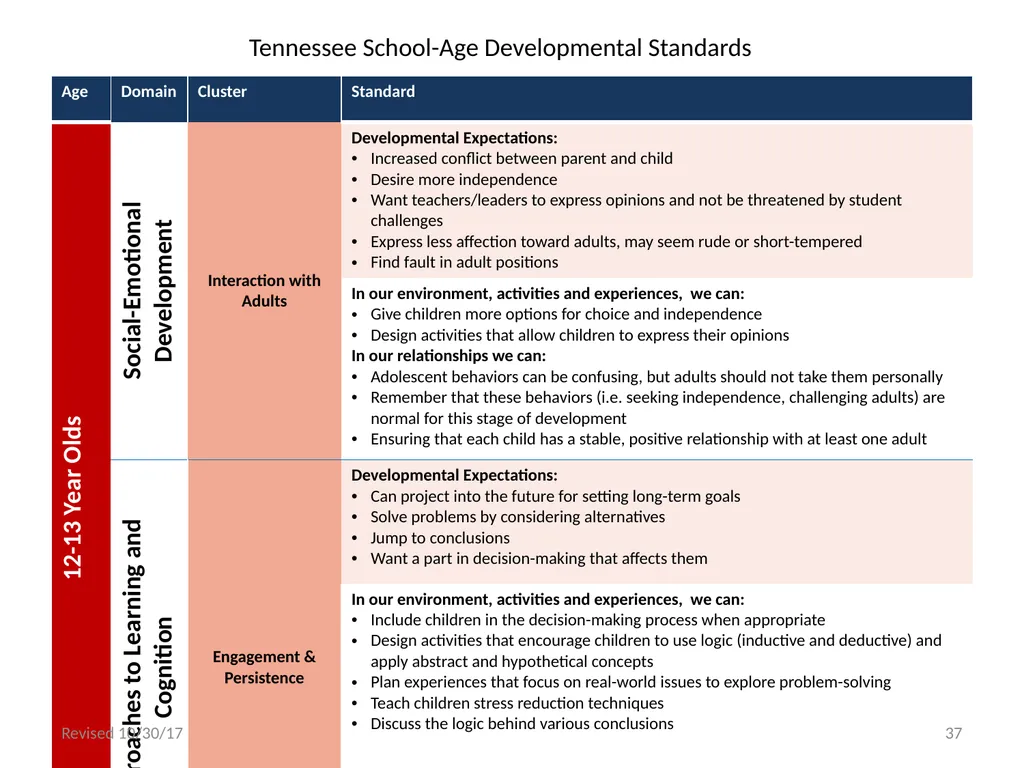
slide37. Tennessee School-Age Developmental Standards Revised 10/30/17 37<br>
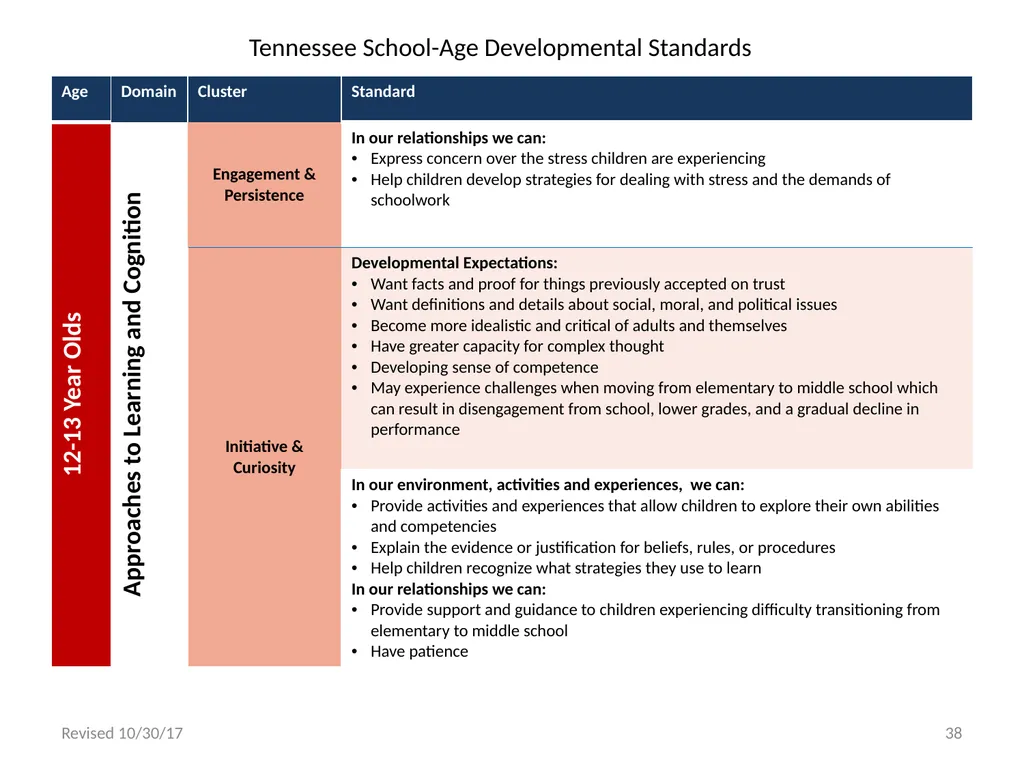
slide38. Tennessee School-Age Developmental Standards Revised 10/30/17 38<br>
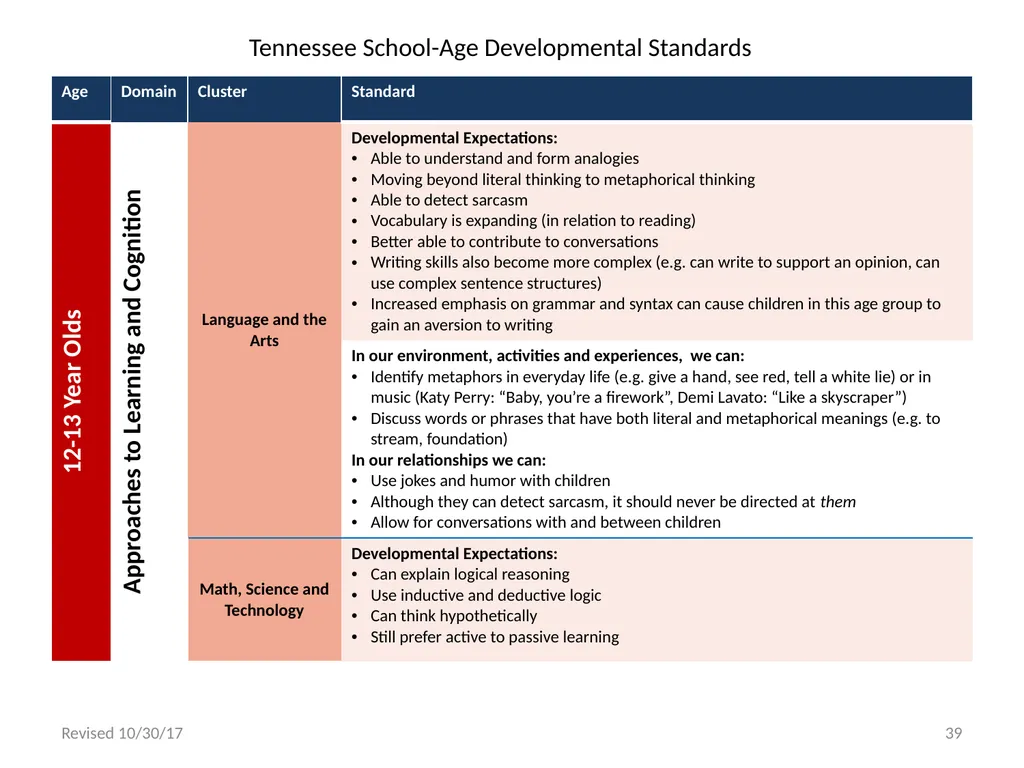
slide39. Tennessee School-Age Developmental Standards Revised 10/30/17 39<br>
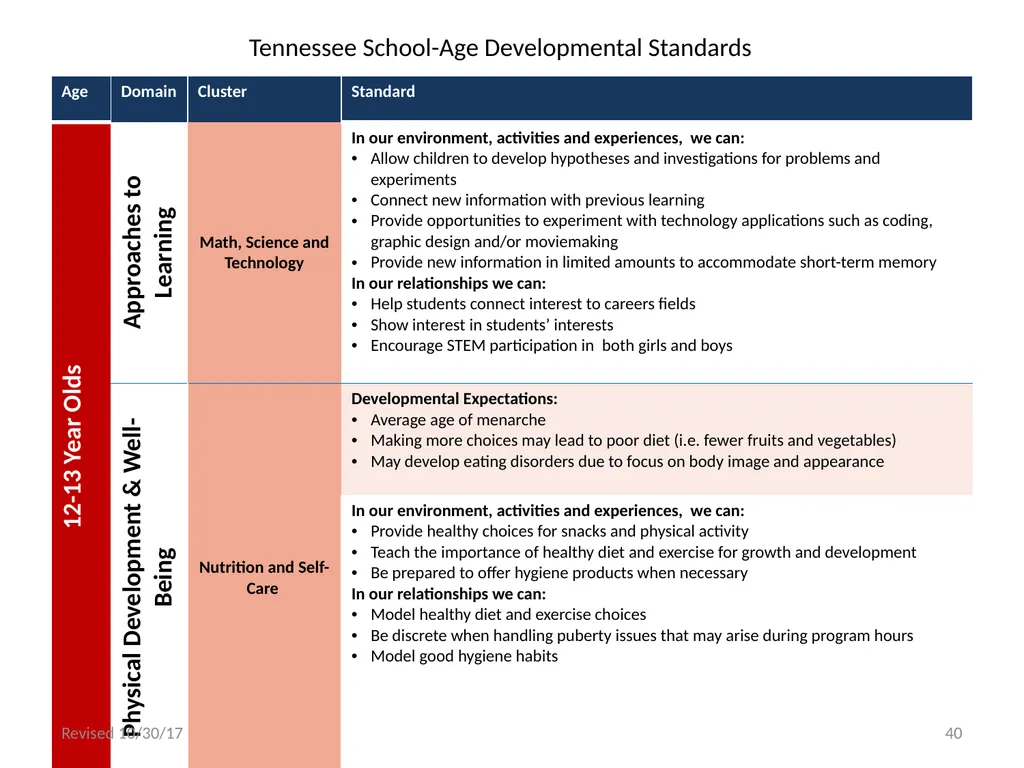
slide40. Tennessee School-Age Developmental Standards Revised 10/30/17 40<br>
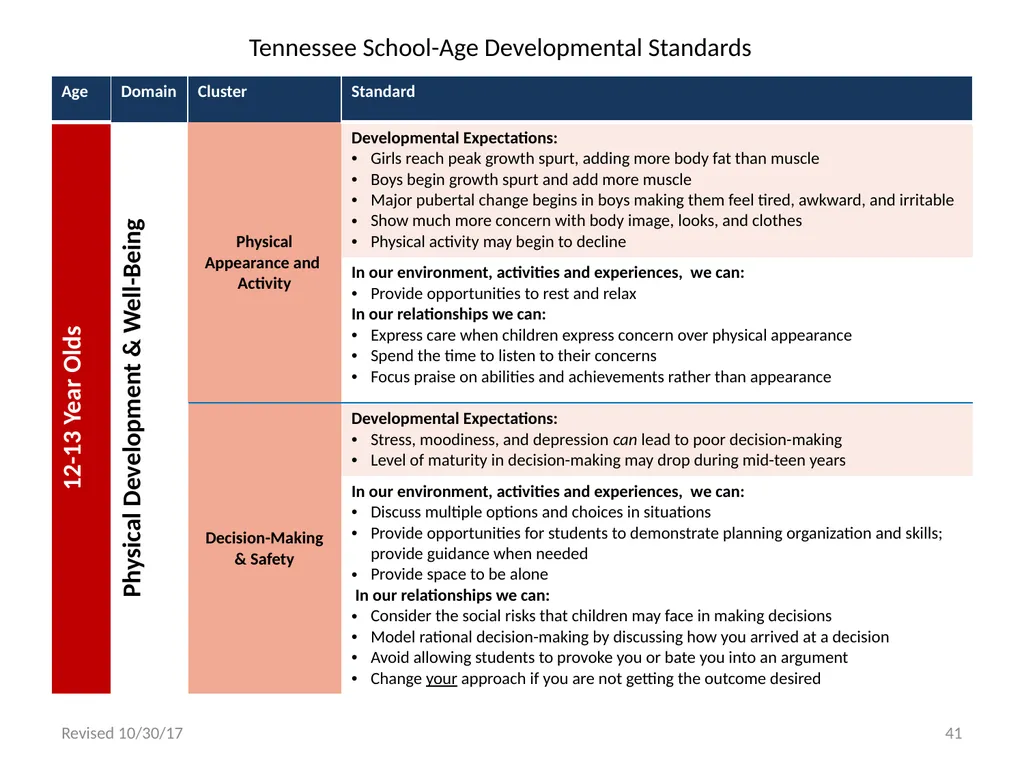
slide41. Tennessee School-Age Developmental Standards Revised 10/30/17 41<br>
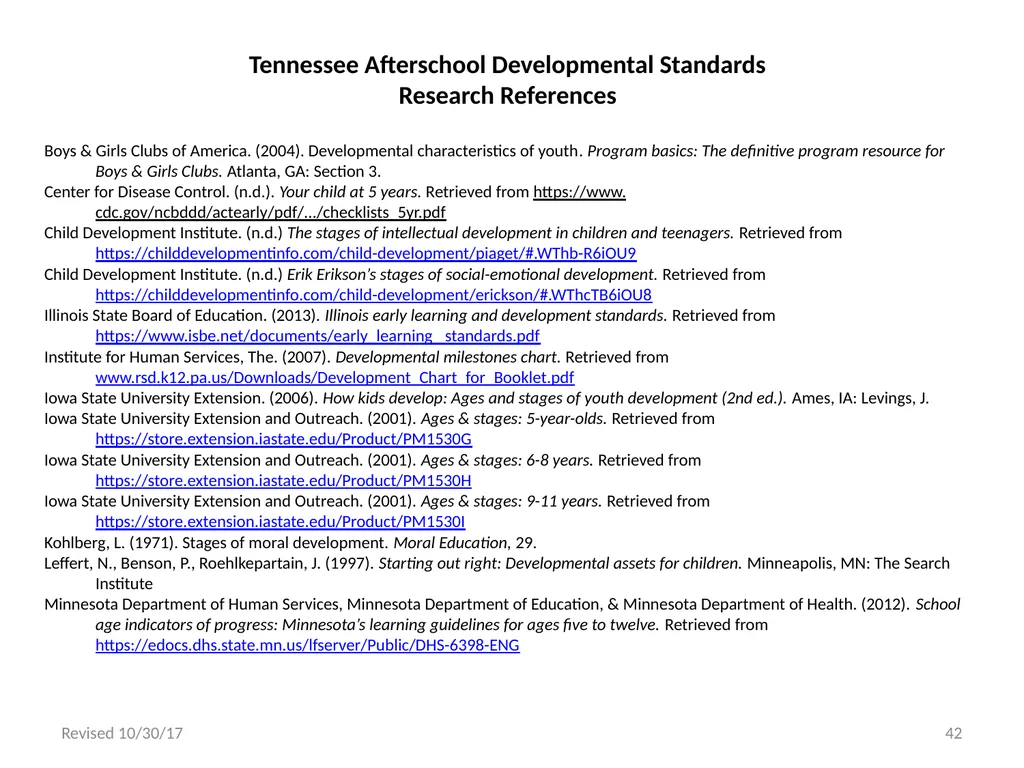
slide42. Tennessee Afterschool Developmental Standards
Research References
Boys & Girls Clubs of America. (2004). Developmental characteristics of youth. Program basics: The definitive program resource for Boys & Girls Clubs. Atlanta, GA: Section 3.
Center for Disease Control. (n.d.). Your child at 5 years. Retrieved from https://www. cdc.gov/ncbddd/actearly/pdf/.../checklists_5yr.pdf
Child Development Institute. (n.d.) The stages of intellectual development in children and teenagers. Retrieved from https://childdevelopmentinfo.com/child-development/piaget/#.WThb-R6iOU9
Child Development Institute. (n.d.) Erik Erikson’s stages of social-emotional development. Retrieved from https://childdevelopmentinfo.com/child-development/erickson/#.WThcTB6iOU8
Illinois State Board of Education. (2013). Illinois early learning and development standards. Retrieved from https://www.isbe.net/documents/early_learning_ standards.pdf
Institute for Human Services, The. (2007). Developmental milestones chart. Retrieved from www.rsd.k12.pa.us/Downloads/Development_Chart_for_Booklet.pdf
Iowa State University Extension. (2006). How kids develop: Ages and stages of youth development (2nd ed.). Ames, IA: Levings, J.
Iowa State University Extension and Outreach. (2001). Ages & stages: 5-year-olds. Retrieved from https://store.extension.iastate.edu/Product/PM1530G
Iowa State University Extension and Outreach. (2001). Ages & stages: 6-8 years. Retrieved from https://store.extension.iastate.edu/Product/PM1530H
Iowa State University Extension and Outreach. (2001). Ages & stages: 9-11 years. Retrieved from https://store.extension.iastate.edu/Product/PM1530I
Kohlberg, L. (1971). Stages of moral development. Moral Education, 29.
Leffert, N., Benson, P., Roehlkepartain, J. (1997). Starting out right: Developmental assets for children. Minneapolis, MN: The Search Institute
Minnesota Department of Human Services, Minnesota Department of Education, & Minnesota Department of Health. (2012). School age indicators of progress: Minnesota’s learning guidelines for ages five to twelve. Retrieved from https://edocs.dhs.state.mn.us/lfserver/Public/DHS-6398-ENG Revised 10/30/17 42<br>
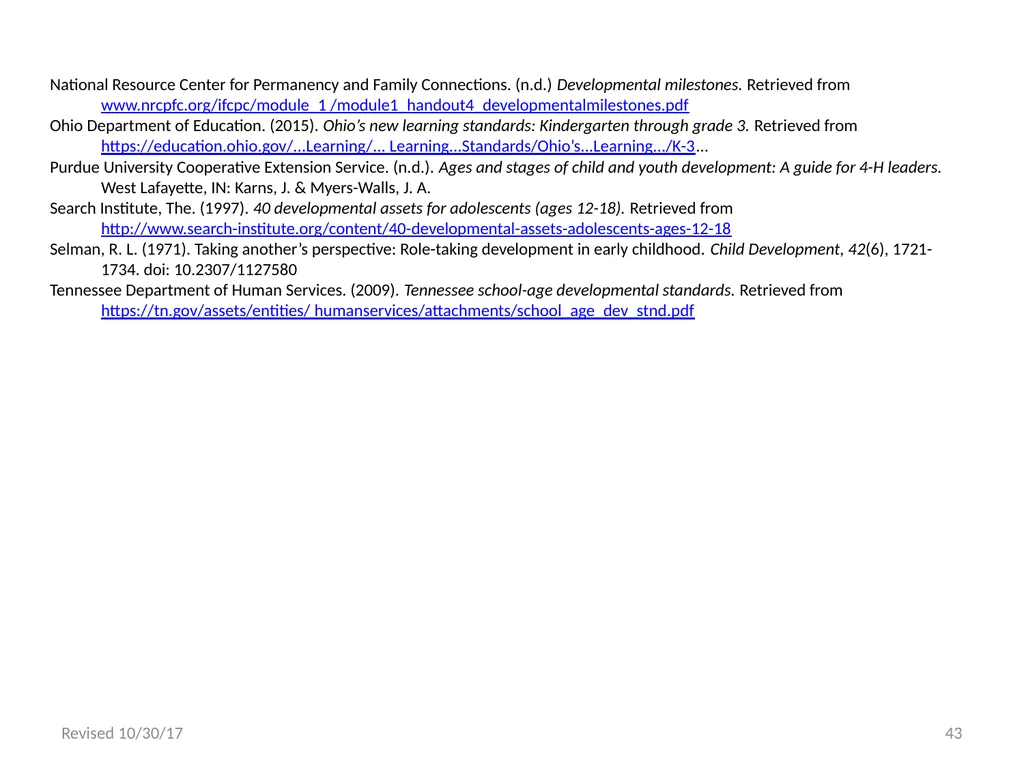
slide43. Revised 10/30/17 43 National Resource Center for Permanency and Family Connections. (n.d.) Developmental milestones. Retrieved from www.nrcpfc.org/ifcpc/module_1 /module1_handout4_developmentalmilestones.pdf
Ohio Department of Education. (2015). Ohio’s new learning standards: Kindergarten through grade 3. Retrieved from https://education.ohio.gov/...Learning/... Learning...Standards/Ohio’s...Learning.../K-3...
Purdue University Cooperative Extension Service. (n.d.). Ages and stages of child and youth development: A guide for 4-H leaders. West Lafayette, IN: Karns, J. & Myers-Walls, J. A.
Search Institute, The. (1997). 40 developmental assets for adolescents (ages 12-18). Retrieved from http://www.search-institute.org/content/40-developmental-assets-adolescents-ages-12-18
Selman, R. L. (1971). Taking another’s perspective: Role-taking development in early childhood. Child Development, 42(6), 1721-1734. doi: 10.2307/1127580
Tennessee Department of Human Services. (2009). Tennessee school-age developmental standards. Retrieved from https://tn.gov/assets/entities/ humanservices/attachments/school_age_dev_stnd.pdf<br>
slide2. Revised 10/30/17 2 Introduction
The Tennessee School-Age Developmental Standards were compiled as an effort of the Tennessee Afterschool Network in conjunction with the Department of Education and the Department of Human Services. This document was designed as a guide for school-age care professionals based on current research and best practices and provides information on the continuum of developmental milestones that could typically be expected within age bands from five years to seventeen years. These developmental standards are child-focused as opposed to educational standards which are content-focused or quality standards which are program-focused. Finally, these standards provide suggestions on activities, experiences, and relationship and environment factors that could be employed to support each child's development.
Acknowledgements
The following individuals were instrumental in the support, creation, and distribution of these standards:
Sindy Dawkins-Schade, SHADES of Development
Lin Venable, Tennessee Early Childhood Training Alliance
Dr. Stephanie Turnbow, Tipton County School-Age Child Care
Mary Graham, TN Afterschool Network and United Ways of Tennessee
Misty Moody, Department of Education
Joyce Turner, Department of Human Services Overview and Structure
The Tennessee School-Age Developmental Standards are organized into age bands which are then broken into three domains: Social-Emotional Development, Cognition and Approaches to Learning, and Physical Development and Wellbeing. Each domain is further categorized into clusters which then give expectation statements that describe skills and developmental achievements that are typical but not definitive for each age band. Every expectation statement is accompanied by supporting suggestions for activities, experiences, relationship and environmental factors that can be utilized in school-age care settings.
Social-Emotional Development. This domain focuses on the interpersonal and intrapersonal skills and behaviors children develop through relationships and social interactions. This domain addresses the following clusters and correlates to the TN Department of Education SEL/SPC Standards:
Communication & Expression, Friendship & Peer Interaction and Interaction with Adults (Relationship skills);
Self-Concept (Self-Awareness)
Emotional Regulation (Self-Concept)
and, Empathy and Cultural Competency/Diversity (Social Awareness)
Cognition and Approaches to Learning. This domain focuses on the learning behaviors and skills that are typical with each age band. The clusters addressed in this domain are: Engagement & Persistence; Language & The Arts, Math, Science & Technology; and Initiative & Curiosity. Tennessee School-Age Developmental Standards 2021<br>
slide3. Revised 10/30/17 3 Physical Development and Wellbeing. This domain focuses on physical milestones, health practices, safety behaviors, and decision-making skills that are typical for each age band. This domain includes the following clusters: Nutrition & Self Care; Physical Activity; Coordination & Motor Skills; and Decision-Making & Safety.
Definitions
Approaches to Learning: An education theory which suggests that individuals have different ways of learning.
Arts: Studies or activities in music, visual art, theater, dance, poetry, and/or storytelling.
Cognition: A mental process in which an individual acquires knowledge (learns) through experience and/or thought.
Cooperation: Process or situation in which two or more people work together for the same outcome.
Coordination: The ability of an individual to make multiple motor (physical) movements smoothly and as intended.
Curiosity: A desire to learn or know something.
Decision-Making: The process of weighing consequences and/or selecting a logical choice from various possibilities.
Developmental Expectations: Behaviors or skills that would be typical for children at similar age and/or maturity levels.
Emotional Regulation: An individual’s ability to control his or her emotions when responding to outside stimuli.
Empathy: The ability to understand and appropriately respond to the feelings of others.
Engagement: The level of interest and attention an individual displays during the learning process. Initiative: The ability of an individual to plan, begin, and/or follow through on a task with energy.
Interdependence: A relationship or situation in which multiple individuals mutually rely on each other.
Language Arts: In the realm of education, it is study that includes reading, writing, speaking, and listening.
Motor Skills: Muscular actions that produce movement. Are classified as Gross Motor (large muscle) skills and Fine Motor (small muscle) skills.
Nutrition: The degree to which the food one consumes contributes to the healthy growth, metabolism, and repair of the individual’s body.
Persistence: The ability of an individual to continue with a task despite difficulties and/or challenges.
Physical Activity: Any body movement that requires energy.
Physical Development: The normal growth and development of the body for individuals over time.
Safety: Condition in which an individual is free from the risk of harm or danger.
Self-Care: The ability of an individual to take care of his/her own physical, mental, and/or emotional health.
Self-Concept: Idea or image an individual develops about him/herself based on interactions and responses of others.
Social Awareness: Understanding how to react appropriately in different social situations.
Social-Emotional Development: An individual’s ability to manage his or her own emotions and develop positive relationships with others.
Wellbeing: The level of physical and mental health experienced by an individual. Tennessee School-Age Developmental Standards 2017<br>
slide4. Tennessee School-Age Developmental Standards Revised 10/30/17 4<br>
slide5. Tennessee School-Age Developmental Standards Revised 10/30/17 5<br>
slide6. Tennessee School-Age Developmental Standards Revised 10/30/17 6<br>
slide7. Tennessee School-Age Developmental Standards Revised 10/30/17 7<br>
slide8. Tennessee School-Age Developmental Standards Revised 10/30/17 8<br>
slide9. Tennessee School-Age Developmental Standards Revised 10/30/17 9<br>
slide10. Tennessee School-Age Developmental Standards Revised 10/30/17 10<br>
slide11. Tennessee School-Age Developmental Standards Revised 10/30/17 11<br>
slide12. Tennessee School-Age Developmental Standards Revised 10/30/17 12<br>
slide13. Tennessee School-Age Developmental Standards Revised 10/30/17 13<br>
slide14. Tennessee School-Age Developmental Standards Revised 10/30/17 14<br>
slide15. Tennessee School-Age Developmental Standards Revised 10/30/17 15<br>
slide16. Tennessee School-Age Developmental Standards Revised 10/30/17 16<br>
slide17. Tennessee School-Age Developmental Standards Revised 10/30/17 17<br>
slide18. Tennessee School-Age Developmental Standards Revised 10/30/17 18<br>
slide19. Tennessee School-Age Developmental Standards Revised 10/30/17 19<br>
slide20. Tennessee School-Age Developmental Standards Revised 10/30/17 20<br>
slide21. Tennessee School-Age Developmental Standards Revised 10/30/17 21<br>
slide22. Tennessee School-Age Developmental Standards Revised 10/30/17 22<br>
slide23. Tennessee School-Age Developmental Standards Revised 10/30/17 23<br>
slide24. Tennessee School-Age Developmental Standards Revised 10/30/17 24<br>
slide25. Tennessee School-Age Developmental Standards Revised 10/30/17 25<br>
slide26. Tennessee School-Age Developmental Standards Revised 10/30/17 26<br>
slide27. Tennessee School-Age Developmental Standards Revised 10/30/17 27<br>
slide28. Tennessee School-Age Developmental Standards Revised 10/30/17 28<br>
slide29. Tennessee School-Age Developmental Standards Revised 10/30/17 29<br>
slide30. Tennessee School-Age Developmental Standards Revised 10/30/17 30<br>
slide31. Tennessee School-Age Developmental Standards Revised 10/30/17 31<br>
slide32. Tennessee School-Age Developmental Standards Revised 10/30/17 32<br>
slide33. Tennessee School-Age Developmental Standards Revised 10/30/17 33<br>
slide34. Tennessee School-Age Developmental Standards Revised 10/30/17 34<br>
slide35. Tennessee School-Age Developmental Standards Revised 10/30/17 35<br>
slide36. Tennessee School-Age Developmental Standards Revised 10/30/17 36<br>
slide37. Tennessee School-Age Developmental Standards Revised 10/30/17 37<br>
slide38. Tennessee School-Age Developmental Standards Revised 10/30/17 38<br>
slide39. Tennessee School-Age Developmental Standards Revised 10/30/17 39<br>
slide40. Tennessee School-Age Developmental Standards Revised 10/30/17 40<br>
slide41. Tennessee School-Age Developmental Standards Revised 10/30/17 41<br>
slide42. Tennessee Afterschool Developmental Standards
Research References
Boys & Girls Clubs of America. (2004). Developmental characteristics of youth. Program basics: The definitive program resource for Boys & Girls Clubs. Atlanta, GA: Section 3.
Center for Disease Control. (n.d.). Your child at 5 years. Retrieved from https://www. cdc.gov/ncbddd/actearly/pdf/.../checklists_5yr.pdf
Child Development Institute. (n.d.) The stages of intellectual development in children and teenagers. Retrieved from https://childdevelopmentinfo.com/child-development/piaget/#.WThb-R6iOU9
Child Development Institute. (n.d.) Erik Erikson’s stages of social-emotional development. Retrieved from https://childdevelopmentinfo.com/child-development/erickson/#.WThcTB6iOU8
Illinois State Board of Education. (2013). Illinois early learning and development standards. Retrieved from https://www.isbe.net/documents/early_learning_ standards.pdf
Institute for Human Services, The. (2007). Developmental milestones chart. Retrieved from www.rsd.k12.pa.us/Downloads/Development_Chart_for_Booklet.pdf
Iowa State University Extension. (2006). How kids develop: Ages and stages of youth development (2nd ed.). Ames, IA: Levings, J.
Iowa State University Extension and Outreach. (2001). Ages & stages: 5-year-olds. Retrieved from https://store.extension.iastate.edu/Product/PM1530G
Iowa State University Extension and Outreach. (2001). Ages & stages: 6-8 years. Retrieved from https://store.extension.iastate.edu/Product/PM1530H
Iowa State University Extension and Outreach. (2001). Ages & stages: 9-11 years. Retrieved from https://store.extension.iastate.edu/Product/PM1530I
Kohlberg, L. (1971). Stages of moral development. Moral Education, 29.
Leffert, N., Benson, P., Roehlkepartain, J. (1997). Starting out right: Developmental assets for children. Minneapolis, MN: The Search Institute
Minnesota Department of Human Services, Minnesota Department of Education, & Minnesota Department of Health. (2012). School age indicators of progress: Minnesota’s learning guidelines for ages five to twelve. Retrieved from https://edocs.dhs.state.mn.us/lfserver/Public/DHS-6398-ENG Revised 10/30/17 42<br>
slide43. Revised 10/30/17 43 National Resource Center for Permanency and Family Connections. (n.d.) Developmental milestones. Retrieved from www.nrcpfc.org/ifcpc/module_1 /module1_handout4_developmentalmilestones.pdf
Ohio Department of Education. (2015). Ohio’s new learning standards: Kindergarten through grade 3. Retrieved from https://education.ohio.gov/...Learning/... Learning...Standards/Ohio’s...Learning.../K-3...
Purdue University Cooperative Extension Service. (n.d.). Ages and stages of child and youth development: A guide for 4-H leaders. West Lafayette, IN: Karns, J. & Myers-Walls, J. A.
Search Institute, The. (1997). 40 developmental assets for adolescents (ages 12-18). Retrieved from http://www.search-institute.org/content/40-developmental-assets-adolescents-ages-12-18
Selman, R. L. (1971). Taking another’s perspective: Role-taking development in early childhood. Child Development, 42(6), 1721-1734. doi: 10.2307/1127580
Tennessee Department of Human Services. (2009). Tennessee school-age developmental standards. Retrieved from https://tn.gov/assets/entities/ humanservices/attachments/school_age_dev_stnd.pdf<br>