01
TERMS AND CONDITIONS
These PowerPoint slides are a tool for lecturers, and as such:
YOU MAY add content to the slides, delete content from the slides, print out the slides, and save the slides onto your computer or server.
YOU MAY NOT resell, reproduce or redistribute the content in any form whatsoever, without prior written permission from the copyright holder.
© Troupant Publishers (Pty) Ltd, 2016
Selected images used under licence from Shutterstock.com<br>
04
Gear trains Unit 7.1<br>
05
Types of gear trains A gear train is series of gears.
Gear trains are used to transmit a motion and power from one shaft to another. �
Main types of gear trains:
Simple gear trains.
Compound gear trains.<br>
06
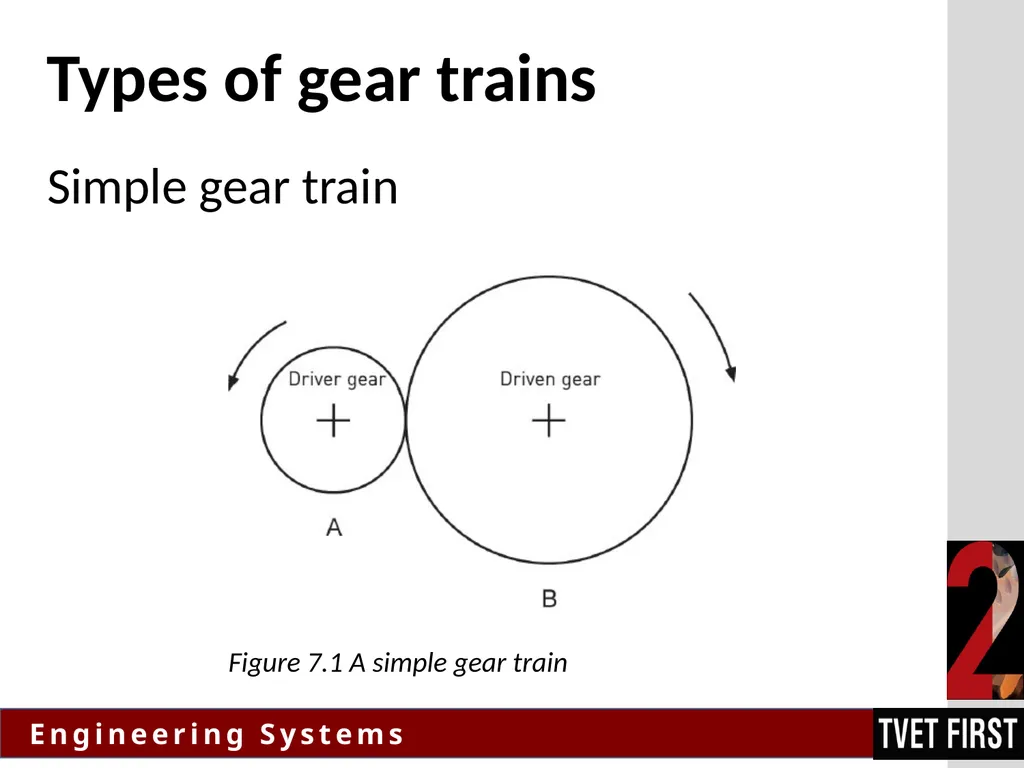
Types of gear trains Simple gear train Figure 7.1 A simple gear train<br>
07
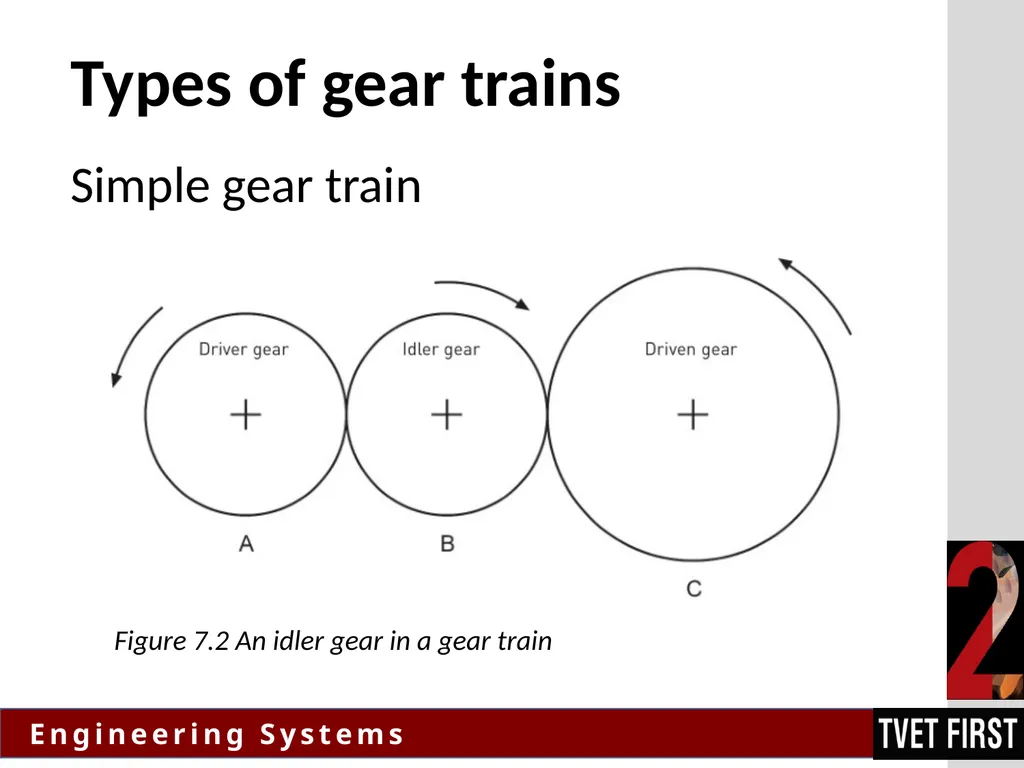
Figure 7.2 An idler gear in a gear train Types of gear trains Simple gear train<br>
08
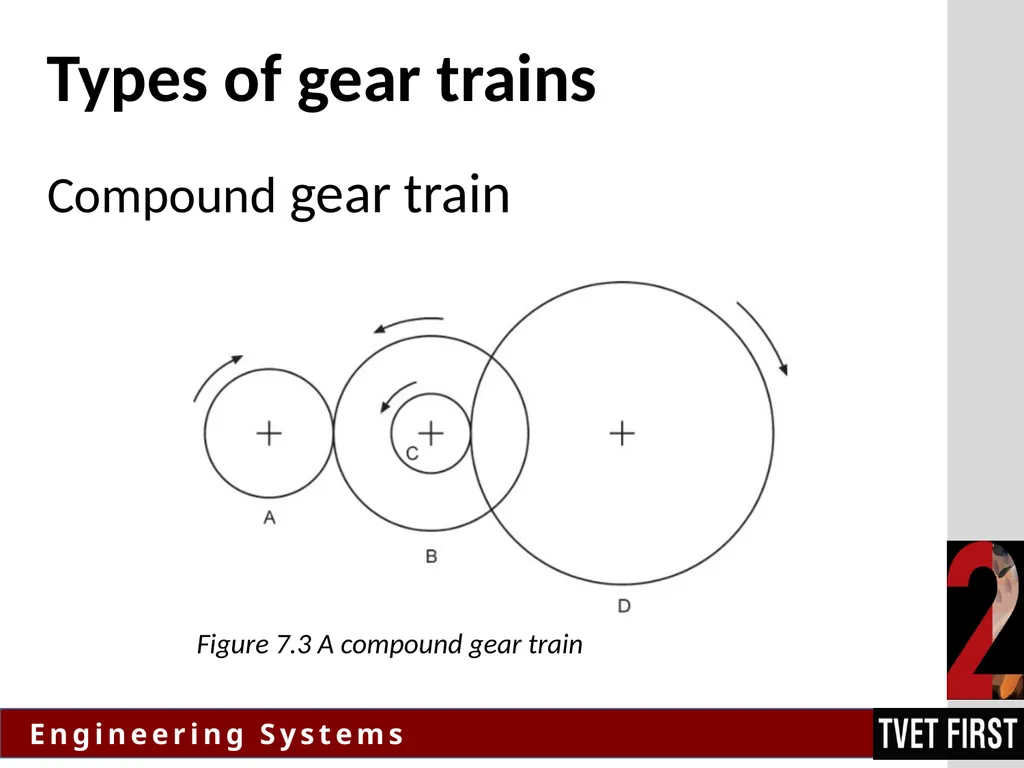
Types of gear trains Compound gear train Figure 7.3 A compound gear train<br>
09
Applications of gear trains The size of a gear is usually specified in one of three ways:
Diameter or radius of the gear.
The circumference of the gear.
The number of teeth on the gear.<br>
10
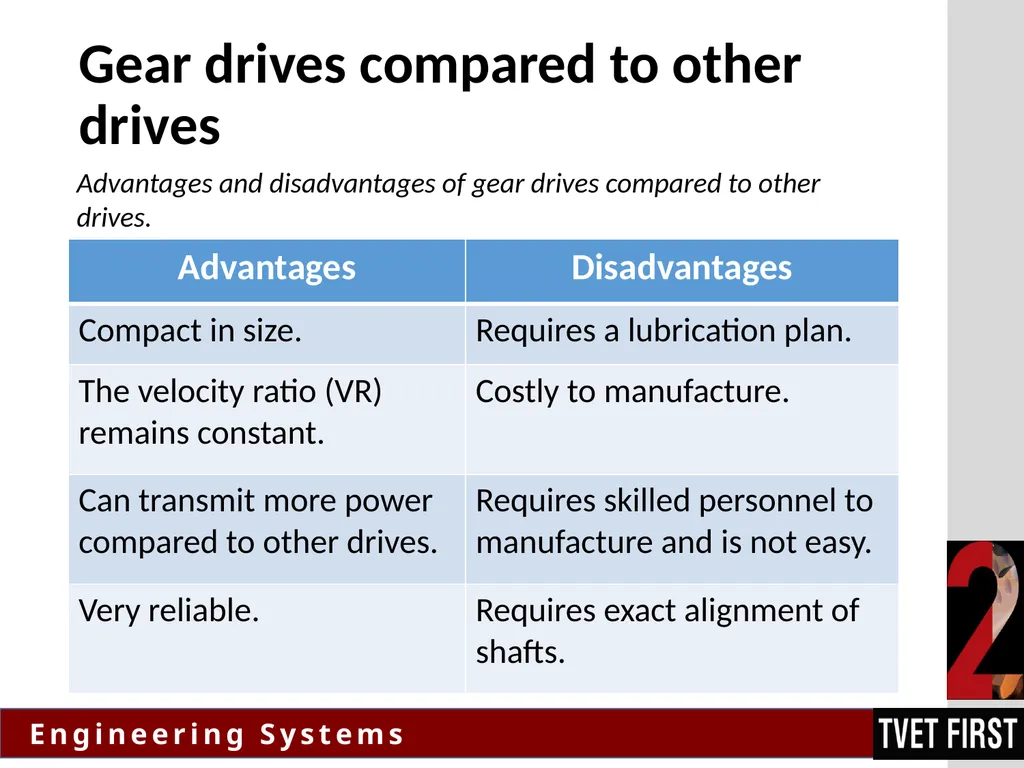
Gear drives compared to other drives Advantages and disadvantages of gear drives compared to other drives.<br>
11
Belt drives Unit 7.2<br>
12
Defining a belt drive A belt drive is a method of transferring rotary motion between two shafts.
It consists of one pulley on each shaft and one or more continuous belts over the two pulleys.<br>
13
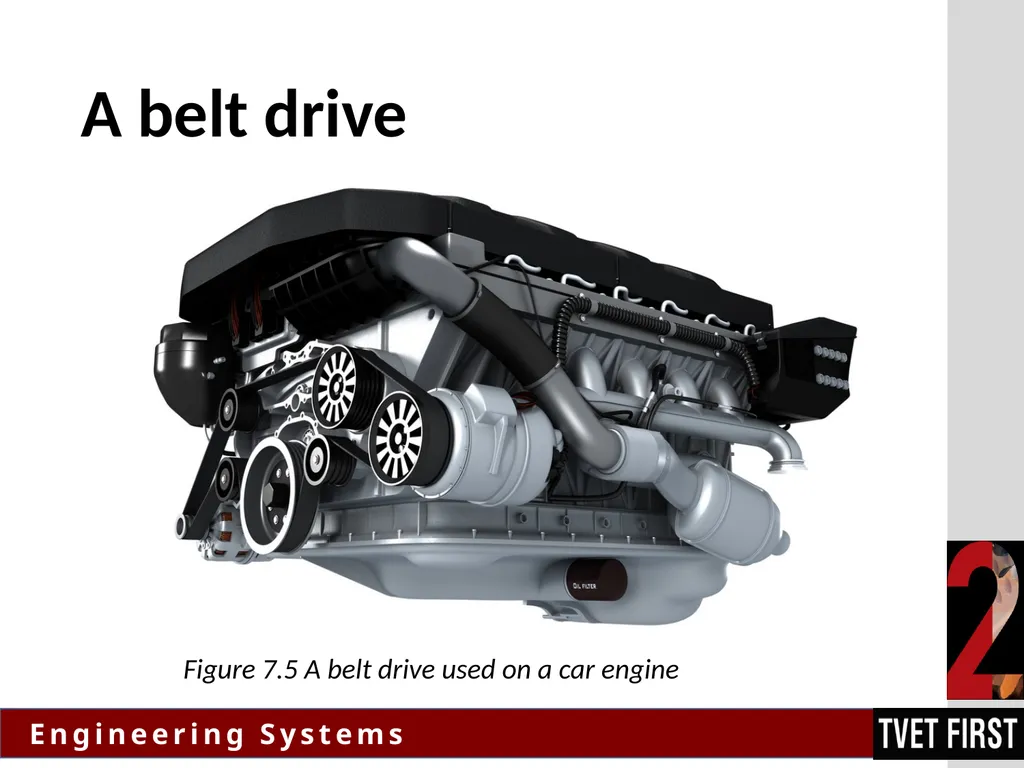
A belt drive Figure 7.5 A belt drive used on a car engine<br>
14
Belts A belt is flexible material looped over two pulleys.
Belts types include:
V-belts.
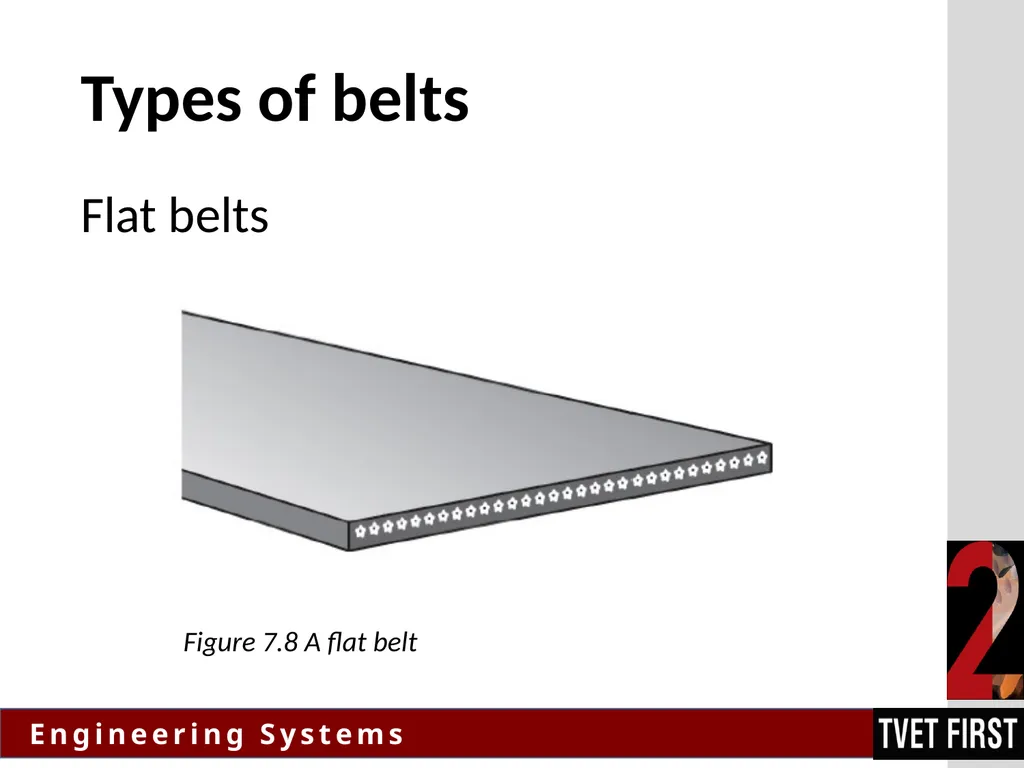
Flat belts.
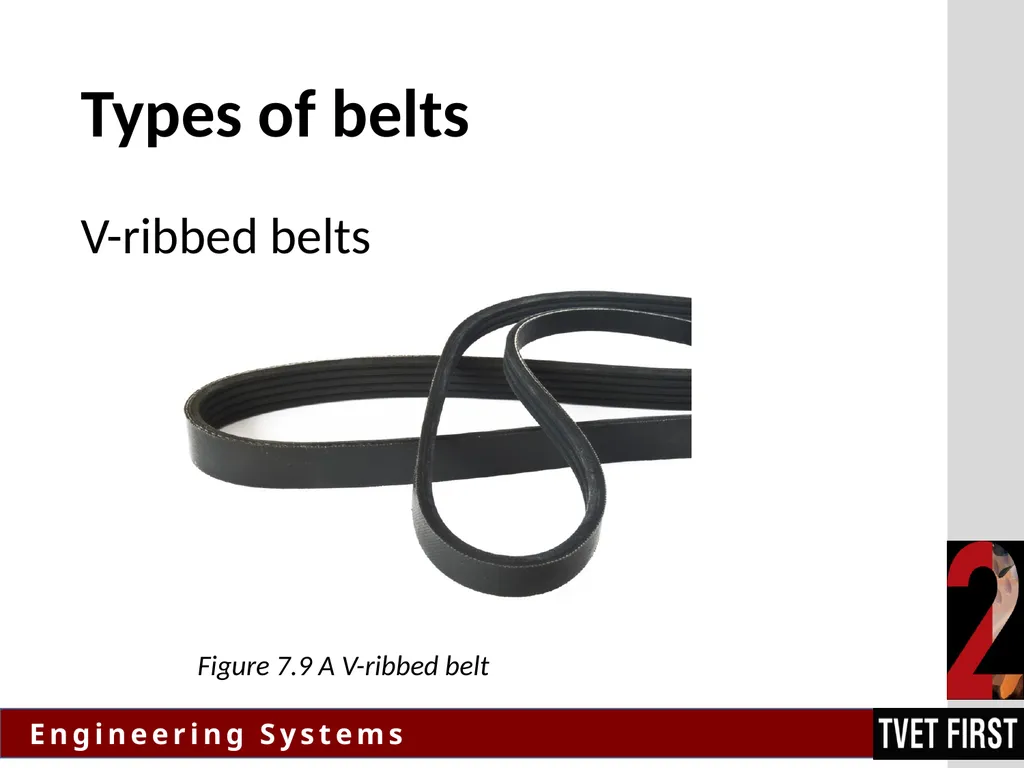
V-ribbed belts.
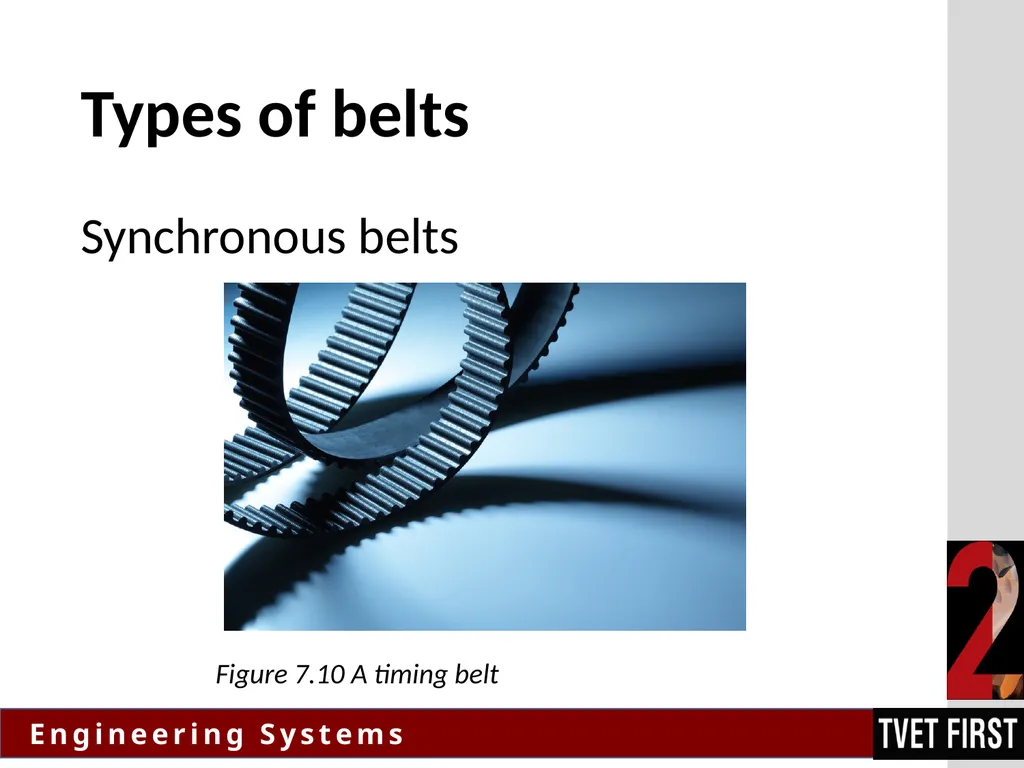
Synchronous belts.<br>
15
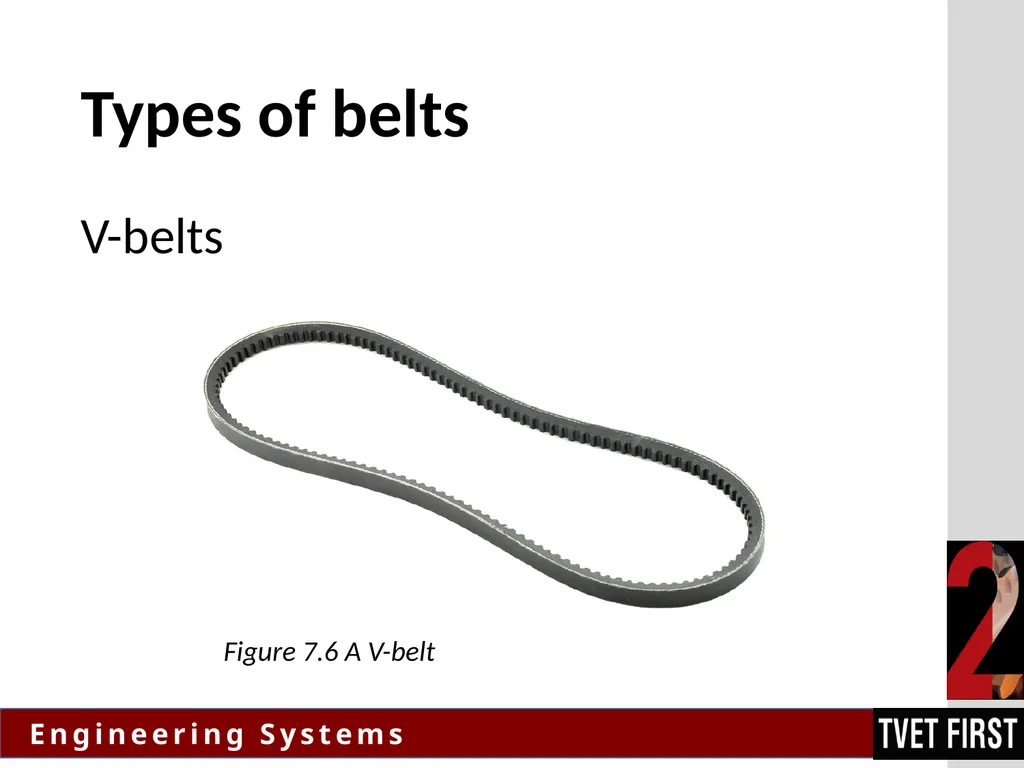
Types of belts V-belts Figure 7.6 A V-belt<br>
16
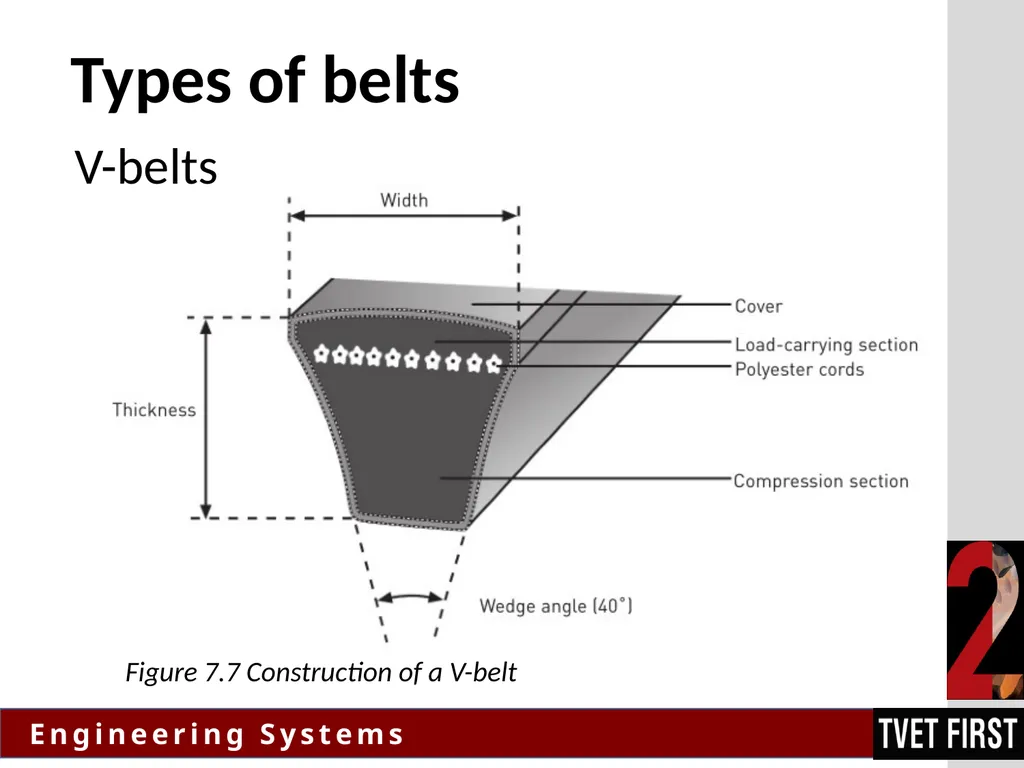
Figure 7.7 Construction of a V-belt Types of belts V-belts<br>
17
Types of belts Flat belts Figure 7.8 A flat belt<br>
18
Types of belts V-ribbed belts Figure 7.9 A V-ribbed belt<br>
19
Types of belts Synchronous belts Figure 7.10 A timing belt<br>
20
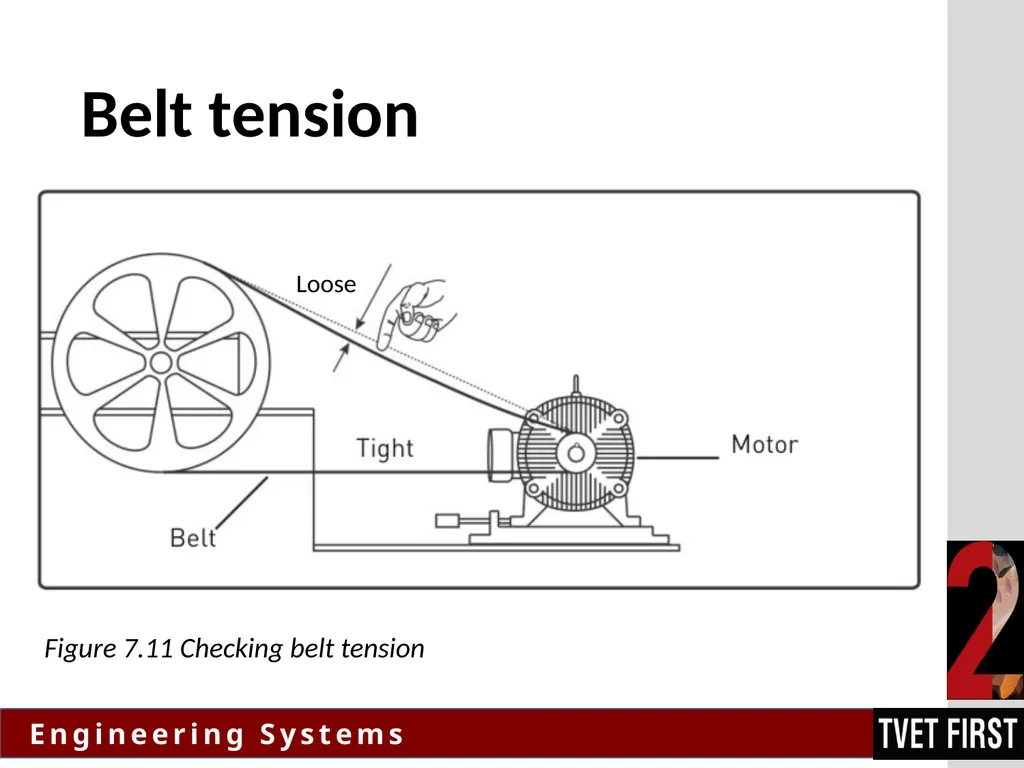
Belt friction Factors that affect belt friction include: Belt tension.
The wedge angle.
The materials from which the belt and pulleys are made.<br>
21
Belt tension Figure 7.11 Checking belt tension Loose<br>
22
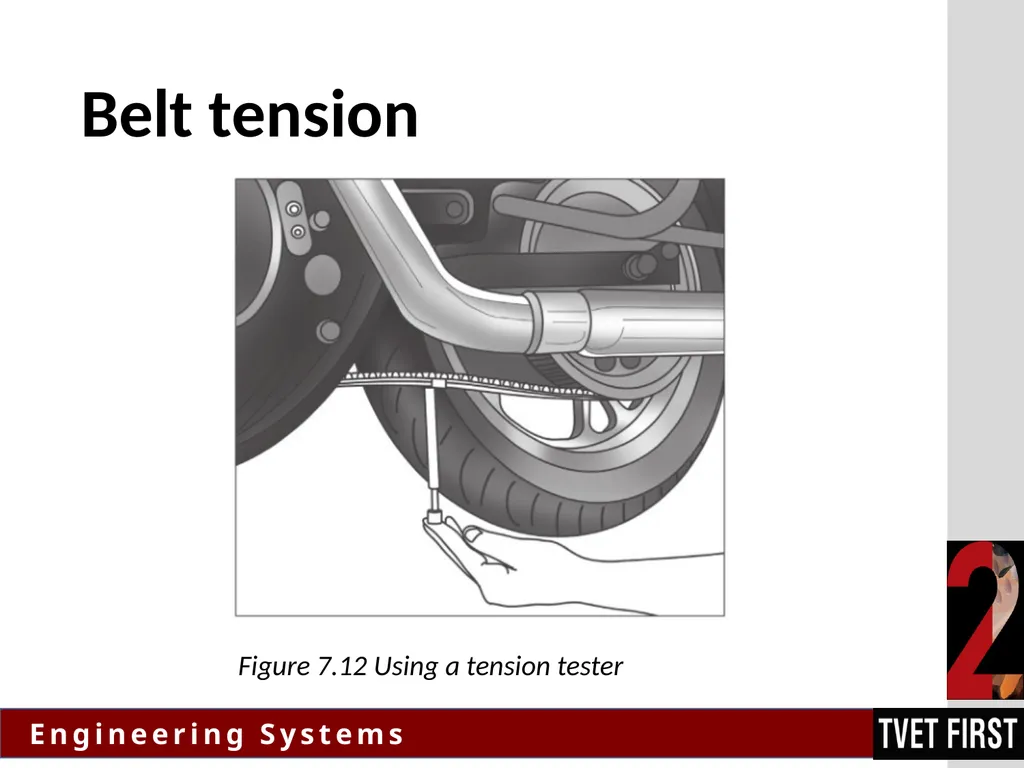
Belt tension Figure 7.12 Using a tension tester<br>
23
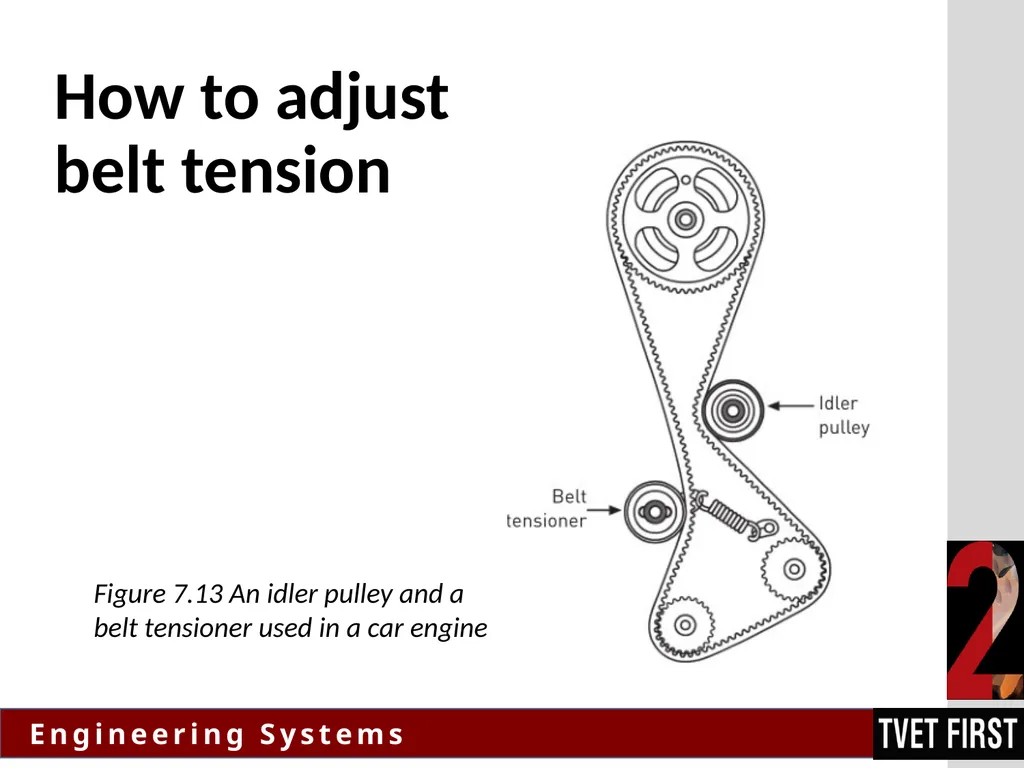
How to adjust �belt tension Figure 7.13 An idler pulley and a
belt tensioner used in a car engine<br>
24
Belt wear and slip Belt wear is caused by: Stress from rolling around the pulleys.
High belt tension.
Excessive slippage.
Adverse environmental conditions.
Belt overload caused by shock, vibration or belt slapping.<br>
25
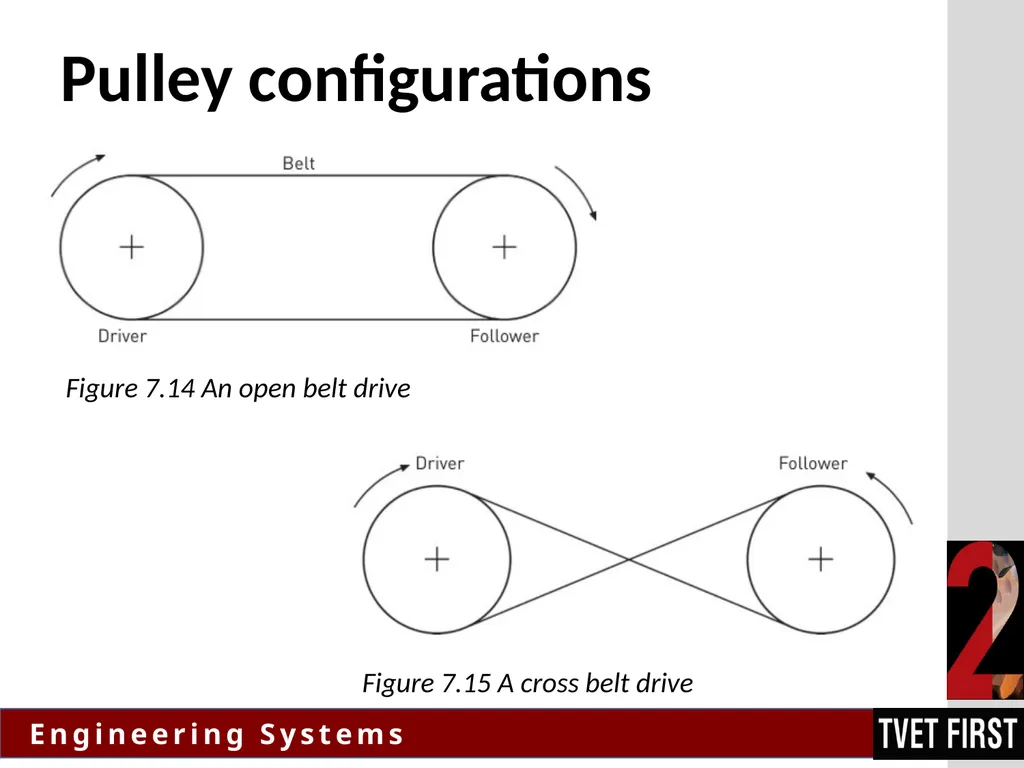
Pulley configurations Belts are looped over pulleys. In a two-pulley system, the belt can drive the pulleys in the same direction (open belt drive).
Or the belt may be crossed so that the shafts rotate in the opposite direction (cross belt drive).<br>
26
Pulley configurations Figure 7.14 An open belt drive Figure 7.15 A cross belt drive<br>
27
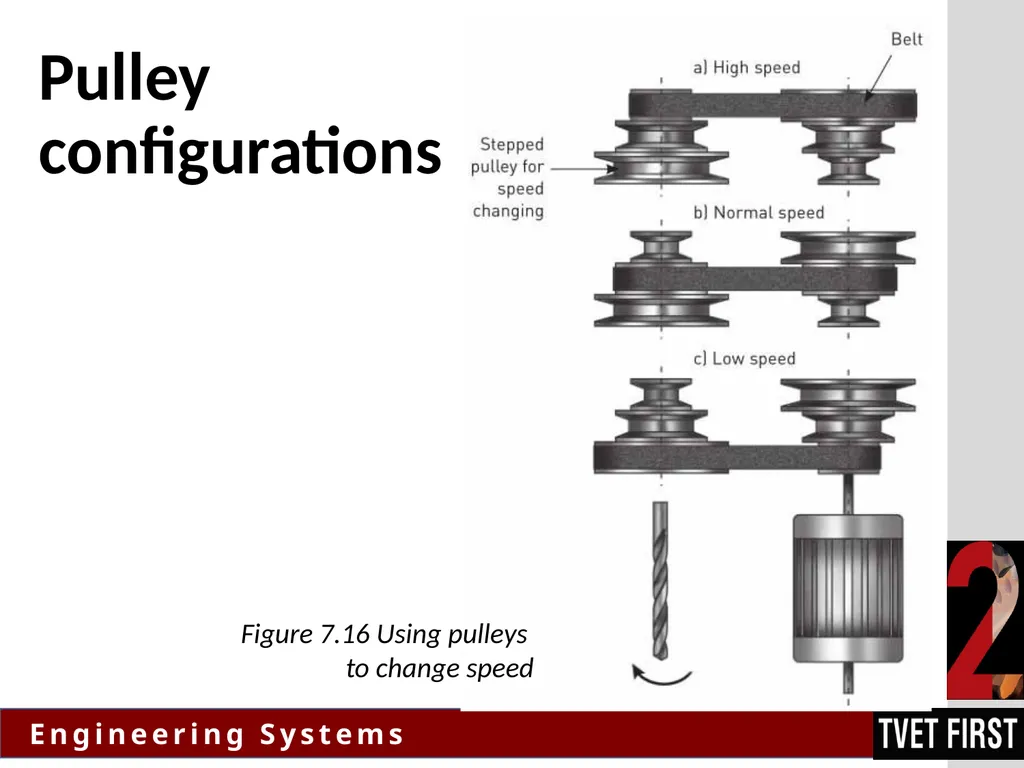
Pulley �configurations Figure 7.16 Using pulleys
to change speed<br>
28
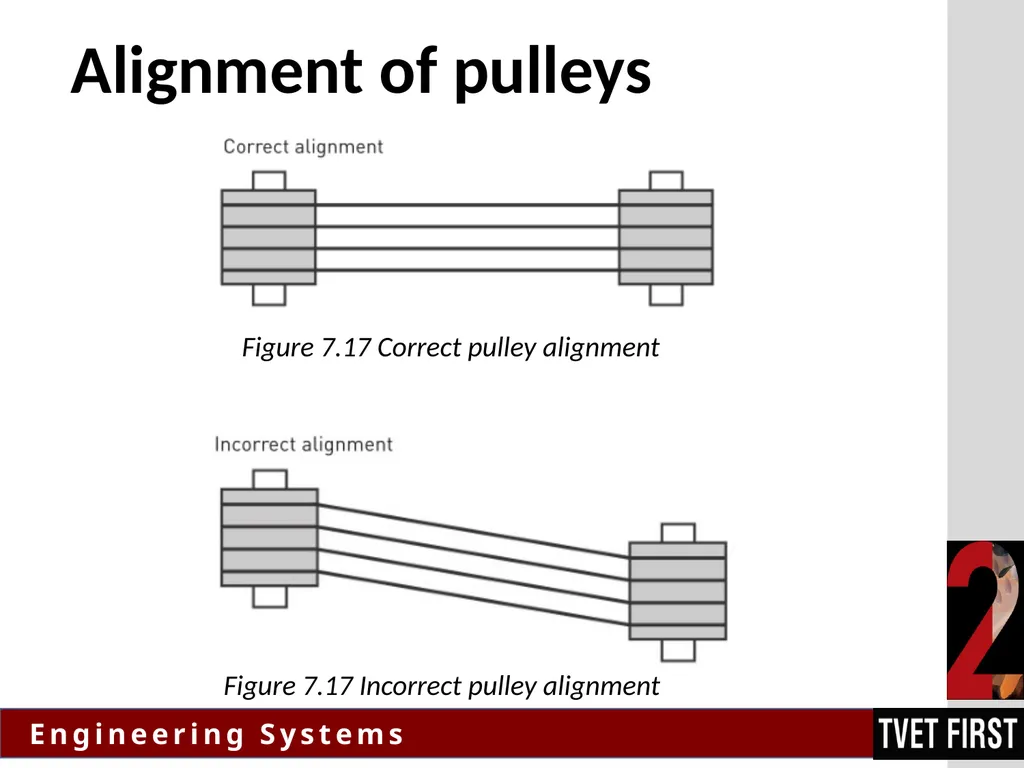
Alignment of pulleys Figure 7.17 Correct pulley alignment Figure 7.17 Incorrect pulley alignment<br>
29
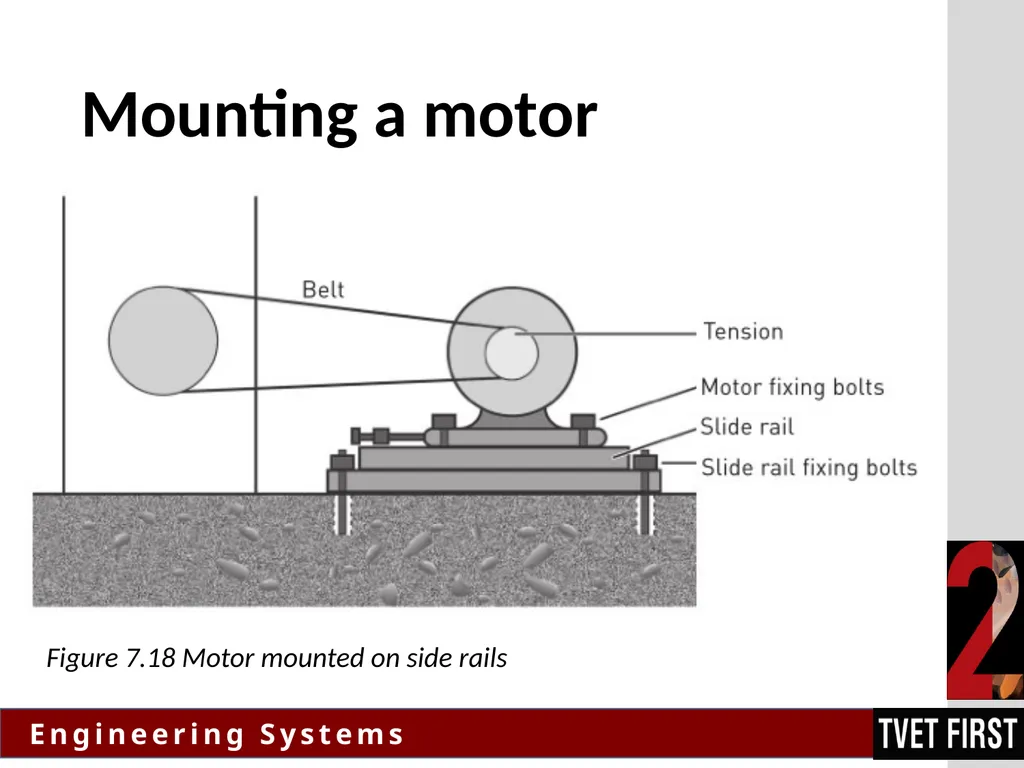
Mounting a motor Figure 7.18 Motor mounted on side rails<br>
30
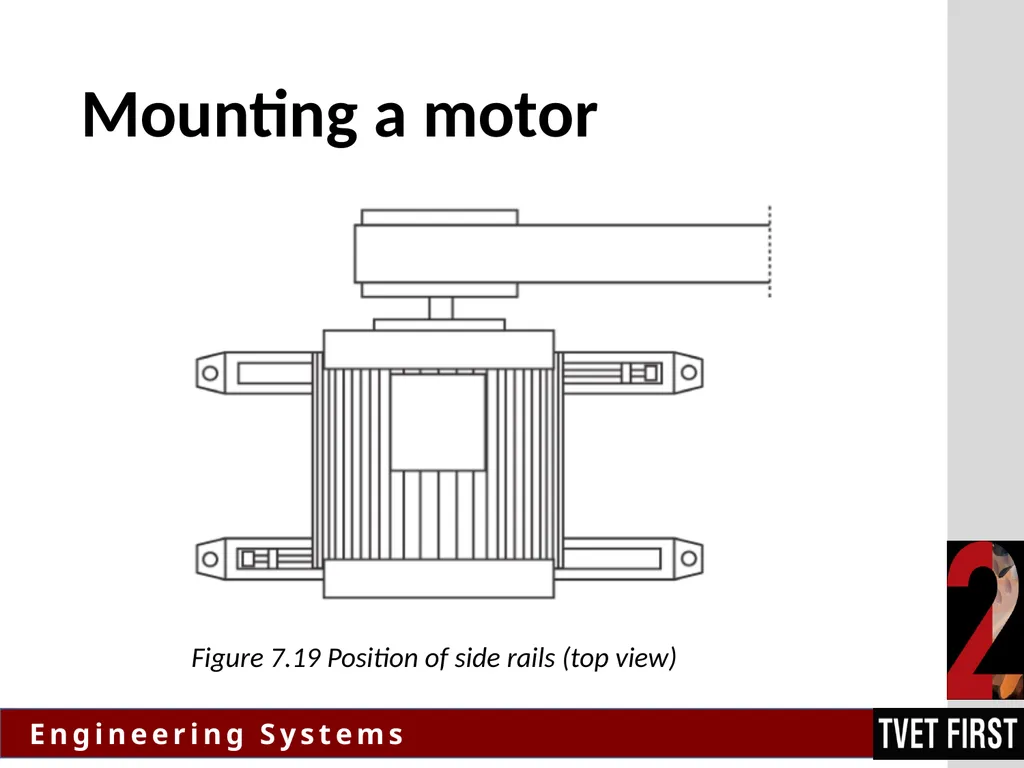
Mounting a motor Figure 7.19 Position of side rails (top view)<br>
31
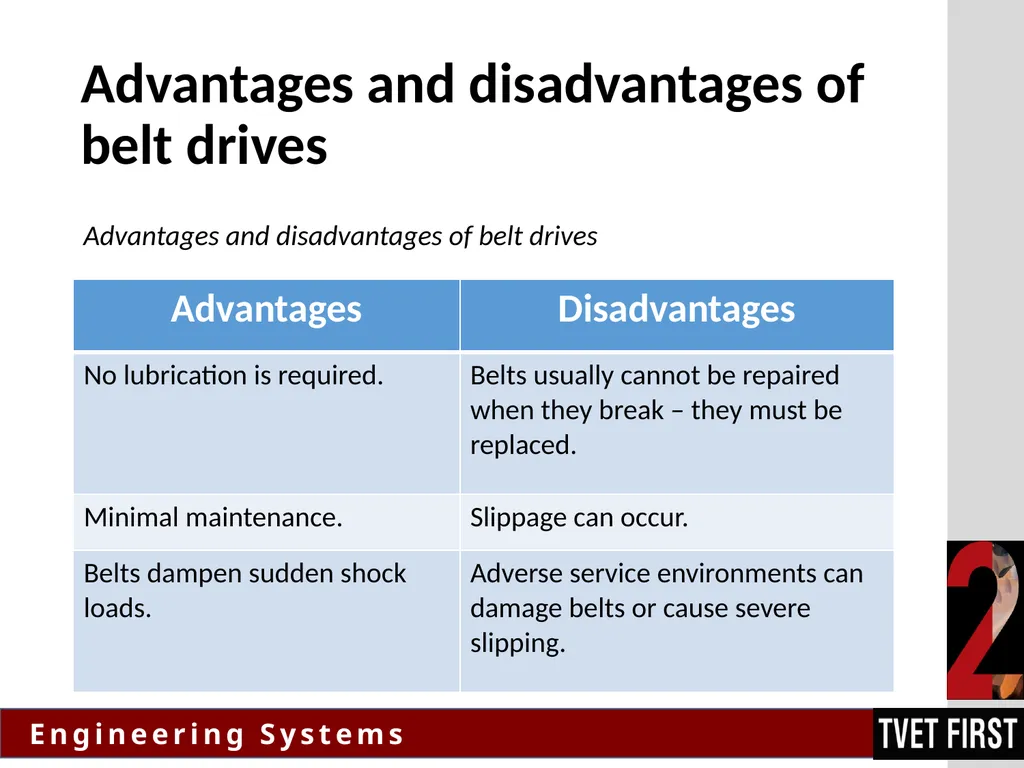
Advantages and disadvantages of belt drives Advantages and disadvantages of belt drives<br>
32
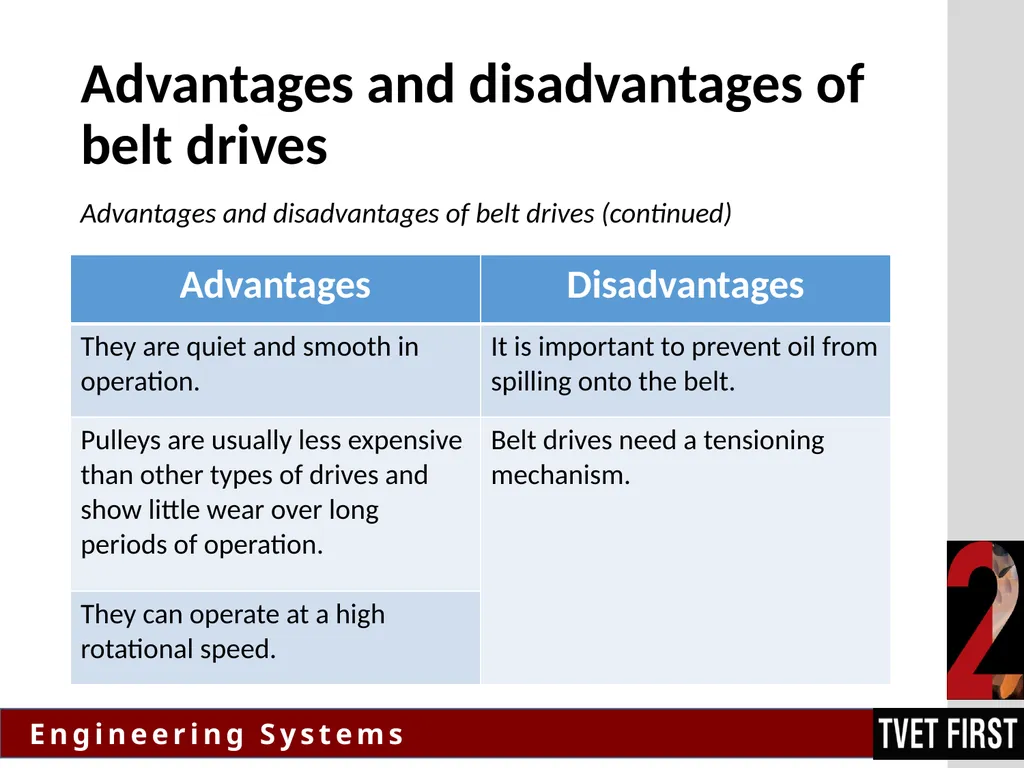
Advantages and disadvantages of belt drives Advantages and disadvantages of belt drives (continued)<br>
33
Chain drives Unit 7.3<br>
34
Defining a chain drive A chain drive is a method of transmitting mechanical power and reducing slippage.<br>
35
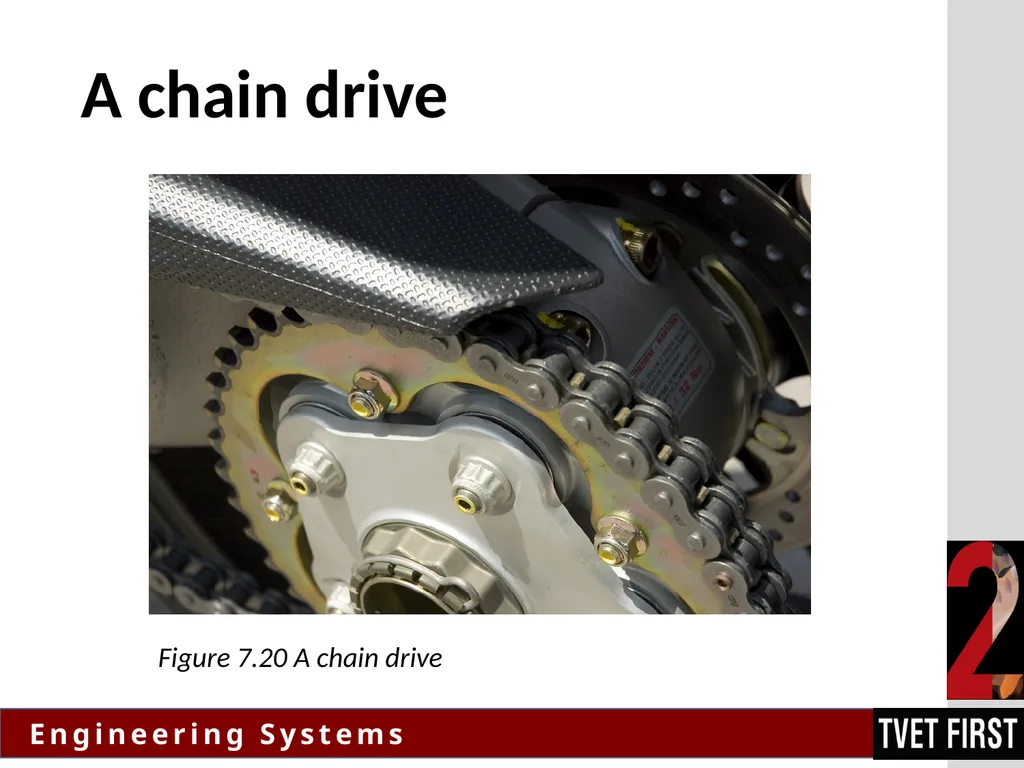
A chain drive Figure 7.20 A chain drive<br>
36
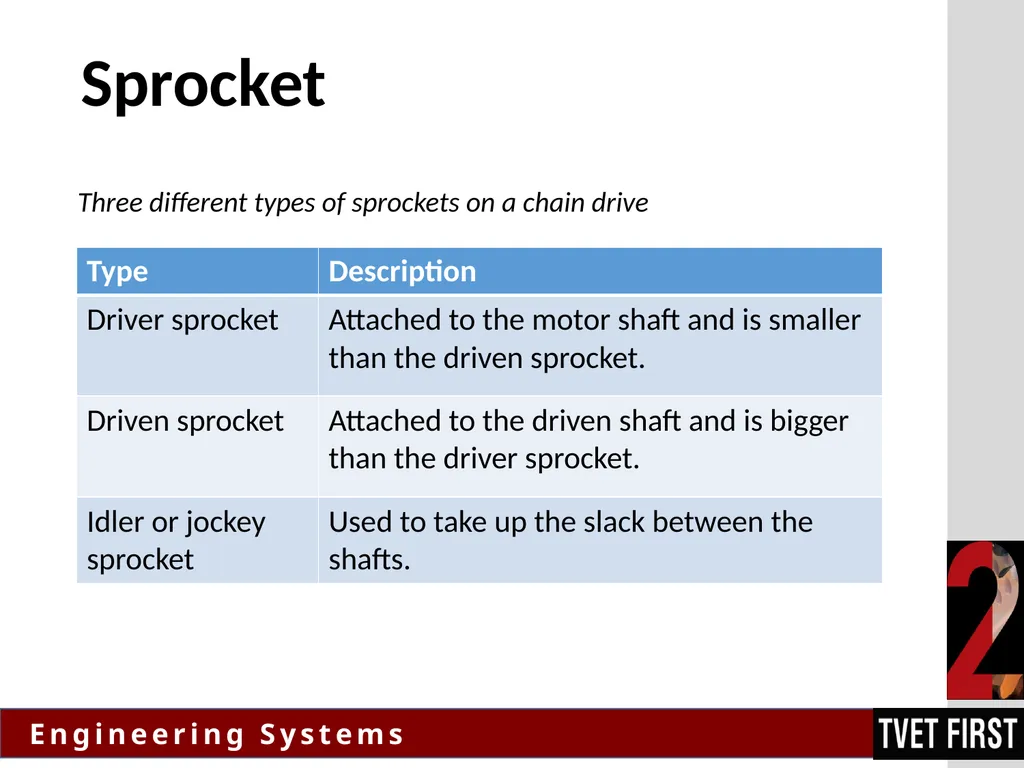
Sprocket Three different types of sprockets on a chain drive<br>
37
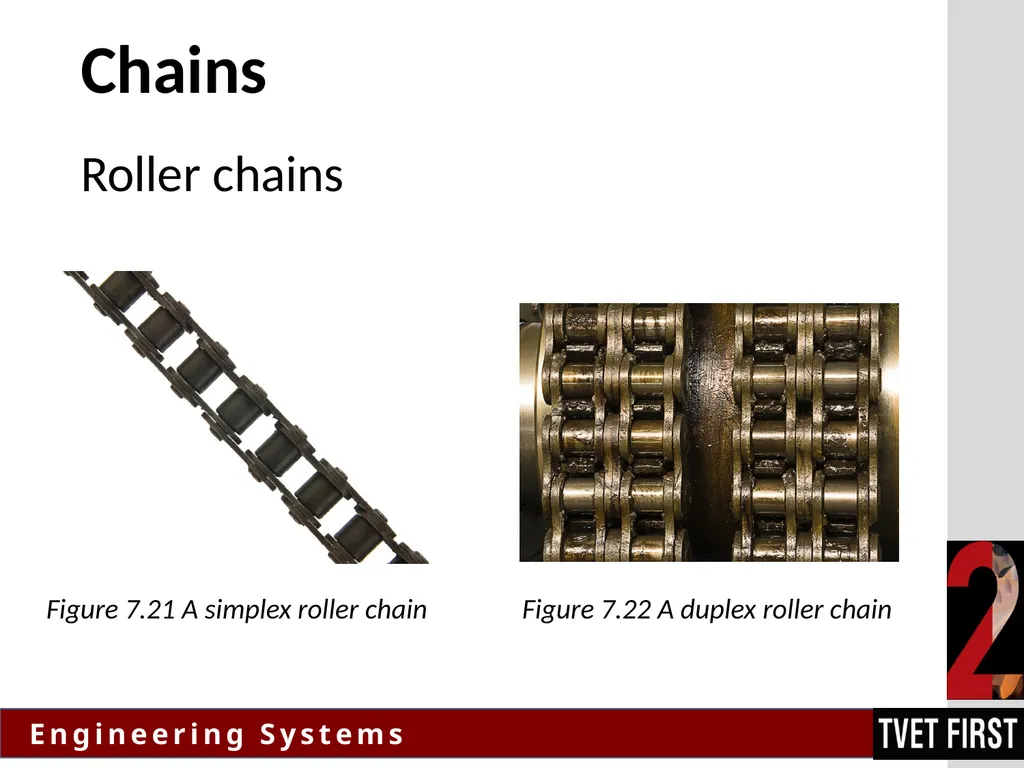
Chains Roller chains are the best known of all chains.
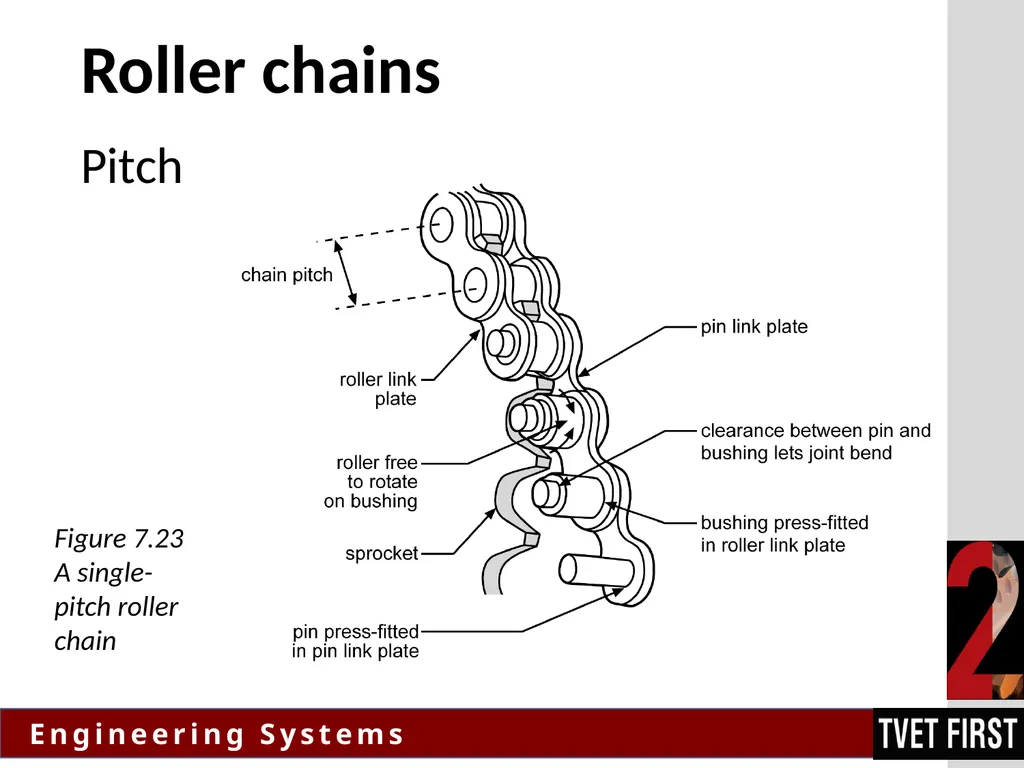
Constructed by connecting two side plates with pins that have bushings and rollers attached.<br>
38
Chains Roller chains Figure 7.21 A simplex roller chain Figure 7.22 A duplex roller chain<br>
39
Roller chains Figure 7.23 A single-pitch roller chain Pitch<br>
40
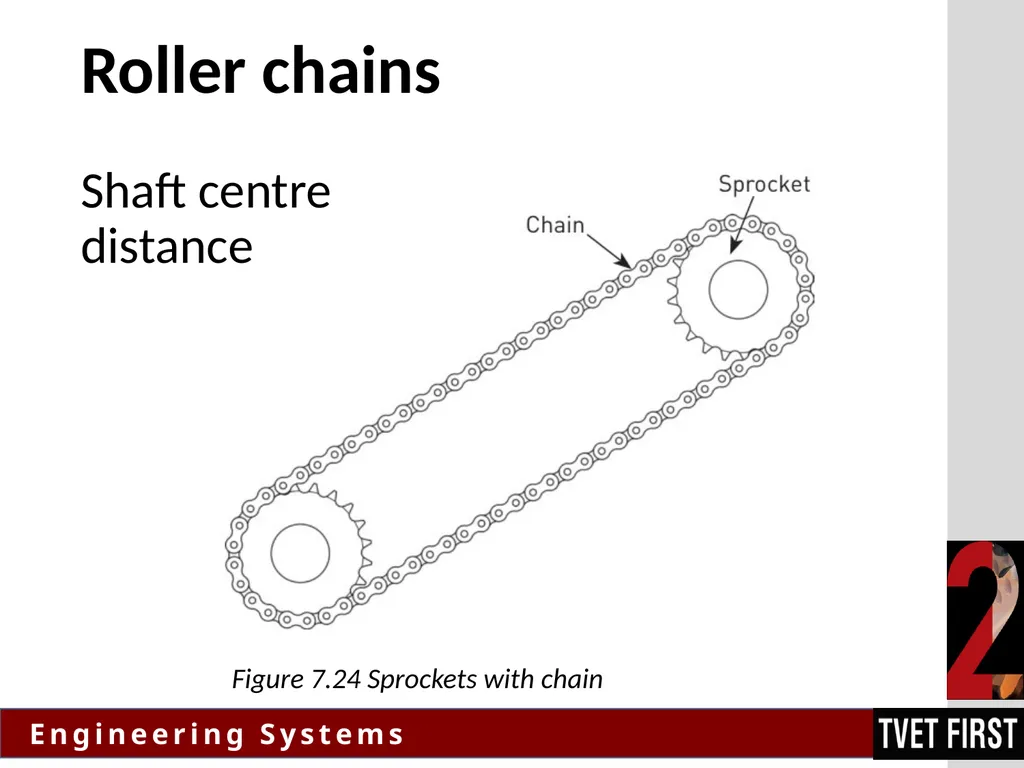
Roller chains Shaft centre distance Figure 7.24 Sprockets with chain<br>
41
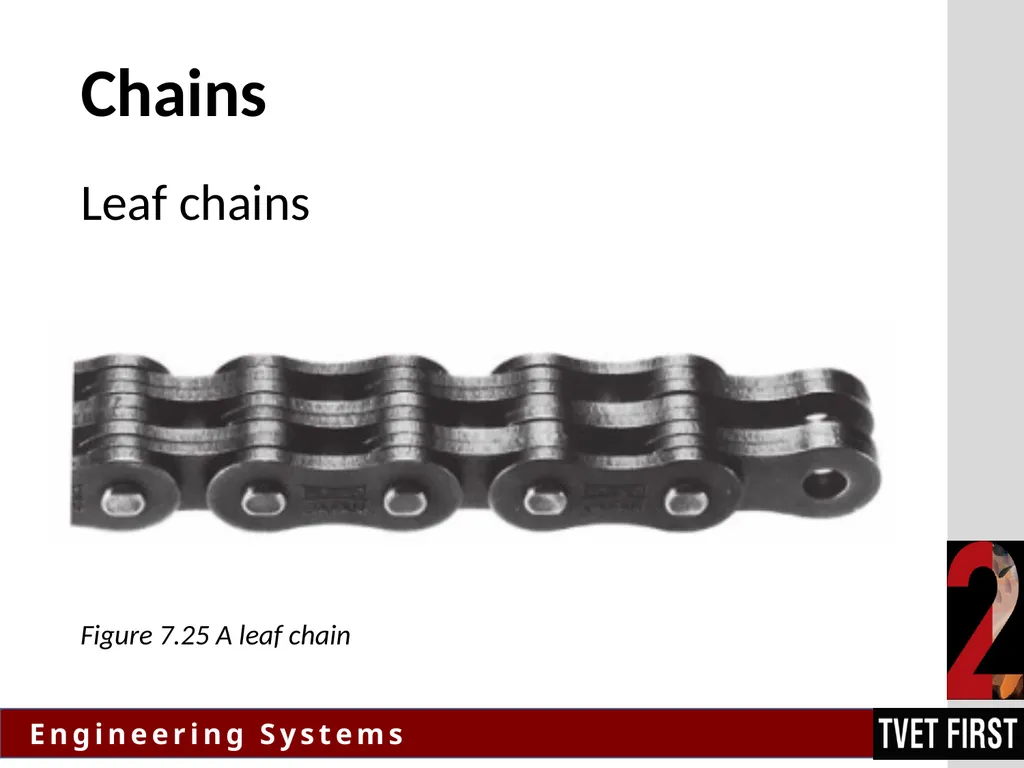
Chains Leaf chains Figure 7.25 A leaf chain<br>
42
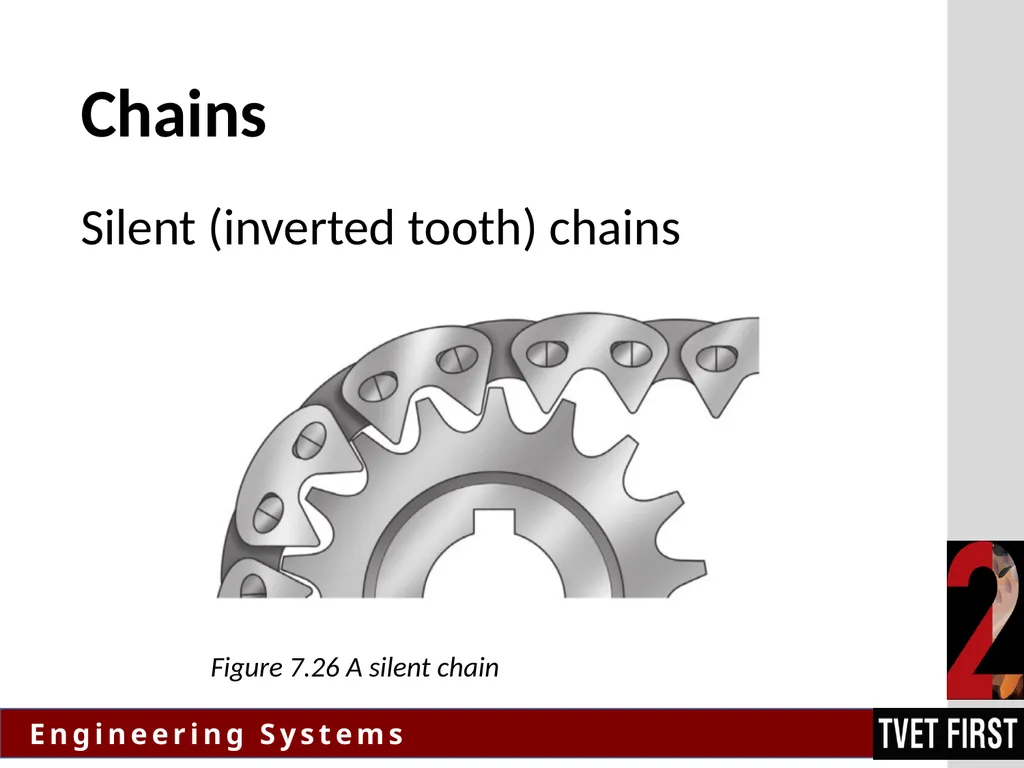
Chains Silent (inverted tooth) chains Figure 7.26 A silent chain<br>
43
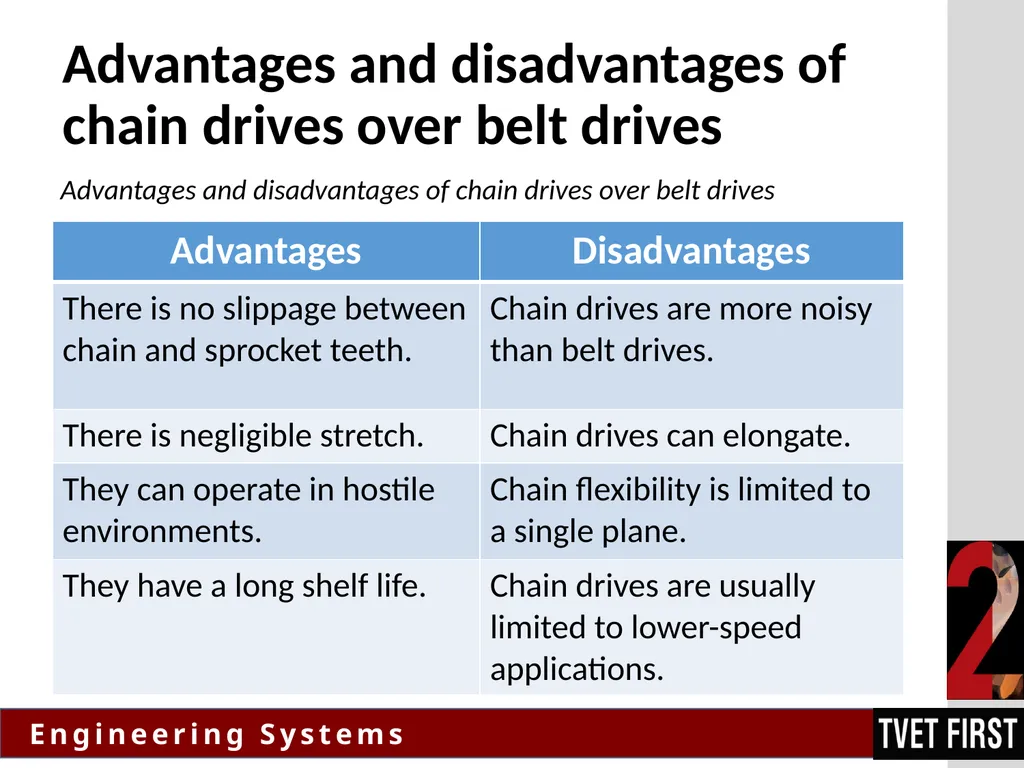
Advantages and disadvantages of chain drives over belt drives Advantages and disadvantages of chain drives over belt drives<br>
44
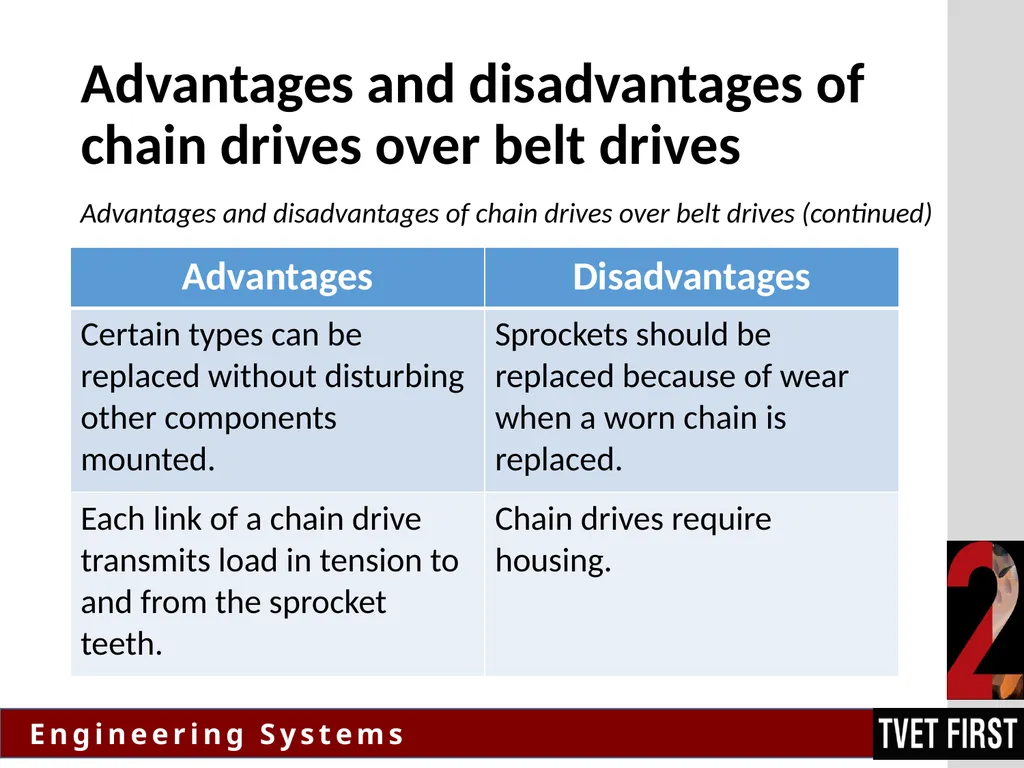
Advantages and disadvantages of chain drives over belt drives Advantages and disadvantages of chain drives over belt drives (continued)<br>
45
Brake systems Unit 7.4<br>
46
Hydraulic brakes The pressure that is applied to the brake pedal is transmitted to the brake system via brake fluid.<br>
47
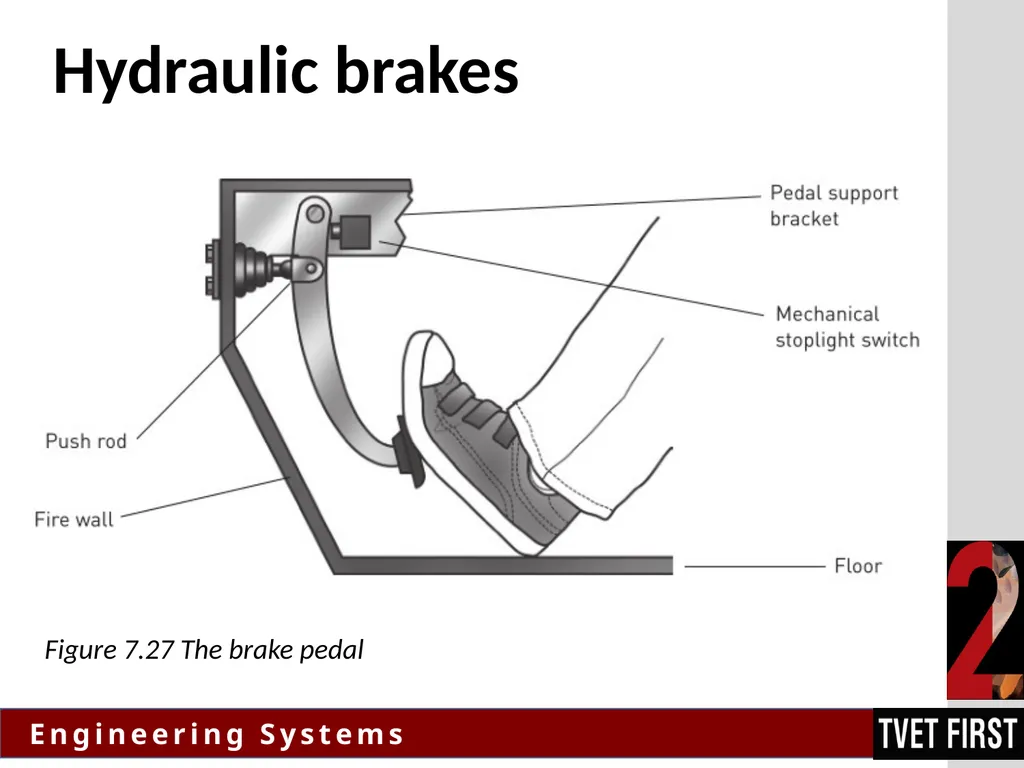
Hydraulic brakes Figure 7.27 The brake pedal<br>
48
Figure 7.28 A hydraulic brake system Hydraulic brakes<br>
49
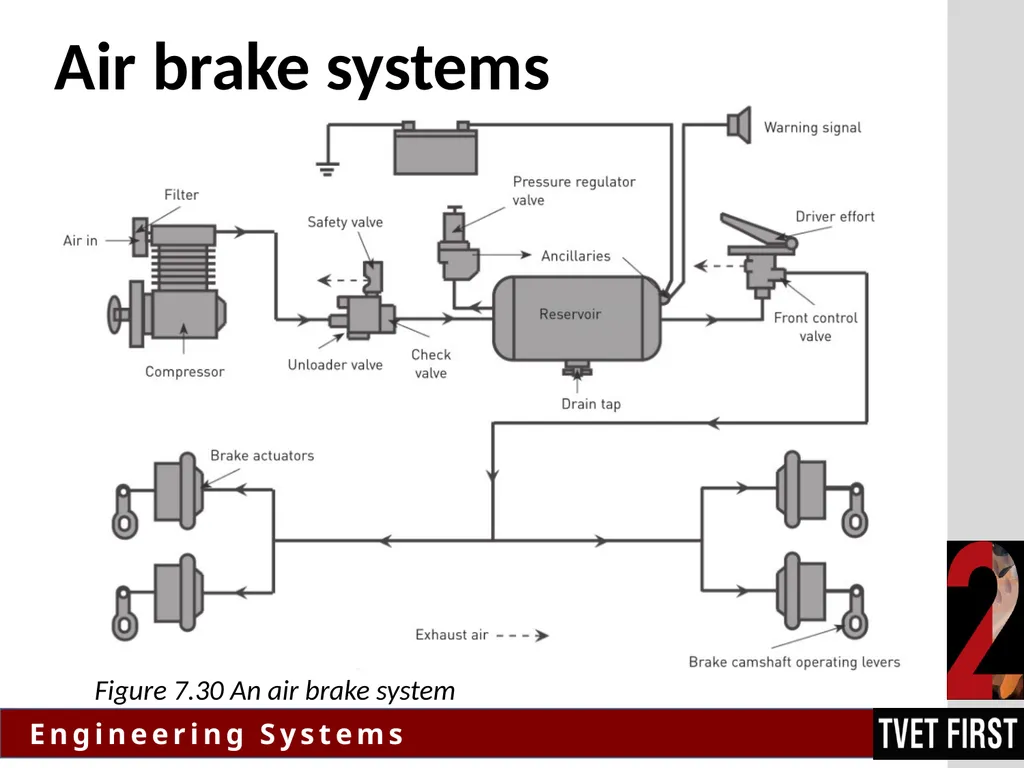
Air brake systems Operate in a similar way to hydraulic brakes but compressed air is used to actuate the brakes.<br>
50
Air brake systems Components of an air brake system:
A compressor to pump air.
A reservoir or tank to store compressed air.
A foot valve to regulate flow of air.
Brake chambers and slack adjusters to transfer the force exerted by compressed air.
Brake linings and drums or rotors to create friction.<br>
51
Air brake systems Figure 7.30 An air brake system<br>
52
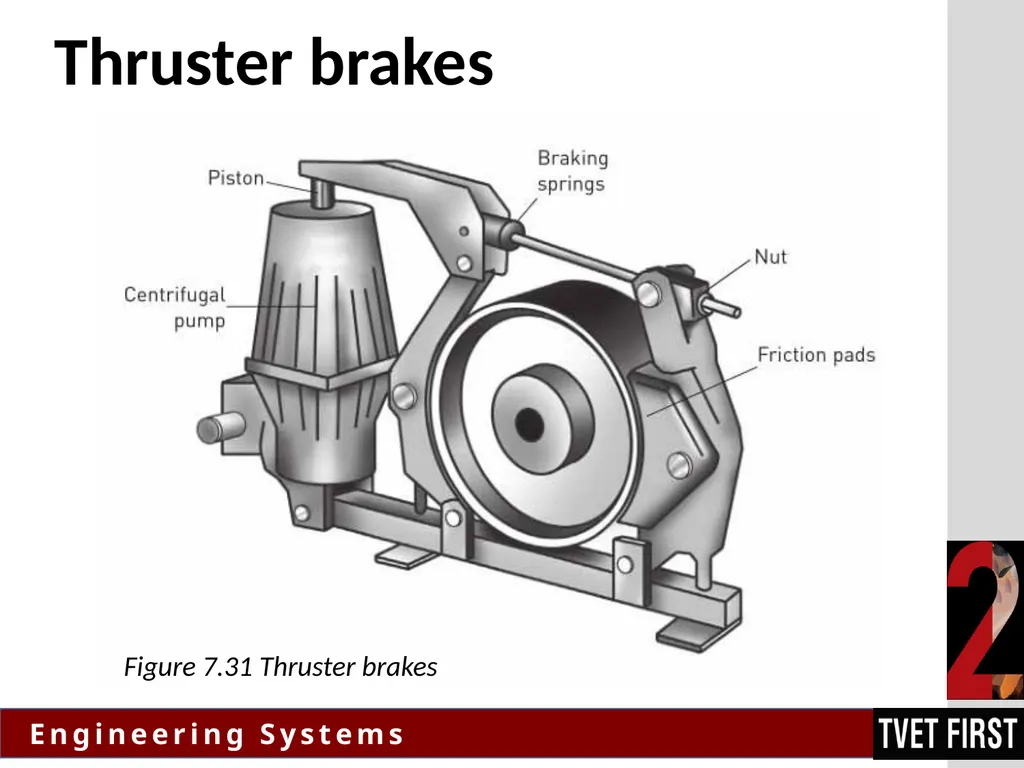
Thruster brakes Thruster brakes are used in large industrial lifting equipment so that if power fails, the load will not fall to the ground.
Centrifugal pump stops and the braking spring applies the brakes.<br>
53
Thruster brakes Figure 7.31 Thruster brakes<br>
54
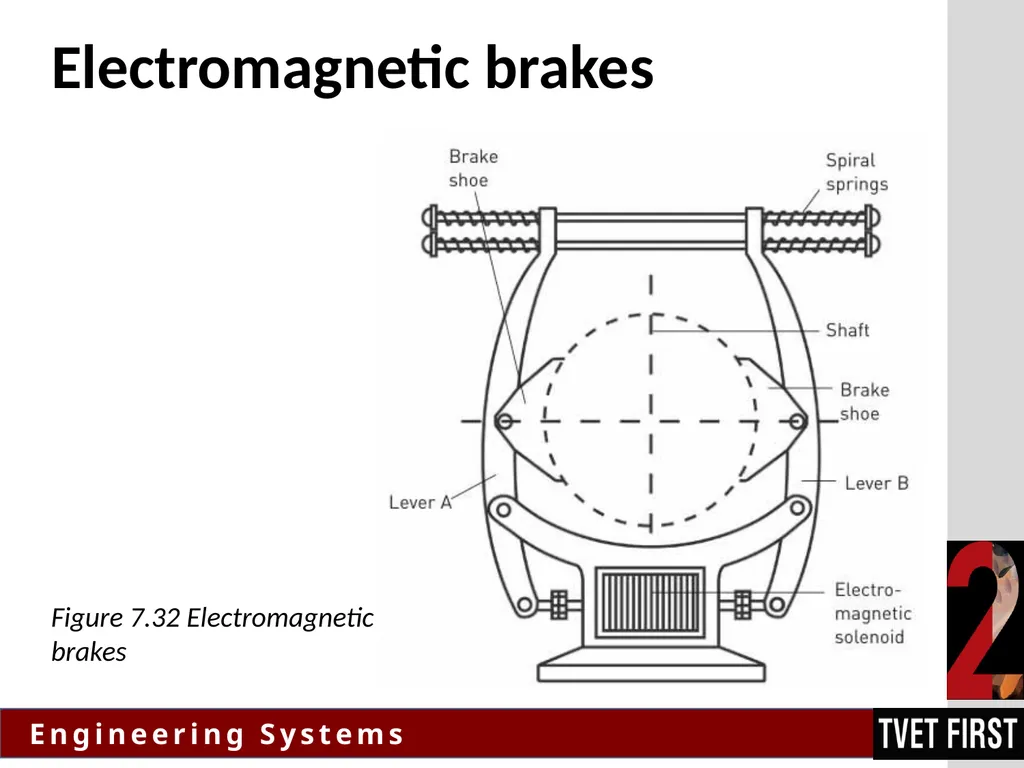
Electromagnetic brakes Are similar to thruster brakes, except that the brake shoes are held away from the drum by an electromagnet rather than hydraulic pressure.<br>
55
Electromagnetic brakes Figure 7.32 Electromagnetic �brakes<br>
56
VIDEO: Electromagnetic brake<br>
57
Summative assessment Test your knowledge of this section by completing the Summative assessment�(page 117 of your Student’s Book)<br>