
The 4-Step Critique Process Digital Photography 1A


Description: The 4-Step Critique Process Digital Photography 1A Ms. Flores Instructions on Notes In your NOTEBOOK: Copy each step with the number and title of the step. Summarize the information in the middle that tells you what the step is all about
Related Topics
Download Presentation
"The 4-Step Critique Process Digital Photography 1A" is the property of its rightful owner. Permission is granted to download and print the materials on this website for personal, non-commercial use only, and to display it on your personal computer provided you do not modify the materials and that you retain all copyright notices contained in the materials. By downloading content from our website, you accept the terms of this agreement.
Presentation Transcript
slide1. The 4-Step Critique Process Digital Photography 1A
Ms. Flores<br>
slide2. Instructions on Notes In your NOTEBOOK:
Copy each step with the number and title of the step.
Summarize the information in the middle that tells you what the step is all about (in sentences or bullet points).
Copy ALL of the blue sentence frames (you’ll see arrows pointing at them)<br>
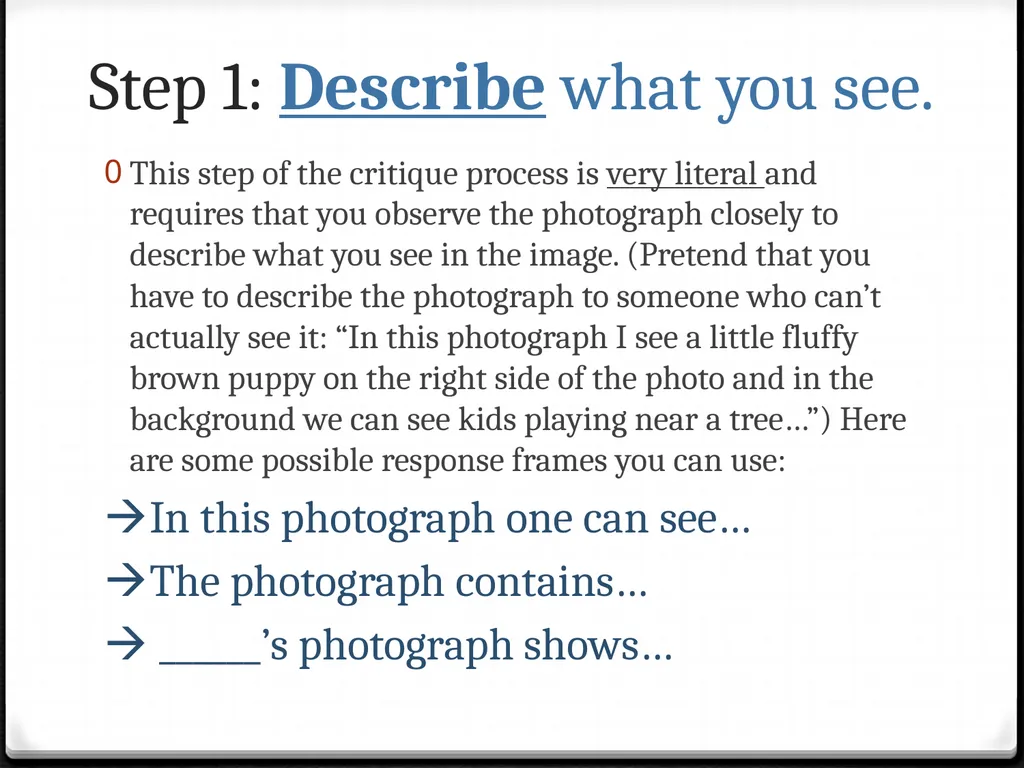
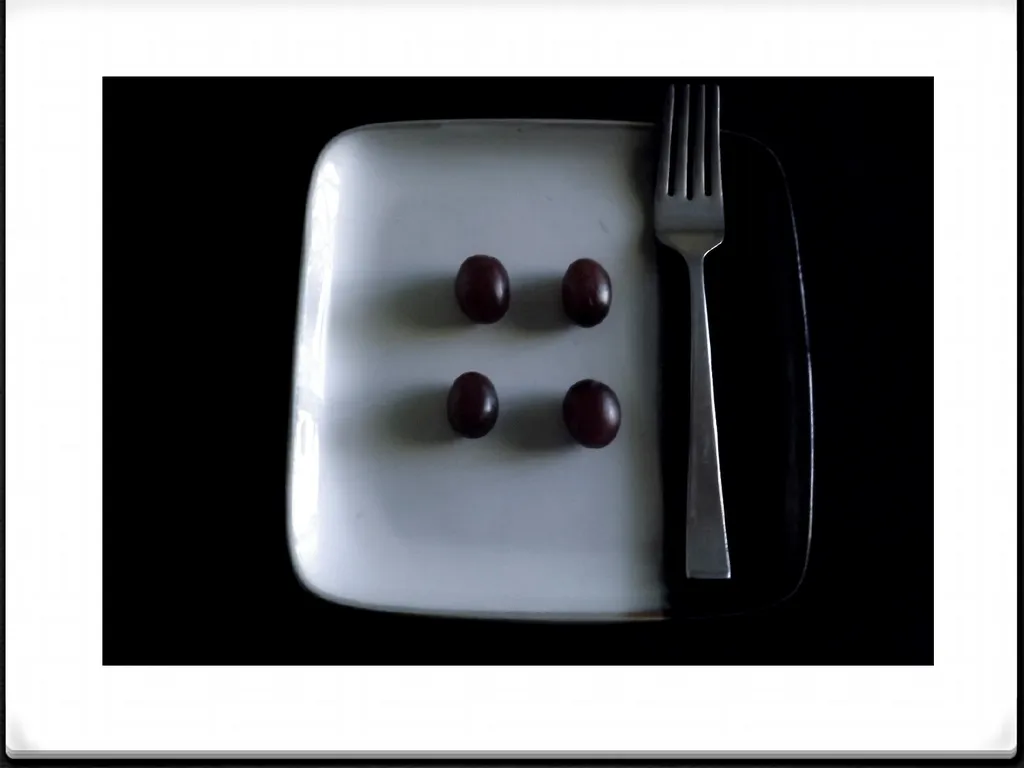
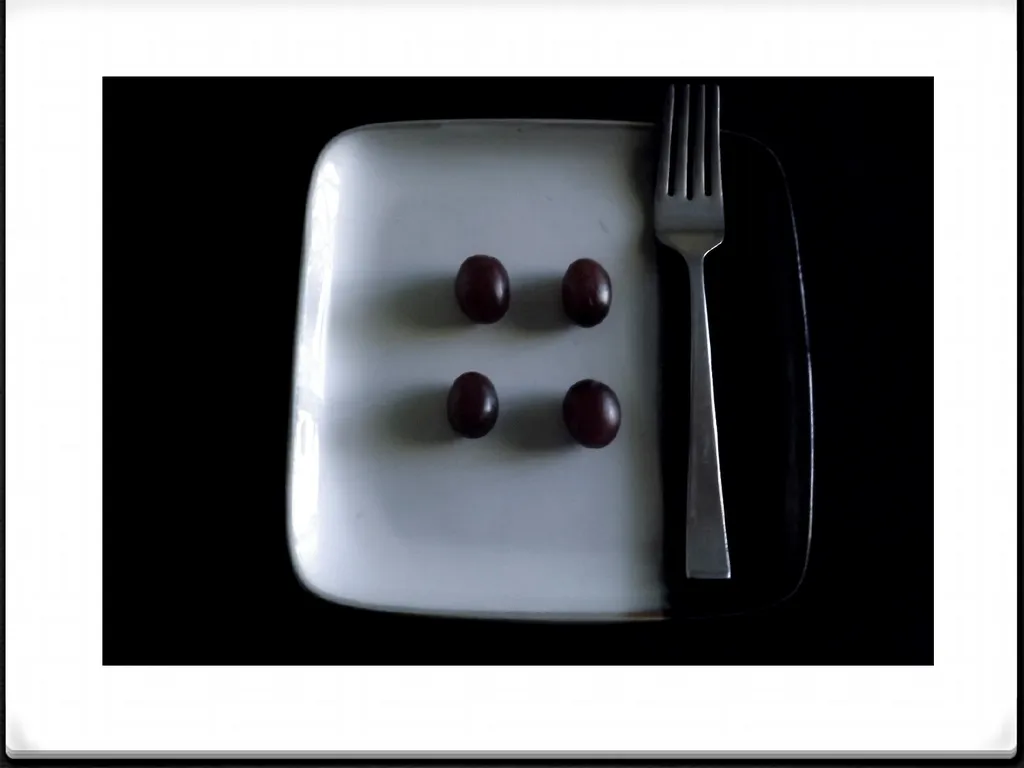
slide3. Step 1: Describe what you see. This step of the critique process is very literal and requires that you observe the photograph closely to describe what you see in the image. (Pretend that you have to describe the photograph to someone who can’t actually see it: “In this photograph I see a little fluffy brown puppy on the right side of the photo and in the background we can see kids playing near a tree…”) Here are some possible response frames you can use:
In this photograph one can see…
The photograph contains…
______’s photograph shows…<br>
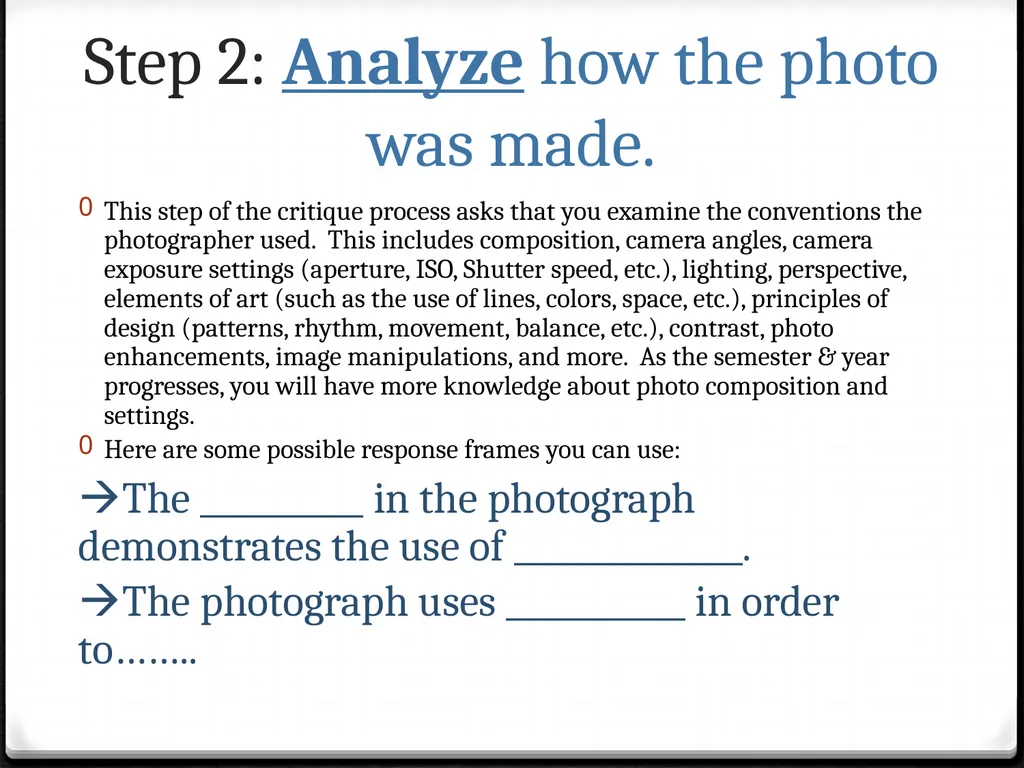
slide5. Step 2: Analyze how the photo was made. This step of the critique process asks that you examine the conventions the photographer used. This includes composition, camera angles, camera exposure settings (aperture, ISO, Shutter speed, etc.), lighting, perspective, elements of art (such as the use of lines, colors, space, etc.), principles of design (patterns, rhythm, movement, balance, etc.), contrast, photo enhancements, image manipulations, and more. As the semester & year progresses, you will have more knowledge about photo composition and settings.
Here are some possible response frames you can use:
The __________ in the photograph demonstrates the use of ______________.
The photograph uses ___________ in order to……..<br>
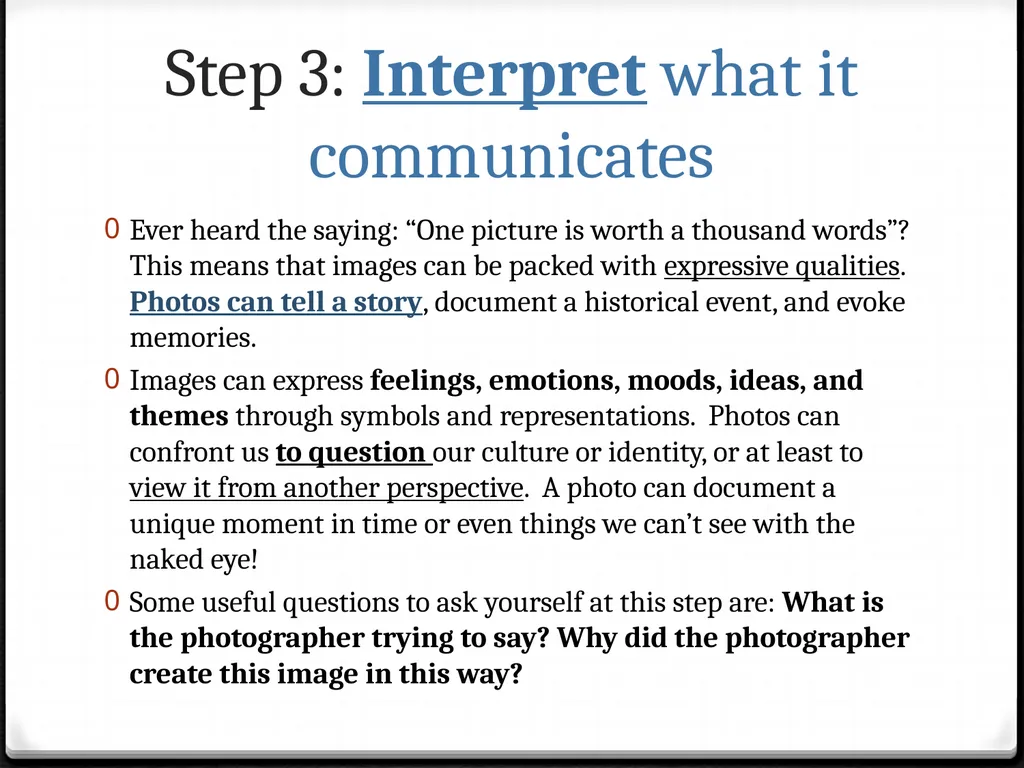
slide7. Step 3: Interpret what it communicates Ever heard the saying: “One picture is worth a thousand words”? This means that images can be packed with expressive qualities. Photos can tell a story, document a historical event, and evoke memories.
Images can express feelings, emotions, moods, ideas, and themes through symbols and representations. Photos can confront us to question our culture or identity, or at least to view it from another perspective. A photo can document a unique moment in time or even things we can’t see with the naked eye!
Some useful questions to ask yourself at this step are: What is the photographer trying to say? Why did the photographer create this image in this way?<br>
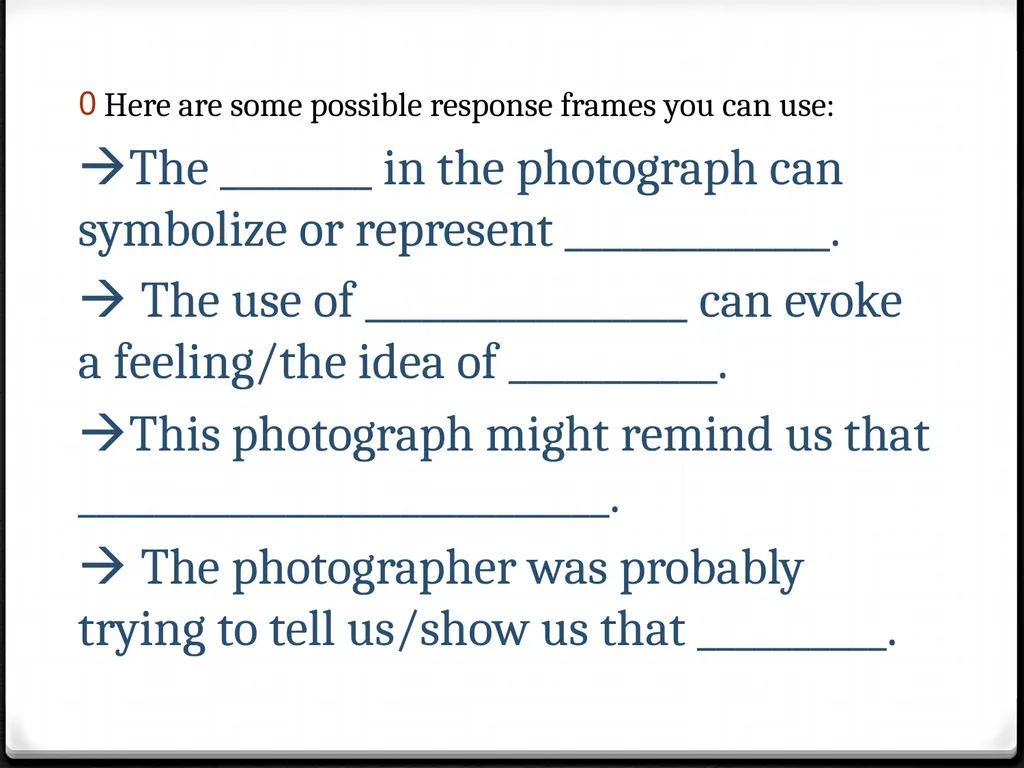
slide8. Here are some possible response frames you can use:
The ________ in the photograph can symbolize or represent ______________.
The use of _________________ can evoke a feeling/the idea of ___________.
This photograph might remind us that ____________________________.
The photographer was probably trying to tell us/show us that __________.<br>
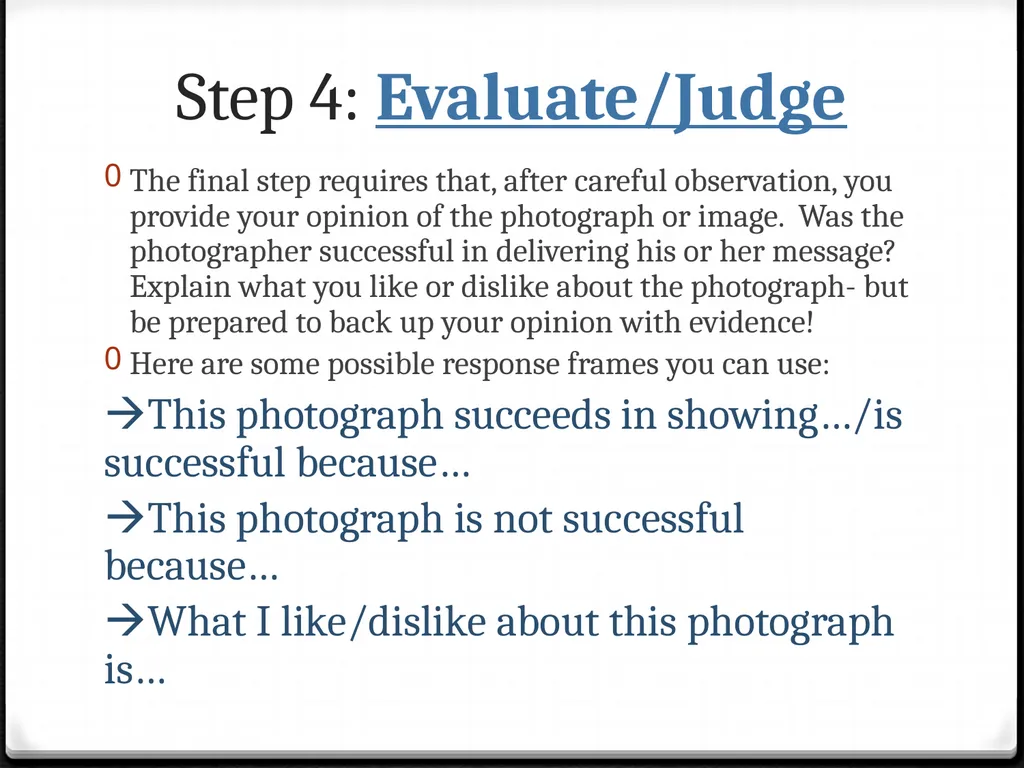
slide10. Step 4: Evaluate/Judge The final step requires that, after careful observation, you provide your opinion of the photograph or image. Was the photographer successful in delivering his or her message? Explain what you like or dislike about the photograph- but be prepared to back up your opinion with evidence!
Here are some possible response frames you can use:
This photograph succeeds in showing…/is successful because…
This photograph is not successful because…
What I like/dislike about this photograph is…<br>
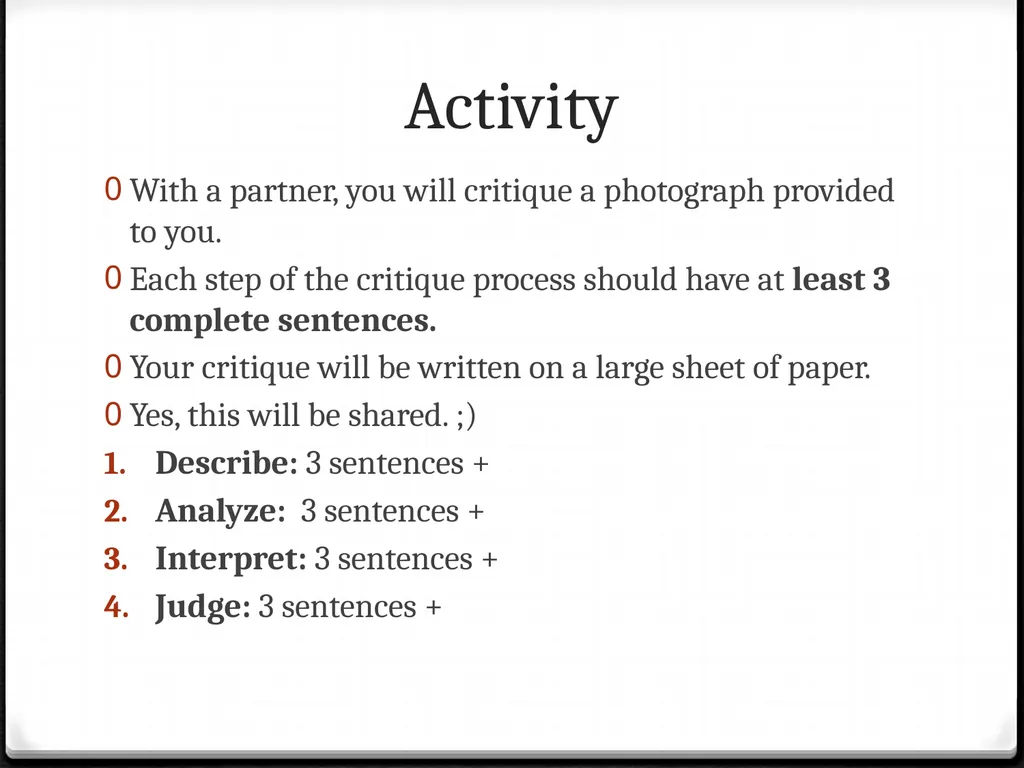
slide12. Activity With a partner, you will critique a photograph provided to you.
Each step of the critique process should have at least 3 complete sentences.
Your critique will be written on a large sheet of paper.
Yes, this will be shared. ;)
Describe: 3 sentences +
Analyze: 3 sentences +
Interpret: 3 sentences +
Judge: 3 sentences +<br>
Ms. Flores<br>
slide2. Instructions on Notes In your NOTEBOOK:
Copy each step with the number and title of the step.
Summarize the information in the middle that tells you what the step is all about (in sentences or bullet points).
Copy ALL of the blue sentence frames (you’ll see arrows pointing at them)<br>
slide3. Step 1: Describe what you see. This step of the critique process is very literal and requires that you observe the photograph closely to describe what you see in the image. (Pretend that you have to describe the photograph to someone who can’t actually see it: “In this photograph I see a little fluffy brown puppy on the right side of the photo and in the background we can see kids playing near a tree…”) Here are some possible response frames you can use:
In this photograph one can see…
The photograph contains…
______’s photograph shows…<br>
slide5. Step 2: Analyze how the photo was made. This step of the critique process asks that you examine the conventions the photographer used. This includes composition, camera angles, camera exposure settings (aperture, ISO, Shutter speed, etc.), lighting, perspective, elements of art (such as the use of lines, colors, space, etc.), principles of design (patterns, rhythm, movement, balance, etc.), contrast, photo enhancements, image manipulations, and more. As the semester & year progresses, you will have more knowledge about photo composition and settings.
Here are some possible response frames you can use:
The __________ in the photograph demonstrates the use of ______________.
The photograph uses ___________ in order to……..<br>
slide7. Step 3: Interpret what it communicates Ever heard the saying: “One picture is worth a thousand words”? This means that images can be packed with expressive qualities. Photos can tell a story, document a historical event, and evoke memories.
Images can express feelings, emotions, moods, ideas, and themes through symbols and representations. Photos can confront us to question our culture or identity, or at least to view it from another perspective. A photo can document a unique moment in time or even things we can’t see with the naked eye!
Some useful questions to ask yourself at this step are: What is the photographer trying to say? Why did the photographer create this image in this way?<br>
slide8. Here are some possible response frames you can use:
The ________ in the photograph can symbolize or represent ______________.
The use of _________________ can evoke a feeling/the idea of ___________.
This photograph might remind us that ____________________________.
The photographer was probably trying to tell us/show us that __________.<br>
slide10. Step 4: Evaluate/Judge The final step requires that, after careful observation, you provide your opinion of the photograph or image. Was the photographer successful in delivering his or her message? Explain what you like or dislike about the photograph- but be prepared to back up your opinion with evidence!
Here are some possible response frames you can use:
This photograph succeeds in showing…/is successful because…
This photograph is not successful because…
What I like/dislike about this photograph is…<br>
slide12. Activity With a partner, you will critique a photograph provided to you.
Each step of the critique process should have at least 3 complete sentences.
Your critique will be written on a large sheet of paper.
Yes, this will be shared. ;)
Describe: 3 sentences +
Analyze: 3 sentences +
Interpret: 3 sentences +
Judge: 3 sentences +<br>