The Collaborative Syllabus Designing for Student Success Together The Collaborative Syllabus Instructor and students co-create course policies Students propose policies They discuss with each other and with the instructor to reach consensus
"The Collaborative Syllabus Designing for Student" is the property of its rightful owner. Permission is granted to
download and print the materials on this website for personal, non-commercial use only, and to display it
on your personal computer provided you do not modify the materials and that you retain all copyright
notices contained in the materials. By downloading content from our website, you accept the terms of this
agreement.
Presentation Transcript
01
The Collaborative Syllabus Designing for Student Success Together<br>
02
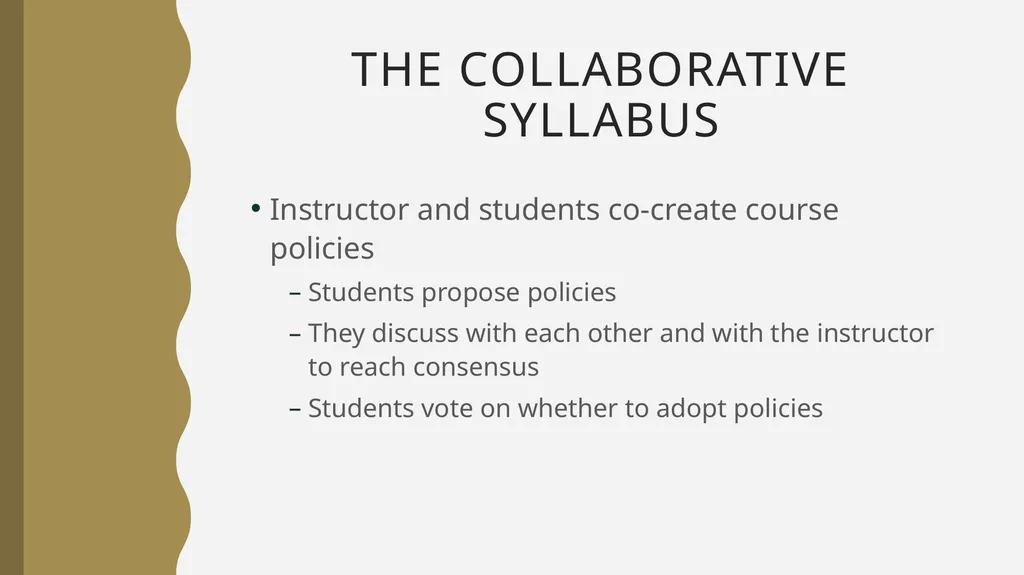
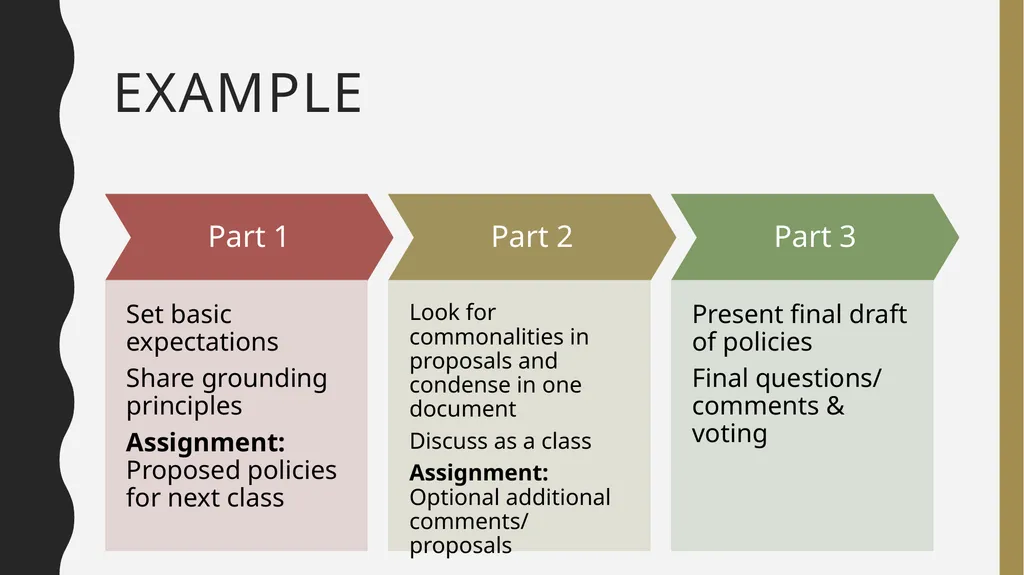
The Collaborative Syllabus Instructor and students co-create course policies
Students propose policies
They discuss with each other and with the instructor to reach consensus
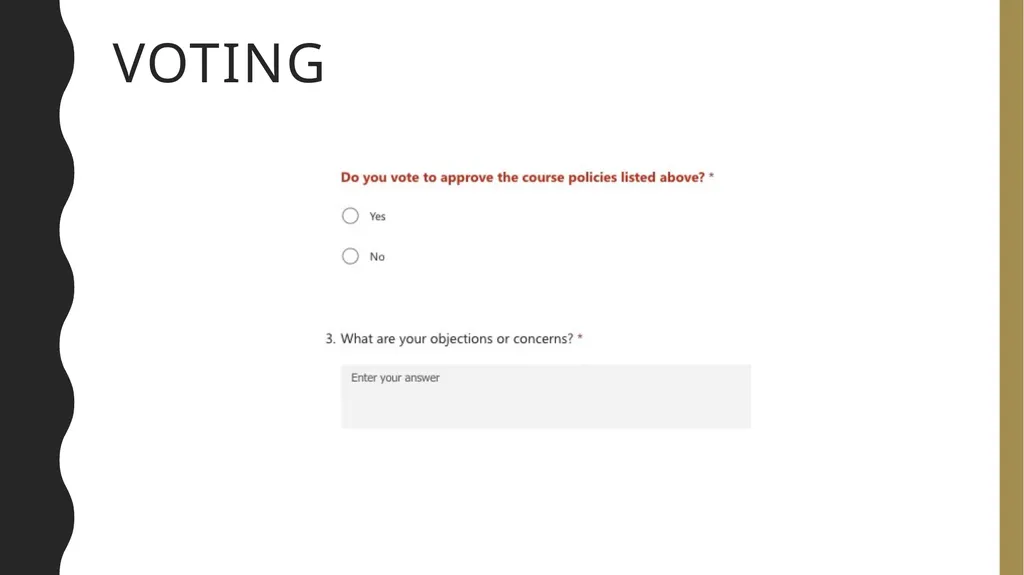
Students vote on whether to adopt policies<br>
03
What Policies Do We end up With? Virtually the same policies I already had.<br>
04
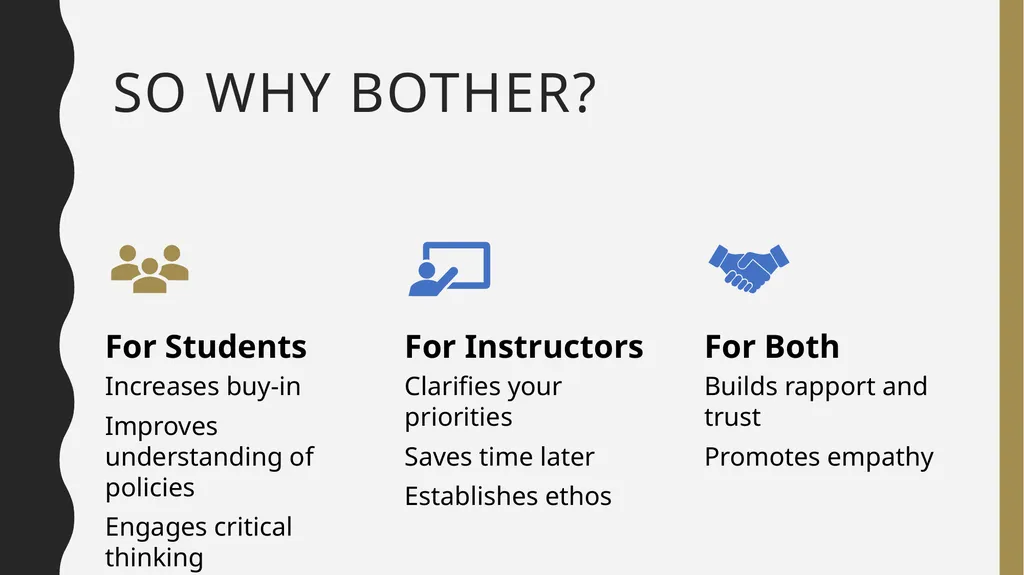
So Why Bother?<br>
05
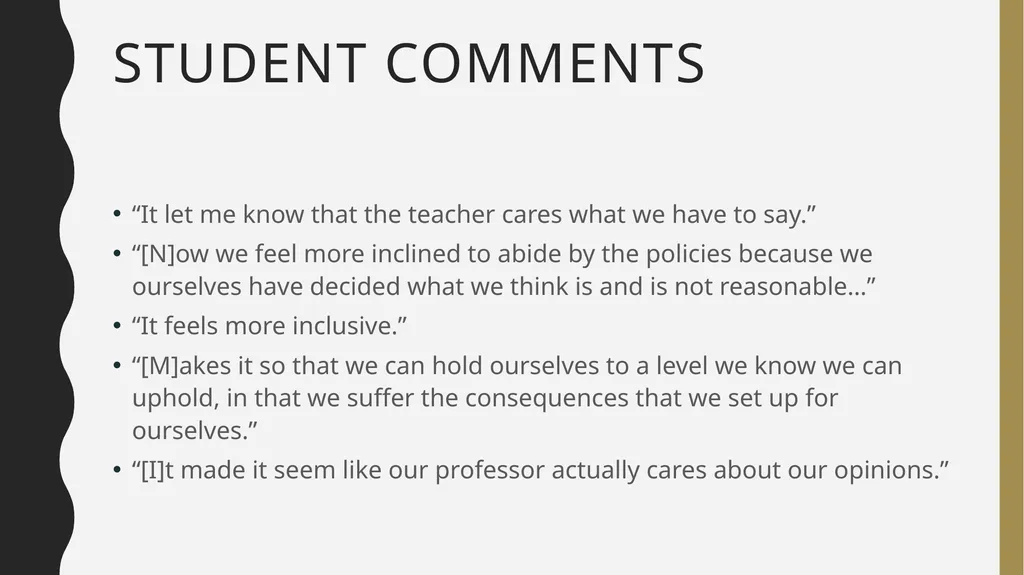
Student Comments “It let me know that the teacher cares what we have to say.”
“[N]ow we feel more inclined to abide by the policies because we ourselves have decided what we think is and is not reasonable…”
“It feels more inclusive.”
“[M]akes it so that we can hold ourselves to a level we know we can uphold, in that we suffer the consequences that we set up for ourselves.”
“[I]t made it seem like our professor actually cares about our opinions.”<br>
06
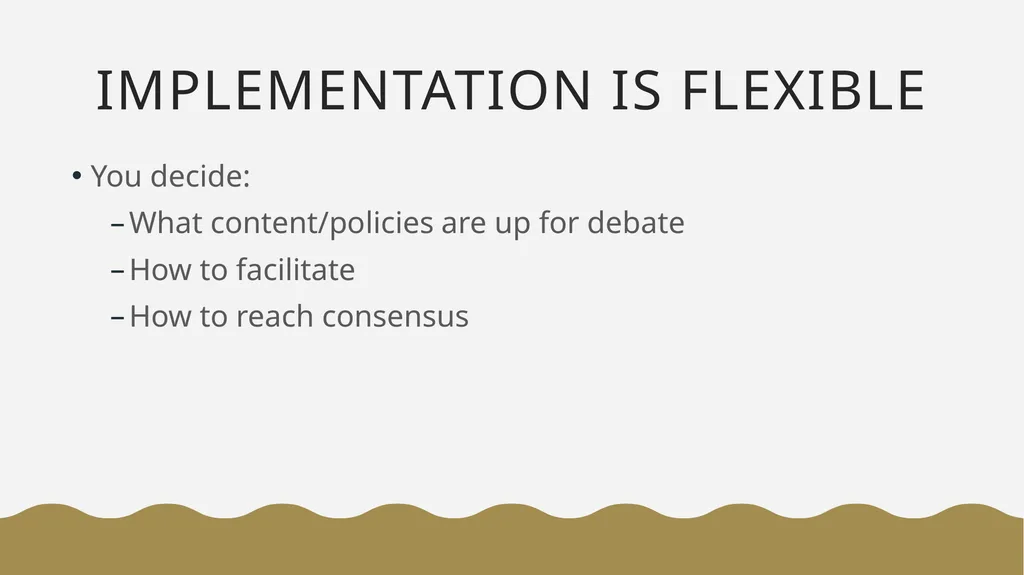
Implementation is flexible You decide:
What content/policies are up for debate
How to facilitate
How to reach consensus<br>
07
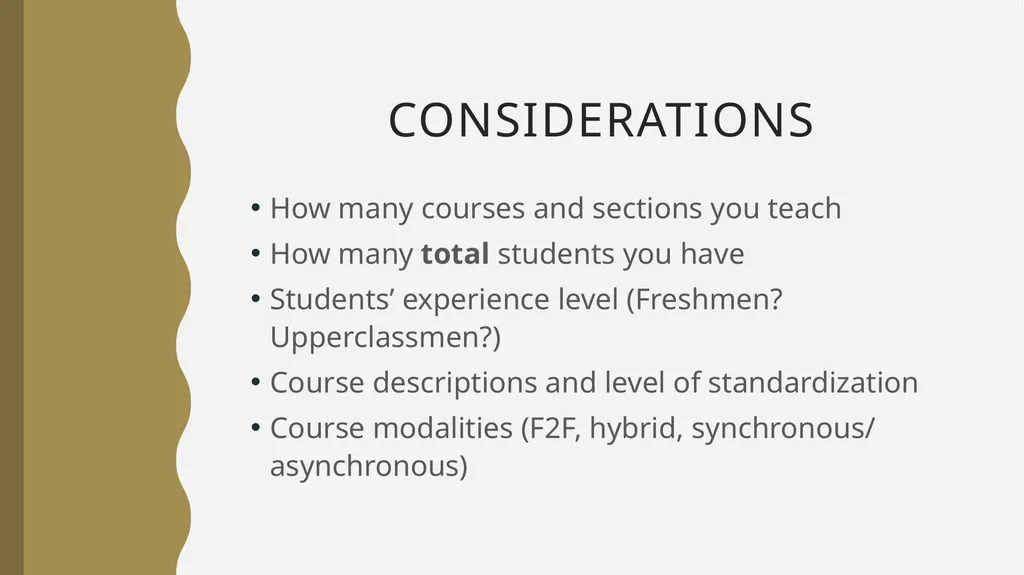
Considerations How many courses and sections you teach
How many total students you have
Students’ experience level (Freshmen? Upperclassmen?)
Course descriptions and level of standardization
Course modalities (F2F, hybrid, synchronous/ asynchronous)<br>
08
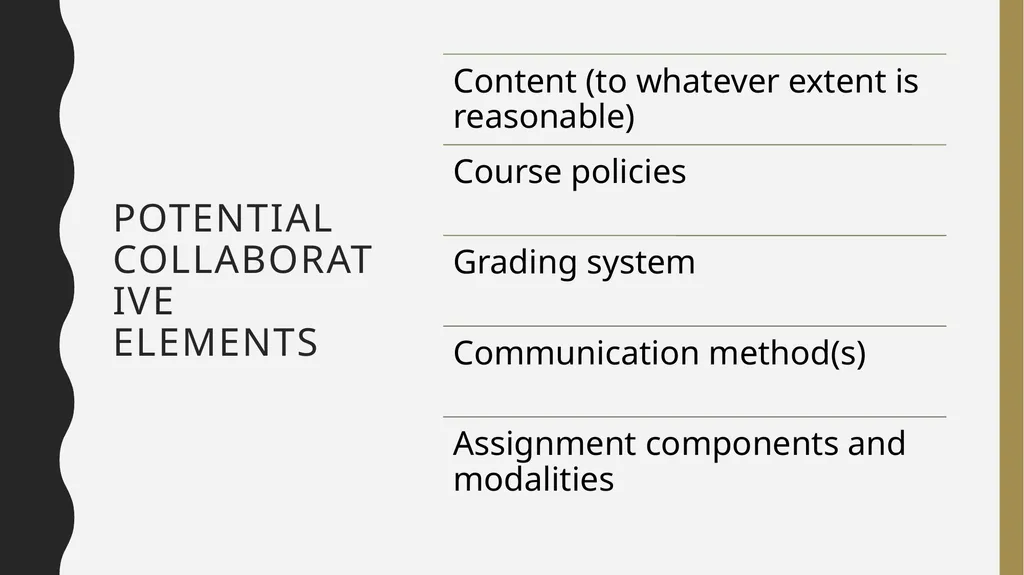
Potential Collaborative Elements<br>
09
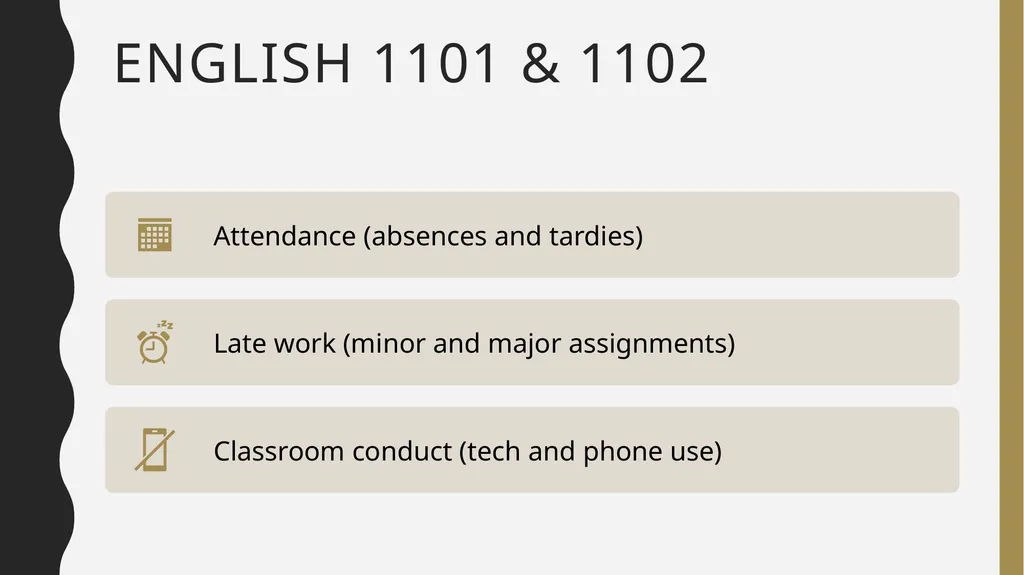
English 1101 & 1102<br>
10
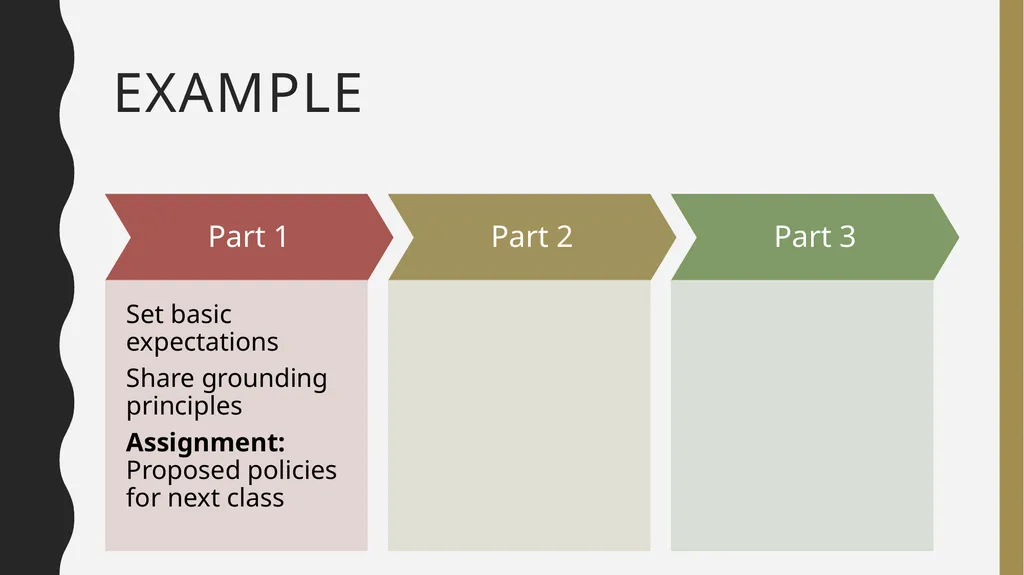
Example<br>
11
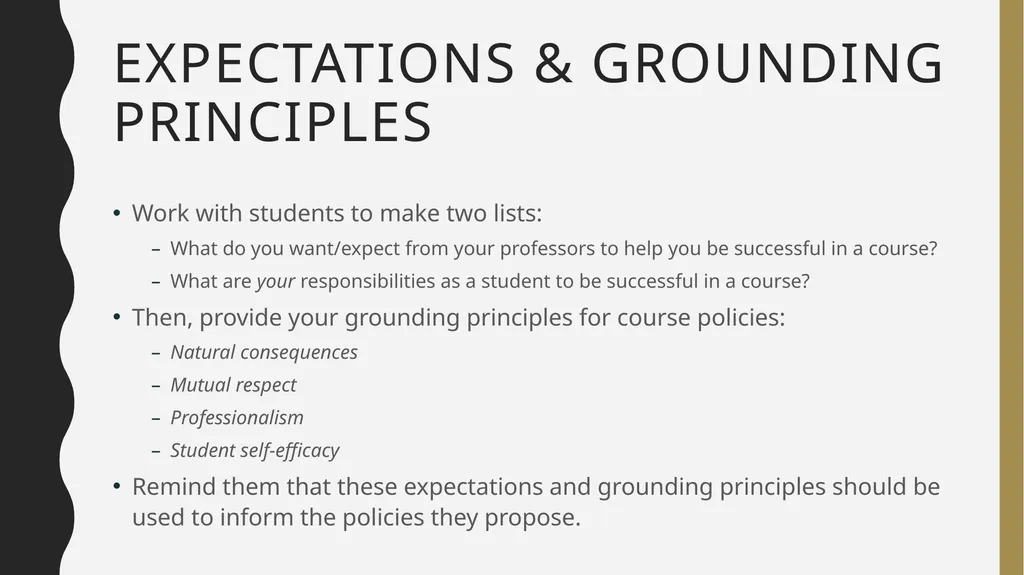
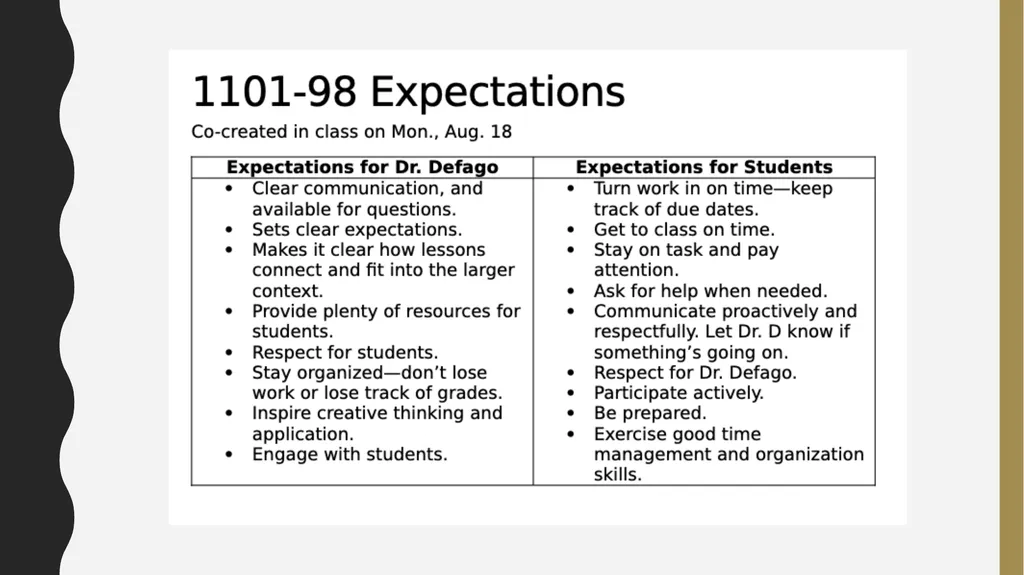
Expectations & Grounding Principles Work with students to make two lists:
What do you want/expect from your professors to help you be successful in a course?
What are your responsibilities as a student to be successful in a course?
Then, provide your grounding principles for course policies:
Natural consequences
Mutual respect
Professionalism
Student self-efficacy
Remind them that these expectations and grounding principles should be used to inform the policies they propose.<br>
12
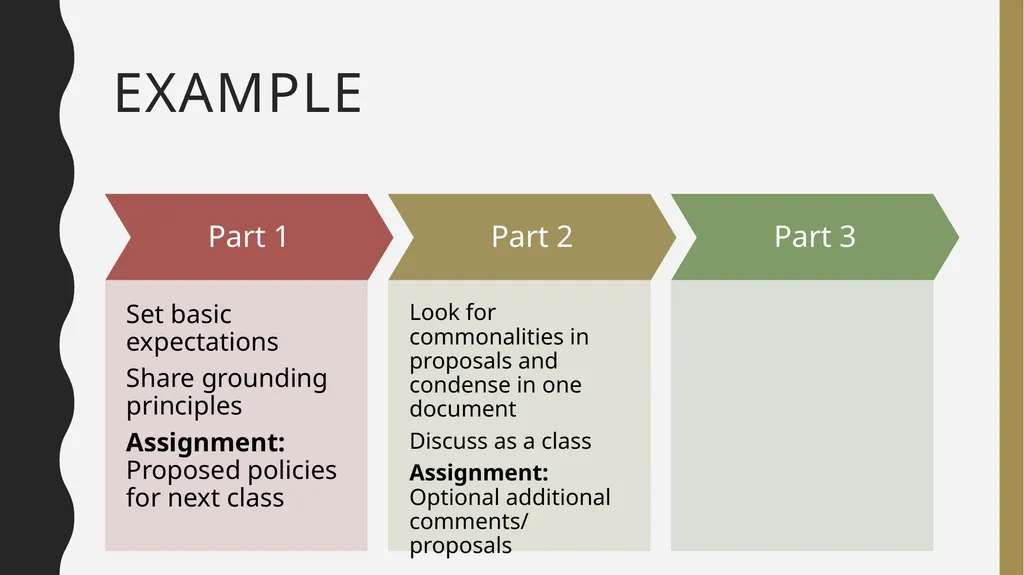
Example<br>
13
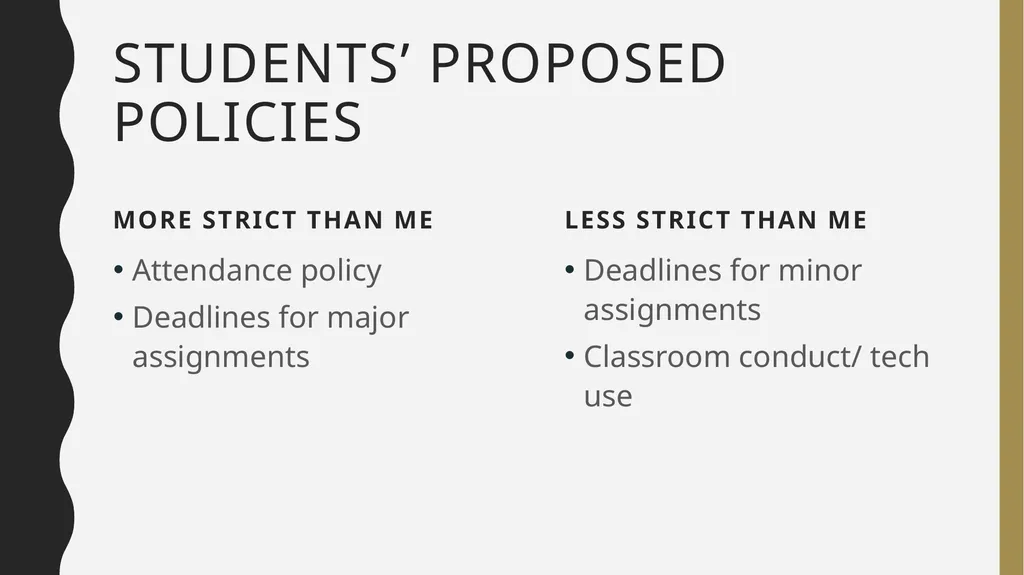
Students’ Proposed policies More Strict than Me Attendance policy
Deadlines for major assignments Less Strict Than Me Deadlines for minor assignments
Classroom conduct/ tech use<br>
14
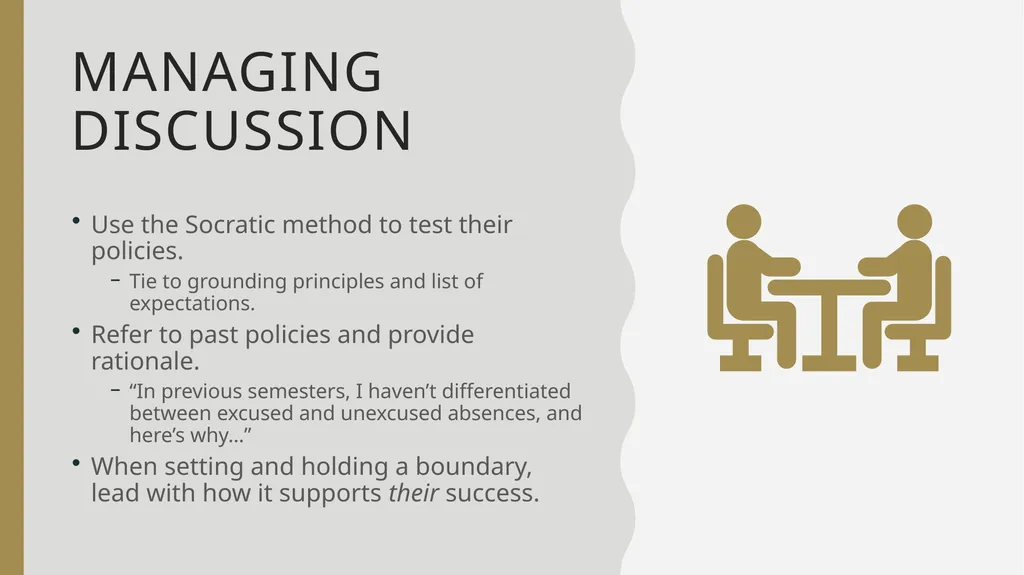
Managing Discussion Use the Socratic method to test their policies.
Tie to grounding principles and list of expectations.
Refer to past policies and provide rationale.
“In previous semesters, I haven’t differentiated between excused and unexcused absences, and here’s why…”
When setting and holding a boundary, lead with how it supports their success.<br>
15
Example<br>
16
Voting<br>
17
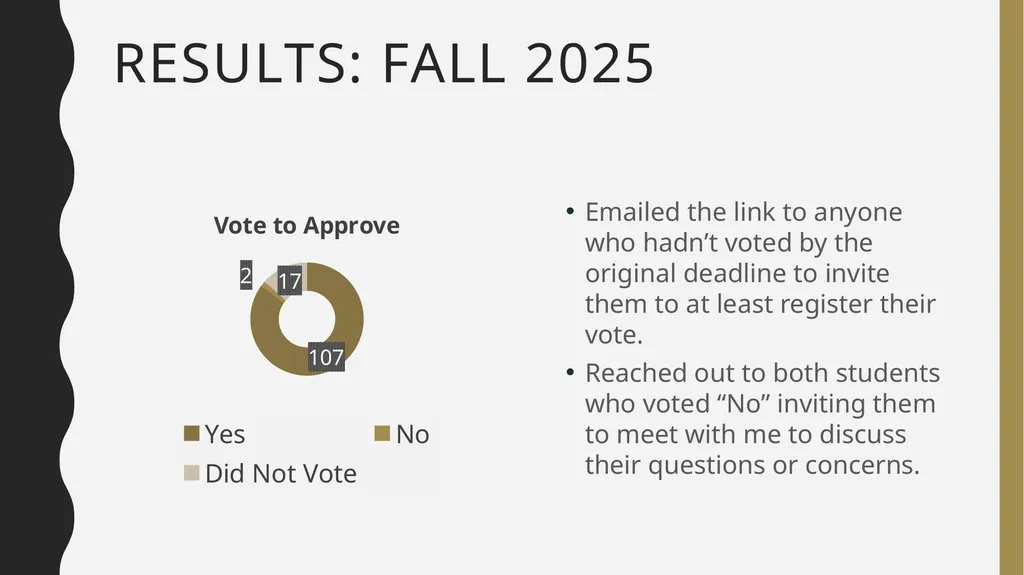
Results: Fall 2025 Emailed the link to anyone who hadn’t voted by the original deadline to invite them to at least register their vote.
Reached out to both students who voted “No” inviting them to meet with me to discuss their questions or concerns.<br>
18
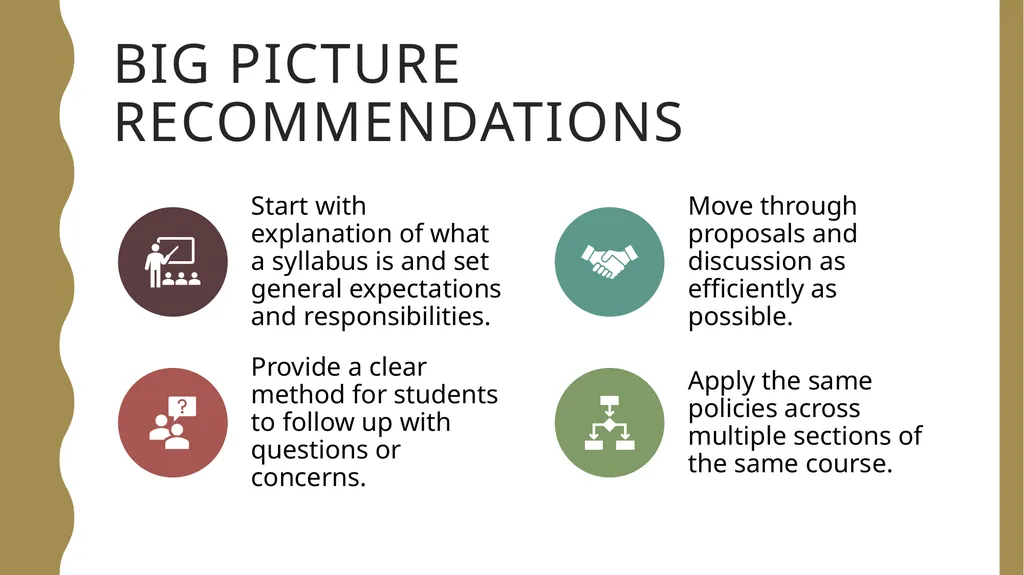
Big Picture Recommendations<br>
19
Questions?<br>
20
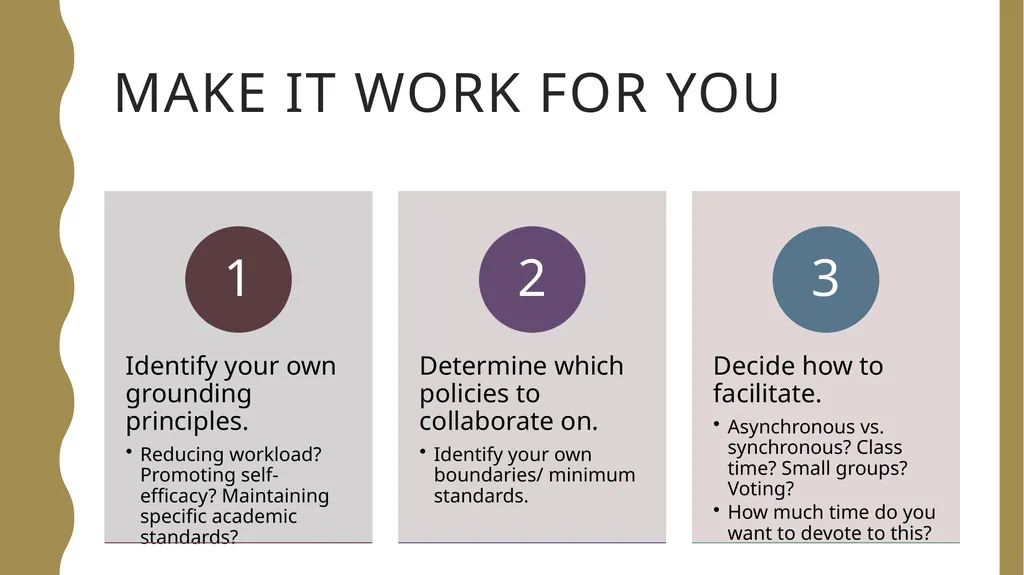
Make it Work for You<br>
21
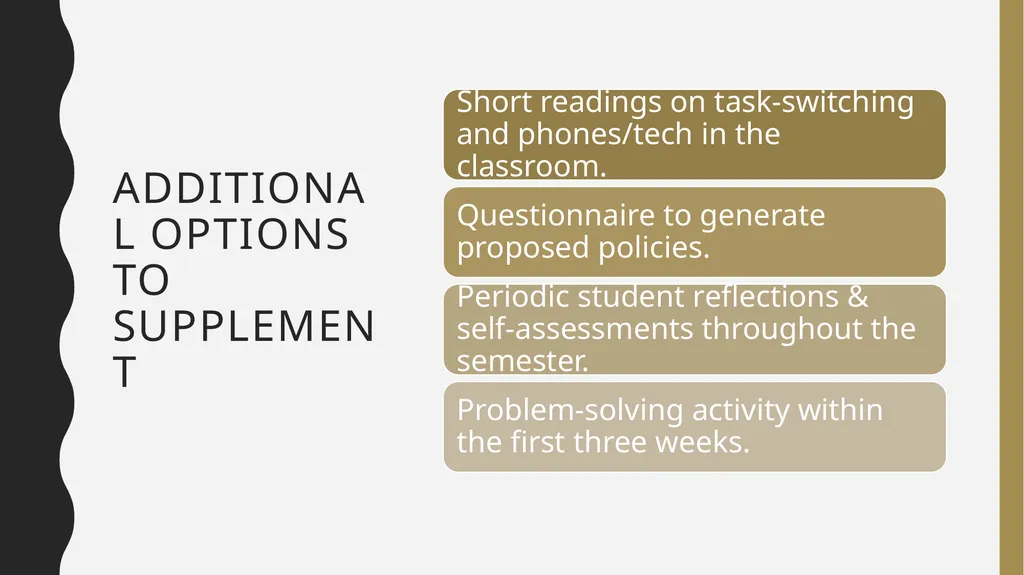
Additional Options to Supplement<br>
22
Thank You! Dr. Madelyn Fox-Defago
Lecturer of English
mfoxdefa@kennesaw.edu
University Hall 102A<br>