
The First Generation Student: Barriers and
Description: The First Generation Student: Barriers and Strategies for Success Melissa Selby-Theut, MSW Director, Educational Support Program Statistical Overview First-generation students: Comprise 34 of the population at colleges and universities
Related Topics
Download Presentation
"The First Generation Student: Barriers and" is the property of its rightful owner. Permission is granted to download and print the materials on this website for personal, non-commercial use only, and to display it on your personal computer provided you do not modify the materials and that you retain all copyright notices contained in the materials. By downloading content from our website, you accept the terms of this agreement.
Presentation Transcript
slide1. The First Generation Student:
Barriers and Strategies for Success Melissa Selby-Theut, MSW
Director, Educational Support Program<br>
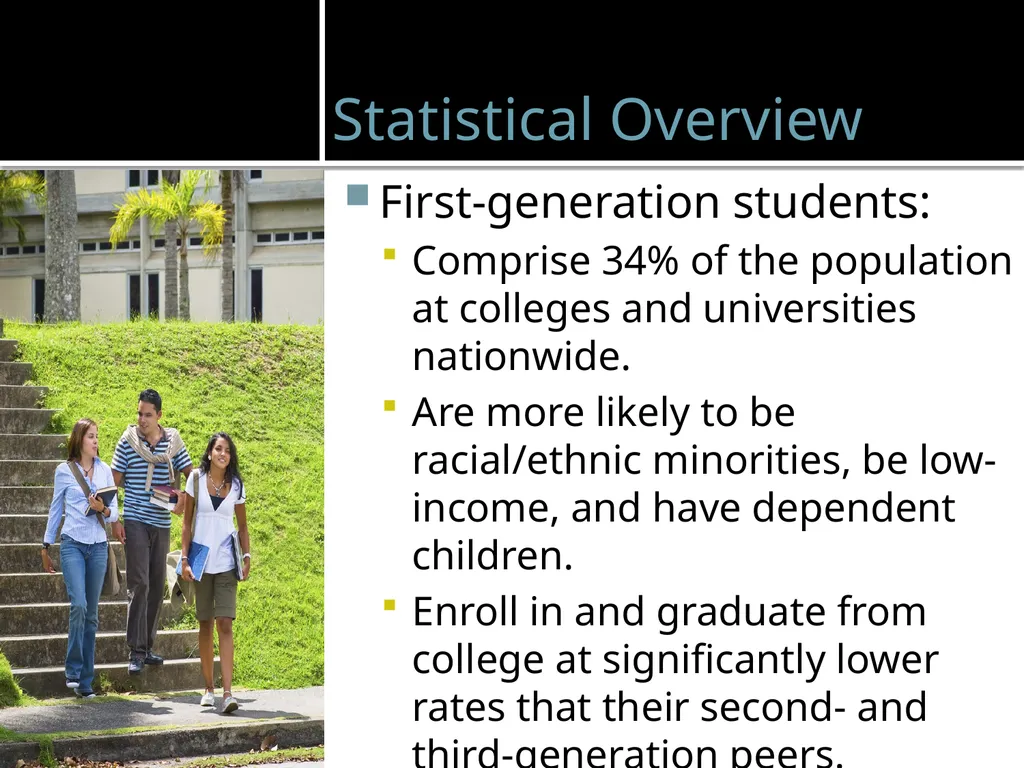
slide2. Statistical Overview First-generation students:
Comprise 34% of the population at colleges and universities nationwide.
Are more likely to be racial/ethnic minorities, be low-income, and have dependent children.
Enroll in and graduate from college at significantly lower rates that their second- and third-generation peers.<br>
slide3. 85% of second- and third-generation students attempt college after high school
47% of first-generation students attempt college after high school
68% of second- and third-generation students graduate with a bachelor’s degree within 8 years
26% of first-generation students graduate with a bachelor’s degree within 8 years<br>
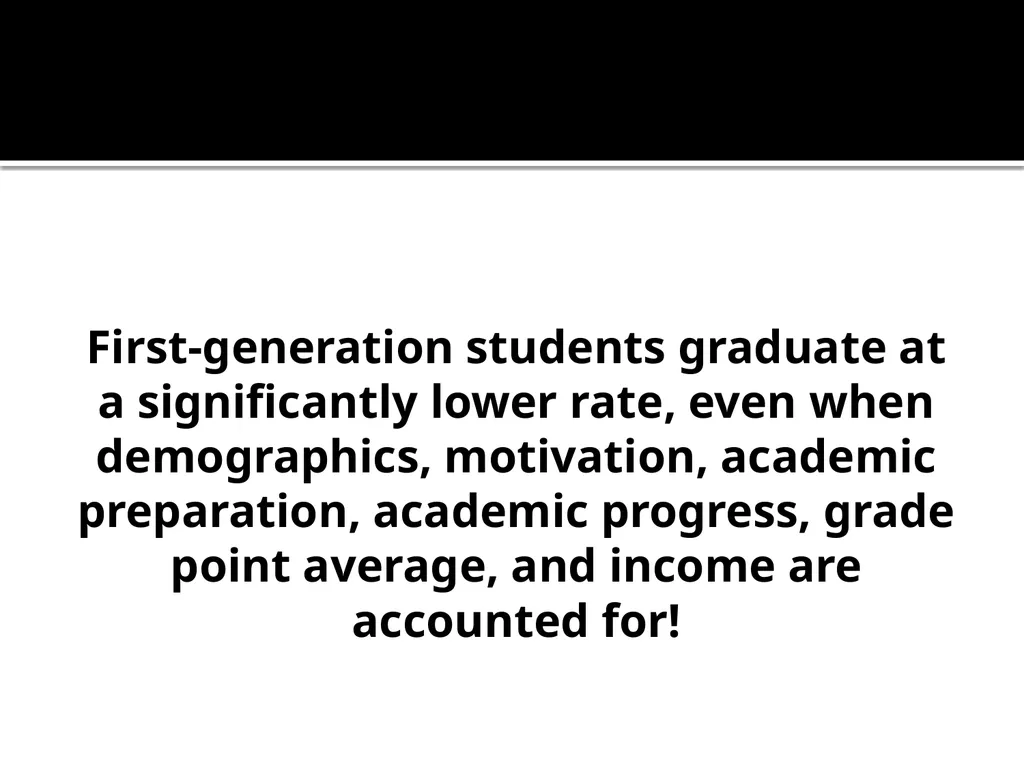
slide4. First-generation students graduate at a significantly lower rate, even when demographics, motivation, academic preparation, academic progress, grade point average, and income are accounted for!<br>
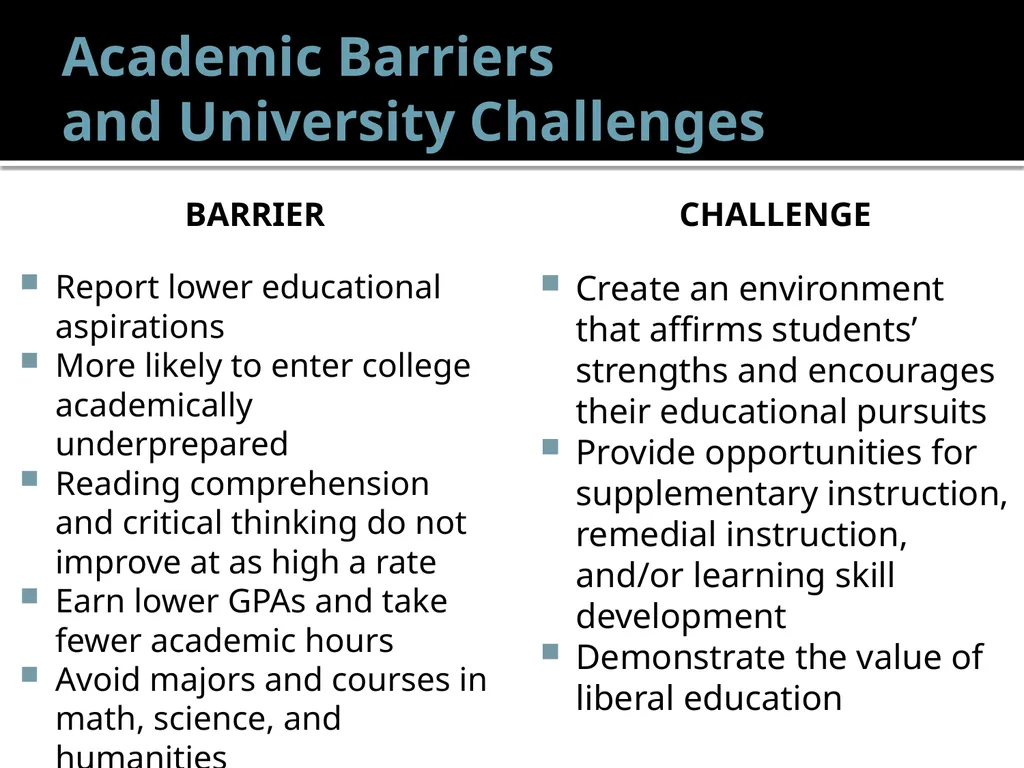
slide5. Academic Barriers and University Challenges Barrier Report lower educational aspirations
More likely to enter college academically underprepared
Reading comprehension and critical thinking do not improve at as high a rate
Earn lower GPAs and take fewer academic hours
Avoid majors and courses in math, science, and humanities Challenge Create an environment that affirms students’ strengths and encourages their educational pursuits
Provide opportunities for supplementary instruction, remedial instruction, and/or learning skill development
Demonstrate the value of liberal education<br>
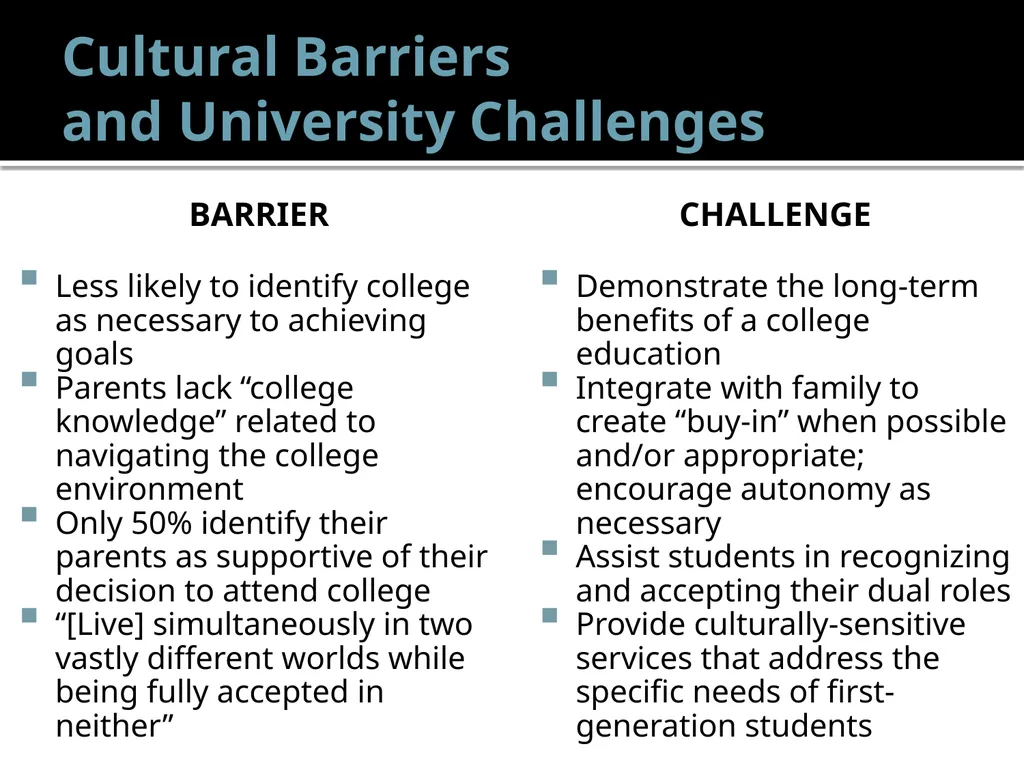
slide6. Cultural Barriers and University Challenges Barrier Less likely to identify college as necessary to achieving goals
Parents lack “college knowledge” related to navigating the college environment
Only 50% identify their parents as supportive of their decision to attend college
“[Live] simultaneously in two vastly different worlds while being fully accepted in neither” Challenge Demonstrate the long-term benefits of a college education
Integrate with family to create “buy-in” when possible and/or appropriate; encourage autonomy as necessary
Assist students in recognizing and accepting their dual roles
Provide culturally-sensitive services that address the specific needs of first-generation students<br>
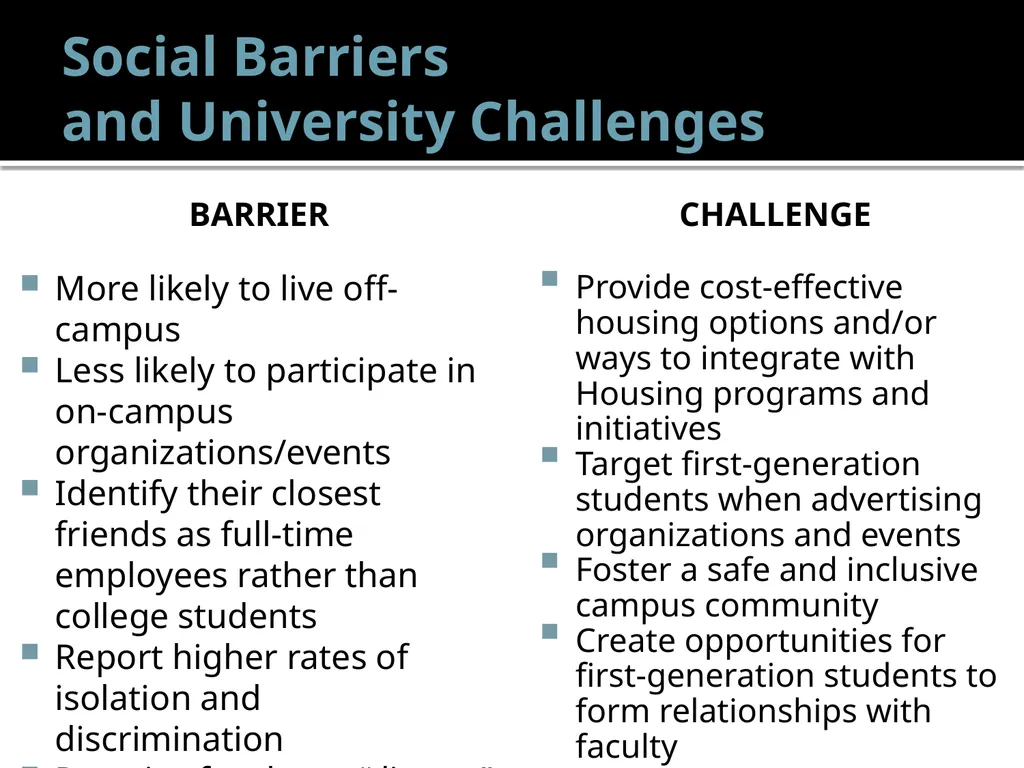
slide7. Social Barriers and University Challenges Barrier More likely to live off-campus
Less likely to participate in on-campus organizations/events
Identify their closest friends as full-time employees rather than college students
Report higher rates of isolation and discrimination
Perceive faculty as “distant” or unconcerned with them as individuals Challenge Provide cost-effective housing options and/or ways to integrate with Housing programs and initiatives
Target first-generation students when advertising organizations and events
Foster a safe and inclusive campus community
Create opportunities for first-generation students to form relationships with faculty<br>
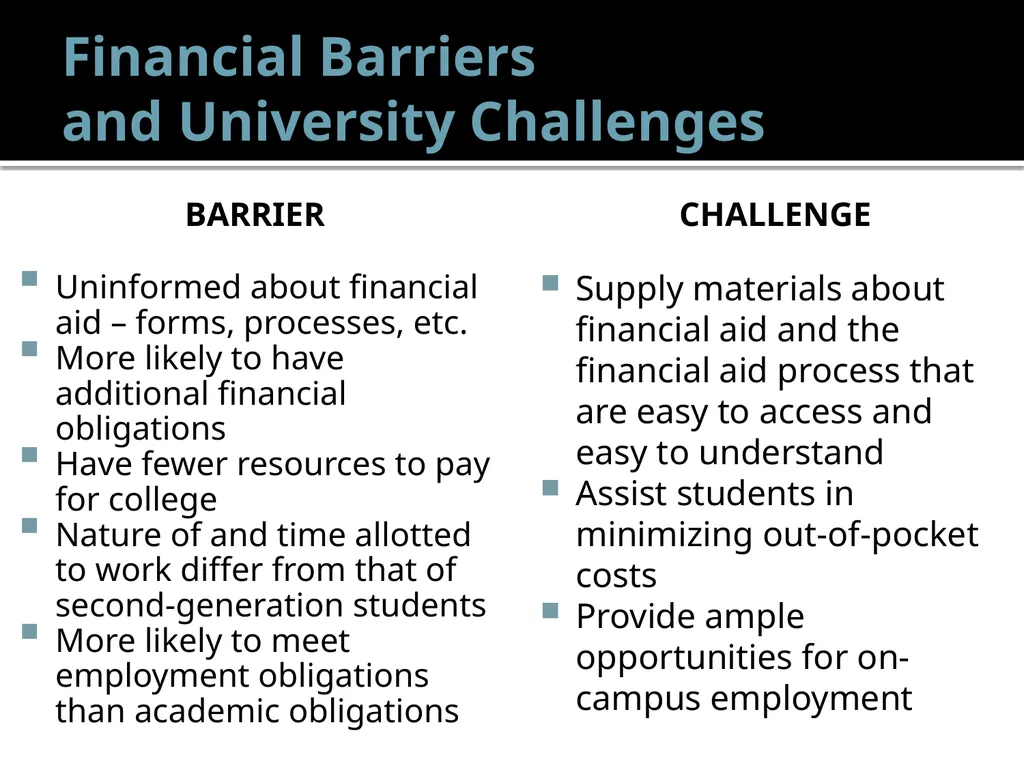
slide8. Financial Barriers and University Challenges Barrier Uninformed about financial aid – forms, processes, etc.
More likely to have additional financial obligations
Have fewer resources to pay for college
Nature of and time allotted to work differ from that of second-generation students
More likely to meet employment obligations than academic obligations Challenge Supply materials about financial aid and the financial aid process that are easy to access and easy to understand
Assist students in minimizing out-of-pocket costs
Provide ample opportunities for on-campus employment<br>
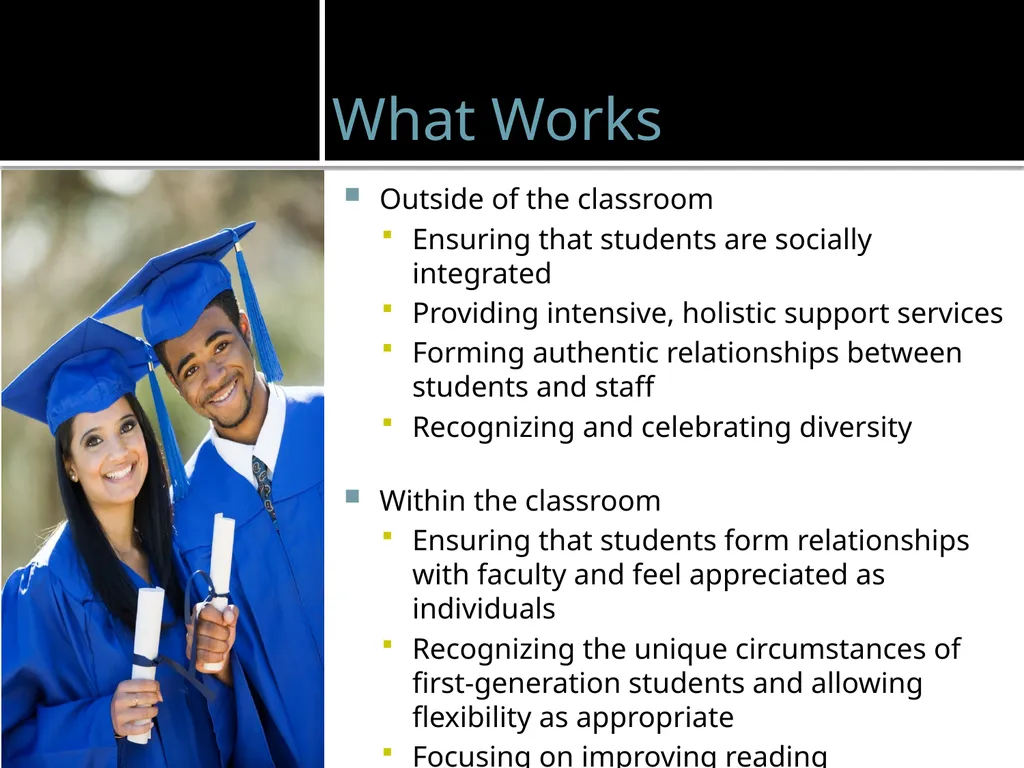
slide9. What Works Outside of the classroom
Ensuring that students are socially integrated
Providing intensive, holistic support services
Forming authentic relationships between students and staff
Recognizing and celebrating diversity
Within the classroom
Ensuring that students form relationships with faculty and feel appreciated as individuals
Recognizing the unique circumstances of first-generation students and allowing flexibility as appropriate
Focusing on improving reading comprehension, critical thinking, and mathematical abilities<br>
slide10. Resources Student Academic Success Center
Educational Support Program
Pre-Major Program Advising
Learning Skills Support
Tutoring Center
Structured Learning Assistance (SLA)
Math and Science Student Support (MS3)
College Academic Advising Centers
The Fred Meijer Center for Writing and Michigan Authors (Writing Center)
Math and Stats Labs
Counseling and Career Development Center
Career Services
Financial Aid Office
Zumberge / Steelcase Libraries
Office of Housing and Residence Life
Office of Student Life<br>
slide11. References Billson, J., & Brooks, T. (1981). In Search of the Silken Purse: Factors in Attrition Among First-Generation Students. Presented to the Annual Meeting of the Association of American Colleges. Denver, CO.
Engle, J, Bermeo, A., & O’Brien, C. (2006). Straight from the Source: What Works for First-Generation College Students. Pell Institute for the Study of Opportunity in Higher Education. Washington, DC.
Murphy, C., & Hicks, T. (2006). Academic Characteristics Among First-Generation and Non-First-Generation College Students. College Quarterly, vol. 9.
Terenzini, P., Springer, L., Yaeger, P., Pascarella, E., & Nora, A. (1995). First-Generation College Students: Characteristics, Experiences, and Cognitive Development. Association for Institutional Research. Boston, MA.
First-Generation Students in Postsecondary Education: A Look at Their College Transcripts. (2005). National Center for Education Statistics Descriptive Analysis Report.<br>
Director, Educational Support Program<br>
slide2. Statistical Overview First-generation students:
Comprise 34% of the population at colleges and universities nationwide.
Are more likely to be racial/ethnic minorities, be low-income, and have dependent children.
Enroll in and graduate from college at significantly lower rates that their second- and third-generation peers.<br>
slide3. 85% of second- and third-generation students attempt college after high school
47% of first-generation students attempt college after high school
68% of second- and third-generation students graduate with a bachelor’s degree within 8 years
26% of first-generation students graduate with a bachelor’s degree within 8 years<br>
slide4. First-generation students graduate at a significantly lower rate, even when demographics, motivation, academic preparation, academic progress, grade point average, and income are accounted for!<br>
slide5. Academic Barriers and University Challenges Barrier Report lower educational aspirations
More likely to enter college academically underprepared
Reading comprehension and critical thinking do not improve at as high a rate
Earn lower GPAs and take fewer academic hours
Avoid majors and courses in math, science, and humanities Challenge Create an environment that affirms students’ strengths and encourages their educational pursuits
Provide opportunities for supplementary instruction, remedial instruction, and/or learning skill development
Demonstrate the value of liberal education<br>
slide6. Cultural Barriers and University Challenges Barrier Less likely to identify college as necessary to achieving goals
Parents lack “college knowledge” related to navigating the college environment
Only 50% identify their parents as supportive of their decision to attend college
“[Live] simultaneously in two vastly different worlds while being fully accepted in neither” Challenge Demonstrate the long-term benefits of a college education
Integrate with family to create “buy-in” when possible and/or appropriate; encourage autonomy as necessary
Assist students in recognizing and accepting their dual roles
Provide culturally-sensitive services that address the specific needs of first-generation students<br>
slide7. Social Barriers and University Challenges Barrier More likely to live off-campus
Less likely to participate in on-campus organizations/events
Identify their closest friends as full-time employees rather than college students
Report higher rates of isolation and discrimination
Perceive faculty as “distant” or unconcerned with them as individuals Challenge Provide cost-effective housing options and/or ways to integrate with Housing programs and initiatives
Target first-generation students when advertising organizations and events
Foster a safe and inclusive campus community
Create opportunities for first-generation students to form relationships with faculty<br>
slide8. Financial Barriers and University Challenges Barrier Uninformed about financial aid – forms, processes, etc.
More likely to have additional financial obligations
Have fewer resources to pay for college
Nature of and time allotted to work differ from that of second-generation students
More likely to meet employment obligations than academic obligations Challenge Supply materials about financial aid and the financial aid process that are easy to access and easy to understand
Assist students in minimizing out-of-pocket costs
Provide ample opportunities for on-campus employment<br>
slide9. What Works Outside of the classroom
Ensuring that students are socially integrated
Providing intensive, holistic support services
Forming authentic relationships between students and staff
Recognizing and celebrating diversity
Within the classroom
Ensuring that students form relationships with faculty and feel appreciated as individuals
Recognizing the unique circumstances of first-generation students and allowing flexibility as appropriate
Focusing on improving reading comprehension, critical thinking, and mathematical abilities<br>
slide10. Resources Student Academic Success Center
Educational Support Program
Pre-Major Program Advising
Learning Skills Support
Tutoring Center
Structured Learning Assistance (SLA)
Math and Science Student Support (MS3)
College Academic Advising Centers
The Fred Meijer Center for Writing and Michigan Authors (Writing Center)
Math and Stats Labs
Counseling and Career Development Center
Career Services
Financial Aid Office
Zumberge / Steelcase Libraries
Office of Housing and Residence Life
Office of Student Life<br>
slide11. References Billson, J., & Brooks, T. (1981). In Search of the Silken Purse: Factors in Attrition Among First-Generation Students. Presented to the Annual Meeting of the Association of American Colleges. Denver, CO.
Engle, J, Bermeo, A., & O’Brien, C. (2006). Straight from the Source: What Works for First-Generation College Students. Pell Institute for the Study of Opportunity in Higher Education. Washington, DC.
Murphy, C., & Hicks, T. (2006). Academic Characteristics Among First-Generation and Non-First-Generation College Students. College Quarterly, vol. 9.
Terenzini, P., Springer, L., Yaeger, P., Pascarella, E., & Nora, A. (1995). First-Generation College Students: Characteristics, Experiences, and Cognitive Development. Association for Institutional Research. Boston, MA.
First-Generation Students in Postsecondary Education: A Look at Their College Transcripts. (2005). National Center for Education Statistics Descriptive Analysis Report.<br>