The Importance of Cash Flows: Creating Value Objective of a Financial Manager: Create value through capital budgeting, financing, and net working capital decisions. How Value Is Created: Acquire assets that generate more cash than they
"The Importance of Cash Flows: Creating Value" is the property of its rightful owner. Permission is granted to
download and print the materials on this website for personal, non-commercial use only, and to display it
on your personal computer provided you do not modify the materials and that you retain all copyright
notices contained in the materials. By downloading content from our website, you accept the terms of this
agreement.
Presentation Transcript
01
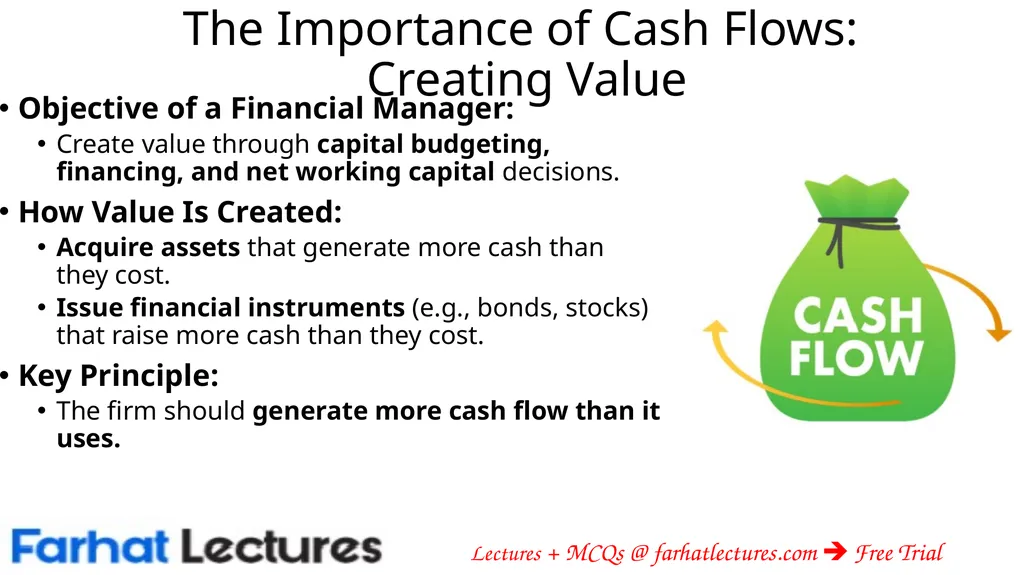
The Importance of Cash Flows: Creating Value Objective of a Financial Manager:
Create value through capital budgeting, financing, and net working capital decisions.
How Value Is Created:
Acquire assets that generate more cash than they cost.
Issue financial instruments (e.g., bonds, stocks) that raise more cash than they cost.
Key Principle:
The firm should generate more cash flow than it uses. Lectures + MCQs @ farhatlectures.com Free Trial<br>
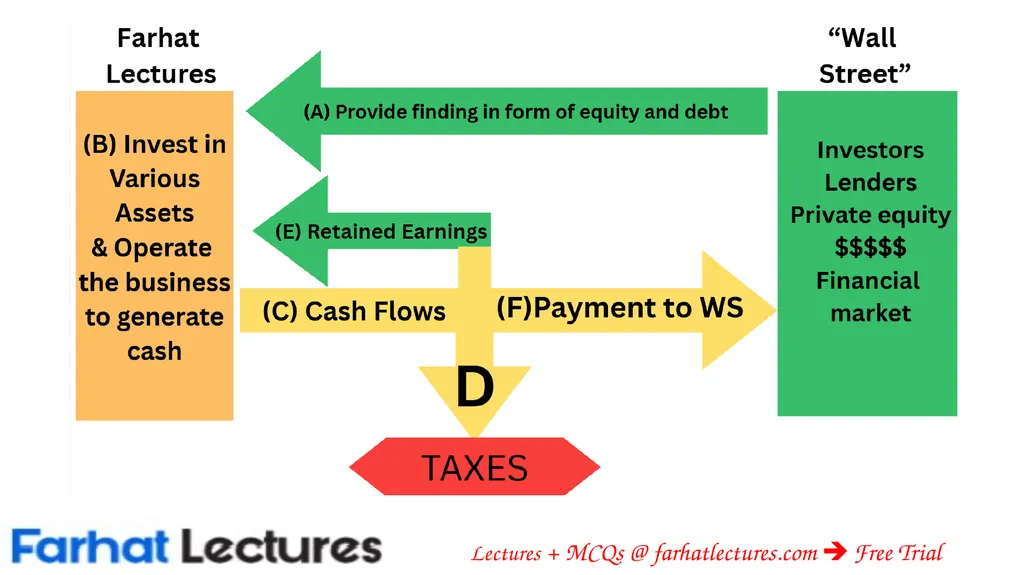
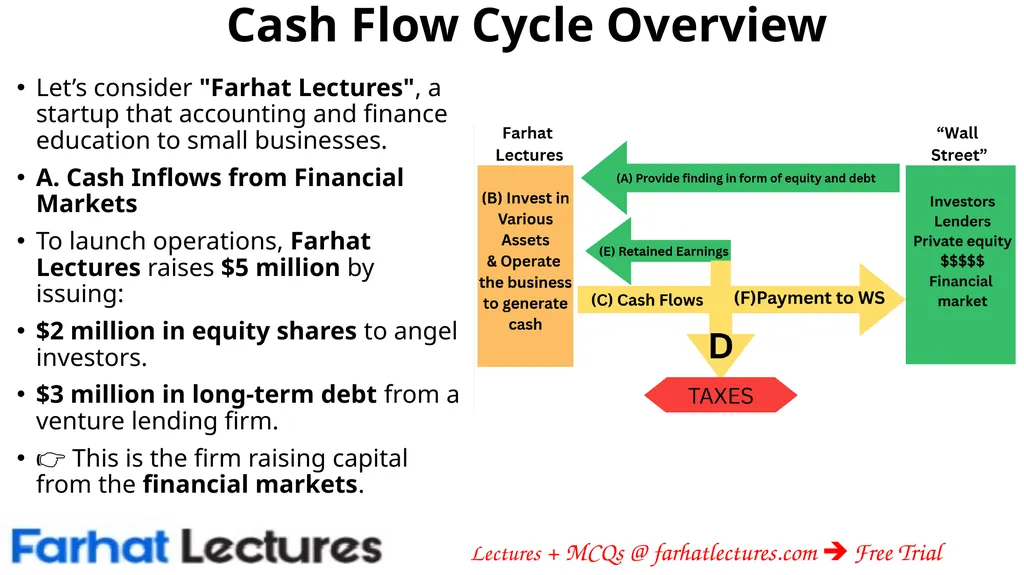
Cash Flow Cycle Overview Let’s consider "Farhat Lectures", a startup that accounting and finance education to small businesses.
A. Cash Inflows from Financial Markets
To launch operations, Farhat Lectures raises $5 million by issuing:
$2 million in equity shares to angel investors.
$3 million in long-term debt from a venture lending firm.
👉 This is the firm raising capital from the financial markets. Lectures + MCQs @ farhatlectures.com Free Trial<br>
04
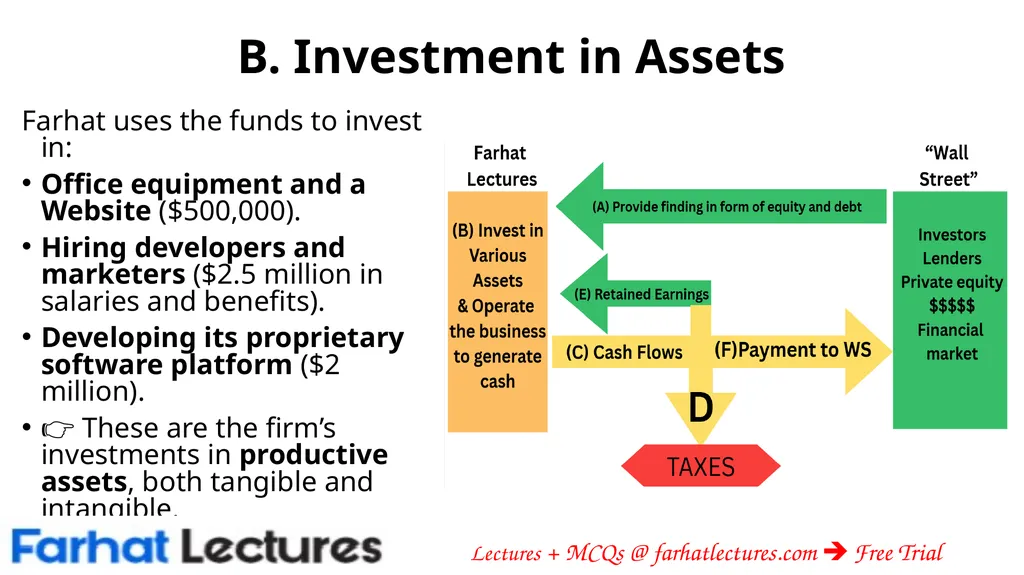
B. Investment in Assets Farhat uses the funds to invest in:
Office equipment and a Website ($500,000).
Hiring developers and marketers ($2.5 million in salaries and benefits).
Developing its proprietary software platform ($2 million).
👉 These are the firm’s investments in productive assets, both tangible and intangible. Lectures + MCQs @ farhatlectures.com Free Trial<br>
05
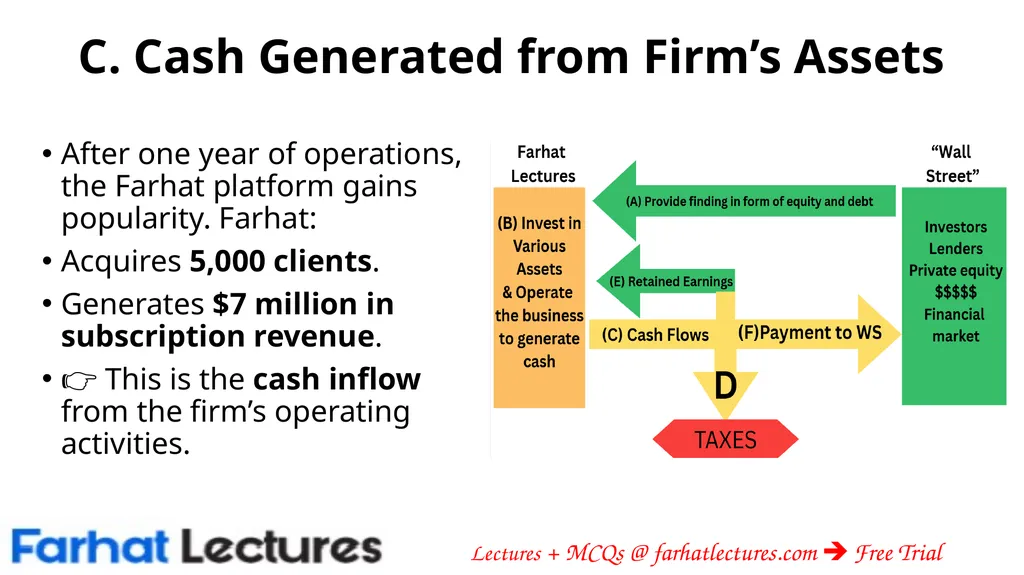
C. Cash Generated from Firm’s Assets After one year of operations, the Farhat platform gains popularity. Farhat:
Acquires 5,000 clients.
Generates $7 million in subscription revenue.
👉 This is the cash inflow from the firm’s operating activities. Lectures + MCQs @ farhatlectures.com Free Trial<br>
06
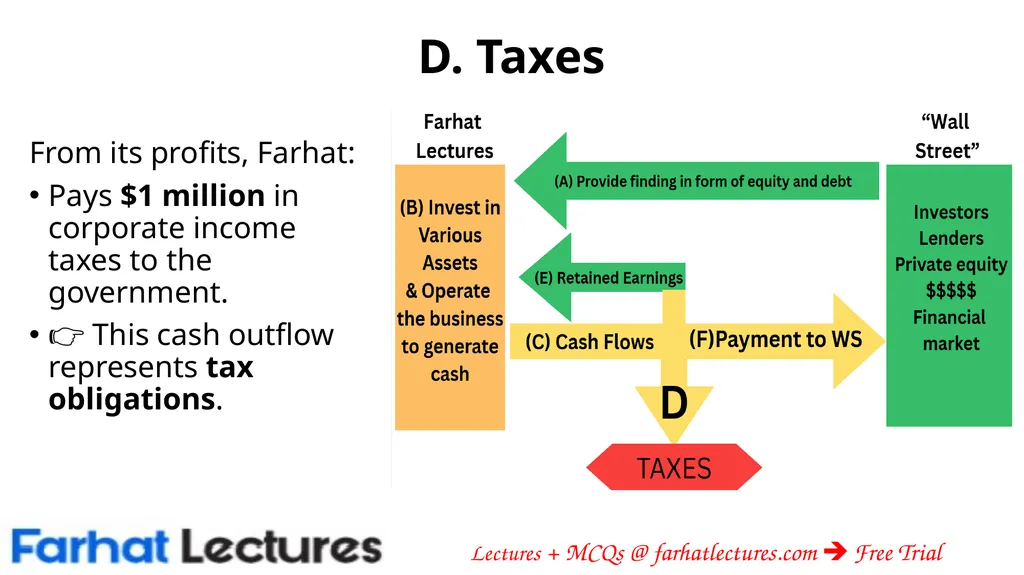
D. Taxes From its profits, Farhat:
Pays $1 million in corporate income taxes to the government.
👉 This cash outflow represents tax obligations. Lectures + MCQs @ farhatlectures.com Free Trial<br>
07
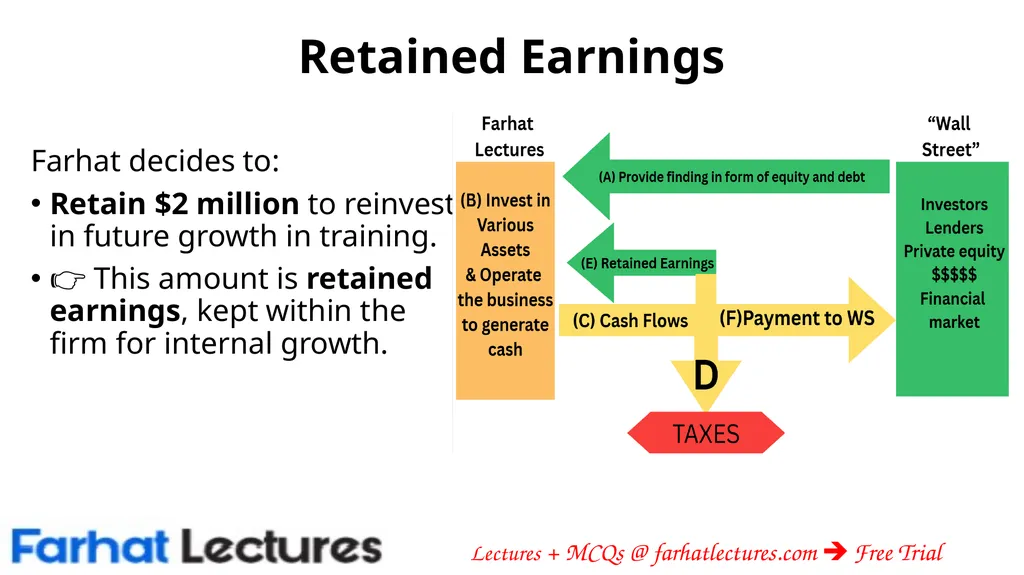
Retained Earnings Farhat decides to:
Retain $2 million to reinvest in future growth in training.
👉 This amount is retained earnings, kept within the firm for internal growth. Lectures + MCQs @ farhatlectures.com Free Trial<br>
08
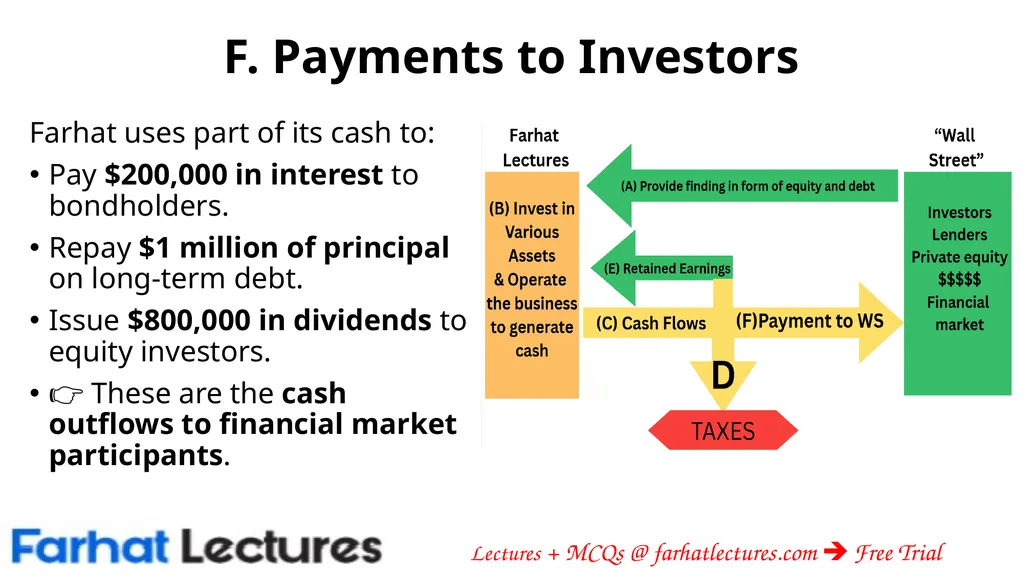
F. Payments to Investors Farhat uses part of its cash to:
Pay $200,000 in interest to bondholders.
Repay $1 million of principal on long-term debt.
Issue $800,000 in dividends to equity investors.
👉 These are the cash outflows to financial market participants. Lectures + MCQs @ farhatlectures.com Free Trial<br>
09
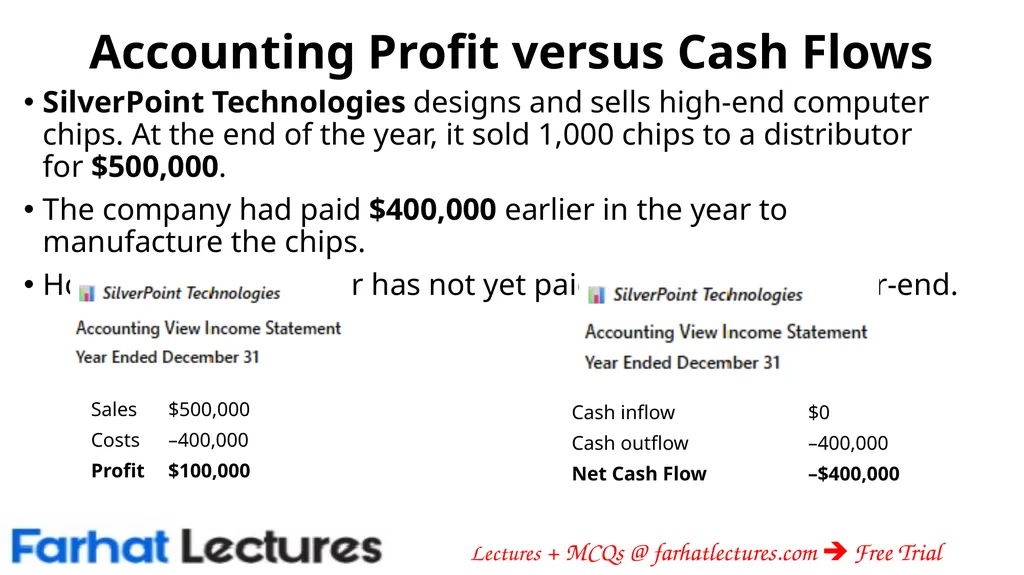
Accounting Profit versus Cash Flows SilverPoint Technologies designs and sells high-end computer chips. At the end of the year, it sold 1,000 chips to a distributor for $500,000.
The company had paid $400,000 earlier in the year to manufacture the chips.
However, the customer has not yet paid for the chips by year-end. Lectures + MCQs @ farhatlectures.com Free Trial<br>
10
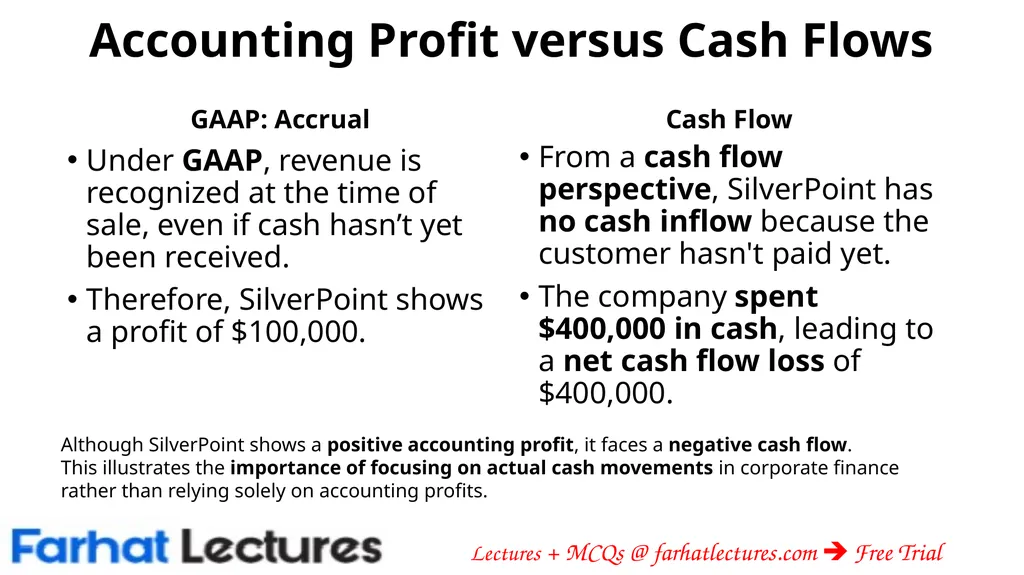
Although SilverPoint shows a positive accounting profit, it faces a negative cash flow.
This illustrates the importance of focusing on actual cash movements in corporate finance rather than relying solely on accounting profits. Lectures + MCQs @ farhatlectures.com Free Trial Accounting Profit versus Cash Flows GAAP: Accrual Under GAAP, revenue is recognized at the time of sale, even if cash hasn’t yet been received.
Therefore, SilverPoint shows a profit of $100,000. Cash Flow From a cash flow perspective, SilverPoint has no cash inflow because the customer hasn't paid yet.
The company spent $400,000 in cash, leading to a net cash flow loss of $400,000.<br>
11
Cash Flow Timing – SmartTech Electronics SmartTech Electronics is deciding between two automation systems—System X and System Y.
Both systems cost $15,000 upfront and are expected to generate cash flows over a 4-year period. At first glance, System X seems more attractive because it generates $5,000 more in total cash flows than System Y.
However, System Y delivers cash flows sooner, which may be more valuable due to the time value of money—the idea that money received earlier is worth more than the same amount received later. Without knowing the discount rate (interest rate or required rate of return), it's unclear which project is more valuable:
System X has a higher total cash flow.
System Y returns cash earlier, reducing investment risk and potentially increasing value after discounting. Lectures + MCQs @ farhatlectures.com Free Trial<br>
12
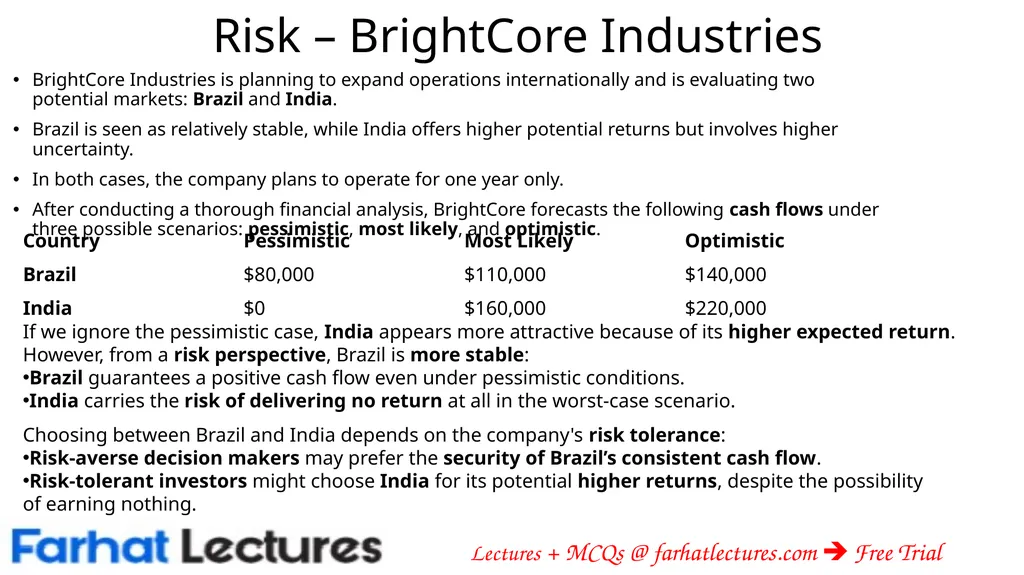
Risk – BrightCore Industries BrightCore Industries is planning to expand operations internationally and is evaluating two potential markets: Brazil and India.
Brazil is seen as relatively stable, while India offers higher potential returns but involves higher uncertainty.
In both cases, the company plans to operate for one year only.
After conducting a thorough financial analysis, BrightCore forecasts the following cash flows under three possible scenarios: pessimistic, most likely, and optimistic. If we ignore the pessimistic case, India appears more attractive because of its higher expected return.
However, from a risk perspective, Brazil is more stable:
Brazil guarantees a positive cash flow even under pessimistic conditions.
India carries the risk of delivering no return at all in the worst-case scenario. Choosing between Brazil and India depends on the company's risk tolerance:
Risk-averse decision makers may prefer the security of Brazil’s consistent cash flow.
Risk-tolerant investors might choose India for its potential higher returns, despite the possibility of earning nothing. Lectures + MCQs @ farhatlectures.com Free Trial<br>
13
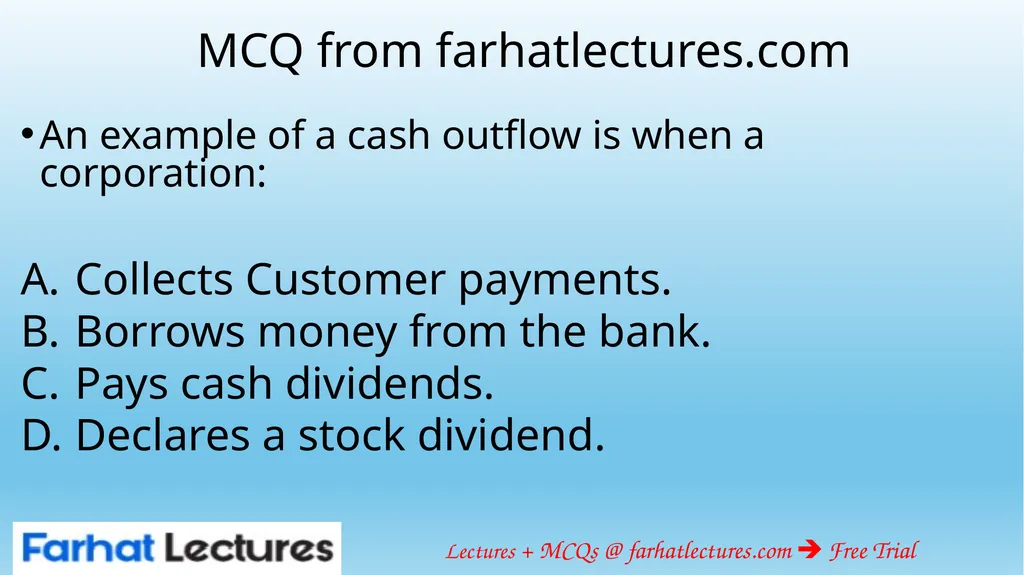
MCQ from farhatlectures.com An example of a cash outflow is when a corporation:
Collects Customer payments.
Borrows money from the bank.
Pays cash dividends.
Declares a stock dividend. Lectures + MCQs @ farhatlectures.com Free Trial<br>