The link between Labour Market and Migration and the Rights-Based Approach Francesco Carella Labour Migration Specialist OIT San José, Costa Rica A complex, but ever more relevant link Indispensable to understand contemporary poverty
"The link between Labour Market and Migration and" is the property of its rightful owner. Permission is granted to
download and print the materials on this website for personal, non-commercial use only, and to display it
on your personal computer provided you do not modify the materials and that you retain all copyright
notices contained in the materials. By downloading content from our website, you accept the terms of this
agreement.
Presentation Transcript
01
The link between Labour Market and Migration and the Rights-Based Approach Francesco Carella
Labour Migration Specialist
OIT San José, Costa Rica<br>
02
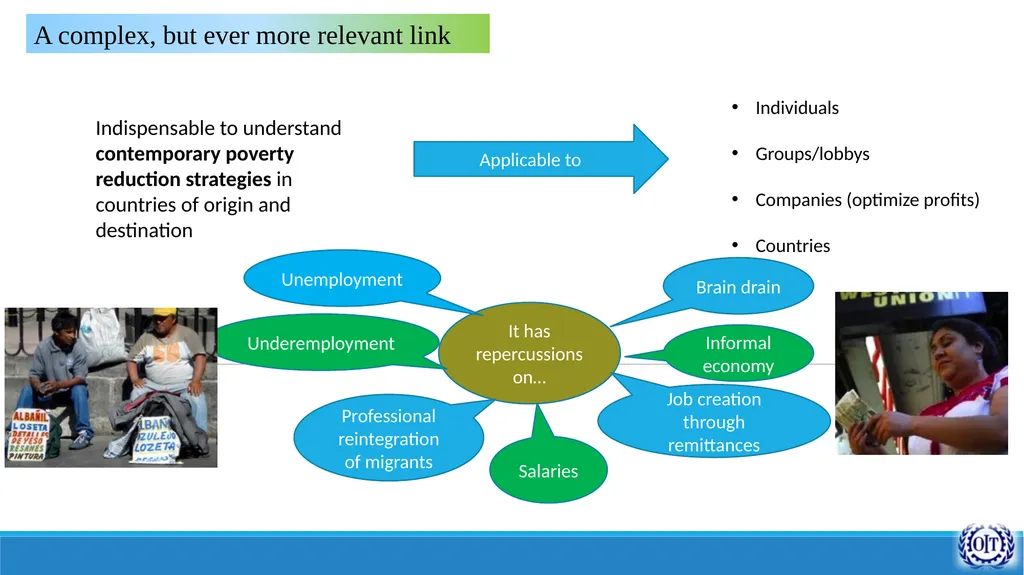
A complex, but ever more relevant link Indispensable to understand contemporary poverty reduction strategies in countries of origin and destination Applicable to Individuals
Groups/lobbys
Companies (optimize profits)
Countries<br>
03
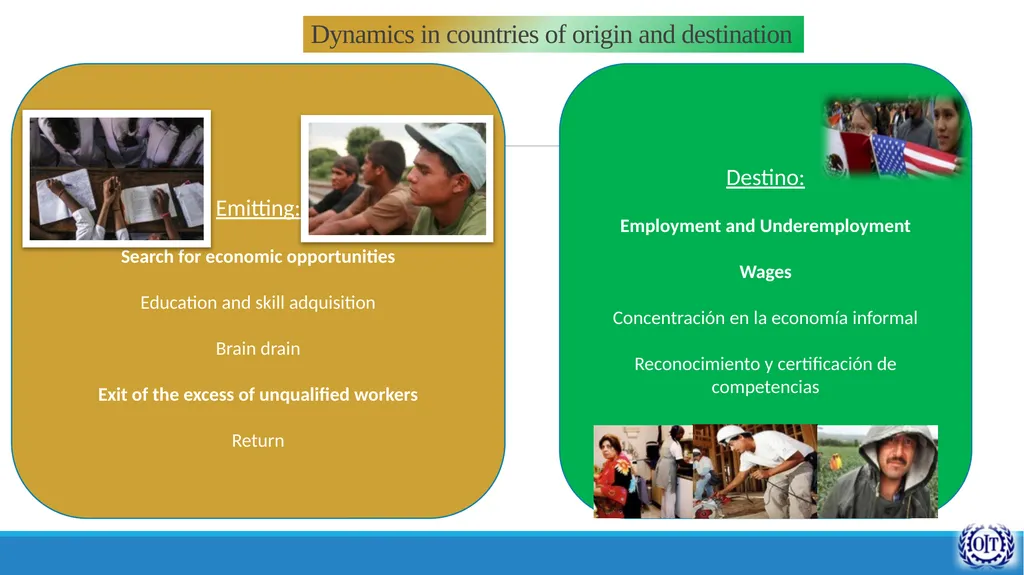
Dynamics in countries of origin and destination Emitting:
Search for economic opportunities
Education and skill adquisition
Brain drain
Exit of the excess of unqualified workers
Return<br>
04
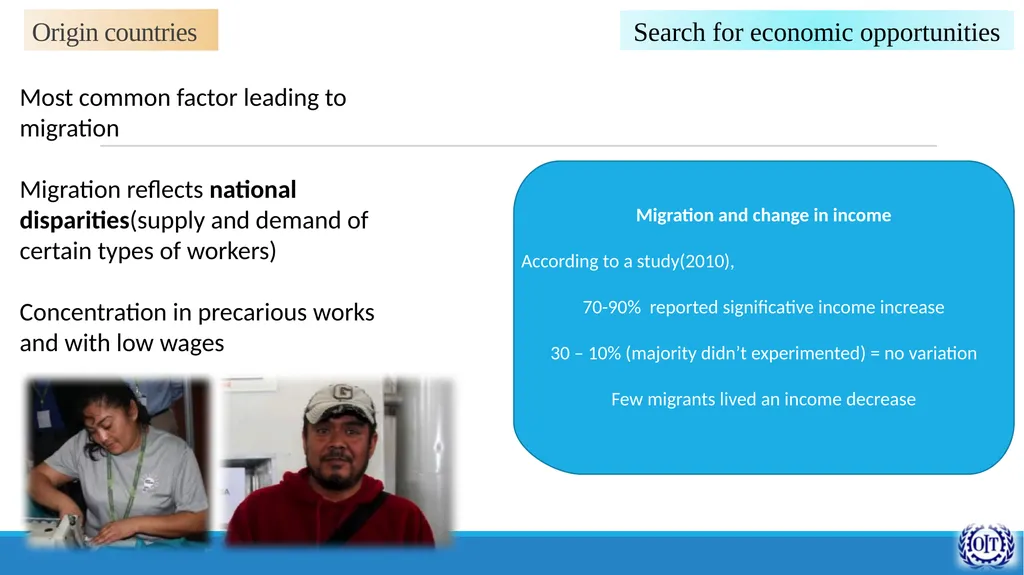
Origin countries Search for economic opportunities Most common factor leading to migration
Migration reflects national disparities(supply and demand of certain types of workers)
Concentration in precarious works and with low wages Migration and change in income
According to a study(2010),
70-90% reported significative income increase
30 – 10% (majority didn’t experimented) = no variation
Few migrants lived an income decrease<br>
05
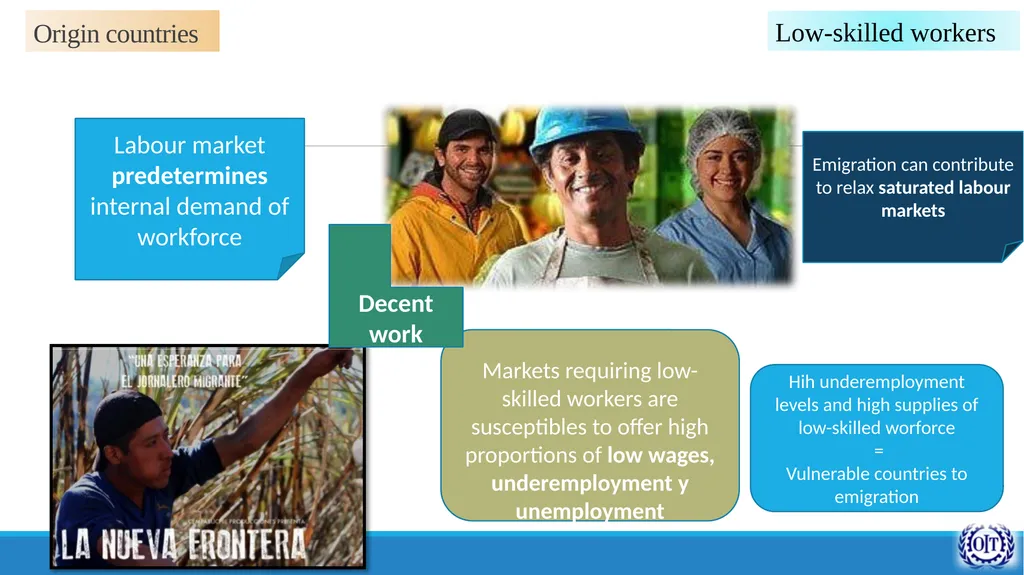
Labour market predetermines internal demand of workforce Low-skilled workers Origin countries<br>
06
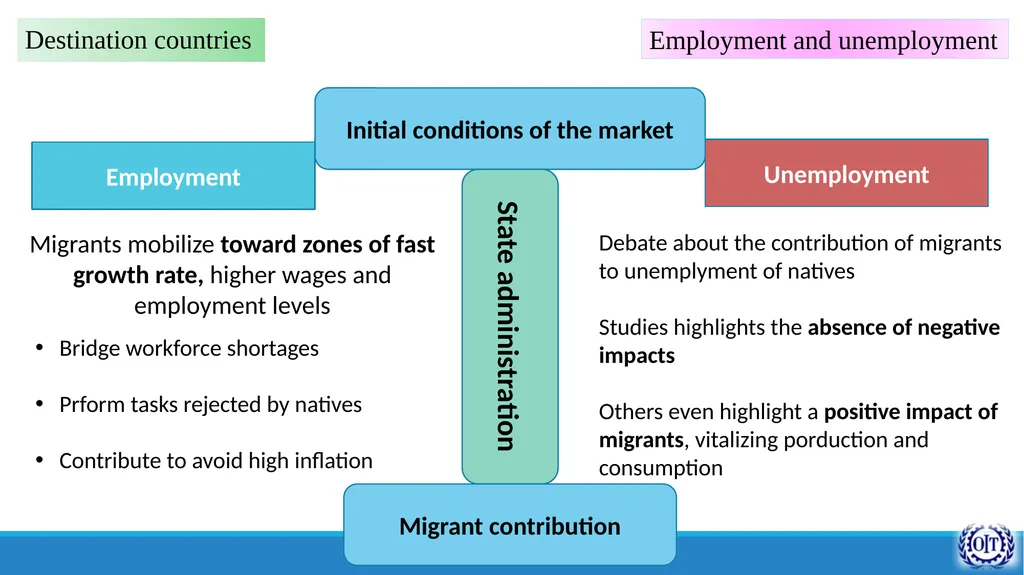
Destination countries Employment and unemployment Initial conditions of the market Employment Unemployment State administration Migrant contribution Bridge workforce shortages
Prform tasks rejected by natives
Contribute to avoid high inflation Migrants mobilize toward zones of fast growth rate, higher wages and employment levels Debate about the contribution of migrants to unemplyment of natives
Studies highlights the absence of negative impacts
Others even highlight a positive impact of migrants, vitalizing porduction and consumption<br>
07
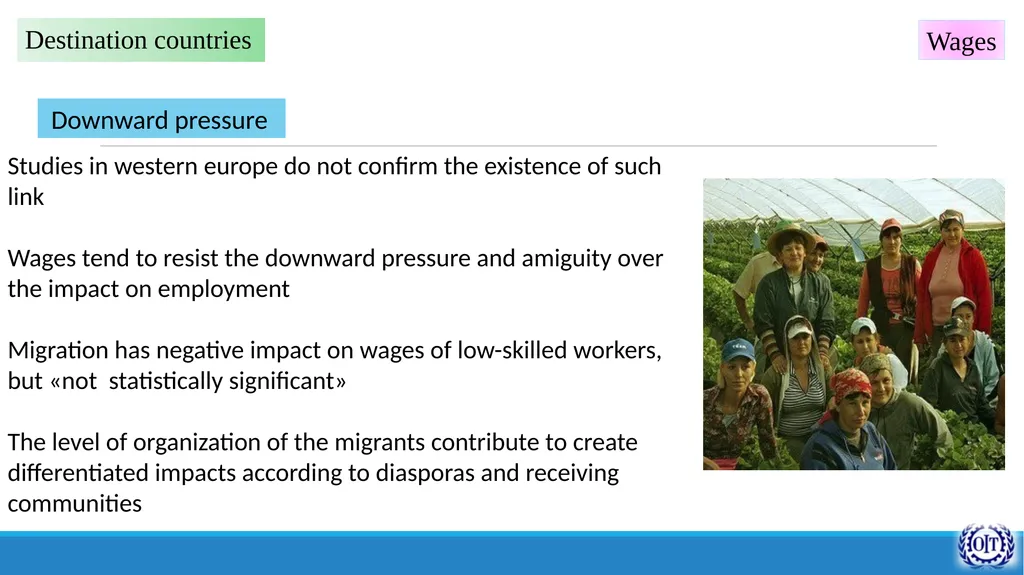
Wages Downward pressure Studies in western europe do not confirm the existence of such link
Wages tend to resist the downward pressure and amiguity over the impact on employment
Migration has negative impact on wages of low-skilled workers, but «not statistically significant»
The level of organization of the migrants contribute to create differentiated impacts according to diasporas and receiving communities Destination countries<br>
08
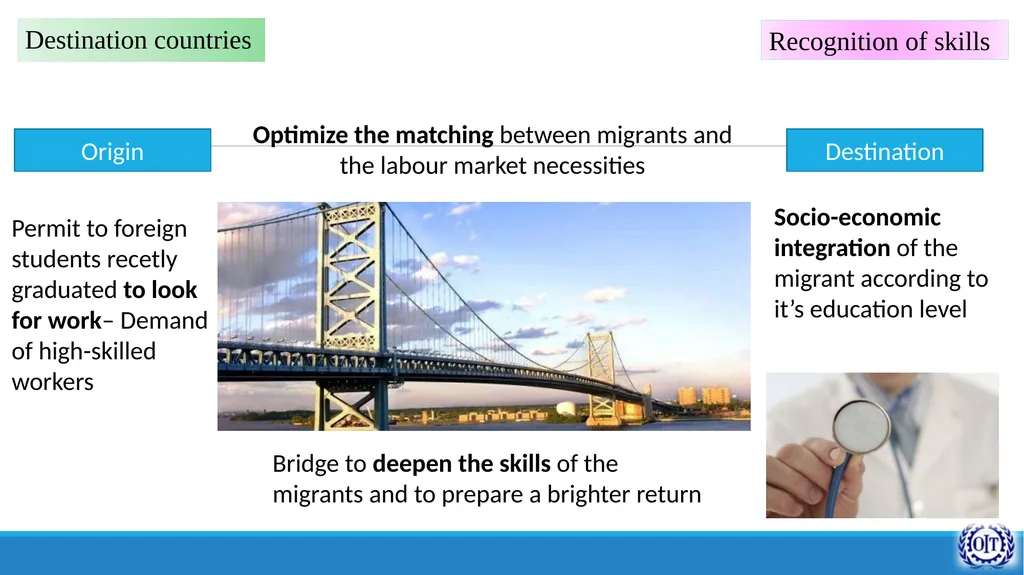
Recognition of skills Optimize the matching between migrants and the labour market necessities Socio-economic integration of the migrant according to it’s education level Permit to foreign students recetly graduated to look for work– Demand of high-skilled workers Origin Bridge to deepen the skills of the migrants and to prepare a brighter return Destination Destination countries<br>
09
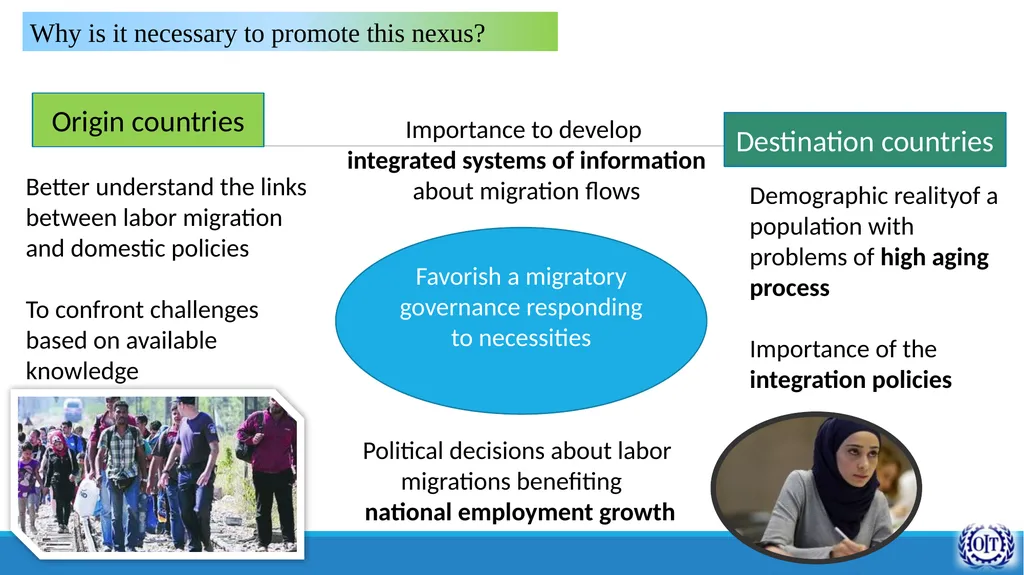
Why is it necessary to promote this nexus? Favorish a migratory governance responding to necessities Demographic realityof a population with problems of high aging process
Importance of the integration policies Better understand the links between labor migration and domestic policies
To confront challenges based on available knowledge Political decisions about labor migrations benefiting
national employment growth Importance to develop
integrated systems of information
about migration flows Origin countries Destination countries<br>
10
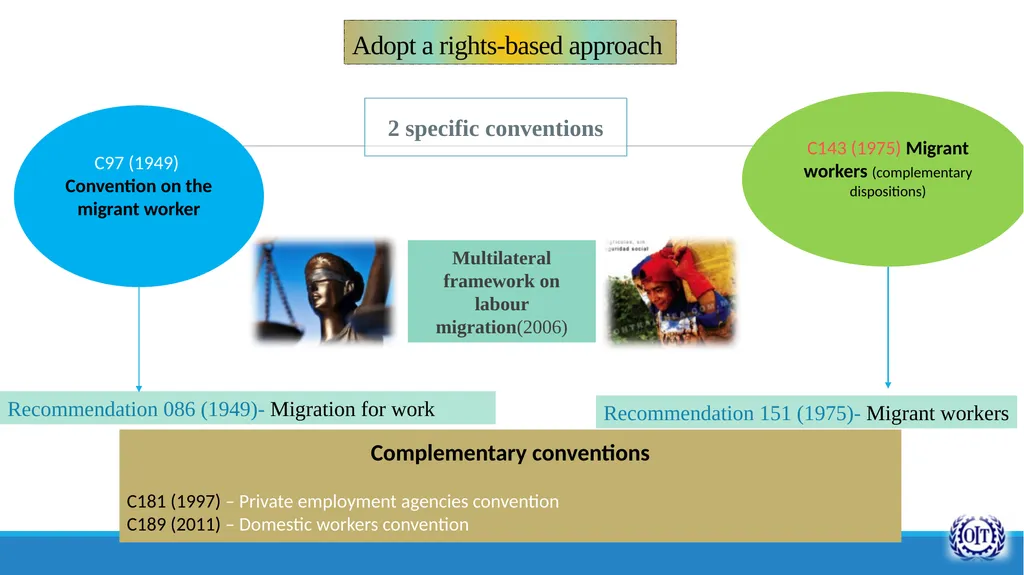
Adopt a rights-based approach Complementary conventions
C181 (1997) – Private employment agencies convention
C189 (2011) – Domestic workers convention Multilateral framework on labour migration(2006)<br>
11
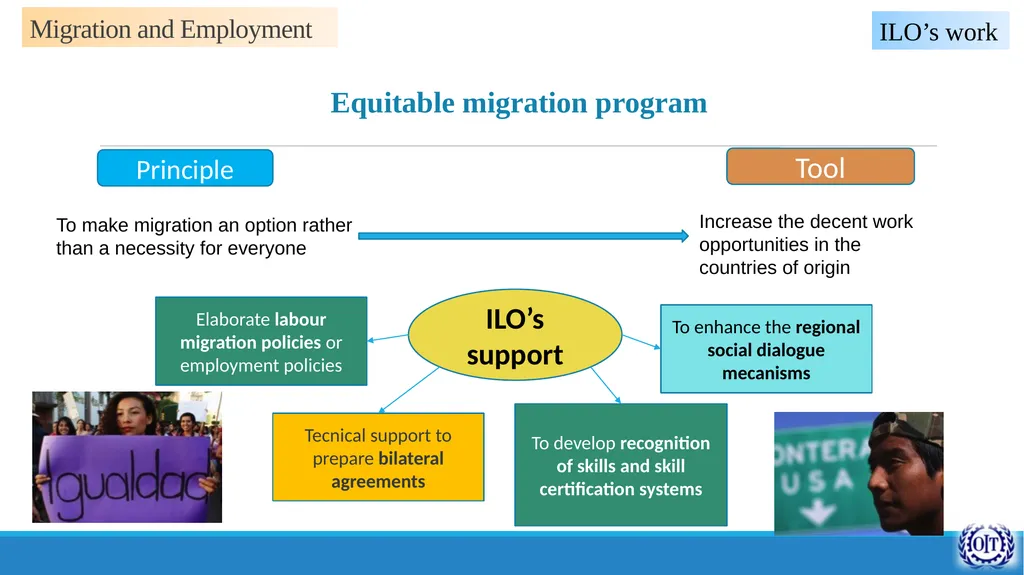
Equitable migration program To make migration an option rather than a necessity for everyone Increase the decent work opportunities in the countries of origin Principle Tool Migration and Employment ILO’s work Elaborate labour migration policies or employment policies Tecnical support to prepare bilateral agreements To develop recognition of skills and skill certification systems To enhance the regional social dialogue mecanisms ILO’s support<br>
12
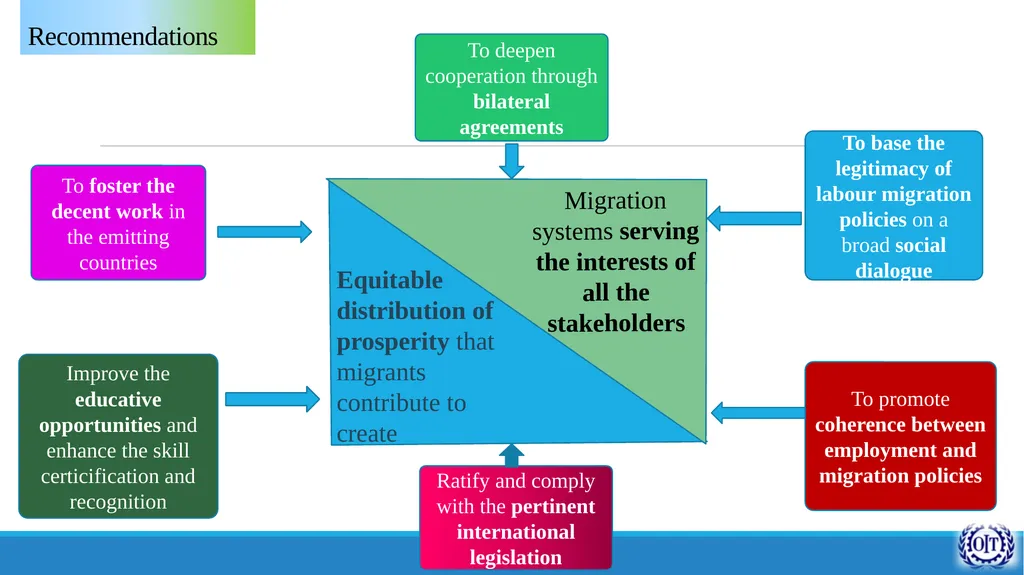
Recommendations Objetivos<br>
13
Conclusion and Debate Thank you for your attention!