The Momentic Self Employment Service .enabling an enterprise culture with a social conscience Finance Ways of Working (WOW) 100 confidentiality No multi-tasking be fully present Arrive on time and stay for the whole meeting Commit to
"The Momentic Self Employment Service …….enabling" is the property of its rightful owner. Permission is granted to
download and print the materials on this website for personal, non-commercial use only, and to display it
on your personal computer provided you do not modify the materials and that you retain all copyright
notices contained in the materials. By downloading content from our website, you accept the terms of this
agreement.
Presentation Transcript
01
The Momentic
Self Employment Service …….enabling an enterprise culture with a social conscience Finance<br>
02
Ways of Working (WOW) 100% confidentiality
No multi-tasking – be fully present
Arrive on time and stay for the whole meeting
Commit to asking questions, listening & being non-judgemental
Sharing the air space
Implement agreed actions (Do what you say you will do!)
Feedback at the following session
Complete all participant surveys at the end of each session
Philosophy –
“The knowledge is in the room, let’s learn from others and share”<br>
03
In the session we will cover: Common financial challenges for small businesses
Barriers to cashflow
Understanding Business Costs and key terms
Identifying financial inefficiencies within your business
Your pricing strategy
Cash flow forecast development
Outcome: You will have a starting point on what to research further and the confidence to create a 12-month Cash Flow for your Business that your Business Adviser will support you with<br>
04
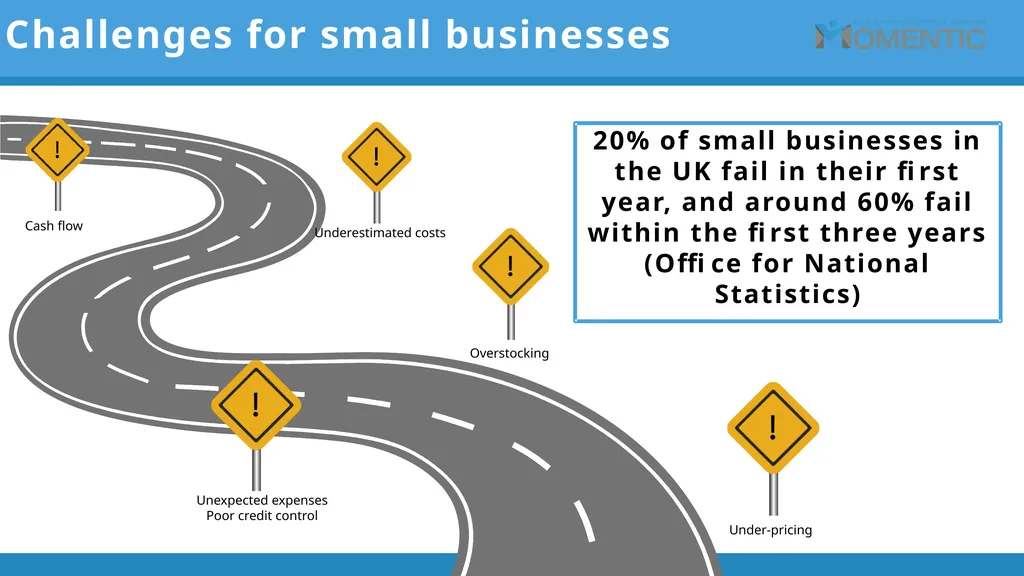
Challenges for small businesses Unexpected expenses
Poor credit control Cash flow Overstocking Underestimated costs Under-pricing<br>
05
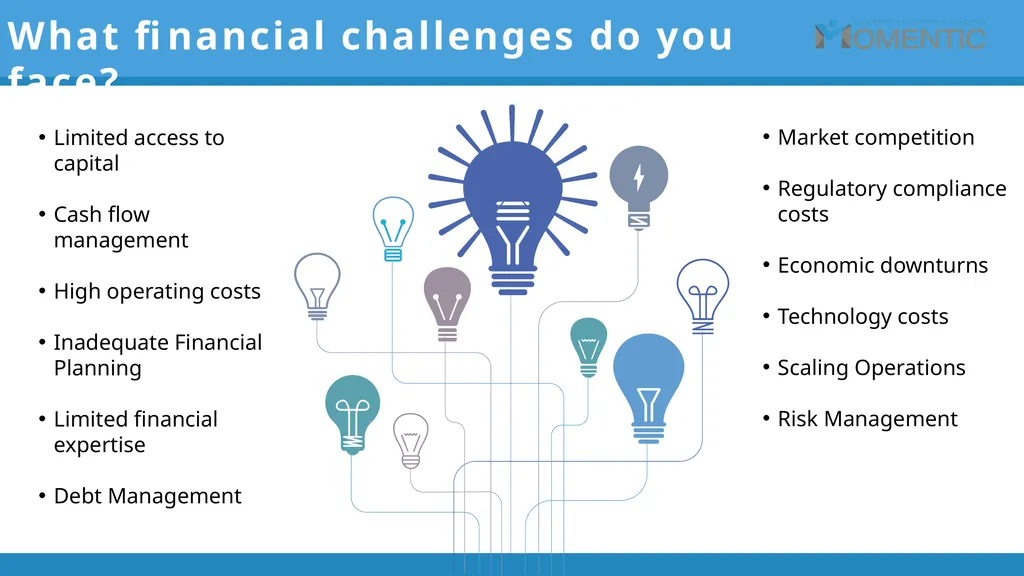
What financial challenges do you face? Limited access to capital
Cash flow management
High operating costs
Inadequate Financial Planning
Limited financial expertise
Debt Management Market competition
Regulatory compliance costs
Economic downturns
Technology costs
Scaling Operations
Risk Management<br>
06
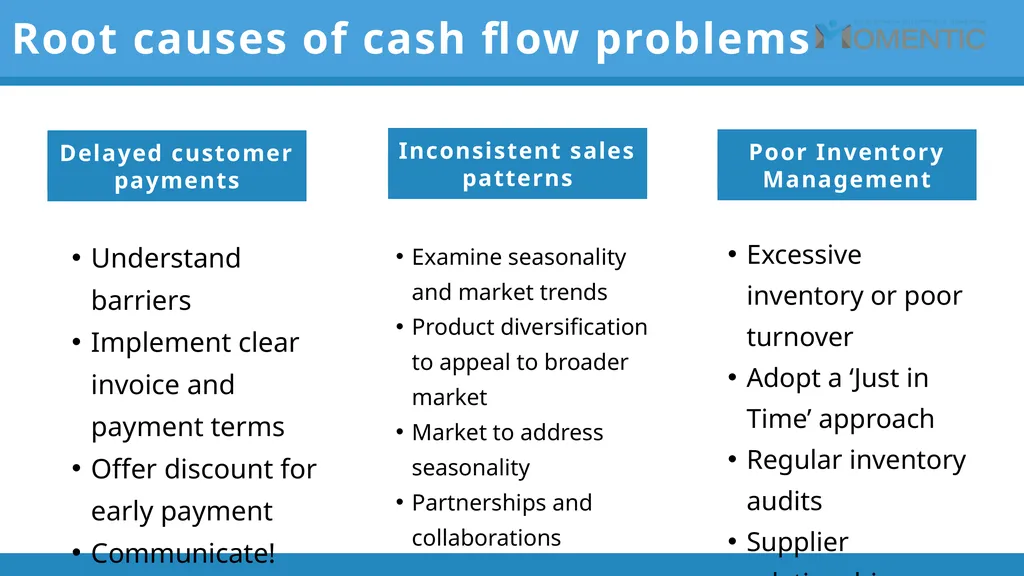
Root causes of cash flow problems Understand barriers
Implement clear invoice and payment terms
Offer discount for early payment
Communicate! Examine seasonality and market trends
Product diversification to appeal to broader market
Market to address seasonality
Partnerships and collaborations Excessive inventory or poor turnover
Adopt a ‘Just in Time’ approach
Regular inventory audits
Supplier relationships<br>
07
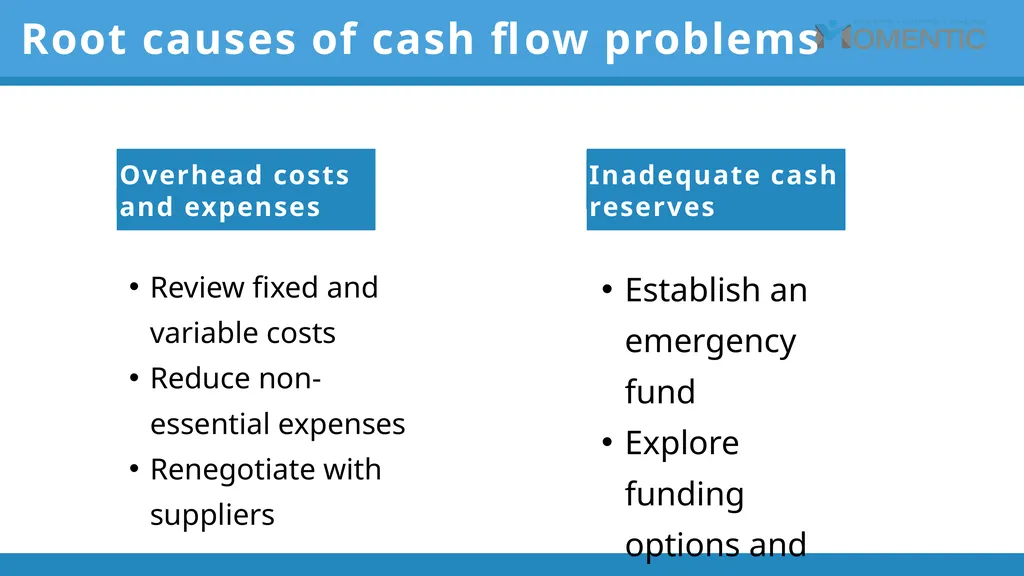
Root causes of cash flow problems Review fixed and variable costs
Reduce non-essential expenses
Renegotiate with suppliers Establish an emergency fund
Explore funding options and lines of credit<br>
08
15<br>
09
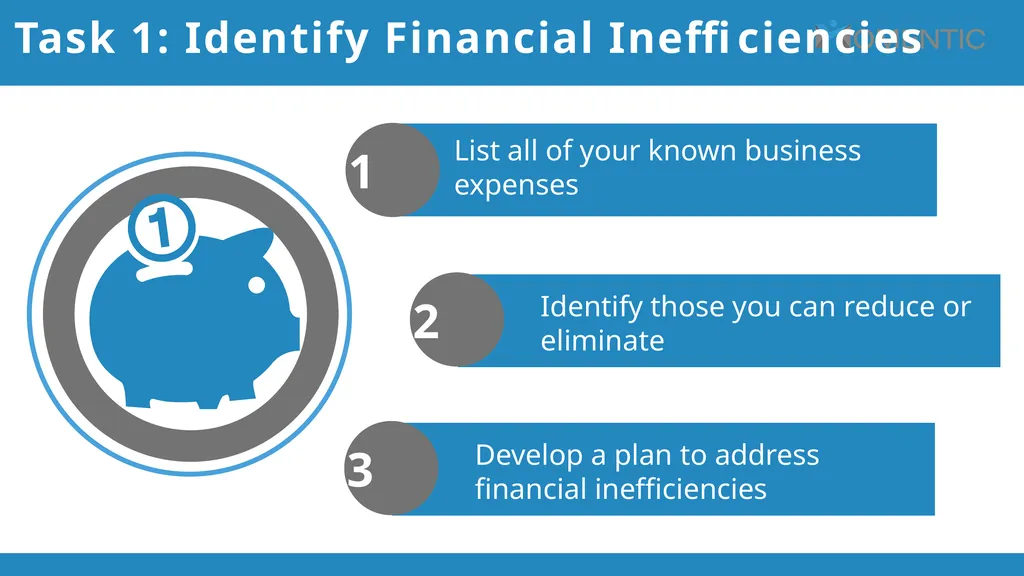
Task 1: Identify Financial Inefficiencies List all of your known business expenses Identify those you can reduce or eliminate Develop a plan to address financial inefficiencies<br>
10
A cash flow is the measure of your ability to pay bills on a regular basis, and attain money that is owed to you
Lack of Cash Flow control and understanding is one of the main reasons small businesses fail
A cash flow gives you an insight into your next year of trading and demonstrates you have an understanding AND control of your finances It sets clear targets for you to grow
Helps you take a view of the business to make plans to grow/market/develop
Identifies your Break Even Point
Informs you when you need to save, reduce costs, and when you can spend
Ensures the business can pay suppliers and overheads, and you! Why is Cash Flow Forecasting important? The Importance of Cash flow Why produce a Cash flow?<br>
11
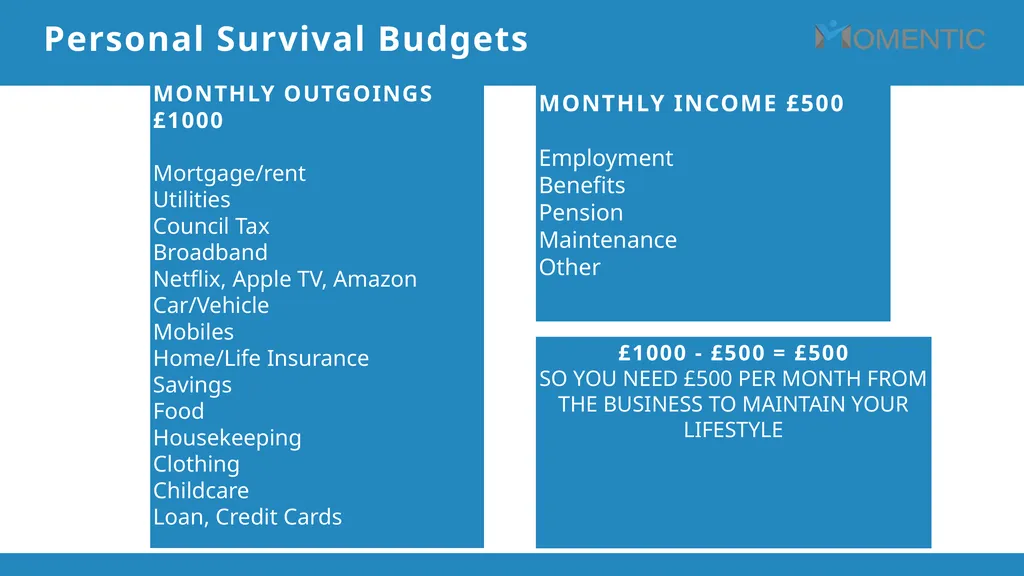
Personal Survival Budgets<br>
12
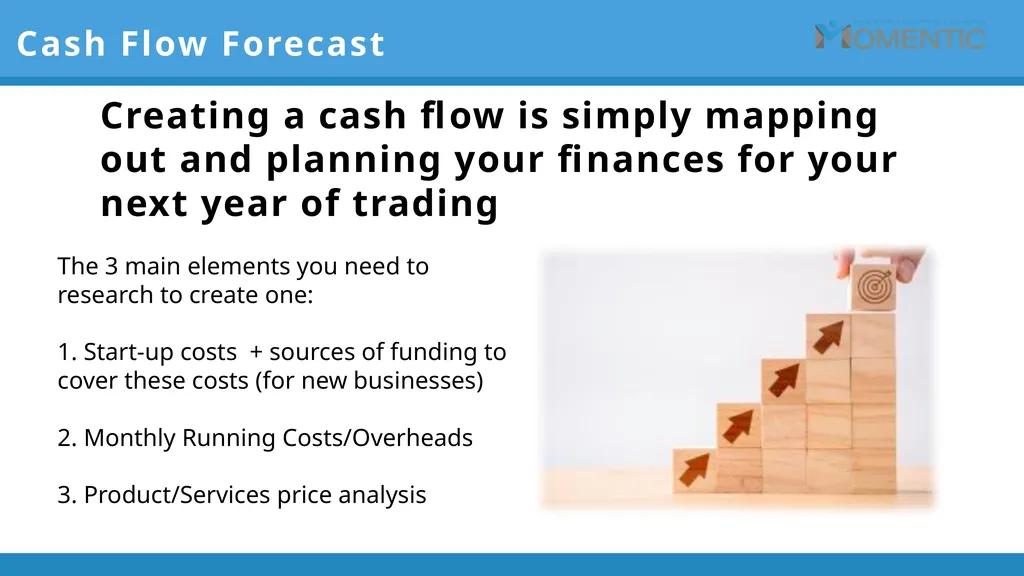
Creating a cash flow is simply mapping out and planning your finances for your next year of trading The 3 main elements you need to
research to create one:
1. Start-up costs + sources of funding to cover these costs (for new businesses)
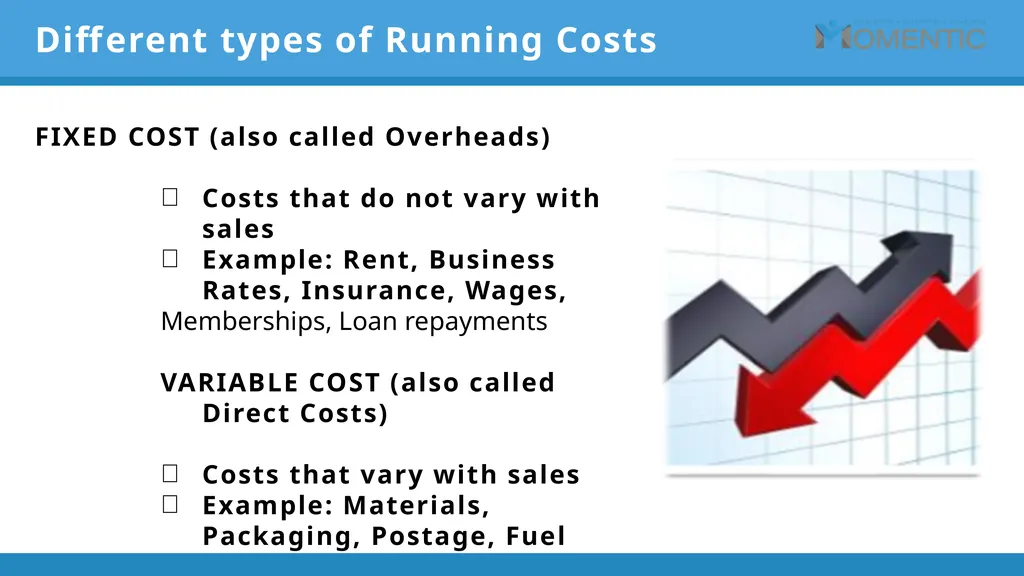
Costs that do not vary with sales
Example: Rent, Business Rates, Insurance, Wages,
Memberships, Loan repayments
VARIABLE COST (also called Direct Costs)
Costs that vary with sales
Example: Materials, Packaging, Postage, Fuel Different types of Running Costs<br>
15
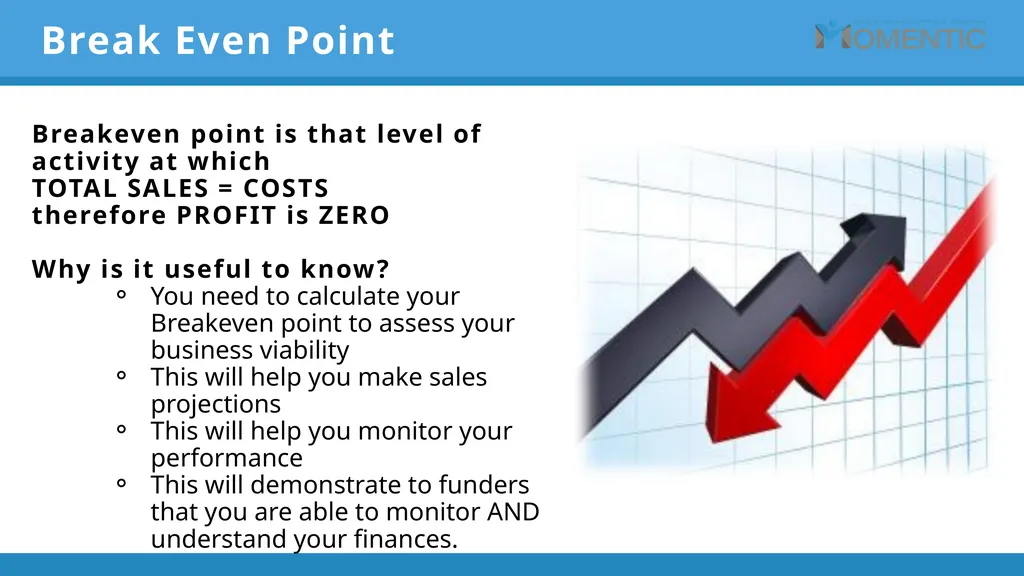
Break Even Point Breakeven point is that level of activity at which
TOTAL SALES = COSTS
therefore PROFIT is ZERO
Why is it useful to know?
You need to calculate your Breakeven point to assess your business viability
This will help you make sales projections
This will help you monitor your performance
This will demonstrate to funders that you are able to monitor AND understand your finances.<br>
16
List the prices of your products and services
Research competitor prices for similar products/services
Calculate your cost of goods sold (COGS)
Determine your break-even point and pricing sweet spot Task 2: Analyse your Pricing Strategies<br>
17
Workbook task: Create a cash flow forecast Gather your historical financial data
Create spreadsheet to forecast future cash flow
Identify cash flow shortages and develop plan to address CFF<br>
18
Next Session - Bookkeeping Date: Wednesday 15ᵗʰ January
Time: 10:00am<br>
19
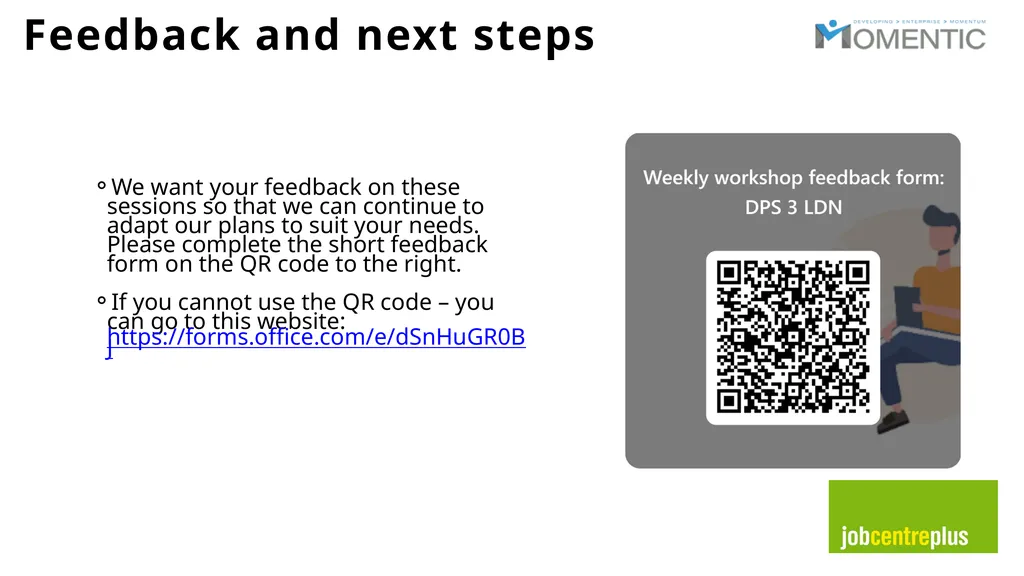
Feedback and next steps We want your feedback on these sessions so that we can continue to adapt our plans to suit your needs. Please complete the short feedback form on the QR code to the right.
If you cannot use the QR code – you can go to this website: https://forms.office.com/e/dSnHuGR0BJ<br>
20
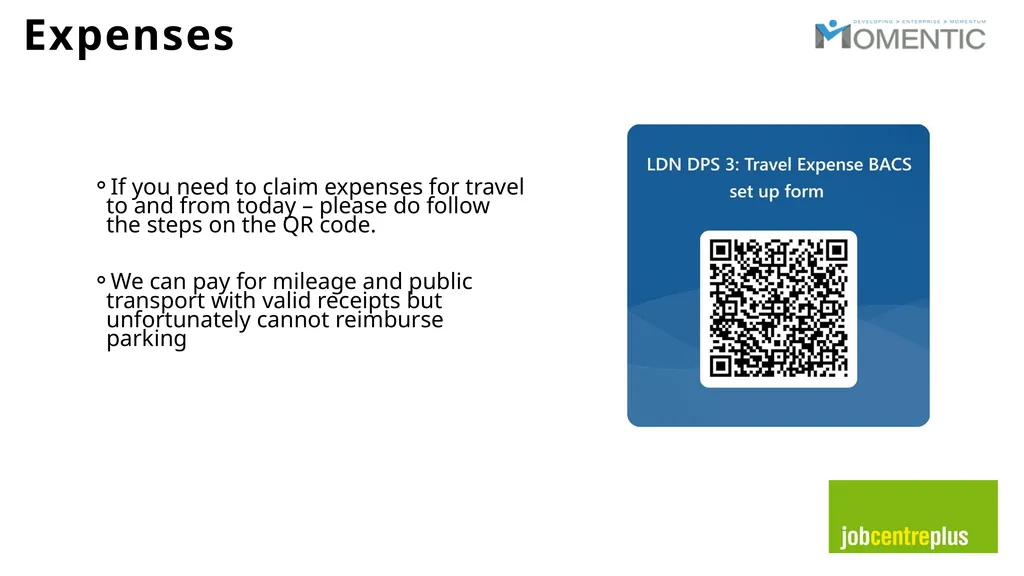
Expenses If you need to claim expenses for travel to and from today – please do follow the steps on the QR code.
We can pay for mileage and public transport with valid receipts but unfortunately cannot reimburse parking<br>