The presentation can only be copied or altered for non-commercial personal or educational use. Citizenship Foundation Charity Reg No 801360 Author: M. Heath www.gogivers.org Fairtrade: Have a Banana Using Go-Givers lessons This PowerPoint
"The presentation can only be copied or altered for" is the property of its rightful owner. Permission is granted to
download and print the materials on this website for personal, non-commercial use only, and to display it
on your personal computer provided you do not modify the materials and that you retain all copyright
notices contained in the materials. By downloading content from our website, you accept the terms of this
agreement.
Using Go-Givers lessons This PowerPoint is designed to inform, and to support critical thinking and discussion.
Go-Givers PowerPoints can be used in their entirety OR content can be saved and edited.
In order for the links and animation to work, always show the PowerPoints in ‘slide show’ view.
The green dot in the bottom right hand corner of the slide indicates when the slide animation is complete.
The LEARNING ACTIVITIES are an essential and integral part of this lesson. They are linked at the end of this PowerPoint.<br>
03
This lesson explores how a Fairtrade policy can create a more equal market.<br>
04
HAVE A BANANA!<br>
05
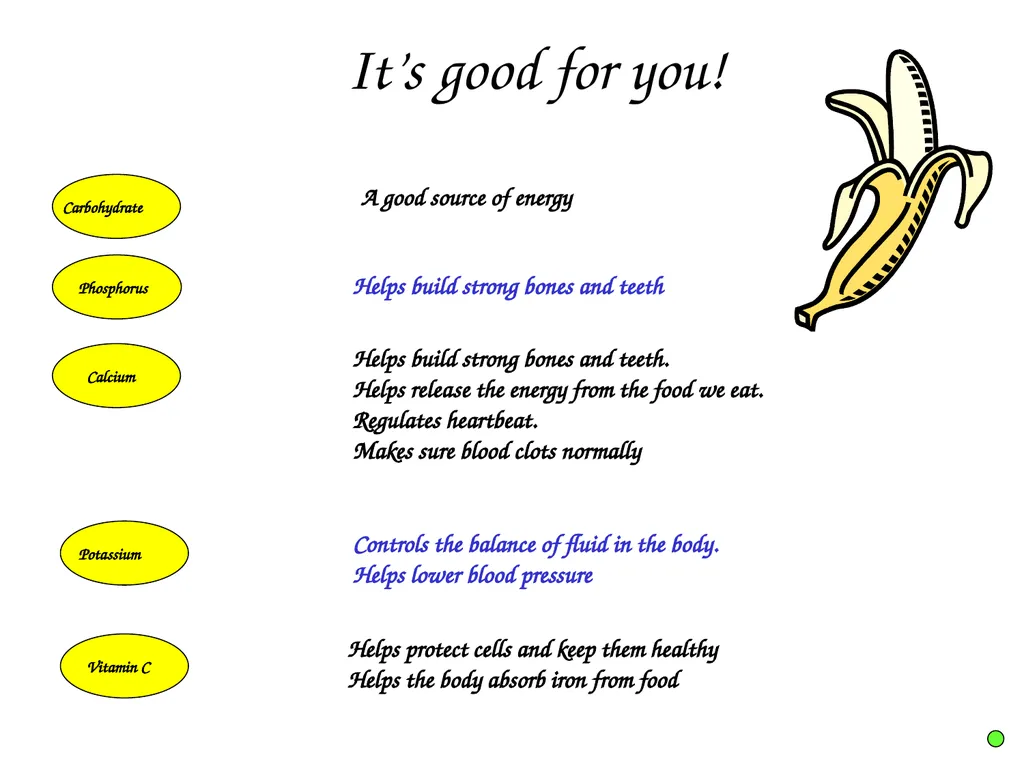
A good source of energy Helps build strong bones and teeth Helps build strong bones and teeth.
Helps release the energy from the food we eat.
Regulates heartbeat.
Makes sure blood clots normally Controls the balance of fluid in the body.
Helps lower blood pressure Helps protect cells and keep them healthy
Helps the body absorb iron from food Carbohydrate Phosphorus Calcium Potassium Vitamin C It’s good for you!<br>
06
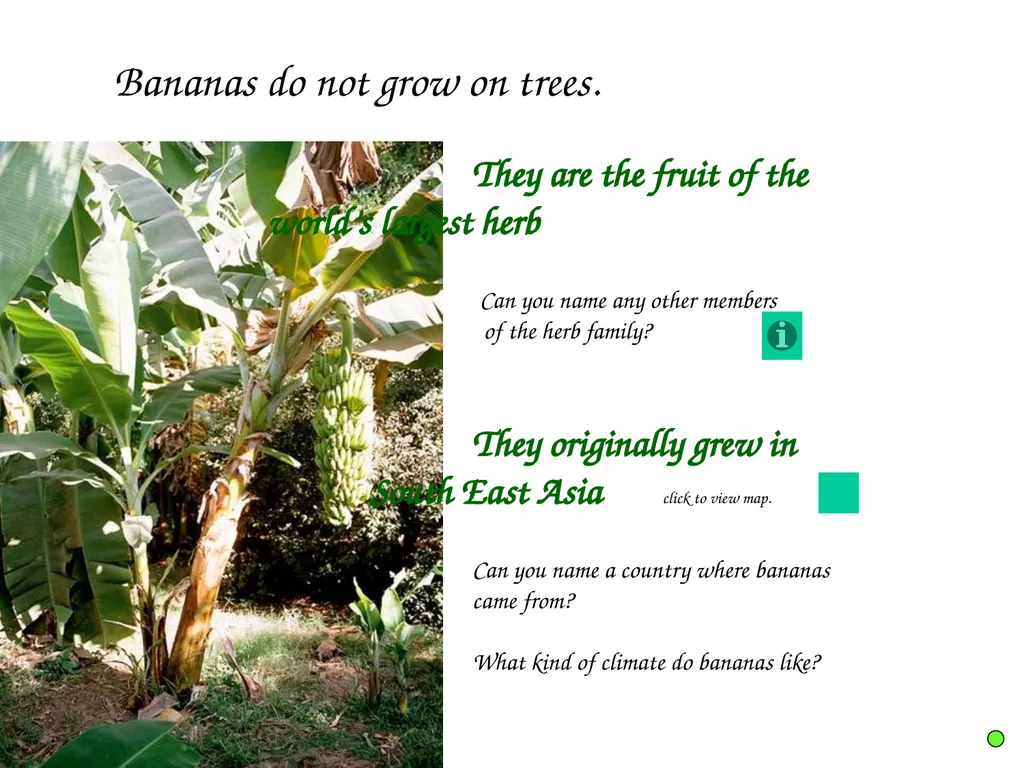
Bananas do not grow on trees.
They are the fruit of the world’s largest herb
Can you name any other members
of the herb family?
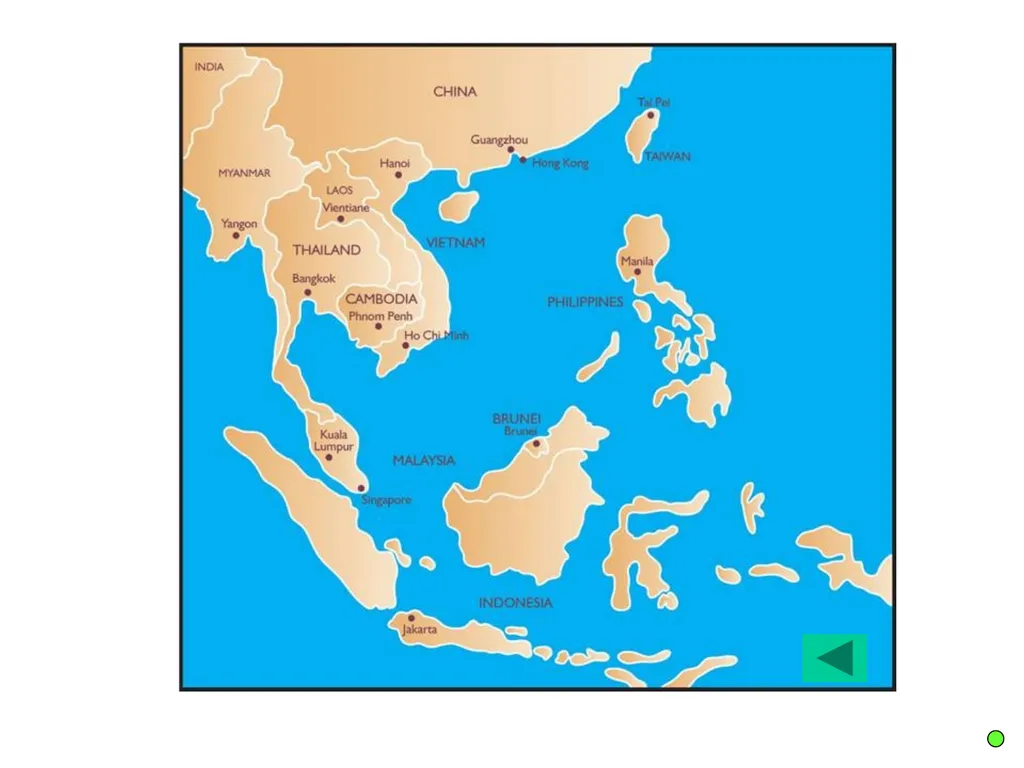
They originally grew in South East Asia click to view map.
Can you name a country where bananas
came from?
What kind of climate do bananas like?<br>
07
People realised what a good food bananas were a long time ago.
Farming bananas soon spread to other countries.
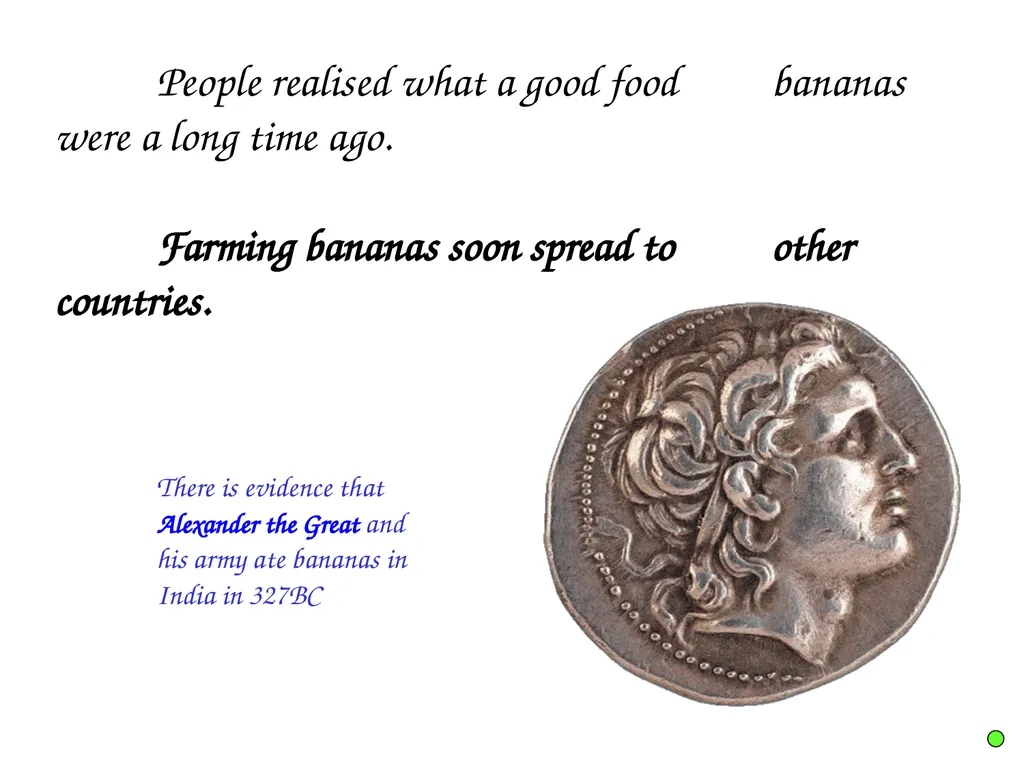
There is evidence that
Alexander the Great and
his army ate bananas in
India in 327BC<br>
08
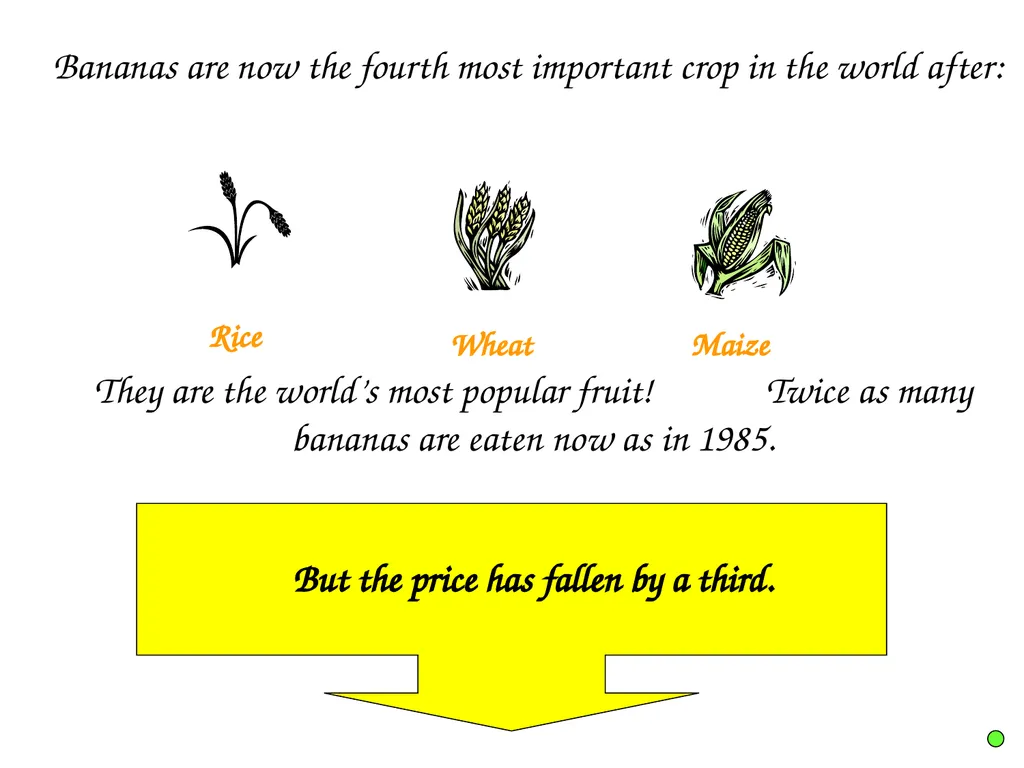
Bananas are now the fourth most important crop in the world after: Rice Maize Wheat They are the world’s most popular fruit! Twice as many bananas are eaten now as in 1985. But the price has fallen by a third.<br>
09
Many of the bananas on sale in Britain come from the Windward Islands in the Caribbean. Can you name any Islands where bananas might be grown?<br>
10
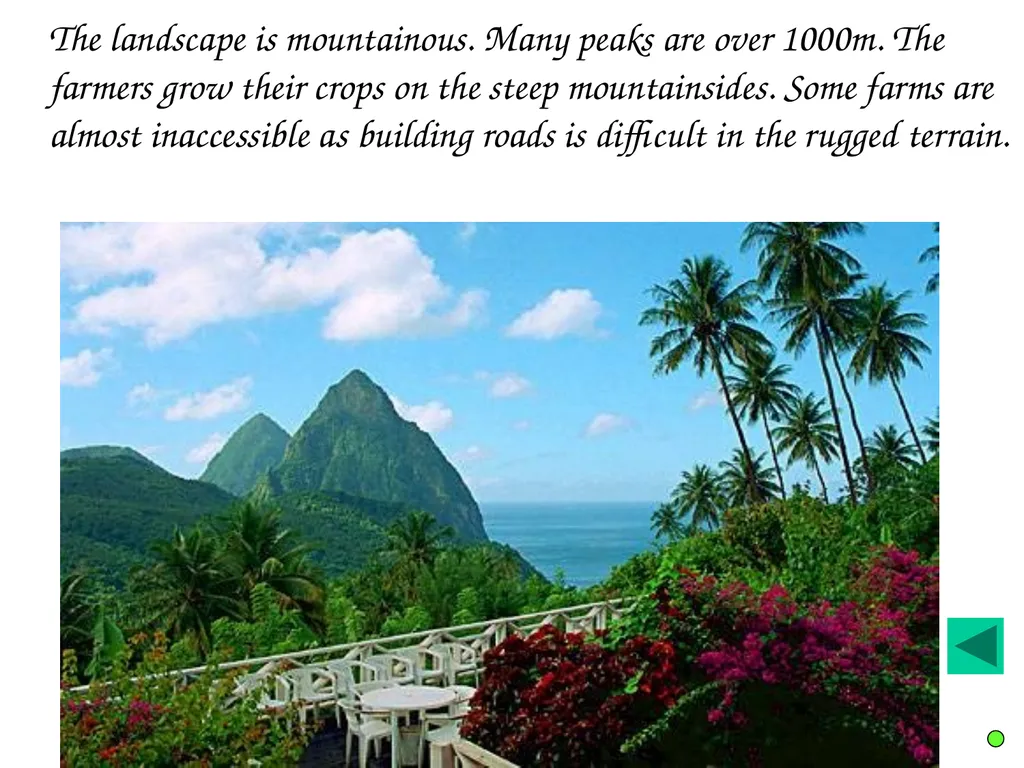
These islands are made from extinct volcanoes. What would you expect the landscape to be like?<br>
11
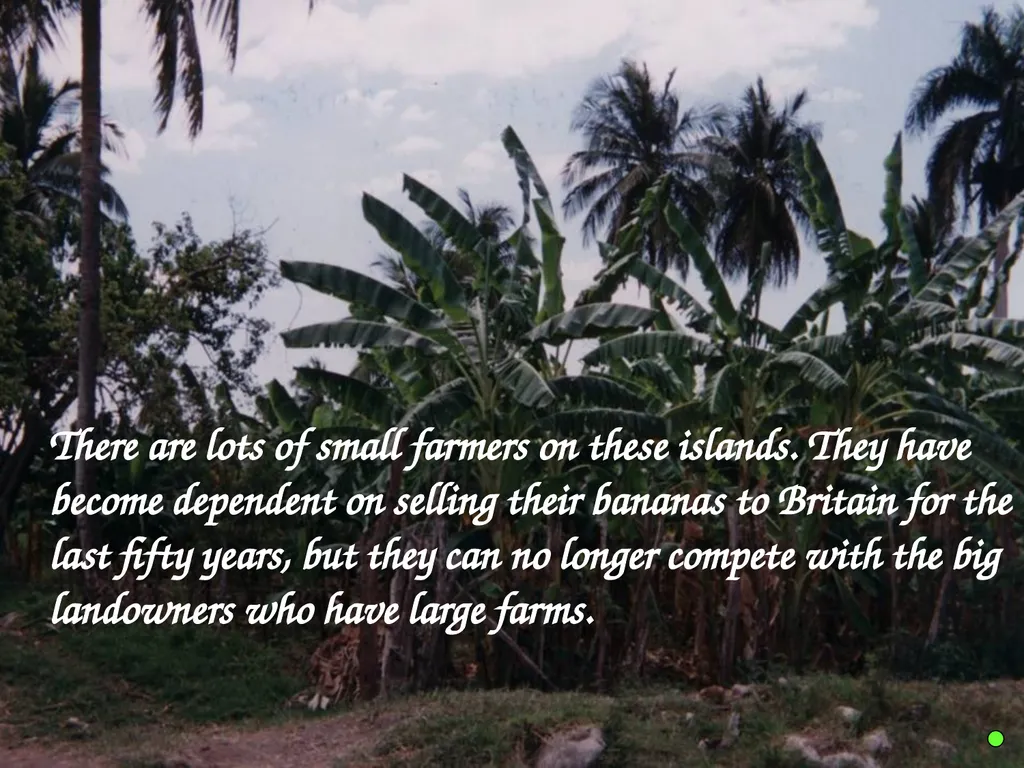
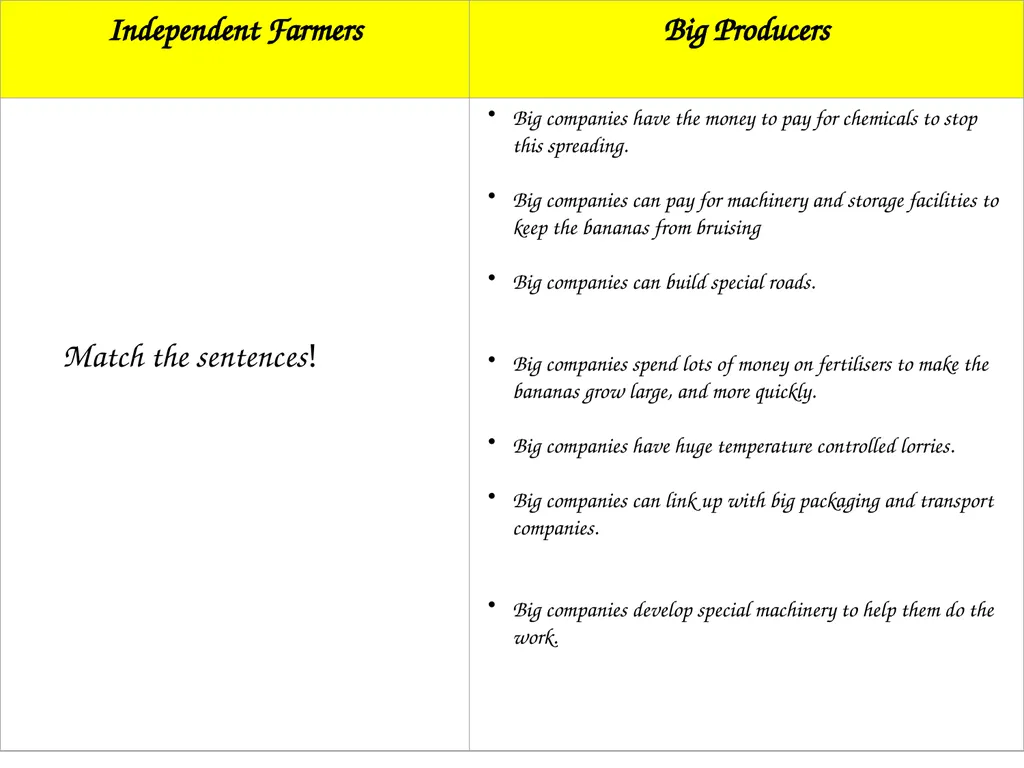
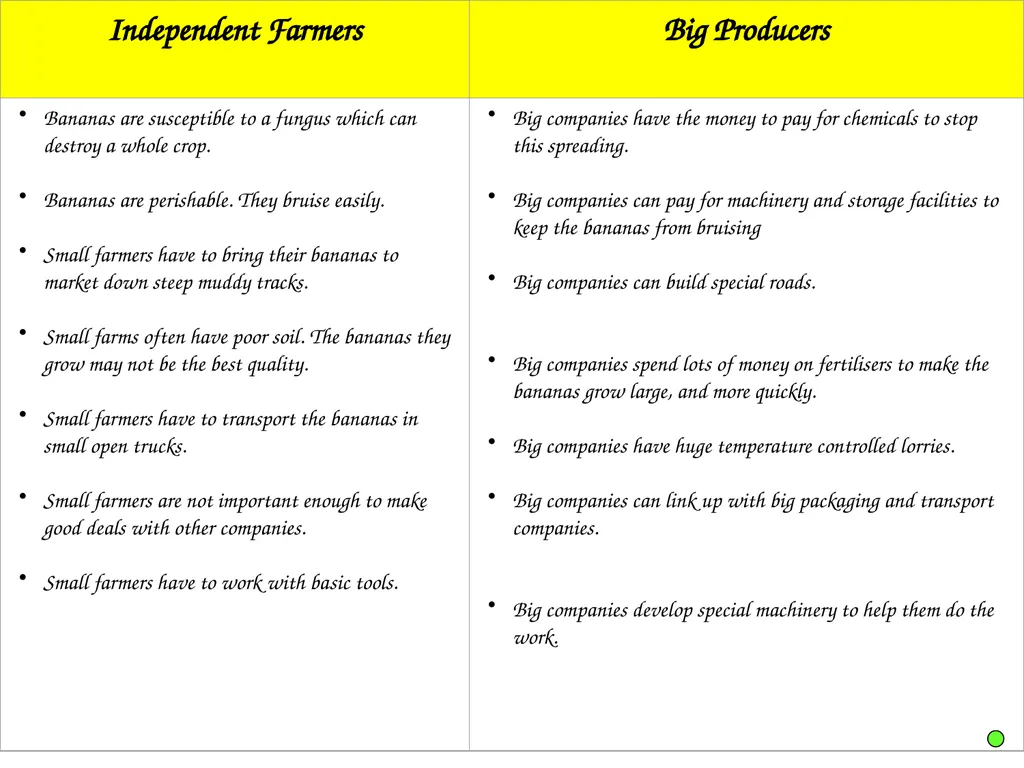
There are lots of small farmers on these islands. They have become dependent on selling their bananas to Britain for the last fifty years, but they can no longer compete with the big landowners who have large farms.<br>
12
Match the sentences!<br>
13
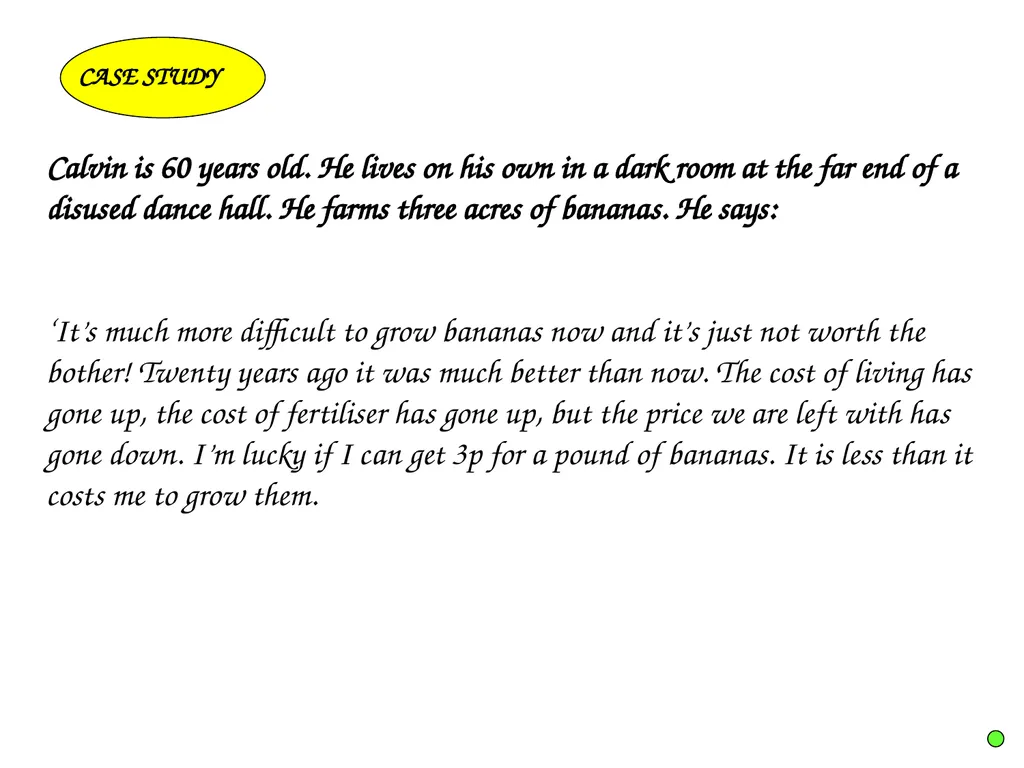
CASE STUDY Calvin is 60 years old. He lives on his own in a dark room at the far end of a disused dance hall. He farms three acres of bananas. He says:
‘It’s much more difficult to grow bananas now and it’s just not worth the bother! Twenty years ago it was much better than now. The cost of living has gone up, the cost of fertiliser has gone up, but the price we are left with has gone down. I’m lucky if I can get 3p for a pound of bananas. It is less than it costs me to grow them.<br>
14
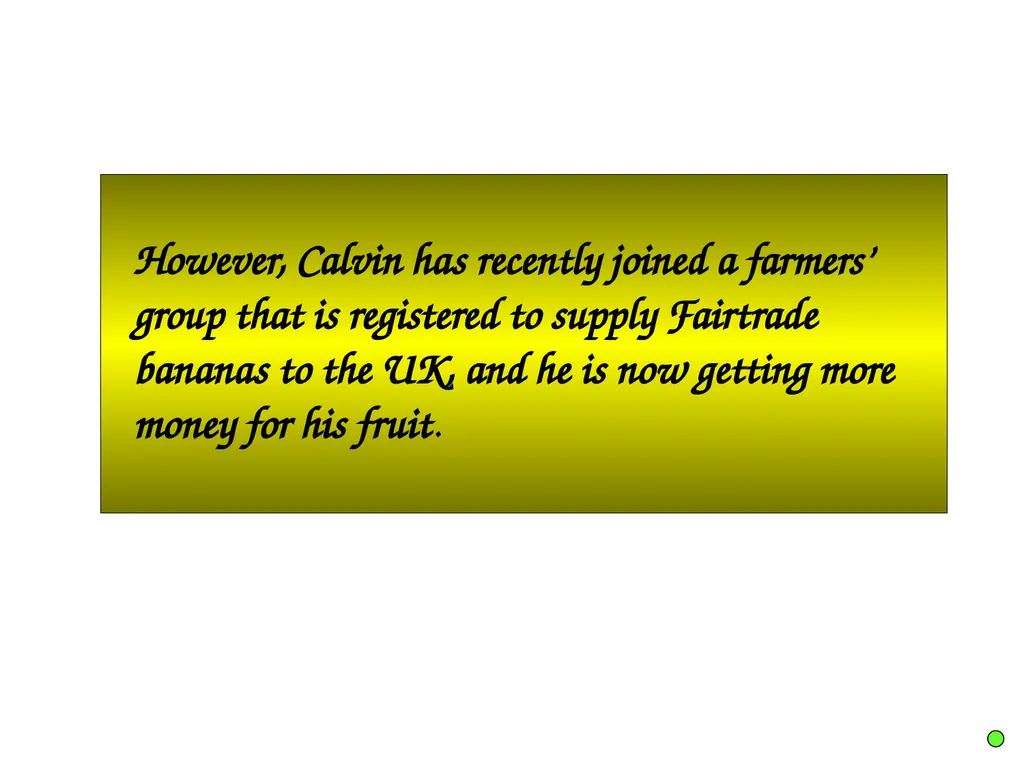
However, Calvin has recently joined a farmers’ group that is registered to supply Fairtrade bananas to the UK, and he is now getting more money for his fruit.<br>
15
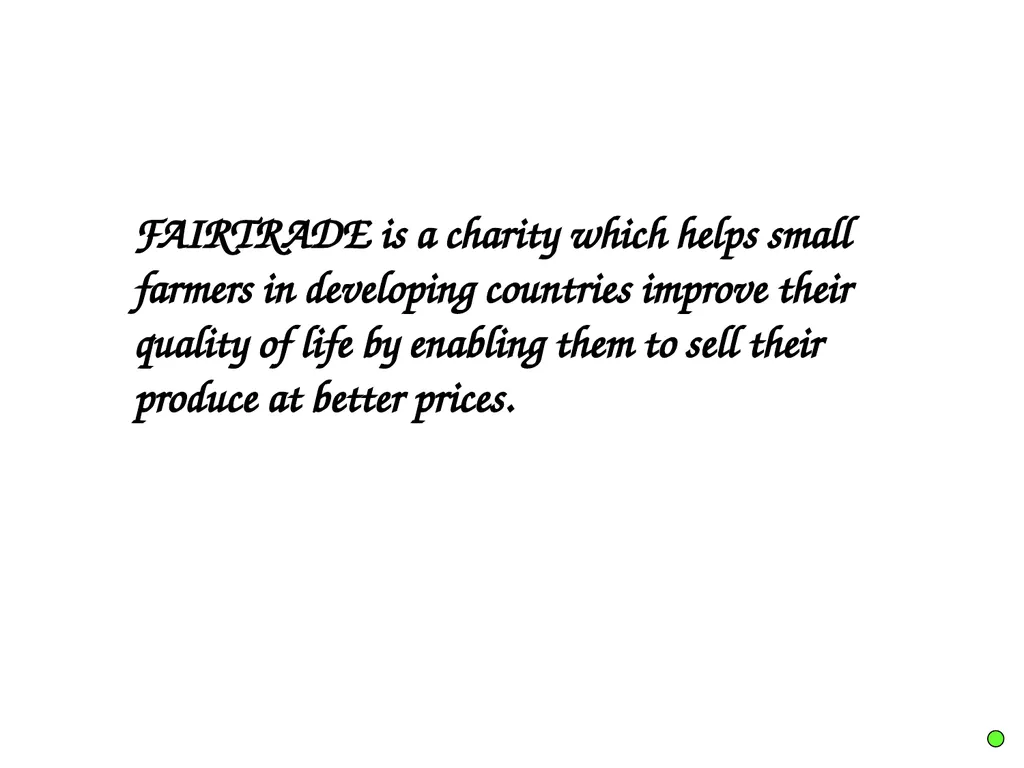
FAIRTRADE is a charity which helps small farmers in developing countries improve their quality of life by enabling them to sell their produce at better prices.<br>
16
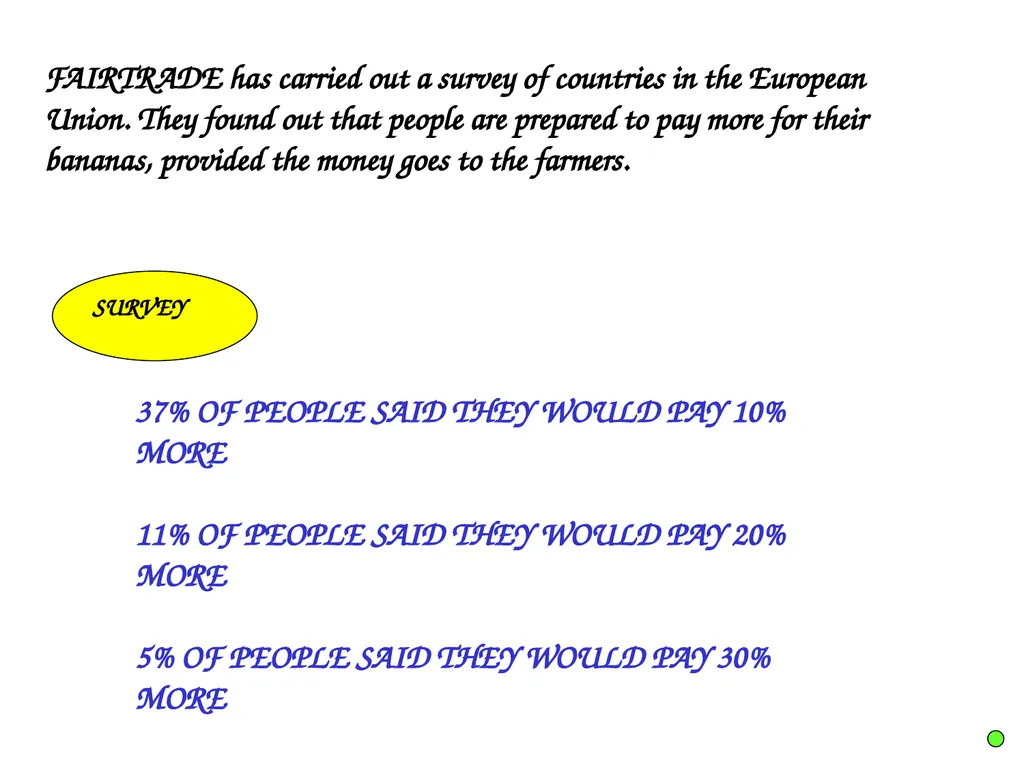
FAIRTRADE has carried out a survey of countries in the European Union. They found out that people are prepared to pay more for their bananas, provided the money goes to the farmers. SURVEY 37% OF PEOPLE SAID THEY WOULD PAY 10% MORE
11% OF PEOPLE SAID THEY WOULD PAY 20% MORE
5% OF PEOPLE SAID THEY WOULD PAY 30% MORE<br>
17
When you buy food with a FAIRTRADE label you know that the farmer is getting a fair price for his goods.<br>
18
Would you be prepared to pay
more money for your bananas?<br>
19
ACTIVITY:
Using persuasive writing, write a letter to your local shop or supermarket, explaining why they should sell food with a FAIRTRADE label.<br>
20
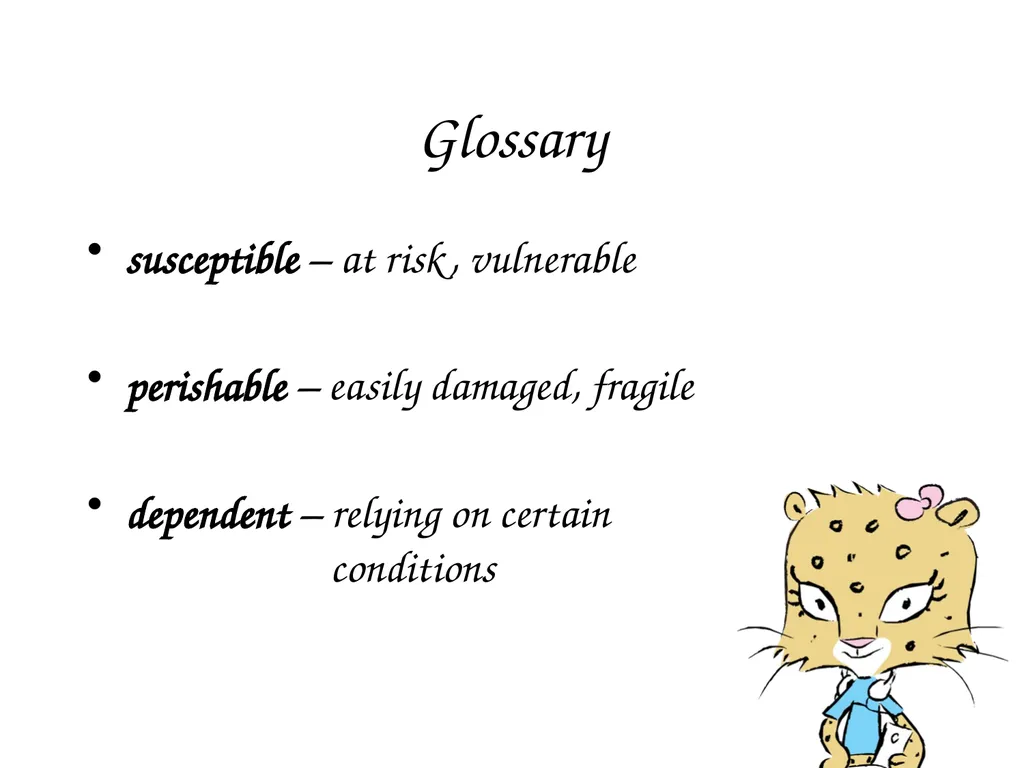
Glossary susceptible – at risk, vulnerable
perishable – easily damaged, fragile
dependent – relying on certain conditions<br>
21
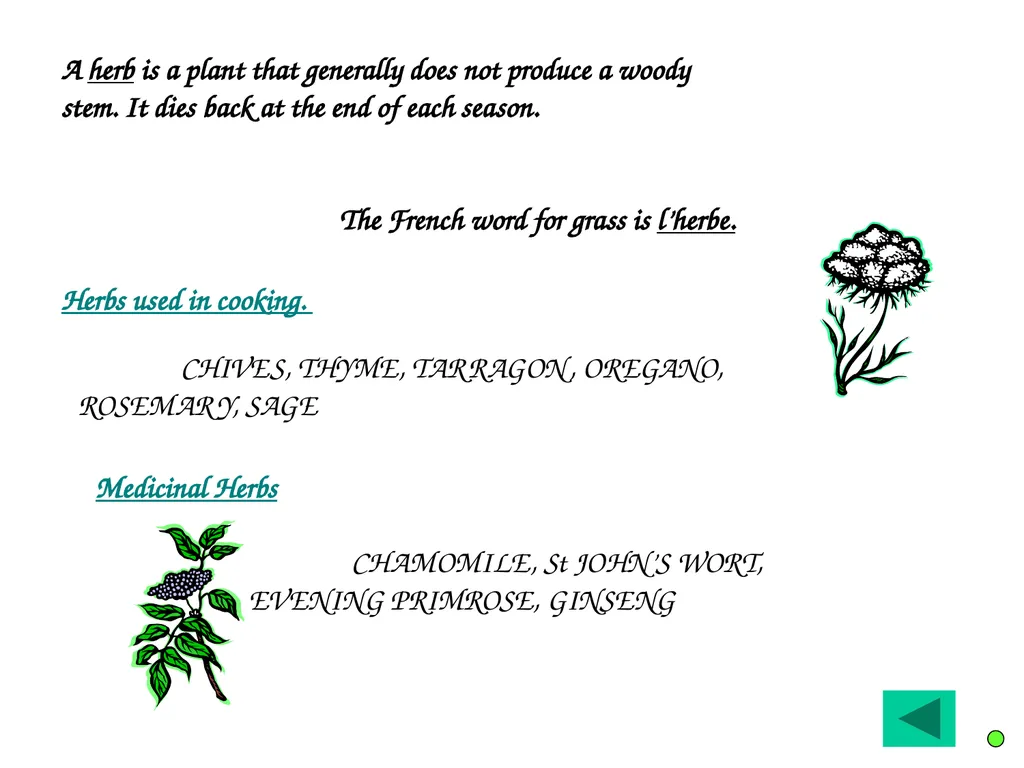
A herb is a plant that generally does not produce a woody
stem. It dies back at the end of each season.
The French word for grass is l’herbe. Herbs used in cooking. CHIVES, THYME, TARRAGON, OREGANO,
ROSEMARY, SAGE Medicinal Herbs
CHAMOMILE, St JOHN’S WORT, EVENING PRIMROSE, GINSENG<br>
22
The main islands are:
Dominica
St Lucia
St Vincent
Grenada.<br>
23
The landscape is mountainous. Many peaks are over 1000m. The farmers grow their crops on the steep mountainsides. Some farms are almost inaccessible as building roads is difficult in the rugged terrain.<br>
24
Useful Web Links Go Bananas! http://www.oxfam.org.uk/coolplanet/kidsweb/banana/ - Follow a banana from the Windward Islands in the Caribbean to a supermarket in the UK, meet the banana farmers and get some top tips on the most delicious ways of getting those fair trade bananas to your tummy. Yum!
Fair Food- http://www.oxfam.org.uk/coolplanet/kidsweb/food.htm
Two thirds of all pocket money is spent on sweets and chocolate – where does your chocolate come from? Find out here -http://www.papapaa.org/
Set up your own fair trade tuck shop! Convert your school into a fair trade school http://www.fairtrade.org.uk/get_involved/default.aspx<br>