
The Speech-Language Pathologist in Audiology
Description: The Speech-Language Pathologist in Audiology Services: An Interprofessional Collaboration CHAPTER 1 An Interprofessional Collaboration Audiologist n. a person in the field of research and clinical practice devoted to the study of hearing
Related Topics
Download Presentation
"The Speech-Language Pathologist in Audiology" is the property of its rightful owner. Permission is granted to download and print the materials on this website for personal, non-commercial use only, and to display it on your personal computer provided you do not modify the materials and that you retain all copyright notices contained in the materials. By downloading content from our website, you accept the terms of this agreement.
Presentation Transcript
slide1. The Speech-Language Pathologist in Audiology Services: An Interprofessional Collaboration CHAPTER 1<br>
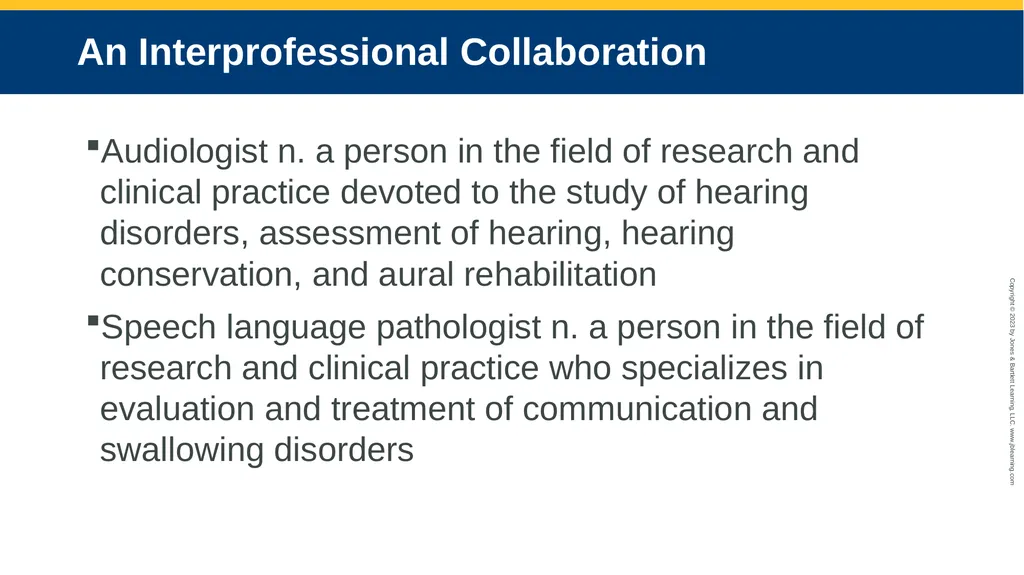
slide2. An Interprofessional Collaboration Audiologist n. a person in the field of research and clinical practice devoted to the study of hearing disorders, assessment of hearing, hearing conservation, and aural rehabilitation
Speech language pathologist n. a person in the field of research and clinical practice who specializes in evaluation and treatment of communication and swallowing disorders<br>
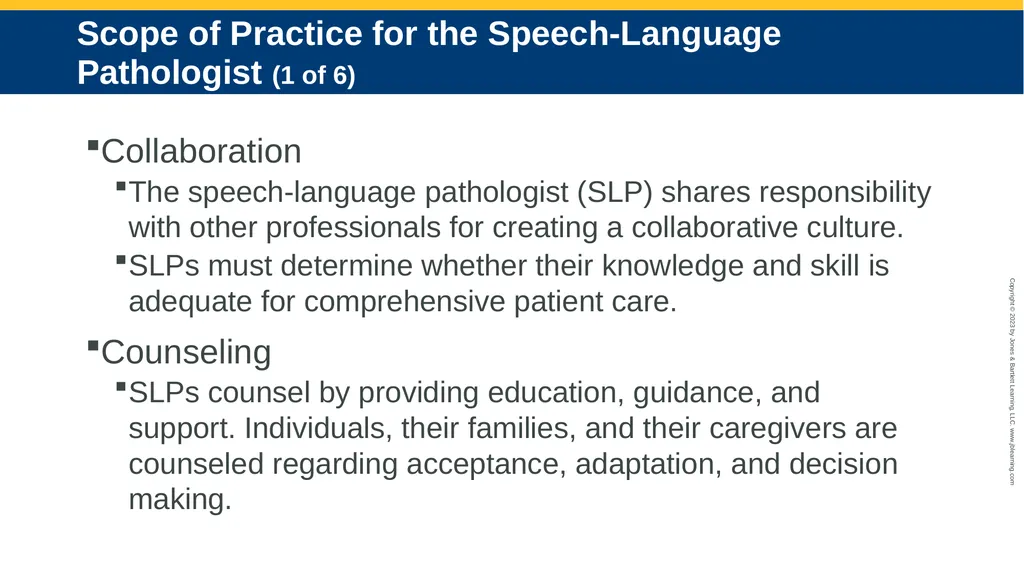
slide3. Scope of Practice for the Speech-Language Pathologist (1 of 6) Collaboration
The speech-language pathologist (SLP) shares responsibility with other professionals for creating a collaborative culture.
SLPs must determine whether their knowledge and skill is adequate for comprehensive patient care.
Counseling
SLPs counsel by providing education, guidance, and support. Individuals, their families, and their caregivers are counseled regarding acceptance, adaptation, and decision making.<br>
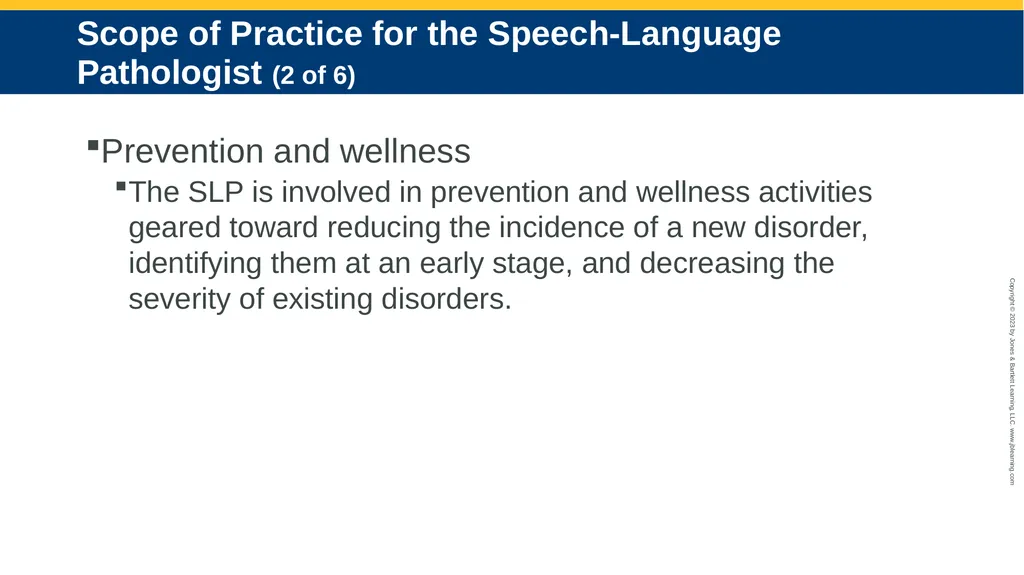
slide4. Scope of Practice for the Speech-Language Pathologist (2 of 6) Prevention and wellness
The SLP is involved in prevention and wellness activities geared toward reducing the incidence of a new disorder, identifying them at an early stage, and decreasing the severity of existing disorders.<br>
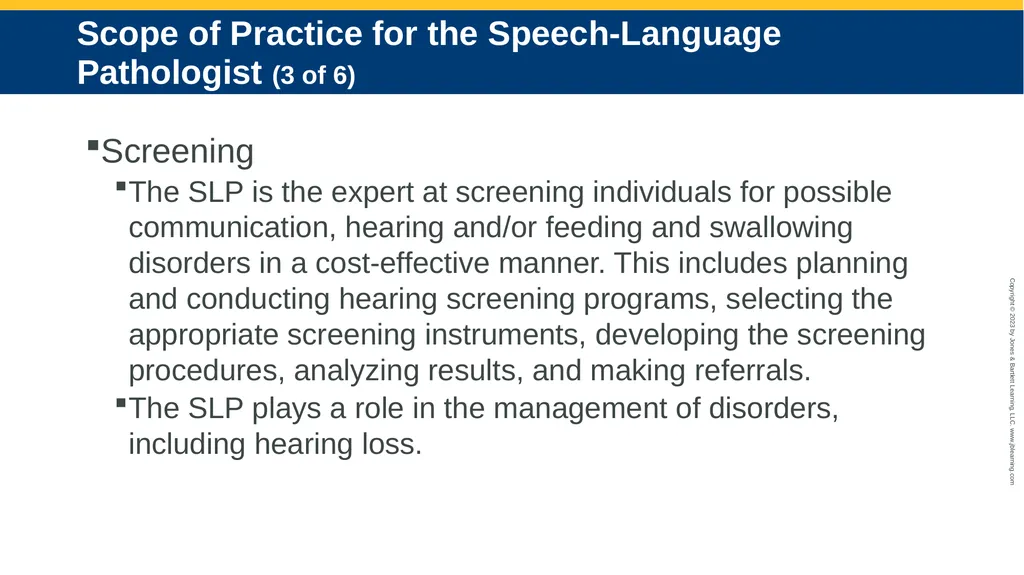
slide5. Scope of Practice for the Speech-Language Pathologist (3 of 6) Screening
The SLP is the expert at screening individuals for possible communication, hearing and/or feeding and swallowing disorders in a cost-effective manner. This includes planning and conducting hearing screening programs, selecting the appropriate screening instruments, developing the screening procedures, analyzing results, and making referrals.
The SLP plays a role in the management of disorders, including hearing loss.<br>
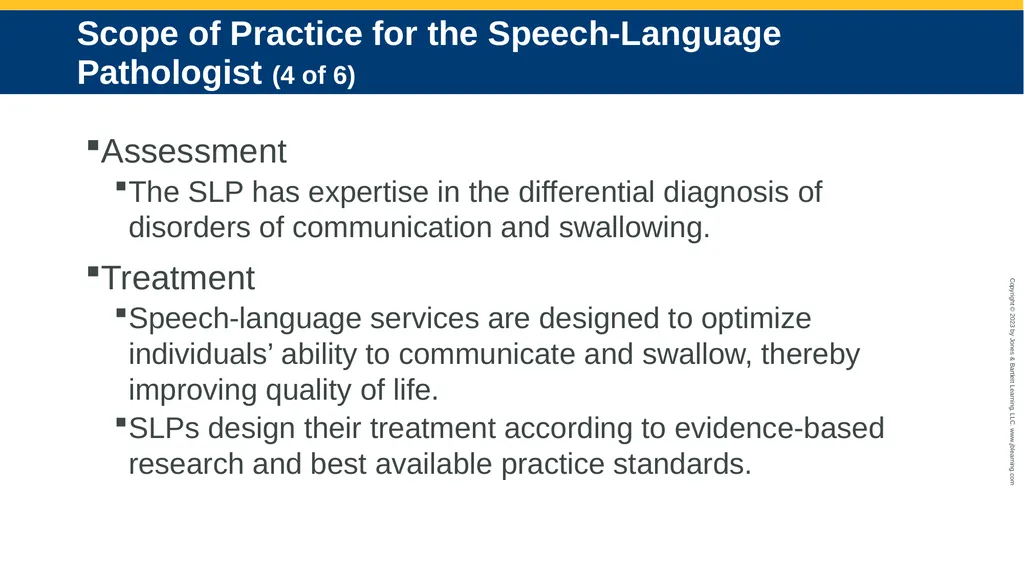
slide6. Scope of Practice for the Speech-Language Pathologist (4 of 6) Assessment
The SLP has expertise in the differential diagnosis of disorders of communication and swallowing.
Treatment
Speech-language services are designed to optimize individuals’ ability to communicate and swallow, thereby improving quality of life.
SLPs design their treatment according to evidence-based research and best available practice standards.<br>
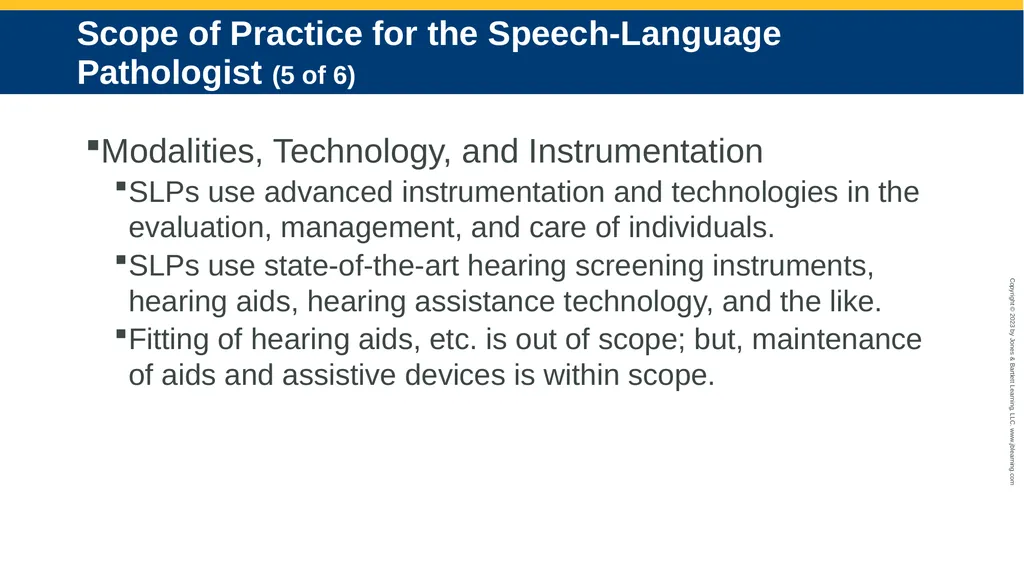
slide7. Scope of Practice for the Speech-Language Pathologist (5 of 6) Modalities, Technology, and Instrumentation
SLPs use advanced instrumentation and technologies in the evaluation, management, and care of individuals.
SLPs use state-of-the-art hearing screening instruments, hearing aids, hearing assistance technology, and the like.
Fitting of hearing aids, etc. is out of scope; but, maintenance of aids and assistive devices is within scope.<br>
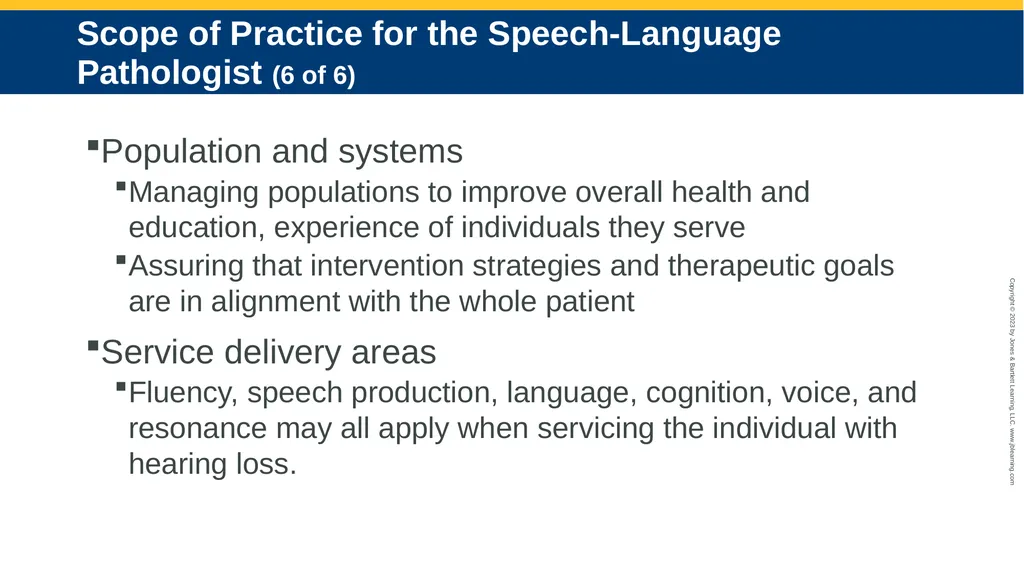
slide8. Scope of Practice for the Speech-Language Pathologist (6 of 6) Population and systems
Managing populations to improve overall health and education, experience of individuals they serve
Assuring that intervention strategies and therapeutic goals are in alignment with the whole patient
Service delivery areas
Fluency, speech production, language, cognition, voice, and resonance may all apply when servicing the individual with hearing loss.<br>
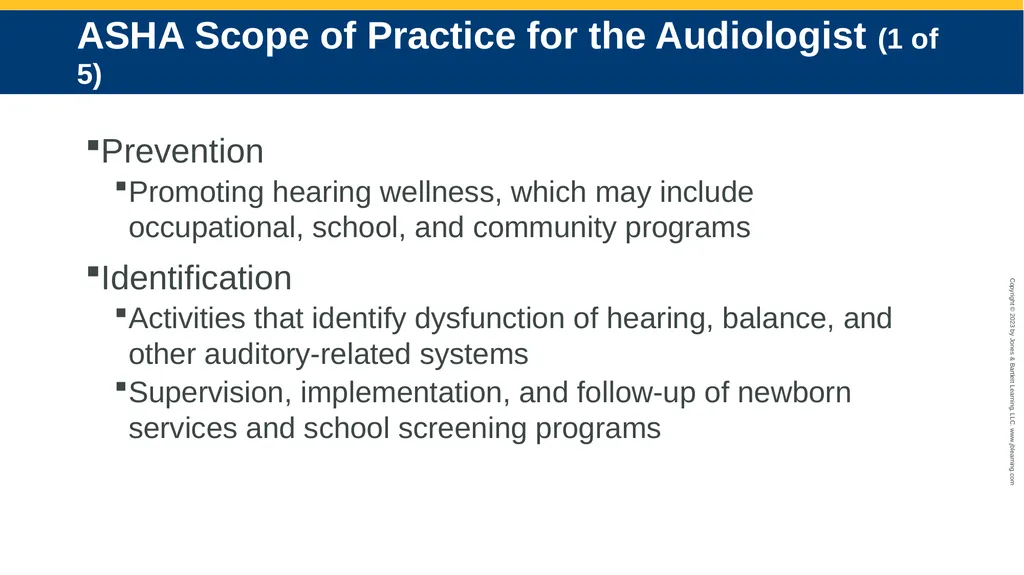
slide9. ASHA Scope of Practice for the Audiologist (1 of 5) Prevention
Promoting hearing wellness, which may include occupational, school, and community programs
Identification
Activities that identify dysfunction of hearing, balance, and other auditory-related systems
Supervision, implementation, and follow-up of newborn services and school screening programs<br>
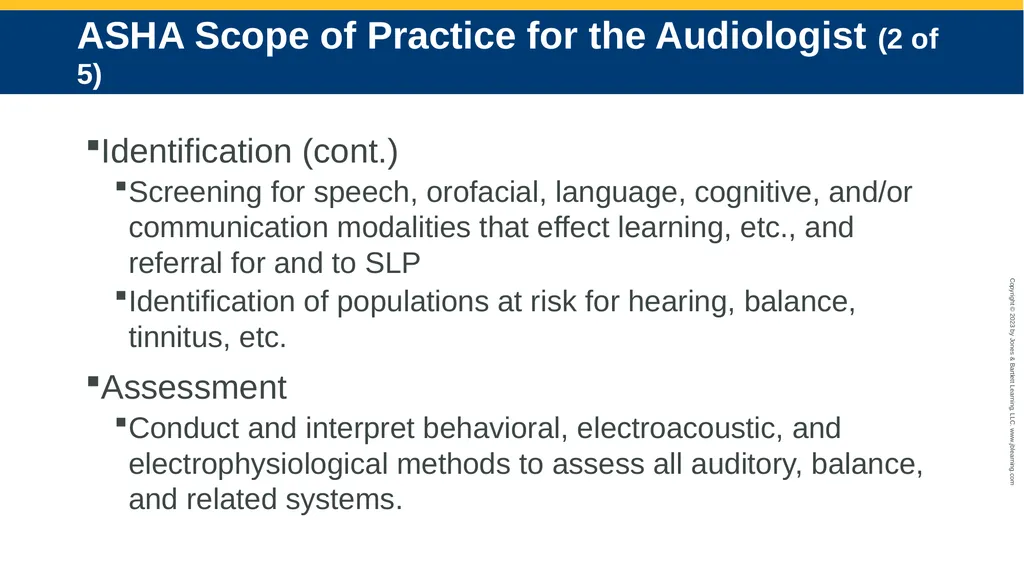
slide10. ASHA Scope of Practice for the Audiologist (2 of 5) Identification (cont.)
Screening for speech, orofacial, language, cognitive, and/or communication modalities that effect learning, etc., and referral for and to SLP
Identification of populations at risk for hearing, balance, tinnitus, etc.
Assessment
Conduct and interpret behavioral, electroacoustic, and electrophysiological methods to assess all auditory, balance, and related systems.<br>
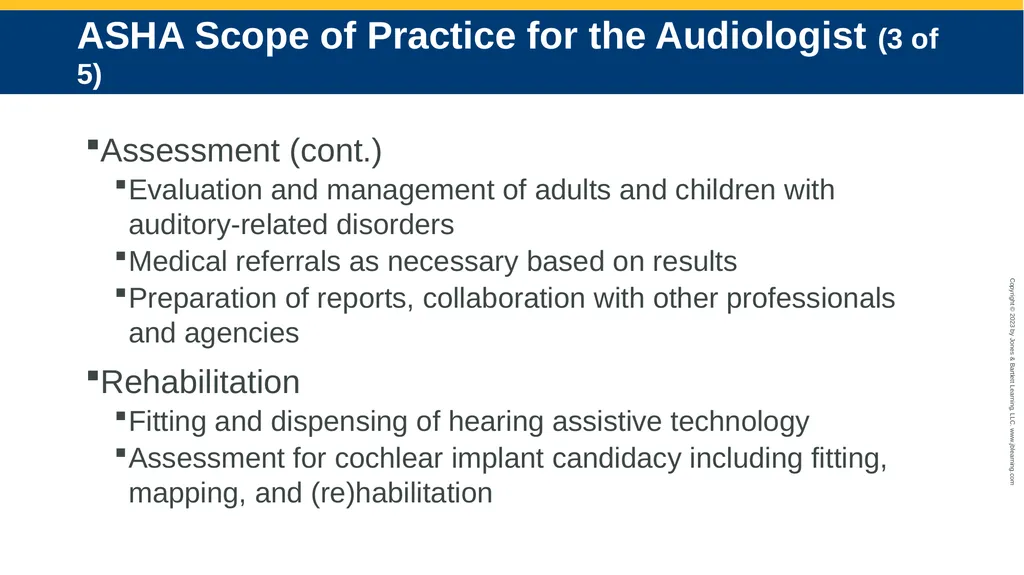
slide11. ASHA Scope of Practice for the Audiologist (3 of 5) Assessment (cont.)
Evaluation and management of adults and children with auditory-related disorders
Medical referrals as necessary based on results
Preparation of reports, collaboration with other professionals and agencies
Rehabilitation
Fitting and dispensing of hearing assistive technology
Assessment for cochlear implant candidacy including fitting, mapping, and (re)habilitation<br>
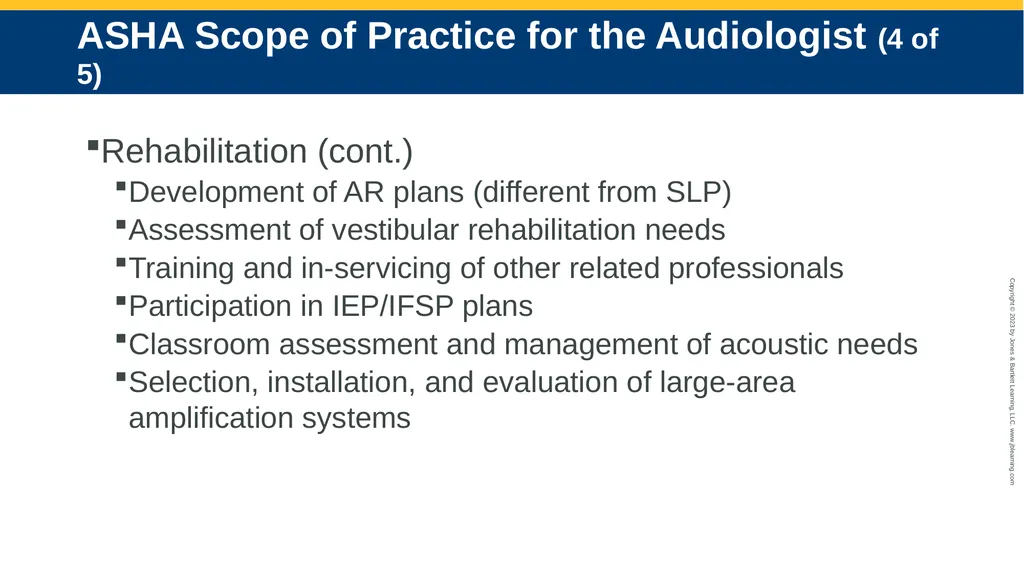
slide12. ASHA Scope of Practice for the Audiologist (4 of 5) Rehabilitation (cont.)
Development of AR plans (different from SLP)
Assessment of vestibular rehabilitation needs
Training and in-servicing of other related professionals
Participation in IEP/IFSP plans
Classroom assessment and management of acoustic needs
Selection, installation, and evaluation of large-area amplification systems<br>
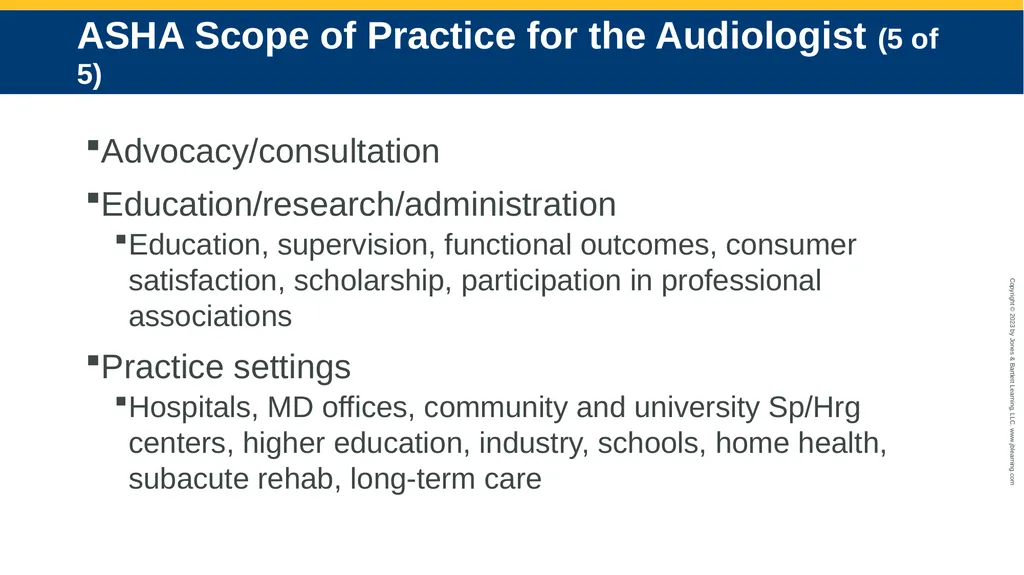
slide13. ASHA Scope of Practice for the Audiologist (5 of 5) Advocacy/consultation
Education/research/administration
Education, supervision, functional outcomes, consumer satisfaction, scholarship, participation in professional associations
Practice settings
Hospitals, MD offices, community and university Sp/Hrg centers, higher education, industry, schools, home health, subacute rehab, long-term care<br>
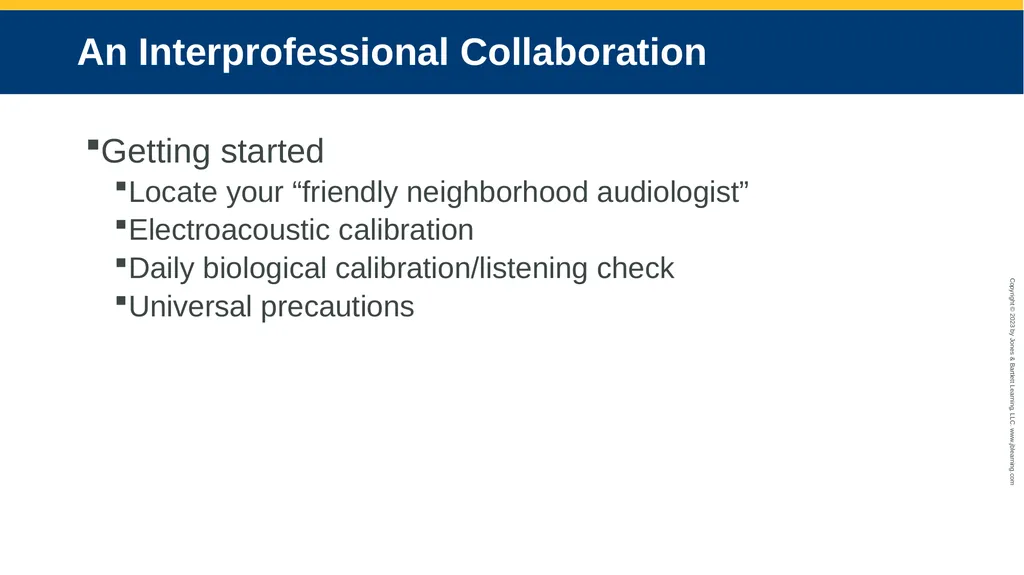
slide14. An Interprofessional Collaboration Getting started
Locate your “friendly neighborhood audiologist”
Electroacoustic calibration
Daily biological calibration/listening check
Universal precautions<br>
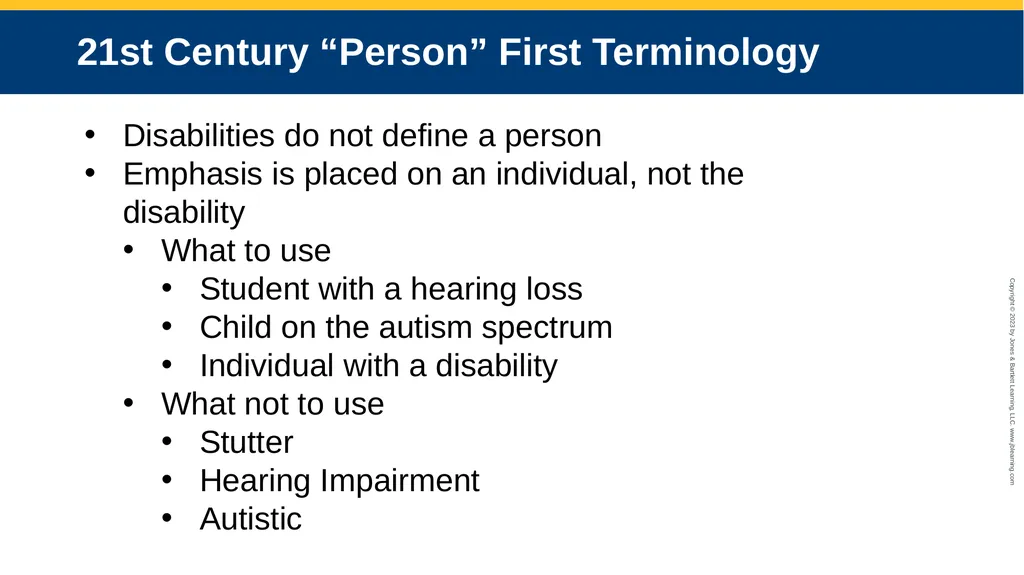
slide15. 21st Century “Person” First Terminology Disabilities do not define a person
Emphasis is placed on an individual, not the disability
What to use
Student with a hearing loss
Child on the autism spectrum
Individual with a disability
What not to use
Stutter
Hearing Impairment
Autistic<br>
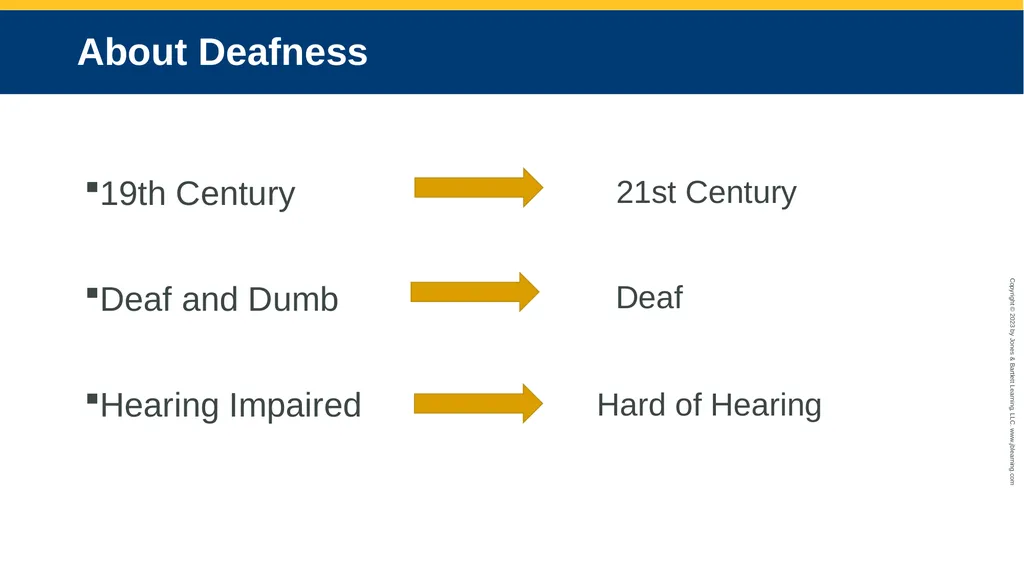
slide16. About Deafness 19th Century
Deaf and Dumb
Hearing Impaired 21st Century Deaf Hard of Hearing<br>
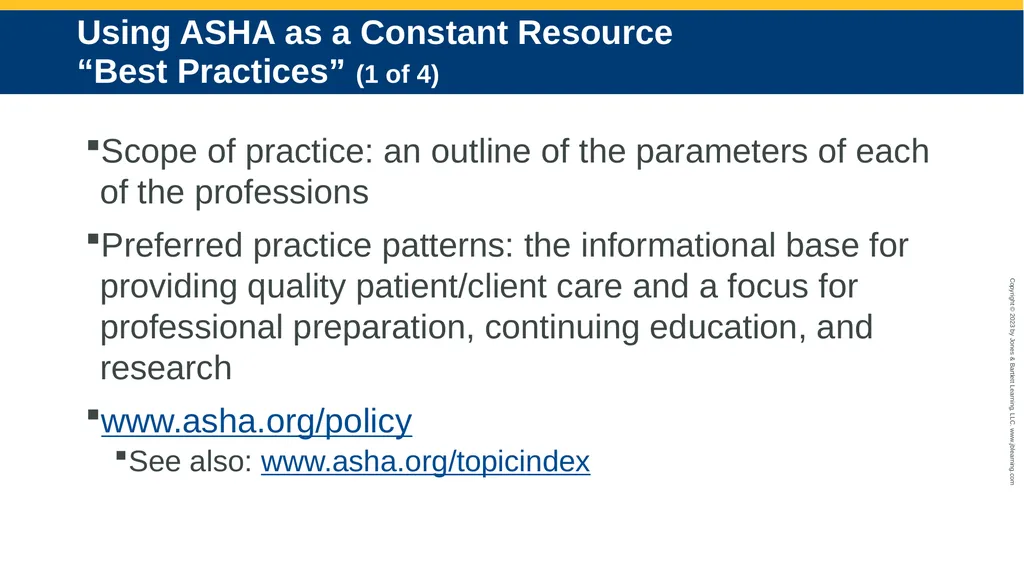
slide17. Using ASHA as a Constant Resource “Best Practices” (1 of 4) Scope of practice: an outline of the parameters of each of the professions
Preferred practice patterns: the informational base for providing quality patient/client care and a focus for professional preparation, continuing education, and research
www.asha.org/policy
See also: www.asha.org/topicindex<br>
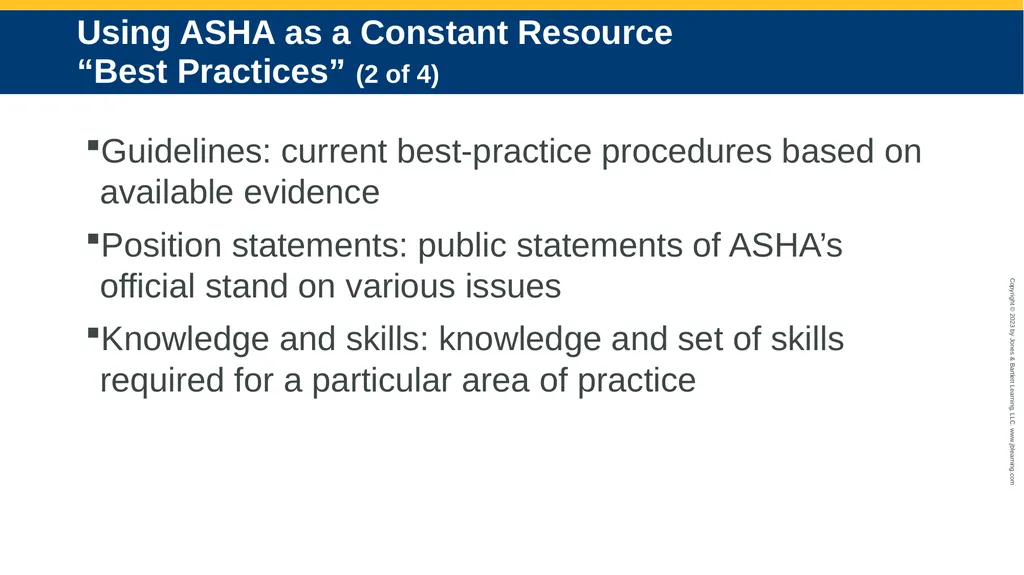
slide18. Using ASHA as a Constant Resource “Best Practices” (2 of 4) Guidelines: current best-practice procedures based on available evidence
Position statements: public statements of ASHA’s official stand on various issues
Knowledge and skills: knowledge and set of skills required for a particular area of practice<br>
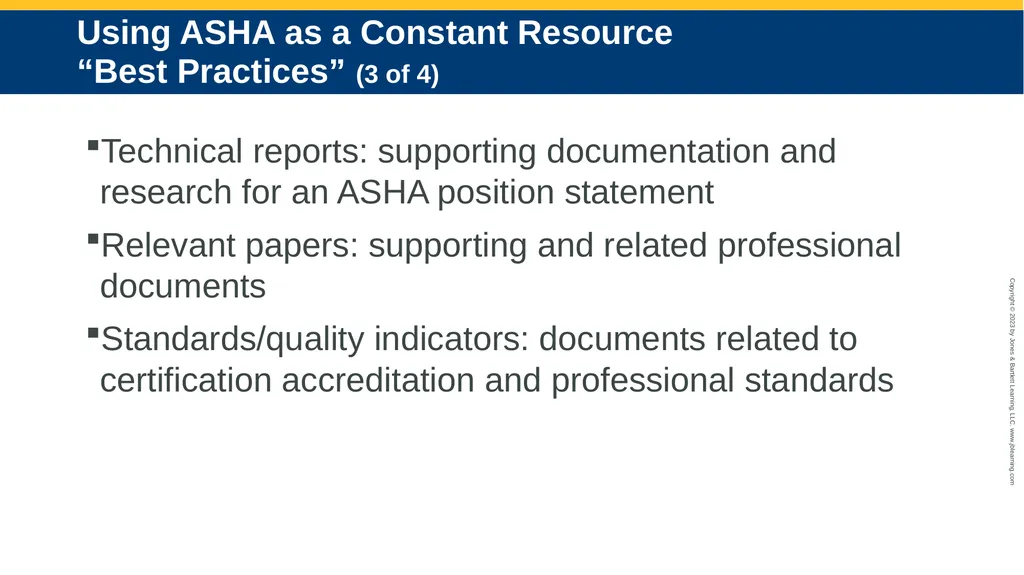
slide19. Using ASHA as a Constant Resource “Best Practices” (3 of 4) Technical reports: supporting documentation and research for an ASHA position statement
Relevant papers: supporting and related professional documents
Standards/quality indicators: documents related to certification accreditation and professional standards<br>
slide20. Using ASHA as a Constant Resource “Best Practices” (4 of 4) Ethics: includes the Code of Ethics (by which all members and certificate holders are bound) and supporting documents
Bylaws: bylaws of ASHA, the ASHFoundation, and the ASHA PAC
www.asha.org/policy (click on document types)<br>
slide2. An Interprofessional Collaboration Audiologist n. a person in the field of research and clinical practice devoted to the study of hearing disorders, assessment of hearing, hearing conservation, and aural rehabilitation
Speech language pathologist n. a person in the field of research and clinical practice who specializes in evaluation and treatment of communication and swallowing disorders<br>
slide3. Scope of Practice for the Speech-Language Pathologist (1 of 6) Collaboration
The speech-language pathologist (SLP) shares responsibility with other professionals for creating a collaborative culture.
SLPs must determine whether their knowledge and skill is adequate for comprehensive patient care.
Counseling
SLPs counsel by providing education, guidance, and support. Individuals, their families, and their caregivers are counseled regarding acceptance, adaptation, and decision making.<br>
slide4. Scope of Practice for the Speech-Language Pathologist (2 of 6) Prevention and wellness
The SLP is involved in prevention and wellness activities geared toward reducing the incidence of a new disorder, identifying them at an early stage, and decreasing the severity of existing disorders.<br>
slide5. Scope of Practice for the Speech-Language Pathologist (3 of 6) Screening
The SLP is the expert at screening individuals for possible communication, hearing and/or feeding and swallowing disorders in a cost-effective manner. This includes planning and conducting hearing screening programs, selecting the appropriate screening instruments, developing the screening procedures, analyzing results, and making referrals.
The SLP plays a role in the management of disorders, including hearing loss.<br>
slide6. Scope of Practice for the Speech-Language Pathologist (4 of 6) Assessment
The SLP has expertise in the differential diagnosis of disorders of communication and swallowing.
Treatment
Speech-language services are designed to optimize individuals’ ability to communicate and swallow, thereby improving quality of life.
SLPs design their treatment according to evidence-based research and best available practice standards.<br>
slide7. Scope of Practice for the Speech-Language Pathologist (5 of 6) Modalities, Technology, and Instrumentation
SLPs use advanced instrumentation and technologies in the evaluation, management, and care of individuals.
SLPs use state-of-the-art hearing screening instruments, hearing aids, hearing assistance technology, and the like.
Fitting of hearing aids, etc. is out of scope; but, maintenance of aids and assistive devices is within scope.<br>
slide8. Scope of Practice for the Speech-Language Pathologist (6 of 6) Population and systems
Managing populations to improve overall health and education, experience of individuals they serve
Assuring that intervention strategies and therapeutic goals are in alignment with the whole patient
Service delivery areas
Fluency, speech production, language, cognition, voice, and resonance may all apply when servicing the individual with hearing loss.<br>
slide9. ASHA Scope of Practice for the Audiologist (1 of 5) Prevention
Promoting hearing wellness, which may include occupational, school, and community programs
Identification
Activities that identify dysfunction of hearing, balance, and other auditory-related systems
Supervision, implementation, and follow-up of newborn services and school screening programs<br>
slide10. ASHA Scope of Practice for the Audiologist (2 of 5) Identification (cont.)
Screening for speech, orofacial, language, cognitive, and/or communication modalities that effect learning, etc., and referral for and to SLP
Identification of populations at risk for hearing, balance, tinnitus, etc.
Assessment
Conduct and interpret behavioral, electroacoustic, and electrophysiological methods to assess all auditory, balance, and related systems.<br>
slide11. ASHA Scope of Practice for the Audiologist (3 of 5) Assessment (cont.)
Evaluation and management of adults and children with auditory-related disorders
Medical referrals as necessary based on results
Preparation of reports, collaboration with other professionals and agencies
Rehabilitation
Fitting and dispensing of hearing assistive technology
Assessment for cochlear implant candidacy including fitting, mapping, and (re)habilitation<br>
slide12. ASHA Scope of Practice for the Audiologist (4 of 5) Rehabilitation (cont.)
Development of AR plans (different from SLP)
Assessment of vestibular rehabilitation needs
Training and in-servicing of other related professionals
Participation in IEP/IFSP plans
Classroom assessment and management of acoustic needs
Selection, installation, and evaluation of large-area amplification systems<br>
slide13. ASHA Scope of Practice for the Audiologist (5 of 5) Advocacy/consultation
Education/research/administration
Education, supervision, functional outcomes, consumer satisfaction, scholarship, participation in professional associations
Practice settings
Hospitals, MD offices, community and university Sp/Hrg centers, higher education, industry, schools, home health, subacute rehab, long-term care<br>
slide14. An Interprofessional Collaboration Getting started
Locate your “friendly neighborhood audiologist”
Electroacoustic calibration
Daily biological calibration/listening check
Universal precautions<br>
slide15. 21st Century “Person” First Terminology Disabilities do not define a person
Emphasis is placed on an individual, not the disability
What to use
Student with a hearing loss
Child on the autism spectrum
Individual with a disability
What not to use
Stutter
Hearing Impairment
Autistic<br>
slide16. About Deafness 19th Century
Deaf and Dumb
Hearing Impaired 21st Century Deaf Hard of Hearing<br>
slide17. Using ASHA as a Constant Resource “Best Practices” (1 of 4) Scope of practice: an outline of the parameters of each of the professions
Preferred practice patterns: the informational base for providing quality patient/client care and a focus for professional preparation, continuing education, and research
www.asha.org/policy
See also: www.asha.org/topicindex<br>
slide18. Using ASHA as a Constant Resource “Best Practices” (2 of 4) Guidelines: current best-practice procedures based on available evidence
Position statements: public statements of ASHA’s official stand on various issues
Knowledge and skills: knowledge and set of skills required for a particular area of practice<br>
slide19. Using ASHA as a Constant Resource “Best Practices” (3 of 4) Technical reports: supporting documentation and research for an ASHA position statement
Relevant papers: supporting and related professional documents
Standards/quality indicators: documents related to certification accreditation and professional standards<br>
slide20. Using ASHA as a Constant Resource “Best Practices” (4 of 4) Ethics: includes the Code of Ethics (by which all members and certificate holders are bound) and supporting documents
Bylaws: bylaws of ASHA, the ASHFoundation, and the ASHA PAC
www.asha.org/policy (click on document types)<br>