
The Teacher-Friendly Guide™ to Climate Change
Description: The Teacher-Friendly Guide to Climate Change Ingrid Zabel Don Duggan-Haas Paleontological Research Institution Authors: Ingrid Zabel Don Duggan-Haas Robert Ross Alexandra Moore Ben Brown-Steiner Reviewers: Ben Brown-Steiner Warren Allmon
Related Topics
Download Presentation
"The Teacher-Friendly Guide™ to Climate Change" is the property of its rightful owner. Permission is granted to download and print the materials on this website for personal, non-commercial use only, and to display it on your personal computer provided you do not modify the materials and that you retain all copyright notices contained in the materials. By downloading content from our website, you accept the terms of this agreement.
Presentation Transcript
slide1. The Teacher-Friendly Guide™ to Climate Change Ingrid Zabel
Don Duggan-Haas
Paleontological Research Institution<br>
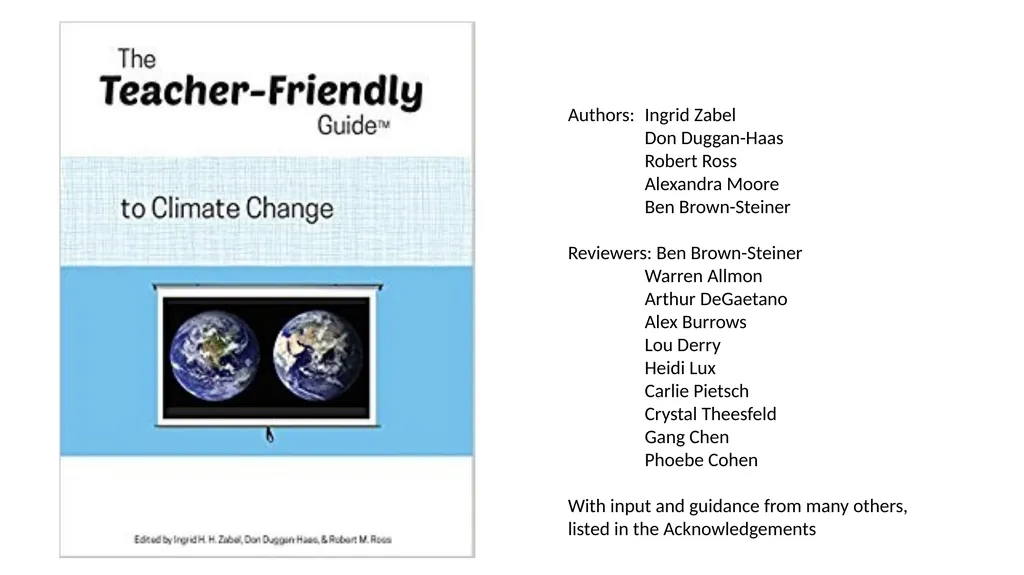
slide2. Authors: Ingrid Zabel
Don Duggan-Haas
Robert Ross
Alexandra Moore
Ben Brown-Steiner
Reviewers: Ben Brown-Steiner
Warren Allmon
Arthur DeGaetano
Alex Burrows
Lou Derry
Heidi Lux
Carlie Pietsch
Crystal Theesfeld
Gang Chen
Phoebe Cohen
With input and guidance from many others,
listed in the Acknowledgements<br>
slide4. Contents Why Teach About Climate Change?
What Should Everyone Understand About Climate Change and Energy?
What is Climate?
Climate Change Through Earth History
Evidence For and Causes of Recent Climate Change
US Regional Climates, Current and Future
Climate Change Mitigation
Geoengineering
Climate Change Adaptation
Obstacles to Addressing Climate Change
Perspective
Frequently Asked Questions<br>
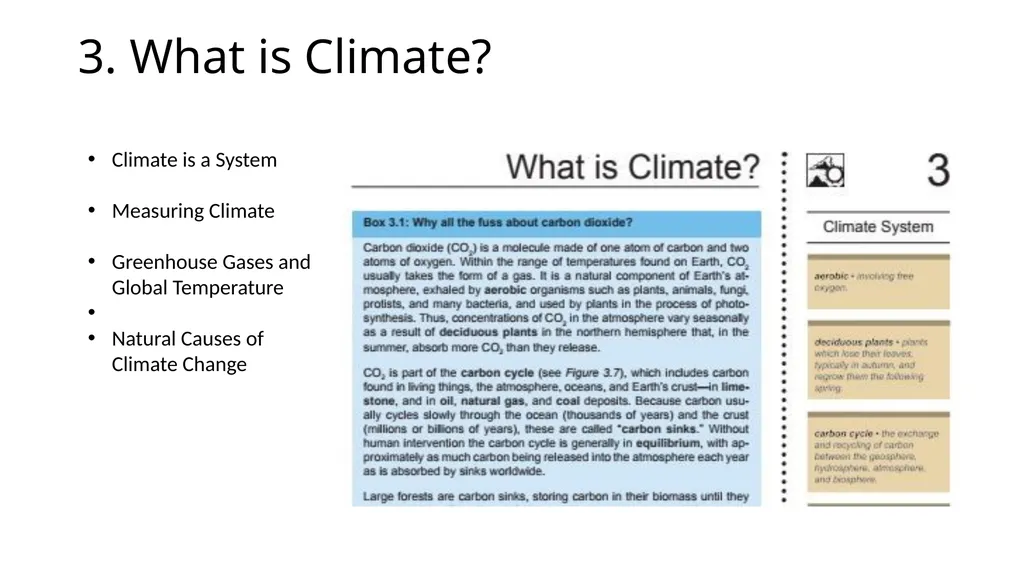
slide5. 3. What is Climate? Climate is a System
Measuring Climate
Greenhouse Gases and Global Temperature
Natural Causes of Climate Change<br>
slide6. 4.Climate Change Through Earth History Why Past Climate Change Matters
Observing Climate Through Time in the Rock Record
History of the Earth's Climate
Climate Analogs and Models “One answer is pedagogical: Though understanding ancient climates is not likely to be the most important thing for students to know about current climate change, it may help students see that climates can change, put the kinds of changes we see today into a historical perspective, and help students understand how researchers use paleoclimates to study our currently changing climate. The idea that the Earth’s climate could potentially change is an abstract concept that is outside the range of our personal experiences and was, until a couple hundred years ago, a radical idea.
Another answer is scientific and practical: Past climates help scientists understand how the Earth could change by understanding how the Earth has changed…There is no practical way to physically test hypotheses derived from [climate] models about the long-term rates of glacial retreat, changes in oceanic circulation, influences on organisms, and so on—we can’t recreate a global laboratory except in a computer simulation. Climate change events in Earth’s history, however, have performed some of the experiments for us.”<br>
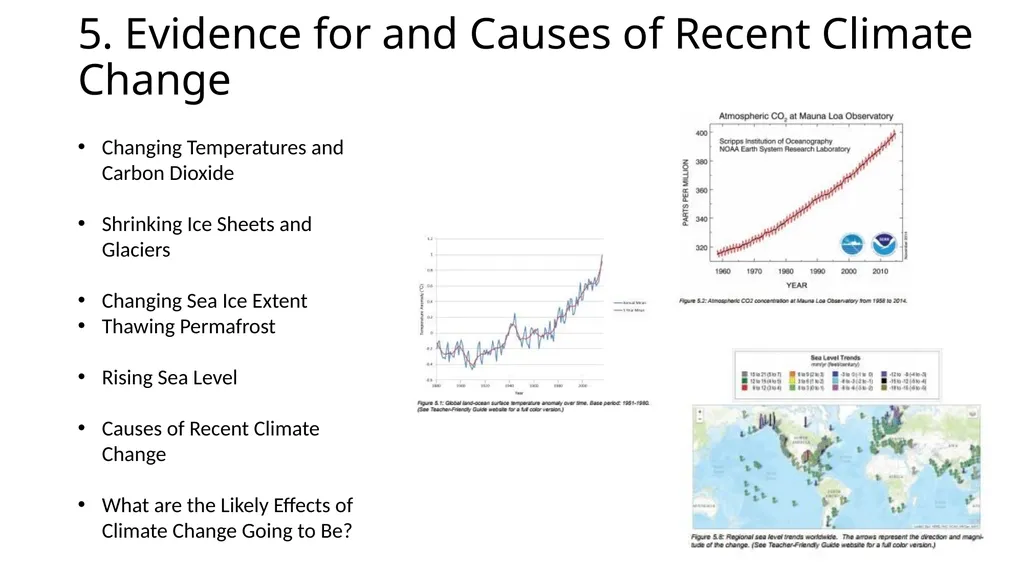
slide7. 5. Evidence for and Causes of Recent Climate Change Changing Temperatures and Carbon Dioxide
Shrinking Ice Sheets and Glaciers
Changing Sea Ice Extent
Thawing Permafrost
Rising Sea Level
Causes of Recent Climate Change
What are the Likely Effects of Climate Change Going to Be?<br>
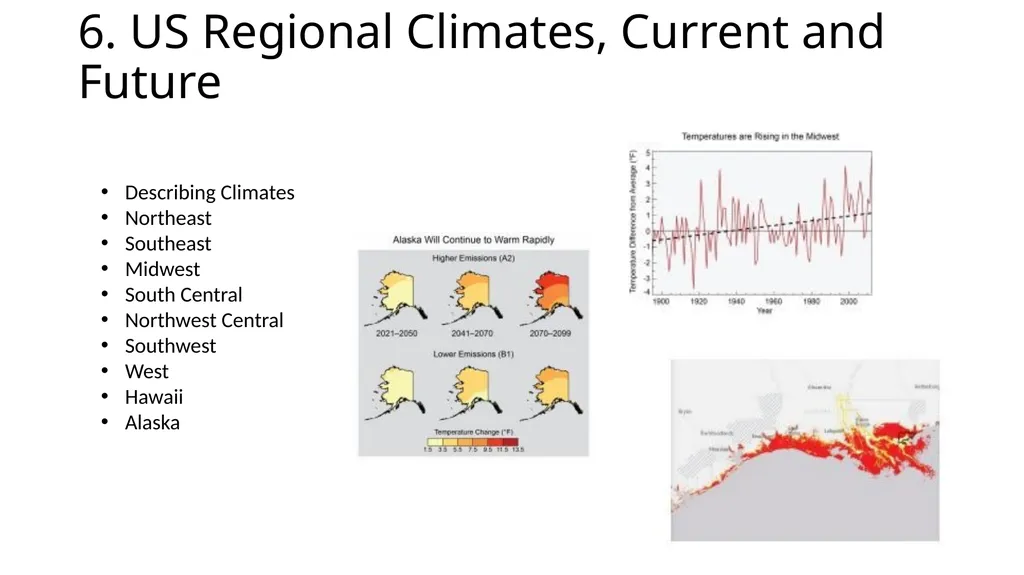
slide8. 6. US Regional Climates, Current and Future Describing Climates
Northeast
Southeast
Midwest
South Central
Northwest Central
Southwest
West
Hawaii
Alaska<br>
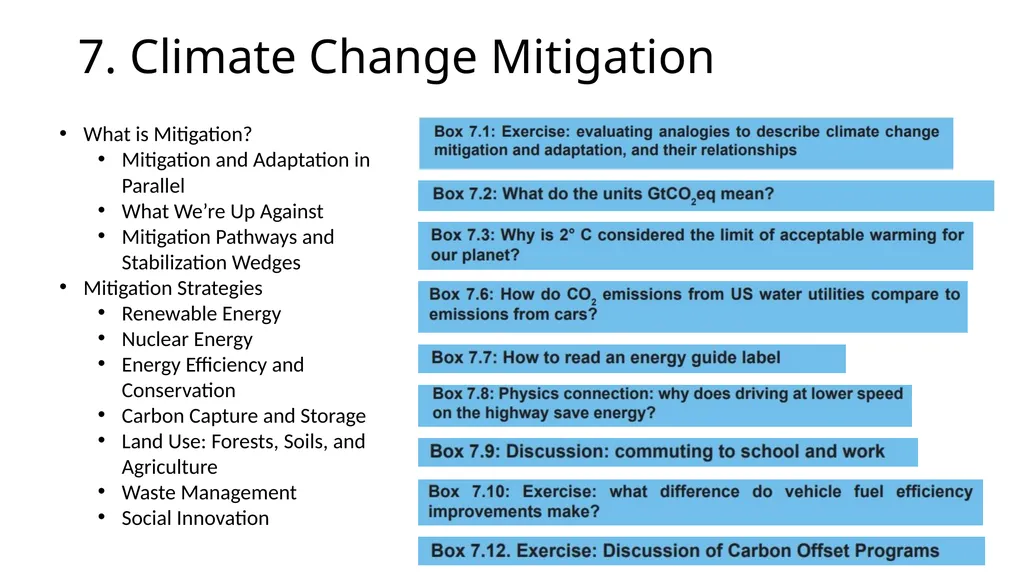
slide9. 7. Climate Change Mitigation What is Mitigation?
Mitigation and Adaptation in Parallel
What We’re Up Against
Mitigation Pathways and Stabilization Wedges
Mitigation Strategies
Renewable Energy
Nuclear Energy
Energy Efficiency and Conservation
Carbon Capture and Storage
Land Use: Forests, Soils, and Agriculture
Waste Management
Social Innovation<br>
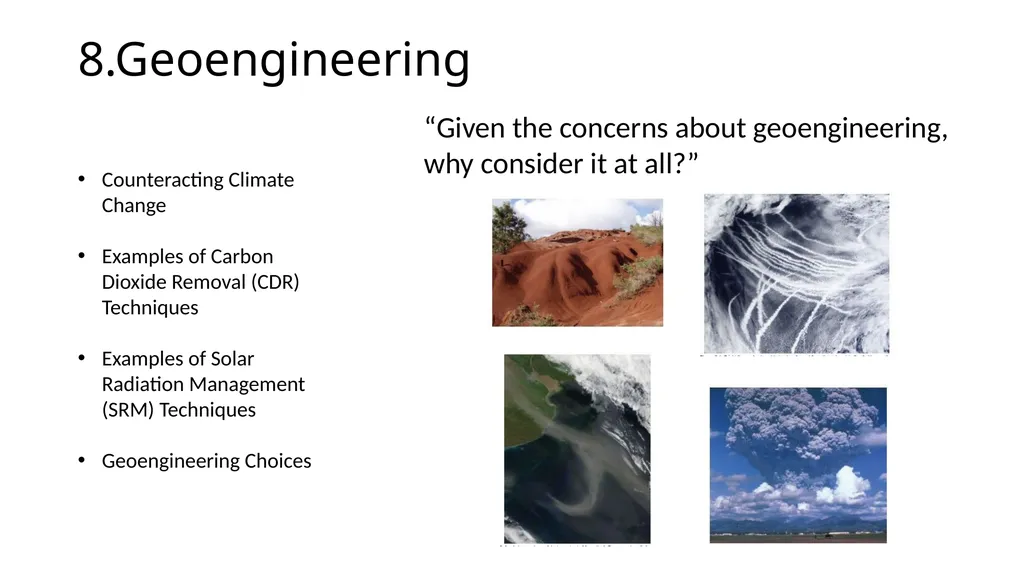
slide10. 8.Geoengineering Counteracting Climate Change
Examples of Carbon Dioxide Removal (CDR) Techniques
Examples of Solar Radiation Management (SRM) Techniques
Geoengineering Choices “Given the concerns about geoengineering, why consider it at all?”<br>
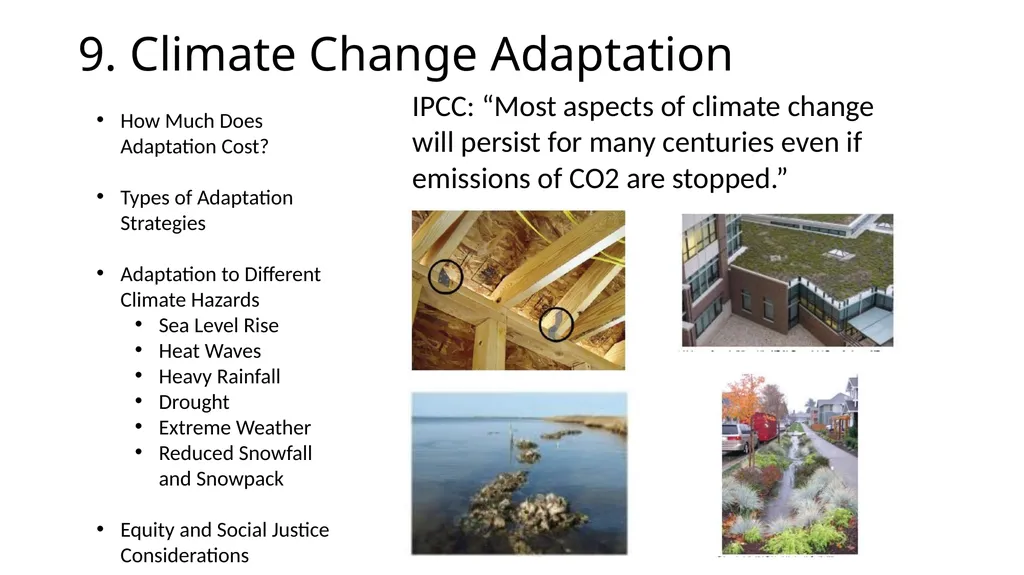
slide11. 9. Climate Change Adaptation How Much Does Adaptation Cost?
Types of Adaptation Strategies
Adaptation to Different Climate Hazards
Sea Level Rise
Heat Waves
Heavy Rainfall
Drought
Extreme Weather
Reduced Snowfall and Snowpack
Equity and Social Justice Considerations IPCC: “Most aspects of climate change will persist for many centuries even if emissions of CO2 are stopped.”<br>
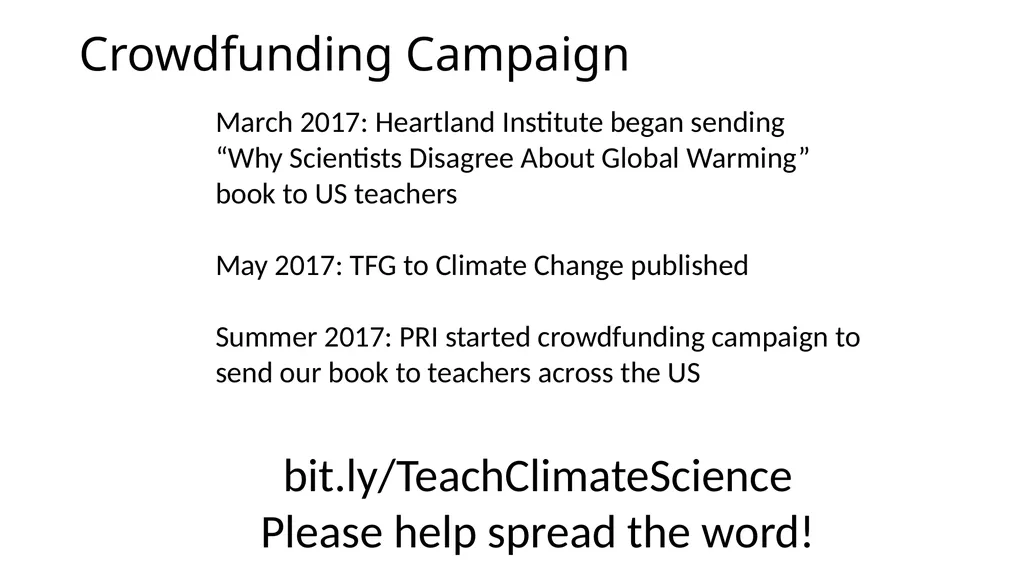
slide12. Crowdfunding Campaign March 2017: Heartland Institute began sending
“Why Scientists Disagree About Global Warming”
book to US teachers
May 2017: TFG to Climate Change published
Summer 2017: PRI started crowdfunding campaign to
send our book to teachers across the US
bit.ly/TeachClimateScience
Please help spread the word!<br>
Don Duggan-Haas
Paleontological Research Institution<br>
slide2. Authors: Ingrid Zabel
Don Duggan-Haas
Robert Ross
Alexandra Moore
Ben Brown-Steiner
Reviewers: Ben Brown-Steiner
Warren Allmon
Arthur DeGaetano
Alex Burrows
Lou Derry
Heidi Lux
Carlie Pietsch
Crystal Theesfeld
Gang Chen
Phoebe Cohen
With input and guidance from many others,
listed in the Acknowledgements<br>
slide4. Contents Why Teach About Climate Change?
What Should Everyone Understand About Climate Change and Energy?
What is Climate?
Climate Change Through Earth History
Evidence For and Causes of Recent Climate Change
US Regional Climates, Current and Future
Climate Change Mitigation
Geoengineering
Climate Change Adaptation
Obstacles to Addressing Climate Change
Perspective
Frequently Asked Questions<br>
slide5. 3. What is Climate? Climate is a System
Measuring Climate
Greenhouse Gases and Global Temperature
Natural Causes of Climate Change<br>
slide6. 4.Climate Change Through Earth History Why Past Climate Change Matters
Observing Climate Through Time in the Rock Record
History of the Earth's Climate
Climate Analogs and Models “One answer is pedagogical: Though understanding ancient climates is not likely to be the most important thing for students to know about current climate change, it may help students see that climates can change, put the kinds of changes we see today into a historical perspective, and help students understand how researchers use paleoclimates to study our currently changing climate. The idea that the Earth’s climate could potentially change is an abstract concept that is outside the range of our personal experiences and was, until a couple hundred years ago, a radical idea.
Another answer is scientific and practical: Past climates help scientists understand how the Earth could change by understanding how the Earth has changed…There is no practical way to physically test hypotheses derived from [climate] models about the long-term rates of glacial retreat, changes in oceanic circulation, influences on organisms, and so on—we can’t recreate a global laboratory except in a computer simulation. Climate change events in Earth’s history, however, have performed some of the experiments for us.”<br>
slide7. 5. Evidence for and Causes of Recent Climate Change Changing Temperatures and Carbon Dioxide
Shrinking Ice Sheets and Glaciers
Changing Sea Ice Extent
Thawing Permafrost
Rising Sea Level
Causes of Recent Climate Change
What are the Likely Effects of Climate Change Going to Be?<br>
slide8. 6. US Regional Climates, Current and Future Describing Climates
Northeast
Southeast
Midwest
South Central
Northwest Central
Southwest
West
Hawaii
Alaska<br>
slide9. 7. Climate Change Mitigation What is Mitigation?
Mitigation and Adaptation in Parallel
What We’re Up Against
Mitigation Pathways and Stabilization Wedges
Mitigation Strategies
Renewable Energy
Nuclear Energy
Energy Efficiency and Conservation
Carbon Capture and Storage
Land Use: Forests, Soils, and Agriculture
Waste Management
Social Innovation<br>
slide10. 8.Geoengineering Counteracting Climate Change
Examples of Carbon Dioxide Removal (CDR) Techniques
Examples of Solar Radiation Management (SRM) Techniques
Geoengineering Choices “Given the concerns about geoengineering, why consider it at all?”<br>
slide11. 9. Climate Change Adaptation How Much Does Adaptation Cost?
Types of Adaptation Strategies
Adaptation to Different Climate Hazards
Sea Level Rise
Heat Waves
Heavy Rainfall
Drought
Extreme Weather
Reduced Snowfall and Snowpack
Equity and Social Justice Considerations IPCC: “Most aspects of climate change will persist for many centuries even if emissions of CO2 are stopped.”<br>
slide12. Crowdfunding Campaign March 2017: Heartland Institute began sending
“Why Scientists Disagree About Global Warming”
book to US teachers
May 2017: TFG to Climate Change published
Summer 2017: PRI started crowdfunding campaign to
send our book to teachers across the US
bit.ly/TeachClimateScience
Please help spread the word!<br>