The western desert Chapter 4 9320XX Presentation Title 2 The land to the west of the Aravalli hills, in Rajasthan, is rocky and sandy. This is the great Indian desert, also known as the thar desert. It stretches from the rann of Kachchh
"The western desert Chapter – 4 9/3/20XX" is the property of its rightful owner. Permission is granted to
download and print the materials on this website for personal, non-commercial use only, and to display it
on your personal computer provided you do not modify the materials and that you retain all copyright
notices contained in the materials. By downloading content from our website, you accept the terms of this
agreement.
Presentation Transcript
01
The western desert Chapter – 4<br>
02
9/3/20XX Presentation Title 2<br>
03
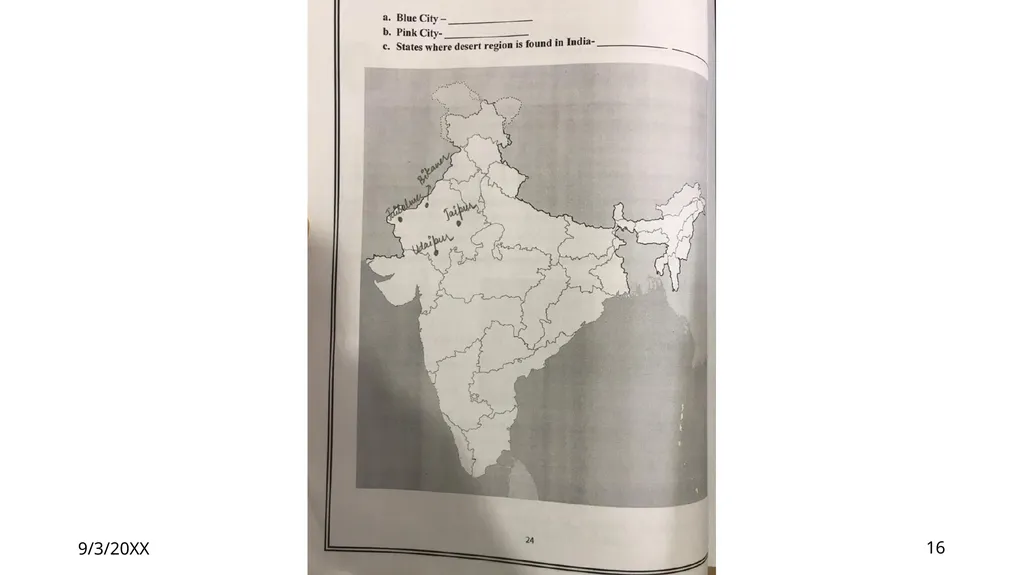
The land to the west of the Aravalli hills, in Rajasthan, is rocky and sandy. This is the great Indian desert, also known as the thar desert. It stretches from the rann of Kachchh in Gujarat through Rajasthan to the borders of Haryana. The Western Desert 3<br>
04
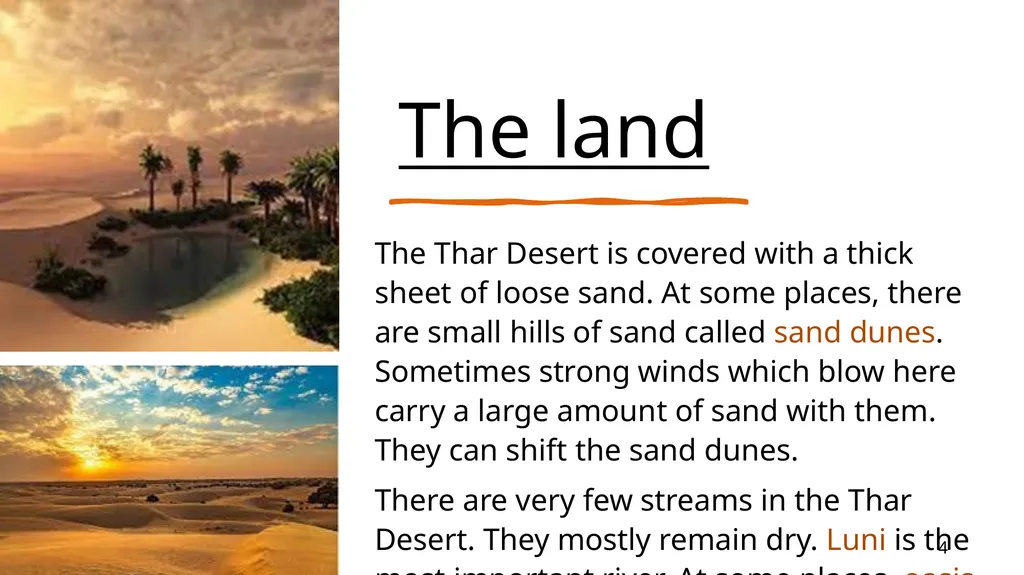
The land The Thar Desert is covered with a thick sheet of loose sand. At some places, there are small hills of sand called sand dunes. Sometimes strong winds which blow here carry a large amount of sand with them. They can shift the sand dunes.
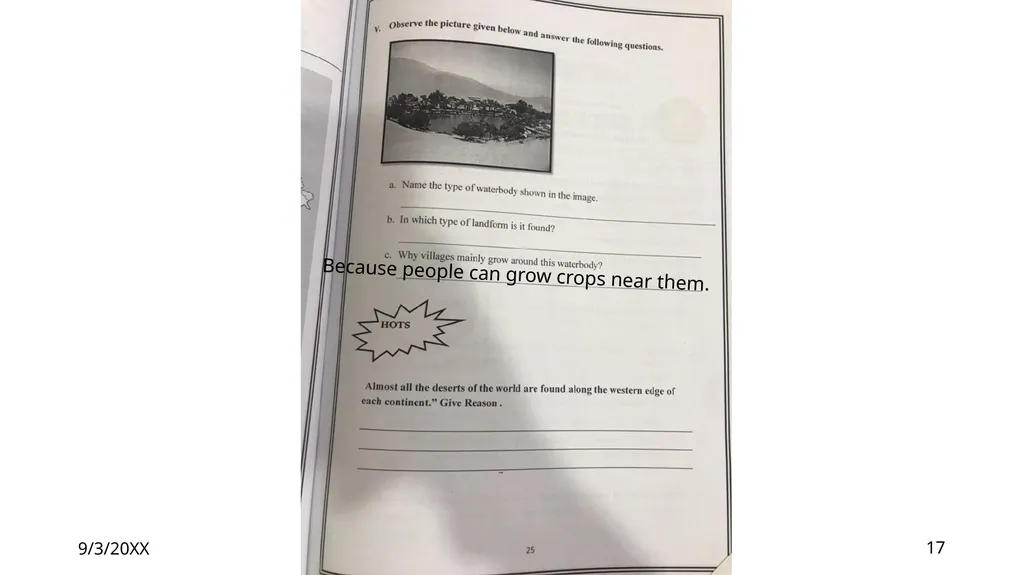
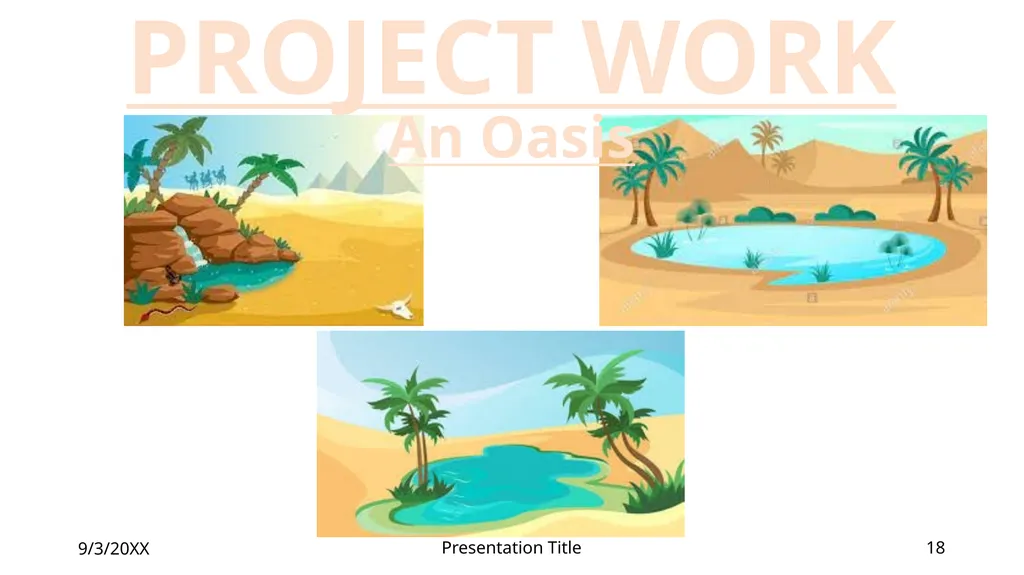
There are very few streams in the Thar Desert. They mostly remain dry. Luni is the most important river. At some places, oasis are found. The land around an oasis is fertile. People grow crops here. Thus, most villages are situated around an oasis. 4<br>
05
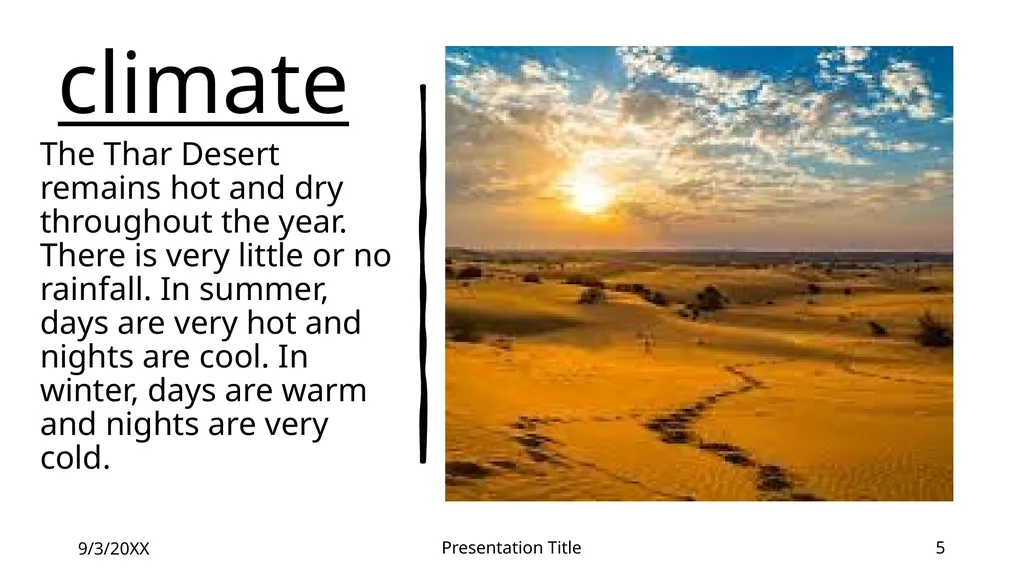
climate The Thar Desert remains hot and dry throughout the year. There is very little or no rainfall. In summer, days are very hot and nights are cool. In winter, days are warm and nights are very cold. 9/3/20XX Presentation Title 5<br>
06
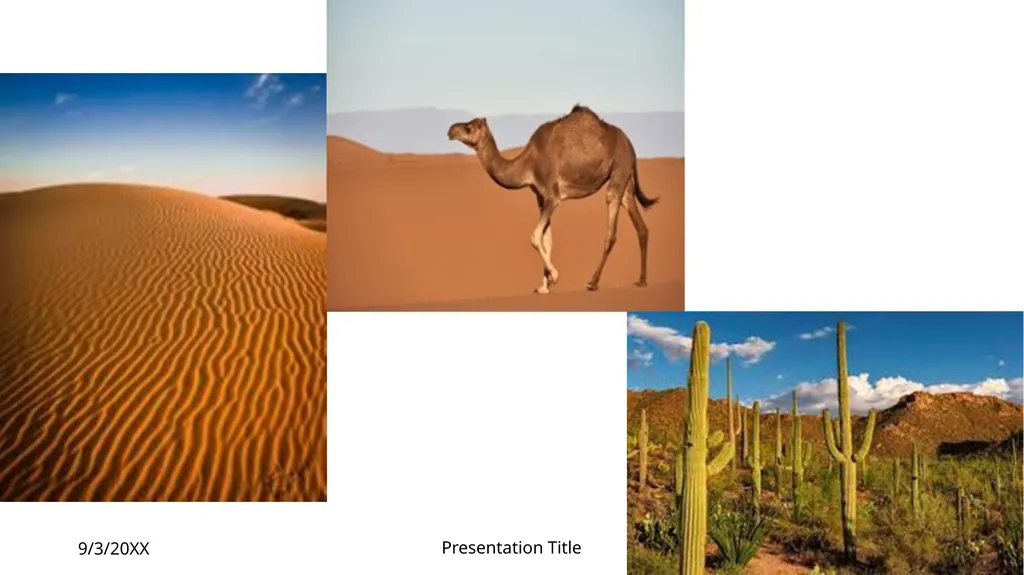
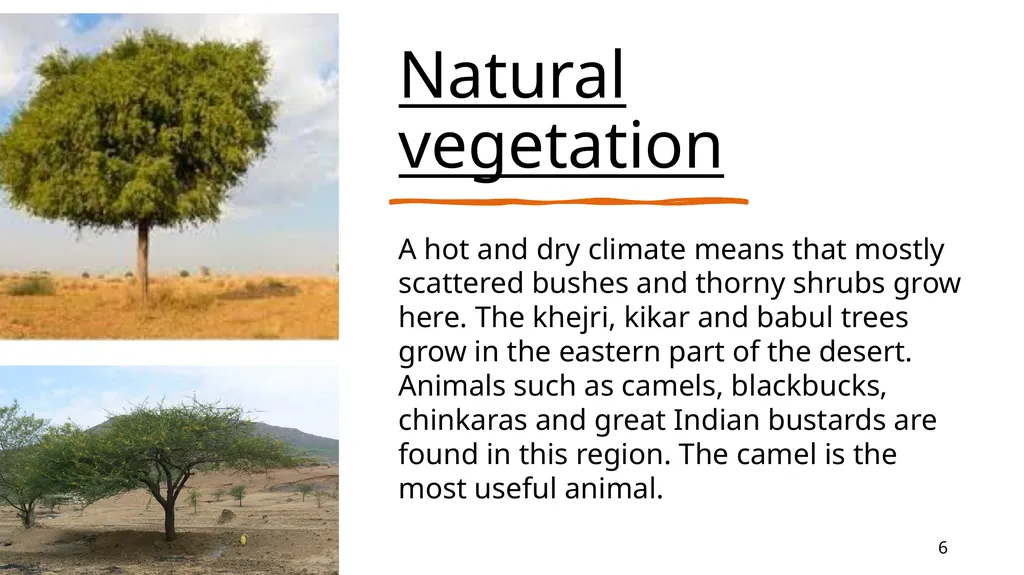
Natural vegetation A hot and dry climate means that mostly scattered bushes and thorny shrubs grow here. The khejri, kikar and babul trees grow in the eastern part of the desert. Animals such as camels, blackbucks, chinkaras and great Indian bustards are found in this region. The camel is the most useful animal. 6<br>
07
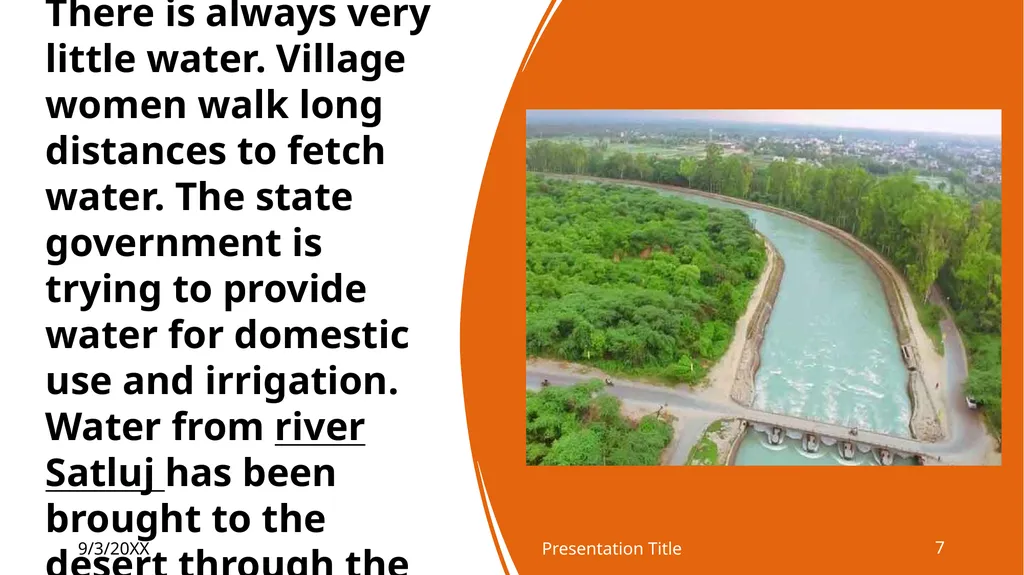
WATER SUPPLY There is always very little water. Village women walk long distances to fetch water. The state government is trying to provide water for domestic use and irrigation. Water from river Satluj has been brought to the desert through the Indira Gandhi Canal. Farmers can thus grow wheat, mustard and cotton. 9/3/20XX Presentation Title 7<br>
08
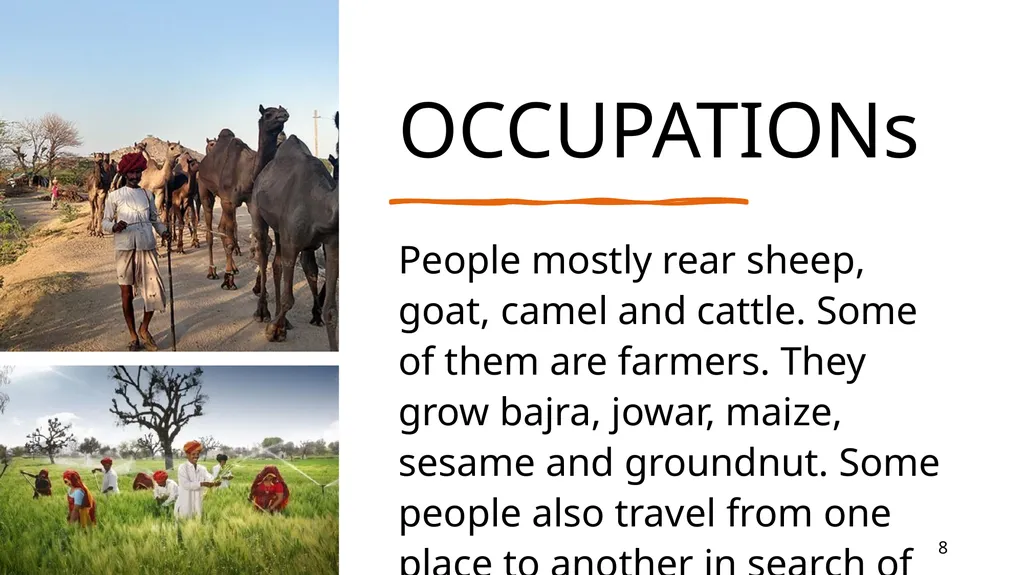
OCCUPATIONs People mostly rear sheep, goat, camel and cattle. Some of them are farmers. They grow bajra, jowar, maize, sesame and groundnut. Some people also travel from one place to another in search of food for themselves and their animals. Such people are called banjaras. Life in the Thar Desert is thus very hard. 8<br>
09
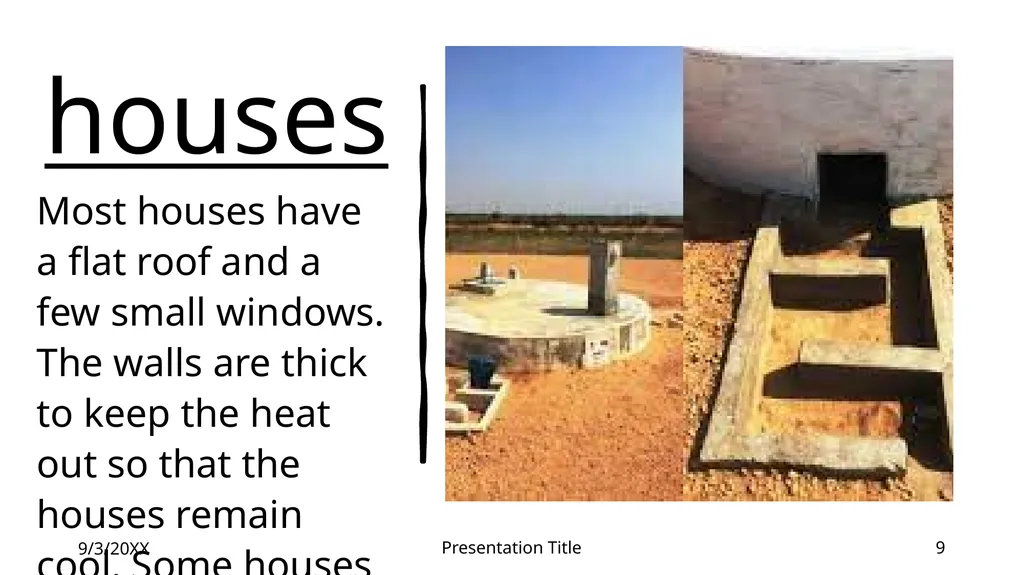
houses Most houses have a flat roof and a few small windows. The walls are thick to keep the heat out so that the houses remain cool. Some houses have underground tanks to store rainwater. Such tanks are called taankas. 9/3/20XX Presentation Title 9<br>
10
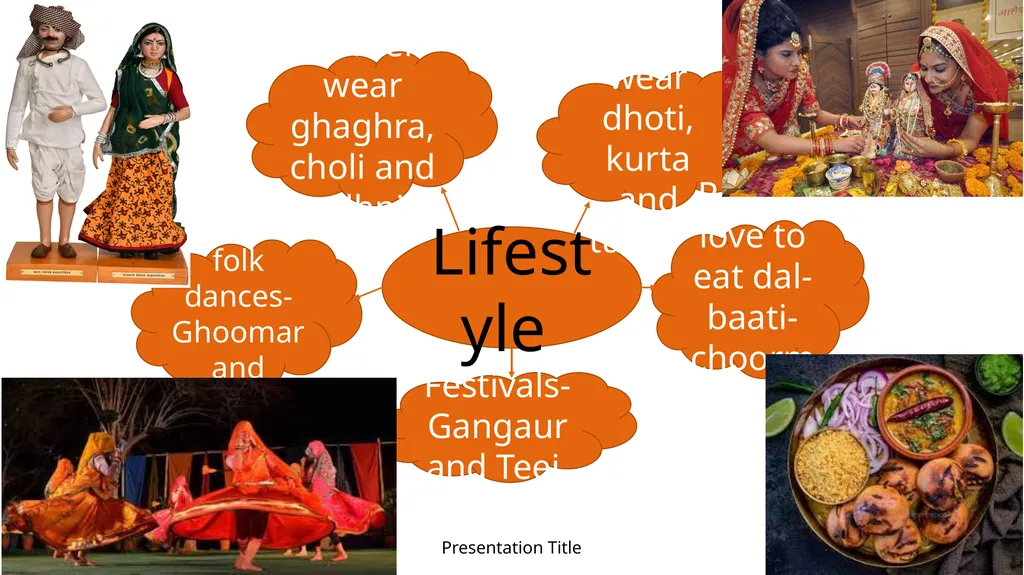
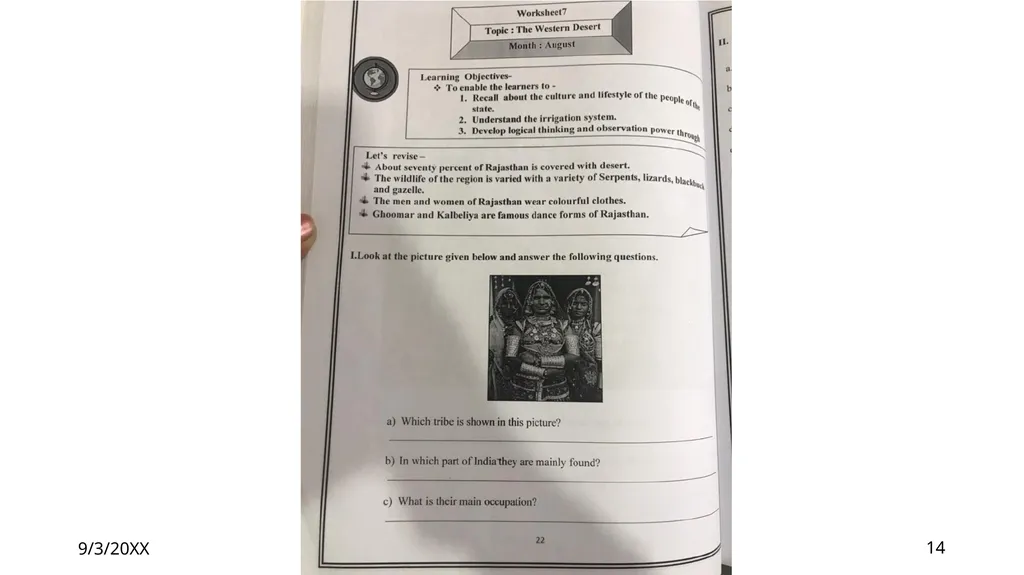
9/3/20XX Presentation Title 10 Lifestyle Men wear dhoti, kurta and turban. Women wear ghaghra, choli and odhni. Popular folk dances- Ghoomar and Kalbeliya Festivals- Gangaur and Teej People love to eat dal-baati-choorma.<br>
11
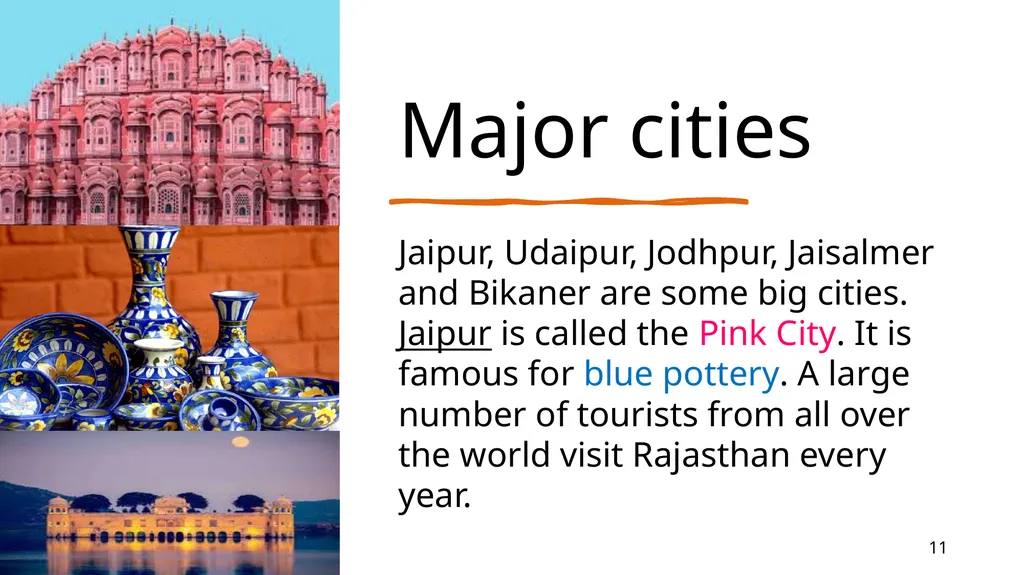
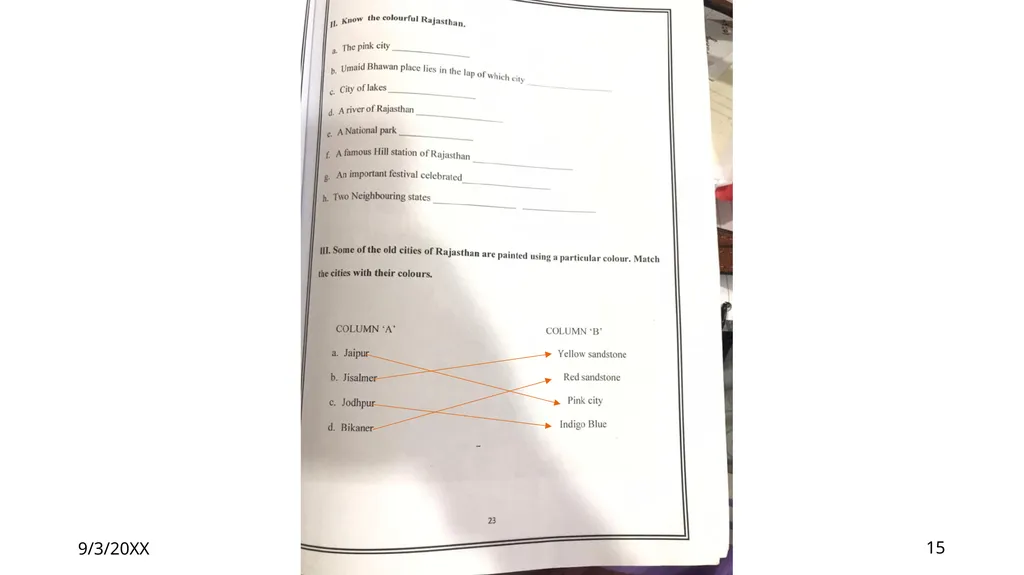
Major cities Jaipur, Udaipur, Jodhpur, Jaisalmer and Bikaner are some big cities. Jaipur is called the Pink City. It is famous for blue pottery. A large number of tourists from all over the world visit Rajasthan every year. 11<br>
12
9/3/20XX Presentation Title 12<br>
13
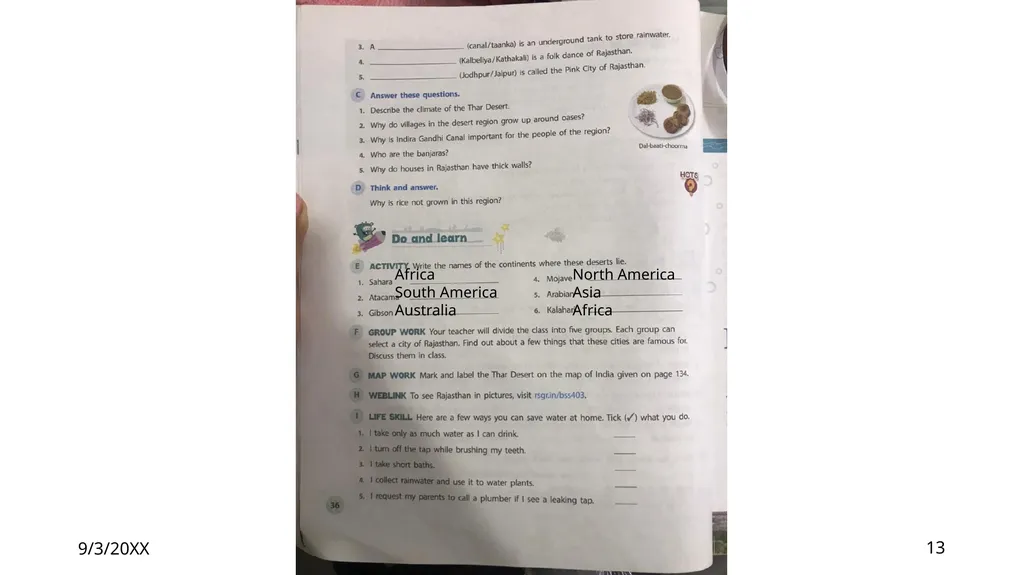
9/3/20XX Presentation Title 13 Africa
South America
Australia North America
Asia
Africa<br>
14
9/3/20XX Presentation Title 14<br>
15
9/3/20XX Presentation Title 15<br>
16
9/3/20XX Presentation Title 16<br>
17
9/3/20XX Presentation Title 17 Because people can grow crops near them.<br>
18
9/3/20XX Presentation Title 18 PROJECT WORK An Oasis<br>