
Theorising educational research The application of







Description: Theorising educational research The application of habitus in academic practice First step Know your field of research well! Read! Read! Read! And question! Looking at the change of scholarly practices with technology Find a focus Digital
Related Topics
Download Presentation
"Theorising educational research The application of" is the property of its rightful owner. Permission is granted to download and print the materials on this website for personal, non-commercial use only, and to display it on your personal computer provided you do not modify the materials and that you retain all copyright notices contained in the materials. By downloading content from our website, you accept the terms of this agreement.
Presentation Transcript
slide1. Theorising educational research The application of habitus in academic practice<br>
slide2. First step Know your field of research well!
Read! Read! Read! And question!<br>
slide3. Looking at the change of scholarly practices with technology Find a focus<br>
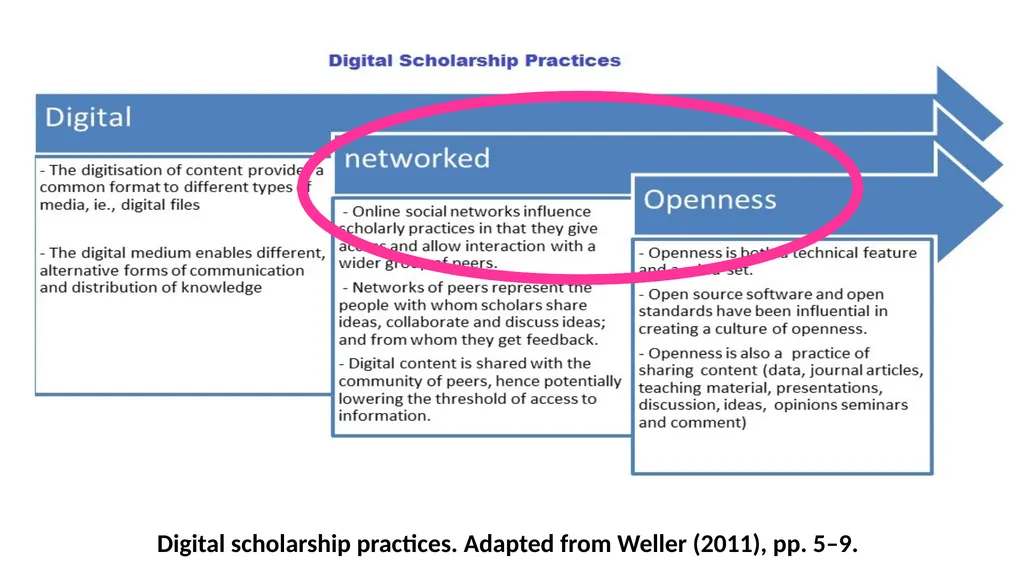
slide4. Digital scholarship practices. Adapted from Weller (2011), pp. 5–9.<br>
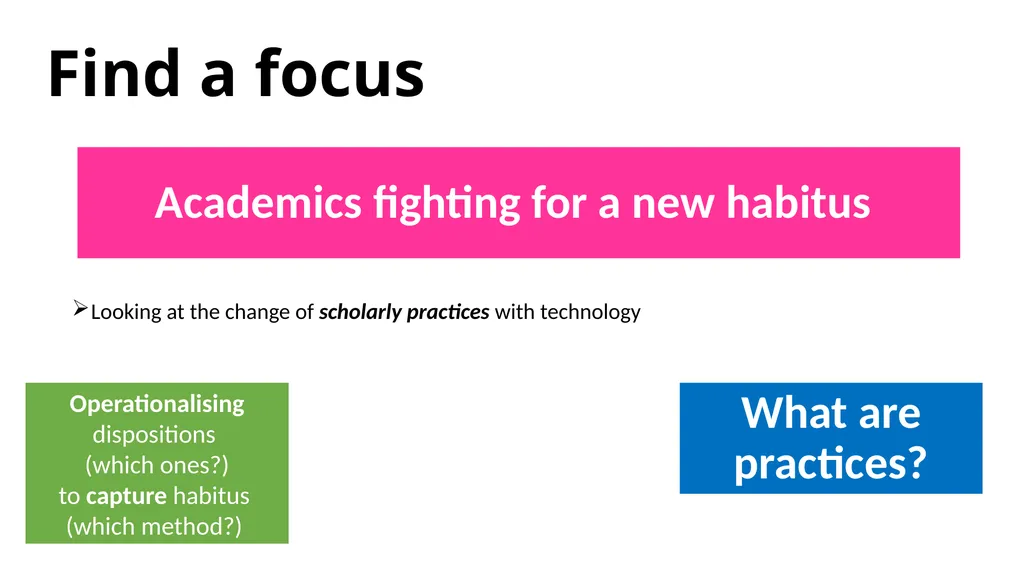
slide5. Academics fighting for a new habitus Looking at the change of scholarly practices with technology Find a focus Operationalising dispositions
(which ones?)
to capture habitus
(which method?) What are practices?<br>
slide6. Habitus Applied: Pierre Bourdieu and Social Theory<br>
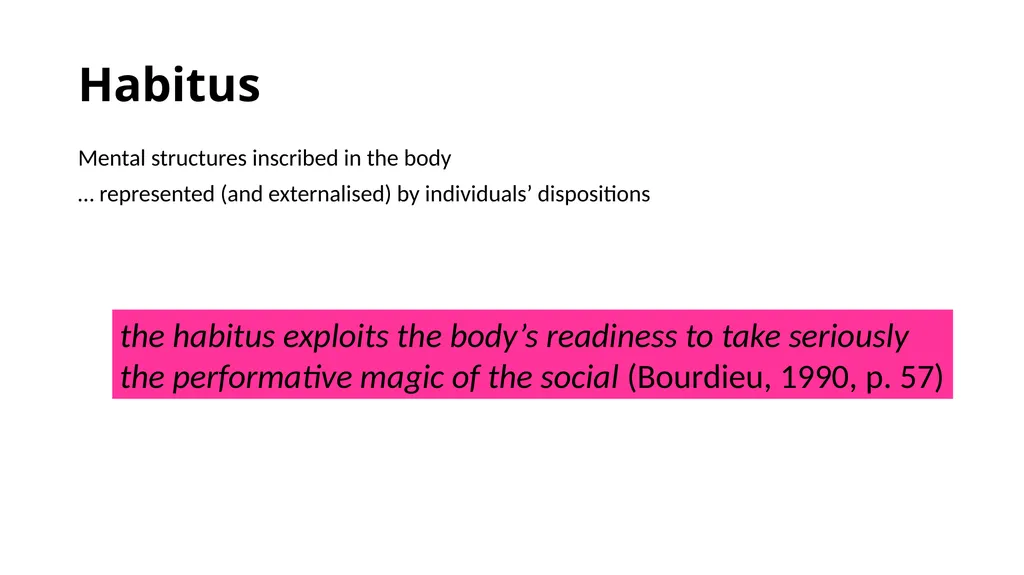
slide7. Habitus Mental structures inscribed in the body
… represented (and externalised) by individuals’ dispositions the habitus exploits the body’s readiness to take seriously the performative magic of the social (Bourdieu, 1990, p. 57)<br>
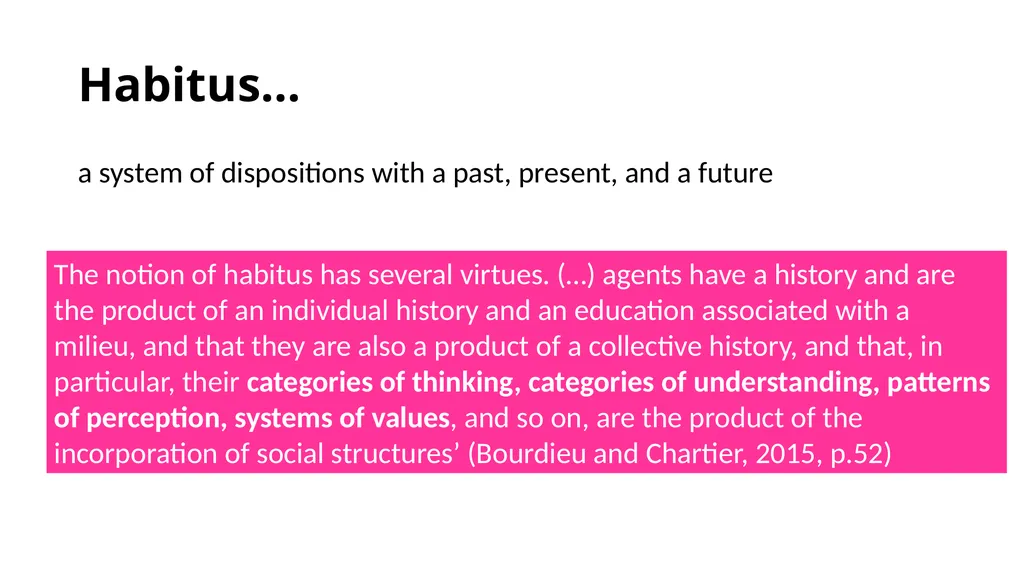
slide8. Habitus… a system of dispositions with a past, present, and a future The notion of habitus has several virtues. (…) agents have a history and are the product of an individual history and an education associated with a milieu, and that they are also a product of a collective history, and that, in particular, their categories of thinking, categories of understanding, patterns of perception, systems of values, and so on, are the product of the incorporation of social structures’ (Bourdieu and Chartier, 2015, p.52)<br>
slide9. Habitus… a system of dispositions with a past, present, and a future<br>
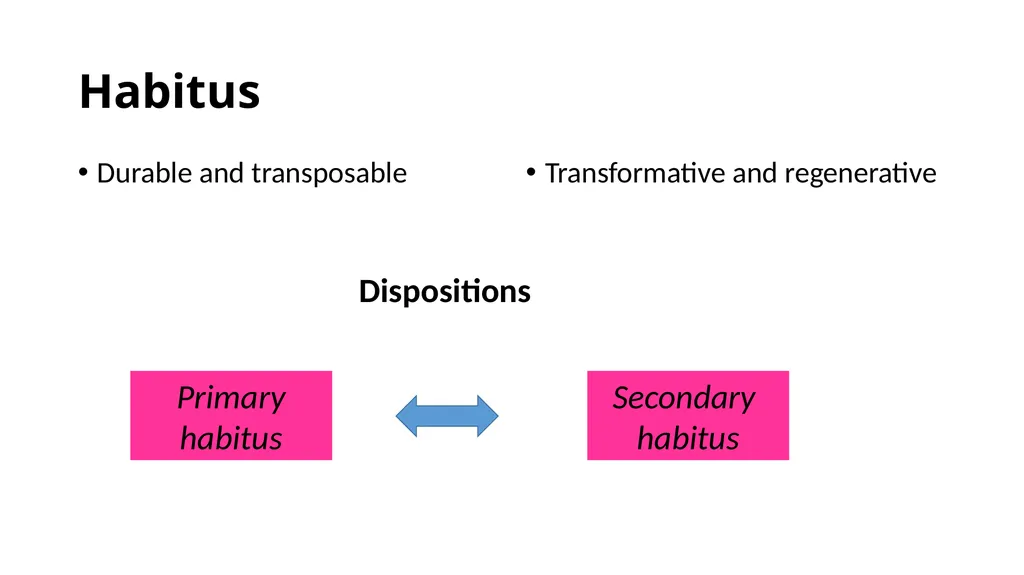
slide10. Habitus Durable and transposable Transformative and regenerative Dispositions<br>
slide11. Through which mechanisms can we apply and conceptualise habitus as part of the research process?<br>
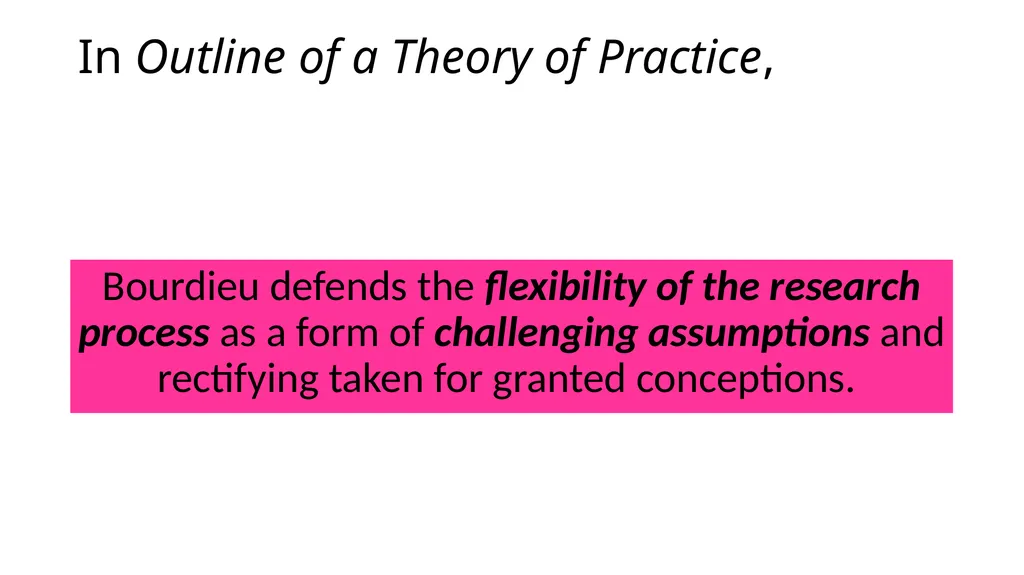
slide12. In Outline of a Theory of Practice, Bourdieu defends the flexibility of the research process as a form of challenging assumptions and rectifying taken for granted conceptions.<br>
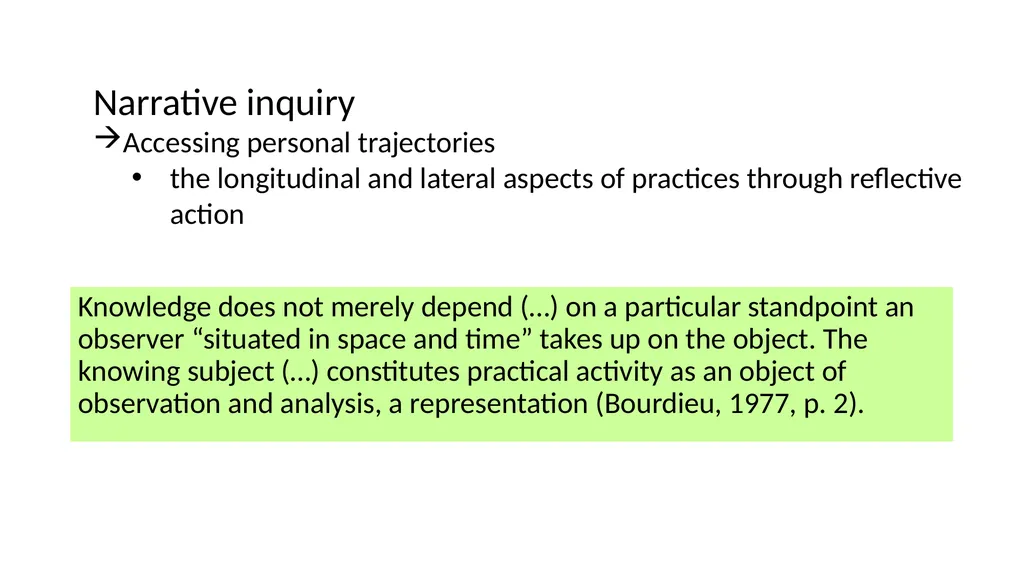
slide13. Knowledge does not merely depend (…) on a particular standpoint an observer “situated in space and time” takes up on the object. The knowing subject (…) constitutes practical activity as an object of observation and analysis, a representation (Bourdieu, 1977, p. 2). Narrative inquiry
Accessing personal trajectories
the longitudinal and lateral aspects of practices through reflective action<br>
slide14. The ontological and epistemological difference between their digital dispositions and their academic position encourages the discursive reflection of established practices as explicit criticism of dominating norms (Costa, 2015).<br>
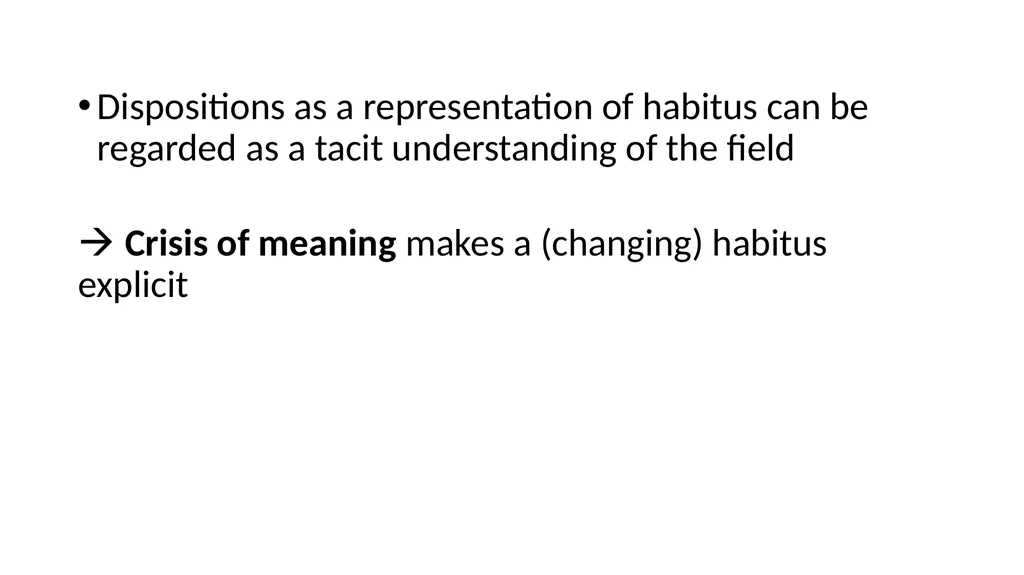
slide15. Dispositions as a representation of habitus can be regarded as a tacit understanding of the field
Crisis of meaning makes a (changing) habitus explicit<br>
slide16. If habitus justifies and produces social actions and practices, then it must also account for change the habitus makes possible the free production of all the thoughts, perceptions and actions inherent in the particular conditions of its production – and only those (Bourdieu, 1990, p.55)<br>
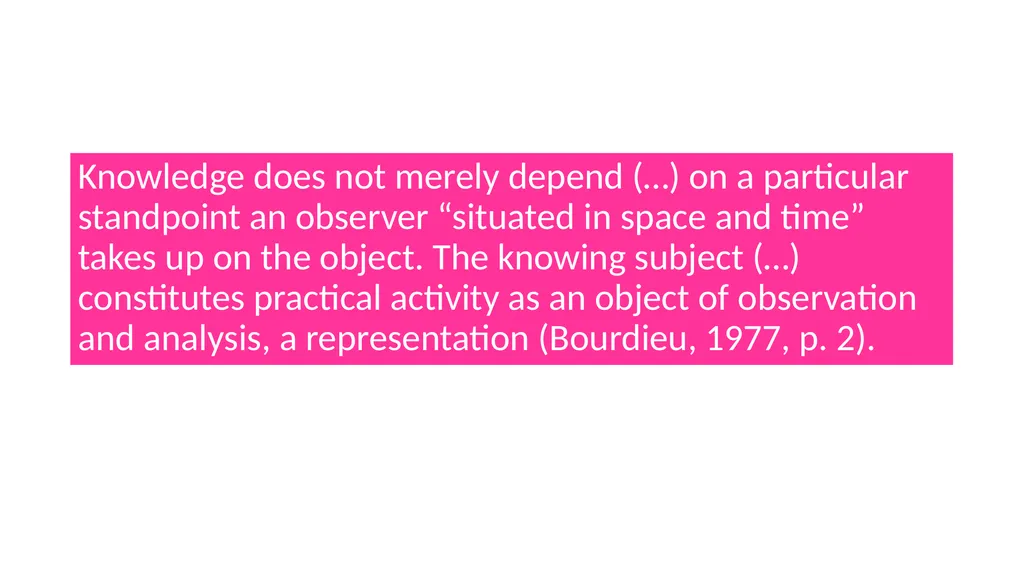
slide17. Knowledge does not merely depend (…) on a particular standpoint an observer “situated in space and time” takes up on the object. The knowing subject (…) constitutes practical activity as an object of observation and analysis, a representation (Bourdieu, 1977, p. 2).<br>
slide18. Bourdieu, habitus and social research: The art of application (Costa and Murphy, 2015)<br>
slide2. First step Know your field of research well!
Read! Read! Read! And question!<br>
slide3. Looking at the change of scholarly practices with technology Find a focus<br>
slide4. Digital scholarship practices. Adapted from Weller (2011), pp. 5–9.<br>
slide5. Academics fighting for a new habitus Looking at the change of scholarly practices with technology Find a focus Operationalising dispositions
(which ones?)
to capture habitus
(which method?) What are practices?<br>
slide6. Habitus Applied: Pierre Bourdieu and Social Theory<br>
slide7. Habitus Mental structures inscribed in the body
… represented (and externalised) by individuals’ dispositions the habitus exploits the body’s readiness to take seriously the performative magic of the social (Bourdieu, 1990, p. 57)<br>
slide8. Habitus… a system of dispositions with a past, present, and a future The notion of habitus has several virtues. (…) agents have a history and are the product of an individual history and an education associated with a milieu, and that they are also a product of a collective history, and that, in particular, their categories of thinking, categories of understanding, patterns of perception, systems of values, and so on, are the product of the incorporation of social structures’ (Bourdieu and Chartier, 2015, p.52)<br>
slide9. Habitus… a system of dispositions with a past, present, and a future<br>
slide10. Habitus Durable and transposable Transformative and regenerative Dispositions<br>
slide11. Through which mechanisms can we apply and conceptualise habitus as part of the research process?<br>
slide12. In Outline of a Theory of Practice, Bourdieu defends the flexibility of the research process as a form of challenging assumptions and rectifying taken for granted conceptions.<br>
slide13. Knowledge does not merely depend (…) on a particular standpoint an observer “situated in space and time” takes up on the object. The knowing subject (…) constitutes practical activity as an object of observation and analysis, a representation (Bourdieu, 1977, p. 2). Narrative inquiry
Accessing personal trajectories
the longitudinal and lateral aspects of practices through reflective action<br>
slide14. The ontological and epistemological difference between their digital dispositions and their academic position encourages the discursive reflection of established practices as explicit criticism of dominating norms (Costa, 2015).<br>
slide15. Dispositions as a representation of habitus can be regarded as a tacit understanding of the field
Crisis of meaning makes a (changing) habitus explicit<br>
slide16. If habitus justifies and produces social actions and practices, then it must also account for change the habitus makes possible the free production of all the thoughts, perceptions and actions inherent in the particular conditions of its production – and only those (Bourdieu, 1990, p.55)<br>
slide17. Knowledge does not merely depend (…) on a particular standpoint an observer “situated in space and time” takes up on the object. The knowing subject (…) constitutes practical activity as an object of observation and analysis, a representation (Bourdieu, 1977, p. 2).<br>
slide18. Bourdieu, habitus and social research: The art of application (Costa and Murphy, 2015)<br>