THERAPEUTIC RECREATION AWARENESS What is Therapeutic Recreation? Therapeutic Recreation Ontario (TRO) defines Therapeutic Recreation as a process that: Utilizes functional intervention, leisure education and recreation participation Enables
"THERAPEUTIC RECREATION AWARENESS What is" is the property of its rightful owner. Permission is granted to
download and print the materials on this website for personal, non-commercial use only, and to display it
on your personal computer provided you do not modify the materials and that you retain all copyright
notices contained in the materials. By downloading content from our website, you accept the terms of this
agreement.
Share
Embed code
Presentation Transcript
01
THERAPEUTIC RECREATION AWARENESS<br>
02
What is Therapeutic Recreation? Therapeutic Recreation Ontario (TRO) defines Therapeutic Recreation as a process that:
Utilizes functional intervention, leisure education and recreation participation
Enables persons with physical, cognitive, emotional and/or social limitations to acquire and/or maintain the skills, knowledge and behaviours that will allow them to enjoy their leisure optimally, function independently with the least amount of assistance and participate as fully as possible in society
Is provided by trained professionals in clinical and/or community settings<br>
03
Scope of Practice Therapeutic Recreation is a collaborative and purposeful process facilitated by trained professionals offering recreation and leisure assessment, planning, intervention and evaluation to achieve individual goals.
The profession uses meaningful recreation and leisure education, counselling and experiences to promote, restore, rehabilitate and/or maintain quality of life and well-being.
Therapeutic Recreation supports the development of strengths while addressing social, emotional, physical, spiritual and cognitive needs.<br>
04
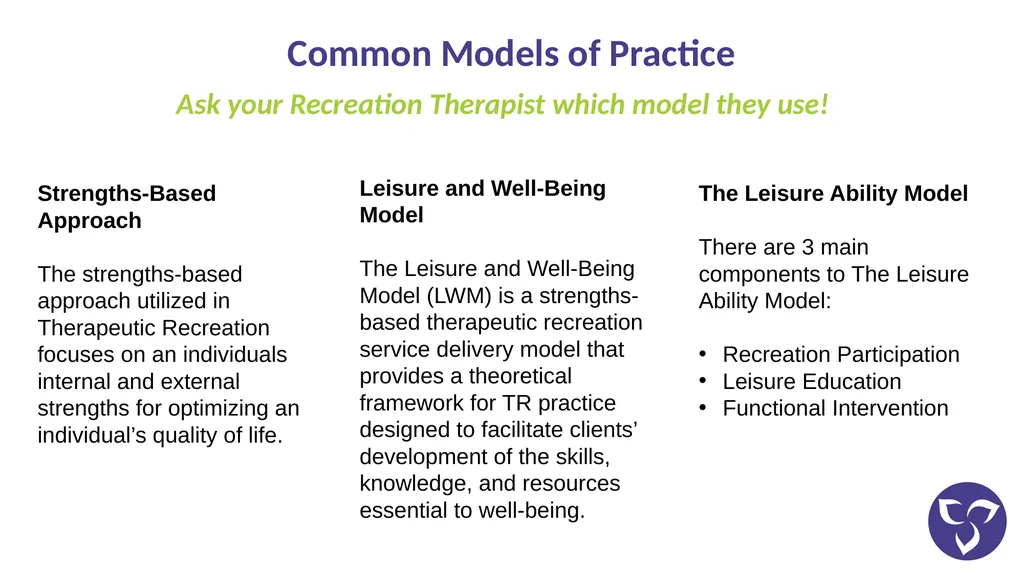
Ask your Recreation Therapist which model they use! The Leisure Ability Model
There are 3 main components to The Leisure Ability Model:
The strengths-based approach utilized in Therapeutic Recreation focuses on an individuals internal and external strengths for optimizing an individual’s quality of life. Leisure and Well-Being Model
The Leisure and Well-Being Model (LWM) is a strengths-based therapeutic recreation service delivery model that provides a theoretical framework for TR practice designed to facilitate clients’ development of the skills, knowledge, and resources essential to well-being. Common Models of Practice<br>
05
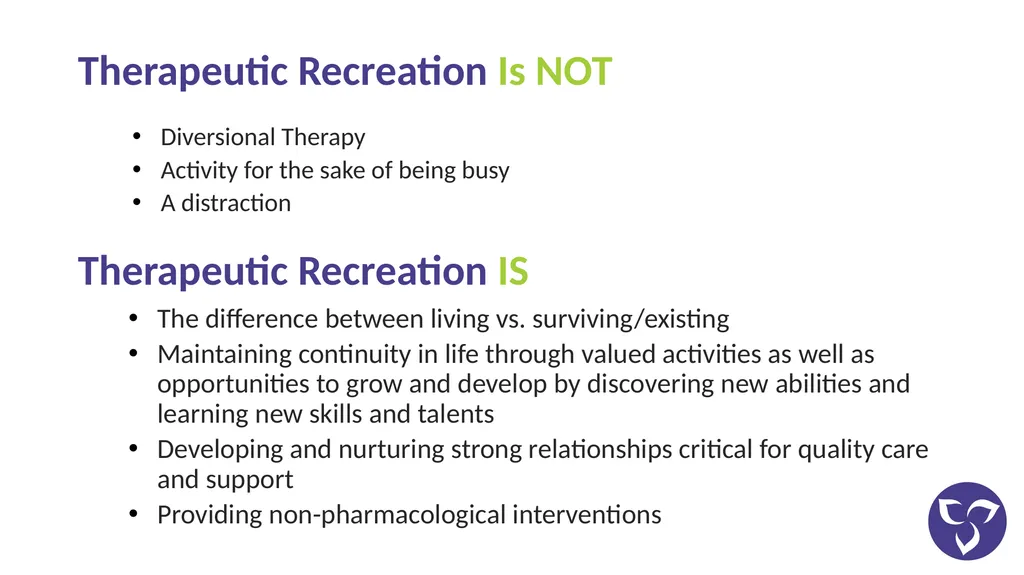
Therapeutic Recreation IS The difference between living vs. surviving/existing
Maintaining continuity in life through valued activities as well as opportunities to grow and develop by discovering new abilities and learning new skills and talents
Developing and nurturing strong relationships critical for quality care and support
Providing non-pharmacological interventions Therapeutic Recreation Is NOT Diversional Therapy
Activity for the sake of being busy
A distraction<br>
06
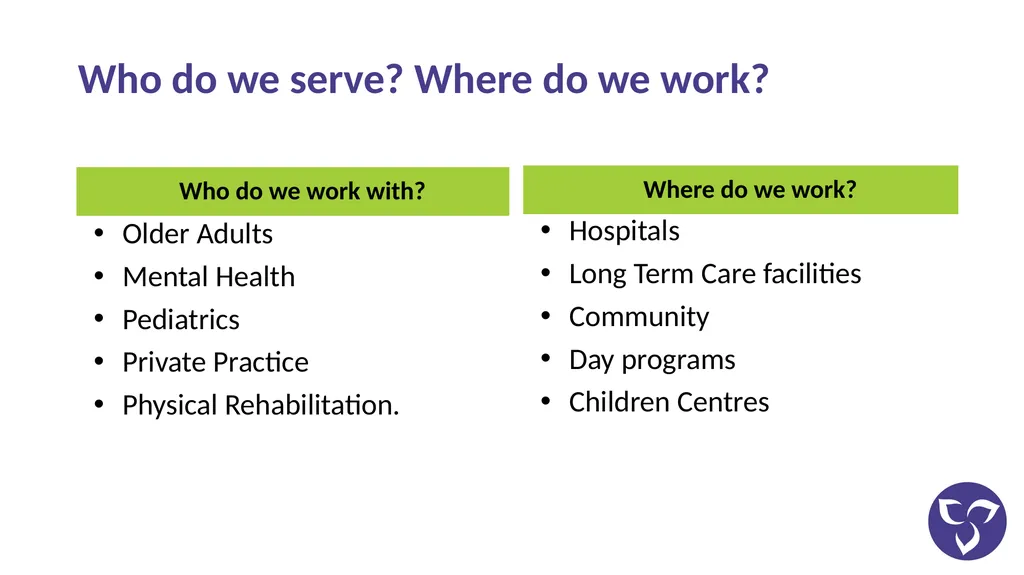
Who do we work with? Older Adults
Mental Health
Pediatrics
Private Practice
Physical Rehabilitation. Where do we work? Hospitals
Long Term Care facilities
Community
Day programs
Children Centres Who do we serve? Where do we work?<br>
07
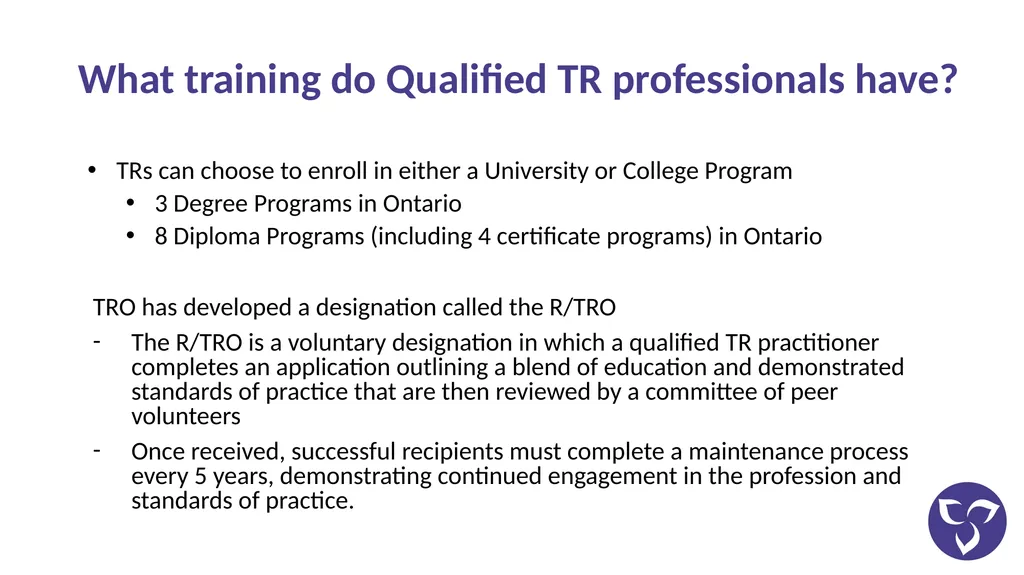
TRs can choose to enroll in either a University or College Program
3 Degree Programs in Ontario
8 Diploma Programs (including 4 certificate programs) in Ontario
TRO has developed a designation called the R/TRO
The R/TRO is a voluntary designation in which a qualified TR practitioner completes an application outlining a blend of education and demonstrated standards of practice that are then reviewed by a committee of peer volunteers
Once received, successful recipients must complete a maintenance process every 5 years, demonstrating continued engagement in the profession and standards of practice. What training do Qualified TR professionals have?<br>
08
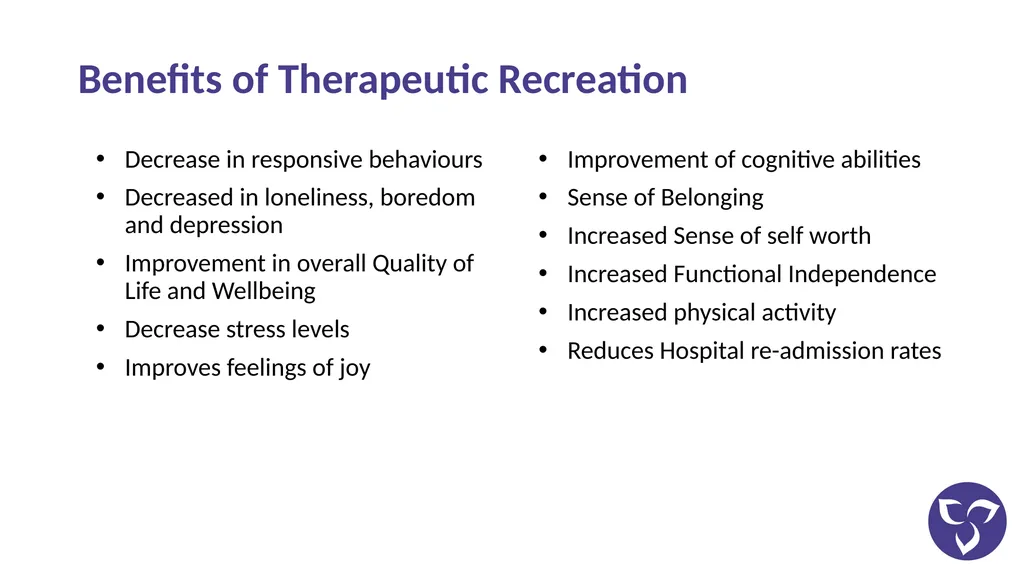
Decrease in responsive behaviours
Decreased in loneliness, boredom and depression
Improvement in overall Quality of Life and Wellbeing
Decrease stress levels
Improves feelings of joy Improvement of cognitive abilities
Sense of Belonging
Increased Sense of self worth
Increased Functional Independence
Increased physical activity
Reduces Hospital re-admission rates Benefits of Therapeutic Recreation<br>
09
TR and active living are essential to personal health; a key determinant of health status
TR is a key to balanced human development – helping Canadians reach for their potential
TR is essential to QUALITY OF LIFE
TR reduces self-destructive and anti-social behaviour Benefits of Therapeutic Recreation<br>