Therapists perspectives on using case formulation Dawn Leeming; Jo Brooks; Viv Burr; Mike Lucock University of Huddersfield, UK Psychological case formulation Using generic psychological theory to develop interlinked hypotheses about
"Therapists’ perspectives on using case formulation" is the property of its rightful owner. Permission is granted to
download and print the materials on this website for personal, non-commercial use only, and to display it
on your personal computer provided you do not modify the materials and that you retain all copyright
notices contained in the materials. By downloading content from our website, you accept the terms of this
agreement.
Presentation Transcript
01
Therapists’ perspectives on using case formulation Dawn Leeming; Jo Brooks; Viv Burr; Mike Lucock
University of Huddersfield, UK<br>
02
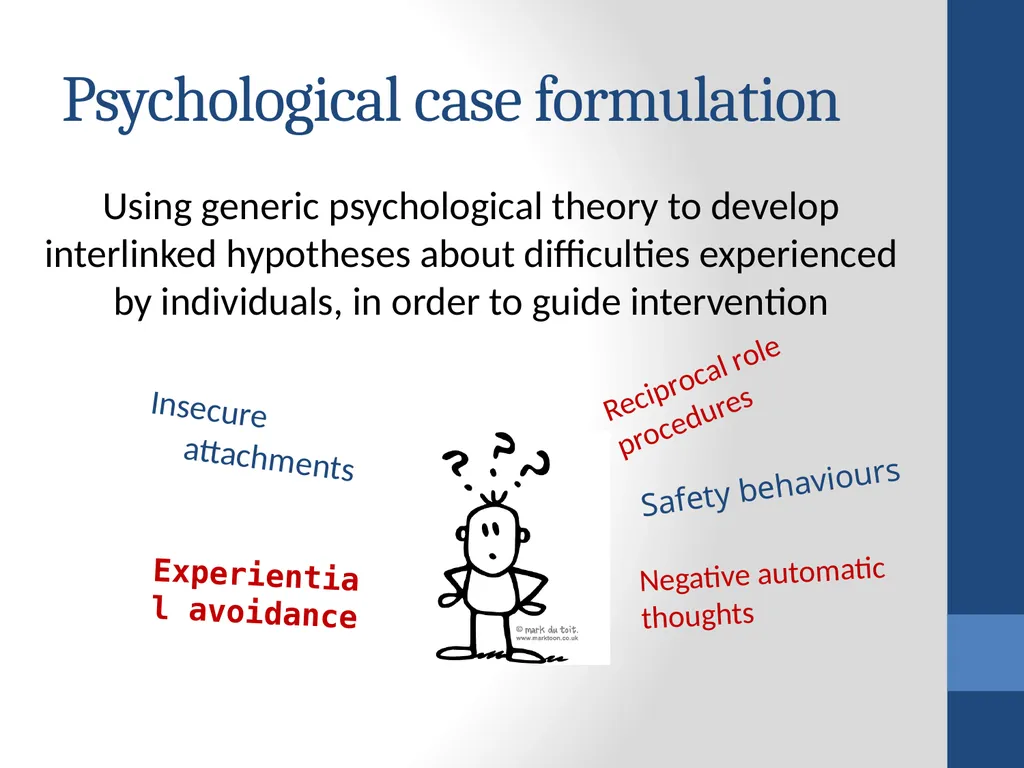
Psychological case formulation Using generic psychological theory to develop interlinked hypotheses about difficulties experienced by individuals, in order to guide intervention Insecure attachments Safety behaviours Experiential avoidance Negative automatic thoughts Reciprocal role procedures<br>
03
An increasingly valued therapeutic practice Now used by range of MH professionals, across range of therapeutic approaches
Alternative to psychiatric diagnosis
Focus on formulation skills in therapy training
Growth in use of generic ‘off-the-shelf’ templates (alongside individualised, multi-model, integrative formulations)<br>
04
Evaluating formulations Can we conceive of accuracy or reliability of formulations?
Butler (2006):
May be more appropriate to consider ‘usefulness’<br>
05
A relatively under-researched therapeutic practice “the lack of a service user perspective [on formulation] is a major gap in the literature, as is an understanding of the process by which clinicians draw up formulations” (Johnstone et al., 2011)<br>
06
Aim of current study To explore therapists’ reports of their practices in relation to formulation and their views on the usefulness of formulation for themselves and clients<br>
07
Methods On-line survey of psychological therapists working in public sector mental health services
Mostly open-ended questions:
Nature of formulation
Practices
Benefits / challenges for self/clients
Thematic analysis<br>
08
Preliminary analyses of data from 13 therapists 3 trainees, 10 qualified therapists
Nursing, clinical psychology, psychiatry, counselling
A range of theoretical influences
CBT & CAT slightly more common than others<br>
09
Key preliminary findings Formulation valued highly
particularly for enabling understanding
Variation in practices
can be varied experience for clients?
Formulation viewed as powerful
potential to be challenging
need for ‘protection’, care & compassion when formulating<br>
10
Perceived value of formulation Facilitating understanding “It is essential. Without it there is no psychological understanding.”<br>
11
An understanding that is: Collaborative
Values theory
Individualised / bespoke
Useful & meaningful to both
Holistic, comprehensive & contextualised
Tentative<br>
12
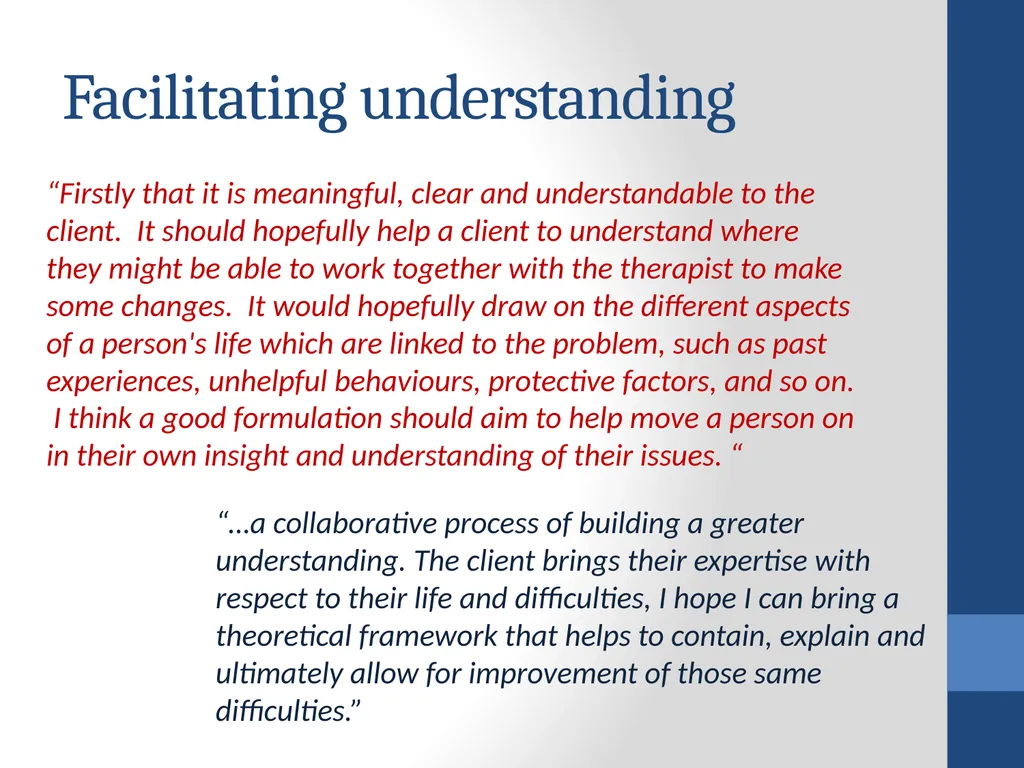
“Firstly that it is meaningful, clear and understandable to the client. It should hopefully help a client to understand where they might be able to work together with the therapist to make some changes. It would hopefully draw on the different aspects of a person's life which are linked to the problem, such as past experiences, unhelpful behaviours, protective factors, and so on. I think a good formulation should aim to help move a person on in their own insight and understanding of their issues. “ “…a collaborative process of building a greater understanding. The client brings their expertise with respect to their life and difficulties, I hope I can bring a theoretical framework that helps to contain, explain and ultimately allow for improvement of those same difficulties.” Facilitating understanding<br>
13
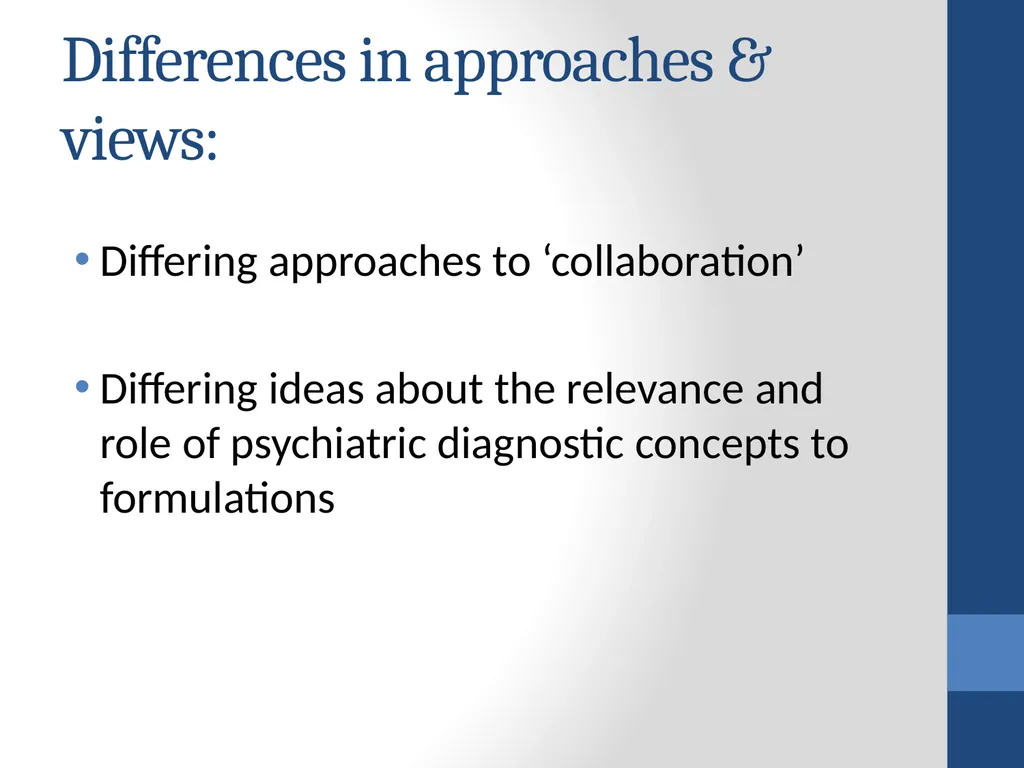
Differences in approaches & views: Differing approaches to ‘collaboration’
Differing ideas about the relevance and role of psychiatric diagnostic concepts to formulations<br>
14
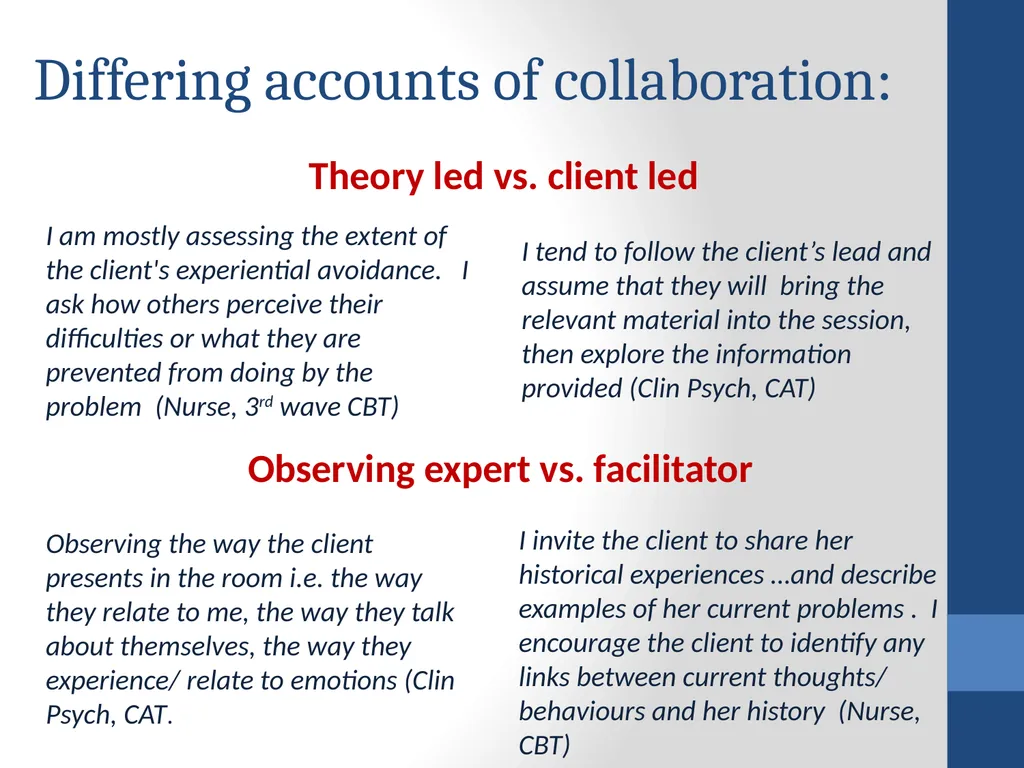
I am mostly assessing the extent of the client's experiential avoidance. I ask how others perceive their difficulties or what they are prevented from doing by the problem (Nurse, 3rd wave CBT) I tend to follow the client’s lead and assume that they will bring the relevant material into the session, then explore the information provided (Clin Psych, CAT) Differing accounts of collaboration: Observing the way the client presents in the room i.e. the way they relate to me, the way they talk about themselves, the way they experience/ relate to emotions (Clin Psych, CAT. I invite the client to share her historical experiences …and describe examples of her current problems . I encourage the client to identify any links between current thoughts/ behaviours and her history (Nurse, CBT) Theory led vs. client led Observing expert vs. facilitator<br>
15
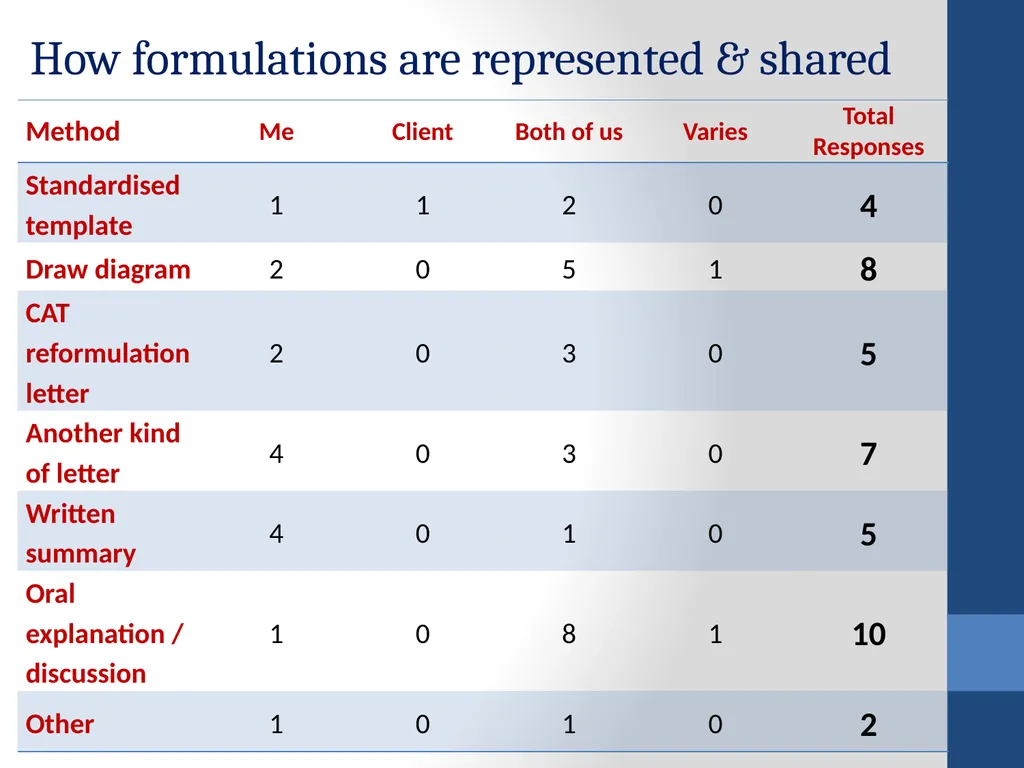
How formulations are represented & shared<br>
16
Conclusions Formulation was highly valued by this small self-selected sample of therapists (though with some caution)
‘Formulation’ incorporates a range of practices
Research could usefully explore the impact of these for clients in a range of settings<br>