
This content may be used or adapted for
Description: This content may be used or adapted for noncommercial, educational purposes only. Please use the following citation: George Washington University Cancer Center TAP. (2020). Cancer Survivorship Series PowerPoint Slides. GWU Cancer Center
Related Topics
Download Presentation
"This content may be used or adapted for" is the property of its rightful owner. Permission is granted to download and print the materials on this website for personal, non-commercial use only, and to display it on your personal computer provided you do not modify the materials and that you retain all copyright notices contained in the materials. By downloading content from our website, you accept the terms of this agreement.
Presentation Transcript
slide1. This content may be used or adapted for noncommercial, educational purposes only. Please use the following citation:
George Washington University Cancer Center TAP. (2020). Cancer Survivorship Series [PowerPoint Slides]. GWU Cancer Center TAP. https://cme.smhs.gwu.edu/gw-cancer-center-/content/cancer-survivorship-series
This content was adapted from the GW Cancer Center the Oncology Patient Navigation Training: The Fundamentals (PI: Pratt-Chapman) developed and maintained by CDC cooperative agreements #NU38DP004972, #5NU58DP006461 and #NU58DP007539. The content added, changed, or adapted by our organization do not necessarily represent the views of the GW Cancer Center or the CDC.
If you have any questions about the following material or would like permission to use this material, please contact cancercontrol@gwu.edu<br>
slide2. Megan Slocum, PA-C
The George Washington University Medical Faculty Associates The Importance of Prevention in Cancer Survivorship: Empowering Survivors to Live Well<br>
slide3. Acknowledgment This webinar was supported by Cooperative Agreement #NU58DP006461-03 from the Centers for Disease Control and Prevention (CDC).
The views expressed in written workshop materials or publications and by speakers and moderators do not necessarily reflect the official policies of the Department of Health and Human Services, nor does the mention of trade names, commercial practices, or organizations imply endorsement by the U.S. Government.<br>
slide4. Learning Objectives Describe guideline-supported recommendations to prevent second cancers (e.g. tobacco prevention/cessation, physical activity, nutrition, moderate alcohol intake, and sun protection)<br>
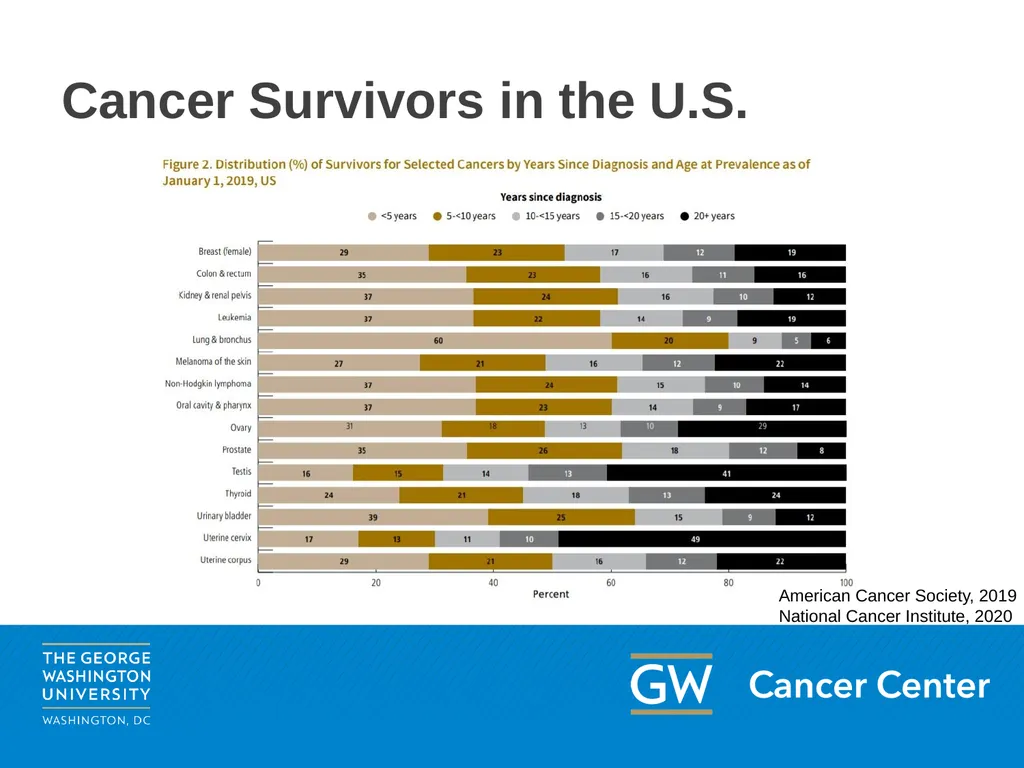
slide5. Cancer Survivors in the U.S. American Cancer Society, 2019
National Cancer Institute, 2020<br>
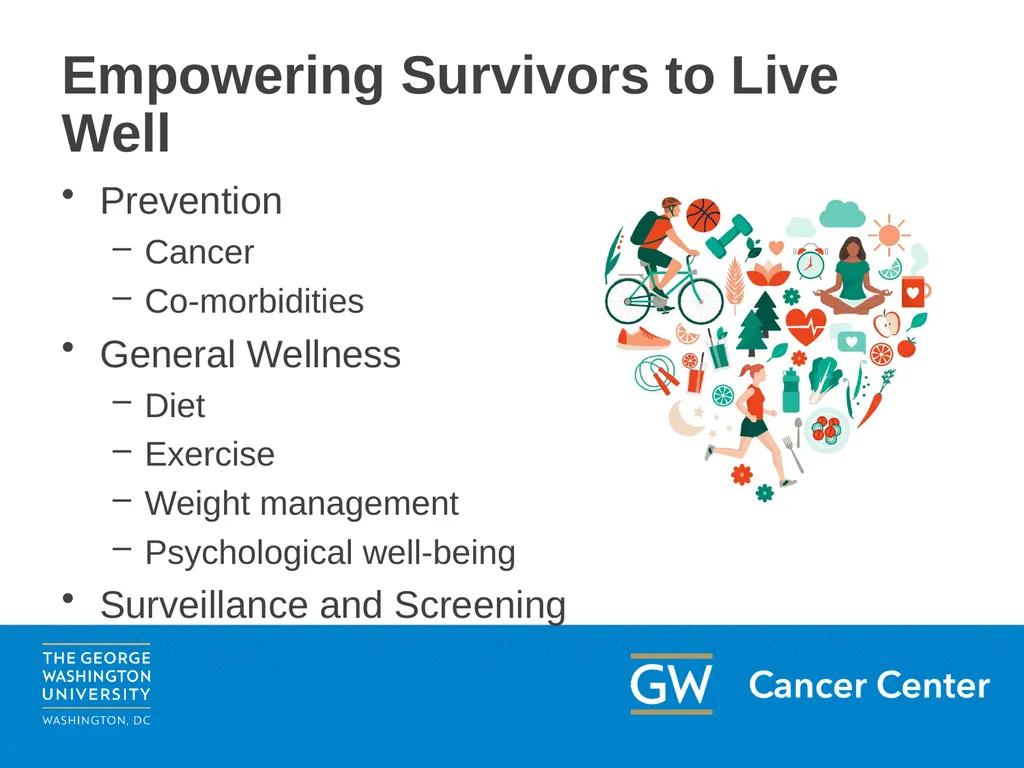
slide6. Empowering Survivors to Live Well Prevention
Cancer
Co-morbidities
General Wellness
Diet
Exercise
Weight management
Psychological well-being
Surveillance and Screening<br>
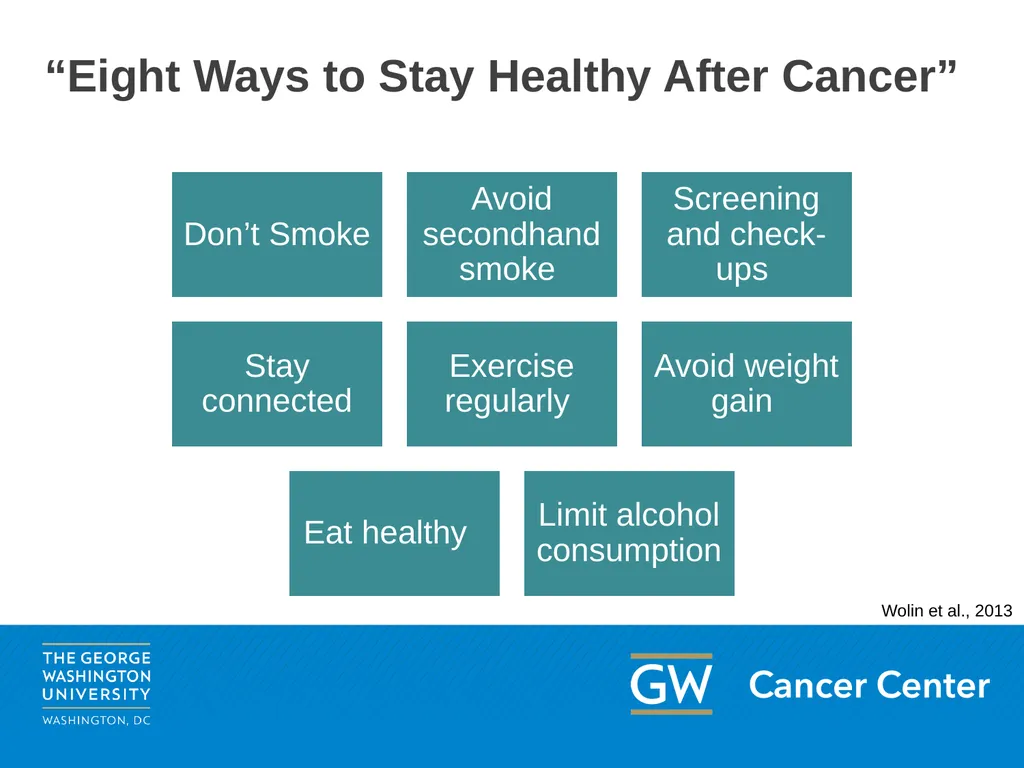
slide7. “Eight Ways to Stay Healthy After Cancer” Wolin et al., 2013<br>
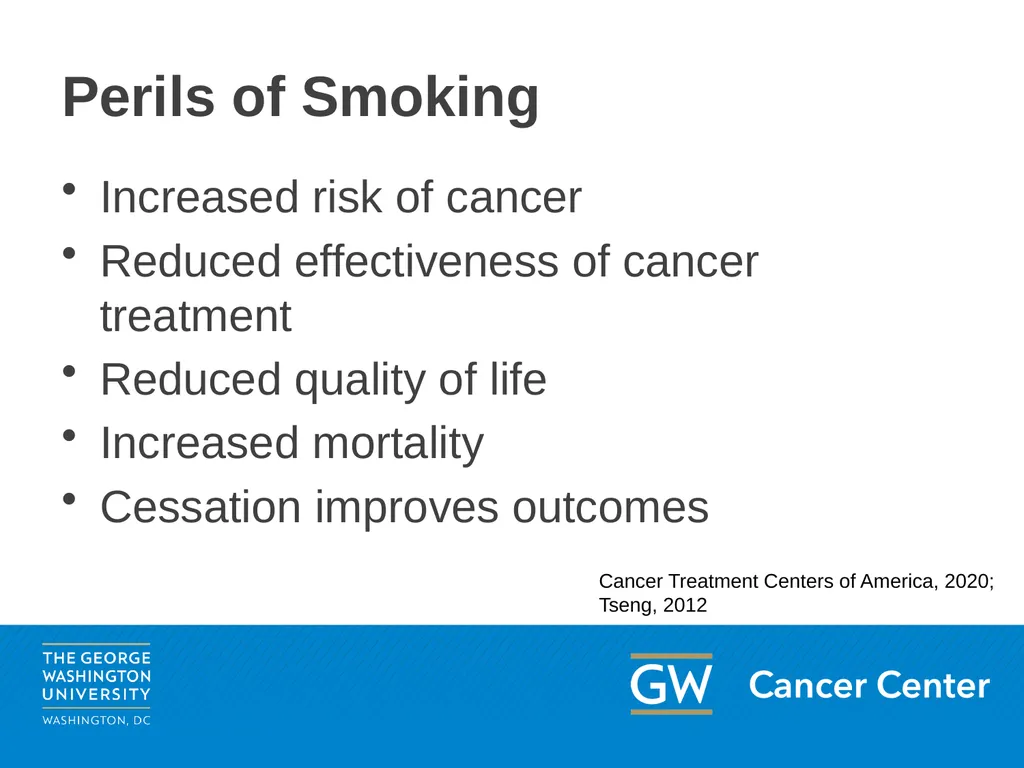
slide8. Perils of Smoking Increased risk of cancer
Reduced effectiveness of cancer treatment
Reduced quality of life
Increased mortality
Cessation improves outcomes Cancer Treatment Centers of America, 2020; Tseng, 2012<br>
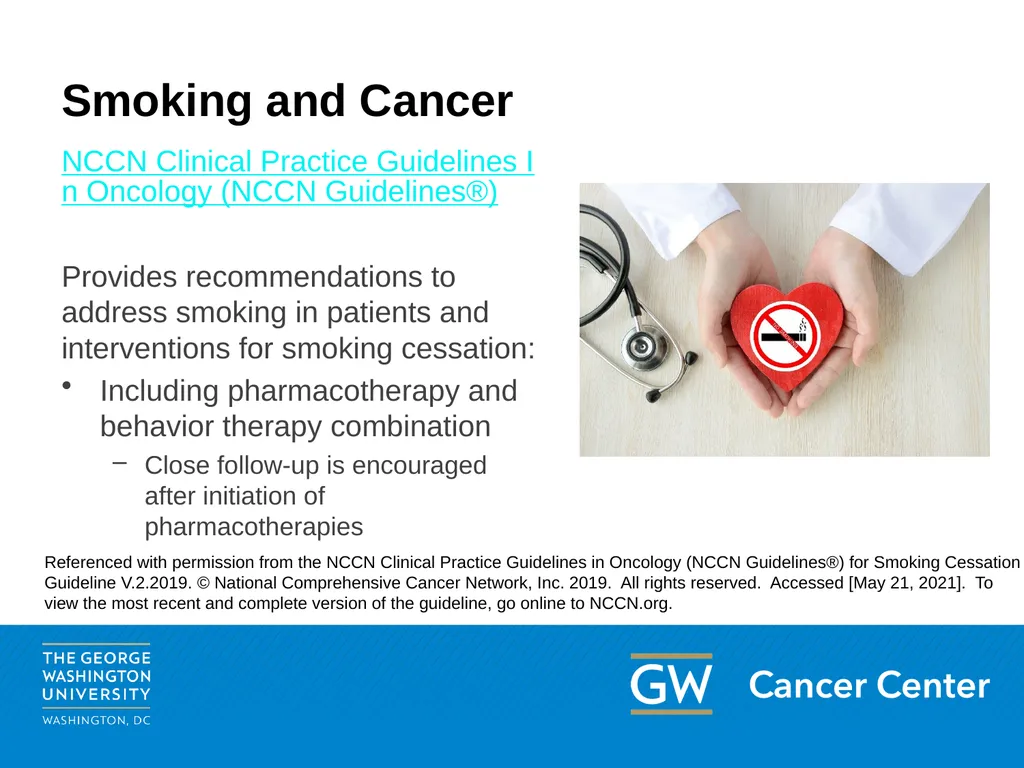
slide9. Smoking and Cancer NCCN Clinical Practice Guidelines In Oncology (NCCN Guidelines®)
Provides recommendations to address smoking in patients and interventions for smoking cessation:
Including pharmacotherapy and behavior therapy combination
Close follow-up is encouraged after initiation of pharmacotherapies Referenced with permission from the NCCN Clinical Practice Guidelines in Oncology (NCCN Guidelines®) for Smoking Cessation Guideline V.2.2019. © National Comprehensive Cancer Network, Inc. 2019. All rights reserved. Accessed [May 21, 2021]. To view the most recent and complete version of the guideline, go online to NCCN.org.<br>
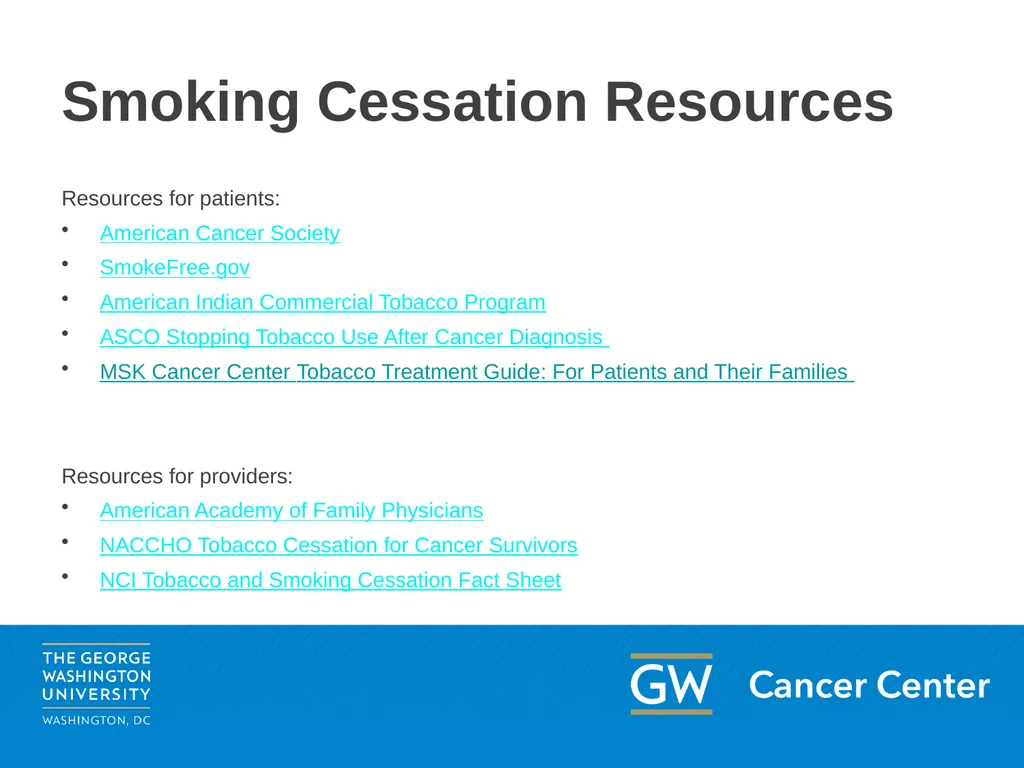
slide10. Smoking Cessation Resources Resources for patients:
American Cancer Society
SmokeFree.gov
American Indian Commercial Tobacco Program
ASCO Stopping Tobacco Use After Cancer Diagnosis
MSK Cancer Center Tobacco Treatment Guide: For Patients and Their Families
Resources for providers:
American Academy of Family Physicians
NACCHO Tobacco Cessation for Cancer Survivors
NCI Tobacco and Smoking Cessation Fact Sheet<br>
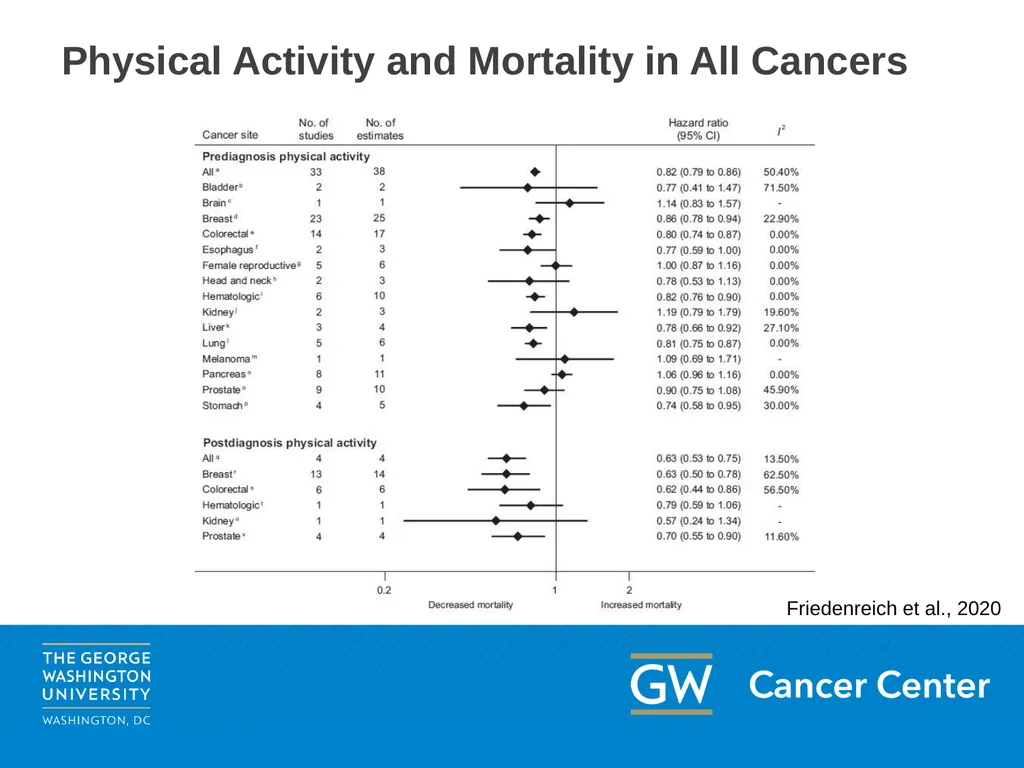
slide11. Physical Activity and Mortality in All Cancers Friedenreich et al., 2020<br>
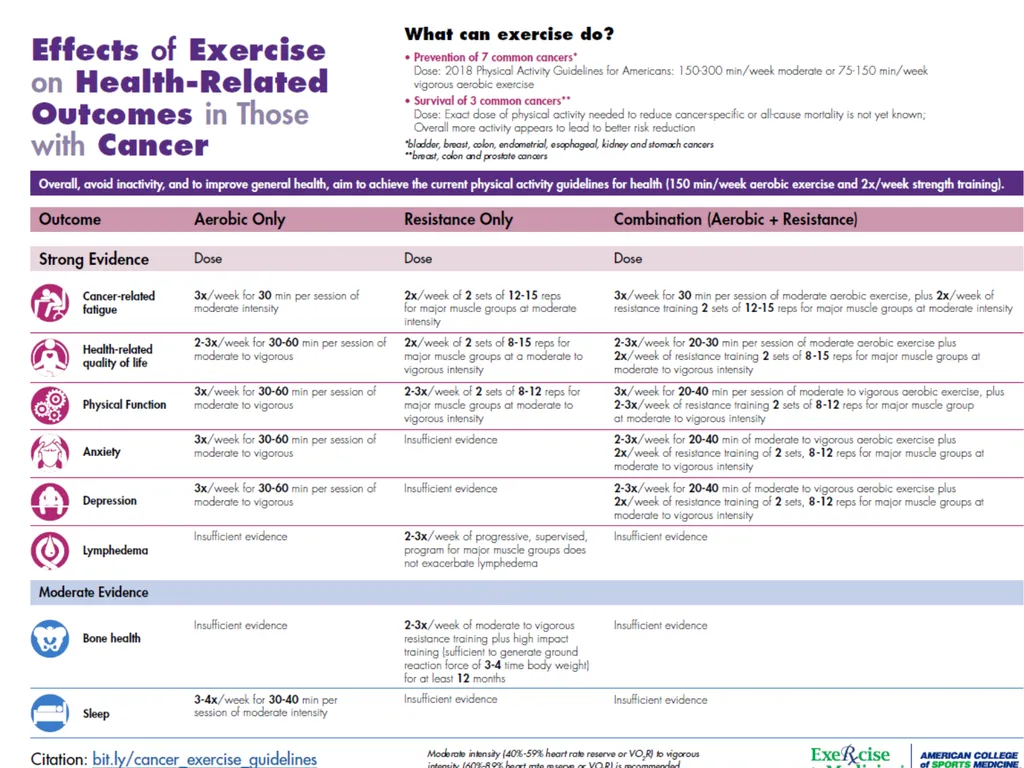
slide12. Exercise/Diet and Survivorship American College of Sports Medicine, 2019<br>
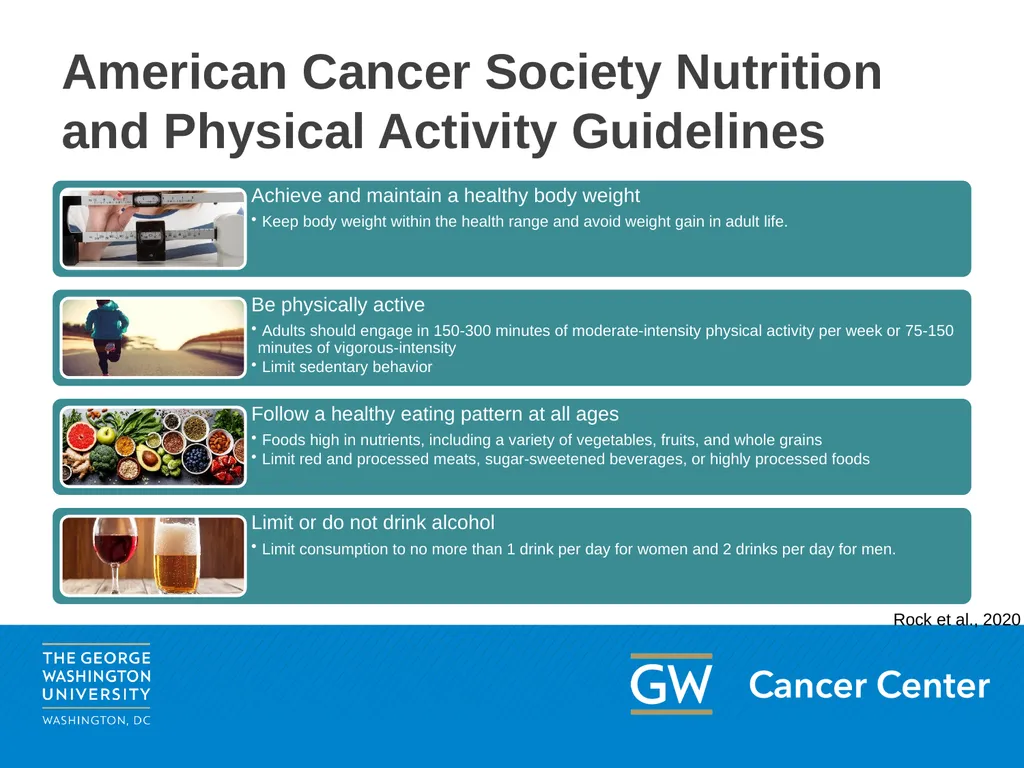
slide13. American Cancer Society Nutrition and Physical Activity Guidelines Rock et al., 2020<br>
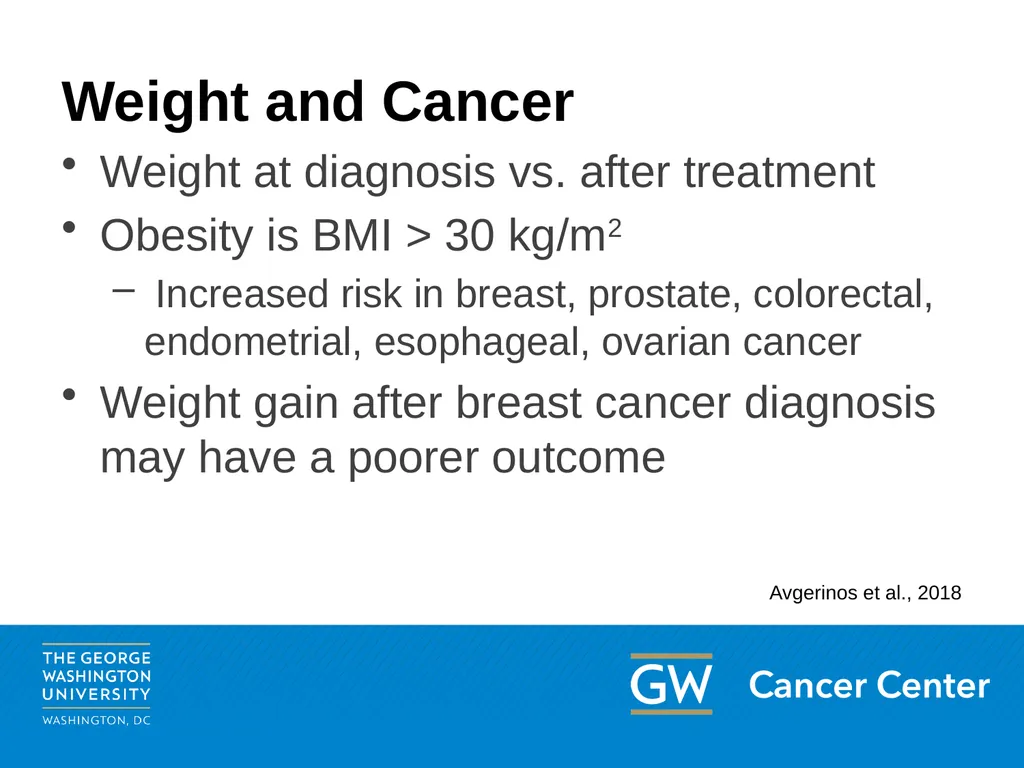
slide14. Weight and Cancer Weight at diagnosis vs. after treatment
Obesity is BMI > 30 kg/m2
Increased risk in breast, prostate, colorectal, endometrial, esophageal, ovarian cancer
Weight gain after breast cancer diagnosis may have a poorer outcome Avgerinos et al., 2018<br>
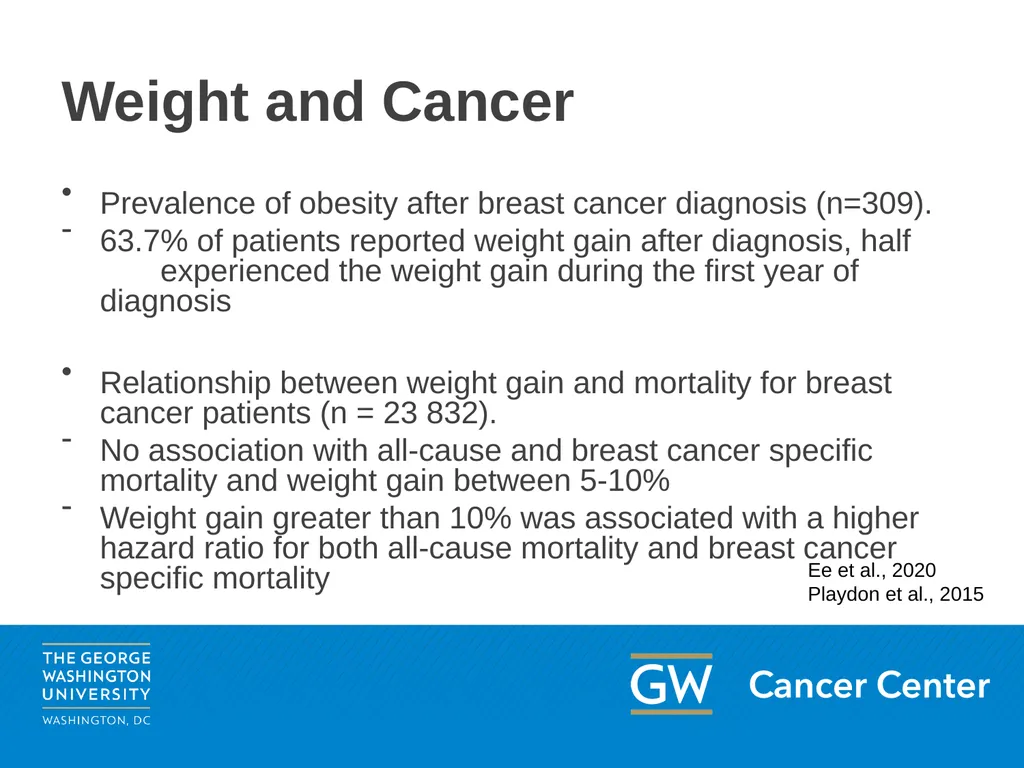
slide15. Weight and Cancer Prevalence of obesity after breast cancer diagnosis (n=309).
63.7% of patients reported weight gain after diagnosis, half experienced the weight gain during the first year of diagnosis
Relationship between weight gain and mortality for breast cancer patients (n = 23 832).
No association with all-cause and breast cancer specific mortality and weight gain between 5-10%
Weight gain greater than 10% was associated with a higher hazard ratio for both all-cause mortality and breast cancer specific mortality Ee et al., 2020
Playdon et al., 2015<br>
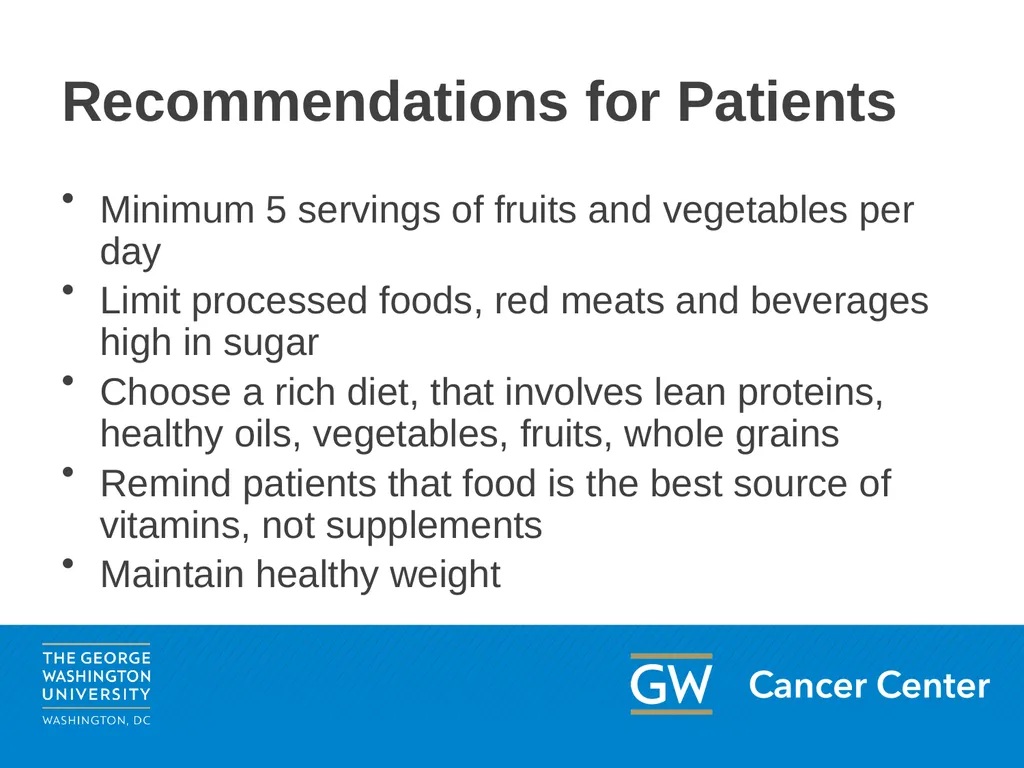
slide16. Recommendations for Patients Minimum 5 servings of fruits and vegetables per day
Limit processed foods, red meats and beverages high in sugar
Choose a rich diet, that involves lean proteins, healthy oils, vegetables, fruits, whole grains
Remind patients that food is the best source of vitamins, not supplements
Maintain healthy weight<br>
slide17. Patient Resources National Comprehensive Cancer Network: Survivorship Care for Healthy Living
Cancer Support Community: Diet and Nutrition for Cancer Survivors
American Cancer Society: Weight Management Tools Referenced with permission from the NCCN Clinical Practice Guidelines in Oncology (NCCN Guidelines®) for Survivorship V.1.2021. © National Comprehensive Cancer Network, Inc. 2021. All rights reserved. Accessed [May 21, 2021]. To view the most recent and complete version of the guideline, go online to NCCN.org.<br>
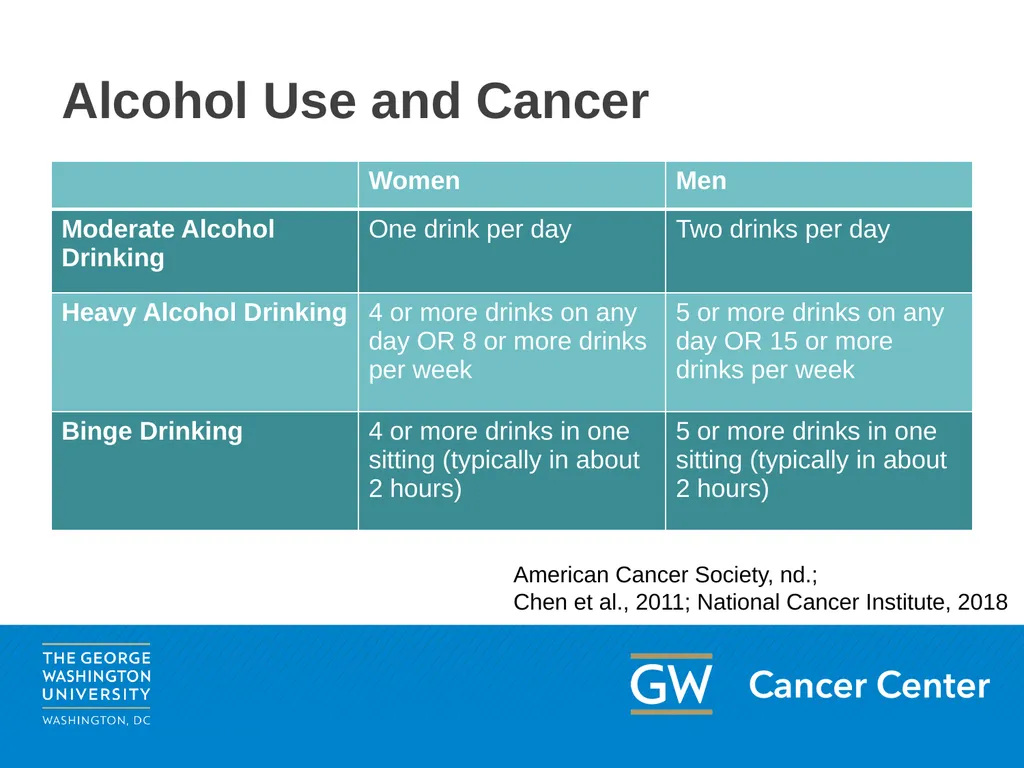
slide18. Alcohol Use and Cancer American Cancer Society, nd.;
Chen et al., 2011; National Cancer Institute, 2018<br>
slide19. Approaches to Reducing Alcohol Consumption Screening and Counseling
Tools and resources
Planning and Implementing Screening and Brief Intervention for Risky Alcohol Use
Screening and Behavioral Counseling Interventions Eng et al., 2018<br>
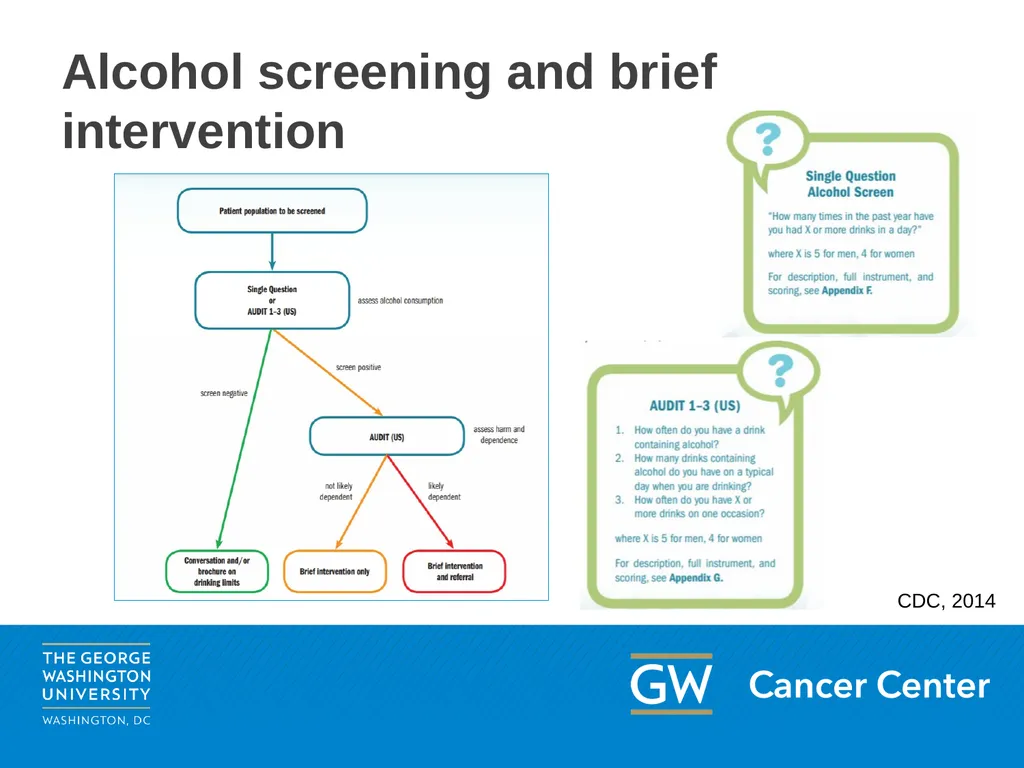
slide20. Alcohol screening and brief intervention CDC, 2014<br>
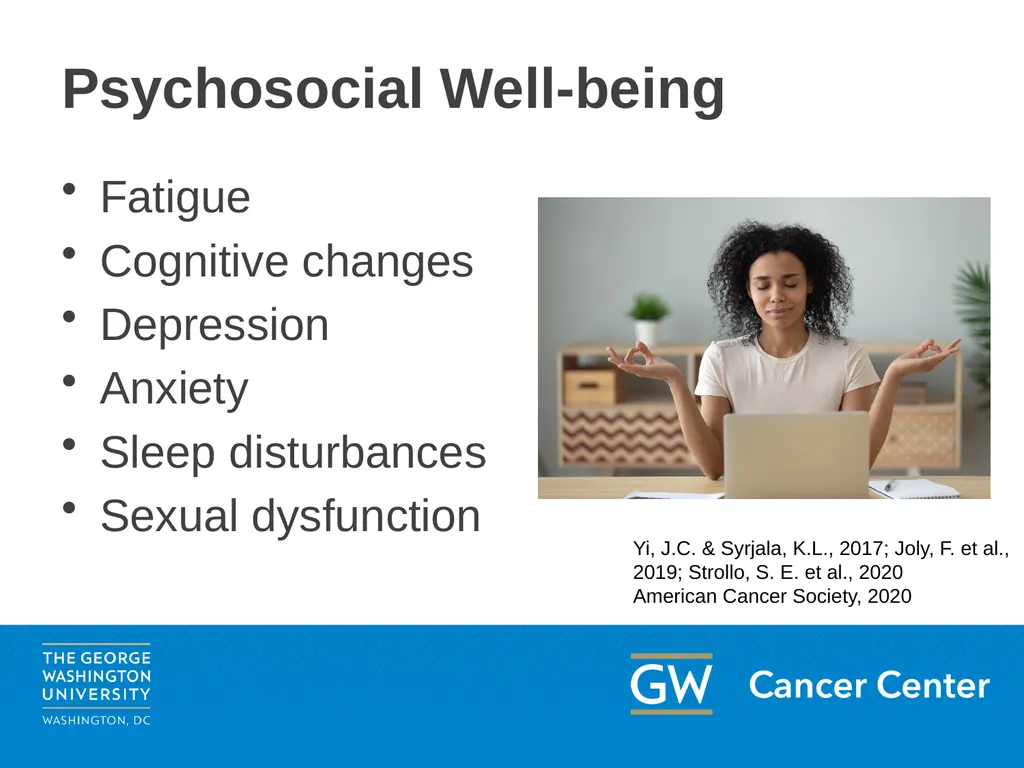
slide21. Psychosocial Well-being Fatigue
Cognitive changes
Depression
Anxiety
Sleep disturbances
Sexual dysfunction Yi, J.C. & Syrjala, K.L., 2017; Joly, F. et al., 2019; Strollo, S. E. et al., 2020
American Cancer Society, 2020<br>
slide22. Mental Health Clinical Practice Guidelines:
- American Society of Clinical Oncology: depressive symptoms and anxiety:
Assessment throughout the cancer continuum
Special circumstances in the assessment
Patients identified as high risk of harm for themselves or others - refer for emergency evaluation
Consider comorbidities with other disorders American Society of Clinical Oncology, 2014<br>
slide23. Mental Health Guidelines and resources for patients:
National Comprehensive Cancer Network Distress During Cancer Care Guidelines for Patients:
NCCN Distress Thermometer and Problem list
Patients can be referred to other specialists
ACS Tips for Distress Management Referenced with permission from the NCCN Clinical Practice Guidelines in Oncology (NCCN Guidelines®) for Distress Management V.2.2021. © National Comprehensive Cancer Network, Inc. 2021. All rights reserved. Accessed [May 21, 2021]. To view the most recent and complete version of the guideline, go online to NCCN.org; ACS, 2020<br>
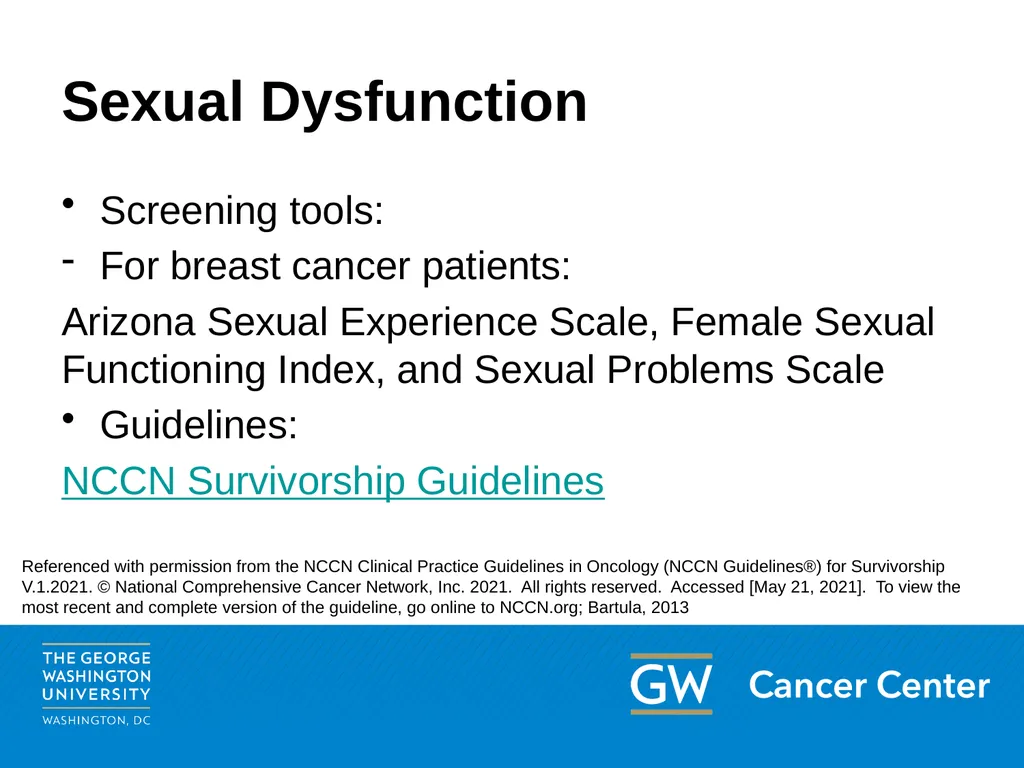
slide24. Sexual Dysfunction Screening tools:
For breast cancer patients:
Arizona Sexual Experience Scale, Female Sexual Functioning Index, and Sexual Problems Scale
Guidelines:
NCCN Survivorship Guidelines Referenced with permission from the NCCN Clinical Practice Guidelines in Oncology (NCCN Guidelines®) for Survivorship V.1.2021. © National Comprehensive Cancer Network, Inc. 2021. All rights reserved. Accessed [May 21, 2021]. To view the most recent and complete version of the guideline, go online to NCCN.org; Bartula, 2013<br>
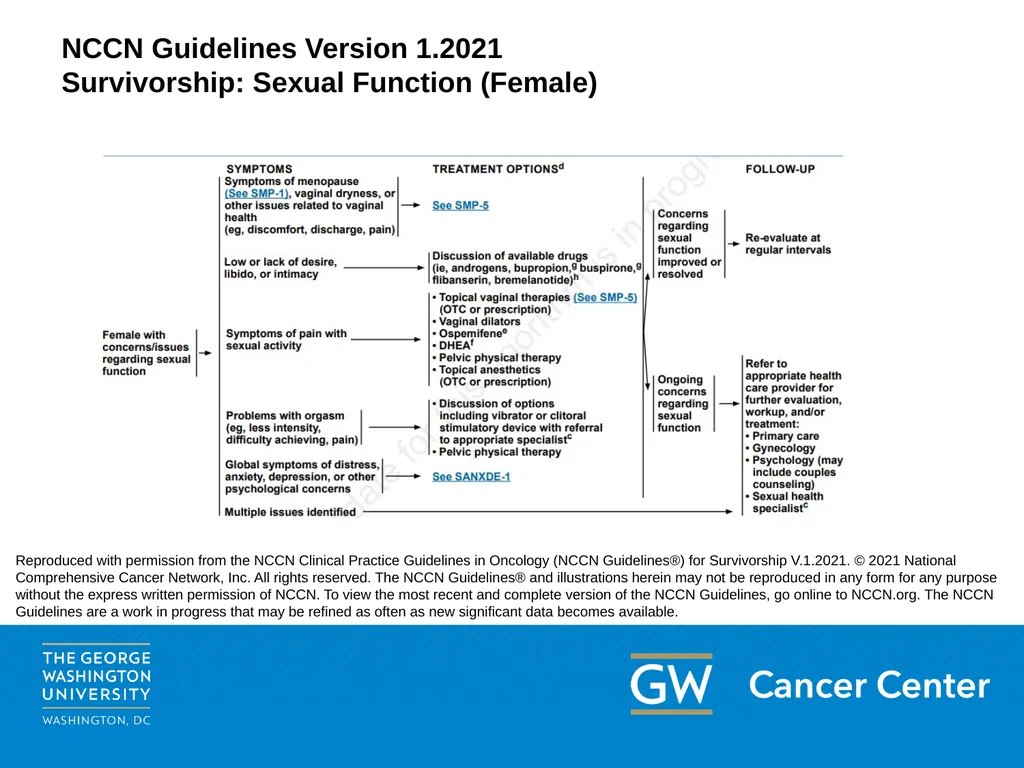
slide25. NCCN Guidelines Version 1.2021 Survivorship: Sexual Function (Female) Reproduced with permission from the NCCN Clinical Practice Guidelines in Oncology (NCCN Guidelines®) for Survivorship V.1.2021. © 2021 National Comprehensive Cancer Network, Inc. All rights reserved. The NCCN Guidelines® and illustrations herein may not be reproduced in any form for any purpose without the express written permission of NCCN. To view the most recent and complete version of the NCCN Guidelines, go online to NCCN.org. The NCCN Guidelines are a work in progress that may be refined as often as new significant data becomes available.<br>
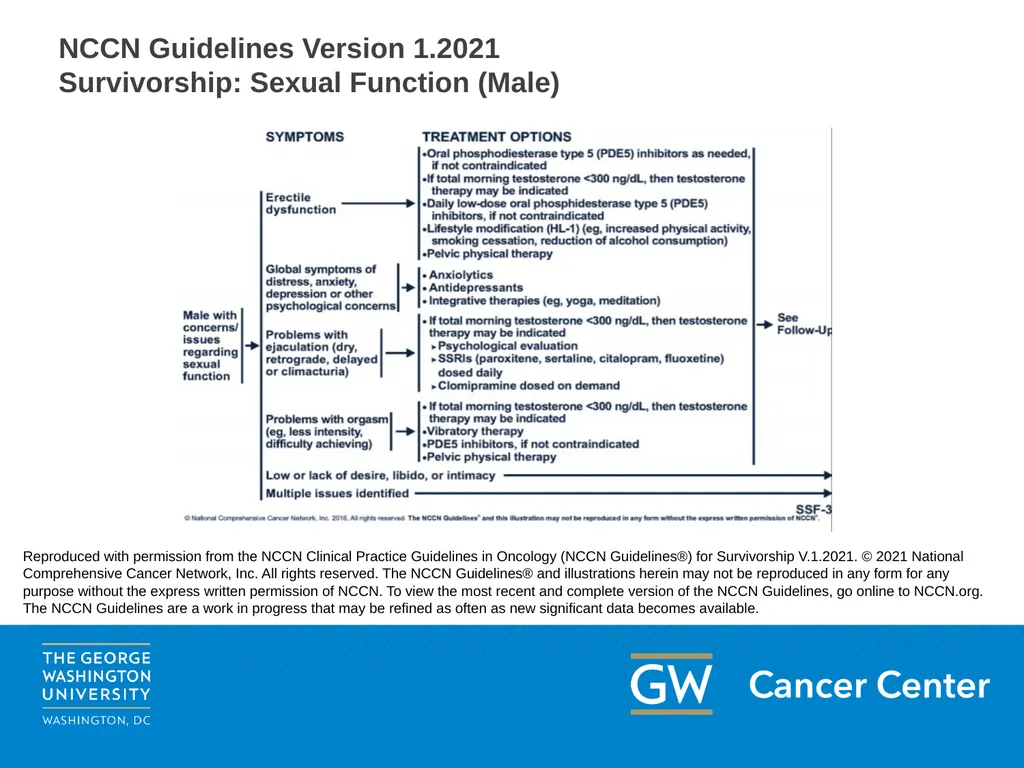
slide26. NCCN Guidelines Version 1.2021 Survivorship: Sexual Function (Male) Reproduced with permission from the NCCN Clinical Practice Guidelines in Oncology (NCCN Guidelines®) for Survivorship V.1.2021. © 2021 National Comprehensive Cancer Network, Inc. All rights reserved. The NCCN Guidelines® and illustrations herein may not be reproduced in any form for any purpose without the express written permission of NCCN. To view the most recent and complete version of the NCCN Guidelines, go online to NCCN.org. The NCCN Guidelines are a work in progress that may be refined as often as new significant data becomes available.<br>
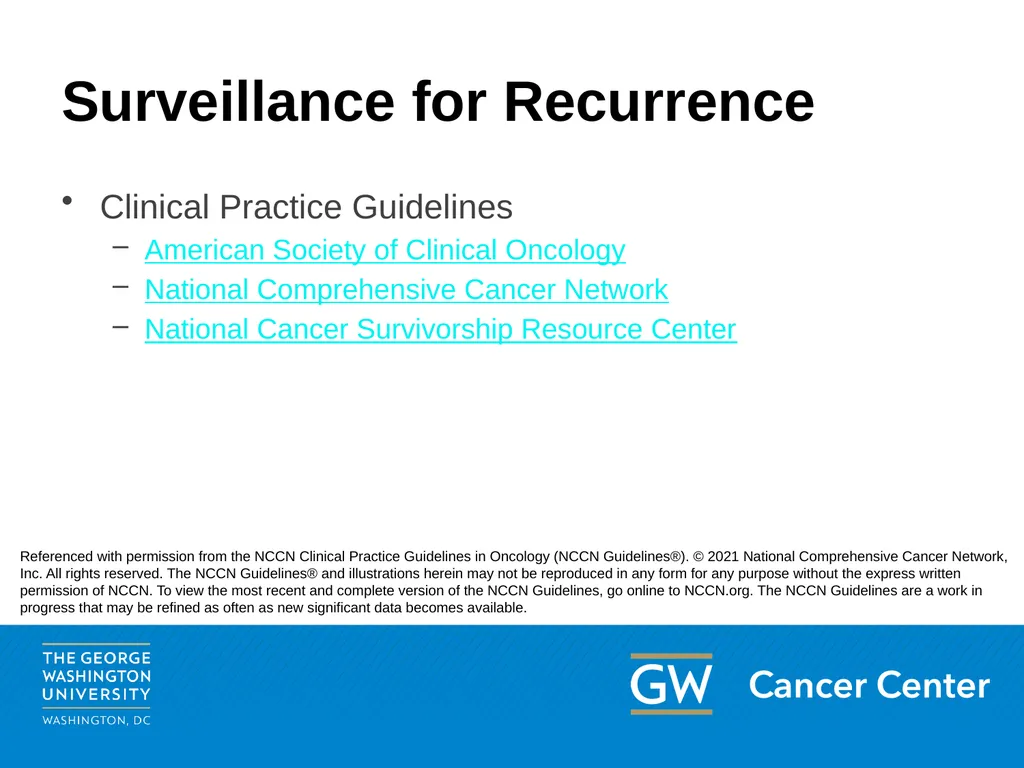
slide27. Surveillance for Recurrence Clinical Practice Guidelines
American Society of Clinical Oncology
National Comprehensive Cancer Network
National Cancer Survivorship Resource Center Referenced with permission from the NCCN Clinical Practice Guidelines in Oncology (NCCN Guidelines®). © 2021 National Comprehensive Cancer Network, Inc. All rights reserved. The NCCN Guidelines® and illustrations herein may not be reproduced in any form for any purpose without the express written permission of NCCN. To view the most recent and complete version of the NCCN Guidelines, go online to NCCN.org. The NCCN Guidelines are a work in progress that may be refined as often as new significant data becomes available.<br>
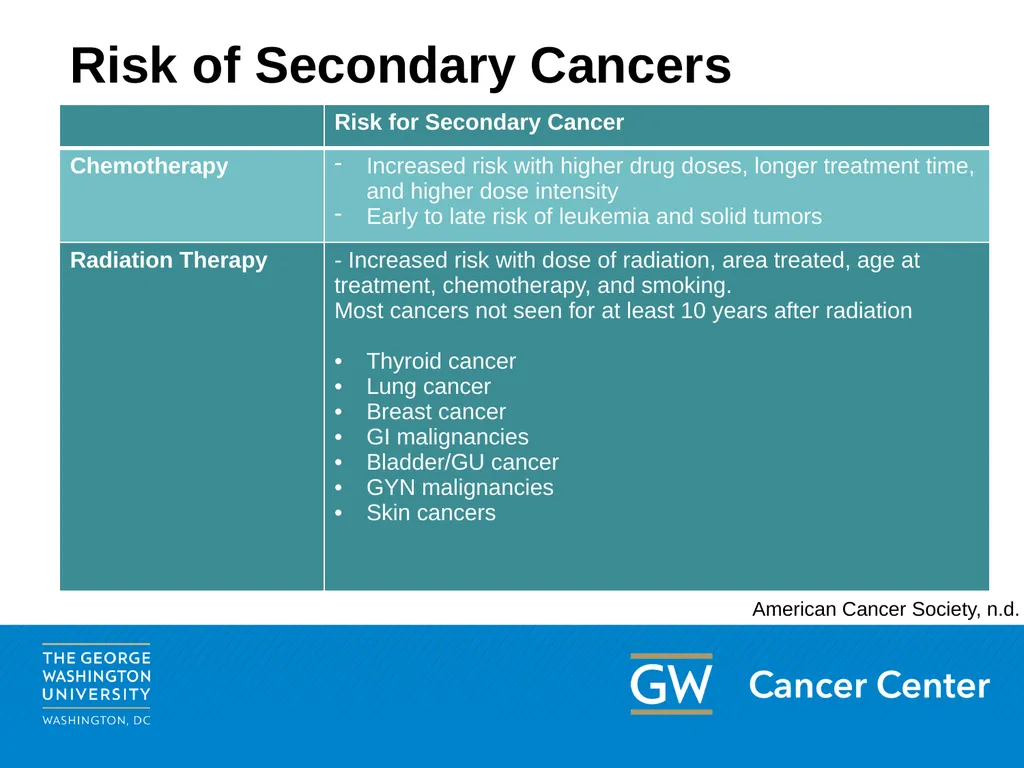
slide28. Risk of Secondary Cancers American Cancer Society, n.d.<br>
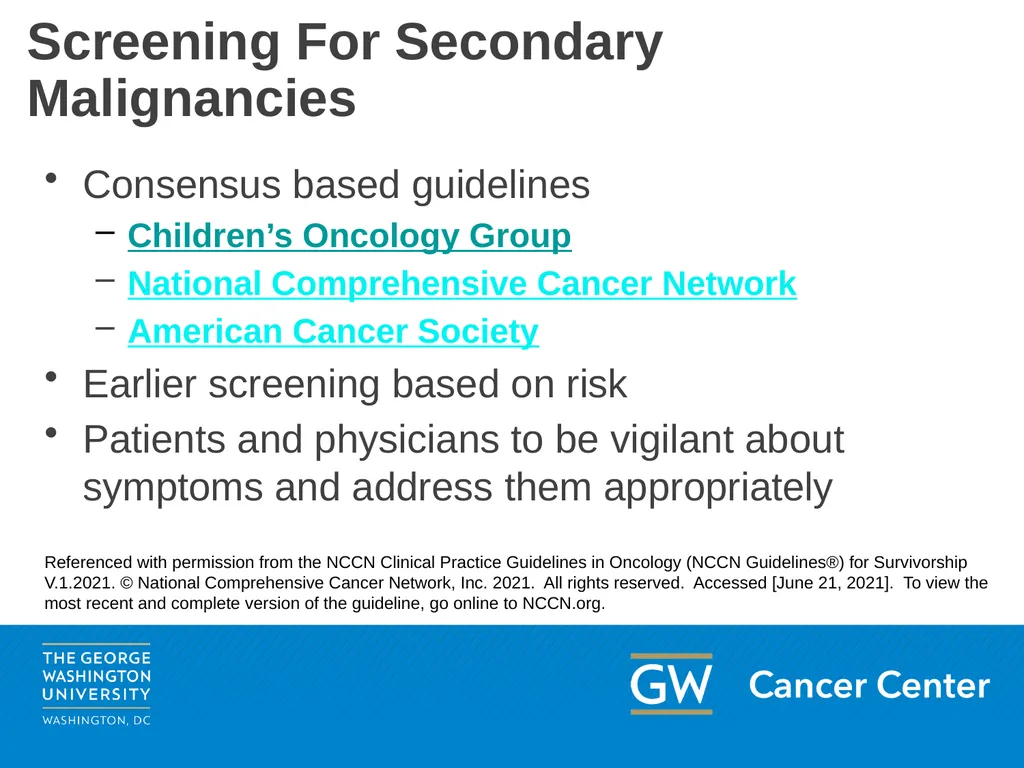
slide29. Screening For Secondary Malignancies Consensus based guidelines
Children’s Oncology Group
National Comprehensive Cancer Network
American Cancer Society
Earlier screening based on risk
Patients and physicians to be vigilant about symptoms and address them appropriately Referenced with permission from the NCCN Clinical Practice Guidelines in Oncology (NCCN Guidelines®) for Survivorship V.1.2021. © National Comprehensive Cancer Network, Inc. 2021. All rights reserved. Accessed [June 21, 2021]. To view the most recent and complete version of the guideline, go online to NCCN.org.<br>
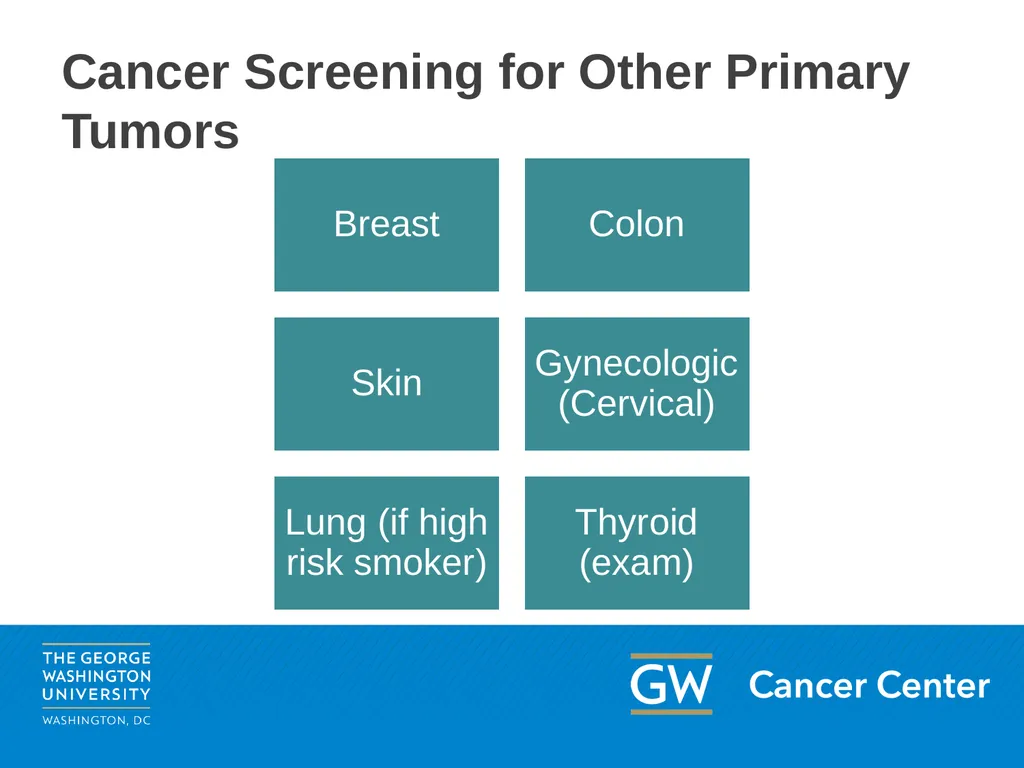
slide30. Cancer Screening for Other Primary Tumors<br>
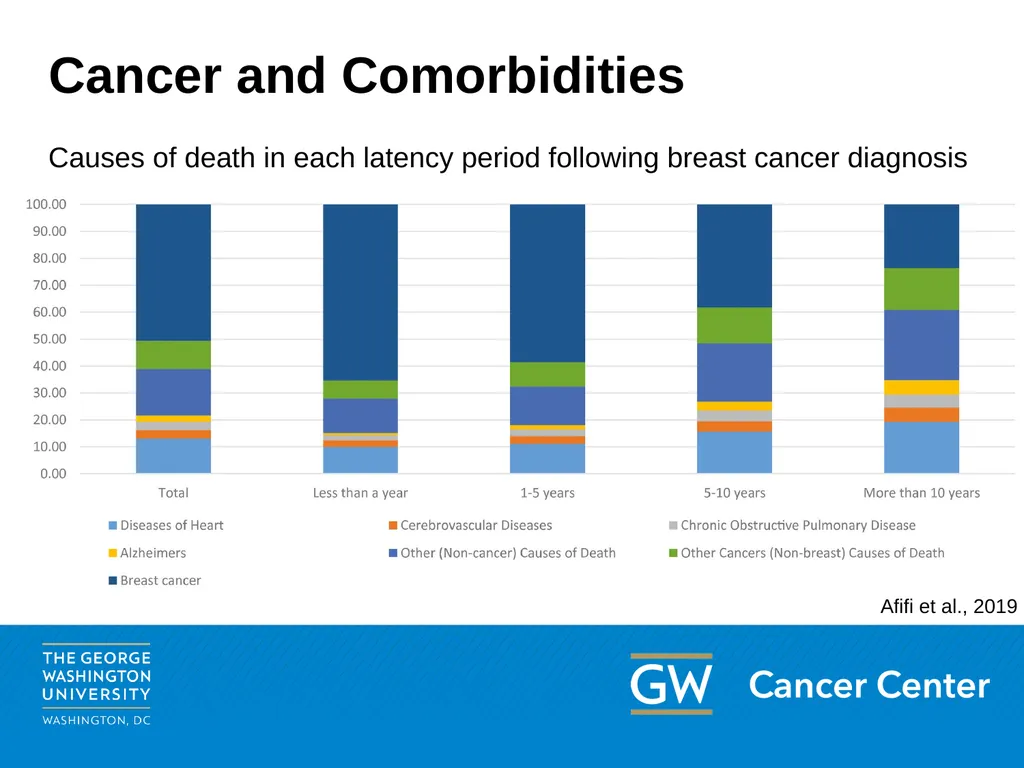
slide31. Causes of death in each latency period following breast cancer diagnosis Cancer and Comorbidities Afifi et al., 2019<br>
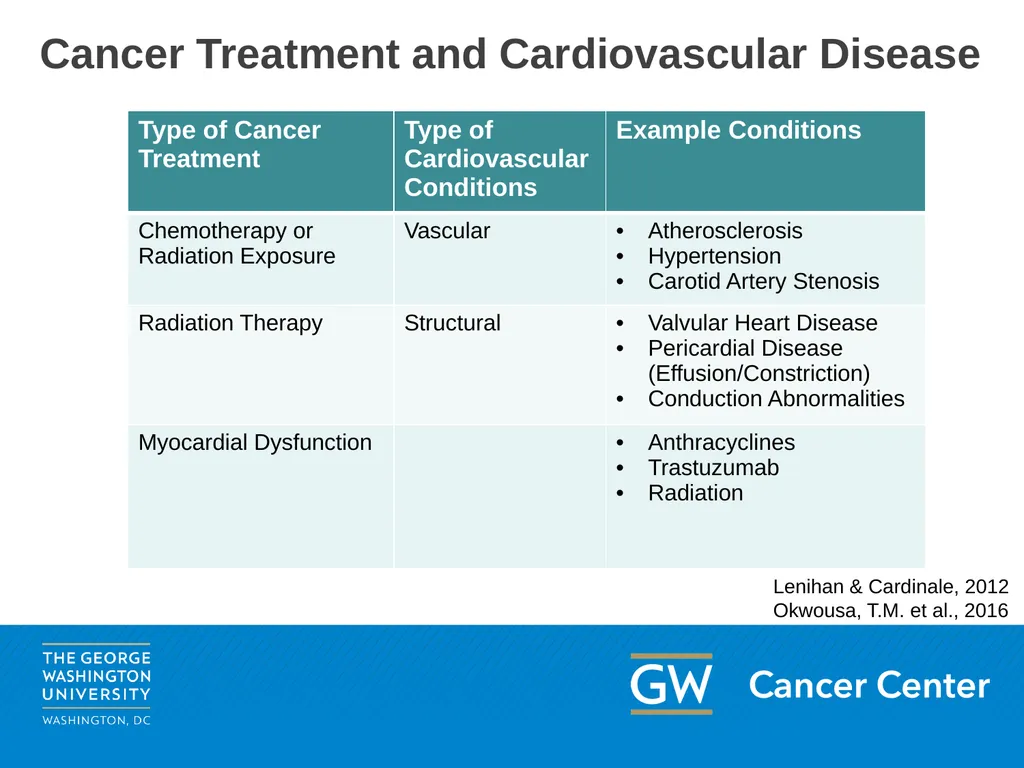
slide32. Cancer Treatment and Cardiovascular Disease Lenihan & Cardinale, 2012
Okwousa, T.M. et al., 2016<br>
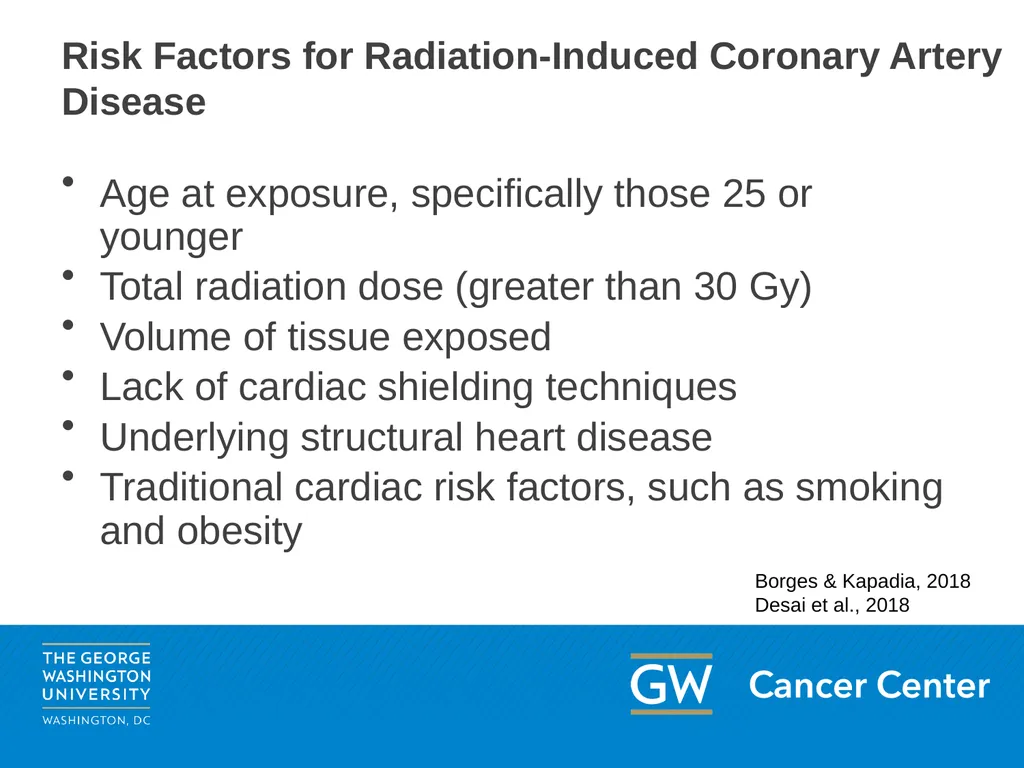
slide33. Risk Factors for Radiation-Induced Coronary Artery Disease Age at exposure, specifically those 25 or younger
Total radiation dose (greater than 30 Gy)
Volume of tissue exposed
Lack of cardiac shielding techniques
Underlying structural heart disease
Traditional cardiac risk factors, such as smoking and obesity Borges & Kapadia, 2018
Desai et al., 2018<br>
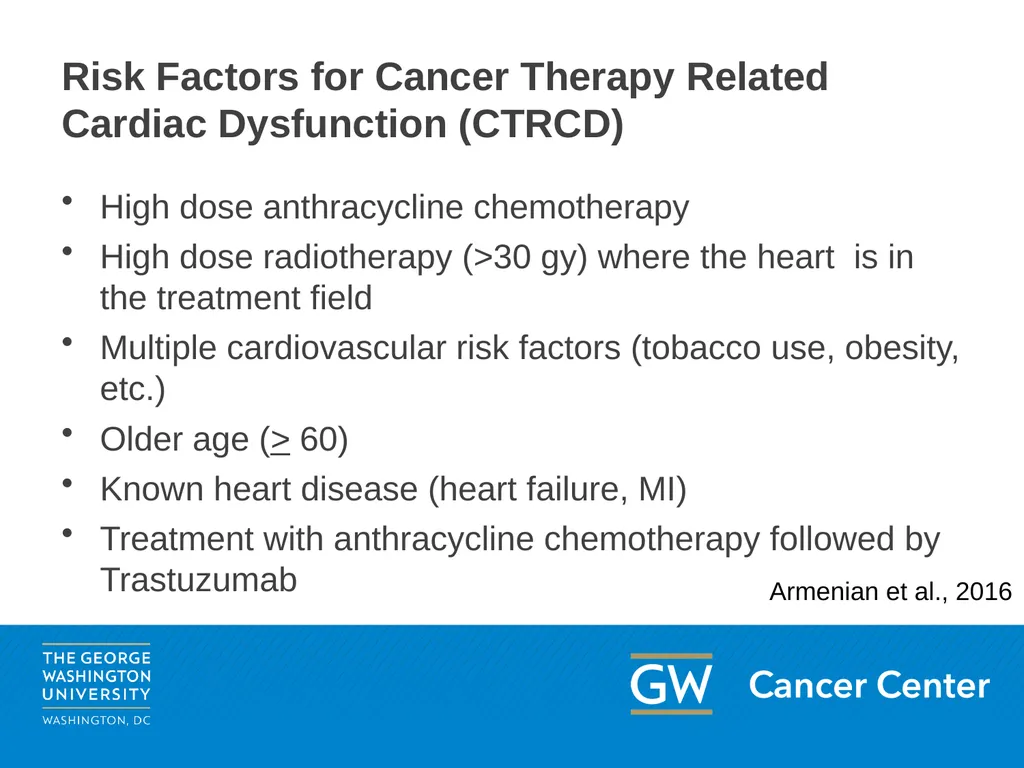
slide34. Risk Factors for Cancer Therapy Related Cardiac Dysfunction (CTRCD) High dose anthracycline chemotherapy
High dose radiotherapy (>30 gy) where the heart is in the treatment field
Multiple cardiovascular risk factors (tobacco use, obesity, etc.)
Older age (> 60)
Known heart disease (heart failure, MI)
Treatment with anthracycline chemotherapy followed by Trastuzumab Armenian et al., 2016<br>
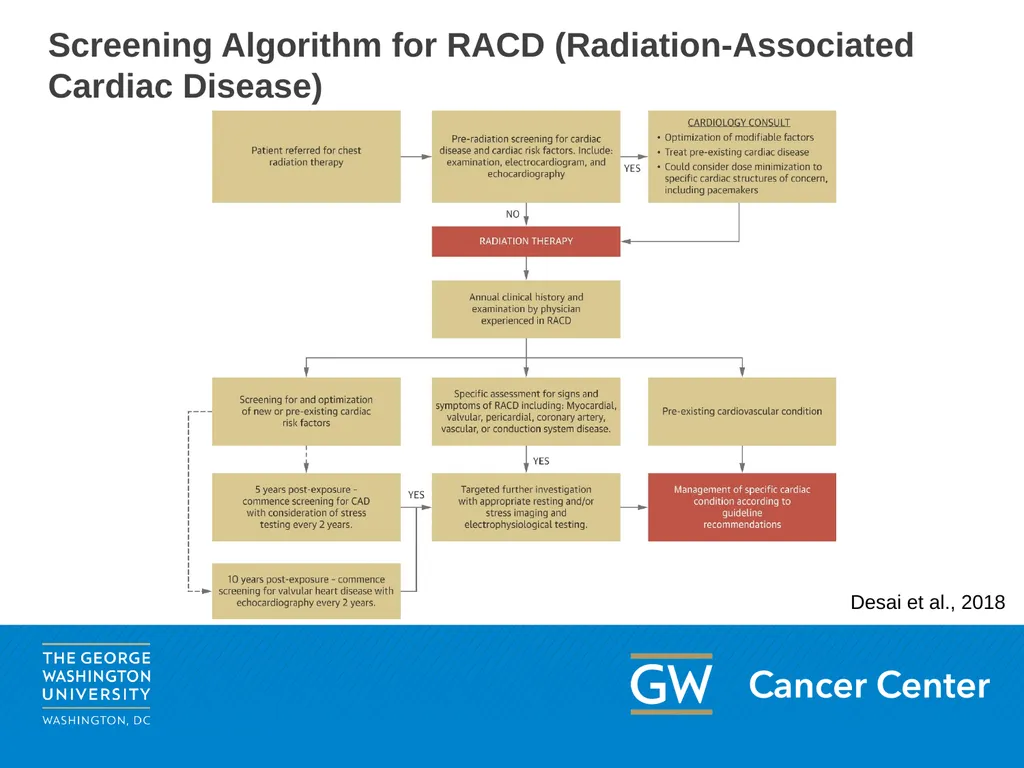
slide35. Screening Algorithm for RACD (Radiation-Associated Cardiac Disease) Desai et al., 2018<br>
slide36. Cardiac Surveillance Clinical Practice Guidelines
NCCN.org
ASCO
Risk stratification and cardiac surveillance guidelines<br>
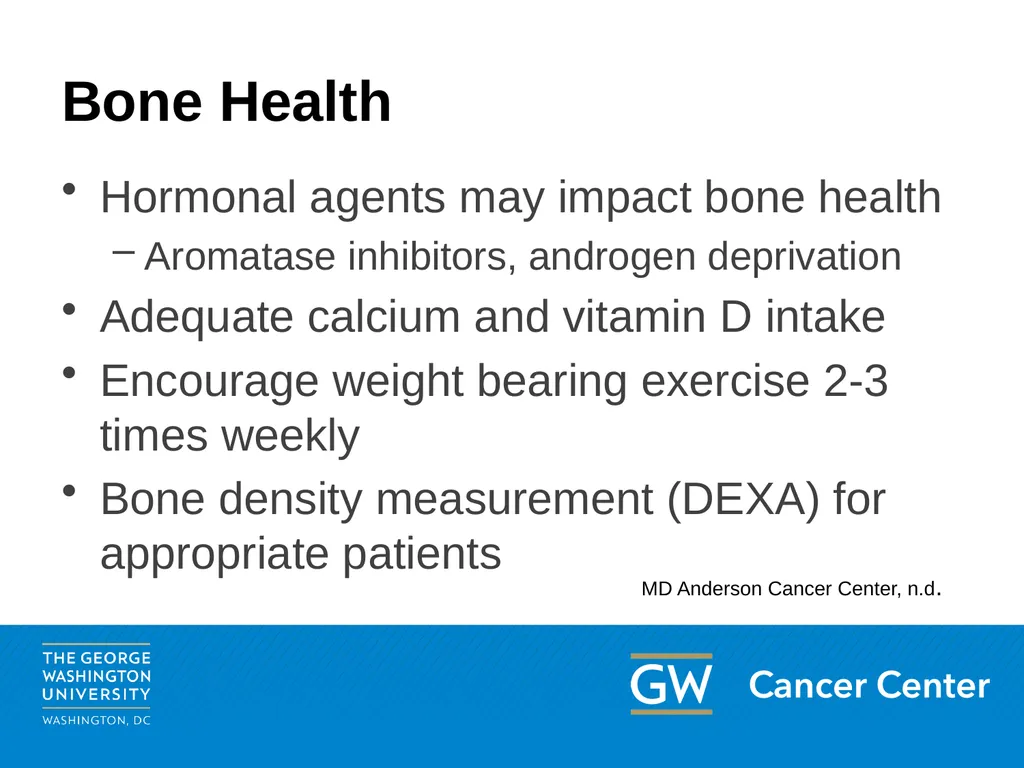
slide37. Bone Health Hormonal agents may impact bone health
Aromatase inhibitors, androgen deprivation
Adequate calcium and vitamin D intake
Encourage weight bearing exercise 2-3 times weekly
Bone density measurement (DEXA) for appropriate patients MD Anderson Cancer Center, n.d.<br>
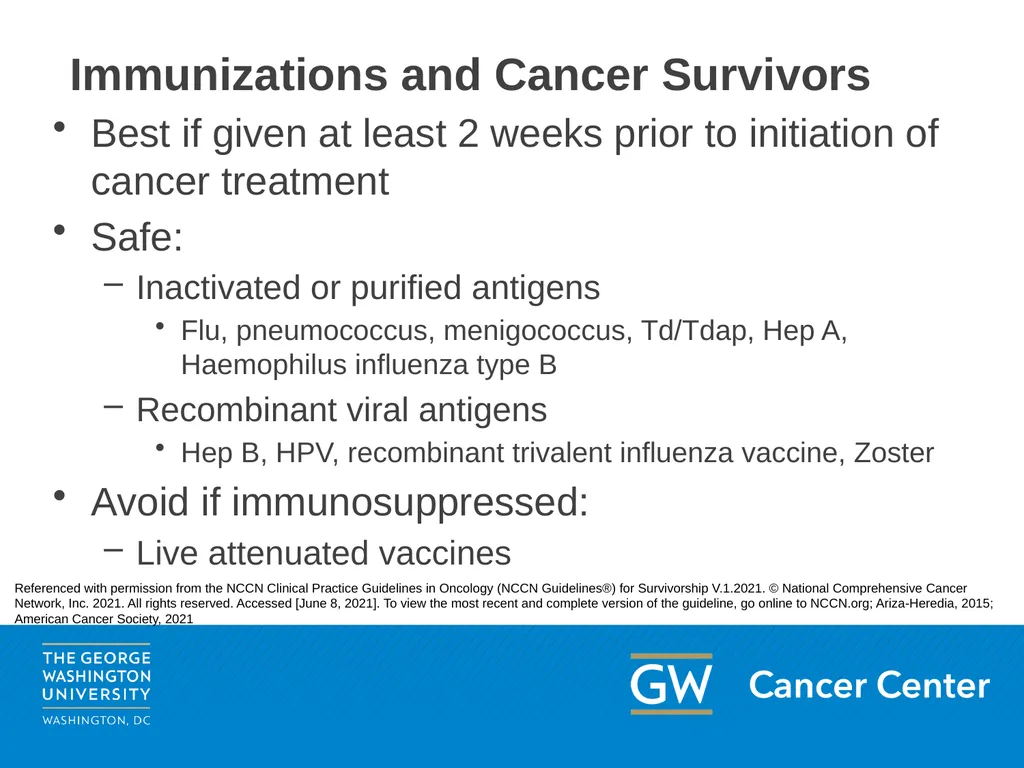
slide38. Immunizations and Cancer Survivors Best if given at least 2 weeks prior to initiation of cancer treatment
Safe:
Inactivated or purified antigens
Flu, pneumococcus, menigococcus, Td/Tdap, Hep A, Haemophilus influenza type B
Recombinant viral antigens
Hep B, HPV, recombinant trivalent influenza vaccine, Zoster
Avoid if immunosuppressed:
Live attenuated vaccines Referenced with permission from the NCCN Clinical Practice Guidelines in Oncology (NCCN Guidelines®) for Survivorship V.1.2021. © National Comprehensive Cancer Network, Inc. 2021. All rights reserved. Accessed [June 8, 2021]. To view the most recent and complete version of the guideline, go online to NCCN.org; Ariza-Heredia, 2015; American Cancer Society, 2021<br>
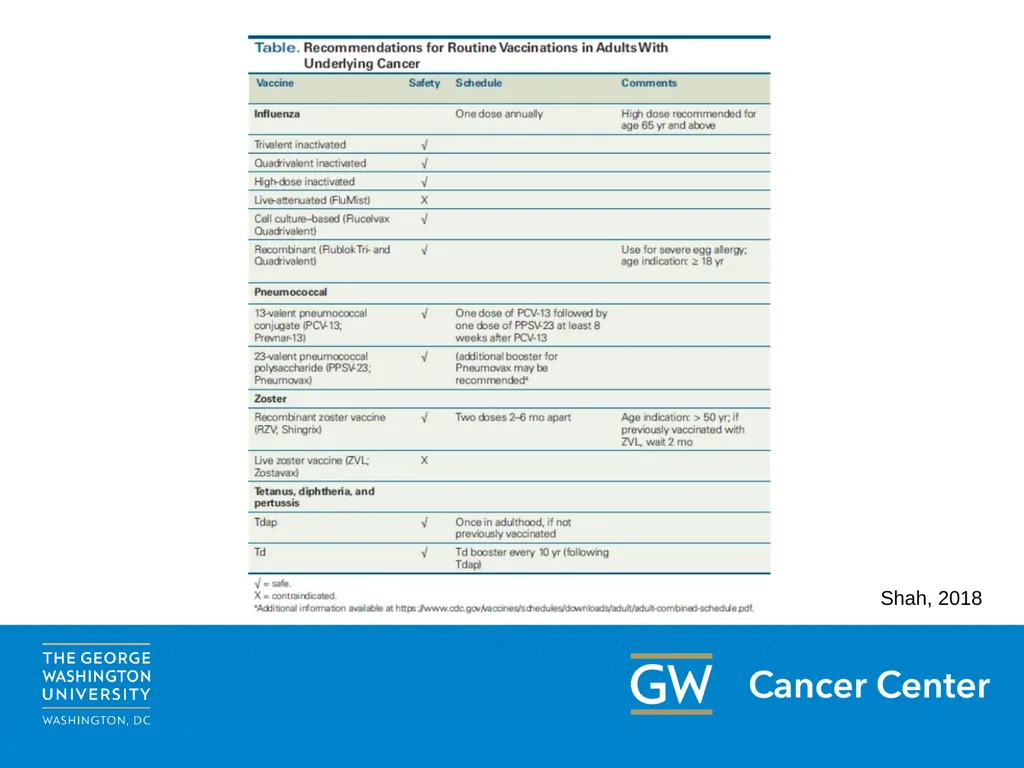
slide39. Shah, 2018<br>
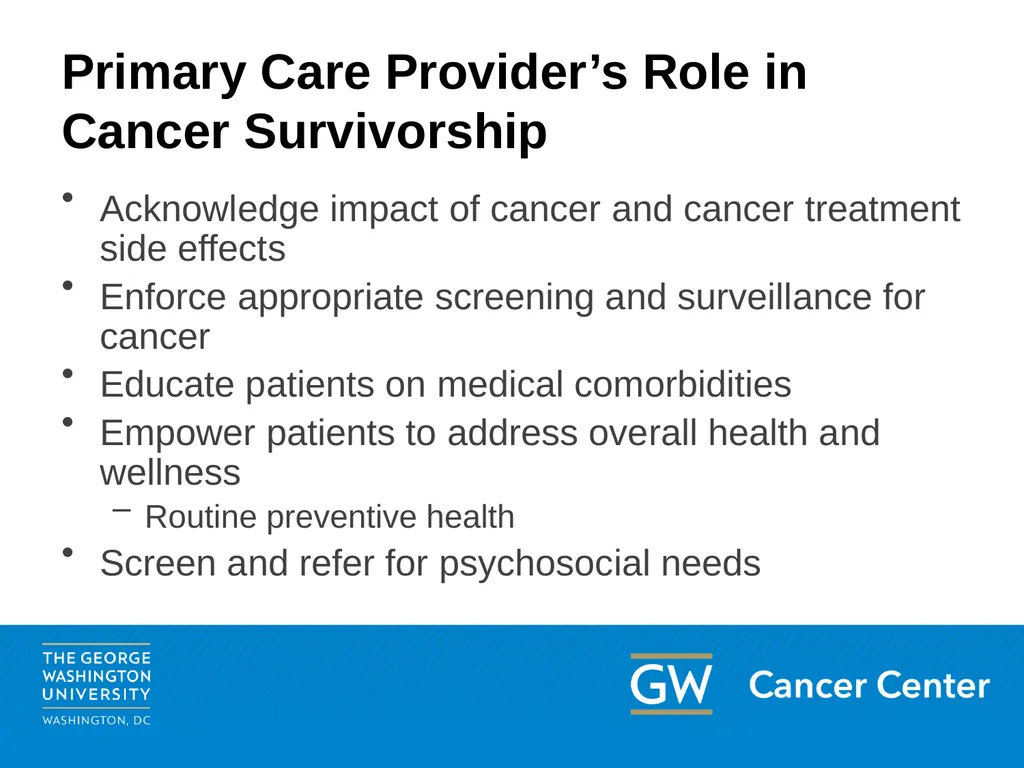
slide40. Primary Care Provider’s Role in Cancer Survivorship Acknowledge impact of cancer and cancer treatment side effects
Enforce appropriate screening and surveillance for cancer
Educate patients on medical comorbidities
Empower patients to address overall health and wellness
Routine preventive health
Screen and refer for psychosocial needs<br>
slide41. References Afifi, A. M., Saad, A. M., Al-Husseini, M. J., Elmehrath, A. O., Northfelt, D. W., & Sonbol, M. B. (2019). Causes of death after breast
cancer diagnosis: A US population-based analysis. Cancer, 126(7), 1559-1567. doi: 10.1002/cncr.32648.
American Cancer Society (n.d.). Alcohol Use and Cancer. Retrieved from: https://www.cancer.org/cancer/cancer-causes/diet-physical-
activity/alcohol-use-and-cancer.html
American Cancer Society. (2019). Cancer Treatment & Survivorship Facts & Figures 2019-2021. Retrieved from
https://www.cancer.org/research/cancer-facts-statistics/survivor-facts-figures.html.
American Cancer Society. (2021). COVID-19 vaccines in people with cancer. Retrieved from
https://www.cancer.org/treatment/treatments-and-side-effects/physical-side-effects/low-blood-counts/infections/covid-19-vaccines-in-people-
with-cancer.html.
American Cancer Society. (2020). How cancer and cancer treatment can affect sexuality. Retrieved from
https://www.cancer.org/treatment/treatments-and-side-effects/physical-side-effects/fertility-and-sexual-side-effects/how-cancer-affects-
sexuality.html.
American Cancer Society. (n.d.). Second cancers. Retrieved from https://www.cancer.org/treatment/treatments-and-side-effects/physical-side-
effects/second-cancers-in-adults.html
American College of Sports Medicine. (2019). New infographic available: Exercise guidelines for cancer patients and survivors. Retrieved from
https://www.acsm.org/read-research/newsroom/news-releases/news-detail/2019/11/27/new-infographic-available-exercise-guidelines-
cancer-patients-survivors.
American Society of Clinical Oncology. (2014). ASCO Guidelines: Screening, assessment, and care of anxiety and depressive symptoms in
adults with cancer. https://www.asco.org/sites/new-www.asco.org/files/content-files/practice-and-guidelines/documents/depression-anxiety-
summary-of-recs-table.pdf
American Urological Association. (2018). Erectile dysfunction: AUA guideline (2018). https://www.auanet.org/guidelines/erectile-dysfunction-
(ed)-guideline.<br>
slide42. References Ariza-Heredia, E. J., & Chemaly, R. F. (2015). Practical review of immunizations in adult patients with cancer. Human vaccines &
immunotherapeutics, 11(11), 2606–2614. https://doi.org/10.1080/21645515.2015.1062189
Avgerinos, K., Spyrou, N., Mantzoros, C. S., & Dalamaga. (2019). Obesity and cancer risk: Emerging biological mechanisms and perspectives.
Metabolism, 92, 121-135. doi: 10.1016/j.metabol.2018.11.001
Bartula, I. & Sherman, K. A. (2013). Screening for sexual dysfunction in women diagnosed with breast cancer: Systemic review and
recommendations. Breast Cancer Research and Treatment, 141(2), 173-185. doi: 10.1007/s10549-013-2685-9.
Borges, N., & Kapadia, S. R. (2018, May 25). Radiation-induced CAD: Incidence, diagnosis, and management outcome. American College of
Cardiology. https://www.acc.org/latest-in-cardiology/articles/2018/05/24/01/44/radiation-induced-
cad#:~:text=Risk%20factors%20for%20radiation%2Dinduced,lack%20of%20cardiac%20shielding%20techniques
Cancer Treatment Centers of America. (2020). Continued smoking may affect cancer patients’ treatments, symptoms and side effects.
Retrieved from https://www.cancercenter.com/community/blog/2020/11/cancer-patients-smoking.
Centers for Disease Control and Prevention. (2014). Planning and Implementing Screening and Brief Intervention for Risky Alcohol Use: A Step
by-Step Guide for Primary Care Practices. Retrieved from:
https://www.cdc.gov/ncbddd/fasd/documents/AlcoholSBIImplementationGuide.pdf
Chen, W. Y., Rosner, B., Hankinson, S. E., Colditz, G. A., & Willett, W. C. (2011). Moderate alcohol consumption during adult life, drinking
patterns, and breast cancer. JAMA, 306(17), 1884-1890. doi: 10.1001/jama.2011.1590.
Eng, L., Pringle, D., Su, J., Espin-Garcia, O., Niu, C., Mahler., M., … & Liu, G. (2018). Patterns, perceptions and their association with changes
in alcohol consumption in cancer survivors. European Journal of Cancer Care, 28(1), e12933.
doi: https://doi-org.proxygw.wrlc.org/10.1111/ecc.12933.
Friedenreich, C. M., Stone, C. R. Cheung, W. Y., & Hayes, S. C. (2020). Physical activity and mortality in cancer survivors: A systematic review
and meta-analysis. Journal of the National Institute Cancer Spectrum, 4(1). doi: https://doi.org/10.1093/jncics/pkz080.<br>
slide43. References Joly, F., Lange, M., Dos Santos, M., Vaz-Luis, I., & Di Meglio, A. (2019). Long-term fatigue and cognitive disorders in breast cancer survivors.
Cancers, 11(12). doi: 10.3390/cancers11121896.
Lenihan, D. J., & Cardinale, D. M. (2012). Late cardiac effects of cancer treatment. Journal of Clinical Oncology, 30(30), 3657-3664.
doi: 10.1200/JCO.2012.45.2938.
MD Anderson Cancer Center. (n.d.). Bone health and cancer treatment. Retrieved from https://www.mdanderson.org/patients-family/diagnosis-
treatment/emotional-physical-effects/bone-health.html
National Cancer Institute. (2018). Alcohol and cancer risk. Retrieved from https://www.cancer.gov/about-cancer/causes-
prevention/risk/alcohol/alcohol-fact-sheet.
National Cancer Institute. (2020). Cancer Statistics. Retrieved from https://www.cancer.gov/about-
cancer/understanding/statistics#:~:text=As%20of%20January%202019%2C%20there,to%2022.2%20million%20by%202030
National Comprehensive Cancer Network. (2020). Guidelines for Patients Distress During Cancer Care. Retrieved from
https://www.nccn.org/patients/guidelines/content/PDF/distress-patient.pdf Referenced with permission from the NCCN Clinical Practice Guidelines in Oncology (NCCN Guidelines®) for Distress Management V.2.2021. © National Comprehensive Cancer Network, Inc. 2021. All rights reserved. Accessed [May 21, 2021]. To view the most recent and complete version of the guideline, go online to NCCN.org. NCCN makes no warranties of any kind whatsoever regarding their content, use or application and disclaims any responsibility for their application or use in any way.
National Comprehensive Cancer Network. (2021). Guidelines for Smoking Cessation. Retrieved from
https://www.nccn.org/guidelines/guidelines-detail?category=3&id=1463. Referenced with permission from the NCCN Clinical Practice Guidelines in Oncology (NCCN Guidelines®) for Smoking Cessation Guideline V.2.2019. © National Comprehensive Cancer Network, Inc. 2019. All rights reserved. Accessed [May 21, 2021]. To view the most recent and complete version of the guideline, go online to NCCN.org. NCCN makes no warranties of any kind whatsoever regarding their content, use or application and disclaims any responsibility for their application or use in any way.<br>
slide44. References National Comprehensive Cancer Network. (2021). Guidelines for Survivorship. Retrieved from
https://www.nccn.org/guidelines/guidelines-detail?category=3&id=1466. Referenced with permission from the NCCN Clinical Practice Guidelines in Oncology (NCCN Guidelines®) © National Comprehensive Cancer Network, Inc. 2019. All rights reserved. Accessed [May 21, 2021]. To view the most recent and complete version of the guideline, go online to NCCN.org. NCCN makes no warranties of any kind whatsoever regarding their content, use or application and disclaims any responsibility for their application or use in any way.
National Comprehensive Cancer Network. (2020). Survivorship care for cancer-related late and long-term effects. Retrieved from
https://www.nccn.org/patients/guidelines/content/PDF/survivorship-crl-patient.pdf. Referenced with permission from the NCCN Clinical Practice Guidelines in Oncology (NCCN Guidelines®) for Survivorship V.1.2021. © National Comprehensive Cancer Network, Inc. 2021. All rights reserved. Accessed [May 21, 2021]. To view the most recent and complete version of the guideline, go online to NCCN.org. NCCN makes no warranties of any kind whatsoever regarding their content, use or application and disclaims any responsibility for their application or use in any way.
National Comprehensive Cancer Network. (2020). Survivorship care for healthy living. Retrieved from
https://www.nccn.org/patients/guidelines/content/PDF/survivorship-hl-patient.pdf. Referenced with permission from the NCCN Clinical Practice Guidelines in Oncology (NCCN Guidelines®) for Survivorship V.1.2021. © National Comprehensive Cancer Network, Inc. 2021. All rights reserved. Accessed [May 21, 2021]. To view the most recent and complete version of the guideline, go online to NCCN.org. NCCN makes no warranties of any kind whatsoever regarding their content, use or application and disclaims any responsibility for their application or use in any way.
Okwousa, T.M., Anzevino, S., & Rao, R. (2016). Cardiovascular disease in cancer survivors. Postgraduate Medical Journal, 93(1096), 82-90.
doi: :10.1136/postgradmedj-2016-134417.
Playdon, M. C., Bracken, M. B., Sanft, T. B., Ligibel, J. A., Harrigan, M., & Irwin, M. L. (2015). Weight gain after breast cancer diagnosis and all-
cause mortality: Systematic review and meta-analysis. Journal of the National Cancer Institute, 107(12).
doi: https://doi.org/10.1093/jnci/djv275.<br>
slide45. References Rock, C. L., Thomson, C., Gansler, T., Gapstur, S. M., McCullough, M. L., Patel, A. V., Andrews, K. S., Bandera, E. V., Spees, C. K., Robien,
K., Hartman, S., Sullivan, K., Grant, B. L., Hamilton, K. K., Kushi, L. H., Caan, B., J., Kibbe, D., Black, J. D., Wiedt, T. L., … Doyle, C.
(2020).
American Cancer Society guideline for diet and physical activity for cancer prevention. A Cancer Journal for Clinicians, 70(4).
doi: https://doi.org/10.3322/caac.21591.
Shah, M.K., & Kamboj, M. (2018). Immunizing Cancer Patients: Which Patients? Which Vaccines? When to Give? Retrieved from
https://www.cancernetwork.com/view/immunizing-cancer-patients-which-patients-which-vaccines-when-give
Strollo, S. E., Fallon, E. A., Gapstur, S. M, & Smith, T. G. (2020). Cancer-related problems, sleep quality, and sleep distrurbance among long-
term cancer survivors at 9-years post diagnosis. Sleep Medicine, 65, 177-185. doi: https://doi.org/10.1016/j.sleep.2019.10.008.
Tseng, T-S., Lin, H-Y., Moody-Thomas, S., Martin, M., & Chen, T. (2012). Who tended to continue smoking after cancer diagnosis: The national
health and nutrition examination survey 1999-2008. BMC Public Health,12(784).
Wolin, K. Y., Dart, H., & Colditz, G. A. (2013). Eight ways to stay healthy after cancer: An evidence-based message. Cancer Causes & Control,
24, 827-837. doi: https://doi.org/10.1007/s10552-013-0179-z.
Yi, J.C. & Syrjala, K.L. (2017). Anxiety and depression in cancer survivors. The Medical Clinics of North America, 101(6), 1099-1113.
doi: 10.1016/j.mcna.2017.06.005<br>
slide46. Thank you! Follow us on Twitter: @GWCancer
www.gwcancercenter.org Sign-up for the GW Cancer Center’s Patient Navigation and Survivorship E-Newsletter: bit.ly/PNSurvEnews
Sign-up for the GW Cancer Center’s Cancer Control Technical Assistance E-Newsletter: bit.ly/TAPenews<br>
George Washington University Cancer Center TAP. (2020). Cancer Survivorship Series [PowerPoint Slides]. GWU Cancer Center TAP. https://cme.smhs.gwu.edu/gw-cancer-center-/content/cancer-survivorship-series
This content was adapted from the GW Cancer Center the Oncology Patient Navigation Training: The Fundamentals (PI: Pratt-Chapman) developed and maintained by CDC cooperative agreements #NU38DP004972, #5NU58DP006461 and #NU58DP007539. The content added, changed, or adapted by our organization do not necessarily represent the views of the GW Cancer Center or the CDC.
If you have any questions about the following material or would like permission to use this material, please contact cancercontrol@gwu.edu<br>
slide2. Megan Slocum, PA-C
The George Washington University Medical Faculty Associates The Importance of Prevention in Cancer Survivorship: Empowering Survivors to Live Well<br>
slide3. Acknowledgment This webinar was supported by Cooperative Agreement #NU58DP006461-03 from the Centers for Disease Control and Prevention (CDC).
The views expressed in written workshop materials or publications and by speakers and moderators do not necessarily reflect the official policies of the Department of Health and Human Services, nor does the mention of trade names, commercial practices, or organizations imply endorsement by the U.S. Government.<br>
slide4. Learning Objectives Describe guideline-supported recommendations to prevent second cancers (e.g. tobacco prevention/cessation, physical activity, nutrition, moderate alcohol intake, and sun protection)<br>
slide5. Cancer Survivors in the U.S. American Cancer Society, 2019
National Cancer Institute, 2020<br>
slide6. Empowering Survivors to Live Well Prevention
Cancer
Co-morbidities
General Wellness
Diet
Exercise
Weight management
Psychological well-being
Surveillance and Screening<br>
slide7. “Eight Ways to Stay Healthy After Cancer” Wolin et al., 2013<br>
slide8. Perils of Smoking Increased risk of cancer
Reduced effectiveness of cancer treatment
Reduced quality of life
Increased mortality
Cessation improves outcomes Cancer Treatment Centers of America, 2020; Tseng, 2012<br>
slide9. Smoking and Cancer NCCN Clinical Practice Guidelines In Oncology (NCCN Guidelines®)
Provides recommendations to address smoking in patients and interventions for smoking cessation:
Including pharmacotherapy and behavior therapy combination
Close follow-up is encouraged after initiation of pharmacotherapies Referenced with permission from the NCCN Clinical Practice Guidelines in Oncology (NCCN Guidelines®) for Smoking Cessation Guideline V.2.2019. © National Comprehensive Cancer Network, Inc. 2019. All rights reserved. Accessed [May 21, 2021]. To view the most recent and complete version of the guideline, go online to NCCN.org.<br>
slide10. Smoking Cessation Resources Resources for patients:
American Cancer Society
SmokeFree.gov
American Indian Commercial Tobacco Program
ASCO Stopping Tobacco Use After Cancer Diagnosis
MSK Cancer Center Tobacco Treatment Guide: For Patients and Their Families
Resources for providers:
American Academy of Family Physicians
NACCHO Tobacco Cessation for Cancer Survivors
NCI Tobacco and Smoking Cessation Fact Sheet<br>
slide11. Physical Activity and Mortality in All Cancers Friedenreich et al., 2020<br>
slide12. Exercise/Diet and Survivorship American College of Sports Medicine, 2019<br>
slide13. American Cancer Society Nutrition and Physical Activity Guidelines Rock et al., 2020<br>
slide14. Weight and Cancer Weight at diagnosis vs. after treatment
Obesity is BMI > 30 kg/m2
Increased risk in breast, prostate, colorectal, endometrial, esophageal, ovarian cancer
Weight gain after breast cancer diagnosis may have a poorer outcome Avgerinos et al., 2018<br>
slide15. Weight and Cancer Prevalence of obesity after breast cancer diagnosis (n=309).
63.7% of patients reported weight gain after diagnosis, half experienced the weight gain during the first year of diagnosis
Relationship between weight gain and mortality for breast cancer patients (n = 23 832).
No association with all-cause and breast cancer specific mortality and weight gain between 5-10%
Weight gain greater than 10% was associated with a higher hazard ratio for both all-cause mortality and breast cancer specific mortality Ee et al., 2020
Playdon et al., 2015<br>
slide16. Recommendations for Patients Minimum 5 servings of fruits and vegetables per day
Limit processed foods, red meats and beverages high in sugar
Choose a rich diet, that involves lean proteins, healthy oils, vegetables, fruits, whole grains
Remind patients that food is the best source of vitamins, not supplements
Maintain healthy weight<br>
slide17. Patient Resources National Comprehensive Cancer Network: Survivorship Care for Healthy Living
Cancer Support Community: Diet and Nutrition for Cancer Survivors
American Cancer Society: Weight Management Tools Referenced with permission from the NCCN Clinical Practice Guidelines in Oncology (NCCN Guidelines®) for Survivorship V.1.2021. © National Comprehensive Cancer Network, Inc. 2021. All rights reserved. Accessed [May 21, 2021]. To view the most recent and complete version of the guideline, go online to NCCN.org.<br>
slide18. Alcohol Use and Cancer American Cancer Society, nd.;
Chen et al., 2011; National Cancer Institute, 2018<br>
slide19. Approaches to Reducing Alcohol Consumption Screening and Counseling
Tools and resources
Planning and Implementing Screening and Brief Intervention for Risky Alcohol Use
Screening and Behavioral Counseling Interventions Eng et al., 2018<br>
slide20. Alcohol screening and brief intervention CDC, 2014<br>
slide21. Psychosocial Well-being Fatigue
Cognitive changes
Depression
Anxiety
Sleep disturbances
Sexual dysfunction Yi, J.C. & Syrjala, K.L., 2017; Joly, F. et al., 2019; Strollo, S. E. et al., 2020
American Cancer Society, 2020<br>
slide22. Mental Health Clinical Practice Guidelines:
- American Society of Clinical Oncology: depressive symptoms and anxiety:
Assessment throughout the cancer continuum
Special circumstances in the assessment
Patients identified as high risk of harm for themselves or others - refer for emergency evaluation
Consider comorbidities with other disorders American Society of Clinical Oncology, 2014<br>
slide23. Mental Health Guidelines and resources for patients:
National Comprehensive Cancer Network Distress During Cancer Care Guidelines for Patients:
NCCN Distress Thermometer and Problem list
Patients can be referred to other specialists
ACS Tips for Distress Management Referenced with permission from the NCCN Clinical Practice Guidelines in Oncology (NCCN Guidelines®) for Distress Management V.2.2021. © National Comprehensive Cancer Network, Inc. 2021. All rights reserved. Accessed [May 21, 2021]. To view the most recent and complete version of the guideline, go online to NCCN.org; ACS, 2020<br>
slide24. Sexual Dysfunction Screening tools:
For breast cancer patients:
Arizona Sexual Experience Scale, Female Sexual Functioning Index, and Sexual Problems Scale
Guidelines:
NCCN Survivorship Guidelines Referenced with permission from the NCCN Clinical Practice Guidelines in Oncology (NCCN Guidelines®) for Survivorship V.1.2021. © National Comprehensive Cancer Network, Inc. 2021. All rights reserved. Accessed [May 21, 2021]. To view the most recent and complete version of the guideline, go online to NCCN.org; Bartula, 2013<br>
slide25. NCCN Guidelines Version 1.2021 Survivorship: Sexual Function (Female) Reproduced with permission from the NCCN Clinical Practice Guidelines in Oncology (NCCN Guidelines®) for Survivorship V.1.2021. © 2021 National Comprehensive Cancer Network, Inc. All rights reserved. The NCCN Guidelines® and illustrations herein may not be reproduced in any form for any purpose without the express written permission of NCCN. To view the most recent and complete version of the NCCN Guidelines, go online to NCCN.org. The NCCN Guidelines are a work in progress that may be refined as often as new significant data becomes available.<br>
slide26. NCCN Guidelines Version 1.2021 Survivorship: Sexual Function (Male) Reproduced with permission from the NCCN Clinical Practice Guidelines in Oncology (NCCN Guidelines®) for Survivorship V.1.2021. © 2021 National Comprehensive Cancer Network, Inc. All rights reserved. The NCCN Guidelines® and illustrations herein may not be reproduced in any form for any purpose without the express written permission of NCCN. To view the most recent and complete version of the NCCN Guidelines, go online to NCCN.org. The NCCN Guidelines are a work in progress that may be refined as often as new significant data becomes available.<br>
slide27. Surveillance for Recurrence Clinical Practice Guidelines
American Society of Clinical Oncology
National Comprehensive Cancer Network
National Cancer Survivorship Resource Center Referenced with permission from the NCCN Clinical Practice Guidelines in Oncology (NCCN Guidelines®). © 2021 National Comprehensive Cancer Network, Inc. All rights reserved. The NCCN Guidelines® and illustrations herein may not be reproduced in any form for any purpose without the express written permission of NCCN. To view the most recent and complete version of the NCCN Guidelines, go online to NCCN.org. The NCCN Guidelines are a work in progress that may be refined as often as new significant data becomes available.<br>
slide28. Risk of Secondary Cancers American Cancer Society, n.d.<br>
slide29. Screening For Secondary Malignancies Consensus based guidelines
Children’s Oncology Group
National Comprehensive Cancer Network
American Cancer Society
Earlier screening based on risk
Patients and physicians to be vigilant about symptoms and address them appropriately Referenced with permission from the NCCN Clinical Practice Guidelines in Oncology (NCCN Guidelines®) for Survivorship V.1.2021. © National Comprehensive Cancer Network, Inc. 2021. All rights reserved. Accessed [June 21, 2021]. To view the most recent and complete version of the guideline, go online to NCCN.org.<br>
slide30. Cancer Screening for Other Primary Tumors<br>
slide31. Causes of death in each latency period following breast cancer diagnosis Cancer and Comorbidities Afifi et al., 2019<br>
slide32. Cancer Treatment and Cardiovascular Disease Lenihan & Cardinale, 2012
Okwousa, T.M. et al., 2016<br>
slide33. Risk Factors for Radiation-Induced Coronary Artery Disease Age at exposure, specifically those 25 or younger
Total radiation dose (greater than 30 Gy)
Volume of tissue exposed
Lack of cardiac shielding techniques
Underlying structural heart disease
Traditional cardiac risk factors, such as smoking and obesity Borges & Kapadia, 2018
Desai et al., 2018<br>
slide34. Risk Factors for Cancer Therapy Related Cardiac Dysfunction (CTRCD) High dose anthracycline chemotherapy
High dose radiotherapy (>30 gy) where the heart is in the treatment field
Multiple cardiovascular risk factors (tobacco use, obesity, etc.)
Older age (> 60)
Known heart disease (heart failure, MI)
Treatment with anthracycline chemotherapy followed by Trastuzumab Armenian et al., 2016<br>
slide35. Screening Algorithm for RACD (Radiation-Associated Cardiac Disease) Desai et al., 2018<br>
slide36. Cardiac Surveillance Clinical Practice Guidelines
NCCN.org
ASCO
Risk stratification and cardiac surveillance guidelines<br>
slide37. Bone Health Hormonal agents may impact bone health
Aromatase inhibitors, androgen deprivation
Adequate calcium and vitamin D intake
Encourage weight bearing exercise 2-3 times weekly
Bone density measurement (DEXA) for appropriate patients MD Anderson Cancer Center, n.d.<br>
slide38. Immunizations and Cancer Survivors Best if given at least 2 weeks prior to initiation of cancer treatment
Safe:
Inactivated or purified antigens
Flu, pneumococcus, menigococcus, Td/Tdap, Hep A, Haemophilus influenza type B
Recombinant viral antigens
Hep B, HPV, recombinant trivalent influenza vaccine, Zoster
Avoid if immunosuppressed:
Live attenuated vaccines Referenced with permission from the NCCN Clinical Practice Guidelines in Oncology (NCCN Guidelines®) for Survivorship V.1.2021. © National Comprehensive Cancer Network, Inc. 2021. All rights reserved. Accessed [June 8, 2021]. To view the most recent and complete version of the guideline, go online to NCCN.org; Ariza-Heredia, 2015; American Cancer Society, 2021<br>
slide39. Shah, 2018<br>
slide40. Primary Care Provider’s Role in Cancer Survivorship Acknowledge impact of cancer and cancer treatment side effects
Enforce appropriate screening and surveillance for cancer
Educate patients on medical comorbidities
Empower patients to address overall health and wellness
Routine preventive health
Screen and refer for psychosocial needs<br>
slide41. References Afifi, A. M., Saad, A. M., Al-Husseini, M. J., Elmehrath, A. O., Northfelt, D. W., & Sonbol, M. B. (2019). Causes of death after breast
cancer diagnosis: A US population-based analysis. Cancer, 126(7), 1559-1567. doi: 10.1002/cncr.32648.
American Cancer Society (n.d.). Alcohol Use and Cancer. Retrieved from: https://www.cancer.org/cancer/cancer-causes/diet-physical-
activity/alcohol-use-and-cancer.html
American Cancer Society. (2019). Cancer Treatment & Survivorship Facts & Figures 2019-2021. Retrieved from
https://www.cancer.org/research/cancer-facts-statistics/survivor-facts-figures.html.
American Cancer Society. (2021). COVID-19 vaccines in people with cancer. Retrieved from
https://www.cancer.org/treatment/treatments-and-side-effects/physical-side-effects/low-blood-counts/infections/covid-19-vaccines-in-people-
with-cancer.html.
American Cancer Society. (2020). How cancer and cancer treatment can affect sexuality. Retrieved from
https://www.cancer.org/treatment/treatments-and-side-effects/physical-side-effects/fertility-and-sexual-side-effects/how-cancer-affects-
sexuality.html.
American Cancer Society. (n.d.). Second cancers. Retrieved from https://www.cancer.org/treatment/treatments-and-side-effects/physical-side-
effects/second-cancers-in-adults.html
American College of Sports Medicine. (2019). New infographic available: Exercise guidelines for cancer patients and survivors. Retrieved from
https://www.acsm.org/read-research/newsroom/news-releases/news-detail/2019/11/27/new-infographic-available-exercise-guidelines-
cancer-patients-survivors.
American Society of Clinical Oncology. (2014). ASCO Guidelines: Screening, assessment, and care of anxiety and depressive symptoms in
adults with cancer. https://www.asco.org/sites/new-www.asco.org/files/content-files/practice-and-guidelines/documents/depression-anxiety-
summary-of-recs-table.pdf
American Urological Association. (2018). Erectile dysfunction: AUA guideline (2018). https://www.auanet.org/guidelines/erectile-dysfunction-
(ed)-guideline.<br>
slide42. References Ariza-Heredia, E. J., & Chemaly, R. F. (2015). Practical review of immunizations in adult patients with cancer. Human vaccines &
immunotherapeutics, 11(11), 2606–2614. https://doi.org/10.1080/21645515.2015.1062189
Avgerinos, K., Spyrou, N., Mantzoros, C. S., & Dalamaga. (2019). Obesity and cancer risk: Emerging biological mechanisms and perspectives.
Metabolism, 92, 121-135. doi: 10.1016/j.metabol.2018.11.001
Bartula, I. & Sherman, K. A. (2013). Screening for sexual dysfunction in women diagnosed with breast cancer: Systemic review and
recommendations. Breast Cancer Research and Treatment, 141(2), 173-185. doi: 10.1007/s10549-013-2685-9.
Borges, N., & Kapadia, S. R. (2018, May 25). Radiation-induced CAD: Incidence, diagnosis, and management outcome. American College of
Cardiology. https://www.acc.org/latest-in-cardiology/articles/2018/05/24/01/44/radiation-induced-
cad#:~:text=Risk%20factors%20for%20radiation%2Dinduced,lack%20of%20cardiac%20shielding%20techniques
Cancer Treatment Centers of America. (2020). Continued smoking may affect cancer patients’ treatments, symptoms and side effects.
Retrieved from https://www.cancercenter.com/community/blog/2020/11/cancer-patients-smoking.
Centers for Disease Control and Prevention. (2014). Planning and Implementing Screening and Brief Intervention for Risky Alcohol Use: A Step
by-Step Guide for Primary Care Practices. Retrieved from:
https://www.cdc.gov/ncbddd/fasd/documents/AlcoholSBIImplementationGuide.pdf
Chen, W. Y., Rosner, B., Hankinson, S. E., Colditz, G. A., & Willett, W. C. (2011). Moderate alcohol consumption during adult life, drinking
patterns, and breast cancer. JAMA, 306(17), 1884-1890. doi: 10.1001/jama.2011.1590.
Eng, L., Pringle, D., Su, J., Espin-Garcia, O., Niu, C., Mahler., M., … & Liu, G. (2018). Patterns, perceptions and their association with changes
in alcohol consumption in cancer survivors. European Journal of Cancer Care, 28(1), e12933.
doi: https://doi-org.proxygw.wrlc.org/10.1111/ecc.12933.
Friedenreich, C. M., Stone, C. R. Cheung, W. Y., & Hayes, S. C. (2020). Physical activity and mortality in cancer survivors: A systematic review
and meta-analysis. Journal of the National Institute Cancer Spectrum, 4(1). doi: https://doi.org/10.1093/jncics/pkz080.<br>
slide43. References Joly, F., Lange, M., Dos Santos, M., Vaz-Luis, I., & Di Meglio, A. (2019). Long-term fatigue and cognitive disorders in breast cancer survivors.
Cancers, 11(12). doi: 10.3390/cancers11121896.
Lenihan, D. J., & Cardinale, D. M. (2012). Late cardiac effects of cancer treatment. Journal of Clinical Oncology, 30(30), 3657-3664.
doi: 10.1200/JCO.2012.45.2938.
MD Anderson Cancer Center. (n.d.). Bone health and cancer treatment. Retrieved from https://www.mdanderson.org/patients-family/diagnosis-
treatment/emotional-physical-effects/bone-health.html
National Cancer Institute. (2018). Alcohol and cancer risk. Retrieved from https://www.cancer.gov/about-cancer/causes-
prevention/risk/alcohol/alcohol-fact-sheet.
National Cancer Institute. (2020). Cancer Statistics. Retrieved from https://www.cancer.gov/about-
cancer/understanding/statistics#:~:text=As%20of%20January%202019%2C%20there,to%2022.2%20million%20by%202030
National Comprehensive Cancer Network. (2020). Guidelines for Patients Distress During Cancer Care. Retrieved from
https://www.nccn.org/patients/guidelines/content/PDF/distress-patient.pdf Referenced with permission from the NCCN Clinical Practice Guidelines in Oncology (NCCN Guidelines®) for Distress Management V.2.2021. © National Comprehensive Cancer Network, Inc. 2021. All rights reserved. Accessed [May 21, 2021]. To view the most recent and complete version of the guideline, go online to NCCN.org. NCCN makes no warranties of any kind whatsoever regarding their content, use or application and disclaims any responsibility for their application or use in any way.
National Comprehensive Cancer Network. (2021). Guidelines for Smoking Cessation. Retrieved from
https://www.nccn.org/guidelines/guidelines-detail?category=3&id=1463. Referenced with permission from the NCCN Clinical Practice Guidelines in Oncology (NCCN Guidelines®) for Smoking Cessation Guideline V.2.2019. © National Comprehensive Cancer Network, Inc. 2019. All rights reserved. Accessed [May 21, 2021]. To view the most recent and complete version of the guideline, go online to NCCN.org. NCCN makes no warranties of any kind whatsoever regarding their content, use or application and disclaims any responsibility for their application or use in any way.<br>
slide44. References National Comprehensive Cancer Network. (2021). Guidelines for Survivorship. Retrieved from
https://www.nccn.org/guidelines/guidelines-detail?category=3&id=1466. Referenced with permission from the NCCN Clinical Practice Guidelines in Oncology (NCCN Guidelines®) © National Comprehensive Cancer Network, Inc. 2019. All rights reserved. Accessed [May 21, 2021]. To view the most recent and complete version of the guideline, go online to NCCN.org. NCCN makes no warranties of any kind whatsoever regarding their content, use or application and disclaims any responsibility for their application or use in any way.
National Comprehensive Cancer Network. (2020). Survivorship care for cancer-related late and long-term effects. Retrieved from
https://www.nccn.org/patients/guidelines/content/PDF/survivorship-crl-patient.pdf. Referenced with permission from the NCCN Clinical Practice Guidelines in Oncology (NCCN Guidelines®) for Survivorship V.1.2021. © National Comprehensive Cancer Network, Inc. 2021. All rights reserved. Accessed [May 21, 2021]. To view the most recent and complete version of the guideline, go online to NCCN.org. NCCN makes no warranties of any kind whatsoever regarding their content, use or application and disclaims any responsibility for their application or use in any way.
National Comprehensive Cancer Network. (2020). Survivorship care for healthy living. Retrieved from
https://www.nccn.org/patients/guidelines/content/PDF/survivorship-hl-patient.pdf. Referenced with permission from the NCCN Clinical Practice Guidelines in Oncology (NCCN Guidelines®) for Survivorship V.1.2021. © National Comprehensive Cancer Network, Inc. 2021. All rights reserved. Accessed [May 21, 2021]. To view the most recent and complete version of the guideline, go online to NCCN.org. NCCN makes no warranties of any kind whatsoever regarding their content, use or application and disclaims any responsibility for their application or use in any way.
Okwousa, T.M., Anzevino, S., & Rao, R. (2016). Cardiovascular disease in cancer survivors. Postgraduate Medical Journal, 93(1096), 82-90.
doi: :10.1136/postgradmedj-2016-134417.
Playdon, M. C., Bracken, M. B., Sanft, T. B., Ligibel, J. A., Harrigan, M., & Irwin, M. L. (2015). Weight gain after breast cancer diagnosis and all-
cause mortality: Systematic review and meta-analysis. Journal of the National Cancer Institute, 107(12).
doi: https://doi.org/10.1093/jnci/djv275.<br>
slide45. References Rock, C. L., Thomson, C., Gansler, T., Gapstur, S. M., McCullough, M. L., Patel, A. V., Andrews, K. S., Bandera, E. V., Spees, C. K., Robien,
K., Hartman, S., Sullivan, K., Grant, B. L., Hamilton, K. K., Kushi, L. H., Caan, B., J., Kibbe, D., Black, J. D., Wiedt, T. L., … Doyle, C.
(2020).
American Cancer Society guideline for diet and physical activity for cancer prevention. A Cancer Journal for Clinicians, 70(4).
doi: https://doi.org/10.3322/caac.21591.
Shah, M.K., & Kamboj, M. (2018). Immunizing Cancer Patients: Which Patients? Which Vaccines? When to Give? Retrieved from
https://www.cancernetwork.com/view/immunizing-cancer-patients-which-patients-which-vaccines-when-give
Strollo, S. E., Fallon, E. A., Gapstur, S. M, & Smith, T. G. (2020). Cancer-related problems, sleep quality, and sleep distrurbance among long-
term cancer survivors at 9-years post diagnosis. Sleep Medicine, 65, 177-185. doi: https://doi.org/10.1016/j.sleep.2019.10.008.
Tseng, T-S., Lin, H-Y., Moody-Thomas, S., Martin, M., & Chen, T. (2012). Who tended to continue smoking after cancer diagnosis: The national
health and nutrition examination survey 1999-2008. BMC Public Health,12(784).
Wolin, K. Y., Dart, H., & Colditz, G. A. (2013). Eight ways to stay healthy after cancer: An evidence-based message. Cancer Causes & Control,
24, 827-837. doi: https://doi.org/10.1007/s10552-013-0179-z.
Yi, J.C. & Syrjala, K.L. (2017). Anxiety and depression in cancer survivors. The Medical Clinics of North America, 101(6), 1099-1113.
doi: 10.1016/j.mcna.2017.06.005<br>
slide46. Thank you! Follow us on Twitter: @GWCancer
www.gwcancercenter.org Sign-up for the GW Cancer Center’s Patient Navigation and Survivorship E-Newsletter: bit.ly/PNSurvEnews
Sign-up for the GW Cancer Center’s Cancer Control Technical Assistance E-Newsletter: bit.ly/TAPenews<br>