
This project was supported by Grant No.














Description: This project was supported by Grant No. 2017-NT-BX-K001 awarded by the Bureau of Justice Assistance. The Bureau of Justice Assistance is a component of the Department of Justices Office of Justice Programs, which also includes the Bureau
Related Topics
Download Presentation
"This project was supported by Grant No." is the property of its rightful owner. Permission is granted to download and print the materials on this website for personal, non-commercial use only, and to display it on your personal computer provided you do not modify the materials and that you retain all copyright notices contained in the materials. By downloading content from our website, you accept the terms of this agreement.
Presentation Transcript
slide1. This project was supported by Grant No. 2017-NT-BX-K001 awarded by the Bureau of Justice Assistance. The Bureau of Justice Assistance is a component of the Department of Justice’s Office of Justice Programs, which also includes the Bureau of Justice Statistics, the National Institute of Justice, the Office of Juvenile Justice and Delinquency Prevention, the Office for Victims of Crime, and the SMART Office. Points of view or opinions in this document are those of the author and do not necessarily represent the official position or policies of the U.S. Department of Justice.<br>
slide2. In-person Training session Sharing Your Story With Law Enforcement<br>
slide3. <Insert trainer names> Welcome!<br>
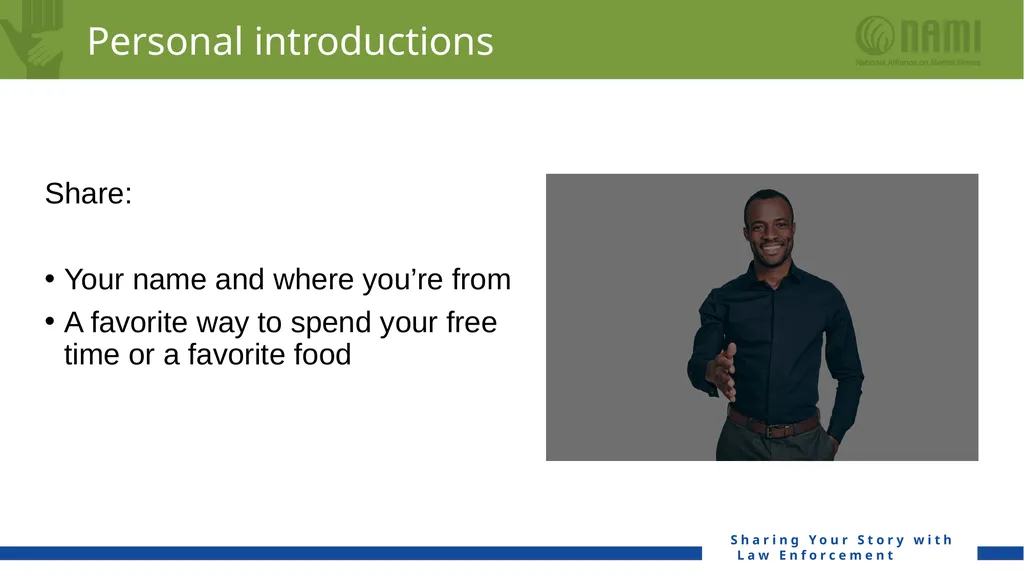
slide4. Personal introductions Share:
Your name and where you’re from
A favorite way to spend your free time or a favorite food Sharing Your Story with
Law Enforcement<br>
slide5. Agenda & logistics Start & end times
Breaks
Bathrooms
Water & snacks
Lunch
Taking care of yourself
Questions
Training Packet
Tablets and computers Sharing Your Story with
Law Enforcement<br>
slide6. Participate fully
Help keep us on time
Turn off cell phones
Others? Ground rules Sharing Your Story with
Law Enforcement<br>
slide7. Purpose Sharing Your Story with
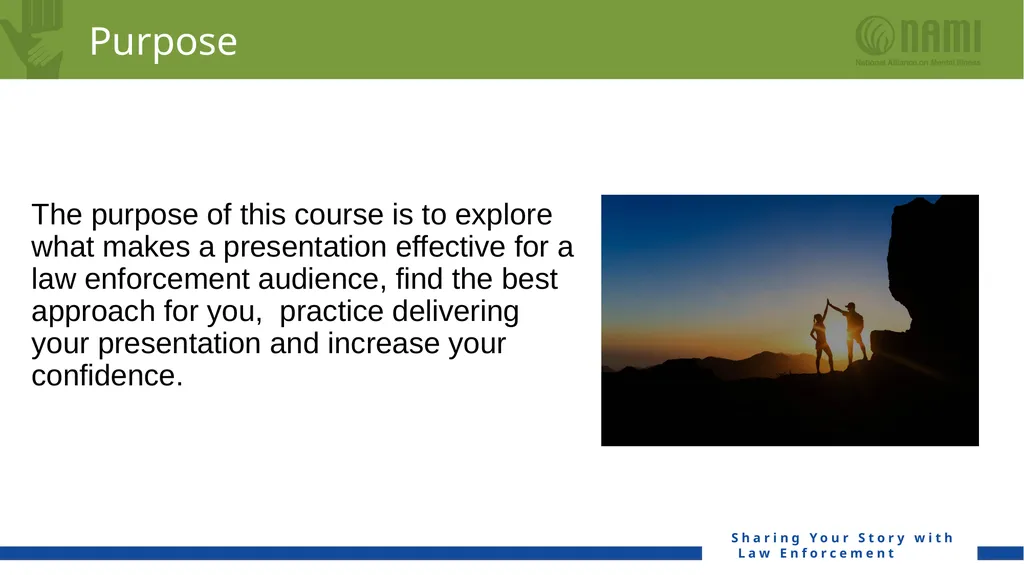
Law Enforcement The purpose of this course is to explore what makes a presentation effective for a law enforcement audience, find the best approach for you, practice delivering your presentation and increase your confidence.<br>
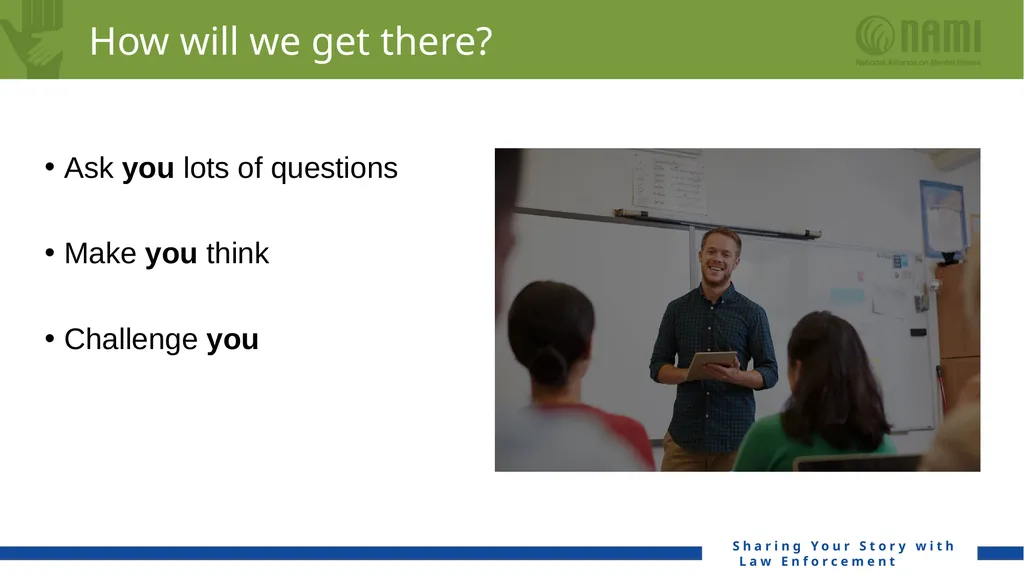
slide8. How will we get there? Ask you lots of questions
Make you think
Challenge you Sharing Your Story with
Law Enforcement<br>
slide9. What you will walk away with An understanding of CIT programs and the role of the Peer and Family Perspective presentation in CIT training.
How you can best approach your presentation and effectively speak to a law enforcement audience
Confidence in your abilities
Clarity on how to handle tough questions Sharing Your Story with
Law Enforcement<br>
slide10. Pre-training evaluation Sharing Your Story with
Law Enforcement<br>
slide11. A brief overview of cit and the importance of the lived experience presentation Crisis Intervention Team (CIT) Training<br>
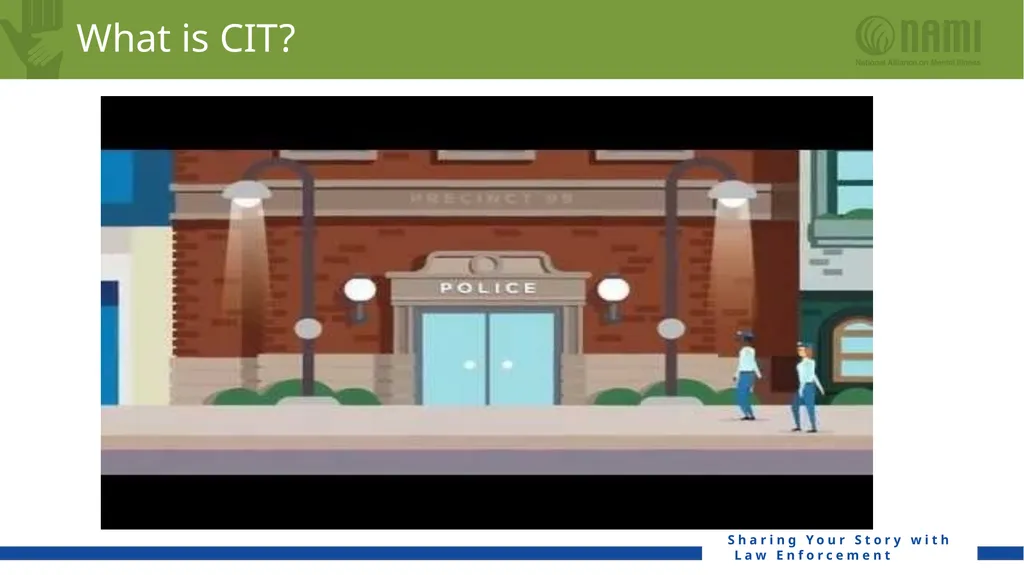
slide12. What is CIT? Sharing Your Story with
Law Enforcement<br>
slide13. <Include information specific to your communities CIT program> CIT in your community Sharing Your Story with
Law Enforcement<br>
slide14. It is YOUR story!
A personal perspective on mental health crisis
Goals:
Law enforcement officers better understand mental illness and the challenges peers and family members face
Eliminate stigma
One on one exchange (Q&A)
Move hearts and change minds!
Officers often say this is the best part of the training! CIT lived experience presentation Sharing Your Story with
Law Enforcement<br>
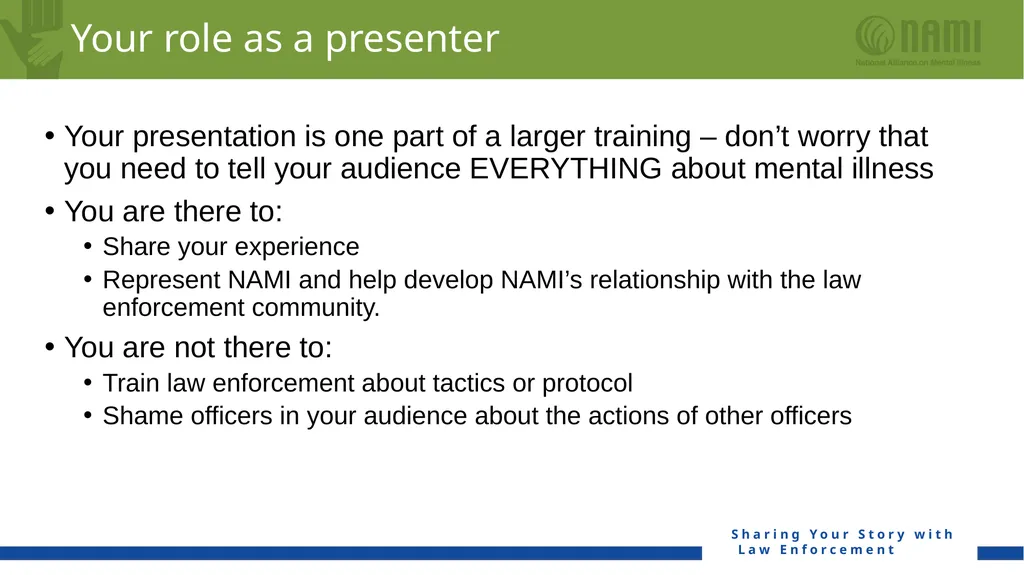
slide15. Your presentation is one part of a larger training – don’t worry that you need to tell your audience EVERYTHING about mental illness
You are there to:
Share your experience
Represent NAMI and help develop NAMI’s relationship with the law enforcement community.
You are not there to:
Train law enforcement about tactics or protocol
Shame officers in your audience about the actions of other officers Your role as a presenter Sharing Your Story with
Law Enforcement<br>
slide16. Understanding law enforcement, their culture and Being the most effective presenter for this audience Not As Seen on TV<br>
slide17. 73% of officers say they have never fired their service weapon while on duty (not including training exercises) and the vast majority of their calls are resolved without any use of force.
Only 8% of officers see themselves as enforcers, 31% see themselves as protectors.
84% of officers say they worry about their safety, 42% say this worry is nearly always or often.
Source: Pew Research Center. (2017). Behind the Badge. Washington, DC http://www.pewsocialtrends.org/2017/01/11/police-culture/ Not as seen on TV: Myth busting Sharing Your Story with
Law Enforcement<br>
slide18. Nearly 1 in 4 police officers have thoughts of suicide at some point in their life
More police die by suicide than in the line of duty. In 2017 there were an estimated 140 law enforcement suicides.
Law enforcement often report symptoms of depression, PTSD and burnout, which is often related to secondary traumatic stress experienced in their work.
Source: Ruderman Family Foundation. (2017). Mental Health and Suicides of First Responders. Boston, MA. https://rudermanfoundation.org/white_papers/police-officers-and-firefighters-are-more-likely-to-die-by-suicide-than-in-line-of-duty/ Law Enforcement and mental illness Sharing Your Story with
Law Enforcement<br>
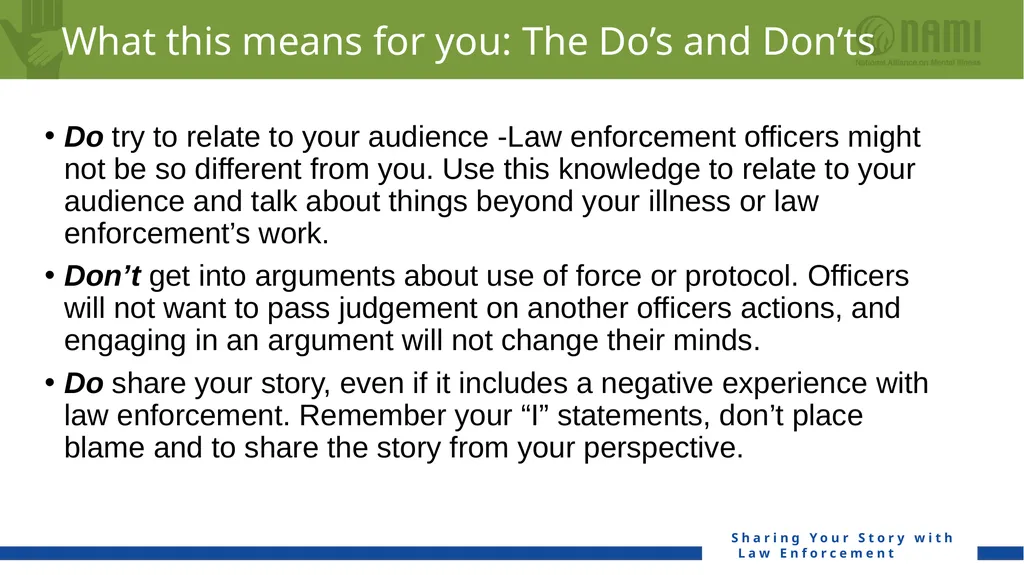
slide19. Do try to relate to your audience -Law enforcement officers might not be so different from you. Use this knowledge to relate to your audience and talk about things beyond your illness or law enforcement’s work.
Don’t get into arguments about use of force or protocol. Officers will not want to pass judgement on another officers actions, and engaging in an argument will not change their minds.
Do share your story, even if it includes a negative experience with law enforcement. Remember your “I” statements, don’t place blame and to share the story from your perspective. What this means for you: The Do’s and Don’ts Sharing Your Story with
Law Enforcement<br>
slide20. Small group work to help you be prepared Developing Your Presenter Skills<br>
slide21. Purpose The purpose of this section is to develop additional skills that are important to every public speakers. Sharing Your Story with
Law Enforcement<br>
slide22. How do you handle stress and anxiety in your every day life?
How to prepare:
Before
During
After
Mindfulness Resources Nervousness – Its normal! What do we do about it? Sharing Your Story with
Law Enforcement<br>
slide23. Directions In your small groups, answer the following questions:
It’s the night before your presentation and you feel nervous. What do you do to feel more calm?
It’s the day of your presentation and you feel nervous. What do you do to feel more calm?
During your presentation you can feel your heart racing and you start to forget what to say. What do you do to feel more calm?
Be prepared to share Sharing Your Story with
Law Enforcement<br>
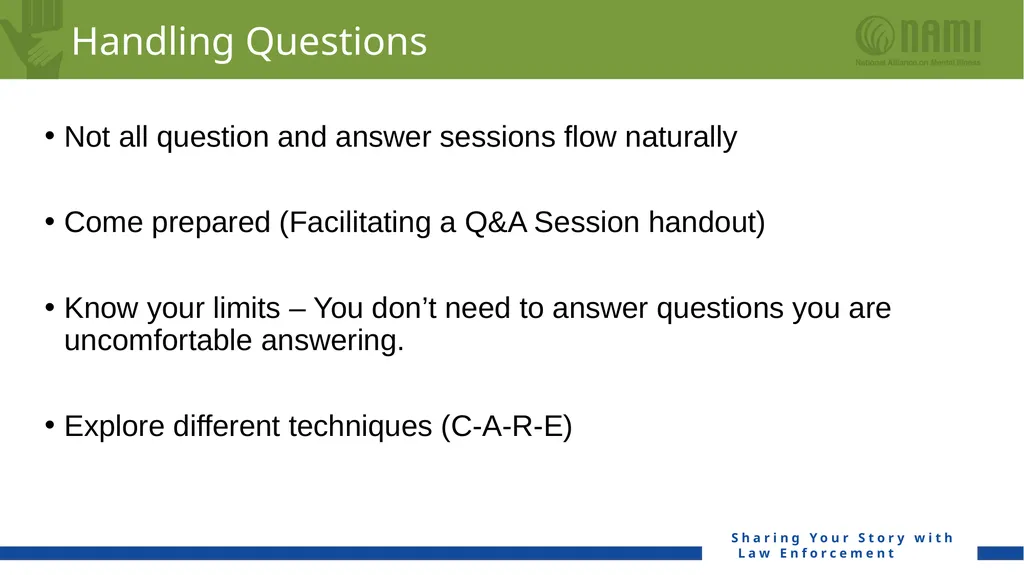
slide24. Not all question and answer sessions flow naturally
Come prepared (Facilitating a Q&A Session handout)
Know your limits – You don’t need to answer questions you are uncomfortable answering.
Explore different techniques (C-A-R-E) Handling Questions Sharing Your Story with
Law Enforcement<br>
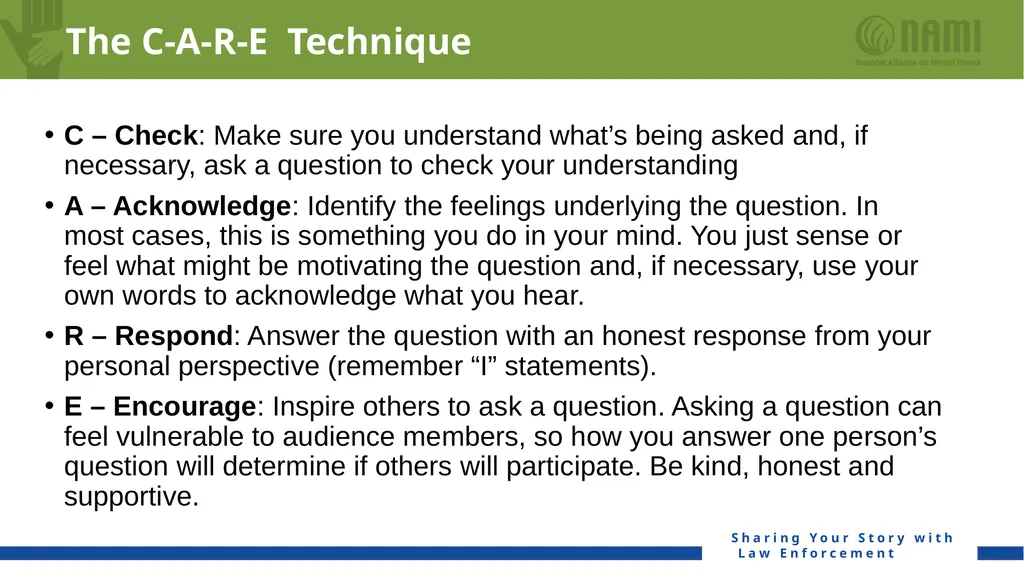
slide25. The C-A-R-E Technique C – Check: Make sure you understand what’s being asked and, if necessary, ask a question to check your understanding
A – Acknowledge: Identify the feelings underlying the question. In most cases, this is something you do in your mind. You just sense or feel what might be motivating the question and, if necessary, use your own words to acknowledge what you hear.
R – Respond: Answer the question with an honest response from your personal perspective (remember “I” statements).
E – Encourage: Inspire others to ask a question. Asking a question can feel vulnerable to audience members, so how you answer one person’s question will determine if others will participate. Be kind, honest and supportive. Sharing Your Story with
Law Enforcement<br>
slide26. Directions In small groups:
Review the question provided
Discuss with your team
Come up with an appropriate response using C – A – R – E
Be prepared to share Sharing Your Story with
Law Enforcement<br>
slide27. Break 15 minutes<br>
slide28. Presenting to a Friendly Audience Small group teamwork<br>
slide29. Purpose The purpose of this activity is to rehearse your presentation in front of a friendly audience, to help each other by using the Presentation feedback criteria form (provided in the Training Tools) and to become more comfortable delivering your presentation. Sharing Your Story with
Law Enforcement<br>
slide30. Directions Break into small groups
Each person in your group delivers their story once all the way through
Those who are not presenting will complete a feedback form
Give the feedback form to the presenter once they’re done Sharing Your Story with
Law Enforcement<br>
slide31. Lunch <Amount of Time for lunch><br>
slide32. Dress rehearsal Presenting to a friendly audience<br>
slide33. Purpose The purpose of this activity is to practice delivering the full presentation, including engagement with the audience. Sharing Your Story with
Law Enforcement<br>
slide34. Directions Presenters
Deliver your complete presentation. Do not stop or come “out of character”
This is an opportunity to practice so make sure you deliver your presentation how you would in front of a law enforcement audience. Sharing Your Story with
Law Enforcement<br>
slide35. Directions continued Audience
Listen, observe, and take notes. The person presenting might use techniques that you will want to incorporate into your presentation
ONLY trainers can give feedback and ask questions during the Q&A segment. Sharing Your Story with
Law Enforcement<br>
slide36. Break 15 minutes<br>
slide37. Reviewing and Feedback Incorporating new ideas into your presentation<br>
slide38. Purpose The purpose of this activity is to reflect on what you have learned today, review the feedback you received from your small group members, and take time to make edits to your story. We are going to explore a few ideas and then have time for editing. Sharing Your Story with
Law Enforcement<br>
slide39. Reflection Think about the presentations you saw today.
What stuck out to you?
Was there any feedback or ideas that you would like to incorporate into your presentation? Sharing Your Story with
Law Enforcement<br>
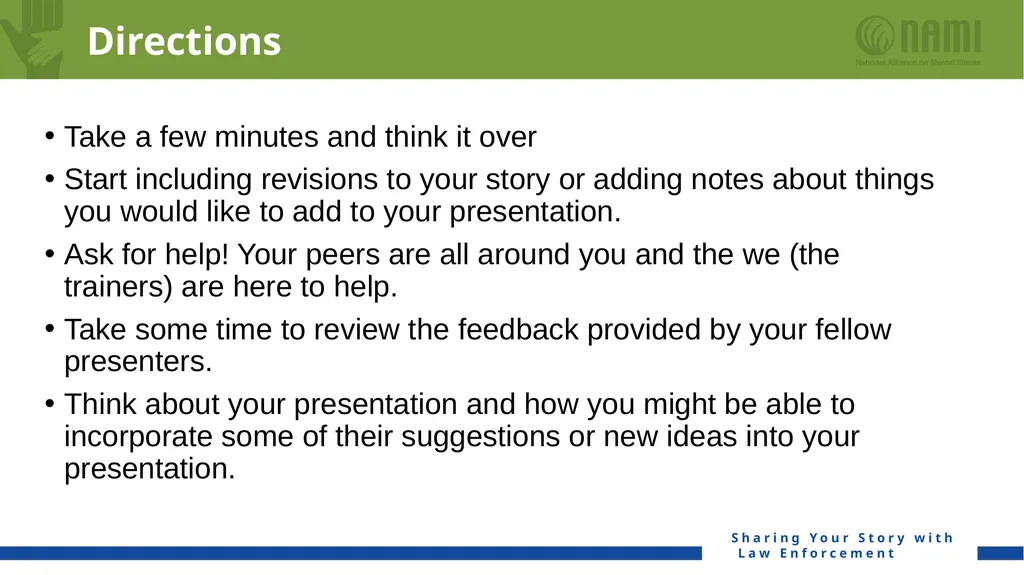
slide40. Directions Take a few minutes and think it over
Start including revisions to your story or adding notes about things you would like to add to your presentation.
Ask for help! Your peers are all around you and the we (the trainers) are here to help.
Take some time to review the feedback provided by your fellow presenters.
Think about your presentation and how you might be able to incorporate some of their suggestions or new ideas into your presentation. Sharing Your Story with
Law Enforcement<br>
slide41. Conclusion Training wrap up<br>
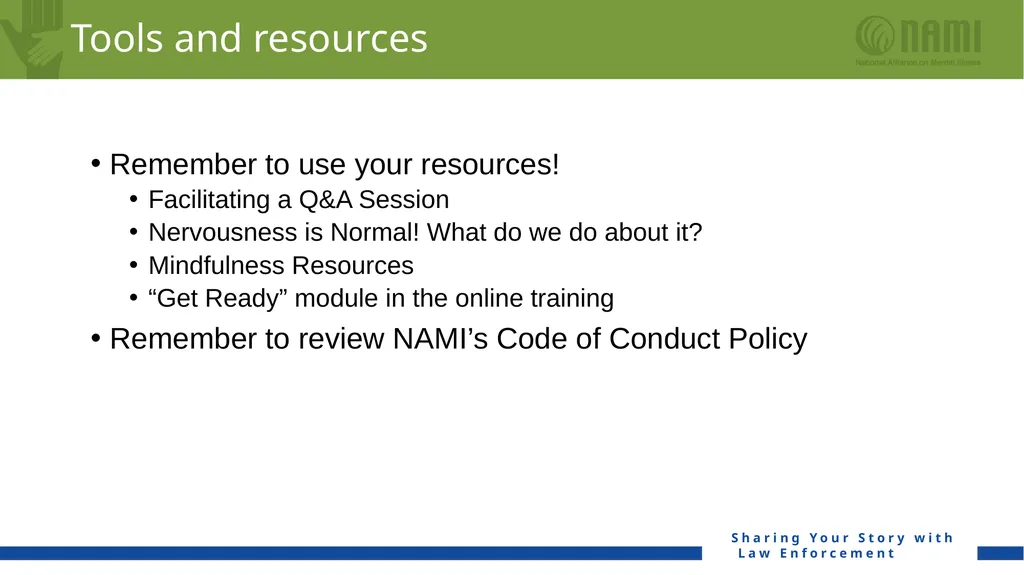
slide42. Remember to use your resources!
Facilitating a Q&A Session
Nervousness is Normal! What do we do about it?
Mindfulness Resources
“Get Ready” module in the online training
Remember to review NAMI’s Code of Conduct Policy Tools and resources Sharing Your Story with
Law Enforcement<br>
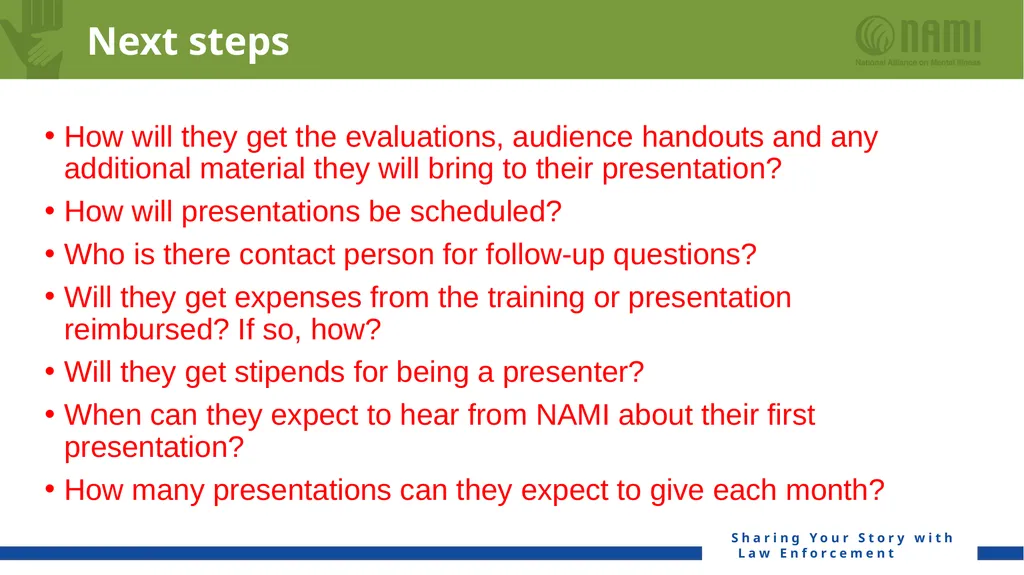
slide43. Next steps How will they get the evaluations, audience handouts and any additional material they will bring to their presentation?
How will presentations be scheduled?
Who is there contact person for follow-up questions?
Will they get expenses from the training or presentation reimbursed? If so, how?
Will they get stipends for being a presenter?
When can they expect to hear from NAMI about their first presentation?
How many presentations can they expect to give each month? Sharing Your Story with
Law Enforcement<br>
slide44. Thank you and congratulations! After completing evaluations, let’s celebrate<br>
slide2. In-person Training session Sharing Your Story With Law Enforcement<br>
slide3. <Insert trainer names> Welcome!<br>
slide4. Personal introductions Share:
Your name and where you’re from
A favorite way to spend your free time or a favorite food Sharing Your Story with
Law Enforcement<br>
slide5. Agenda & logistics Start & end times
Breaks
Bathrooms
Water & snacks
Lunch
Taking care of yourself
Questions
Training Packet
Tablets and computers Sharing Your Story with
Law Enforcement<br>
slide6. Participate fully
Help keep us on time
Turn off cell phones
Others? Ground rules Sharing Your Story with
Law Enforcement<br>
slide7. Purpose Sharing Your Story with
Law Enforcement The purpose of this course is to explore what makes a presentation effective for a law enforcement audience, find the best approach for you, practice delivering your presentation and increase your confidence.<br>
slide8. How will we get there? Ask you lots of questions
Make you think
Challenge you Sharing Your Story with
Law Enforcement<br>
slide9. What you will walk away with An understanding of CIT programs and the role of the Peer and Family Perspective presentation in CIT training.
How you can best approach your presentation and effectively speak to a law enforcement audience
Confidence in your abilities
Clarity on how to handle tough questions Sharing Your Story with
Law Enforcement<br>
slide10. Pre-training evaluation Sharing Your Story with
Law Enforcement<br>
slide11. A brief overview of cit and the importance of the lived experience presentation Crisis Intervention Team (CIT) Training<br>
slide12. What is CIT? Sharing Your Story with
Law Enforcement<br>
slide13. <Include information specific to your communities CIT program> CIT in your community Sharing Your Story with
Law Enforcement<br>
slide14. It is YOUR story!
A personal perspective on mental health crisis
Goals:
Law enforcement officers better understand mental illness and the challenges peers and family members face
Eliminate stigma
One on one exchange (Q&A)
Move hearts and change minds!
Officers often say this is the best part of the training! CIT lived experience presentation Sharing Your Story with
Law Enforcement<br>
slide15. Your presentation is one part of a larger training – don’t worry that you need to tell your audience EVERYTHING about mental illness
You are there to:
Share your experience
Represent NAMI and help develop NAMI’s relationship with the law enforcement community.
You are not there to:
Train law enforcement about tactics or protocol
Shame officers in your audience about the actions of other officers Your role as a presenter Sharing Your Story with
Law Enforcement<br>
slide16. Understanding law enforcement, their culture and Being the most effective presenter for this audience Not As Seen on TV<br>
slide17. 73% of officers say they have never fired their service weapon while on duty (not including training exercises) and the vast majority of their calls are resolved without any use of force.
Only 8% of officers see themselves as enforcers, 31% see themselves as protectors.
84% of officers say they worry about their safety, 42% say this worry is nearly always or often.
Source: Pew Research Center. (2017). Behind the Badge. Washington, DC http://www.pewsocialtrends.org/2017/01/11/police-culture/ Not as seen on TV: Myth busting Sharing Your Story with
Law Enforcement<br>
slide18. Nearly 1 in 4 police officers have thoughts of suicide at some point in their life
More police die by suicide than in the line of duty. In 2017 there were an estimated 140 law enforcement suicides.
Law enforcement often report symptoms of depression, PTSD and burnout, which is often related to secondary traumatic stress experienced in their work.
Source: Ruderman Family Foundation. (2017). Mental Health and Suicides of First Responders. Boston, MA. https://rudermanfoundation.org/white_papers/police-officers-and-firefighters-are-more-likely-to-die-by-suicide-than-in-line-of-duty/ Law Enforcement and mental illness Sharing Your Story with
Law Enforcement<br>
slide19. Do try to relate to your audience -Law enforcement officers might not be so different from you. Use this knowledge to relate to your audience and talk about things beyond your illness or law enforcement’s work.
Don’t get into arguments about use of force or protocol. Officers will not want to pass judgement on another officers actions, and engaging in an argument will not change their minds.
Do share your story, even if it includes a negative experience with law enforcement. Remember your “I” statements, don’t place blame and to share the story from your perspective. What this means for you: The Do’s and Don’ts Sharing Your Story with
Law Enforcement<br>
slide20. Small group work to help you be prepared Developing Your Presenter Skills<br>
slide21. Purpose The purpose of this section is to develop additional skills that are important to every public speakers. Sharing Your Story with
Law Enforcement<br>
slide22. How do you handle stress and anxiety in your every day life?
How to prepare:
Before
During
After
Mindfulness Resources Nervousness – Its normal! What do we do about it? Sharing Your Story with
Law Enforcement<br>
slide23. Directions In your small groups, answer the following questions:
It’s the night before your presentation and you feel nervous. What do you do to feel more calm?
It’s the day of your presentation and you feel nervous. What do you do to feel more calm?
During your presentation you can feel your heart racing and you start to forget what to say. What do you do to feel more calm?
Be prepared to share Sharing Your Story with
Law Enforcement<br>
slide24. Not all question and answer sessions flow naturally
Come prepared (Facilitating a Q&A Session handout)
Know your limits – You don’t need to answer questions you are uncomfortable answering.
Explore different techniques (C-A-R-E) Handling Questions Sharing Your Story with
Law Enforcement<br>
slide25. The C-A-R-E Technique C – Check: Make sure you understand what’s being asked and, if necessary, ask a question to check your understanding
A – Acknowledge: Identify the feelings underlying the question. In most cases, this is something you do in your mind. You just sense or feel what might be motivating the question and, if necessary, use your own words to acknowledge what you hear.
R – Respond: Answer the question with an honest response from your personal perspective (remember “I” statements).
E – Encourage: Inspire others to ask a question. Asking a question can feel vulnerable to audience members, so how you answer one person’s question will determine if others will participate. Be kind, honest and supportive. Sharing Your Story with
Law Enforcement<br>
slide26. Directions In small groups:
Review the question provided
Discuss with your team
Come up with an appropriate response using C – A – R – E
Be prepared to share Sharing Your Story with
Law Enforcement<br>
slide27. Break 15 minutes<br>
slide28. Presenting to a Friendly Audience Small group teamwork<br>
slide29. Purpose The purpose of this activity is to rehearse your presentation in front of a friendly audience, to help each other by using the Presentation feedback criteria form (provided in the Training Tools) and to become more comfortable delivering your presentation. Sharing Your Story with
Law Enforcement<br>
slide30. Directions Break into small groups
Each person in your group delivers their story once all the way through
Those who are not presenting will complete a feedback form
Give the feedback form to the presenter once they’re done Sharing Your Story with
Law Enforcement<br>
slide31. Lunch <Amount of Time for lunch><br>
slide32. Dress rehearsal Presenting to a friendly audience<br>
slide33. Purpose The purpose of this activity is to practice delivering the full presentation, including engagement with the audience. Sharing Your Story with
Law Enforcement<br>
slide34. Directions Presenters
Deliver your complete presentation. Do not stop or come “out of character”
This is an opportunity to practice so make sure you deliver your presentation how you would in front of a law enforcement audience. Sharing Your Story with
Law Enforcement<br>
slide35. Directions continued Audience
Listen, observe, and take notes. The person presenting might use techniques that you will want to incorporate into your presentation
ONLY trainers can give feedback and ask questions during the Q&A segment. Sharing Your Story with
Law Enforcement<br>
slide36. Break 15 minutes<br>
slide37. Reviewing and Feedback Incorporating new ideas into your presentation<br>
slide38. Purpose The purpose of this activity is to reflect on what you have learned today, review the feedback you received from your small group members, and take time to make edits to your story. We are going to explore a few ideas and then have time for editing. Sharing Your Story with
Law Enforcement<br>
slide39. Reflection Think about the presentations you saw today.
What stuck out to you?
Was there any feedback or ideas that you would like to incorporate into your presentation? Sharing Your Story with
Law Enforcement<br>
slide40. Directions Take a few minutes and think it over
Start including revisions to your story or adding notes about things you would like to add to your presentation.
Ask for help! Your peers are all around you and the we (the trainers) are here to help.
Take some time to review the feedback provided by your fellow presenters.
Think about your presentation and how you might be able to incorporate some of their suggestions or new ideas into your presentation. Sharing Your Story with
Law Enforcement<br>
slide41. Conclusion Training wrap up<br>
slide42. Remember to use your resources!
Facilitating a Q&A Session
Nervousness is Normal! What do we do about it?
Mindfulness Resources
“Get Ready” module in the online training
Remember to review NAMI’s Code of Conduct Policy Tools and resources Sharing Your Story with
Law Enforcement<br>
slide43. Next steps How will they get the evaluations, audience handouts and any additional material they will bring to their presentation?
How will presentations be scheduled?
Who is there contact person for follow-up questions?
Will they get expenses from the training or presentation reimbursed? If so, how?
Will they get stipends for being a presenter?
When can they expect to hear from NAMI about their first presentation?
How many presentations can they expect to give each month? Sharing Your Story with
Law Enforcement<br>
slide44. Thank you and congratulations! After completing evaluations, let’s celebrate<br>