
Threat Modeling LLMs The PHANTOM-B Approach Adam
CP
Published · 59 slides · 0 views

1 / 1












Description
Threat Modeling LLMs The PHANTOM-B Approach Adam Shostack 1 Threat Modeling LLMs The PHANTOM-B Approach Blackhat USA August 2026 Adam Shostack 2 The Emperor is most displeased with your lack of AI Progress Agenda Threat modeling context
Related Topics
Share
Embed code
Download this presentation From Below
"Threat Modeling LLMs The PHANTOM-B Approach Adam" is the property of its rightful owner. Permission is granted to download and print the materials on this website for personal, non-commercial use only, and to display it on your personal computer provided you do not modify the materials and that you retain all copyright notices contained in the materials. By downloading content from our website, you accept the terms of this agreement.
Presentation Transcript
01
Threat Modeling LLMs
The PHANTOM-B Approach Adam Shostack 1<br>
02
Threat Modeling LLMs
The PHANTOM-B Approach
Blackhat USA
August 2026 Adam Shostack 2<br>
03
The Emperor is most displeased with your lack of AI Progress<br>
04
Agenda Threat modeling context
Threat modeling LLMs
The PHANTOM-B approach
Why PHANTOM-B?
What is PHANTOM-B? 4<br>
Threat modeling LLMs
The PHANTOM-B approach
Why PHANTOM-B?
What is PHANTOM-B? 4<br>
05
About<br>
06
Threat modeling context<br>
07
What is threat modeling? Using models to help us think about security
The “measure twice, cut once” of engineering
Applies to both tech you produce or tech you operate
Applies to LLMs you train or get from Huggingface 7<br>
The “measure twice, cut once” of engineering
Applies to both tech you produce or tech you operate
Applies to LLMs you train or get from Huggingface 7<br>
08
How do we threat model? Four Question Framework
What are we working on?
What can go wrong?
What are we going to do about it?
Did we do a good job?
Widely adopted: Industry + gov standard
Anthropic, Google, Amazon, MITRE, FDA + more
Threatmodelingmanifesto.org + Shostack.org/whitepapers 8<br>
What are we working on?
What can go wrong?
What are we going to do about it?
Did we do a good job?
Widely adopted: Industry + gov standard
Anthropic, Google, Amazon, MITRE, FDA + more
Threatmodelingmanifesto.org + Shostack.org/whitepapers 8<br>
09
Why bother threat modeling LLMs “Won’t the LLM threat model?”
“My skills say only write secure code!”
“Going fast gets me promoted”
So why bother threat modeling LLMs? 9<br>
“My skills say only write secure code!”
“Going fast gets me promoted”
So why bother threat modeling LLMs? 9<br>
10
Your executives are really scared AI disruption is real
Maybe we’re in a bubble, maybe not?
FOMO is rampant
We have to ship AI stuff! 10<br>
Maybe we’re in a bubble, maybe not?
FOMO is rampant
We have to ship AI stuff! 10<br>
11
Business works better with threat modeling Your developers + leaders don’t understand what can go wrong
LLMs change your security posture
The posture of the code being produced
The strengths and weaknesses of the latest models
Cognitive debt is getting worse
Change continues to accelerate
Staying focused on what we’re working on is crucial 11<br>
LLMs change your security posture
The posture of the code being produced
The strengths and weaknesses of the latest models
Cognitive debt is getting worse
Change continues to accelerate
Staying focused on what we’re working on is crucial 11<br>
12
Threat modeling
is the security technique that
best survives AI disruptions 12<br>
13
Threat modeling can drive risk management 13<br>
14
LLMs also disrupt
threat modeling 14<br>
15
PHANTOM-B origin story (preview) AI disrupted threat modeling in two ways
Using AI to threat model
Threat modeling AI systems
Clients looking for
AI focused training
Lower training cost (“Can we make this faster?”)
Analyzing the state of the art
Reviewed and wrote at length about available threat catalogs 15<br>
Using AI to threat model
Threat modeling AI systems
Clients looking for
AI focused training
Lower training cost (“Can we make this faster?”)
Analyzing the state of the art
Reviewed and wrote at length about available threat catalogs 15<br>
16
Threat Modeling vs red teaming Yonton Zungler (Microsoft Deputy CISO, AI) top three security:
Design systems, not software
Know what can go wrong, and have a plan
Upate your threat model continuously
“Lessons From Red Teaming 100 Generative AI Products”
Lesson #1: “Understand what the system can do and where it is applied” and “The human element of AI red teaming is crucial” 16<br>
Design systems, not software
Know what can go wrong, and have a plan
Upate your threat model continuously
“Lessons From Red Teaming 100 Generative AI Products”
Lesson #1: “Understand what the system can do and where it is applied” and “The human element of AI red teaming is crucial” 16<br>
17
Threat modeling LLMs 17<br>
18
Four scenarios: Using AI in… Offense (write me a phishing email/malware/etc)
Defense (anti-spam, Microsoft defender copilot)
Software development
Business (Today’s focus) Offense Defense Business Software 18<br>
Defense (anti-spam, Microsoft defender copilot)
Software development
Business (Today’s focus) Offense Defense Business Software 18<br>
19
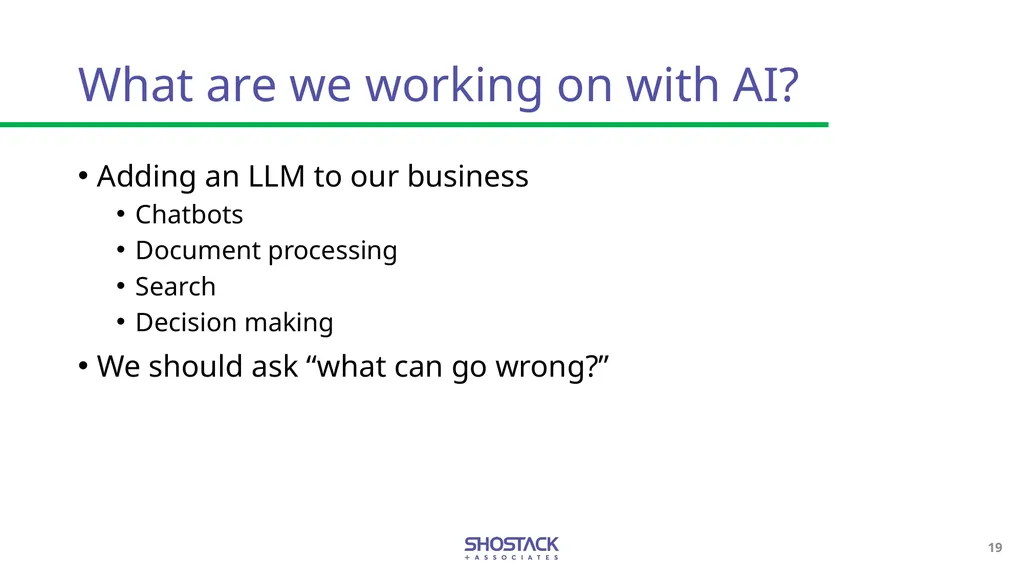
What are we working on with AI? Adding an LLM to our business
Chatbots
Document processing
Search
Decision making
We should ask “what can go wrong?” 19<br>
Chatbots
Document processing
Search
Decision making
We should ask “what can go wrong?” 19<br>
20
Huggingface You are here Not Here 20<br>
21
What can go wrong with AI? 21<br>
22
Lots of sweeping talk about AI Laws
(EU AI Act)
(Harms, Risks) Frameworks
(NIST AI RMF)
(“Risks”) Threat
Catalogs 22<br>
(EU AI Act)
(Harms, Risks) Frameworks
(NIST AI RMF)
(“Risks”) Threat
Catalogs 22<br>
23
What are WE working on? Laws
(EU AI Act)
(Harms, Risks) Frameworks
(NIST AI RMF)
(“Risks”) Threat
Catalogs Engineers Executives 23<br>
(EU AI Act)
(Harms, Risks) Frameworks
(NIST AI RMF)
(“Risks”) Threat
Catalogs Engineers Executives 23<br>
24
Many AI threat catalogs —
Ways to answer “what can go wrong” Berryville’s ML + LLM Risk Analyses
OWASP Top 10 LLMs
OWASP AI Exchange
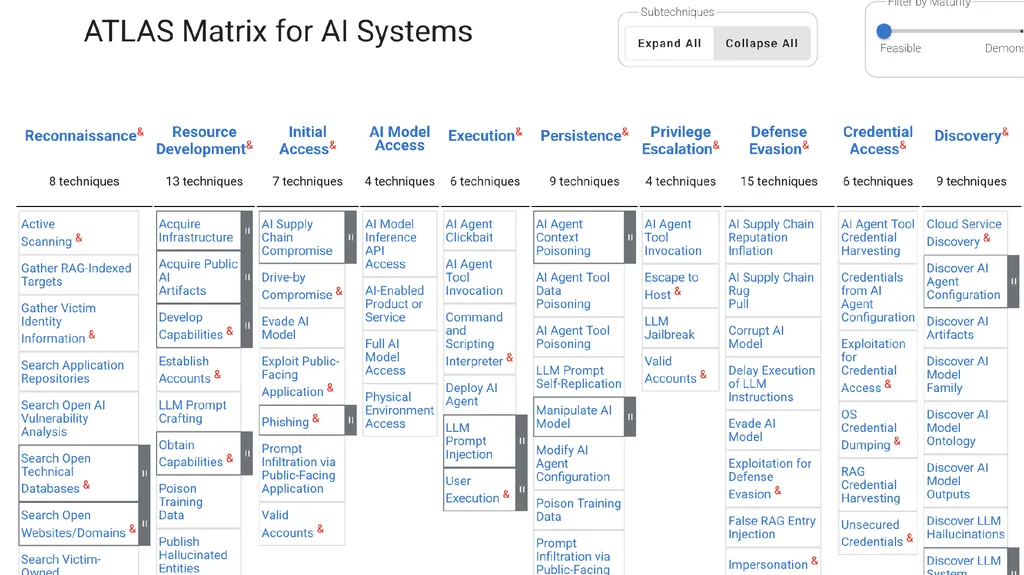
MITRE ATLAS
NIST AIML E2025
Google SAIF
… Threat
Catalogs Structured ways to answer
“What can go wrong”
More organized than ”We’ll red team it”<br>
OWASP Top 10 LLMs
OWASP AI Exchange
MITRE ATLAS
NIST AIML E2025
Google SAIF
… Threat
Catalogs Structured ways to answer
“What can go wrong”
More organized than ”We’ll red team it”<br>
25
The PHANTOM-B Approach 25<br>
26
Why PHANTOM-B? 26<br>
27
The alternatives suck All models are wrong,
some models are useful. 27<br>
28
What goes wrong with TM structures?
(Each “for some users”) High training cost (learning is hard)
Hard to use (even after training)
Not LLM/AI focused
Duplicative/overlaps other frameworks/security work
Raises threats which are irrelevant/can’t fix/won’t fix
“Academic”
Low return on investment
Require software support<br>
Hard to use (even after training)
Not LLM/AI focused
Duplicative/overlaps other frameworks/security work
Raises threats which are irrelevant/can’t fix/won’t fix
“Academic”
Low return on investment
Require software support<br>
29
PHANTOM-B origin story (1/2) 29<br>
30
PHANTOM-B origin story (2/2) Built and iterated over several versions
On our own projects
With hyperscalers, globally significant banks and others
Earlier versions didn’t meet our release quality bar
TRAPHOME
PHANTOMED 30<br>
On our own projects
With hyperscalers, globally significant banks and others
Earlier versions didn’t meet our release quality bar
TRAPHOME
PHANTOMED 30<br>
31
PHANTOM-B is inspired by STRIDE [Spoofing, Tampering, Repudiate, Info disclose, DoS, Expand Authority]
Time-tested + durable mnemonic from Kohnfelder + Garg
STRIDE remains broadly applicable 31<br>
Time-tested + durable mnemonic from Kohnfelder + Garg
STRIDE remains broadly applicable 31<br>
32
PHANTOM-B identifies:
“What can go wrong deploying AI?” Prompt injection
Hallucination
Anthropomorphization
Non-explainable
Training issues
Over-reliance
Missing security engineering
Bias Free to use (CC-BY)
Memorable
100% threat-focused
Fits on a wallet card 32<br>
Hallucination
Anthropomorphization
Non-explainable
Training issues
Over-reliance
Missing security engineering
Bias Free to use (CC-BY)
Memorable
100% threat-focused
Fits on a wallet card 32<br>
33
Focused on using/calling LLMs Under your control (on your GPUs or Amazon Bedrock)
“Downloaded from Huggingface”
An LLM provider offers, such as ChatGPT or Claude
Via the API
(Not useful for “using chatgpt.com in a browser”) 33<br>
“Downloaded from Huggingface”
An LLM provider offers, such as ChatGPT or Claude
Via the API
(Not useful for “using chatgpt.com in a browser”) 33<br>
34
Prompt injection Controlling LLM behavior via input
Code/data confusion
More than just funny stories
Bypasses your controls and gets the LLM to violate rules
Unlike SQLi, no deterministic, proven defenses exist 34<br>
Code/data confusion
More than just funny stories
Bypasses your controls and gets the LLM to violate rules
Unlike SQLi, no deterministic, proven defenses exist 34<br>
35
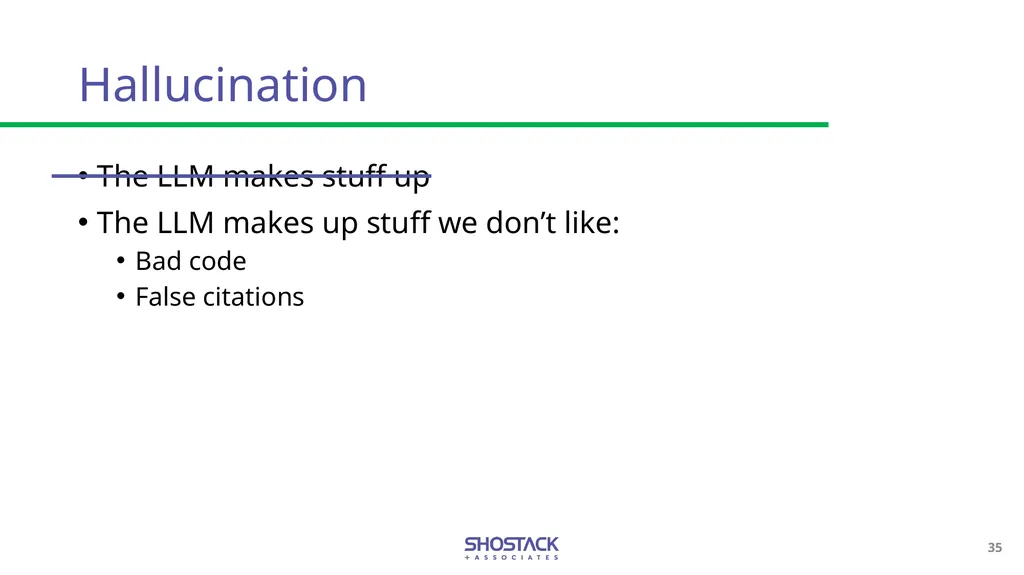
Hallucination The LLM makes stuff up
The LLM makes up stuff we don’t like:
Bad code
False citations 35<br>
The LLM makes up stuff we don’t like:
Bad code
False citations 35<br>
36
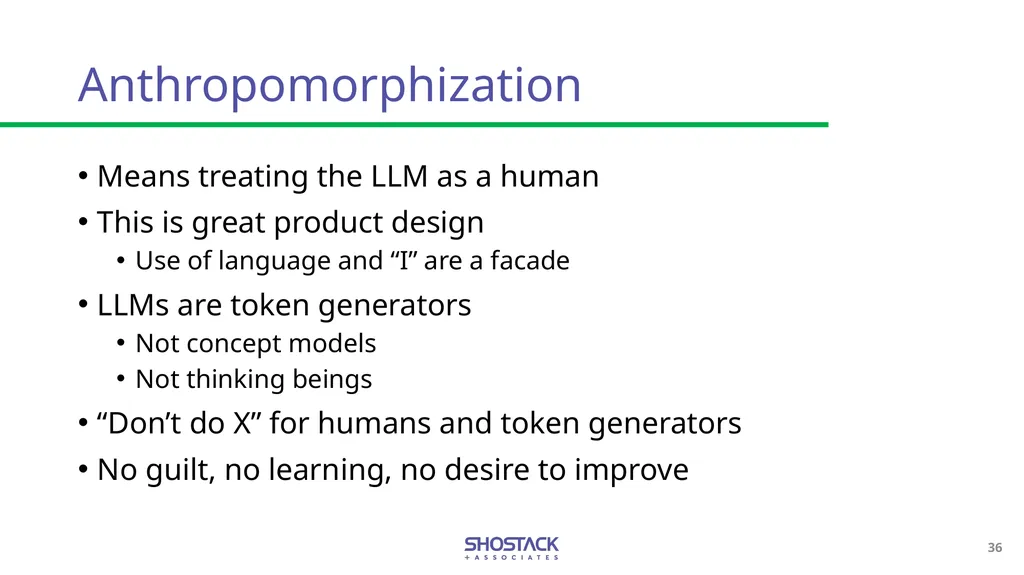
Anthropomorphization Means treating the LLM as a human
This is great product design
Use of language and “I” are a facade
LLMs are token generators
Not concept models
Not thinking beings
“Don’t do X” for humans and token generators
No guilt, no learning, no desire to improve 36<br>
This is great product design
Use of language and “I” are a facade
LLMs are token generators
Not concept models
Not thinking beings
“Don’t do X” for humans and token generators
No guilt, no learning, no desire to improve 36<br>
37
37 Chew up tokens!<br>
38
Non-explainable We can’t tell why we got important results
Explainability as “why did it actually do that?”
Not asking “why did you do that?”
LLMs produce plausible answers, not accurate ones
More important as LLM makes decisions
Explainability for various audiences
Data scientists
End users (eg, medical LLM explaining — accurately — to patients + doctors)
Courts 38<br>
Explainability as “why did it actually do that?”
Not asking “why did you do that?”
LLMs produce plausible answers, not accurate ones
More important as LLM makes decisions
Explainability for various audiences
Data scientists
End users (eg, medical LLM explaining — accurately — to patients + doctors)
Courts 38<br>
39
Training issues LLMs do better as we give them more data
So your LLM was probably trained on Stack Exchange, Reddit + Twitter
Good luck finding that in the model card!
Data poisoning is “scale invariant” with 250 documents Souly, et al, Poisoning Attacks on LLMs Require a Near-constant Number of Poison Samples, 8 October 2025,
https://arxiv.org/abs/2510.07192 39<br>
So your LLM was probably trained on Stack Exchange, Reddit + Twitter
Good luck finding that in the model card!
Data poisoning is “scale invariant” with 250 documents Souly, et al, Poisoning Attacks on LLMs Require a Near-constant Number of Poison Samples, 8 October 2025,
https://arxiv.org/abs/2510.07192 39<br>
40
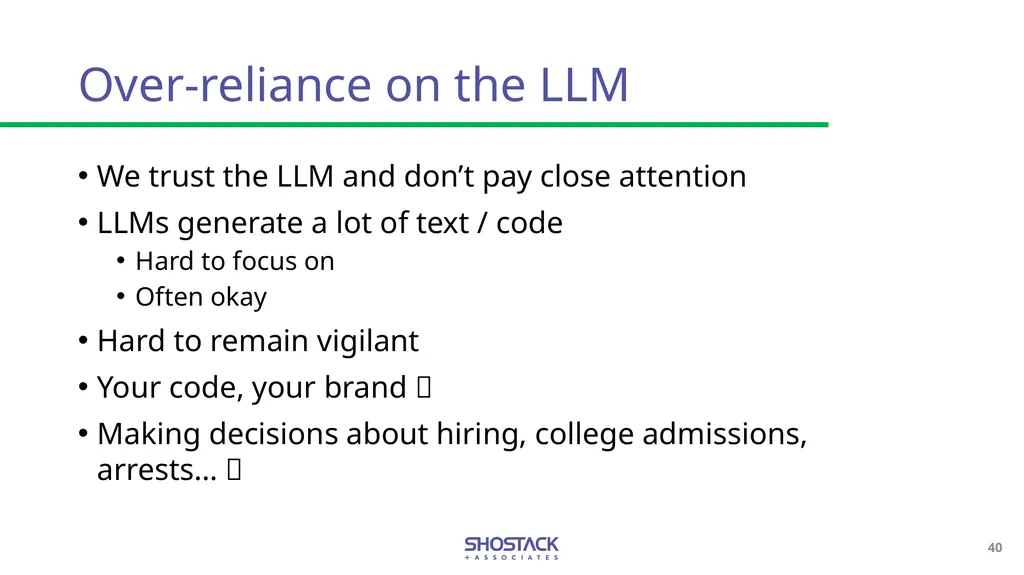
Over-reliance on the LLM We trust the LLM and don’t pay close attention
LLMs generate a lot of text / code
Hard to focus on
Often okay
Hard to remain vigilant
Your code, your brand 🤷
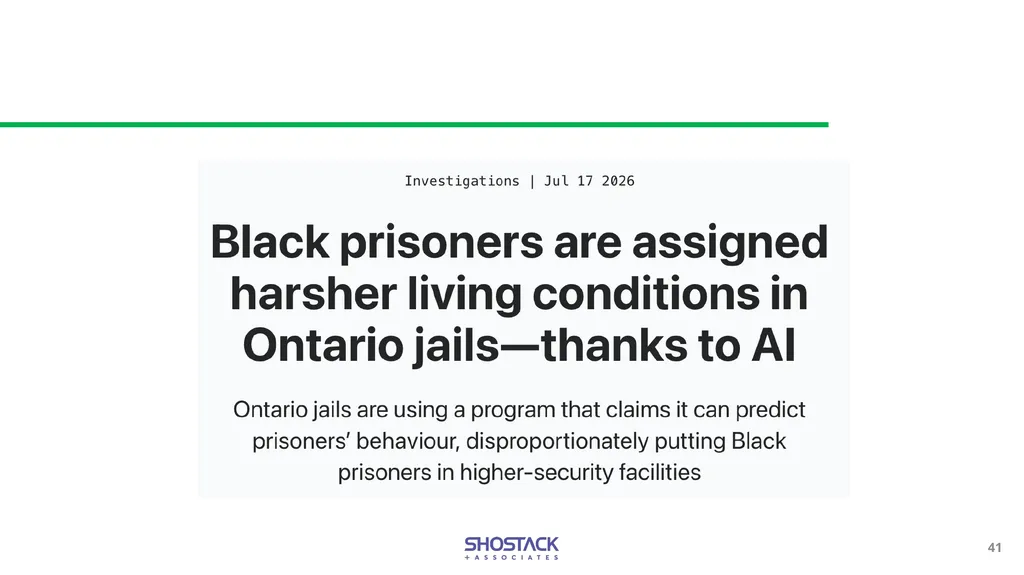
Making decisions about hiring, college admissions, arrests… 🤯 40<br>
LLMs generate a lot of text / code
Hard to focus on
Often okay
Hard to remain vigilant
Your code, your brand 🤷
Making decisions about hiring, college admissions, arrests… 🤯 40<br>
41
41<br>
42
Missing security engineering We assume you still have software security, this ties to it
LLMs are software
All software has bugs
Some bugs are security-relevant
PHANTOM-B augments STRIDE, kill chains, SDLs
PHANTOM-B was aggressively de-duped
For example, MCP has lots of spoofing and expansion of authority issues
Not included in PHANTOM-B because you have other security engineering 42<br>
LLMs are software
All software has bugs
Some bugs are security-relevant
PHANTOM-B augments STRIDE, kill chains, SDLs
PHANTOM-B was aggressively de-duped
For example, MCP has lots of spoofing and expansion of authority issues
Not included in PHANTOM-B because you have other security engineering 42<br>
43
43<br>
44
Bias Does the LLM treat groups unevenly?
Does it display the board of directors as white men?
How about the janitorial staff?
Inherited from data pipeline
Bias in the data, cleaning, training, tuning processes
You can’t remove it, but you can understand it
Often in the eye of the beholder
Defined by law. Certain decisions have “protected groups” 44<br>
Does it display the board of directors as white men?
How about the janitorial staff?
Inherited from data pipeline
Bias in the data, cleaning, training, tuning processes
You can’t remove it, but you can understand it
Often in the eye of the beholder
Defined by law. Certain decisions have “protected groups” 44<br>
45
PHANTOM-B identifies:
“What can go wrong deploying AI?” Prompt injection
Hallucination
Anthropomorphization
Non-explainable
Training issues
Over-reliance
Missing security engineering
Bias 45<br>
Hallucination
Anthropomorphization
Non-explainable
Training issues
Over-reliance
Missing security engineering
Bias 45<br>
46
Using PHANTOM-B “What can go wrong”
Many broader than “the math”
Product-manager or exec suite 46<br>
Many broader than “the math”
Product-manager or exec suite 46<br>
47
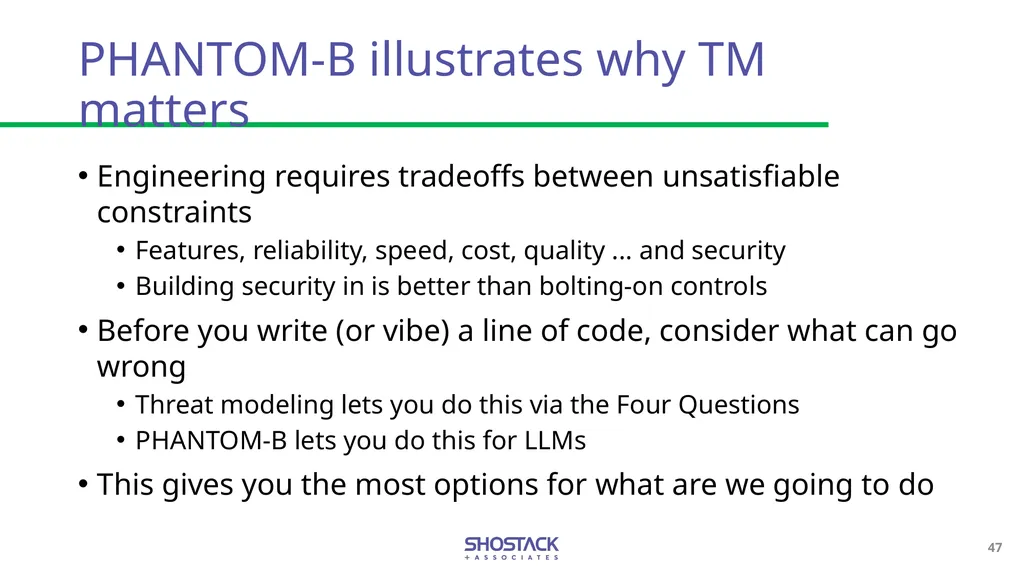
PHANTOM-B illustrates why TM matters Engineering requires tradeoffs between unsatisfiable constraints
Features, reliability, speed, cost, quality ... and security
Building security in is better than bolting-on controls
Before you write (or vibe) a line of code, consider what can go wrong
Threat modeling lets you do this via the Four Questions
PHANTOM-B lets you do this for LLMs
This gives you the most options for what are we going to do 47<br>
Features, reliability, speed, cost, quality ... and security
Building security in is better than bolting-on controls
Before you write (or vibe) a line of code, consider what can go wrong
Threat modeling lets you do this via the Four Questions
PHANTOM-B lets you do this for LLMs
This gives you the most options for what are we going to do 47<br>
48
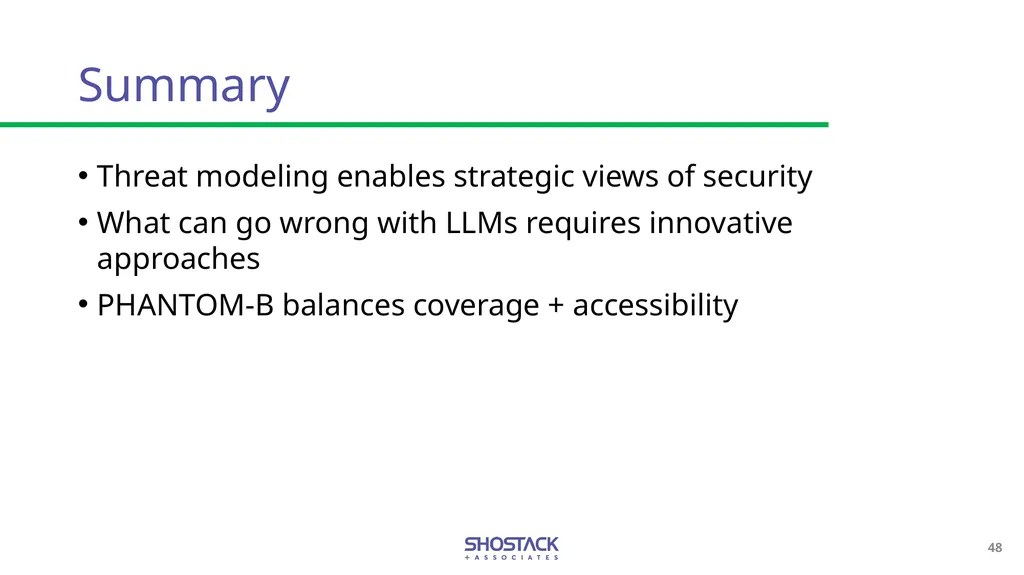
Summary Threat modeling enables strategic views of security
What can go wrong with LLMs requires innovative approaches
PHANTOM-B balances coverage + accessibility 48<br>
What can go wrong with LLMs requires innovative approaches
PHANTOM-B balances coverage + accessibility 48<br>
49
Bonus! Today: Book signing – bookstore, Breaker Rooms @ 12:45
Thursday: AI Threat Modeling Community meetup
Noon tomorrow “The Convergence, Business Hall” 49<br>
Thursday: AI Threat Modeling Community meetup
Noon tomorrow “The Convergence, Business Hall” 49<br>
50
Thank you!<br>
51
PHANTOM-B approach to LLM TM Questions? Blackhat USA August 2026 Slides:
Shostack.org/blog adam@shostack.org Wallet cards, book signing at
Bookstore, 12:45 PM today
Meetup, The Convergence,
Noon tomorrow<br>
Shostack.org/blog adam@shostack.org Wallet cards, book signing at
Bookstore, 12:45 PM today
Meetup, The Convergence,
Noon tomorrow<br>
52
Shostack + Associates Don’t just understand security.
Build it in. Supporting Materials 52<br>
Build it in. Supporting Materials 52<br>
53
Free resources shostack.org/resources
shostack.org/blog
youtube.com/c/Shostack
Books
Linkedin Learning Books free at your library/various subscriptions; Linkedin Learning via work 53<br>
shostack.org/blog
youtube.com/c/Shostack
Books
Linkedin Learning Books free at your library/various subscriptions; Linkedin Learning via work 53<br>
54
Commercial offerings Training
From under an hour to multi-day
Live instruction or computer-based
In-person or distributed
Private corporate courses
Accelerator
Culture change, process design
Assessments + analysis 54<br>
From under an hour to multi-day
Live instruction or computer-based
In-person or distributed
Private corporate courses
Accelerator
Culture change, process design
Assessments + analysis 54<br>
55
info@shostack.org
shostack.org/contact 55<br>
56
backup 56<br>
57
https://genai.owasp.org/llm-top-10/ 57<br>
58
https://genai.owasp.org/llm-top-10/ X X X X X 58<br>
59
Berryville Institute of Machine Learning Think tank of security + ML experts studying machine learning sec https://berryvilleiml.com/
Taxonomy of threats (2019)
Manipulation of input, data, models
Extraction of input, data, models
Architectural Risk Analysis of a generic ML system (2023)
ARA for LLM (2024)
Elevation of ML card deck!
Annotated bibliography https://agilestationery.com/collections/security/products/elevation-of-machine-learning-security-card-game 59<br>
Taxonomy of threats (2019)
Manipulation of input, data, models
Extraction of input, data, models
Architectural Risk Analysis of a generic ML system (2023)
ARA for LLM (2024)
Elevation of ML card deck!
Annotated bibliography https://agilestationery.com/collections/security/products/elevation-of-machine-learning-security-card-game 59<br>
60
60<br>