
Title and Total Compensation Study Update for UWSP


Description: Title and Total Compensation Study Update for UWSP September, 2017 Goals for Todays Forum Provide an overview of the structure of the study Provide an overview of the timeline of the study Provide detail of the current phase of the study 2
Related Topics
Download Presentation
"Title and Total Compensation Study Update for UWSP" is the property of its rightful owner. Permission is granted to download and print the materials on this website for personal, non-commercial use only, and to display it on your personal computer provided you do not modify the materials and that you retain all copyright notices contained in the materials. By downloading content from our website, you accept the terms of this agreement.
Presentation Transcript
slide1. Title and Total Compensation Study Update for UWSP September, 2017<br>
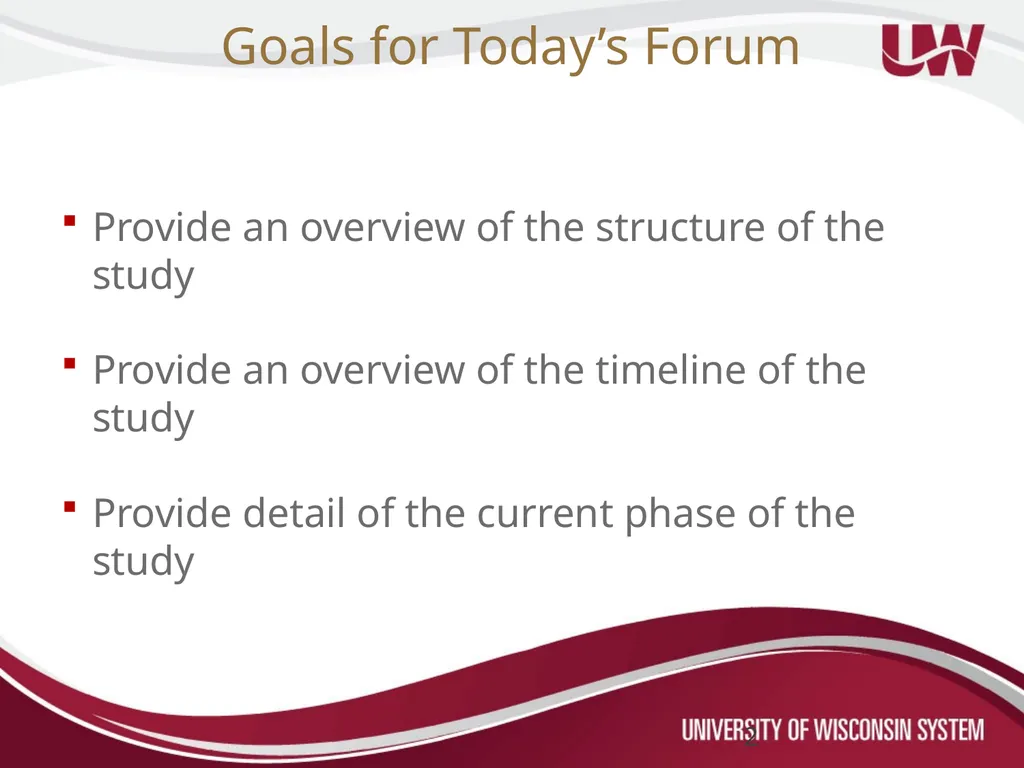
slide2. Goals for Today’s Forum Provide an overview of the structure of the study
Provide an overview of the timeline of the study
Provide detail of the current phase of the study 2<br>
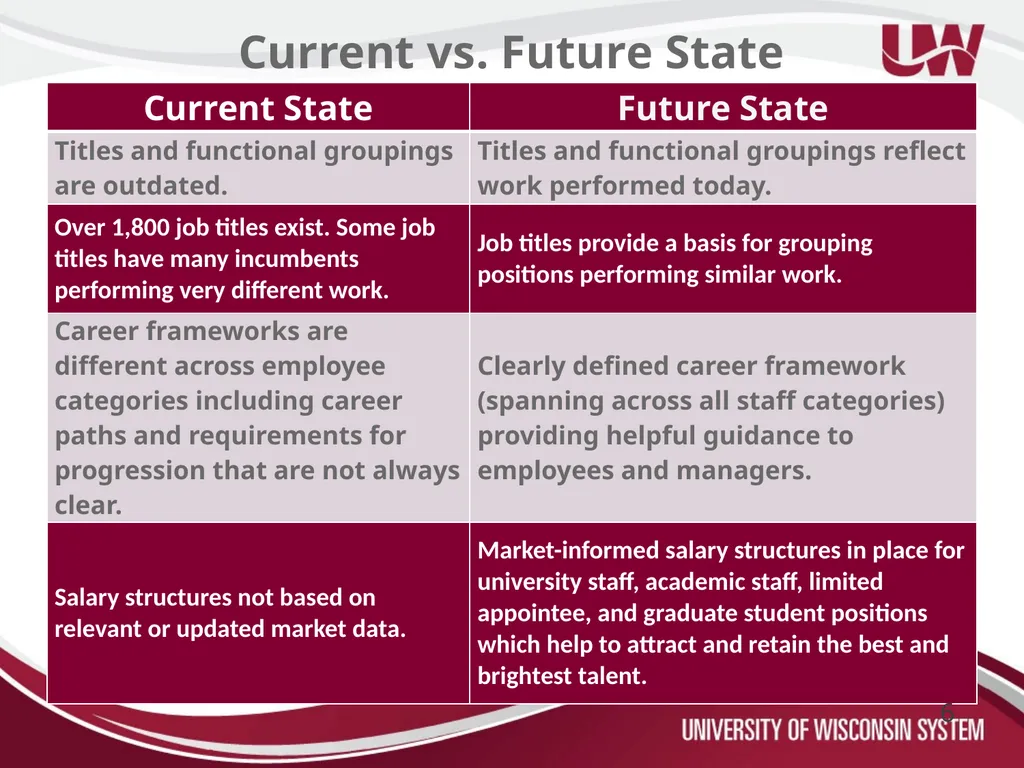
slide3. Current vs. Future State 6<br>
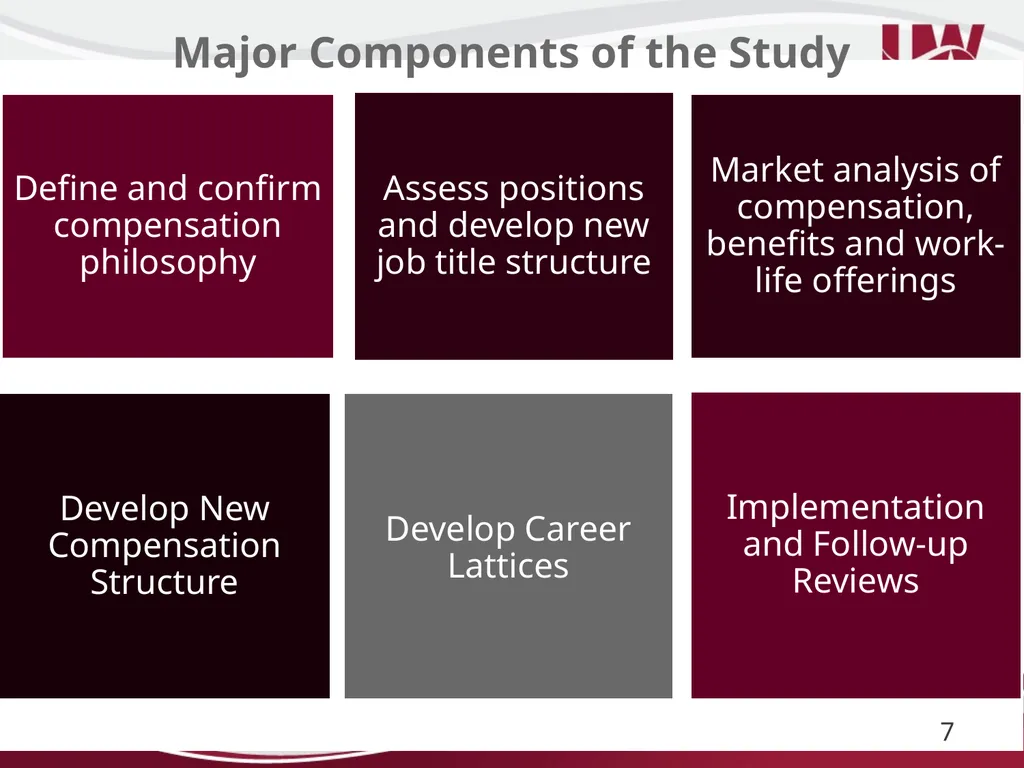
slide4. Define and confirm compensation philosophy Develop Career Lattices Market analysis of compensation, benefits and work-life offerings Develop New Compensation Structure Assess positions and develop new job title structure Implementation and Follow-up Reviews Major Components of the Study 7<br>
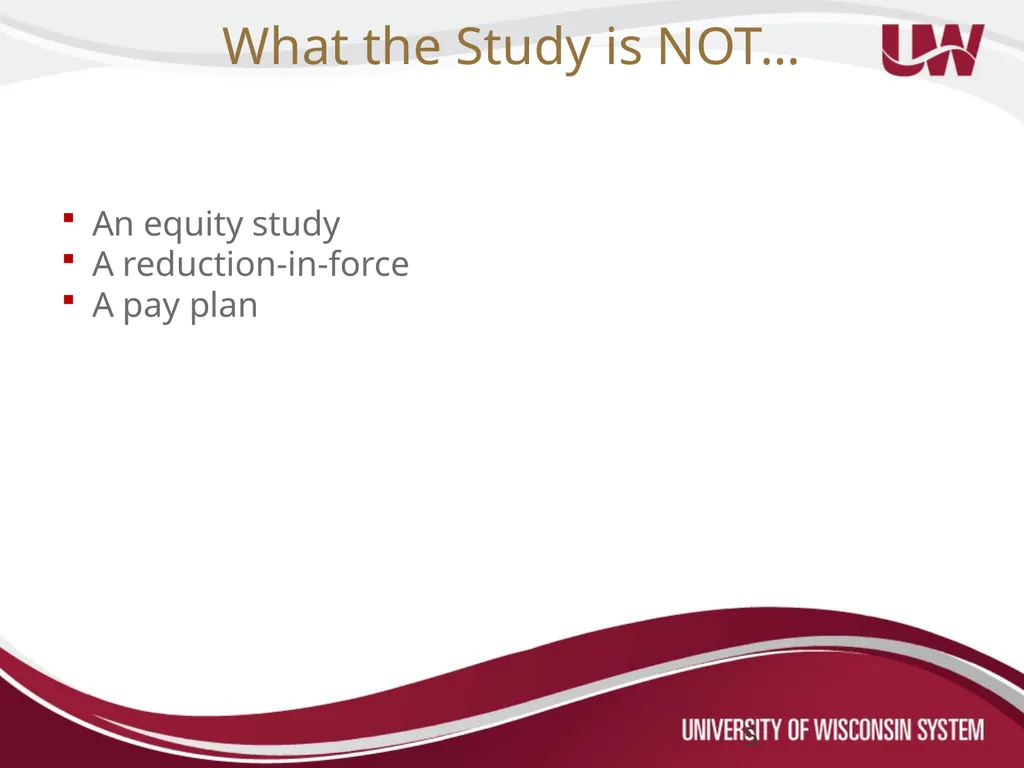
slide5. What the Study is NOT… An equity study
A reduction-in-force
A pay plan 5<br>
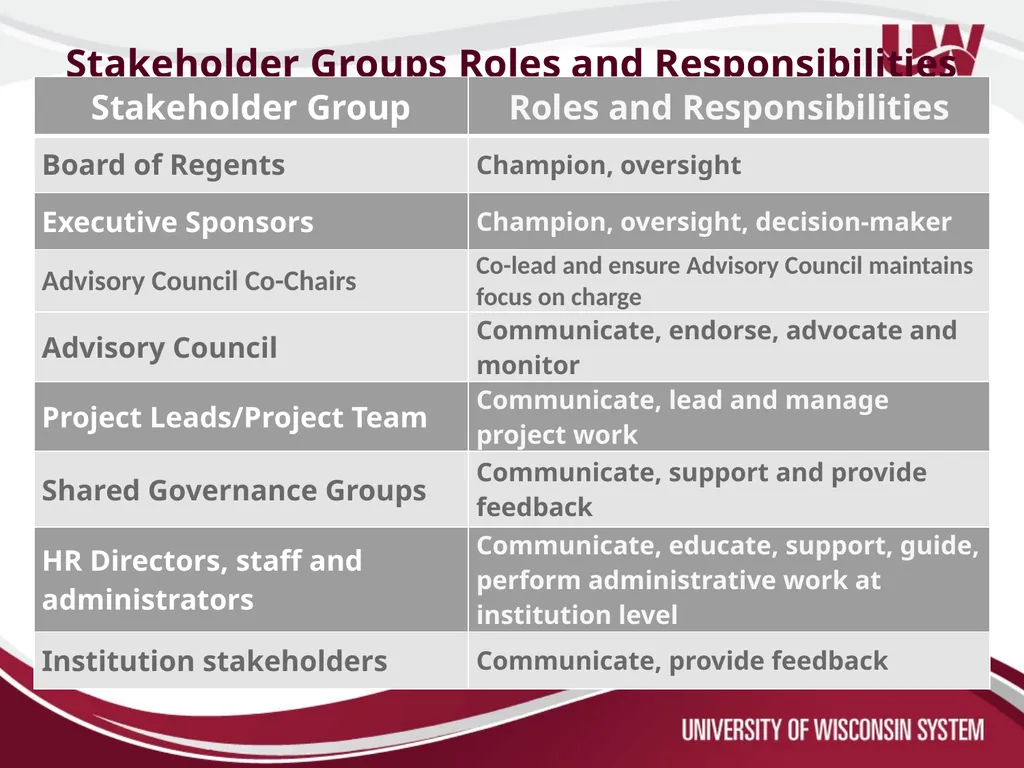
slide6. Stakeholder Groups Roles and Responsibilities<br>
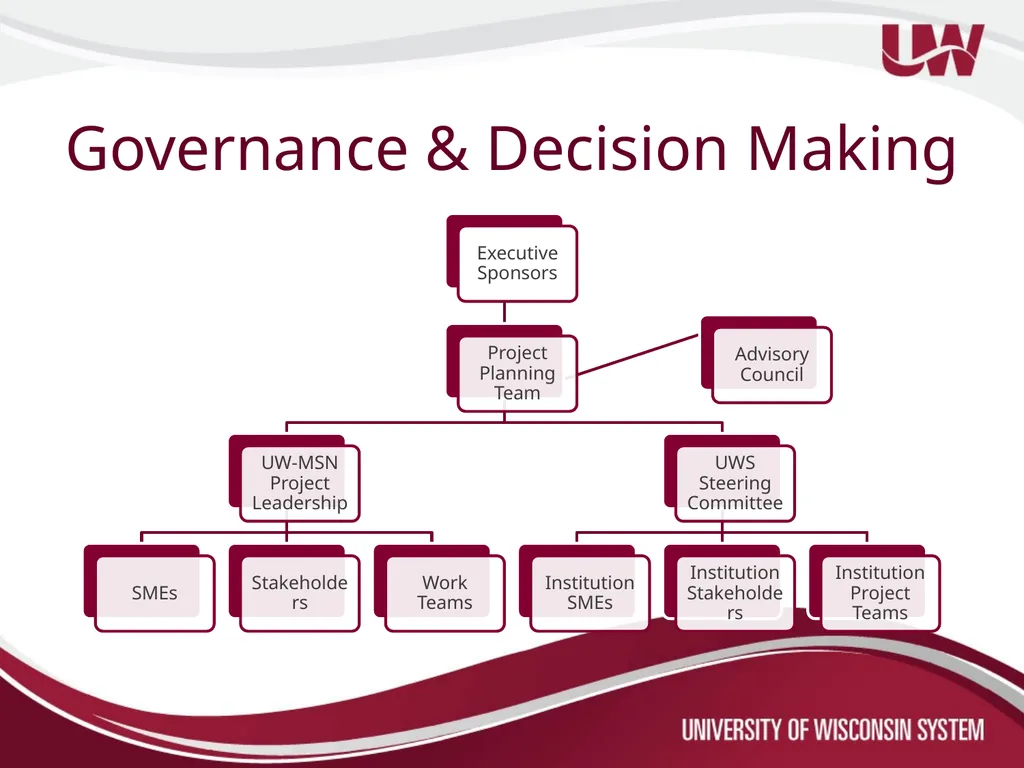
slide7. Governance & Decision Making<br>
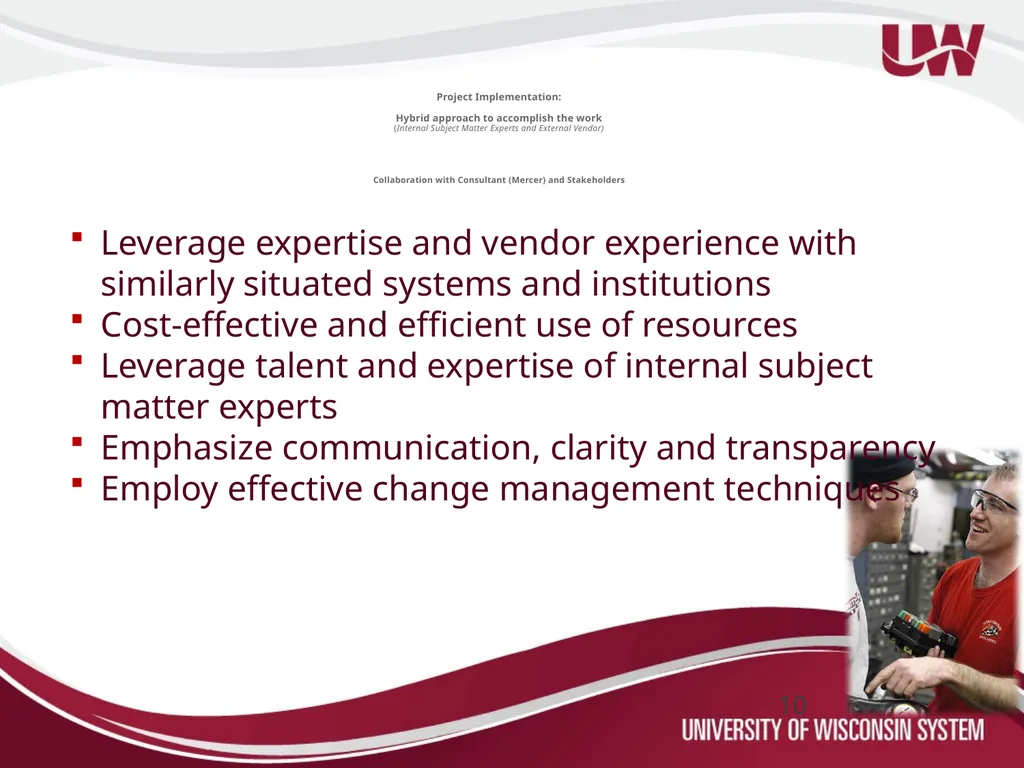
slide8. Project Implementation: Hybrid approach to accomplish the work (Internal Subject Matter Experts and External Vendor) Collaboration with Consultant (Mercer) and Stakeholders Leverage expertise and vendor experience with similarly situated systems and institutions
Cost-effective and efficient use of resources
Leverage talent and expertise of internal subject matter experts
Emphasize communication, clarity and transparency
Employ effective change management techniques 10<br>
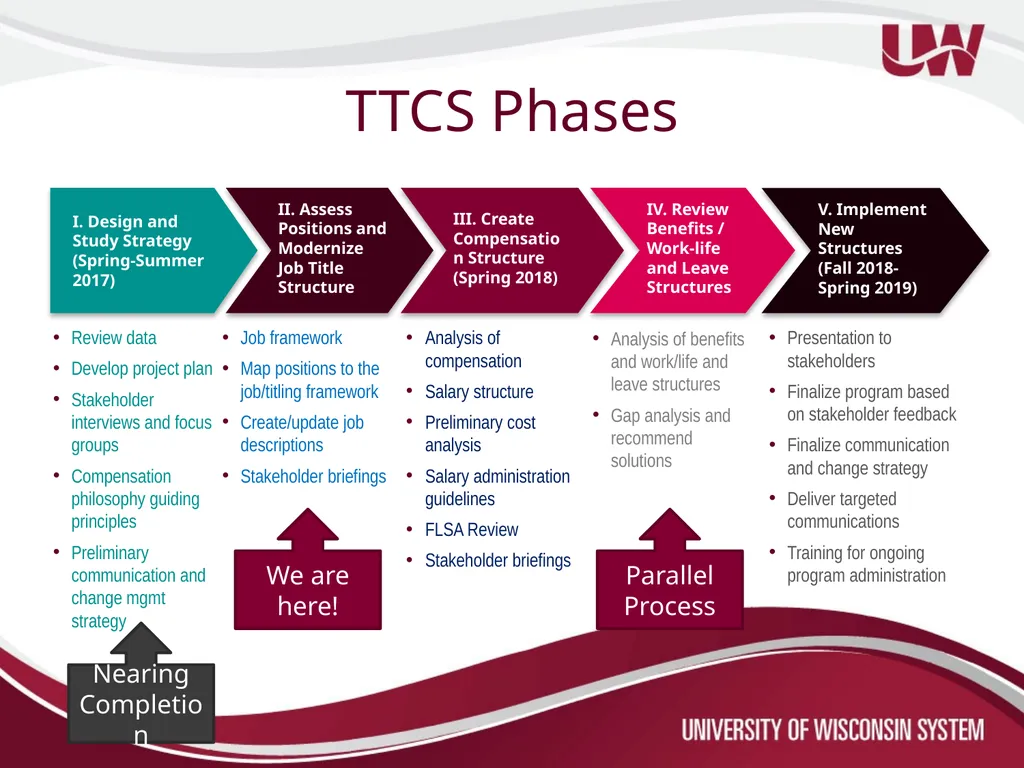
slide9. I. Design and Study Strategy (Spring-Summer 2017) IV. Review Benefits / Work-life and Leave Structures III. Create Compensation Structure (Spring 2018) II. Assess Positions and Modernize Job Title Structure Review data
Develop project plan
Stakeholder interviews and focus groups
Compensation philosophy guiding principles
Preliminary communication and change mgmt strategy Job framework
Map positions to the job/titling framework
Create/update job descriptions
Stakeholder briefings Analysis of compensation
Salary structure
Preliminary cost analysis
Salary administration guidelines
FLSA Review
Stakeholder briefings Presentation to stakeholders
Finalize program based on stakeholder feedback
Finalize communication and change strategy
Deliver targeted communications
Training for ongoing program administration V. Implement New Structures (Fall 2018- Spring 2019) Analysis of benefits and work/life and leave structures
Gap analysis and recommend solutions TTCS Phases Nearing Completion We are here! Parallel Process<br>
slide10. 10<br>
slide11. 11<br>
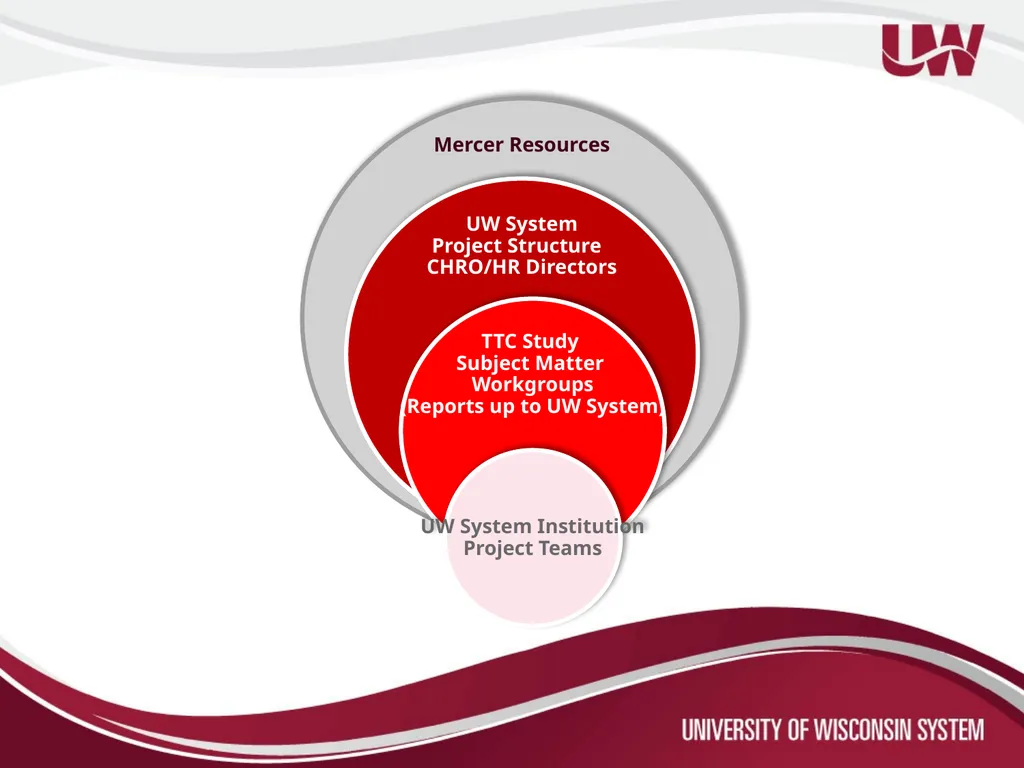
slide12. Mercer Resources UW System
Project Structure
CHRO/HR Directors TTC Study
Subject Matter
Workgroups
(Reports up to UW System) UW System Institution
Project Teams<br>
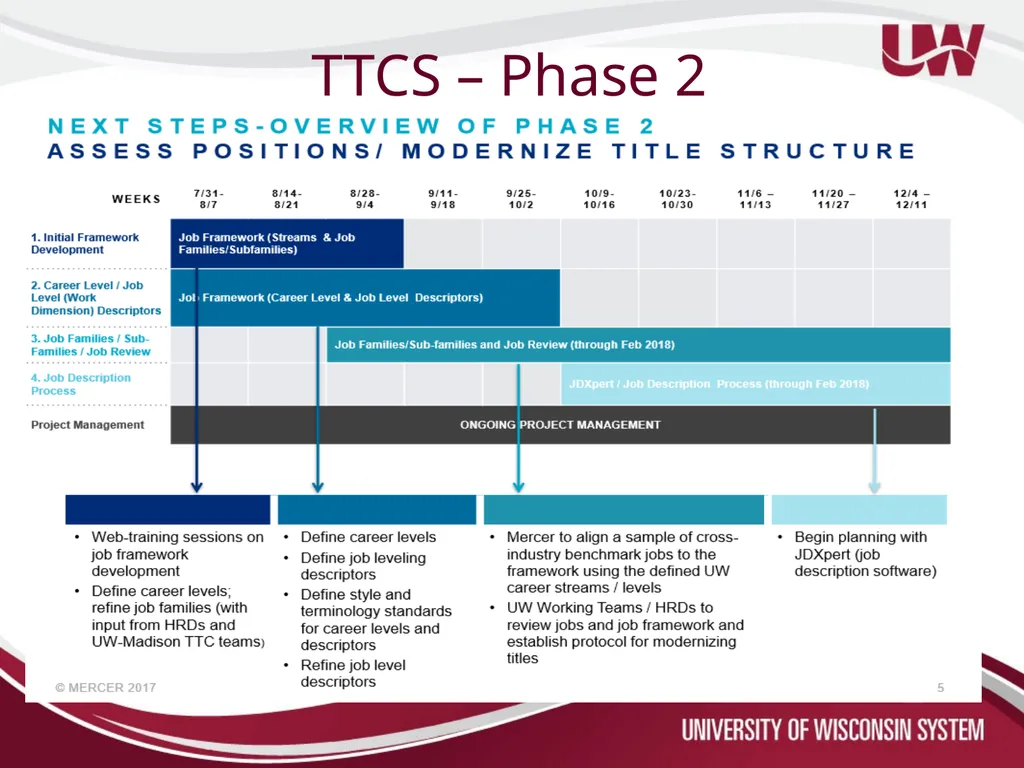
slide13. TTCS – Phase 2<br>
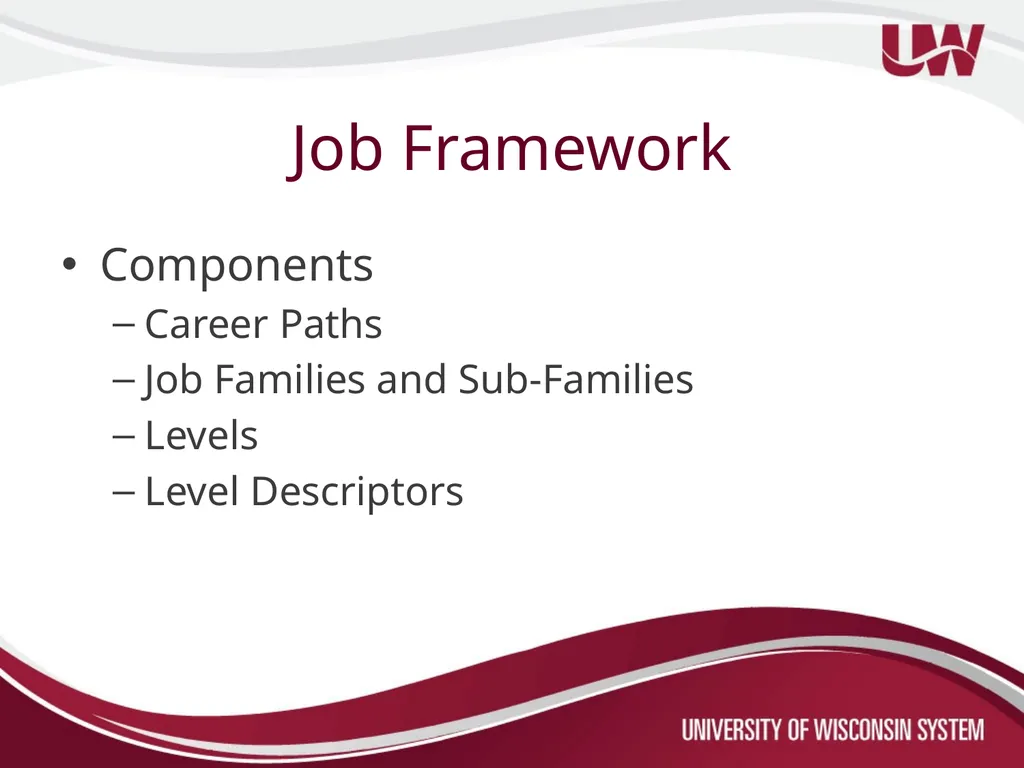
slide14. Job Framework Components
Career Paths
Job Families and Sub-Families
Levels
Level Descriptors<br>
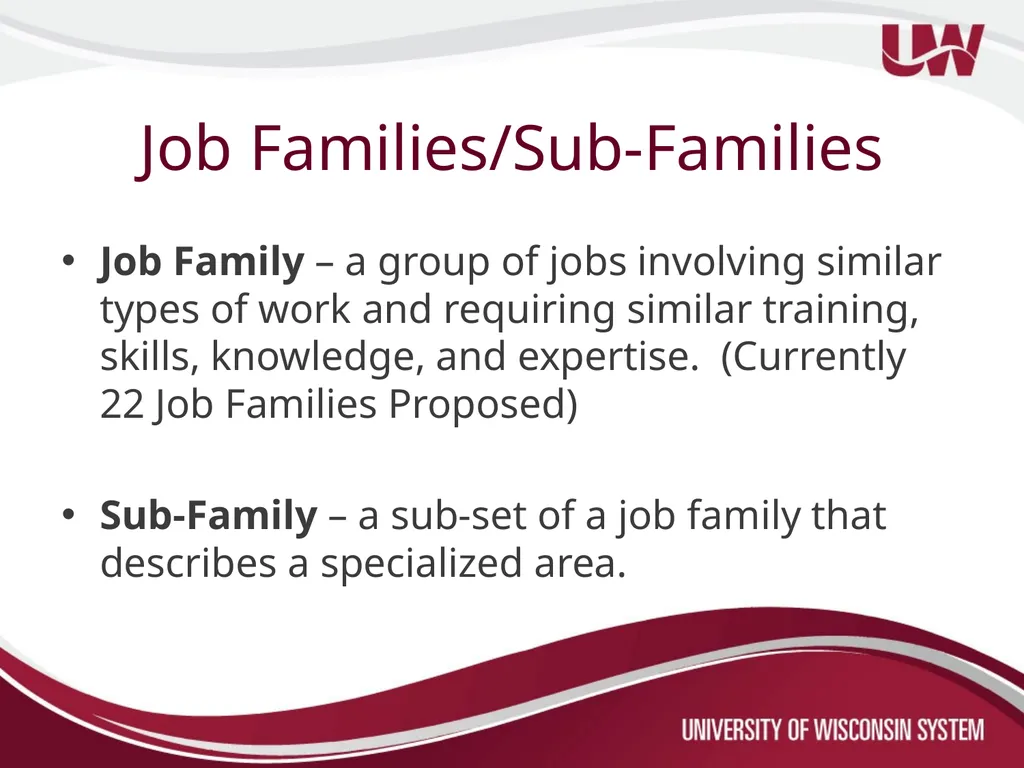
slide15. Job Families/Sub-Families Job Family – a group of jobs involving similar types of work and requiring similar training, skills, knowledge, and expertise. (Currently 22 Job Families Proposed)
Sub-Family – a sub-set of a job family that describes a specialized area.<br>
slide16. Broadly describe the nature of the
roles at UW
Describe incremental changes in job scope and responsibilities Job Framework Job Descriptions/
Job Classifications Performance Management Talent, Career, and Succession Planning Compensation Management Recruiting /
Selection U T I L I Z I N G T H E J O B F R A M E W O R K S U P P O R T S M U L T I P L E I M P O R T A N T A C T I V I T I E S Career Streams and Job Levels – Illustrative– JOB FAMILY Academic Services Administration Advancement Arts Athletics/ Recreational Sports
Communications and Marketing Community & Public Education Compliance, Legal & Protection Executive Leadership Facilities and Capital Planning Financial Health Services Human Resources Information Technology Instruction Libraries and Museums Research and Diagnostics Research Administration Sales and Hospitality SUB-FAMILY Data and Digital Library Services Collections and Library Services Research, Outreach & Teaching Museum Collections & Exhibits Museum Conservation Library and Museum Archives CAREER Path Manager Organizational Contributor JOB LEVEL Level Level Level Level Level Student Services Level Level Level 16<br>
slide17. J O B F R A M E W O R K D E S I G N E L E M E N T S
1 . J O B F A M I L Y S T R U C T U R E Job families are groups of jobs involving work of the same nature and a similar skill set, and are distinct from departments. Examples of job families include Academic Services, Health Services, Finance, Human Resources, IT, Facilities, and Advancement
Sub-families are more specific sub-sets within job families. Examples include Campus Police
(within Compliance), and Alumni Relations (within Advancement) Joe Programmer works in the Library Joe, Sally and Kelly are all in the “Information Technology” job family despite working in different schools/departments at the institution Sally Programmer works in the Finance Office Kelly Programmer works in the IT Department<br>
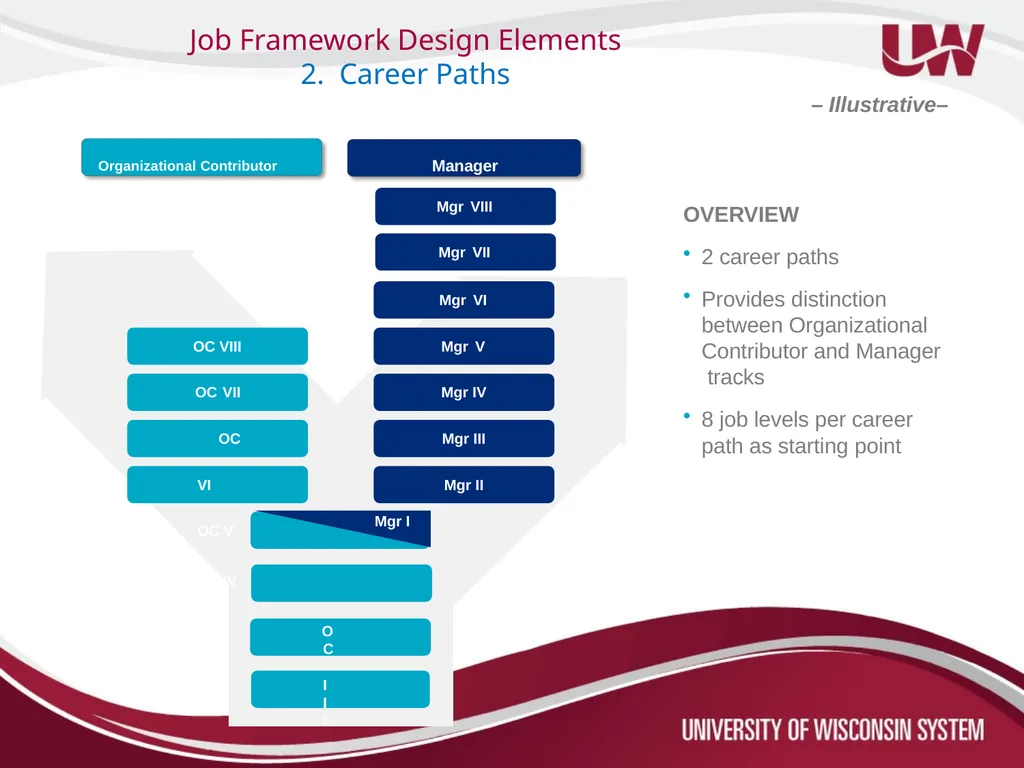
slide18. Job Framework Design Elements 2. Career Paths 18 Organizational Contributor Manager OVERVIEW
2 career paths
Provides distinction between Organizational Contributor and Manager tracks
8 job levels per career path as starting point Mgr I Mgr II Mgr III Mgr IV Mgr V – Illustrative– OC VIII
OC VII OC VI OC V
OC IV
OC III
OC II OC I Mgr VIII Mgr VII Mgr VI<br>
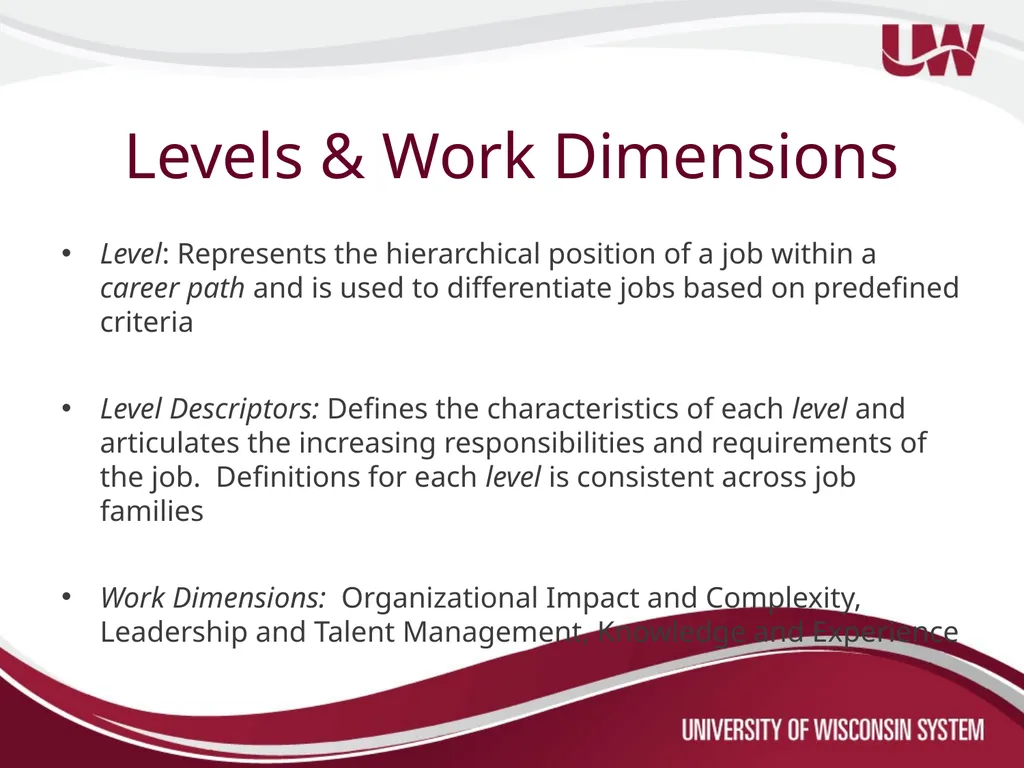
slide19. Levels & Work Dimensions Level: Represents the hierarchical position of a job within a career path and is used to differentiate jobs based on predefined criteria
Level Descriptors: Defines the characteristics of each level and articulates the increasing responsibilities and requirements of the job. Definitions for each level is consistent across job families
Work Dimensions: Organizational Impact and Complexity, Leadership and Talent Management, Knowledge and Experience<br>
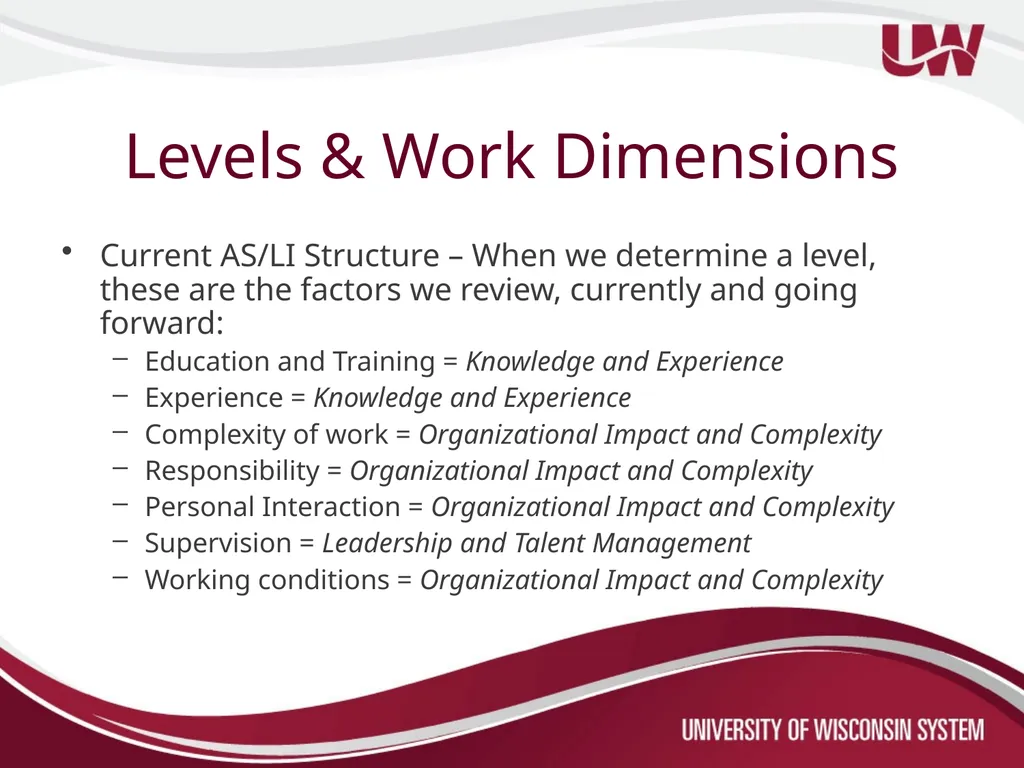
slide20. Levels & Work Dimensions Current AS/LI Structure – When we determine a level, these are the factors we review, currently and going forward:
Education and Training = Knowledge and Experience
Experience = Knowledge and Experience
Complexity of work = Organizational Impact and Complexity
Responsibility = Organizational Impact and Complexity
Personal Interaction = Organizational Impact and Complexity
Supervision = Leadership and Talent Management
Working conditions = Organizational Impact and Complexity<br>
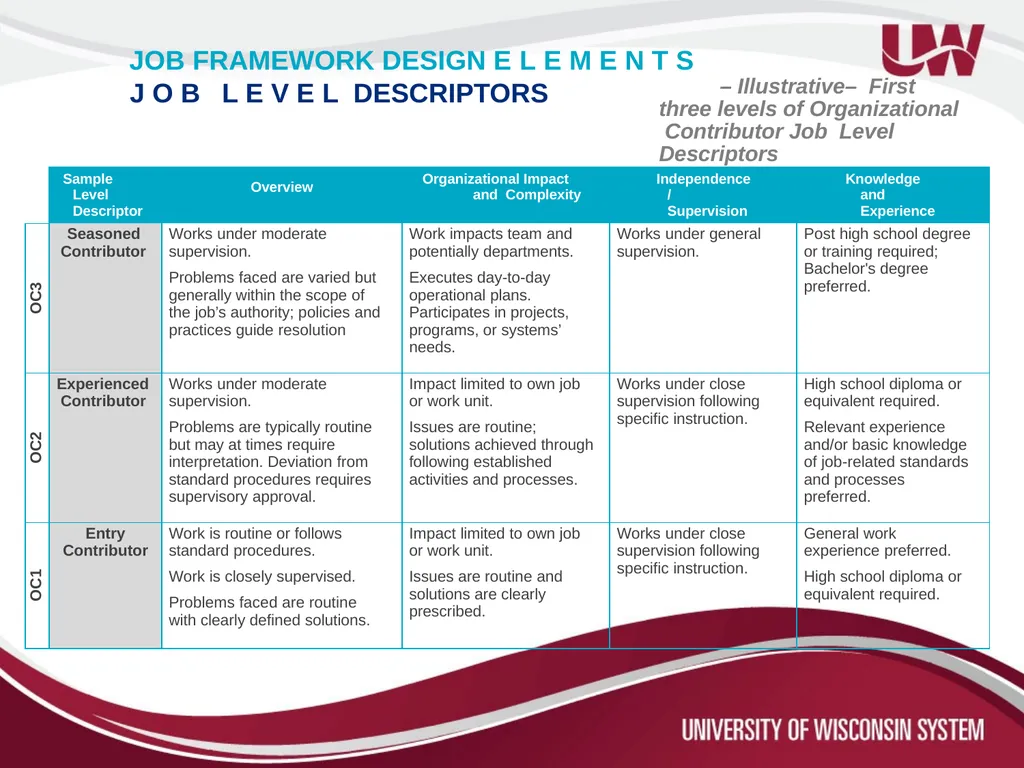
slide21. JOB FRAMEWORK DESIGN E L E M E N T S
J O B L E V E L DESCRIPTORS – Illustrative– First three levels of Organizational Contributor Job Level Descriptors<br>
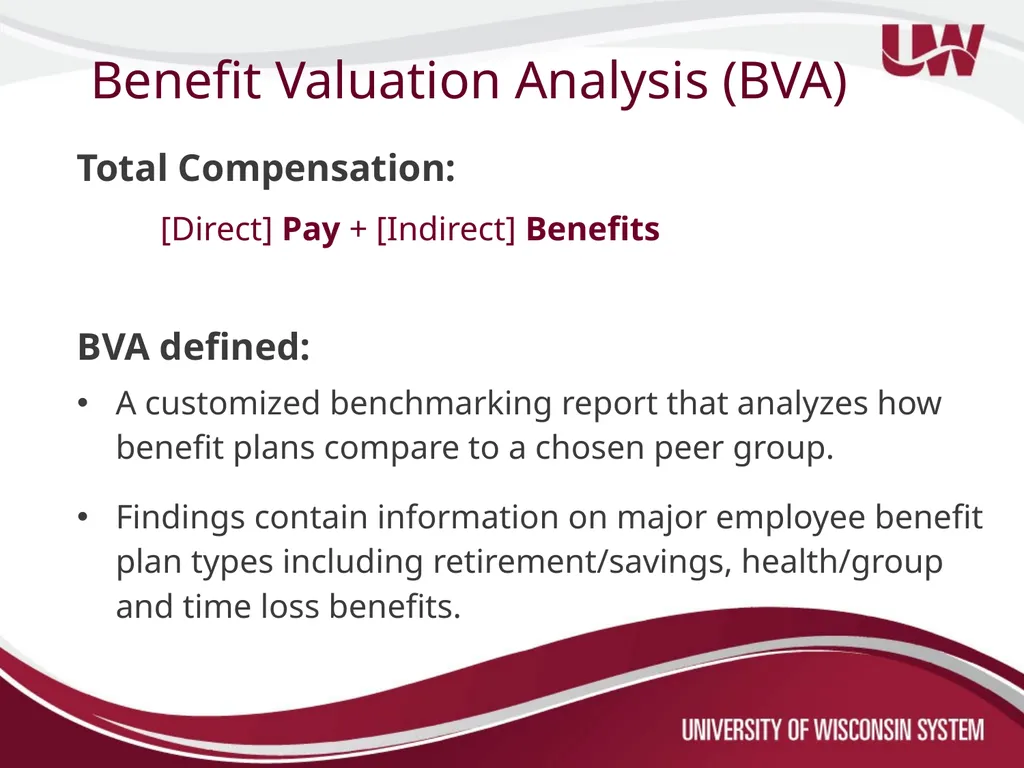
slide22. Benefit Valuation Analysis (BVA) Total Compensation:
[Direct] Pay + [Indirect] Benefits
BVA defined:
A customized benchmarking report that analyzes how benefit plans compare to a chosen peer group.
Findings contain information on major employee benefit plan types including retirement/savings, health/group and time loss benefits.<br>
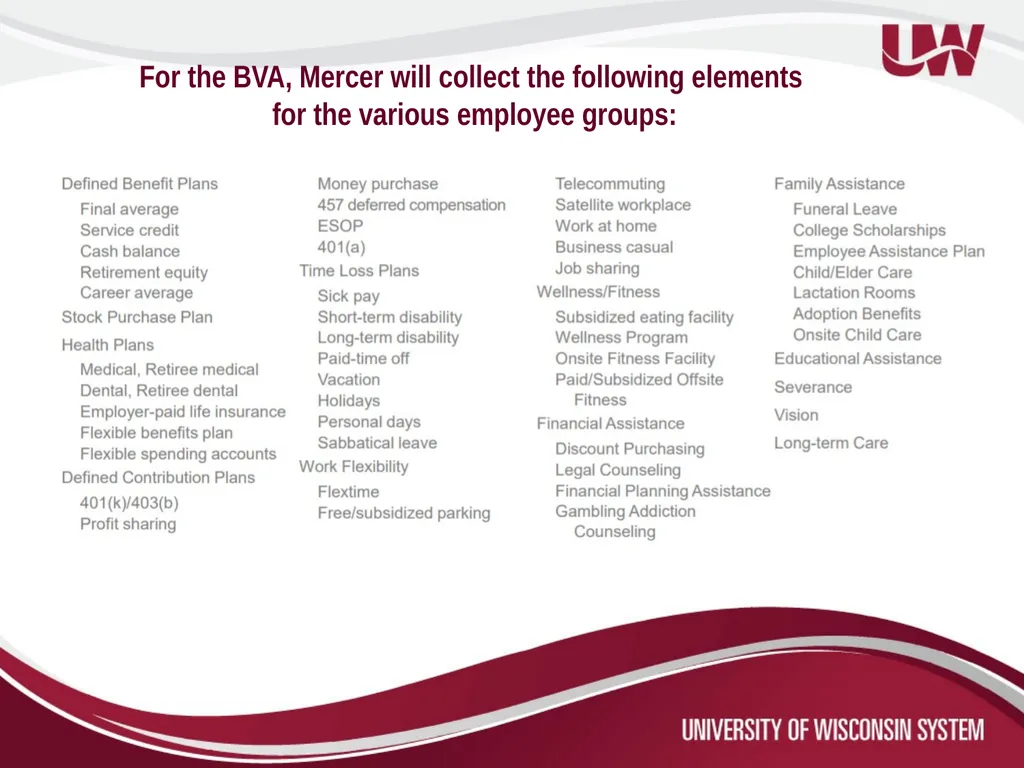
slide24. For the BVA, Mercer will collect the following elements
for the various employee groups:<br>
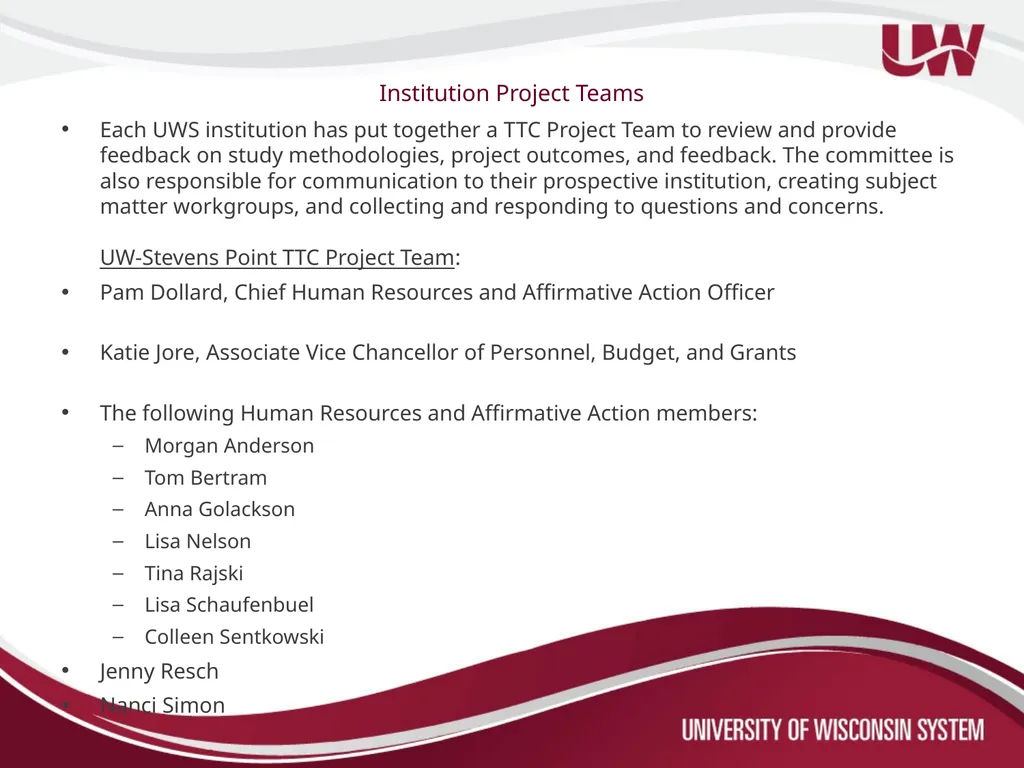
slide25. Institution Project Teams Each UWS institution has put together a TTC Project Team to review and provide feedback on study methodologies, project outcomes, and feedback. The committee is also responsible for communication to their prospective institution, creating subject matter workgroups, and collecting and responding to questions and concerns. UW-Stevens Point TTC Project Team:
Pam Dollard, Chief Human Resources and Affirmative Action Officer
Katie Jore, Associate Vice Chancellor of Personnel, Budget, and Grants
The following Human Resources and Affirmative Action members:
Morgan Anderson
Tom Bertram
Anna Golackson
Lisa Nelson
Tina Rajski
Lisa Schaufenbuel
Colleen Sentkowski
Jenny Resch
Nanci Simon<br>
slide26. 26 Monthly communique with Chancellors
Weekly teleconferences with institution HR Directors
Institution Title and Total Compensation Project Teams
Institution communication plans being developed
Website updates – Engagement Activities – Institutions are required to report their activities monthly<br>
slide27. Current Communication Steps - UWSP: Sept. 6, 2017 – Common Council Update
Sept. 7, 2017 – University Staff Council Update
Sept. 21, 2017 – University Staff Council (further discussion)
Sept. 22, 2017 – Open Forum
Sept. 26, 2017 – Open Forum
Oct. 2, 2017 – Academic Staff Council Update<br>
slide28. Pam Dollard
Chief Human Resources and Affirmative Action Officer
715-346-3975
pdollard@uwsp.edu
UWSP Project Website:
http://www.uwsp.edu/hr/Pages/hraa/total-title-and-compensation.aspx
UW System Project Website:
https://www.wisconsin.edu/ohrwd/title-and-total-compensation-study
THANK YOU!<br>
slide2. Goals for Today’s Forum Provide an overview of the structure of the study
Provide an overview of the timeline of the study
Provide detail of the current phase of the study 2<br>
slide3. Current vs. Future State 6<br>
slide4. Define and confirm compensation philosophy Develop Career Lattices Market analysis of compensation, benefits and work-life offerings Develop New Compensation Structure Assess positions and develop new job title structure Implementation and Follow-up Reviews Major Components of the Study 7<br>
slide5. What the Study is NOT… An equity study
A reduction-in-force
A pay plan 5<br>
slide6. Stakeholder Groups Roles and Responsibilities<br>
slide7. Governance & Decision Making<br>
slide8. Project Implementation: Hybrid approach to accomplish the work (Internal Subject Matter Experts and External Vendor) Collaboration with Consultant (Mercer) and Stakeholders Leverage expertise and vendor experience with similarly situated systems and institutions
Cost-effective and efficient use of resources
Leverage talent and expertise of internal subject matter experts
Emphasize communication, clarity and transparency
Employ effective change management techniques 10<br>
slide9. I. Design and Study Strategy (Spring-Summer 2017) IV. Review Benefits / Work-life and Leave Structures III. Create Compensation Structure (Spring 2018) II. Assess Positions and Modernize Job Title Structure Review data
Develop project plan
Stakeholder interviews and focus groups
Compensation philosophy guiding principles
Preliminary communication and change mgmt strategy Job framework
Map positions to the job/titling framework
Create/update job descriptions
Stakeholder briefings Analysis of compensation
Salary structure
Preliminary cost analysis
Salary administration guidelines
FLSA Review
Stakeholder briefings Presentation to stakeholders
Finalize program based on stakeholder feedback
Finalize communication and change strategy
Deliver targeted communications
Training for ongoing program administration V. Implement New Structures (Fall 2018- Spring 2019) Analysis of benefits and work/life and leave structures
Gap analysis and recommend solutions TTCS Phases Nearing Completion We are here! Parallel Process<br>
slide10. 10<br>
slide11. 11<br>
slide12. Mercer Resources UW System
Project Structure
CHRO/HR Directors TTC Study
Subject Matter
Workgroups
(Reports up to UW System) UW System Institution
Project Teams<br>
slide13. TTCS – Phase 2<br>
slide14. Job Framework Components
Career Paths
Job Families and Sub-Families
Levels
Level Descriptors<br>
slide15. Job Families/Sub-Families Job Family – a group of jobs involving similar types of work and requiring similar training, skills, knowledge, and expertise. (Currently 22 Job Families Proposed)
Sub-Family – a sub-set of a job family that describes a specialized area.<br>
slide16. Broadly describe the nature of the
roles at UW
Describe incremental changes in job scope and responsibilities Job Framework Job Descriptions/
Job Classifications Performance Management Talent, Career, and Succession Planning Compensation Management Recruiting /
Selection U T I L I Z I N G T H E J O B F R A M E W O R K S U P P O R T S M U L T I P L E I M P O R T A N T A C T I V I T I E S Career Streams and Job Levels – Illustrative– JOB FAMILY Academic Services Administration Advancement Arts Athletics/ Recreational Sports
Communications and Marketing Community & Public Education Compliance, Legal & Protection Executive Leadership Facilities and Capital Planning Financial Health Services Human Resources Information Technology Instruction Libraries and Museums Research and Diagnostics Research Administration Sales and Hospitality SUB-FAMILY Data and Digital Library Services Collections and Library Services Research, Outreach & Teaching Museum Collections & Exhibits Museum Conservation Library and Museum Archives CAREER Path Manager Organizational Contributor JOB LEVEL Level Level Level Level Level Student Services Level Level Level 16<br>
slide17. J O B F R A M E W O R K D E S I G N E L E M E N T S
1 . J O B F A M I L Y S T R U C T U R E Job families are groups of jobs involving work of the same nature and a similar skill set, and are distinct from departments. Examples of job families include Academic Services, Health Services, Finance, Human Resources, IT, Facilities, and Advancement
Sub-families are more specific sub-sets within job families. Examples include Campus Police
(within Compliance), and Alumni Relations (within Advancement) Joe Programmer works in the Library Joe, Sally and Kelly are all in the “Information Technology” job family despite working in different schools/departments at the institution Sally Programmer works in the Finance Office Kelly Programmer works in the IT Department<br>
slide18. Job Framework Design Elements 2. Career Paths 18 Organizational Contributor Manager OVERVIEW
2 career paths
Provides distinction between Organizational Contributor and Manager tracks
8 job levels per career path as starting point Mgr I Mgr II Mgr III Mgr IV Mgr V – Illustrative– OC VIII
OC VII OC VI OC V
OC IV
OC III
OC II OC I Mgr VIII Mgr VII Mgr VI<br>
slide19. Levels & Work Dimensions Level: Represents the hierarchical position of a job within a career path and is used to differentiate jobs based on predefined criteria
Level Descriptors: Defines the characteristics of each level and articulates the increasing responsibilities and requirements of the job. Definitions for each level is consistent across job families
Work Dimensions: Organizational Impact and Complexity, Leadership and Talent Management, Knowledge and Experience<br>
slide20. Levels & Work Dimensions Current AS/LI Structure – When we determine a level, these are the factors we review, currently and going forward:
Education and Training = Knowledge and Experience
Experience = Knowledge and Experience
Complexity of work = Organizational Impact and Complexity
Responsibility = Organizational Impact and Complexity
Personal Interaction = Organizational Impact and Complexity
Supervision = Leadership and Talent Management
Working conditions = Organizational Impact and Complexity<br>
slide21. JOB FRAMEWORK DESIGN E L E M E N T S
J O B L E V E L DESCRIPTORS – Illustrative– First three levels of Organizational Contributor Job Level Descriptors<br>
slide22. Benefit Valuation Analysis (BVA) Total Compensation:
[Direct] Pay + [Indirect] Benefits
BVA defined:
A customized benchmarking report that analyzes how benefit plans compare to a chosen peer group.
Findings contain information on major employee benefit plan types including retirement/savings, health/group and time loss benefits.<br>
slide24. For the BVA, Mercer will collect the following elements
for the various employee groups:<br>
slide25. Institution Project Teams Each UWS institution has put together a TTC Project Team to review and provide feedback on study methodologies, project outcomes, and feedback. The committee is also responsible for communication to their prospective institution, creating subject matter workgroups, and collecting and responding to questions and concerns. UW-Stevens Point TTC Project Team:
Pam Dollard, Chief Human Resources and Affirmative Action Officer
Katie Jore, Associate Vice Chancellor of Personnel, Budget, and Grants
The following Human Resources and Affirmative Action members:
Morgan Anderson
Tom Bertram
Anna Golackson
Lisa Nelson
Tina Rajski
Lisa Schaufenbuel
Colleen Sentkowski
Jenny Resch
Nanci Simon<br>
slide26. 26 Monthly communique with Chancellors
Weekly teleconferences with institution HR Directors
Institution Title and Total Compensation Project Teams
Institution communication plans being developed
Website updates – Engagement Activities – Institutions are required to report their activities monthly<br>
slide27. Current Communication Steps - UWSP: Sept. 6, 2017 – Common Council Update
Sept. 7, 2017 – University Staff Council Update
Sept. 21, 2017 – University Staff Council (further discussion)
Sept. 22, 2017 – Open Forum
Sept. 26, 2017 – Open Forum
Oct. 2, 2017 – Academic Staff Council Update<br>
slide28. Pam Dollard
Chief Human Resources and Affirmative Action Officer
715-346-3975
pdollard@uwsp.edu
UWSP Project Website:
http://www.uwsp.edu/hr/Pages/hraa/total-title-and-compensation.aspx
UW System Project Website:
https://www.wisconsin.edu/ohrwd/title-and-total-compensation-study
THANK YOU!<br>