
Toolbox Talk: Chemical Safety 02: Laboratory


Description: Toolbox Talk: Chemical Safety 02: Laboratory Security Laboratory Security Assess your laboratory or work area for substances or materials that may be of interest to terrorists or criminals Toxic or infectious substances Explosive
Related Topics
Download Presentation
"Toolbox Talk: Chemical Safety 02: Laboratory" is the property of its rightful owner. Permission is granted to download and print the materials on this website for personal, non-commercial use only, and to display it on your personal computer provided you do not modify the materials and that you retain all copyright notices contained in the materials. By downloading content from our website, you accept the terms of this agreement.
Presentation Transcript
slide1. Toolbox Talk: Chemical Safety 02: Laboratory Security<br>
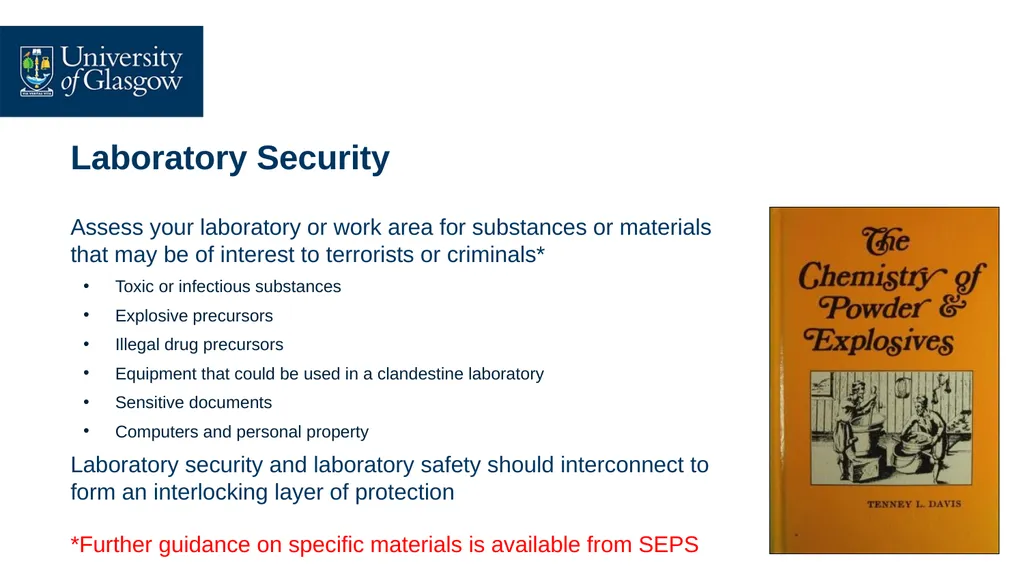
slide2. Laboratory Security Assess your laboratory or work area for substances or materials that may be of interest to terrorists or criminals*
Toxic or infectious substances
Explosive precursors
Illegal drug precursors
Equipment that could be used in a clandestine laboratory
Sensitive documents
Computers and personal property
Laboratory security and laboratory safety should interconnect to form an interlocking layer of protection
*Further guidance on specific materials is available from SEPS<br>
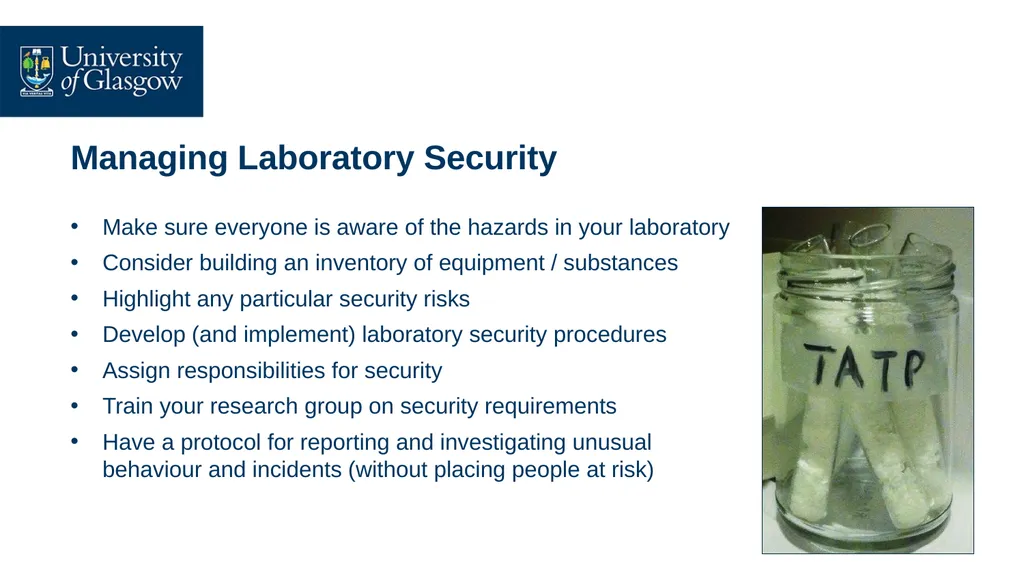
slide3. Managing Laboratory Security Make sure everyone is aware of the hazards in your laboratory
Consider building an inventory of equipment / substances
Highlight any particular security risks
Develop (and implement) laboratory security procedures
Assign responsibilities for security
Train your research group on security requirements
Have a protocol for reporting and investigating unusual behaviour and incidents (without placing people at risk)<br>
slide4. Access Control Secure access to laboratories
Keypad / keycard access
Lock laboratories and offices when not in use
Consider a logbook for signing in and out (especially for larger research groups)
Discourage “tailgating” when entering laboratories
Restrict access to laboratories to authorised personnel only
Restrict out of hours access and follow out of hours procedures
Don’t be afraid to approach people you don’t recognise and ask if they need help
If you have concerns about security raise them!<br>
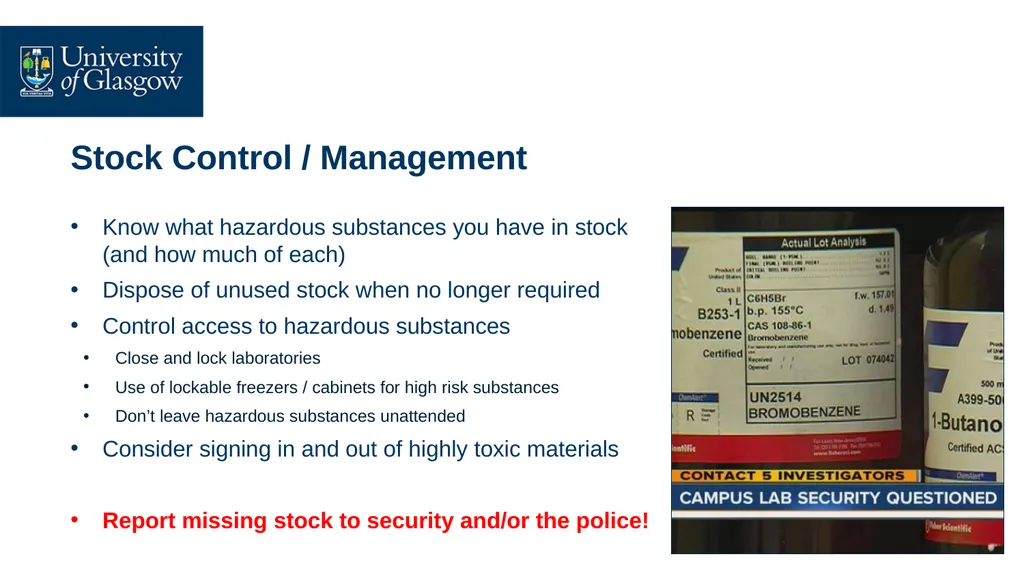
slide5. Stock Control / Management Know what hazardous substances you have in stock (and how much of each)
Dispose of unused stock when no longer required
Control access to hazardous substances
Close and lock laboratories
Use of lockable freezers / cabinets for high risk substances
Don’t leave hazardous substances unattended
Consider signing in and out of highly toxic materials
Report missing stock to security and/or the police!<br>
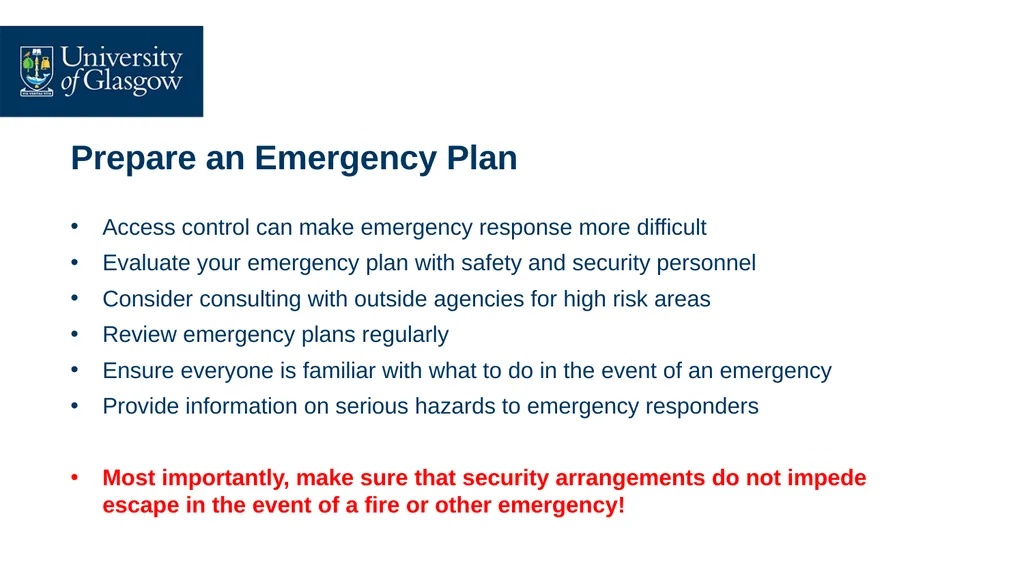
slide6. Prepare an Emergency Plan Access control can make emergency response more difficult
Evaluate your emergency plan with safety and security personnel
Consider consulting with outside agencies for high risk areas
Review emergency plans regularly
Ensure everyone is familiar with what to do in the event of an emergency
Provide information on serious hazards to emergency responders
Most importantly, make sure that security arrangements do not impede escape in the event of a fire or other emergency!<br>
slide7. For Further Information Contact:
Dr. Phil Rodger (Chemical Safety Adviser)
E: Philip.Rodger@glasgow.ac.uk
T: 0141 3302799<br>
slide2. Laboratory Security Assess your laboratory or work area for substances or materials that may be of interest to terrorists or criminals*
Toxic or infectious substances
Explosive precursors
Illegal drug precursors
Equipment that could be used in a clandestine laboratory
Sensitive documents
Computers and personal property
Laboratory security and laboratory safety should interconnect to form an interlocking layer of protection
*Further guidance on specific materials is available from SEPS<br>
slide3. Managing Laboratory Security Make sure everyone is aware of the hazards in your laboratory
Consider building an inventory of equipment / substances
Highlight any particular security risks
Develop (and implement) laboratory security procedures
Assign responsibilities for security
Train your research group on security requirements
Have a protocol for reporting and investigating unusual behaviour and incidents (without placing people at risk)<br>
slide4. Access Control Secure access to laboratories
Keypad / keycard access
Lock laboratories and offices when not in use
Consider a logbook for signing in and out (especially for larger research groups)
Discourage “tailgating” when entering laboratories
Restrict access to laboratories to authorised personnel only
Restrict out of hours access and follow out of hours procedures
Don’t be afraid to approach people you don’t recognise and ask if they need help
If you have concerns about security raise them!<br>
slide5. Stock Control / Management Know what hazardous substances you have in stock (and how much of each)
Dispose of unused stock when no longer required
Control access to hazardous substances
Close and lock laboratories
Use of lockable freezers / cabinets for high risk substances
Don’t leave hazardous substances unattended
Consider signing in and out of highly toxic materials
Report missing stock to security and/or the police!<br>
slide6. Prepare an Emergency Plan Access control can make emergency response more difficult
Evaluate your emergency plan with safety and security personnel
Consider consulting with outside agencies for high risk areas
Review emergency plans regularly
Ensure everyone is familiar with what to do in the event of an emergency
Provide information on serious hazards to emergency responders
Most importantly, make sure that security arrangements do not impede escape in the event of a fire or other emergency!<br>
slide7. For Further Information Contact:
Dr. Phil Rodger (Chemical Safety Adviser)
E: Philip.Rodger@glasgow.ac.uk
T: 0141 3302799<br>