
TOPIC 1 : Introduction to the Cell & Cell Theory
AM
Published · 47 slides · 0 views
1 / 1




Description
TOPIC 1 : Introduction to the Cell Cell Theory The Cell Theory 1. All living things are composed of one or more cells. 2. Cells are the basic units of structure and function in an organism. 3. Cells come only from existing cells. Cells
Related Topics
Share
Embed code
Download this presentation From Below
"TOPIC 1 : Introduction to the Cell & Cell Theory" is the property of its rightful owner. Permission is granted to download and print the materials on this website for personal, non-commercial use only, and to display it on your personal computer provided you do not modify the materials and that you retain all copyright notices contained in the materials. By downloading content from our website, you accept the terms of this agreement.
Presentation Transcript
01
TOPIC 1 : Introduction to the Cell & Cell Theory<br>
02
The Cell Theory 1. All living things are composed of one or more cells.
2. Cells are the basic units of structure and function in an organism.
3. Cells come only from existing cells.<br>
2. Cells are the basic units of structure and function in an organism.
3. Cells come only from existing cells.<br>
03
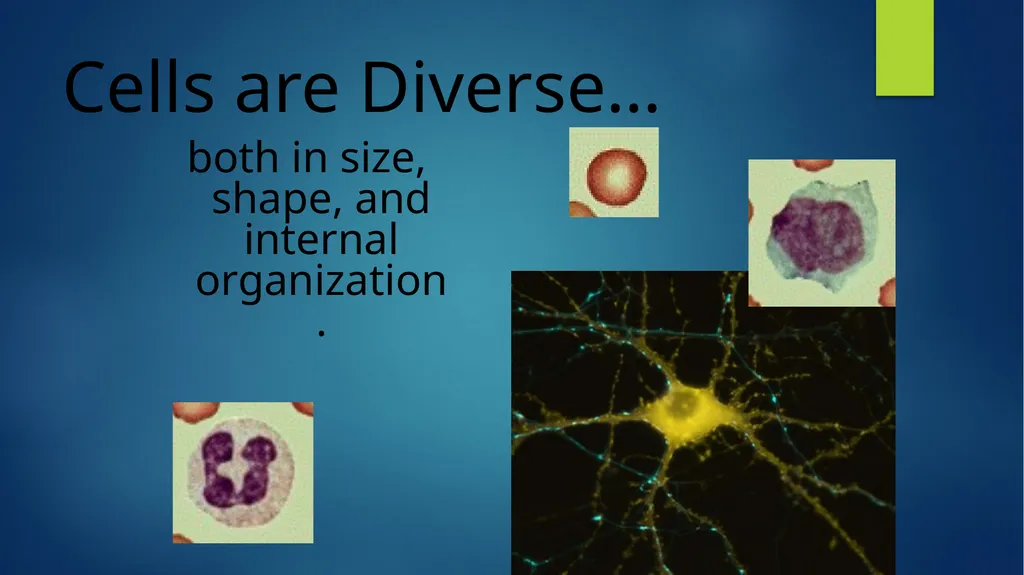
Cells are Diverse… both in size, shape, and internal organization.<br>
04
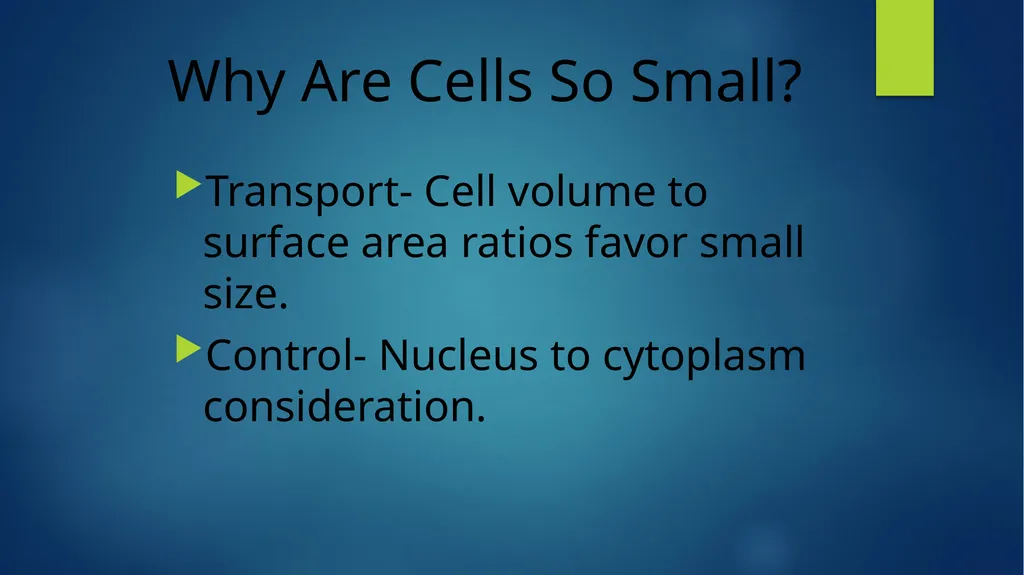
Why Are Cells So Small? Transport- Cell volume to surface area ratios favor small size.
Control- Nucleus to cytoplasm consideration.<br>
Control- Nucleus to cytoplasm consideration.<br>
05
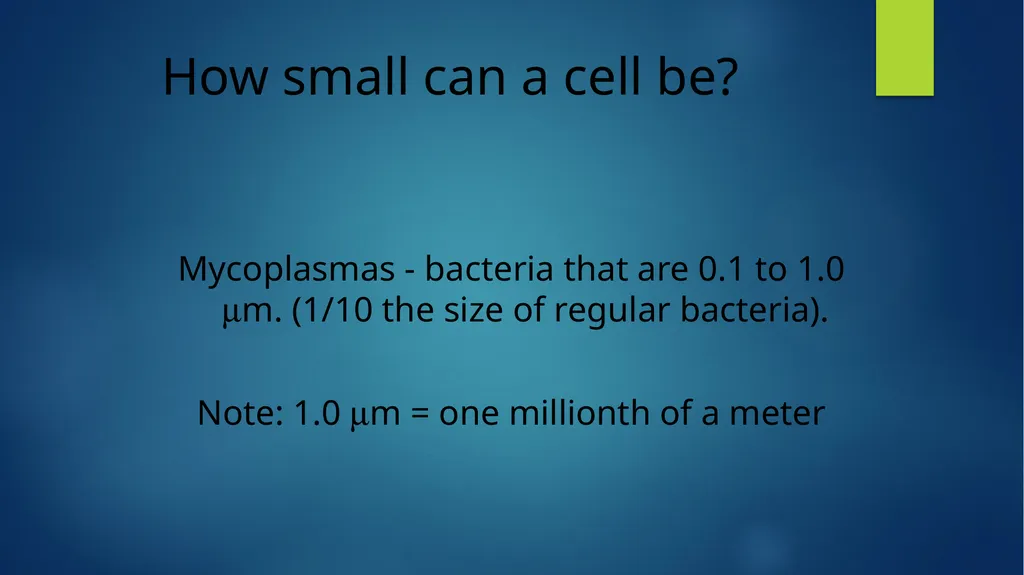
How small can a cell be? Mycoplasmas - bacteria that are 0.1 to 1.0 mm. (1/10 the size of regular bacteria).
Note: 1.0 mm = one millionth of a meter<br>
Note: 1.0 mm = one millionth of a meter<br>
06
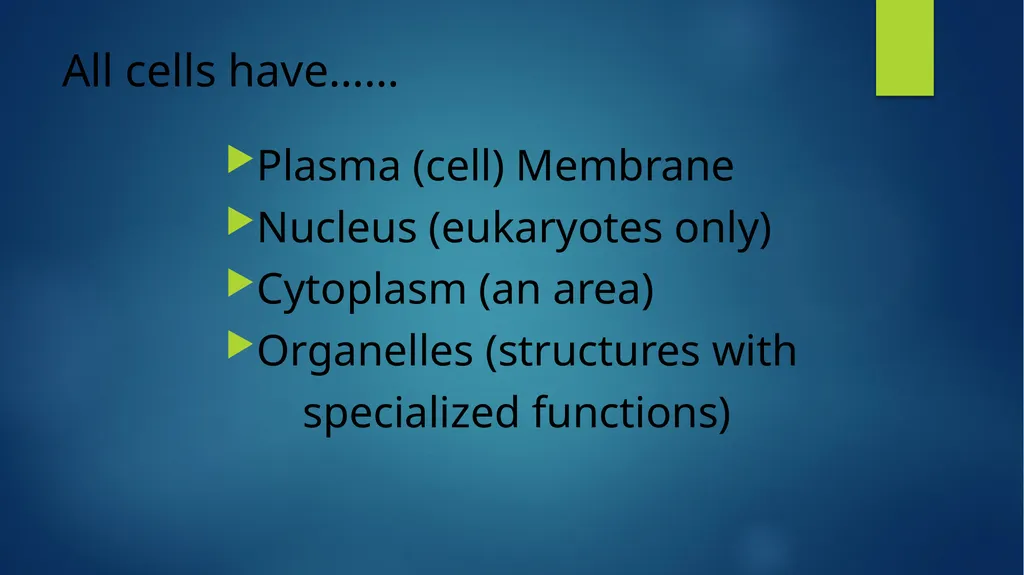
All cells have…… Plasma (cell) Membrane
Nucleus (eukaryotes only)
Cytoplasm (an area)
Organelles (structures with
specialized functions)<br>
Nucleus (eukaryotes only)
Cytoplasm (an area)
Organelles (structures with
specialized functions)<br>
07
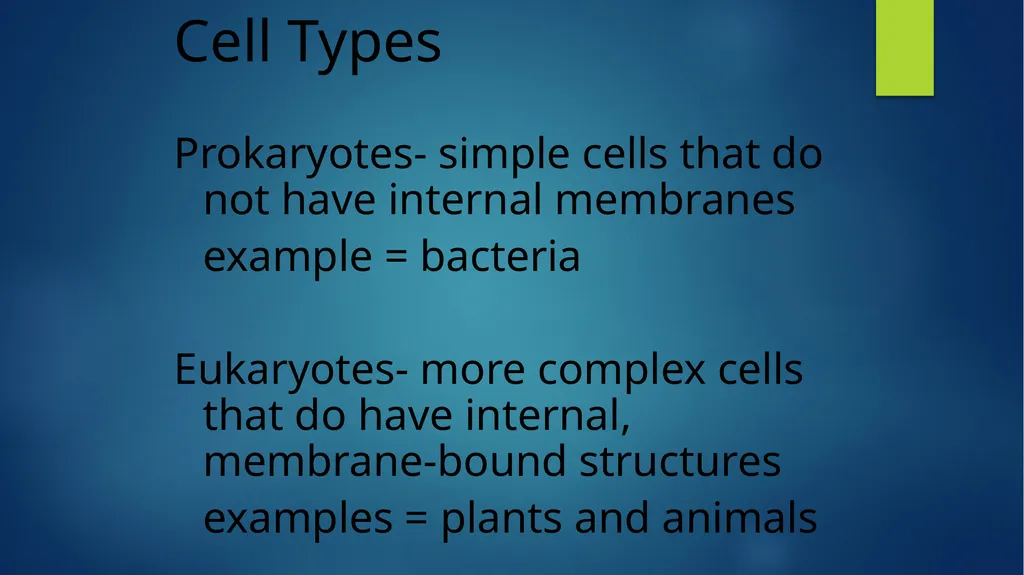
Cell Types Prokaryotes- simple cells that do not have internal membranes
example = bacteria
Eukaryotes- more complex cells that do have internal, membrane-bound structures
examples = plants and animals<br>
example = bacteria
Eukaryotes- more complex cells that do have internal, membrane-bound structures
examples = plants and animals<br>
08
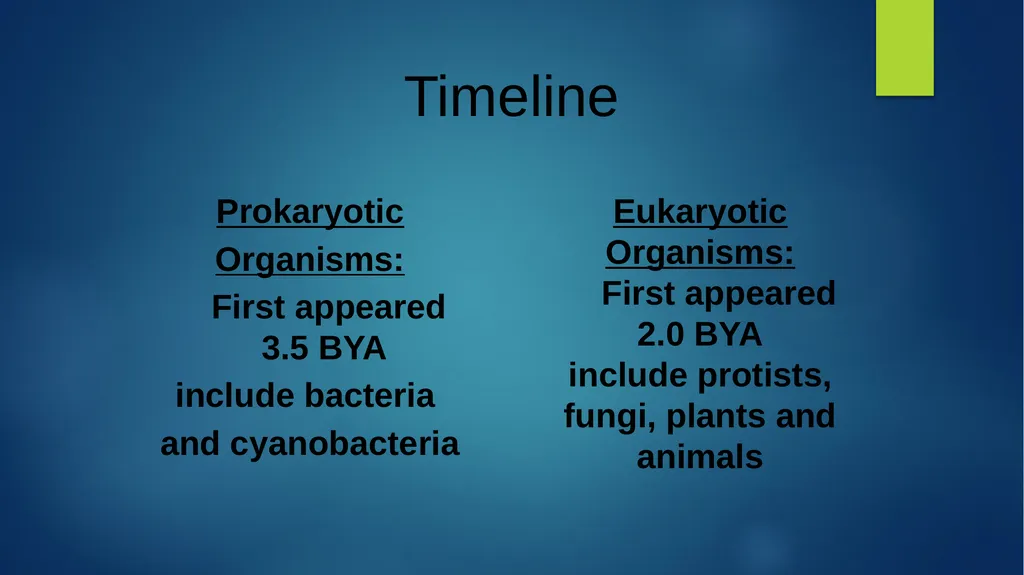
Timeline Prokaryotic
Organisms:
First appeared 3.5 BYA
include bacteria
and cyanobacteria Eukaryotic Organisms:
First appeared 2.0 BYA
include protists, fungi, plants and animals<br>
Organisms:
First appeared 3.5 BYA
include bacteria
and cyanobacteria Eukaryotic Organisms:
First appeared 2.0 BYA
include protists, fungi, plants and animals<br>
09
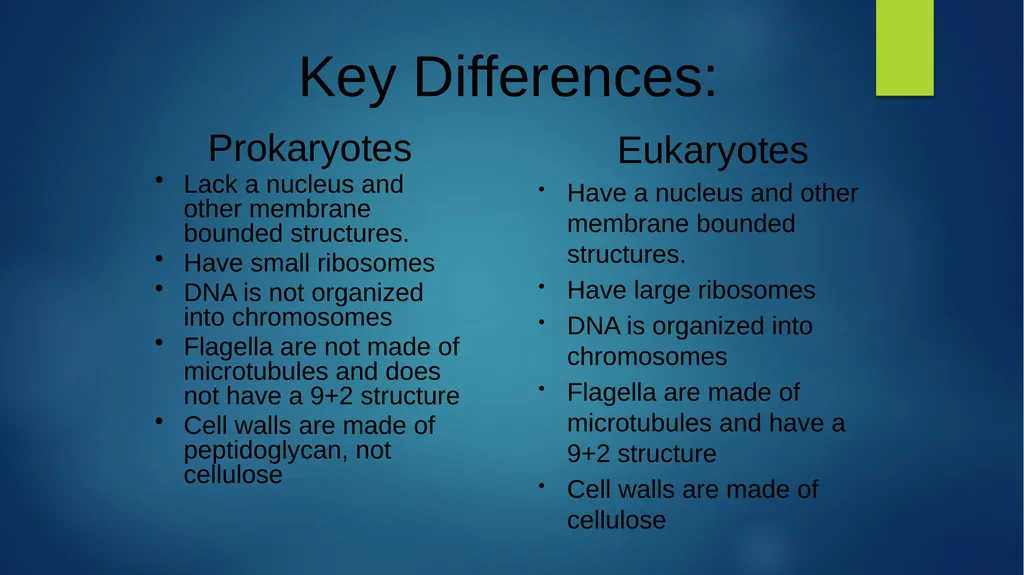
Key Differences: Prokaryotes
Lack a nucleus and other membrane bounded structures.
Have small ribosomes
DNA is not organized into chromosomes
Flagella are not made of microtubules and does not have a 9+2 structure
Cell walls are made of peptidoglycan, not cellulose Eukaryotes
Have a nucleus and other membrane bounded structures.
Have large ribosomes
DNA is organized into chromosomes
Flagella are made of microtubules and have a 9+2 structure
Cell walls are made of cellulose<br>
Lack a nucleus and other membrane bounded structures.
Have small ribosomes
DNA is not organized into chromosomes
Flagella are not made of microtubules and does not have a 9+2 structure
Cell walls are made of peptidoglycan, not cellulose Eukaryotes
Have a nucleus and other membrane bounded structures.
Have large ribosomes
DNA is organized into chromosomes
Flagella are made of microtubules and have a 9+2 structure
Cell walls are made of cellulose<br>
10
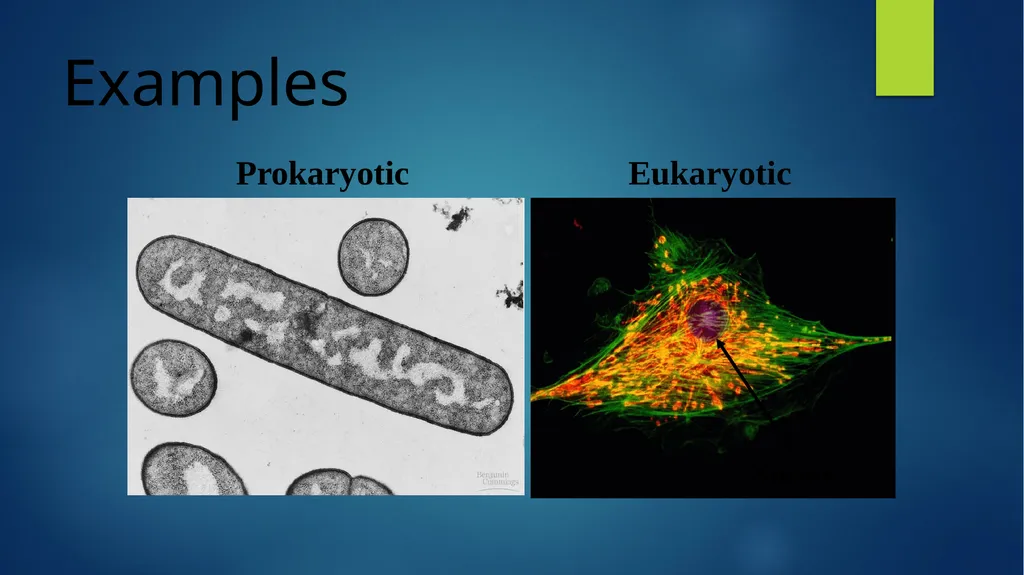
Prokaryotic Eukaryotic Nucleus Examples<br>
11
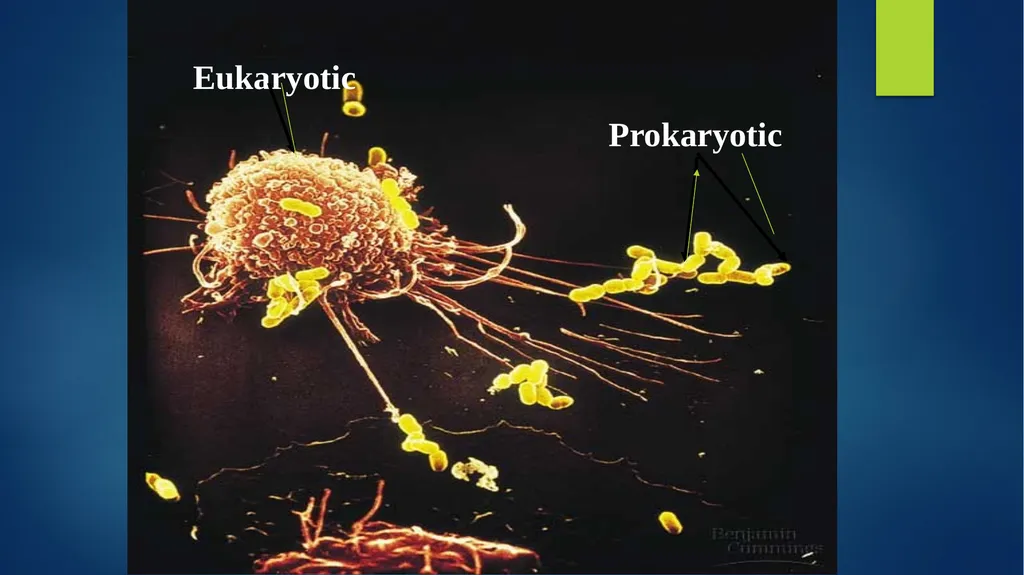
Prokaryotic Eukaryotic<br>
12
TOPIC 2 : The Organization of Living Things<br>
13
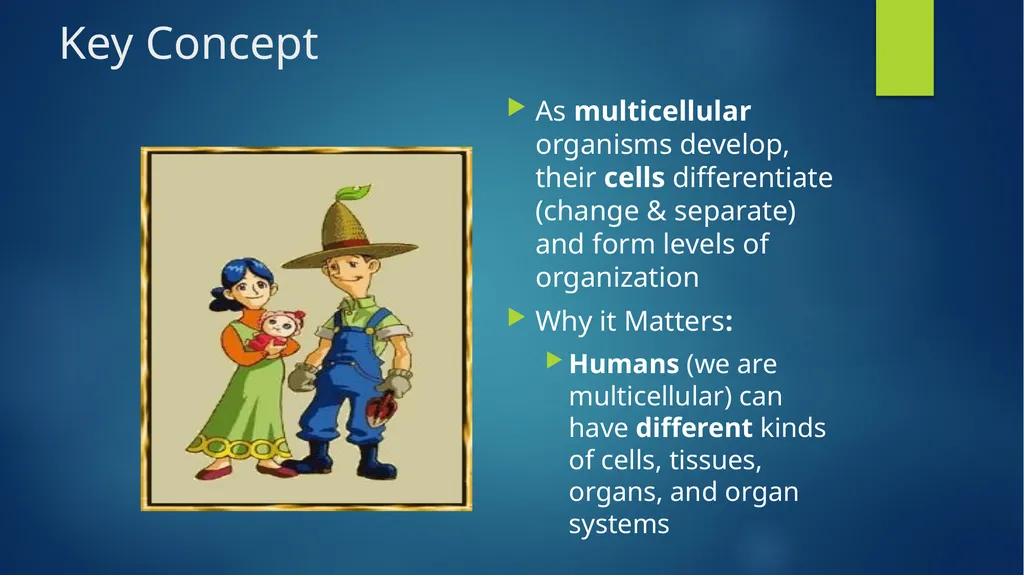
Key Concept As multicellular organisms develop, their cells differentiate (change & separate) and form levels of organization
Why it Matters:
Humans (we are multicellular) can have different kinds of cells, tissues, organs, and organ systems<br>
Why it Matters:
Humans (we are multicellular) can have different kinds of cells, tissues, organs, and organ systems<br>
14
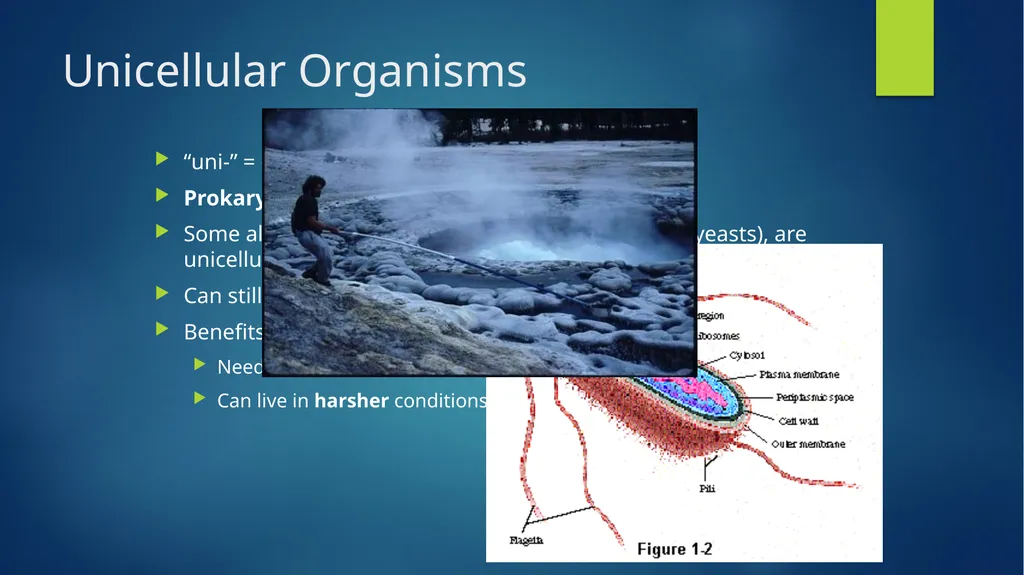
Unicellular Organisms “uni-” = one
Prokaryotes are unicellular organisms
Some algae, some protists, and some eukaryotes (yeasts), are unicellular
Can still do everything they need to stay alive
Benefits over multicellular organisms:
Need fewer resources
Can live in harsher conditions<br>
Prokaryotes are unicellular organisms
Some algae, some protists, and some eukaryotes (yeasts), are unicellular
Can still do everything they need to stay alive
Benefits over multicellular organisms:
Need fewer resources
Can live in harsher conditions<br>
15
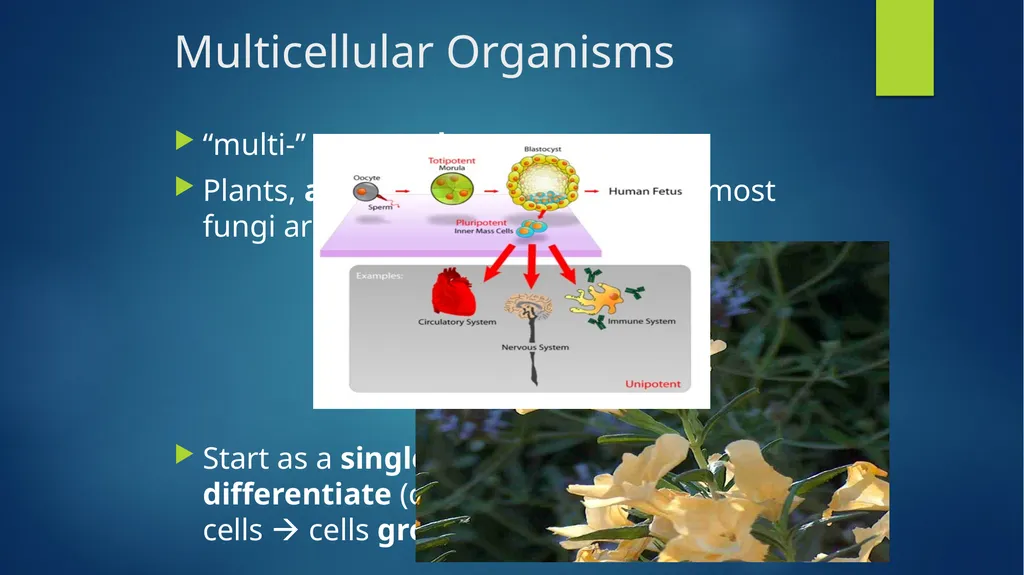
Multicellular Organisms “multi-” = more than one
Plants, animals, some protists, and most fungi are multicellular
Start as a single cell many cells cells differentiate (change) into different types of cells cells group together<br>
Plants, animals, some protists, and most fungi are multicellular
Start as a single cell many cells cells differentiate (change) into different types of cells cells group together<br>
16
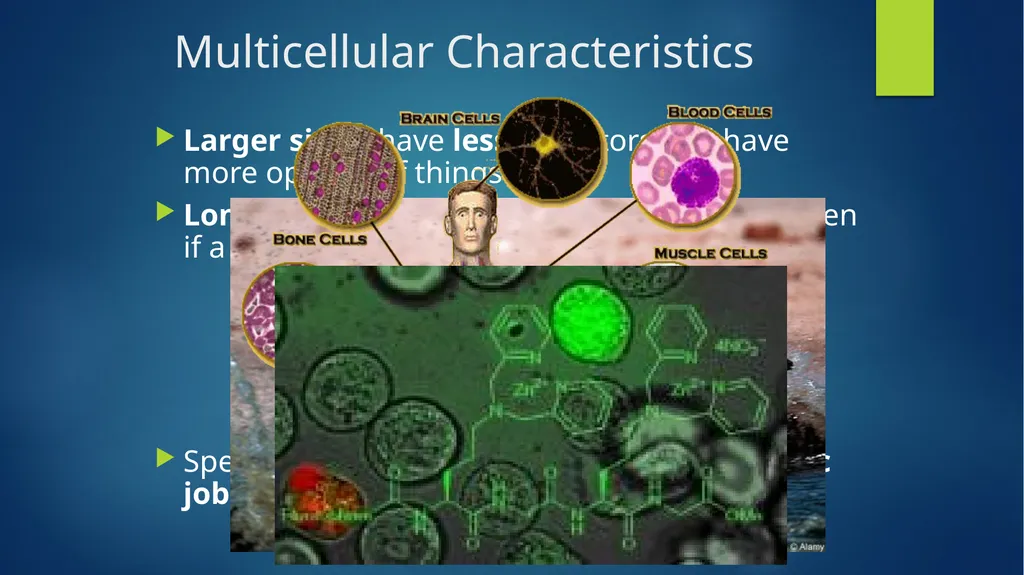
Multicellular Characteristics Larger size = have less predators and have more options of things to eat
Longer life – organism will continue to live even if a single cell dies
Specialization – each type of cell has a specific job, making the organism more efficient<br>
Longer life – organism will continue to live even if a single cell dies
Specialization – each type of cell has a specific job, making the organism more efficient<br>
17
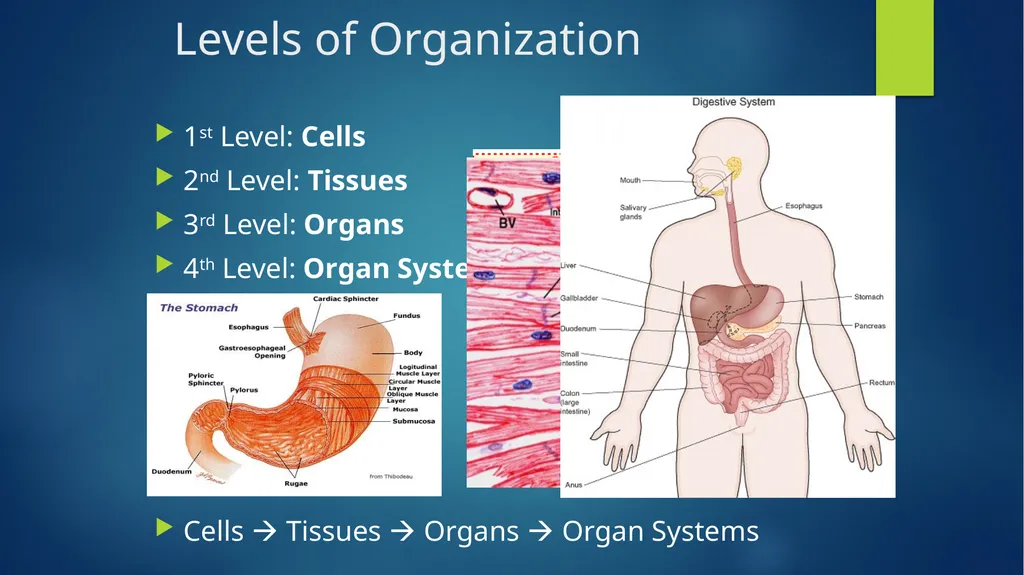
Levels of Organization 1st Level: Cells
2nd Level: Tissues
3rd Level: Organs
4th Level: Organ Systems
Cells Tissues Organs Organ Systems<br>
2nd Level: Tissues
3rd Level: Organs
4th Level: Organ Systems
Cells Tissues Organs Organ Systems<br>
18
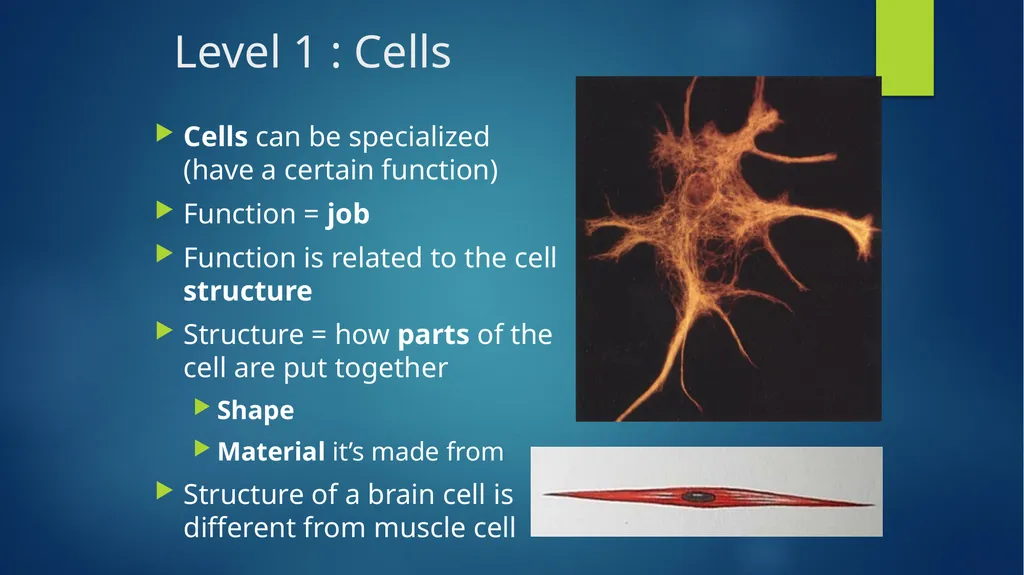
Level 1 : Cells Cells can be specialized (have a certain function)
Function = job
Function is related to the cell structure
Structure = how parts of the cell are put together
Shape
Material it’s made from
Structure of a brain cell is different from muscle cell<br>
Function = job
Function is related to the cell structure
Structure = how parts of the cell are put together
Shape
Material it’s made from
Structure of a brain cell is different from muscle cell<br>
19
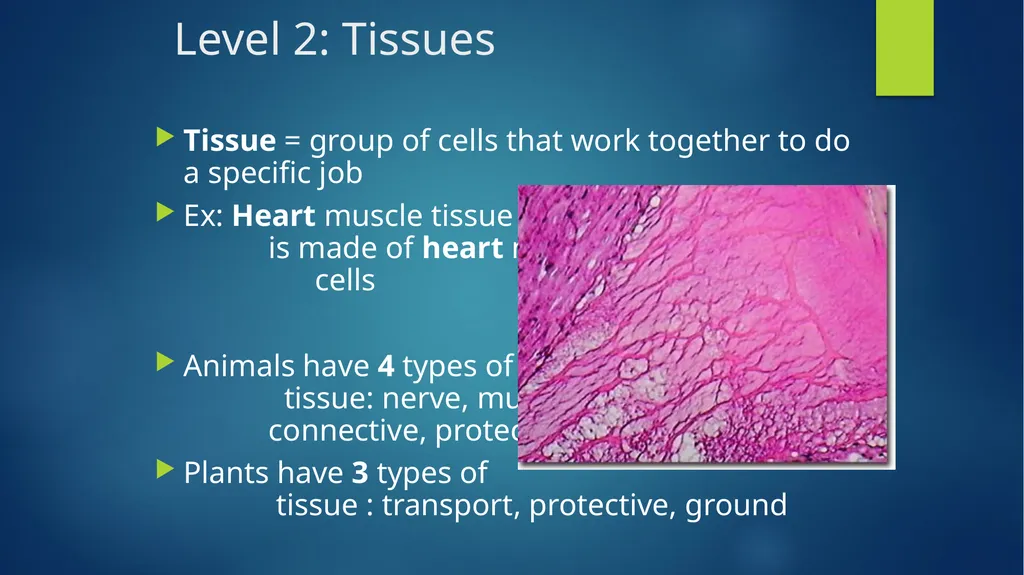
Level 2: Tissues Tissue = group of cells that work together to do a specific job
Ex: Heart muscle tissue is made of heart muscle cells
Animals have 4 types of tissue: nerve, muscle, connective, protective
Plants have 3 types of tissue : transport, protective, ground<br>
Ex: Heart muscle tissue is made of heart muscle cells
Animals have 4 types of tissue: nerve, muscle, connective, protective
Plants have 3 types of tissue : transport, protective, ground<br>
20
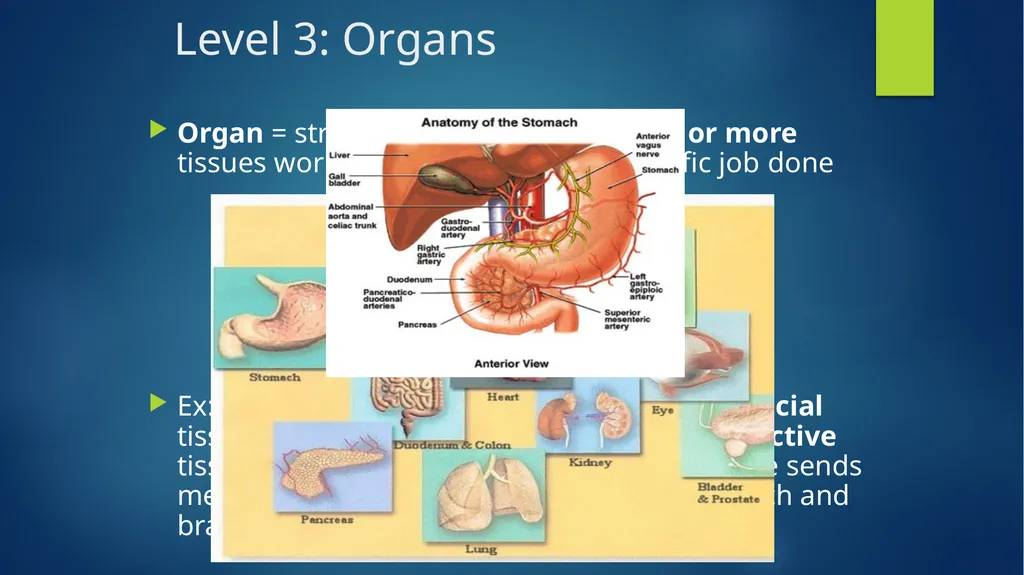
Level 3: Organs Organ = structure that is made up of 2 or more tissues working together to get a specific job done
Ex: Stomach – muscle tissue moves food, special tissues make chemicals to digest food, connective tissue holds stomach together, nervous tissue sends messages back and forth between the stomach and brain<br>
Ex: Stomach – muscle tissue moves food, special tissues make chemicals to digest food, connective tissue holds stomach together, nervous tissue sends messages back and forth between the stomach and brain<br>
21
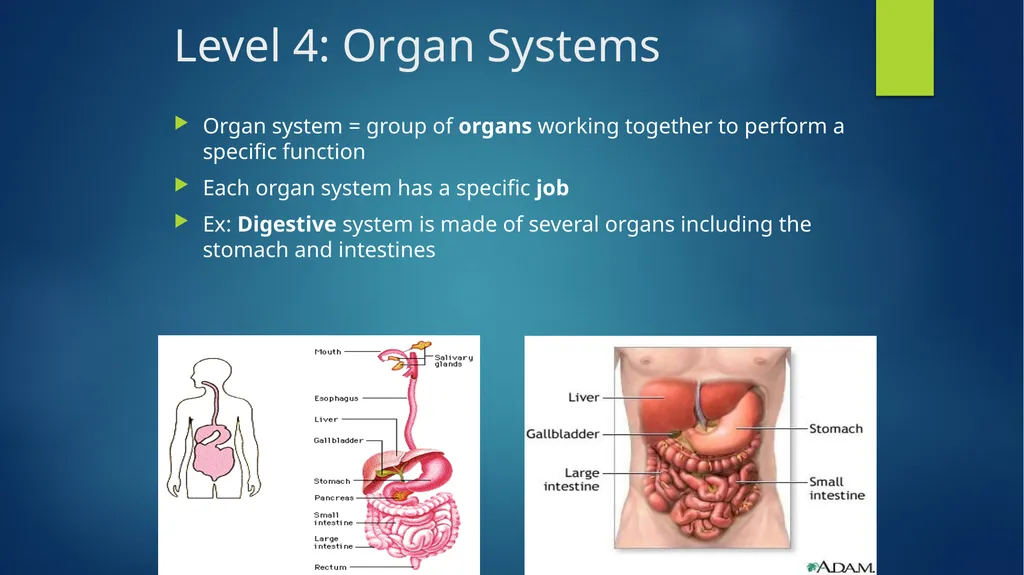
Level 4: Organ Systems Organ system = group of organs working together to perform a specific function
Each organ system has a specific job
Ex: Digestive system is made of several organs including the stomach and intestines<br>
Each organ system has a specific job
Ex: Digestive system is made of several organs including the stomach and intestines<br>
22
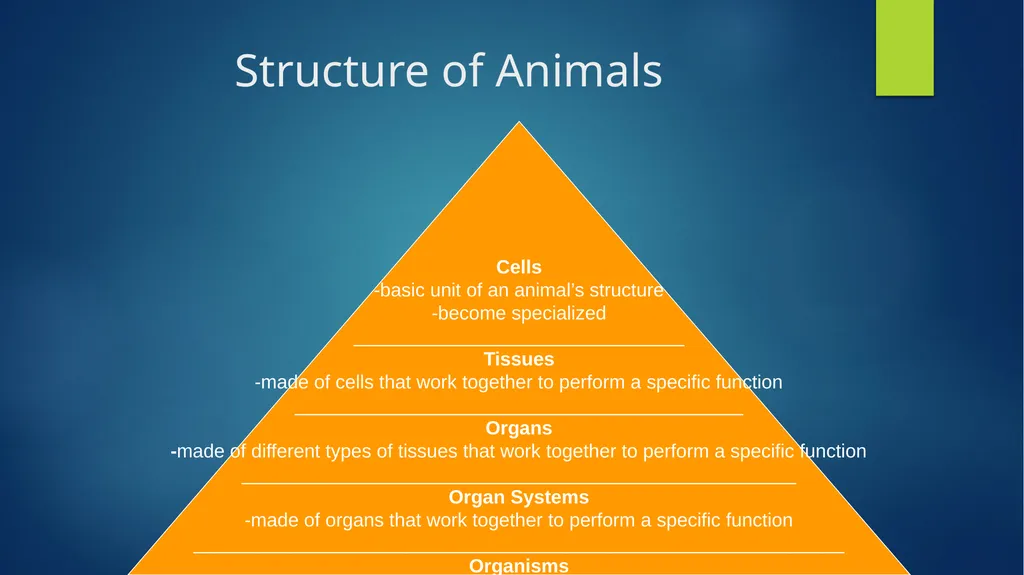
Structure of Animals Cells
-basic unit of an animal’s structure
-become specialized
_______________________________
Tissues
-made of cells that work together to perform a specific function
__________________________________________
Organs
-made of different types of tissues that work together to perform a specific function
____________________________________________________
Organ Systems
-made of organs that work together to perform a specific function
_____________________________________________________________
Organisms<br>
-basic unit of an animal’s structure
-become specialized
_______________________________
Tissues
-made of cells that work together to perform a specific function
__________________________________________
Organs
-made of different types of tissues that work together to perform a specific function
____________________________________________________
Organ Systems
-made of organs that work together to perform a specific function
_____________________________________________________________
Organisms<br>
23
TOPIC 3: GENETICS<br>
24
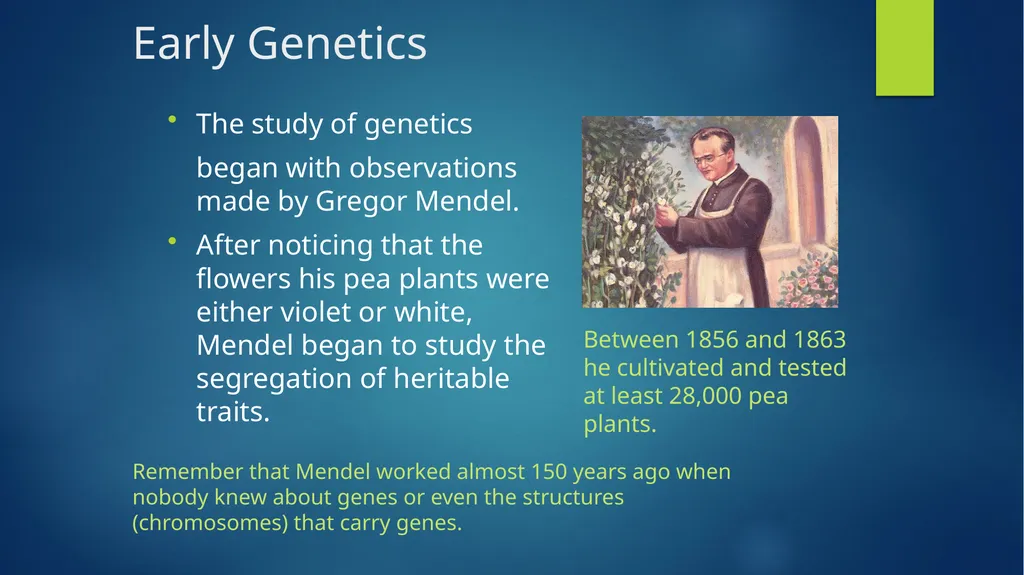
Early Genetics The study of genetics
began with observations made by Gregor Mendel.
After noticing that the flowers his pea plants were either violet or white, Mendel began to study the segregation of heritable traits. Between 1856 and 1863 he cultivated and tested at least 28,000 pea plants. Remember that Mendel worked almost 150 years ago when nobody knew about genes or even the structures (chromosomes) that carry genes.<br>
began with observations made by Gregor Mendel.
After noticing that the flowers his pea plants were either violet or white, Mendel began to study the segregation of heritable traits. Between 1856 and 1863 he cultivated and tested at least 28,000 pea plants. Remember that Mendel worked almost 150 years ago when nobody knew about genes or even the structures (chromosomes) that carry genes.<br>
25
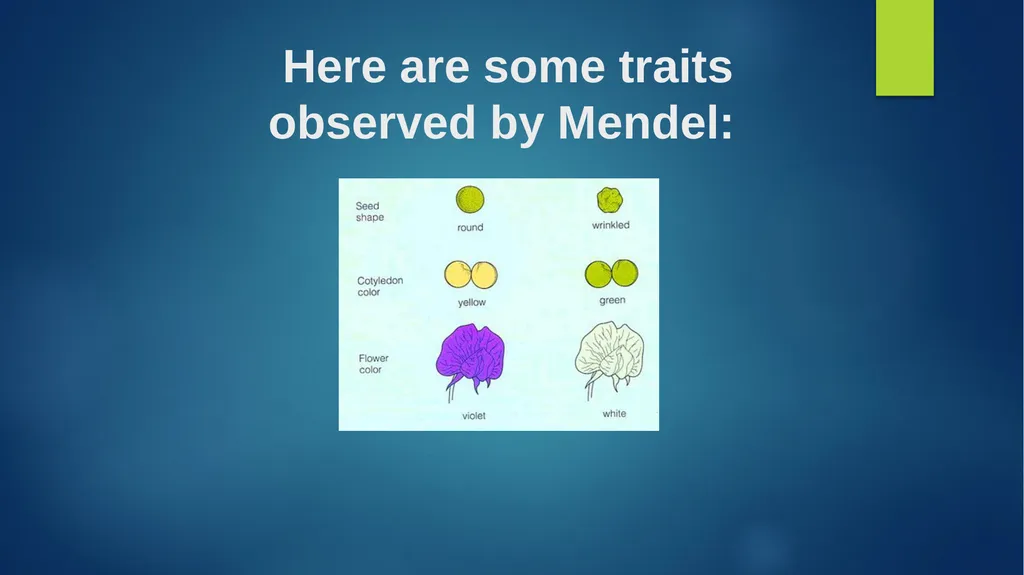
Here are some traits observed by Mendel:<br>
26
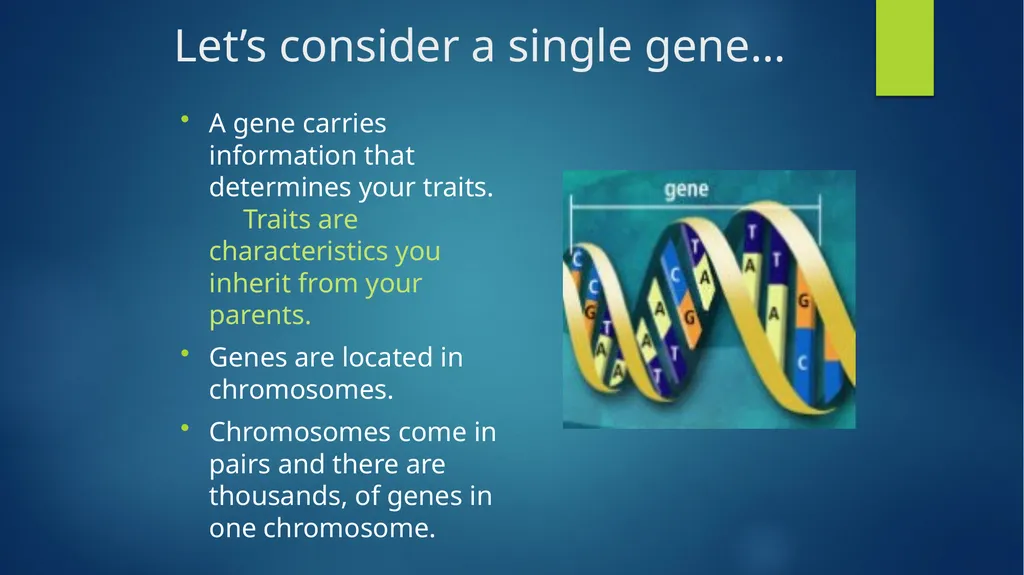
Let’s consider a single gene… A gene carries information that determines your traits. Traits are characteristics you inherit from your parents.
Genes are located in chromosomes.
Chromosomes come in pairs and there are thousands, of genes in one chromosome.<br>
Genes are located in chromosomes.
Chromosomes come in pairs and there are thousands, of genes in one chromosome.<br>
27
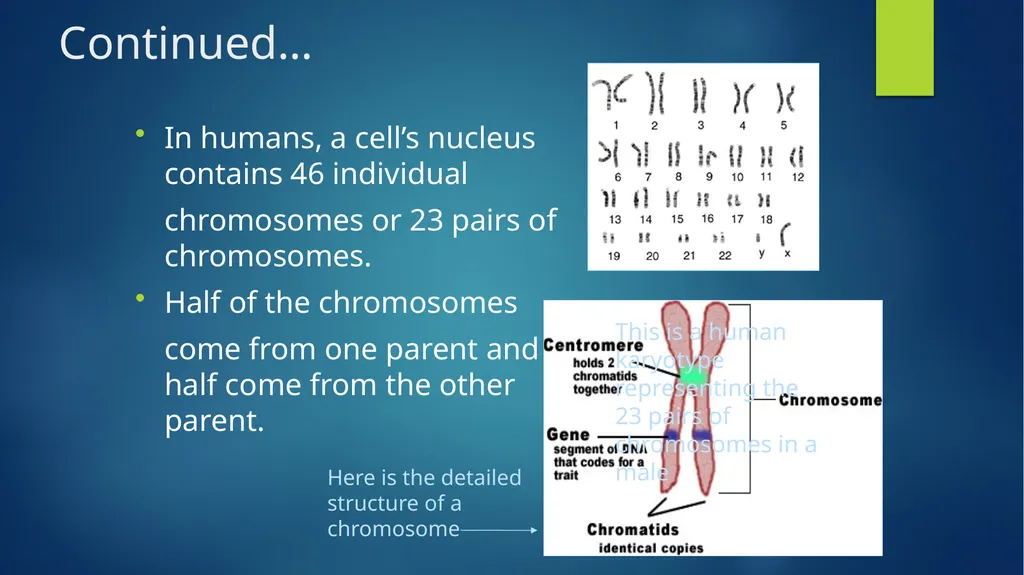
Continued… In humans, a cell’s nucleus contains 46 individual
chromosomes or 23 pairs of chromosomes.
Half of the chromosomes
come from one parent and half come from the other parent. This is a human karyotype representing the 23 pairs of chromosomes in a male Here is the detailed structure of a chromosome<br>
chromosomes or 23 pairs of chromosomes.
Half of the chromosomes
come from one parent and half come from the other parent. This is a human karyotype representing the 23 pairs of chromosomes in a male Here is the detailed structure of a chromosome<br>
28
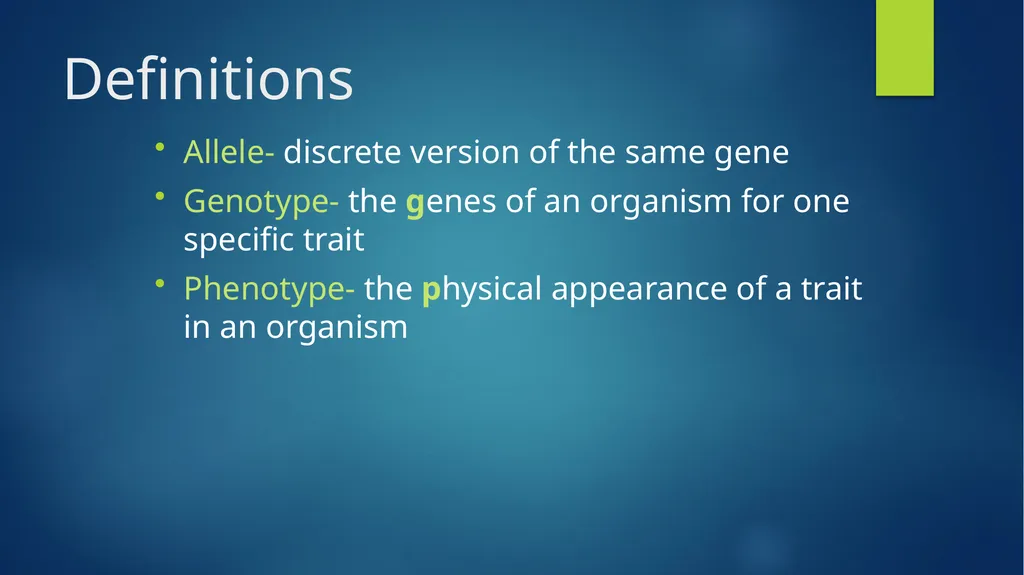
Definitions Allele- discrete version of the same gene
Genotype- the genes of an organism for one specific trait
Phenotype- the physical appearance of a trait in an organism<br>
Genotype- the genes of an organism for one specific trait
Phenotype- the physical appearance of a trait in an organism<br>
29
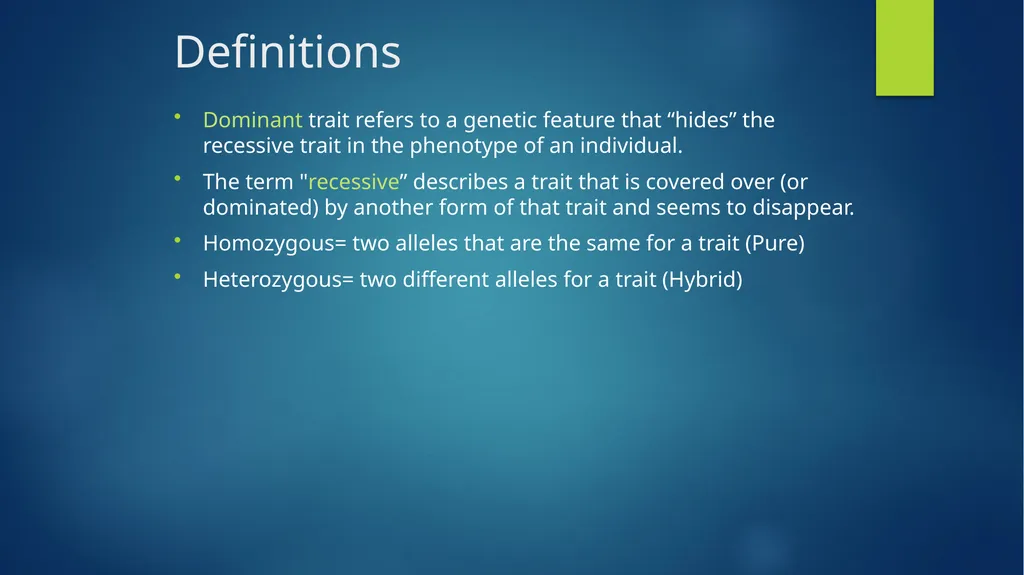
Definitions Dominant trait refers to a genetic feature that “hides” the recessive trait in the phenotype of an individual.
The term "recessive” describes a trait that is covered over (or dominated) by another form of that trait and seems to disappear.
Homozygous= two alleles that are the same for a trait (Pure)
Heterozygous= two different alleles for a trait (Hybrid)<br>
The term "recessive” describes a trait that is covered over (or dominated) by another form of that trait and seems to disappear.
Homozygous= two alleles that are the same for a trait (Pure)
Heterozygous= two different alleles for a trait (Hybrid)<br>
30
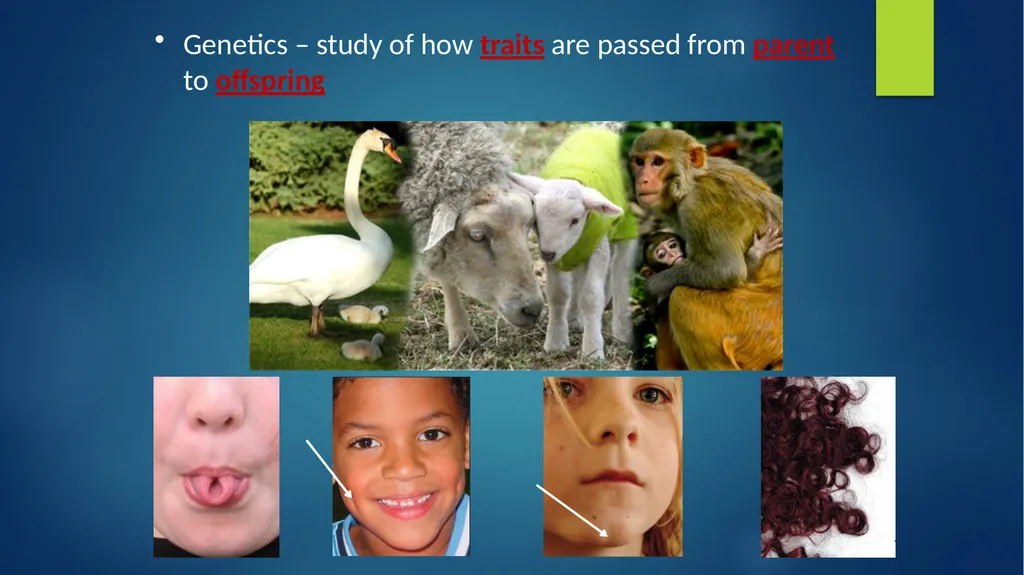
Genetics – study of how traits are passed from parent to offspring<br>
31
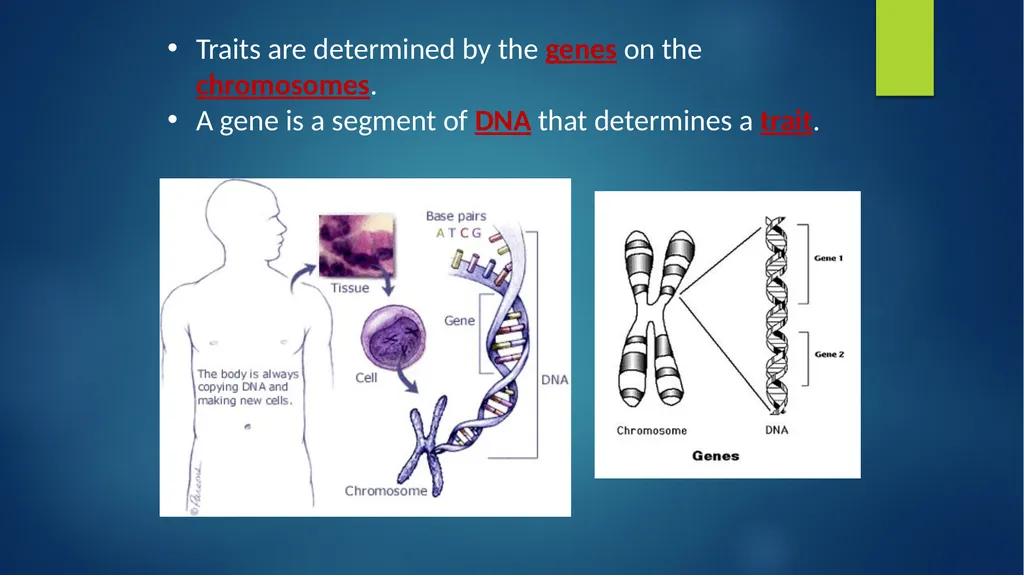
Traits are determined by the genes on the chromosomes.
A gene is a segment of DNA that determines a trait.<br>
A gene is a segment of DNA that determines a trait.<br>
32
Chromosomes come in homologous pairs, thus genes come in pairs.
Homologous pairs – matching genes – one from female parent and one from male parent
Example: Humans have 46 chromosomes or 23 pairs.
One set from dad – 23 in sperm
One set from mom – 23 in egg<br>
Homologous pairs – matching genes – one from female parent and one from male parent
Example: Humans have 46 chromosomes or 23 pairs.
One set from dad – 23 in sperm
One set from mom – 23 in egg<br>
33
Gene for eye color (blue eyes) Gene for eye color (brown eyes) Homologous pair of chromosomes One pair of Homologous Chromosomes: Alleles – different genes (possibilities) for the same trait –
ex: blue eyes or brown eyes<br>
ex: blue eyes or brown eyes<br>
34
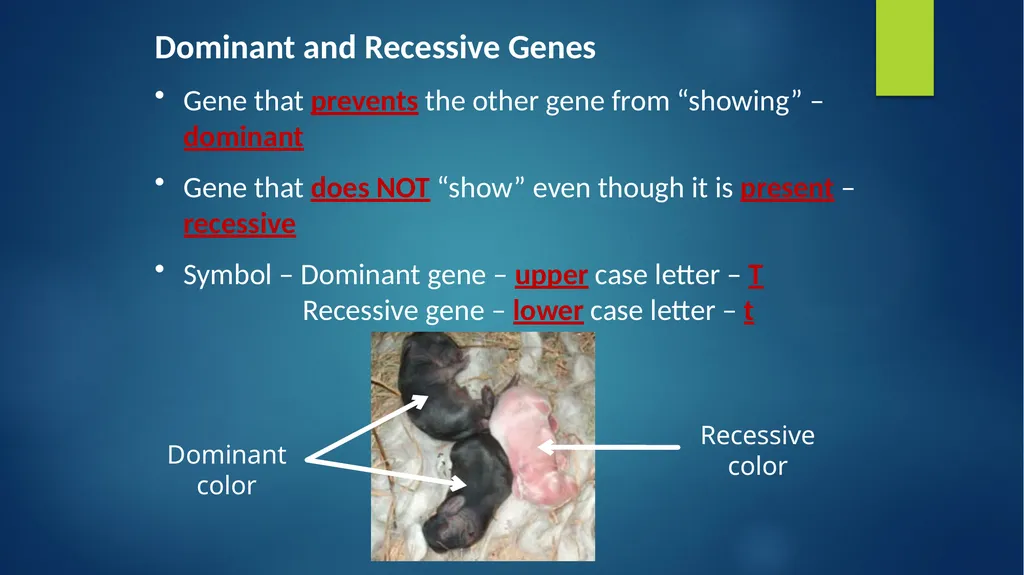
Dominant and Recessive Genes
Gene that prevents the other gene from “showing” – dominant
Gene that does NOT “show” even though it is present – recessive
Symbol – Dominant gene – upper case letter – T
Recessive gene – lower case letter – t Dominant color Recessive color<br>
Gene that prevents the other gene from “showing” – dominant
Gene that does NOT “show” even though it is present – recessive
Symbol – Dominant gene – upper case letter – T
Recessive gene – lower case letter – t Dominant color Recessive color<br>
35
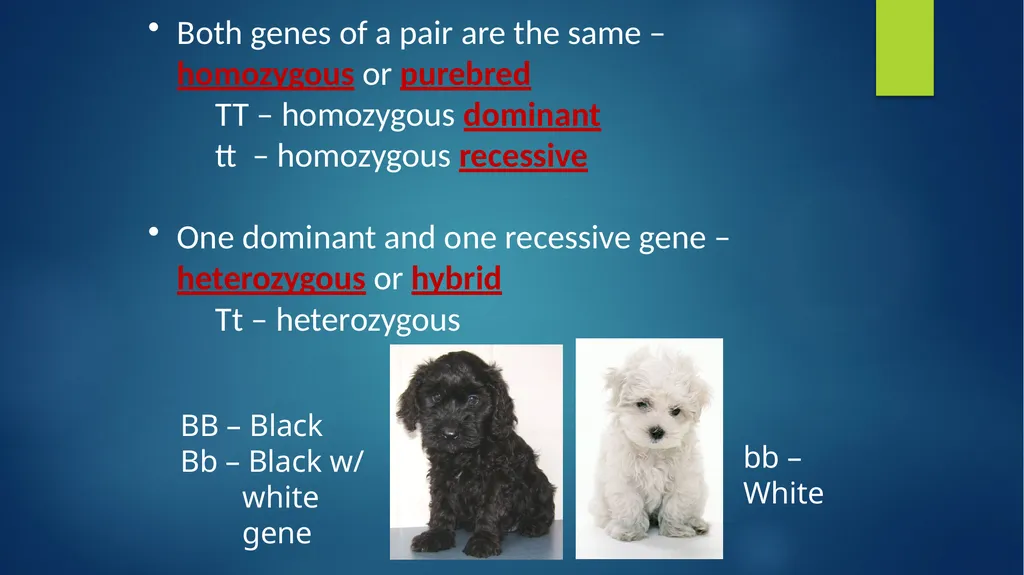
Both genes of a pair are the same –
homozygous or purebred
TT – homozygous dominant
tt – homozygous recessive
One dominant and one recessive gene – heterozygous or hybrid
Tt – heterozygous BB – Black
Bb – Black w/ white gene bb – White<br>
homozygous or purebred
TT – homozygous dominant
tt – homozygous recessive
One dominant and one recessive gene – heterozygous or hybrid
Tt – heterozygous BB – Black
Bb – Black w/ white gene bb – White<br>
36
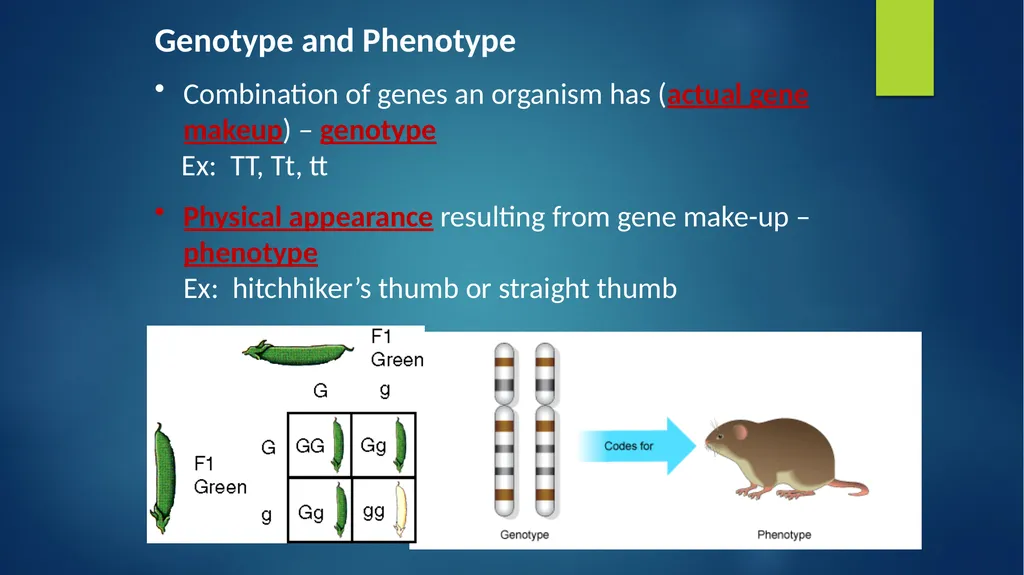
Genotype and Phenotype
Combination of genes an organism has (actual gene makeup) – genotype
Ex: TT, Tt, tt
Physical appearance resulting from gene make-up – phenotype
Ex: hitchhiker’s thumb or straight thumb<br>
Combination of genes an organism has (actual gene makeup) – genotype
Ex: TT, Tt, tt
Physical appearance resulting from gene make-up – phenotype
Ex: hitchhiker’s thumb or straight thumb<br>
37
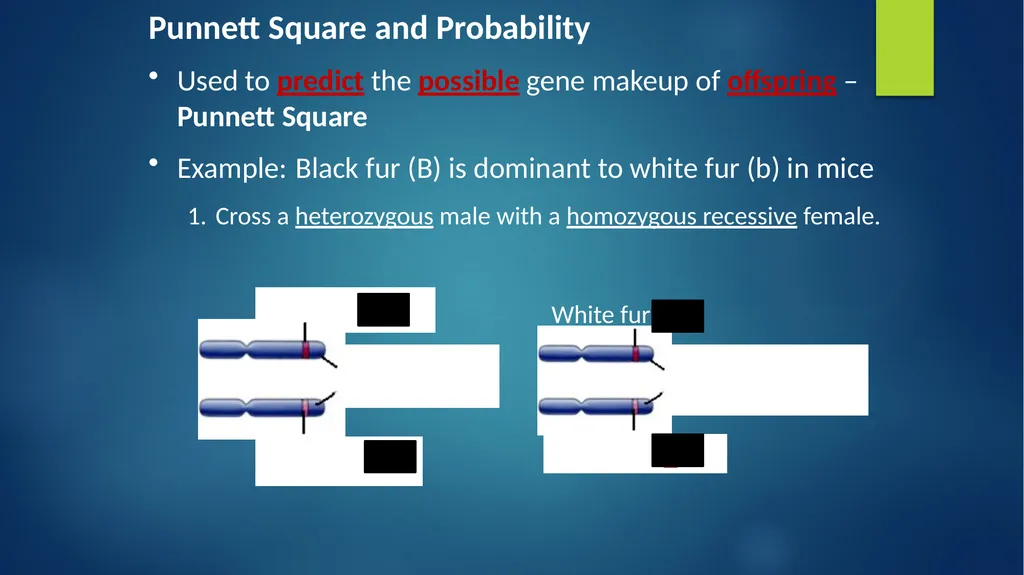
White fur (b) Punnett Square and Probability
Used to predict the possible gene makeup of offspring – Punnett Square
Example: Black fur (B) is dominant to white fur (b) in mice
Cross a heterozygous male with a homozygous recessive female. Black fur (B) White fur (b) Heterozygous
male White fur (b) Homozygous recessive female<br>
Used to predict the possible gene makeup of offspring – Punnett Square
Example: Black fur (B) is dominant to white fur (b) in mice
Cross a heterozygous male with a homozygous recessive female. Black fur (B) White fur (b) Heterozygous
male White fur (b) Homozygous recessive female<br>
38
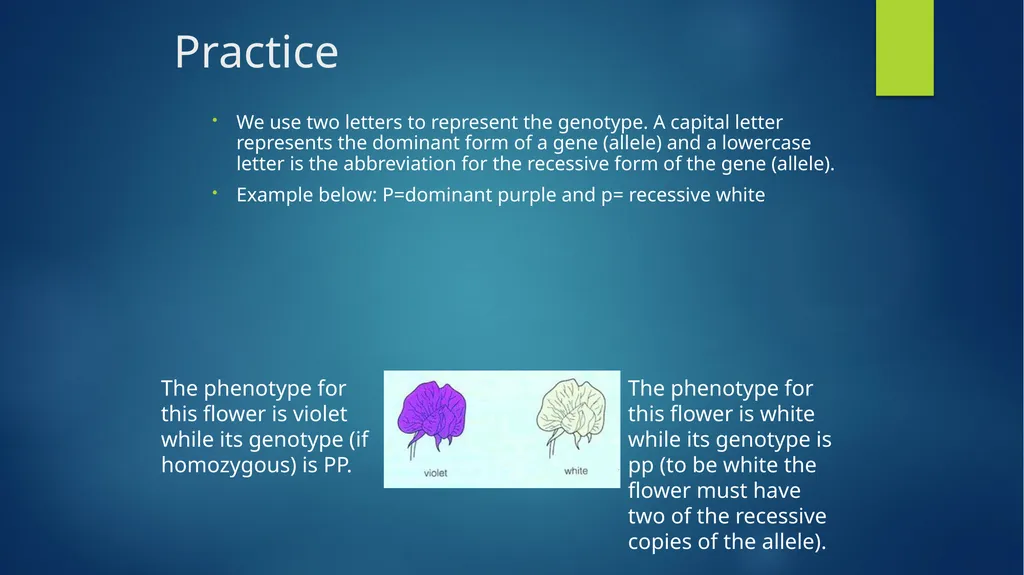
Practice We use two letters to represent the genotype. A capital letter represents the dominant form of a gene (allele) and a lowercase letter is the abbreviation for the recessive form of the gene (allele).
Example below: P=dominant purple and p= recessive white The phenotype for this flower is violet while its genotype (if homozygous) is PP. The phenotype for this flower is white while its genotype is pp (to be white the flower must have two of the recessive copies of the allele).<br>
Example below: P=dominant purple and p= recessive white The phenotype for this flower is violet while its genotype (if homozygous) is PP. The phenotype for this flower is white while its genotype is pp (to be white the flower must have two of the recessive copies of the allele).<br>
39
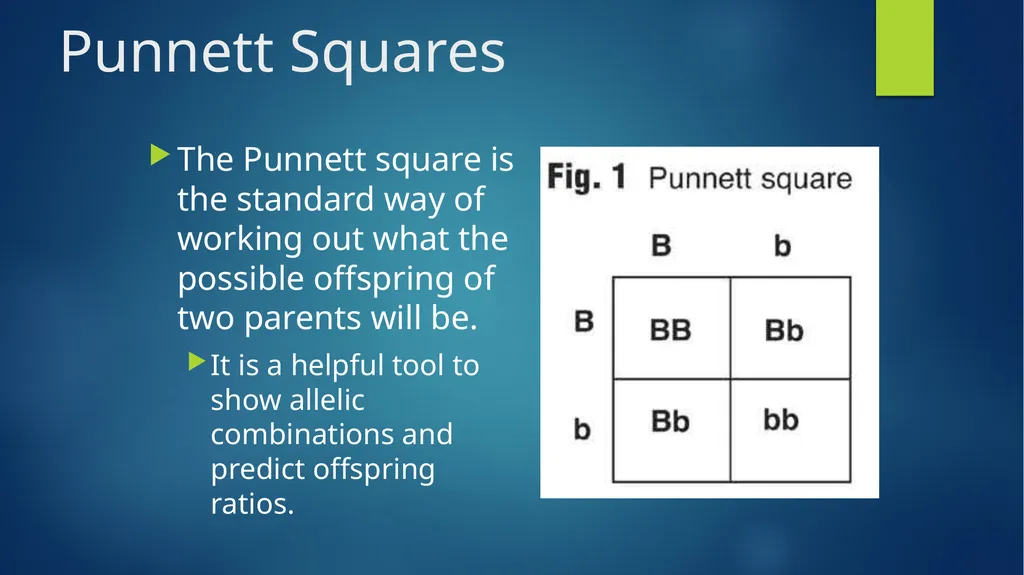
Punnett Squares The Punnett square is the standard way of working out what the possible offspring of two parents will be.
It is a helpful tool to show allelic combinations and predict offspring ratios.<br>
It is a helpful tool to show allelic combinations and predict offspring ratios.<br>
40
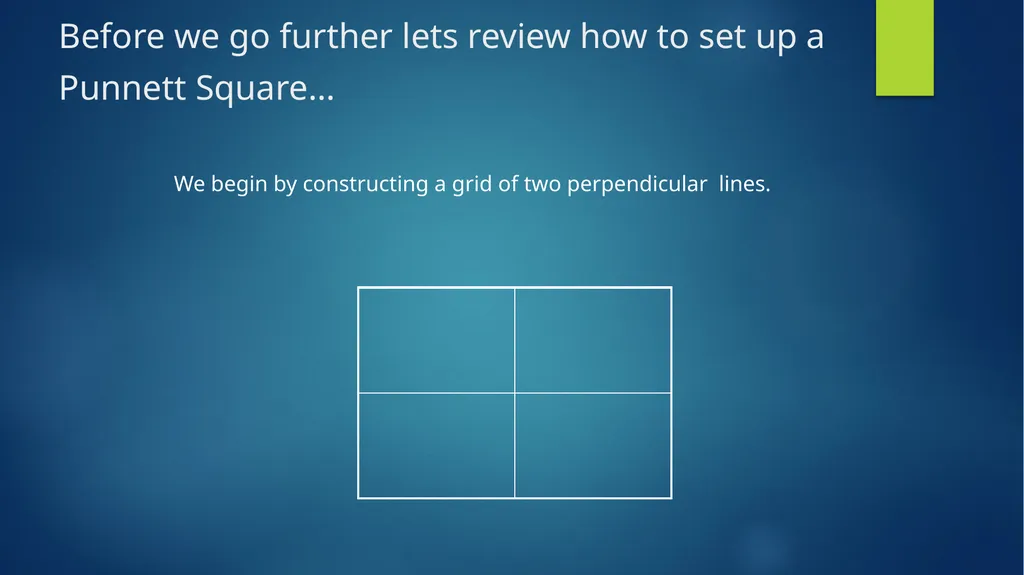
Before we go further lets review how to set up a Punnett Square… We begin by constructing a grid of two perpendicular lines.<br>
41
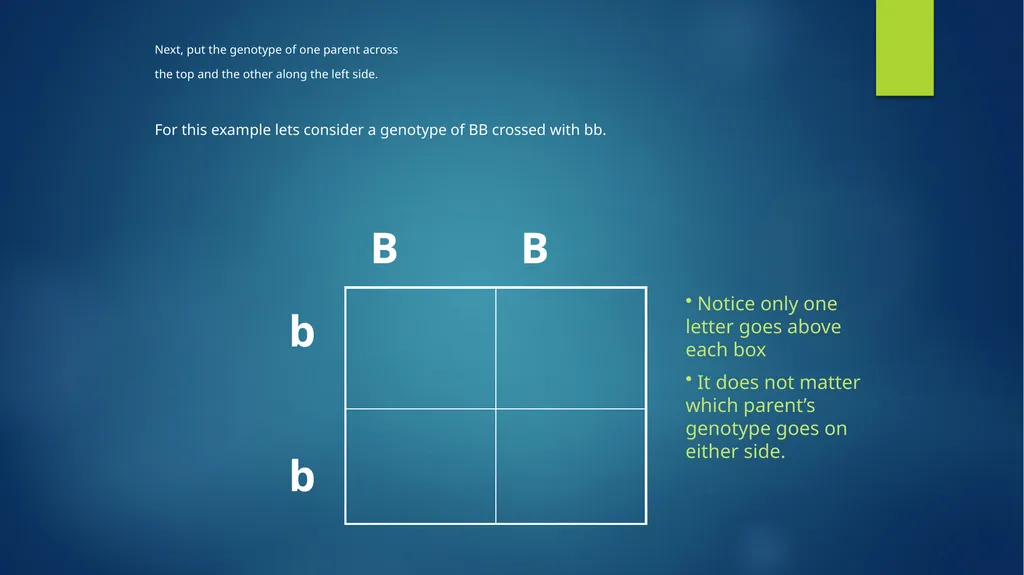
Next, put the genotype of one parent across
the top and the other along the left side.
For this example lets consider a genotype of BB crossed with bb. B B b
b Notice only one letter goes above each box
It does not matter which parent’s genotype goes on either side.<br>
the top and the other along the left side.
For this example lets consider a genotype of BB crossed with bb. B B b
b Notice only one letter goes above each box
It does not matter which parent’s genotype goes on either side.<br>
42
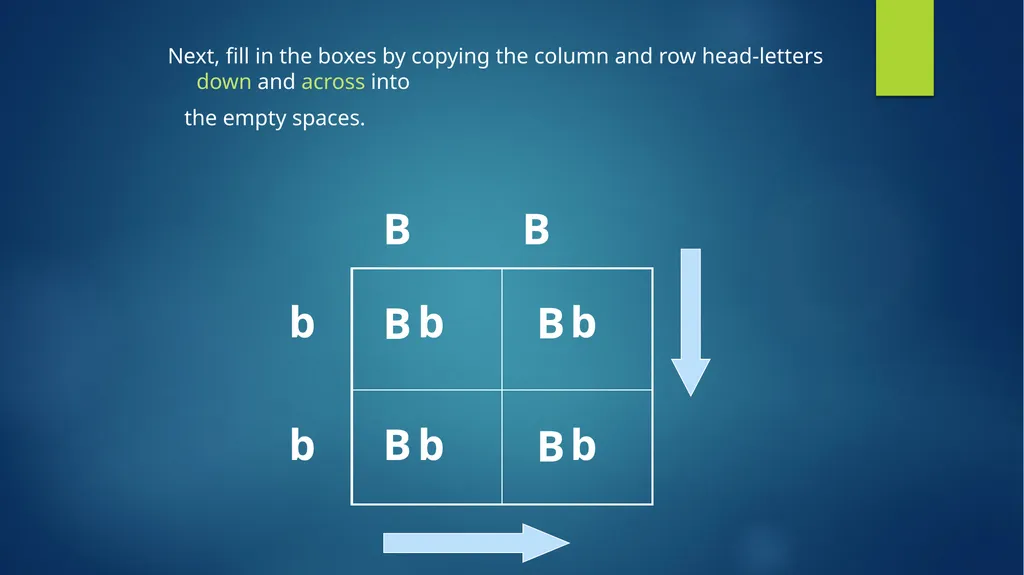
Next, fill in the boxes by copying the column and row head-letters down and across into
the empty spaces. B B b B B B B b b b b b<br>
the empty spaces. B B b B B B B b b b b b<br>
43
Punnett Squares Now that we have learned the basics of genetics lets walk through some examples using Punnett Squares.<br>
44
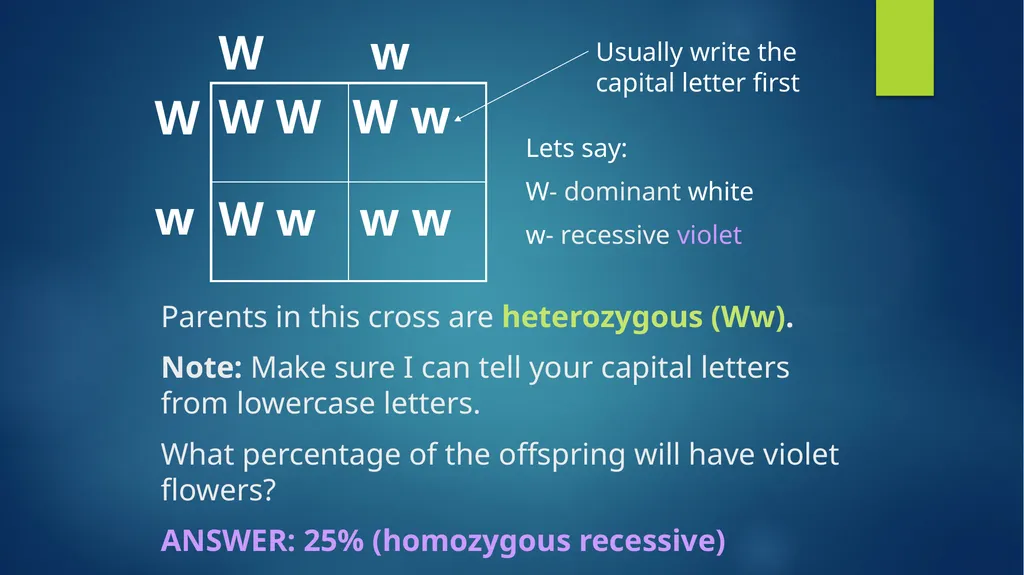
Lets say:
W- dominant white
w- recessive violet W w W Parents in this cross are heterozygous (Ww).
Note: Make sure I can tell your capital letters from lowercase letters.
What percentage of the offspring will have violet flowers?
ANSWER: 25% (homozygous recessive) Usually write the capital letter first w W W W w W w w w<br>
W- dominant white
w- recessive violet W w W Parents in this cross are heterozygous (Ww).
Note: Make sure I can tell your capital letters from lowercase letters.
What percentage of the offspring will have violet flowers?
ANSWER: 25% (homozygous recessive) Usually write the capital letter first w W W W w W w w w<br>
45
Red hair (R) is dominant over blond hair (r). Make a cross between a heterozygous red head and a blond. R r r
r What percentage of the offspring will have red hair? 50%<br>
r What percentage of the offspring will have red hair? 50%<br>
46
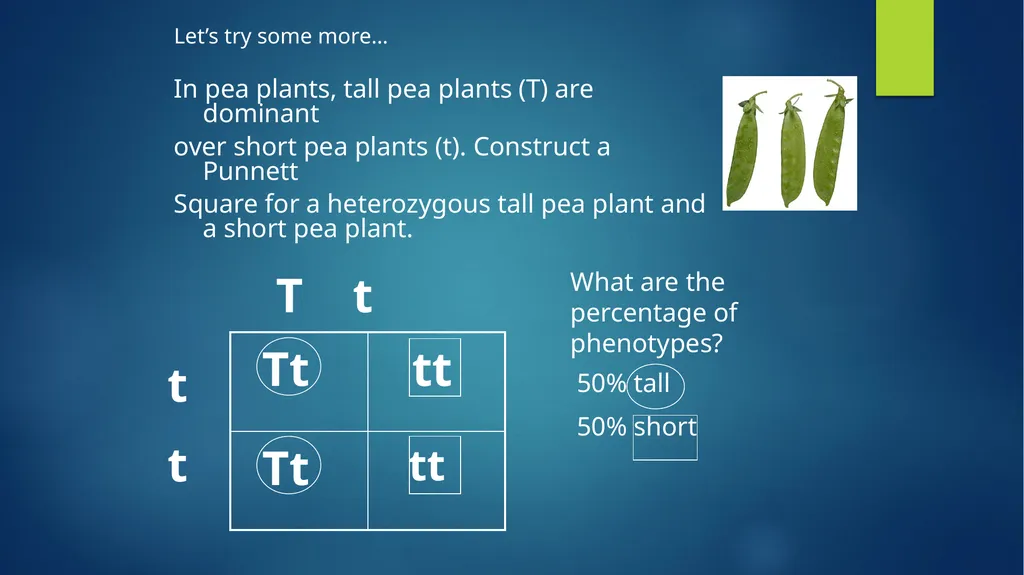
Let’s try some more…
In pea plants, tall pea plants (T) are dominant
over short pea plants (t). Construct a Punnett
Square for a heterozygous tall pea plant and a short pea plant. T t t
t What are the percentage of phenotypes? 50% tall
50% short<br>
In pea plants, tall pea plants (T) are dominant
over short pea plants (t). Construct a Punnett
Square for a heterozygous tall pea plant and a short pea plant. T t t
t What are the percentage of phenotypes? 50% tall
50% short<br>
47
Black eyes (R) is dominant over red eyes (r)
in rats. Make a cross between a homozygous rat with black eyes and a rat with red eyes. R R r
r What is the possibility of a red eye off springs? 0% <br>
in rats. Make a cross between a homozygous rat with black eyes and a rat with red eyes. R R r
r What is the possibility of a red eye off springs? 0% <br>