04
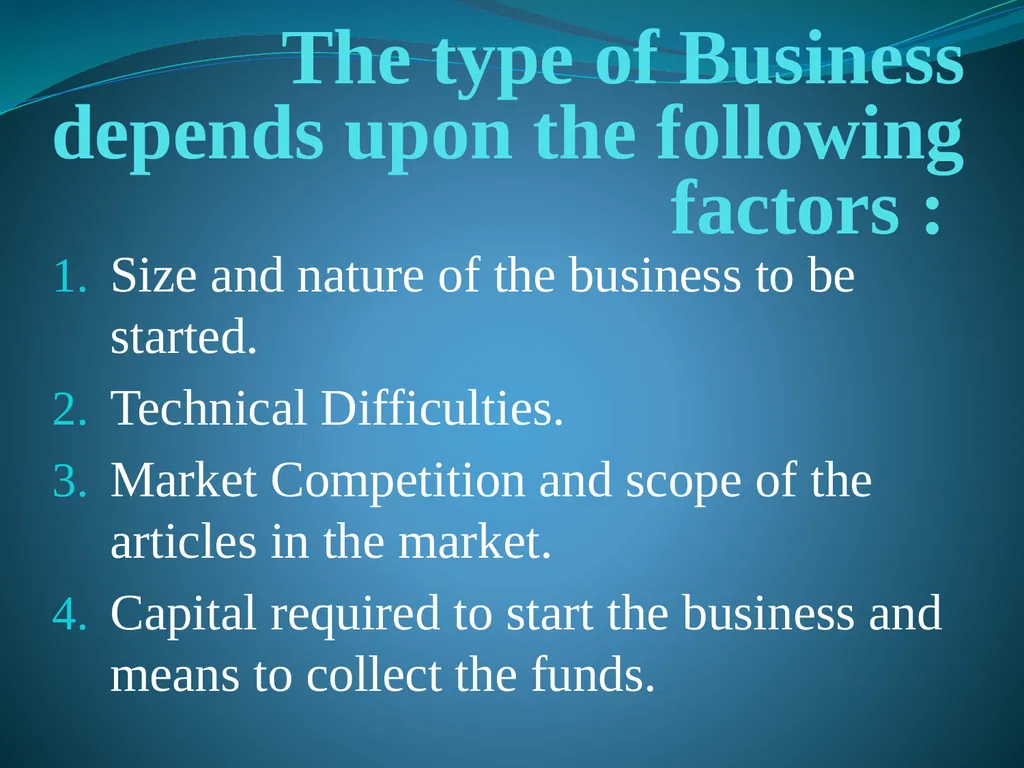
The type of Business depends upon the following factors : Size and nature of the business to be started.
Technical Difficulties.
Market Competition and scope of the articles in the market.
Capital required to start the business and means to collect the funds.<br>
05
5. Limitations and restrictions put forth by the Government in connection with grant of loans, foreign exchange and such other things.<br>
06
Business Functions Human Resources
Marketing
Finance
Production (Operations)<br>
07
Human Resources Manpower Planning
Job analysis and Job description
Determining wages and salaries
Recruitment and Selection
Training and Development
Employee welfare and motivation
Labour management relations
Performance Appraisal<br>
08
Marketing Conducting Market Research
Price Planning
Customer Relationship Management
Identifying New Business Opportunities
Product Planning
Distribution Planning
Consumer Analysis<br>
09
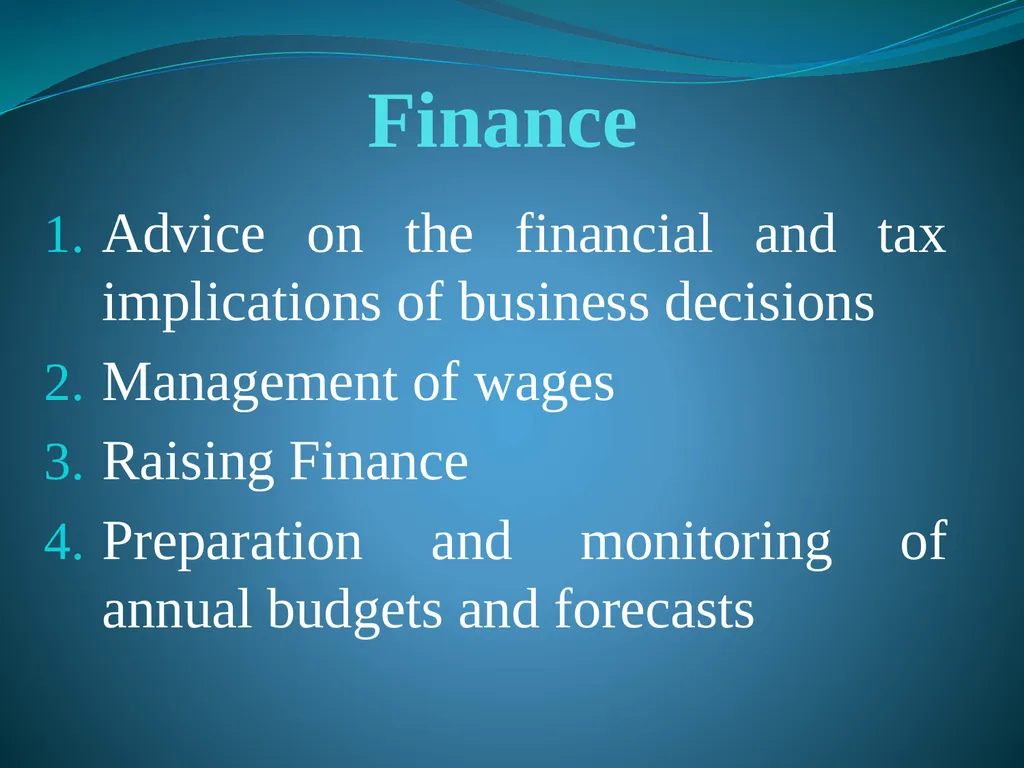
Finance Advice on the financial and tax implications of business decisions
Management of wages
Raising Finance
Preparation and monitoring of annual budgets and forecasts<br>
10
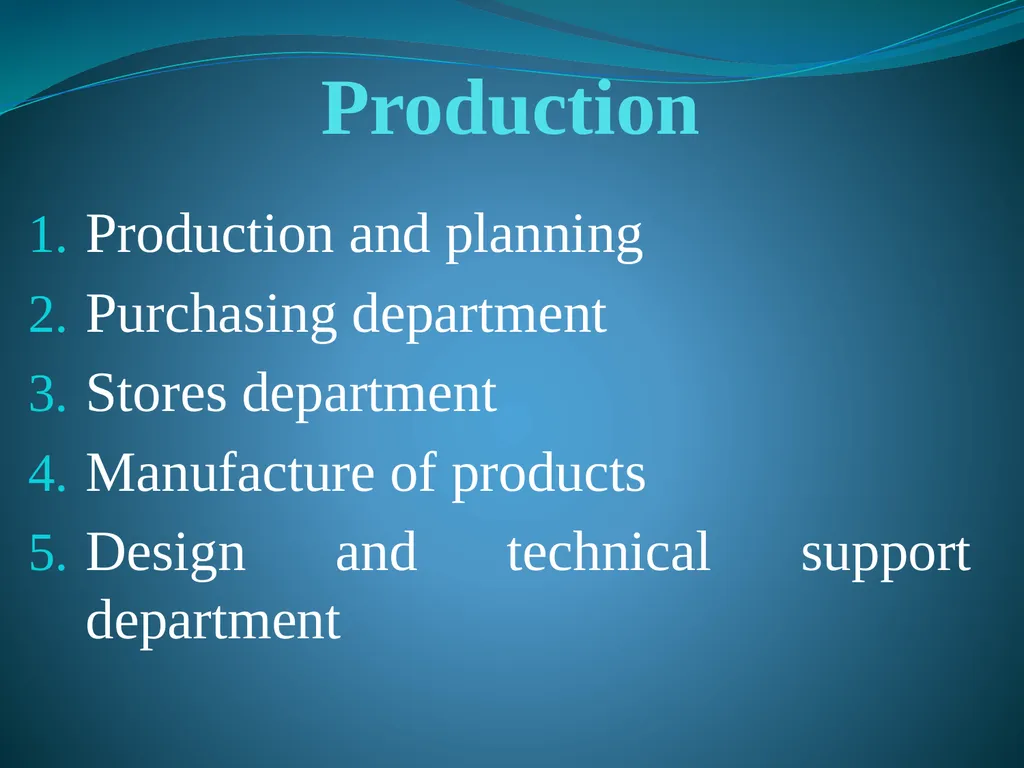
Production Production and planning
Purchasing department
Stores department
Manufacture of products
Design and technical support department<br>
11
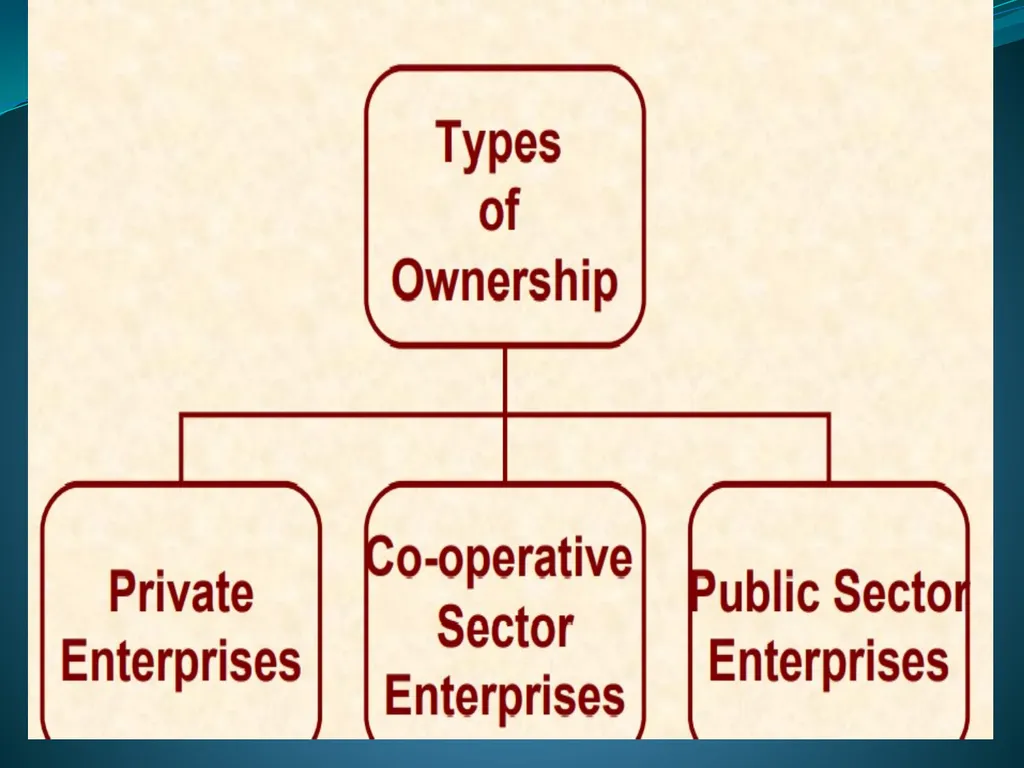
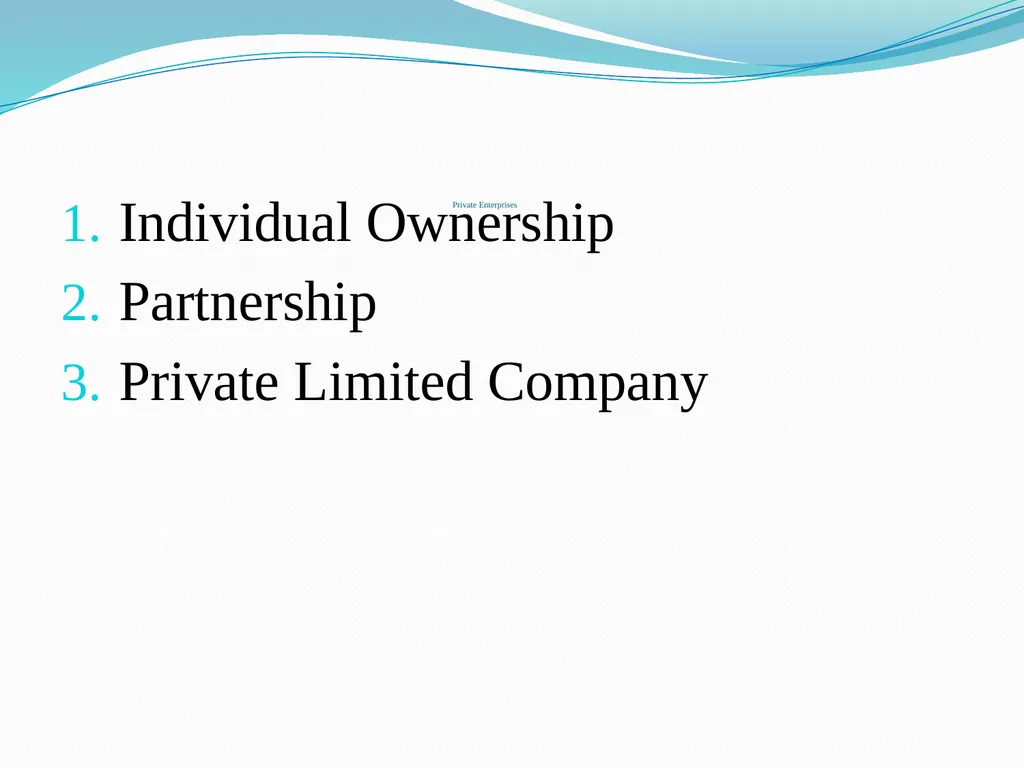
Private Enterprises Individual Ownership
Partnership
Private Limited Company<br>
12
Co-operative Sector Enterprises Housing Co-operative Society
Consumers Co-operative Society<br>
13
Public Sector Enterprises Government Department
Government Company<br>
14
Service Business The term Business Service is also used to mean a Service that is delivered to Business Customers by Business Units.
For example: delivery of financial services to Customers of a bank, or goods to the Customers of a retail store.
Successful delivery of Business Services often depends on one or more IT Services.
The typical service business provides intangible* products, such as accounting, banking, consulting, cleaning, landscaping, education, insurance, treatment & transportation services. (Not physically touched)<br>
15
Manufacturing Business A manufacturing business is any business that uses components, parts or raw materials to make a finished good.
These finished goods can be sold directly to consumers or to other manufacturing businesses that use them for making a different product.<br>
16
Small Manufacturing Business Ideas Manufacturing of Paper. Manufacturing of paper is a low-cost business idea. ...
Manufacturing of Folder File and Envelopes. ...
Soap and detergent manufacturing. ...
Hair Oil Production. ...
Manufacturing of Sports related items. ...
Handmade Biscuit making. ...
Candle making. ...
Ball pen Refill making<br>
17
Trade: Trade is a basic economic concept involving the buying and selling of goods and services, with compensation paid by a buyer to a seller, or the exchange of goods or services between parties.
. An example of trade is the act of exchanging one item for another or one item for money.
Some specialized trade jobs, such as welder, require certification and can pay very well.<br>
18
Industrial sector Introduction:
Industries plays an important role in growth and development of a nation.
Development refers to-
Increase in number of industries.
Increase in industrial production.
Improvement in technology.
The industrial sector of the economy is one that make finished products which can then be utilized viz. construction and manufacturing industry. Industrial sector is also known as secondary sector.<br>
19
It is through industrialization that resources of country can be utilized properly.
It leads in higher growth rate even than
agriculture.
JAWAHARLAL NEHRU also called the industries “the modern temples of India”<br>
20
Examples of Industrial Sectors: Engineering Industry
Process Industry
Textile Industry
Chemical Industry
Agro Industry
IT Industry
Banking, Insurance, Retail, Hospitality, Health Care<br>
21
Engineering Industry Industrial engineering is a branch of engineering which deals with the optimization of complex processes, systems, or organizations.
Industrial engineers work to eliminate waste of time, money, materials, person-hours, machine time, energy and other resources that do not generate value. According to the Institute of Industrial and Systems Engineers, they create engineering processes and systems that improve quality and productivity.
Industrial engineering is concerned with the development, improvement, and implementation of integrated systems of people, money, knowledge, information, equipment, energy, materials, analysis and synthesis.<br>
22
Process Industry Process manufacturing. ... Process manufacturing is common in the food, beverage, chemical, pharmaceutical, consumer packaged goods, and biotechnology industries.
In process manufacturing, the relevant factors are ingredients, not parts; formulas, not bills of materials; and bulk materials rather than individual units<br>
23
Textile Industry The textile industry is primarily concerned with the design and production of yarn, cloth, clothing, and their distribution. The raw material may be natural, or synthetic using products of the chemical industry.<br>
24
Chemical Industry The chemical industry comprises the companies that produce industrial chemicals. Central to the modern world economy, it converts raw materials (oil, natural gas, air, water, metals, and minerals) into more than 70,000 different products.<br>
25
Agro Industry Industry connected with Agriculture
the large_scale production, processing, and packaging of food using modern equipment and methods.<br>
26
IT Industry, Banking, Insurance, Health Care, Hospitality<br>
27
Globalization is a process of economic, political and cultural integration and unification.
Globalization involves many countries and majority of huge enterprises. Globalization:<br>
28
The process by which businesses or other organizations develop international influence or start operating on an international scale.
Globalization is the increasing interaction of people, states, or countries through the growth of the international flow of money, ideas, and culture.
Globalization is primarily an economic process of integration that has social and cultural aspects. It involves goods and services, and the economic resources of capital, technology, and data.<br>
29
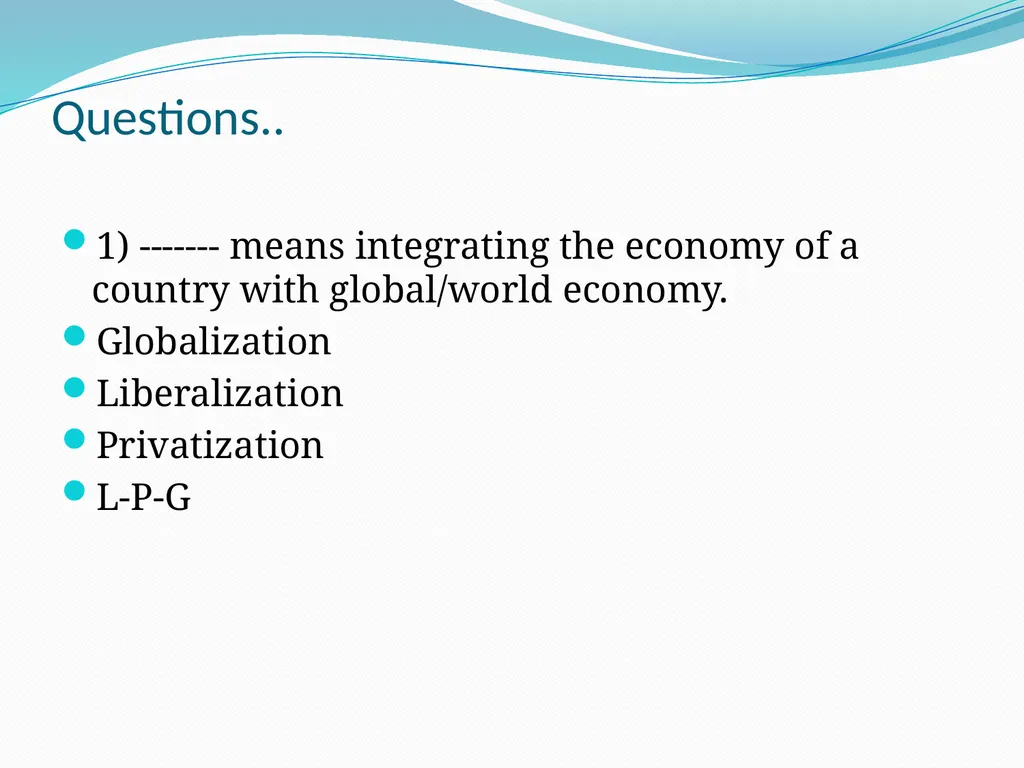
Questions.. 1) ------- means integrating the economy of a country with global/world economy.
Globalization
Liberalization
Privatization
L-P-G<br>
30
2) The goals of Enterprise are fulfilled through the use of resources like
Man
Machine
Material
All of Above<br>
31
3) Globalization icreases
Employment opportunity
Foreign Investment
Competition
All of above<br>