Topic: Biochemical Tests, Rapid Assessment Procedure Biochemical Test For Nutritional Deficiency Introduction: In the development of any deficiency disease, biochemical changes can be expected to occur prior to clinical manifestation.
"Topic: Biochemical Tests, Rapid Assessment" is the property of its rightful owner. Permission is granted to
download and print the materials on this website for personal, non-commercial use only, and to display it
on your personal computer provided you do not modify the materials and that you retain all copyright
notices contained in the materials. By downloading content from our website, you accept the terms of this
agreement.
Introduction:
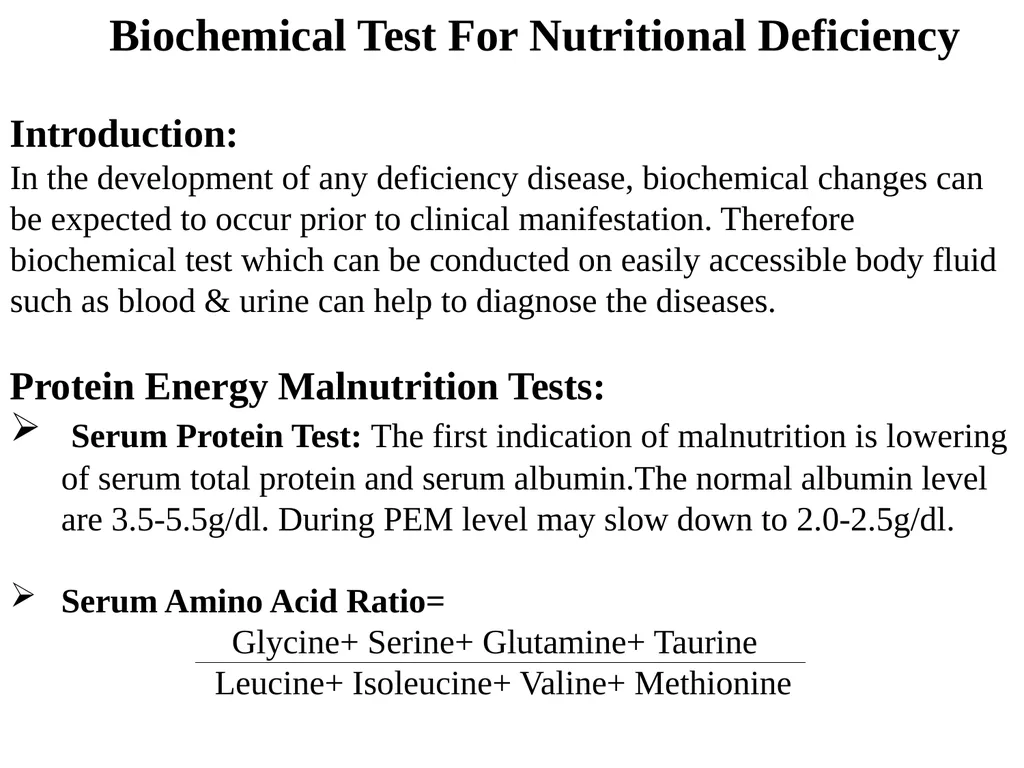
In the development of any deficiency disease, biochemical changes can be expected to occur prior to clinical manifestation. Therefore biochemical test which can be conducted on easily accessible body fluid such as blood & urine can help to diagnose the diseases.
Protein Energy Malnutrition Tests:
Serum Protein Test: The first indication of malnutrition is lowering of serum total protein and serum albumin.The normal albumin level are 3.5-5.5g/dl. During PEM level may slow down to 2.0-2.5g/dl.
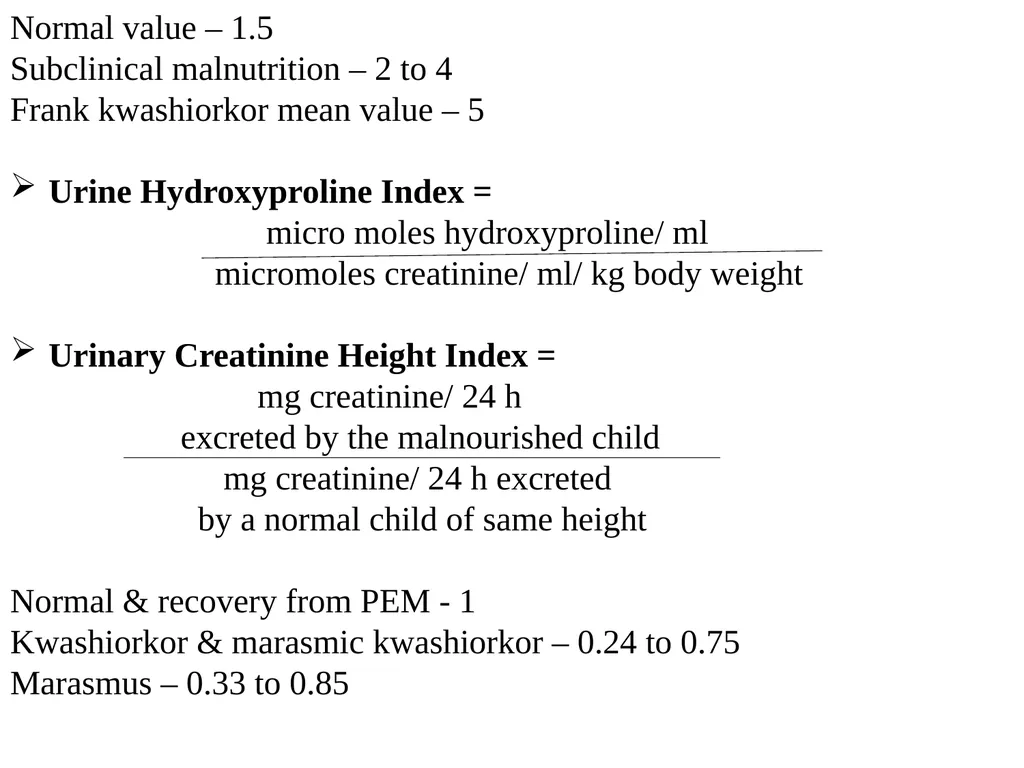
Normal value – 1.5
Subclinical malnutrition – 2 to 4
Frank kwashiorkor mean value – 5
Urine Hydroxyproline Index =
micro moles hydroxyproline/ ml
micromoles creatinine/ ml/ kg body weight
Urinary Creatinine Height Index =
mg creatinine/ 24 h
excreted by the malnourished child
mg creatinine/ 24 h excreted
by a normal child of same height
Normal & recovery from PEM - 1
Kwashiorkor & marasmic kwashiorkor – 0.24 to 0.75
Marasmus – 0.33 to 0.85<br>
04
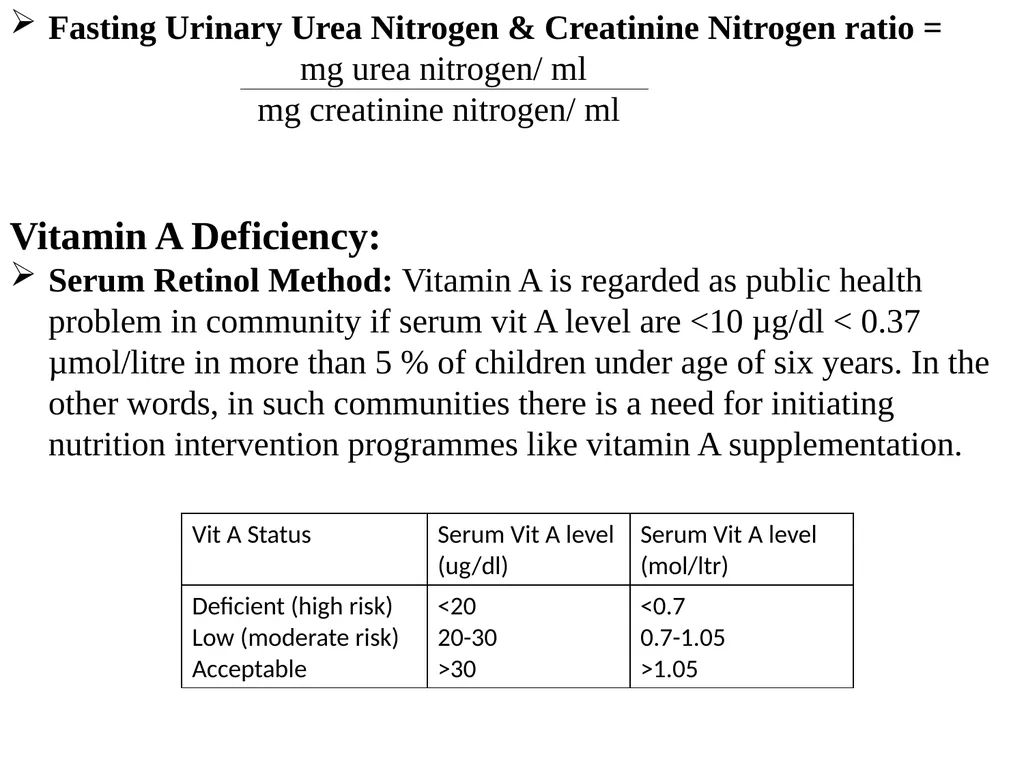
Fasting Urinary Urea Nitrogen & Creatinine Nitrogen ratio =
mg urea nitrogen/ ml
mg creatinine nitrogen/ ml
Vitamin A Deficiency:
Serum Retinol Method: Vitamin A is regarded as public health problem in community if serum vit A level are <10 µg/dl < 0.37 µmol/litre in more than 5 % of children under age of six years. In the other words, in such communities there is a need for initiating nutrition intervention programmes like vitamin A supplementation.<br>
05
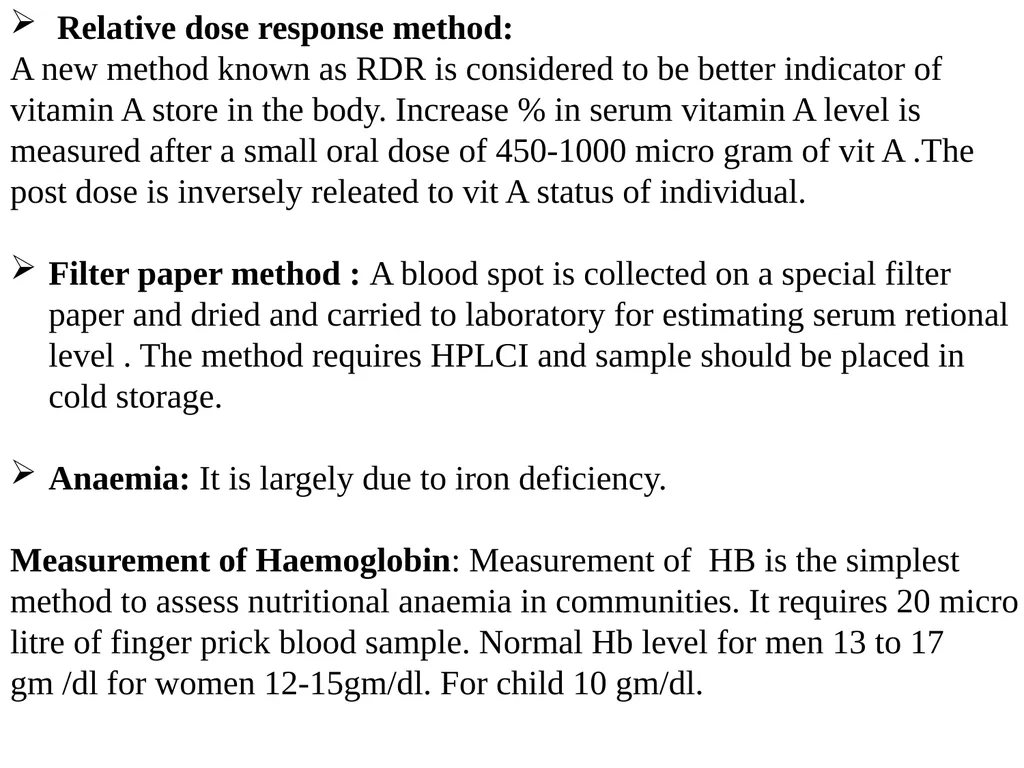
Relative dose response method:
A new method known as RDR is considered to be better indicator of vitamin A store in the body. Increase % in serum vitamin A level is measured after a small oral dose of 450-1000 micro gram of vit A .The post dose is inversely releated to vit A status of individual.
Filter paper method : A blood spot is collected on a special filter paper and dried and carried to laboratory for estimating serum retional level . The method requires HPLCI and sample should be placed in cold storage.
Anaemia: It is largely due to iron deficiency.
Measurement of Haemoglobin: Measurement of HB is the simplest method to assess nutritional anaemia in communities. It requires 20 micro litre of finger prick blood sample. Normal Hb level for men 13 to 17 gm /dl for women 12-15gm/dl. For child 10 gm/dl.<br>
06
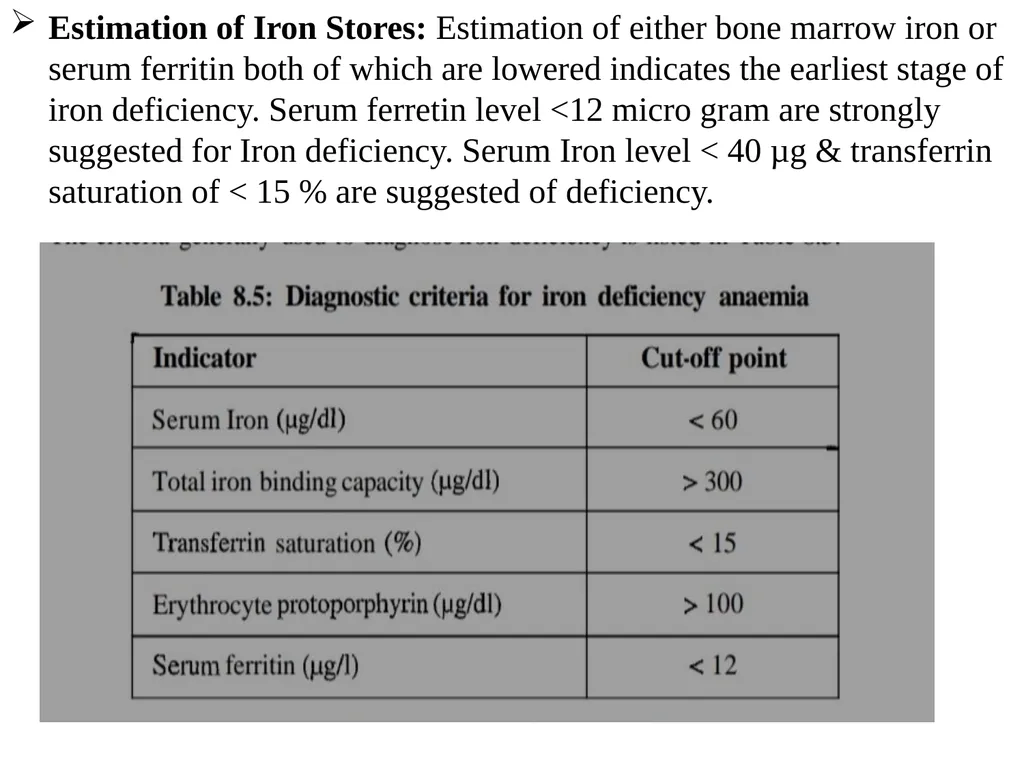
Estimation of Iron Stores: Estimation of either bone marrow iron or serum ferritin both of which are lowered indicates the earliest stage of iron deficiency. Serum ferretin level <12 micro gram are strongly suggested for Iron deficiency. Serum Iron level < 40 µg & transferrin saturation of < 15 % are suggested of deficiency.<br>
07
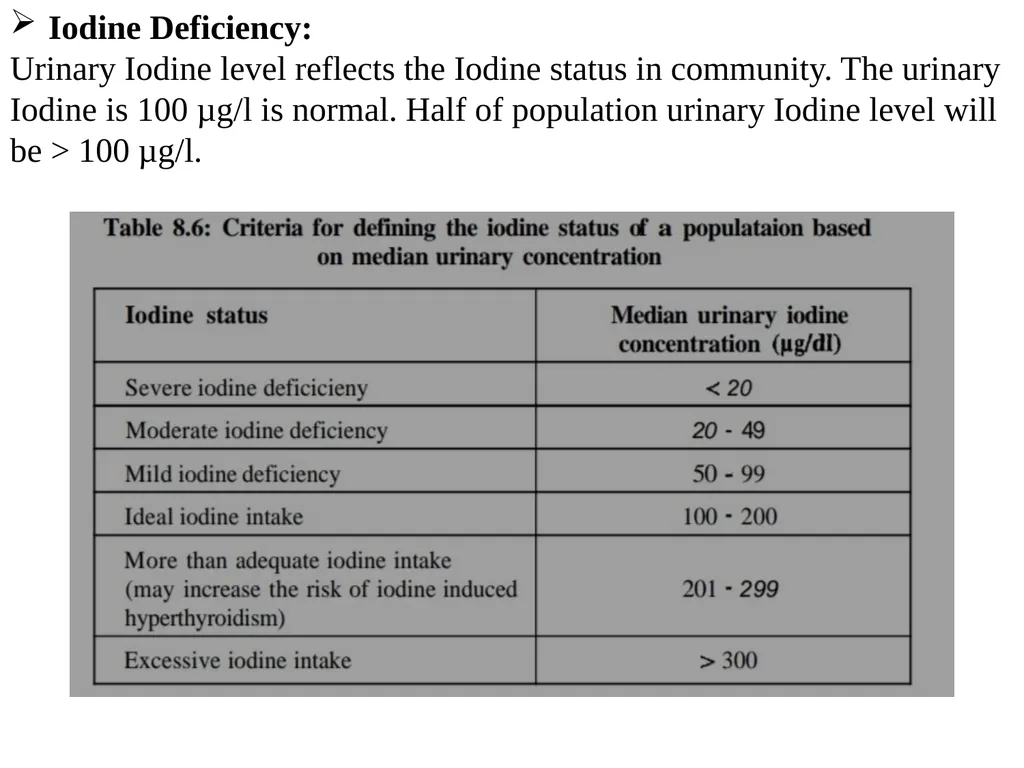
Iodine Deficiency:
Urinary Iodine level reflects the Iodine status in community. The urinary Iodine is 100 µg/l is normal. Half of population urinary Iodine level will be > 100 µg/l.<br>
08
Vitamin D Deficiency:
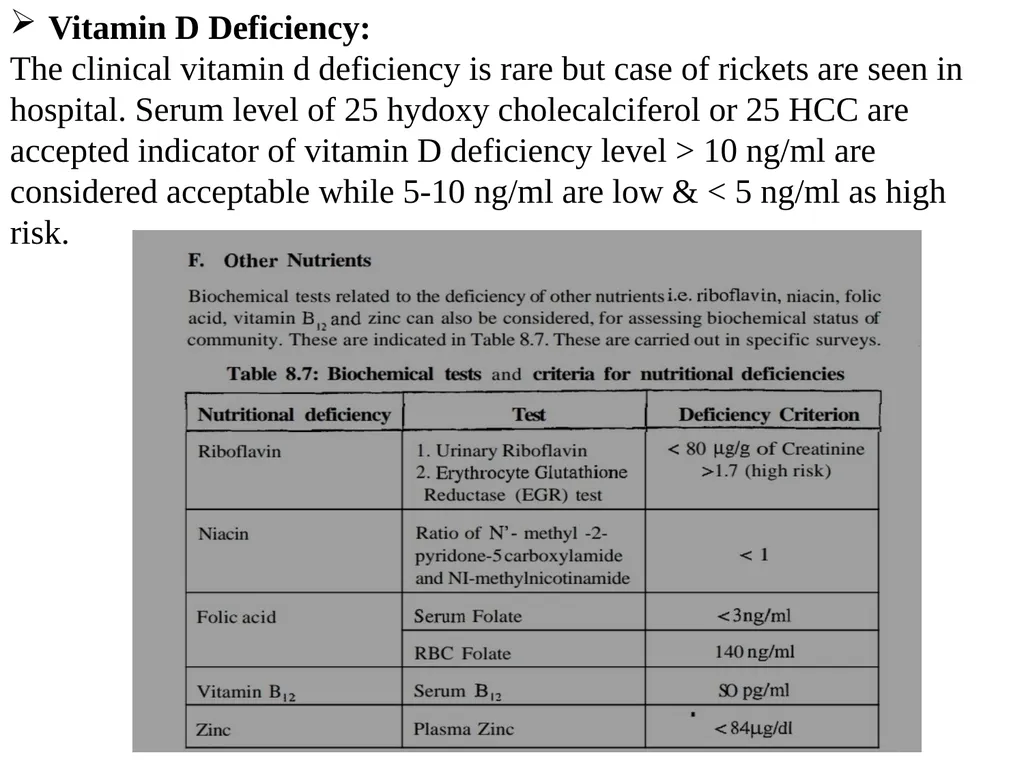
The clinical vitamin d deficiency is rare but case of rickets are seen in hospital. Serum level of 25 hydoxy cholecalciferol or 25 HCC are accepted indicator of vitamin D deficiency level > 10 ng/ml are considered acceptable while 5-10 ng/ml are low & < 5 ng/ml as high risk.<br>
09
Rapid Assessment Procedure
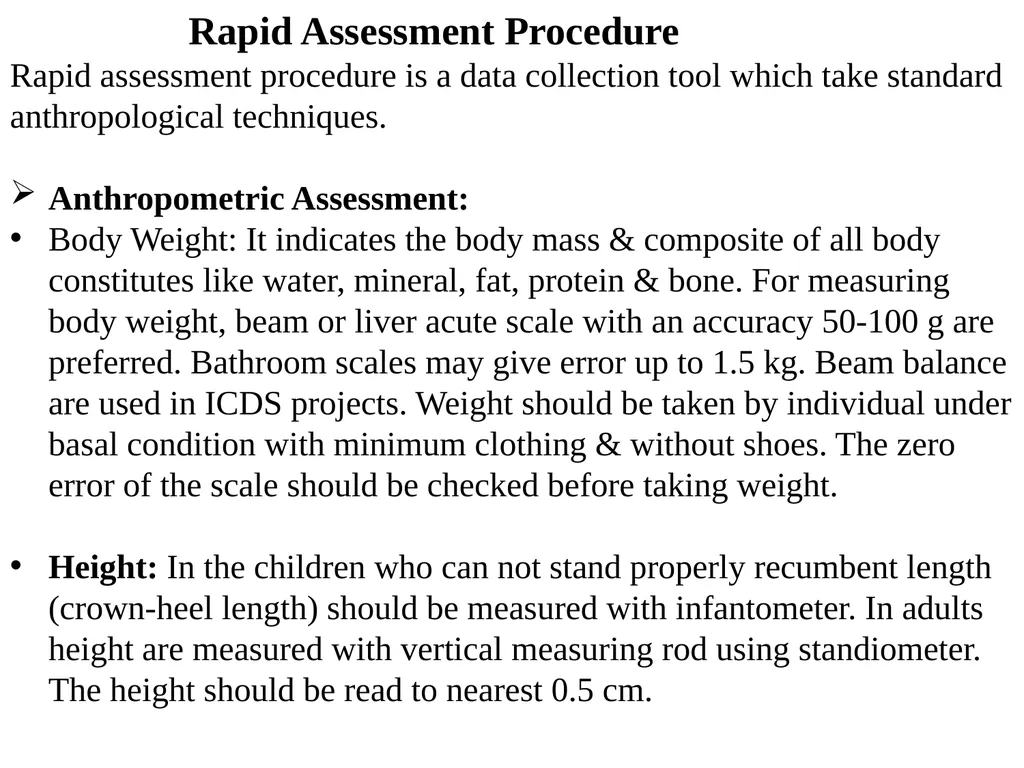
Rapid assessment procedure is a data collection tool which take standard anthropological techniques.
Anthropometric Assessment:
Body Weight: It indicates the body mass & composite of all body constitutes like water, mineral, fat, protein & bone. For measuring body weight, beam or liver acute scale with an accuracy 50-100 g are preferred. Bathroom scales may give error up to 1.5 kg. Beam balance are used in ICDS projects. Weight should be taken by individual under basal condition with minimum clothing & without shoes. The zero error of the scale should be checked before taking weight.
Height: In the children who can not stand properly recumbent length (crown-heel length) should be measured with infantometer. In adults height are measured with vertical measuring rod using standiometer. The height should be read to nearest 0.5 cm.<br>
10
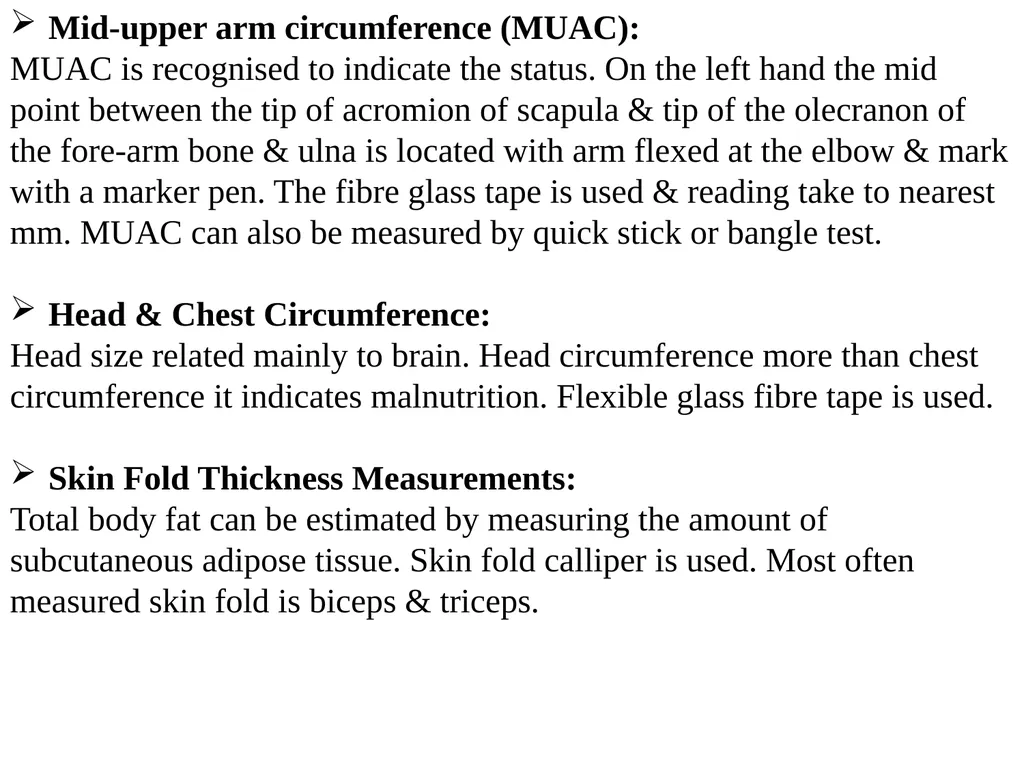
Mid-upper arm circumference (MUAC):
MUAC is recognised to indicate the status. On the left hand the mid point between the tip of acromion of scapula & tip of the olecranon of the fore-arm bone & ulna is located with arm flexed at the elbow & mark with a marker pen. The fibre glass tape is used & reading take to nearest mm. MUAC can also be measured by quick stick or bangle test.
Head & Chest Circumference:
Head size related mainly to brain. Head circumference more than chest circumference it indicates malnutrition. Flexible glass fibre tape is used.
Skin Fold Thickness Measurements:
Total body fat can be estimated by measuring the amount of subcutaneous adipose tissue. Skin fold calliper is used. Most often measured skin fold is biceps & triceps.<br>
11
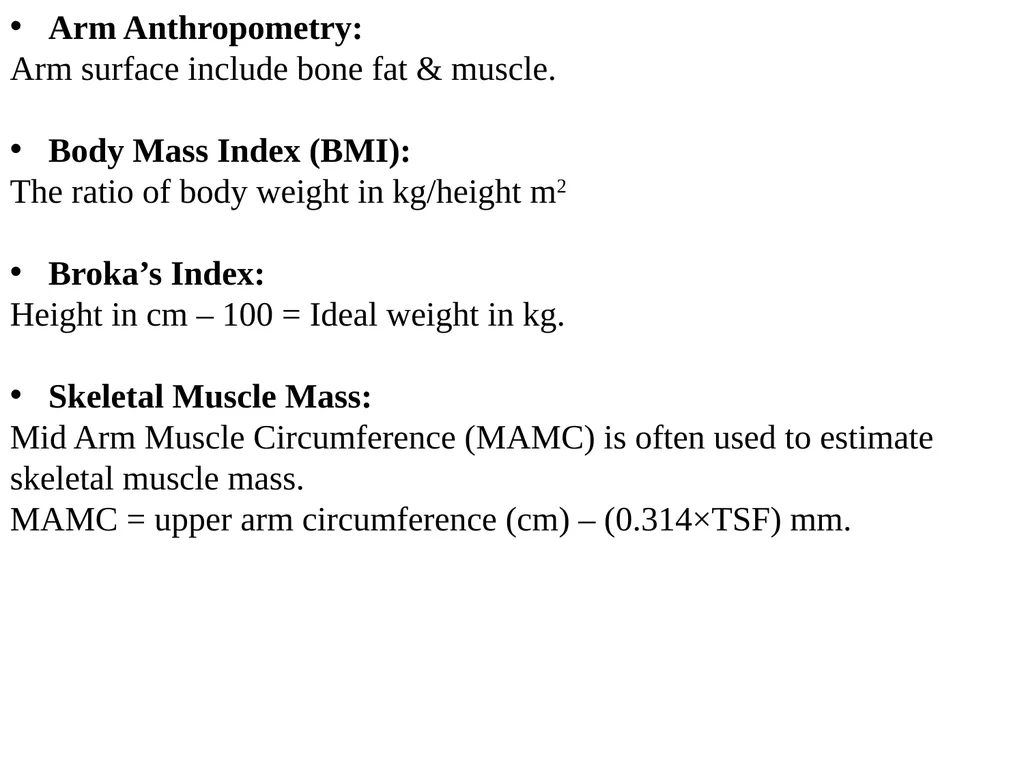
Arm Anthropometry:
Arm surface include bone fat & muscle.
Body Mass Index (BMI):
The ratio of body weight in kg/height m2
Broka’s Index:
Height in cm – 100 = Ideal weight in kg.
Skeletal Muscle Mass:
Mid Arm Muscle Circumference (MAMC) is often used to estimate skeletal muscle mass.
MAMC = upper arm circumference (cm) – (0.314×TSF) mm.<br>
12
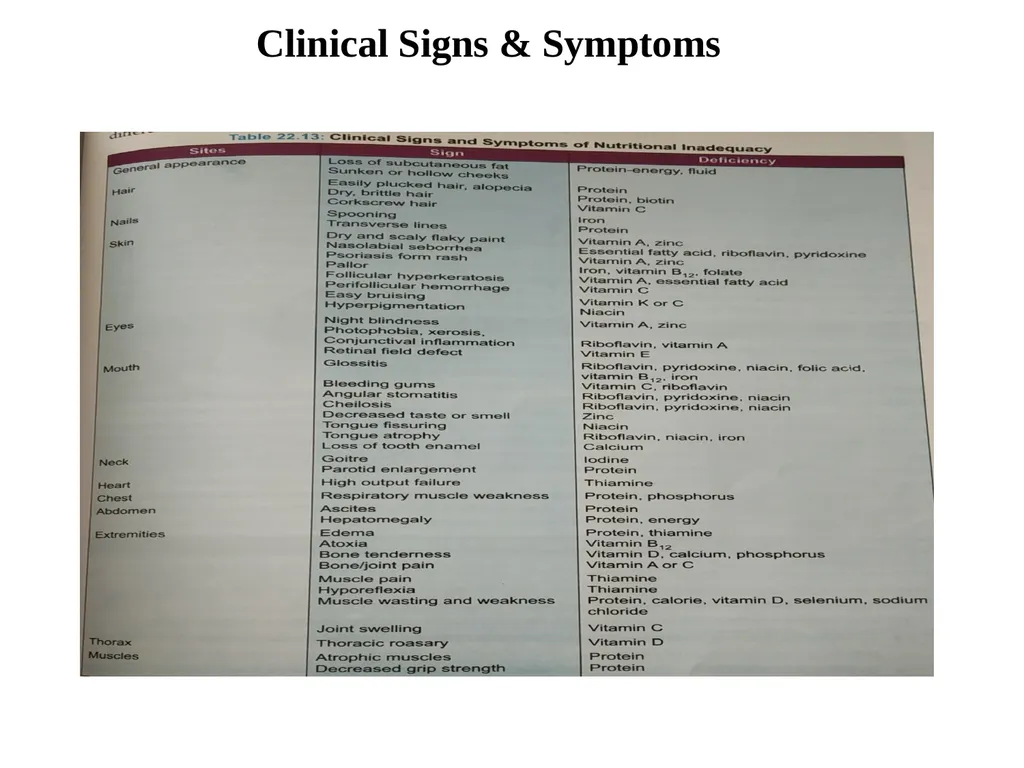
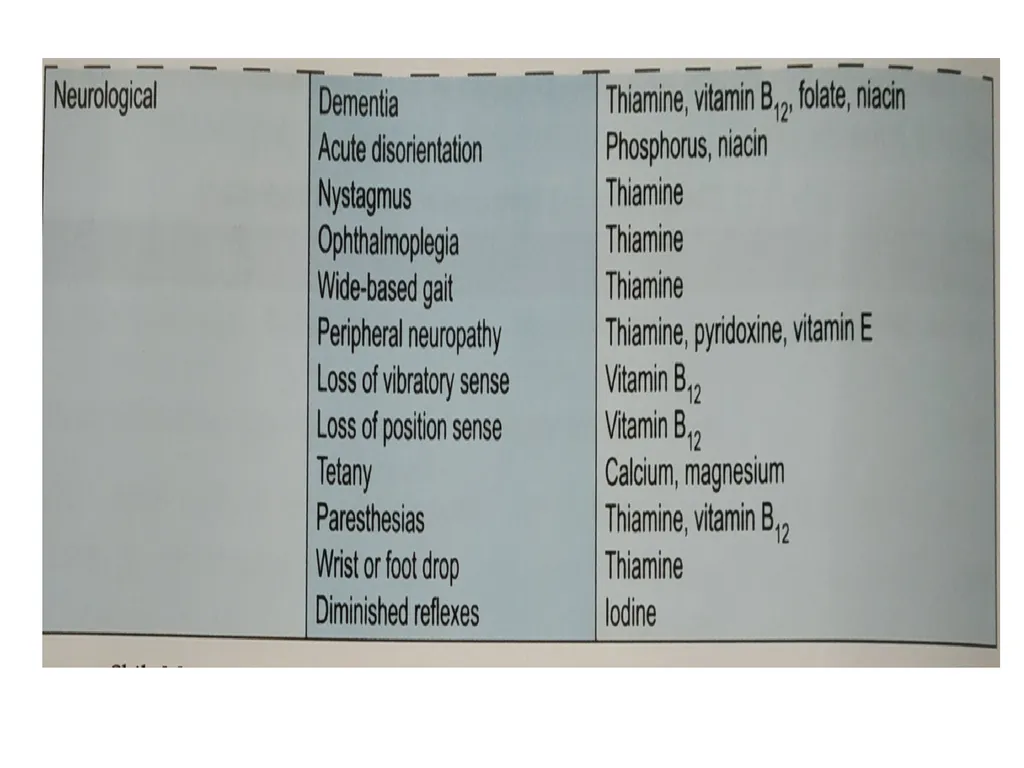
Clinical Signs & Symptoms<br>
13
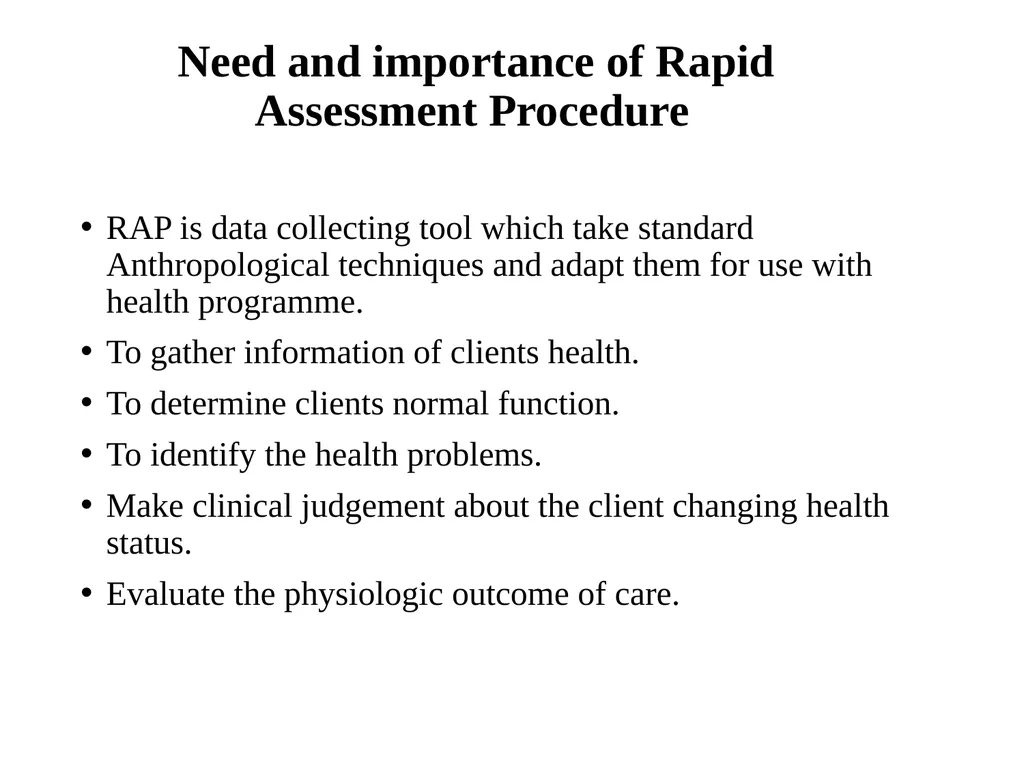
Need and importance of Rapid Assessment Procedure RAP is data collecting tool which take standard Anthropological techniques and adapt them for use with health programme.
To gather information of clients health.
To determine clients normal function.
To identify the health problems.
Make clinical judgement about the client changing health status.
Evaluate the physiologic outcome of care.<br>