
Training Session 13 Modes of Liability Modes of

Published  . 0 views
↓ Download
Training Session 13 Modes of Liability Modes of
1 / 1
Training Session 13 Modes of Liability Modes of - slide 1 of 12 Training Session 13 Modes of Liability Modes of - slide 2 of 12 Training Session 13 Modes of Liability Modes of - slide 3 of 12 Training Session 13 Modes of Liability Modes of - slide 4 of 12 Training Session 13 Modes of Liability Modes of - slide 5 of 12 Training Session 13 Modes of Liability Modes of - slide 6 of 12 Training Session 13 Modes of Liability Modes of - slide 7 of 12 Training Session 13 Modes of Liability Modes of - slide 8 of 12 Training Session 13 Modes of Liability Modes of - slide 9 of 12 Training Session 13 Modes of Liability Modes of - slide 10 of 12 Training Session 13 Modes of Liability Modes of - slide 11 of 12 Training Session 13 Modes of Liability Modes of - slide 12 of 12
Description: Training Session 13 Modes of Liability Modes of liability describe the ways in which perpetrators can be held responsible for their participation in international crimes. Comparing modes under the CCU, ICC Statute and Statutes of the

Related Topics

Download Presentation

"Training Session 13 Modes of Liability Modes of" is the property of its rightful owner. Permission is granted to download and print the materials on this website for personal, non-commercial use only, and to display it on your personal computer provided you do not modify the materials and that you retain all copyright notices contained in the materials. By downloading content from our website, you accept the terms of this agreement.

Presentation Transcript

slide1. Training Session 13
Modes of Liability<br>
slide2. Modes of liability describe the ways in which perpetrators can be held responsible for their participation in international crimes.<br>
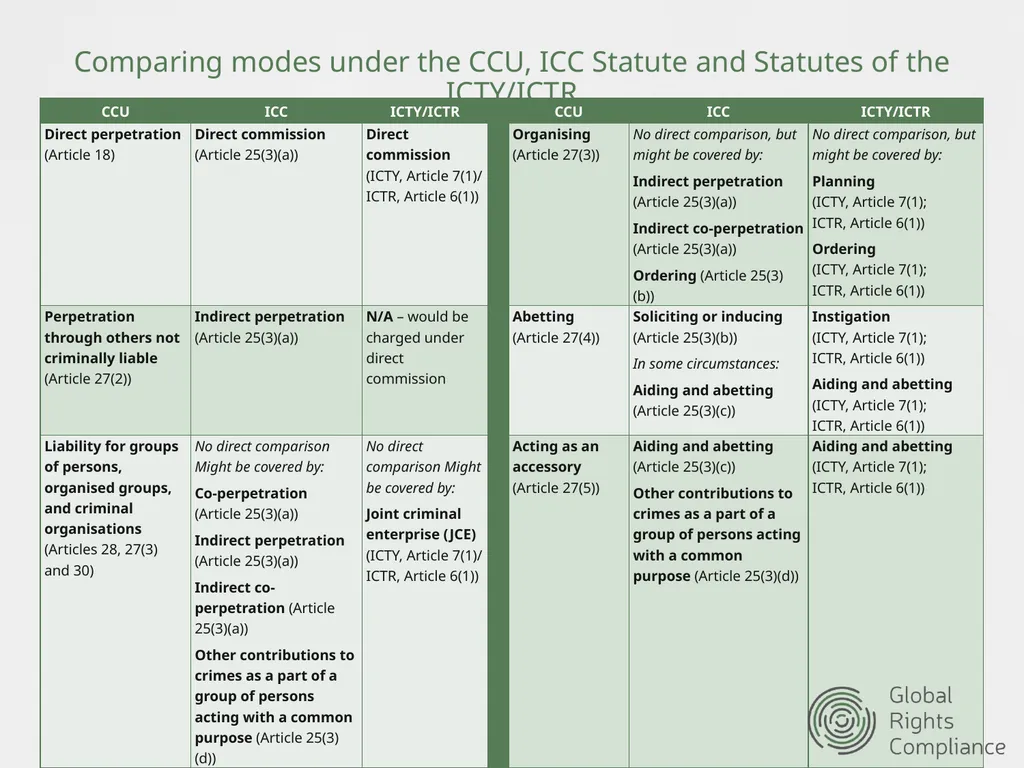
slide3. Comparing modes under the CCU, ICC Statute and Statutes of the ICTY/ICTR<br>
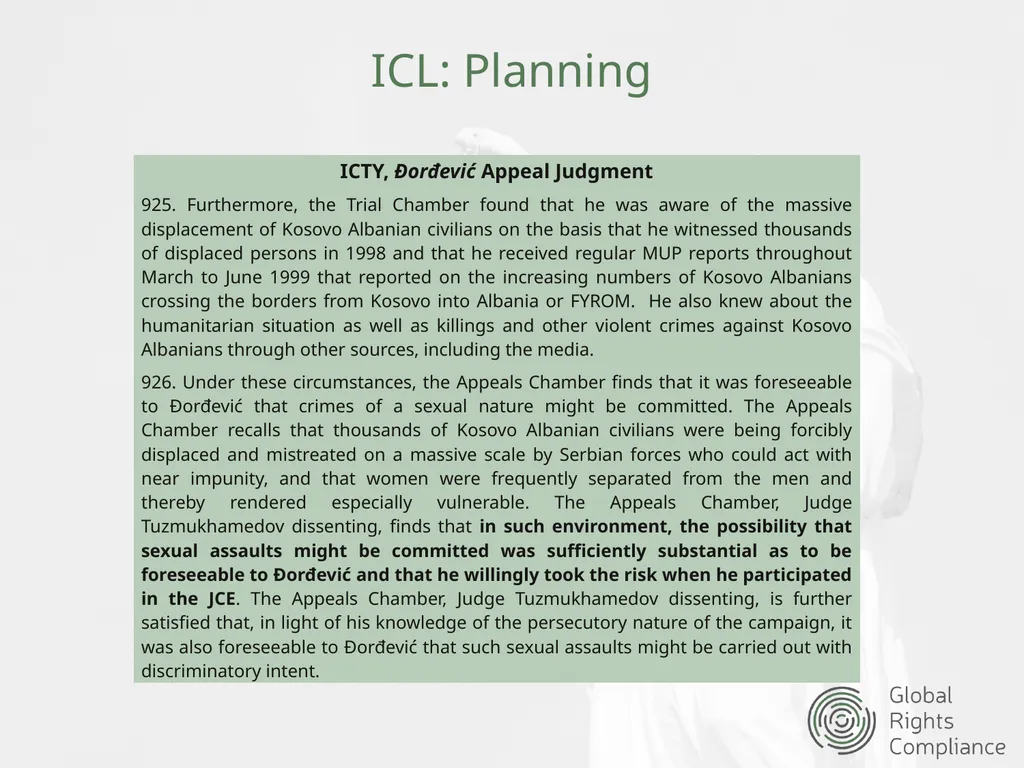
slide4. ICL: Planning<br>
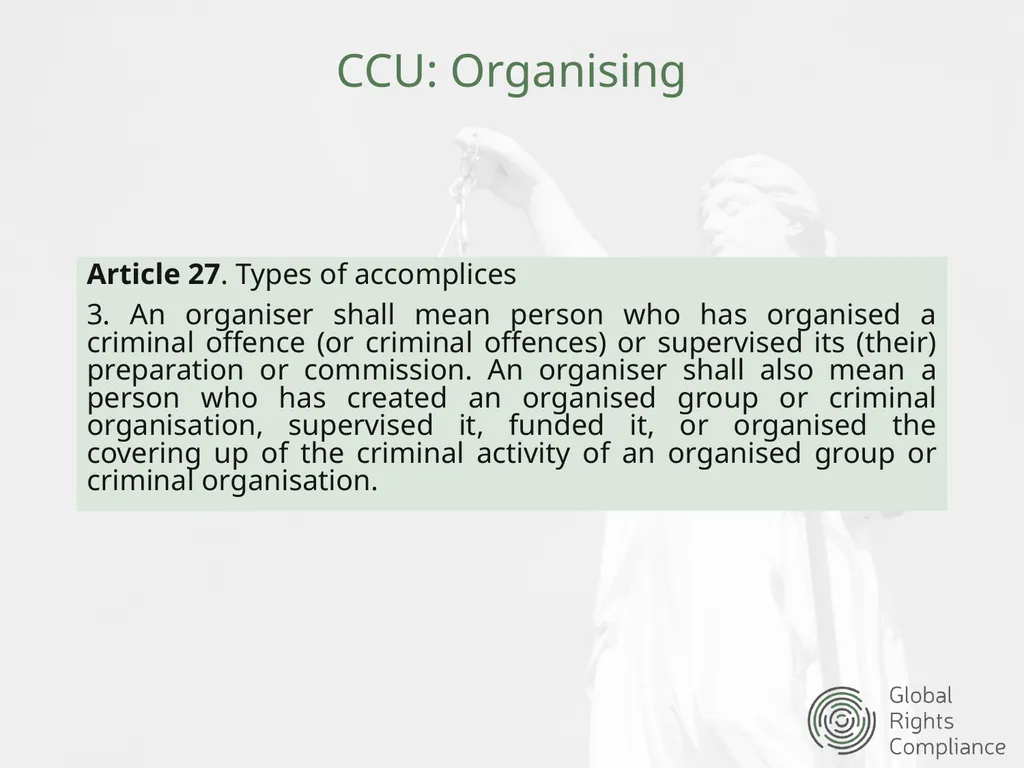
slide5. CCU: Organising Article 27. Types of accomplices
3. An organiser shall mean person who has organised a criminal offence (or criminal offences) or supervised its (their) preparation or commission. An organiser shall also mean a person who has created an organised group or criminal organisation, supervised it, funded it, or organised the covering up of the criminal activity of an organised group or criminal organisation.<br>
slide6. ICL: Aiding, abetting or otherwise assisting<br>
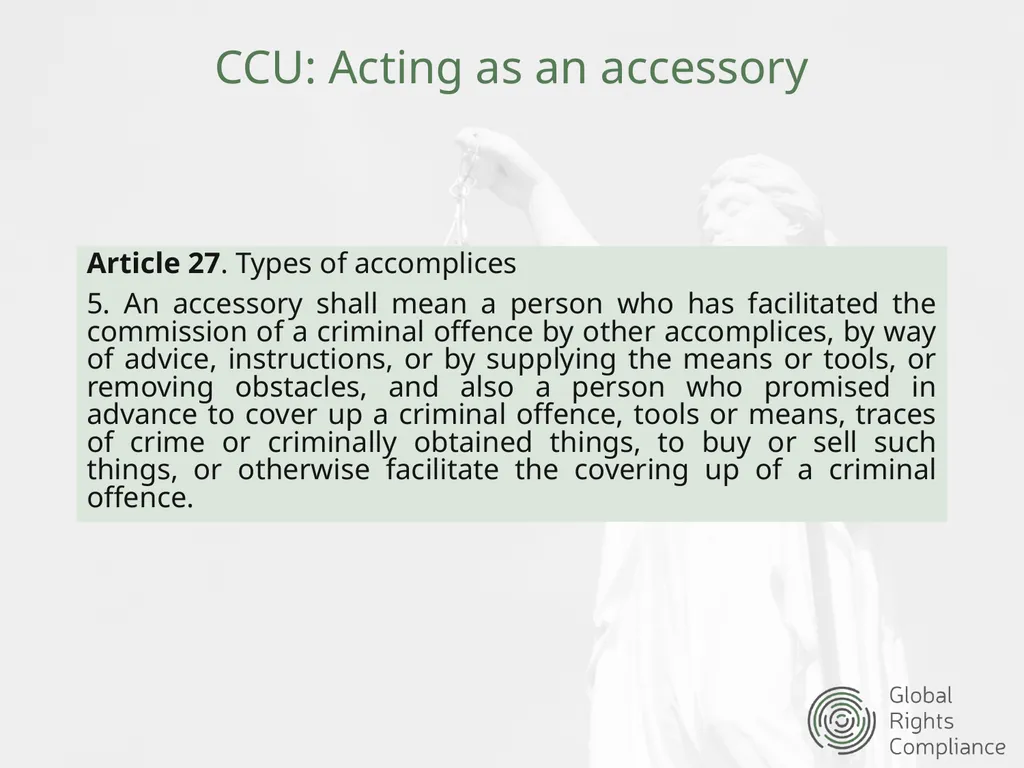
slide7. CCU: Acting as an accessory Article 27. Types of accomplices
5. An accessory shall mean a person who has facilitated the commission of a criminal offence by other accomplices, by way of advice, instructions, or by supplying the means or tools, or removing obstacles, and also a person who promised in advance to cover up a criminal offence, tools or means, traces of crime or criminally obtained things, to buy or sell such things, or otherwise facilitate the covering up of a criminal offence.<br>
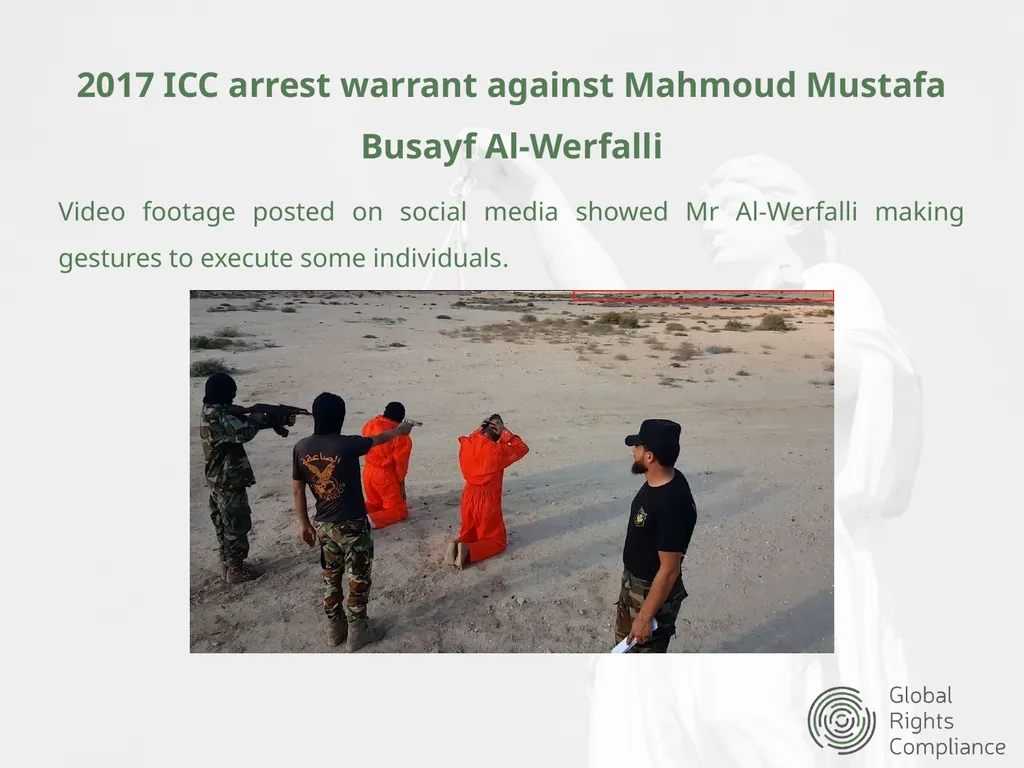
slide8. 2017 ICC arrest warrant against Mahmoud Mustafa Busayf Al-Werfalli
Video footage posted on social media showed Mr Al-Werfalli making gestures to execute some individuals.<br>
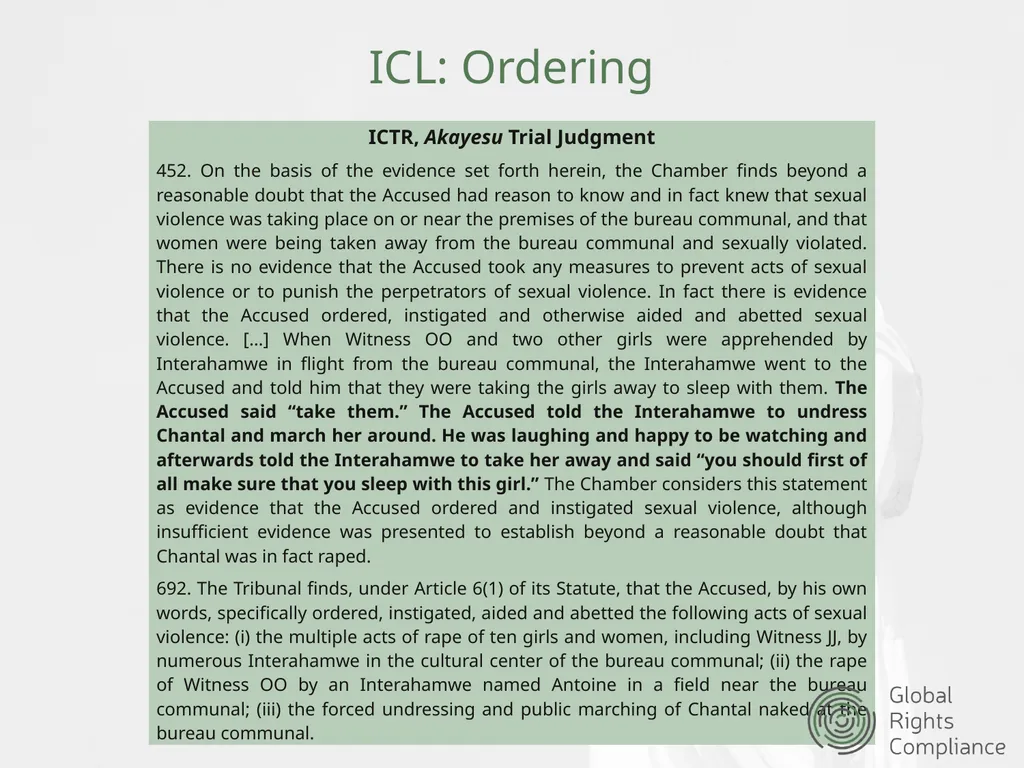
slide9. ICL: Ordering<br>
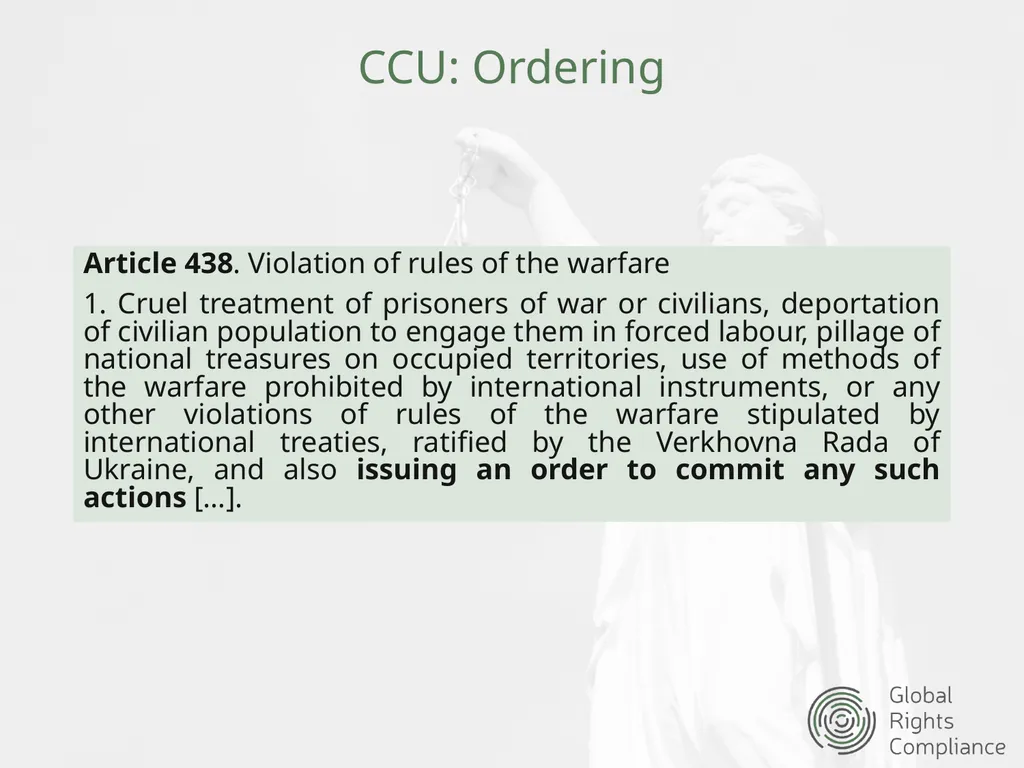
slide10. CCU: Ordering Article 438. Violation of rules of the warfare
1. Cruel treatment of prisoners of war or civilians, deportation of civilian population to engage them in forced labour, pillage of national treasures on occupied territories, use of methods of the warfare prohibited by international instruments, or any other violations of rules of the warfare stipulated by international treaties, ratified by the Verkhovna Rada of Ukraine, and also issuing an order to commit any such actions […].<br>
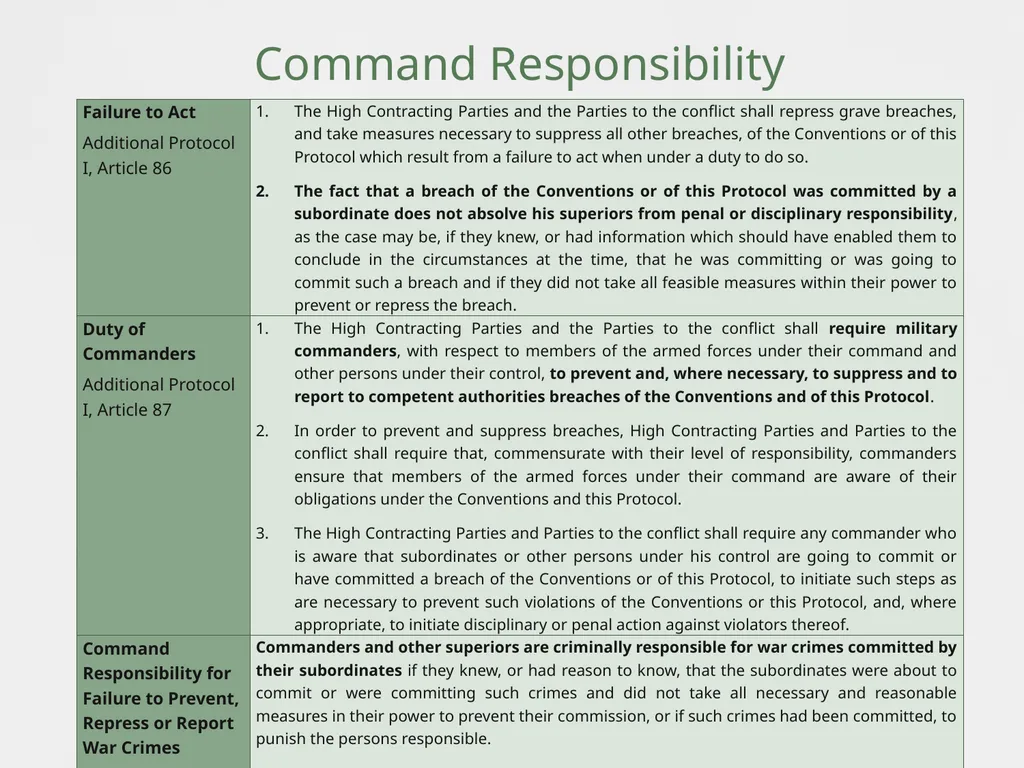
slide11. Command Responsibility<br>
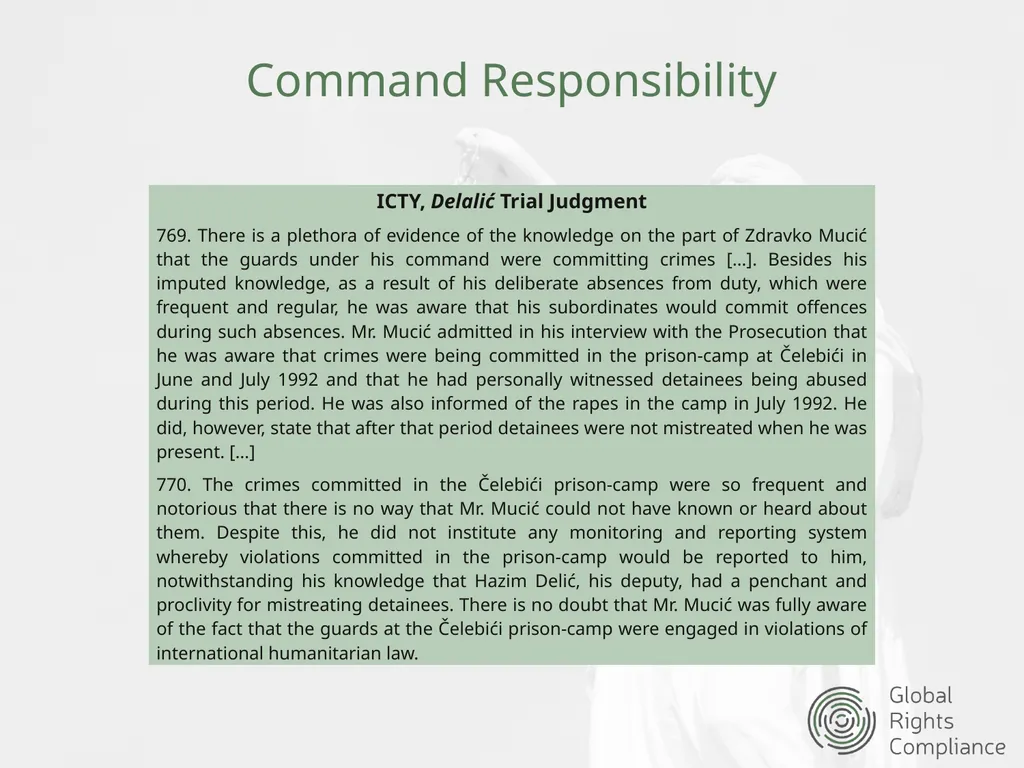
slide12. Command Responsibility<br>