Transcarotid Artery Revascularization Technique : Preventing Dissection Complications Dr.Raghu Motaganahalli MD FRCS FACS Associate Professor of Surgery Division of Vascular Surgery Indiana University School of Medicine Disclosures
"Transcarotid Artery Revascularization Technique :" is the property of its rightful owner. Permission is granted to
download and print the materials on this website for personal, non-commercial use only, and to display it
on your personal computer provided you do not modify the materials and that you retain all copyright
notices contained in the materials. By downloading content from our website, you accept the terms of this
agreement.
Presentation Transcript
01
Transcarotid Artery Revascularization Technique : Preventing Dissection Complications Dr.Raghu Motaganahalli MD FRCS FACS Associate Professor of Surgery
Division of Vascular Surgery
Indiana University School of Medicine<br>
02
Disclosures Consultant- Silk Road Medical inc .
Teaching , Proctor- Do not receive any direct remuneration<br>
03
Emerging Role for TCAR TCAR has emerged as an alternative option for carotid revascularization
Early results from single center , Multicenter, outcomes using VQI data base (TCAR- Surveillance Project ) , Clinical trials ( Roadster-1, Roadster-2 ) have consistent results
Superior to CAS in terms of Stroke
Comparable results to those derived from CEA
Reduced length of procedure, contrast use,
Low risk for cranial nerve injuries J Vasc Surg 2015;62:1227-35.<br>
04
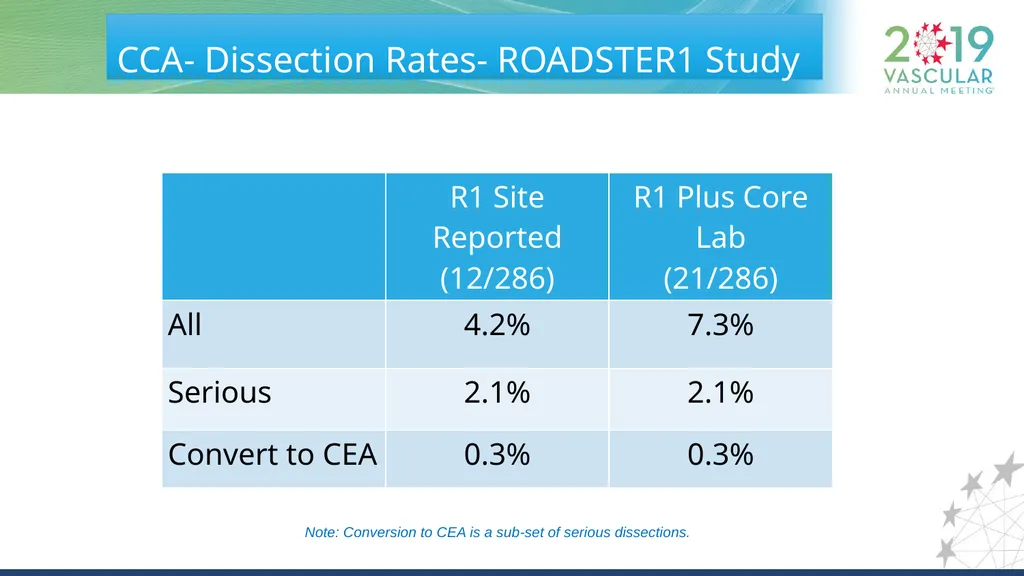
CCA- Dissection Rates- ROADSTER1 Study Note: Conversion to CEA is a sub-set of serious dissections.<br>
05
Optimizing Results from TCAR Acceptable CCA = Stable sheath placement
Stable sheath = robust flow reversal
Robust flow reversal = Embolic protection
Embolic protection = reduced risk of stroke Technical success hinges upon obtaining a safe and secure access to common carotid artery J Vasc Surg 2015;62:1227-35.<br>
06
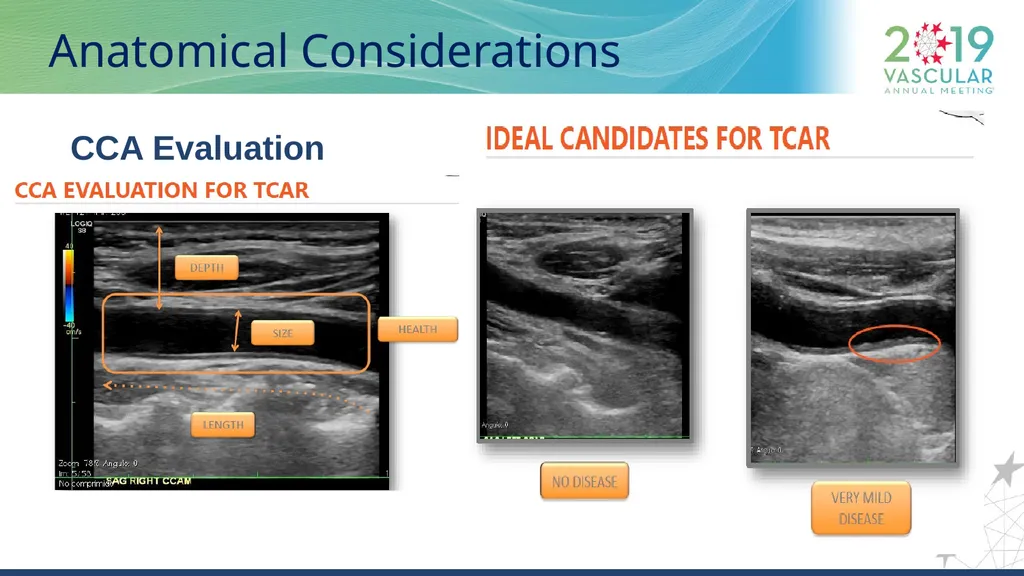
CCA Evaluation Anatomical Considerations<br>
07
Anatomical Considerations<br>
08
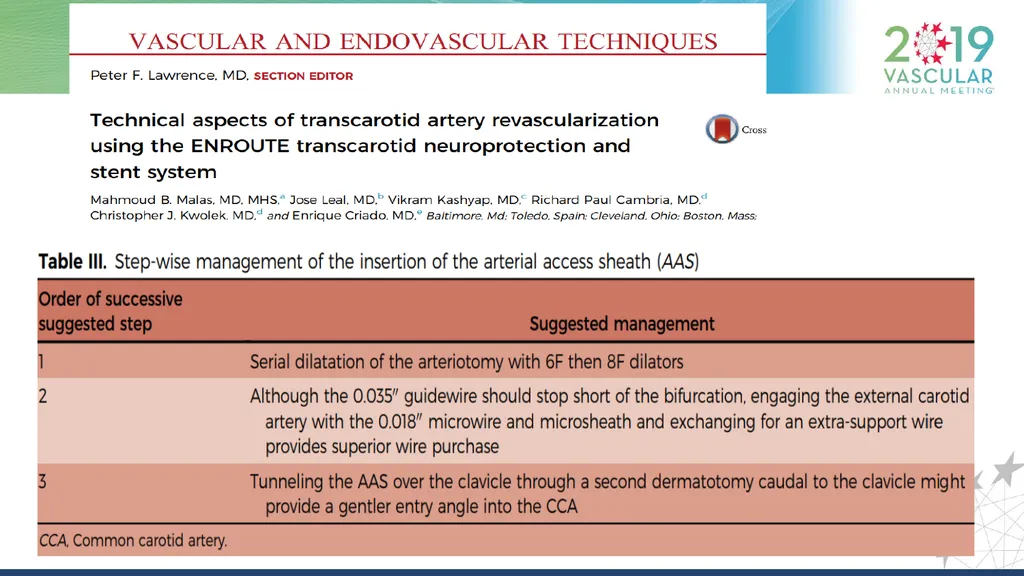
Additional Tips for Technical Success Choose incision you are comfortable with Vertical or horizontal incision
Adequate heparinization – Anticoagulate when you start exposure of CCA
Accessing the common carotid artery – Fresh needle, marker wire, micro sheath
Vascular control –
Umbilical tape v/s vessel loop v/s Clamp
Stabilizing the vessel during access
Sustained counter traction when inserting sheath
No tourniquets<br>
09
Adequate Pre dilatation
Appropriate stent size selection
DAPT – Pre and Post Procedure
Intra op hemodynamics – Atropine and Glycopyrolate
Continue Active and Passive flow reversal after procedure
Ensure no air embolization during the injections
Protamine at the completion of the procedure Additional Tips for Technical Success<br>
10
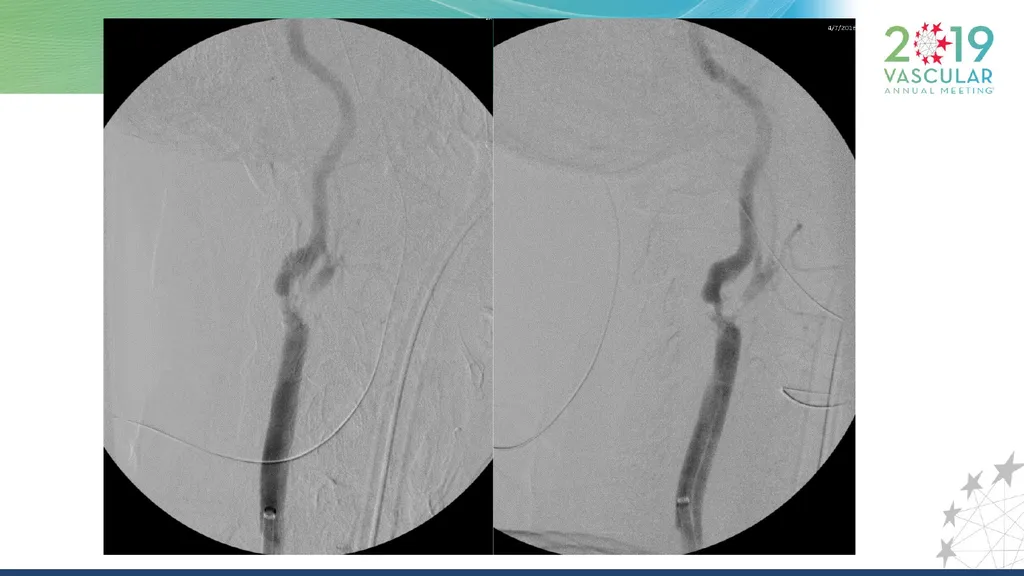
What if you dissect the CCA ? What if you end up in dissection
Abandon the access if only a micro sheath and re access the vessel fresh
Getting back to true lumen and maintain a wire access
Stent across the dissection
When you cannot get back to true lumen- open conversion<br>
11
Summary Dissection of CCA is unique , unusual complication for TCAR
Limits technical success
Mitigated by proper patient selection, attention to details during sheath placement
Be prepared to manage dissection complication by additional stent placement<br>