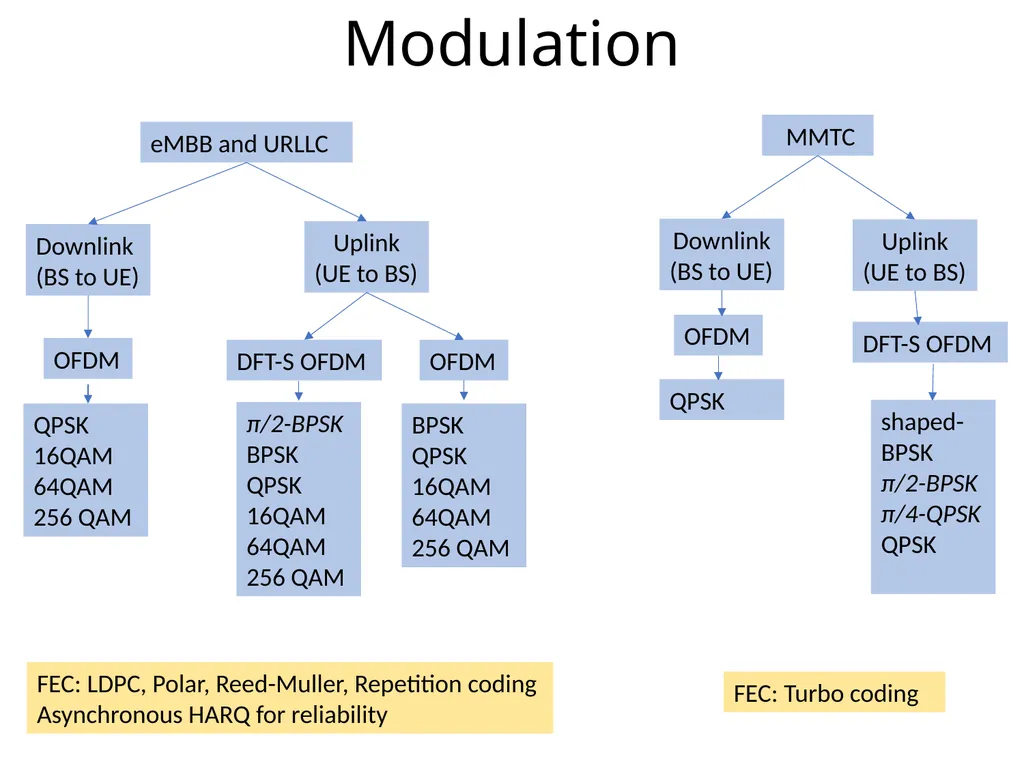
TSDSI Radio Interface Technology (RIT) Highlights TSDSI RIT meets IMT 2020 requirements eMBB peak data rate 5 Gbps per component carrier URLLC Reliability 99.9999 mMTC connection density 2 million devices Supported Frequency Bands
"TSDSI Radio Interface Technology (RIT) Highlights" is the property of its rightful owner. Permission is granted to
download and print the materials on this website for personal, non-commercial use only, and to display it
on your personal computer provided you do not modify the materials and that you retain all copyright
notices contained in the materials. By downloading content from our website, you accept the terms of this
agreement.
Presentation Transcript
01
TSDSI Radio Interface Technology (RIT)<br>
02
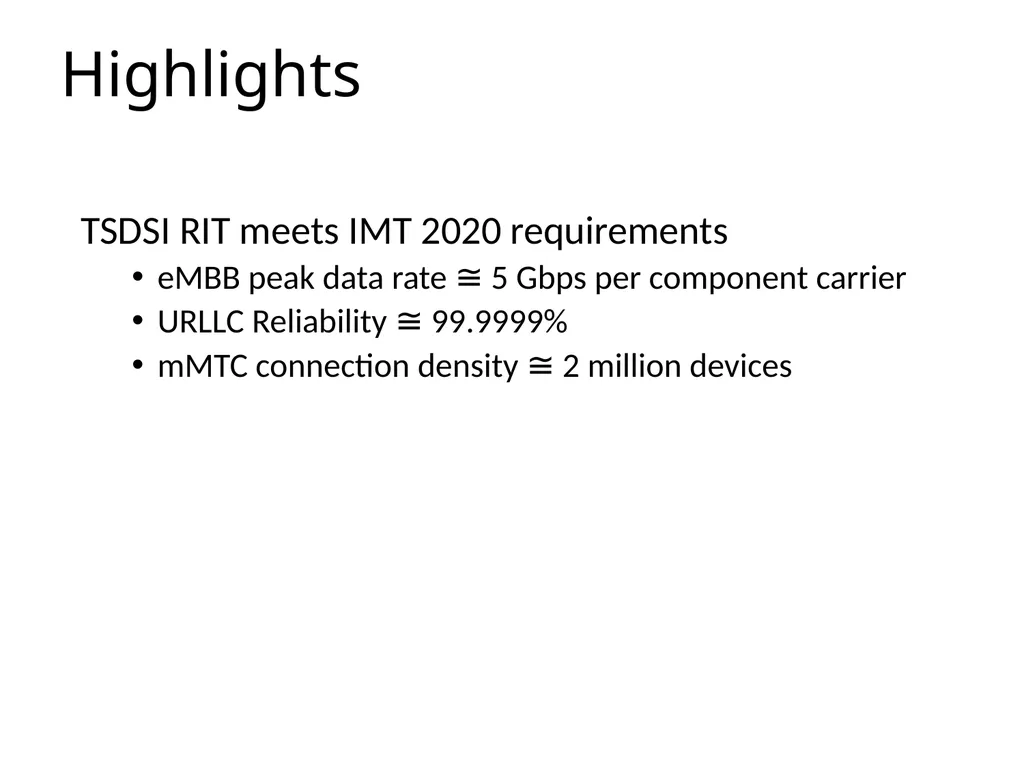
Highlights TSDSI RIT meets IMT 2020 requirements
eMBB peak data rate ≅ 5 Gbps per component carrier
URLLC Reliability ≅ 99.9999%
mMTC connection density ≅ 2 million devices<br>
03
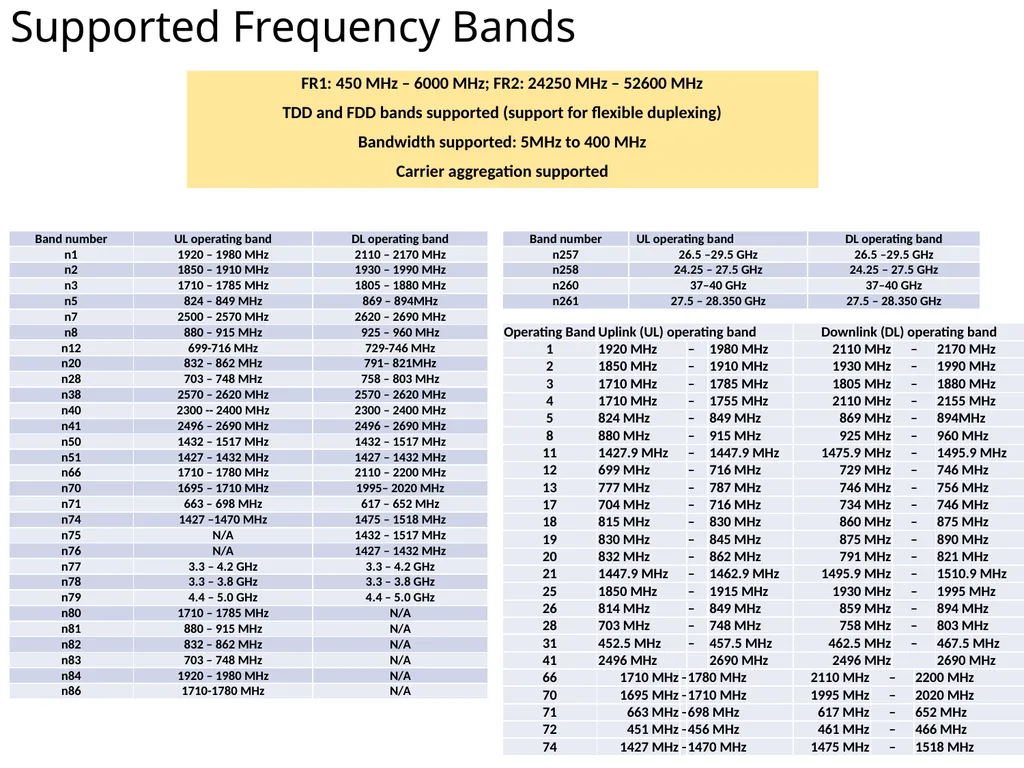
Supported Frequency Bands FR1: 450 MHz – 6000 MHz; FR2: 24250 MHz – 52600 MHz
TDD and FDD bands supported (support for flexible duplexing)
Bandwidth supported: 5MHz to 400 MHz
Carrier aggregation supported<br>
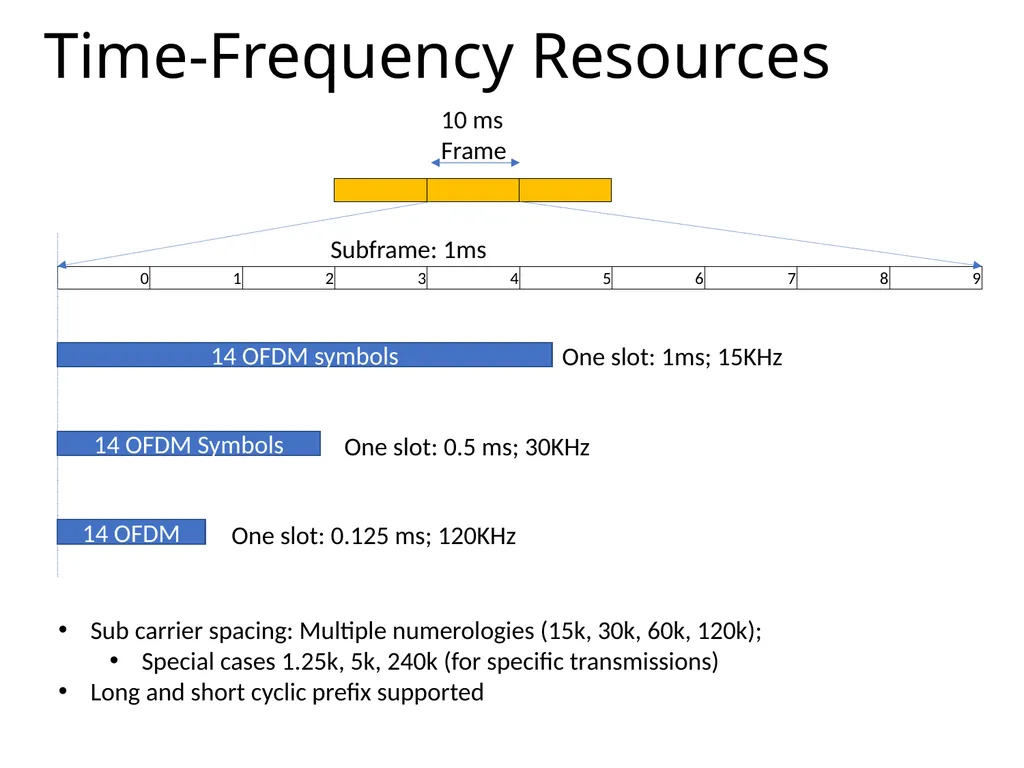
Time-Frequency Resources 10 ms
Frame Subframe: 1ms 14 OFDM symbols 14 OFDM Symbols 14 OFDM One slot: 1ms; 15KHz One slot: 0.5 ms; 30KHz One slot: 0.125 ms; 120KHz 38.211 Sub carrier spacing: Multiple numerologies (15k, 30k, 60k, 120k);
Special cases 1.25k, 5k, 240k (for specific transmissions)
Long and short cyclic prefix supported<br>
06
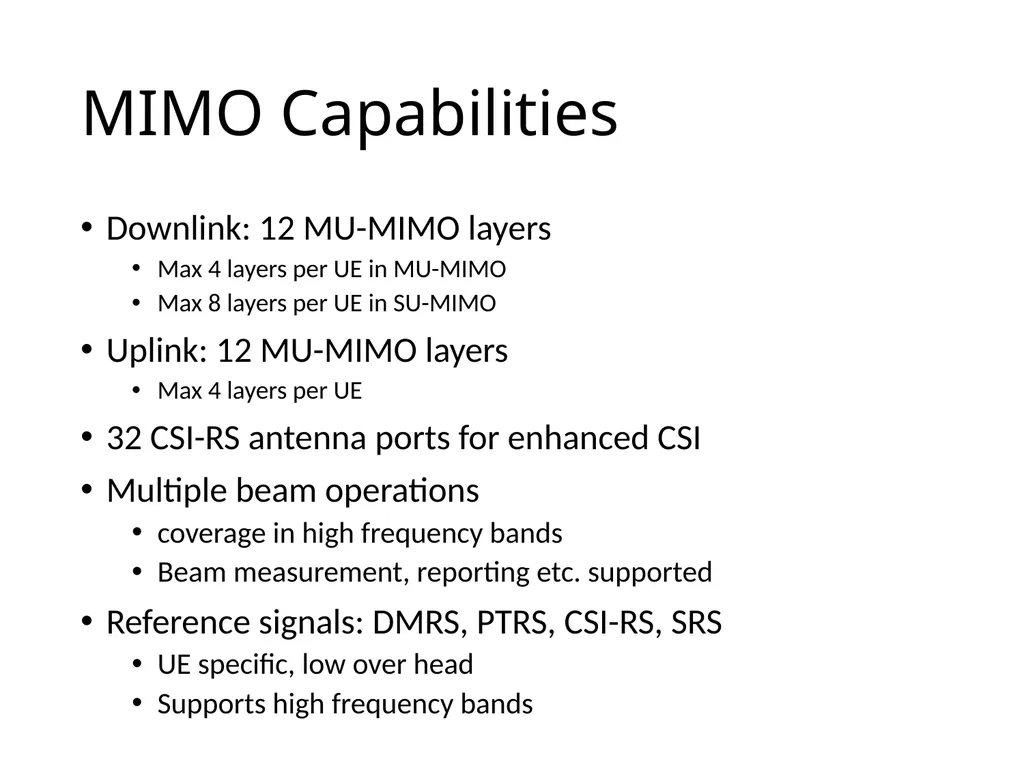
MIMO Capabilities Downlink: 12 MU-MIMO layers
Max 4 layers per UE in MU-MIMO
Max 8 layers per UE in SU-MIMO
Uplink: 12 MU-MIMO layers
Max 4 layers per UE
32 CSI-RS antenna ports for enhanced CSI
Multiple beam operations
coverage in high frequency bands
Beam measurement, reporting etc. supported
Reference signals: DMRS, PTRS, CSI-RS, SRS
UE specific, low over head
Supports high frequency bands<br>
07
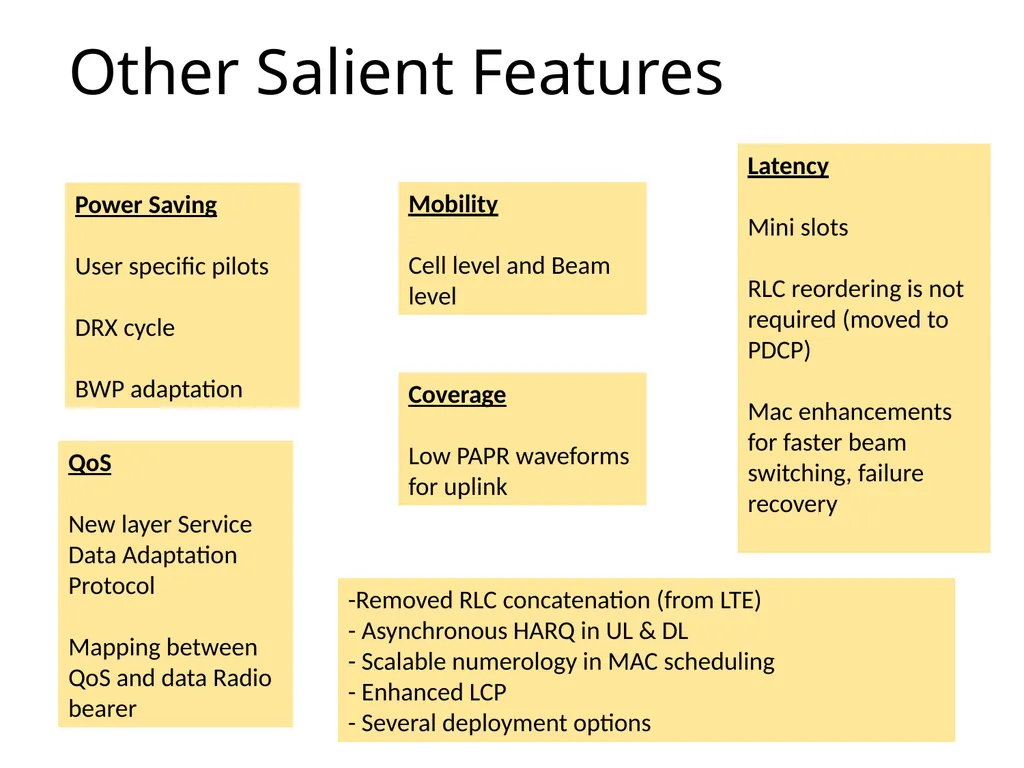
Power Saving
User specific pilots
DRX cycle
BWP adaptation Mobility
Cell level and Beam level Latency
Mini slots
RLC reordering is not required (moved to PDCP)
Mac enhancements for faster beam switching, failure recovery QoS
New layer Service Data Adaptation Protocol
Mapping between QoS and data Radio bearer Other Salient Features Coverage
Low PAPR waveforms for uplink -Removed RLC concatenation (from LTE)
- Asynchronous HARQ in UL & DL
- Scalable numerology in MAC scheduling
- Enhanced LCP
- Several deployment options<br>