Twelfth Night A Comedy by William Shakespeare Date: Written around 1601-1602 Introduction to Twelfth Night Overview: Twelfth Night is a romantic comedy that explores themes of love, identity, and the complexities of human relationships.
"Twelfth Night A Comedy by William Shakespeare" is the property of its rightful owner. Permission is granted to
download and print the materials on this website for personal, non-commercial use only, and to display it
on your personal computer provided you do not modify the materials and that you retain all copyright
notices contained in the materials. By downloading content from our website, you accept the terms of this
agreement.
Presentation Transcript
01
Twelfth Night A Comedy by William Shakespeare
Date: Written around 1601-1602<br>
02
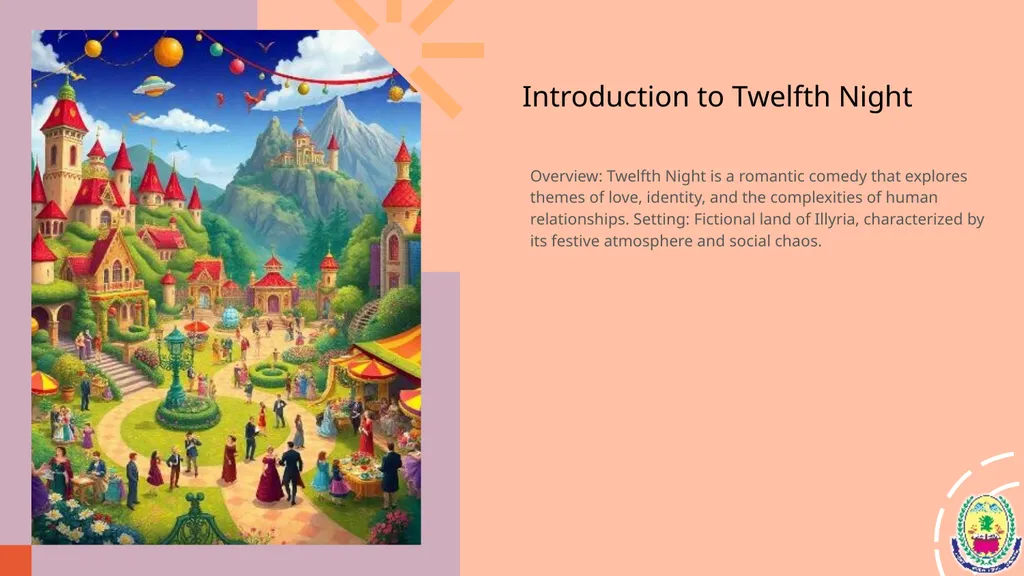
Introduction to Twelfth Night Overview: Twelfth Night is a romantic comedy that explores themes of love, identity, and the complexities of human relationships. Setting: Fictional land of Illyria, characterized by its festive atmosphere and social chaos.<br>
03
Main Characters Olivia and Malvolio Olivia: A wealthy countess mourning her brother. Malvolio: The pompous steward of Olivia who aspires to rise socially. Viola and Duke Orsino Viola: Shipwrecked and disguises herself as a man named Cesario. Duke Orsino: In love with Olivia but is oblivious to Viola's affections for him.<br>
04
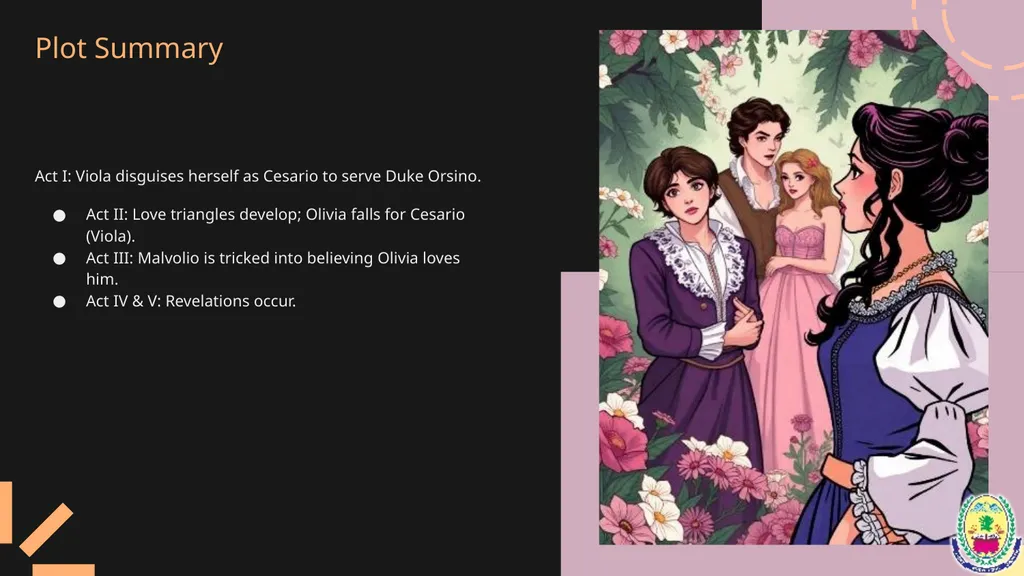
Plot Summary Act I: Viola disguises herself as Cesario to serve Duke Orsino.
Act II: Love triangles develop; Olivia falls for Cesario (Viola).
Act III: Malvolio is tricked into believing Olivia loves him.
Act IV & V: Revelations occur.<br>
05
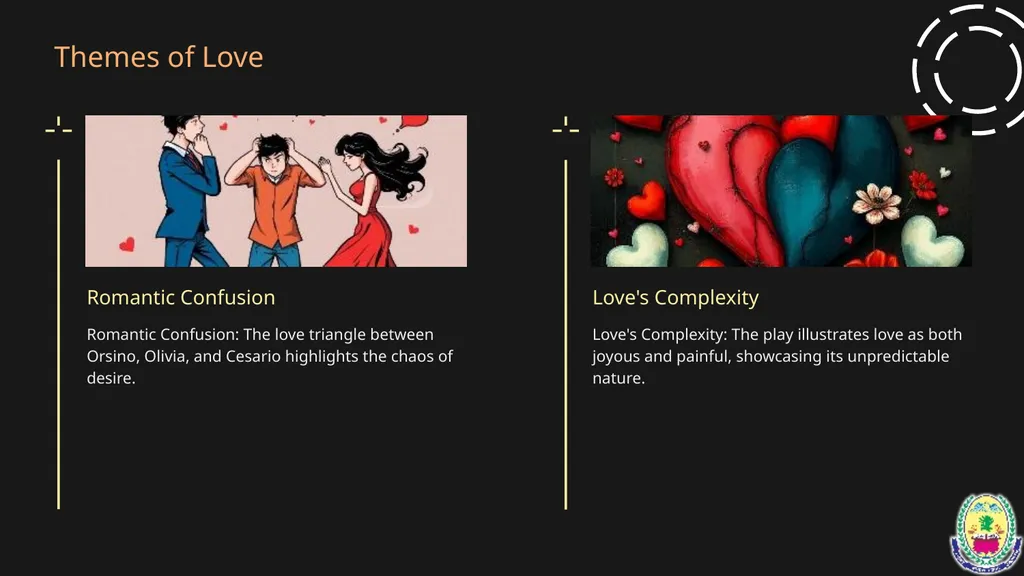
Themes of Love Romantic Confusion Romantic Confusion: The love triangle between Orsino, Olivia, and Cesario highlights the chaos of desire. Love's Complexity Love's Complexity: The play illustrates love as both joyous and painful, showcasing its unpredictable nature.<br>
06
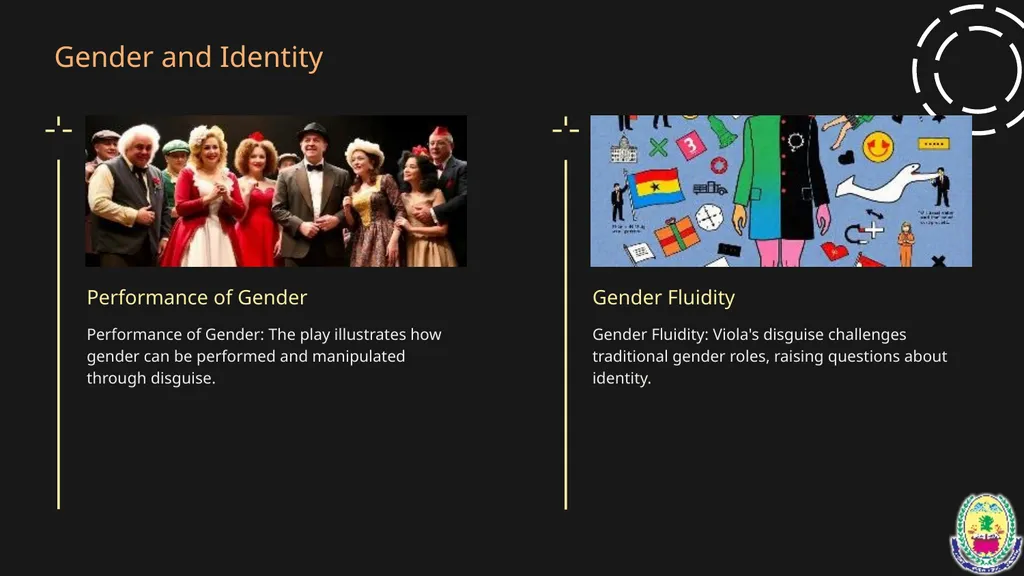
Gender and Identity Performance of Gender Performance of Gender: The play illustrates how gender can be performed and manipulated through disguise. Gender Fluidity Gender Fluidity: Viola's disguise challenges traditional gender roles, raising questions about identity.<br>
07
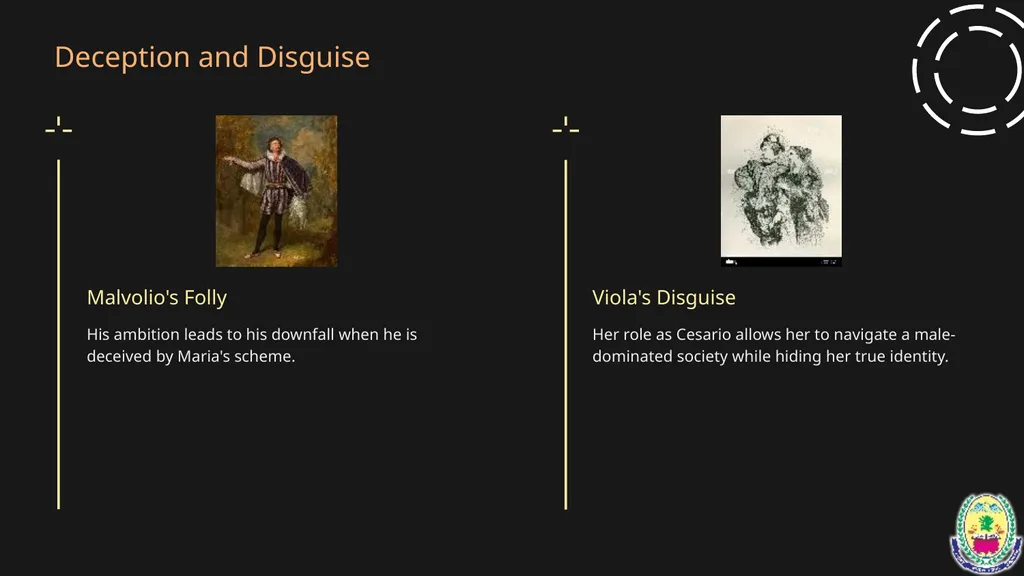
Deception and Disguise Malvolio's Folly His ambition leads to his downfall when he is deceived by Maria's scheme. Viola's Disguise Her role as Cesario allows her to navigate a male-dominated society while hiding her true identity.<br>
08
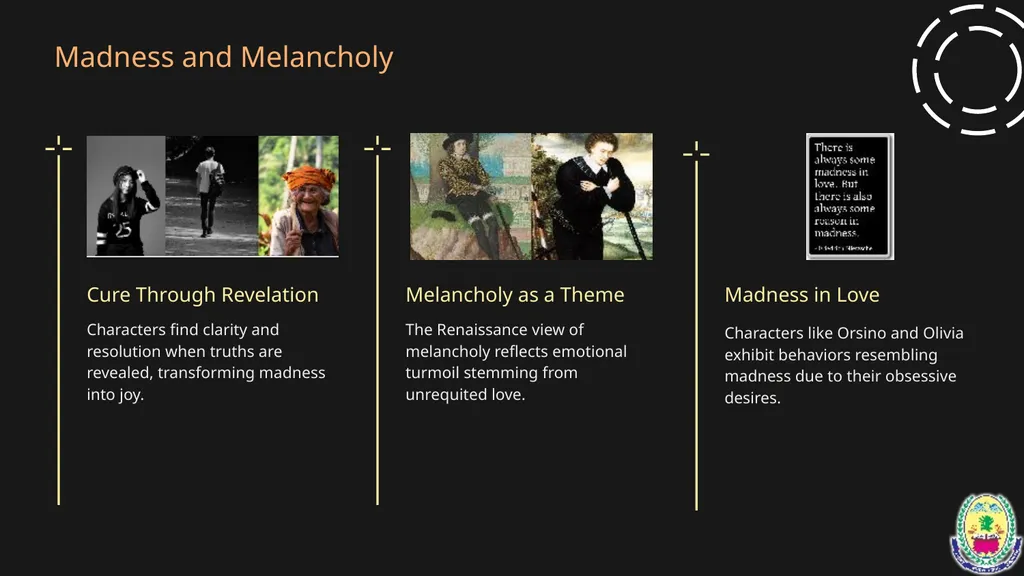
Madness and Melancholy Cure Through Revelation Characters find clarity and resolution when truths are revealed, transforming madness into joy. Madness in Love Characters like Orsino and Olivia exhibit behaviors resembling madness due to their obsessive desires. Melancholy as a Theme The Renaissance view of melancholy reflects emotional turmoil stemming from unrequited love.<br>
09
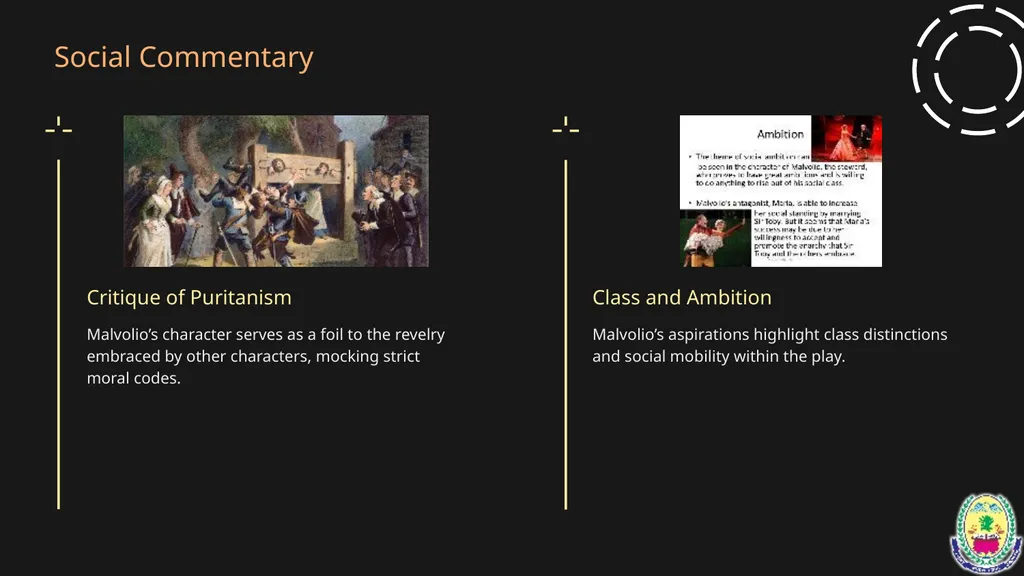
Social Commentary Critique of Puritanism Malvolio’s character serves as a foil to the revelry embraced by other characters, mocking strict moral codes. Class and Ambition Malvolio’s aspirations highlight class distinctions and social mobility within the play.<br>
10
Conclusion Twelfth Night remains a timeless exploration of love, identity, and societal norms.<br>