UNDERSTANDING GAME SECURITY FEATURES Game Security: What It Is and Why It Matters Game security refers to the set of measures, practices, and technologies designed to protect video games and their associated infrastructure from various
"UNDERSTANDING GAME SECURITY FEATURES Game" is the property of its rightful owner. Permission is granted to
download and print the materials on this website for personal, non-commercial use only, and to display it
on your personal computer provided you do not modify the materials and that you retain all copyright
notices contained in the materials. By downloading content from our website, you accept the terms of this
agreement.
Presentation Transcript
01
UNDERSTANDING GAME SECURITY FEATURES<br>
02
Game Security: What It Is and Why It Matters Game security refers to the set of measures, practices, and technologies designed to protect video games and their associated infrastructure from various threats.
Protects players from cheats, hacks, and harassment, Secures In-Game Transactions,Compliance with Regulations
Safeguards player data and accounts
Maintains a fair, enjoyable environment<br>
03
Current Trends in Online Gaming Growth of Mobile Gaming
Expansion of Cloud Gaming
Increased Focus on Virtual Reality (VR) and Augmented Reality (AR)
Integration of Blockchain Technology
Continued Development of Live-Service Games<br>
04
The Impact of Security Breaches Cheating
Account Hacking
Data Theft
DDoS Attacks (Distributed Denial of Service)
Malware and Viruses<br>
05
IMPLEMENTING ROBUST SECURITY MEASURES AT BOTH DEVELOPER AND CLIENT ENDs<br>
06
Anti-Cheat Systems Anti-cheat systems are software solutions designed to detect and prevent cheating in online games, ensuring a level playing field.
These systems detect and penalize players using unauthorized tools or modifications for unfair advantages, like wallhacks or aimbots or speeding up gameplay<br>
07
Easy Anti-Cheat (EAC) and Valve Anti-Cheat (VAC) EAC is a proprietary anti-cheat service developed by Kamu, designed to detect and prevent cheating in online multiplayer games.
EAC is used in many popular games such as Fortnite, Apex Legends, and Battlefield.
Valve Anti-Cheat (VAC) is an anti-cheat system developed by Valve Corporation designed to detect and prevent cheating in online multiplayer games, particularly those available on the Steam platform.
It is integrated into several popular online games developed by Valve, such as Counter-Strike,Dota 2 and Team Fortress 2.<br>
08
Tactics Employed by EAC and VAC Signature-Based Detection and Memory Scanning(EAC AND VAC)
Driver Monitoring(EAC AND VAC)
Behavioral Analysis(EAC AND VAC)
Kernel-Level Anti-Cheat(EAC AND VAC)
File Integrity Verification(VAC)
Server-Side Verification and Monitoring(VAC)
Delayed Bans(VAC)
Community Reporting and Analysis(EAC AND VAC)<br>
09
Data Encryption and Security Purpose: Protects player data, including personal and payment info<br>
10
Cutting-Edge Techniques in Data Security SSL/TLS and AES Encryption
End-to-End Encryption
Hashing Functions
Data Masking<br>
11
Authentication and Access Control Authentication is the process of verifying the identity of a user, device, or system before granting access to resources. It ensures that only authorized users can access certain data or functionalities.
Access control determines what authenticated users are allowed to do within a system. It defines permissions and restrictions for users based on their identity and roles.<br>
12
INNOVATIVE APPROACHES TO AUTHENTICATION Username and Password
Two-Factor Authentication (2FA)
Multi-Factor Authentication (MFA)
Single Sign-On (SSO)<br>
13
Access Control Strategies Discretionary Access Control (DAC)
Mandatory Access Control (MAC)
Role-Based Access Control (RBAC)
Attribute-Based Access Control (ABAC)<br>
14
Digital Rights Management (DRM) Purpose: DRM involves various technologies and practices designed to prevent unauthorized use, copying, and distribution of digital games.<br>
Server and Network Security Goal: Server and network security are crucial components of game security that protect the infrastructure hosting games and the data being transmitted between players and game servers.<br>
17
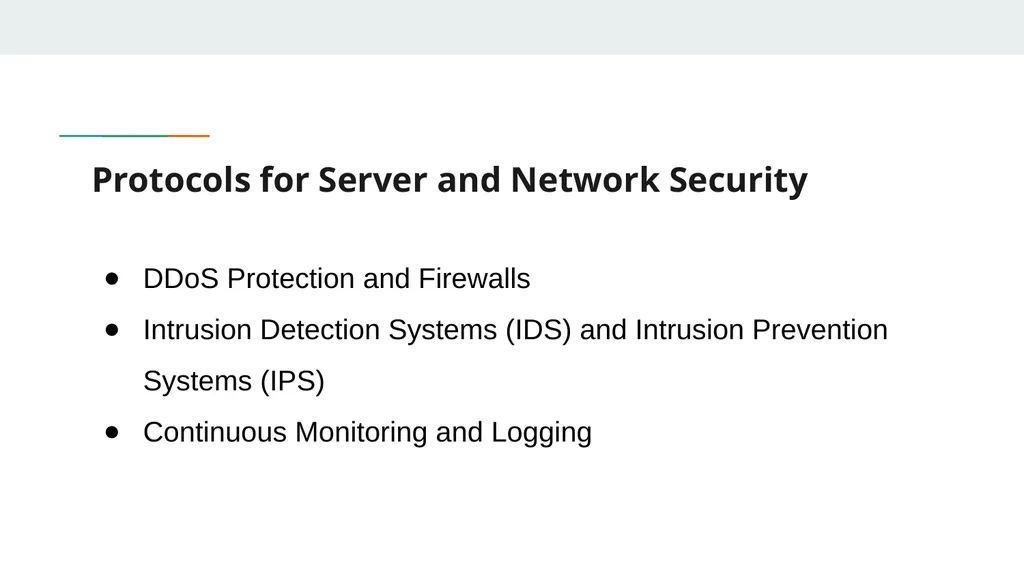
Protocols for Server and Network Security DDoS Protection and Firewalls
Intrusion Detection Systems (IDS) and Intrusion Prevention Systems (IPS)
Continuous Monitoring and Logging<br>
18
Player Behavior Monitoring Purpose: Detects and discourages toxic or disruptive behavior<br>
19
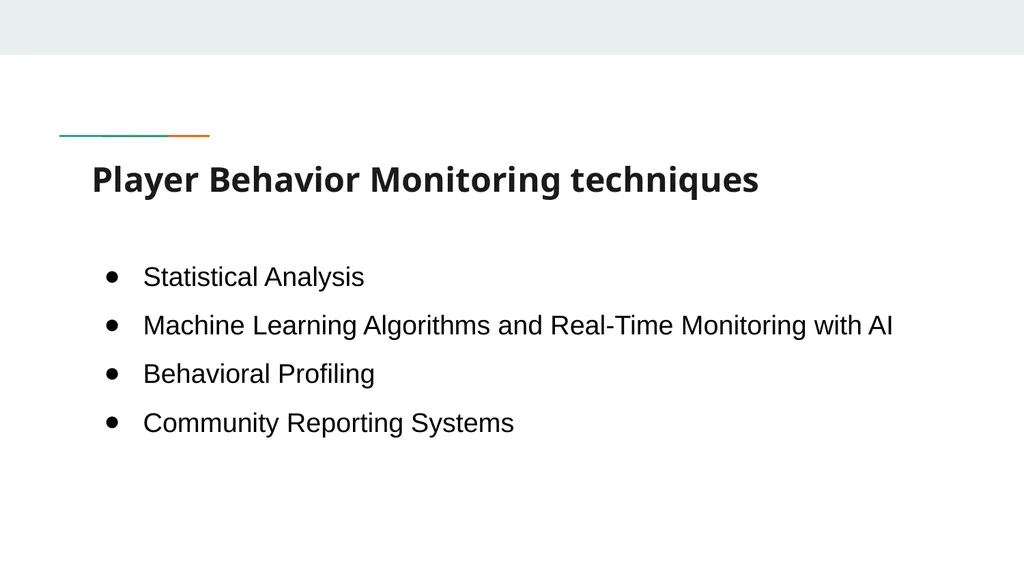
Player Behavior Monitoring techniques Statistical Analysis
Machine Learning Algorithms and Real-Time Monitoring with AI
Behavioral Profiling
Community Reporting Systems<br>
20
Secure In-Game Transactions Goal: Secures purchases of in-game items or currency<br>
21
Protocols for Secure In-Game Transactions Tokenization
Multi-Factor Authentication (MFA)
Fraud Detection and Prevention
API Security<br>
22
Regular Updates and Patching Purpose: Fixes vulnerabilities and enhances security<br>
23
Best Practices for Regular Updates and Patching Scheduled Patch Releases
Hotfixes for Critical Vulnerabilities
Automatic Updates
Incremental Updates
Forced Updates for Multiplayer Compatibility
Third-Party Library Updates<br>
24
Education, Player Awareness and Ethics Goal: Encourages players to protect themselves
Tips:
Awareness of Security Risks(like forums and official game websites),
Encouraging Strong Account Security
Fostering Safe Online Behavior
Staying Informed on Security Best Practices
Promoting Responsible In-Game Transactions
Player Privacy, Fairness and Equity, Responsibility in Design<br>