Understanding the Future Tense in English The future tense is essential in English grammar as it helps us express actions or events that will happen in the future. It allows us to talk about plans, predictions, offers, and decisions. In
"Understanding the Future Tense in English The" is the property of its rightful owner. Permission is granted to
download and print the materials on this website for personal, non-commercial use only, and to display it
on your personal computer provided you do not modify the materials and that you retain all copyright
notices contained in the materials. By downloading content from our website, you accept the terms of this
agreement.
Presentation Transcript
01
Understanding the Future Tense in English The future tense is essential in English grammar as it helps us express actions or events that will happen in the future. It allows us to talk about plans, predictions, offers, and decisions. In this lecture, we will explore different forms of the future tense, their uses, and how to form sentences that accurately convey future meaning. By the end, you will be able to use the future tense confidently in a variety of contexts.<br>
02
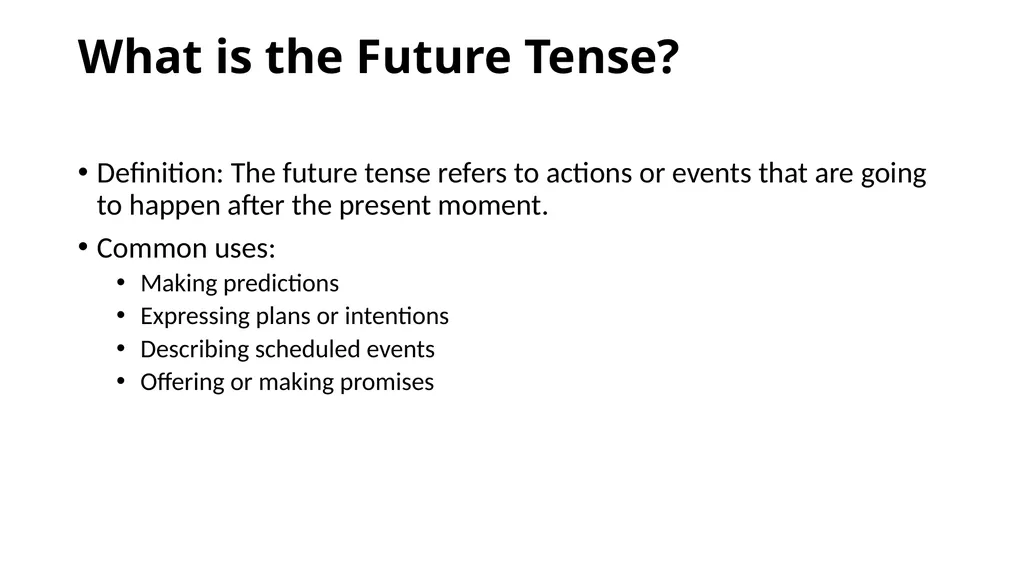
What is the Future Tense? Definition: The future tense refers to actions or events that are going to happen after the present moment.
Common uses:
Making predictions
Expressing plans or intentions
Describing scheduled events
Offering or making promises<br>
03
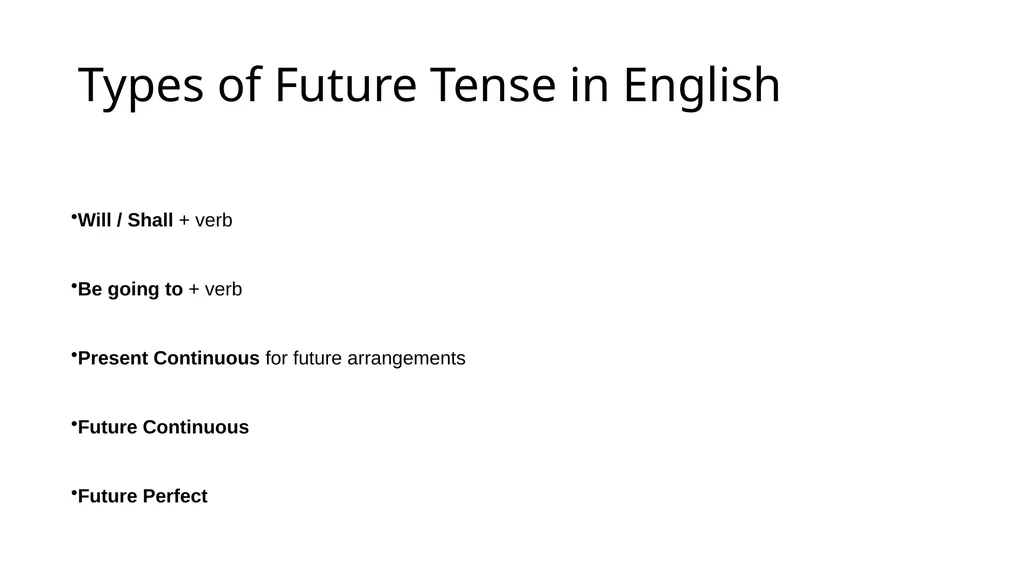
Types of Future Tense in English Will / Shall + verb
Be going to + verb
Present Continuous for future arrangements
Future Continuous
Future Perfect<br>
04
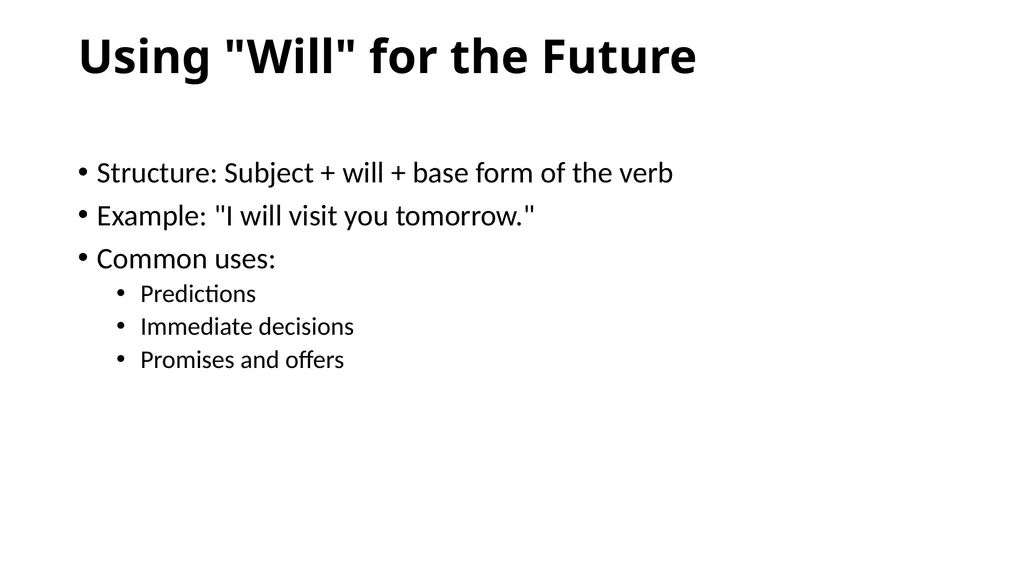
Using "Will" for the Future Structure: Subject + will + base form of the verb
Example: "I will visit you tomorrow."
Common uses:
Predictions
Immediate decisions
Promises and offers<br>
05
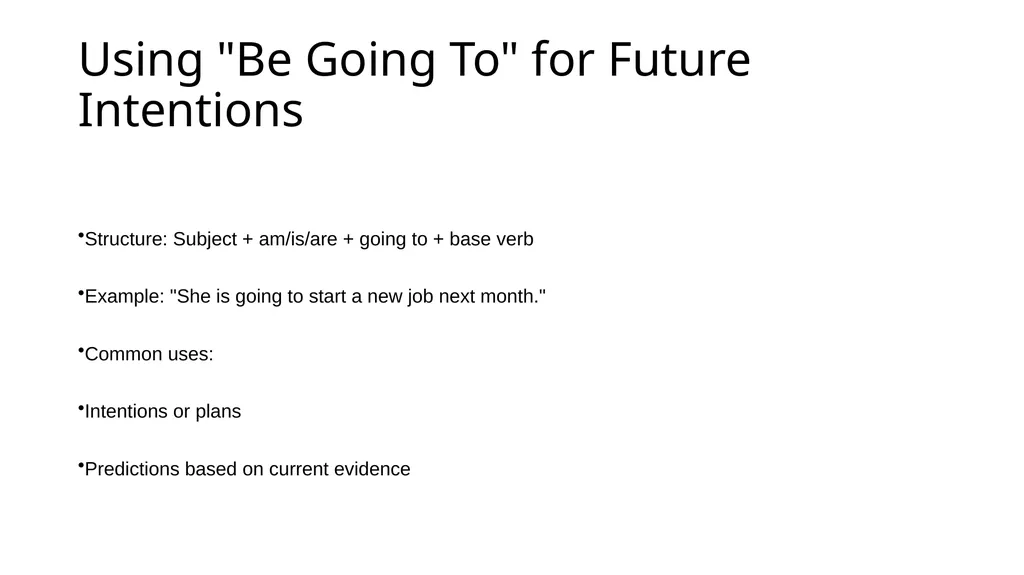
Using "Be Going To" for Future Intentions Structure: Subject + am/is/are + going to + base verb
Example: "She is going to start a new job next month."
Common uses:
Intentions or plans
Predictions based on current evidence<br>
06
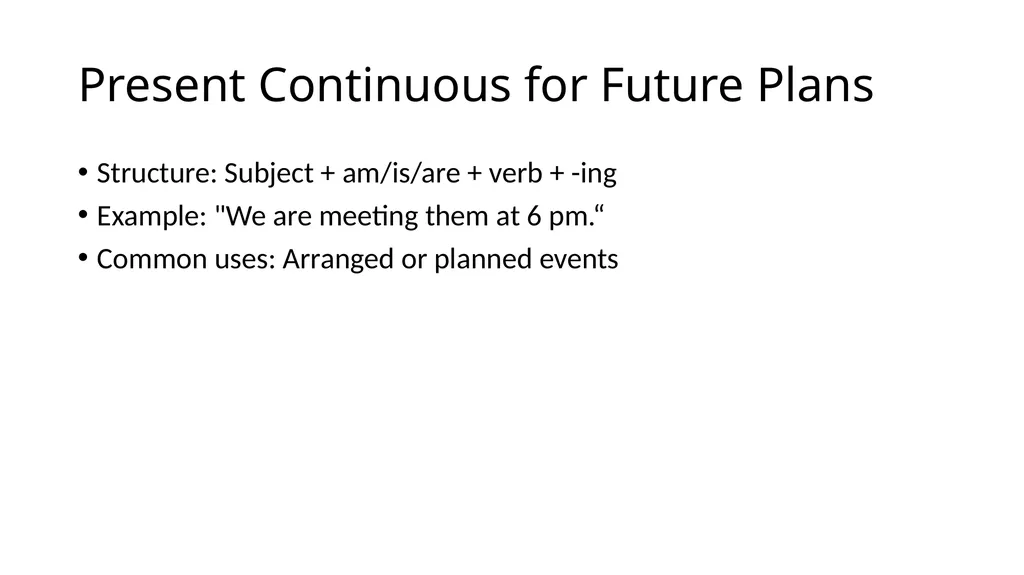
Present Continuous for Future Plans Structure: Subject + am/is/are + verb + -ing
Example: "We are meeting them at 6 pm.“
Common uses: Arranged or planned events<br>
07
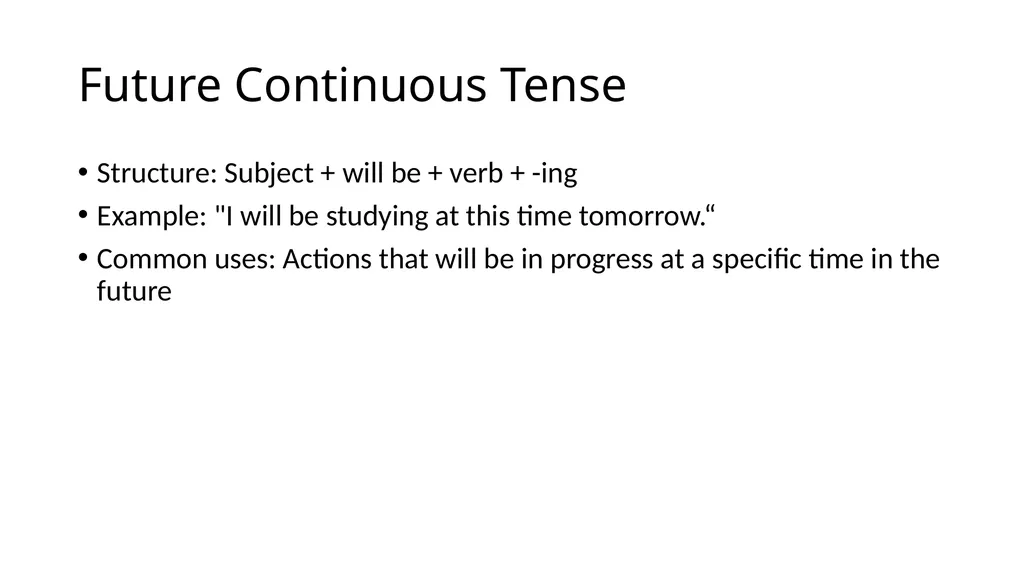
Future Continuous Tense Structure: Subject + will be + verb + -ing
Example: "I will be studying at this time tomorrow.“
Common uses: Actions that will be in progress at a specific time in the future<br>
08
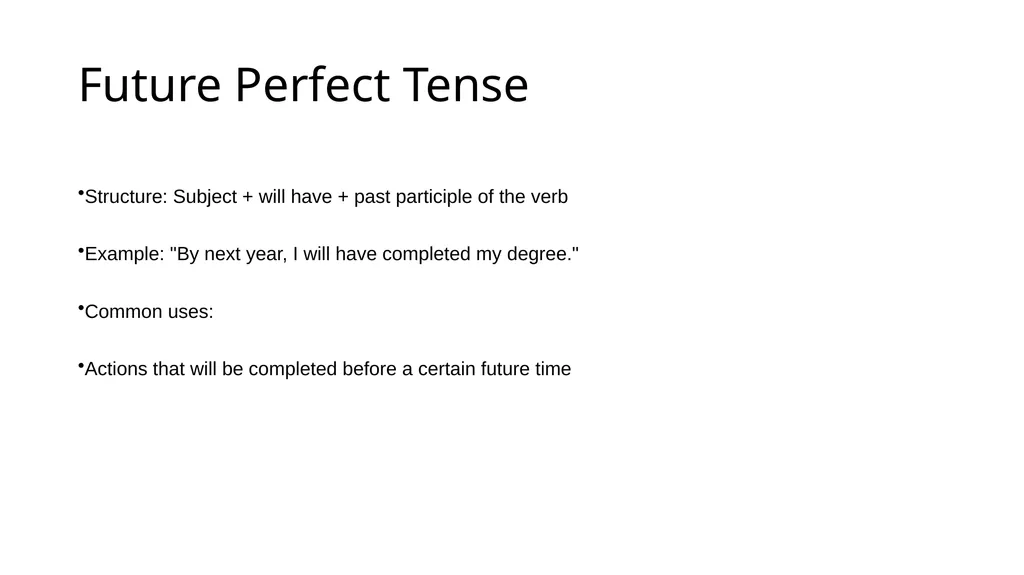
Future Perfect Tense Structure: Subject + will have + past participle of the verb
Example: "By next year, I will have completed my degree."
Common uses:
Actions that will be completed before a certain future time<br>
09
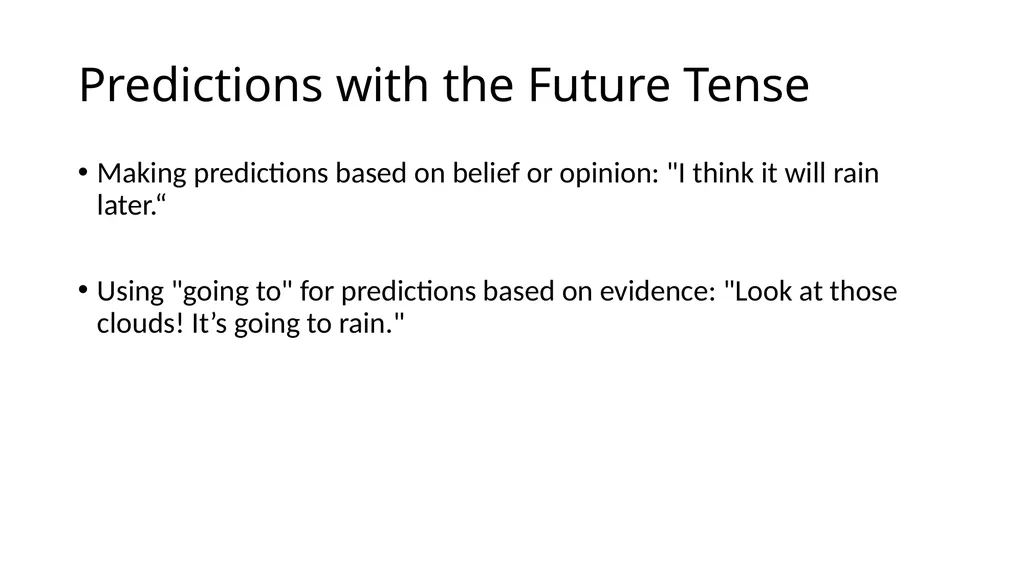
Predictions with the Future Tense Making predictions based on belief or opinion: "I think it will rain later.“
Using "going to" for predictions based on evidence: "Look at those clouds! It’s going to rain."<br>
10
Conclusion & Practice Recap of future tense forms and uses
Practice Exercise: Create 5 sentences using different forms of the future tense.<br>