
UNIT-01 (LIVESTOCK BASED LIVELIHOODS AND THEIR
Description: UNIT-01 (LIVESTOCK BASED LIVELIHOODS AND THEIR EVOLUTION) Dr. Puspendra Kumar Singh Department of Veterinary Animal Husbandry Extension Education, BVC Extensive Farming Extensive farming is an agricultural production system that uses
Related Topics
Download Presentation
"UNIT-01 (LIVESTOCK BASED LIVELIHOODS AND THEIR" is the property of its rightful owner. Permission is granted to download and print the materials on this website for personal, non-commercial use only, and to display it on your personal computer provided you do not modify the materials and that you retain all copyright notices contained in the materials. By downloading content from our website, you accept the terms of this agreement.
Presentation Transcript
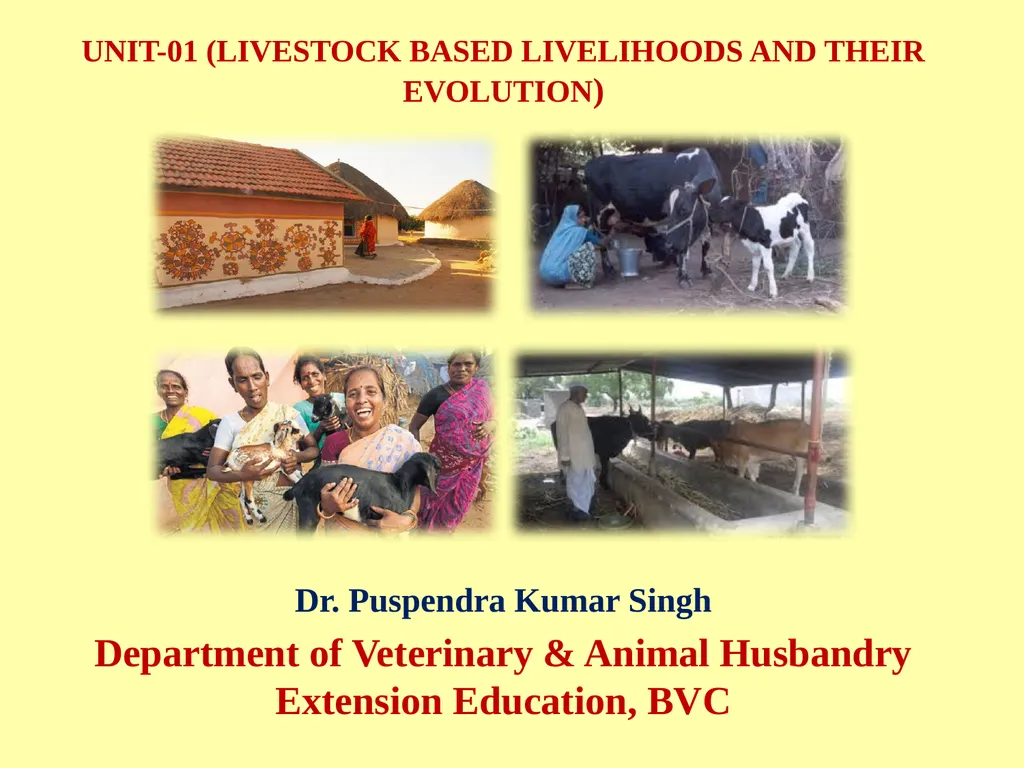
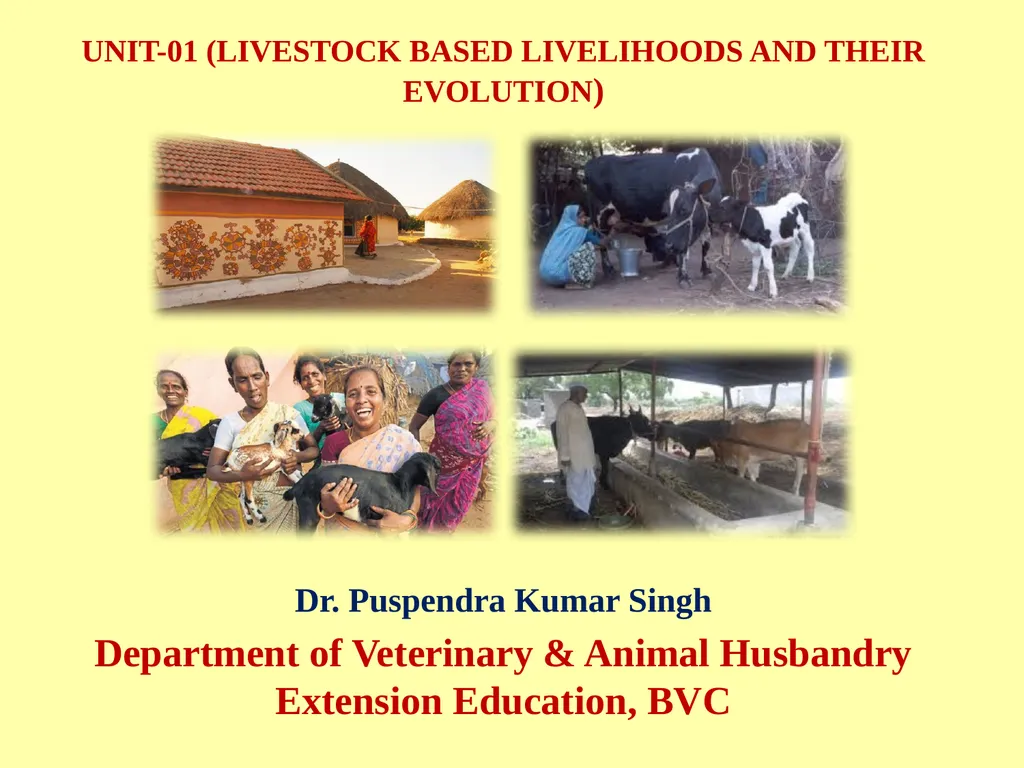
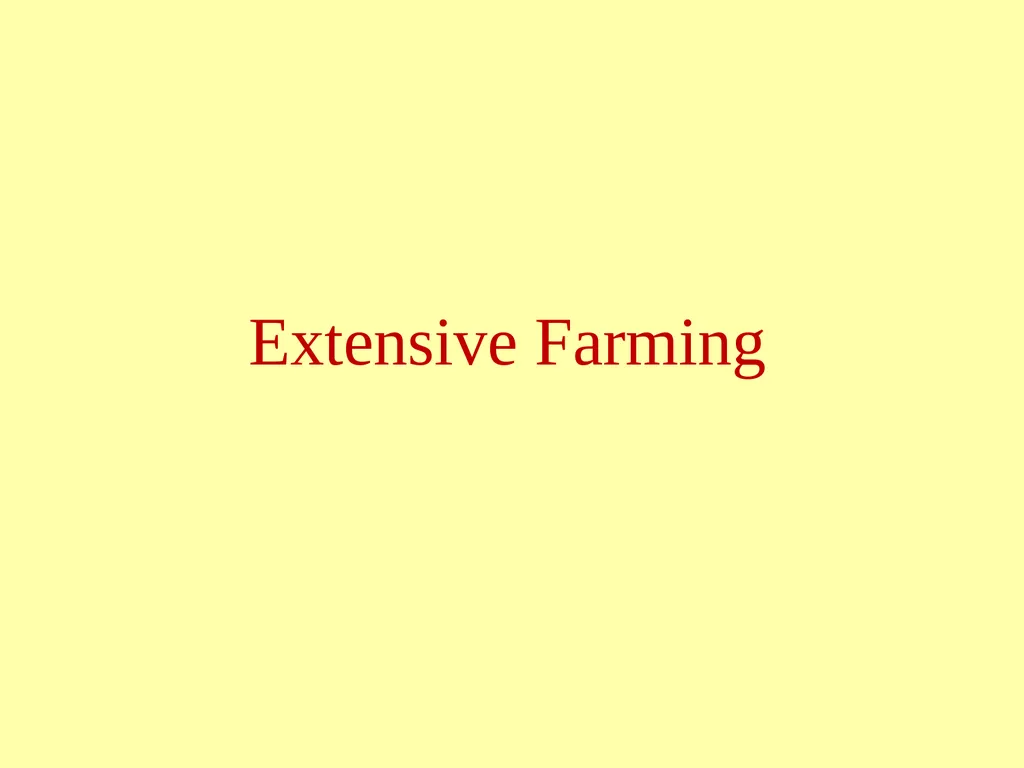
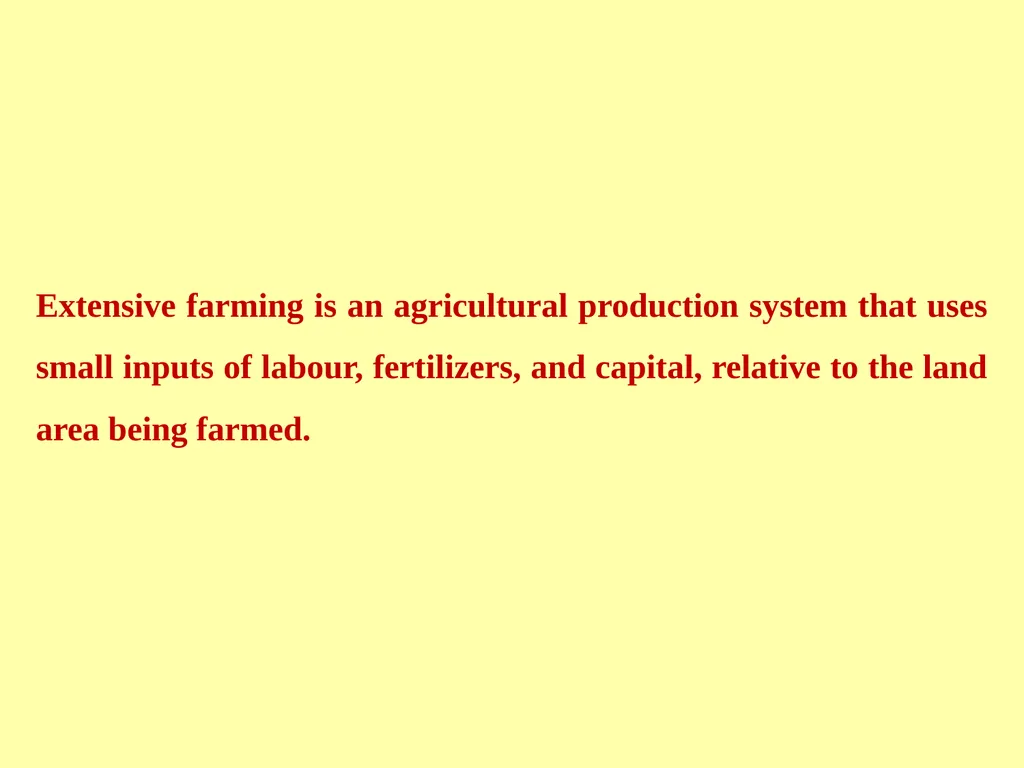
slide1. UNIT-01 (LIVESTOCK BASED LIVELIHOODS AND THEIR EVOLUTION)
Dr. Puspendra Kumar Singh
Department of Veterinary & Animal Husbandry Extension Education, BVC<br>
slide2. Extensive Farming<br>
slide3. Extensive farming is an agricultural production system that uses small inputs of labour, fertilizers, and capital, relative to the land area being farmed.<br>
slide4. Extensive Farming
Extensive farming most commonly refers to sheep and cattle farming in areas with low agricultural productivity, but can also refer to large-scale growing of wheat, barley and other grain crops.
Yields per hectare are very low, but the flat terrain and very large farm sizes mean yields per unit of labour are high.
Nomadic herding is an extreme example of extensive farming, where herders move their animals to use feed from occasional rainfalls.<br>
slide5. System of crop cultivation using small amounts of labour and capital in relation to area of land being farmed.
The crop yield in extensive agriculture depends primarily on the natural fertility of the soil, terrain, climate, and the availability of water.
Extensive agriculture produces a lower yield per unit of land, its use commercially requires large quantities of land in order to be profitable.<br>
slide6. This demand for land means that extensive agriculture must be carried on where land values are low in relation to labour and capital, which in turn means that extensive agriculture is practiced where population densities are low and thus usually at some distance from primary markets.<br>
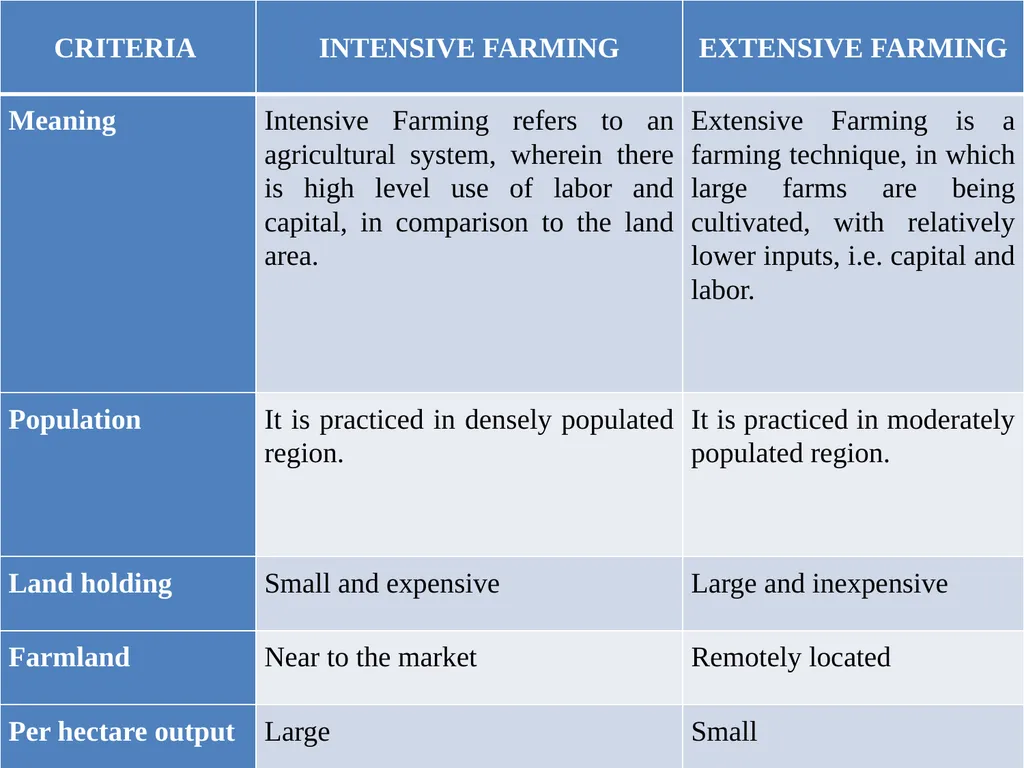
slide7. Difference between intensive and extensive system of farming<br>
Dr. Puspendra Kumar Singh
Department of Veterinary & Animal Husbandry Extension Education, BVC<br>
slide2. Extensive Farming<br>
slide3. Extensive farming is an agricultural production system that uses small inputs of labour, fertilizers, and capital, relative to the land area being farmed.<br>
slide4. Extensive Farming
Extensive farming most commonly refers to sheep and cattle farming in areas with low agricultural productivity, but can also refer to large-scale growing of wheat, barley and other grain crops.
Yields per hectare are very low, but the flat terrain and very large farm sizes mean yields per unit of labour are high.
Nomadic herding is an extreme example of extensive farming, where herders move their animals to use feed from occasional rainfalls.<br>
slide5. System of crop cultivation using small amounts of labour and capital in relation to area of land being farmed.
The crop yield in extensive agriculture depends primarily on the natural fertility of the soil, terrain, climate, and the availability of water.
Extensive agriculture produces a lower yield per unit of land, its use commercially requires large quantities of land in order to be profitable.<br>
slide6. This demand for land means that extensive agriculture must be carried on where land values are low in relation to labour and capital, which in turn means that extensive agriculture is practiced where population densities are low and thus usually at some distance from primary markets.<br>
slide7. Difference between intensive and extensive system of farming<br>