
UNIT 21. Airline Management ColbourneCollege




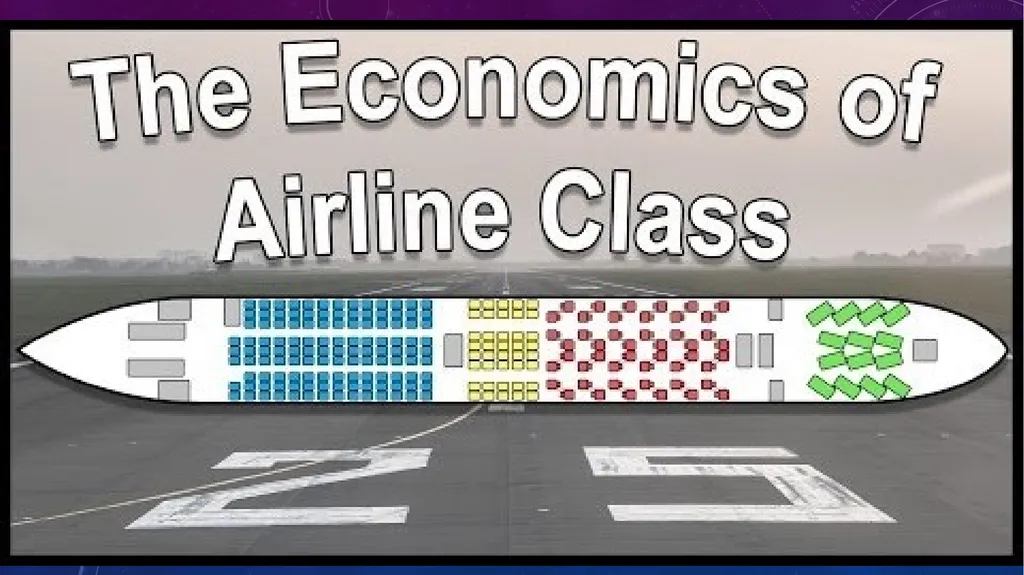
Description: UNIT 21. Airline Management ColbourneCollege LEARNING OUTCOME 2 Investigate the commercial management of an airline and the main routes of income and revenue Instructor: SAMUELS HUNTER LEARNING OUTCOME 3. COURSE CONTENT Costs of
Related Topics
Download Presentation
"UNIT 21. Airline Management ColbourneCollege" is the property of its rightful owner. Permission is granted to download and print the materials on this website for personal, non-commercial use only, and to display it on your personal computer provided you do not modify the materials and that you retain all copyright notices contained in the materials. By downloading content from our website, you accept the terms of this agreement.
Presentation Transcript
slide1. UNIT 21.
Airline Management ColbourneCollege<br>
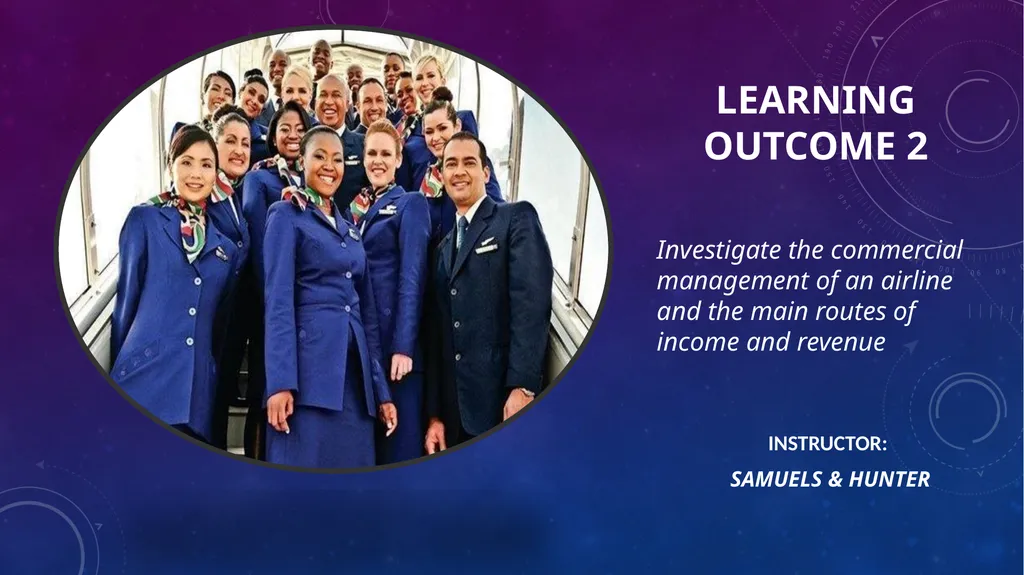
slide2. LEARNING OUTCOME 2 Investigate the commercial management of an airline and the main routes of income and revenue Instructor:
SAMUELS & HUNTER<br>
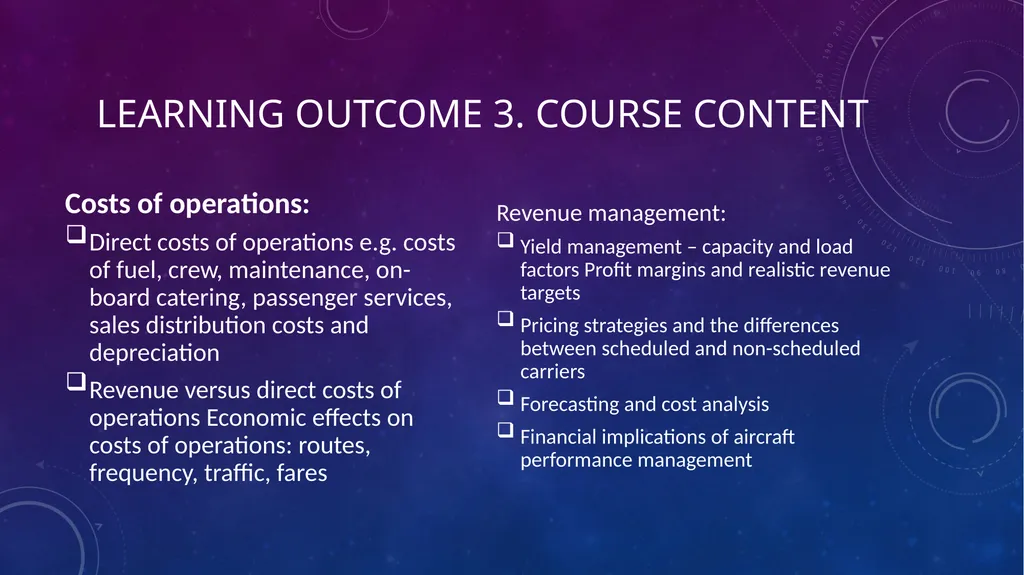
slide3. LEARNING OUTCOME 3. COURSE CONTENT Costs of operations:
Direct costs of operations e.g. costs of fuel, crew, maintenance, on-board catering, passenger services, sales distribution costs and depreciation
Revenue versus direct costs of operations Economic effects on costs of operations: routes, frequency, traffic, fares Revenue management:
Yield management – capacity and load factors Profit margins and realistic revenue targets
Pricing strategies and the differences between scheduled and non-scheduled carriers
Forecasting and cost analysis
Financial implications of aircraft performance management<br>
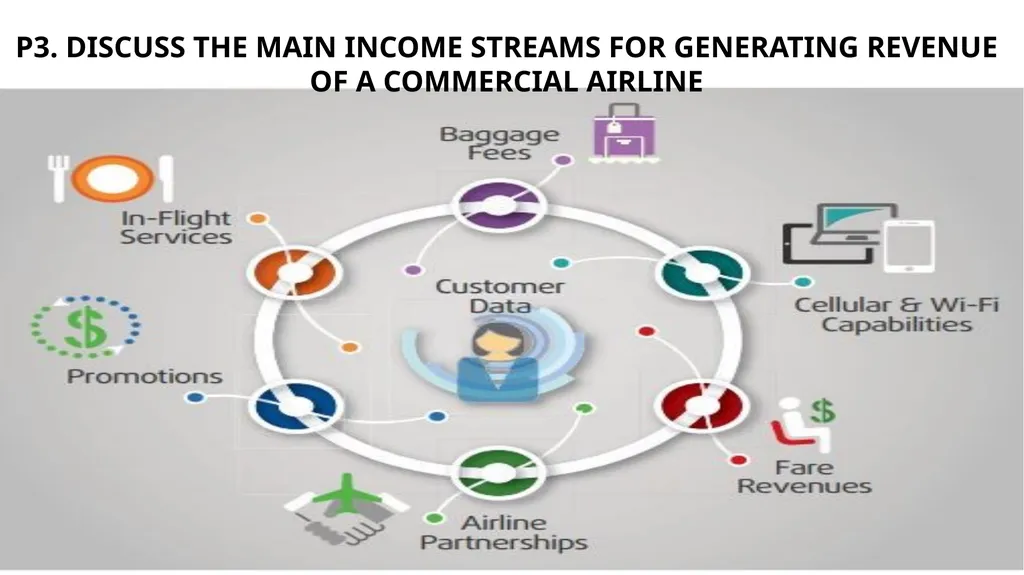
slide7. P3. Discuss the main income streams for generating revenue of a commercial airline<br>
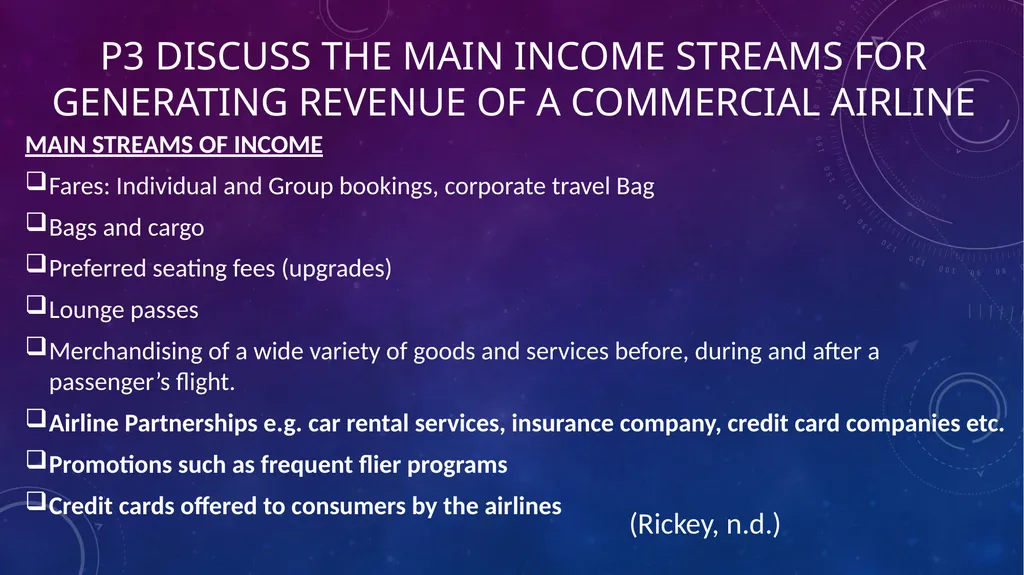
slide8. P3 Discuss the main income streams for generating revenue of a commercial airline MAIN STREAMS OF INCOME
Fares: Individual and Group bookings, corporate travel Bag
Bags and cargo
Preferred seating fees (upgrades)
Lounge passes
Merchandising of a wide variety of goods and services before, during and after a passenger’s flight.
Airline Partnerships e.g. car rental services, insurance company, credit card companies etc.
Promotions such as frequent flier programs
Credit cards offered to consumers by the airlines (Rickey, n.d.)<br>
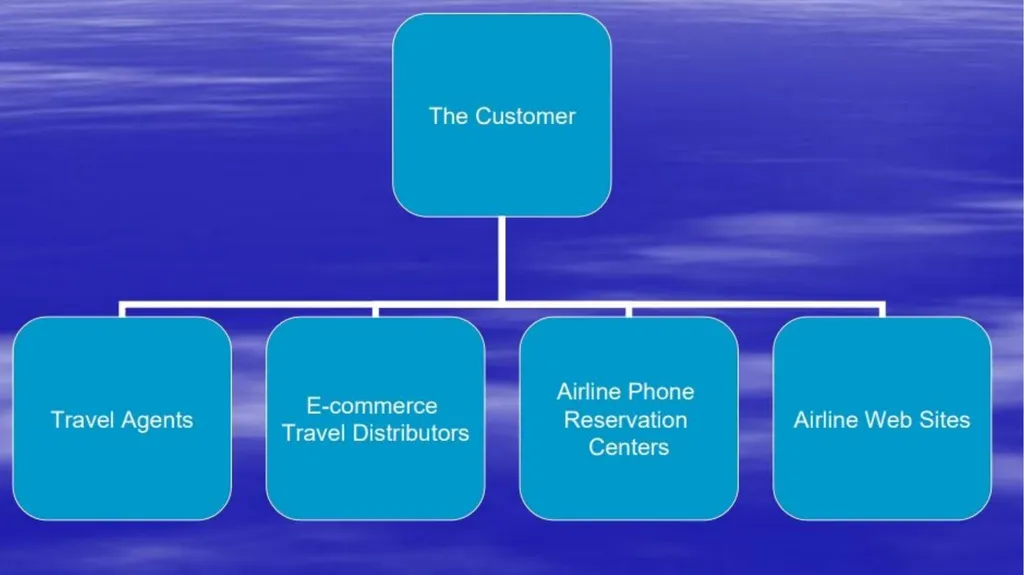
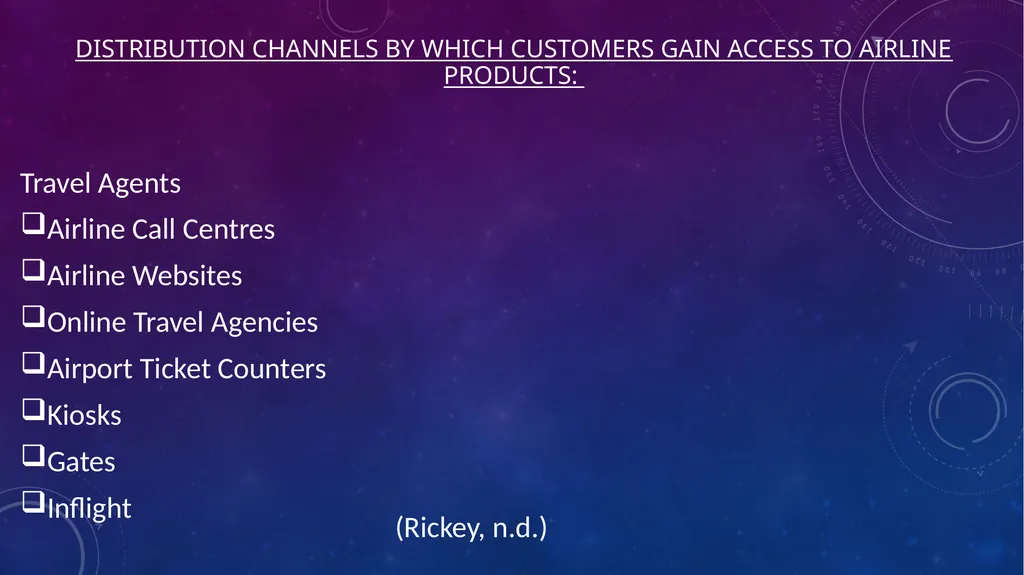
slide9. DISTRIBUTION CHANNELS BY WHICH CUSTOMERS GAIN ACCESS TO AIRLINE PRODUCTS: Travel Agents
Airline Call Centres
Airline Websites
Online Travel Agencies
Airport Ticket Counters
Kiosks
Gates
Inflight (Rickey, n.d.)<br>
slide10. Maximizing Airline Revenue Rickey (n.d) observed that airlines revenue have significantly evolved during the last decade. Traditionally revenue generation was from maximizing ticket sales through its various distribution channel and sources such as individual travel, group travel, business travel and codesharing booking.
Today he sees where there is much diversity in the sources of revenue being generated by the said airlines. While retaining their traditional sources of income of fares from individuals, groups, and corporate customers in economy and upgraded classes, now they are maximizing revenue from other streams such as bags and the “merchandising of a wide goods and services before, during and after a passenger’s flight (sec 2).” These additional revenue streams can contribute up to 30% of the airline’s entire revenue (Rickey, n.d) .<br>
slide11. P4 Investigate the different management techniques and strategies applied for maximising sales and profit to generate revenue M2 Analyse how the principles of yield management, aircraft utilisation and pricing strategies adopted by a commercial airline maximise sales and profits to meet overall business objectives D2 Critically analyse different revenue management techniques and make justified recommendations on how a commercial airline can improve sales and profits to meet overall business objectives<br>
slide12. Cost of operation and revenue stream HAVE positive and negative economic implications on airline sustainability: Costs of operations: direct costs of operations e.g. costs of fuel, crew, maintenance, on-board catering, passenger services, sales distribution costs and depreciation
The economic effects on costs of operations will influence and impact: airline routes, frequency of flights, traffic, fares
Management will continuously seek to maximize and manage revenue to offset the direct costs of operations in order to meet overall business objectives<br>
slide13. Strategic Planning
Yield Management and Revenue Maximization
Strategic Marketing Management
Fares and Ancillary Fees
Aircraft Utilization
Strategic Human Resources Planning And Development Commercial practices that may be used by management to maximize sales revenue and reduce direct costs of operating in order to maximize profit and meet organizational objectives:<br>
slide14. Studying the business environment: PESTLE factors, Stakeholders Needs Analysis, and market conditions e.g. competitive analysis etc.
Planning organizational resources to be more economical e.g. yield management – capacity and load factors; pricing strategies; and Financial implications of aircraft performance management
Planning organizational resources to be more productive e.g. workforce planning and strategic human resources management and development
Marketing plan, market segmentation, target marketing, marketing mix tactics, market positioning
Evaluating key issues, cost and challenges of safety management that affect airline operations
Forecasting and cost analysis: projecting and planning to manage the direct costs of operations
Planning new distribution and sales funnels and optimizing the earnings from all the channels Strategic Planning is a process that air transport operators can use to determine how best to minimize economic and environmental impacts while meeting sustainable business growth and objectives<br>
slide15. STRATEGIC HUMAN RESOURCES MANAGEMENT Hiring processes, job rewards and strength of the training programs contribute to quality of customer service, staff performance, competitiveness, and business objectives.
Airlines must align their hiring processes to attract, develop and retain the right people with right skills and right characteristics to contribute to the broader business goals. This requires good workforce planning, facilitative work environment, and competitive salary and benefits.<br>
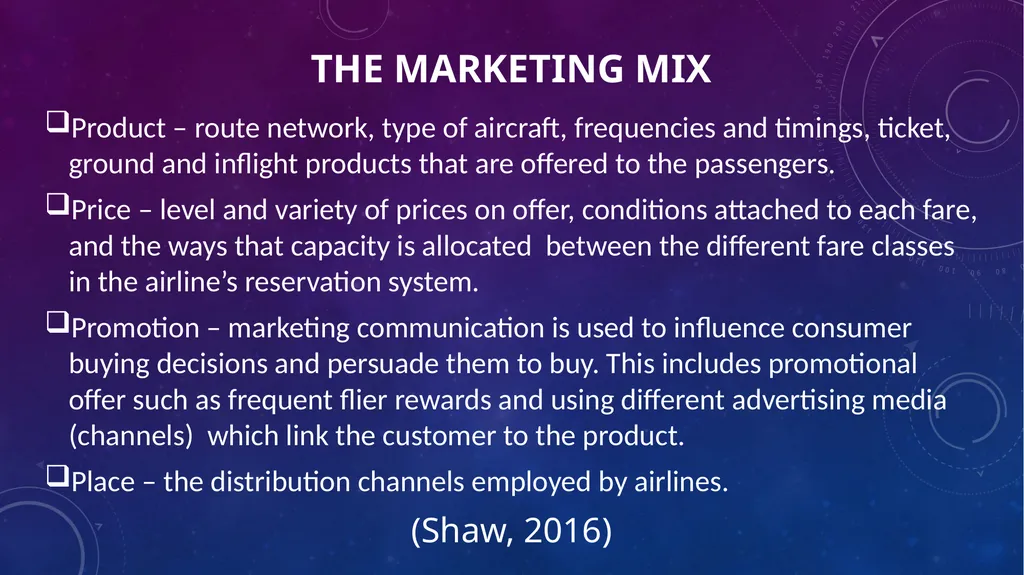
slide16. THE MARKETING MIX Product – route network, type of aircraft, frequencies and timings, ticket, ground and inflight products that are offered to the passengers.
Price – level and variety of prices on offer, conditions attached to each fare, and the ways that capacity is allocated between the different fare classes in the airline’s reservation system.
Promotion – marketing communication is used to influence consumer buying decisions and persuade them to buy. This includes promotional offer such as frequent flier rewards and using different advertising media (channels) which link the customer to the product.
Place – the distribution channels employed by airlines.
(Shaw, 2016)<br>
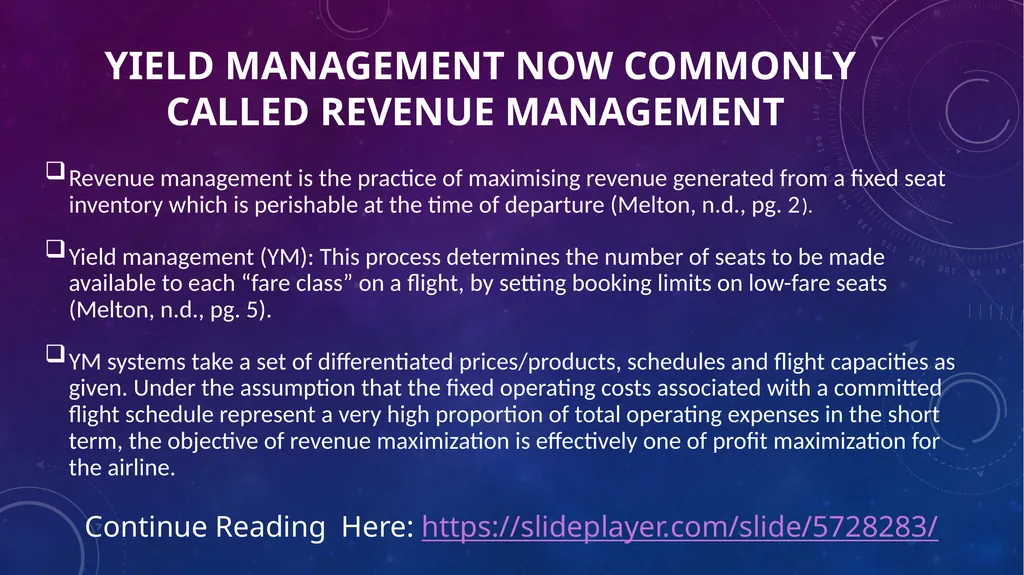
slide17. YIELD MANAGEMENT NOW COMMONLY CALLED REVENUE MANAGEMENT Revenue management is the practice of maximising revenue generated from a fixed seat inventory which is perishable at the time of departure (Melton, n.d., pg. 2).
Yield management (YM): This process determines the number of seats to be made available to each “fare class” on a flight, by setting booking limits on low-fare seats (Melton, n.d., pg. 5).
YM systems take a set of differentiated prices/products, schedules and flight capacities as given. Under the assumption that the fixed operating costs associated with a committed flight schedule represent a very high proportion of total operating expenses in the short term, the objective of revenue maximization is effectively one of profit maximization for the airline.
Continue Reading Here: https://slideplayer.com/slide/5728283/<br>
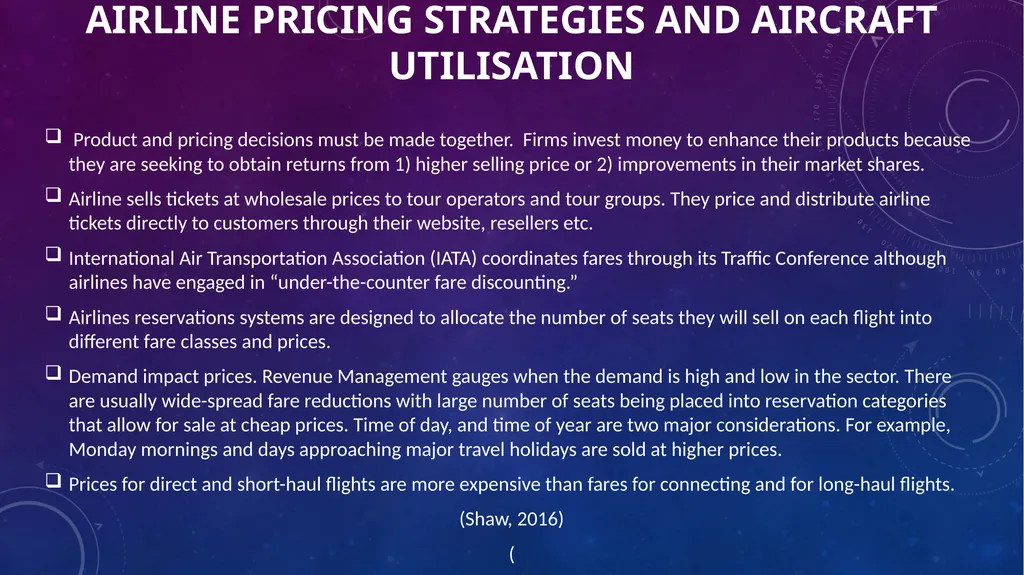
slide18. Airline PRICING STRATEGIES AND AIRCRAFT UTILISATION Product and pricing decisions must be made together. Firms invest money to enhance their products because they are seeking to obtain returns from 1) higher selling price or 2) improvements in their market shares.
Airline sells tickets at wholesale prices to tour operators and tour groups. They price and distribute airline tickets directly to customers through their website, resellers etc.
International Air Transportation Association (IATA) coordinates fares through its Traffic Conference although airlines have engaged in “under-the-counter fare discounting.”
Airlines reservations systems are designed to allocate the number of seats they will sell on each flight into different fare classes and prices.
Demand impact prices. Revenue Management gauges when the demand is high and low in the sector. There are usually wide-spread fare reductions with large number of seats being placed into reservation categories that allow for sale at cheap prices. Time of day, and time of year are two major considerations. For example, Monday mornings and days approaching major travel holidays are sold at higher prices.
Prices for direct and short-haul flights are more expensive than fares for connecting and for long-haul flights.
(Shaw, 2016)
(<br>
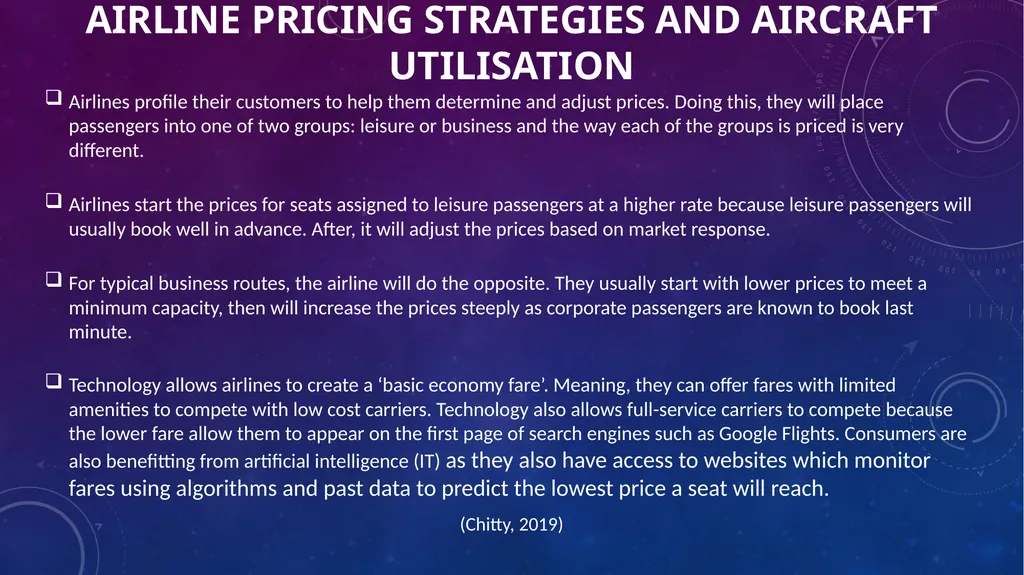
slide19. Airline PRICING STRATEGIES AND AIRCRAFT UTILISATION Airlines profile their customers to help them determine and adjust prices. Doing this, they will place passengers into one of two groups: leisure or business and the way each of the groups is priced is very different.
Airlines start the prices for seats assigned to leisure passengers at a higher rate because leisure passengers will usually book well in advance. After, it will adjust the prices based on market response.
For typical business routes, the airline will do the opposite. They usually start with lower prices to meet a minimum capacity, then will increase the prices steeply as corporate passengers are known to book last minute.
Technology allows airlines to create a ‘basic economy fare’. Meaning, they can offer fares with limited amenities to compete with low cost carriers. Technology also allows full-service carriers to compete because the lower fare allow them to appear on the first page of search engines such as Google Flights. Consumers are also benefitting from artificial intelligence (IT) as they also have access to websites which monitor fares using algorithms and past data to predict the lowest price a seat will reach.
(Chitty, 2019)<br>
slide21. READING ASSIGNMENTS The Four Key Areas For Increasing Sales Revenue
LINK TO ARTICLE: https://www.forbes.com/sites/jimkeenan/2014/06/02/the-four-key-areas-for-increasing-sales-revenue/#7ea1cbf6265a
The Evolution Of Airline Revenue Management: Defining The Next Generation Approach
LINK TO ARTICLE: https://www.sabre.com/insights/the-evolution-of-airline-revenue-management-defining-the-next-generation-approach/
Commercial Planning Practice: Enabling Airlines To Scale Greater Heights
LINK TO ARTICLE: https://www.wns.com/portals/0/documents/whitepapers/pdffiles/651/48/wns_art_commercial%20planning%20practice%20enabling%20airlines%20to%20scale%20greater%20....pdf<br>
slide22. READING ASSIGNMENTS FOR P3 & P4 Maximizing Airline Revenue
LINK TO ARTICLE: https://cdn2.hubspot.net/hubfs/447188/AV_Files/TRO/TRO_article_Final.pdf
U.S. airlines - total operating revenue streams 2004-2018
LINK TO ARTICLE: https://www.statista.com/statistics/197680/total-operating-revenues-in-us-airline-industry-since-2004/
WHAT ARE AMERICAN AIRLINE’S KEY REVENUE STREAM
LINK TO ARTICLE: https://marketrealist.com/2016/06/key-revenue-streams-american-airlines/
How to Adapt to a Changing Airline Revenue Model
LINK TO ARTICLE: https://www.aviationpros.com/airlines/article/12369096/how-to-adapt-to-a-changing-airline-revenue-model<br>
slide23. List Of references Chitty, T. (2019). This is how airlines price tickets. [online] CNBC. Available at: https://www.cnbc.com/2018/08/03/how-do-airlines-price-seat-tickets.html [Accessed 27 Sep. 2019].
Melton, P. (n.d.). Airline Revenue Management - ppt download. [online] Slideplayer.com. Available at: https://slideplayer.com/slide/5728283/ [Accessed 25 Sep. 2019].
Shaw, S. (2016). Airline marketing and management. London: Routledge.<br>
slide2. LEARNING OUTCOME 2 Investigate the commercial management of an airline and the main routes of income and revenue Instructor:
SAMUELS & HUNTER<br>
slide3. LEARNING OUTCOME 3. COURSE CONTENT Costs of operations:
Direct costs of operations e.g. costs of fuel, crew, maintenance, on-board catering, passenger services, sales distribution costs and depreciation
Revenue versus direct costs of operations Economic effects on costs of operations: routes, frequency, traffic, fares Revenue management:
Yield management – capacity and load factors Profit margins and realistic revenue targets
Pricing strategies and the differences between scheduled and non-scheduled carriers
Forecasting and cost analysis
Financial implications of aircraft performance management<br>
slide7. P3. Discuss the main income streams for generating revenue of a commercial airline<br>
slide8. P3 Discuss the main income streams for generating revenue of a commercial airline MAIN STREAMS OF INCOME
Fares: Individual and Group bookings, corporate travel Bag
Bags and cargo
Preferred seating fees (upgrades)
Lounge passes
Merchandising of a wide variety of goods and services before, during and after a passenger’s flight.
Airline Partnerships e.g. car rental services, insurance company, credit card companies etc.
Promotions such as frequent flier programs
Credit cards offered to consumers by the airlines (Rickey, n.d.)<br>
slide9. DISTRIBUTION CHANNELS BY WHICH CUSTOMERS GAIN ACCESS TO AIRLINE PRODUCTS: Travel Agents
Airline Call Centres
Airline Websites
Online Travel Agencies
Airport Ticket Counters
Kiosks
Gates
Inflight (Rickey, n.d.)<br>
slide10. Maximizing Airline Revenue Rickey (n.d) observed that airlines revenue have significantly evolved during the last decade. Traditionally revenue generation was from maximizing ticket sales through its various distribution channel and sources such as individual travel, group travel, business travel and codesharing booking.
Today he sees where there is much diversity in the sources of revenue being generated by the said airlines. While retaining their traditional sources of income of fares from individuals, groups, and corporate customers in economy and upgraded classes, now they are maximizing revenue from other streams such as bags and the “merchandising of a wide goods and services before, during and after a passenger’s flight (sec 2).” These additional revenue streams can contribute up to 30% of the airline’s entire revenue (Rickey, n.d) .<br>
slide11. P4 Investigate the different management techniques and strategies applied for maximising sales and profit to generate revenue M2 Analyse how the principles of yield management, aircraft utilisation and pricing strategies adopted by a commercial airline maximise sales and profits to meet overall business objectives D2 Critically analyse different revenue management techniques and make justified recommendations on how a commercial airline can improve sales and profits to meet overall business objectives<br>
slide12. Cost of operation and revenue stream HAVE positive and negative economic implications on airline sustainability: Costs of operations: direct costs of operations e.g. costs of fuel, crew, maintenance, on-board catering, passenger services, sales distribution costs and depreciation
The economic effects on costs of operations will influence and impact: airline routes, frequency of flights, traffic, fares
Management will continuously seek to maximize and manage revenue to offset the direct costs of operations in order to meet overall business objectives<br>
slide13. Strategic Planning
Yield Management and Revenue Maximization
Strategic Marketing Management
Fares and Ancillary Fees
Aircraft Utilization
Strategic Human Resources Planning And Development Commercial practices that may be used by management to maximize sales revenue and reduce direct costs of operating in order to maximize profit and meet organizational objectives:<br>
slide14. Studying the business environment: PESTLE factors, Stakeholders Needs Analysis, and market conditions e.g. competitive analysis etc.
Planning organizational resources to be more economical e.g. yield management – capacity and load factors; pricing strategies; and Financial implications of aircraft performance management
Planning organizational resources to be more productive e.g. workforce planning and strategic human resources management and development
Marketing plan, market segmentation, target marketing, marketing mix tactics, market positioning
Evaluating key issues, cost and challenges of safety management that affect airline operations
Forecasting and cost analysis: projecting and planning to manage the direct costs of operations
Planning new distribution and sales funnels and optimizing the earnings from all the channels Strategic Planning is a process that air transport operators can use to determine how best to minimize economic and environmental impacts while meeting sustainable business growth and objectives<br>
slide15. STRATEGIC HUMAN RESOURCES MANAGEMENT Hiring processes, job rewards and strength of the training programs contribute to quality of customer service, staff performance, competitiveness, and business objectives.
Airlines must align their hiring processes to attract, develop and retain the right people with right skills and right characteristics to contribute to the broader business goals. This requires good workforce planning, facilitative work environment, and competitive salary and benefits.<br>
slide16. THE MARKETING MIX Product – route network, type of aircraft, frequencies and timings, ticket, ground and inflight products that are offered to the passengers.
Price – level and variety of prices on offer, conditions attached to each fare, and the ways that capacity is allocated between the different fare classes in the airline’s reservation system.
Promotion – marketing communication is used to influence consumer buying decisions and persuade them to buy. This includes promotional offer such as frequent flier rewards and using different advertising media (channels) which link the customer to the product.
Place – the distribution channels employed by airlines.
(Shaw, 2016)<br>
slide17. YIELD MANAGEMENT NOW COMMONLY CALLED REVENUE MANAGEMENT Revenue management is the practice of maximising revenue generated from a fixed seat inventory which is perishable at the time of departure (Melton, n.d., pg. 2).
Yield management (YM): This process determines the number of seats to be made available to each “fare class” on a flight, by setting booking limits on low-fare seats (Melton, n.d., pg. 5).
YM systems take a set of differentiated prices/products, schedules and flight capacities as given. Under the assumption that the fixed operating costs associated with a committed flight schedule represent a very high proportion of total operating expenses in the short term, the objective of revenue maximization is effectively one of profit maximization for the airline.
Continue Reading Here: https://slideplayer.com/slide/5728283/<br>
slide18. Airline PRICING STRATEGIES AND AIRCRAFT UTILISATION Product and pricing decisions must be made together. Firms invest money to enhance their products because they are seeking to obtain returns from 1) higher selling price or 2) improvements in their market shares.
Airline sells tickets at wholesale prices to tour operators and tour groups. They price and distribute airline tickets directly to customers through their website, resellers etc.
International Air Transportation Association (IATA) coordinates fares through its Traffic Conference although airlines have engaged in “under-the-counter fare discounting.”
Airlines reservations systems are designed to allocate the number of seats they will sell on each flight into different fare classes and prices.
Demand impact prices. Revenue Management gauges when the demand is high and low in the sector. There are usually wide-spread fare reductions with large number of seats being placed into reservation categories that allow for sale at cheap prices. Time of day, and time of year are two major considerations. For example, Monday mornings and days approaching major travel holidays are sold at higher prices.
Prices for direct and short-haul flights are more expensive than fares for connecting and for long-haul flights.
(Shaw, 2016)
(<br>
slide19. Airline PRICING STRATEGIES AND AIRCRAFT UTILISATION Airlines profile their customers to help them determine and adjust prices. Doing this, they will place passengers into one of two groups: leisure or business and the way each of the groups is priced is very different.
Airlines start the prices for seats assigned to leisure passengers at a higher rate because leisure passengers will usually book well in advance. After, it will adjust the prices based on market response.
For typical business routes, the airline will do the opposite. They usually start with lower prices to meet a minimum capacity, then will increase the prices steeply as corporate passengers are known to book last minute.
Technology allows airlines to create a ‘basic economy fare’. Meaning, they can offer fares with limited amenities to compete with low cost carriers. Technology also allows full-service carriers to compete because the lower fare allow them to appear on the first page of search engines such as Google Flights. Consumers are also benefitting from artificial intelligence (IT) as they also have access to websites which monitor fares using algorithms and past data to predict the lowest price a seat will reach.
(Chitty, 2019)<br>
slide21. READING ASSIGNMENTS The Four Key Areas For Increasing Sales Revenue
LINK TO ARTICLE: https://www.forbes.com/sites/jimkeenan/2014/06/02/the-four-key-areas-for-increasing-sales-revenue/#7ea1cbf6265a
The Evolution Of Airline Revenue Management: Defining The Next Generation Approach
LINK TO ARTICLE: https://www.sabre.com/insights/the-evolution-of-airline-revenue-management-defining-the-next-generation-approach/
Commercial Planning Practice: Enabling Airlines To Scale Greater Heights
LINK TO ARTICLE: https://www.wns.com/portals/0/documents/whitepapers/pdffiles/651/48/wns_art_commercial%20planning%20practice%20enabling%20airlines%20to%20scale%20greater%20....pdf<br>
slide22. READING ASSIGNMENTS FOR P3 & P4 Maximizing Airline Revenue
LINK TO ARTICLE: https://cdn2.hubspot.net/hubfs/447188/AV_Files/TRO/TRO_article_Final.pdf
U.S. airlines - total operating revenue streams 2004-2018
LINK TO ARTICLE: https://www.statista.com/statistics/197680/total-operating-revenues-in-us-airline-industry-since-2004/
WHAT ARE AMERICAN AIRLINE’S KEY REVENUE STREAM
LINK TO ARTICLE: https://marketrealist.com/2016/06/key-revenue-streams-american-airlines/
How to Adapt to a Changing Airline Revenue Model
LINK TO ARTICLE: https://www.aviationpros.com/airlines/article/12369096/how-to-adapt-to-a-changing-airline-revenue-model<br>
slide23. List Of references Chitty, T. (2019). This is how airlines price tickets. [online] CNBC. Available at: https://www.cnbc.com/2018/08/03/how-do-airlines-price-seat-tickets.html [Accessed 27 Sep. 2019].
Melton, P. (n.d.). Airline Revenue Management - ppt download. [online] Slideplayer.com. Available at: https://slideplayer.com/slide/5728283/ [Accessed 25 Sep. 2019].
Shaw, S. (2016). Airline marketing and management. London: Routledge.<br>