Unit 3.1: Gender analysis for adaptation Gender in Adaptation Planning for the Agriculture Sectors Training Workshop Name of presenter Date Learning outcomes What is gender analysis? Gender analysis is a systematic attempt to identify
"Unit 3.1: Gender analysis for adaptation Gender in" is the property of its rightful owner. Permission is granted to
download and print the materials on this website for personal, non-commercial use only, and to display it
on your personal computer provided you do not modify the materials and that you retain all copyright
notices contained in the materials. By downloading content from our website, you accept the terms of this
agreement.
Presentation Transcript
01
Unit 3.1: Gender analysis for adaptation Gender in Adaptation Planning for the Agriculture Sectors
Training Workshop
[Name of presenter]
[Date]<br>
02
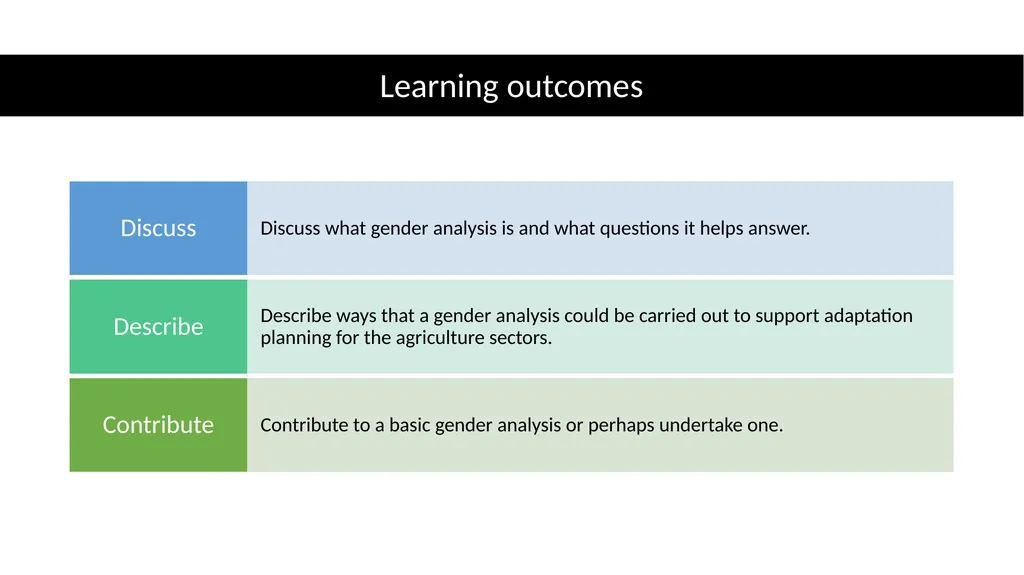
Learning outcomes<br>
03
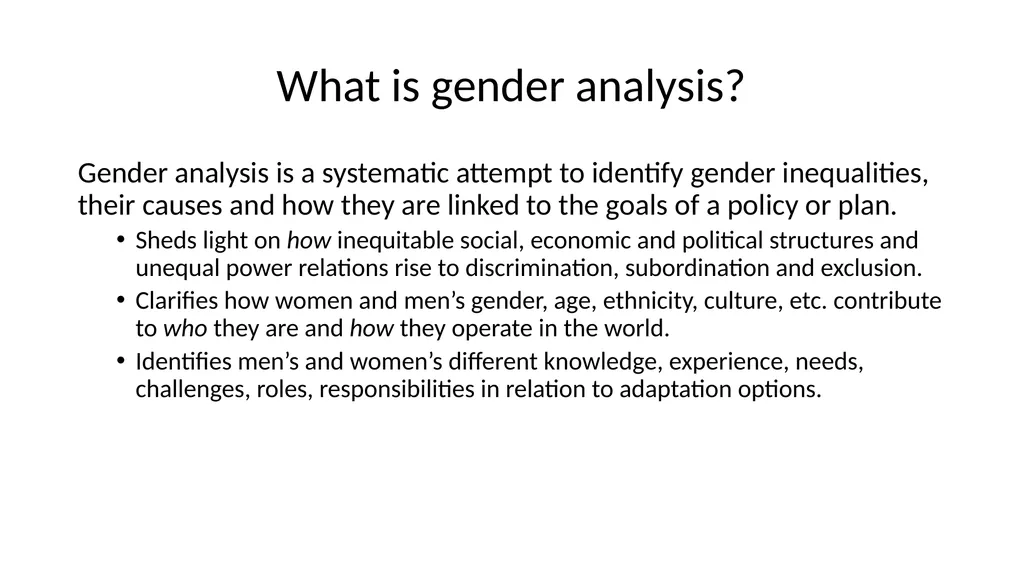
What is gender analysis? Gender analysis is a systematic attempt to identify gender inequalities, their causes and how they are linked to the goals of a policy or plan.
Sheds light on how inequitable social, economic and political structures and unequal power relations rise to discrimination, subordination and exclusion.
Clarifies how women and men’s gender, age, ethnicity, culture, etc. contribute to who they are and how they operate in the world.
Identifies men’s and women’s different knowledge, experience, needs, challenges, roles, responsibilities in relation to adaptation options.<br>
04
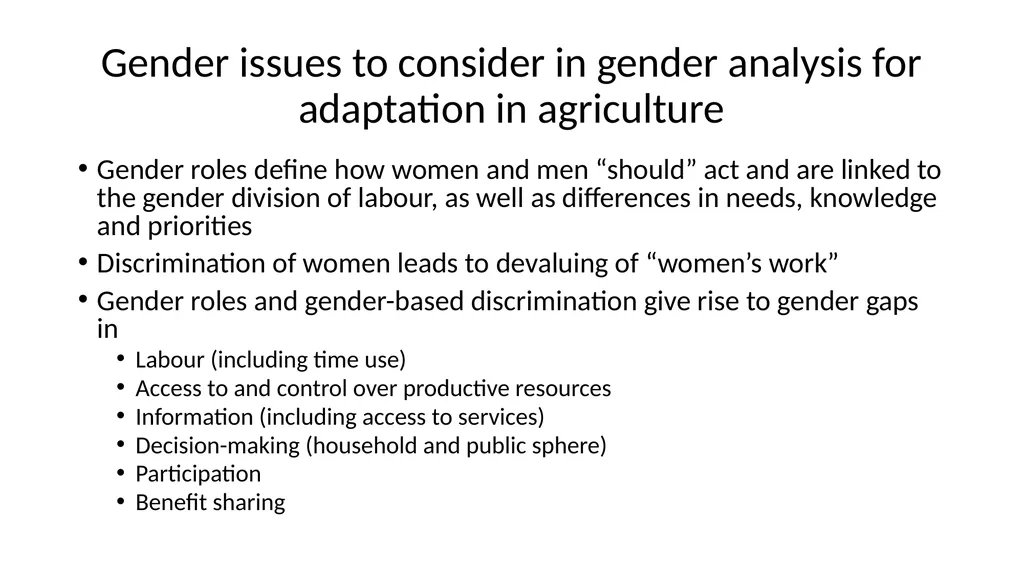
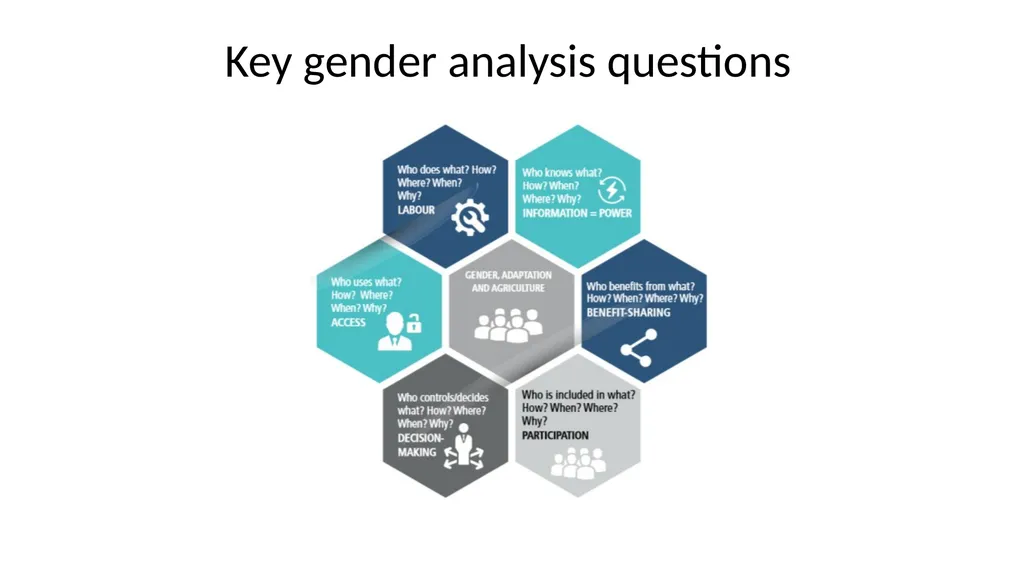
Gender issues to consider in gender analysis for adaptation in agriculture Gender roles define how women and men “should” act and are linked to the gender division of labour, as well as differences in needs, knowledge and priorities
Discrimination of women leads to devaluing of “women’s work”
Gender roles and gender-based discrimination give rise to gender gaps in
Labour (including time use)
Access to and control over productive resources
Information (including access to services)
Decision-making (household and public sphere)
Participation
Benefit sharing<br>
05
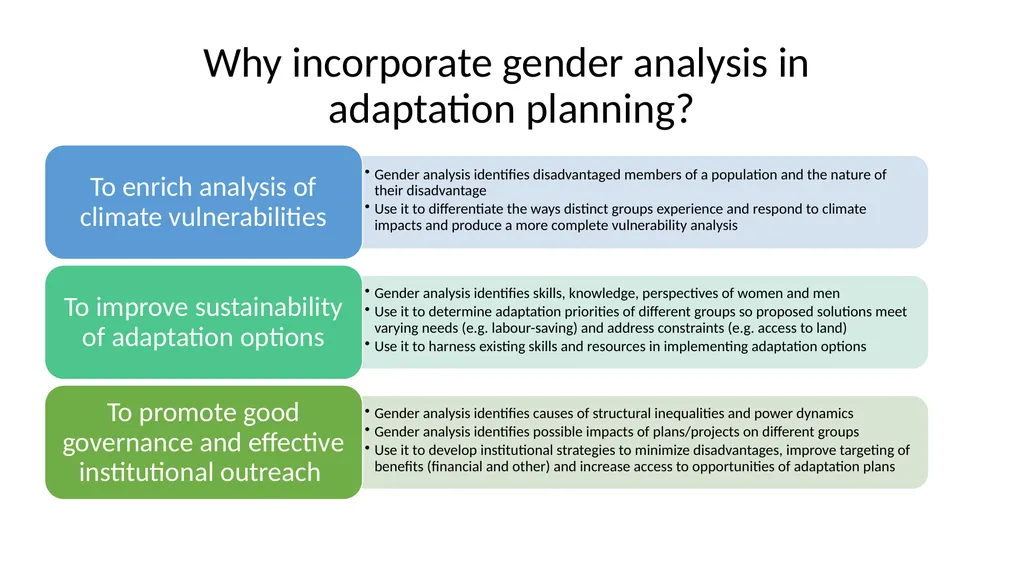
Why incorporate gender analysis in adaptation planning?<br>
06
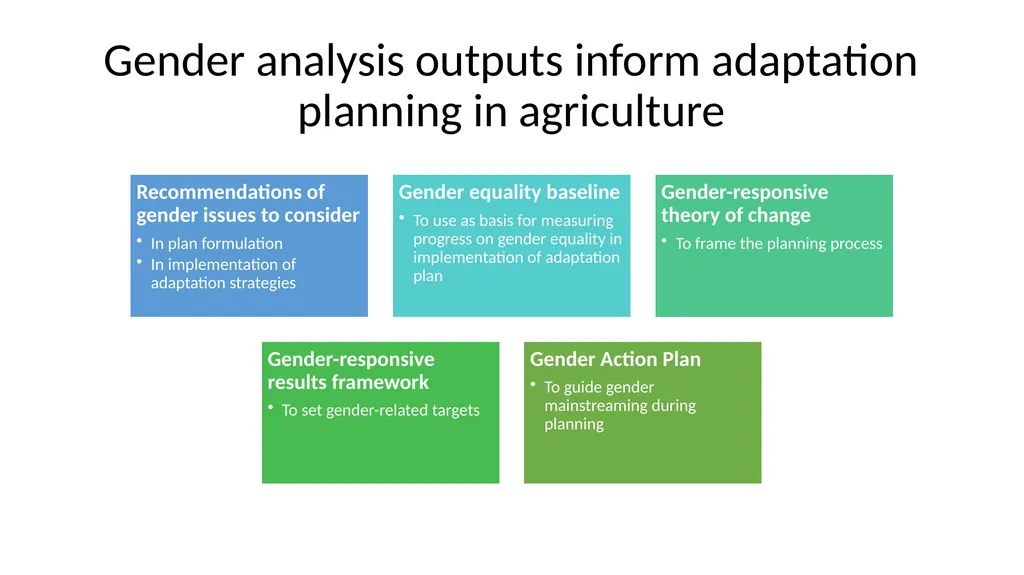
Gender analysis outputs inform adaptation planning in agriculture<br>
07
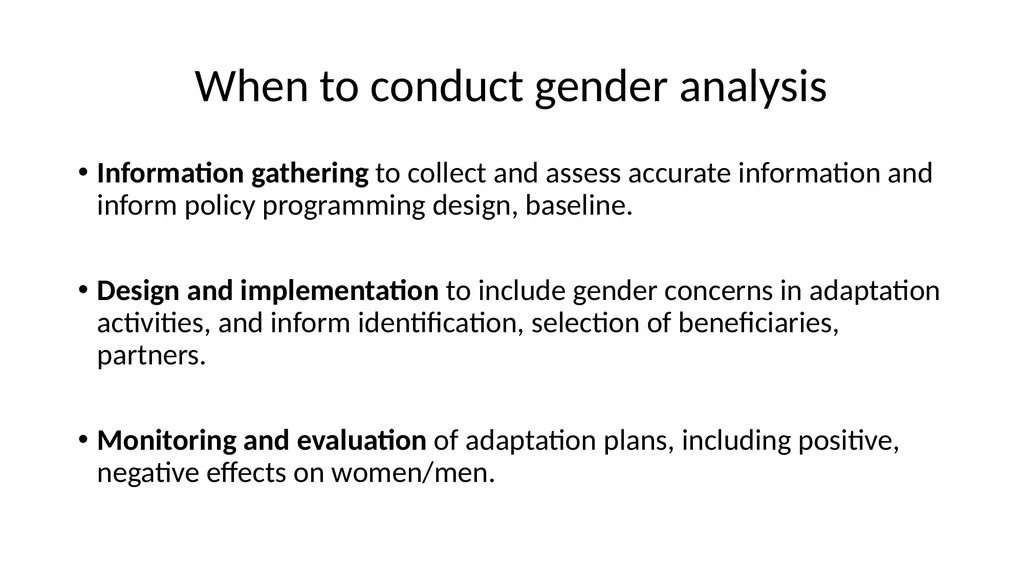
When to conduct gender analysis Information gathering to collect and assess accurate information and inform policy programming design, baseline.
Design and implementation to include gender concerns in adaptation activities, and inform identification, selection of beneficiaries, partners.
Monitoring and evaluation of adaptation plans, including positive, negative effects on women/men.<br>
08
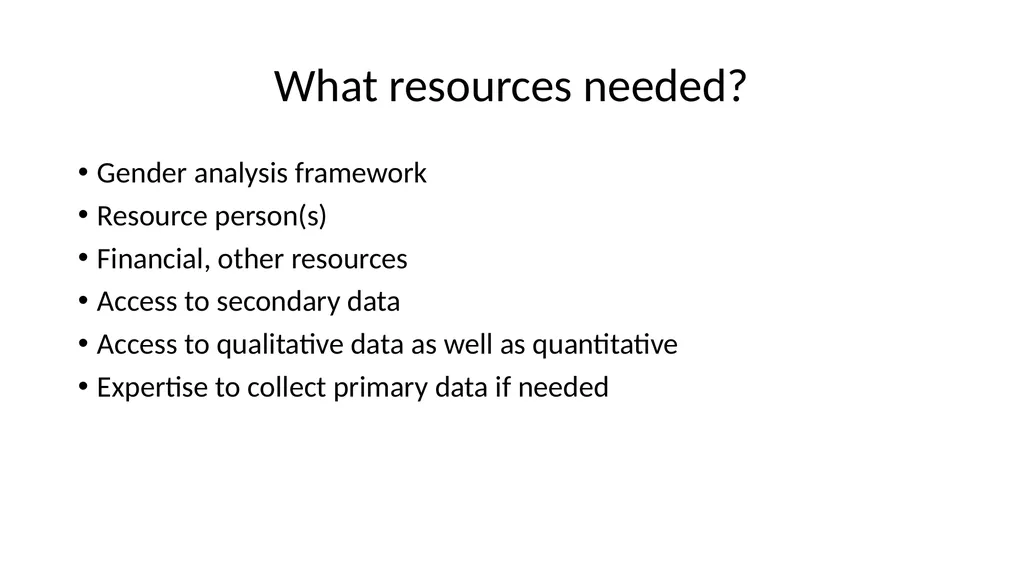
What resources needed? Gender analysis framework
Resource person(s)
Financial, other resources
Access to secondary data
Access to qualitative data as well as quantitative
Expertise to collect primary data if needed<br>
09
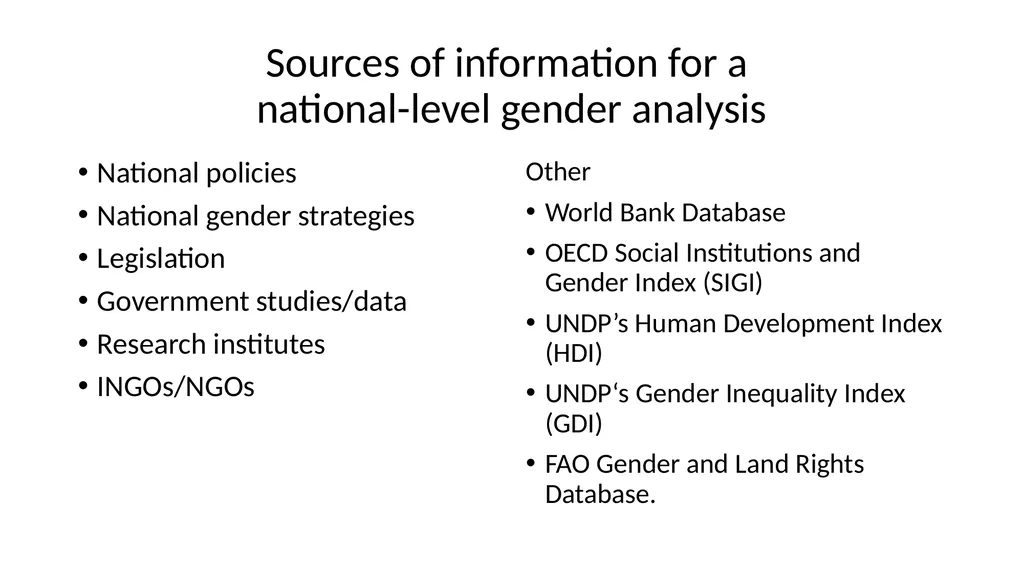
Sources of information for a national-level gender analysis National policies
National gender strategies
Legislation
Government studies/data
Research institutes
INGOs/NGOs Other
World Bank Database
OECD Social Institutions and Gender Index (SIGI)
UNDP’s Human Development Index (HDI)
UNDP‘s Gender Inequality Index (GDI)
FAO Gender and Land Rights Database.<br>