04
Industrial practice is little better “Variability and reproducibility in software engineering: A study of four companies that developed the same system”, Anda et al., 2008<br>
05
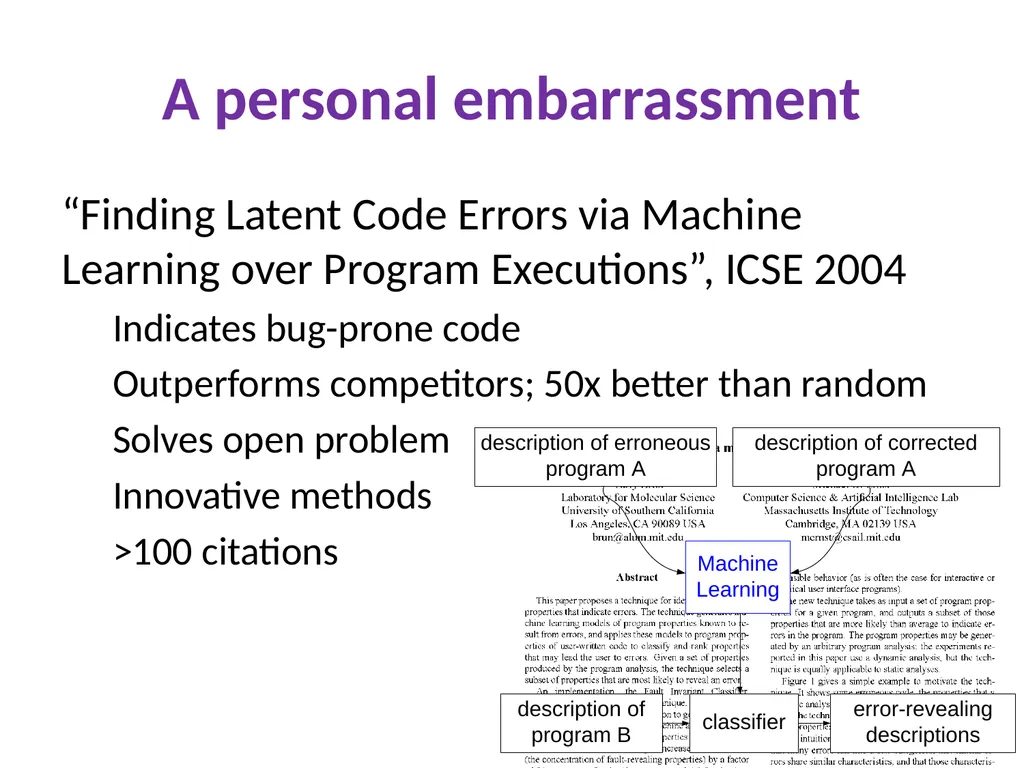
A personal embarrassment “Finding Latent Code Errors via Machine Learning over Program Executions”, ICSE 2004
Indicates bug-prone code
Outperforms competitors; 50x better than random
Solves open problem
Innovative methods
>100 citations<br>
06
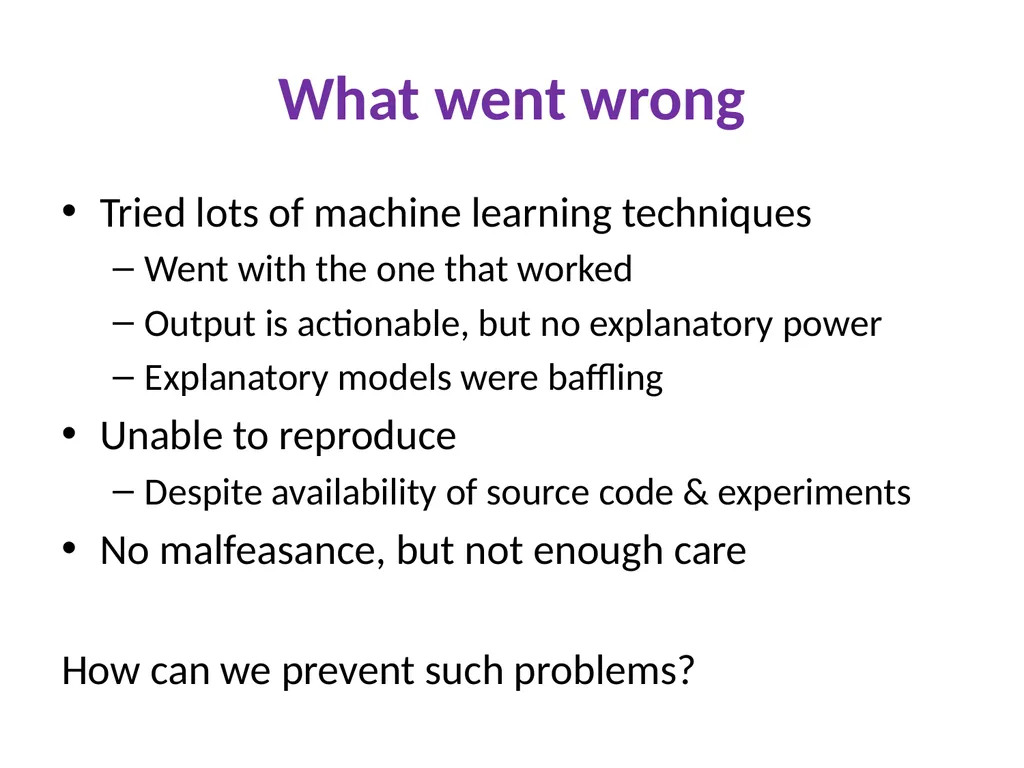
What went wrong Tried lots of machine learning techniques
Went with the one that worked
Output is actionable, but no explanatory power
Explanatory models were baffling
Unable to reproduce
Despite availability of source code & experiments
No malfeasance, but not enough care
How can we prevent such problems?<br>
07
Outline Examples of non-reproducibility
Causes of non-reproducibility
Is non-reproducibility a problem?
Achieving reproducibility<br>
08
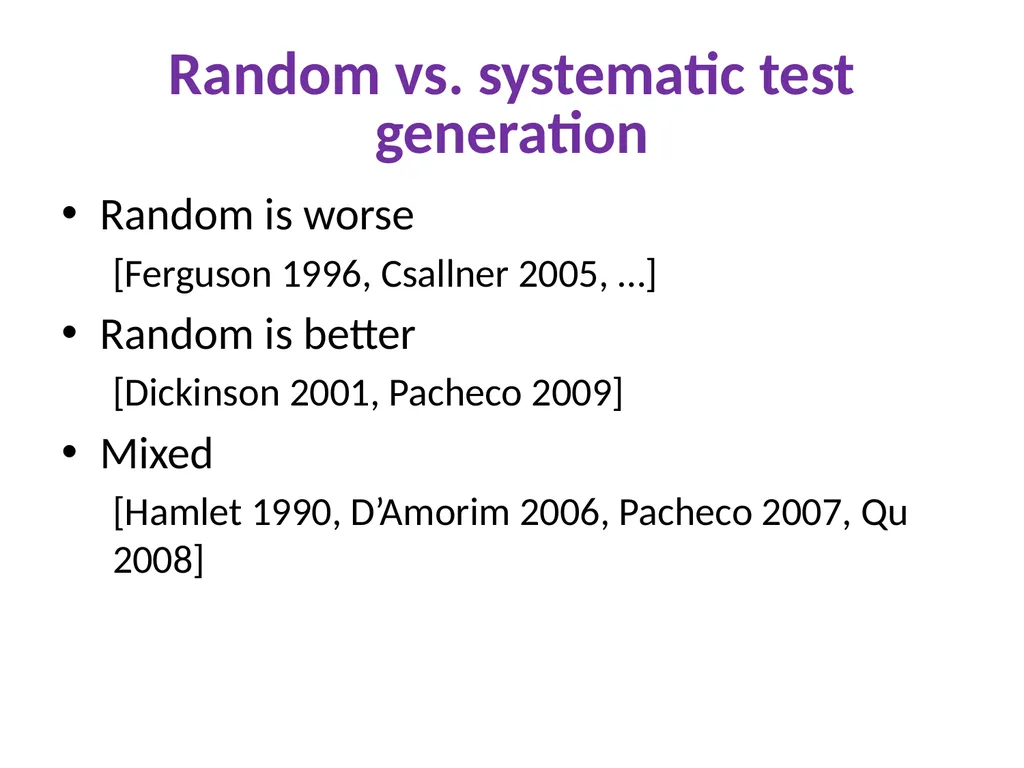
Random vs. systematic test generation Random is worse
[Ferguson 1996, Csallner 2005, …]
Random is better
[Dickinson 2001, Pacheco 2009]
Mixed
[Hamlet 1990, D’Amorim 2006, Pacheco 2007, Qu 2008]<br>
09
Test coverage Test-driven development improves outcomes [Franz 94, George 2004]
Unit testing ROI is 245%-1066% [IPL 2004]
Abandoned in practice [Robinson 2011]<br>
10
Type systems Static typing is better
[Gannon 1977, Morris 1978, Pretchelt 1998]
the Haskell crowd
Dynamic typing is better
[Hanenburg 2010]
the PHP/Python/JavaScript/Ruby crowd
Many attempts to combine them
Soft typing, inference
Gradual/hybrid typing ICSE 2011<br>
11
Programming styles Introductory programming classes:
Objects first [Kolling 2001, Decker 2003, …]
Objects later [Reges 2006, …]
Makes no difference [Ehlert 2009, Schulte 2010, …]
Object-oriented programming
Functional languages
Yahoo! Store originally in Lisp
Facebook chat widget originally in Erlang<br>
12
More examples Formal methods from the beginning [Barnes 1997]
Extreme programming [Beck 1999]
Testing methodologies<br>
13
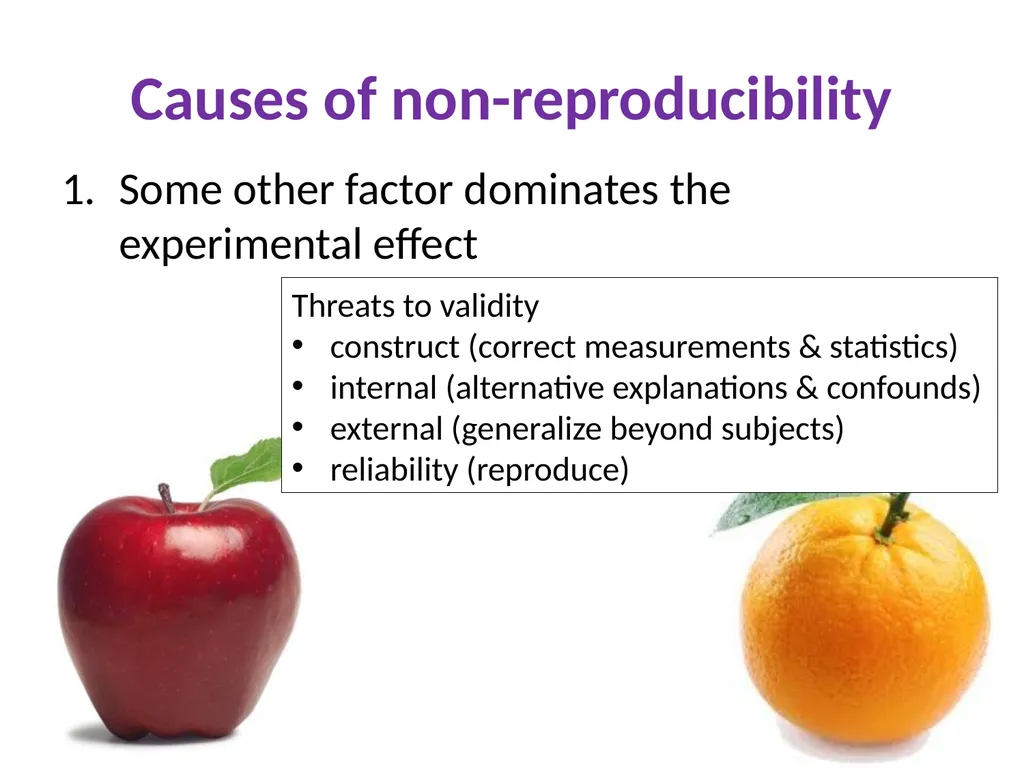
Causes of non-reproducibility Some other factor dominates the experimental effect Threats to validity
construct (correct measurements & statistics)
internal (alternative explanations & confounds)
external (generalize beyond subjects)
reliability (reproduce)<br>
14
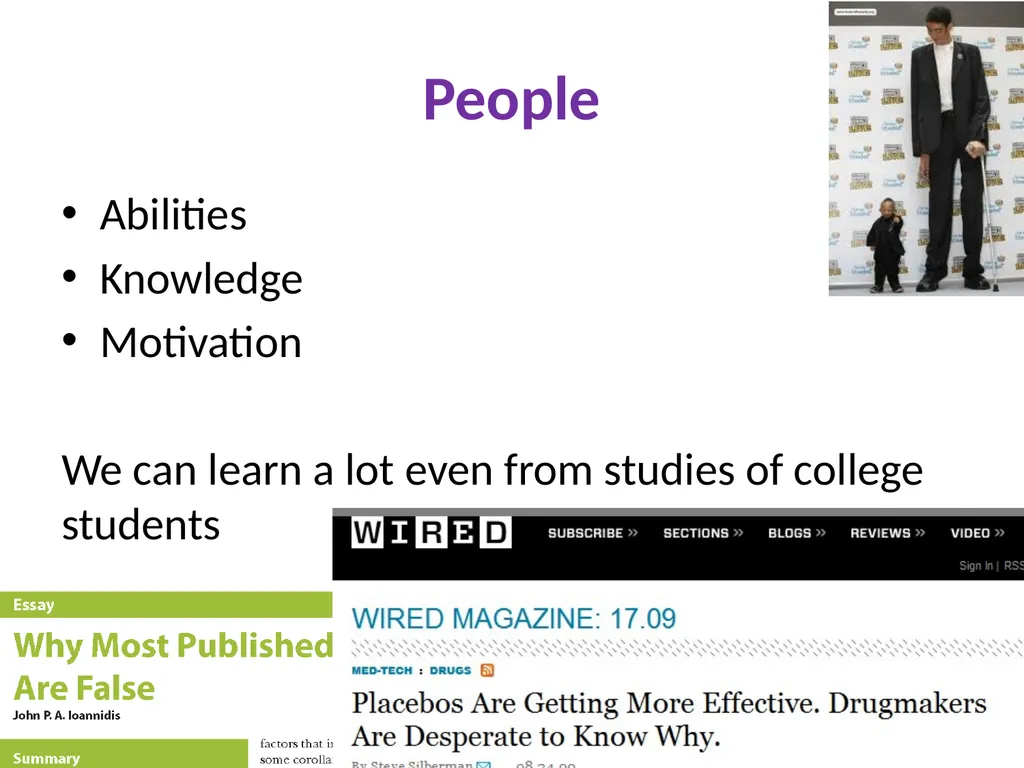
People Abilities
Knowledge
Motivation
We can learn a lot even from studies of college students<br>
15
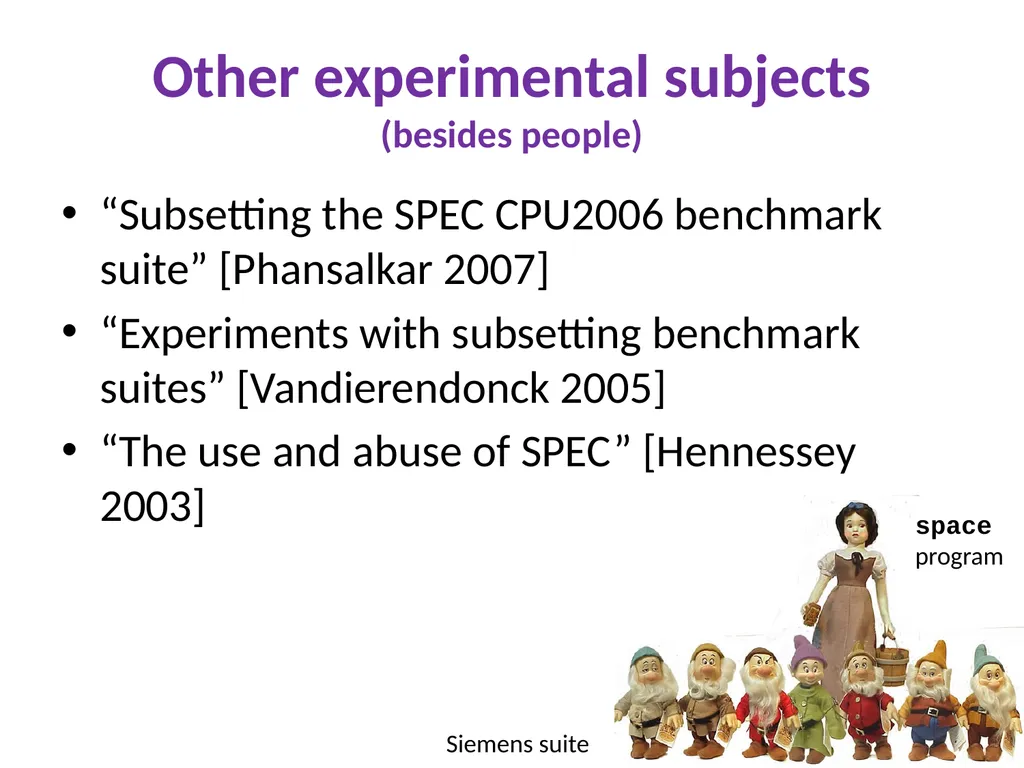
Other experimental subjects�(besides people) “Subsetting the SPEC CPU2006 benchmark suite” [Phansalkar 2007]
“Experiments with subsetting benchmark suites” [Vandierendonck 2005]
“The use and abuse of SPEC” [Hennessey 2003] Siemens suite space�program<br>
16
Implementation Every evaluation is of an implementation
Tool, instantiation of a process such as XP or TDD, etc.
You hope it generalizes to a technique
Your tool
Tuned to specific problems or programs
Competing tool
Strawman implementation
Example: random testing
Tool is mismatched to the task
Example: clone detection [ICSE 2012]
Configuration/setup
Example: invariant detection<br>
17
Interpretation of results Improper/missing statistical analysis
Statistical flukes
needs to have an explanation
tried too many things
Subjective bias<br>
18
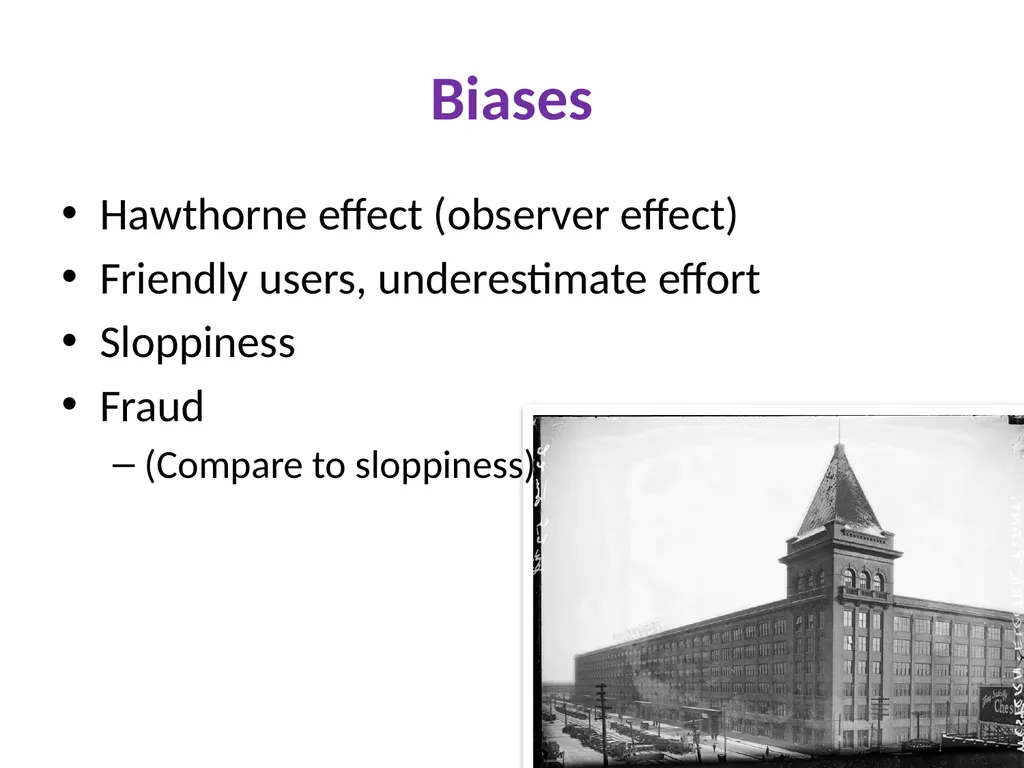
Biases Hawthorne effect (observer effect)
Friendly users, underestimate effort
Sloppiness
Fraud
(Compare to sloppiness)<br>
19
Reasons not to totemize reproducibility Reproducibility is not always paramount<br>
20
Reproducibility inhibits innovation Reproducibility adds cost
Small increment for any project
Don’t over-engineer
If it’s not tested, it is not correct
Are your results important enough to be correct?
Expectation of reproducibility affects research
Reproducibility is a good way to get your paper accepted<br>
21
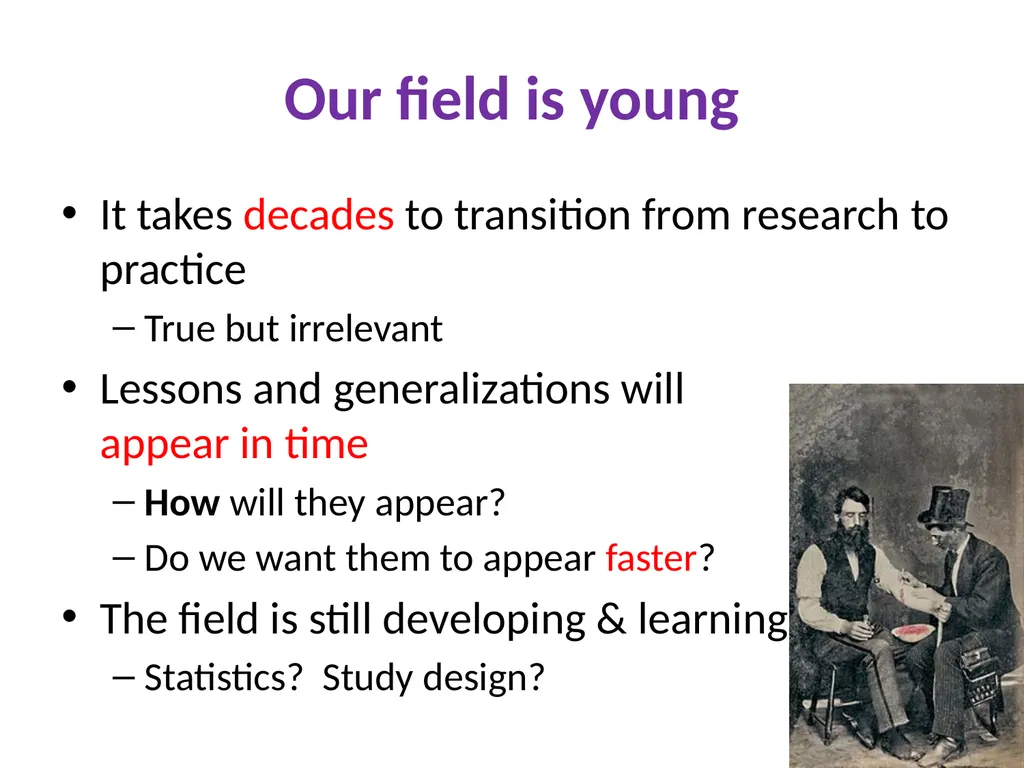
Our field is young It takes decades to transition from research to practice
True but irrelevant
Lessons and generalizations will�appear in time
How will they appear?
Do we want them to appear faster?
The field is still developing & learning
Statistics? Study design?<br>
22
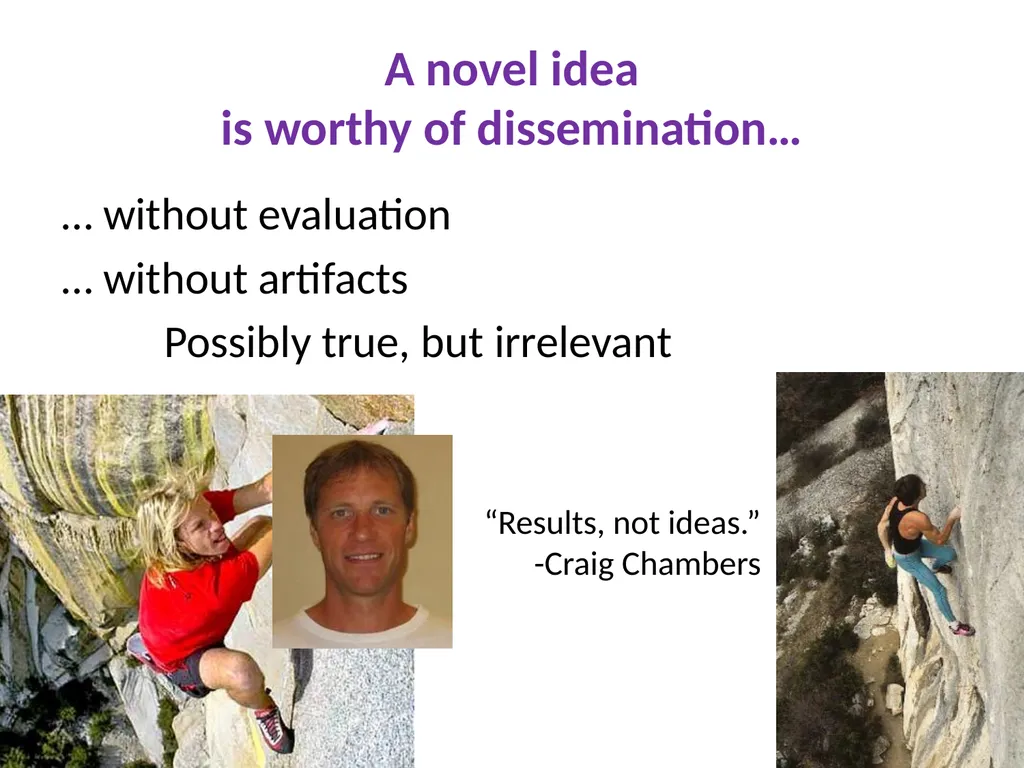
A novel idea�is worthy of dissemination… … without evaluation
… without artifacts
Possibly true, but irrelevant “Results, not ideas.”
-Craig Chambers<br>
23
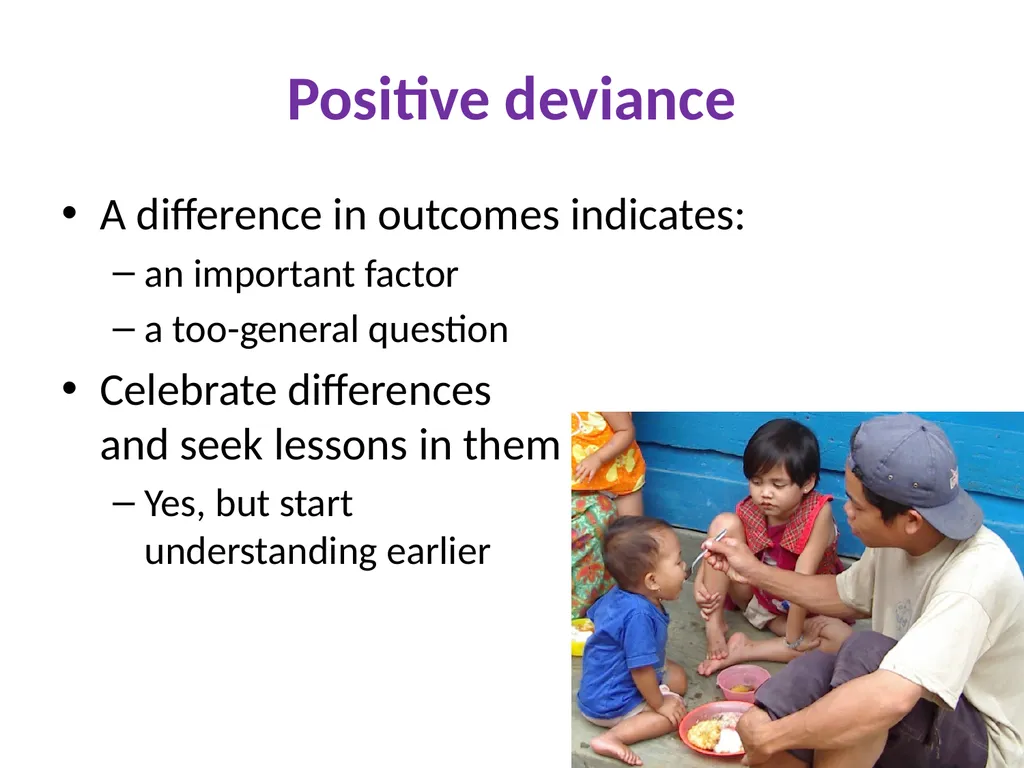
Positive deviance A difference in outcomes indicates:
an important factor
a too-general question
Celebrate differences�and seek lessons in them
Yes, but start�understanding earlier<br>
24
How to achieve reproducibility<br>
25
Definitions Reproducible: an independent party can
follow the same steps, and
obtain similar results
Generalizable: similar results, in a different context
Credible: the audience believes the results<br>
26
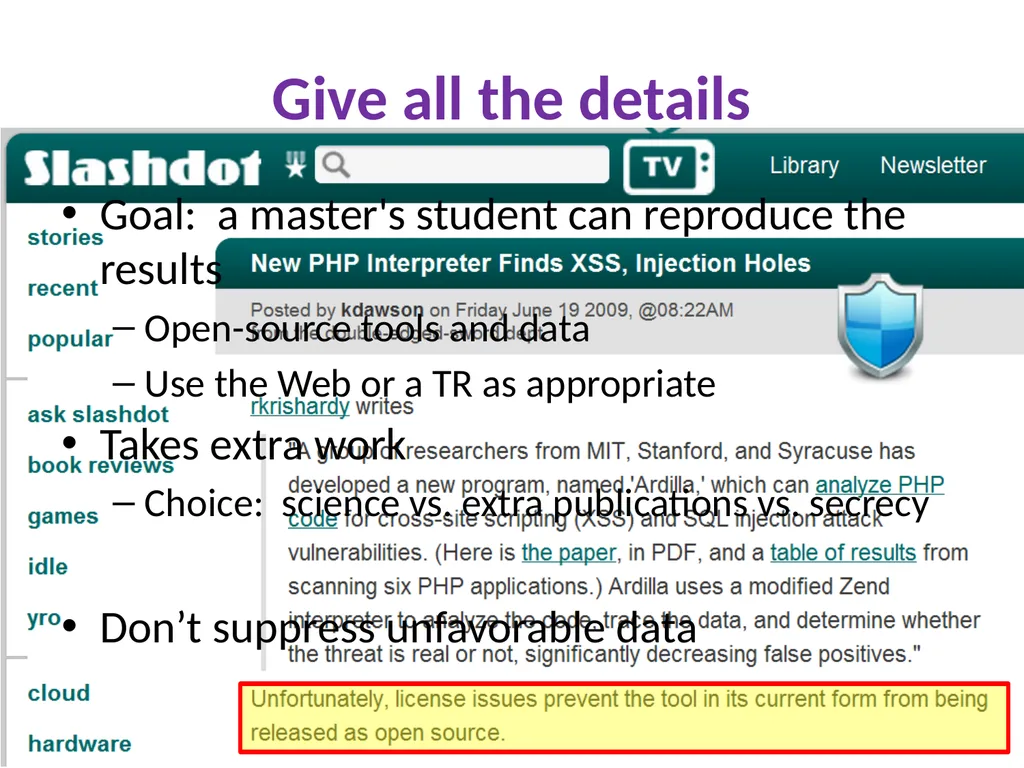
Give all the details Goal: a master's student can reproduce the results
Open-source tools and data
Use the Web or a TR as appropriate
Takes extra work
Choice: science vs. extra publications vs. secrecy
Don’t suppress unfavorable data<br>
27
Admit non-generalizability You cannot to control for every factor
What do you expect to generalize?
Why?
Did you try it?
Did you test your hypothesis?<br>
28
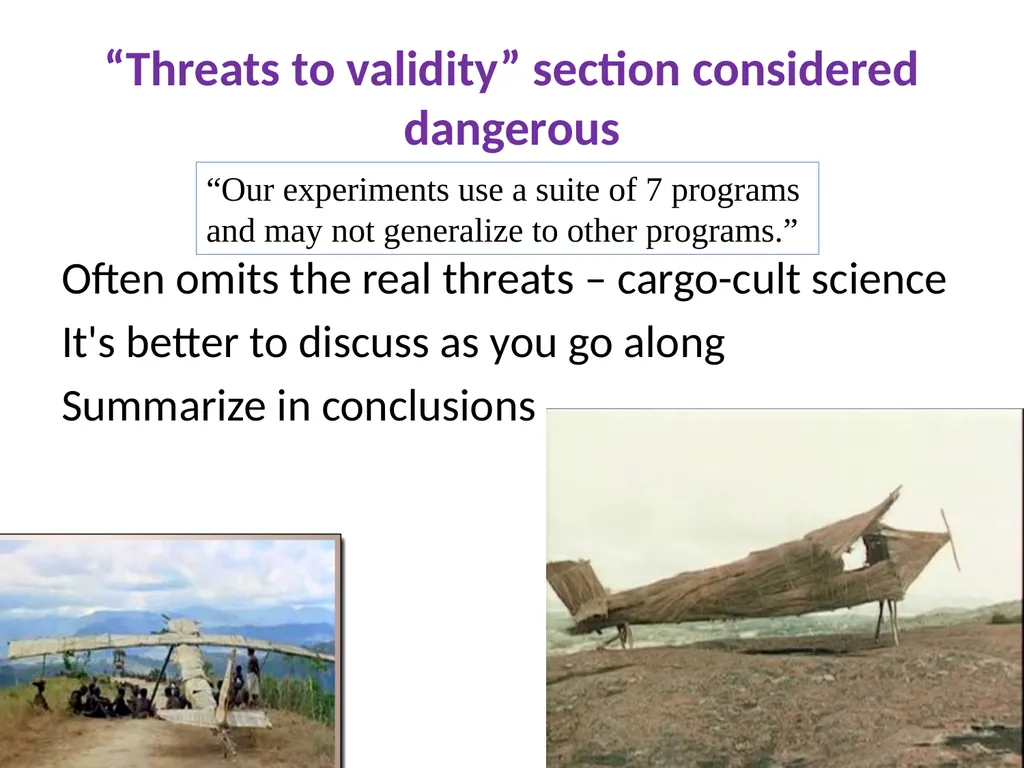
“Threats to validity” section considered dangerous Often omits the real threats – cargo-cult science
It's better to discuss as you go along
Summarize in conclusions “Our experiments use a suite of 7 programs and may not generalize to other programs.”<br>
29
Explain yourself No “I did it” research
Explain each result/effect
or admit you don’t know
What was hard or unexpected?
Why didn’t others do this before?
Make your conclusions actionable<br>
30
Research papers are software too “If it isn’t tested, it’s probably broken.”
Have you tested your code?
Have you tested generalizability?
Act like your results matter<br>
31
Automate/script everything There should be no manual steps (Excel, etc.)
Except during exploratory analysis
Prevents mistakes
Enables replication
Good if data changes
This costs no extra time in the long run
(Do you believe that? Why?)<br>
32
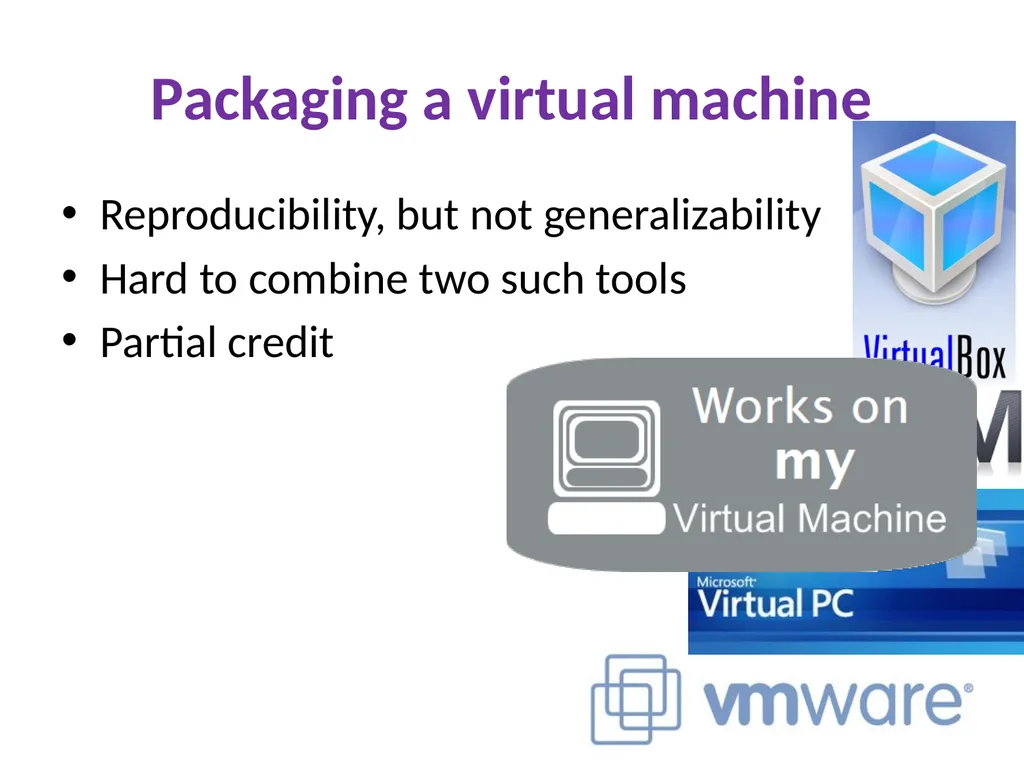
Packaging a virtual machine Reproducibility, but not generalizability
Hard to combine two such tools
Partial credit<br>
33
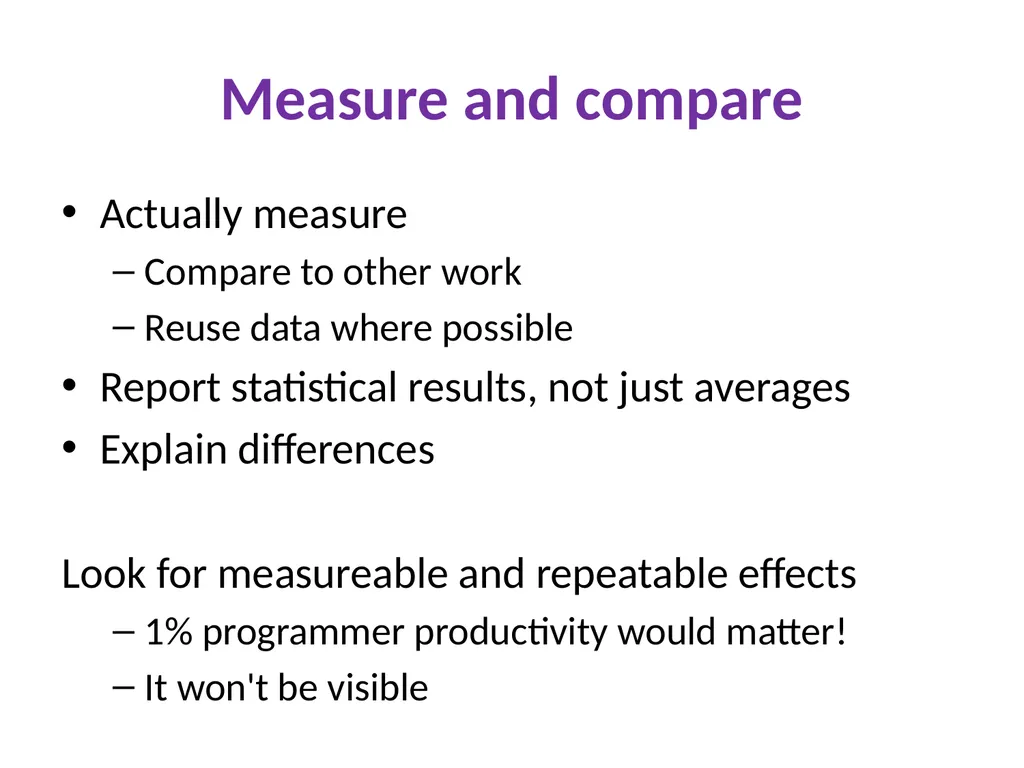
Measure and compare Actually measure
Compare to other work
Reuse data where possible
Report statistical results, not just averages
Explain differences
Look for measureable and repeatable effects
1% programmer productivity would matter!
It won't be visible<br>
34
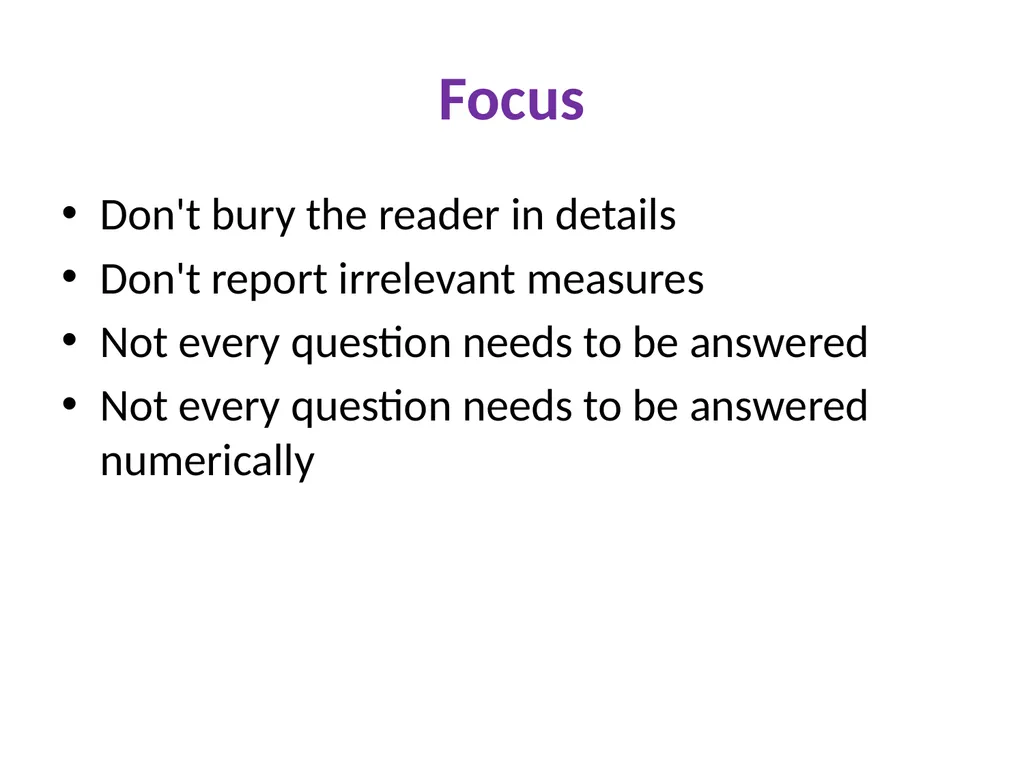
Focus Don't bury the reader in details
Don't report irrelevant measures
Not every question needs to be answered
Not every question needs to be answered numerically<br>
35
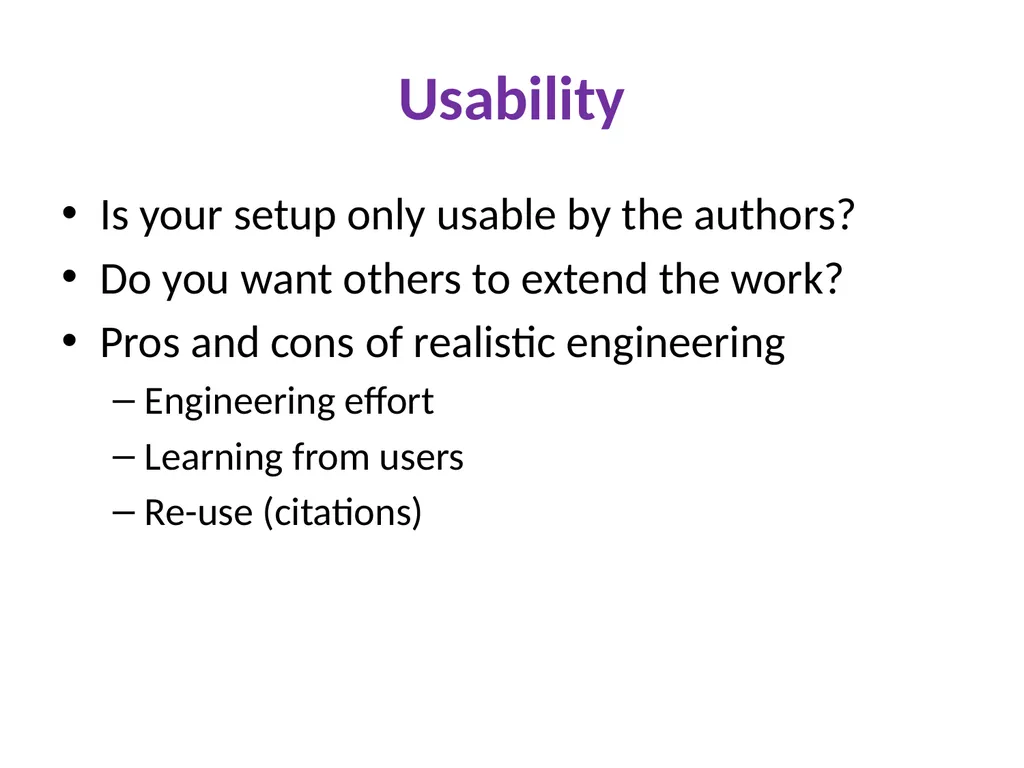
Usability Is your setup only usable by the authors?
Do you want others to extend the work?
Pros and cons of realistic engineering
Engineering effort
Learning from users
Re-use (citations)<br>
36
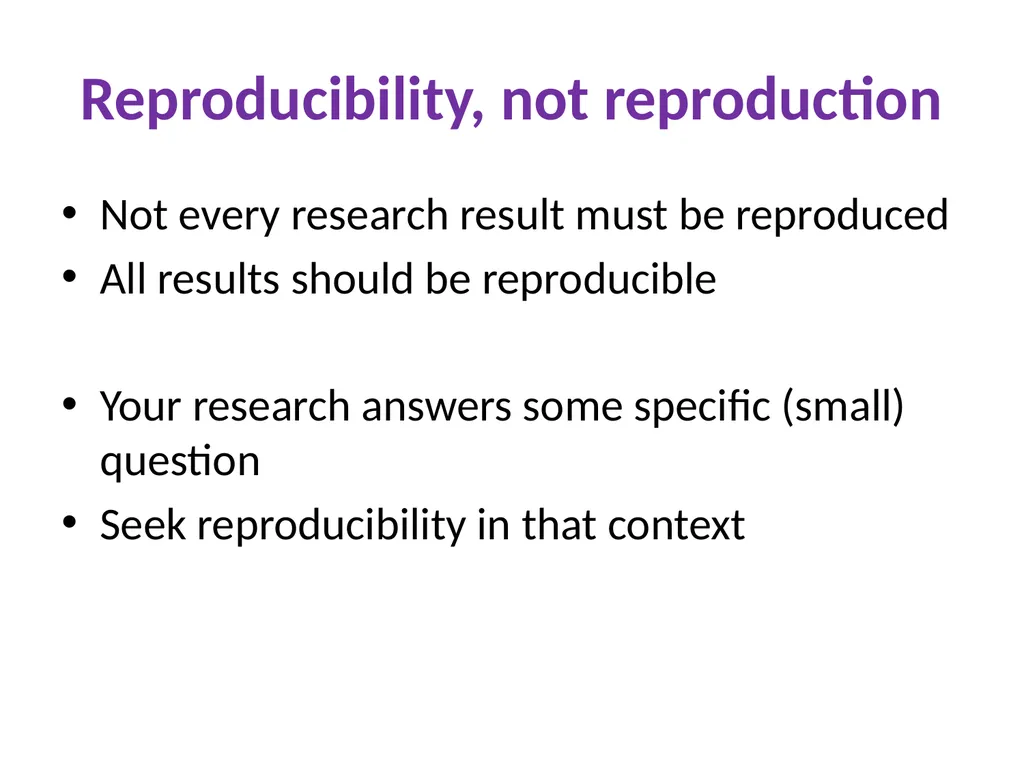
Reproducibility, not reproduction Not every research result must be reproduced
All results should be reproducible
Your research answers some specific (small) question
Seek reproducibility in that context<br>
37
Blur the lines Researchers should be practitioners
design, write, read, and test code!
and more besides, of course
Practitioners should be open to new ways of working
Settling for “best practices” is settling for mediocrity<br>
38
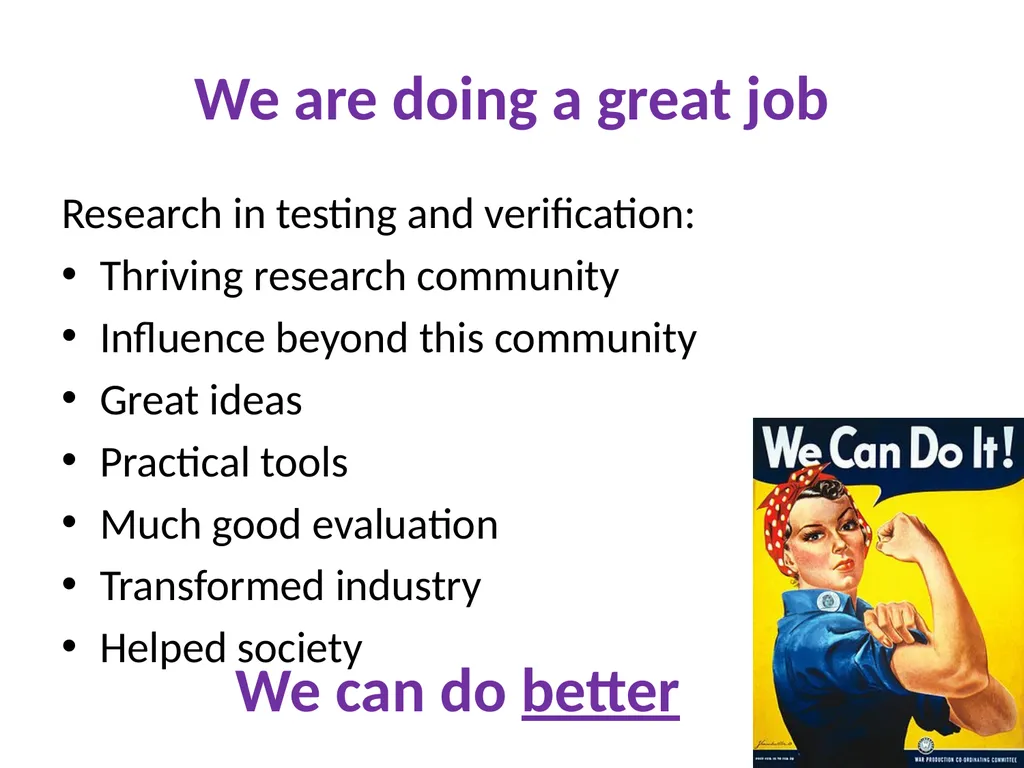
We are doing a great job Research in testing and verification:
Thriving research community
Influence beyond this community
Great ideas
Practical tools
Much good evaluation
Transformed industry
Helped society We can do better<br>
39
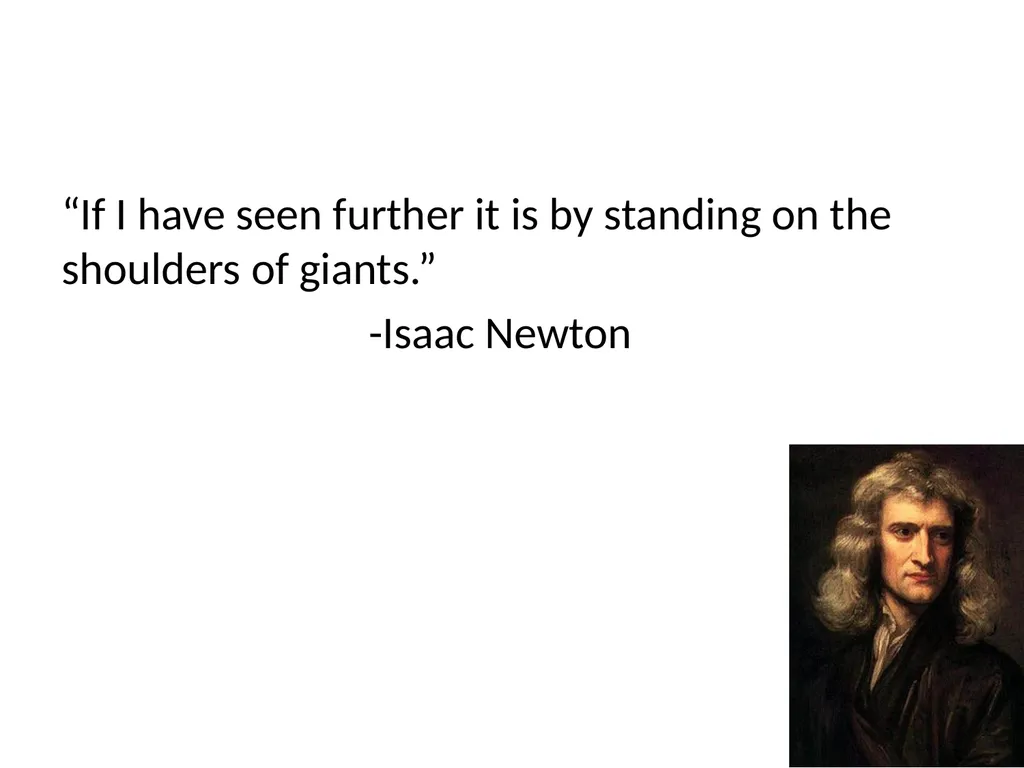
“If I have seen further it is by standing on the shoulders of giants.”
-Isaac Newton<br>