
Use of Data Analytics for Effective Program
MT
Published · 36 slides · 0 views
1 / 1


Description
Use of Data Analytics for Effective Program Oversight Shane Brosius GSA SmartPay Training Agenda Overview and Expectations Foundations of Data Analytics Benefits of using Data Analytics Application of Data Analytics Audit Review Metrics
Related Topics
Share
Embed code
Download this presentation From Below
"Use of Data Analytics for Effective Program" is the property of its rightful owner. Permission is granted to download and print the materials on this website for personal, non-commercial use only, and to display it on your personal computer provided you do not modify the materials and that you retain all copyright notices contained in the materials. By downloading content from our website, you accept the terms of this agreement.
Presentation Transcript
01
Use of Data Analytics for Effective Program Oversight
Shane Brosius<br>
02
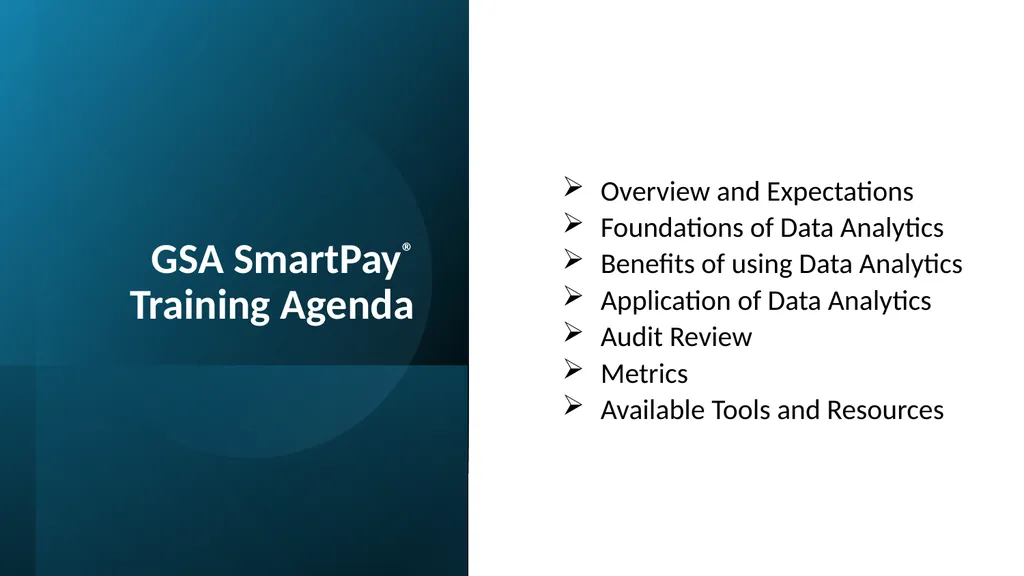
GSA SmartPay® Training Agenda Overview and Expectations
Foundations of Data Analytics
Benefits of using Data Analytics
Application of Data Analytics
Audit Review
Metrics
Available Tools and Resources<br>
Foundations of Data Analytics
Benefits of using Data Analytics
Application of Data Analytics
Audit Review
Metrics
Available Tools and Resources<br>
03
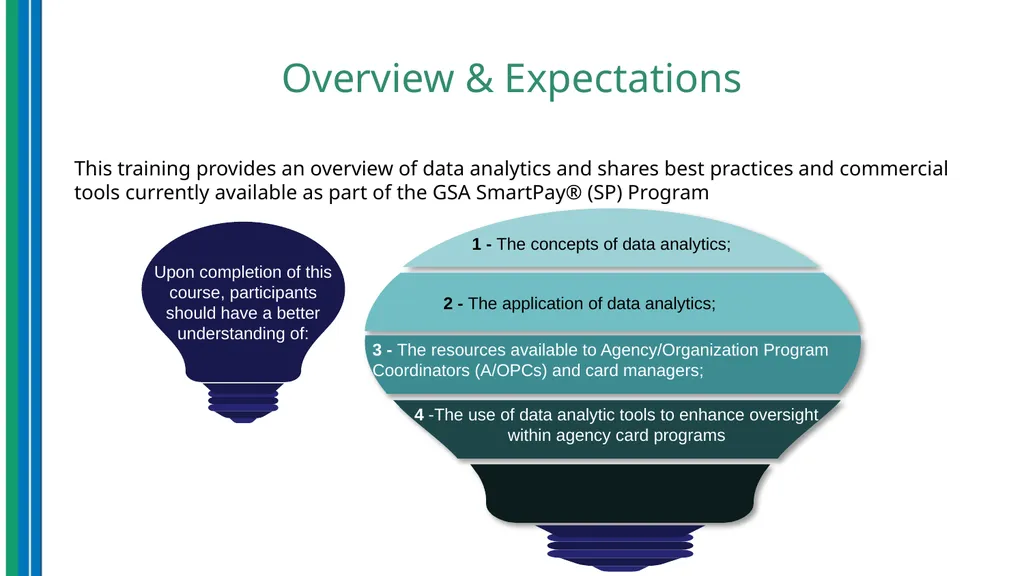
Overview & Expectations This training provides an overview of data analytics and shares best practices and commercial tools currently available as part of the GSA SmartPay® (SP) Program Upon completion of this course, participants should have a better understanding of: 1 - The concepts of data analytics; 2 - The application of data analytics; 3 - The resources available to Agency/Organization Program Coordinators (A/OPCs) and card managers; 4 -The use of data analytic tools to enhance oversight within agency card programs<br>
04
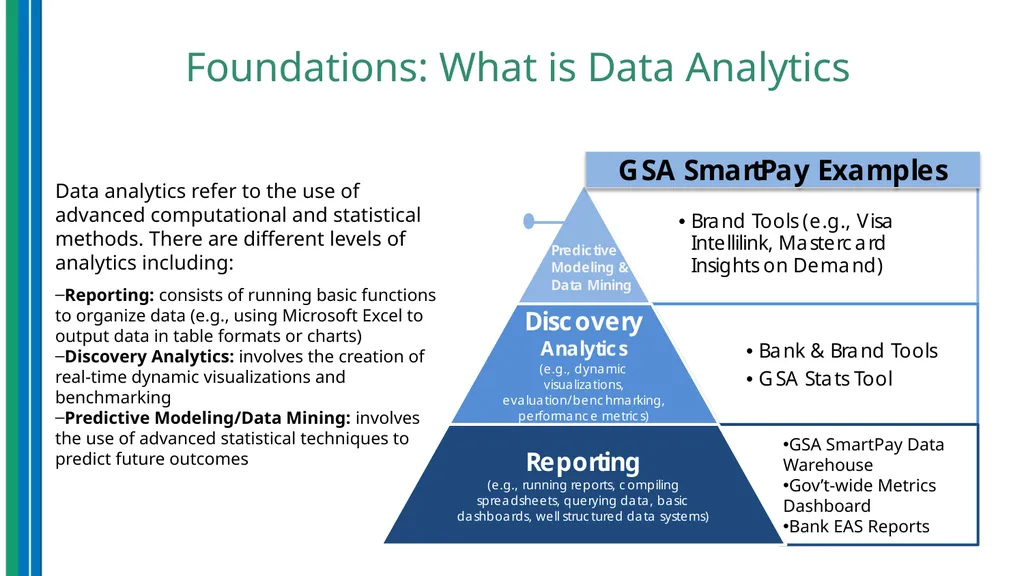
Foundations: What is Data Analytics Data analytics refer to the use of advanced computational and statistical methods. There are different levels of analytics including:
Reporting: consists of running basic functions to organize data (e.g., using Microsoft Excel to output data in table formats or charts)
Discovery Analytics: involves the creation of real-time dynamic visualizations and benchmarking
Predictive Modeling/Data Mining: involves the use of advanced statistical techniques to predict future outcomes GSA SmartPay Data Warehouse
Gov’t-wide Metrics Dashboard
Bank EAS Reports<br>
Reporting: consists of running basic functions to organize data (e.g., using Microsoft Excel to output data in table formats or charts)
Discovery Analytics: involves the creation of real-time dynamic visualizations and benchmarking
Predictive Modeling/Data Mining: involves the use of advanced statistical techniques to predict future outcomes GSA SmartPay Data Warehouse
Gov’t-wide Metrics Dashboard
Bank EAS Reports<br>
05
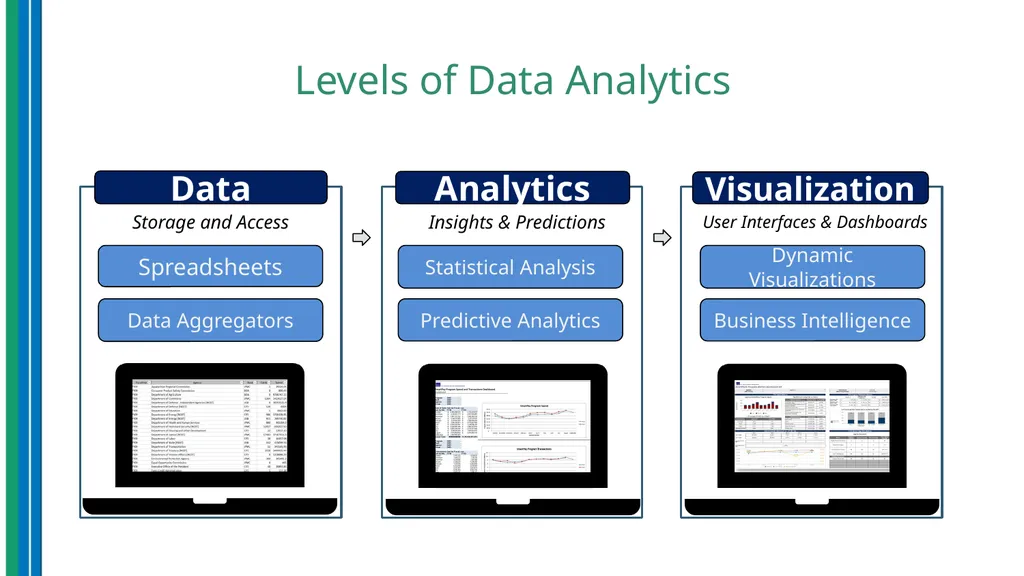
Levels of Data Analytics<br>
06
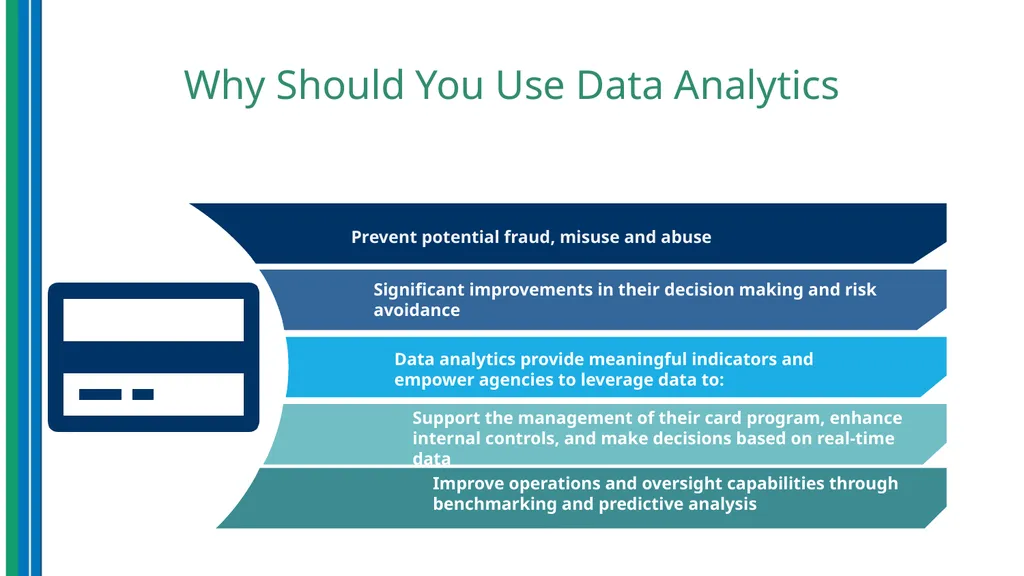
Why Should You Use Data Analytics Prevent potential fraud, misuse and abuse Significant improvements in their decision making and risk avoidance Data analytics provide meaningful indicators and empower agencies to leverage data to: Support the management of their card program, enhance internal controls, and make decisions based on real-time data Improve operations and oversight capabilities through benchmarking and predictive analysis<br>
07
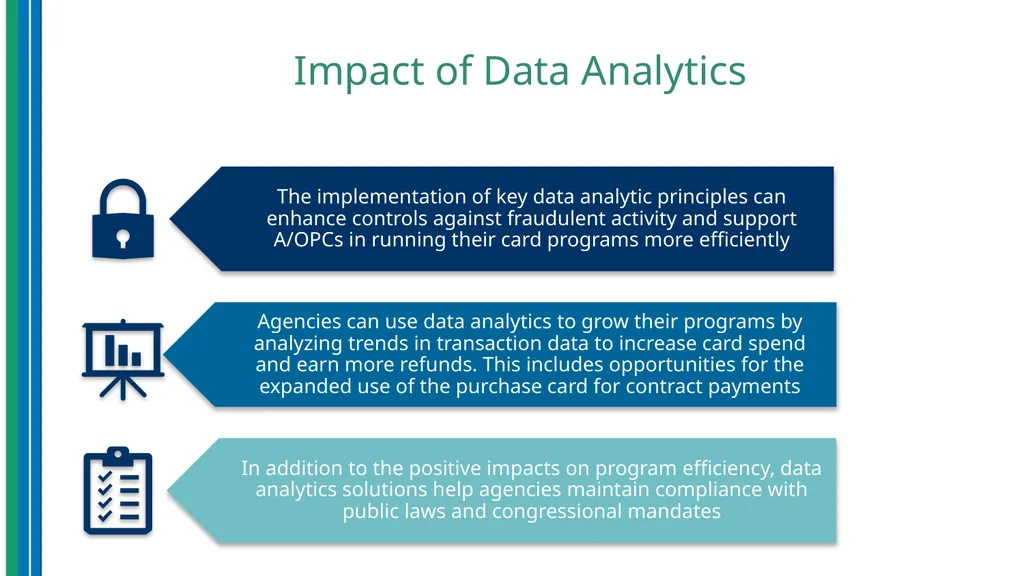
Impact of Data Analytics<br>
08
FY18 NDAA Title XVIII: Purchase & Travel On December 12, 2017, the FY18 NDAA became Public Law 115-91. Title XVIII contains the full text of S.1099/H.R.4047, “Saving Federal Dollars Through Better Use of Government Purchase and Travel Cards Act of 2017.”<br>
09
FY18 NDAA Title XVIII: Purchase & Travel<br>
10
FY18 NDAA Title XVIII – Expanded Use of Data Analytics The objective for leveraging analytics is to identify patterns of questionable transactions and to develop tools and methods for use by GSA and agencies to: 1 Identify questionable transactions 2 Recover improper payments 3 Leverage the program’s administrative process streamlining and cost reduction, including card-based strategic sourcing 4 Develop a set of metrics for high-risk transactions 5 Create a library of analytic tools and data sources for agency use<br>
11
FY18 NDAA Title XVIII – GSA SmartPay® High Risk Metrics The GSA Center for Charge Card Management (CCCM) and the GSA SP Data Management Group (DMG) identified the initial set of government-wide high-risk metrics These metrics are in addition to what CCCM is currently posting and are generated and updated for CFO Act agencies and posted in the GSA SP data warehouse portal on a quarterly basis<br>
12
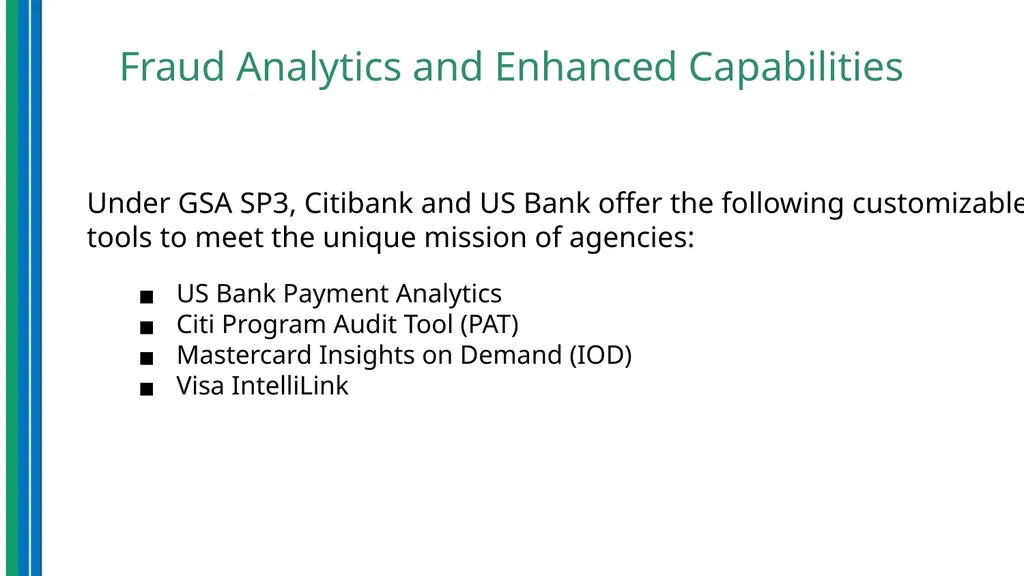
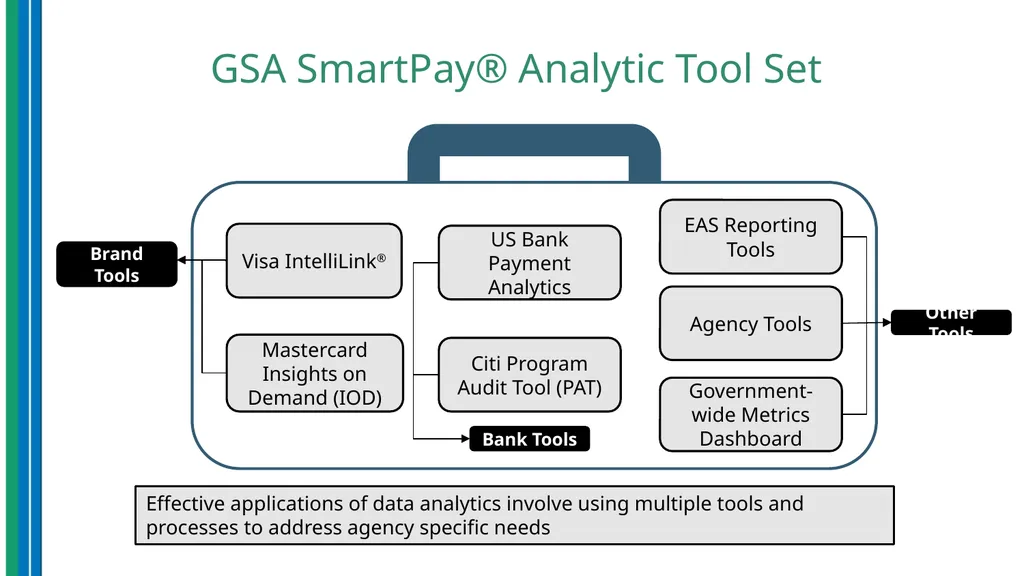
Fraud Analytics and Enhanced Capabilities Under GSA SP3, Citibank and US Bank offer the following customizable tools to meet the unique mission of agencies:
US Bank Payment Analytics
Citi Program Audit Tool (PAT)
Mastercard Insights on Demand (IOD)
Visa IntelliLink<br>
US Bank Payment Analytics
Citi Program Audit Tool (PAT)
Mastercard Insights on Demand (IOD)
Visa IntelliLink<br>
13
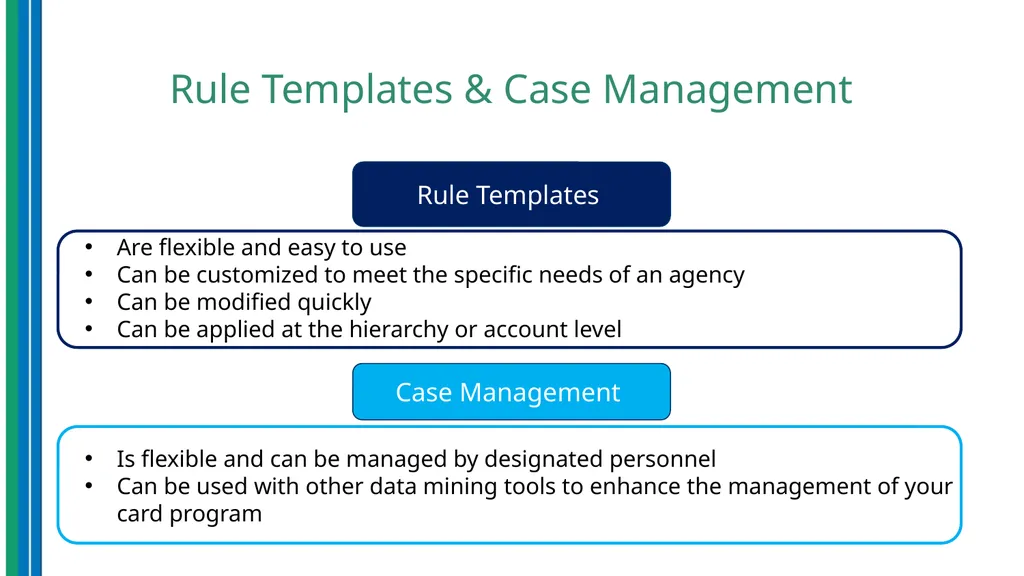
Rule Templates & Case Management Are flexible and easy to use
Can be customized to meet the specific needs of an agency
Can be modified quickly
Can be applied at the hierarchy or account level
Is flexible and can be managed by designated personnel
Can be used with other data mining tools to enhance the management of your card program Rule Templates Case Management<br>
Can be customized to meet the specific needs of an agency
Can be modified quickly
Can be applied at the hierarchy or account level
Is flexible and can be managed by designated personnel
Can be used with other data mining tools to enhance the management of your card program Rule Templates Case Management<br>
14
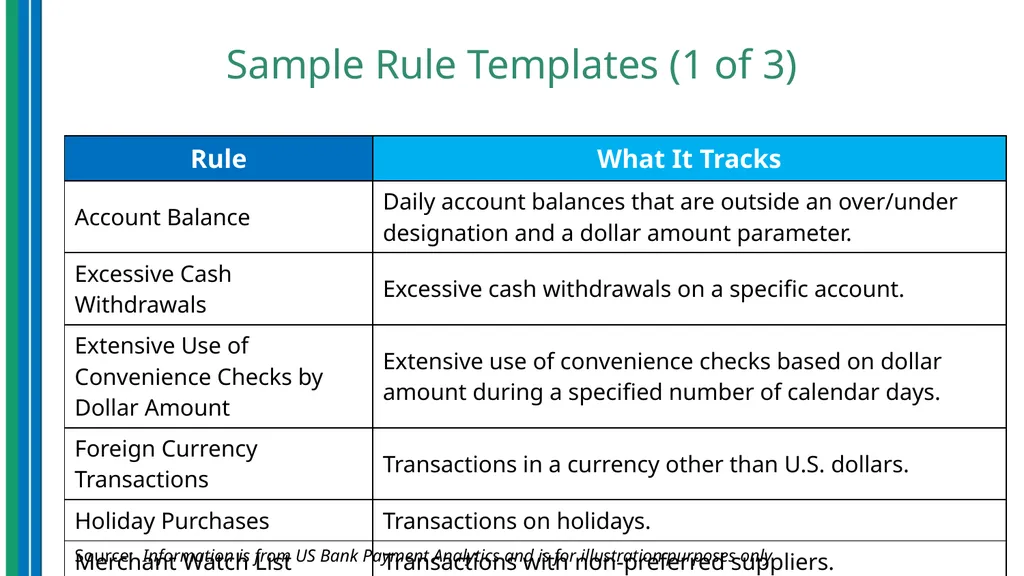
Sample Rule Templates (1 of 3) Source: Information is from US Bank Payment Analytics and is for illustration purposes only<br>
15
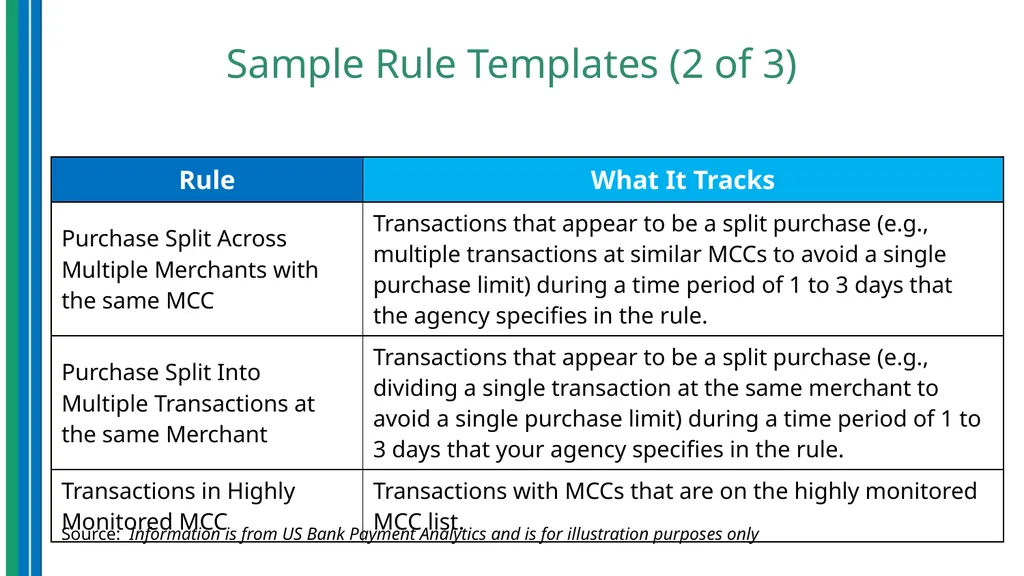
Sample Rule Templates (2 of 3) Source: Information is from US Bank Payment Analytics and is for illustration purposes only<br>
16
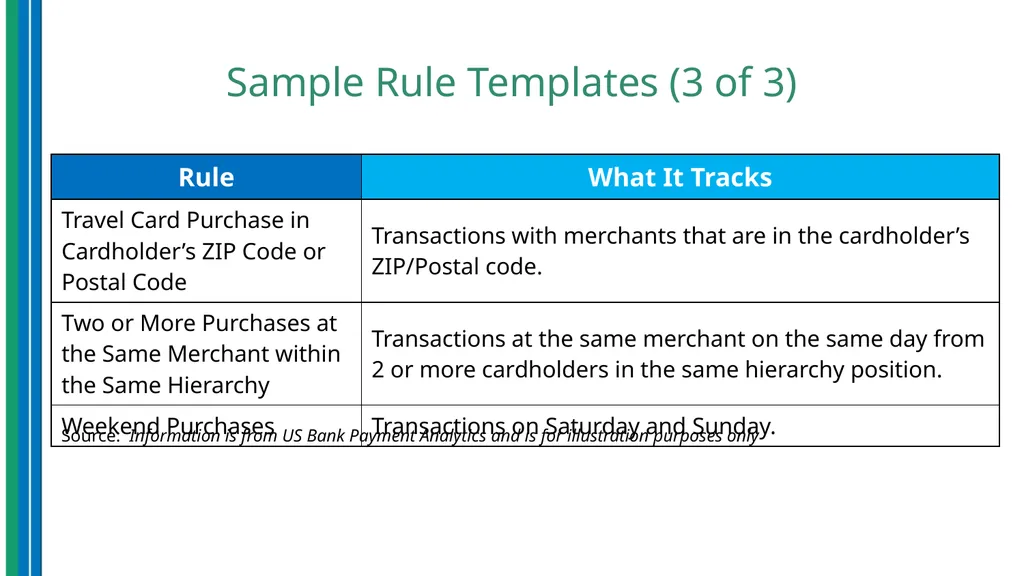
Sample Rule Templates (3 of 3) Source: Information is from US Bank Payment Analytics and is for illustration purposes only<br>
17
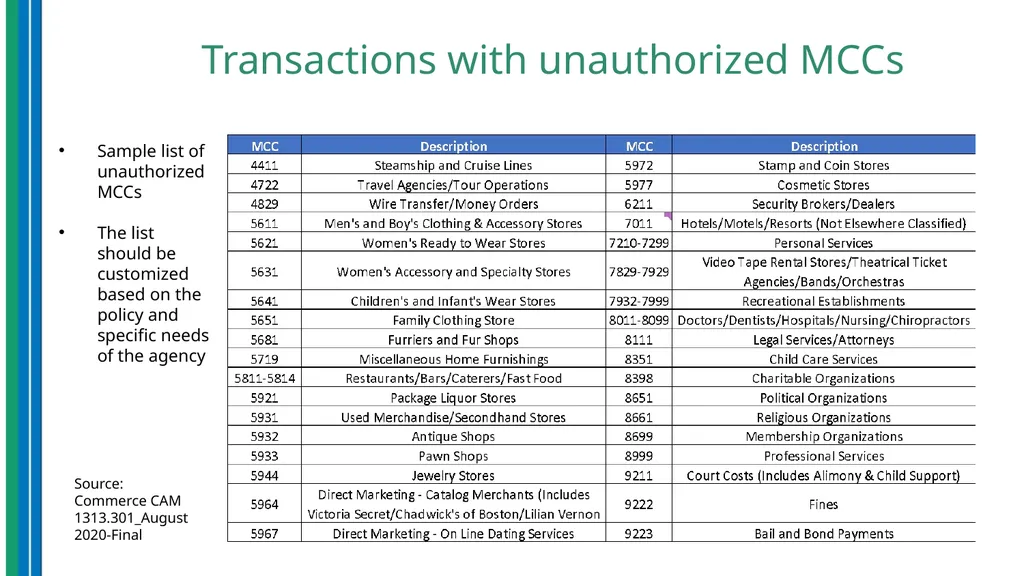
Transactions with unauthorized MCCs Sample list of unauthorized MCCs
The list should be customized based on the policy and specific needs of the agency Source: Commerce CAM 1313.301_August2020-Final<br>
The list should be customized based on the policy and specific needs of the agency Source: Commerce CAM 1313.301_August2020-Final<br>
18
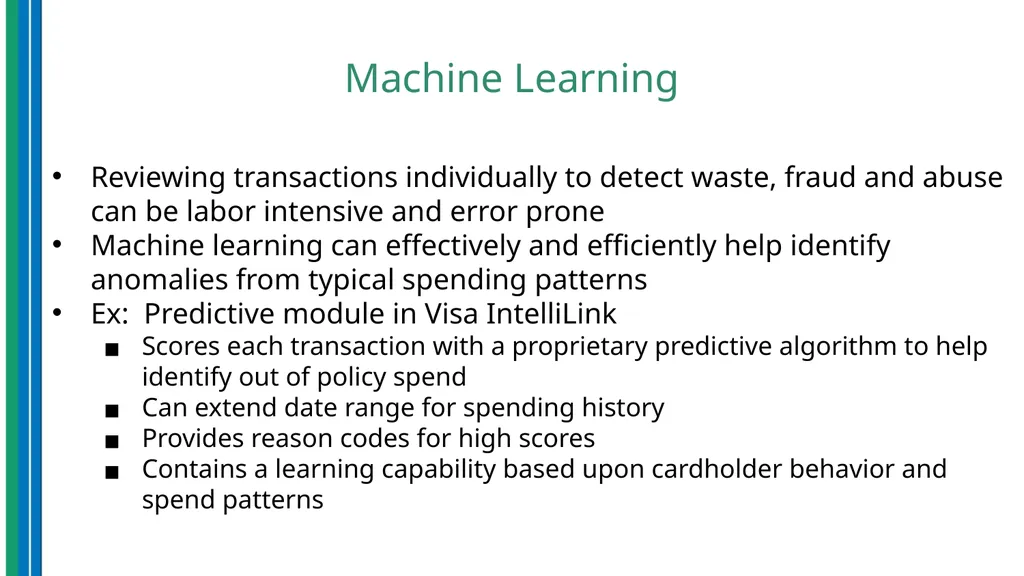
Machine Learning Reviewing transactions individually to detect waste, fraud and abuse can be labor intensive and error prone
Machine learning can effectively and efficiently help identify anomalies from typical spending patterns
Ex: Predictive module in Visa IntelliLink
Scores each transaction with a proprietary predictive algorithm to help identify out of policy spend
Can extend date range for spending history
Provides reason codes for high scores
Contains a learning capability based upon cardholder behavior and spend patterns<br>
Machine learning can effectively and efficiently help identify anomalies from typical spending patterns
Ex: Predictive module in Visa IntelliLink
Scores each transaction with a proprietary predictive algorithm to help identify out of policy spend
Can extend date range for spending history
Provides reason codes for high scores
Contains a learning capability based upon cardholder behavior and spend patterns<br>
19
Audit<br>
20
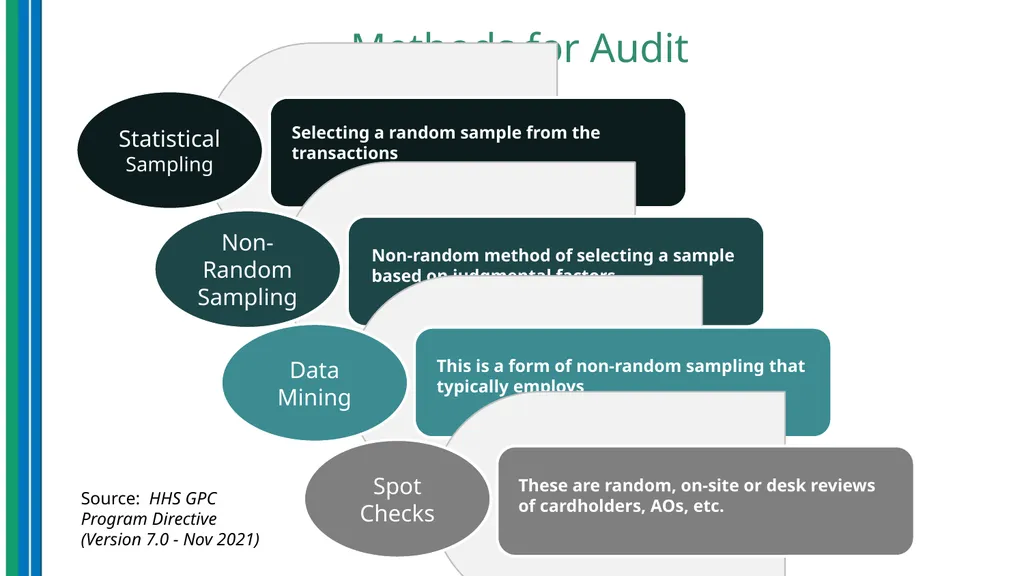
Methods for Audit<br>
21
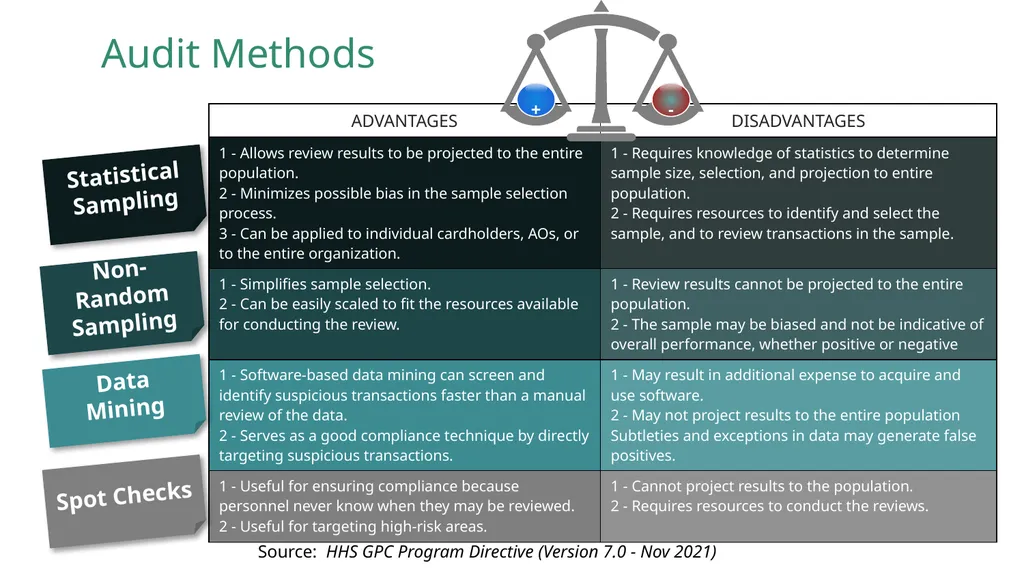
Audit Methods Statistical
Sampling Non-Random Sampling Data Mining Spot Checks Source: HHS GPC Program Directive (Version 7.0 - Nov 2021)<br>
Sampling Non-Random Sampling Data Mining Spot Checks Source: HHS GPC Program Directive (Version 7.0 - Nov 2021)<br>
22
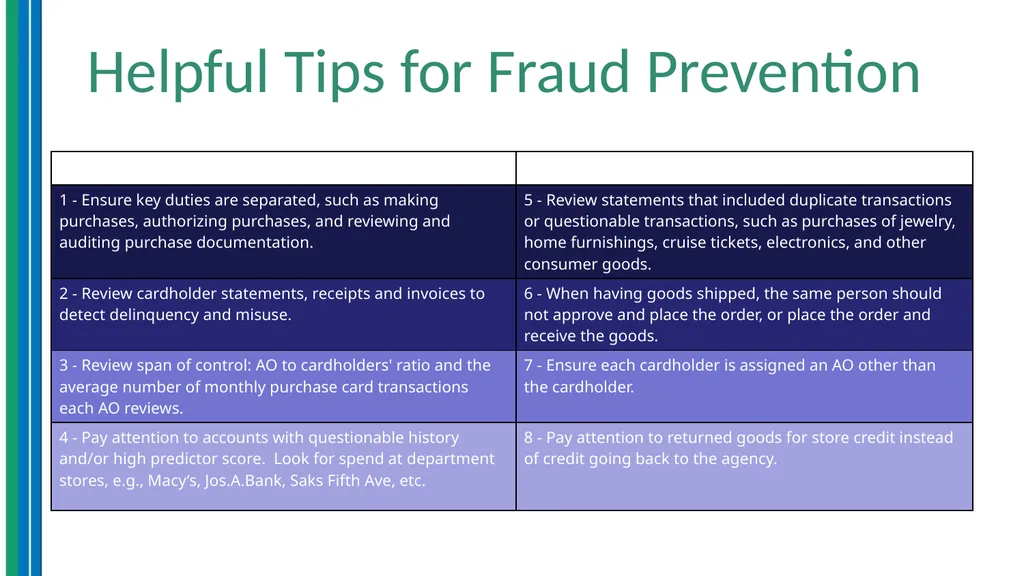
Helpful Tips for Fraud Prevention<br>
23
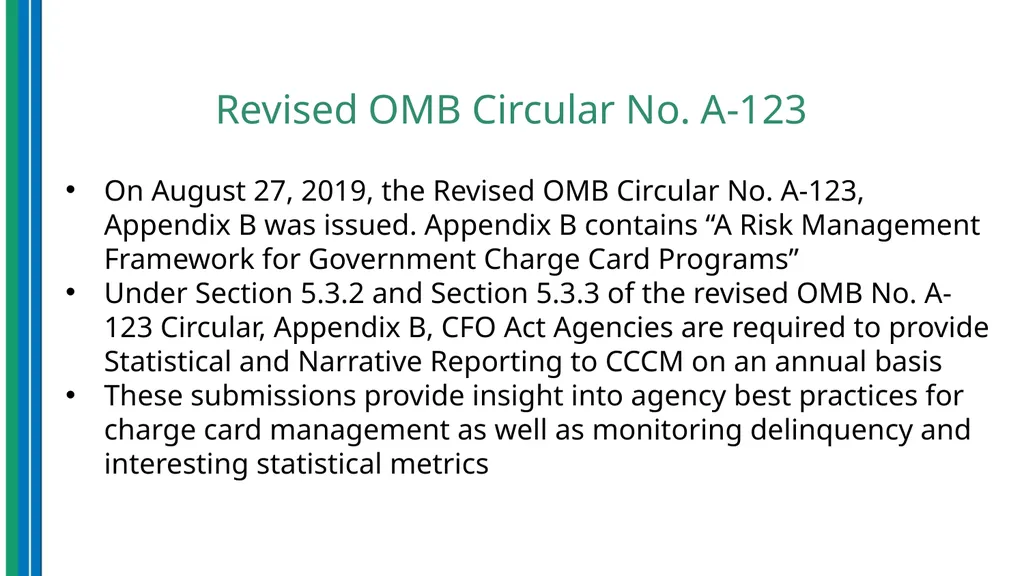
Revised OMB Circular No. A-123 On August 27, 2019, the Revised OMB Circular No. A-123, Appendix B was issued. Appendix B contains “A Risk Management Framework for Government Charge Card Programs”
Under Section 5.3.2 and Section 5.3.3 of the revised OMB No. A-123 Circular, Appendix B, CFO Act Agencies are required to provide Statistical and Narrative Reporting to CCCM on an annual basis
These submissions provide insight into agency best practices for charge card management as well as monitoring delinquency and interesting statistical metrics<br>
Under Section 5.3.2 and Section 5.3.3 of the revised OMB No. A-123 Circular, Appendix B, CFO Act Agencies are required to provide Statistical and Narrative Reporting to CCCM on an annual basis
These submissions provide insight into agency best practices for charge card management as well as monitoring delinquency and interesting statistical metrics<br>
24
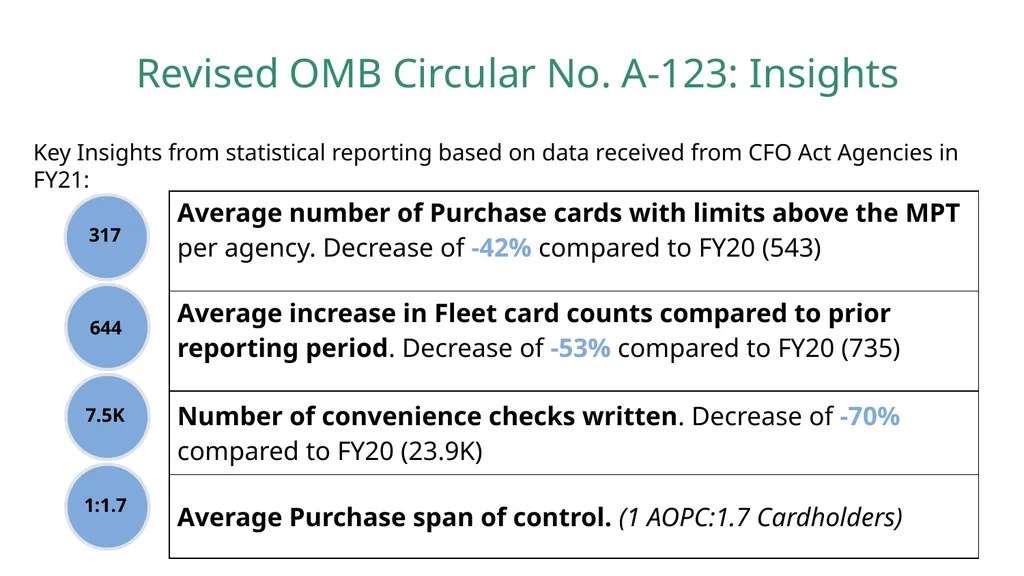
Revised OMB Circular No. A-123: Insights Key Insights from statistical reporting based on data received from CFO Act Agencies in FY21:<br>
25
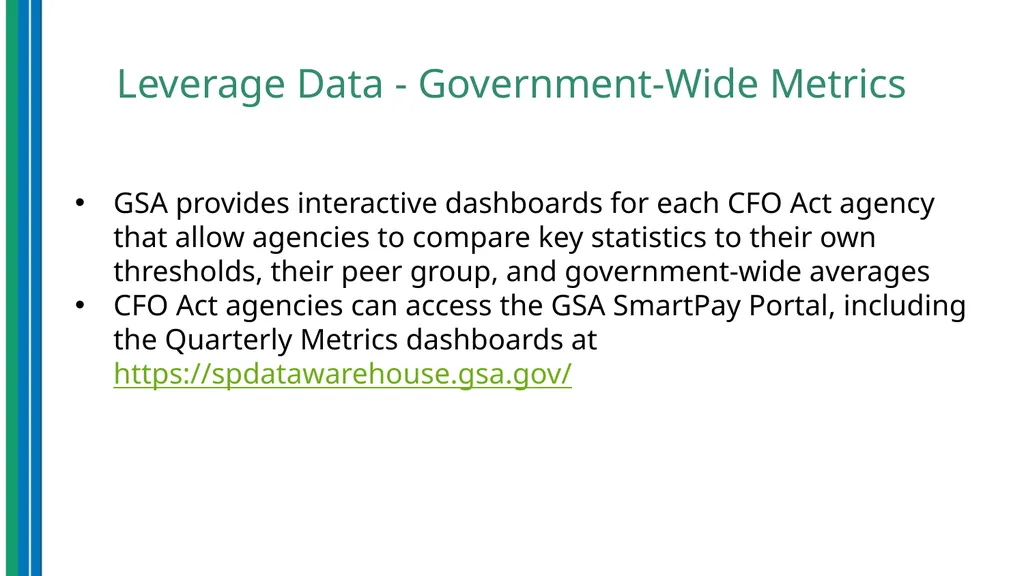
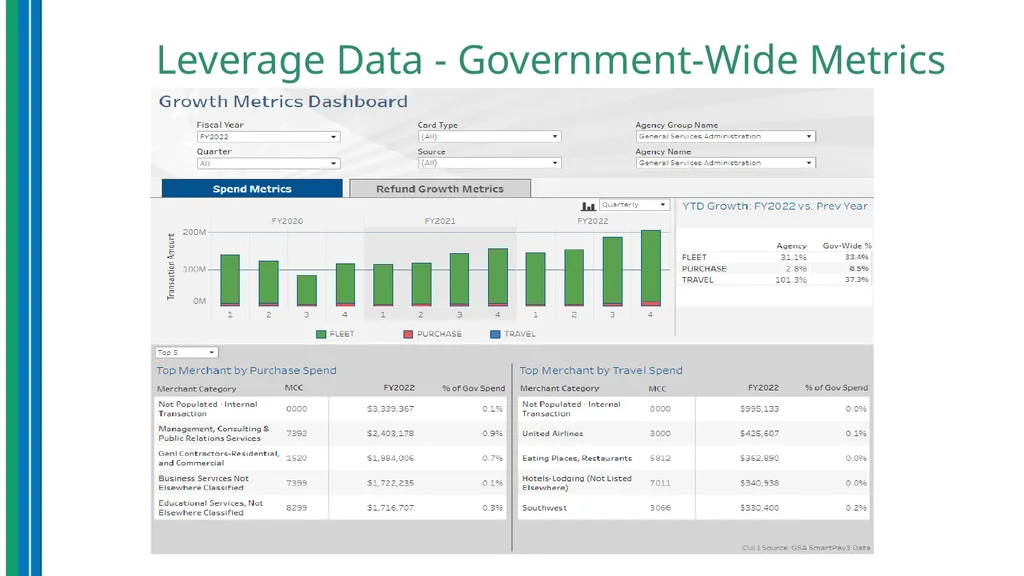
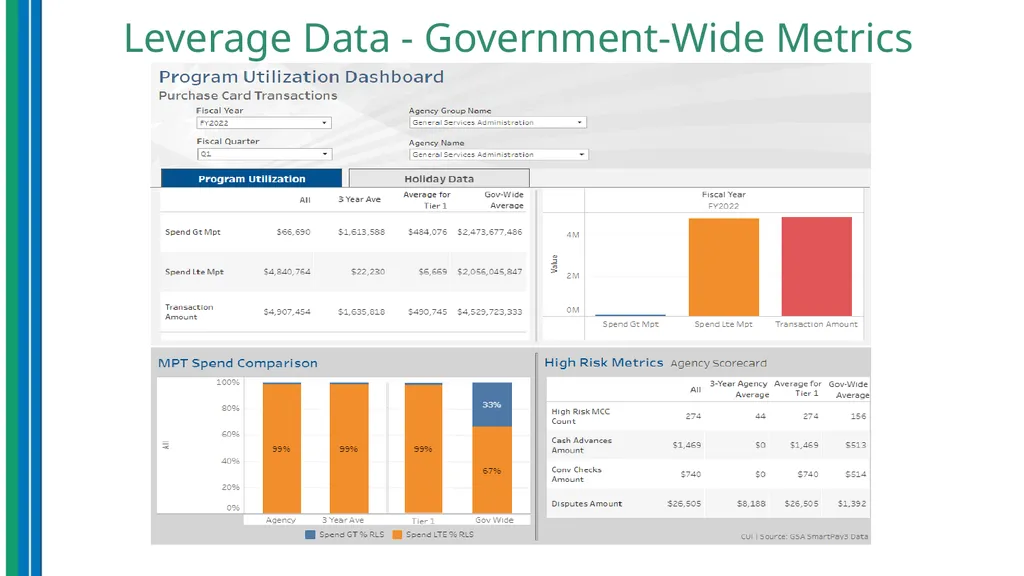
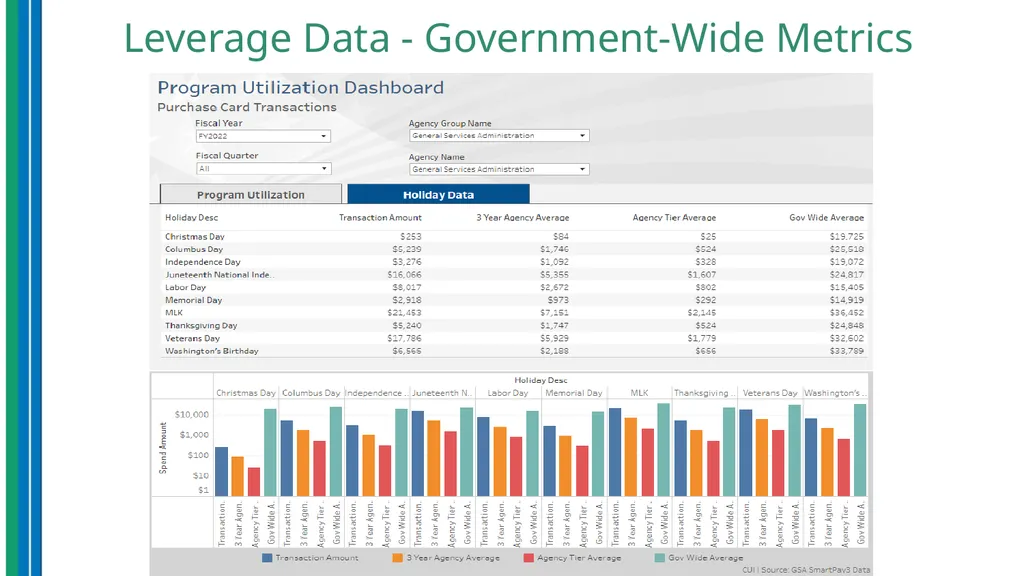
Leverage Data - Government-Wide Metrics GSA provides interactive dashboards for each CFO Act agency that allow agencies to compare key statistics to their own thresholds, their peer group, and government-wide averages
CFO Act agencies can access the GSA SmartPay Portal, including the Quarterly Metrics dashboards at https://spdatawarehouse.gsa.gov/<br>
CFO Act agencies can access the GSA SmartPay Portal, including the Quarterly Metrics dashboards at https://spdatawarehouse.gsa.gov/<br>
26
Leverage Data - Government-Wide Metrics<br>
27
Leverage Data - Government-Wide Metrics<br>
28
Leverage Data - Government-Wide Metrics<br>
29
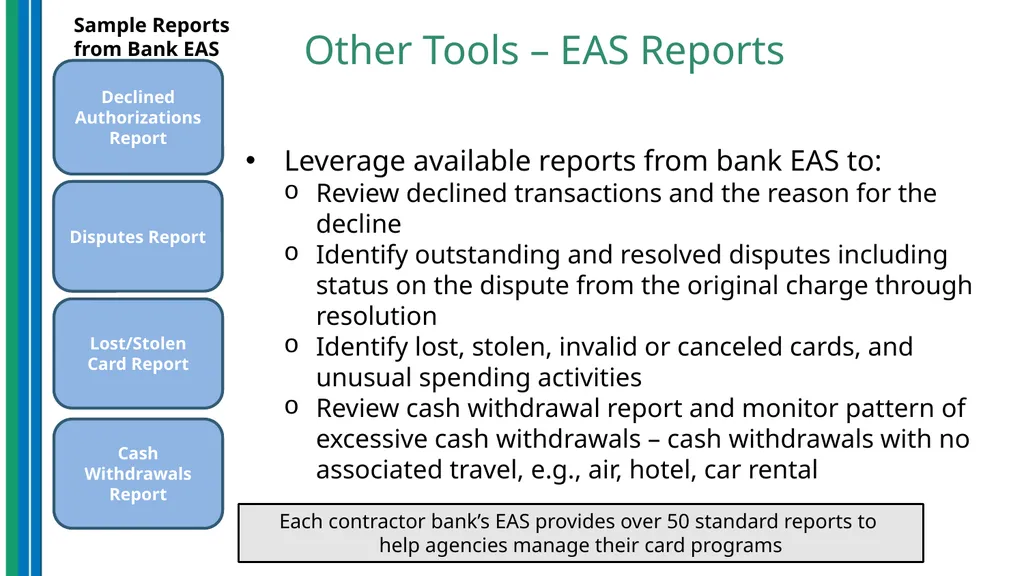
Other Tools – EAS Reports Sample Reports from Bank EAS Declined Authorizations Report Disputes Report Lost/Stolen Card Report Cash Withdrawals Report Leverage available reports from bank EAS to:
Review declined transactions and the reason for the decline
Identify outstanding and resolved disputes including status on the dispute from the original charge through resolution
Identify lost, stolen, invalid or canceled cards, and unusual spending activities
Review cash withdrawal report and monitor pattern of excessive cash withdrawals – cash withdrawals with no associated travel, e.g., air, hotel, car rental Each contractor bank’s EAS provides over 50 standard reports to
help agencies manage their card programs<br>
Review declined transactions and the reason for the decline
Identify outstanding and resolved disputes including status on the dispute from the original charge through resolution
Identify lost, stolen, invalid or canceled cards, and unusual spending activities
Review cash withdrawal report and monitor pattern of excessive cash withdrawals – cash withdrawals with no associated travel, e.g., air, hotel, car rental Each contractor bank’s EAS provides over 50 standard reports to
help agencies manage their card programs<br>
30
GSA SmartPay® Analytic Tool Set Effective applications of data analytics involve using multiple tools and processes to address agency specific needs<br>
31
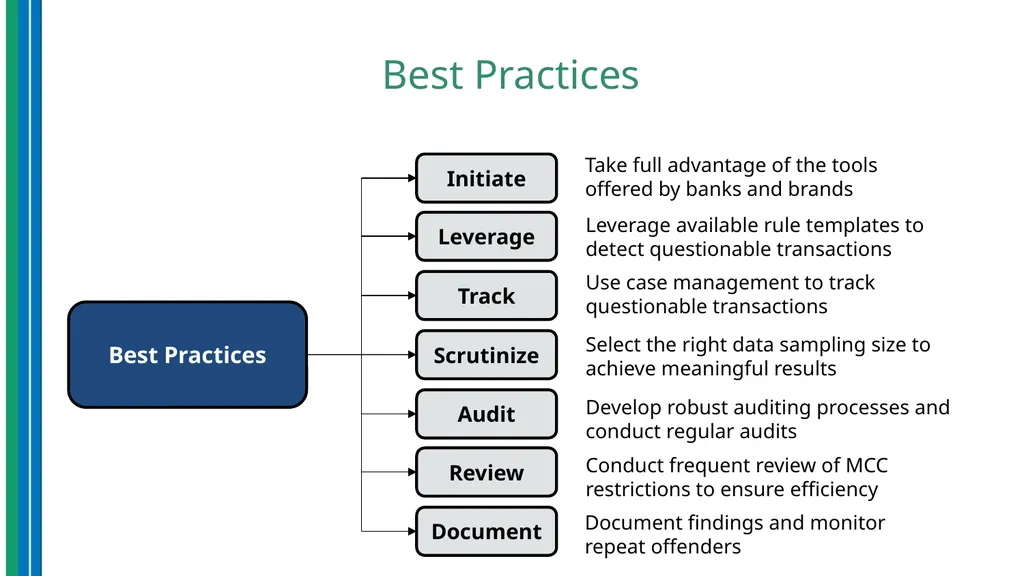
Best Practices Best Practices Initiate Take full advantage of the tools offered by banks and brands Leverage Leverage available rule templates to detect questionable transactions Track Use case management to track questionable transactions Scrutinize Select the right data sampling size to achieve meaningful results Audit Develop robust auditing processes and conduct regular audits Review Conduct frequent review of MCC restrictions to ensure efficiency Document Document findings and monitor repeat offenders<br>
32
Additional Training from SP3 Banks Please see the Training Schedule for information on training offered by contractor banks at the Forum.
For more information on the training offered by your contractor bank, please see the following sites and contact information:
Citibank: http://www.cards.citidirect.com/welcome.asp
Customer Service: (800) 790-7206
U.S. Bank: https://access.usbank.com/cpsApp1/index.jsp
Customer Service: (888) 994-6722<br>
For more information on the training offered by your contractor bank, please see the following sites and contact information:
Citibank: http://www.cards.citidirect.com/welcome.asp
Customer Service: (800) 790-7206
U.S. Bank: https://access.usbank.com/cpsApp1/index.jsp
Customer Service: (888) 994-6722<br>
33
Additional Training from Brands More information and specific trainings on Visa IntelliLink and Mastercard IOD can be accessed at the following sites:
http://intellilink.spendmanagement.visa.com
http://globalrisk.Mastercard.com/online-resources-2016/<br>
http://intellilink.spendmanagement.visa.com
http://globalrisk.Mastercard.com/online-resources-2016/<br>
34
GSA SmartPay® Resources GSA Smart Bulletins
https://smartpay.gsa.gov/content/smart-bulletins-news-events
Other Program Manager Resources
https://smartpay.gsa.gov/content/resources
GSA SmartPay Training
General Info: https://smartpay.gsa.gov/content/training
Log In: https://training.smartpay.gsa.gov/user
GSA SmartPay Portal
https://spdatawarehouse.gsa.gov/smartpay/<br>
https://smartpay.gsa.gov/content/smart-bulletins-news-events
Other Program Manager Resources
https://smartpay.gsa.gov/content/resources
GSA SmartPay Training
General Info: https://smartpay.gsa.gov/content/training
Log In: https://training.smartpay.gsa.gov/user
GSA SmartPay Portal
https://spdatawarehouse.gsa.gov/smartpay/<br>
35
Contact Information Shane Brosius
Shane.Brosius@gsa.gov
(509)353-4661<br>
Shane.Brosius@gsa.gov
(509)353-4661<br>
36
GSA Starmark<br>