Using different sentence forms to suggest characters emotions LEAD Principles Noticing Patterns in a Text Examples Discussion Read the text aloud in any order, paying attention to the punctuation to guide how you say the lines. What
"Using different sentence forms to suggest" is the property of its rightful owner. Permission is granted to
download and print the materials on this website for personal, non-commercial use only, and to display it
on your personal computer provided you do not modify the materials and that you retain all copyright
notices contained in the materials. By downloading content from our website, you accept the terms of this
agreement.
Presentation Transcript
01
Using different sentence forms to suggest characters’ emotions<br>
02
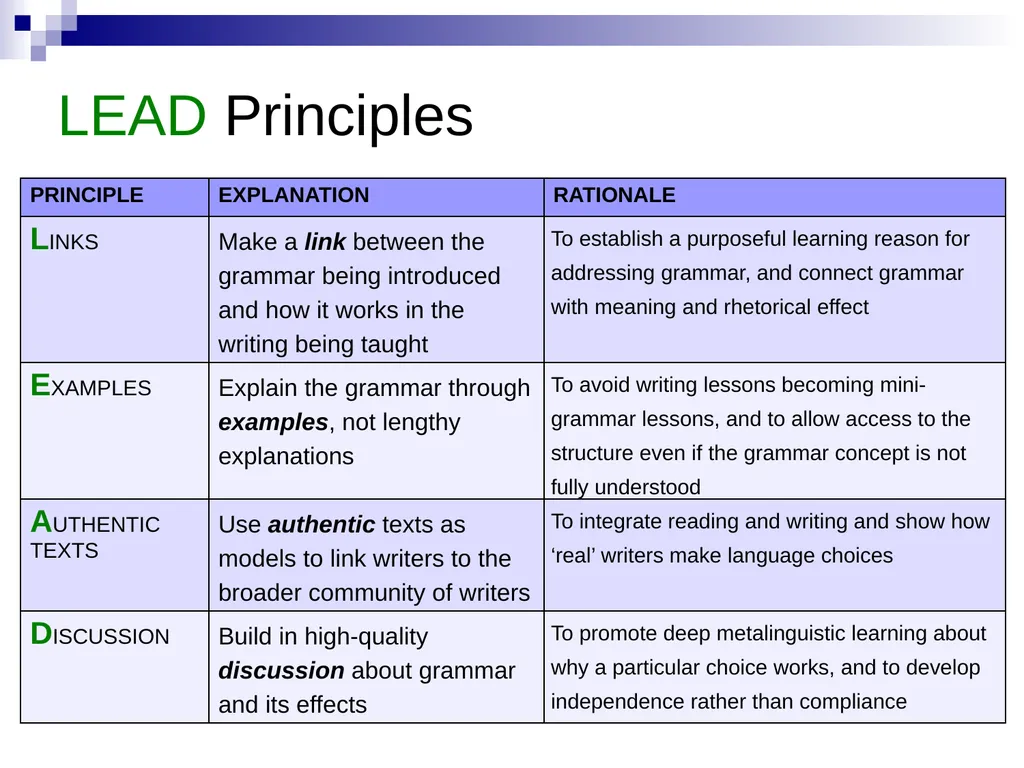
LEAD Principles<br>
03
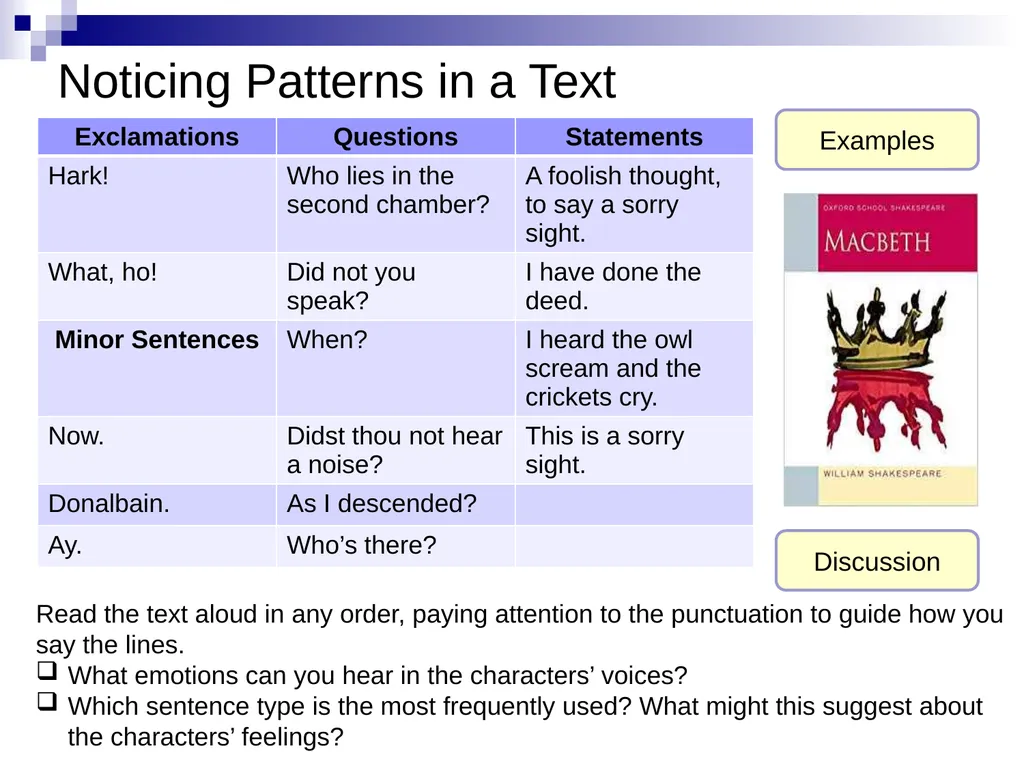
Noticing Patterns in a Text Examples Discussion Read the text aloud in any order, paying attention to the punctuation to guide how you say the lines.
What emotions can you hear in the characters’ voices?
Which sentence type is the most frequently used? What might this suggest about the characters’ feelings?<br>
04
Noticing Patterns in a Text Authentic text Discussion Hark! Who lies in the second chamber?
Donalbain.
This is a sorry sight.
A foolish thought, to say a sorry sight.
Who’s there? What, ho! I have done the deed. Didst thou not hear a noise?
I heard the owl scream and the crickets cry. Did not you speak?
When?
Now.
As I descended?
Ay. These are the original lines of dialogue but not yet in the right sequence.
Can you work out which lines are spoken by Macbeth, and which lines by Lady Macbeth?
Can you suggest the original sequence of the lines?<br>
05
Noticing Patterns in a Text Authentic text Discussion Macbeth: Who’s there? What, ho! I have done the deed. Didst thou not hear a noise?
Lady Macbeth: I heard the owl scream and the crickets cry. Did not you speak?
Macbeth: When?
Lady Macbeth: Now.
Macbeth: As I descended?
Lady Macbeth: Ay.
Macbeth: Hark! Who lies in the second chamber?
Lady Macbeth: Donalbain.
Macbeth: This is a sorry sight.
Lady Macbeth: A foolish thought, to say a sorry sight. What is revealed about each character’s emotions from the way they speak?
From the way they speak to each other, what can you say about the relationship between Macbeth and Lady Macbeth at this point in the play? Links<br>
06
Verbalising the Grammar-Writing Link Verbalisation to share with students:
When you are writing dialogue in narrative, you can think about how to show characters’ emotions. You might choose to use different sentence forms like statements, questions, exclamations and minor sentences (without a verb) to help you emphasise what a character is feeling. A crucial element of the LEAD principles is helping writers to think explicitly (metalinguistically) about the choices they make. As a teacher, you need to support this by being crystal clear yourself about how you verbalise the link between a grammar choice and its effect in a particular text/context. Then express this in student-friendly language, as below.<br>