Using noun phrases to establish setting in narrative LEAD Principles Noticing Patterns in a Text old chests of drawers broken wash-basins bags of cement ancient doors leaning against the walls deckchairs with the cloth seats rotted away
"Using noun phrases to establish setting in" is the property of its rightful owner. Permission is granted to
download and print the materials on this website for personal, non-commercial use only, and to display it
on your personal computer provided you do not modify the materials and that you retain all copyright
notices contained in the materials. By downloading content from our website, you accept the terms of this
agreement.
Presentation Transcript
01
Using noun phrases to establish setting in narrative<br>
02
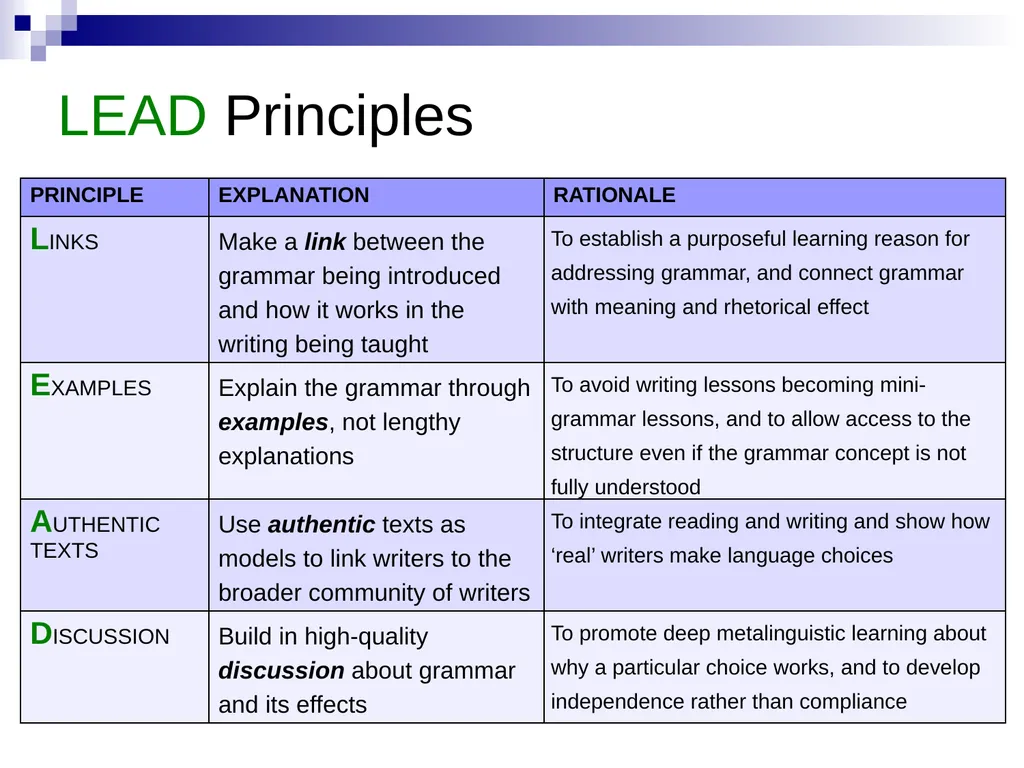
LEAD Principles<br>
03
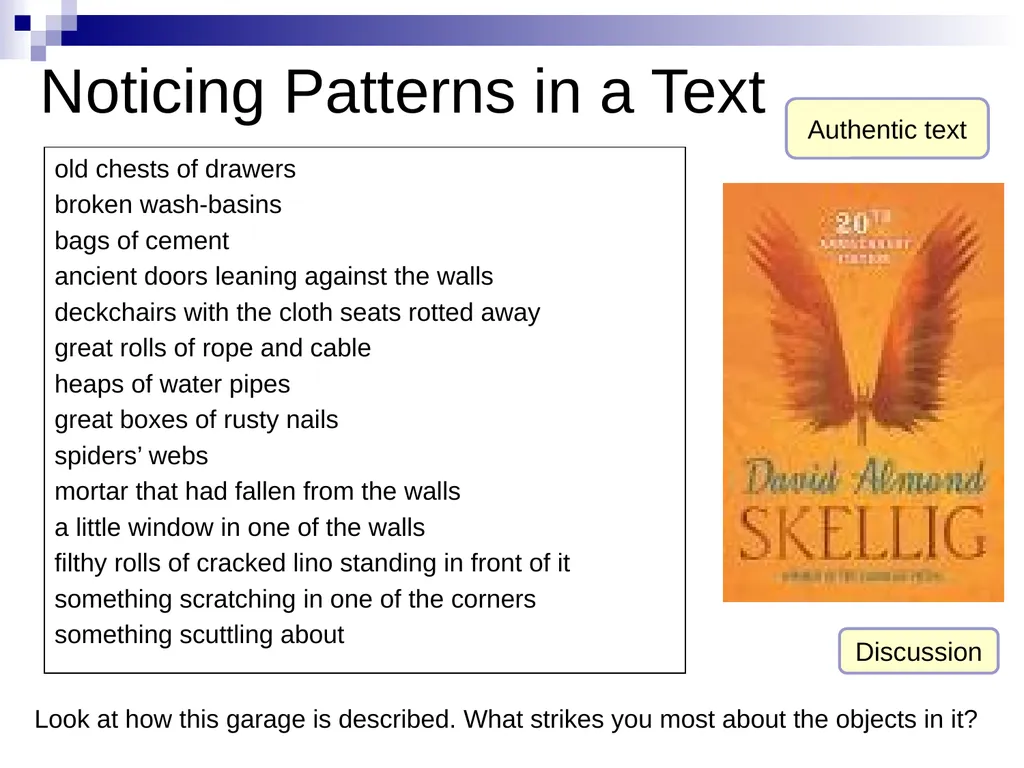
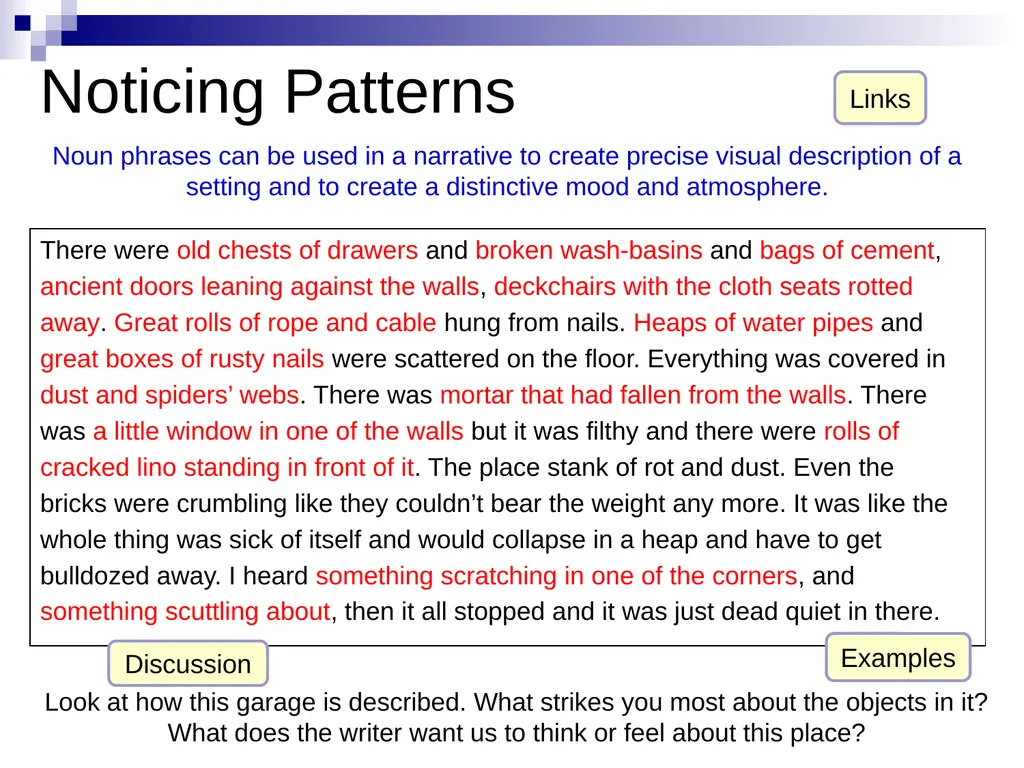
Noticing Patterns in a Text old chests of drawers
broken wash-basins
bags of cement
ancient doors leaning against the walls
deckchairs with the cloth seats rotted away
great rolls of rope and cable
heaps of water pipes
great boxes of rusty nails
spiders’ webs
mortar that had fallen from the walls
a little window in one of the walls
filthy rolls of cracked lino standing in front of it
something scratching in one of the corners
something scuttling about Look at how this garage is described. What strikes you most about the objects in it? Authentic text Discussion<br>
04
Noticing Patterns There were old chests of drawers and broken wash-basins and bags of cement,
ancient doors leaning against the walls, deckchairs with the cloth seats rotted
away. Great rolls of rope and cable hung from nails. Heaps of water pipes and
great boxes of rusty nails were scattered on the floor. Everything was covered in
dust and spiders’ webs. There was mortar that had fallen from the walls. There
was a little window in one of the walls but it was filthy and there were rolls of
cracked lino standing in front of it. The place stank of rot and dust. Even the
bricks were crumbling like they couldn’t bear the weight any more. It was like the
whole thing was sick of itself and would collapse in a heap and have to get
bulldozed away. I heard something scratching in one of the corners, and
something scuttling about, then it all stopped and it was just dead quiet in there. Noun phrases can be used in a narrative to create precise visual description of a setting and to create a distinctive mood and atmosphere. Look at how this garage is described. What strikes you most about the objects in it? What does the writer want us to think or feel about this place? Links Examples Discussion<br>
05
Verbalising the Grammar-Writing Link Verbalisation to share with students:
When you are writing narrative, you can think about how you help your reader to visualise a setting at a key moment. You might use noun phrases that provide specific visual detail and that create a distinctive mood and atmosphere.
Choose your details carefully! Ask yourself what you want your reader to see, think and feel about the setting that you’re describing. A crucial element of the LEAD principles is helping writers to think explicitly (metalinguistically) about the choices they make. As a teacher, you need to support this by being crystal clear yourself about how you verbalise the link between a grammar choice and its effect in a particular text/context. Then express this in student-friendly language, as below.<br>
06
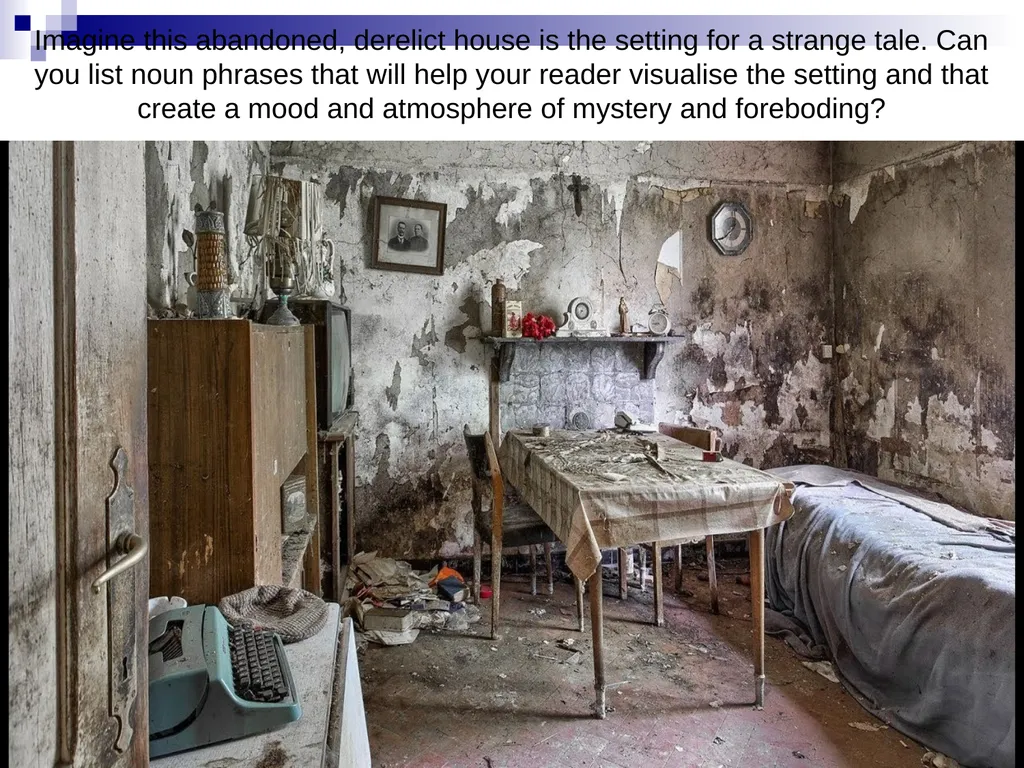
Imagine this abandoned, derelict house is the setting for a strange tale. Can you list noun phrases that will help your reader visualise the setting and that create a mood and atmosphere of mystery and foreboding?<br>