Using social media to enhance HEI reputation &
Description: Using social media to enhance HEI reputation regional engagement John Tibbitt Hon Senior Research Fellow, University of Glasgow Policy Analyst, PASCAL International Observatory Aims Promoting the work of both the HE institution and its
Related Topics
Download Presentation
"Using social media to enhance HEI reputation &" is the property of its rightful owner. Permission is granted to download and print the materials on this website for personal, non-commercial use only, and to display it on your personal computer provided you do not modify the materials and that you retain all copyright notices contained in the materials. By downloading content from our website, you accept the terms of this agreement.
Presentation Transcript
slide1. Using social media to enhance HEI reputation & regional engagement John Tibbitt
Hon Senior Research Fellow, University of Glasgow
Policy Analyst, PASCAL International Observatory<br>
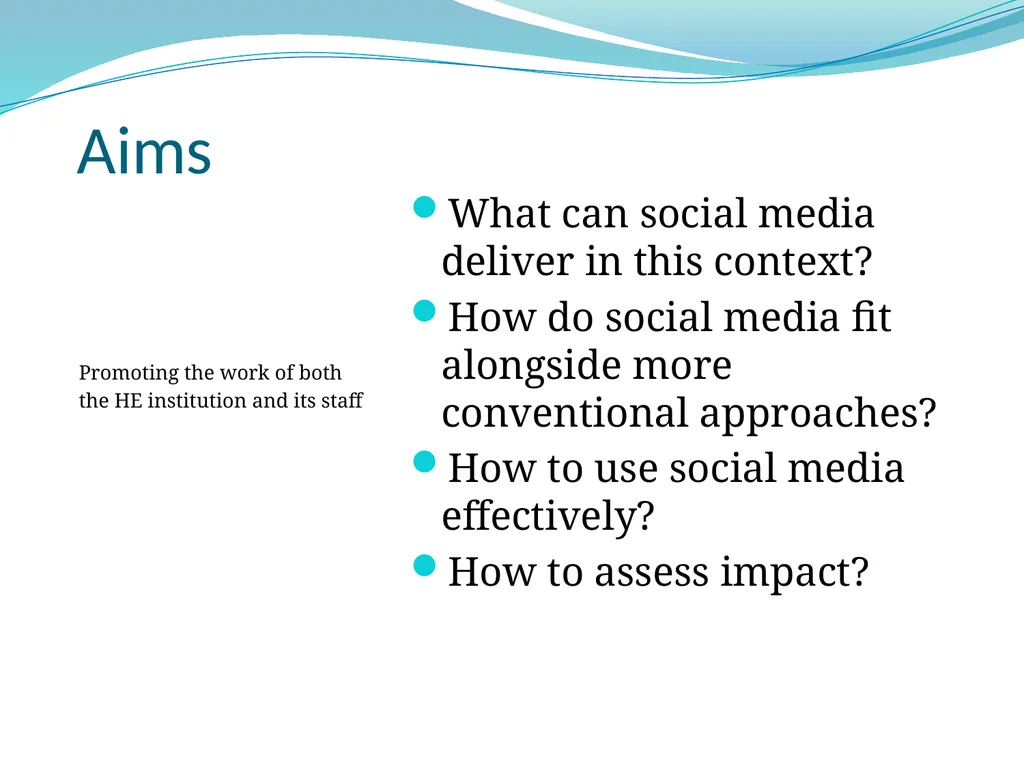
slide2. Aims Promoting the work of both
the HE institution and its staff What can social media deliver in this context?
How do social media fit alongside more conventional approaches?
How to use social media effectively?
How to assess impact?<br>
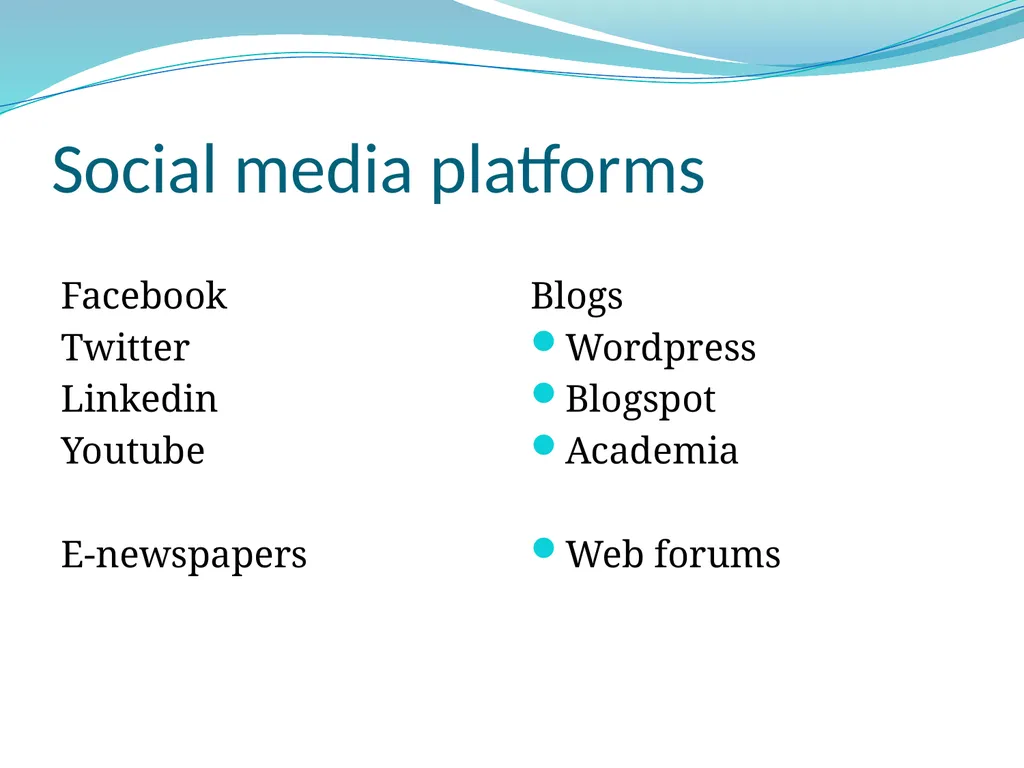
slide3. Social media platforms Facebook
Twitter
Linkedin
Youtube
E-newspapers Blogs
Wordpress
Blogspot
Academia
Web forums<br>
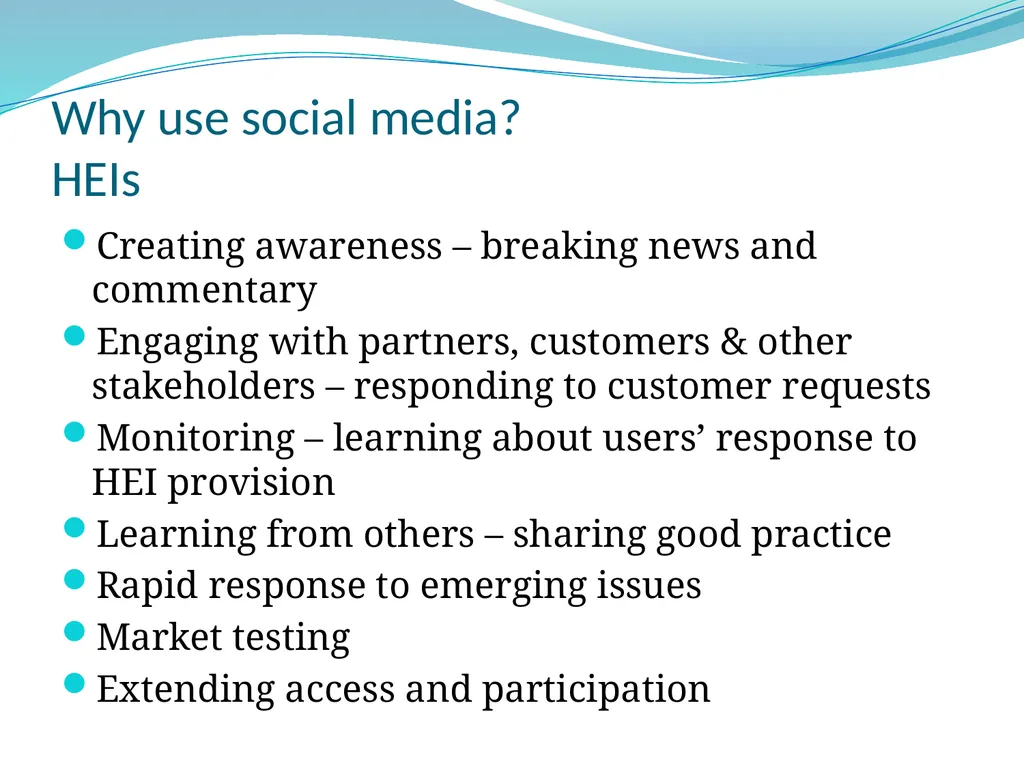
slide4. Why use social media?HEIs Creating awareness – breaking news and commentary
Engaging with partners, customers & other stakeholders – responding to customer requests
Monitoring – learning about users’ response to HEI provision
Learning from others – sharing good practice
Rapid response to emerging issues
Market testing
Extending access and participation<br>
slide5. Why use social media?Academic centres and staff Creating awareness of work
Targeting distribution of news
Monitoring a field of knowledge
Sharing ideas and work in progress
Network building
Engaging with audiences outside instituions
The ‘public academic’<br>
slide6. Effective use Develop a strategy
Develop a style
Quality content
Link to other media
Get organised<br>
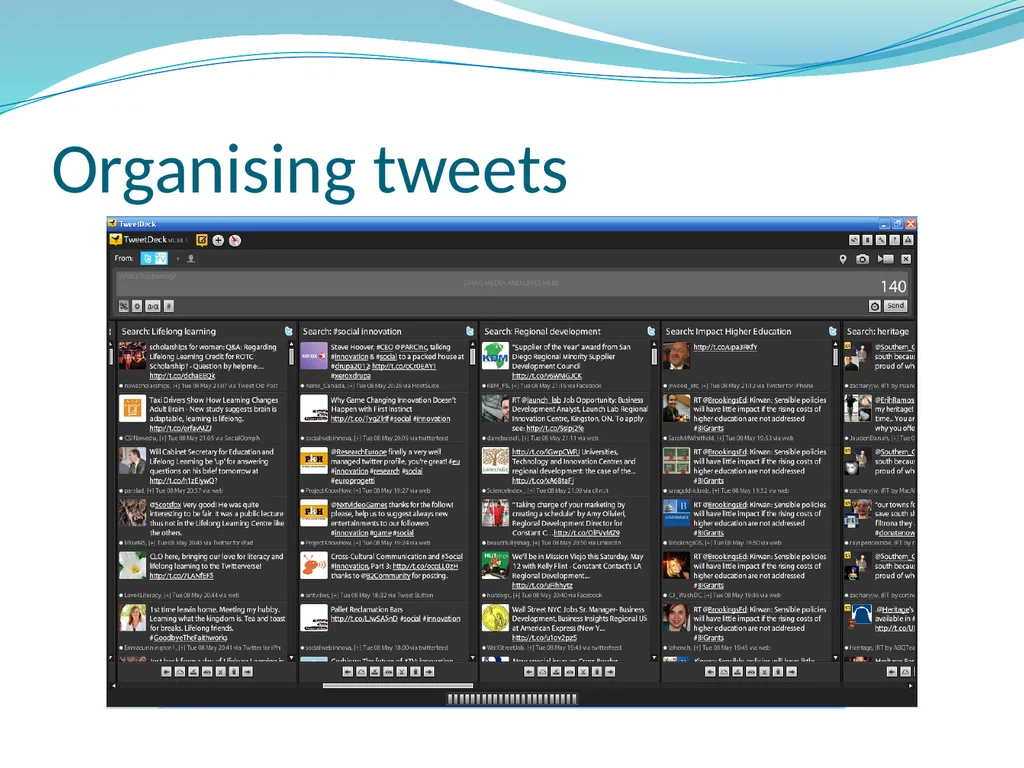
slide7. Organising tweets<br>
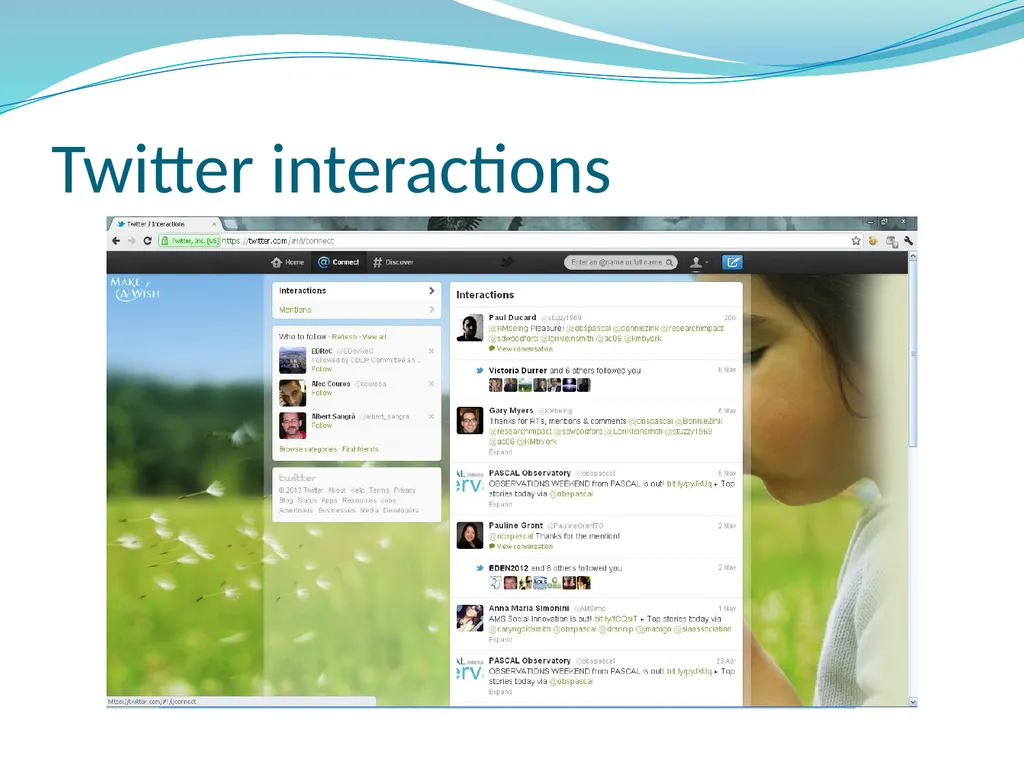
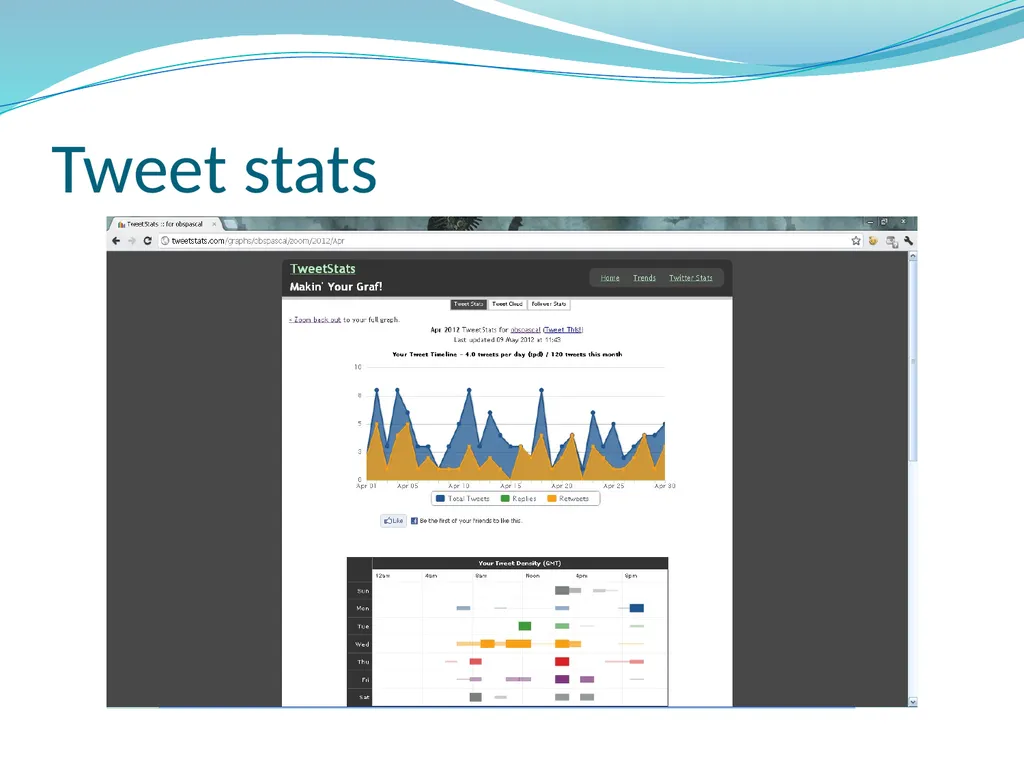
slide8. Assessing Impact Twitter
Numbers/profiles of followers
Retweets /mentions
Direct messages
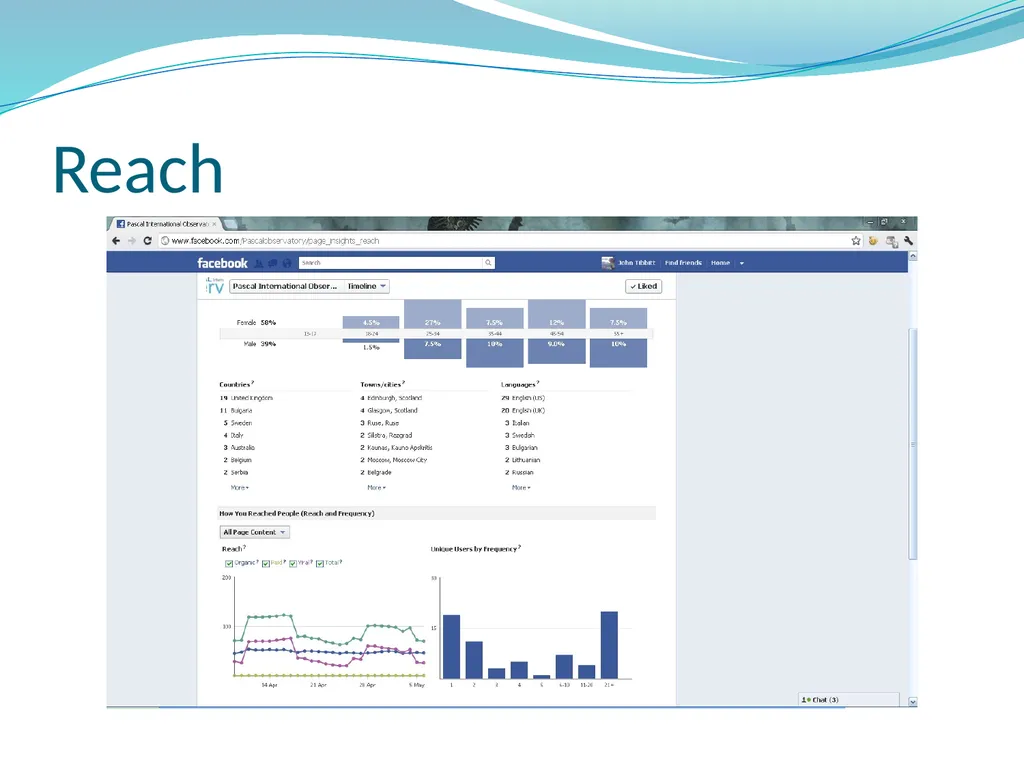
Lists Facebook
Numbers/profiles of fans
Reach
Engagement<br>
slide9. Twitter interactions<br>
slide10. Tweet stats<br>
slide11. Reach<br>
slide12. More Social media for in business, see for example McKinsey Quarterly http://www.mckinseyquarterly.com/Marketing/Digital_Marketing/Demystifying_social_media_2958
Guide to social mobility for teaching research and impact, see LSE blog http://blogs.lse.ac.uk/impactofsocialsciences/2011/09/29/twitter-guide/<br>
slide13. Thank you for listening Twitter joke!
Tweet and Retweet are in a boat. Tweet falls out.
Who is left? Retweet.
John.Tibbitt@gla.ac.uk<br>
slide14. PASCAL on-line Website: www.pascalobservatory.org
Twitter: www.twitter.com/obspascal
Facebook: www.facebook.com/Pascalobservatory
E-papers:
OBSERVATIONS: www.bit.ly/qOMppe
OBSERVATIONS Weekend: www.bit.ly/pyJXUq<br>
Hon Senior Research Fellow, University of Glasgow
Policy Analyst, PASCAL International Observatory<br>
slide2. Aims Promoting the work of both
the HE institution and its staff What can social media deliver in this context?
How do social media fit alongside more conventional approaches?
How to use social media effectively?
How to assess impact?<br>
slide3. Social media platforms Facebook
Youtube
E-newspapers Blogs
Wordpress
Blogspot
Academia
Web forums<br>
slide4. Why use social media?HEIs Creating awareness – breaking news and commentary
Engaging with partners, customers & other stakeholders – responding to customer requests
Monitoring – learning about users’ response to HEI provision
Learning from others – sharing good practice
Rapid response to emerging issues
Market testing
Extending access and participation<br>
slide5. Why use social media?Academic centres and staff Creating awareness of work
Targeting distribution of news
Monitoring a field of knowledge
Sharing ideas and work in progress
Network building
Engaging with audiences outside instituions
The ‘public academic’<br>
slide6. Effective use Develop a strategy
Develop a style
Quality content
Link to other media
Get organised<br>
slide7. Organising tweets<br>
slide8. Assessing Impact Twitter
Numbers/profiles of followers
Retweets /mentions
Direct messages
Lists Facebook
Numbers/profiles of fans
Reach
Engagement<br>
slide9. Twitter interactions<br>
slide10. Tweet stats<br>
slide11. Reach<br>
slide12. More Social media for in business, see for example McKinsey Quarterly http://www.mckinseyquarterly.com/Marketing/Digital_Marketing/Demystifying_social_media_2958
Guide to social mobility for teaching research and impact, see LSE blog http://blogs.lse.ac.uk/impactofsocialsciences/2011/09/29/twitter-guide/<br>
slide13. Thank you for listening Twitter joke!
Tweet and Retweet are in a boat. Tweet falls out.
Who is left? Retweet.
John.Tibbitt@gla.ac.uk<br>
slide14. PASCAL on-line Website: www.pascalobservatory.org
Twitter: www.twitter.com/obspascal
Facebook: www.facebook.com/Pascalobservatory
E-papers:
OBSERVATIONS: www.bit.ly/qOMppe
OBSERVATIONS Weekend: www.bit.ly/pyJXUq<br>