
Vegetative propagation -Cutting By A.M.RASHIDA


Description: Vegetative propagation -Cutting By A.M.RASHIDA BANU ASSISTANT PROFESSOR DEPARTMENT OF BOTANY HAJEE KARUTHA ROWHER HOWDIA COLLEGE, UTHAMAPALAYAM, THENI DISTRICT VEGETATIVE PROPAGATION Method of plant multiplication in which new plants are
Related Topics
Download Presentation
"Vegetative propagation -Cutting By A.M.RASHIDA" is the property of its rightful owner. Permission is granted to download and print the materials on this website for personal, non-commercial use only, and to display it on your personal computer provided you do not modify the materials and that you retain all copyright notices contained in the materials. By downloading content from our website, you accept the terms of this agreement.
Presentation Transcript
slide1. Vegetative propagation -Cutting By
A.M.RASHIDA BANU
ASSISTANT PROFESSOR
DEPARTMENT OF BOTANY
HAJEE KARUTHA ROWHER HOWDIA COLLEGE, UTHAMAPALAYAM,
THENI DISTRICT<br>
slide2. VEGETATIVE PROPAGATION Method of plant multiplication in which new plants are raised from detached vegetative parts of plants is called vegetative propagation.
Does not involve gametic fusion and seed formation.
Identical to parent plant
Clonal propagation
Method used where no viable seed production takes place.<br>
slide3. Methods Cuttage
Layerage
Graftage
Budding<br>
slide4. cuttage Propagation of plants by planting the cut vegetative parts of plants
Detached plant part, grow into a new plant
Cuttings may be prepared from stem, leaf or roots
Cheap and convenient method
Propagation of ornamental and fruit crops<br>
slide5. Advantages Cheap and convenient method
More number of plants n short period
Pure clones
Ornamental and fruit crops<br>
slide6. Based of plant part, cutting is classified as Root cutting
Stem cutting
leaf cutting<br>
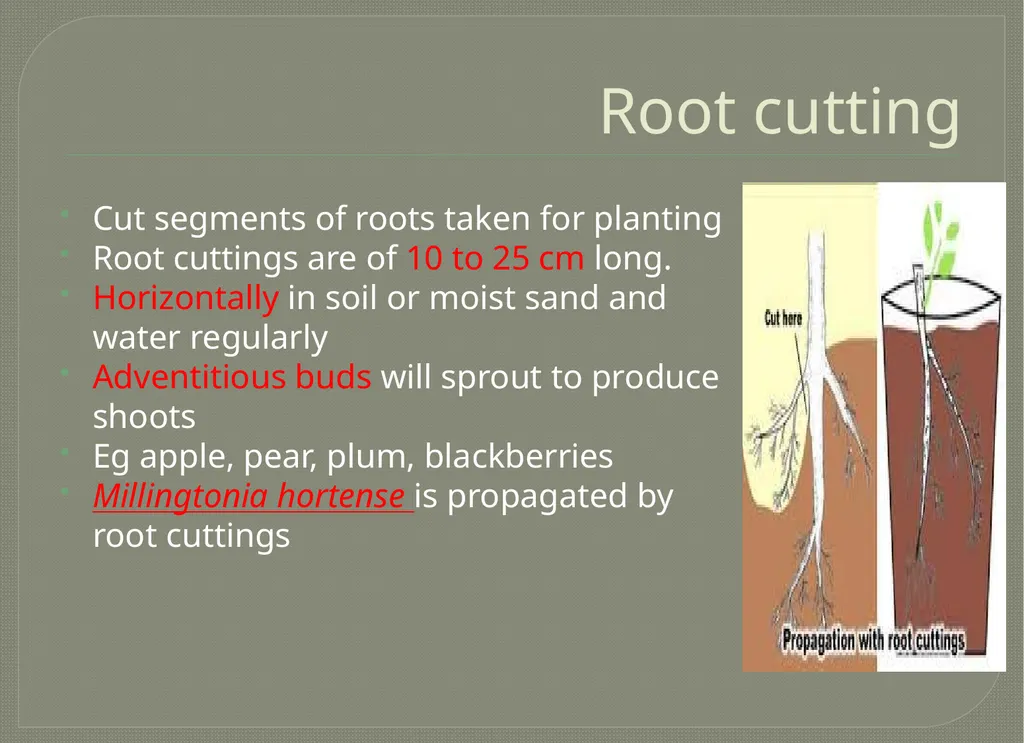
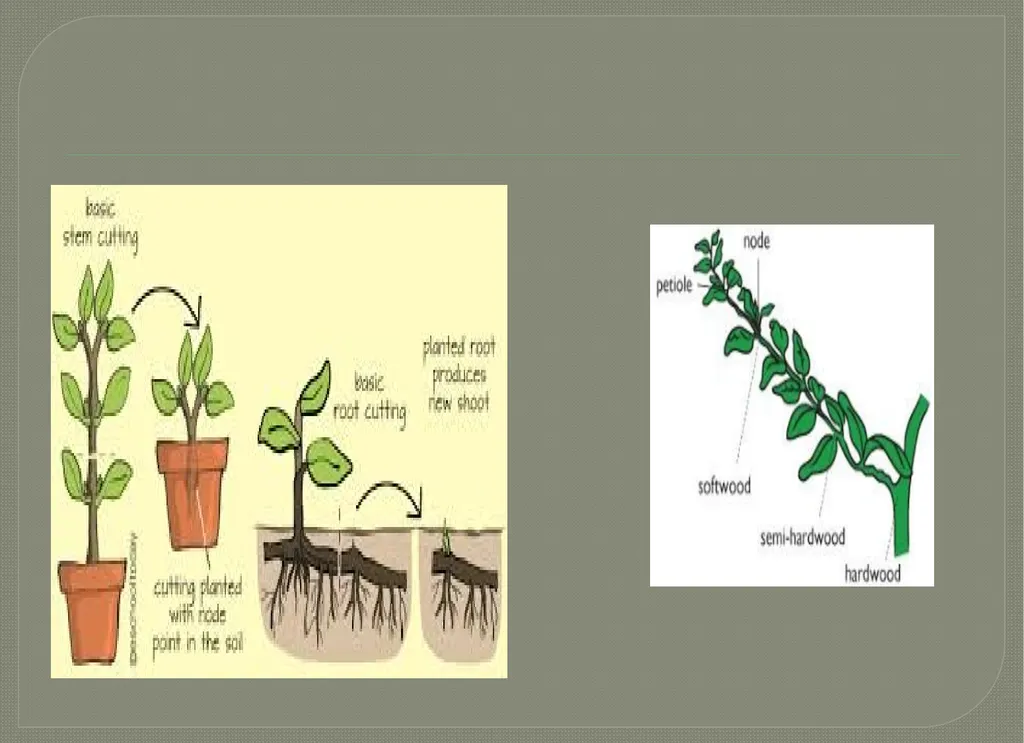
slide7. Root cutting Cut segments of roots taken for planting
Root cuttings are of 10 to 25 cm long.
Horizontally in soil or moist sand and water regularly
Adventitious buds will sprout to produce shoots
Eg apple, pear, plum, blackberries
Millingtonia hortense is propagated by root cuttings<br>
slide8. Stem cutting Raising new plants from stem cuttings is a vegetative propagation
Based on the nature and strength of the wood, are of 4 types
Herbaceous
Soft wood
Semi hard wood
Hard wood<br>
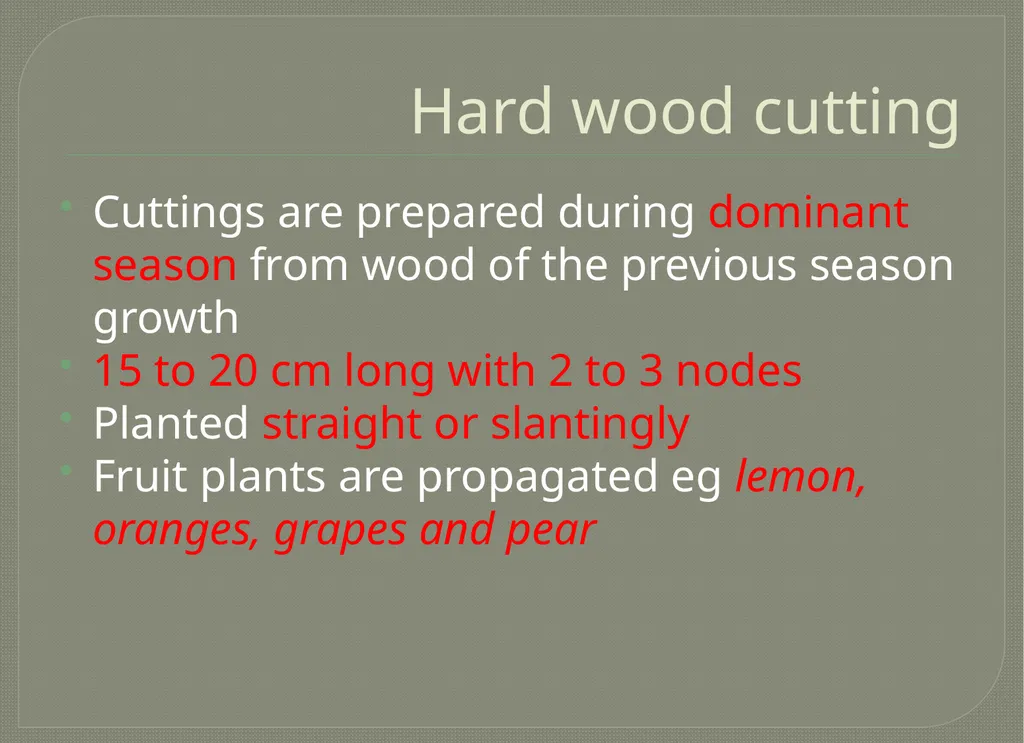
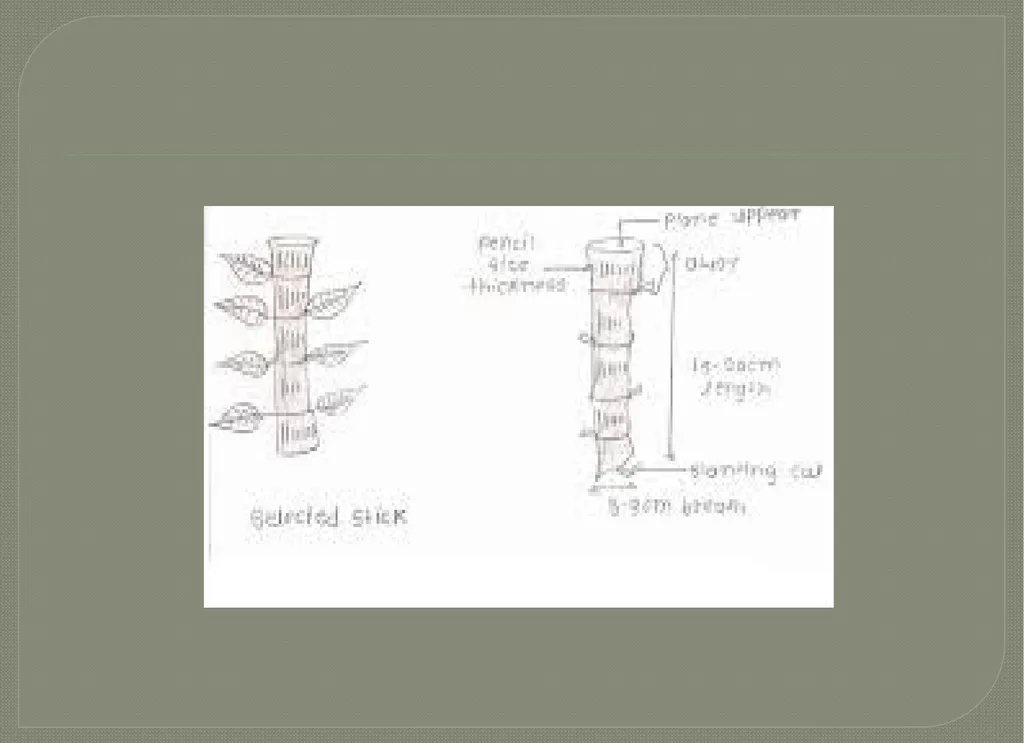
slide10. Hard wood cutting Cuttings are prepared during dominant season from wood of the previous season growth
15 to 20 cm long with 2 to 3 nodes
Planted straight or slantingly
Fruit plants are propagated eg lemon, oranges, grapes and pear<br>
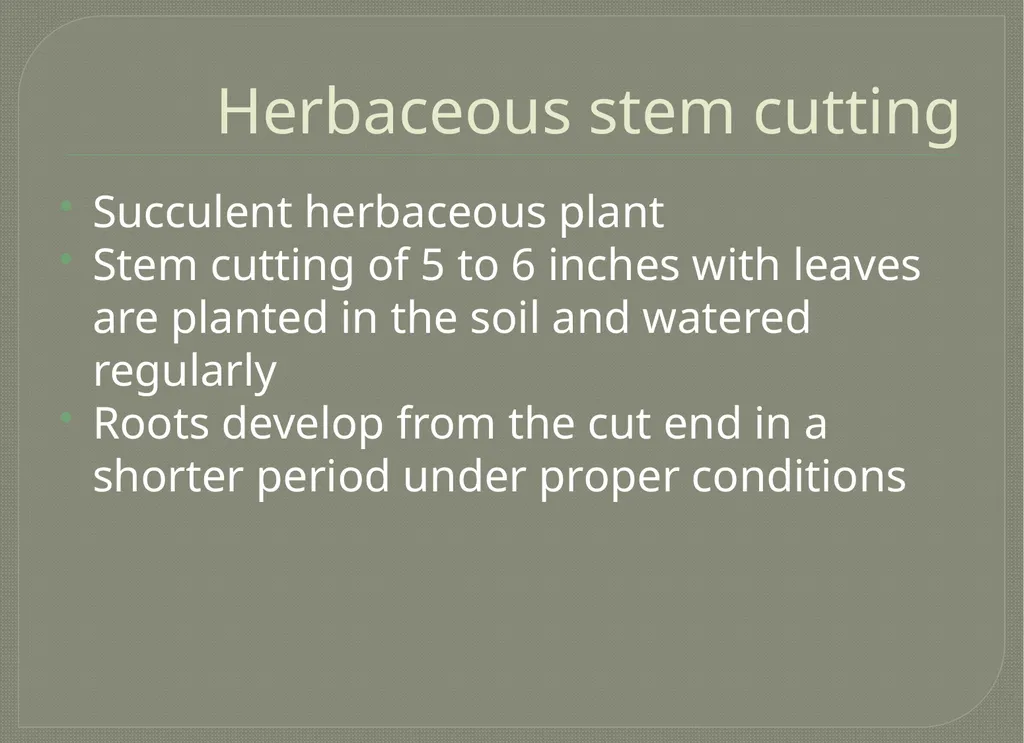
slide12. Herbaceous stem cutting Succulent herbaceous plant
Stem cutting of 5 to 6 inches with leaves are planted in the soil and watered regularly
Roots develop from the cut end in a shorter period under proper conditions<br>
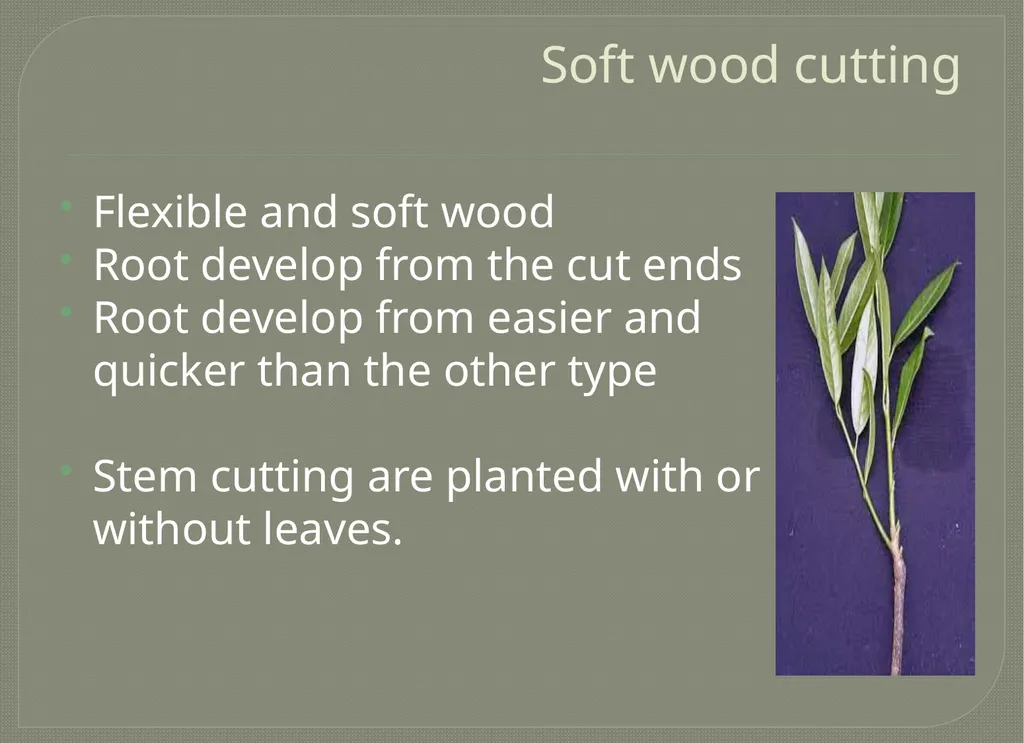
slide13. Soft wood cutting Flexible and soft wood
Root develop from the cut ends
Root develop from easier and quicker than the other type
Stem cutting are planted with or without leaves.<br>
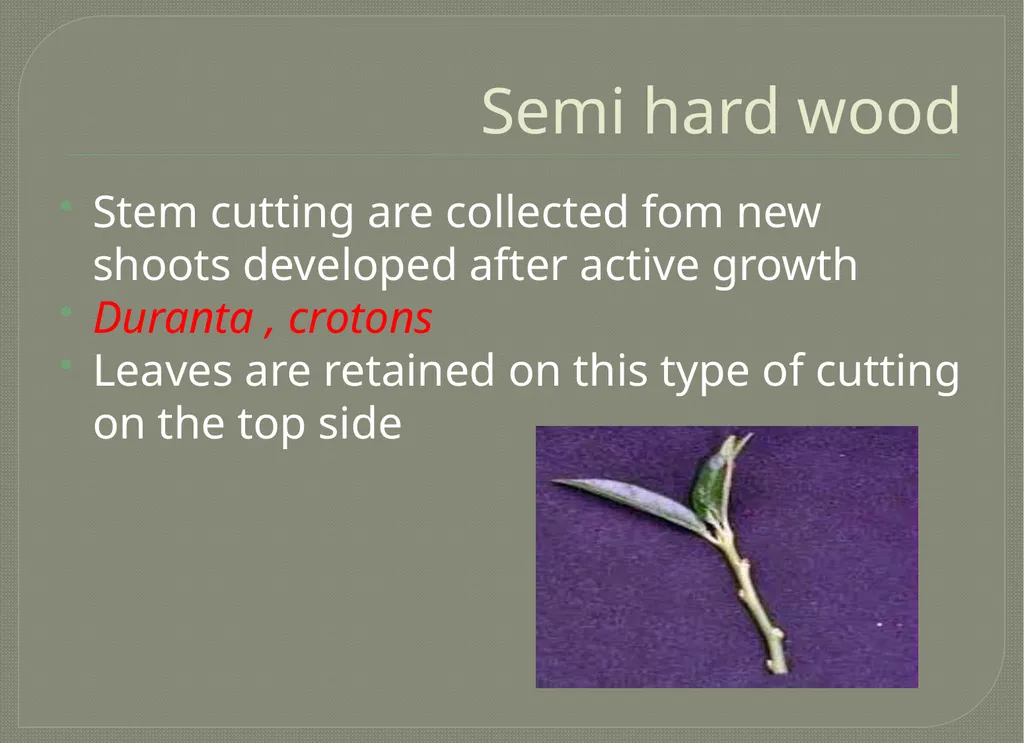
slide14. Semi hard wood Stem cutting are collected fom new shoots developed after active growth
Duranta , crotons
Leaves are retained on this type of cutting on the top side<br>
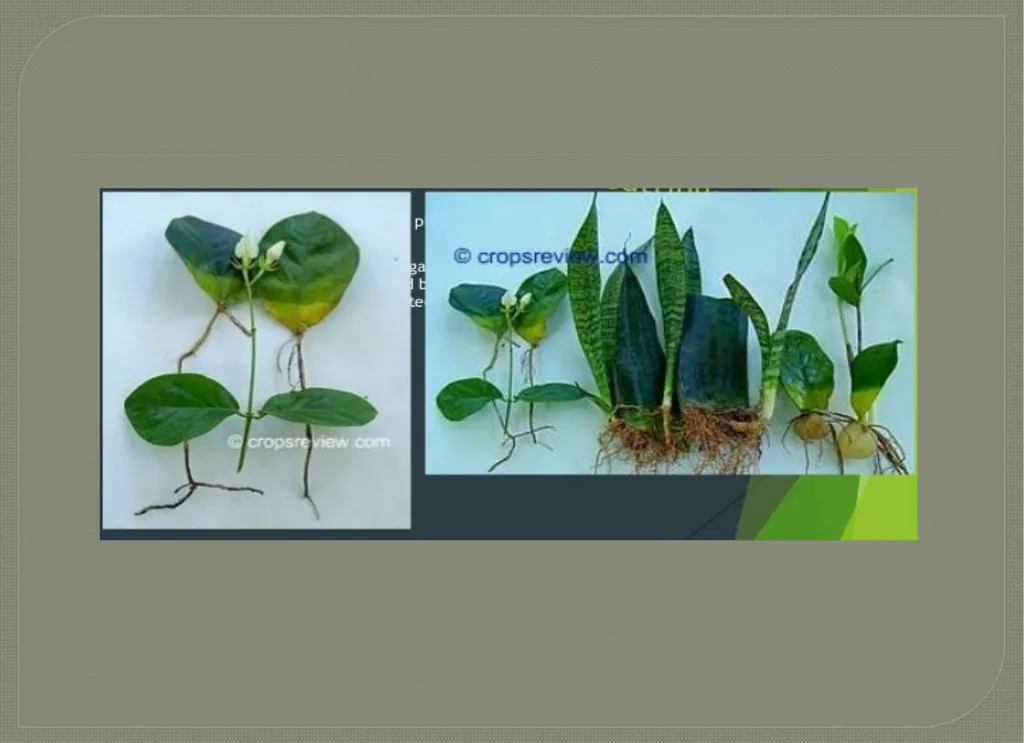
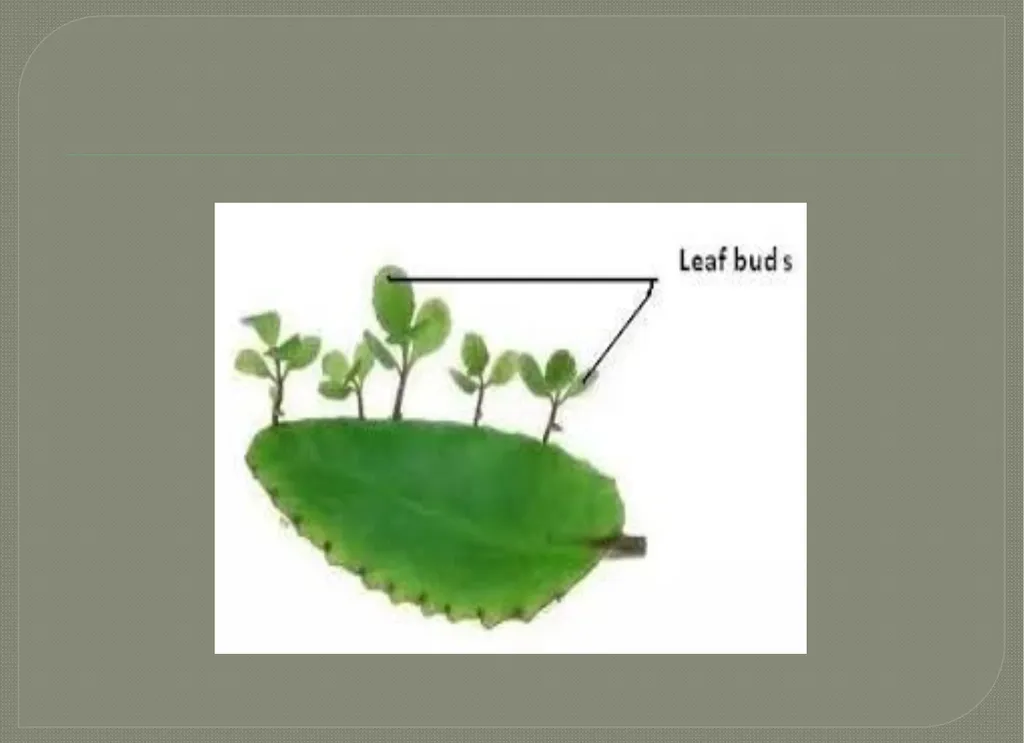
slide15. Leaf and leaf bud cutting Raising new plants from leaf and leaf bud cuttings is a vegetative propagation
plants with thick and fleshy leaves are propagated by leag cuttings
Eg Begonia, Bryophyllum, Sansevieria.
In Peperomia, the leaf is detached from the parent plant and planted vertically in a suitable medium.
Adventitious roots and shoots develop at the base from the petiole<br>
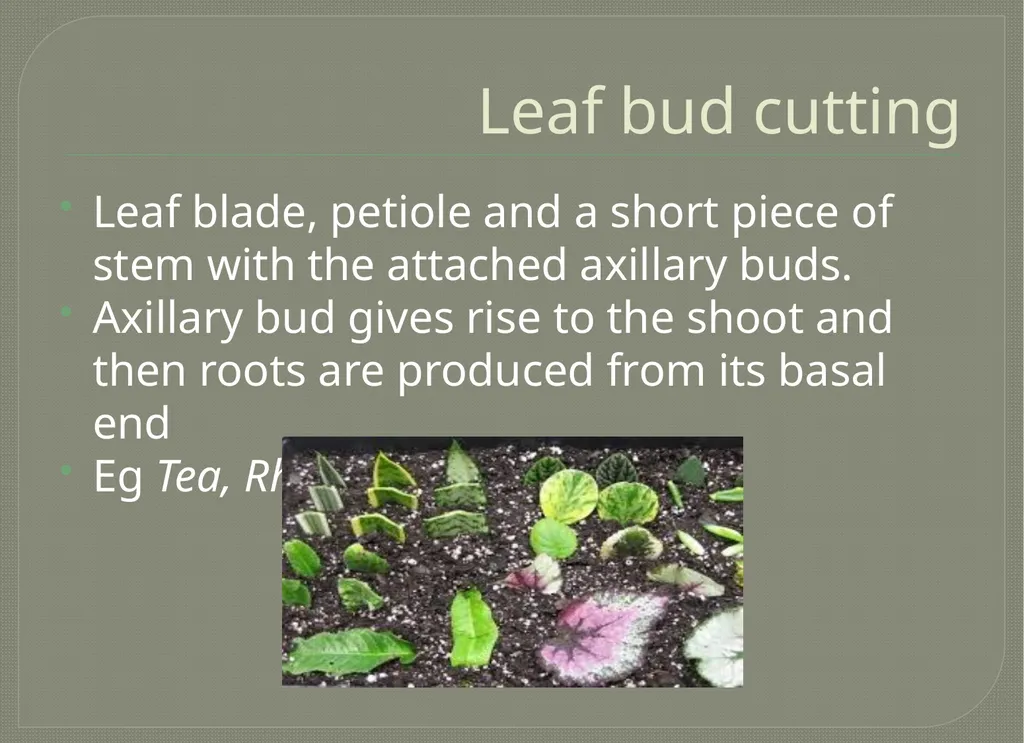
slide18. Leaf bud cutting Leaf blade, petiole and a short piece of stem with the attached axillary buds.
Axillary bud gives rise to the shoot and then roots are produced from its basal end
Eg Tea, Rhododendron<br>
slide19. FACTORS AFFECTING CUTTING Decrease with increasing age of the cutting
High carbohydrates with low nitrogen in the stem allows easy rooting
Male trees root better than the female trees
Foliage leaves on cutting promote root formation
Treated with growth regulators like 2,4-D, IBA to promote rooting<br>
slide20. Reference Kumaresan .V., Horticulture and plant breeding, saras publication.
Kumar N. Introduction to Horticulture
Manibhushan rao, Textbook of Horticulture.
Internet source.<br>
slide21. THANK YOU<br>
A.M.RASHIDA BANU
ASSISTANT PROFESSOR
DEPARTMENT OF BOTANY
HAJEE KARUTHA ROWHER HOWDIA COLLEGE, UTHAMAPALAYAM,
THENI DISTRICT<br>
slide2. VEGETATIVE PROPAGATION Method of plant multiplication in which new plants are raised from detached vegetative parts of plants is called vegetative propagation.
Does not involve gametic fusion and seed formation.
Identical to parent plant
Clonal propagation
Method used where no viable seed production takes place.<br>
slide3. Methods Cuttage
Layerage
Graftage
Budding<br>
slide4. cuttage Propagation of plants by planting the cut vegetative parts of plants
Detached plant part, grow into a new plant
Cuttings may be prepared from stem, leaf or roots
Cheap and convenient method
Propagation of ornamental and fruit crops<br>
slide5. Advantages Cheap and convenient method
More number of plants n short period
Pure clones
Ornamental and fruit crops<br>
slide6. Based of plant part, cutting is classified as Root cutting
Stem cutting
leaf cutting<br>
slide7. Root cutting Cut segments of roots taken for planting
Root cuttings are of 10 to 25 cm long.
Horizontally in soil or moist sand and water regularly
Adventitious buds will sprout to produce shoots
Eg apple, pear, plum, blackberries
Millingtonia hortense is propagated by root cuttings<br>
slide8. Stem cutting Raising new plants from stem cuttings is a vegetative propagation
Based on the nature and strength of the wood, are of 4 types
Herbaceous
Soft wood
Semi hard wood
Hard wood<br>
slide10. Hard wood cutting Cuttings are prepared during dominant season from wood of the previous season growth
15 to 20 cm long with 2 to 3 nodes
Planted straight or slantingly
Fruit plants are propagated eg lemon, oranges, grapes and pear<br>
slide12. Herbaceous stem cutting Succulent herbaceous plant
Stem cutting of 5 to 6 inches with leaves are planted in the soil and watered regularly
Roots develop from the cut end in a shorter period under proper conditions<br>
slide13. Soft wood cutting Flexible and soft wood
Root develop from the cut ends
Root develop from easier and quicker than the other type
Stem cutting are planted with or without leaves.<br>
slide14. Semi hard wood Stem cutting are collected fom new shoots developed after active growth
Duranta , crotons
Leaves are retained on this type of cutting on the top side<br>
slide15. Leaf and leaf bud cutting Raising new plants from leaf and leaf bud cuttings is a vegetative propagation
plants with thick and fleshy leaves are propagated by leag cuttings
Eg Begonia, Bryophyllum, Sansevieria.
In Peperomia, the leaf is detached from the parent plant and planted vertically in a suitable medium.
Adventitious roots and shoots develop at the base from the petiole<br>
slide18. Leaf bud cutting Leaf blade, petiole and a short piece of stem with the attached axillary buds.
Axillary bud gives rise to the shoot and then roots are produced from its basal end
Eg Tea, Rhododendron<br>
slide19. FACTORS AFFECTING CUTTING Decrease with increasing age of the cutting
High carbohydrates with low nitrogen in the stem allows easy rooting
Male trees root better than the female trees
Foliage leaves on cutting promote root formation
Treated with growth regulators like 2,4-D, IBA to promote rooting<br>
slide20. Reference Kumaresan .V., Horticulture and plant breeding, saras publication.
Kumar N. Introduction to Horticulture
Manibhushan rao, Textbook of Horticulture.
Internet source.<br>
slide21. THANK YOU<br>