
Virtual Integrated Reliable Transformative
OM
Published · 30 slides · 0 views
1 / 1
Description
Virtual Integrated Reliable Transformative User-driven E-health System for Pacemakers and Implantable Cardioverter Defibrillators: two randomized clinical trials (VIRTUES PM and VIRTUES ICD) Ratika Parkash MD MSc, George Wells, Amir
Related Topics
Share
Embed code
Download this presentation From Below
"Virtual Integrated Reliable Transformative" is the property of its rightful owner. Permission is granted to download and print the materials on this website for personal, non-commercial use only, and to display it on your personal computer provided you do not modify the materials and that you retain all copyright notices contained in the materials. By downloading content from our website, you accept the terms of this agreement.
Presentation Transcript
01
Virtual Integrated Reliable Transformative User-driven E-health System for Pacemakers and Implantable Cardioverter Defibrillators: two randomized clinical trials (VIRTUES PM and VIRTUES ICD) Ratika Parkash MD MSc, George Wells, Amir Abdelwahab, Habib Khan, Laurence Sterns, Martin van Zyl, Isabelle Nault, Jean-Francois Sarrazin, Felix Ayala-Paredes, Felix Ayala-Valani, Marcio Sturmer, Maxime Ceran-la, Satish Raj, Bernard Thibault, Umjeet Jolly, William Chan, Stephen Duffett, Clarence Khoo, Satish -al, Samuel Sears, Kednapa Thavorn, Anthony Tang
On behalf of the Cardiovascular Network of Canada<br>
On behalf of the Cardiovascular Network of Canada<br>
02
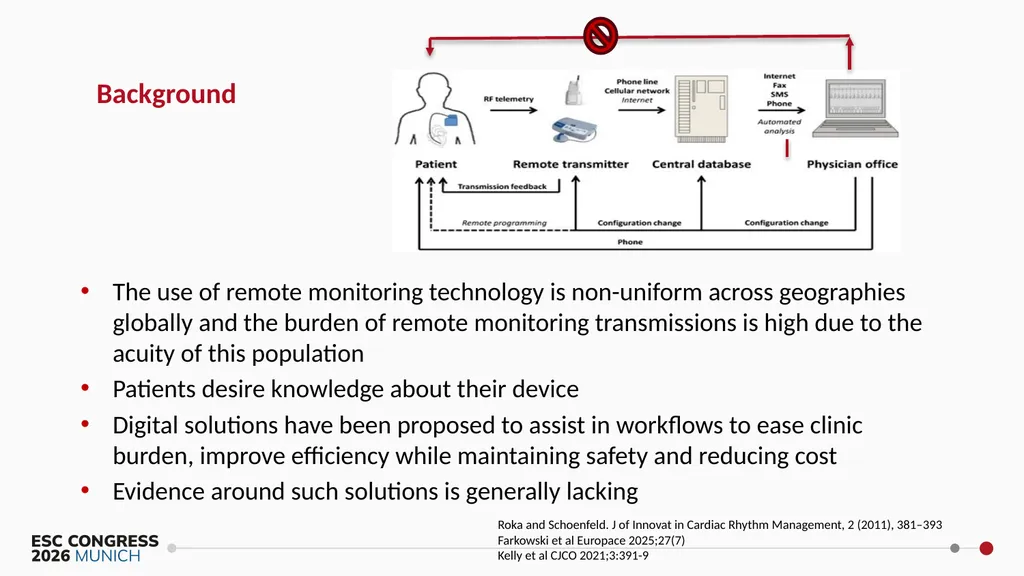
Background The use of remote monitoring technology is non-uniform across geographies globally and the burden of remote monitoring transmissions is high due to the acuity of this population
Patients desire knowledge about their device
Digital solutions have been proposed to assist in workflows to ease clinic burden, improve efficiency while maintaining safety and reducing cost
Evidence around such solutions is generally lacking Roka and Schoenfeld. J of Innovat in Cardiac Rhythm Management, 2 (2011), 381–393
Farkowski et al Europace 2025;27(7)
Kelly et al CJCO 2021;3:391-9<br>
Patients desire knowledge about their device
Digital solutions have been proposed to assist in workflows to ease clinic burden, improve efficiency while maintaining safety and reducing cost
Evidence around such solutions is generally lacking Roka and Schoenfeld. J of Innovat in Cardiac Rhythm Management, 2 (2011), 381–393
Farkowski et al Europace 2025;27(7)
Kelly et al CJCO 2021;3:391-9<br>
03
Study Design and Hypotheses
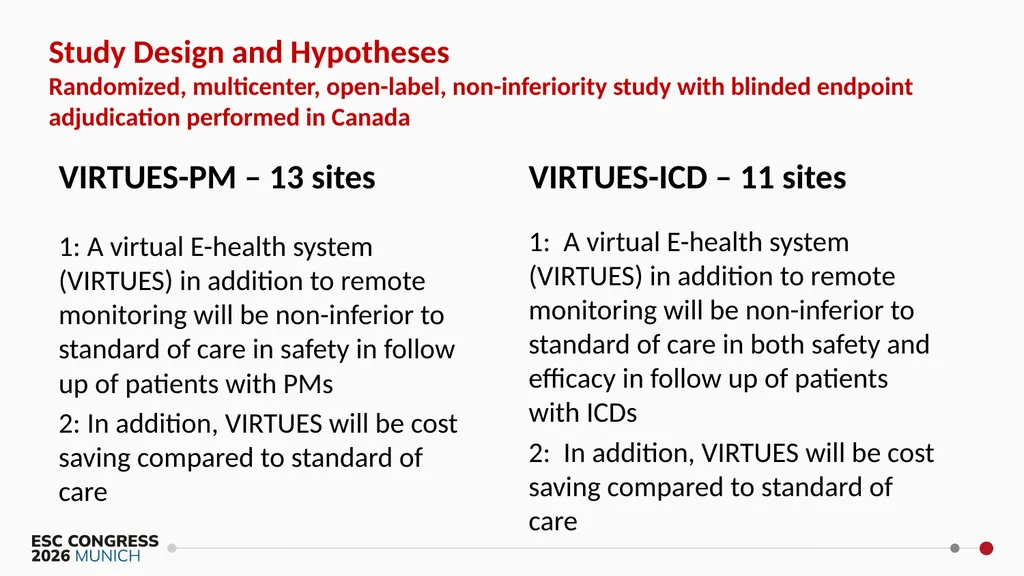
Randomized, multicenter, open-label, non-inferiority study with blinded endpoint adjudication performed in Canada VIRTUES-PM – 13 sites 1: A virtual E-health system (VIRTUES) in addition to remote monitoring will be non-inferior to standard of care in safety in follow up of patients with PMs
2: In addition, VIRTUES will be cost saving compared to standard of care VIRTUES-ICD – 11 sites 1: A virtual E-health system (VIRTUES) in addition to remote monitoring will be non-inferior to standard of care in both safety and efficacy in follow up of patients with ICDs
2: In addition, VIRTUES will be cost saving compared to standard of care<br>
2: In addition, VIRTUES will be cost saving compared to standard of care VIRTUES-ICD – 11 sites 1: A virtual E-health system (VIRTUES) in addition to remote monitoring will be non-inferior to standard of care in both safety and efficacy in follow up of patients with ICDs
2: In addition, VIRTUES will be cost saving compared to standard of care<br>
04
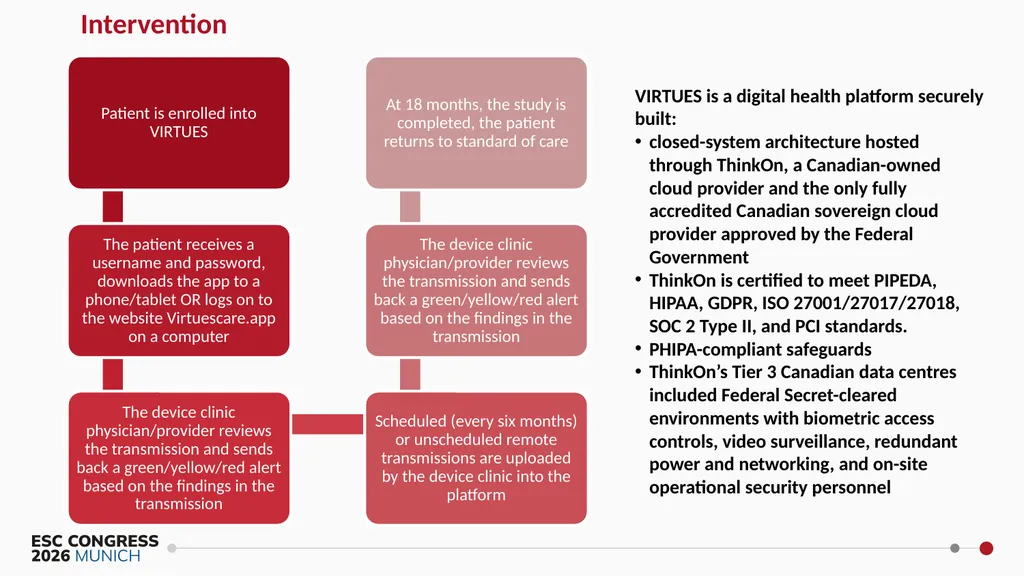
Intervention VIRTUES is a digital health platform securely built:
closed-system architecture hosted through ThinkOn, a Canadian-owned cloud provider and the only fully accredited Canadian sovereign cloud provider approved by the Federal Government
ThinkOn is certified to meet PIPEDA, HIPAA, GDPR, ISO 27001/27017/27018, SOC 2 Type II, and PCI standards.
PHIPA-compliant safeguards
ThinkOn’s Tier 3 Canadian data centres included Federal Secret-cleared environments with biometric access controls, video surveillance, redundant power and networking, and on-site operational security personnel<br>
closed-system architecture hosted through ThinkOn, a Canadian-owned cloud provider and the only fully accredited Canadian sovereign cloud provider approved by the Federal Government
ThinkOn is certified to meet PIPEDA, HIPAA, GDPR, ISO 27001/27017/27018, SOC 2 Type II, and PCI standards.
PHIPA-compliant safeguards
ThinkOn’s Tier 3 Canadian data centres included Federal Secret-cleared environments with biometric access controls, video surveillance, redundant power and networking, and on-site operational security personnel<br>
05
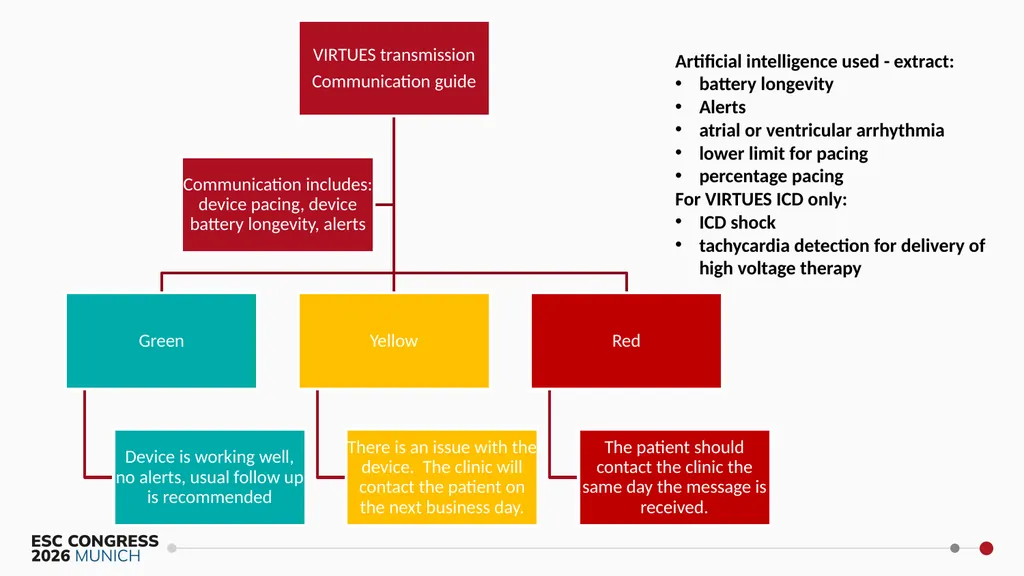
Artificial intelligence used - extract:
battery longevity
Alerts
atrial or ventricular arrhythmia
lower limit for pacing
percentage pacing
For VIRTUES ICD only:
ICD shock
tachycardia detection for delivery of high voltage therapy<br>
battery longevity
Alerts
atrial or ventricular arrhythmia
lower limit for pacing
percentage pacing
For VIRTUES ICD only:
ICD shock
tachycardia detection for delivery of high voltage therapy<br>
06
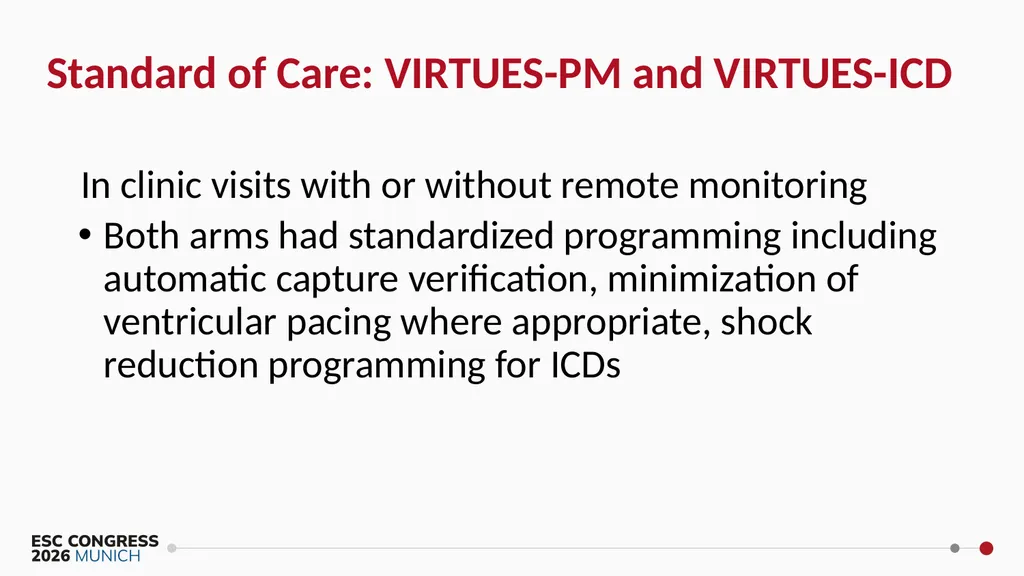
Standard of Care: VIRTUES-PM and VIRTUES-ICD In clinic visits with or without remote monitoring Both arms had standardized programming including automatic capture verification, minimization of ventricular pacing where appropriate, shock reduction programming for ICDs<br>
07
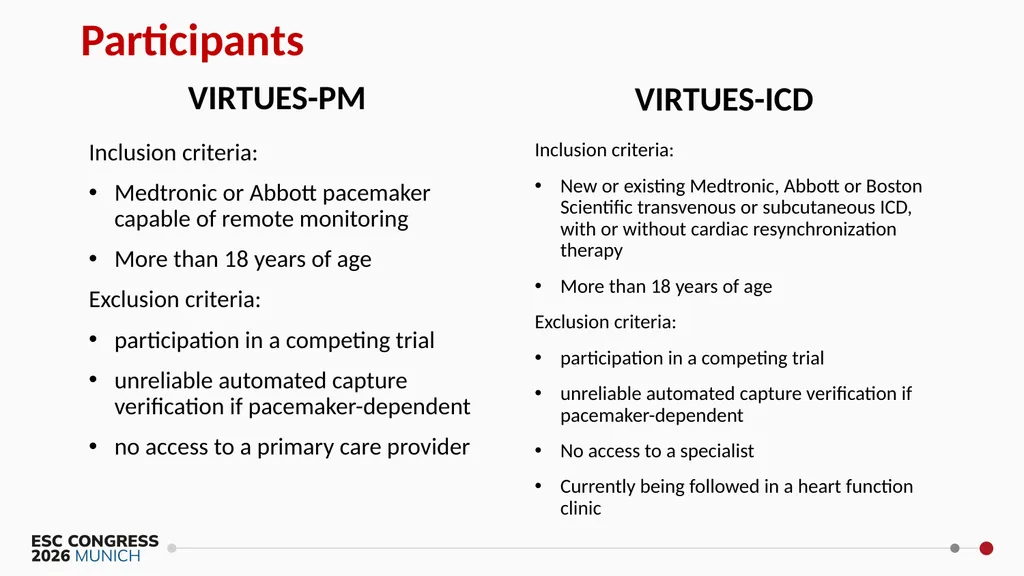
Participants VIRTUES-PM Inclusion criteria:
Medtronic or Abbott pacemaker capable of remote monitoring
More than 18 years of age
Exclusion criteria:
participation in a competing trial
unreliable automated capture verification if pacemaker-dependent
no access to a primary care provider VIRTUES-ICD Inclusion criteria:
New or existing Medtronic, Abbott or Boston Scientific transvenous or subcutaneous ICD, with or without cardiac resynchronization therapy
More than 18 years of age
Exclusion criteria:
participation in a competing trial
unreliable automated capture verification if pacemaker-dependent
No access to a specialist
Currently being followed in a heart function clinic<br>
Medtronic or Abbott pacemaker capable of remote monitoring
More than 18 years of age
Exclusion criteria:
participation in a competing trial
unreliable automated capture verification if pacemaker-dependent
no access to a primary care provider VIRTUES-ICD Inclusion criteria:
New or existing Medtronic, Abbott or Boston Scientific transvenous or subcutaneous ICD, with or without cardiac resynchronization therapy
More than 18 years of age
Exclusion criteria:
participation in a competing trial
unreliable automated capture verification if pacemaker-dependent
No access to a specialist
Currently being followed in a heart function clinic<br>
08
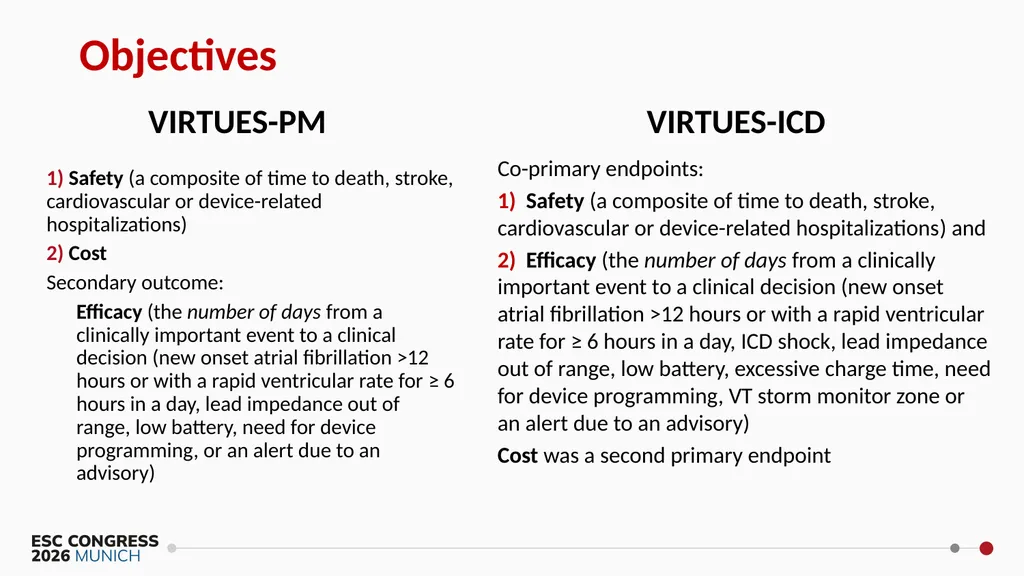
Objectives VIRTUES-PM 1) Safety (a composite of time to death, stroke, cardiovascular or device-related hospitalizations)
2) Cost
Secondary outcome:
Efficacy (the number of days from a clinically important event to a clinical decision (new onset atrial fibrillation >12 hours or with a rapid ventricular rate for ≥ 6 hours in a day, lead impedance out of range, low battery, need for device programming, or an alert due to an advisory) VIRTUES-ICD Co-primary endpoints:
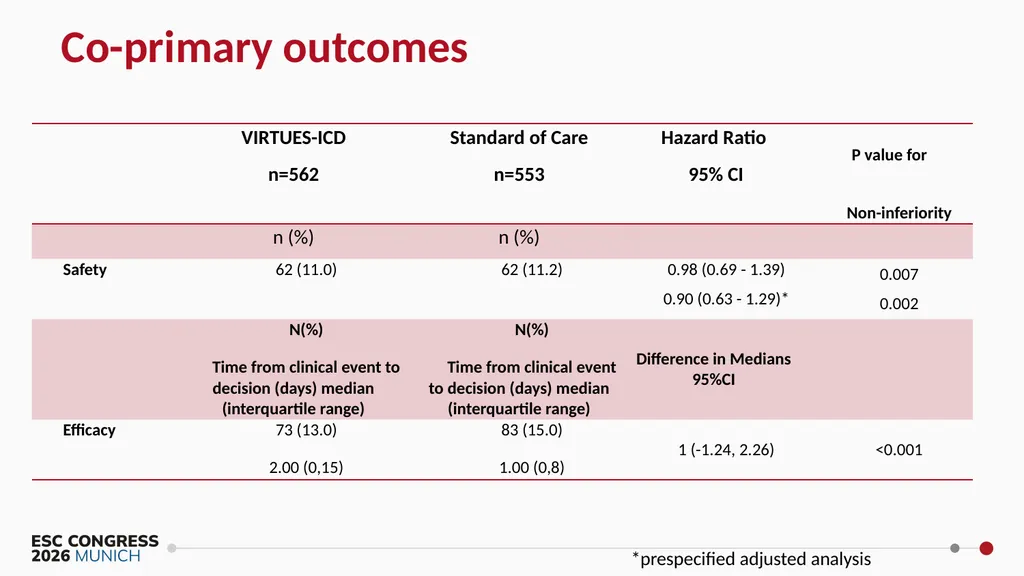
Safety (a composite of time to death, stroke, cardiovascular or device-related hospitalizations) and
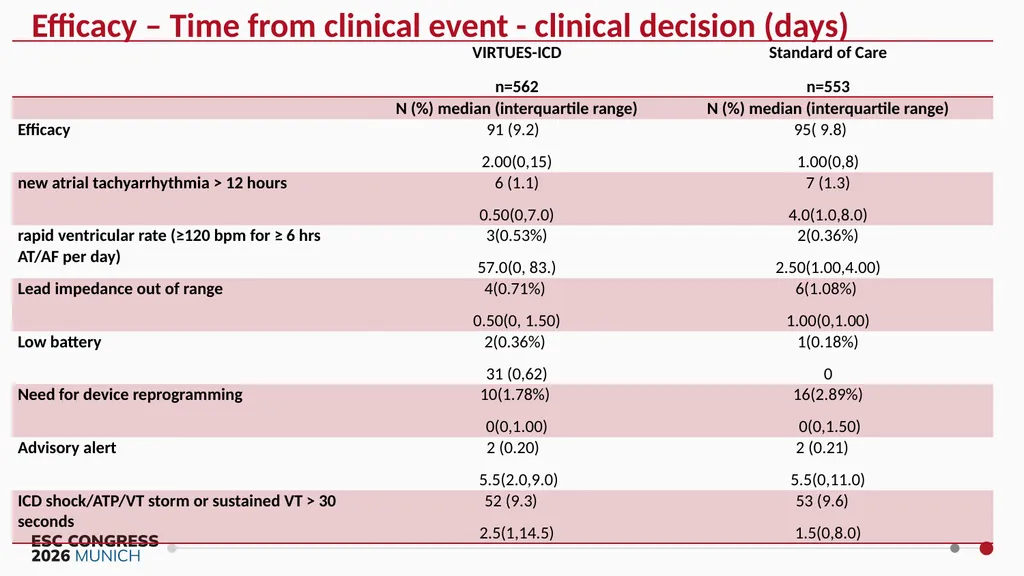
Efficacy (the number of days from a clinically important event to a clinical decision (new onset atrial fibrillation >12 hours or with a rapid ventricular rate for ≥ 6 hours in a day, ICD shock, lead impedance out of range, low battery, excessive charge time, need for device programming, VT storm monitor zone or an alert due to an advisory)
Cost was a second primary endpoint<br>
2) Cost
Secondary outcome:
Efficacy (the number of days from a clinically important event to a clinical decision (new onset atrial fibrillation >12 hours or with a rapid ventricular rate for ≥ 6 hours in a day, lead impedance out of range, low battery, need for device programming, or an alert due to an advisory) VIRTUES-ICD Co-primary endpoints:
Safety (a composite of time to death, stroke, cardiovascular or device-related hospitalizations) and
Efficacy (the number of days from a clinically important event to a clinical decision (new onset atrial fibrillation >12 hours or with a rapid ventricular rate for ≥ 6 hours in a day, ICD shock, lead impedance out of range, low battery, excessive charge time, need for device programming, VT storm monitor zone or an alert due to an advisory)
Cost was a second primary endpoint<br>
09
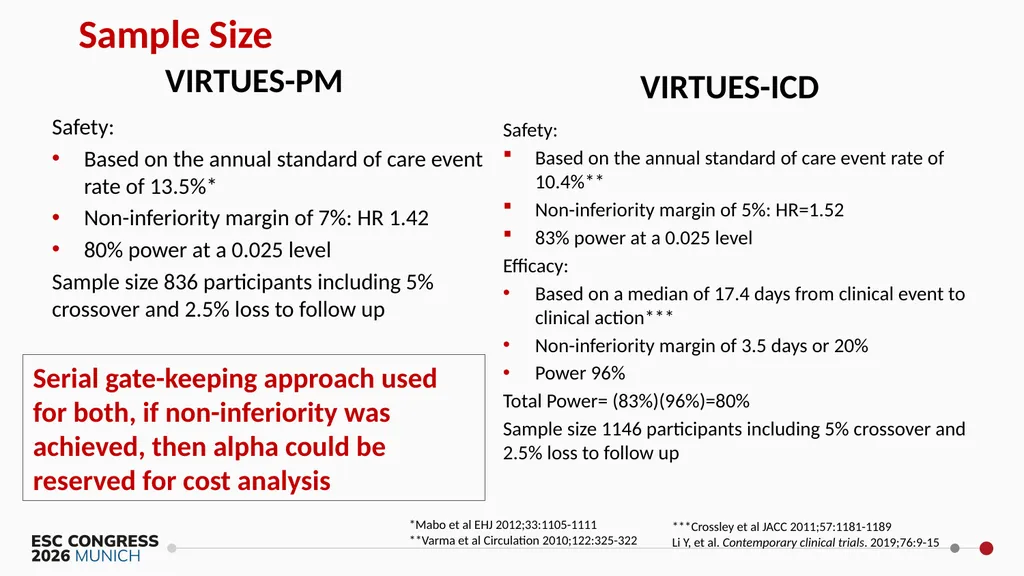
Sample Size Safety:
Based on the annual standard of care event rate of 13.5%*
Non-inferiority margin of 7%: HR 1.42
80% power at a 0.025 level
Sample size 836 participants including 5% crossover and 2.5% loss to follow up Safety:
Based on the annual standard of care event rate of 10.4%**
Non-inferiority margin of 5%: HR=1.52
83% power at a 0.025 level
Efficacy:
Based on a median of 17.4 days from clinical event to clinical action***
Non-inferiority margin of 3.5 days or 20%
Power 96%
Total Power= (83%)(96%)=80%
Sample size 1146 participants including 5% crossover and 2.5% loss to follow up *Mabo et al EHJ 2012;33:1105-1111
**Varma et al Circulation 2010;122:325-322 VIRTUES-PM VIRTUES-ICD Serial gate-keeping approach used for both, if non-inferiority was achieved, then alpha could be reserved for cost analysis ***Crossley et al JACC 2011;57:1181-1189
Li Y, et al. Contemporary clinical trials. 2019;76:9-15<br>
Based on the annual standard of care event rate of 13.5%*
Non-inferiority margin of 7%: HR 1.42
80% power at a 0.025 level
Sample size 836 participants including 5% crossover and 2.5% loss to follow up Safety:
Based on the annual standard of care event rate of 10.4%**
Non-inferiority margin of 5%: HR=1.52
83% power at a 0.025 level
Efficacy:
Based on a median of 17.4 days from clinical event to clinical action***
Non-inferiority margin of 3.5 days or 20%
Power 96%
Total Power= (83%)(96%)=80%
Sample size 1146 participants including 5% crossover and 2.5% loss to follow up *Mabo et al EHJ 2012;33:1105-1111
**Varma et al Circulation 2010;122:325-322 VIRTUES-PM VIRTUES-ICD Serial gate-keeping approach used for both, if non-inferiority was achieved, then alpha could be reserved for cost analysis ***Crossley et al JACC 2011;57:1181-1189
Li Y, et al. Contemporary clinical trials. 2019;76:9-15<br>
10
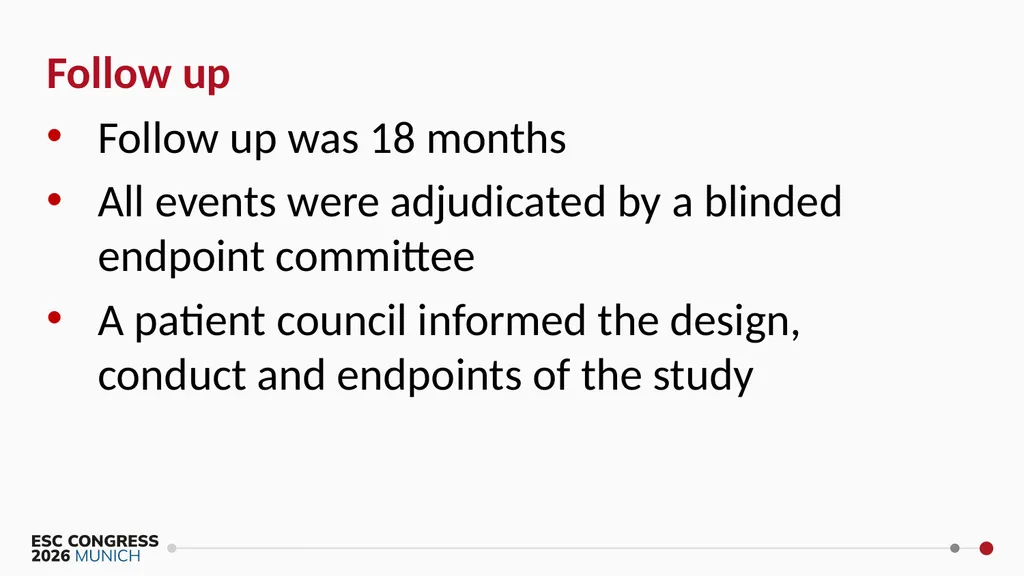
Follow up Follow up was 18 months
All events were adjudicated by a blinded endpoint committee
A patient council informed the design, conduct and endpoints of the study<br>
All events were adjudicated by a blinded endpoint committee
A patient council informed the design, conduct and endpoints of the study<br>
11
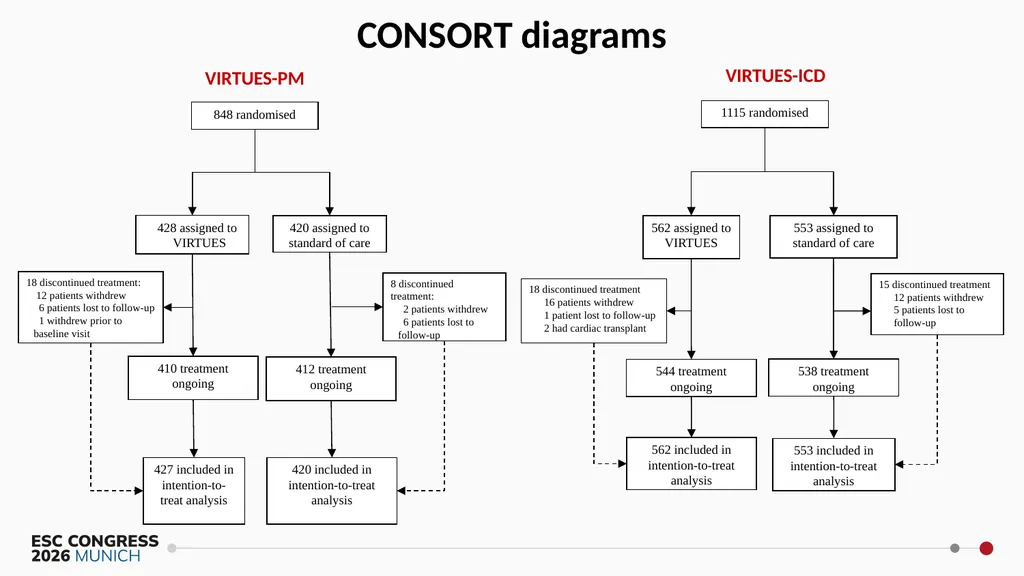
1115 randomised 562 assigned to VIRTUES 553 assigned to standard of care 553 included in intention-to-treat analysis 15 discontinued treatment
12 patients withdrew
5 patients lost to follow-up 538 treatment ongoing 544 treatment ongoing 562 included in intention-to-treat analysis 18 discontinued treatment
16 patients withdrew
1 patient lost to follow-up
2 had cardiac transplant CONSORT diagrams 848 randomised 428 assigned to VIRTUES 420 assigned to standard of care 420 included in intention-to-treat analysis 8 discontinued treatment:
2 patients withdrew
6 patients lost to follow-up 412 treatment ongoing 410 treatment ongoing 427 included in intention-to-treat analysis 18 discontinued treatment:
12 patients withdrew
6 patients lost to follow-up
1 withdrew prior to baseline visit VIRTUES-ICD VIRTUES-PM<br>
12 patients withdrew
5 patients lost to follow-up 538 treatment ongoing 544 treatment ongoing 562 included in intention-to-treat analysis 18 discontinued treatment
16 patients withdrew
1 patient lost to follow-up
2 had cardiac transplant CONSORT diagrams 848 randomised 428 assigned to VIRTUES 420 assigned to standard of care 420 included in intention-to-treat analysis 8 discontinued treatment:
2 patients withdrew
6 patients lost to follow-up 412 treatment ongoing 410 treatment ongoing 427 included in intention-to-treat analysis 18 discontinued treatment:
12 patients withdrew
6 patients lost to follow-up
1 withdrew prior to baseline visit VIRTUES-ICD VIRTUES-PM<br>
12
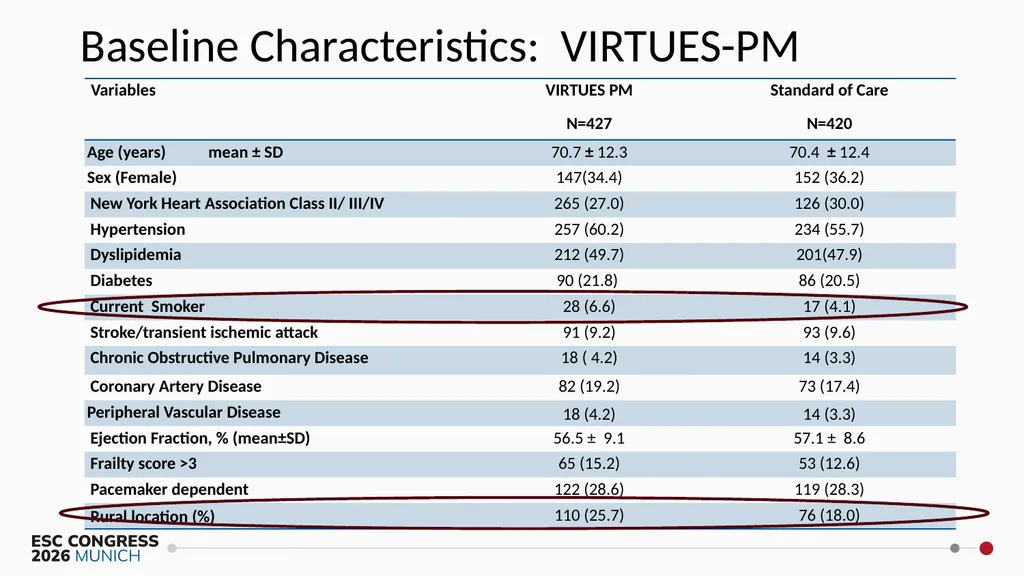
Baseline Characteristics: VIRTUES-PM<br>
13
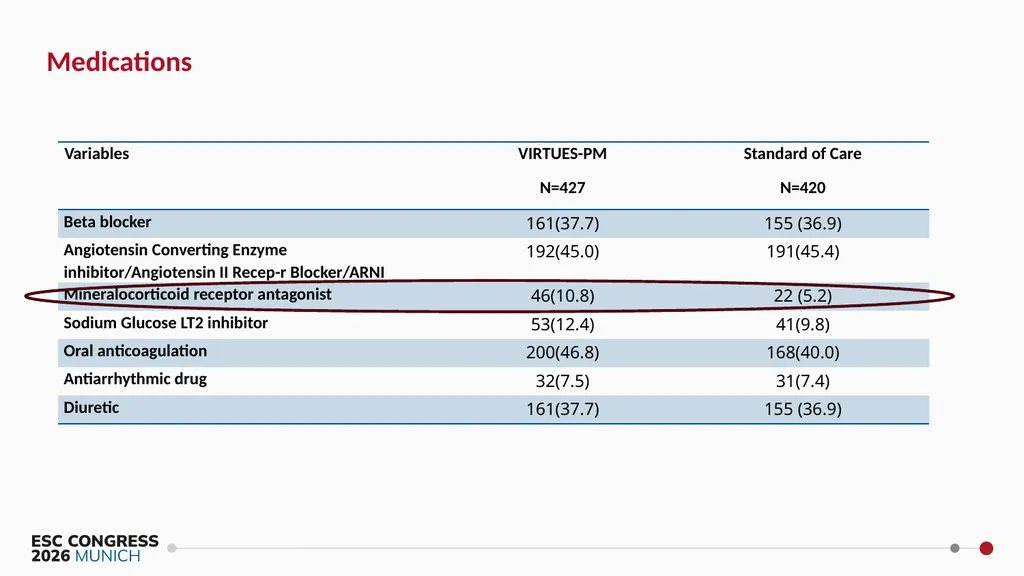
Medications<br>
14
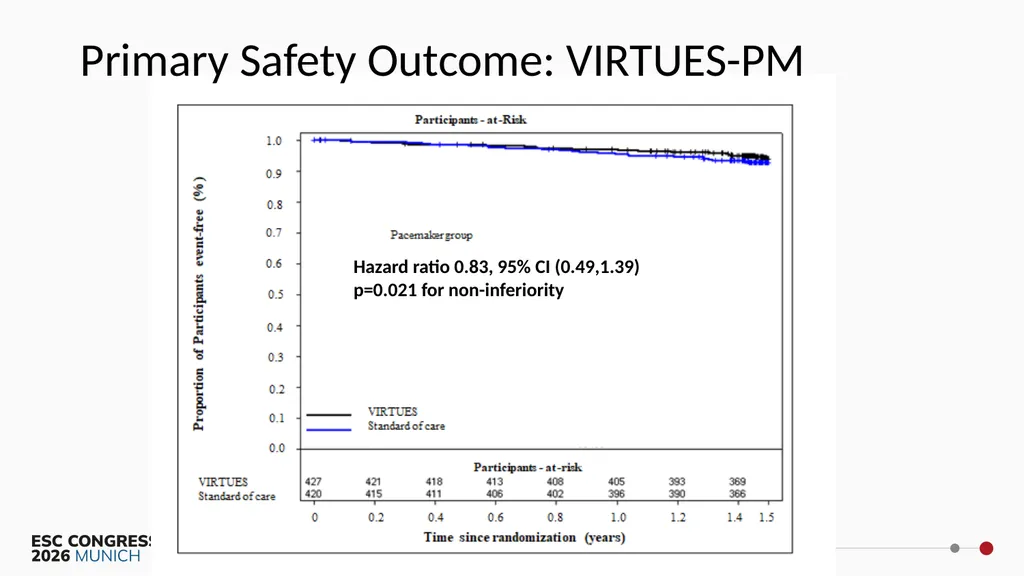
Primary Safety Outcome: VIRTUES-PM Hazard ratio 0.83, 95% CI (0.49,1.39)
p=0.021 for non-inferiority<br>
p=0.021 for non-inferiority<br>
15
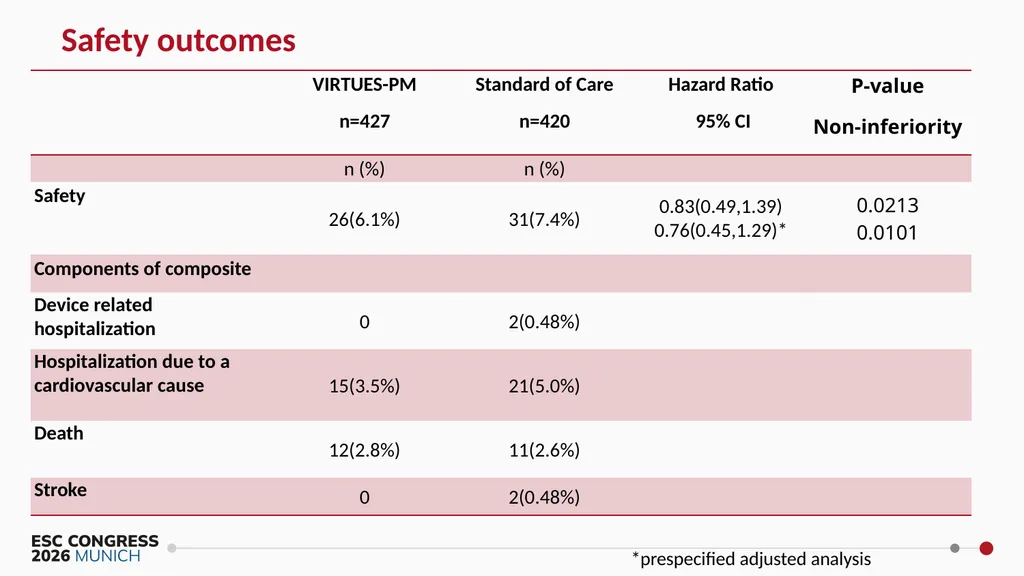
Safety outcomes *prespecified adjusted analysis<br>
16
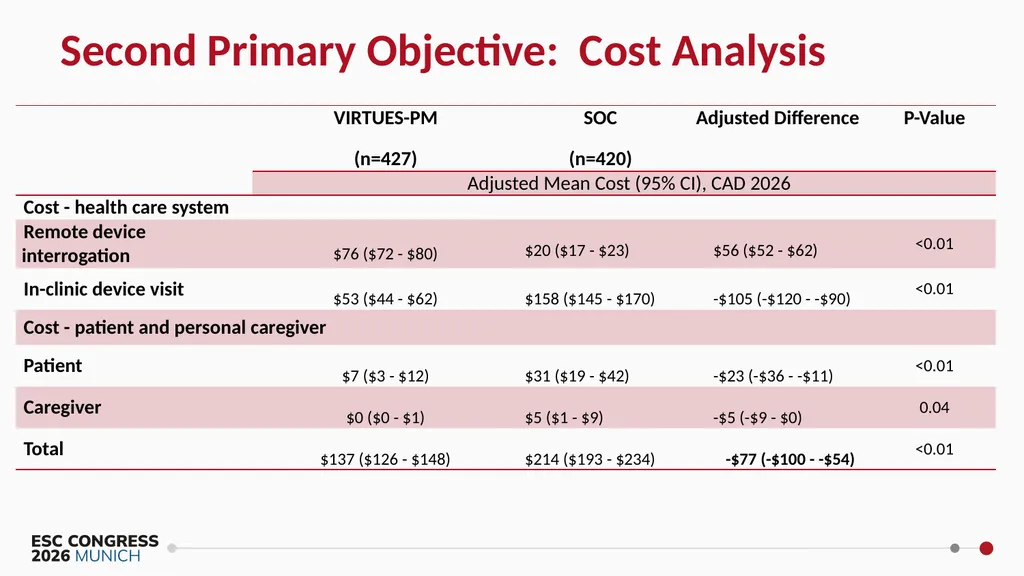
Second Primary Objective: Cost Analysis<br>
17
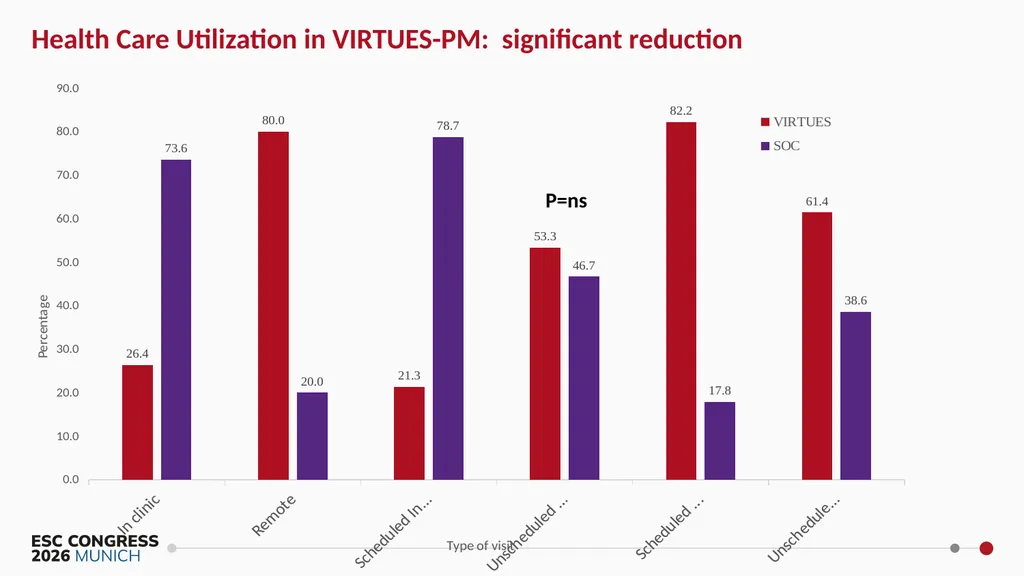
Health Care Utilization in VIRTUES-PM: significant reduction P=ns<br>
18
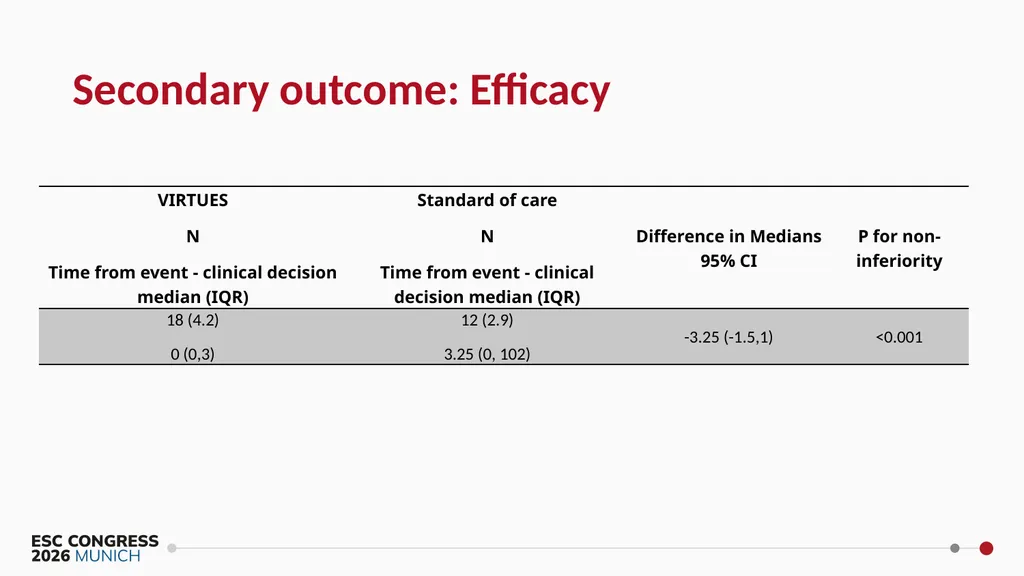
Secondary outcome: Efficacy<br>
19
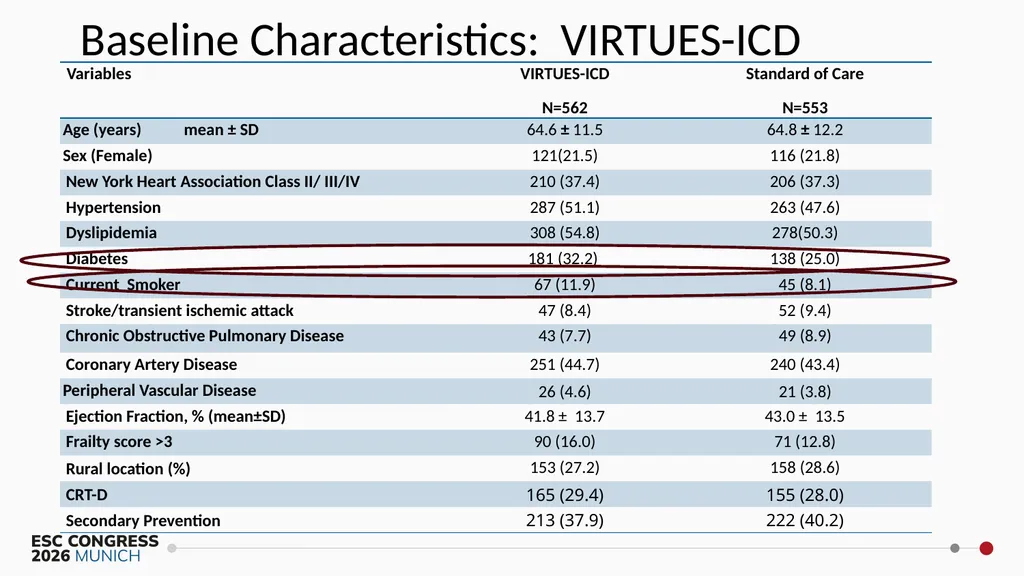
Baseline Characteristics: VIRTUES-ICD<br>
20
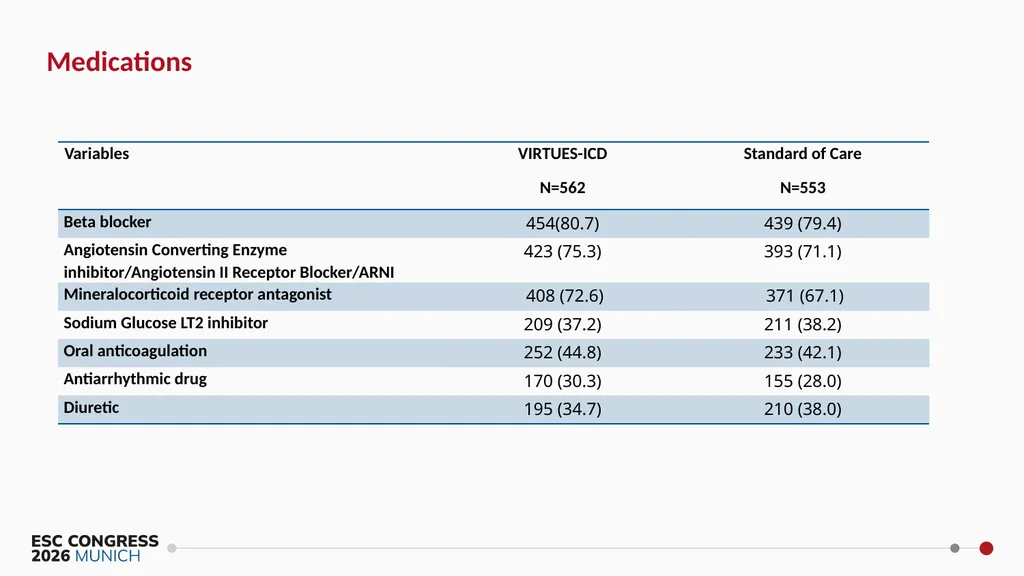
Medications<br>
21
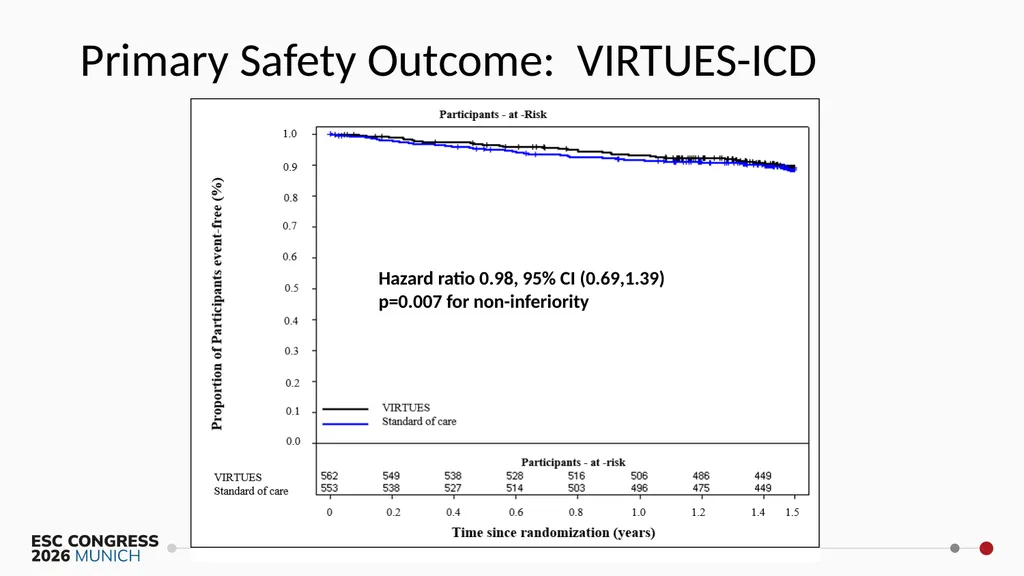
Primary Safety Outcome: VIRTUES-ICD Hazard ratio 0.98, 95% CI (0.69,1.39)
p=0.007 for non-inferiority<br>
p=0.007 for non-inferiority<br>
22
Co-primary outcomes *prespecified adjusted analysis<br>
23
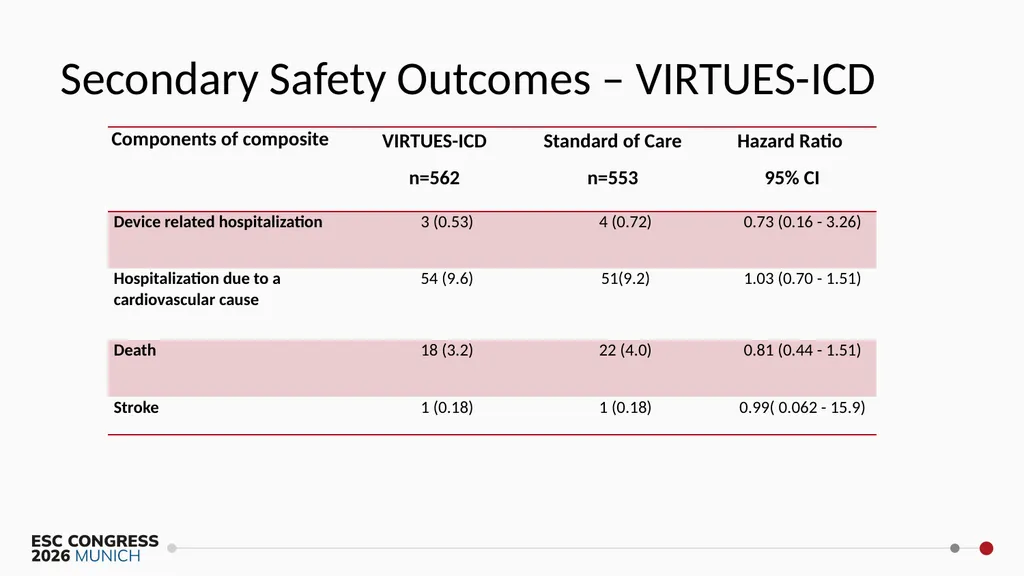
Secondary Safety Outcomes – VIRTUES-ICD<br>
24
Efficacy – Time from clinical event - clinical decision (days)<br>
25
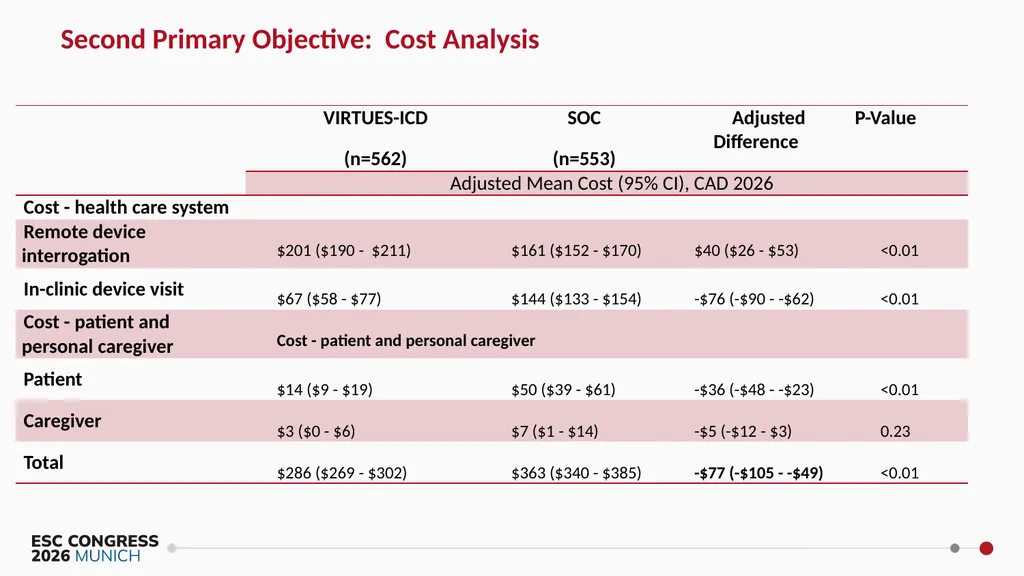
Second Primary Objective: Cost Analysis<br>
26
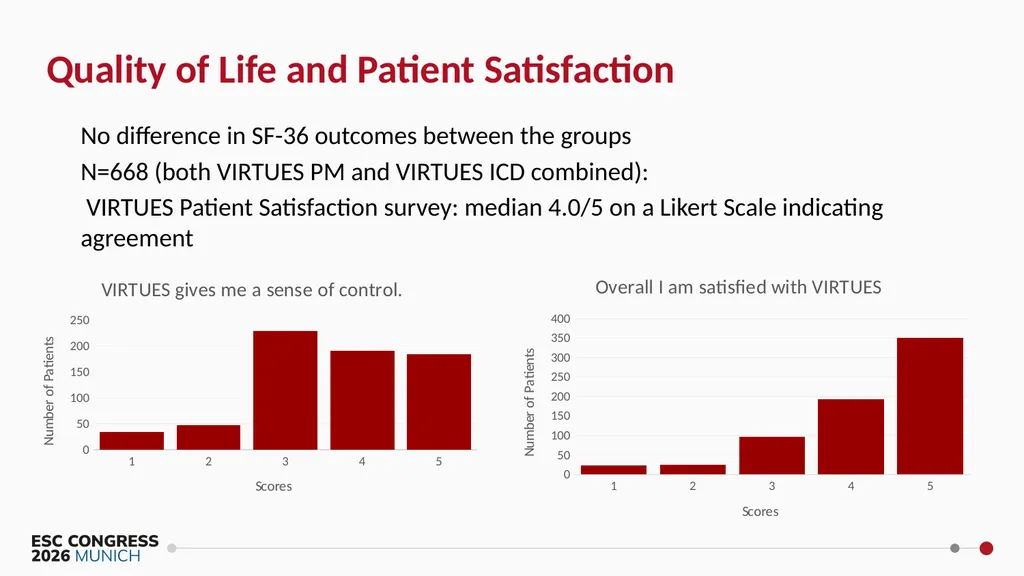
Quality of Life and Patient Satisfaction No difference in SF-36 outcomes between the groups
N=668 (both VIRTUES PM and VIRTUES ICD combined):
VIRTUES Patient Satisfaction survey: median 4.0/5 on a Likert Scale indicating agreement<br>
N=668 (both VIRTUES PM and VIRTUES ICD combined):
VIRTUES Patient Satisfaction survey: median 4.0/5 on a Likert Scale indicating agreement<br>
27
Limitations This study was performed in a region where universal health care was available for all patients, with a single payer system
The event rates in VIRTUES-PM were lower than anticipated, however, relative margins were utilized to calculate non-inferiority to account for this
Cost savings were based on participant and health care system costs, full cost-effectiveness analyses for both studies are ongoing
The trials follow up was 18 months, the effect of cost savings may be underestimated 28<br>
The event rates in VIRTUES-PM were lower than anticipated, however, relative margins were utilized to calculate non-inferiority to account for this
Cost savings were based on participant and health care system costs, full cost-effectiveness analyses for both studies are ongoing
The trials follow up was 18 months, the effect of cost savings may be underestimated 28<br>
28
Conclusions In these two randomized controlled trials of ICD and PM patients, a digital health platform (VIRTUES) in combination with remote monitoring was found to be as safe and as efficacious as standard of care
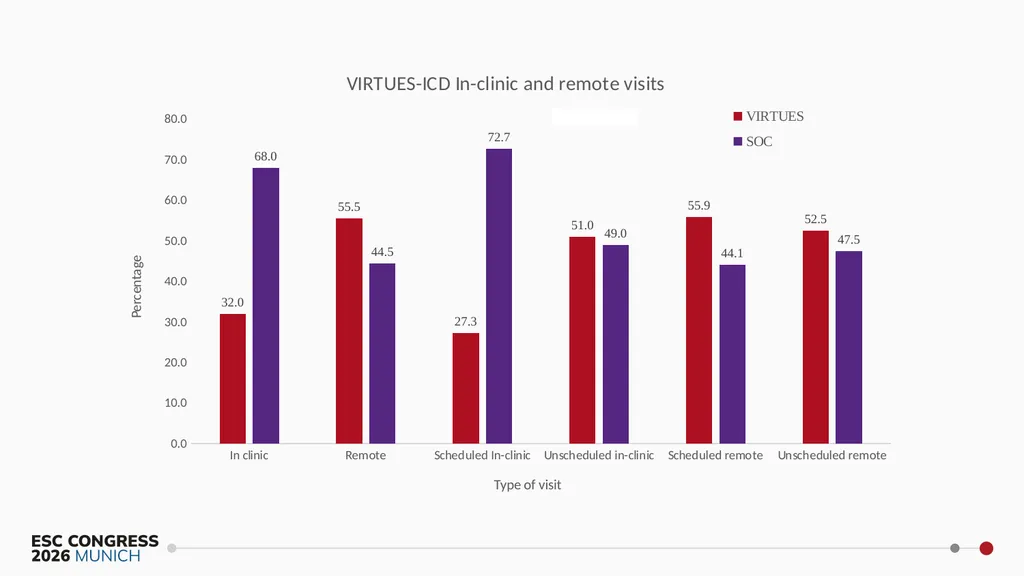
In addition, it was found to be more cost saving with a significant reduction in in-clinic visits, and in cost of travel for the patients themselves
The use of a digital health platform in combination with remote monitoring should be implemented globally to improve the care of the patients with CIEDs, decreasing cost for the health care system and patients with these devices<br>
In addition, it was found to be more cost saving with a significant reduction in in-clinic visits, and in cost of travel for the patients themselves
The use of a digital health platform in combination with remote monitoring should be implemented globally to improve the care of the patients with CIEDs, decreasing cost for the health care system and patients with these devices<br>
29
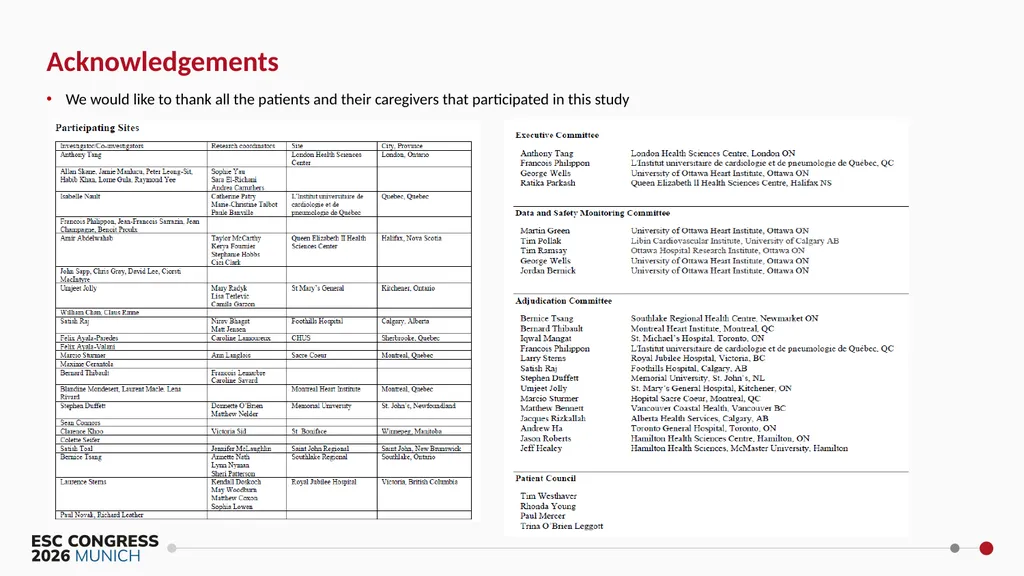
Acknowledgements We would like to thank all the patients and their caregivers that participated in this study 30<br>