Volcanoes What do we know already? What is a
Description: Volcanoes What do we know already? What is a volcano? A mountain with a crater or vent which allows molten rock (magma) to escape to the Earths surface This can be a devastating and violent eruption! Mount Vesuvius, Mount St. Helens
Related Topics
Download Presentation
"Volcanoes What do we know already? What is a" is the property of its rightful owner. Permission is granted to download and print the materials on this website for personal, non-commercial use only, and to display it on your personal computer provided you do not modify the materials and that you retain all copyright notices contained in the materials. By downloading content from our website, you accept the terms of this agreement.
Presentation Transcript
slide1. Volcanoes<br>
slide2. What do we know already?<br>
slide3. What is a volcano? A mountain with a crater or vent which allows molten rock (magma) to escape to the Earth’s surface
This can be a devastating and violent eruption!
Mount Vesuvius, Mount St. Helens
https://www.youtube.com/watch?v=uZp1dNybgfc&feature=player_embedded<br>
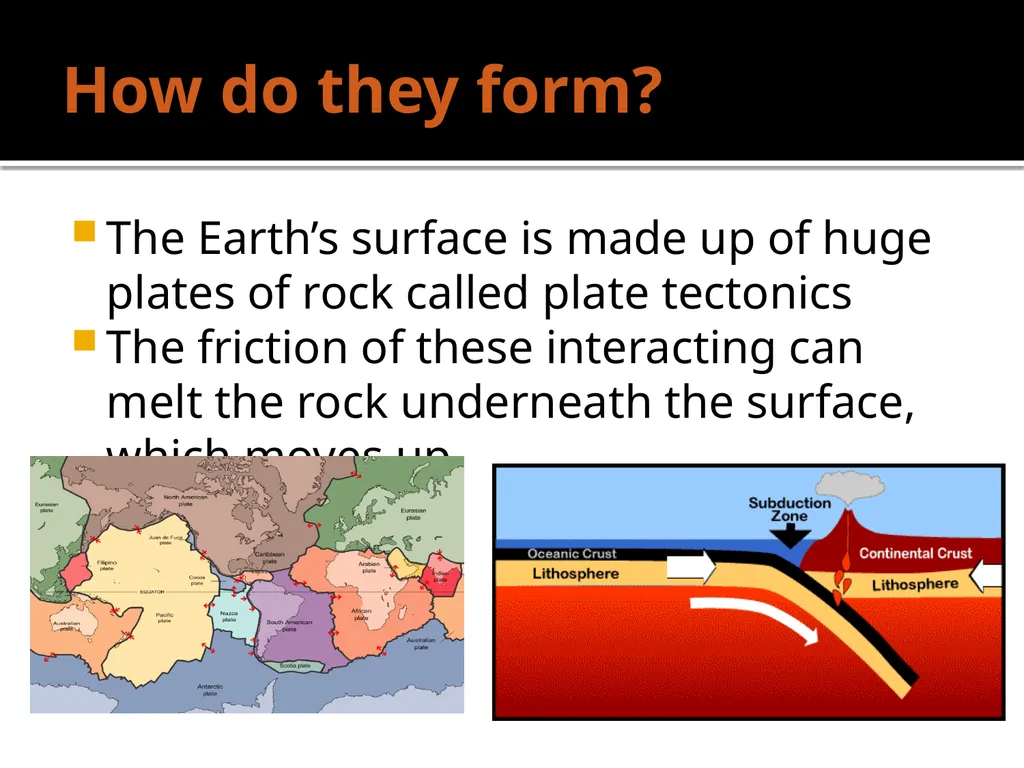
slide4. How do they form? The Earth’s surface is made up of huge plates of rock called plate tectonics
The friction of these interacting can melt the rock underneath the surface, which moves up<br>
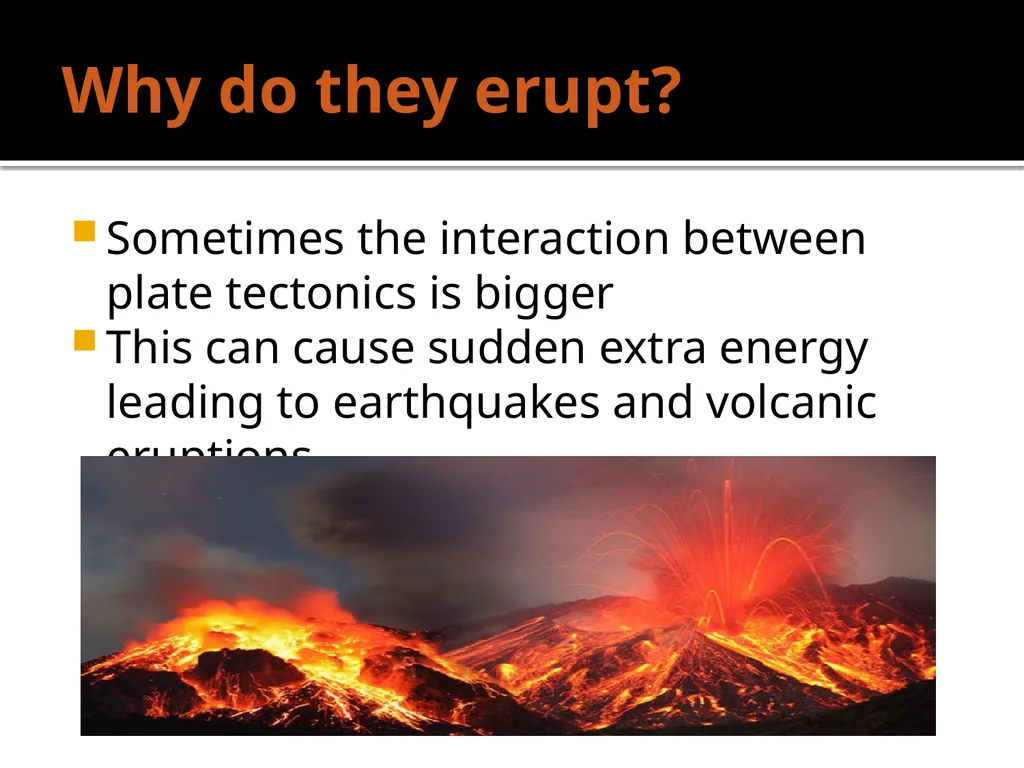
slide5. Why do they erupt? Sometimes the interaction between plate tectonics is bigger
This can cause sudden extra energy leading to earthquakes and volcanic eruptions<br>
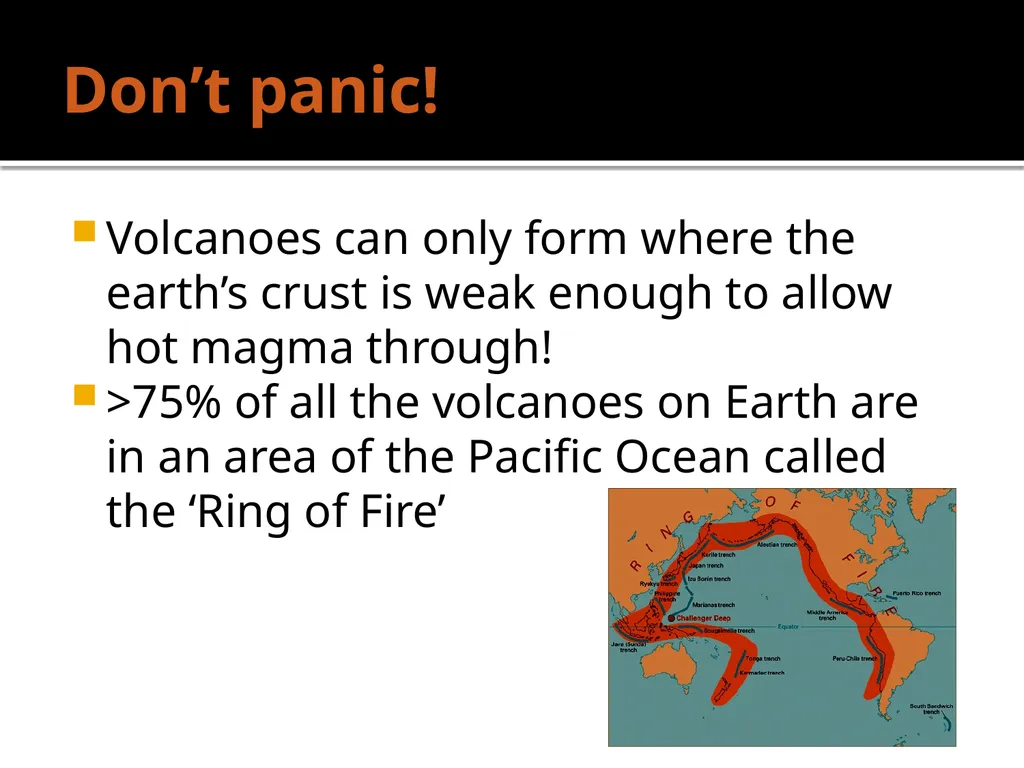
slide6. Don’t panic! Volcanoes can only form where the earth’s crust is weak enough to allow hot magma through!
>75% of all the volcanoes on Earth are in an area of the Pacific Ocean called the ‘Ring of Fire’<br>
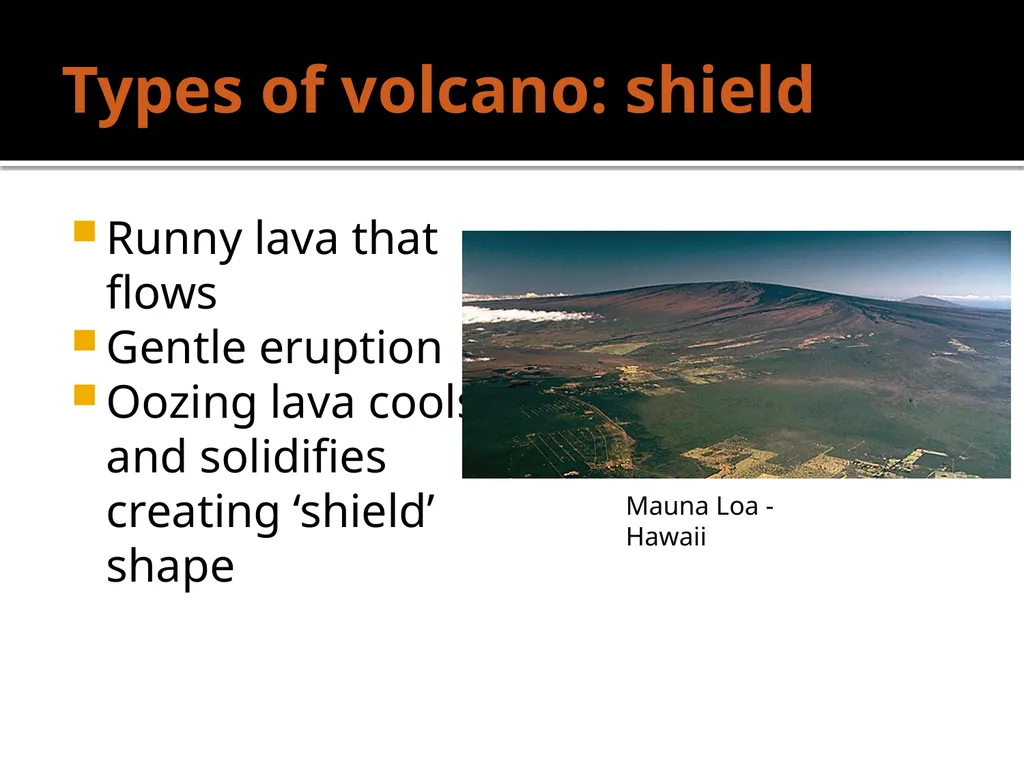
slide7. Types of volcano: shield Runny lava that flows
Gentle eruption
Oozing lava cools and solidifies creating ‘shield’ shape Mauna Loa - Hawaii<br>
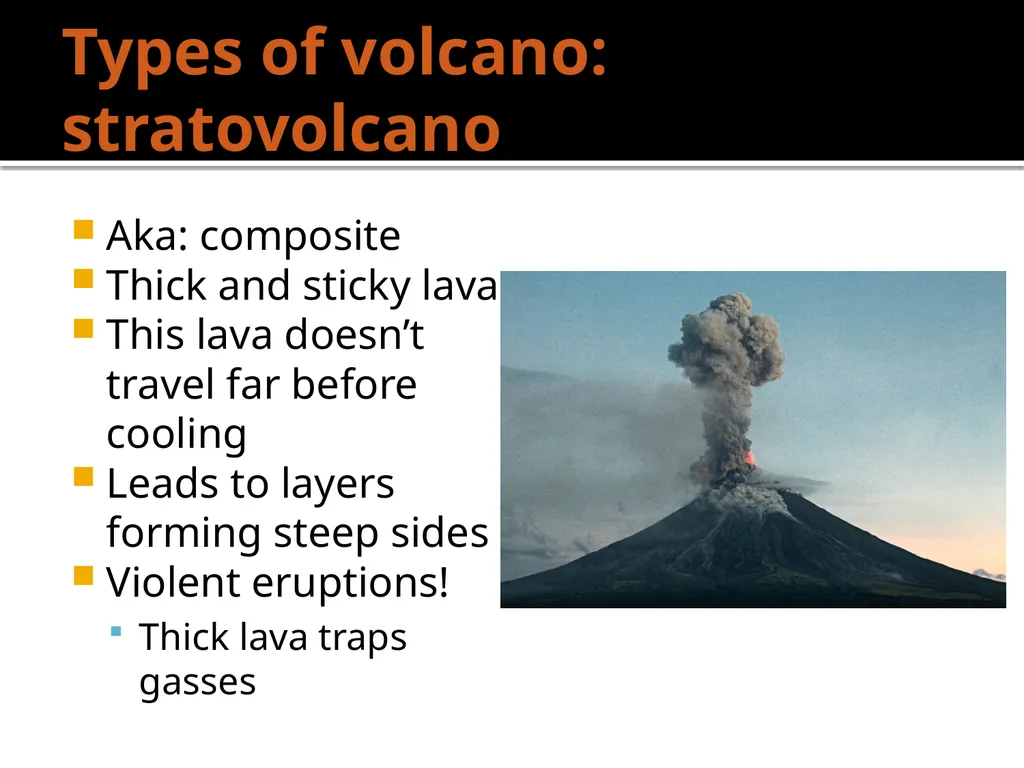
slide8. Types of volcano: stratovolcano Aka: composite
Thick and sticky lava
This lava doesn’t travel far before cooling
Leads to layers forming steep sides
Violent eruptions!
Thick lava traps gasses<br>
slide9. The fun bit! We are going to recreate volcanic eruptions!
Working in groups of 3
Using the materials provided we can replicate lava
What shape would you like to make it: shield or composite?
We will use a chemical reaction – in nature it is heat and pressure!<br>
slide10. If you are finished building Think about what happens when volcanoes erupt, and how scientists can predict if one is about to erupt
Write down as many ideas as you can think of
Could you come up with a new invention to help?<br>
slide11. Reflection What did you learn today?
What is your favourite type of volcano?
What could you tell people at home about volcanoes that they might not know?<br>
slide2. What do we know already?<br>
slide3. What is a volcano? A mountain with a crater or vent which allows molten rock (magma) to escape to the Earth’s surface
This can be a devastating and violent eruption!
Mount Vesuvius, Mount St. Helens
https://www.youtube.com/watch?v=uZp1dNybgfc&feature=player_embedded<br>
slide4. How do they form? The Earth’s surface is made up of huge plates of rock called plate tectonics
The friction of these interacting can melt the rock underneath the surface, which moves up<br>
slide5. Why do they erupt? Sometimes the interaction between plate tectonics is bigger
This can cause sudden extra energy leading to earthquakes and volcanic eruptions<br>
slide6. Don’t panic! Volcanoes can only form where the earth’s crust is weak enough to allow hot magma through!
>75% of all the volcanoes on Earth are in an area of the Pacific Ocean called the ‘Ring of Fire’<br>
slide7. Types of volcano: shield Runny lava that flows
Gentle eruption
Oozing lava cools and solidifies creating ‘shield’ shape Mauna Loa - Hawaii<br>
slide8. Types of volcano: stratovolcano Aka: composite
Thick and sticky lava
This lava doesn’t travel far before cooling
Leads to layers forming steep sides
Violent eruptions!
Thick lava traps gasses<br>
slide9. The fun bit! We are going to recreate volcanic eruptions!
Working in groups of 3
Using the materials provided we can replicate lava
What shape would you like to make it: shield or composite?
We will use a chemical reaction – in nature it is heat and pressure!<br>
slide10. If you are finished building Think about what happens when volcanoes erupt, and how scientists can predict if one is about to erupt
Write down as many ideas as you can think of
Could you come up with a new invention to help?<br>
slide11. Reflection What did you learn today?
What is your favourite type of volcano?
What could you tell people at home about volcanoes that they might not know?<br>