
Wales is famous for having old legends and
DP
Published · 42 slides · 0 views

1 / 1















Description
Wales is famous for having old legends and folklore these stories give us an insight into the lives and beliefs of people who lived here hundreds and hundreds of years ago. The Mabinogion Collection of 11 medieval Welsh tales based on
Related Topics
Share
Embed code
Download this presentation From Below
"Wales is famous for having old legends and" is the property of its rightful owner. Permission is granted to download and print the materials on this website for personal, non-commercial use only, and to display it on your personal computer provided you do not modify the materials and that you retain all copyright notices contained in the materials. By downloading content from our website, you accept the terms of this agreement.
Presentation Transcript
01
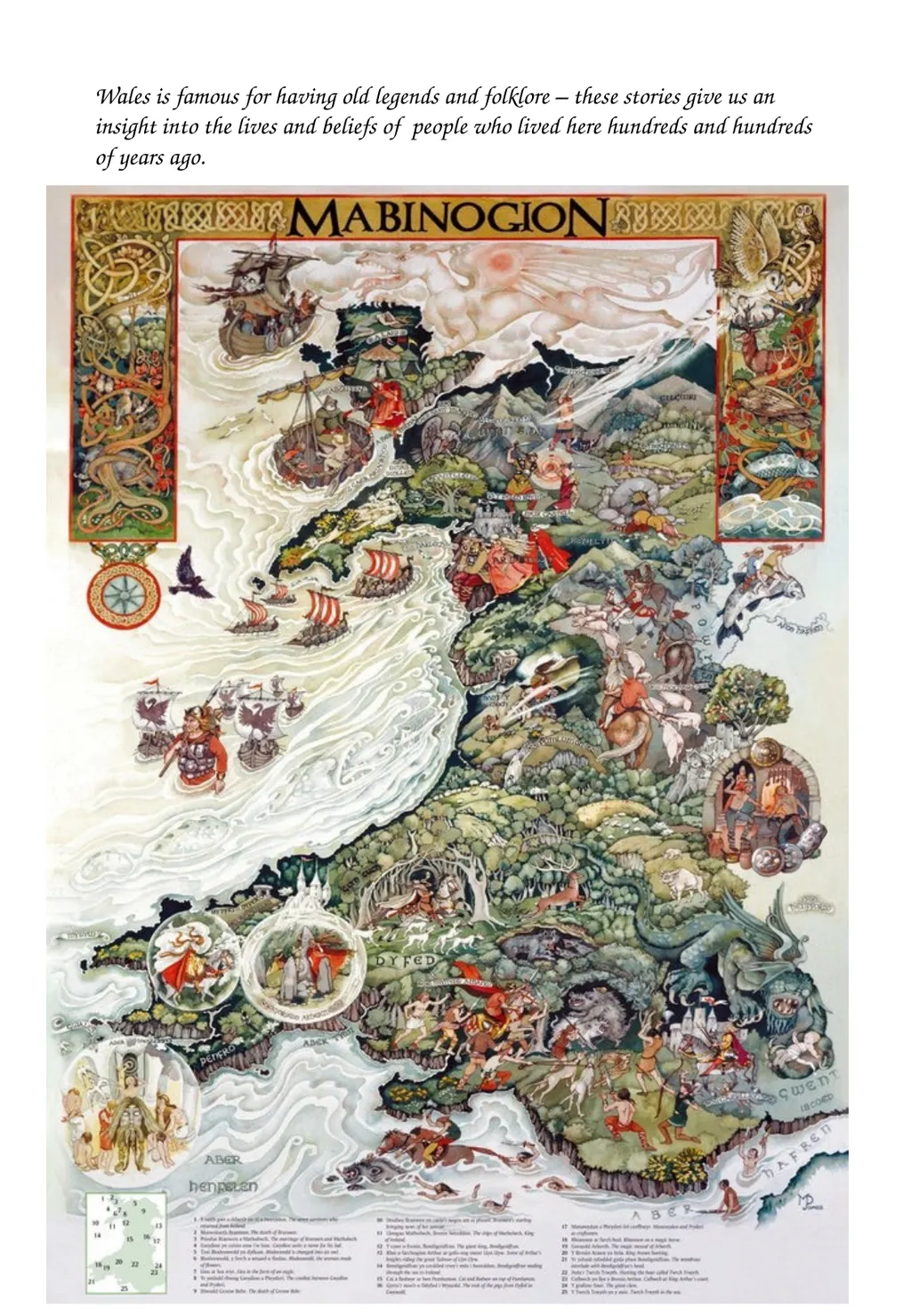
Wales is famous for having old legends and folklore – these stories give us an insight into the lives and beliefs of people who lived here hundreds and hundreds of years ago.<br>
02
The Mabinogion
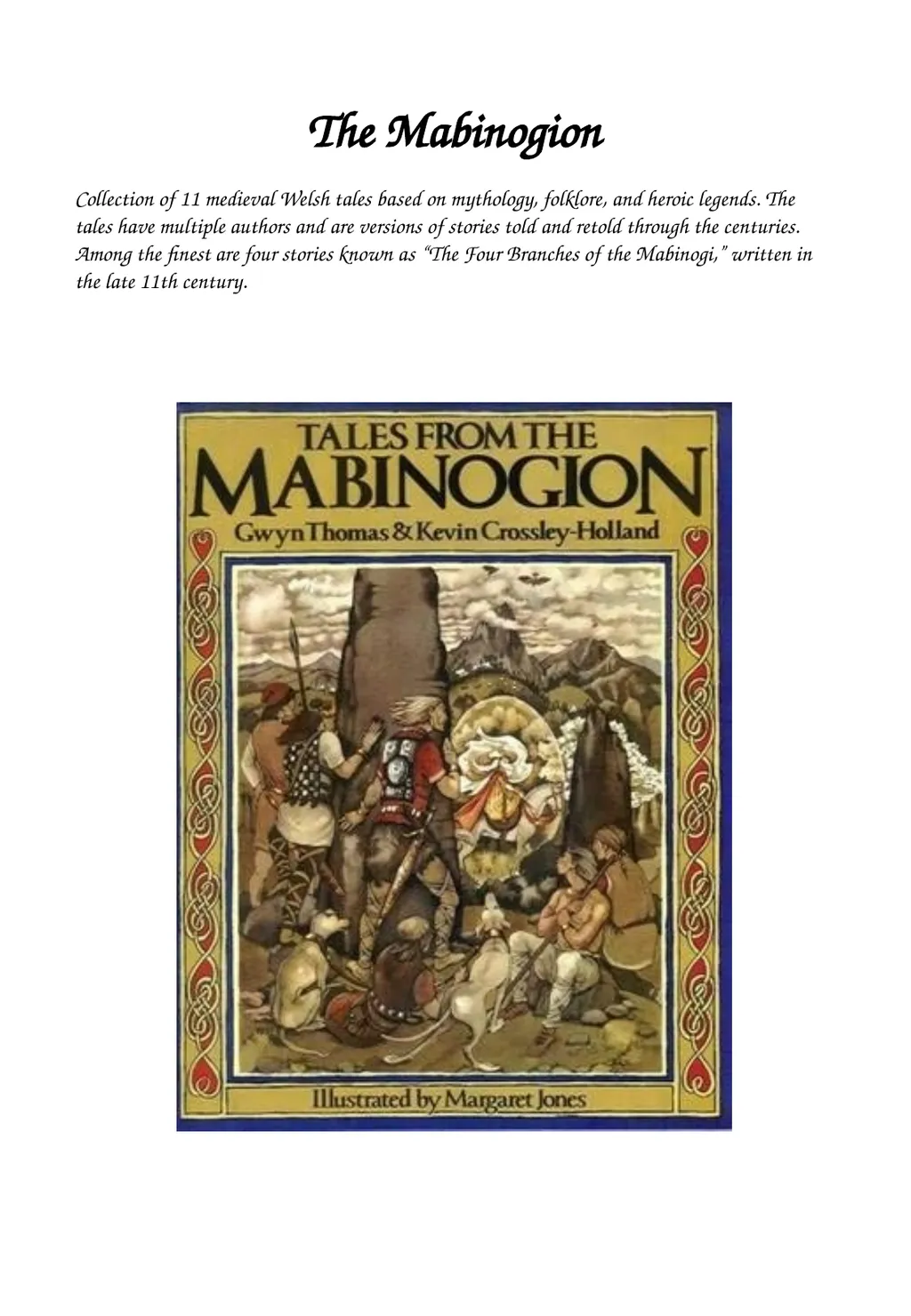
Collection of 11 medieval Welsh tales based on mythology, folklore, and heroic legends. The tales have multiple authors and are versions of stories told and retold through the centuries. Among the finest are four stories known as “The Four Branches of the Mabinogi,” written in the late 11th century.<br>
Collection of 11 medieval Welsh tales based on mythology, folklore, and heroic legends. The tales have multiple authors and are versions of stories told and retold through the centuries. Among the finest are four stories known as “The Four Branches of the Mabinogi,” written in the late 11th century.<br>
03
Qualities of a good story.....
Good structure (Beginning/Middle/End)
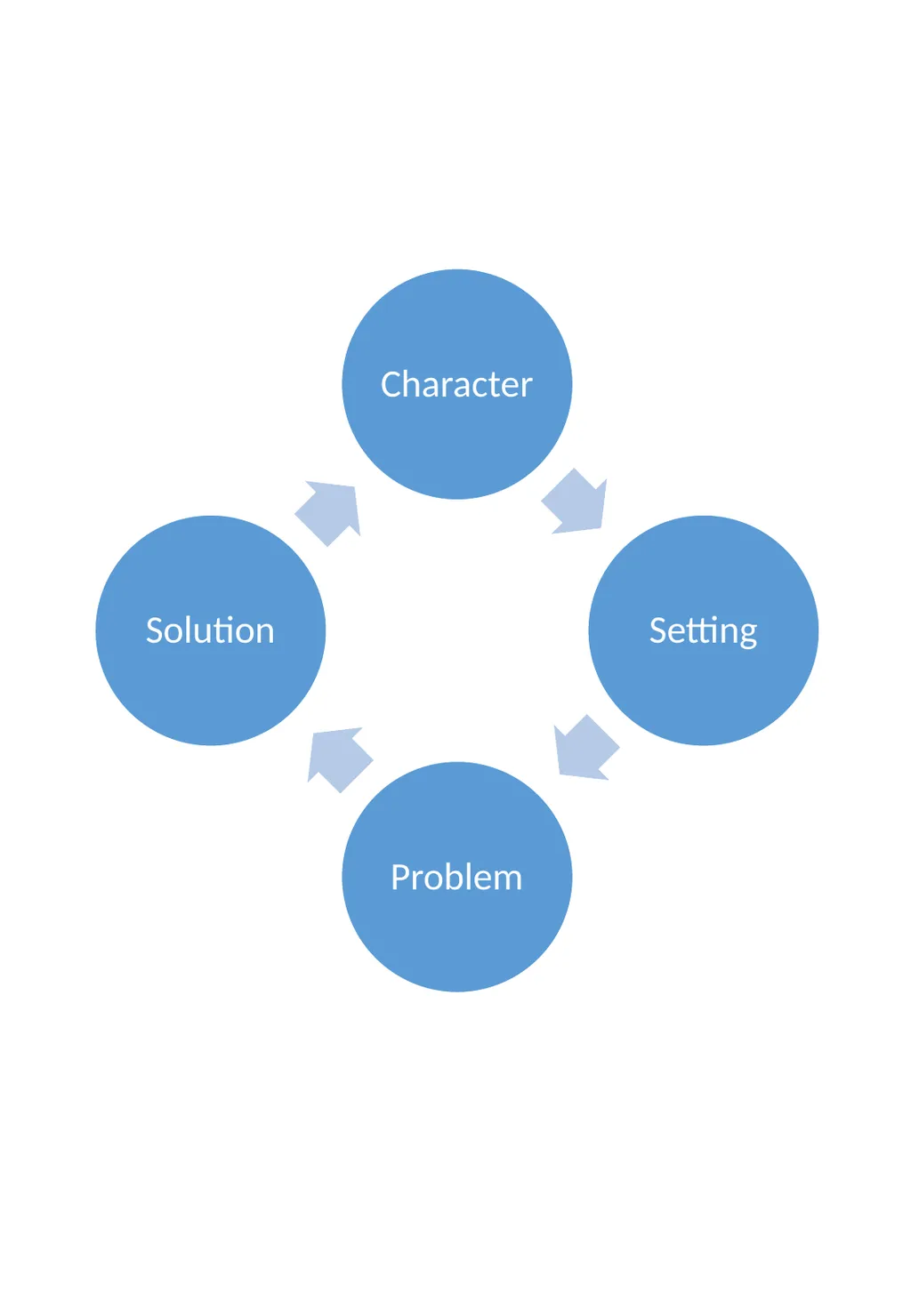
Main features – characters – setting – problems to overcome – solution
Fantastic descriptive language used throughout – lots of adjectives to describe people, places and things.
Clear paragraphs
Correct grammar
To be as exciting and engaging for the audience as possible!<br>
Good structure (Beginning/Middle/End)
Main features – characters – setting – problems to overcome – solution
Fantastic descriptive language used throughout – lots of adjectives to describe people, places and things.
Clear paragraphs
Correct grammar
To be as exciting and engaging for the audience as possible!<br>
04
All stories have problems and resolutions of some sort.
Can you remember any of the problems that feature in your favourite books?
How did the characters find a solution?<br>
Can you remember any of the problems that feature in your favourite books?
How did the characters find a solution?<br>
05
Writing about your characters
In legends we usually meet a range of extraordinary characters.
They often have strange features and / or special powers. Can you think of any?
Try to use words and phrases that tell your audience:
What the character looks like
How the character behaves
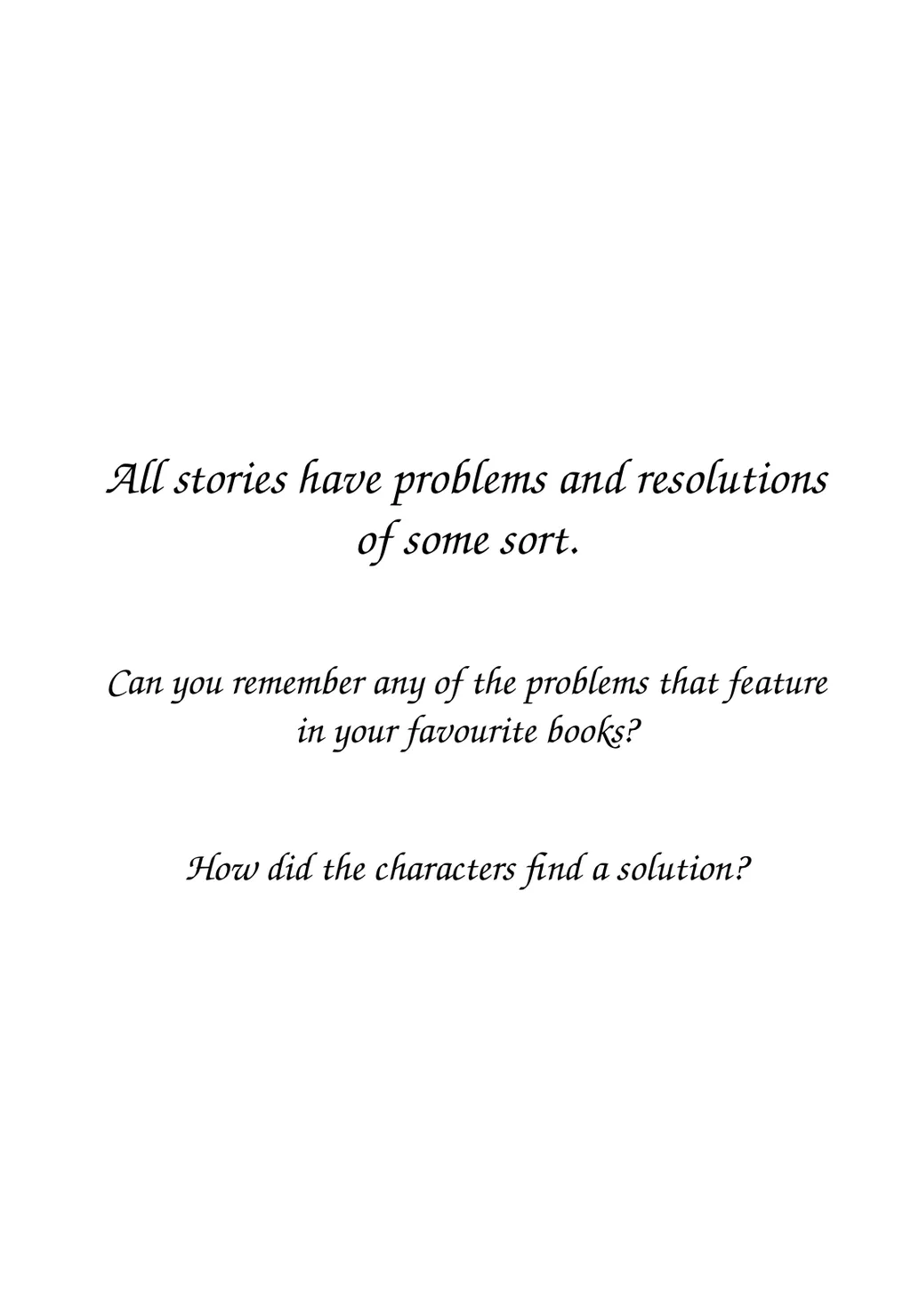
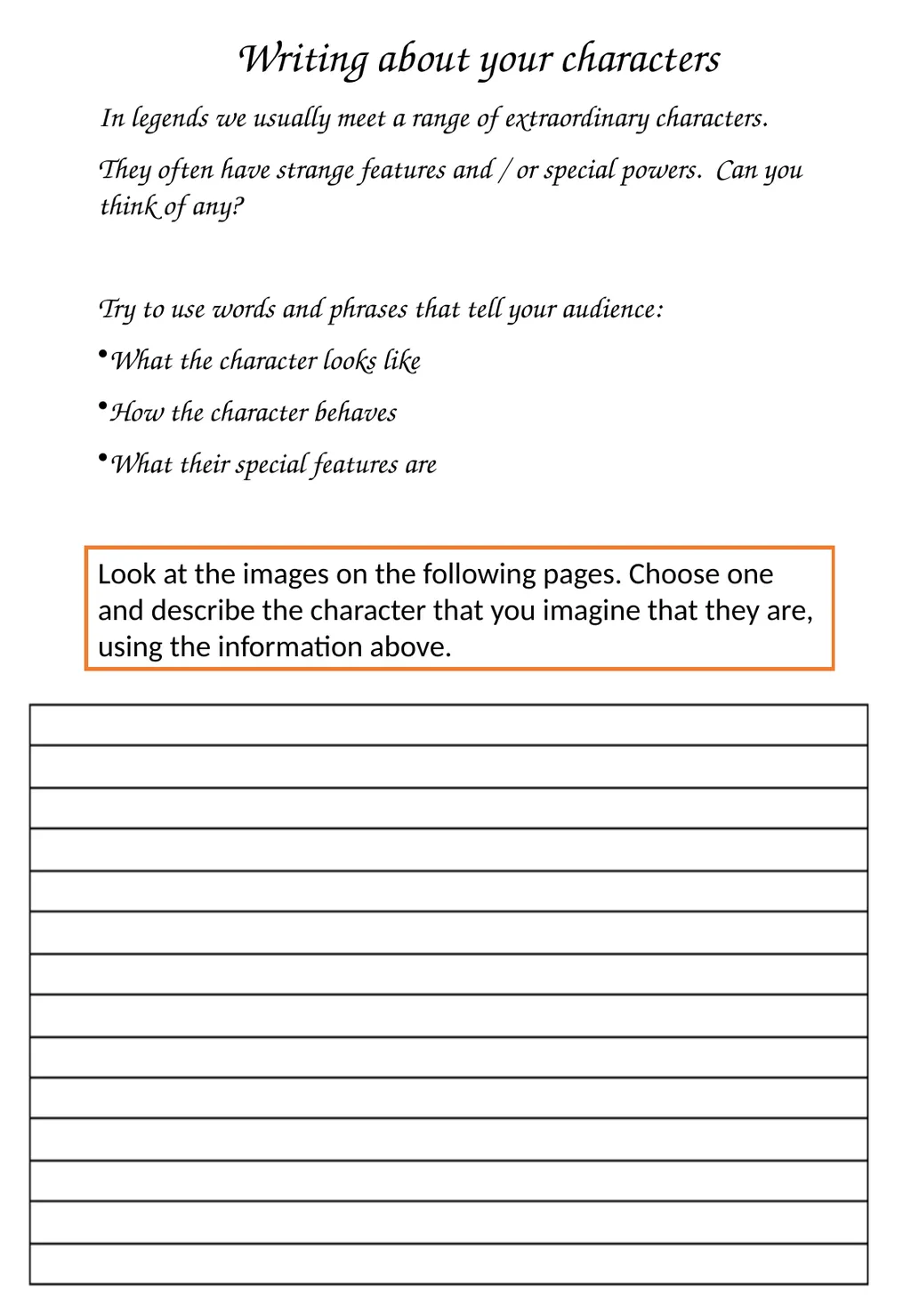
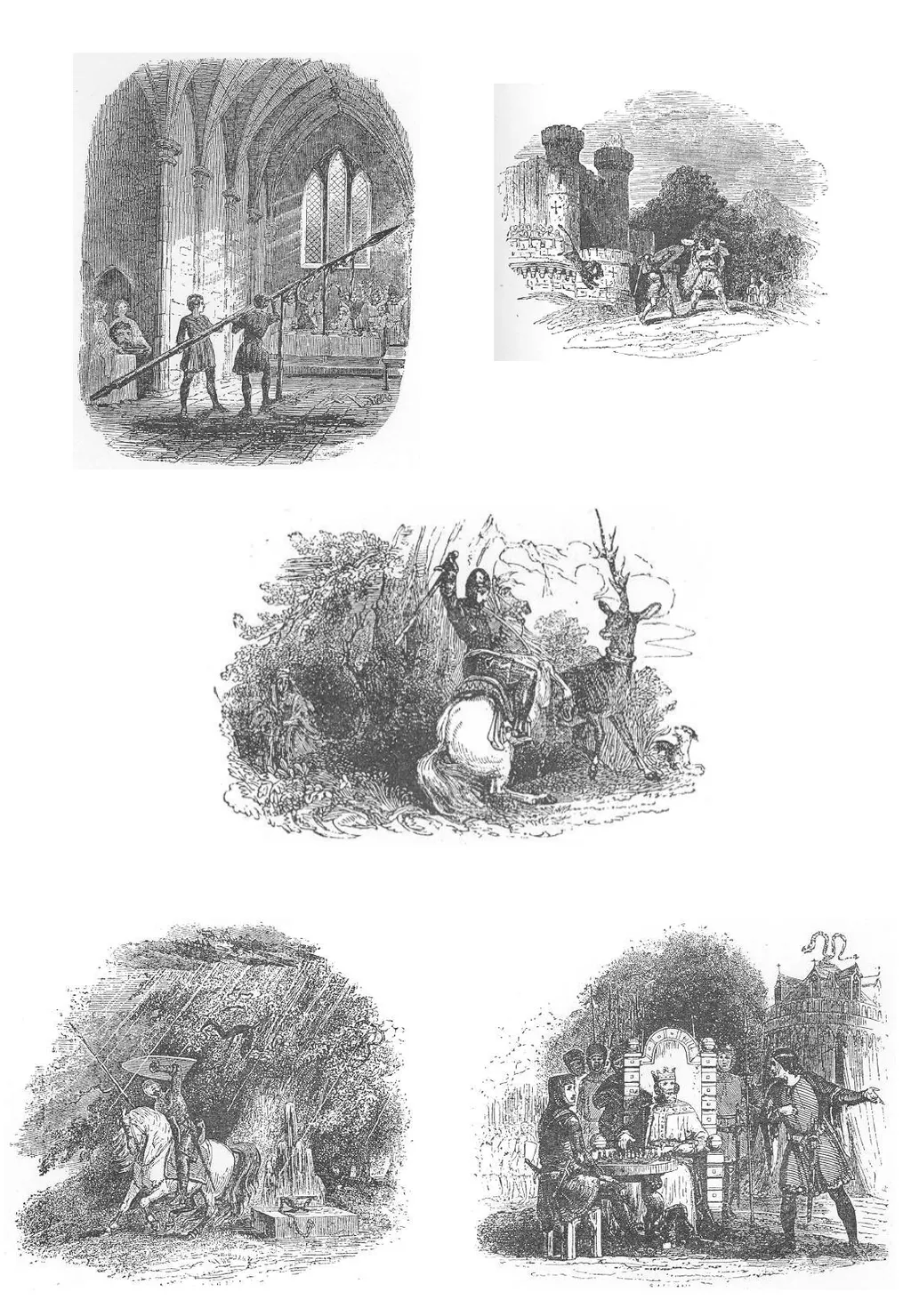
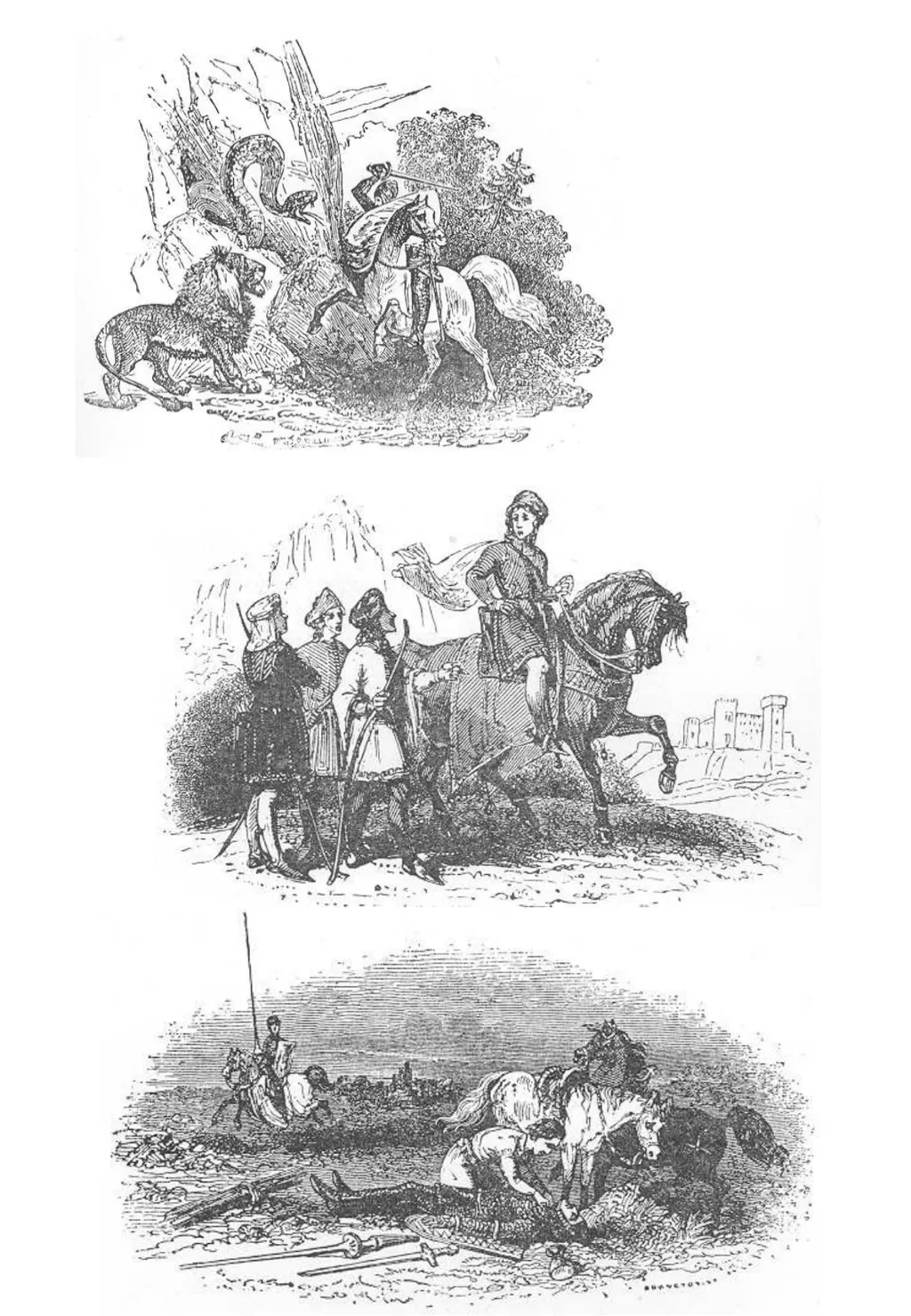
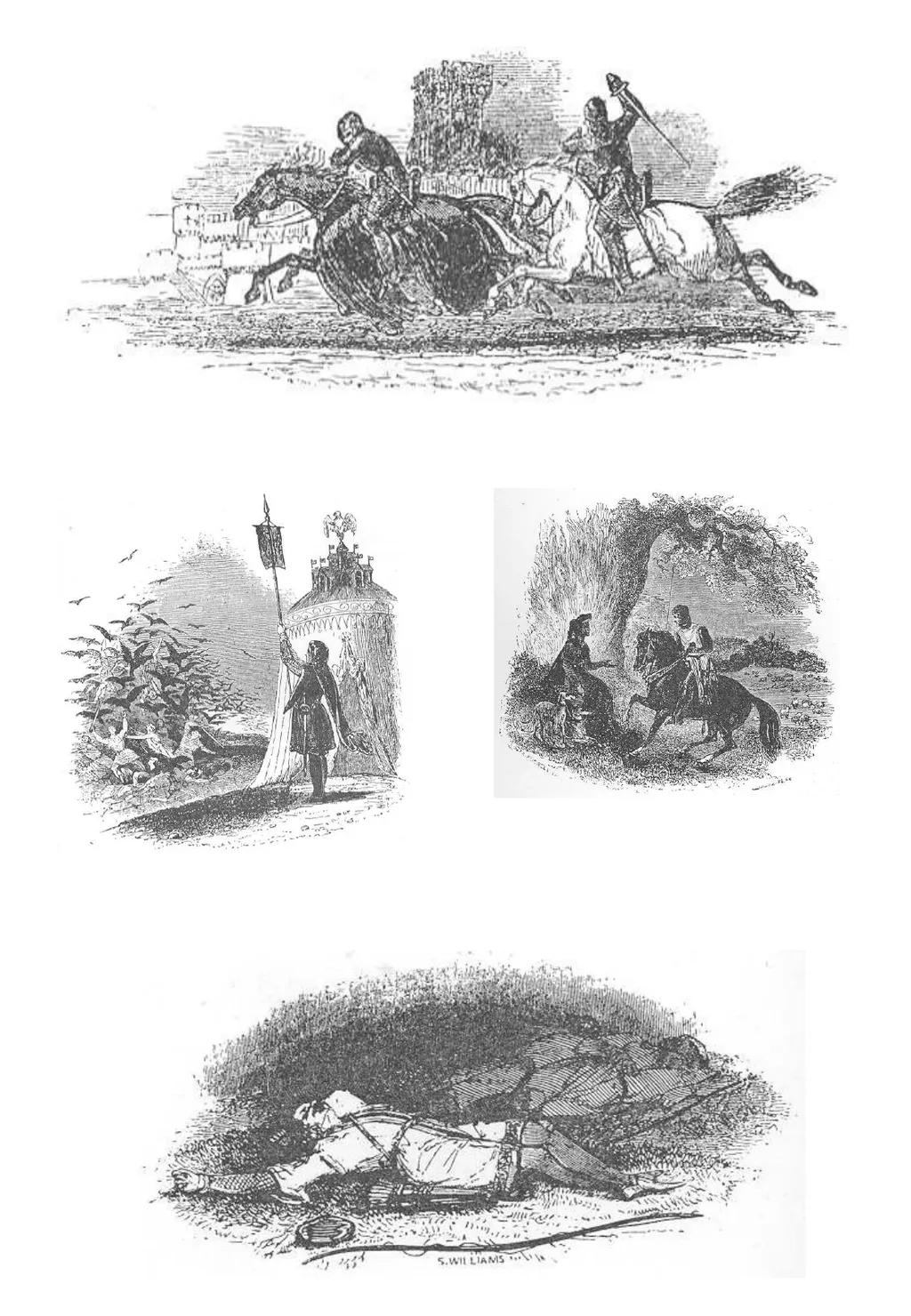
What their special features are Look at the images on the following pages. Choose one and describe the character that you imagine that they are, using the information above.<br>
In legends we usually meet a range of extraordinary characters.
They often have strange features and / or special powers. Can you think of any?
Try to use words and phrases that tell your audience:
What the character looks like
How the character behaves
What their special features are Look at the images on the following pages. Choose one and describe the character that you imagine that they are, using the information above.<br>
06
Beginning -
Who? When? Where? Why?
Settings –
Sights, sounds, smells, feelings
Characters-
Strange features, actions, powers, appearance, personality
Problems –
What is wrong? Who is involved?
Solution –
What can be done about the problem? Who needs to take action?<br>
Who? When? Where? Why?
Settings –
Sights, sounds, smells, feelings
Characters-
Strange features, actions, powers, appearance, personality
Problems –
What is wrong? Who is involved?
Solution –
What can be done about the problem? Who needs to take action?<br>
07
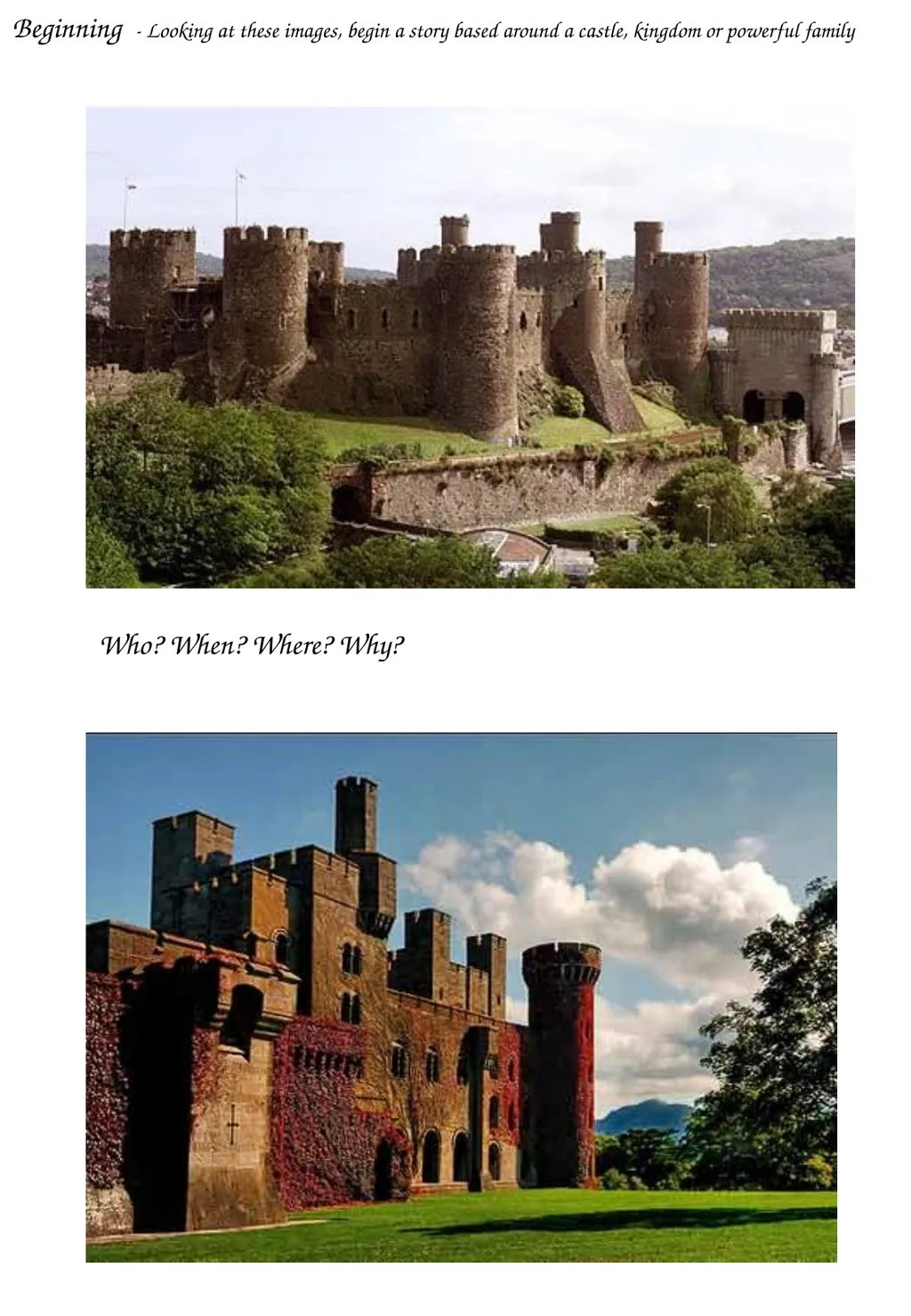
Who? When? Where? Why? Beginning - Looking at these images, begin a story based around a castle, kingdom or powerful family<br>
08
Some different ways of starting a story:
Far away and just as long ago...
It is told that long ago...
Long ago, in the time of mysteries...
Once upon a time, not your time, nor my time, but one time...
Once upon a time, when the grass grew greener, the trees grew taller, and the sun shone more brightly than it does today, there was a ....
Once upon a time, and a time before that...
So long ago that no one can quite say when...<br>
Far away and just as long ago...
It is told that long ago...
Long ago, in the time of mysteries...
Once upon a time, not your time, nor my time, but one time...
Once upon a time, when the grass grew greener, the trees grew taller, and the sun shone more brightly than it does today, there was a ....
Once upon a time, and a time before that...
So long ago that no one can quite say when...<br>
09
Choose one of the pictures and describe the settings using: sights, sounds, smells, feelings<br>
10
Some different ways of ending a story:
And so it was, and so it is.
And so the story goes.
And that is how it is to this day.
And ever since then, that is the way it has been.
And that’s the end of that!
And that is a true story. And if it isn’t, it should be.
So, there you have it!<br>
And so it was, and so it is.
And so the story goes.
And that is how it is to this day.
And ever since then, that is the way it has been.
And that’s the end of that!
And that is a true story. And if it isn’t, it should be.
So, there you have it!<br>
11
Mabinogion: first branch
The word "Mabinogi" originally designated only these four tales, which are really parts or 'branches' of a single work, rather than the whole collection. Pwyll, Prince of Dyfed.
Branwen ferch Llŷr.
Manawydan fab Llŷr.
Math fab Mathonwy.
The Dream of Macsen Wledig.
Lludd and Llefelys.
Hanes Taliesin.
Culhwch and Olwen. Branwen, daughter of Llyr is one of the tales in the ancient Welsh story collection called The Mabinogion.
Charlotte Guest read The Mabinogion in Welsh and wrote the stories down in English so more people could read and enjoy them.
The best online site with full texts is:
http://www.missgien.net/arthurian/mabinogion/branwen.html
This has background to the Mabinogion and full texts.<br>
The word "Mabinogi" originally designated only these four tales, which are really parts or 'branches' of a single work, rather than the whole collection. Pwyll, Prince of Dyfed.
Branwen ferch Llŷr.
Manawydan fab Llŷr.
Math fab Mathonwy.
The Dream of Macsen Wledig.
Lludd and Llefelys.
Hanes Taliesin.
Culhwch and Olwen. Branwen, daughter of Llyr is one of the tales in the ancient Welsh story collection called The Mabinogion.
Charlotte Guest read The Mabinogion in Welsh and wrote the stories down in English so more people could read and enjoy them.
The best online site with full texts is:
http://www.missgien.net/arthurian/mabinogion/branwen.html
This has background to the Mabinogion and full texts.<br>
12
Pwyll, Prince of Dyfed, is the hero of the first branch; his story is told in three distinct episodes.
In the opening part he changes places with Arawn, the king of Annwn, for one year. Annwn was the underworld, also identified as the island of Gwales or Grassholme on the Pembrokeshire coast.
Pwyll wins the title Head of Annwn, and Arawn's undying friendship, by uniting the two warring kingdoms of Annwn when he defeats Arawn's rival, King Hafgan in combat.
The second part of the tale concerns Pwyll's return from Annwn. After his men fail to catch the beautiful maiden Rhiannon on her ambling horse which magically can not be caught up with. However, Pwyll does so simply by asking her to stop.
Rhiannon, the first of several strong women in the Mabinogi, is betrothed to Gwawl. Nonetheless, she falls in love at first sight with Pwyll and proposes an elaborate plan to enable her to marry Pwyll rather than Gwawl.
Pwyll follows her plan - which relies on Rhiannon's knowledge of Gwawl's weaknesses, his pride and lust for her - and traps Gwawl in a sack that can never be fully filled. Pwyll's men beat Gwawl while he is in the bag, and Rhiannon is left free to marry Pwyll.
In the third part, Rhiannon bears Pwyll a son. The child disappears on the night after his birth, even though six women are appointed to keep watch on the new mother and her child.
The women plot to smear the blood of puppies onto Rhiannon's face and hands. Rhiannon is accused of killing the child, and is forced to sit outside the castle in Narberth, Pembrokeshire as punishment. She must tell her story to passers-by, and offer to carry visitors and pilgrims on her back into the court.
Meanwhile, Teyrnon Twryf Liant, lord of Gwent-Iscoed, finds the baby on his doorstep after chasing a monster away from his home. He raises the boy as his own and names him Gwri Golden-hair.
When the child's resemblence to Pwyll becomes apparent, he is returned to his parents. Rhiannon re-names him Pryderi (Worry) after all the anguish he's caused. Her punishment is ended.<br>
In the opening part he changes places with Arawn, the king of Annwn, for one year. Annwn was the underworld, also identified as the island of Gwales or Grassholme on the Pembrokeshire coast.
Pwyll wins the title Head of Annwn, and Arawn's undying friendship, by uniting the two warring kingdoms of Annwn when he defeats Arawn's rival, King Hafgan in combat.
The second part of the tale concerns Pwyll's return from Annwn. After his men fail to catch the beautiful maiden Rhiannon on her ambling horse which magically can not be caught up with. However, Pwyll does so simply by asking her to stop.
Rhiannon, the first of several strong women in the Mabinogi, is betrothed to Gwawl. Nonetheless, she falls in love at first sight with Pwyll and proposes an elaborate plan to enable her to marry Pwyll rather than Gwawl.
Pwyll follows her plan - which relies on Rhiannon's knowledge of Gwawl's weaknesses, his pride and lust for her - and traps Gwawl in a sack that can never be fully filled. Pwyll's men beat Gwawl while he is in the bag, and Rhiannon is left free to marry Pwyll.
In the third part, Rhiannon bears Pwyll a son. The child disappears on the night after his birth, even though six women are appointed to keep watch on the new mother and her child.
The women plot to smear the blood of puppies onto Rhiannon's face and hands. Rhiannon is accused of killing the child, and is forced to sit outside the castle in Narberth, Pembrokeshire as punishment. She must tell her story to passers-by, and offer to carry visitors and pilgrims on her back into the court.
Meanwhile, Teyrnon Twryf Liant, lord of Gwent-Iscoed, finds the baby on his doorstep after chasing a monster away from his home. He raises the boy as his own and names him Gwri Golden-hair.
When the child's resemblence to Pwyll becomes apparent, he is returned to his parents. Rhiannon re-names him Pryderi (Worry) after all the anguish he's caused. Her punishment is ended.<br>
13
Summarise what you learn about Pwyll, Prince of Dyfed, in your own words, below.<br>
14
The second story centres on the triangle of Bendigeidfran (meaning Bran the Blessed), the giant king of Britain, his sister Branwen, and their evil half-brother Efnisien (sometimes spelt Evnissyen).
Branwen is given in marriage to Matholwch the king of Ireland. Efnisien, enraged at not having been consulted about the marriage, mutilates Matholwch's horses in a horrific act of revenge.
Bendigeidfran pacifies the insulted Matholwch with new horses and gifts, including a magical cauldron that brings the dead back to life. Matholwch returns to Ireland with Branwen by his side.
Branwen becomes pregnant and gives birth to a son, Gwern. But the shadow of the mutilated horses hangs over her, and the people of Ireland demand that their king avenge the disgrace brought by Efnisien.
She is banished to the kitchen of Matholwch's castle, where she sleeps and works each day. Each day Branwen is beaten by the bloody hands of the butcher. She trains a starling to take a letter to Bendigeidfran at Caer Seint (Caernarfon) to let him know of her humiliation.
Bendigeidfran gathers his army to invade Ireland and rescue Branwen. His men cross the Irish Sea in ships, but Bendigeidfran is able to wade across, such is his height.
Matholwch tries to make peace, offering to give the kingship of Ireland over to Branwen's son Gwern, and to build him a new palace. At the coronation feast the Irish hang 100 deerskin bags in the new banqueting hall. The bags, supposedly containing flour, actually hold armed Irish lords.
Efnisien, still feeling insulted, foils the plot by crushing the men's skulls as they hid. He throws Gwern headlong into a fire, ruining the chances for peace.
Fighting breaks out. Seeing that the Irish use the magical cauldron to revive their dead, Efnisien hides beneath a pile of Irish bodies. He is thrown into the cauldron, and breaks it into pieces by pushing against the sides. The strain costs him his life.
With the Irish defeated, just seven Welsh soldiers survive the battle, including Bendigeidfran, his brother Manawydan, and Pryderi. Bendigeidfran, mortally wounded by a poisoned spear in his foot, orders the soldiers to cut off his head and take it to be buried in London facing towards France, ensuring that the country will never be invaded from the sea.
Branwen goes with them, but her heart breaks with sadness when they get back to Wales and she dies. The seven soldiers travel to Harlech with the still-living head, where they stay for seven years feasting and listening to the birds of Rhiannon to make them forget their pain and loss.
Then they travel to the island of Gwales, where they stay in a royal palace for another eight years. One day a soldier opens a door looking out on Cornwall, and they remember their pain and their lost friends. The men then set out for London to bury Bendigeidfran's head.
In Ireland, meanwhile, five pregnant women survive. Their children repopulate the nation.<br>
Branwen is given in marriage to Matholwch the king of Ireland. Efnisien, enraged at not having been consulted about the marriage, mutilates Matholwch's horses in a horrific act of revenge.
Bendigeidfran pacifies the insulted Matholwch with new horses and gifts, including a magical cauldron that brings the dead back to life. Matholwch returns to Ireland with Branwen by his side.
Branwen becomes pregnant and gives birth to a son, Gwern. But the shadow of the mutilated horses hangs over her, and the people of Ireland demand that their king avenge the disgrace brought by Efnisien.
She is banished to the kitchen of Matholwch's castle, where she sleeps and works each day. Each day Branwen is beaten by the bloody hands of the butcher. She trains a starling to take a letter to Bendigeidfran at Caer Seint (Caernarfon) to let him know of her humiliation.
Bendigeidfran gathers his army to invade Ireland and rescue Branwen. His men cross the Irish Sea in ships, but Bendigeidfran is able to wade across, such is his height.
Matholwch tries to make peace, offering to give the kingship of Ireland over to Branwen's son Gwern, and to build him a new palace. At the coronation feast the Irish hang 100 deerskin bags in the new banqueting hall. The bags, supposedly containing flour, actually hold armed Irish lords.
Efnisien, still feeling insulted, foils the plot by crushing the men's skulls as they hid. He throws Gwern headlong into a fire, ruining the chances for peace.
Fighting breaks out. Seeing that the Irish use the magical cauldron to revive their dead, Efnisien hides beneath a pile of Irish bodies. He is thrown into the cauldron, and breaks it into pieces by pushing against the sides. The strain costs him his life.
With the Irish defeated, just seven Welsh soldiers survive the battle, including Bendigeidfran, his brother Manawydan, and Pryderi. Bendigeidfran, mortally wounded by a poisoned spear in his foot, orders the soldiers to cut off his head and take it to be buried in London facing towards France, ensuring that the country will never be invaded from the sea.
Branwen goes with them, but her heart breaks with sadness when they get back to Wales and she dies. The seven soldiers travel to Harlech with the still-living head, where they stay for seven years feasting and listening to the birds of Rhiannon to make them forget their pain and loss.
Then they travel to the island of Gwales, where they stay in a royal palace for another eight years. One day a soldier opens a door looking out on Cornwall, and they remember their pain and their lost friends. The men then set out for London to bury Bendigeidfran's head.
In Ireland, meanwhile, five pregnant women survive. Their children repopulate the nation.<br>
15
Manawydan is one of the seven survivors of the second branch. At Pryderi's suggestion, he marries Rhiannon, widow of Pwyll and Pryderi's mother - mentioned in the first branch
.
Manawydan and Rhiannon become close friends with Pryderi and his wife Cigfa. One day they take a walk to the throne of Arberth (Gorsedd Narberth) to look over the land where a mist of enchantment falls on them.
When the mist lifts, the kingdom of Dyfed is deserted - everyone and everything has disappeared without trace. They search for two years throughout Dyfed but find no humans or animals.
Manawydan suggests they earn a living making saddles in England. The saddles are so beautiful and well made that, before long, the other saddlers of Hereford plot to kill Pryderi and Manawydan and Pryderi.
Although Pryderi wants to stay and fight, Manawydan suggests they move elsewhere. They make shields, shoes and saddles, and but again are driven away by tradesmen as they travel from town to town. At Manawydan's suggestion they move back to Arberth.
One morning while out hunting with their hounds they come upon a shining white boar. The animal leads them to a huge castle which appears from nowhere in the forest.
The hounds follow the boar into the fort and Pryderi, ignoring Manawydan's warning, follows them. The fort is deserted inside and Pryderi sees a golden cauldron hanging over a well and, reaching out to take hold of it, becomes stuck to it.
Meanwhile, Manawydan returns to the court at Arberth. Disgusted with his disregard for her son, Rhiannon rushes to help Pryderi. She finds him unable to speak, and she too becomes stuck to the cauldron. At nightfall the fort disappears with them inside.
Manawydan leaves for England with Cigfa to work as a shoemaker. Again, his shoes are much in demand, and the shoemakers of the town plot to kill him. Driven away, Manawydan and Cigfa return to Dyfed.
Manawydan becomes a farmer and sows three fields of wheat. At harvest time he goes to reap the first, but it is stripped bare during the night. The following day he goes to reap the second field, but it too is stripped bare.<br>
.
Manawydan and Rhiannon become close friends with Pryderi and his wife Cigfa. One day they take a walk to the throne of Arberth (Gorsedd Narberth) to look over the land where a mist of enchantment falls on them.
When the mist lifts, the kingdom of Dyfed is deserted - everyone and everything has disappeared without trace. They search for two years throughout Dyfed but find no humans or animals.
Manawydan suggests they earn a living making saddles in England. The saddles are so beautiful and well made that, before long, the other saddlers of Hereford plot to kill Pryderi and Manawydan and Pryderi.
Although Pryderi wants to stay and fight, Manawydan suggests they move elsewhere. They make shields, shoes and saddles, and but again are driven away by tradesmen as they travel from town to town. At Manawydan's suggestion they move back to Arberth.
One morning while out hunting with their hounds they come upon a shining white boar. The animal leads them to a huge castle which appears from nowhere in the forest.
The hounds follow the boar into the fort and Pryderi, ignoring Manawydan's warning, follows them. The fort is deserted inside and Pryderi sees a golden cauldron hanging over a well and, reaching out to take hold of it, becomes stuck to it.
Meanwhile, Manawydan returns to the court at Arberth. Disgusted with his disregard for her son, Rhiannon rushes to help Pryderi. She finds him unable to speak, and she too becomes stuck to the cauldron. At nightfall the fort disappears with them inside.
Manawydan leaves for England with Cigfa to work as a shoemaker. Again, his shoes are much in demand, and the shoemakers of the town plot to kill him. Driven away, Manawydan and Cigfa return to Dyfed.
Manawydan becomes a farmer and sows three fields of wheat. At harvest time he goes to reap the first, but it is stripped bare during the night. The following day he goes to reap the second field, but it too is stripped bare.<br>
16
He keeps watch on the third field the next night and, at midnight, sees a horde of mice attacking the crops Manawydan manages to catch a fat, slow mouse which he decides to hang for eating his crops.
He goes to kill it on the throne of Arberth, where he meets a cleric and a priest who offer him money for the mouse's life. A bishop appears and pleads with Manawydan, but he won't free the mouse. When the bishop asks Manawydan to name his price, he asks for the spell on Dyfed to be lifted and for Rhiannon and Pryderi to be released.
The bishop is Llwyd, son of Cil Coed, a friend of Rhiannon's jilted lover Gwawl from the first branch of the Mabinogi. He put Dyfed under the spell to avenge the humiliation of Gwawl.
The mouse is revealed to be Llwyd's pregnant wife, and the rest of the mice are her ladies-in-waiting and his soldiers who were sent to destroy Manawydan's fields.
As a result of Manawydan's patience and resourcefulness, the spell is lifted and Dyfed is restored.<br>
He goes to kill it on the throne of Arberth, where he meets a cleric and a priest who offer him money for the mouse's life. A bishop appears and pleads with Manawydan, but he won't free the mouse. When the bishop asks Manawydan to name his price, he asks for the spell on Dyfed to be lifted and for Rhiannon and Pryderi to be released.
The bishop is Llwyd, son of Cil Coed, a friend of Rhiannon's jilted lover Gwawl from the first branch of the Mabinogi. He put Dyfed under the spell to avenge the humiliation of Gwawl.
The mouse is revealed to be Llwyd's pregnant wife, and the rest of the mice are her ladies-in-waiting and his soldiers who were sent to destroy Manawydan's fields.
As a result of Manawydan's patience and resourcefulness, the spell is lifted and Dyfed is restored.<br>
17
Summarise what you learn about Manawydan, in your own words, below.<br>
18
The final and most complex branch of the four takes place in and around the Lleyn peninsula.
As Pryderi is governing Dyfed, Gwynedd is ruled by Math, son of Mathonwy.
Math's nephew Gilfaethwy has fallen in love with Math's beautiful foot-maiden Goewin. Gwydion, a magician, conspires to start a war so Gilfaethwy can be with her.
Gwydion steals some special pigs, a gift from the king of the Other World, from Pryderi to give them to Math. He then turns toadstools into 12 horses and 12 hounds, which he swaps for the pigs, though the following day they turn back into toadstools.
The cheated Pryderi assembles his army to get his pigs back from Gwydion. Math sets out to meet Pryderi's attack, yet while he's away from his court, Gilfaethwy rapes Goewin in Math's bed.
A truce is called after the battle. Pryderi, realising that Gwydion is his real enemy, fights him hand-to-hand at Tremadog Bay. Pryderi is killed when Gwydion uses magic against him. Math returns to his court, and Gwydion and Gilfaethwy slip away.
Math promises to marry Goewin after she reveals that Gilfaethwy has raped her. He turns Gifaethwy into a hind and Gwydion into a stag, and bans them food and drink within his kingdom.
Each year for the next three years, Math turns them into different animals and they're forced to give their young to Math. He turns their offspring into boys: Bleiddwn, Hyddwn and Hychdwn the Tall.
After three years, Math turns his nephews back to human form. He asks them to recommend another maiden to rest his feet on, and Gwydion suggests his sister Arianrhod.
When Math uses magic to test Arianrhod's virginity she reveals a golden-haired child, Dylan, who flees to the sea. Arianrhod runs away in disgrace but drops something small, which Gwydion hides in a chest at the foot of his bed.
One morning he wakes to hear a child crying. Inside the box he finds a baby boy, who is looked after by a woman in the town. By the time the child is four, he's bigger than one twice his age.
One day Math follows Gwydion to Arianrhod's castle where he tells her that the boy is her son. She refuses to acknowledge or name the boy. The following day Gwydion conjures a ship out of seaweed and leather and he and the boy sail to Caer Arianrhod near Dinas Dinlle.
Math changes their appearance to prevent Arianrhod from recognising them. Once in view of the fort they begin making beautiful shoes on the deck of the ship. Arianrhod sees the shoes and orders them to make a pair for her.<br>
As Pryderi is governing Dyfed, Gwynedd is ruled by Math, son of Mathonwy.
Math's nephew Gilfaethwy has fallen in love with Math's beautiful foot-maiden Goewin. Gwydion, a magician, conspires to start a war so Gilfaethwy can be with her.
Gwydion steals some special pigs, a gift from the king of the Other World, from Pryderi to give them to Math. He then turns toadstools into 12 horses and 12 hounds, which he swaps for the pigs, though the following day they turn back into toadstools.
The cheated Pryderi assembles his army to get his pigs back from Gwydion. Math sets out to meet Pryderi's attack, yet while he's away from his court, Gilfaethwy rapes Goewin in Math's bed.
A truce is called after the battle. Pryderi, realising that Gwydion is his real enemy, fights him hand-to-hand at Tremadog Bay. Pryderi is killed when Gwydion uses magic against him. Math returns to his court, and Gwydion and Gilfaethwy slip away.
Math promises to marry Goewin after she reveals that Gilfaethwy has raped her. He turns Gifaethwy into a hind and Gwydion into a stag, and bans them food and drink within his kingdom.
Each year for the next three years, Math turns them into different animals and they're forced to give their young to Math. He turns their offspring into boys: Bleiddwn, Hyddwn and Hychdwn the Tall.
After three years, Math turns his nephews back to human form. He asks them to recommend another maiden to rest his feet on, and Gwydion suggests his sister Arianrhod.
When Math uses magic to test Arianrhod's virginity she reveals a golden-haired child, Dylan, who flees to the sea. Arianrhod runs away in disgrace but drops something small, which Gwydion hides in a chest at the foot of his bed.
One morning he wakes to hear a child crying. Inside the box he finds a baby boy, who is looked after by a woman in the town. By the time the child is four, he's bigger than one twice his age.
One day Math follows Gwydion to Arianrhod's castle where he tells her that the boy is her son. She refuses to acknowledge or name the boy. The following day Gwydion conjures a ship out of seaweed and leather and he and the boy sail to Caer Arianrhod near Dinas Dinlle.
Math changes their appearance to prevent Arianrhod from recognising them. Once in view of the fort they begin making beautiful shoes on the deck of the ship. Arianrhod sees the shoes and orders them to make a pair for her.<br>
19
As Gwydion measures her feet, a wren lands on the ship's deck. The boy aims a needle at the bird's leg and breaks it. Arianrhod comments that 'the fair boy has a deft hand', which provides his name: Lleu Llaw Gyffes (fair skillful hand). Angry at being tricked into naming the boy, Arianrhod swears that he'll never carry weapons unless she gives them to him.
When Lleu grows up Gwydion disguises them as storytellers and they trick Arianrhod into believing the country is at war. In panic, she gives the boy armour and weapons. When she realises who they are she swears that Lleu will never have a human wife.
Gwydion and Lleu go to Math and tell him about Arionrhod's curse. They create a wife for Lleu out of the flowers of the oak, the meadowsweet and the broom from the forest, naming her Blodeuwedd. Lleu and Blodeuwedd marry and Math gives them the lands of Eifionidd and Ardudwy to rule.
They move their court to Mur Castell, overlooking Trawsfynydd. Soon afterwards Blodeuwedd falls in love with a neighbouring lord, Goronwy Pefr of Penllyn, and they plot to kill Lleu.
Lleu is no ordinary mortal. He cannot be killed inside a house, nor outside one, on horseback, or on foot. Blodeuwedd tricks him into revealing that can be killed only by a spear which must be a year in the making, but he must be standing with one foot on a trough built on the side of a river with a roof over it, with the other foot on the back of a billy goat.
Blodeuwedd tells Goronwy, who begins work on the spear. A year later she asks Lleu to show her how he should stand in order to be killed. As he does, Goronwy throws the spear at him, but Lleu turns into an eagle and flies away.
Goronwy goes to live with Blodeuwedd and takes control of Lleu's land. Gwydion is heartbroken, and searches all over Wales until he finds Lleu perched in an oak tree in the Nantlle valley below Snowdon.
Gwydion changes Lleu back to human form but he's weak through illness, and Gwydion carries him back to Math's court.
When fully recovered, Lleu plans revenge on Blodeuwedd and Goronwy Pefr. Blodeuwedd tries to run away but Gwydion catches her at Llyn Morwinion. He turns her into an owl, ensuring that other birds will attack her if she shows her face in daylight again.
Gwydion and Lleu overcome Goronwy, making him stand in the same position as Lleu did when the spear was thrown. Lleu does, however, allow Goronwy to use a stone as a shield. Lleu throws the spear so that it pierces the stone and kills Goronwy.
The stone is said to still exist, at Llech Ronw in the Cynfal Valley.<br>
When Lleu grows up Gwydion disguises them as storytellers and they trick Arianrhod into believing the country is at war. In panic, she gives the boy armour and weapons. When she realises who they are she swears that Lleu will never have a human wife.
Gwydion and Lleu go to Math and tell him about Arionrhod's curse. They create a wife for Lleu out of the flowers of the oak, the meadowsweet and the broom from the forest, naming her Blodeuwedd. Lleu and Blodeuwedd marry and Math gives them the lands of Eifionidd and Ardudwy to rule.
They move their court to Mur Castell, overlooking Trawsfynydd. Soon afterwards Blodeuwedd falls in love with a neighbouring lord, Goronwy Pefr of Penllyn, and they plot to kill Lleu.
Lleu is no ordinary mortal. He cannot be killed inside a house, nor outside one, on horseback, or on foot. Blodeuwedd tricks him into revealing that can be killed only by a spear which must be a year in the making, but he must be standing with one foot on a trough built on the side of a river with a roof over it, with the other foot on the back of a billy goat.
Blodeuwedd tells Goronwy, who begins work on the spear. A year later she asks Lleu to show her how he should stand in order to be killed. As he does, Goronwy throws the spear at him, but Lleu turns into an eagle and flies away.
Goronwy goes to live with Blodeuwedd and takes control of Lleu's land. Gwydion is heartbroken, and searches all over Wales until he finds Lleu perched in an oak tree in the Nantlle valley below Snowdon.
Gwydion changes Lleu back to human form but he's weak through illness, and Gwydion carries him back to Math's court.
When fully recovered, Lleu plans revenge on Blodeuwedd and Goronwy Pefr. Blodeuwedd tries to run away but Gwydion catches her at Llyn Morwinion. He turns her into an owl, ensuring that other birds will attack her if she shows her face in daylight again.
Gwydion and Lleu overcome Goronwy, making him stand in the same position as Lleu did when the spear was thrown. Lleu does, however, allow Goronwy to use a stone as a shield. Lleu throws the spear so that it pierces the stone and kills Goronwy.
The stone is said to still exist, at Llech Ronw in the Cynfal Valley.<br>
20
Summarise what you learn about what happens in the story set in the Lleyn peninsula, in your own words, below.<br>
21
The Dream of Macsen Wledig
Magnus Maximus was a usurper against the Romans in the fourth century.
Also known as Macsen Wledig, the historical figure Magnus Macsenus or Magnus Maximus became the basis for a number of Welsh and English legends. According to Geoffrey of Monmouth he was king of the Britons following the death of Octavius, during the reign of Emperor Constantine I.
The Mabinogion tells of Macsen Wledig marrying the daughter of a Caernarfon-based chieftain. Although fictionalised, the story has a degree of basis in fact.
The tale begins with Macsen Wledig, emperor of Rome, falling into a deep sleep after going hunting. He dreams of journeys of rivers, mountains and valleys. Eventually he finds a great city with a vast castle, and a huge fleet of ships.
He boards the largest ship, which sets sails along the seas and oceans before arriving at wondrous lands. He comes to a castle with a hall covered in gold, silver and precious stones. Seated are two youths playing chess, dressed in jet black satin.
Elsewhere in the hall is a man sitting in an ivory chair, and a maiden of great beauty. The maiden rises from her chair, and the man embraces her. Emperor Macsen Wledig awakes at this point.
Consumed by love for the maiden seen in his dream, Macsen Wledig mounts his horse and goes forth to Rome. On his arrival he is withdrawn, choosing to sleep rather than engage in the people of the household. In each of his dreams he sees the beautiful maiden.
One day the page of his chamber tells Macsen Wledig that the people are turning against him, because they get neither message nor answer from him. The wise men of Rome are brought before the emperor, and he tells them of his dream. The wise men instruct Macsen to send messengers for three years to the three parts of the world to seek the beautiful maiden.
After a year the messengers return with no news, leaving the emperor sorrowful. The king of the Romans says to him to go and hunt where he did before the dream. From there 13 messengers journey to a high mountain, at the top of which they see the land of the emperor's dream.
Eventually they come to the vast city and its castle. They cross the sea in the giant ship, which takes them to Britain. They ride until they come to Snowdon. "Behold," said they, "the rugged land that our master saw." They continue to Anglesey and Arvon.
At Aber Sain they find a castle at the mouth of the river. They go inside and into the hall from the dream. They see the two youths playing chess, the man carving chess pieces and the maiden in the chair of gold.<br>
Magnus Maximus was a usurper against the Romans in the fourth century.
Also known as Macsen Wledig, the historical figure Magnus Macsenus or Magnus Maximus became the basis for a number of Welsh and English legends. According to Geoffrey of Monmouth he was king of the Britons following the death of Octavius, during the reign of Emperor Constantine I.
The Mabinogion tells of Macsen Wledig marrying the daughter of a Caernarfon-based chieftain. Although fictionalised, the story has a degree of basis in fact.
The tale begins with Macsen Wledig, emperor of Rome, falling into a deep sleep after going hunting. He dreams of journeys of rivers, mountains and valleys. Eventually he finds a great city with a vast castle, and a huge fleet of ships.
He boards the largest ship, which sets sails along the seas and oceans before arriving at wondrous lands. He comes to a castle with a hall covered in gold, silver and precious stones. Seated are two youths playing chess, dressed in jet black satin.
Elsewhere in the hall is a man sitting in an ivory chair, and a maiden of great beauty. The maiden rises from her chair, and the man embraces her. Emperor Macsen Wledig awakes at this point.
Consumed by love for the maiden seen in his dream, Macsen Wledig mounts his horse and goes forth to Rome. On his arrival he is withdrawn, choosing to sleep rather than engage in the people of the household. In each of his dreams he sees the beautiful maiden.
One day the page of his chamber tells Macsen Wledig that the people are turning against him, because they get neither message nor answer from him. The wise men of Rome are brought before the emperor, and he tells them of his dream. The wise men instruct Macsen to send messengers for three years to the three parts of the world to seek the beautiful maiden.
After a year the messengers return with no news, leaving the emperor sorrowful. The king of the Romans says to him to go and hunt where he did before the dream. From there 13 messengers journey to a high mountain, at the top of which they see the land of the emperor's dream.
Eventually they come to the vast city and its castle. They cross the sea in the giant ship, which takes them to Britain. They ride until they come to Snowdon. "Behold," said they, "the rugged land that our master saw." They continue to Anglesey and Arvon.
At Aber Sain they find a castle at the mouth of the river. They go inside and into the hall from the dream. They see the two youths playing chess, the man carving chess pieces and the maiden in the chair of gold.<br>
22
The messengers proclaim the maiden empress of Rome. She tells them she will not go with them to Rome; if Macsen Wledig loves her, he must come to her.
They return to Rome and tell the emperor of their findings. With his guides, Macsen Wledig goes to Britain and finds Aber Sain, the castle of his dream. He sees Kynan and Adeon playing chess, and their father Eudav son of Caradawc, carving chessmen. Then he spies the maiden, named Helen Luyddawc, from his dream.
"Empress of Rome," he says, "all hail!" And the emperor throws his arms about her neck, and that night she becomes his bride. The following day she asks for Britain for her father, and three chief castles made for her, the largest in Arvon. The emperor grants this; the other castles are built in Caerleon and Carmarthen.
The emperor remains for seven years, building castles and roads throughout Britain. The length of time spent away from Rome means he is banished from returning, and he loses his high office.
The new emperor threatens Macsen in a letter. The deposed emperor sets off for Rome with his army, vanquishing France and Burgundy on the way. However, he spends a year outside Rome without become near to recapturing it. Eventually he is joined by Helen and her warrior brothers, and Kynan and Adeon, sons of Eudav.
Kynan and Adeon construct a ladder for every four men of their party. While the warring emperors break their fighting to eat, the Britons breach the city walls.
The new emperor, unable to arm himself in time, is slain along with many others. For three days and nights the Britons fight to retake the castle and city, unbeknown to Macsen Wledig.
Macsen complains to Helen that her brothers have been unable to conquer the city. She replies that "the wisest youths in the world are my brothers. Go thou thither and ask the city of them, and if it be in their possession thou shalt have it gladly."
The gates of the city of Rome are opened, and the emperor Macsen Wledig once again is seated on the throne, with all the men of Rome submitted themselves unto him.
The emperor gives Kynan and Adeon leave to vanquish any region in the world they may desire to rule. The brothers conquer lands, castles and cities in the Amorica region of Gaul, which contains the Brittany peninsula, slaying men and sparing women. After many years of this Adeon returns to Britain, leaving Kynan to rule over the rest.
Kynon and his men then cut the tongues out of the women, to prevent them from having their speech corrupted. Because of the silence of the Amorican women, the men of the region became known as Britons.<br>
They return to Rome and tell the emperor of their findings. With his guides, Macsen Wledig goes to Britain and finds Aber Sain, the castle of his dream. He sees Kynan and Adeon playing chess, and their father Eudav son of Caradawc, carving chessmen. Then he spies the maiden, named Helen Luyddawc, from his dream.
"Empress of Rome," he says, "all hail!" And the emperor throws his arms about her neck, and that night she becomes his bride. The following day she asks for Britain for her father, and three chief castles made for her, the largest in Arvon. The emperor grants this; the other castles are built in Caerleon and Carmarthen.
The emperor remains for seven years, building castles and roads throughout Britain. The length of time spent away from Rome means he is banished from returning, and he loses his high office.
The new emperor threatens Macsen in a letter. The deposed emperor sets off for Rome with his army, vanquishing France and Burgundy on the way. However, he spends a year outside Rome without become near to recapturing it. Eventually he is joined by Helen and her warrior brothers, and Kynan and Adeon, sons of Eudav.
Kynan and Adeon construct a ladder for every four men of their party. While the warring emperors break their fighting to eat, the Britons breach the city walls.
The new emperor, unable to arm himself in time, is slain along with many others. For three days and nights the Britons fight to retake the castle and city, unbeknown to Macsen Wledig.
Macsen complains to Helen that her brothers have been unable to conquer the city. She replies that "the wisest youths in the world are my brothers. Go thou thither and ask the city of them, and if it be in their possession thou shalt have it gladly."
The gates of the city of Rome are opened, and the emperor Macsen Wledig once again is seated on the throne, with all the men of Rome submitted themselves unto him.
The emperor gives Kynan and Adeon leave to vanquish any region in the world they may desire to rule. The brothers conquer lands, castles and cities in the Amorica region of Gaul, which contains the Brittany peninsula, slaying men and sparing women. After many years of this Adeon returns to Britain, leaving Kynan to rule over the rest.
Kynon and his men then cut the tongues out of the women, to prevent them from having their speech corrupted. Because of the silence of the Amorican women, the men of the region became known as Britons.<br>
23
Summarise what you learn about Macsen Wledig, in your own words, below.<br>
24
Lludd and Llefelys
In early Welsh mythology, Llefelys was wise king of France whose brother Lludd ruled Britain. When Lludd's kingdom was beset by a number of menaces he enlisted the help of his brother.
Three things were plaguing Lludd: a demonic tribe called the Coraniaid; vanishing provisions from the king's court; and a recurring scream which struck fear into Lludd's people, causing women to miscarry and making animals and plants barren.
Llefelys decreed that a potion of crushed insects and water would destroy the Coraniaid. The wizard who had been stealing provisions was overcome and became subservient to Lludd. The scream was revealed to be the sound of two dragons fighting.
Llefelys told Lludd to dig a pit in the centre of Britain, fill it with mead and cover it with cloth. Lludd did this, and the dragons were imprisoned, wrapped in the cloth, underground at Dinas Emrys in North West Wales.<br>
In early Welsh mythology, Llefelys was wise king of France whose brother Lludd ruled Britain. When Lludd's kingdom was beset by a number of menaces he enlisted the help of his brother.
Three things were plaguing Lludd: a demonic tribe called the Coraniaid; vanishing provisions from the king's court; and a recurring scream which struck fear into Lludd's people, causing women to miscarry and making animals and plants barren.
Llefelys decreed that a potion of crushed insects and water would destroy the Coraniaid. The wizard who had been stealing provisions was overcome and became subservient to Lludd. The scream was revealed to be the sound of two dragons fighting.
Llefelys told Lludd to dig a pit in the centre of Britain, fill it with mead and cover it with cloth. Lludd did this, and the dragons were imprisoned, wrapped in the cloth, underground at Dinas Emrys in North West Wales.<br>
25
Summarise what you learn about Lludd and Llefelys, in your own words, below.<br>
26
Culhwch and Olwen
A complete version of the tale was found in the Red Book of Hergest and a fragmented one in the White Book of Rhydderch.
The tale was popularised by Lady Charlotte Guest in her translation of the Mabinogion. Culhwch and Olwen is believed to be the earliest Arthurian romance, and is one of Wales' earliest existing prose texts.
The tale has a simple plot but an often complex cast of characters. It begins with Cylidd Wledig (King Kilydd), son of Celyddon, who marries Goleuddydd. She becomes pregnant, but loses her sanity before the birth.
Their son, Culhwch, is born in a pig-run, and is raised in secret by a swineherd until he comes of age.
Goleuddydd dies soon after Culhwch's birth. When looking for another wife, Cilydd kills King Doged, taking his widow, daughter and land as his own.
Cilydd's new queen is unhappy that he doesn't have a direct heir, but calls Culhwch to court when she learns of his existence. She suggests that Culhwch should marry her daughter, guaranteeing succession.
Culhwch refuses, offending the queen. Enraged, she puts a curse on him for foiling her plans: he will marry no-one but the beautiful Olwen, daughter of Ysbaddaden Pencawr, king of giants.
Although yet to see her, Culhwch becomes infatuated with Olwen, but his father warns that he will never find her without the help of his famous cousin King Arthur. Culhwch sets off to Arthur's court in Celliwig, Cornwall - one of the first known instances of the court being given a specific location.
Arthur sends scouts to find Olwen. They search for a year but find no sign of her, so Culhwch's friend Cei (known in later literature as Sir Kay) suggests they go looking for Olwen themselves.
Arthur picks six of his finest men to join Culhwch on the search, including Cai, Bedwyr (Sir Bedivere) and Gwalchmei (Sir Gawain, Arthur's nephew).
The group reaches the house of a shepherd, whose wife - the sister of Culhwch's mother - tries to discourage Culhwch from searching for Olwen. She explains that all men who look for her are never seen again.
Unable to dissuade Culhwch, the shepherd's wife tells him that every Saturday Olwen comes to their house to wash her hair.
When Olwen arrives, white flowers spring up in her footprints wherever she walks - hence her name, meaning 'white track'. Culhwch is stunned by her beauty and falls instantly in love.
Although she is receptive to Culhwch, Olwen explains that Ysbaddaden is fated to die whenever his daughter marries, and will only give his consent if Culhwch completes a series of immensely difficult tasks.
Culhwch and his men follow Olwen back to the castle to see her father. The following day he gives Culhwch a huge list of tasks to do before he can marry Olwen, which include cutting Ysbaddaden's hair and shaving his beard.
The first task is to find Wrnach the giant, whose sword is needed to kill Twrch Trwyth, an Irish king who has been turned into a boar. When they find Wrnach, Cei persuades him that his sword needs sharpening. As the giant hands over the weapon, Cei beheads him.
Next they search for Mabon ap Modron, who is imprisoned in a watery Gloucester dungeon. Mabon is the only man able to handle Drudwyn the hound, who is needed to catch Twrch Trwyth. The men enlist the help of Arthur, whose army attacks Gloucester and frees Mabon.
They then hunt down and kill Ysgithyrwyn, the wildest boar in the land. The warriors take its tusk, the only thing sharp enough to complete their task. They then follow Twrch Trwyth to Ireland, but he escapes to Preseli in North Wales.
After a cross-country chase in which Arthur loses many men, the men trap Twrch Trwyth on the banks of the River Severn. They take the shears, comb and razor that lie between his ears, and Twrch is driven into the sea and drowned.
Finally, Arthur himself kills the Black Witch, taking her blood to soften the beard of Ysbaddaden. Culhwch heads back and cuts Ysbaddaden's hair and shaves his beard to the bone. Ysbaddaden dies, allowing Culhwch and Olwen to get married.<br>
A complete version of the tale was found in the Red Book of Hergest and a fragmented one in the White Book of Rhydderch.
The tale was popularised by Lady Charlotte Guest in her translation of the Mabinogion. Culhwch and Olwen is believed to be the earliest Arthurian romance, and is one of Wales' earliest existing prose texts.
The tale has a simple plot but an often complex cast of characters. It begins with Cylidd Wledig (King Kilydd), son of Celyddon, who marries Goleuddydd. She becomes pregnant, but loses her sanity before the birth.
Their son, Culhwch, is born in a pig-run, and is raised in secret by a swineherd until he comes of age.
Goleuddydd dies soon after Culhwch's birth. When looking for another wife, Cilydd kills King Doged, taking his widow, daughter and land as his own.
Cilydd's new queen is unhappy that he doesn't have a direct heir, but calls Culhwch to court when she learns of his existence. She suggests that Culhwch should marry her daughter, guaranteeing succession.
Culhwch refuses, offending the queen. Enraged, she puts a curse on him for foiling her plans: he will marry no-one but the beautiful Olwen, daughter of Ysbaddaden Pencawr, king of giants.
Although yet to see her, Culhwch becomes infatuated with Olwen, but his father warns that he will never find her without the help of his famous cousin King Arthur. Culhwch sets off to Arthur's court in Celliwig, Cornwall - one of the first known instances of the court being given a specific location.
Arthur sends scouts to find Olwen. They search for a year but find no sign of her, so Culhwch's friend Cei (known in later literature as Sir Kay) suggests they go looking for Olwen themselves.
Arthur picks six of his finest men to join Culhwch on the search, including Cai, Bedwyr (Sir Bedivere) and Gwalchmei (Sir Gawain, Arthur's nephew).
The group reaches the house of a shepherd, whose wife - the sister of Culhwch's mother - tries to discourage Culhwch from searching for Olwen. She explains that all men who look for her are never seen again.
Unable to dissuade Culhwch, the shepherd's wife tells him that every Saturday Olwen comes to their house to wash her hair.
When Olwen arrives, white flowers spring up in her footprints wherever she walks - hence her name, meaning 'white track'. Culhwch is stunned by her beauty and falls instantly in love.
Although she is receptive to Culhwch, Olwen explains that Ysbaddaden is fated to die whenever his daughter marries, and will only give his consent if Culhwch completes a series of immensely difficult tasks.
Culhwch and his men follow Olwen back to the castle to see her father. The following day he gives Culhwch a huge list of tasks to do before he can marry Olwen, which include cutting Ysbaddaden's hair and shaving his beard.
The first task is to find Wrnach the giant, whose sword is needed to kill Twrch Trwyth, an Irish king who has been turned into a boar. When they find Wrnach, Cei persuades him that his sword needs sharpening. As the giant hands over the weapon, Cei beheads him.
Next they search for Mabon ap Modron, who is imprisoned in a watery Gloucester dungeon. Mabon is the only man able to handle Drudwyn the hound, who is needed to catch Twrch Trwyth. The men enlist the help of Arthur, whose army attacks Gloucester and frees Mabon.
They then hunt down and kill Ysgithyrwyn, the wildest boar in the land. The warriors take its tusk, the only thing sharp enough to complete their task. They then follow Twrch Trwyth to Ireland, but he escapes to Preseli in North Wales.
After a cross-country chase in which Arthur loses many men, the men trap Twrch Trwyth on the banks of the River Severn. They take the shears, comb and razor that lie between his ears, and Twrch is driven into the sea and drowned.
Finally, Arthur himself kills the Black Witch, taking her blood to soften the beard of Ysbaddaden. Culhwch heads back and cuts Ysbaddaden's hair and shaves his beard to the bone. Ysbaddaden dies, allowing Culhwch and Olwen to get married.<br>
27
Summarise what you learn about Culhwch and Olwen, in your own words, below.<br>
28
Here is the start of the story. Read it carefully. Answer these questions:
1. Who was Bendigeidfran?
2. What was the name of the king of Ireland?
3. Where was Bendigeidfran when he saw the ships arriving?
4. Was Branwen Bendigeidfran’s wife?
5. Where did the ships come from?
6. What was special about the cauldron?
7. Who killed the horses?
8. Was Efnisien a magician?<br>
1. Who was Bendigeidfran?
2. What was the name of the king of Ireland?
3. Where was Bendigeidfran when he saw the ships arriving?
4. Was Branwen Bendigeidfran’s wife?
5. Where did the ships come from?
6. What was special about the cauldron?
7. Who killed the horses?
8. Was Efnisien a magician?<br>
29
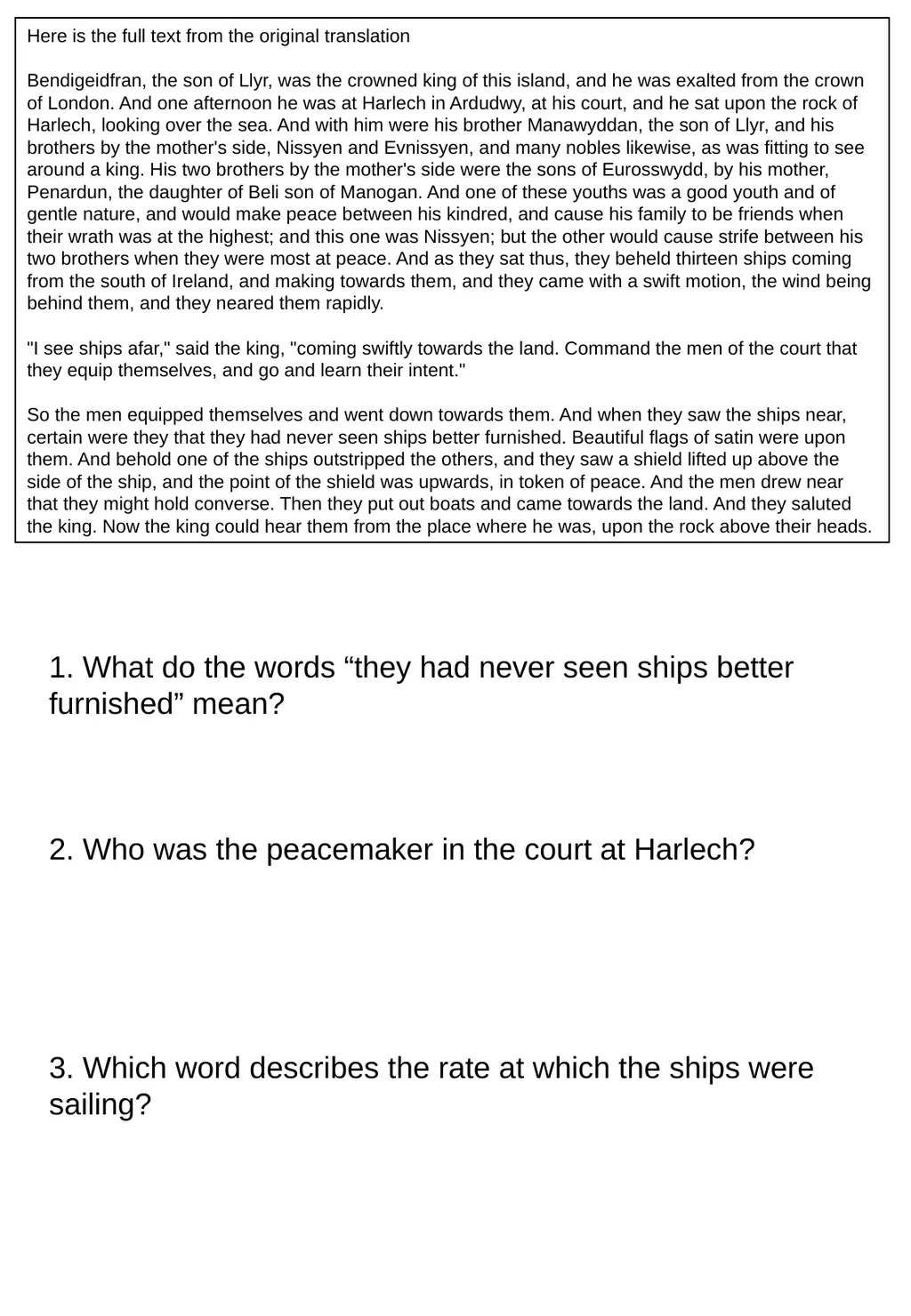
Here is the full text from the original translation
Bendigeidfran, the son of Llyr, was the crowned king of this island, and he was exalted from the crown of London. And one afternoon he was at Harlech in Ardudwy, at his court, and he sat upon the rock of Harlech, looking over the sea. And with him were his brother Manawyddan, the son of Llyr, and his brothers by the mother's side, Nissyen and Evnissyen, and many nobles likewise, as was fitting to see around a king. His two brothers by the mother's side were the sons of Eurosswydd, by his mother, Penardun, the daughter of Beli son of Manogan. And one of these youths was a good youth and of gentle nature, and would make peace between his kindred, and cause his family to be friends when their wrath was at the highest; and this one was Nissyen; but the other would cause strife between his two brothers when they were most at peace. And as they sat thus, they beheld thirteen ships coming from the south of Ireland, and making towards them, and they came with a swift motion, the wind being behind them, and they neared them rapidly.
"I see ships afar," said the king, "coming swiftly towards the land. Command the men of the court that they equip themselves, and go and learn their intent."
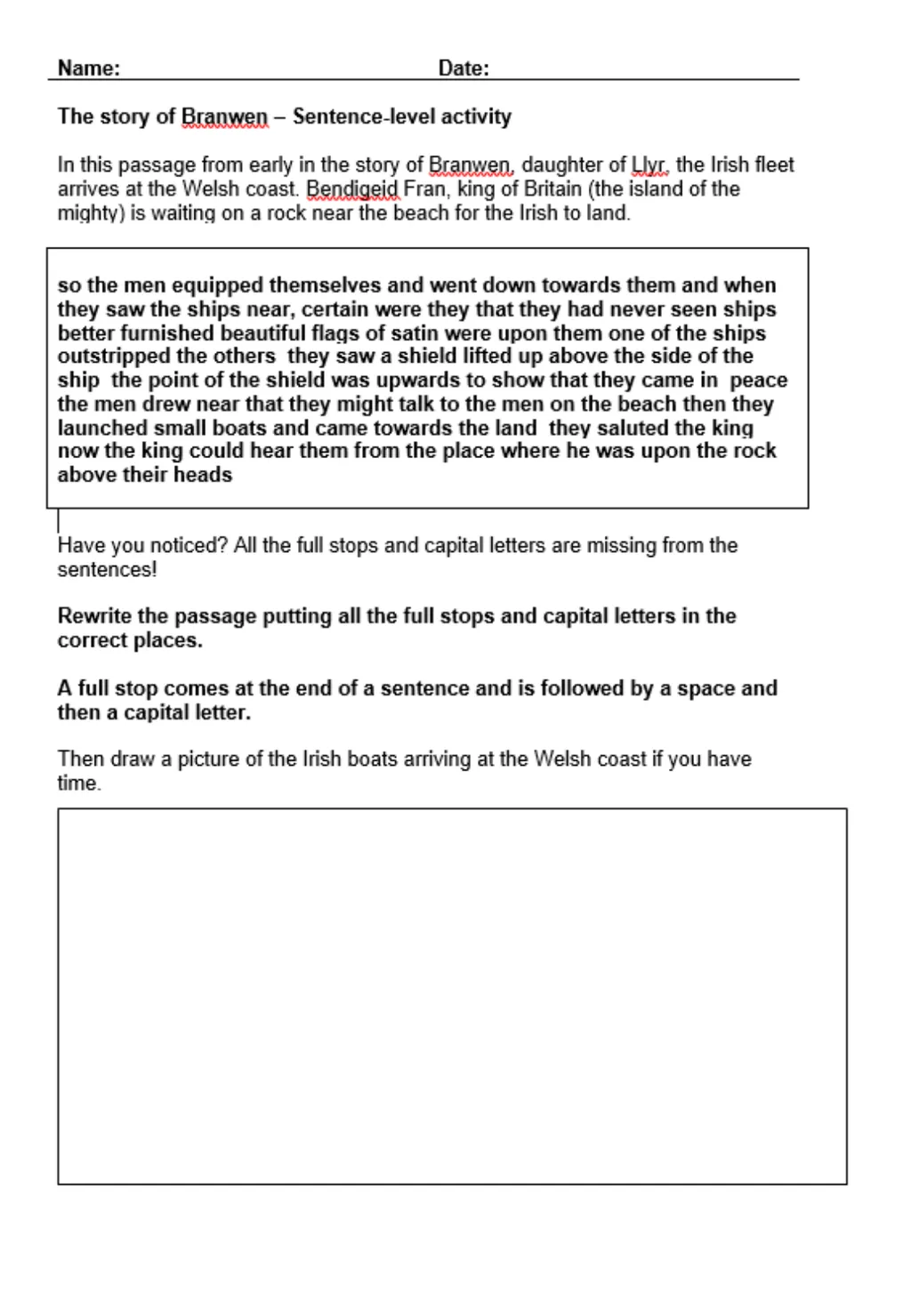
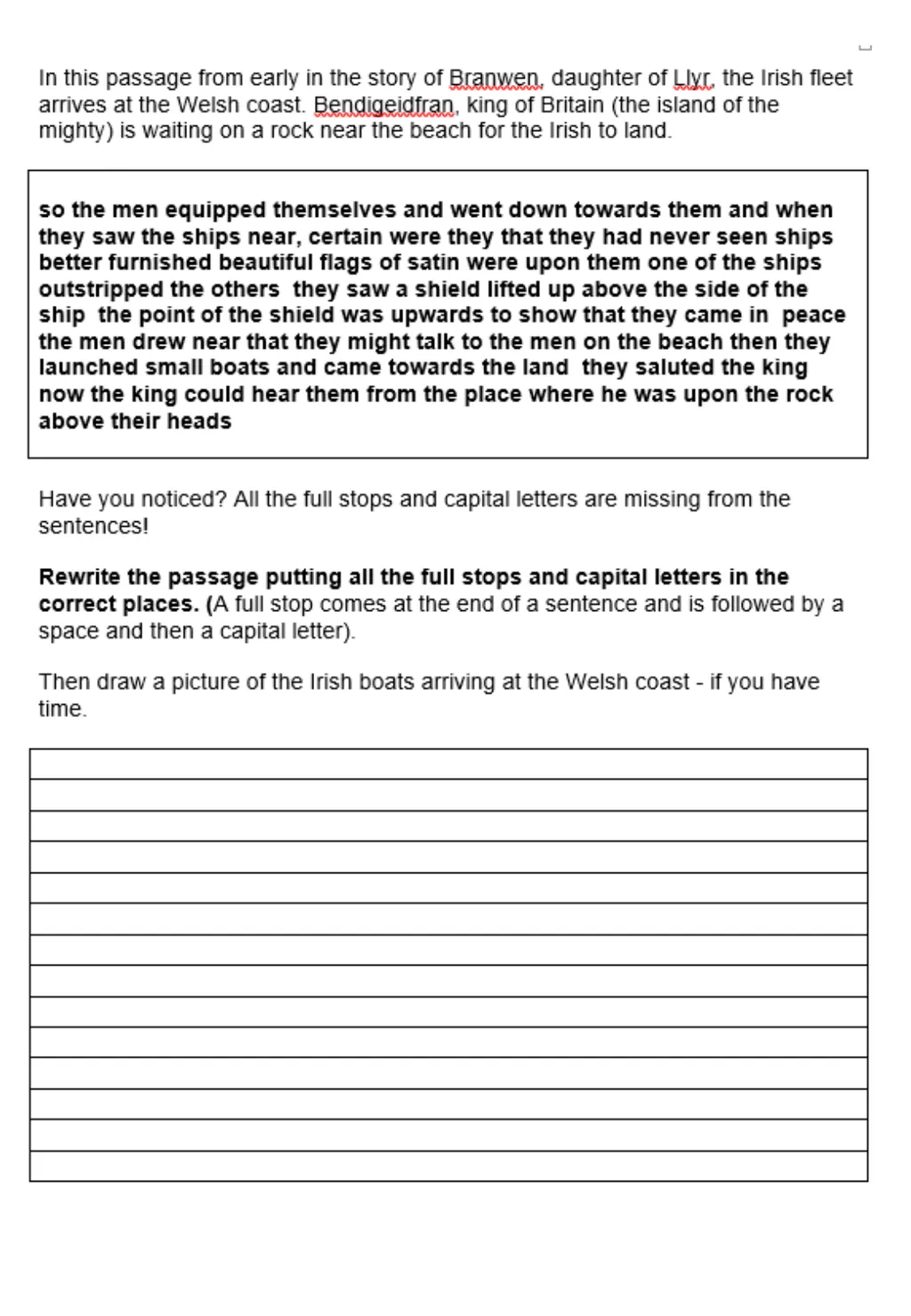
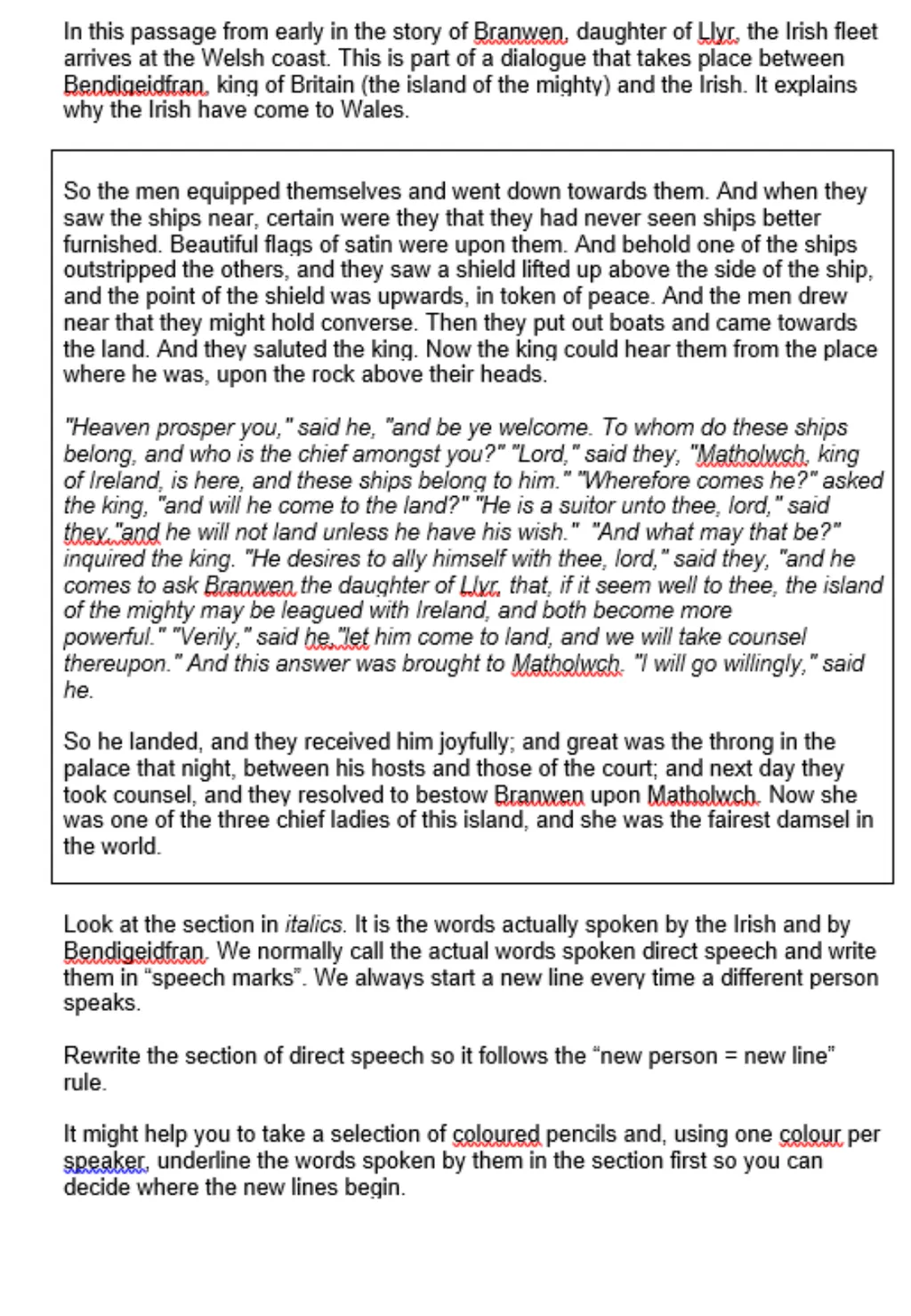
So the men equipped themselves and went down towards them. And when they saw the ships near, certain were they that they had never seen ships better furnished. Beautiful flags of satin were upon them. And behold one of the ships outstripped the others, and they saw a shield lifted up above the side of the ship, and the point of the shield was upwards, in token of peace. And the men drew near that they might hold converse. Then they put out boats and came towards the land. And they saluted the king. Now the king could hear them from the place where he was, upon the rock above their heads. 1. What do the words “they had never seen ships better furnished” mean?
2. Who was the peacemaker in the court at Harlech?
3. Which word describes the rate at which the ships were sailing?<br>
Bendigeidfran, the son of Llyr, was the crowned king of this island, and he was exalted from the crown of London. And one afternoon he was at Harlech in Ardudwy, at his court, and he sat upon the rock of Harlech, looking over the sea. And with him were his brother Manawyddan, the son of Llyr, and his brothers by the mother's side, Nissyen and Evnissyen, and many nobles likewise, as was fitting to see around a king. His two brothers by the mother's side were the sons of Eurosswydd, by his mother, Penardun, the daughter of Beli son of Manogan. And one of these youths was a good youth and of gentle nature, and would make peace between his kindred, and cause his family to be friends when their wrath was at the highest; and this one was Nissyen; but the other would cause strife between his two brothers when they were most at peace. And as they sat thus, they beheld thirteen ships coming from the south of Ireland, and making towards them, and they came with a swift motion, the wind being behind them, and they neared them rapidly.
"I see ships afar," said the king, "coming swiftly towards the land. Command the men of the court that they equip themselves, and go and learn their intent."
So the men equipped themselves and went down towards them. And when they saw the ships near, certain were they that they had never seen ships better furnished. Beautiful flags of satin were upon them. And behold one of the ships outstripped the others, and they saw a shield lifted up above the side of the ship, and the point of the shield was upwards, in token of peace. And the men drew near that they might hold converse. Then they put out boats and came towards the land. And they saluted the king. Now the king could hear them from the place where he was, upon the rock above their heads. 1. What do the words “they had never seen ships better furnished” mean?
2. Who was the peacemaker in the court at Harlech?
3. Which word describes the rate at which the ships were sailing?<br>
30
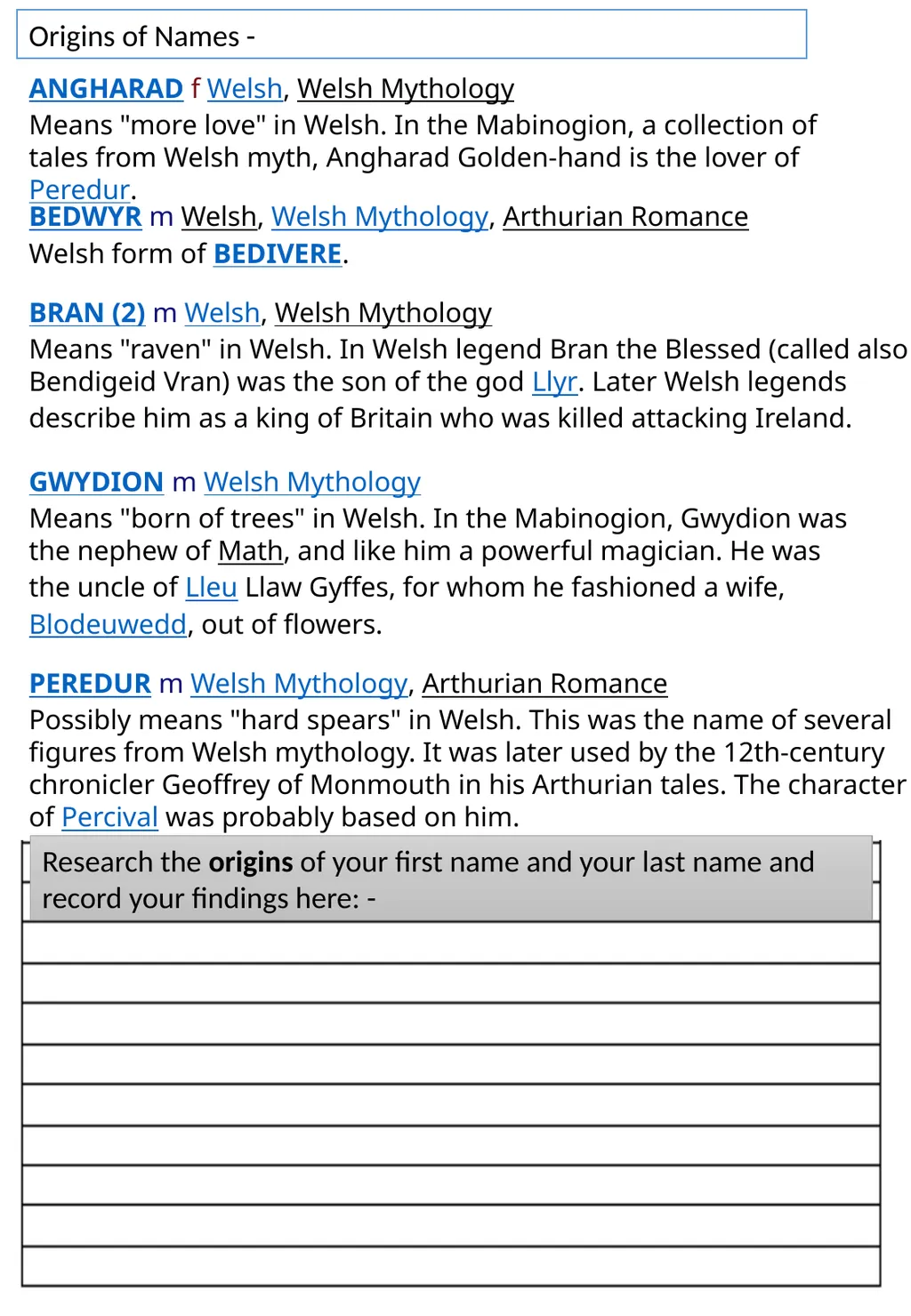
ANGHARAD f Welsh, Welsh Mythology
Means "more love" in Welsh. In the Mabinogion, a collection of tales from Welsh myth, Angharad Golden-hand is the lover of Peredur. BEDWYR m Welsh, Welsh Mythology, Arthurian Romance
Welsh form of BEDIVERE. BRAN (2) m Welsh, Welsh Mythology
Means "raven" in Welsh. In Welsh legend Bran the Blessed (called also Bendigeid Vran) was the son of the god Llyr. Later Welsh legends describe him as a king of Britain who was killed attacking Ireland. GWYDION m Welsh Mythology
Means "born of trees" in Welsh. In the Mabinogion, Gwydion was the nephew of Math, and like him a powerful magician. He was the uncle of Lleu Llaw Gyffes, for whom he fashioned a wife, Blodeuwedd, out of flowers. PEREDUR m Welsh Mythology, Arthurian Romance
Possibly means "hard spears" in Welsh. This was the name of several figures from Welsh mythology. It was later used by the 12th-century chronicler Geoffrey of Monmouth in his Arthurian tales. The character of Percival was probably based on him. Origins of Names - Research the origins of your first name and your last name and record your findings here: -<br>
31
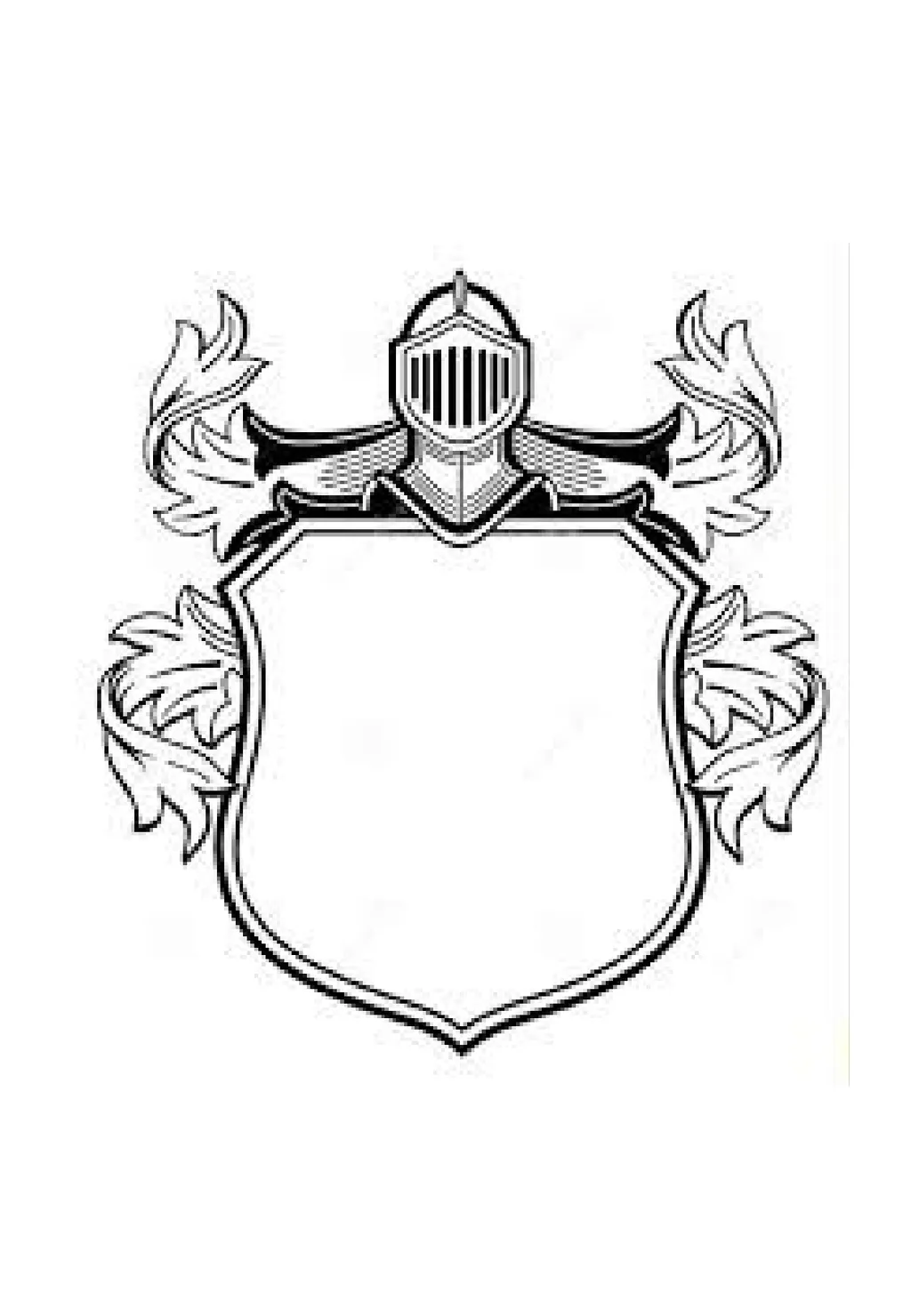
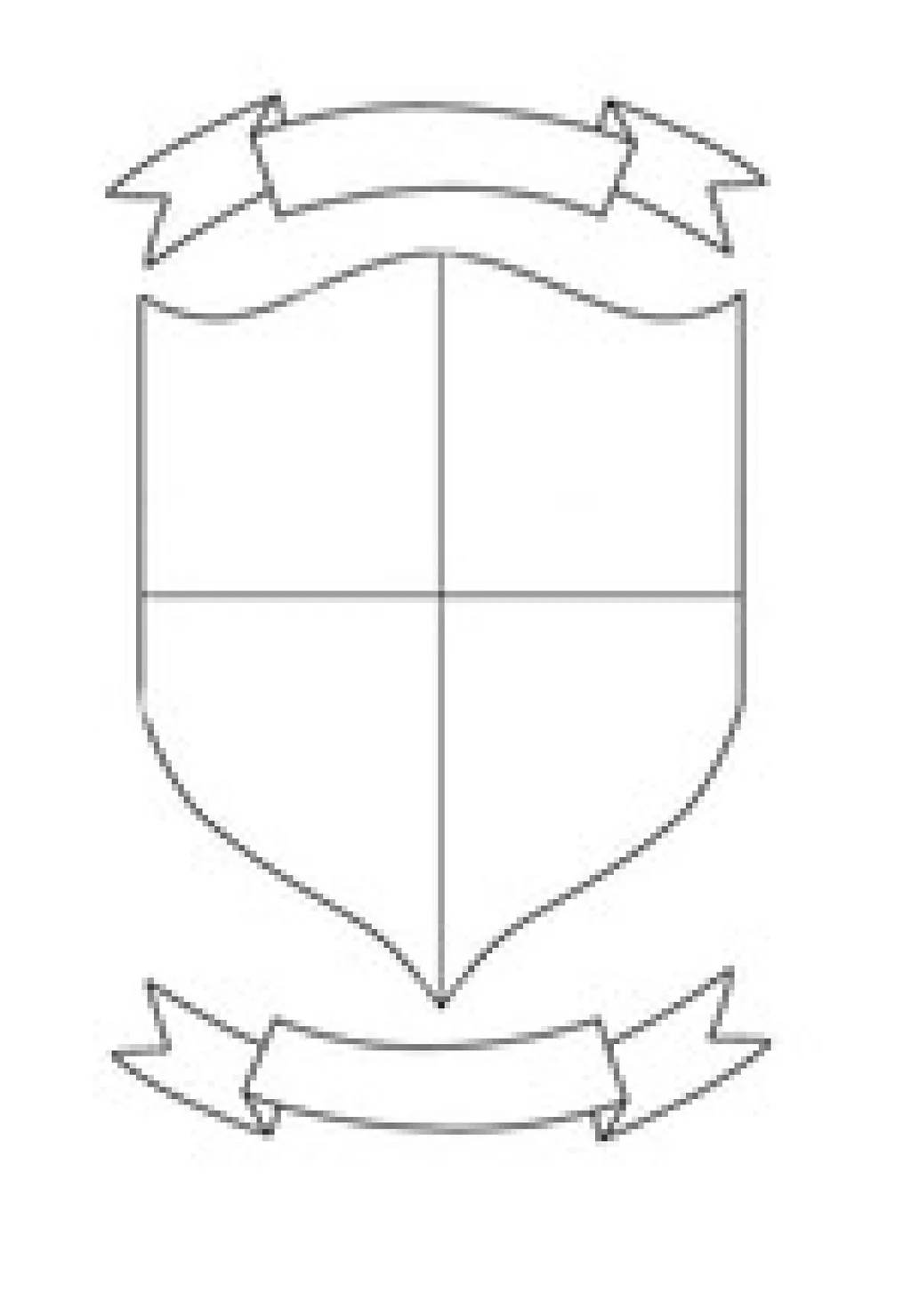
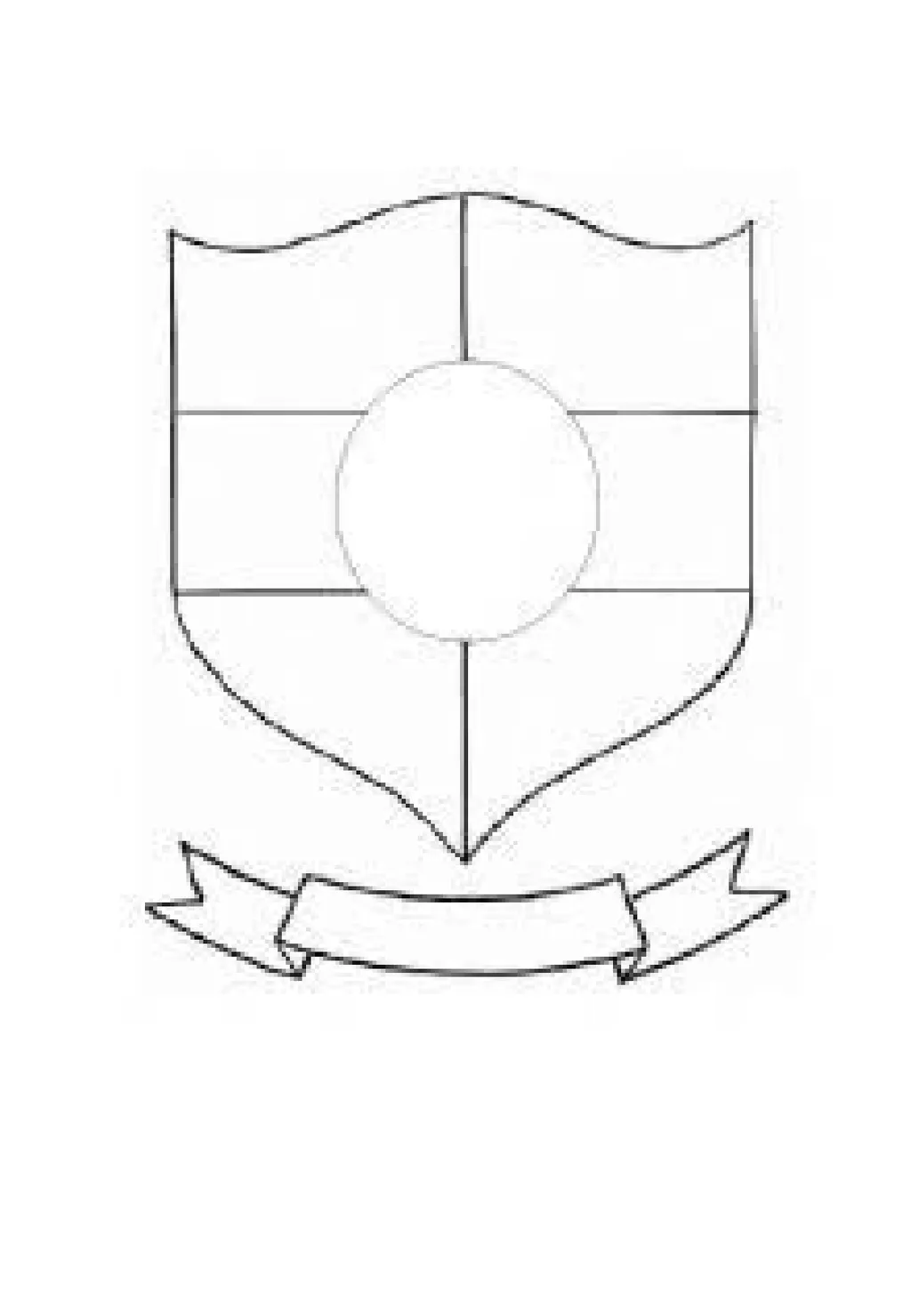
Choose from the templates on the following pages and design a coat of arms to represent your family name.<br>