We acknowledge the support of the Scottish Government through a CYPFEIF and ALEC Fund Grant. Cyrenians is a Scottish Charitable Incorporated Organisation (SCIO), registered charity SC011052. Session 2: My Emotions Learning Objectives: Name
"We acknowledge the support of the Scottish" is the property of its rightful owner. Permission is granted to
download and print the materials on this website for personal, non-commercial use only, and to display it
on your personal computer provided you do not modify the materials and that you retain all copyright
notices contained in the materials. By downloading content from our website, you accept the terms of this
agreement.
Presentation Transcript
01
We acknowledge the support of the Scottish Government through a CYPFEIF and ALEC Fund Grant. Cyrenians is a Scottish Charitable Incorporated Organisation (SCIO), registered charity SC011052. Session 2: My Emotions<br>
02
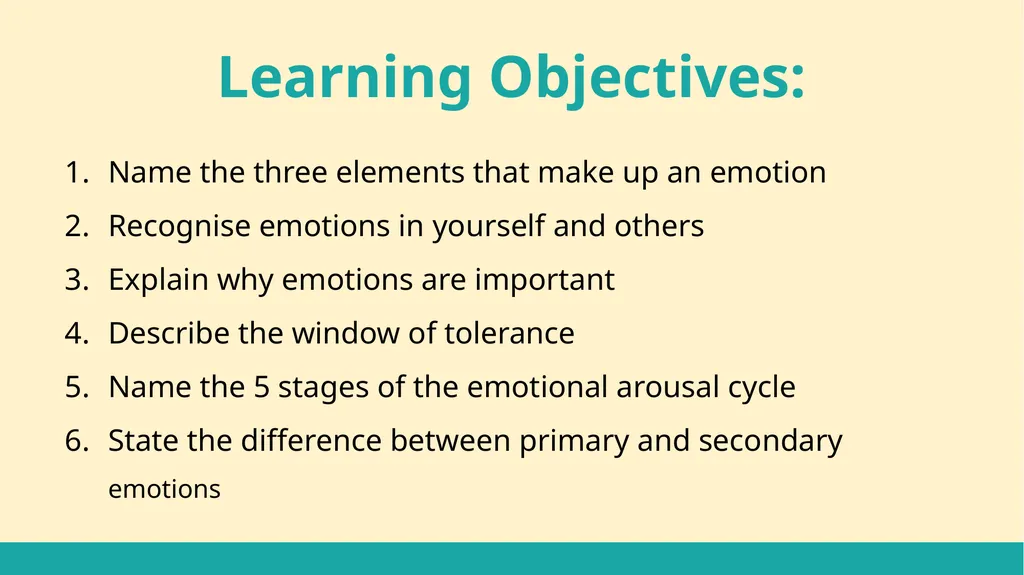
Learning Objectives: Name the three elements that make up an emotion
Recognise emotions in yourself and others
Explain why emotions are important
Describe the window of tolerance
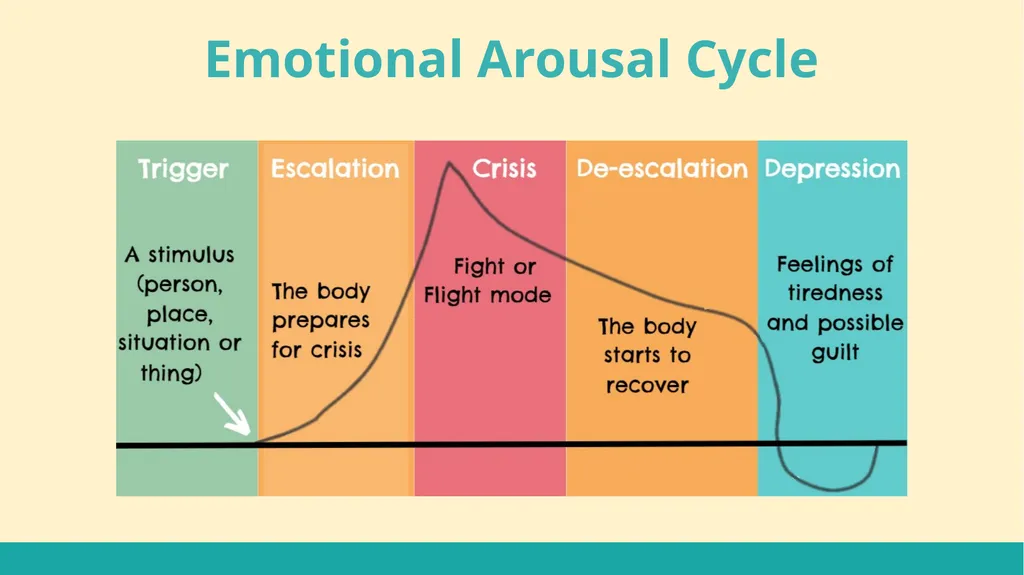
Name the 5 stages of the emotional arousal cycle
State the difference between primary and secondary emotions<br>
03
What are emotions?<br>
04
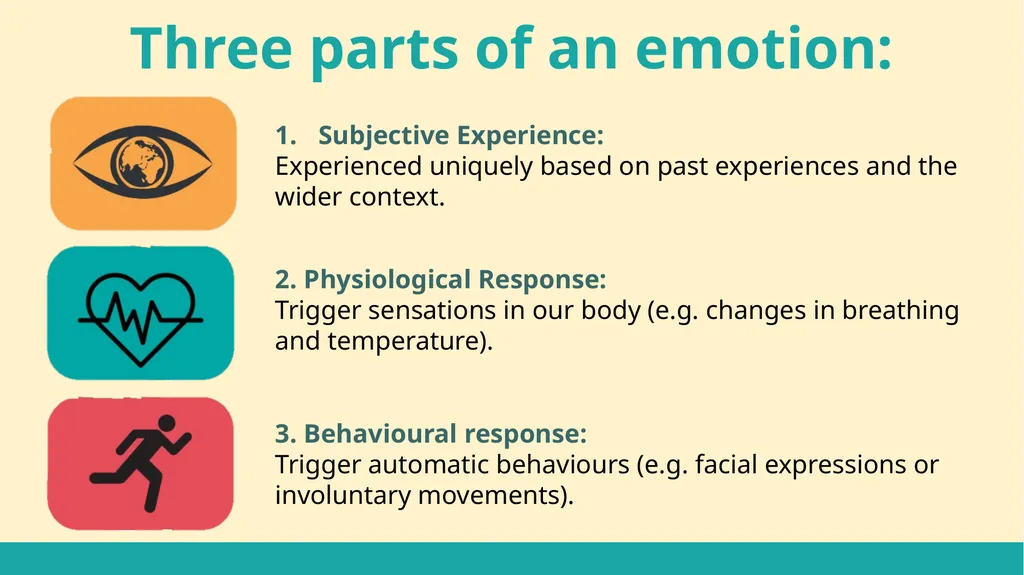
Three parts of an emotion: Subjective Experience:
Experienced uniquely based on past experiences and the wider context. 2. Physiological Response:
Trigger sensations in our body (e.g. changes in breathing and temperature). 3. Behavioural response:
Trigger automatic behaviours (e.g. facial expressions or involuntary movements).<br>
05
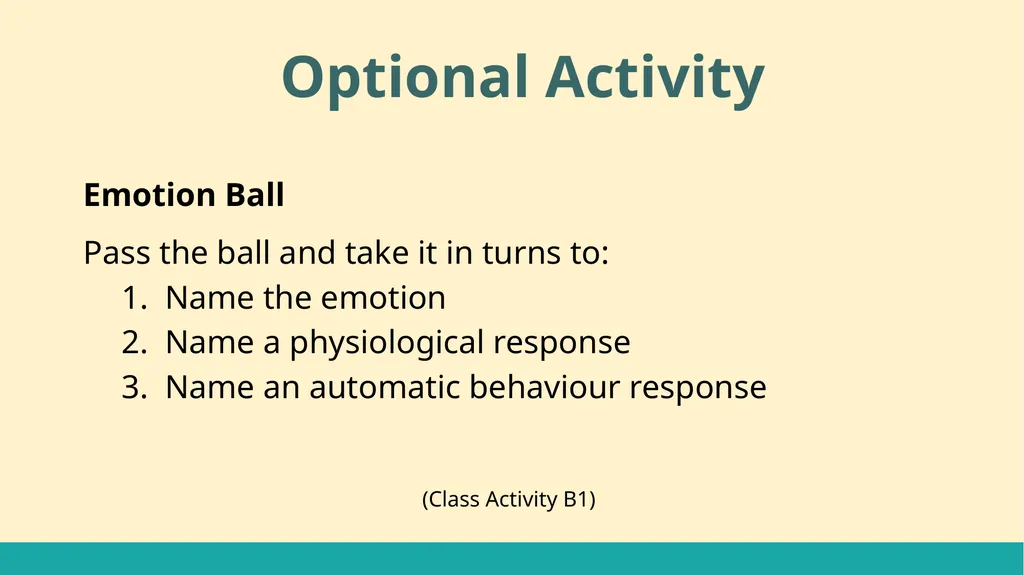
Optional Activity Emotion Ball
Pass the ball and take it in turns to:
Name the emotion
Name a physiological response
Name an automatic behaviour response (Class Activity B1)<br>
06
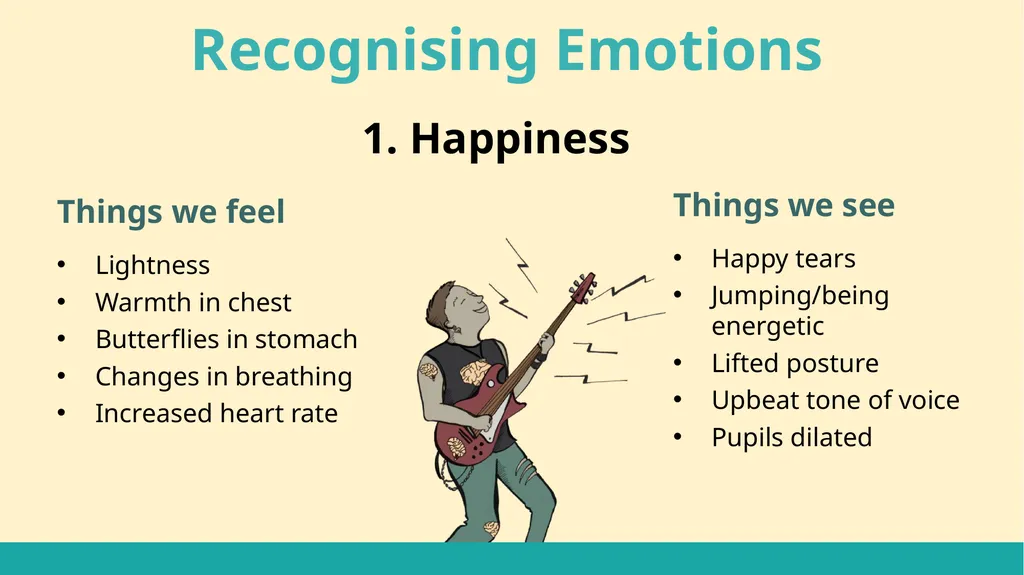
Recognising Emotions 1. Happiness Things we feel
Lightness
Warmth in chest
Butterflies in stomach
Changes in breathing
Increased heart rate Things we see
Happy tears
Jumping/being energetic
Lifted posture
Upbeat tone of voice
Pupils dilated<br>
07
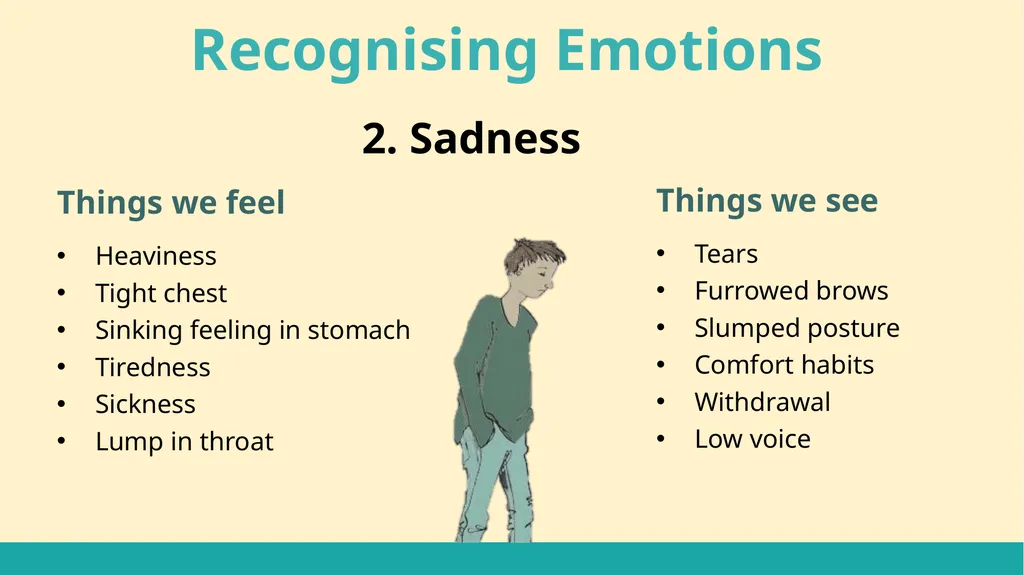
Recognising Emotions 2. Sadness Things we feel
Heaviness
Tight chest
Sinking feeling in stomach
Tiredness
Sickness
Lump in throat Things we see
Tears
Furrowed brows
Slumped posture
Comfort habits
Withdrawal
Low voice<br>
08
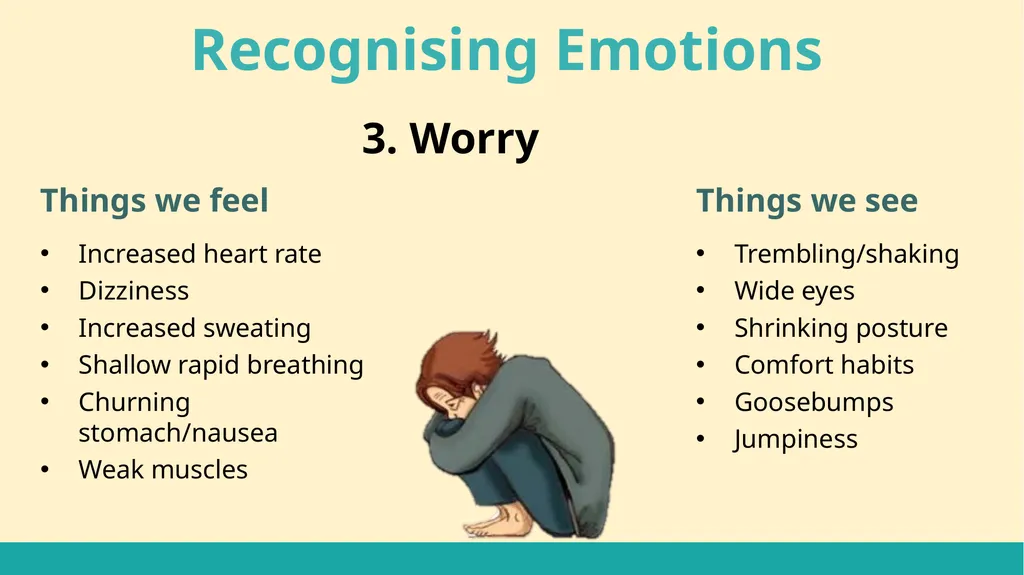
Recognising Emotions 3. Worry Things we feel
Increased heart rate
Dizziness
Increased sweating
Shallow rapid breathing
Churning stomach/nausea
Weak muscles Things we see
Trembling/shaking
Wide eyes
Shrinking posture
Comfort habits
Goosebumps
Jumpiness<br>
09
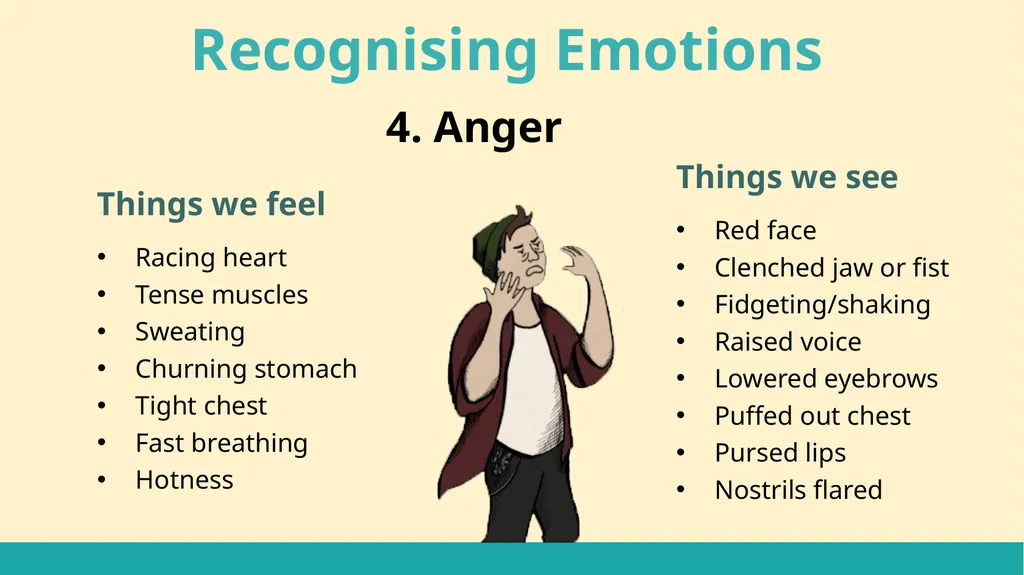
Recognising Emotions 4. Anger Things we feel
Racing heart
Tense muscles
Sweating
Churning stomach
Tight chest
Fast breathing
Hotness Things we see
Red face
Clenched jaw or fist
Fidgeting/shaking
Raised voice
Lowered eyebrows
Puffed out chest
Pursed lips
Nostrils flared<br>
10
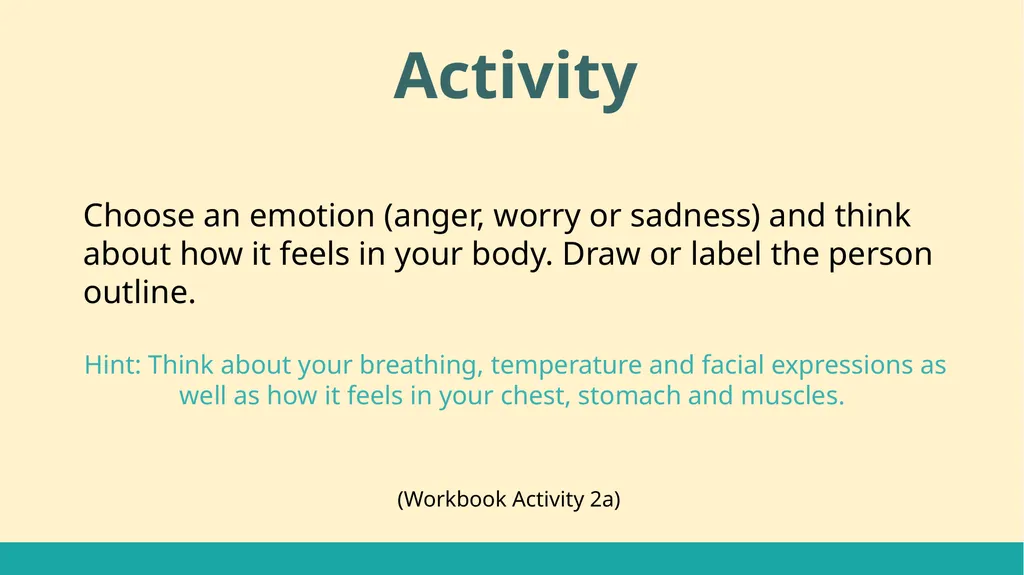
Activity Draw How You Feel
Choose an emotion (anger, worry or sadness) and think about how it feels in your body. Draw or label the person outline.
Hint: Think about your breathing, temperature and facial expressions as well as how it feels in your chest, stomach and muscles. (Workbook Activity 2a)<br>
11
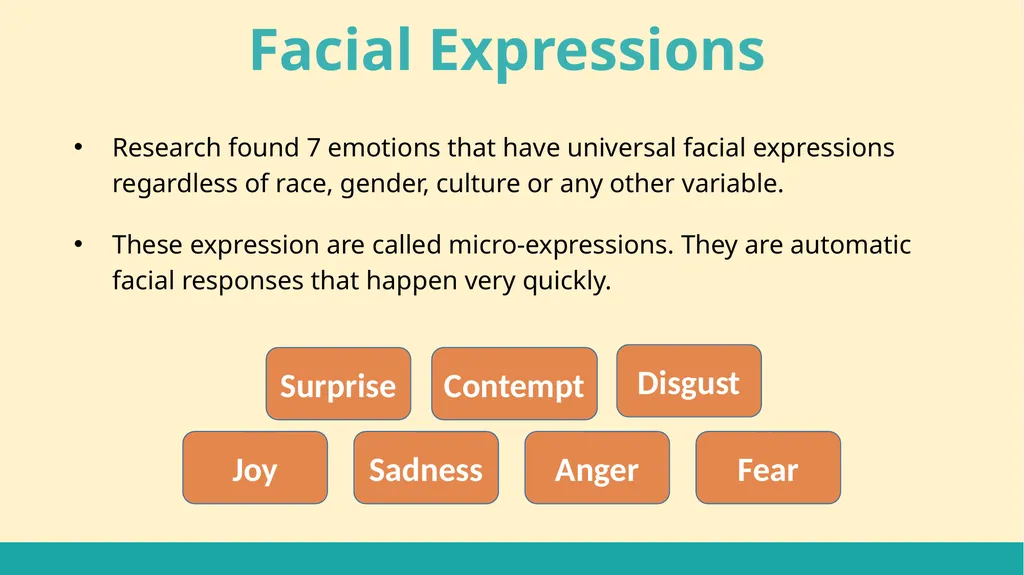
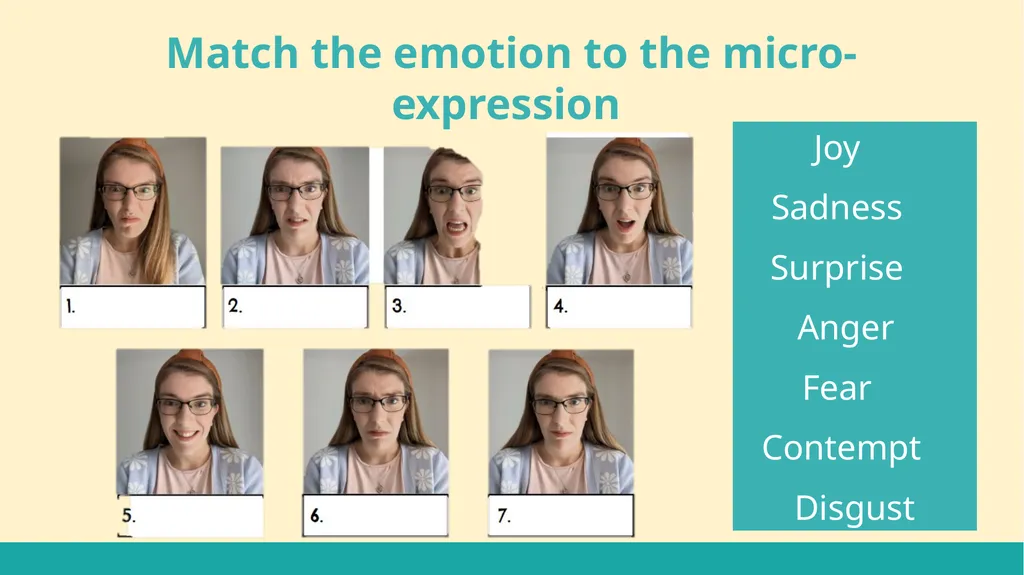
Facial Expressions Research found 7 emotions that have universal facial expressions regardless of race, gender, culture or any other variable.
These expression are called micro-expressions. They are automatic facial responses that happen very quickly.<br>
12
Activity Facial Expression Quiz
Match the micro-expressions to the emotion words. (Workbook Exercise 2.1)<br>
13
Match the emotion to the micro-expression Joy
Sadness
Surprise
Anger
Fear
Contempt
Disgust<br>
14
Optional Activity Emotion words
Match the micro-expressions to the emotion words. (Workbook Activity 2b)<br>
15
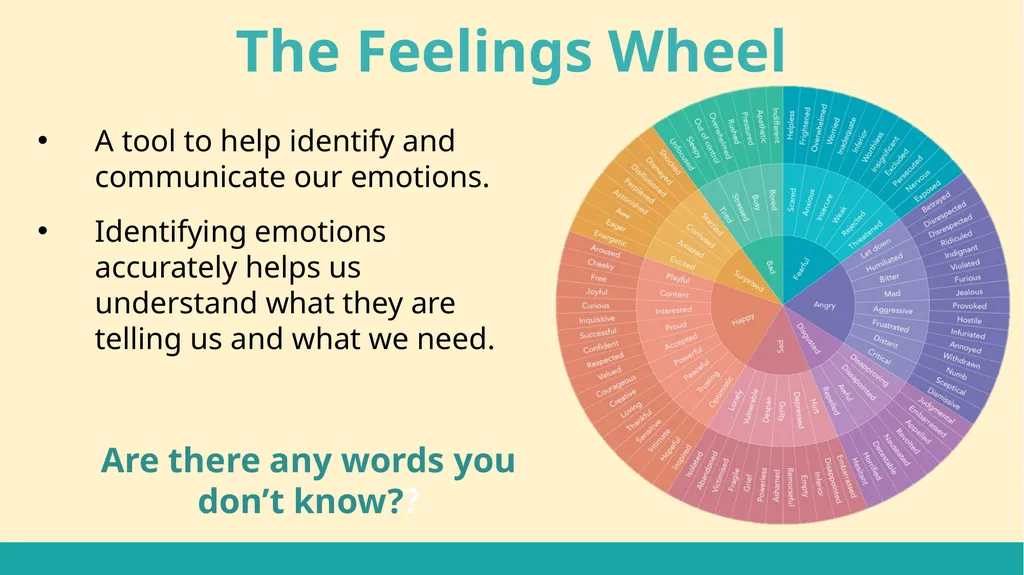
A tool to help identify and communicate our emotions.
Identifying emotions accurately helps us understand what they are telling us and what we need. The Feelings Wheel Are there any words you don’t know??<br>
16
Why are Emotions Important? Emotions carry information to the brain, like messages. Often, they are making us aware of a need that is not being met.
Emotions make us aware of what is important to us in a situation and help guide our actions and decision making.<br>
17
Activity Messages to the Brain
Fill in the missing Emotion, Message or Action. What is the emotion telling us and what might we need to do in response? (Workbook Activity 2c)<br>
18
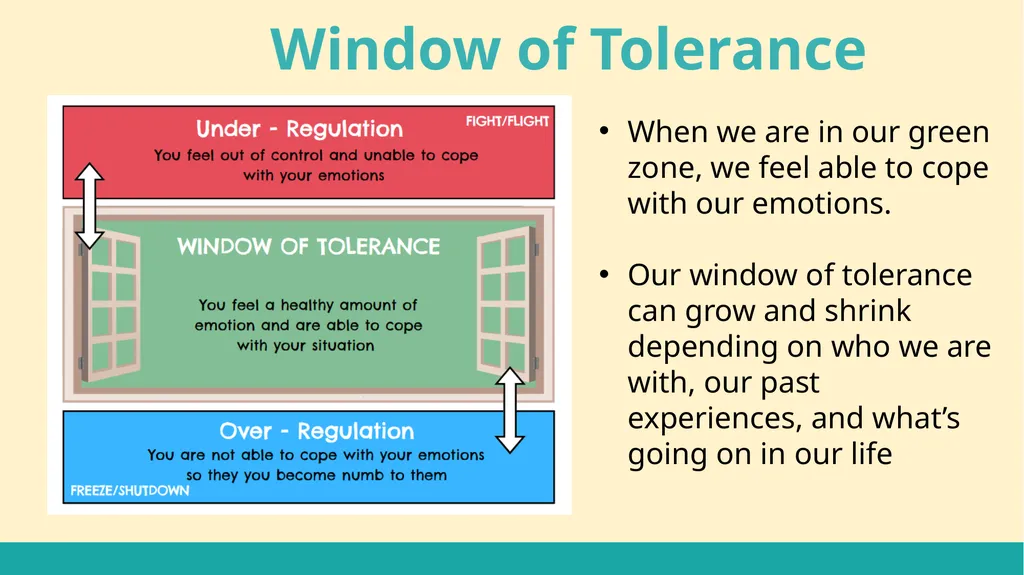
When we are in our green zone, we feel able to cope with our emotions.
Our window of tolerance can grow and shrink depending on who we are with, our past experiences, and what’s going on in our life Window of Tolerance<br>
19
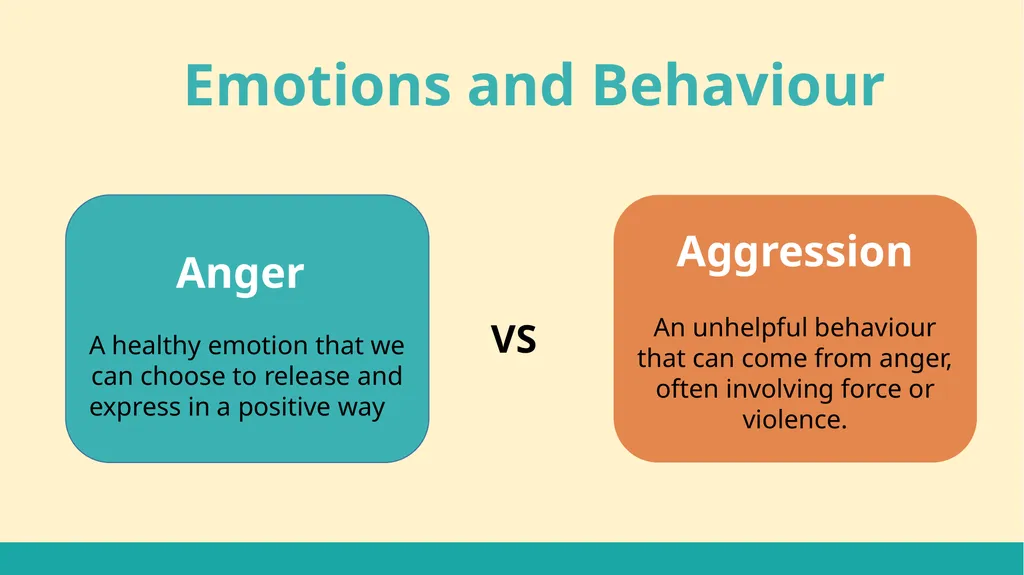
Anger
A healthy emotion that we can choose to release and express in a positive way Aggression
An unhelpful behaviour that can come from anger, often involving force or violence. VS Emotions and Behaviour<br>
20
Emotional Arousal Cycle<br>
21
Activity Triggers and Warning Signs
Write done what situations/things cause you to feel frustrated or overwhelmed. Write down how you feel and act in each stage of the Emotional Arousal Cycle. (Workbook Activity 2d)<br>
22
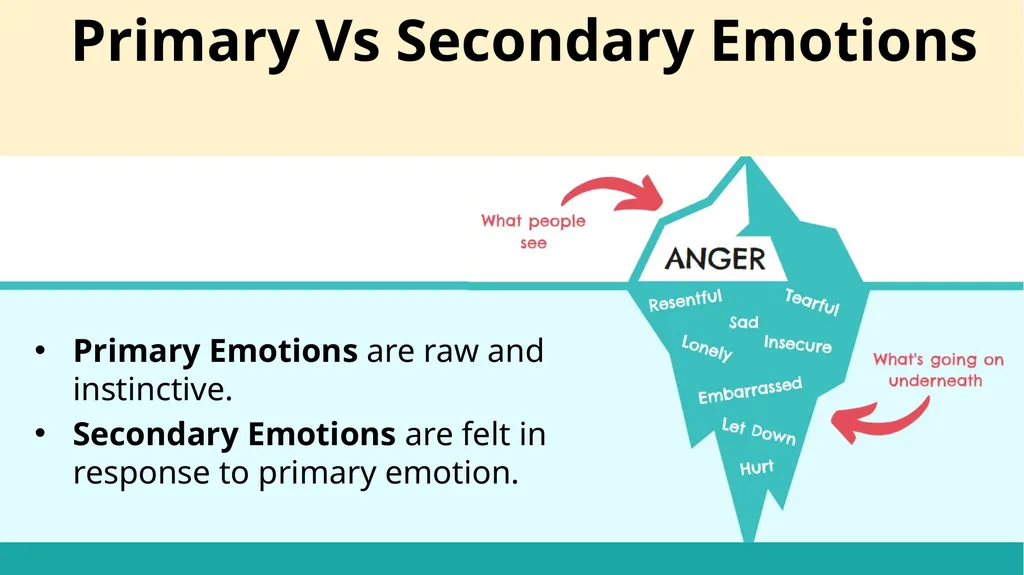
Primary Vs Secondary Emotions Primary Emotions are raw and instinctive.
Secondary Emotions are felt in response to primary emotion.<br>
23
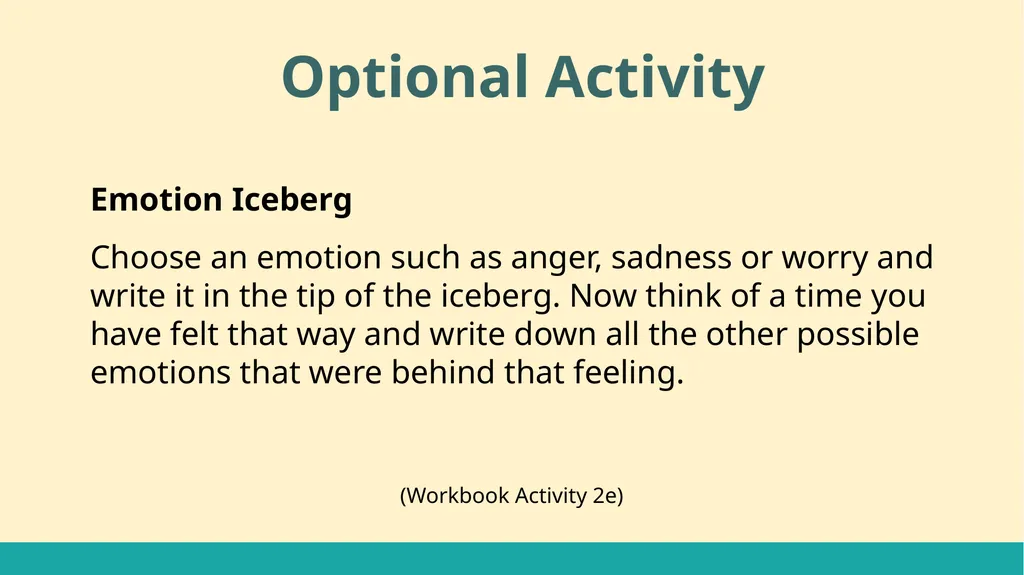
Optional Activity Emotion Iceberg
Choose an emotion such as anger, sadness or worry and write it in the tip of the iceberg. Now think of a time you have felt that way and write down all the other possible emotions that were behind that feeling. (Workbook Activity 2e)<br>
24
Activity Sammy and Kerry
Read through your characters backstory and discuss the questions on the worksheet? (Class Activity B2)<br>
25
Learning Objectives: Name the three elements that make up an emotion
Recognise emotions in yourself and others
Explain why emotions are important
Describe the window of tolerance
Name the 5 stages of the emotional arousal cycle
State the difference between primary and secondary emotions<br>
26
Tell us what you thought! Stay Connected! We acknowledge the support of the Scottish Government through a CYPFEIF and ALEC Fund Grant. Cyrenians is a Scottish Charitable Incorporated Organisation (SCIO), registered charity SC011052.<br>