
We Need Energy Technology Breakthroughs to
KL
Published · 48 slides · 0 views
1 / 1







Description
We Need Energy Technology Breakthroughs to Effectively Stem Climate Change Mike Toman Research Department, World Bank iSEE Congress, University of Illinois September 13, 2016 Responsibility for the content of this presentation is mine alone
Related Topics
Share
Embed code
Download this presentation From Below
"We Need Energy Technology Breakthroughs to" is the property of its rightful owner. Permission is granted to download and print the materials on this website for personal, non-commercial use only, and to display it on your personal computer provided you do not modify the materials and that you retain all copyright notices contained in the materials. By downloading content from our website, you accept the terms of this agreement.
Presentation Transcript
01
We Need Energy Technology Breakthroughs to Effectively Stem Climate Change Mike Toman
Research Department, World Bank
iSEE Congress, University of Illinois
September 13, 2016 Responsibility for the content of this presentation is mine alone and the views expressed should not be attributed to the World Bank or any member countries.<br>
Research Department, World Bank
iSEE Congress, University of Illinois
September 13, 2016 Responsibility for the content of this presentation is mine alone and the views expressed should not be attributed to the World Bank or any member countries.<br>
02
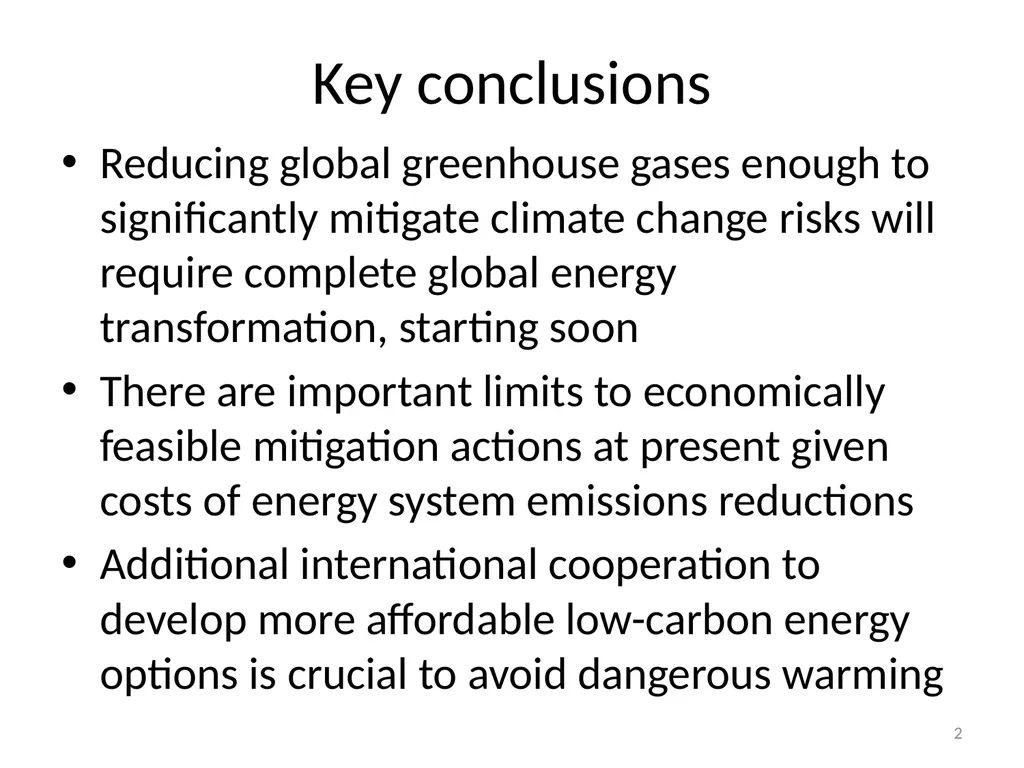
Key conclusions Reducing global greenhouse gases enough to significantly mitigate climate change risks will require complete global energy transformation, starting soon
There are important limits to economically feasible mitigation actions at present given costs of energy system emissions reductions
Additional international cooperation to develop more affordable low-carbon energy options is crucial to avoid dangerous warming 2<br>
There are important limits to economically feasible mitigation actions at present given costs of energy system emissions reductions
Additional international cooperation to develop more affordable low-carbon energy options is crucial to avoid dangerous warming 2<br>
03
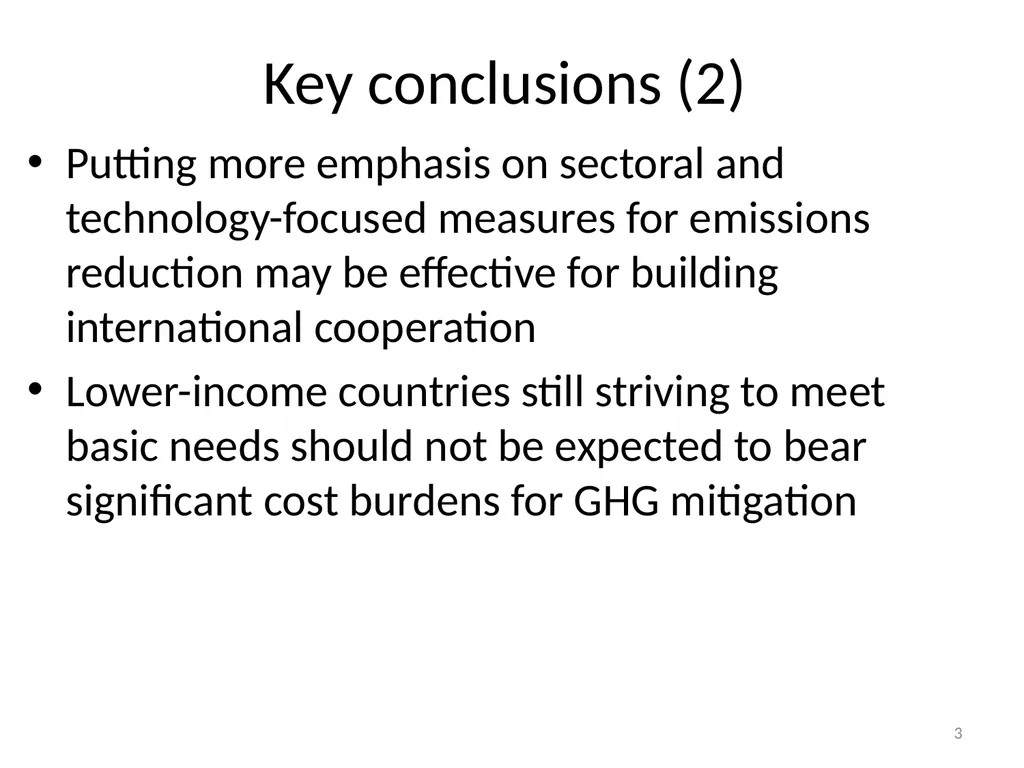
Key conclusions (2) Putting more emphasis on sectoral and technology-focused measures for emissions reduction may be effective for building international cooperation
Lower-income countries still striving to meet basic needs should not be expected to bear significant cost burdens for GHG mitigation 3<br>
Lower-income countries still striving to meet basic needs should not be expected to bear significant cost burdens for GHG mitigation 3<br>
04
Climate change and other environmental risks 4<br>
05
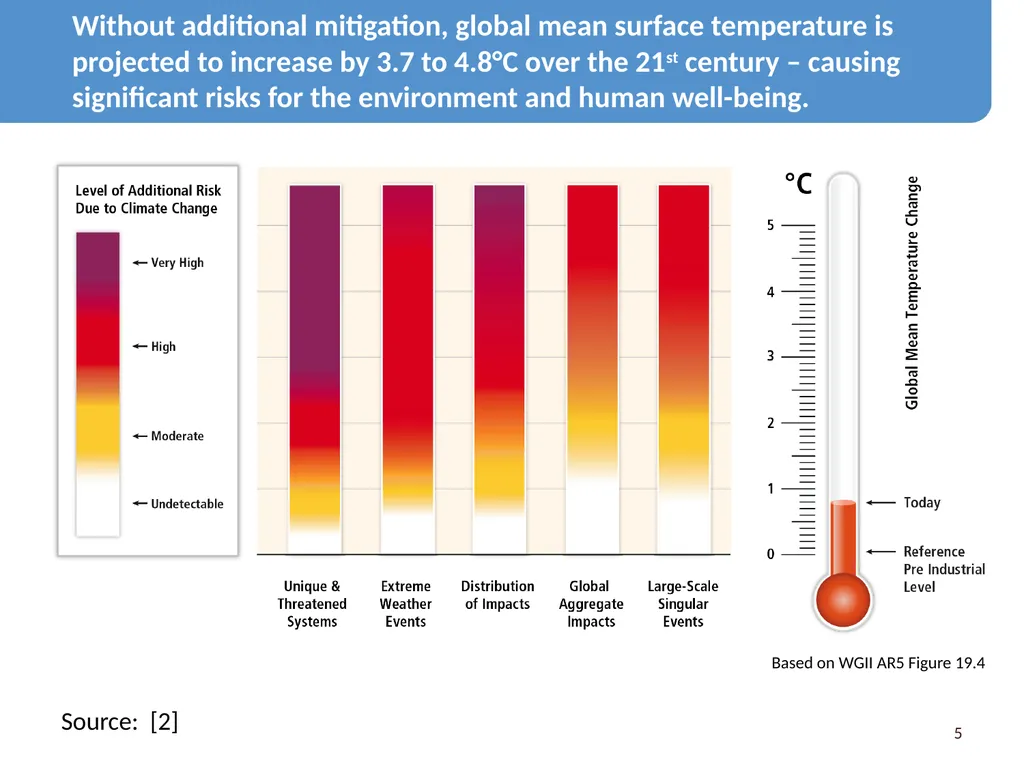
Without additional mitigation, global mean surface temperature is projected to increase by 3.7 to 4.8°C over the 21st century – causing significant risks for the environment and human well-being. 5 Based on WGII AR5 Figure 19.4 Source: [2]<br>
06
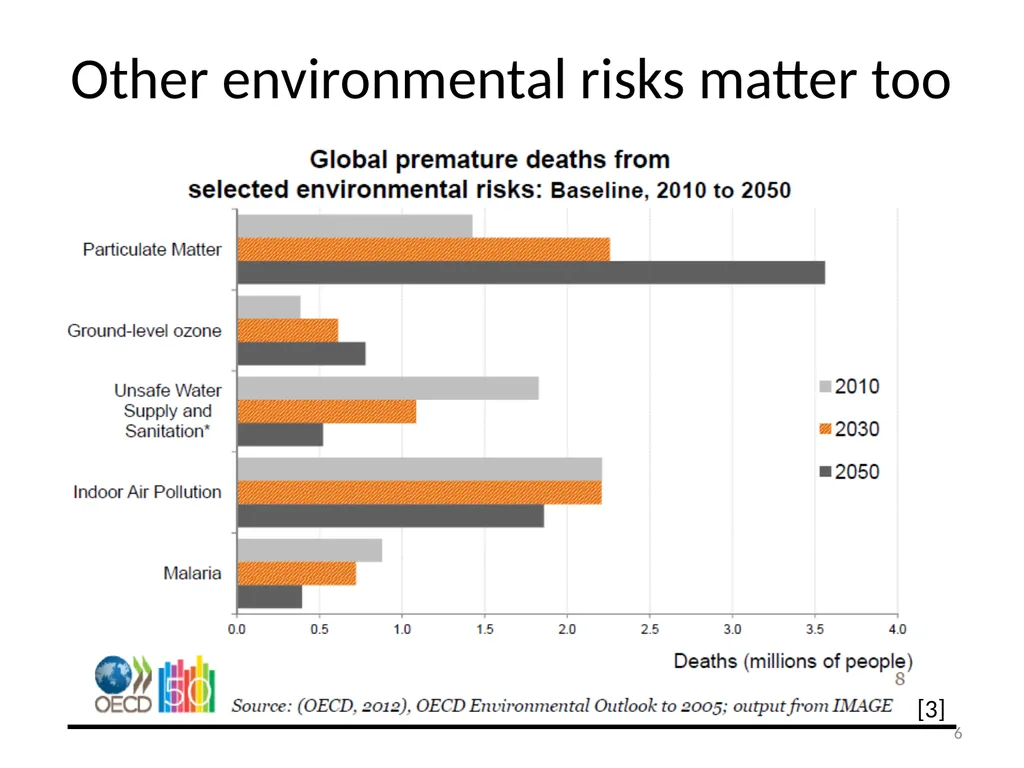
Other environmental risks matter too 6 [3]<br>
07
Energy priorities for most
developing countries Improved access to affordable, clean energy
Basic access for cooking, heating, lighting
Expanded access to electricity for growth
Improved reliability of electricity availability
Mitigate productivity as well as direct welfare losses
Increase investment in modern growth sectors
Financial sustainability of sector
Subsidy, other governance reforms
Improved energy efficiency that lowers costs 7<br>
Basic access for cooking, heating, lighting
Expanded access to electricity for growth
Improved reliability of electricity availability
Mitigate productivity as well as direct welfare losses
Increase investment in modern growth sectors
Financial sustainability of sector
Subsidy, other governance reforms
Improved energy efficiency that lowers costs 7<br>
08
Possibilities for and Potential Costs of GHG mitigation 8<br>
09
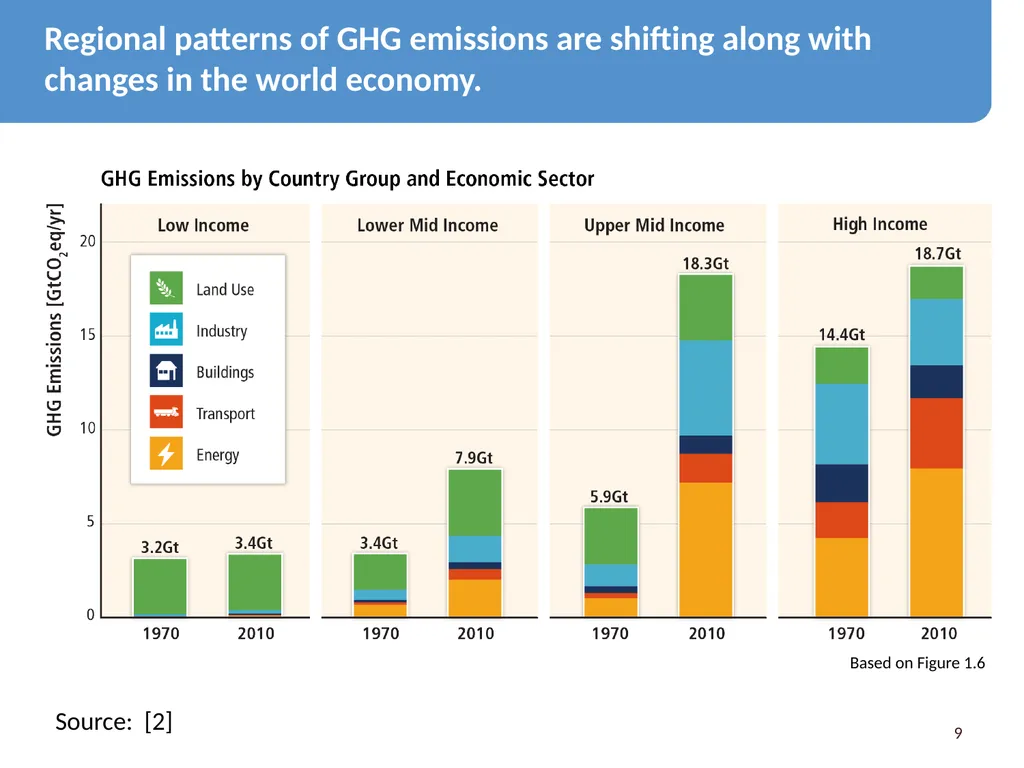
Regional patterns of GHG emissions are shifting along with changes in the world economy. 9 Based on Figure 1.6 Source: [2]<br>
10
GHG emissions rise with growth in GDP and population;
long-standing trend of decarbonisation of energy reversed. 10 Based on Figure 1.7 Source: [2]<br>
11
GHG emissions rise with growth in GDP and population;
long-standing trend of decarbonisation of energy reversed. 11 Based on Figure 1.7 Source: [2]<br>
12
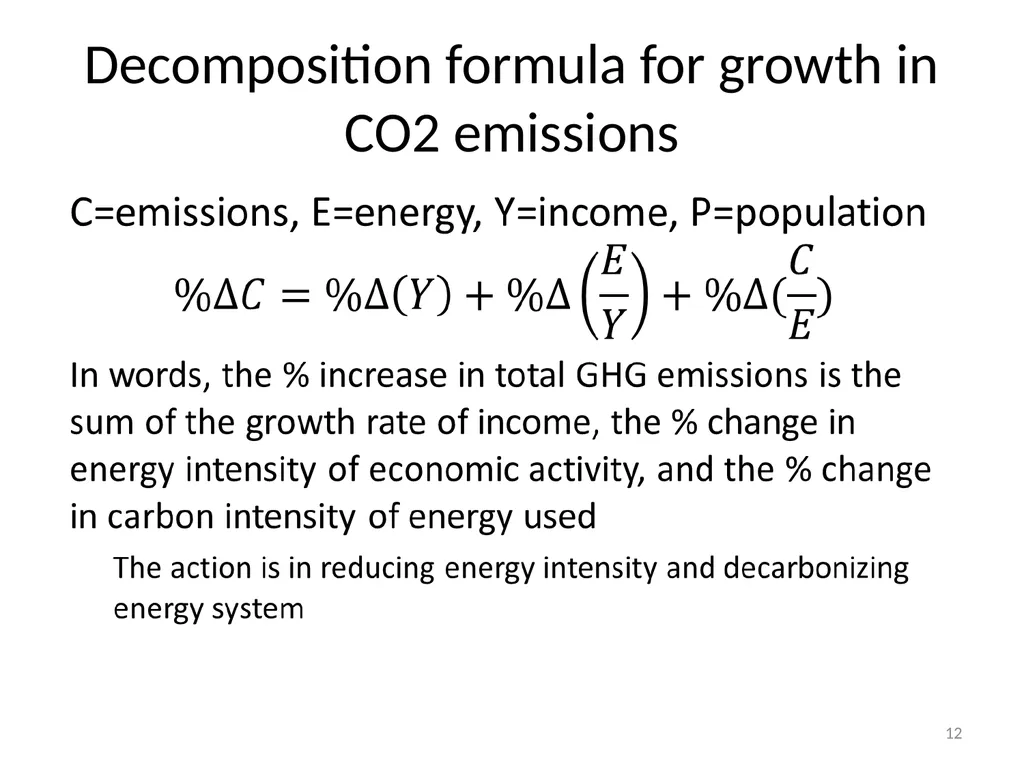
Decomposition formula for growth in CO2 emissions 12<br>
13
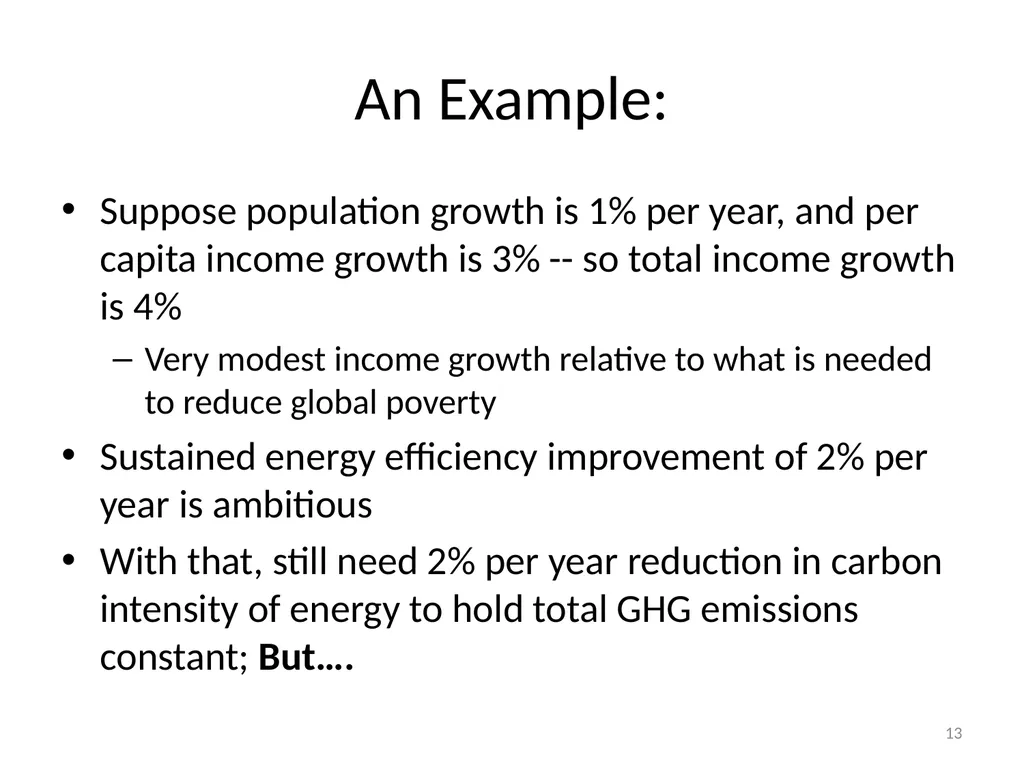
An Example: Suppose population growth is 1% per year, and per capita income growth is 3% -- so total income growth is 4%
Very modest income growth relative to what is needed to reduce global poverty
Sustained energy efficiency improvement of 2% per year is ambitious
With that, still need 2% per year reduction in carbon intensity of energy to hold total GHG emissions constant; But…. 13<br>
Very modest income growth relative to what is needed to reduce global poverty
Sustained energy efficiency improvement of 2% per year is ambitious
With that, still need 2% per year reduction in carbon intensity of energy to hold total GHG emissions constant; But…. 13<br>
14
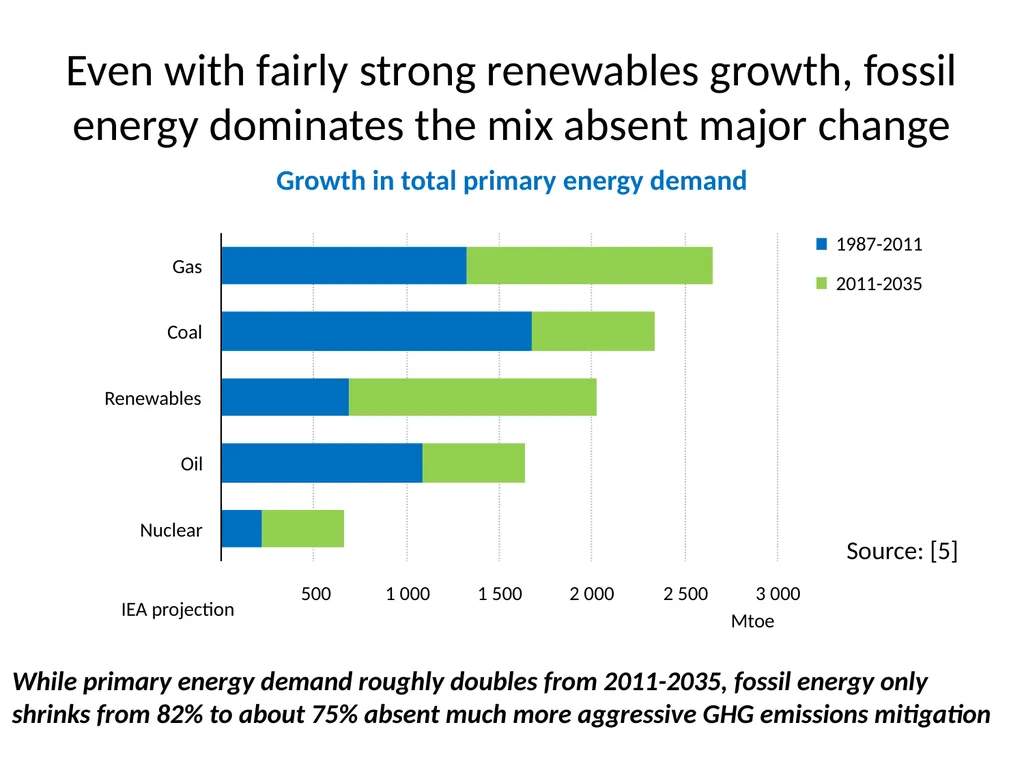
While primary energy demand roughly doubles from 2011-2035, fossil energy only shrinks from 82% to about 75% absent much more aggressive GHG emissions mitigation Even with fairly strong renewables growth, fossil energy dominates the mix absent major change Growth in total primary energy demand 500 1 000 1 500 2 000 2 500 3 000 Nuclear Oil Renewables Coal Gas Mtoe 1987-2011 IEA projection Source: [5]<br>
15
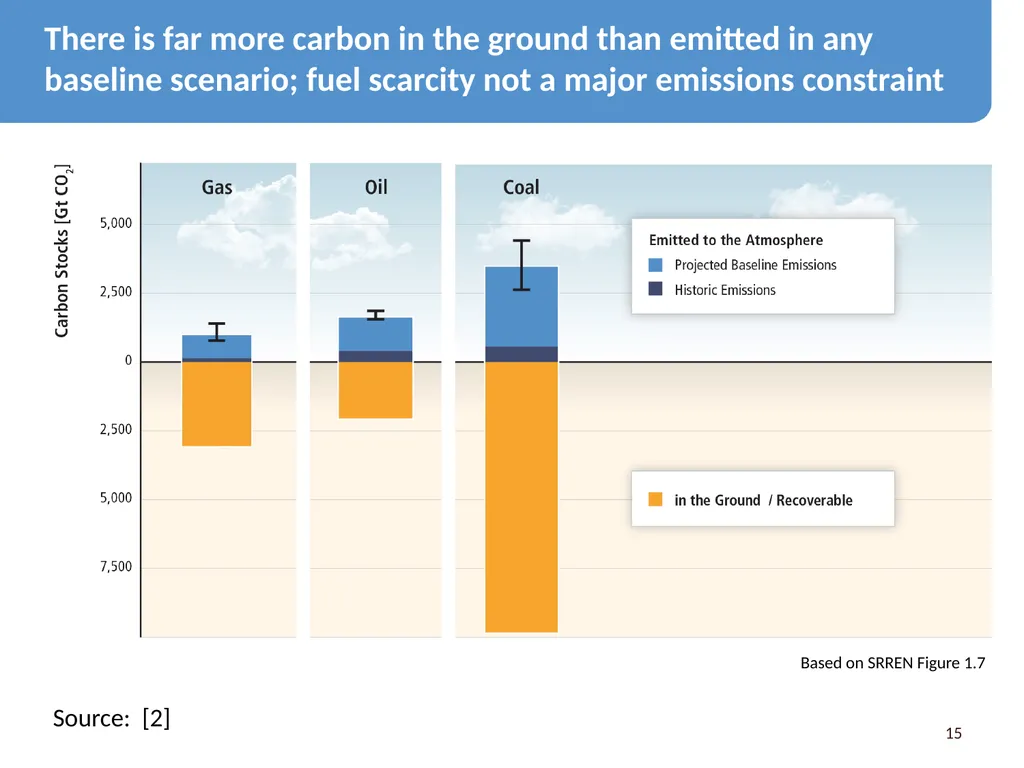
There is far more carbon in the ground than emitted in any baseline scenario; fuel scarcity not a major emissions constraint 15 Based on SRREN Figure 1.7 Source: [2]<br>
16
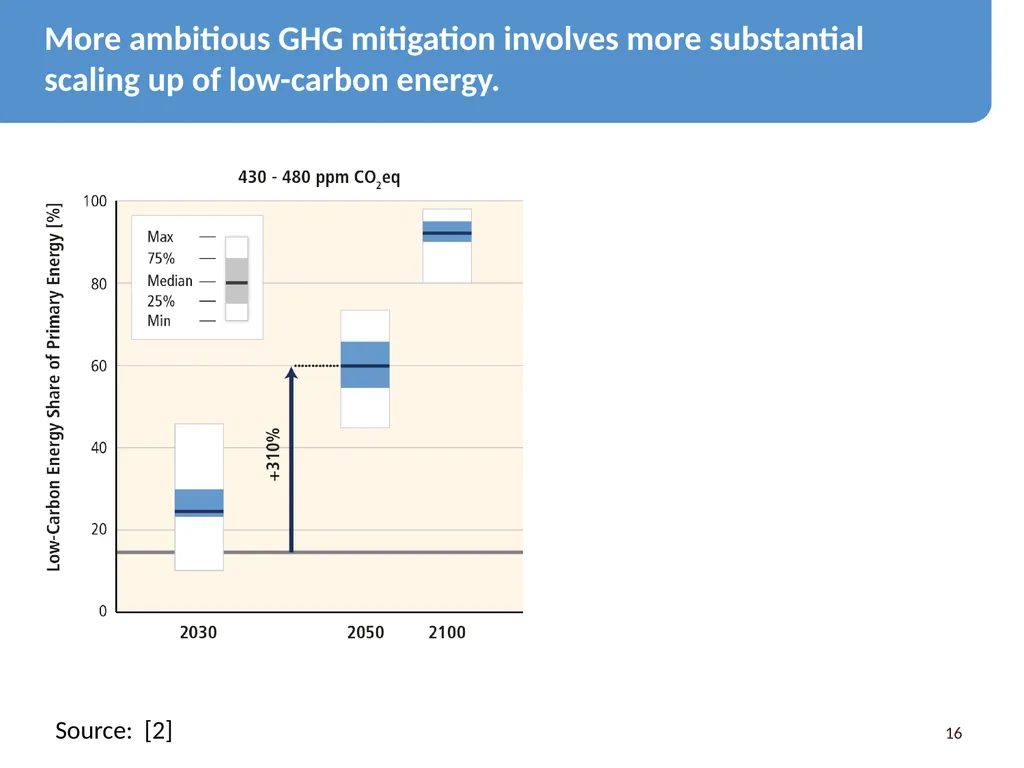
More ambitious GHG mitigation involves more substantial scaling up of low-carbon energy. 16 Source: [2]<br>
17
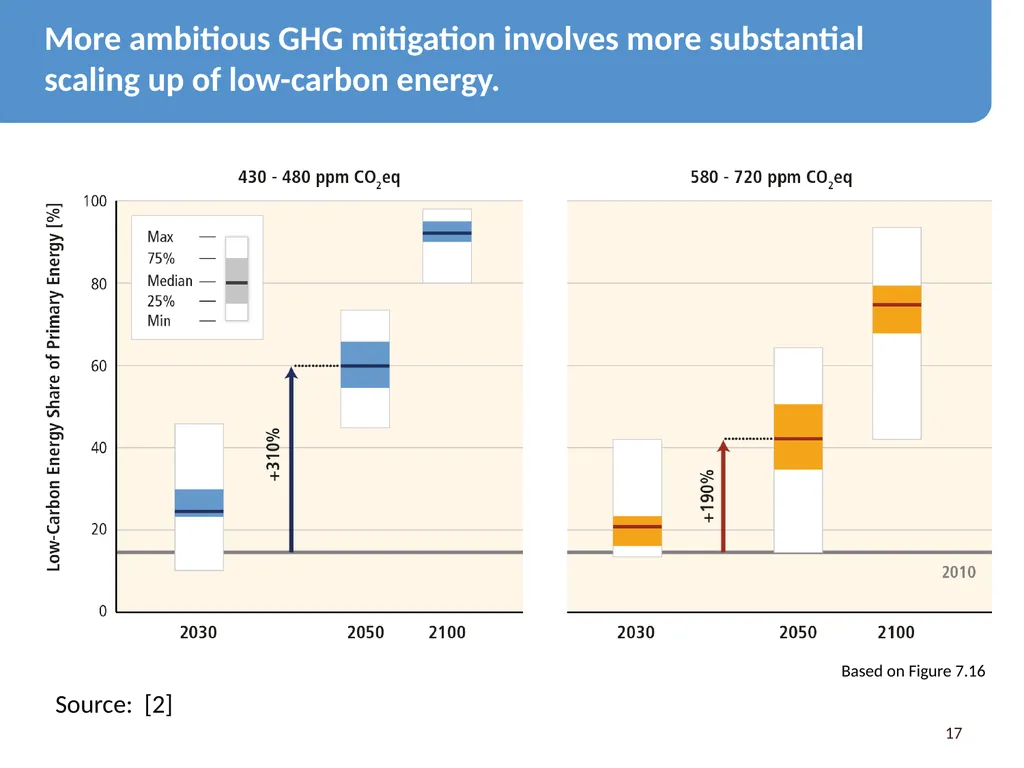
More ambitious GHG mitigation involves more substantial scaling up of low-carbon energy. 17 Based on Figure 7.16 Source: [2]<br>
18
Global costs rise with the ambition of the mitigation goal. 18 Based on Table SPM.2 Source: [2]<br>
19
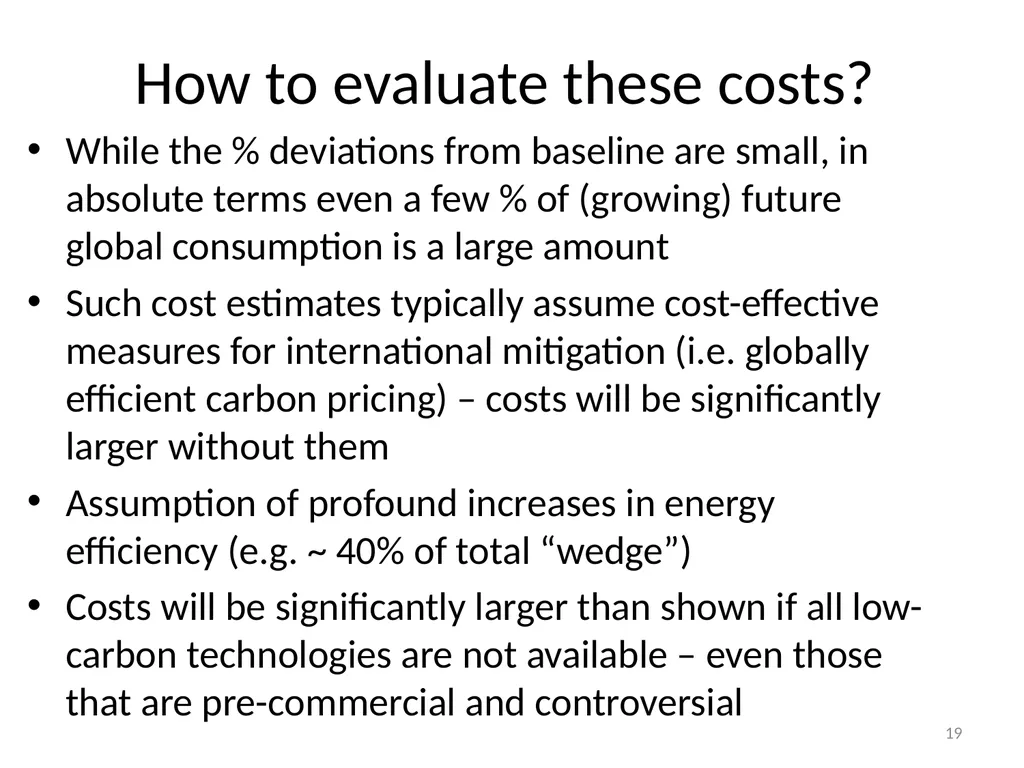
How to evaluate these costs? While the % deviations from baseline are small, in absolute terms even a few % of (growing) future global consumption is a large amount
Such cost estimates typically assume cost-effective measures for international mitigation (i.e. globally efficient carbon pricing) – costs will be significantly larger without them
Assumption of profound increases in energy efficiency (e.g. ~ 40% of total “wedge”)
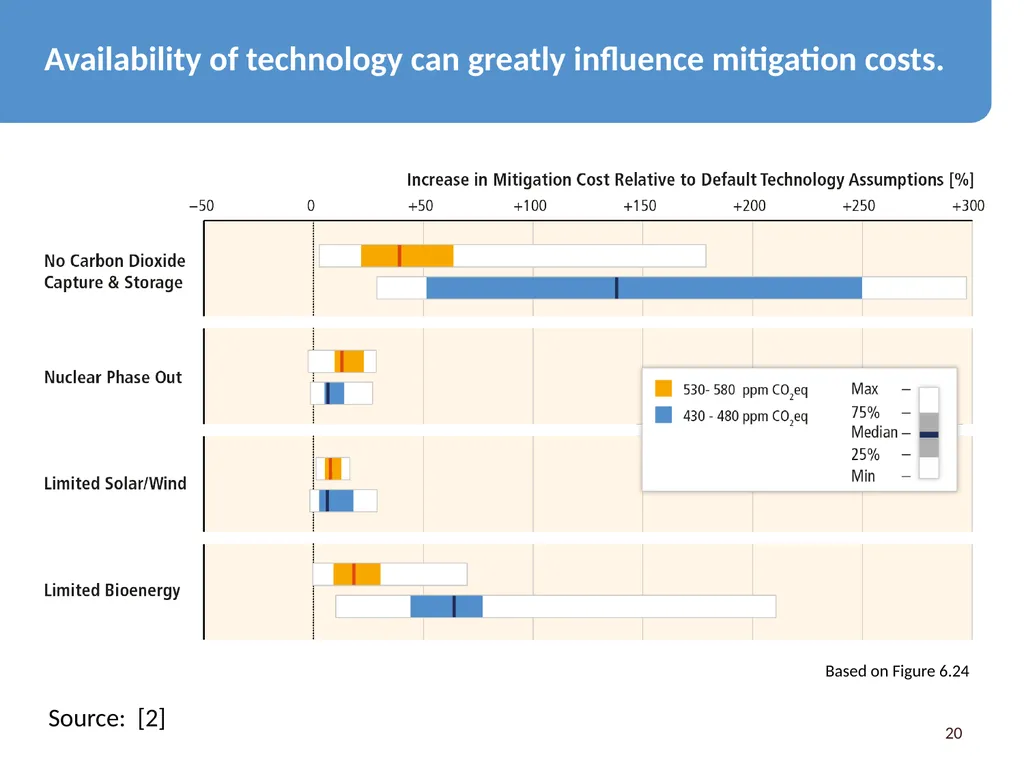
Costs will be significantly larger than shown if all low-carbon technologies are not available – even those that are pre-commercial and controversial 19<br>
Such cost estimates typically assume cost-effective measures for international mitigation (i.e. globally efficient carbon pricing) – costs will be significantly larger without them
Assumption of profound increases in energy efficiency (e.g. ~ 40% of total “wedge”)
Costs will be significantly larger than shown if all low-carbon technologies are not available – even those that are pre-commercial and controversial 19<br>
20
Availability of technology can greatly influence mitigation costs. 20 Based on Figure 6.24 Source: [2]<br>
21
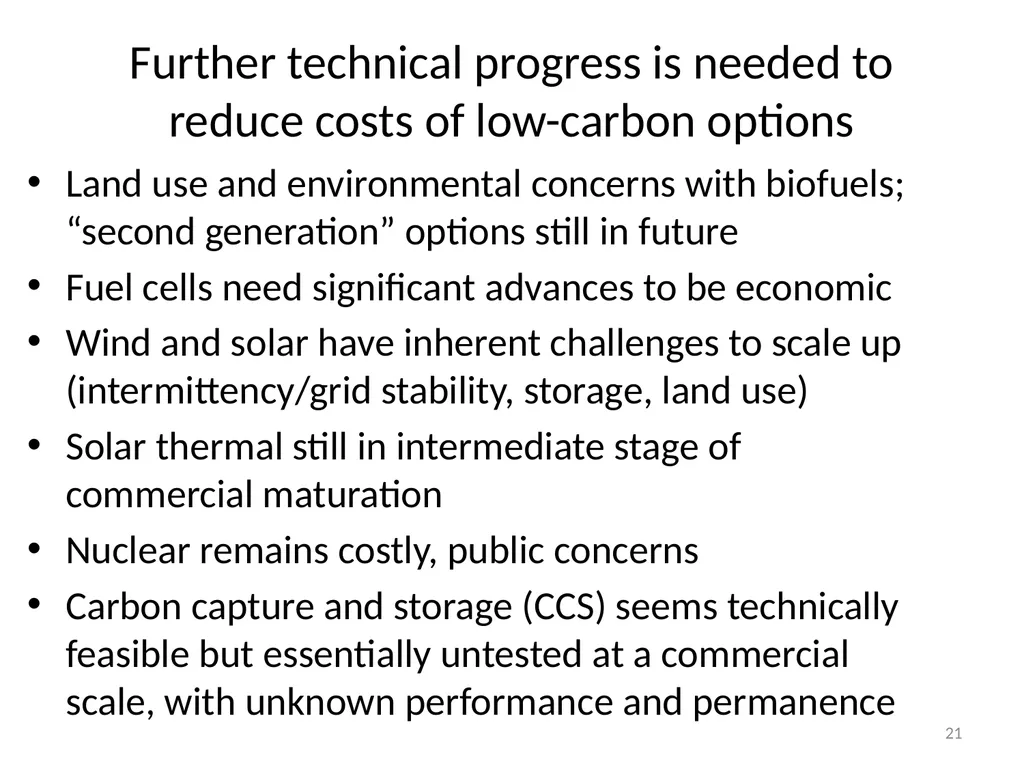
Further technical progress is needed to reduce costs of low-carbon options Land use and environmental concerns with biofuels; “second generation” options still in future
Fuel cells need significant advances to be economic
Wind and solar have inherent challenges to scale up (intermittency/grid stability, storage, land use)
Solar thermal still in intermediate stage of commercial maturation
Nuclear remains costly, public concerns
Carbon capture and storage (CCS) seems technically feasible but essentially untested at a commercial scale, with unknown performance and permanence 21<br>
Fuel cells need significant advances to be economic
Wind and solar have inherent challenges to scale up (intermittency/grid stability, storage, land use)
Solar thermal still in intermediate stage of commercial maturation
Nuclear remains costly, public concerns
Carbon capture and storage (CCS) seems technically feasible but essentially untested at a commercial scale, with unknown performance and permanence 21<br>
22
International cooperation for global GHG mitigation 22<br>
23
Criteria for evaluating agreements Environmental effectiveness
Aggregate economic performance impacts
Distributional and social impacts
Institutional feasibility (participation, compliance) 23<br>
Aggregate economic performance impacts
Distributional and social impacts
Institutional feasibility (participation, compliance) 23<br>
24
Standard prescription Countries agree on individual emissions reductions targets
Countries implement policies to achieve their targets:
Use of price-based policies, like a tax on carbon emissions or energy taxes based on the carbon content of the energy source, will lower the cost of achieving the targets
Such policies also motivate technical innovation to lower the cost of emissions mitigation
But…. 24<br>
Countries implement policies to achieve their targets:
Use of price-based policies, like a tax on carbon emissions or energy taxes based on the carbon content of the energy source, will lower the cost of achieving the targets
Such policies also motivate technical innovation to lower the cost of emissions mitigation
But…. 24<br>
25
International “free riding” on emissions reductions agreements Deep and costly cuts in global emissions also increase incentives to shirk
Broader participation becomes feasible only with more modest objectives and thus lower environmental effectiveness
Search for commonly held, implementable principle of equitable burden sharing elusive 25<br>
Broader participation becomes feasible only with more modest objectives and thus lower environmental effectiveness
Search for commonly held, implementable principle of equitable burden sharing elusive 25<br>
26
“Disruptive” energy technology transformation 26<br>
27
Need to lower the cost of completely restructuring global energy system Lower cost means decarbonization consistent with individual countries’ self-interests
Incentive-oriented policies for GHG limits definitely can and do induce needed low-carbon innovation, lowering compliance cost
But given current costs of and barriers to greatly scaling-up low-carbon energy resources, a more incremental path to energy system transformation risks being too slow 27<br>
Incentive-oriented policies for GHG limits definitely can and do induce needed low-carbon innovation, lowering compliance cost
But given current costs of and barriers to greatly scaling-up low-carbon energy resources, a more incremental path to energy system transformation risks being too slow 27<br>
28
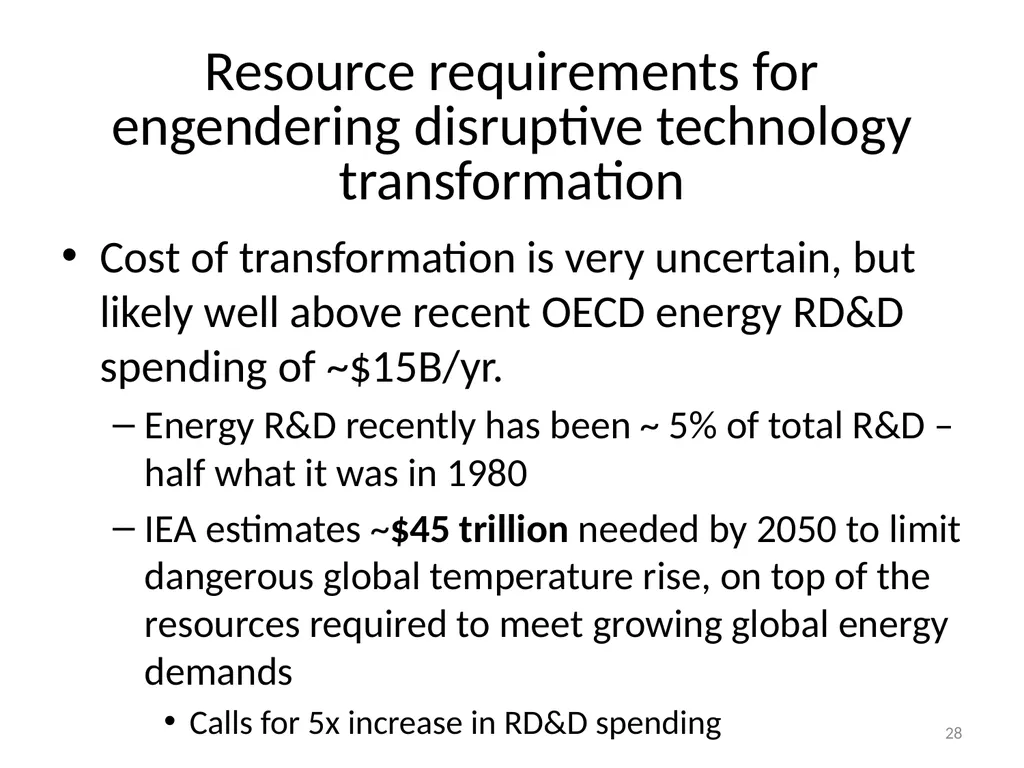
Resource requirements for engendering disruptive technology transformation Cost of transformation is very uncertain, but likely well above recent OECD energy RD&D spending of ~$15B/yr.
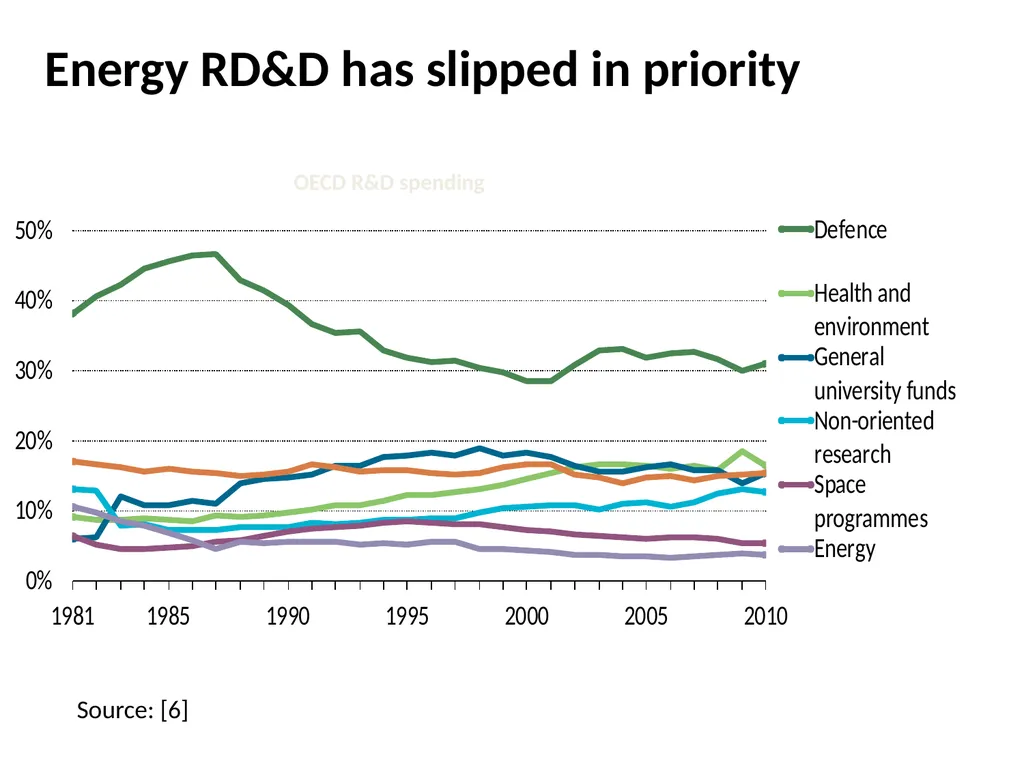
Energy R&D recently has been ~ 5% of total R&D – half what it was in 1980
IEA estimates ~$45 trillion needed by 2050 to limit dangerous global temperature rise, on top of the resources required to meet growing global energy demands
Calls for 5x increase in RD&D spending 28<br>
Energy R&D recently has been ~ 5% of total R&D – half what it was in 1980
IEA estimates ~$45 trillion needed by 2050 to limit dangerous global temperature rise, on top of the resources required to meet growing global energy demands
Calls for 5x increase in RD&D spending 28<br>
29
OECD R&D spending Energy RD&D has slipped in priority Source: [6]<br>
30
Major RD&D funding increases will require major intergovernmental cooperation Sums this large ( ~0.2% global GDP) will have to be raised by governments – beyond the means and incentives of private sector to finance
Need assurance that knowledge will be shared but not poached
Needed basic knowledge advances will not be patentable – spillovers unavoidable
Countries may want to specialize in major investments in certain activities, and need a range of these to find best opportunities
So need assurance that there will be shared contributions to global effort 30<br>
Need assurance that knowledge will be shared but not poached
Needed basic knowledge advances will not be patentable – spillovers unavoidable
Countries may want to specialize in major investments in certain activities, and need a range of these to find best opportunities
So need assurance that there will be shared contributions to global effort 30<br>
31
The beginnings of an international technology cooperation initiative are there November 2015 20-country agreement to double clean energy R&D
Breakthrough Energy Coalition
“Global Apollo Programme” proposal in UK (0.02% GDP – versus 0.2%)
Support at Paris climate meetings 31<br>
Breakthrough Energy Coalition
“Global Apollo Programme” proposal in UK (0.02% GDP – versus 0.2%)
Support at Paris climate meetings 31<br>
32
Focus on sector-specific and technology-based cooperation for emissions mitigation also can reinforce RD&D cooperation Many developing countries need to improve their energy and transport systems anyway
Focus in financing on trade in new capital goods, expanded use of affordable lower-C options
Sector-based, technology-focused approaches do not preclude shift toward broader economy-wide price instruments 32<br>
Focus in financing on trade in new capital goods, expanded use of affordable lower-C options
Sector-based, technology-focused approaches do not preclude shift toward broader economy-wide price instruments 32<br>
33
What about “rebound effects”? Reducing the cost of low-carbon energy will limit the rebound from technology policies to improve energy efficiency
The threat of lower alternative energy costs is not likely to accelerate fossil energy depletion that much
Could be some speed-up in depletion of marginal oil resources 33<br>
The threat of lower alternative energy costs is not likely to accelerate fossil energy depletion that much
Could be some speed-up in depletion of marginal oil resources 33<br>
34
Uses of international financial resources for GHG mitigation need to reflect developing country priorities “Carbon finance” will have limited effect without stronger commitments from developed and major developing countries to curb emissions
Need to emphasize development benefits
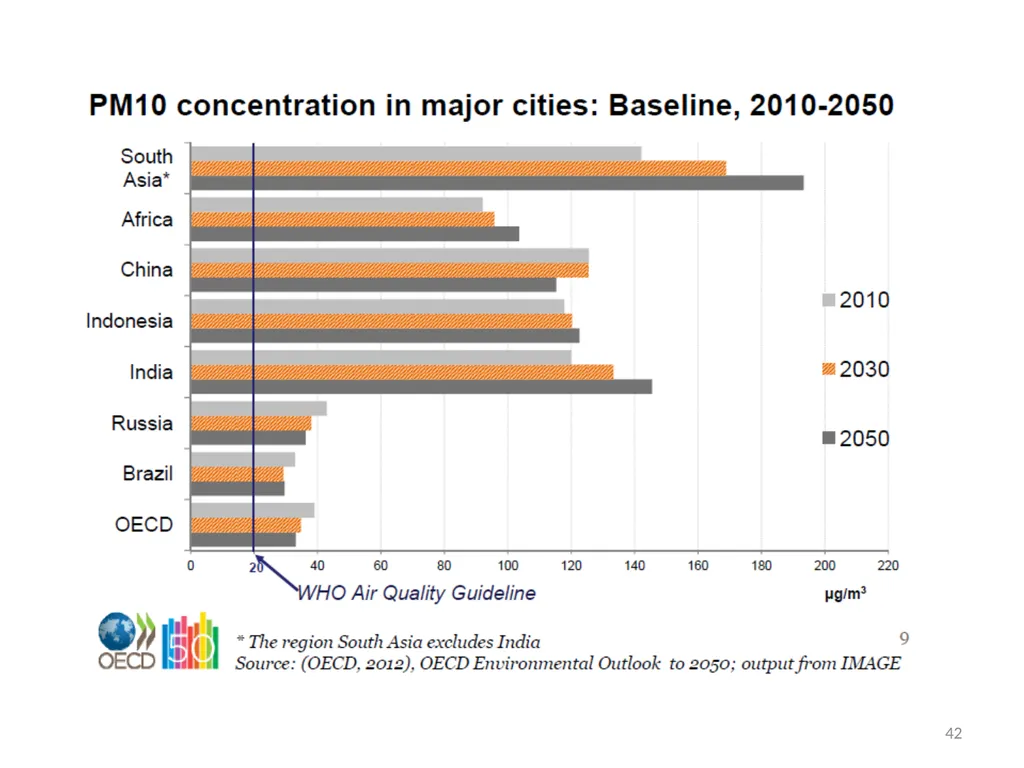
Local environmental “co-benefits” – shouldn’t developing countries pursue improved air quality anyway? 34<br>
Need to emphasize development benefits
Local environmental “co-benefits” – shouldn’t developing countries pursue improved air quality anyway? 34<br>
35
Thank you – I look forward to comments and questions.
mtoman@worldbank.org 35<br>
36
Sources for individual slides [1] WGIIAR5-Slides-June 12 2014; downloaded at http://ipcc-wg2.gov/AR5/report/
[2] IPCC_WGIII_AR5_Presentation; downloaded at www.mitigation2014.org/report
[3] OECD 2012 Environmental Outlook figures downloaded at http://www.oecd.org/env/indicators-modelling-outlooks/oecdenvironmentaloutlookto2050theconsequencesofinaction.htm
[4] IPCC AR5 WGIII Summary for Policy Makers Figure SPM.2; downloaded at http://mitigation2014.org/report/figures/summary-for-policymakers-figures
[5] Presentation by Fatih Birol on IEA World Energy Outlook 2013 for OECD Parliamentary Days, Paris, 5 February 2014. Downloaded at http://www.oecd.org/about/membersandpartners/publicaffairs/parliamentarydays2014slides.htm
[6] IEA Energy technology Perspectives 2012 slide deck; downloaded at http://www.iea.org/etp/etp2012/
[7] Global Commission On The Economy And Climate, The New Climate Economy Report (Global Report): Figures 1.6 (McKinsey curve), 5.2 (subsidies)
[8] IEA, Redrawing the Energy-Climate Map, Figure 3.16. 36<br>
[2] IPCC_WGIII_AR5_Presentation; downloaded at www.mitigation2014.org/report
[3] OECD 2012 Environmental Outlook figures downloaded at http://www.oecd.org/env/indicators-modelling-outlooks/oecdenvironmentaloutlookto2050theconsequencesofinaction.htm
[4] IPCC AR5 WGIII Summary for Policy Makers Figure SPM.2; downloaded at http://mitigation2014.org/report/figures/summary-for-policymakers-figures
[5] Presentation by Fatih Birol on IEA World Energy Outlook 2013 for OECD Parliamentary Days, Paris, 5 February 2014. Downloaded at http://www.oecd.org/about/membersandpartners/publicaffairs/parliamentarydays2014slides.htm
[6] IEA Energy technology Perspectives 2012 slide deck; downloaded at http://www.iea.org/etp/etp2012/
[7] Global Commission On The Economy And Climate, The New Climate Economy Report (Global Report): Figures 1.6 (McKinsey curve), 5.2 (subsidies)
[8] IEA, Redrawing the Energy-Climate Map, Figure 3.16. 36<br>
37
GHG mitigation and developing countries 37<br>
38
Who should go first? Controlling climate change is and for some time should be an issue primarily for high-emitting upper and middle income countries
Consistent with UNFCCC
Lower income countries – especially those not able to meet basic energy needs – should not be carrying out costly decarbonization
Important implications for international project financing 38<br>
Consistent with UNFCCC
Lower income countries – especially those not able to meet basic energy needs – should not be carrying out costly decarbonization
Important implications for international project financing 38<br>
39
Several policies can reduce help reduce GHG emissions at relatively low cost, risk Energy efficiency performance standards
Reduced deforestation
Reform of trade policies that restrict diffusion of lower-carbon technologies
Energy subsidy reforms
But political economy difficulties provide a cautionary lesson 39<br>
Reduced deforestation
Reform of trade policies that restrict diffusion of lower-carbon technologies
Energy subsidy reforms
But political economy difficulties provide a cautionary lesson 39<br>
40
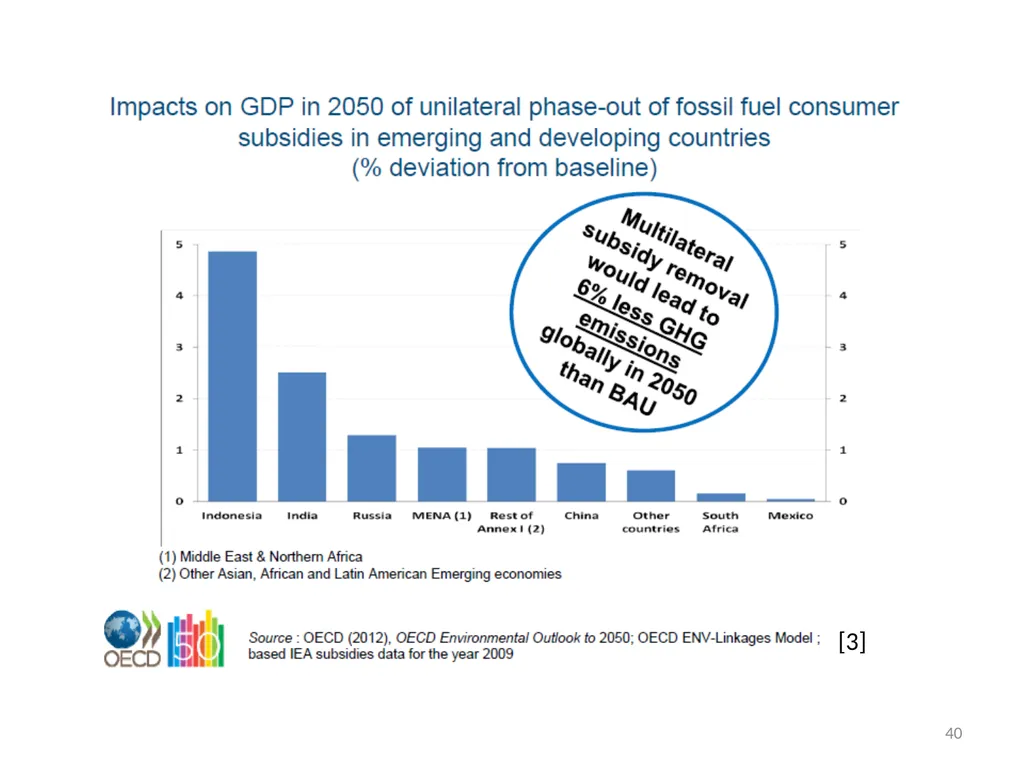
40 [3]<br>
41
Putting a price on carbon remains crucial Increased cost-effectiveness
Economic instruments motivate cost-reducing innovation in low-carbon technologies
Important complement to public investment in new knowledge for lowering mitigation costs 41<br>
Economic instruments motivate cost-reducing innovation in low-carbon technologies
Important complement to public investment in new knowledge for lowering mitigation costs 41<br>
42
42<br>
43
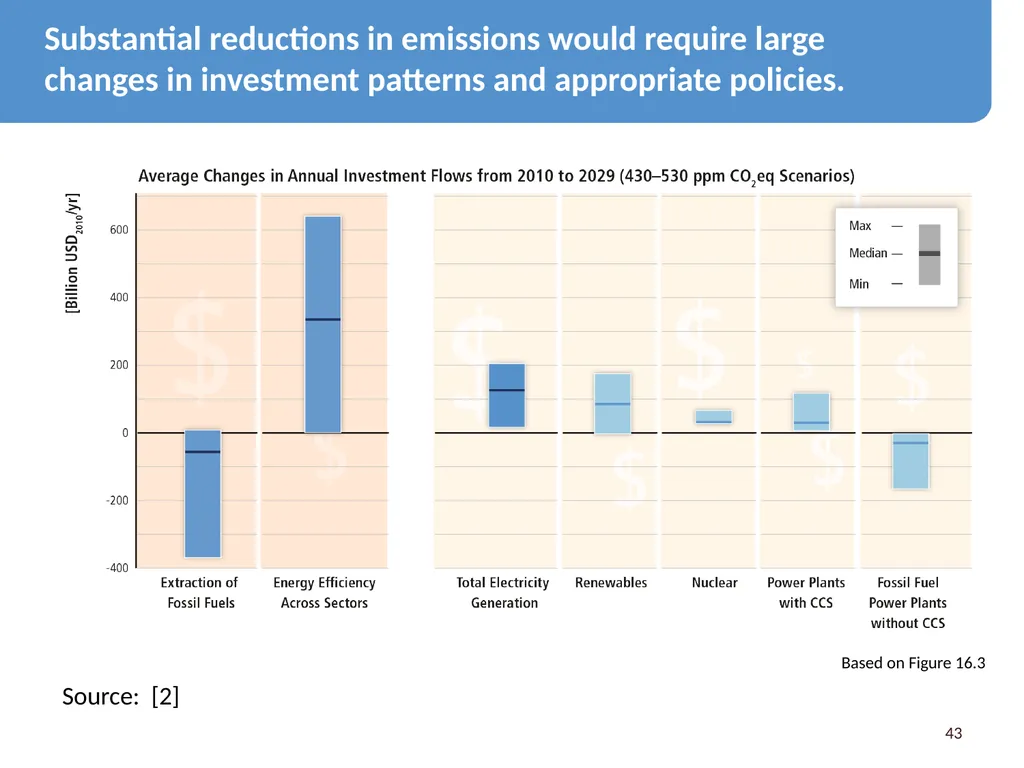
Substantial reductions in emissions would require large
changes in investment patterns and appropriate policies. 43 Based on Figure 16.3 Source: [2]<br>
44
“McKinsey MAC curve” shows lots of win-win 44 Source: [7]<br>
45
Difficulties with this narrative MAC curve has several flaws
Evaluation of individual mitigation opportunity costs
Interactions among mitigation components
A large body of analysis indicates that to make deep GHG cuts we will have to make intensive use of the ostensibly more expensive options
Counting co-benefits:
Often are cheaper options for pursuing co-benefits than GHG mitigation
If many co-benefit measures should be pursued already, why aren’t they? 45<br>
Evaluation of individual mitigation opportunity costs
Interactions among mitigation components
A large body of analysis indicates that to make deep GHG cuts we will have to make intensive use of the ostensibly more expensive options
Counting co-benefits:
Often are cheaper options for pursuing co-benefits than GHG mitigation
If many co-benefit measures should be pursued already, why aren’t they? 45<br>
46
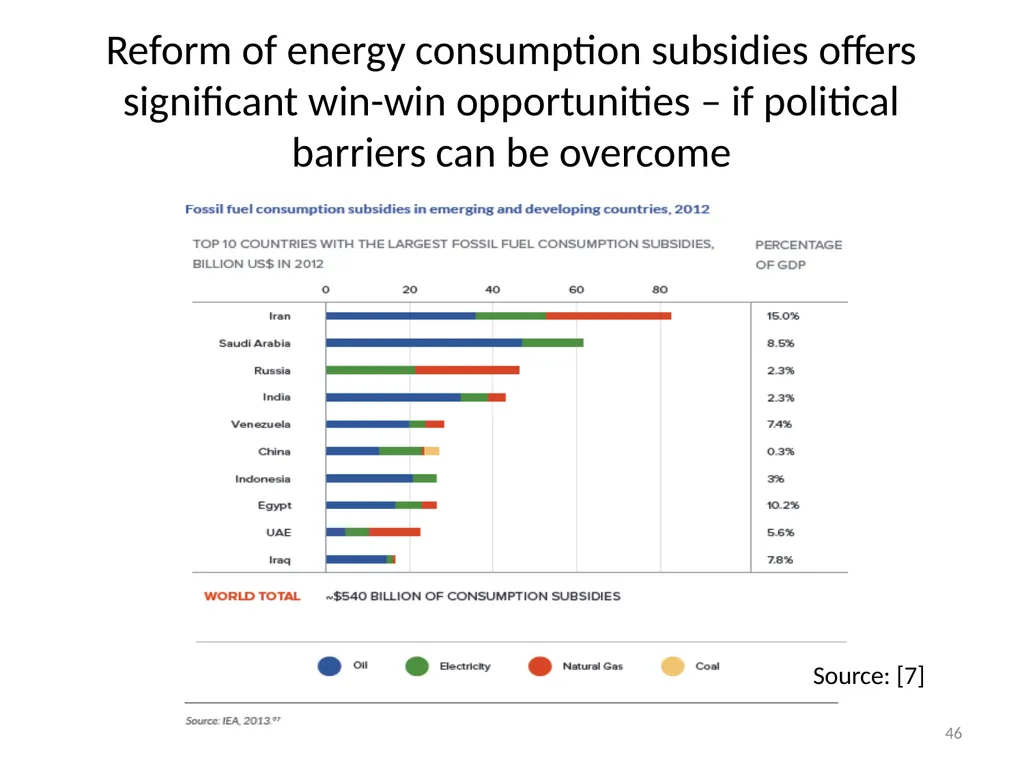
Reform of energy consumption subsidies offers significant win-win opportunities – if political barriers can be overcome 46 Source: [7]<br>
47
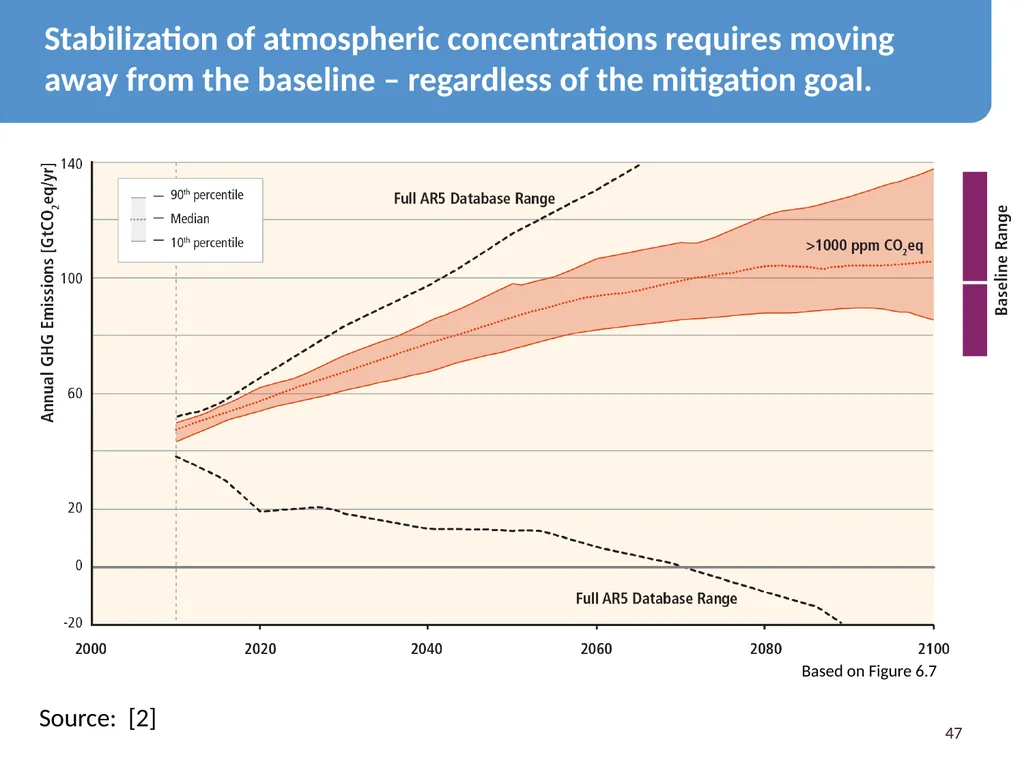
Stabilization of atmospheric concentrations requires moving away from the baseline – regardless of the mitigation goal. 47 Based on Figure 6.7 Source: [2]<br>
48
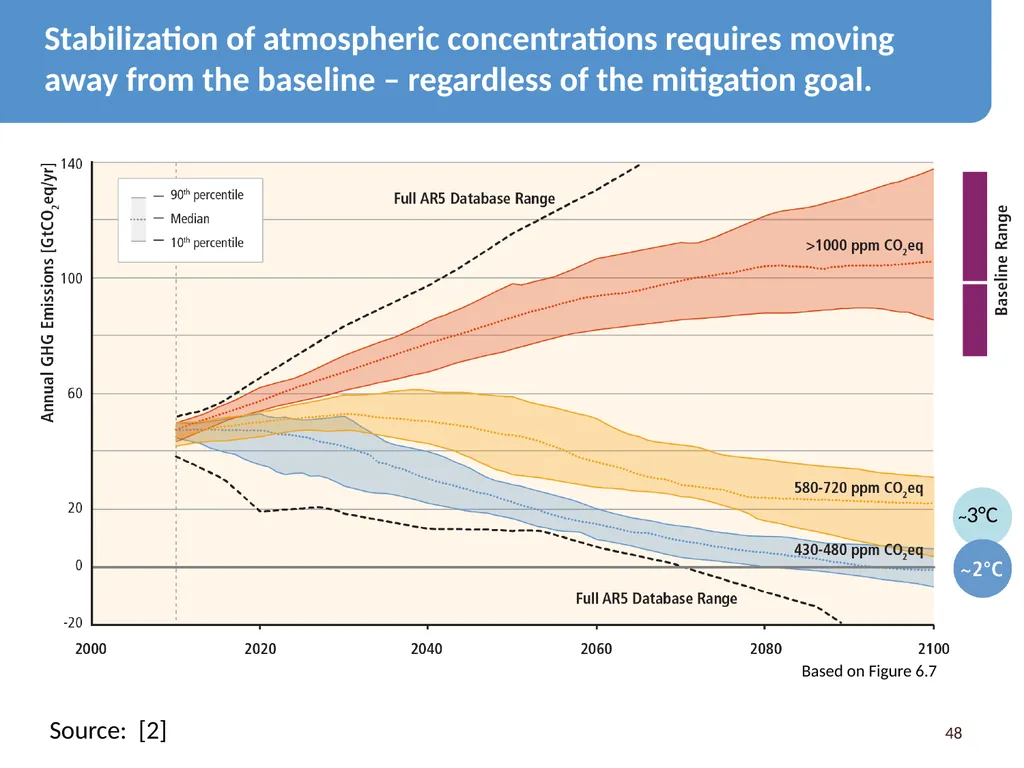
Stabilization of atmospheric concentrations requires moving away from the baseline – regardless of the mitigation goal. 48 ~3°C Based on Figure 6.7 Source: [2]<br>