Webinar On Seven Best Practices for API Documentation Writing Speaker Robert Delwood A Lead API Documentation Writer About Me Programmer. Writer. Programmer-writer. Developer Technical writer, API documentation writer Microsoft Office
"Webinar On Seven Best Practices for API" is the property of its rightful owner. Permission is granted to
download and print the materials on this website for personal, non-commercial use only, and to display it
on your personal computer provided you do not modify the materials and that you retain all copyright
notices contained in the materials. By downloading content from our website, you accept the terms of this
agreement.
Presentation Transcript
01
Webinar On Seven Best Practices for
API Documentation Writing Speaker Robert Delwood
A Lead API Documentation Writer<br>
02
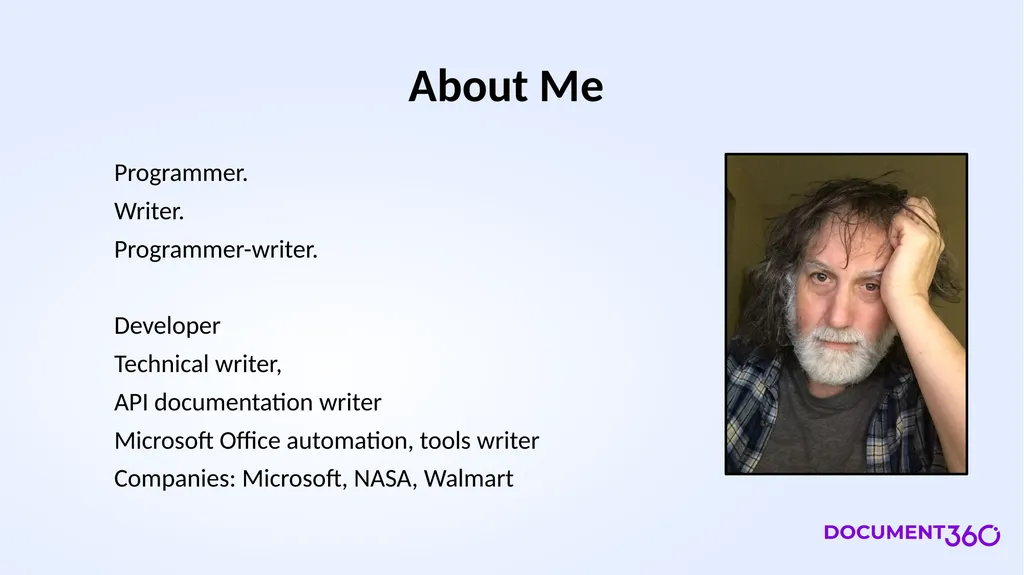
About Me Programmer.
Writer.
Programmer-writer.
Developer
Technical writer,
API documentation writer
Microsoft Office automation, tools writer
Companies: Microsoft, NASA, Walmart<br>
03
Disclaimers This isn’t the only way
Your milage may vary<br>
04
Of API Documentation Writing documentation. That's easy.
Writing great documentation. That’s hard.
Robert Delwood
LinkedIn (https://www.linkedin.com/in/robert-delwood-890a2a) “ ”<br>
05
Overview API documentation is a rich and complex project
It must everything to everyone, though not equally
Mostly developers, but from junior to senior level
Project and product managers
C suite readers
Learn the theory, the rest is easy
Seven best practices to guide API documentation writing<br>
06
Learn the theory, the rest are details Learning rules does not work
Too hard to memorize
Too rigid
Learn the overarching goals
The audience
The purpose of the API
The direction
The important points first<br>
07
Readers don’t read, they skim No one reads API documentation
They skim
They’re looking for one specific piece of data
Don’t even make them use the reference
Code as Docs
Skimming means
Short sentences
Spaces between paragraphs
Most import information first
Above the fold
Keep them on the page at all costs<br>
08
You write for yourself If you don’t understand, stop and get to understand it.
Write as if you’re explaining it to yourself
They will only know what you know<br>
09
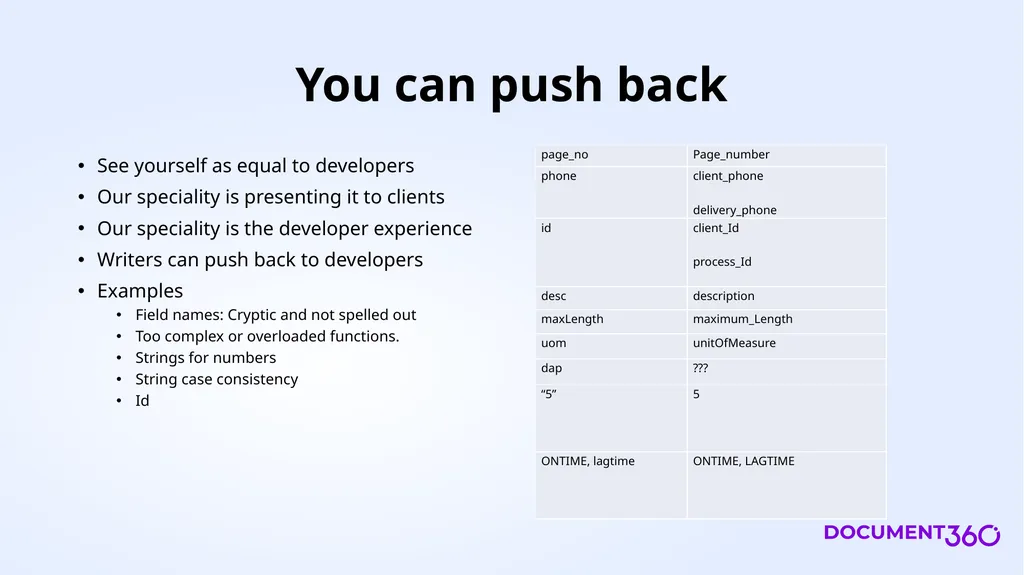
You can push back See yourself as equal to developers
Our speciality is presenting it to clients
Our speciality is the developer experience
Writers can push back to developers
Examples
Field names: Cryptic and not spelled out
Too complex or overloaded functions.
Strings for numbers
String case consistency
Id<br>
10
Read other’s APIs APIs include text books, videos, and print
See how you learn best
See what you like and dislike, then improve on both
Adapt their formats to your own style and idiom.<br>
11
Postman Make each request in Postman
You’ll
Understand the request better
Find developer/documentation inconsistencies
Find errors
Create a collection for the SDK<br>
12
Examples, examples, examples Developers want examples to:
Copy and paste
Visually see examples
See formatting. Formatting along may answer their question
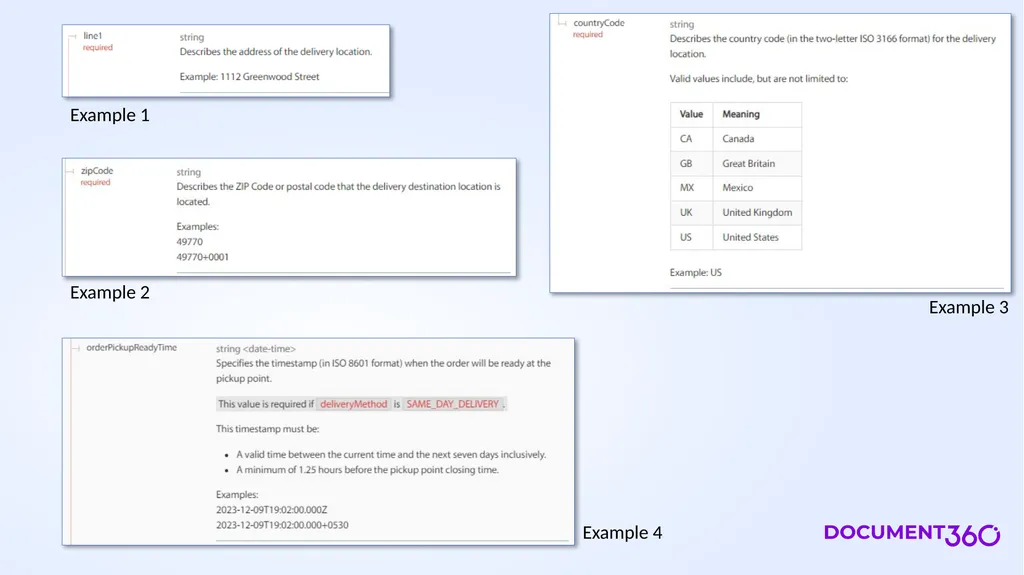
Every field must have an example
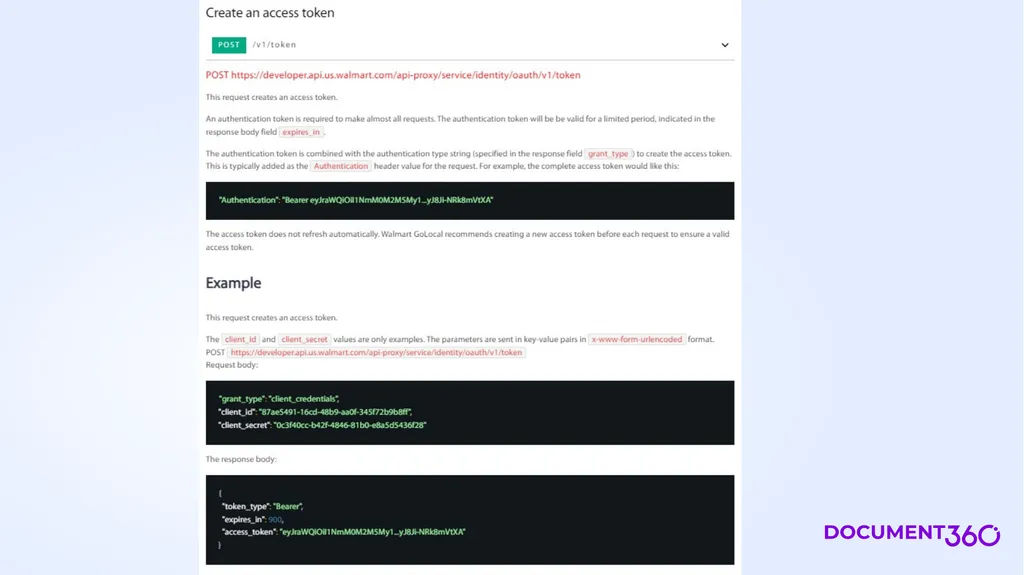
Every request must have at least one example.<br>
13
Example 1 Example 2 Example 3 Example 4<br>
14
Bonus: Words mean things Don’t use Swagger. Does not exist. It’s OpenAPI. Don’t use it.
API writers. That’s a developer. We’re API documentation writers.
API. An API is a collection of requests. A request is an individual endpoint.
Should. Avoid. It implies an alternative and often in APIs there is not.
Unique. Do not use. It never adds any values. Use one term and consistently
We’re not a literary society