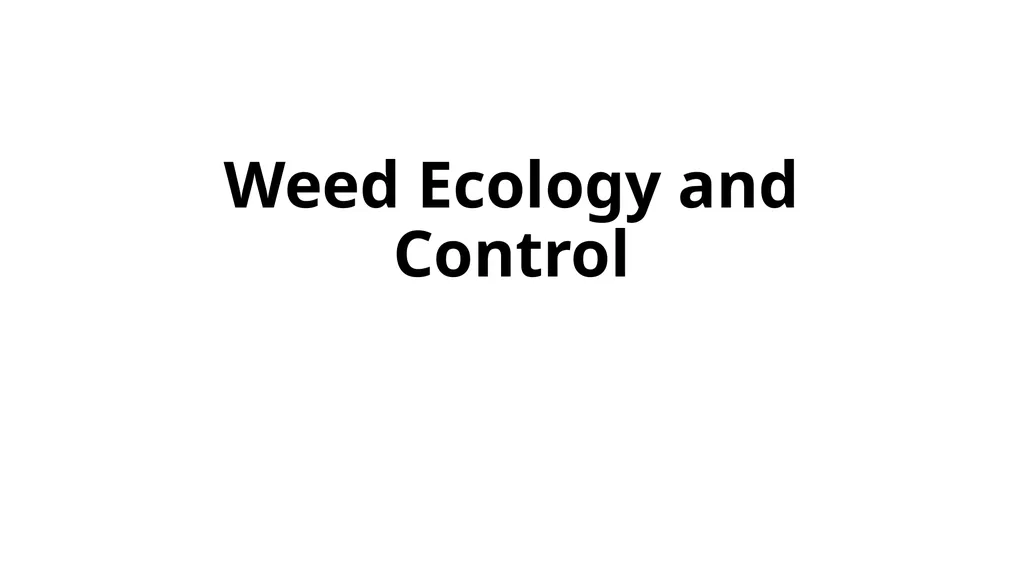
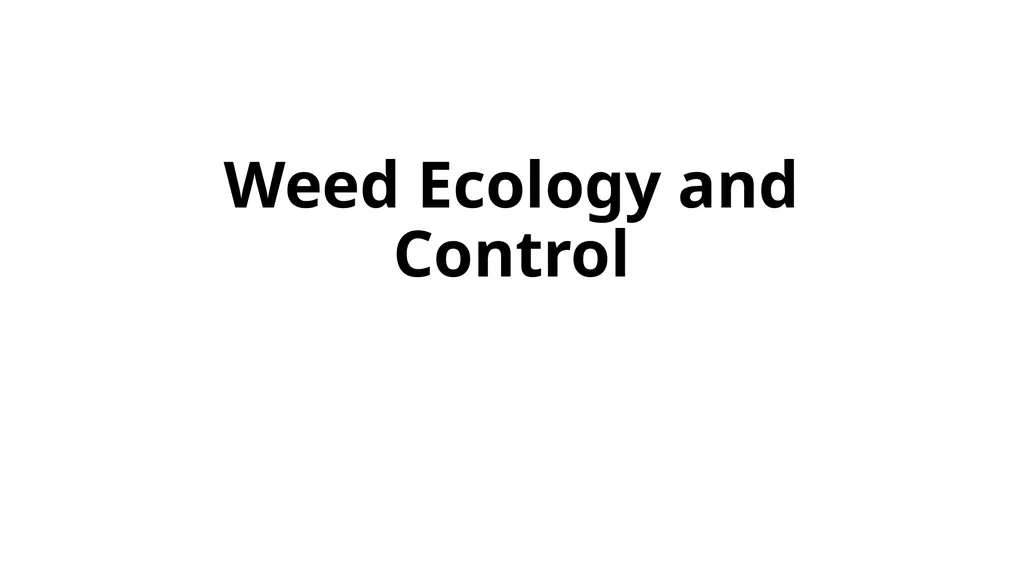
Weed Ecology and Control An ecosystem is made up of a community of organisms living together and the physical environment that they live in. Changes to the living and nonliving components in an ecosystem affect populations in that
"Weed Ecology and Control An ecosystem is made up" is the property of its rightful owner. Permission is granted to
download and print the materials on this website for personal, non-commercial use only, and to display it
on your personal computer provided you do not modify the materials and that you retain all copyright
notices contained in the materials. By downloading content from our website, you accept the terms of this
agreement.
Presentation Transcript
01
Weed Ecology and Control<br>
02
An ecosystem is made up of a community of organisms living together and the physical environment that they live in.<br>
03
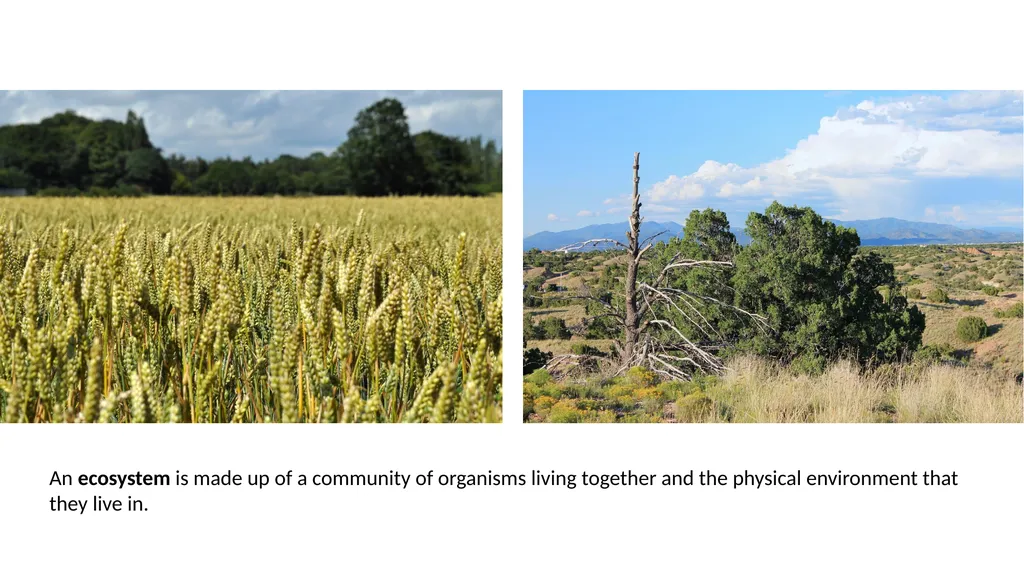
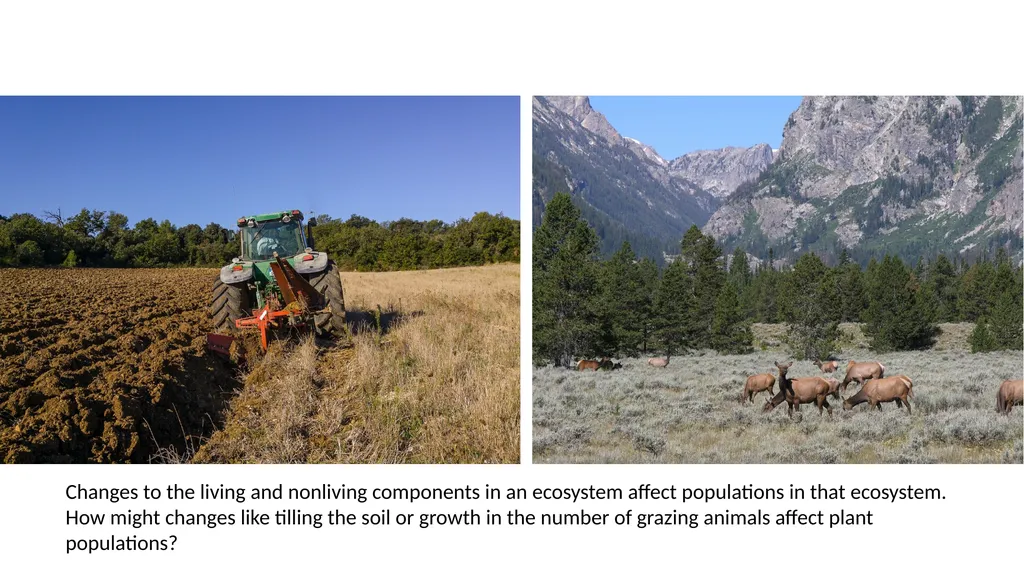
Changes to the living and nonliving components in an ecosystem affect populations in that ecosystem. How might changes like tilling the soil or growth in the number of grazing animals affect plant populations?<br>
04
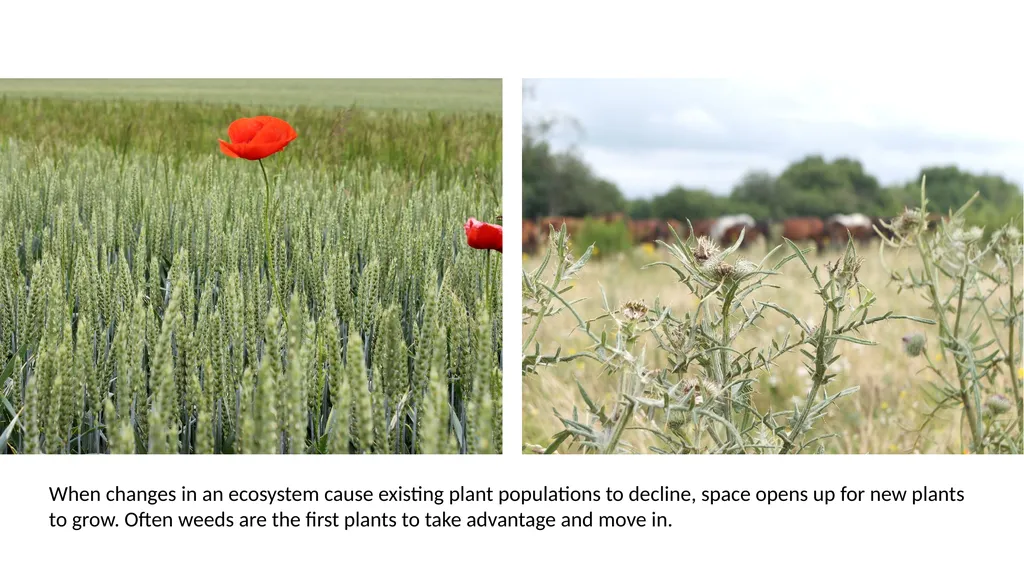
When changes in an ecosystem cause existing plant populations to decline, space opens up for new plants to grow. Often weeds are the first plants to take advantage and move in.<br>
05
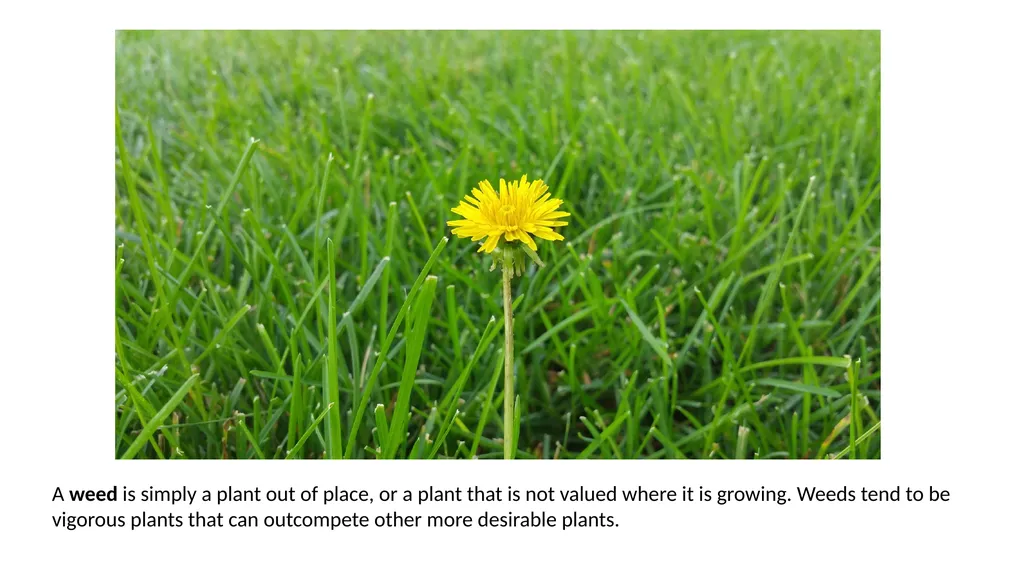
A weed is simply a plant out of place, or a plant that is not valued where it is growing. Weeds tend to be vigorous plants that can outcompete other more desirable plants.<br>
06
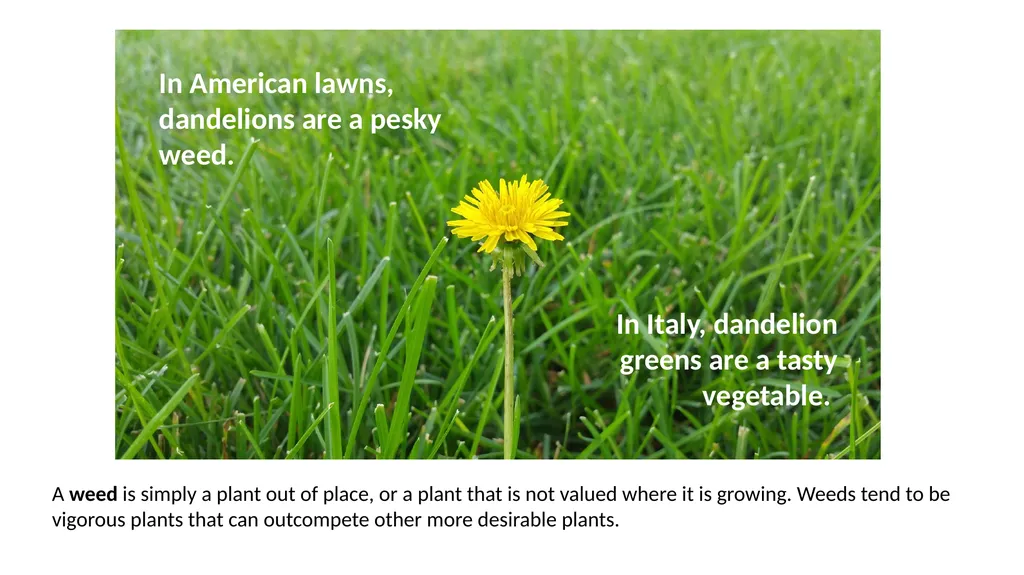
A weed is simply a plant out of place, or a plant that is not valued where it is growing. Weeds tend to be vigorous plants that can outcompete other more desirable plants. In American lawns, dandelions are a pesky weed. In Italy, dandelion greens are a tasty vegetable.<br>
07
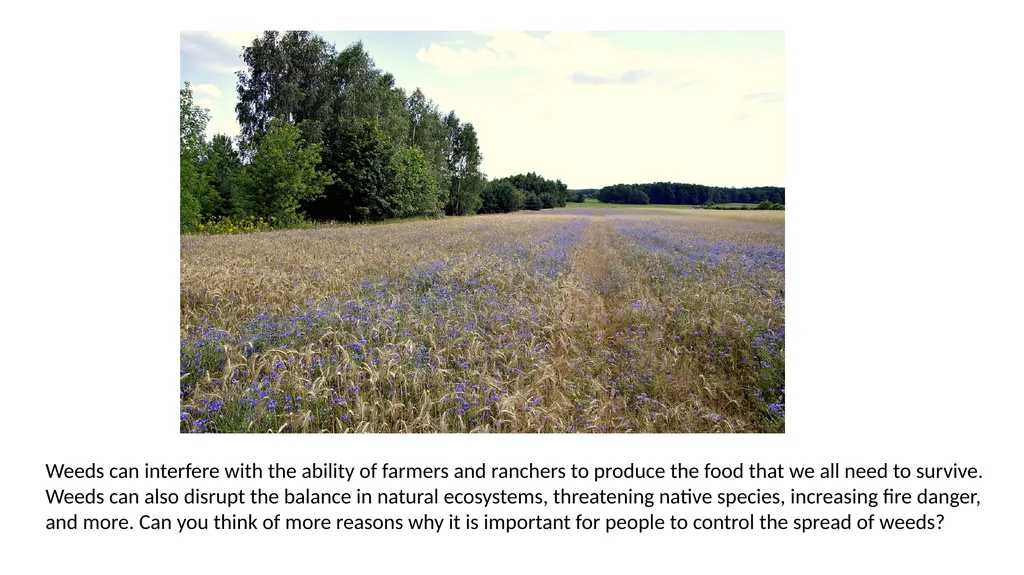
Weeds can interfere with the ability of farmers and ranchers to produce the food that we all need to survive. Weeds can also disrupt the balance in natural ecosystems, threatening native species, increasing fire danger, and more. Can you think of more reasons why it is important for people to control the spread of weeds?<br>
08
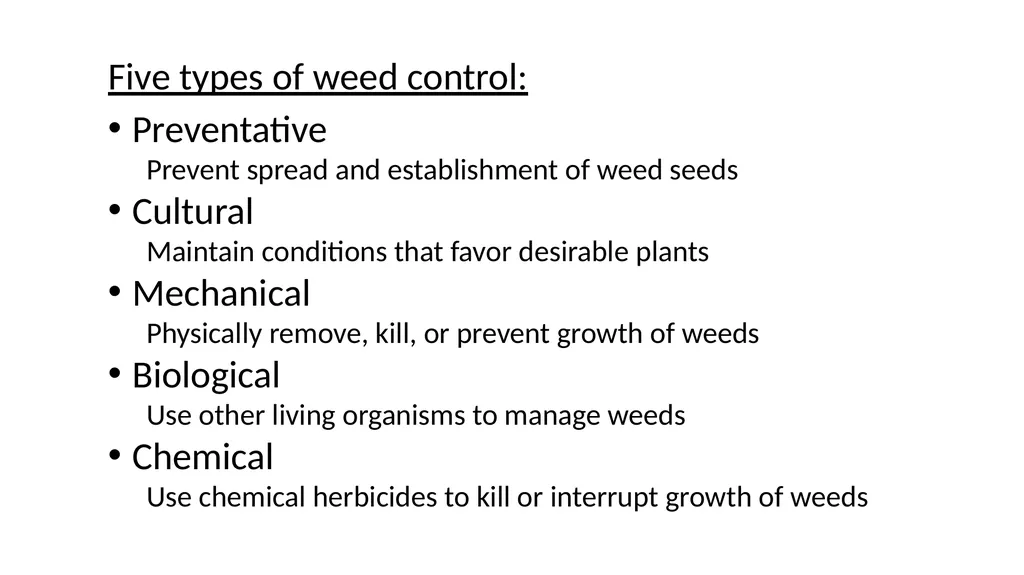
Five types of weed control:
Preventative
Prevent spread and establishment of weed seeds
Cultural
Maintain conditions that favor desirable plants
Mechanical
Physically remove, kill, or prevent growth of weeds
Biological
Use other living organisms to manage weeds
Chemical
Use chemical herbicides to kill or interrupt growth of weeds<br>
09
Step #1: Identify Your Weeds The first step in weed control is always identification. Once you’ve identified the plant species that is causing trouble, you can then make a plan to control its spread.
A dichotomous key is a tool used to identify plants (and other organisms) based on a series of choices between alternative traits. View the Classified: Crop Case Files Prezi to learn to use a dichotomous key!<br>