
Week Seven Supporters and Siblings NVR Parent
TD
Published · 22 slides · 0 views

1 / 1


Description
Week Seven Supporters and Siblings NVR Parent Group Check in Feeling calm, present and grounded in self Feeling a sense of being able to complete things and stay on top of things Feeling a little anxious and uncertain Feeling out of comfort
Related Topics
Share
Embed code
Download this presentation From Below
"Week Seven Supporters and Siblings NVR Parent" is the property of its rightful owner. Permission is granted to download and print the materials on this website for personal, non-commercial use only, and to display it on your personal computer provided you do not modify the materials and that you retain all copyright notices contained in the materials. By downloading content from our website, you accept the terms of this agreement.
Presentation Transcript
01
Week Seven
Supporters and Siblings NVR Parent Group<br>
Supporters and Siblings NVR Parent Group<br>
02
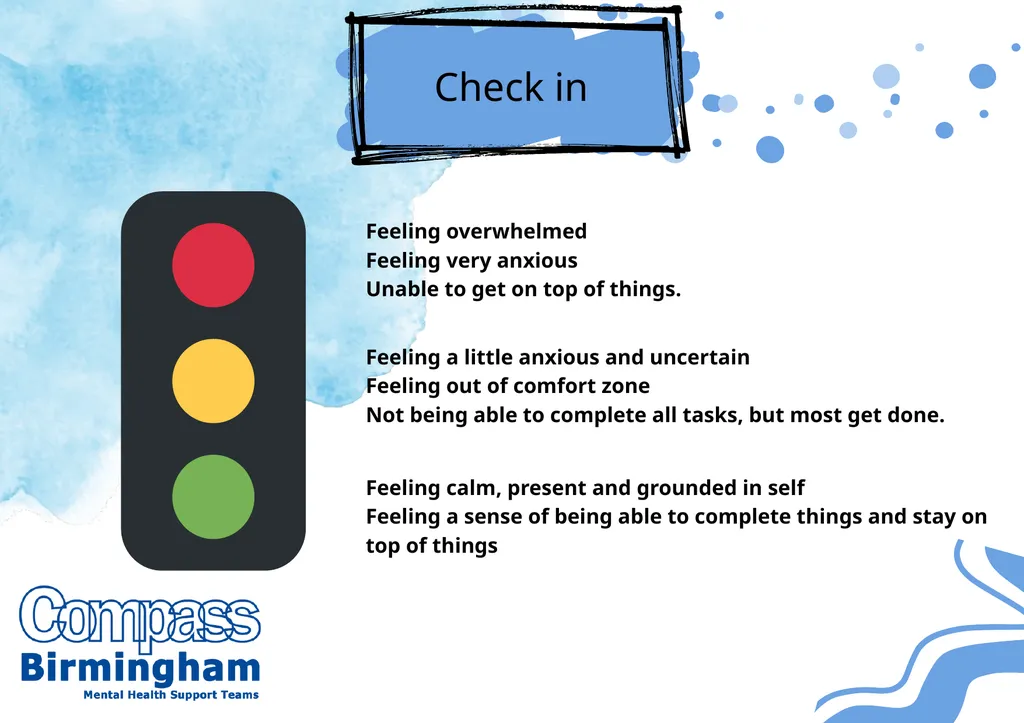
Check in Feeling calm, present and grounded in self
Feeling a sense of being able to complete things and stay on top of things Feeling a little anxious and uncertain
Feeling out of comfort zone
Not being able to complete all tasks, but most get done. Feeling overwhelmed
Feeling very anxious
Unable to get on top of things.<br>
Feeling a sense of being able to complete things and stay on top of things Feeling a little anxious and uncertain
Feeling out of comfort zone
Not being able to complete all tasks, but most get done. Feeling overwhelmed
Feeling very anxious
Unable to get on top of things.<br>
03
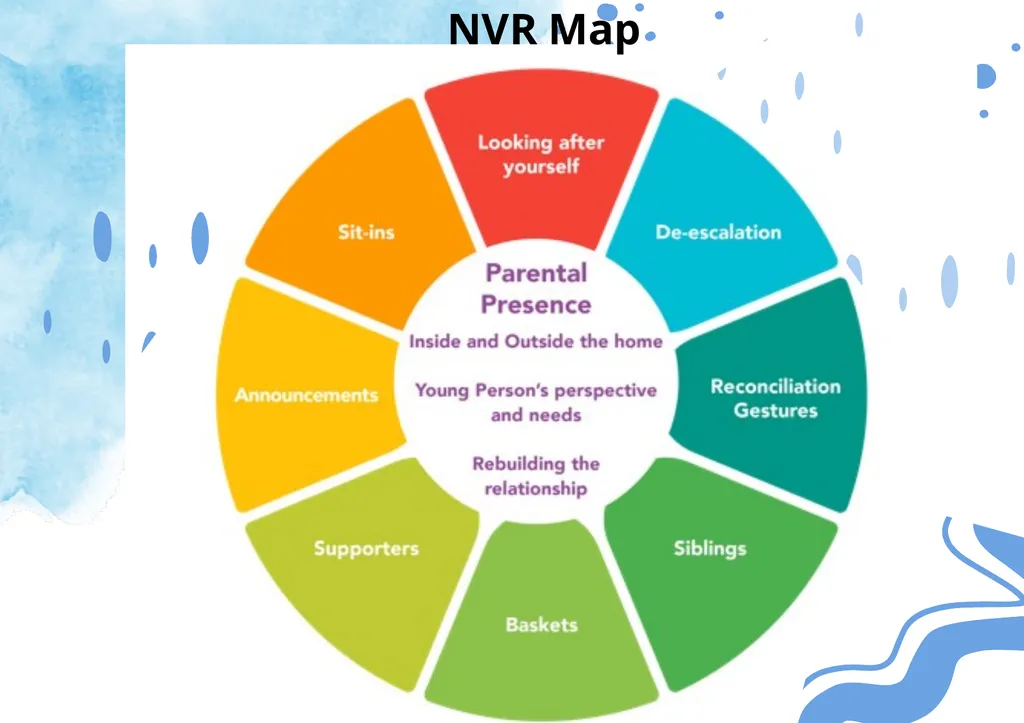
NVR Map<br>
04
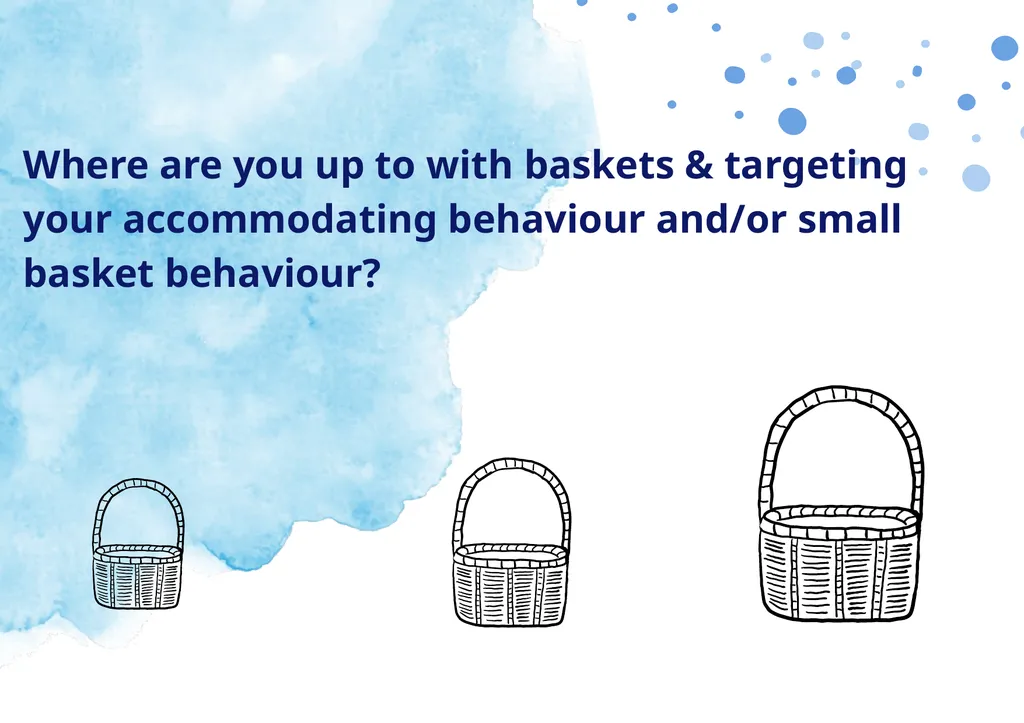
Where are you up to with baskets & targeting your accommodating behaviour and/or small basket behaviour?<br>
05
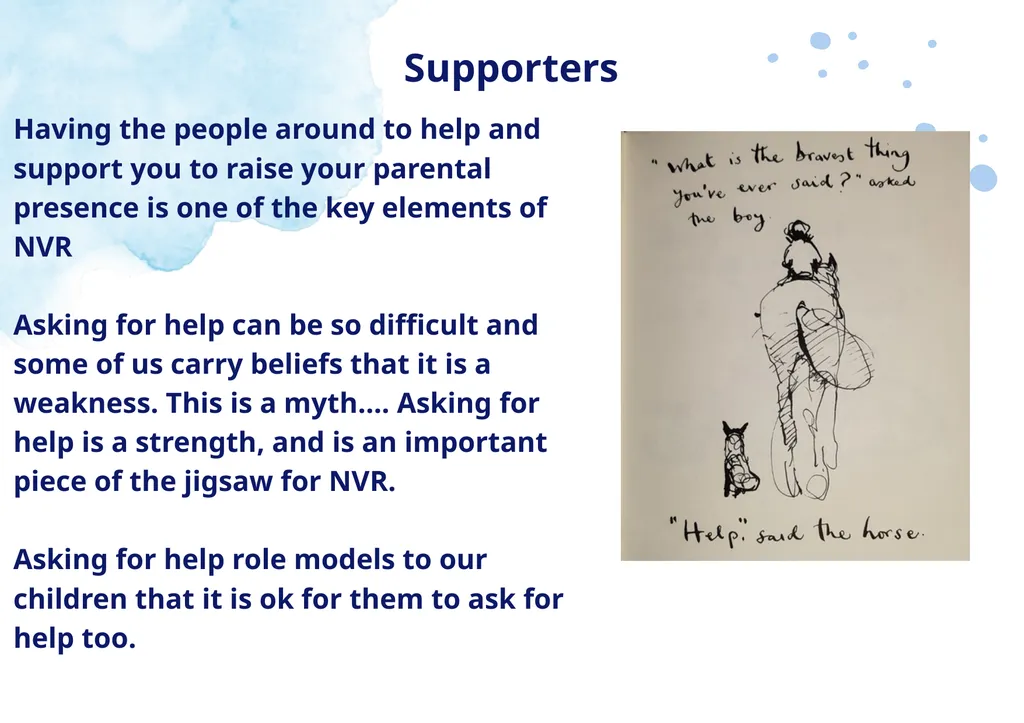
Supporters Having the people around to help and support you to raise your parental presence is one of the key elements of NVR
Asking for help can be so difficult and some of us carry beliefs that it is a weakness. This is a myth…. Asking for help is a strength, and is an important piece of the jigsaw for NVR.
Asking for help role models to our children that it is ok for them to ask for help too.<br>
Asking for help can be so difficult and some of us carry beliefs that it is a weakness. This is a myth…. Asking for help is a strength, and is an important piece of the jigsaw for NVR.
Asking for help role models to our children that it is ok for them to ask for help too.<br>
06
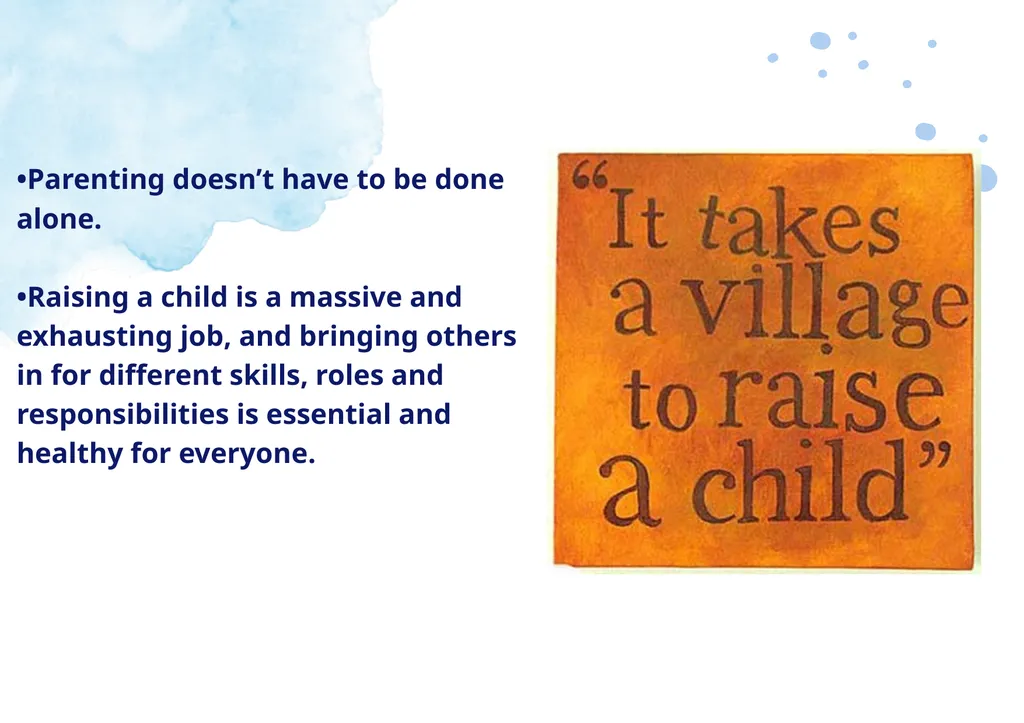
•Parenting doesn’t have to be done alone.
•Raising a child is a massive and exhausting job, and bringing others in for different skills, roles and responsibilities is essential and healthy for everyone.<br>
•Raising a child is a massive and exhausting job, and bringing others in for different skills, roles and responsibilities is essential and healthy for everyone.<br>
07
•1. Supporters can help to reinforce the parental message regarding the need to overcome the anxiety or manage frustration and anger differently.
•2. By expressing caring concern for children, and confidence in their abilities, supporters can bolster the children’s self-esteem and encourage motivation.
•3. Children may be more willing to face a frightening situation in the presence of a supporter than they would in the presence of a parent.
•4. Supporters can help to mediate between parents and child and can promote the child’s collaboration with the process.
•5. Supporters provide support for parents and help them get through stressful times to stay committed to the demanding process of helping their child cope with the difficulties.
•6. Supporters can help to minimize disruptive behaviour and to react to such behaviours in effective ways that do not escalate the situation. What can supporters do to help?<br>
•2. By expressing caring concern for children, and confidence in their abilities, supporters can bolster the children’s self-esteem and encourage motivation.
•3. Children may be more willing to face a frightening situation in the presence of a supporter than they would in the presence of a parent.
•4. Supporters can help to mediate between parents and child and can promote the child’s collaboration with the process.
•5. Supporters provide support for parents and help them get through stressful times to stay committed to the demanding process of helping their child cope with the difficulties.
•6. Supporters can help to minimize disruptive behaviour and to react to such behaviours in effective ways that do not escalate the situation. What can supporters do to help?<br>
08
Who to ask for help •Having the right type of supporter is so important.
•There are different types of support – emotional & practical.
•Different members of your family and wider system will bring different support skills.
•Choose people who understand what you are trying to achieve and will back you up when needed. Sometimes this might even be other children / adolescents that are a good influence on your child.
•Consider whether the people in your larger system are 'safe & supportive'; or 'dominant and critical'.<br>
•There are different types of support – emotional & practical.
•Different members of your family and wider system will bring different support skills.
•Choose people who understand what you are trying to achieve and will back you up when needed. Sometimes this might even be other children / adolescents that are a good influence on your child.
•Consider whether the people in your larger system are 'safe & supportive'; or 'dominant and critical'.<br>
09
Safe and Supportive adults - These are ‘non-dominant’ adults. People are emotionally neutral or supportive.
Critical or Blaming adults - Be mindful when asking these adults. Critical or blaming adults, may be able to move to being safe and supportive if they can get on board the NVR thinking. If they stay in the blaming mode though, but are still supportive to the family in other ways, they might be helpful for the more practical type support. Or, if they are warm towards siblings, they may be helpful in being a supporter to them, but not you and the child you are having difficulties with.
Dangerous or Controlling adults - do not ask these, even if you feel they are your only support system. These are adults that have displayed abusive behaviour, severely criticise & intensely blame. Unless they are able to change hugely, they are not going to be able to help you in your NVR journey and will just undermine you. What type of people to ask?<br>
Critical or Blaming adults - Be mindful when asking these adults. Critical or blaming adults, may be able to move to being safe and supportive if they can get on board the NVR thinking. If they stay in the blaming mode though, but are still supportive to the family in other ways, they might be helpful for the more practical type support. Or, if they are warm towards siblings, they may be helpful in being a supporter to them, but not you and the child you are having difficulties with.
Dangerous or Controlling adults - do not ask these, even if you feel they are your only support system. These are adults that have displayed abusive behaviour, severely criticise & intensely blame. Unless they are able to change hugely, they are not going to be able to help you in your NVR journey and will just undermine you. What type of people to ask?<br>
10
•Witness: in a sit-in or announcement delivery with parents (we will cover these bits of NVR in following weeks sessions)
•Stress buffer: help diffuse an escalating situation by coming to the home or giving the young person respite in their own home.
•Campaign of concern: member of the network verbally expresses concern to the young person, whenever there has been an incident of violent or destructive behaviour.
•Logistic supporter: takes pressure off parents, e.g. looking after younger children during a sit-in, cooking a meal for the family.
•Mentor: an ‘NVR graduate’ who can listen & offer advice, help parents stay calm, give them hope to carry on.
•Sibling support: helps protect a targeted sibling by regularly checking in with them and informing parents of any incidents of victimisation. The support might also come in the form of having special / ‘fun’ time with them.
•Mediator: Supports parents and child and may negotiate solutions e.g. agreements about reparation following aggression; supportive comments regarding changing accommodating behaviours; exploring & negotiating ‘new rules’. Supporter Roles<br>
•Stress buffer: help diffuse an escalating situation by coming to the home or giving the young person respite in their own home.
•Campaign of concern: member of the network verbally expresses concern to the young person, whenever there has been an incident of violent or destructive behaviour.
•Logistic supporter: takes pressure off parents, e.g. looking after younger children during a sit-in, cooking a meal for the family.
•Mentor: an ‘NVR graduate’ who can listen & offer advice, help parents stay calm, give them hope to carry on.
•Sibling support: helps protect a targeted sibling by regularly checking in with them and informing parents of any incidents of victimisation. The support might also come in the form of having special / ‘fun’ time with them.
•Mediator: Supports parents and child and may negotiate solutions e.g. agreements about reparation following aggression; supportive comments regarding changing accommodating behaviours; exploring & negotiating ‘new rules’. Supporter Roles<br>
11
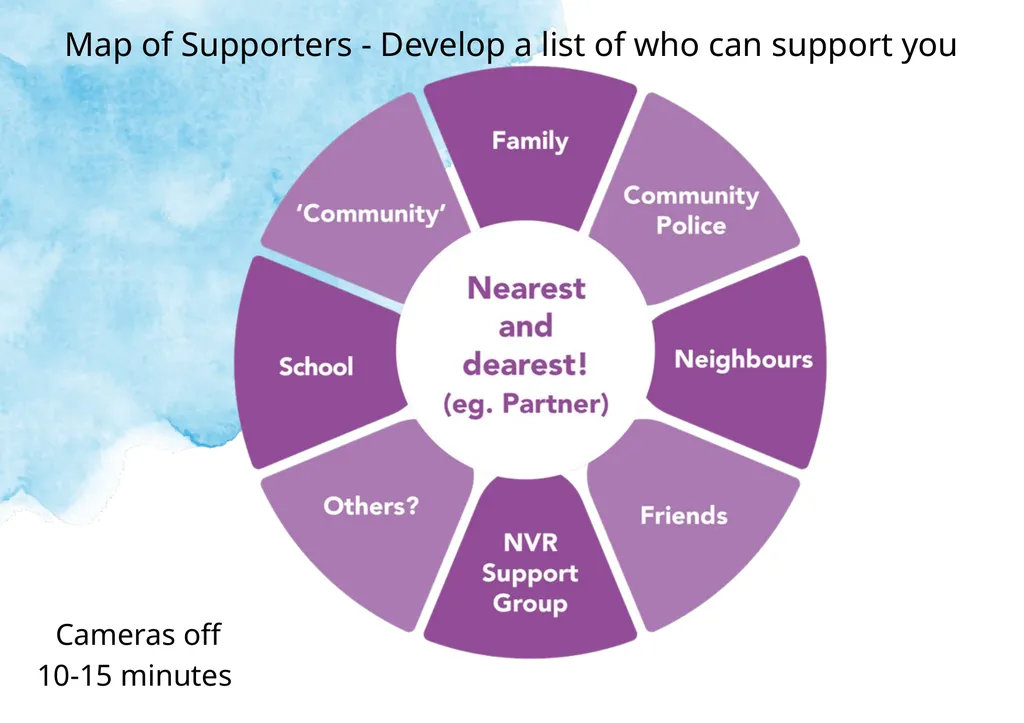
Map of Supporters - Develop a list of who can support you Cameras off
10-15 minutes<br>
10-15 minutes<br>
12
•Witness: in a sit-in or announcement delivery with parents (we will cover these bits of NVR in following weeks sessions)
•Stress buffer: help diffuse an escalating situation by coming to the home or giving the young person respite in their own home.
•Campaign of concern: member of the network verbally expresses concern to the young person, whenever there has been an incident of violent or destructive behaviour.
•Logistic supporter: takes pressure off parents, e.g. looking after younger children during a sit-in, cooking a meal for the family.
•Mentor: an ‘NVR graduate’ who can listen & offer advice, help parents stay calm, give them hope to carry on.
•Sibling support: helps protect a targeted sibling by regularly checking in with them and informing parents of any incidents of victimisation. The support might also come in the form of having special / ‘fun’ time with them.
•Mediator: Supports parents and child and may negotiate solutions e.g. agreements about reparation following aggression; supportive comments regarding changing accommodating behaviours; exploring & negotiating ‘new rules’. Supporter Roles - REMINDER FOR ACTIVITY<br>
•Stress buffer: help diffuse an escalating situation by coming to the home or giving the young person respite in their own home.
•Campaign of concern: member of the network verbally expresses concern to the young person, whenever there has been an incident of violent or destructive behaviour.
•Logistic supporter: takes pressure off parents, e.g. looking after younger children during a sit-in, cooking a meal for the family.
•Mentor: an ‘NVR graduate’ who can listen & offer advice, help parents stay calm, give them hope to carry on.
•Sibling support: helps protect a targeted sibling by regularly checking in with them and informing parents of any incidents of victimisation. The support might also come in the form of having special / ‘fun’ time with them.
•Mediator: Supports parents and child and may negotiate solutions e.g. agreements about reparation following aggression; supportive comments regarding changing accommodating behaviours; exploring & negotiating ‘new rules’. Supporter Roles - REMINDER FOR ACTIVITY<br>
13
How to ask for help •Be specific about what you need and ask your supporters whether this is possible for them to provide.
•Be truthful about your situation, and chose different people for different tasks suited to their strengths.
•Try saying “I’d like to talk to you about what is happening in my family. It has been really challenging recently and I have been advised to find people I trust that can help me with this, and I thought about you because…..”<br>
•Be truthful about your situation, and chose different people for different tasks suited to their strengths.
•Try saying “I’d like to talk to you about what is happening in my family. It has been really challenging recently and I have been advised to find people I trust that can help me with this, and I thought about you because…..”<br>
14
Support for siblings After the session continue to work on your supporters map and think also about who might be able to support your other child(ren).
This could be an identified member of the support network who will act as a confidant – it is important that your child is aware that their sibling is being supported.<br>
This could be an identified member of the support network who will act as a confidant – it is important that your child is aware that their sibling is being supported.<br>
15
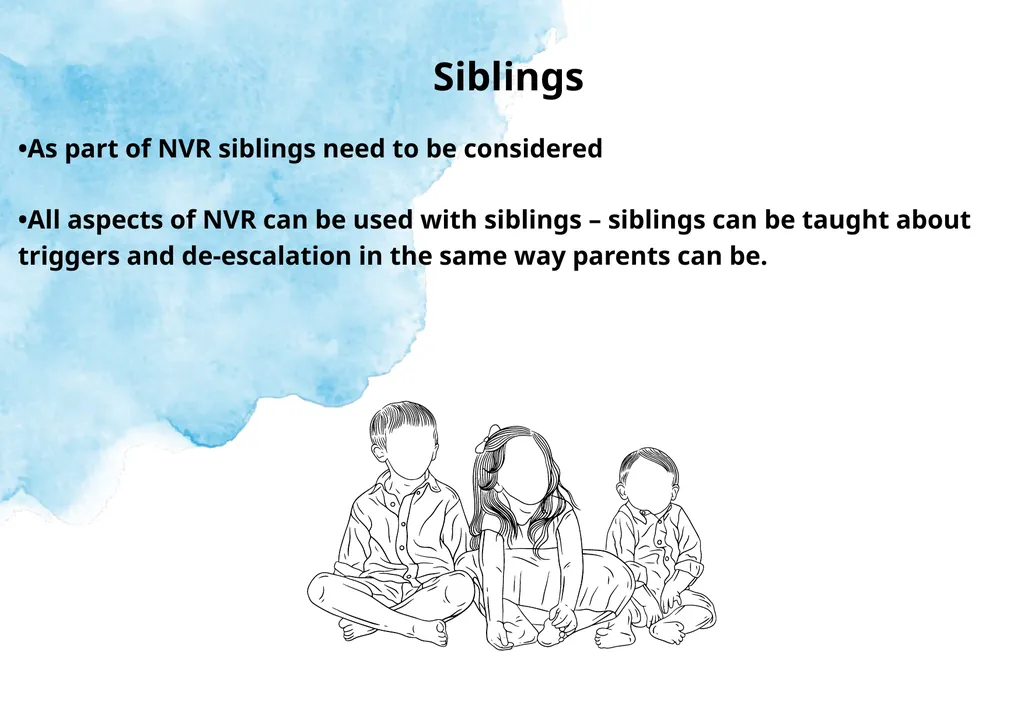
Siblings •As part of NVR siblings need to be considered
•All aspects of NVR can be used with siblings – siblings can be taught about triggers and de-escalation in the same way parents can be.<br>
•All aspects of NVR can be used with siblings – siblings can be taught about triggers and de-escalation in the same way parents can be.<br>
16
Siblings •Siblings can often be on the receiving end of controlling and aggressive behaviours or even violence. This is often normalised and less reported (e.g “all brother and sisters fight”).
•They can be expected to accommodate themselves; or as parents we can accommodate unacceptable behaviours aimed at the sibling, as we don’t know how else to manage what’s happening.
•Often more time is given to the child you are having to accommodate; meaning the sibling can sometimes go unnoticed.
•Siblings can themselves often become trapped in the cycle of "Joint" and "Giving in" escalations, and secrecy.
•There are many reasons siblings generally do not disclose what is happening. Siblings may have all sorts of worries about this e.g.they may be intimidated or fearful of their actions/possible retaliation; be very loyal to their sibling, and worry about being perceived as betraying them. They should be encouraged to lift the veil of secrecy and no longer be expected to accommodate.<br>
•They can be expected to accommodate themselves; or as parents we can accommodate unacceptable behaviours aimed at the sibling, as we don’t know how else to manage what’s happening.
•Often more time is given to the child you are having to accommodate; meaning the sibling can sometimes go unnoticed.
•Siblings can themselves often become trapped in the cycle of "Joint" and "Giving in" escalations, and secrecy.
•There are many reasons siblings generally do not disclose what is happening. Siblings may have all sorts of worries about this e.g.they may be intimidated or fearful of their actions/possible retaliation; be very loyal to their sibling, and worry about being perceived as betraying them. They should be encouraged to lift the veil of secrecy and no longer be expected to accommodate.<br>
17
Parents and professionals should remain vigilant to sibling’s signs of distress - whether these appear at home or at school
Consider whether you feel there has been accommodating behaviours expected of your other child(ren); How much time do you give to accommodating your anxious/aggressive child?
How might the veil of secrecy be lifted around this & time reallocated to your other child(ren)? Holding Siblings in Mind<br>
Consider whether you feel there has been accommodating behaviours expected of your other child(ren); How much time do you give to accommodating your anxious/aggressive child?
How might the veil of secrecy be lifted around this & time reallocated to your other child(ren)? Holding Siblings in Mind<br>
18
It is important that sibling's have someone with whom they can talk freely and think about their role within the patterns of escalation. Siblings are encouraged to no longer keep the actions of the brother or sister a secret.
It may be helpful for siblings to have a time to talk with a parent each day. It is important to remember that this is not about taking sides or being a referee; it is about listening and validating your child’s experience, and developing an action plan if necessary. Supporting Siblings<br>
It may be helpful for siblings to have a time to talk with a parent each day. It is important to remember that this is not about taking sides or being a referee; it is about listening and validating your child’s experience, and developing an action plan if necessary. Supporting Siblings<br>
19
Homework.. •Finalise your small basket behaviours (1 or 2)
•Practice approaching a supporter and ask for specific help.
•Continue with self care!
Next week we will start bringing together everything we have learned. In particular you will need to come prepared with:
•The positive bag
•Baskets (small basket behaviours)<br>
•Practice approaching a supporter and ask for specific help.
•Continue with self care!
Next week we will start bringing together everything we have learned. In particular you will need to come prepared with:
•The positive bag
•Baskets (small basket behaviours)<br>
20
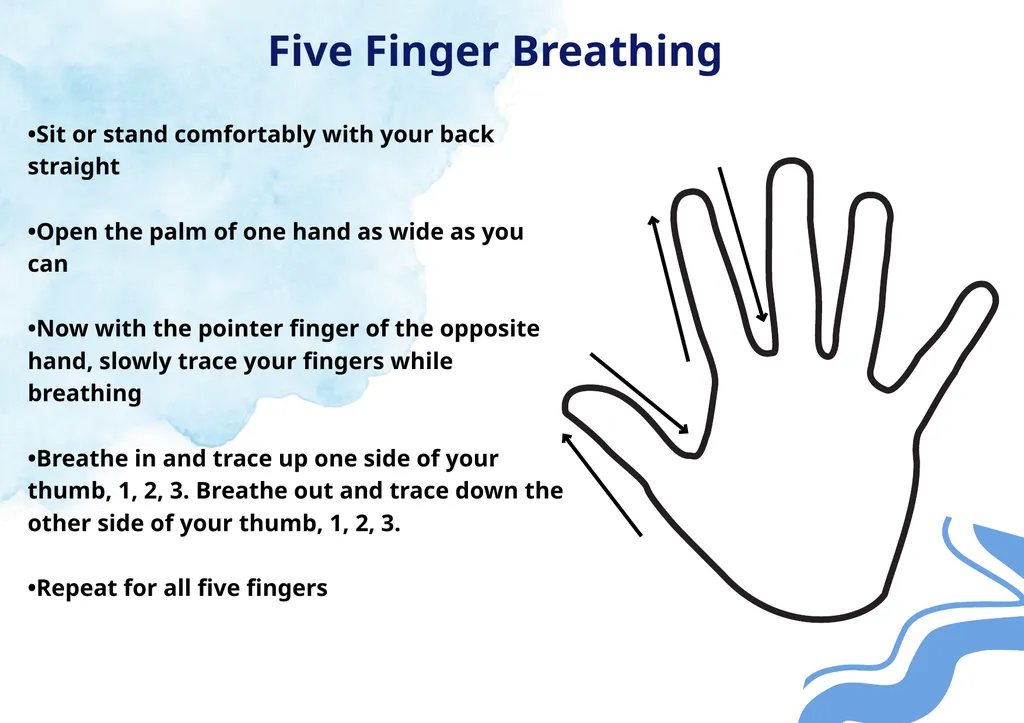
Five Finger Breathing •Sit or stand comfortably with your back straight
•Open the palm of one hand as wide as you can
•Now with the pointer finger of the opposite hand, slowly trace your fingers while breathing
•Breathe in and trace up one side of your thumb, 1, 2, 3. Breathe out and trace down the other side of your thumb, 1, 2, 3.
•Repeat for all five fingers<br>
•Open the palm of one hand as wide as you can
•Now with the pointer finger of the opposite hand, slowly trace your fingers while breathing
•Breathe in and trace up one side of your thumb, 1, 2, 3. Breathe out and trace down the other side of your thumb, 1, 2, 3.
•Repeat for all five fingers<br>
21
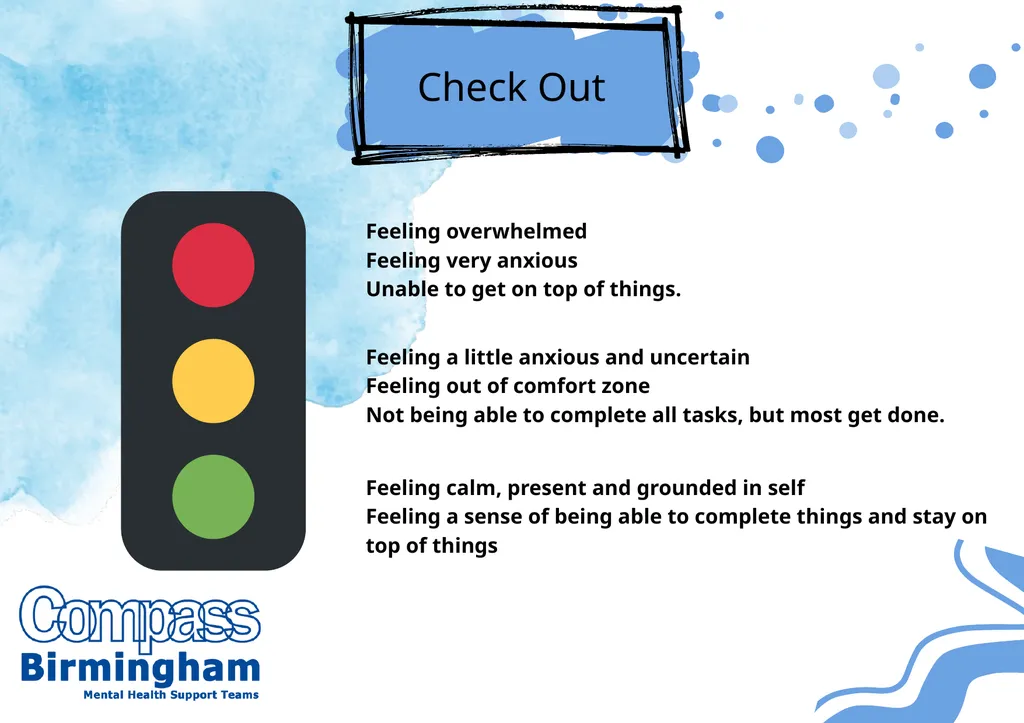
Check Out Feeling calm, present and grounded in self
Feeling a sense of being able to complete things and stay on top of things Feeling a little anxious and uncertain
Feeling out of comfort zone
Not being able to complete all tasks, but most get done. Feeling overwhelmed
Feeling very anxious
Unable to get on top of things.<br>
Feeling a sense of being able to complete things and stay on top of things Feeling a little anxious and uncertain
Feeling out of comfort zone
Not being able to complete all tasks, but most get done. Feeling overwhelmed
Feeling very anxious
Unable to get on top of things.<br>