04
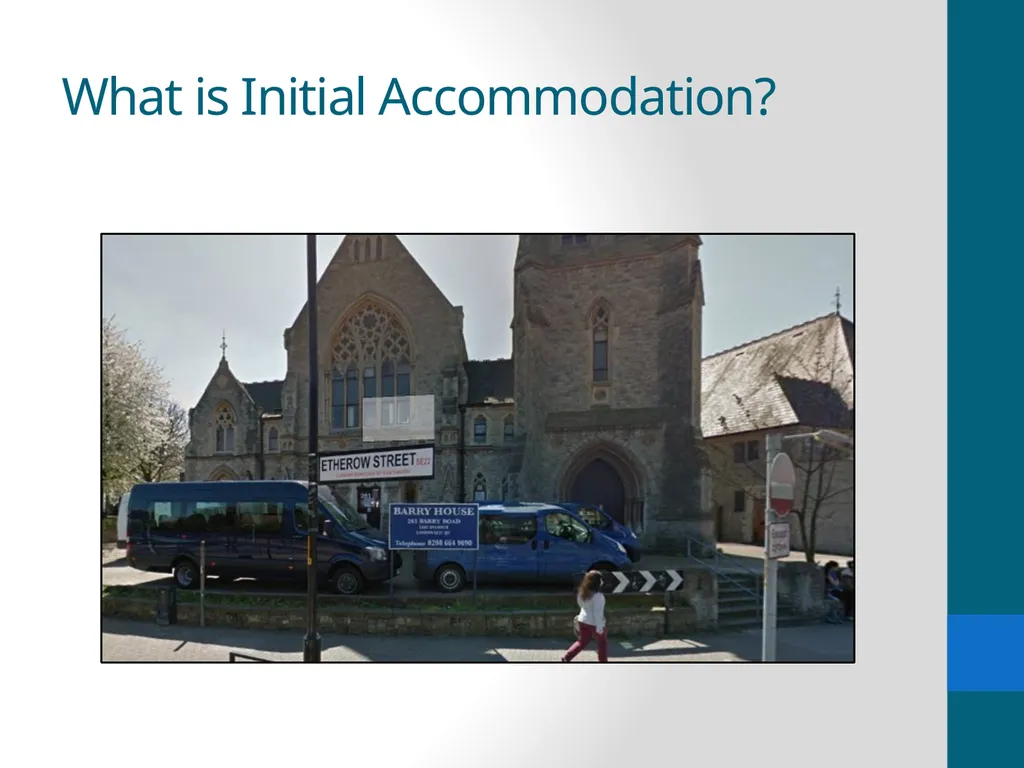
What is Initial Accommodation?<br>
05
Clients 138 people
Single men, families and single pregnant women
Turn over of 100+ per week
Countries
Afghanistan, Albania, Belarus, China, DRC, Eritrea, Iran, Iraq, Lebanon, Nigeria, Russia, Somalia, Sudan, Vietnam, Yemen ….
Backgrounds
Farmers, soldiers, engineers, doctors, journalists, scientists, nurses, business owners, teachers, a driving instructor ….<br>
06
Services available in Barry House Migrant Help
Health team
Health screening – nurse led
GP
Health Visitor
Midwife
OT – full time Technician, part time Band 7
Charity Groups<br>
07
Development of the OT service NHS England Needs Assessment 2014
Occupational Therapy scoping exercise - Oct to Dec 15
Literature search / Stakeholder analysis / Visiting other services
Literature search:
Higher than average reports of mental health issues – anxiety and depression (Coffey et al, 2010, Robjant, Hassan & Kotaona, 2009)
People seeking asylum are made dependent by the system (Burchett & Matheson, 2010, Smith, 2005, Whiteford, 2005)
Large proportion of time spent doing nothing = low satisfaction and well-being scores – occupational deprivation (Bishop & Purcell, 2013, Ingvarsson et al, 2015, Moreville et al, 2015, Smith, 2015)
Engagement in daily occupations is a critical to health and well-being (WHO,1996)
Displaced persons have occupational rights. Occupation is a source of control, choice, satisfaction, identity, balance and participation in occupation influences health and well-being (WFOT 2010, 2012)
"At the heart of occupational therapy is the belief that the ability to participate in meaningful occupation is fundamental to health and wellbeing, and that occupation in itself has therapeutic value. “ (COT, 2015)<br>
08
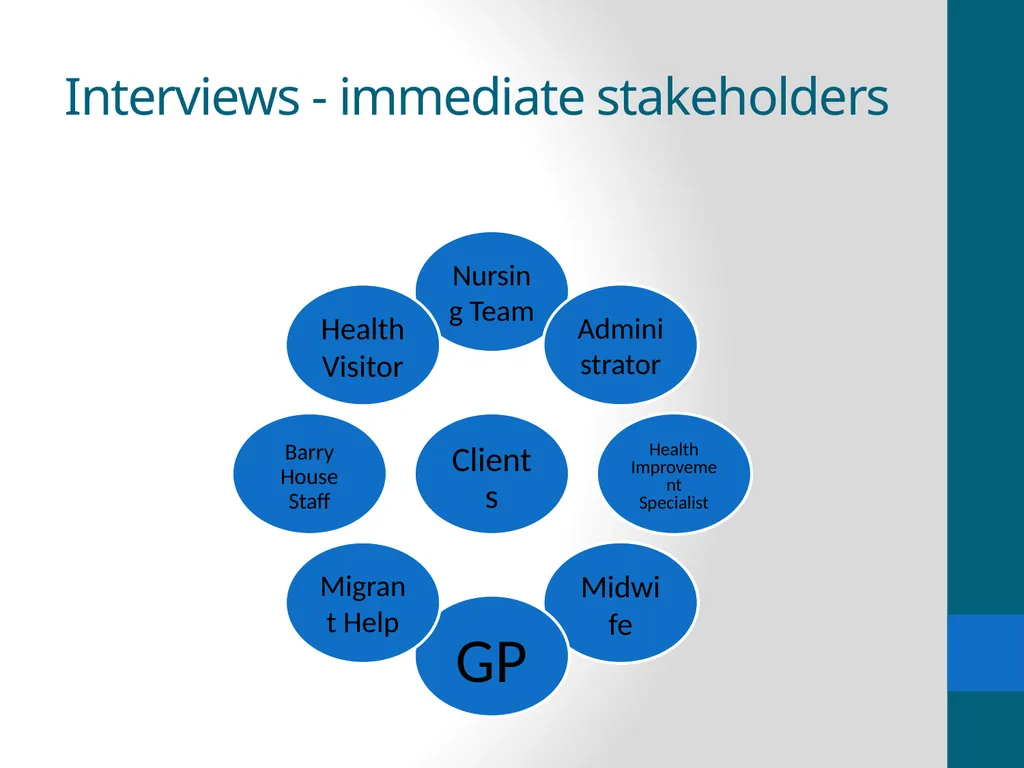
Interviews - immediate stakeholders<br>
09
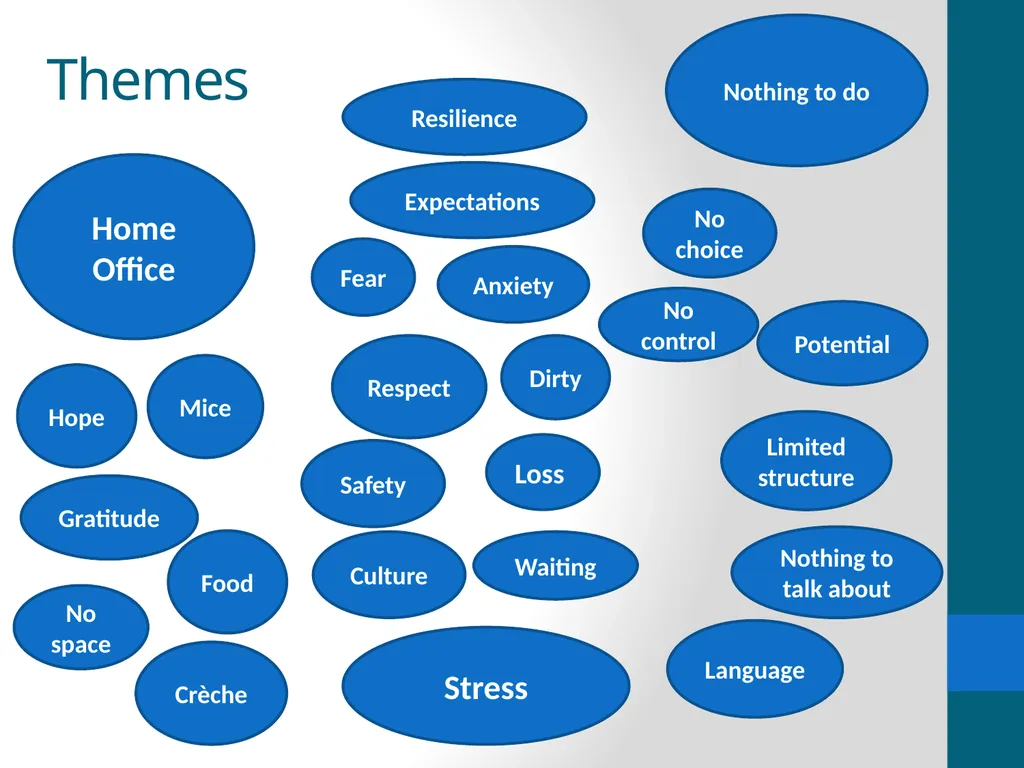
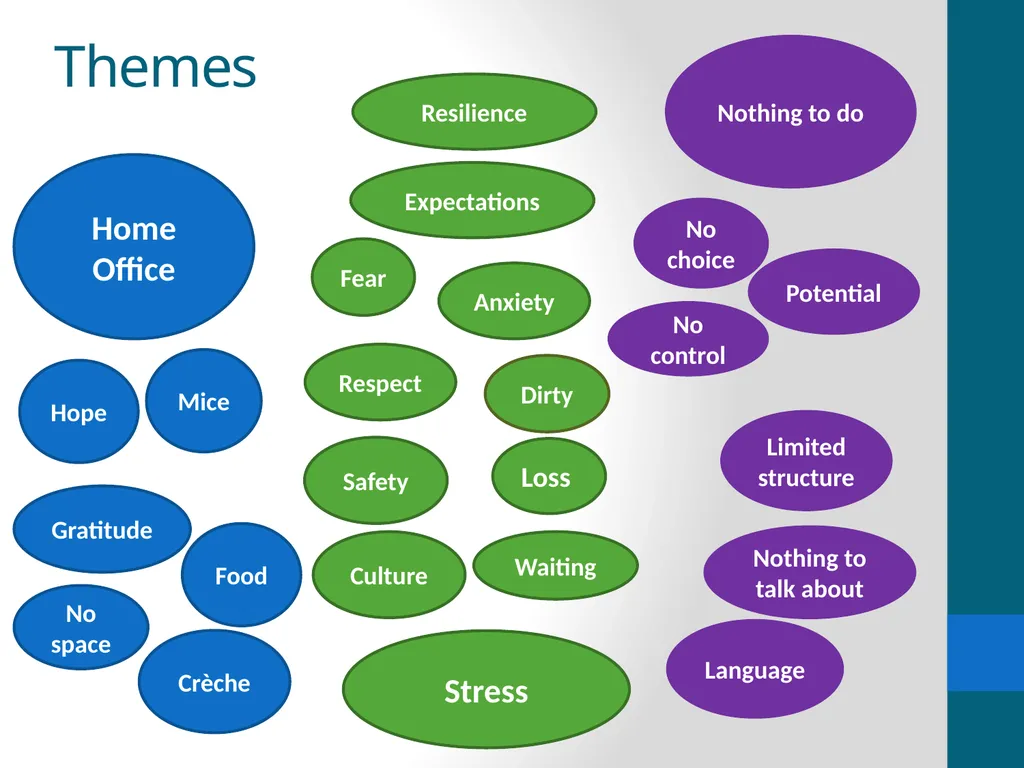
Themes Expectations Limited structure Anxiety No control Fear Waiting Culture Nothing to talk about Language Home Office Hope Loss Safety Potential Stress Mice Nothing to do No choice Crèche Respect Dirty No space Resilience Food Gratitude<br>
10
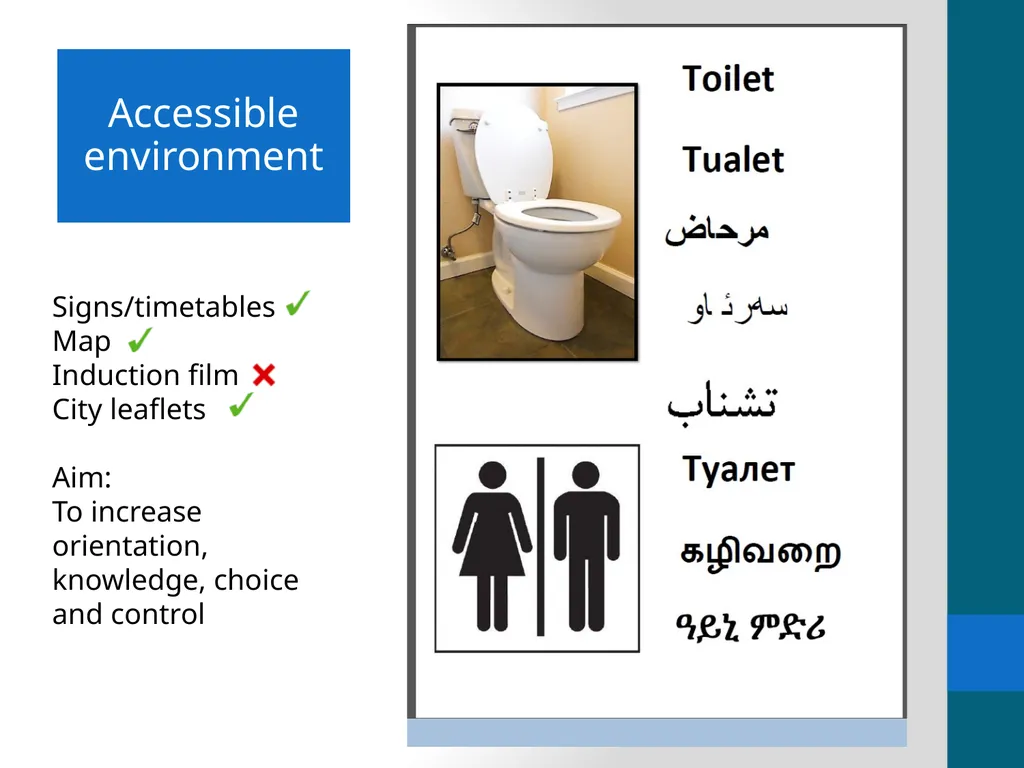
Signs/timetables
Map
Induction film
City leaflets
Aim:
To increase orientation, knowledge, choice and control<br>
11
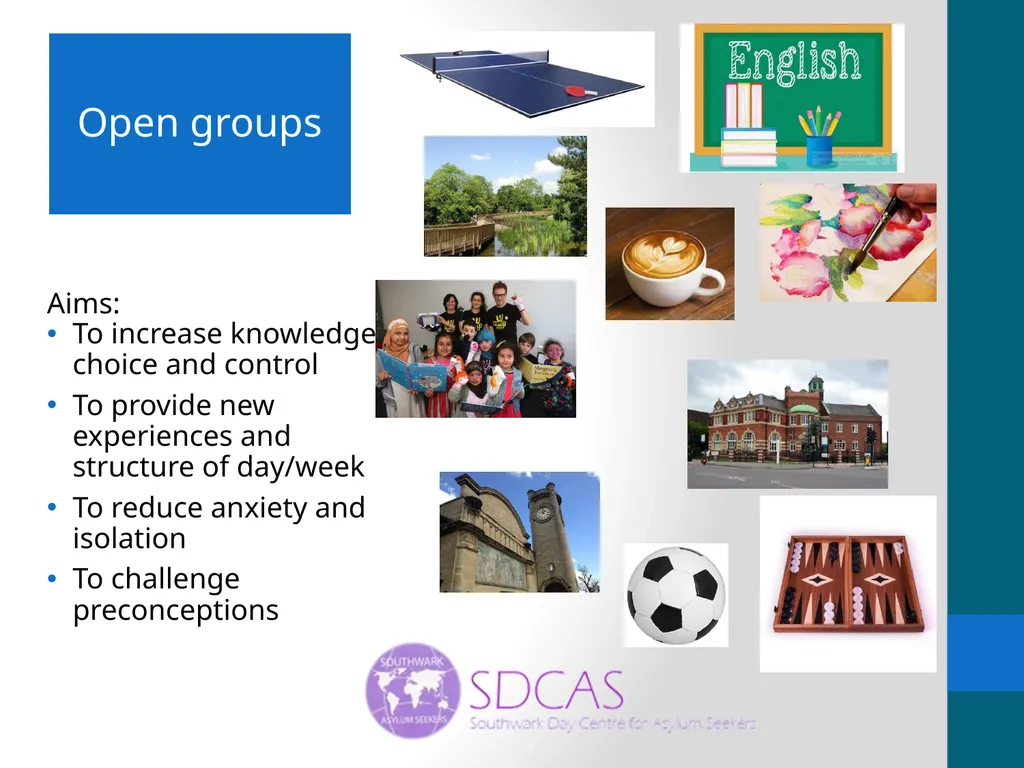
Aims:
To increase knowledge, choice and control
To provide new experiences and structure of day/week
To reduce anxiety and isolation
To challenge preconceptions<br>
12
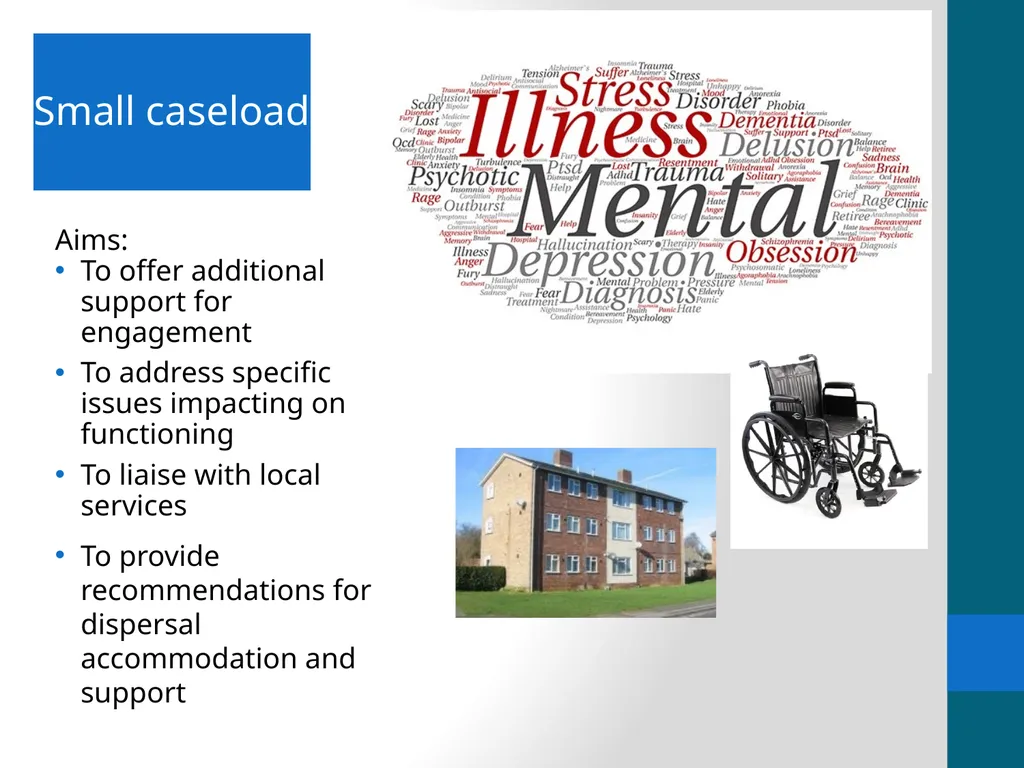
Aims:
To offer additional support for engagement
To address specific issues impacting on functioning
To liaise with local services
To provide recommendations for dispersal accommodation and support<br>
13
Themes Expectations Limited structure Anxiety No control Fear Waiting Culture Nothing to talk about Language Home Office Hope Loss Safety Potential Stress Mice Nothing to do No choice Crèche No space Dirty Resilience Food Gratitude Respect<br>
14
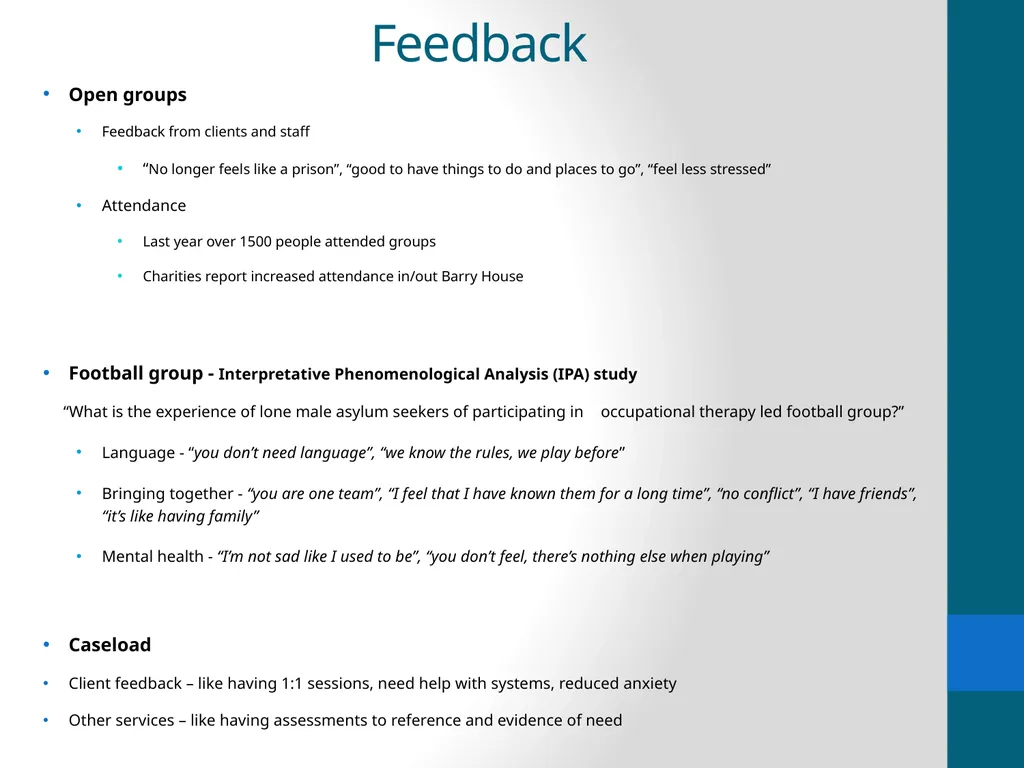
Feedback Open groups
Feedback from clients and staff
“No longer feels like a prison”, “good to have things to do and places to go”, “feel less stressed”
Attendance
Last year over 1500 people attended groups
Charities report increased attendance in/out Barry House
Football group - Interpretative Phenomenological Analysis (IPA) study
“What is the experience of lone male asylum seekers of participating in occupational therapy led football group?”
Language - “you don’t need language”, “we know the rules, we play before”
Bringing together - “you are one team”, “I feel that I have known them for a long time”, “no conflict”, “I have friends”, “it’s like having family”
Mental health - “I’m not sad like I used to be”, “you don’t feel, there’s nothing else when playing”
Caseload
Client feedback – like having 1:1 sessions, need help with systems, reduced anxiety
Other services – like having assessments to reference and evidence of need<br>
15
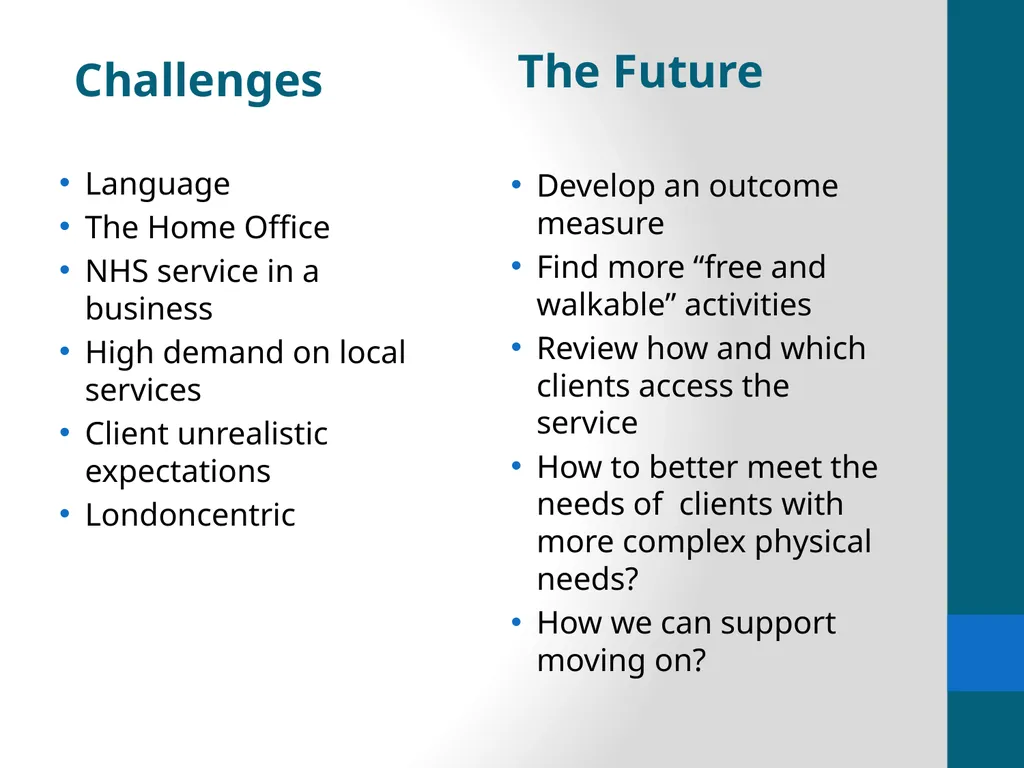
Challenges The Future Language
The Home Office
NHS service in a business
High demand on local services
Client unrealistic expectations
Londoncentric Develop an outcome measure
Find more “free and walkable” activities
Review how and which clients access the service
How to better meet the needs of clients with more complex physical needs?
How we can support moving on?<br>
17
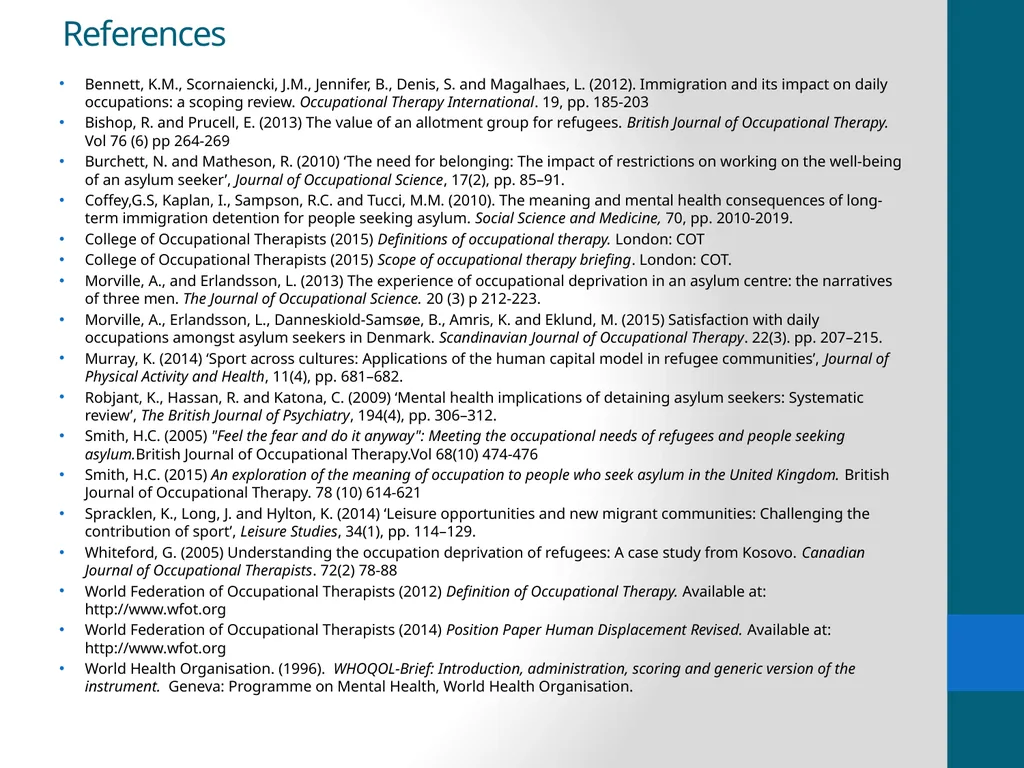
References Bennett, K.M., Scornaiencki, J.M., Jennifer, B., Denis, S. and Magalhaes, L. (2012). Immigration and its impact on daily occupations: a scoping review. Occupational Therapy International. 19, pp. 185-203
Bishop, R. and Prucell, E. (2013) The value of an allotment group for refugees. British Journal of Occupational Therapy. Vol 76 (6) pp 264-269
Burchett, N. and Matheson, R. (2010) ‘The need for belonging: The impact of restrictions on working on the well‐being of an asylum seeker’, Journal of Occupational Science, 17(2), pp. 85–91.
Coffey,G.S, Kaplan, I., Sampson, R.C. and Tucci, M.M. (2010). The meaning and mental health consequences of long-term immigration detention for people seeking asylum. Social Science and Medicine, 70, pp. 2010-2019.
College of Occupational Therapists (2015) Definitions of occupational therapy. London: COT
College of Occupational Therapists (2015) Scope of occupational therapy briefing. London: COT.
Morville, A., and Erlandsson, L. (2013) The experience of occupational deprivation in an asylum centre: the narratives of three men. The Journal of Occupational Science. 20 (3) p 212-223.
Morville, A., Erlandsson, L., Danneskiold-Samsøe, B., Amris, K. and Eklund, M. (2015) Satisfaction with daily occupations amongst asylum seekers in Denmark. Scandinavian Journal of Occupational Therapy. 22(3). pp. 207–215.
Murray, K. (2014) ‘Sport across cultures: Applications of the human capital model in refugee communities’, Journal of Physical Activity and Health, 11(4), pp. 681–682.
Robjant, K., Hassan, R. and Katona, C. (2009) ‘Mental health implications of detaining asylum seekers: Systematic review’, The British Journal of Psychiatry, 194(4), pp. 306–312.
Smith, H.C. (2005) "Feel the fear and do it anyway": Meeting the occupational needs of refugees and people seeking asylum.British Journal of Occupational Therapy.Vol 68(10) 474-476
Smith, H.C. (2015) An exploration of the meaning of occupation to people who seek asylum in the United Kingdom. British Journal of Occupational Therapy. 78 (10) 614-621
Spracklen, K., Long, J. and Hylton, K. (2014) ‘Leisure opportunities and new migrant communities: Challenging the contribution of sport’, Leisure Studies, 34(1), pp. 114–129.
Whiteford, G. (2005) Understanding the occupation deprivation of refugees: A case study from Kosovo. Canadian Journal of Occupational Therapists. 72(2) 78-88
World Federation of Occupational Therapists (2012) Definition of Occupational Therapy. Available at: http://www.wfot.org
World Federation of Occupational Therapists (2014) Position Paper Human Displacement Revised. Available at: http://www.wfot.org
World Health Organisation. (1996). WHOQOL-Brief: Introduction, administration, scoring and generic version of the instrument. Geneva: Programme on Mental Health, World Health Organisation.<br>